



Abstract
This qualitative study examined multimodal cohesive devices in English oral biology texts by eight high-achieving Saudi English-as-a-foreign-language students enrolled in a Bachelor of Science Dentistry program. A Systemic Functional Multimodal Discourse Analysis (SF-MDA) of the textual and logical cohesive devices in oral biology texts was conducted, employing Halliday and Hasan’s cohesion analysis scheme. The findings showed that students used varied cohesive devices: lexical cohesion, followed by reference and conjunctions. Although ellipsis was minimally employed in the oral biology texts, its discipline-specific uses emerged: the use of bullet points and numbered lists that facilitate recall. The SF-MDA of cohesion in multimodal semiotic resources highlighted the processes underlying construction of conceptual and linguistic knowledge of cohesive devices in oral biology texts. The results indicate that oral biology discourse is interdisciplinary, including a number of subfields in biology. The SF-MDA of pictorial oral biology representations indicates that they include instances of cohesive devices that illustrate and complement verbal texts. The results indicate that undergraduate students need to be provided with a variety of multimodal high-cohesion texts so that they can successfully extend underlying conceptual and logical meaning-making relations.
Keywords
In academic texts, use of cohesive devices contributes to text coherence between sentences, thereby facilitating comprehension and learning (Hall et al., 2014; Ozuru et al., 2009; Yuniartiah et al., 2018). Because English scientific texts are multimodal, encompassing orthographic texts and images (i.e., multisemiotic), a study of salient multimodal textual and logical cohesive relations is necessary, as is investigating how students use these multimodal texts to extend conceptual and logical meaning-making relations—in other words, how pictorial representations are integrated with verbal texts to construct what Lemke (2005) calls “a system of organizational relations defining wholes and parts of those wholes” (p. 94). Halliday and Hasan (2014) define cohesive relation as “the semantic relation between an element in the text and some other element that is crucial to the interpretation of it” (p. 8). In the study of textual and logical features in tertiary contexts, applications of Systemic Functional Multimodal Discourse Analysis (SF-MDA) of cohesive devices have previously been confined to business studies (Alyousef, 2013, 2015, 2016, 2017, 2018), mathematics (O’Halloran, 1998, 1999, 2005, 2008), nursing (Okawa, 2008), history (North, 2005), journalism and media (Hawes, 2015), and science and computing (Drury et al., 2006; Jones, 2006). To the best of my knowledge, text-based investigations exploring the use of cohesive devices in multimodal oral biology texts are lacking.
This study’s objective is to conduct SF-MDA of cohesive devices in oral biology texts written by eight high-achieving Saudi English-as-a-foreign-language (EFL) students in a Bachelor of Science Dentistry program. The study is pertinent as in Saudi Arabia, the number of Saudi students enrolled in dentistry undergraduate programs has increased dramatically over the past 10 years. In 2016, for example, the number of Saudi students enrolled in the Bachelor of Science Dentistry program increased by 22.34%, from 9,883 to 12,091 (Saudi Ministry of Education, 2016). Because the Saudi government intends to localize the dental profession, currently occupied mostly by foreign expatriates, unsurprisingly, many Saudi students are attracted to this field. This study might provide insights for science tutors and undergraduate English-as-a-Foreign-Language/English-as-a-Second-Language (EFL/ESL) science students because it could shed light on practices and discourses that constitute well-constructed multimodal cohesive oral biology texts. To the best of my knowledge, this study is the first to explore how Saudi undergraduate dentistry students construct multimodal cohesive oral biology texts.
Literature Review
Investigations of the language of scientific discourse aim to reveal creative effects of language through Systemic Functional Linguistics (SFL) analyses and descriptions of its distinct features. Halliday (2004), for example, studied how scientific language has been used throughout history and showed how it uses grammatical nominalizations and favors relational, material, or mental verbal processes. A number of studies (Hall et al., 2014; Ozuru et al., 2009; Yuniartiah et al., 2018) demonstrated that reading highly cohesive scientific texts improved comprehension and learning. In an introductory biology course, for example, Ozuru et al. (2009) found positive correlation between high-cohesion texts and undergraduate students’ comprehension and learning of text-based information. This indicates that students with sufficient reading skills can learn new concepts with greater efficiency when their text is more cohesive. Therefore, highly cohesive texts play a vital role in maximizing the efficacy of students’ learning.
As mentioned, SFL applications to multimodal textual and logical features have previously been done in business studies, mathematics, science and computing, journalism and media, history, and nursing. However, text-based investigations of the use of cohesive devices in multimodal oral biology texts are lacking. The majority of research on multimodal texts has focused on primary or secondary school contexts (Hsu & Yang, 2007; Jaipal, 2010; Korani, 2012). Because multimodality is inherent in every biology text, interest has grown in studying the perception of and interaction with these artifacts.
Investigations of multiple semiotic modalities in biology textbooks have contributed to our understanding of their underlying meaning-making processes (Baldry & Thibault, 2005; Guo, 2004; Hannus & Hyönä, 1999; Jaipal, 2010; Kress, 2003). Jaipal (2010), for example, developed a multimodal SFL-based framework for science classroom discourse to investigate its potential to provide insights into how a biology teacher selected, sequenced, and modified semiotic modalities to help Grade 11 students construct scientific meaning of the “chemosynthesis” concept. The framework aimed to capture multiple dimensions of meaning during teacher explanations, that is, semiotic and epistemological functions of multiple modalities and learning outcomes. These included epistemological, presentational, orientational, and organizational meanings. Organizational meanings, however, did not include construal (or realization) of cohesive and logical relations in students’ biology discourse. The framework also drew key features of modalities that extend meaning-making possibilities during a teacher’s explanations. The researcher, however, did not investigate biology students’ use of semiotic modalities to extend conceptual and logical meaning-making relations. Data included field notes, lesson transcripts, and informal interviews with the teacher. The findings revealed the usefulness of multiple modalities for understanding teachers’ explanations and for supporting, scaffolding, extending, and reinforcing the learning of a new science concept. Jaipal (2010) also identified aspects related to genre as presented by the teacher, such as the structure and sequencing of topics, lessons, concepts, modalities, and words. In visual diagrams, typographical (e.g., figures, lines, arrows) and compositional tools (e.g., texture, color) were identified. Whereas Jaipal (2010) investigated a biology teacher’s discourse, Guo (2004) studied a tertiary second-year cell biology textbook. Guo employed SFL in his study of systems and functions on which schematic drawings and statistical graphs were created and drawn to make meaning in the textbook. Although M. O’Toole’s (1994) framework for analysis of schematic drawings was employed, O’Halloran’s (1996) framework was used to analyze statistical graphs. Guo (2004) argued that each visual modality has specific conventions for making meaning. The results showed that resources employed for textual (or compositional) meaning include reference through language and/or symbolism, labeling, framing, parallel/contrast in shape and color, and geometry. Labeling of conceptual terms appeared frequently in the cell biology textbook because it represents a pedagogical aim of pictorial representations. Furthermore, Hannus and Hyönä (1999) investigated use of pictures in elementary-level biology textbooks by using eye-tracking to trace students’ “visual” trajectory with precision. The findings showed that high-ability children performed better at integrating relevant passages containing text and pictures. Bordet (2014) stated that variations between general scientific terms and domain-specific terms appeared as a dominant pattern across texts, although they could not be found in parts of texts composed by L2 writers. More specifically, Bordet conducted a comparative study of 60 doctoral abstracts to evaluate contributions of collocational regularities and variations in construction of credible scientific discourse in four subcorpora: materials science and didactics of mathematics abstracts written by native and nonnative speakers. The combinations seemed tightly connected with the discipline’s epistemological values. A wide range of general scientific terms was employed to express a particular concept’s changing view and to guide the reader’s attention across these changes. Use of collocational chains reinforced the author’s legitimacy in claiming membership in the target discourse community. This indicates the need to attract scientific and academic L2 writers’ attention not only to the use of general and specialized terms but also to their combinations’ variety and to the rhetorical impact of their textual distribution. Bordet (2014) did not study the use of other cohesive discourse structures in scientific texts, and Guo (2004) did not study the construal of cohesive and logical relations in biology discourse. Finally, Lovejoy (1991) investigated cohesion in introductory sections of three articles from three disciplines: counseling psychology, biology, and history. The number of lexical cohesive ties was higher than other types. Given the small data size, Lovejoy (1991) argues, “no claims are made about the ‘typicality’ of texts in the disciplines represented” (p. 317).
The study aimed to contribute to this line of research by investigating a key topic in tertiary multimodal oral biology texts. The literature review revealed a lack of research investigating cohesive devices in tertiary oral biology discourse, thus indicating a need to explore and analyze multimodal textual and logical cohesive devices.
Theoretical Framework
According to the SFL approach, language serves three kinds of meaning (or metafunctions): to construe (or realize) meaning ideationally, by representing and expressing our experiences of the world and basic logical relations; interpersonally, by enacting social relationships in discourse; and textually, by construing deployment of textual resources that organize the first two metafunctions into a coherent text (Halliday & Hasan, 2014). These three metafunctions correlate, respectively, with the three register variables of field, tenor, and mode. Whereas field refers to experiential content in a text, tenor refers to roles and relationships taken up by the writer or the speaker. The textual metafunction realizing the mode of discourse is concerned with how multimodal semiotic forms are organized and presented through successful use of thematic choices and cohesive devices. Due to spatial limitations, I examined only representation of cohesive and logical structures. Cohesive structures are represented by four cohesive devices: lexical cohesion, reference, ellipsis, and substitution. These devices are concerned with textual statuses that form textual cohesion. On the contrary, logical structures are construed through conjunctions concerned with textual rhetorical transitions (or relations) between clauses: elaboration, extension, and enhancement (Table 1).
Textual and Logical Cohesive Resources.

Source. Adapted from Halliday (2014).
Lexical cohesion is defined through semantic relations and achieved through the use of synonyms, antonyms, repetition of the same word, hyponyms, meronyms, and hypernyms. Reference elements include anaphora (referring to a preceding element), cataphora (referring forward to an element), the definite article, demonstratives, pronouns, possessives, and comparatives. These elements are grammatical rather than lexical because they include closed systems, such as person, number, and proximity. Substitution and ellipsis are also expressed through grammar because the substitute or elided element might be a verb, a noun, or a clause. Substitution involves using a substitute word or clause such as “some” and “none.” The elided element is recoverable from the preceding text (e.g., question tags, “ . . . isn’t he?”). On the contrary, conjunction includes both grammatical and lexical ties (logico-semantic relations) because these elements involve lexical selection and are interpreted in terms of grammatical systems. As Halliday and Hasan (2014) state, it is “mainly grammatical, but with a lexical component in it” (p. 6).
Method
A qualitative case study research design was adopted because, as stated, the study aimed to explore how Saudi undergraduate dentistry students construct multimodal cohesive oral biology texts. Halliday’s (2014) SFL approach was relevant to the context of the study because the aim was to investigate the functional uses of multimodal cohesive devices in tertiary dentistry texts. The SFL approach considers functions of language, which is viewed as a social semiotic resource for meaning-making. The acronym SF-MDA was used because oral biology texts typically include pictorial representation. SF-MDA was framed by Halliday’s (2014) and Halliday and Hasan’s (2014) cohesion analysis scheme. SF-MDA also utilized participants’ intuitive verbal interpretations (or intended reading path) (van Leeuwen, 2005) of oral biology pictorial representations to investigate how students used multiple semiotic modalities to extend conceptual and logical meaning-making relations. These interpretations aimed to reveal processes underlying construction of conceptual knowledge and text–image relations. Each verbal interpretation was audio-recorded, transcribed next to its relevant image, and analyzed.
Although SF-MDA of cohesive devices’ use was primarily qualitative, numerical/quantitative data were employed to make comparisons (e.g., “more,” “most,” and “equal”) more accurate. Each cohesive device type and its subcomponents were manually identified and annotated to calculate its frequency of occurrence per 100 words. To ensure the results’ validity, I calculated the frequency and percentage of the occurrence of each cohesive device type per total number of words in that text by dividing the total number of occurrences of each type by the total number of words and multiplying the result by 100. Two procedures were followed to ensure reliability in annotating cohesive devices. Students’ verbal interpretations of oral biology pictorial representations were checked for accuracy by a practicing dentist. The annotation codes were double-checked for accuracy and then revised by a fellow linguist. The text analysis web tool Textalyser (2004) was used to determine lexical items’ frequency and ranking in texts. To rule out pronouns, articles, and prepositions, Textalyser was set to include only words of more than three letters.
Participants and Data Selection
Data were composed of individual assignments (6,085 words) written by eight male and female Saudi undergraduate dentistry students enrolled in an Oral Biology course at a Saudi university in Riyadh: Zahra, Sara, Yara, Noura, Ibrahim, Khalid, Sultan, and Ahmed. Participants’ ages ranged from 19 to 20 years. The number of participants seemed suitable for the purpose of the present qualitative study because it aimed to provide an understanding of the construction of conceptual and linguistic oral biology knowledge. However, as the number of participants cannot be claimed as representative, no attempt is made to generalize or replicate the findings but rather to understand a specific context as it is. Each student signed a consent form after reading a student information sheet which provides brief information about the researcher, the aims of the research study, and the information that will be collected. Oral biology is a second-year undergraduate required course for dentistry majors. As the study aimed to examine the representation of cohesive and logical structures, a non-random purposive sampling method was used. In purposive sampling, students were deliberately sought based on gender (four from each gender) and a high level of achievement (A and A+) during previous semesters. The assignments were comparable because the main topics were similar: developmental abnormalities (or defects of the face and oral cavity). Participants were not constrained by a word limit. The instructor did not present this topic in class but asked students to conduct a search and to write about a minimum of two facial/oral cavity defects. As a result, the researcher did not conduct class observation. Allotted 10 marks, this individual assignment aimed to make students cognizant of oral and dental tissues’ structure and composition as well as of the oral cavity’s congenital and acquired anomalies.
Results and Discussion
The results of textual cohesion analyses (Table 2) showed that the students used a variety of cohesive devices (14.02 devices per 100 words) in the eight oral biology texts. Lexical cohesion was the most common category (6.33 cohesive devices per 100 words). Extensive use of lexical cohesion emerged from reiteration of the same lexical items, a subcategory more frequently employed (3.91 cohesive devices per 100 words) than other subcategories. This finding aligns with a number of studies (Abusharkh, 2012; Hessamy & Hamedi, 2013; Liu & Braine, 2005; Mohamed-Sayidina, 2010; Wahid & Wahid, 2020). For example, Wahid and Wahid (2020) found that undergraduate EFL students extensively employ reiteration in their essays
Frequency and Percentages of Cohesive Ties in the Eight Oral Biology Texts.

In this study, Textalyser’s (2004) findings showed that the most frequently reiterated lexical items in the eight texts were tongue, cleft(s), branchial, deformity, and process. Such reiterations were expected because the assignment was on developmental abnormalities of the face and oral cavity. Lexical reiterations and sense relations of meronymy, hyponymy, and hypernym are all instances of reiterations because they all have one lexical item referring to another (Halliday & Hasan, 2014). Meronymy was the second most frequently used lexical cohesive device (Table 2).
Paradigmatic lexical sense relations of hyponymy (superordination or inclusion) refer to a general class with its subclass, and meronymy refers to part–whole relations. Examples 1 to 6 illustrate these relations. For example, the more general (or superordinate) noun phrase “oral cavity” in Extract (2) is a hyponym of the four semantically correlated subclasses “anterior tongue,” “tongue-base anlagen,” “thyroglossal duct,” and “foramen cecum,” which are meronyms (or part) of their general class: (1) (2) Malformations of the oral cavity may result from errors in the embryonic fusion of the the origin of the (3) BENIGN TUMORS OF These small tumors . . . occur mainly on (4) (5) During the initial stages, five facial processes ( (6) Congenital lesions of the tongue include [L: Meronym], and
Similarly, the noun phrase “human face” in Extract (5) is a hyponym of the processes that lead to fetal craniofacial development (or composition of the human face): “one frontal”
The second most frequently used cohesive type was reference (Table 1). Although occurrence of the reference item “definite article” was rare (0.77 instances per 100 words), it was used homophorically (e.g., the teeth, the gum, the mouth). Here, the entity specified (or identified) is considered representative of the whole class, as in “often the frenulum will stretch and correct itself” (Sara). However, homophoric reference does not create grammatical cohesion within the text. As the definite article “the” was not used as a signal of a specific identity in the text, or rather of identifiability, the referent is not retrievable from a specific situation. Most students employed demonstrative singular and plural reference items “this” and “these.” These items include an elaboration relation because they refer to the location of a proposition in the previous clause that is participating in the process through the use of substitution. Unlike substitution, as reference constructs semantic relation and not grammatical one, it does not necessarily have to be in the same grammatical class as the referent. This linguistic resource achieves semantic unity, making a text more cohesive: (7) In some cases, normal sized tongues appear larger because there is underdevelopment of the mandible. This [R: Dem.] abnormality may lead to difficulties in speech and swallowing . . . Why this [R: Dem.] happens is largely unknown. (Sara) (8) If left untreated, ear infections may lead to hearing loss. To prevent this [R: Dem.] from occurring, special tubes are placed in children’s eardrums to aid fluid drainage, and their [Ref: Poss.] hearing has to be checked every year. (Ibrahim) (9) Congenital lesions of the tongue include cysts, mucoceles, macroglossia, ankyloglossia, lingual thyroid, and median rhomboid glossitis . . . The associated lack of tonsillar and adenoid tissue in patients with these [R: Dem.] anomalies suggests that . . . (Khalid) (10) The median nasal process grows downward between the maxillary processes to form the globular process. This [R: Dem.] will form the philtrum. (Ahmed) (11) At other pediatric institutions, mandibular distraction osteogenesis is performed during the neonatal period in an effort to avoid a tracheotomy. This [R: Dem.] involves bilateral division of the mandibular body and gradual advancement with an adjustable fixation device. The tongue is progressively moved forward with the mandible, improving the airway. This [R: Dem.] technique has been successful in experienced hands. (Yara) (12) Excision of lingual thyroid tissue should be avoided unless it [R: Pro.] causes airway obstruction because it [R: Pro.] may represent the only functional thyroid tissue. If this [R: Dem.] is the case, the mass . . . (Noura)
The nominal demonstratives “this,” “these,” and “those” have the experiential function of deictic expressions, and they function either as modifiers or Head at the logical structure level. For example, the demonstrative “this” in Extract (7) refers anaphorically to whole sets of nouns in the preceding clauses, and it acts as a modifier (or demonstrative adjective) in the first instance and as a Head in the second. The word “abnormality” in the first instance is called a shell noun, and it takes the pattern of demonstrative adjective “this” + optional premodifier+ shell noun (N). Shell nouns link nominal concepts with clauses containing complex chunks of information. Ibrahim used the singular demonstrative in Extract (8) as a Head, which refers anaphorically to the preceding noun phrase “hearing loss.” The demonstrative “these” in Extract (9) acts as a Head that refers back to a whole set of nouns related to types of congenital lesions of the tongue. The demonstrative “this” in Extract (11) is employed twice to refer to “distraction osteogenesis of the mandible, a technique used for the correction of deformity with minimal morbidity of the mandible.” The second instance of the personal pronoun “it” in Extract (12) refers to the process when the “lingual thyroid tissue . . . causes airway obstruction,” whereas the first occurrence refers only to the nominal group “lingual thyroid tissue.” Halliday and Hasan (2014) argue that only this reference type has the property of extended reference. None of the participants employed the first-person plural pronoun “we” to connect with their readers and to maintain their attentiveness by engaging them in the argument. This could be caused by the instruction students typically receive during their preuniversity schooling, which prohibits the use of the first-person pronouns “I” and “we.” This finding contrasts with Martı́nez’s (2003) study of theme in discussion sections of biology research articles in English. Martı́nez argues that given the argumentative nature of the discussion section, occurrence of first-person pronouns in thematic position is natural. Use of these pronouns is one academic strategy writers employ to engage readers in their arguments and, thereby, to establish rapport with them. As Hyland (2005) states, “while many students are taught to shun the use of first person, it plays a crucial interactional role in mediating the relationship between writers’ arguments and their discourse communities” (p. 57).
Possessive pronouns were scarcely used in the eight texts. Only Sara, Ibrahim, Ahmed, and Yara employed this reference type to make anaphoric semantic connections to previously introduced nominals. Although other personals require only one referent for their interpretation, possessive pronouns demand two recognizable participants: a person or object, called a possessor, and a possessed. Use of this reference item creates a sense of belonging or ownership. The students, however, used a higher number of comparative reference elements than possessives, in particular “more,” as in the following: (13) Children with clefts are more [R: Comp.] vulnerable to a larger than average number of cavities. (Ibrahim) (14) Deformities can be broadly subdivided into craniofacial anomalies, clefting anomalies, and dentofacial anomalies. There is often a crossover into other [R: Comp.] categories, for example, most [R: Comp.] children with cleft lips and palates . . . (Sultan) (15) Clefting anomalies of the upper lip are more [R: Comp.] common and more [R: Comp.] varied than clefting anomalies of the lower lip because fusion of the components of the upper lip occurs later in embryogenesis and is more [R: Comp.] complex than fusion of the lower lip. (Ibrahim)
These reference items establish a relation of contrast between two or more entities, and this reflects one linguistic feature of oral biology texts. Whereas the texts lacked instances of anaphoric reference, cataphoric reference was rarely employed to refer readers to information outside the text (exophoric). Exophoric reference does not contribute to the text’s cohesion because it does not tie two elements together within the text. The cataphoric reference items “colon” (:), “follow,” and “below” were used to refer readers to a following text or image, as in “the symptoms of macroglossia may be as follows:” (Sara) and “see the image below [R: Cat.]” (Ibrahim). Halliday states that the colon does not indicate any structural relationship, but only signals cataphora; therefore, it does not contribute to the texture of the text.
The third most frequently occurring cohesive device was conjunctions (Table 2). Conjunctions are “cohesive not in themselves but indirectly, by virtue of their specific meanings” because “they express certain meanings which presuppose the presence of other components in the discourse” (Halliday & Hasan, 2014, p. 226). Conjunctions were primarily used to signal extension (1.51 devices per 100 words) and enhancement (1.03 devices per 100 words) relationships. This finding converges with Alyousef’s (2016) study of undergraduate business students’ marketing texts and Mohammed’s (2015) study of L2 students’ texts, which indicate the use of cohesive devices to primarily signal extension and enhancement relationships. While extension devices are employed to provide further related information or contrasting views, enhancement conjunctive devices are used to enhance the meaning of another by qualifying it. Additive conjunctive elements had the highest frequency in the eight texts (1.04 additive elements per 100 words), compared with other subtypes of elaboration and enhancement, whose occurrences were below 0.50 devices per 100 words (Table 2): (16) Tongue-tie can affect a baby’s oral development, as well as [C: Extension: Add.] the way he or she eats, speaks, and swallows. In some cases, normal sized tongues appear larger because [C: Enhancement: Caus.] there is underdevelopment of the mandible. (Sara) (17) Congenital lip pits may also [C: Extension: Add.] be observed near the midline of the vermilion border. Some patients may have no adverse effects, while [C: Enhancement: Man.] others may have difficulty with speech. (Ahmed) (18) The patches are often striated, forming a lace-like pattern, but [C: Extension: Advers.] [Ellipsis: N.] can also [C: Extension: Add.] be papular and confluent. Thus [C: Enhancement: Caus.] deformity of the cranium may also [C: Extension: Add.] be seen as a facial deformity. (Sultan) (19) Ankyloglossia can affect eating, speech, and oral hygiene as well as [C: Extension: Add.] have mechanical/social effects. Although [C: Enhancement: Man.] the exact incidence of facial clefts is unknown, they are estimated . . . (Zahra)
The additive conjunctive relation is cohesive when it connects two propositions in a series of events and structural when it connects two or more entities within the same clause (e.g., “lymphatic malformations and hemangiomas”). Extension devices add or vary a clause message at the pragmatic level. On the contrary, enhancement conjunctive devices provide reason (e.g., “so,” “because,” “thus”), arrange events’ sequential structure (e.g., “first,” “second”), and clarify how an action occurs (e.g., “as,” “although,” “though,” “while”). The eight texts expanded propositions by using causal conjunctive devices: “because,” “thus,” “therefore,” “since,” “hence,” “in order to,” and “so.”
Whereas elaboration cohesive devices expand an utterance by redeveloping the message to provide focus on the content (e.g., “for example,” “indeed”), enhancement devices do this through provision of circumstantial details related to time, place, manner, cause, or condition, as in the following: (20) “Thus, [C: Enhancement: Caus.] deformity of the cranium may also [C: Extension: Add.] be seen as a facial deformity; indeed [C: Elaboration: Clari.], this may be more obvious than the skull deformity.” (Sultan). Martin (1992) argues that logical relationships in scientific discourse register are expressed not only through conjunctions but can also be expressed through metaphorical forms of these conjunctions, which involve nouns (the effect, the cause, the consequence), verbs (cause, lead to, result in) and prepositions (due to, because of): (21) Tongue enlargement is
In the excerpts above, the lexico-grammatical realizations of causal relationships aim to explain causes and consequences of oral cavity anomalies. Humphrey and Hao (2011) argue, “cause and effect play a more central role in connecting ideas and developing explanations” (p. 45). Such logical metaphors package information (or experience) underlying concepts abstractly. As in all academic discourse, oral biology texts included few forms of grammatical metaphor represented by incongruent embedded causal logical relations: (22) Children with cleft palate are at increased risk of ear infections since they are more prone to fluid
Dreyfus et al. (2016) use the term “hidden” because such forms are not lexically related to conjunction forms and because the terms carry, besides their logical meaning, a technically heavy experiential load. Clarification devices deepen the context by refocusing readers’ attention on certain proposition(s). Clarification and appositive devices rarely occurred in the oral biology texts. Only Yara and Ibrahim minimally employed the temporal conjunctives “until” and “when.”
Substitution and ellipsis rarely occurred in the students’ texts (Table 1). This finding converges with a number of studies (Abusharkh, 2012; Hessamy & Hamedi, 2013; Liu & Braine, 2005; Mohamed-Sayidina, 2010; Wahid & Wahid, 2020) that attributed these devices’ rare occurrence to participants’ limited knowledge. Because the tutor highly rated the eight texts, all the students successfully employed clausal ellipsis by availing themselves of the powerful means of two rejoinders (Martin, 2001), bullet points and numbered lists, to encode structural information most economically. These resources help students avoid repetition of the same or very similar constituents and to provide strong focus on conceptual information. As a result, temporal devices (e.g., “first,” “second”) were elided. Bullet points are used to elide information grammatically that is known or at least recoverable by the reader and to emphasize unknown (or new) information (Alyousef, 2020). Hence, elision is a form of presupposition. The students’ texts were succinct because only key features of an aspect were presented, thereby allowing all features to be understood in relation to each other: (23) For example, [C: Elaboration: Appos.] tongue-tie can [Ellipsis: Claus.] Breast-feeding problems . . . [Ellipsis: Claus.] Speech difficulties. [Ellipsis: Claus.] Poor oral hygiene. (Sara) (24) There are example: [C: Elaboration: Appos.] [Ellipsis: Claus.] Eating problems . . . [Ellipsis: Claus.] Ear infections/hearing loss . . . [Ellipsis: Claus.] Speech problems . . . [Ellipsis: Claus.] Dental Problems. (Ibrahim) (25) They divide the frontal process into three parts [Ellipsis: Claus.] The median nasal process [Ellipsis: Claus.] The right lateral nasal process [Ellipsis: Claus.] The left lateral nasal process. (Ahmed) (26) Classification of clefts: [L: Hyponym] 1. [Ellipsis: Claus.] Number 0 cleft . . . 2. [Ellipsis: Claus.] Number 3 cleft [L: Rep.] (oro-naso-ocular) . . . 3. [Ellipsis: Claus.] Number 6 to 8 clefts. (Zahra)
Zahra used a numbered list to classify types of clefts, whereas Ahmed employed bullet points to classify different parts of the frontal process. The other six students used bullet points to present consequences of oral cavity anomalies (cleft lip or tongue-tie). Bullet points and numbered lists avoid redundancy, facilitate comprehension, and can make recall easier. Karreman and Loorbach (2007) found that participants who used a website with text structured as lists performed better than those who used it with text structured as paragraphs. Ellipsis is used in oral biology texts as a means of avoiding redundancy.
Instances of substitution are shown in the following excerpts from the students’ texts. The substitute typically has the same structural function of the item it replaces: a noun, a verb, or a clause. The substitute also has the same grammatical class as the presupposed one (e.g., “cases,” “abnormality,” and “macroglossia” function as Head nouns in nominal groups): (27) Macroglossia, an unusually large tongue, is very uncommon. In some cases [Substitution: N.] normal sized tongues appear large because there is underdevelopment of the mandible. This [R: Dem.] abnormality [Substitution: N.] may lead to . . . (Sara) (28) Leukoplakia refers to a white patch that cannot be characterized clinically or pathologically as any other condition. This [R: Dem.] definition [Substitution: Claus.] does not imply any specific histological changes. GRANULAR CELL MYOBLASTOMA. This [R: Dem.] uncommon benign tumor [Substitution: N.] usually forms . . . (Sultan)
“Some” and “this” in Sara’s text act as defining modifiers of Head nouns. Most participants used general words like “abnormality” and “anomalies” as substitutes for repudiated defects of the face and oral cavity, such as “macroglossia.” As Halliday and Hasan (2014) state, “there is a borderline where substitution shades into lexical cohesion, involving the use of general words such as a thing in a cohesive function” (p. 91). Macroglossia is repudiated (i.e., not carried over) by the plural numerator “some” and the deictic “this.” Similarly, Sultan substituted the nominal group “granular cell myoblastoma” with the general word “tumor” although it was modified by the deictic “this” and the epithets “uncommon” and “benign.” Bordet (2014) argues that variations in the combination of general scientific and specialized technical terms are critical in making scientific discourse credible and more cohesive. All participants employed clausal substitution in which an entire clause was presupposed. For example, Sultan used the word “definition” to refer to a whole clause.
To sum up, lexical cohesion was the most extensively used category of cohesion, followed by reference and conjunctives. This is not surprising because the texts were from a common field. The results highlight the importance of lexical cohesion in constructing cohesive oral biology texts.
SF-MDA of Pictorial Representations
The SF-MDA findings revealed that oral biology pictures in students’ texts are strongly cohesive with their accompanying verbal texts because they are not disconnected by frames. The visual structure of these representations is conceptual because it represents “participants in terms of their more generalized and more or less stable and timeless essence, in terms of class, or structure or meaning” (Kress & van Leeuwen, 2006, p. 79). Visuals aid students in building their taxonomy of oral biology terms. Furthermore, more than 25% of pictures included adjacent pictures (Figure 1).
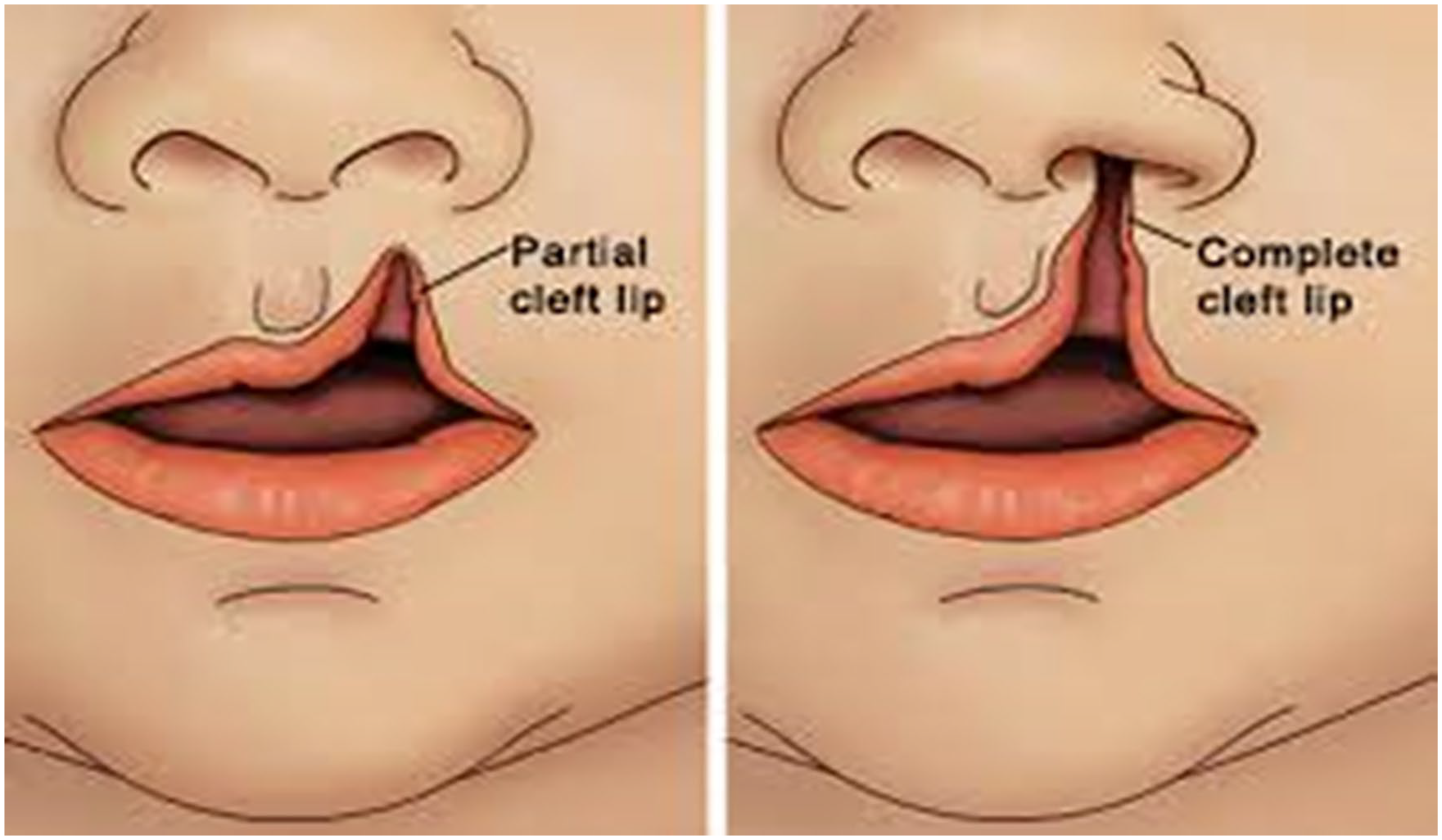
Ibrahim’s illustration of lip anomalies.
In addition, the pictures’ most frequently reiterated concepts (or themes) were clefting, ankyloglossia, thyroid, and macroglossia. Surprisingly, Yara did not include any visuals in her text; this might indicate that her learning style is verbal.
The situational context is formed through a combination of natural language and other pictorial representations through which students make meaning. Concepts, such as “ankyloglossia” and “dyspnea,” are transformed into another format. The meaning-making processes of these representations encompass conceptual explanations. A logico interdependent intersemiotic (across different semiotic resources) relation of elaboration exists between each pictorial representation and orthographic text because the former clarifies the text. However, the accompanying text provides strong topical focus with explanations not present in the image. The concept underlying the image is a meronym of the accompanying text, which in turn is the hyponym. Thus, the two modes are regarded as “parts functioning in some larger whole” (Baldry & Thibault, 2005, p. 21). The two semiotic modes represent part–whole semantic relations in which the text extends the image. The logical convergence (or recontextualization) of the two semiotic modes occurs through the process of semiotic metaphor. A semiotic metaphor refers to the intersemiotic processes underlying the shifts in meaning occurring between natural language and visual displays (O’Halloran, 2003). Highly cohesive multimodal texts facilitate the process of learning new concepts. As Ozuru et al. (2009) state, “students’ difficulty in learning new concepts can be alleviated to some extent by making text more cohesive which makes readers less dependent on pre-existing knowledge” (p. 239).
The results of the SF-MDA of the implicit verbal elements in the oral biology images revealed that they included instances of cohesive devices, as they aim to illustrate and thereby complement verbal texts.
For example, Noura’s verbal interpretation of the implicit conceptual knowledge underlying the ankyloglossia visual image (Figure 2) was as follows: (29) Ankyloglossia or tongue-tie is a congenital oral anomaly. It [R: Pro.] [L: Repetition] is caused by a short, thick lingual frenulum, which is a membrane connecting the underside of the tongue to the floor of the mouth. (Noura)

Ankyloglossia image (Noura).
This interpretation (or reading path) revealed its inclusion of two types of cohesive devices: reference and lexical cohesion. Implicit conceptual knowledge underlying the pictorial image of the congenital lip pits disorder (Figure 3) showed that it included instances of reference, conjunctions, and lexical cohesion: (30) Epithelium-lined blind tracts located at the corners of the mouth (or commissure). Congenital lip pits may be shallow or several millimeters deep. They [R: Pro.] [L: Repetition] may also [C: Extension: Add.] be observed near the midline of the vermilion border. (Ahmed)

Commissural lip pits disorder (Ahmed).
The conclusion to the presentation and discussion of findings on the eight participants’ multimodal texts along with the implications follow.
Conclusion
Drawing on Halliday’s (2014) and Halliday and Hasan’s (2014) cohesion analysis scheme, this study aimed to investigate textual and logical cohesive devices in tertiary multimodal oral biology texts and the ways students used multiple modalities to extend conceptual and logical meaning-making relations. Although this study cannot claim that its participants constituted a representative sample, the findings may offer significant pedagogical insights. The findings indicate that oral biology texts intertwine various cohesive patterns and that the students used a range of cohesive devices. Moreover, the results highlight the importance of lexical cohesion in constructing cohesive oral biology texts, as it was the most extensively used category, followed by reference and conjunctives. The results of lexical sense relations indicate that oral biology discourse is interdisciplinary: It spans oral biology to include a number of subfields in biology. Moreover, logical relationships in oral biology discourse are expressed not only through conjunctions but also through metaphorical forms of these conjunctions, to explain oral anomalies’ causes and consequences. The rare occurrence of incongruent “hidden” causal relations indicates the need to make such forms “visible” to students so that they can understand and construct such grammatical metaphors.
The SF-MDA of cohesion in multimodal semiotic resources highlighted the processes underlying construction of conceptual and linguistic knowledge of cohesive devices in English oral biology texts. Without such knowledge of cohesive devices, students are more likely to lose their grip on the conceptual flow of information (J. M. O’Toole & Schefter, 2008) because taxonomic classifications contribute to the organization of oral biology texts. Although substitution and ellipsis cohesive devices rarely occurred in the oral biology texts, the occurrence of the latter device revealed a key feature of this discourse—use of rejoinders, bullet points and numbered lists. Rejoinders facilitate recall because they encode information in the most economical manner. This highlights the importance of these cohesive devices in scientific texts. Analysis of visual images in biology indicates that SFL provides a theoretical basis for informing future developments in analysis of multimodality. The SF-MDA of visual artifacts indicates that participants’ intuitive interpretations of their meaning-making processes facilitated text-based analysis. Students’ interpretations contributed to our understanding of how print and pictorial representations are processed and integrated in scientific discourse. The formulation of semiotic metaphors involved in shuttling between natural language and visual displays is crucial for students’ learning and understanding of meaning-making resources in this discourse. All eight participants successfully represented textual and logical cohesive devices, as evidenced by their high marks. Finally, it should be noted, however, only a subset of writers’ full range of conceptual knowledge and logical meaning-making potential has been presented.
As the first to analyze textual and logical cohesive devices in tertiary multimodal oral biology texts, this discourse-based study adds to our knowledge database. Further research should investigate use of textual and logical cohesive devices in oral biology texts written by native English speakers and in oral biology textbooks.
Recommendations for Practice
Students’ learning and understanding of meaning-making resources in scientific discourse are facilitated when they meet the requirements and expectations of the discourse community of practice. The findings of SF-MDA of oral biology text–image relations have a number of implications for teaching and learning scientific English. The results can serve as an analytical tool for tutors when analyzing functions of these semiotic modes and when discussing with students the implicit conceptual knowledge and logical meaning-making relations underlying each image. A focus on both micro-level (word or sentence) and macro-level (across sentences and image–text relations) features yields highly cohesive and coherent texts. Most undergraduate EFL/ESL students focus only on a text’s micro-level aspects, but this study indicates that science tutors need to provide undergraduate EFL/ESL students with a variety of multimodal high-cohesion texts so that they can successfully construct conceptual knowledge and logical meaning-making relations in oral biology texts. As Nichols et al. (2013) state, a focus on “the language conventions of concept-specific representations fosters the development of disciplinary discourse by transforming students’ social practices of working with scientific knowledge” (p. 179). Finally, students need to be encouraged to use the rejoinders bullet points and numbered lists to avoid redundancy and facilitate their comprehension and recall of conceptual information.
Footnotes
Acknowledgements
The author is indebted to the two anonymous reviewers for their insightful and helpful comments. The author expresses his appreciation to both the Deanship of Scientific Research at King Saud University and the Research Centre at the Faculty of Arts for funding this article. The author would also like to thank RSSU at King Saud University for their technical support.
Declaration of Conflicting Interests
The author declared no potential conflicts of interest with respect to the research, authorship, and/or publication of this article.
Funding
The author disclosed receipt of the following financial support for the research, authorship, and/or publication of this article: This article was funded by Deanship of Scientific Research and the Research Centre at the Faculty of Arts.
