




Abstract
The construct of entrepreneurial alertness has been gaining considerable interest from academics because it is at the heart of the entrepreneurial process. Consequently, there has been a substantial increase in the number of academic papers over the years. However, this is a highly fragmented field of research that aggregates contributions from researchers in the fields of economics and strategy, entrepreneurship, and psychology. Also, in recent decades, the concept of entrepreneurial alertness has been studied from different perspectives, being considered, on one hand, as cognitive capacity, a dynamic capacity or a skill of the entrepreneur and, on the other hand, as an organizational factor that affects a company’s performance and a source of competitive advantage. The analysis reveals a set of future research avenues that may contribute to the development of the entrepreneurial alertness research field.
Introduction
Entrepreneurial alertness is a concept that “has the potential to add substantially to our understanding of how new ideas get initiated and pursued” (Tang et al., 2012, p. 78). According to Baron (2006, p. 112), “alertness refers to the capacity to recognize the opportunities when they exist-when (. . .) have emerged changes in technology, market, government policies, competitions, and so on”, and as Zaheer and Zaheer (1997, p. 1496) explained, it is the “proactive attentiveness to information, especially of a private nature, about the environment; figuratively having one’s antenna out.” Moreover, alertness requires being “plugged in” to information networks in this era of fast and intensive technological settings (Zaheer & Zaheer, 1997). Through a systematic literature review, Sharma (2019) has identified the core components of alertness construct, namely sensing and searching information, cognitive ability, personality factors (like creativity and self-efficacy), environment, social networks, knowledge, and experience, which influence the ability to perceive opportunities. As a consequence, entrepreneurial alertness significantly influences entrepreneurial intentions, which subsequently resulted in entrepreneurial action (Gaglio & Katz, 2001; Neneh, 2019). Therefore, entrepreneurial alertness is at the heart of the entrepreneurial process because without the identification of a viable business opportunity, there is no entrepreneurship.
In the context of a company, entrepreneurial alertness is considered a capability to sense and detect marketplace ignorance which is relevant for the identification of opportunities for action (Sambamurthy et al., 2003). Marketplace ignorance occurs when firms ignore or miss out opportunities, which are then exploited by another firm, ultimately contributing to enhancing their span for entrepreneurial action (Sambamurthy et al., 2003). It is argued by Smith and Di Gregorio (2002) that entrepreneurial action is a creative and subjective process, and it does occur when a firm: (a) integrate preexisting knowledge, (b) detect an opportunity, and (c) act upon an opportunity.
Despite the growing number of publications since 2006, which reveals the importance of entrepreneurial alertness as an emerging research topic, this is still an ambiguous and fuzzy concept (Norton & Hale, 2011). As a consequence, researchers have approached entrepreneurial alertness in a multidimensional way, relating it to luck (Demsetz, 1983), market sense (Sambamurthy et al., 2003), intuition (Dane & Pratt, 2007), and recognition of opportunities (Baron, 2006). Moreover, the role of entrepreneurial alertness is still a matter of debate in the process of opportunity identification (Tang et al., 2012), where only a limited number of empirical studies are found in the literature (Mitchell et al., 2007; Tang, 2008b). Despite the systematization performed by Sharma (2019) of the core components of alertness, the proliferation of definitions and concepts related to entrepreneurship brings an increasing complexity to the study of entrepreneurial alertness, which demands for more integration between this concept and other theoretical approaches and concepts in the field of entrepreneurship. In this regard, entrepreneurial alertness research faces several challenges, namely the need to promote more empirical research on the nature and implications of entrepreneurial alertness in the context of entrepreneurs and companies, as well as to integrate this concept with other theoretical approaches in the field of entrepreneurship and, thereby, contributing to the development of a coherent theoretical frame that clarifies the role of entrepreneurial alertness in the entrepreneurial process and in the growth of companies and other organizations. In this context, the article aims to understand the trends in entrepreneurial alertness research during the past decades, and, more specifically, to (a) examine which conceptual approaches have sustained the development of the research in this field; (b) identify the main topics and research approaches described in entrepreneurial alertness literature over time; and (c) identify the main theoretical and methodological challenges in this research field which may constitute future research avenues. To fulfill these objectives, a bibliometric and content analysis of the articles sampled was carried out to clarify the concept of entrepreneurial alertness, as well as to identify the main research gaps and trends. This analysis was carried out in three phases: identification of the relevant articles; screening of articles to meet the inclusion criteria; and reading and analyzing all publications that meet the inclusion criteria. As a result, it was possible to identify the main research fields that underpinned research on entrepreneurial alertness, namely the fields of economics and strategy, entrepreneurship, and psychology. Moreover, over the years, the research on entrepreneurial alertness has been characterized by a set of waves of preferred trends, which provides clues for defining future research trends. Thus, this study has useful implications for academics, as it provides clues for young or new researchers that wish to develop research in this field, as well as for policymakers who are responsible for designing policies to foster entrepreneurship. The study of this topic is even more relevant in the current pandemic context, where there is a need to revitalize the economy to minimize the impacts of the economic crisis.
The remainder of the article is structured as follows. Section “Methodology” will explain the methodology used to conduct the review and software used for data analysis. Section “Results and Discussion” will provide the results and discussion, and then follows the conclusions, future research avenues, and the main limitations of our study.
Methodology
The literature on entrepreneurial alertness is fragmented across different research fields and disciplines. Therefore, to organize and disseminate the knowledge produced so far, we opt to perform a bibliometric and content analysis by combining both quantitative and qualitative methods. These methods are gaining relevance in multiple research fields (Ribeiro & Cirani, 2013) due to their key principles of transparency, clarity, integration, focus, equality, accessibility, and coverage that contribute to avoid the common biases of traditional literature reviews, and thus improving the quality of the review process and outcomes (Pittway, 2008).
The Scopus was defined as the database to categorize all of the major contributions in the field of entrepreneurial alertness. The main reason for this selection is based on the results obtained by Adriaanse and Rensleigh (2013) who found that Scopus has fewer inconsistencies (such as author spelling and sequence, volume, and issue number) regarding content verification and content quality when compared to ISI Web of Science (WOS) and Google Scholar (GS). Moreover, Scopus covers a wider range of journals and consequently has a higher number of articles than WOS (Falagas et al., 2008), despite being limited to articles published after 1995. The data were retrieved from the Scopus database on November 8, 2019.
The Sample
To extract all relevant articles from the Scopus database, two search queries were used. In the first search, 161 relevant articles were found using the following search query: Entrepreneur* AND Alertness. In the second search, “Entrepreneur* Alertness” was applied, and 93 relevant articles were found from the discussed field. The asterisk (*) was used as a truncation symbol to search for words with different endings (Granados et al., 2011). The search was limited to subject areas of business management and accounting, economics, econometrics and finance, and social sciences. Next, our research was confined to document type based on the article, source type representing journal, and the English language. Therefore, a total set of 254 articles were retrieved from the SCOPUS database, ranging from 1992 to 2019. The purpose behind the starting year of 1992 is that the first published article on the database dates from that year.
All retrieved articles were arranged to detect duplications since, in both searches, the employed queries used are similar. Therefore, after careful analysis, 90 duplicate articles were detected and hence excluded. A new set of 164 articles was used for further analysis.
Finally, each article was reviewed to analyze its relevance within the research topic. It is found that 32 articles were not related to the topic or were irrelevant and were excluded. A final set of 132 articles was obtained and used for further analysis.
Bibliometric Analysis
The bibliometric analysis enables the mapping of existent literature in a given research field, determining its roots, evolution, and structure through the identification of publications by year, main authors, main keywords, the relationship between authors, and the citation network of the articles in the sample. For this analysis, it was used VOSviewer 1.6.8 software (van Eck & Waltman, 2009, 2011, 2018; Waltman et al., 2010) which also allowed us to find the emerging areas by developing a network of themes. To identify the scientific field’s structural aspect, the co-occurrence frequency was used to build a map.
Content Analysis
To perform the content analysis, all articles were downloaded and read by the authors to identify keywords, main topics discussed, as well as the main results and conclusions. Articles were classified by each author individually to ensure the reliability of classification. In the end, all classifications were brought together and, in the case of divergent classification, each article in question was discussed to reach a consensus in its categorization.
The keyword analysis was performed based on the keywords selected by the authors of each article in our sample, as well as its frequency considering all articles published in a specific year.
Results and Discussion
Descriptive Analysis
The first publication mentioning alertness is dated from 1904 in the journal “psychology bulletin,” and it was published by the American Psychology Association, but in this case, the concept of alertness was related to measuring mental intelligence or mental alertness. Figure 1 present the number of publications between 2000 and 2019, showing an increasing trend in publications, especially after 2013, which reveals the growing interest of researchers in the area.
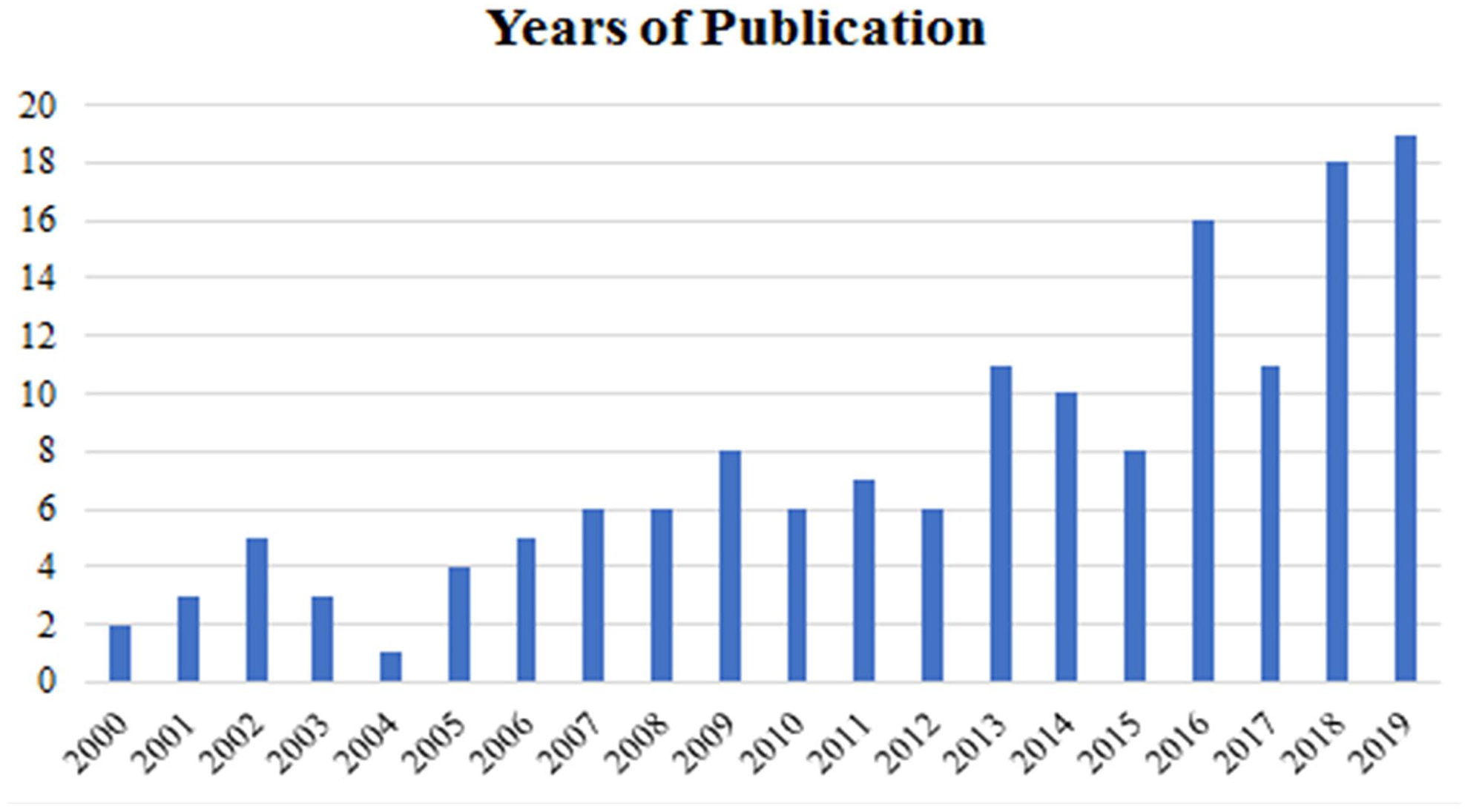
Number of publications per year.
Table 1 shows a list of the most important and productive authors in the field of entrepreneurial alertness. Although there is no considerable difference in the number of publications per author, the same is no longer the case with the total number of citations and citations per paper. The most productive and impactful authors in this domain are Maria Minniti and Robert Alan Baron.
The Most Productive Authors on Entrepreneurial Alertness.

Note. c/p = citation per paper.
The authors’ productivity and performance can be also determined using the Hirsch index or h-index, proposed by Hirsch (2005). Through the analysis of Table 1, it is possible to conclude that every author has a similar h-index regarding the number of publications in the entrepreneurial alertness field.
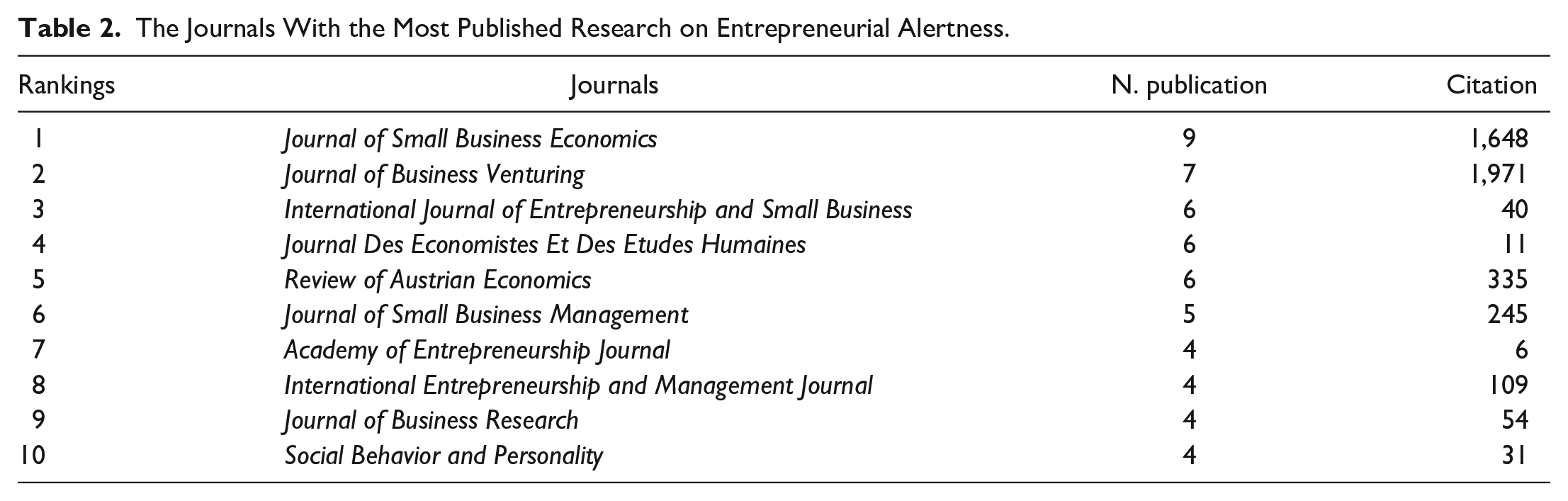
In turn, journal importance can be measured based on citations and impact factors in each category of specialization. Table 2 presents a list of journals that published more research on entrepreneurial alertness. In terms of citations, both the Journal of Small Business Economics and the Journal of Business stand out.
The Journals With the Most Published Research on Entrepreneurial Alertness.
Bibliometric Analysis
Analysis of the most-cited articles
Table 3 presents the studies conducted on entrepreneurial alertness, which have received the highest number of citations in recent years. In this table, the studies have been ranked from 1 to 25 based on the total number of citations (ranging from 131 to 3514) and the number of citations per year (ranging from 11.27 to 206.70). According to this classification, the work performed by Ardichvili et al. (2003), entitled “A theory of entrepreneurial opportunity identification and development,” ranks first with the highest number of total citations, as well as citations per year followed by an article published by Sambamurthy et al. (2003), entitled “Shaping agility through digital options: Reconceptualizing the role of information technology in contemporary firms.” Achieving such a high ranking in terms of citation indicates the high contribution of these two studies in the development of the concept of entrepreneurial alertness. Other researchers who have valuable contributions toward the concept of entrepreneurial alertness with more than 500 citations are Gaglio and Katz (2001), Baron (2006), Kaish and Gilad (1991), Van Gelderen et al. (2008), and Kirzner (1999).
25 Most Cited Articles in the Entrepreneurial Alertness Research.

R stands for the rank of author, article, journal, year, and citation in the table. b R stands for the citation per year for all articles in the table.
Analysis of the intellectual structure of the research field
The co-citation of cited references network (Figure 2) identifies similarities between articles by assessing whether articles cite the same references. This analysis is useful to clarify the intellectual structure of the field and map the way researchers relate to one another and to illustrate the role and importance of a given reference for the research question under analysis. A minimum of 10 citations of cited references was considered suitable for this study. The network is composed of 22 articles organized into four clusters.

Co-citation of cited references.
The first cluster, in blue, is composed of authors that have their roots in the economics and strategy fields, such as Israel Kirzner, Sankaran Venkataraman, James O. Fiet, and Jay Barney. Israel Kirzner is the most cited author with 315 citations. He is considered one of the leading exponents of the Austrian school of economics, and his contributions to the study of the dynamics of capitalism are unquestionable. Through his extensive published work, Kirzner has presented his view on how the competitive market process works, and the role of knowledge and discovery in the market equilibration process (Kirzner, 1973, 1976, 1997, 1999), which “differs in character and content from a good deal of neoclassical theory” (Kirzner, 1997). Unlike the neoclassical approach, the Austrian view sees entrepreneurial discovery as the systematic process of overcoming sheer ignorance by increasing mutual awareness among market participants and thereby leading markets toward equilibrium (seen as the absence of sheer ignorance). In this case, entrepreneurs are key elements in the searching for, discovering and exploiting of profitable opportunities, such as mentioned by von Mises (1949, p. 325) “the driving force of the market process is provided neither by the consumers nor the owners of the means of production—land, capital goods, and labor—but by the promoting and speculating entrepreneurs.” The entrepreneur is, therefore, able to discover previously overlooked profit opportunities, in conditions of market disequilibrium, due to his daring, imaginative, and speculative actions which are characteristic of its alertness (Kirzner, 1997).
In this vein, Venkataraman (Sarasvathy & Venkataraman, 2011; Shane & Venkataraman, 2000; Venkataraman, 1997) and Fiet (2007; Fiet & Patel, 2008) argue that the discovery process is at the heart of entrepreneurship and, therefore, should be a key aspect to be explored and understood through entrepreneurship research.
The second cluster, in yellow, comprises researchers who focus mainly on the study of entrepreneurship but from a behavior perspective. In this case, Scott A. Shane is the most cited author with 202 citations. He has studied how entrepreneurs discover and evaluate opportunities, assemble resources, and design organizations. In his book “A general theory of entrepreneurship: the individual opportunity nexus” (Shane, 2003), it is proposed that “entrepreneurship can be explained by considering the nexus of enterprising individuals and valuable opportunities” (p.9), and, thus, highlighting that human agency plays a key role in the entrepreneurial process. Also, he assumes that entrepreneurship is not solely the result of human action but also a consequence of external factors, such as the status of the economy, the availability of venture capital, the actions of competitors, and government regulations (Shane et al., 2003). In this respect, he has proposed a framework that aggregates both environment-centric and individual-centric approaches to explain entrepreneurial activity variance. This framework, which has served as the basis for many other studies over the years, examines the characteristics of opportunities, as well as of the individuals who discover and exploit them, the process of resource acquisition and organization and the strategies used to exploit and protect the profits from those efforts. In the same vein, Paul Westhead and Mike Wright, also two of the most cited authors, have published several relevant articles that explore the role of entrepreneur’s human capital on opportunity identification and pursuit (Ucbasaran et al., 2003, 2008).
The third cluster, in green, comprises mainly researchers from the field of psychology, which use a cognitive approach to the theory of entrepreneurial alertness, such as Robert A. Baron (the most cited author with 158 citations), Connie Gaglio, Michel Frese, and George Lumpkin. Robert Baron is widely recognized as one of the leading scholars in the field of cognitive and social factors in entrepreneurship, having contributed to linking these two distinct academic disciplines—psychology and entrepreneurship. Cognitions have been defined as all mental actions or processes involved in acquiring and processing information that is necessary for everyday living (Magni & Bilotta, 2016). According to Baron (1998, p. 288), “entrepreneurs’ thinking may differ, in important ways, from that of other persons,” in particular, they are able to identify opportunities for new ventures using cognitive frameworks (e.g., prototypes, examples) that they have acquired through experience enabling them to “connect the dots” between seemingly unrelated events or market trends (Baron, 2006). This framework also suggests that active search, alertness, and prior knowledge operate together in the opportunity recognition process. More specifically, Gaglio and Katz (2001) argue that entrepreneurs possess a schema of entrepreneurial alertness, which is a mental model that represents an individual’s knowledge about the presence of market disruptions or their potential occurrence. Another relevant aspect of the pattern recognition perspective is that a person can be trained to become more proficient in this task “by teaching them not merely to be ‘alert’ to opportunities or to search actively for them, but rather, to search in the best places and in the best ways” (Baron, 2006, p. 116).
The last cluster, in red, includes researchers that investigate entrepreneurship but from a cognitive perspective. This is the case of Dean Shepherd, the most cited author with 103 citations, Jintong Tang, and Lowell Busenitz. Those researchers have investigated entrepreneurs’ decision-making process involved in leveraging cognitive and other resources to act on opportunities, as well as in the development of new ventures (McMullen & Shepherd, 2006; Shepherd & DeTienne, 2005). In addition, Wiklund and Shepherd (2003) have studied the role of entrepreneurs’ motivations in growth, which has contributed to unveil the process of small business growth. In turn, Tang et al. (2012) have proposed a model involving three distinct elements of alertness: scanning and search, association and connection, and evaluation and judgment, and have proposed and validate an alertness scale that was further adopter in many studies over the years.
Content Analysis
This type of analysis covers all the articles available as the aim is to gain and enhance an understanding of the evolvement of the entrepreneurial alertness research field. Through the analysis of the selected papers, it is possible to establish a timeline of the most frequent keywords associated with entrepreneurial alertness per year (Figure 3). In this case, it is observed five main waves which represent the main topic trends.
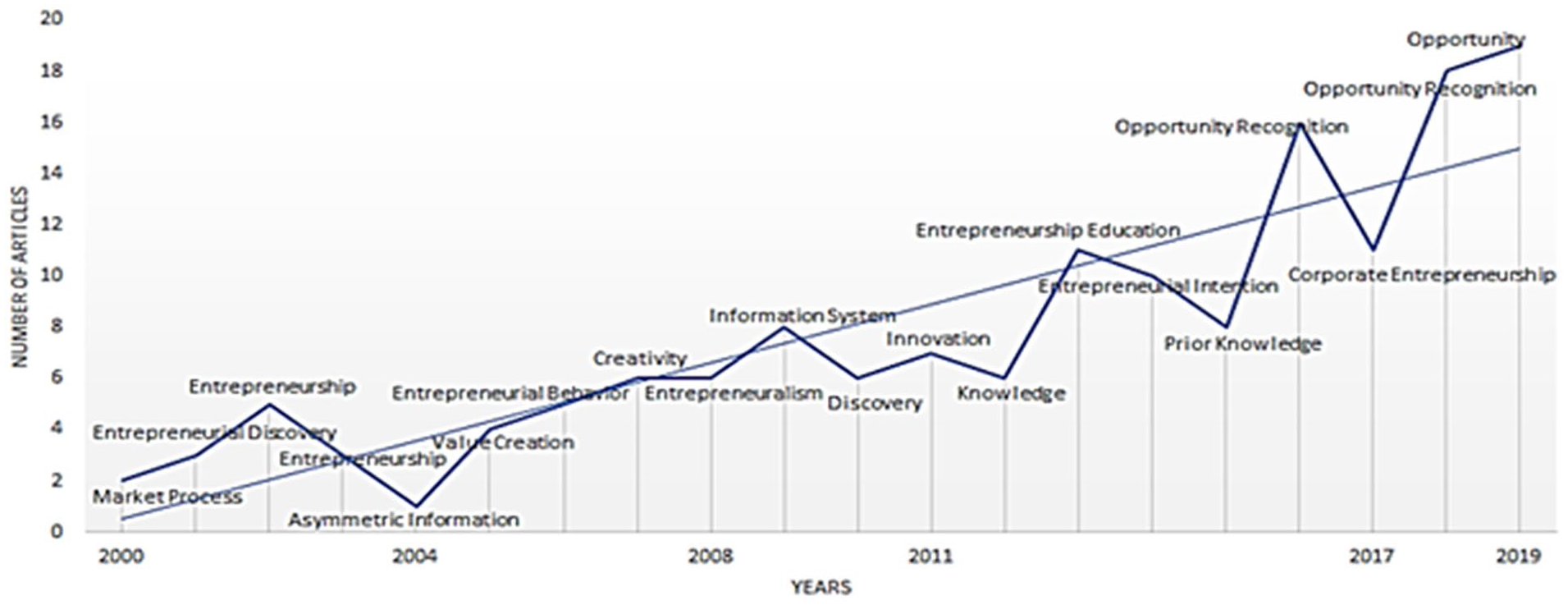
Main keywords associated with the term entrepreneurial alertness per year.
In the first wave (2000–2004), entrepreneurial alertness is mostly associated with terms related to the market process theory (Kirzner, 1992), particularly related to the gathering of new market information. For instance, Yates (2000) discusses the role of alertness in the entrepreneurial discovery function. He uses the case of the used car market to study market equilibrium through the perspective of standard and entrepreneurial sellers. In this case, entrepreneurial sellers are aware that they do not possess all knowledge, so they remain alert to the possibility that they may discover relevant information about market conditions that would allow them to raise prices when market demand increases. Thus, entrepreneurial discovery is not considered the same as deliberate learning or random luck since entrepreneurs choose to be alert and expect the unexpected.
In the same line, Yu (2001) discusses the concept of entrepreneurial alertness from the subjectivist perspective, where entrepreneurs interpret incoming information differently from the general public. Thus, entrepreneurs are able to profit from opportunities by doing some things in a different way than the traditional. Minniti (2004) argues that the existence of asymmetric information is crucial for entrepreneurial activity because the results of spin-glass simulation show that if the information is not evenly distributed, entrepreneurship is shown to increase and concentrate geographically.
In a second wave (2005–2008), entrepreneurial alertness is considered a perceptual variable that influences individuals’ decision to become entrepreneurs (Arenius & Minniti, 2005), and, thus, it is related with the entrepreneurial behavior. In the study of Arenius and Minniti (2005) that used a large sample of individuals from 20 countries, it was observed that perceptual variables were significantly correlated with new business creation across all countries and across gender.
Other studies focused on the role of entrepreneurial alertness in the promotion of entrepreneurial behavior. On one hand, Tang (2008a) concluded that entrepreneurial alertness is associated with self-efficacy in performing the roles and tasks of new venture creation. On the other hand, Van Gelderen et al. (2008) investigated the entrepreneurial intentions of business students, and results showed that the two most important variables to explain entrepreneurial intentions are entrepreneurial alertness and financial security. Likewise, alertness along with other key variables drives entrepreneurial creativity, which becomes ever more important with its link to entrepreneurial behavior (Stephen & John, 2007).
The third wave (2009–2011) encompasses a set of studies that consider entrepreneurial alertness as a dynamic capability not only relevant to entrepreneurs, but also to employees since they can boost corporate entrepreneurship. According to Agarwal and Selen (2009) managers’ higher-order capabilities, such as customer engagement, collaborative agility, collaborative innovative capacity and entrepreneurial alertness, influence the service innovation outcome. In the same vein, Simsek et al.’s (2009) study with 495 SMEs observed that an entrepreneurially alert information system imparts a significant positive influence on corporate entrepreneurship. Moreover, entrepreneurial alertness seems relevant when a firm explores opportunities for entering into a foreign market (Kontinen & Ojala, 2011).
Fischer (2011) argues that knowledge management can raise the level of an individual’s alertness in the opportunity recognition process, and therefore could influence service innovation in professional service firms.
In the fourth wave (2012–2017), a number of studies considered entrepreneurial alertness as a skill that can be developed through entrepreneurship education. According to Chell (2013), skills are not the same as competencies or abilities. Skills are multidimensional constructs that, once acquired, tend to be assumed implicitly in action without conscious through. In turn, competencies are related to the notion of being competent or proficient and refers to a mix of knowledge, skills, abilities, and sometimes other attributes as well (Chell, 2013). Therefore, education has a crucial role in upgrading people’s skills.
For example, Solesvik (2013) demonstrated that entrepreneurship education students with entrepreneurial alertness assets present a higher entrepreneurial mind-set. Similarly, entrepreneurship education makes individuals more alert to the opportunity identification process (Chang et al., 2014; Ghasemi & Rowshan, 2016; Hu & Ye, 2017; Li et al., 2015).
In turn, several studies have concluded that prior knowledge has a significant impact on entrepreneurial alertness among university students (Hajizadeh & Zali, 2016; Li et al., 2015; Park et al., 2017). Moreover, Westhead and Solesvik (2016) demonstrated that female students with entrepreneurship education and presented entrepreneurial alertness skills demonstrated higher entrepreneurial intention.
Finally, the fifth wave (2018–2019) encompasses a set of papers where entrepreneurial alertness is considered an organizational factor that influences a firm’s performance and is a source of competitive advantage. According to Roundy et al. (2018), there is a direct effect of entrepreneurial alertness on strategic change decisions and organizational performance. Moreover, those researchers have observed a synergistic influence of entrepreneurial alertness and other cognitions, including issue categorization and assessments of uncertainty, on strategic decisions. Similar results were obtained by other researchers (Adomako et al., 2018; Rezvani et al., 2018; Tsou & Cheng, 2018; Urban, 2019; Zanella et al., 2019).
In fact, Rezvani et al. (2018) propose a new framework for organizational entrepreneurial alertness in opportunity discovery of individual, group, and organizational levels through the use of the meth-synthesis approach. Moreover, Antonacopoulou et al. (2019) have revived the learning organization concept and propose a new framework (the 8As) that illustrates how alertness together with attentiveness, awareness, appreciation, anticipation, alignment, activation, and agility form an integral part of the New Learning Organizations.
Conclusion
This article reviews and analyses the concept of entrepreneurial alertness, as well as the research that has been developed around it. As the seminal work of Kirzner in 1973, entrepreneurial alertness research has attracted the attention of researchers from different research fields, such as economics and strategy, entrepreneurship, and psychology. Although the interplay between different scientific disciplines is at the core of entrepreneurial alertness research field, it seems that its knowledge base was built from the work of a small number of researchers. These core-set of scientists, such as Kirzner, Shane, and Baron, were actively involved in making relevant contributions to the theory of phenomenon. As a consequence, entrepreneurial alertness has been studied from different perspectives, not just from the individual’s perspectives where the focus is on understanding how and why entrepreneurs spot opportunities but also from the perspectives of companies because entrepreneurial alertness can be a key factor in firms’ success and growth.
Moreover, the interest in this topic has fueled research in many directions over the past two decades. In this case, the content analysis revealed five main research trends where entrepreneurial alertness is considered an element of the market process (2000–2004), a perceptual variable that influences an individual’s decision to become an entrepreneur (2005–2008), a dynamic capability of both entrepreneurs and employees (2009–2011), a skill that can be developed through education (2012–2015), and a factor that influences a firm’s performance and a source of competitive advantage (2016–2019). Therefore, through the years, the research on entrepreneurial alertness has evolved from the focus on the individual to that of the company, and it is now recognized as a key factor of organizational success.
This article brings several contributions to the body of knowledge of entrepreneurship, by mapping the evolution of the entrepreneurial alertness concept, as well as identifying the main influences from other fields of scientific research, which allows for a better delimitation of this construct, and, thus, enables the overcoming one of the main constraints in the development of studies in this area which is, as stated by Gielnik et al. (2014), the fact that entrepreneurship alertness construct was broad and nonspecific. Moreover, by highlighting the fundamental role that entrepreneurial alertness plays in the entrepreneurial process, this article brings legitimacy to this area of study in the context of entrepreneurship research. In this case, entrepreneurial alertness is not only relevant in the discovery of opportunities, but it also has a significantly positive relationship with entrepreneurial intentions (Neneh, 2019), as well as social entrepreneurial intentions (Urban, 2020), which are antecendents of the entrepreneurial behavior. Therefore, a clear understanding of the concept of entrepreneurial alertness and of the research already carried out is essential to encourage the emergence of more studies in this area.
Future Research Avenues
Although there is a significant growth in the number of studies in the field of entrepreneurial alertness, more research is still needed to better understand how it can be formed and nurtured, as well as its relevance in the development of companies and nonprofit organizations. Therefore, through the analysis made it is possible to outline several suggestions for further research in the field of entrepreneurial alertness, namely through the development of studies aiming at:
- Identifying what are the organizational antecedents affecting employees’ entrepreneurial alertness (Urban, 2017) and how it can be enhanced in the context of an organization;
Understanding the role of entrepreneurial alertness in the context of social entrepreneurship (Mair & Noboa, 2006) and how it influences the performance and impact of social organizations;
- Understanding the relevance of entrepreneurship and innovation ecosystems in the development of entrepreneurial alertness of individuals and organizations through providing empirical evidence of these relationships;
- Understanding what is the role of entrepreneurship education in the development of entrepreneurial alertness and what teaching methodologies and learning approaches better contribute to its development at the different education levels;
Assessing the differences between the characteristics of nascent and serial entrepreneurs, both at the behavioral and cognitive level, related to alertness and the ability to spot opportunities (Craig & Johnson, 2006);
- Understand what are the key factors affecting different levels of alertness among individuals (Sharma, 2019) and why some entrepreneurs are more successful than others;
- Understanding how entrepreneurial alertness is related to other entrepreneurial competencies, such as creativity, proactivity, empathy, and the ability to deal with uncertainty and risk, among others (Bacigalupo et al., 2016) and how those can influence the process of new venture creation;
Therefore, future research is needed to disclose a clearer and more concise picture of the boundaries of entrepreneurial alertness concept and how it relates to other concepts in the field of entrepreneurship. Moreover, it also has relevant implications for practice and promoting social and economic development through the rise of entrepreneurship and new venture creation because entrepreneurial alertness is the spark of the entrepreneurial process. Thus, a better understanding of the entrepreneurial alert allows to define more adequately the initiatives and activities that foster this competence.
Limitations
There were some limitations to the research, which should also be mentioned. First, this study comprised only peer-reviewed articles that were published in English. Second, only the Scopus database was taken into account while ignoring other useful databases that might highlight the role of entrepreneurial alertness with other core concepts. Third, the subject areas of business management and accounting, economics, econometrics and finance, and social sciences were employed due to their greater relevance to the business domain. Finally, there may be some bias related to the content analysis due to the personal view of each researcher.
Footnotes
Declaration of Conflicting Interests
The author(s) declared no potential conflicts of interest with respect to the research, authorship, and/or publication of this article.
Funding
The author(s) disclosed receipt of the following financial support for the research and/or authorship of this article: This work was financially supported by the research unit on Governance, Competitiveness, and Public Policy (UIDB/04058/2020) + + (UIDP/04058/2020), funded by national funds through FCT—Fundação para a Ciência e a Tecnologia. Also, his work is funded by national funds through FCT – Fundação para a Ciência e a Tecnologia, I.P., under the Scientific Employment Stimulus - Institutional Call - reference CEECINST/00026/2018
Ethical Statement
This article does not contain any unfair means or any other criminal activity which harsh the animals and human beings.
