




Abstract
The objective of this study is to identify the main Green Technology practices carried out in the countries Brazil, Russia, India, China, and South Africa (BRICS), through a systematic review without temporal delimitation. BRICS countries were chosen due to the high potential for impact on the environment, as well as the possibility of increasing the theoretical subsidy in discussions related to sustainable practices in these countries. The Methodi Ordinatio methodology was used to select and map the portfolio of relevant articles in the area, which allowed the identification of the main Green Technology practices used in the BRICS countries. The final portfolio was composed of 170 studies. The main Green Technology practices used in the BRICS are related to products, processes, and raw materials; a sustainable agriculture; water treatment and retention; waste management; green energy and energy reduction; carbon and biogas reduction; green buildings; and sustainability and ecocities policies. A greater number of researches on Green Technology and its practices took place in the countries of China and India, which can be explained due to its more sustainable development, greater number of sustainable actions, and growing interest by the country’s local academy. Brazil, Russia, and South Africa did not excel in Green Technology practices. The study provided an overview of the practices used in these countries and that can contribute to guidance for companies that are concerned with sustainability. It is worth mentioning that the political interest in this topic was identified, because there are political actions that encourage Green Technology practices.
Introduction
Population growth, along with increased industrial activity around the world, has been leading to the depletion of natural resources (Fujii & Managi, 2019; Salvador et al., 2019) and has generated a growing concern about the disparity in wealth and the social and environmental responsibility (Alam & Murad, 2020). There is a new scenario for organizations and countries seeking to adopt technologies that are sustainable both in their products and in their processes, through innovation and sustainability practices (Hu et al., 2019).
These practices are concerned with mitigating the damage caused to the environment and also seek to cause impacts in several sectors, among them, especially, energy, health, and wealth (Zhu & Ye, 2018). Sustainable development and the spread of the use of green technologies, also called Green Technology, have been gaining strength in all sectors of the countries’ economy (C. Wang et al., 2015). Green Technology appears in this context through the development of sustainable practices (Santra, 2017), promoting mechanisms that allow the reduction of pollution, environmental impacts throughout the life cycle, the opening and creation of new markets, and the development of new products, services, or processes (Bocken et al., 2014; Mylan, 2015).
Green Technology has become one of the best alternative strategies for sustainable development (Danish & Ulucak, 2020). Green growth depends on technological and market innovations, specially, to understand the role of environmental technologies and the formulation of policies and decision making (Alam & Murad, 2020). Green or eco-technology includes sustainable or environmental technology and it covers continuously evolving groups of methods, practices, and materials, from techniques for generating energy to non-toxic cleaning products (Aswathy & Saravanan, 2019). It considers the long- and short-term impact of something on the environment (Alam & Murad, 2020). Green Technology is environmentally friendly by definition because it encompasses energy efficiency, health and safety concerns, recycling, renewable resources, and many other things (Awan, 2019). The organizations have to adopt the best utilization strategy of their available resources to ensure firms sustainable growth in challenging and competitive business environment (Abbas, Mahmood, et al., 2019).
Braun and Wield (1994) introduced Green Technology as a generic term for technologies, processes, or products that reduce environmental pollution, energy consumption, and raw materials. Bartlett and Trifilova (2010) define Green Technology as innovation in products and processes that provide value to the customer and the business but significantly reduce environmental impacts. Similarly, Kemp and Pearson (2007) propose the concept of Green Technology as the production, assimilation or exploration of a product, production process, service or management or business method that is new to the organization (developing or adopting) resulting, throughout its life cycle, in reducing environmental risk, pollution, and other negative impacts of resource use (including energy use) compared with relevant alternatives.
Qi et al. (2010) and Rennings (2000) point out that the green innovation is divided into two main strands: green technological innovation and green managerial innovation. Green technological innovation is geared toward environmental protection, in which environmental scientific knowledge and technology aims to achieve a harmonious development between the economy and the environment in the production process, through efforts that include the development of technologies and products helping to save energy and raw materials, using energy efficiently (Corsi et al., 2019). Earlier, the green managerial innovation refers to the adoption of new organizational structures or management systems, thereby improving production and management processes to reduce negative environmental impacts (S. J. Li et al., 2018).
Based on the perspective of industrial dynamics, Andersen (2008) defines Green Technology as innovations that attract green profitability on the market. Considering the statements and following the same scope of definitions, Arundel and Kemp (2009) conclude that Green Technology represents an important new concept for companies and policy-making countries. These are innovations with less environmental impact than relevant alternatives. Innovations can be technological or non-technological (organizational, institutional, or based on marketing). And linked practices can be motivated by economic or environmental considerations, including goals to reduce resource costs, pollution control, or waste management, or sells on the world market of eco-products. The environmental responsibility of firms is comprised of business processes and practices, such as waste reduction, efficiency in energy and water use, recycling, monitoring, reusing by-products, and making efforts to preserve the natural resources, all of which are pitched to diminish the adverse effects of the operations of firms (Abbas, Raza, et al., 2019).
Research Gaps
In this context, this study is justified by the gap in the research area, considering the limitation of studies that investigate the set of Green Technology practices in the BRICS (Brazil, Russia, India, China, and South Africa) countries, which stood out on the world stage for the rapid growth of their developing economies (de Medeiros & Trebat, 2017). Thus, the research makes it possible to understand which are the drivers that contribute to the theoretical and methodological direction used in research on this theme (Díaz-García et al., 2015). In addition to this factor, the BRICS countries operate in different economic segments that consequently generate an increase in their rates of environmental pollution and extraction of natural resources (Aswathy & Saravanan, 2019). Another highlight is linked to the need to discuss sustainability issues in developing countries (Awan et al., 2018b).
Regarding practical and operational relevance, the study is justified because it serves as a basis for expanding Green Technology practices with organizations that are adapting their strategies and inserting environmental management in their businesses to reduce the generation of harmful substances to the environment (D’Souza et al., 2006; Ko et al., 2011; Murugesan, 2008).
In addition, at the governmental level, it is expected to contribute to the importance of discussing the promotion of Sustainable Consumption and Production patterns (SCP), and protection and management of natural resource bases for economic and social development, and addressing climate change, energy efficiency, energy conservation, environmental technologies, green buildings, investments, carbon dioxide, and manufacturing (Danish & Ulucak, 2020).
It is also important to consider the need to understand how organizations can foster their sustainability actions with their employees, through encouragement, creativity, and mechanisms that promote the exchange of information and joint strategic planning decisions for the effectiveness of these actions (Awan, 2019).
BRICS countries have national science and technology–oriented strategies, which are regularly updated for monitoring, benchmarking, and planning purposes. Thus, they apply rational methods for the management of their research systems (Kahn, 2015). They also have significant industrial capacity and high levels of self-sufficiency. Medical, scientific, and technical competences that contribute to the global advance of knowledge can be cited (Kahn, 2015). However, the absence of sustainable mechanisms in these countries hinders the growth of the BRICS for future times (Ozturk, 2015).
Considering that, to date, there is no systematic review of robust and current literature, which gathers information on the main practices of Green Technology carried out in the BRICS, this study presents, through the original proposal, relevant potential to fill this gap, as well as due to the topicality and relevance of the topic. And, in this context, the results may pave the way for new research in this area of knowledge, thus expanding the information and strategies adopted in these countries, as well as environmental management practices, and constituting a source of consultation for industrial managers to support their decision-making process when adopting environmental management practices.
Thus, the present study aims to identify the main Green Technology practices carried out in the countries belonging to the BRICS through a systematic review without temporal delimitation.
Method
Due to the advancement of technologies and the need to build new knowledge, there is a significant increase in the sharing of information or research processes (Haeussler et al., 2014); in this sense, the number of scientific studies and research has shown a considerable increase in last years. In this way, there are several possibilities to identify sources of data and information to produce new knowledge. It is part of the researcher’s job to select these sources as well as to identify the most relevant information for his research. Methodi Ordinatio was selected as the method for conducting the systematic review of this research, as it “enables the construction of a consistent bibliographic portfolio for the preparation of a research work, in a faster and more effective way” (Pagani et al., 2017, p. 163), through the use of information and communication technologies in its application (Pagani et al., 2017).
Methodi Ordinatio is a robust method, so the work of identifying scientific relevance is laborious for the researcher. The relevance identification process consists of systematic reading and bibliometric analysis of each article after the filtering process, as described by the authors. Only after these tasks is it possible to define the relevance or not of the work for the research being carried out (Pagani et al., 2017).
As a reflection on other methodologies such as: MSCRI, The Cochrane Collaboration Model and ProKnow-C, Methodi Ordinatio, proposes to assist in the decision-making process on which works make up a robust portfolio for research on a specific topic. Its main advantage is that the definition of relevance occurs in the early stages of the process. This factor brings advantages to the researcher, because if he decides that he is not satisfied with his search, he will be able to do the work again, because it occurs more quickly than if he were using more complex methodologies, in addition to presenting an analysis that takes into account three factors: number of citations, year of publication, and impact factor (Pagani et al., 2017).
To answer the proposed objective, the Methodi Ordinatio, a systematic review methodology proposed by Pagani et al. (2017), was chosen. The methodology aims to select and classify relevant scientific articles, considering the criteria: impact factor, number of citations, and year of publication. Such criteria generate an index called InOrdinatio, facilitating the identification of the most relevant studies on the subject.
The methodology foresees a sequence of nine steps used to follow the methodological path:
Step 1—Establishment of the research intention: Green Technology and BRICS countries. “Generally, the research intention is related to the line of research to which the researcher is linked” (Pagani et al., 2017, p. 171). Thus, the intention of research in this work is focused on the theme Green Technology and BRICS countries.
Step 2—Definition and combinations of keywords and databases: In this step, combinations of keywords were tested in the databases to identify the searches that presented satisfactory results according to the objective of the study.
Step 3—Preliminary exploratory research using selected keywords in the search databases: The choice of databases, Web of Science and Scopus, was made, because the databases presented a high volume of publications with the searched keywords and greater availability of access to published materials.
Step 4—Definitive search in the databases: The final search resulted in a gross total of 439 articles. We opted for research without a time limit for a complete systematic review; documents selected were restricted to original and review articles only, using the following descriptors (Table 1).
Step 5—Filtering procedures and elimination of duplicate articles: It is important to use the filters available in each database properly and in the most standardized way possible. Even so, as there is no uniform mechanism between the bases, the return of articles presented documents unrelated to the topic. In addition, the result presented repeated articles, as they were present in the two databases (see Table 2).
Step 6—Identification of the impact factor, considering year and number of citations. The journal citation report (JCR) was considered the first option of impact factor measurement, and in the case of publications not evaluated by the JCR, the Cite Score metric was chosen. To obtain the number of citations of each article, a search was performed using the Google Scholar platform.
Step 7—Ordering the articles using InOrdinatio index, considering Equation 1: The InOrdinatio equation was applied, using an Excel™ spreadsheet. The equation allows to order the portfolio according to scientific relevance, which uses three factors: number of citations, year of publication, and impact factor (Pagani et al., 2017):

where IF is the impact factor, α is a weighting factor ranging from 1 to 10 to be attributed by the researcher, Research Year is the year in which the research was developed, Publish Year is the year in which the paper was published, and Ci is the number of times the paper has been cited (Pagani et al., 2017).
The α value established was 10, which may vary between 1 and 10, being a researcher criterion. In this case, priority was given to the most recent articles, because the selection of documents was carried out without time limit set.
At this stage, due to the application of the equation, it was possible to identify 16 articles with a negative InOrdinatio index classification value, being eliminated from the final portfolio. Therefore, the final portfolio consisted of 279 articles.
Step 8—Location of articles in full format: The location of the works in full format was carried out directly on the magazine’s website or also on the Google Scholar website. Articles were easily located in full when searching for data as an impact factor and number of citations. In other cases, the full text was hidden in one of the versions of the work on Google Scholar; the full format was also found in other journals or in the researcher’s own profile.
Step 9—Systematic reading and analysis of articles: The present stage was based on the reading of 279 articles, which passed the exclusion criteria (Table 2). From those, 109 articles were eliminated through full reading, composing the final portfolio with 170 articles.
Keywords and Research Bases.

Source. The authors (2021).
Filtering Procedures.

Source. The authors (2021).
Note. BRICS = Brazil, Russia, India, China, and South Africa.
This selection of articles allowed the analysis of aspects permeating Green Technology practices adopted by the BRICS countries, allowing to carrying out comparative analyses.
A summary of literature review steps is shown in Figure 1:

Summary of literature review steps.
Results and Discussion
This section is divided into literature exploration and Green Technology practices adopted by BRICS countries.
Portfolio Exploration
The visual maps of co-authorship (Figure 2A) and co-occurrence (Figure 2B) were built with the aid of the VOSviewer software tool. The visual map of co-authorship based on the final portfolio was made using the full counting method of VOSviewer with a minimum number of documents of two per author; therefore, the number of authors found was 21.

(A) Co-authorship—Final portfolio and (B) Co-occurrence of terms—Final portfolio.
For a visual co-occurrence map of keywords, the minimum number of occurrences per keyword was defined. From 1,443 keywords, only 85 met the established criteria, using the complete counting method. Figure 2A shows the co-author relations and Figure 2B the co-occurrence relations, respectively.
Among the 530 authors, 37 present two publications. In the image, it is possible to observe the clusters, as well as the years of publication, according to the legend. Six authors (with the largest circumferences) present three publications. Two authors present four publications and only one author presents eight publications. Xiaoqin Zhang presented publication of eight documents; additionally, he is the author with the largest number of links with other authors, due to co-authorship publications. This researcher forms a network with 22 other authors. The author has published on this topic since 2011, having his last publication in 2019, being the author with the greatest connectivity in publications regarding the theme.
The portfolio contains scholars who also formed networks, however, with fewer articles, such as Shanyong Wang (four publications) and six ties with other authors, including Xiaoqin Zhang. Yuan Zhou has four publications; however, he belongs to only one cluster, participating as the first author or co-author within the same network. The visual map shows the competition of keywords, in which it is possible to analyze the themes related to Green Technologies. The prominent authors are Chinese, as the largest number of publications belongs to China.
Due to the scope of research addressing only BRICS countries, the keywords highlighted are developing countries, China and India. China reported 48 occurrences linked to 269 keywords. India has 18 occurrences linked to 205 keywords. This is due to the fact that the largest concentration of articles in this portfolio belongs to China and India. The theme Green Technology (37) stands out, because it is the central axis of this work, followed by sustainable development (25), environmental technology and sustainability (16), and innovation and environmental protection (14).
More recent keywords, which started to emerge around 2015, are decision making, innovation, technology, renewable energy, green computing, extraction, productivity, environmental regulation, green economy, and manufacturing, among others.
These results demonstrate that the majority of works are aligned with the theme Green Technology and that there is a strong link between the theme and the words innovation, environmental technology, sustainable development, energy efficiency, and emission control. Figure 3 shows the number of documents belonging to the final portfolio, according to the year of publication.

Number of publications per year.
It should be noted that the theme Green Technology has shown an increase in the number of publications in BRICS countries since 2013. It is certainly a theme that has gaining space in the academy discussion worldwide. When analyzing portfolio, the Journal of Cleaner Production (12 documents) and the International Journal of Applied Engineering Research (10 documents) show representative results in relation to the number of published documents, followed by the Sustainability (Switzerland), with three documents.
Figure 4 shows the sum of the number of articles published by country:

Number of articles by country.
The largest number of publications on Green Technology was carried out by China and India, considering the scope to BRICS countries. Studies from China account for 50% (94) of the articles analyzed, India 32% (68), Brazil 9% (16), Russia 6% (10), and South Africa only represents 3% (5).
China, India, and Brazil tend to present a greater number of articles on Green Technology practices, explained due to its sustainable development (Gramkow & Anger-Kraavi, 2018).
Figure 5 shows the number of articles in relation to the JCR (per journal). To prepare the graph, we opted to limit journals that presented at least two articles in the portfolio.

Journals with JCR presenting at least two articles analyzed in the research portfolio.
From the journals with at least two articles published and selected for analysis, 68% have JCR (considering the 2018 JCR). Journal of Cleaner Production presented 12 documents and International Journal of Applied Engineering Research presented 10 documents. As can be seen, the scientific periodicals with highest JCRs are Applied Energy, Journal of Hazardous Materials, and Resources, Conservation & Recycling.
Green Technology Practices in BRICS Countries
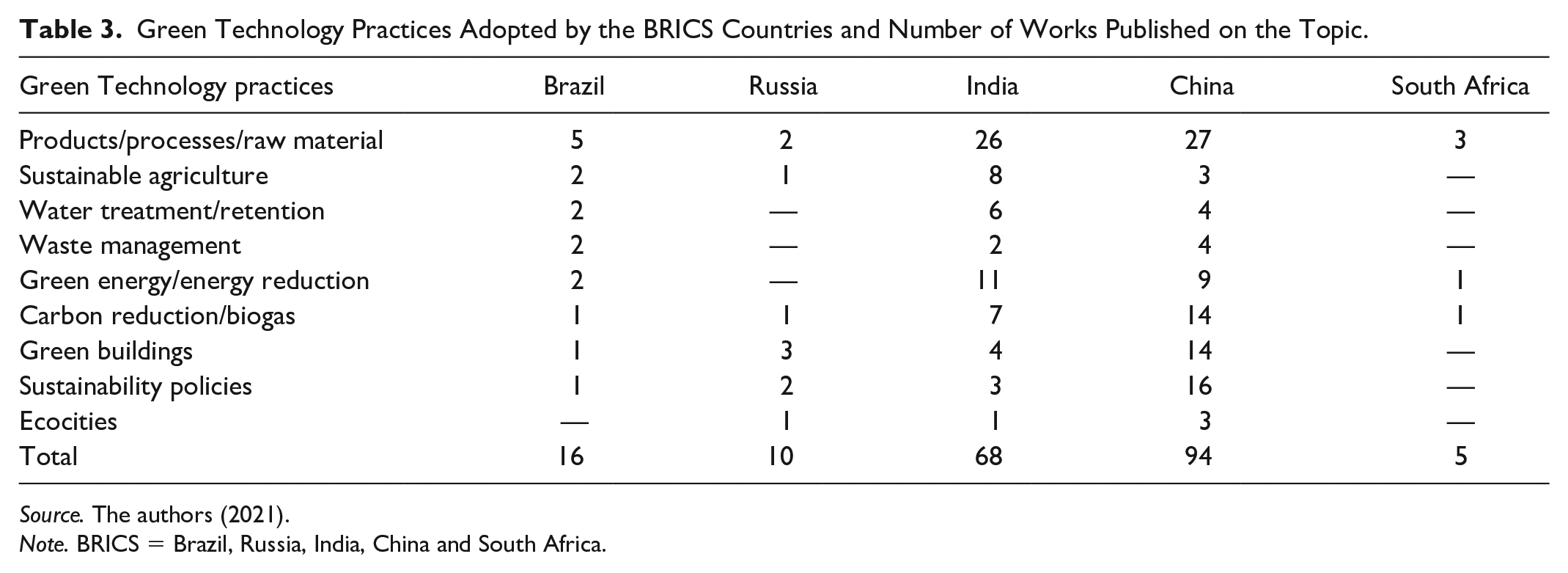
The articles selected in this review showed a variety of Green Technology practices adopted by the BRICS countries (Table 3):
Green Technology Practices Adopted by the BRICS Countries and Number of Works Published on the Topic.
Source. The authors (2021).
Note. BRICS = Brazil, Russia, India, China and South Africa.
Table 3 maps the nine main Green Technology practices adopted by BRICS countries. From these, India presents the largest number of studies related to (a) products/processes/raw material, (b) green energy/energy reduction, and (c) sustainable agriculture. China presented the largest number of studies related to (a) products/processes/raw material, (b) sustainability policies, and (c) carbon reduction/biogas. On the contrary, Brazil, Russia, and South Africa did not excel in the number of Green Technology practices adopted.
Considering that BRICS countries are all emerging economies, economic development has been overshadowed among individual strategies for sustainable development (V. K. Mittal, 2017). As can be seen in Table 3, the BRICS countries have intensified their strategies at different levels to address sustainable development in a holistic way, actively promoting environmental initiatives through government policies and various commitments and actions of sustainable development (Gramkow & Anger-Kraavi, 2018).
Green Technology practices in Brazil
In the present study, 16 articles list Green Technology practices in Brazil. As Green Technology has become an alternative strategy for the country’s sustainable and economic development. Green Technology practices are focused on the use of production processes that are less impacting environmentally, socially, and economically viable through the best application of products, processes, and raw materials in manufacturing (Glänzel & Zhou, 2011). Also, within the scope of environmental sustainability, initiatives that promote the conservation of natural resources and energy stand out (Ferreira et al., 2018).
Glänzel and Zhou (2011) state that, in general, Brazilian high-tech companies have undertaken to adopt these practices. Internal environmental management, as well as the use of alternative sources of water and energy, is addressed in most studies analyzed that link practices to strategies (formulation, performance evaluation, cooperation and communication, barriers and stimuli); innovation (process, product, and market), and operations (green purchases, green manufacturing, green distribution, reverse logistics, final destination, and treatment).
It should be noted that the adoption of environmental technologies has brought results aimed at reducing the consumption of energy and materials. Diana et al. (2017) emphasize the central role of manufacturing in the sustainable management of operations.
According to Walker et al. (2014), sustainable management of operations requires the adoption of environmental technologies, in which the improvement of environmental conditions results from the adoption of environmental technologies and innovations and the analysis of ecological resources and modernization, which claim the possibility of combination of environmental legislation, industrial solutions, and innovation and improvement of companies’ environmental performance.
Table 4 summarizes Green Technology practices and sub-practices adopted by Brazil.
Green Technology Practices in Brazil.

Source. The authors (2021).
In Brazil, most studies focus on Green Technology practices over products/processes/raw material. It was observed that these practices try to reverse some scenarios by improving sustainable processes. In addition, the adoption of these practices allows results aimed at the use of alternative sources of water and energy, as well as the possibility of correlating environmental legislation, industrial improvements linked to innovation and improving the environmental performance of organizations, and also the use of less productive processes, impacting environmentally, socially, and economically.
Green Technology practices in Russia
With regard to the adoption of Green Technology practices in Russia, 10 articles were identified. Albekov et al. (2017) highlight that Russia has turned to practices related to the introduction of highly efficient energy technologies in the logistics and production processes, linked to products, processes, and raw materials, with a focus on progress, economic and environmental security. According to the same authors, Green Technology practices are based on the possibilities of implementing environmental safety mechanisms, introducing green technologies, and applying global environmental standards to problematic industries, concluding that the opportunity and the need to develop green management confirm the effectiveness of a new stage of economic growth based on science.
Russia presents discussions on the role of environmental and climate factors in modernizing global and Russian economies in the context of challenges presented by the new industrial revolution (Porfiryev, 2018). For the development of eco-innovations, government incentives for green technologies market in civil construction, mineral complexes, raw materials, fuel and energy, as well as the forest-industrial and agro-industrial complex are presented (Pahomova et al., 2017).
Russia is also concerned about the use of renewable energy sources and measures to save water and energy through the use of intelligent energy resource management systems, construction of new facilities, and reconstruction of existing facilities, in accordance with the requirements of green standards, which correspond to Russia’s priority trends (Sheina et al., 2015).
Regarding the sustainability policy, studies on ecological and economic indicators are addressed. Russia has invested in the implementation of progressive technologies for filtering industrial emissions into the atmosphere, treating water and processing waste, thereby improving the quality of the urban environment while carrying out the green city development project, which combines economic and ecological advantages (Medvedeva et al., 2016).
The paradigm of changing the understanding of the essence of sustainable development of civilization and national socioeconomic systems makes it necessary to integrate economic and environmental solutions. In this context, one key tool is the transformation of environmental policy and the encouragement of business and corporate sectors to introduce green technologies (Dudin et al., 2017).
Research linked to ecological innovations and green economy are the spheres that enable greater sustainable development, and the low-carbon economy is a relevant component of current economic models (Yakovleva et al., 2017).
Table 5 summarizes the Green Technology practices and sub-practices adopted by Russia.
Green Technology Practices in Russia.

Source. The authors (2021).
Russia has a greater focus on research aimed at green buildings and sustainability policies with emphasis on government incentive methods; use of renewable energy sources and measures to save water and energy through the use of an intelligent system for managing energy resources in buildings. In addition to these applications, the practices involve the implementation of progressive technologies for filtering industrial emissions into the atmosphere, wastewater treatment and waste processing, improving the quality of the urban environment through the development of the green cities (Ecocities) project, which combines economic and ecological advantages.
Green Technology practices in India
Regarding the application of Green Technology practices in India, 68 articles with the themes were identified, with the major concentration of research focused on Green Technology practices related to products/processes/raw material. In this sense, there is a focus on the use of industrial enzymes and biocatalysis, use of living systems or their parts to accelerate chemical reactions, green manufacture, total quality management, production of special chemical, and Green Technology.
Total quality management, supplier relationship management, research and development, as well as technology and lean manufacturing practices are important actions of Indian companies that practice green manufacturing acts, affecting the extended performance of the supply chain (Dubey & Ali, 2015).
Green energy practices was evidenced through the use of photovoltaic technology, by the conversion of light into electricity, as natural sources produce lower levels of environmental pollutants than conventional sources of energy (fossil fuel). Specifically, the use of photovoltaic technology emits negligible greenhouse gases or neutral throughout its life cycle (B. Li et al., 2006). This practice has real benefits for the local population and helps to reduce environmental impacts (Altenburg & Engelmeier, 2013).
The adoption of Green Technology practices promotes greater efficiency in reducing organizational costs, such as energy, retaining employees and improving productivity, reducing vulnerability to disasters, and improving adaptation to climate change (Jain & Nagpal, 2019). Sustainability policies in India present incentives and subsidies for the implementation of Green Technology innovation and national strategies of sustainable goals in industrialization (Pandian & Thomas, 2019).
It is possible to highlight urban sustainability actions, ecocities and green capitalism, integrated public transport services, advanced water and waste recycling systems, elaborated underground garbage collection systems, and expansive renewable energy technologies (Trivedi & Sharma, 2017).
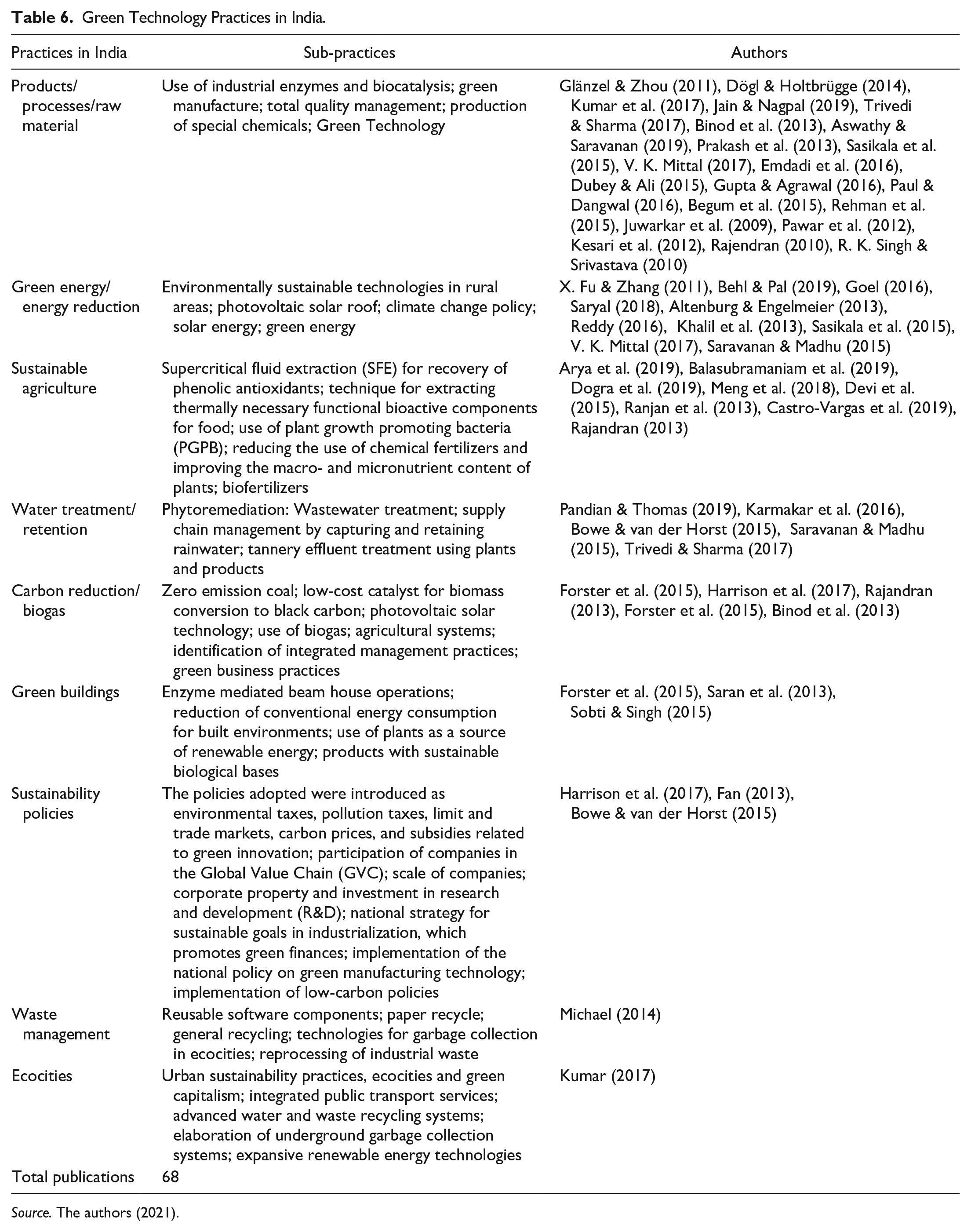
Table 6 shows the Green Technology practices and sub-practices adopted by India:
Green Technology Practices in India.
Source. The authors (2021).
India ranks second in relation to Green Technology practices publications, having emphasis on products/processes/raw material, green energy/energy reduction, and sustainable agriculture. It was observed that in recent years, renewable energy has received prominence in India, in addition to research related to the sustainability of environmentally friendly technologies as an alternative for producing products with technological applications reducing environmental impacts.
Green Technology practices in China
Most studies analyzed in this research correspond to Green Technology practices involving actions developed in China, totaling 94 articles. In China, the scenario of sustainable practices is related to various strategic and technological sectors, involving renewable energy, biotechnology, efficient and ecological technologies, electric cars, and a new generation of information technology (IT).
Studies linked to green practices involving products/processes/raw material address the development of environmentally friendly products, using energy efficiently and implementing biodegradable packaging (S. J. Li et al., 2018). Productive technical progress and green technical innovation are considered necessary elements to improve working conditions and productivity in industries (Hein et al., 2013).
S. J. Li et al. (2018) defined Green Technology as a way to reduce the discharge of pollutants from production processes, given the need to establish Chinese national brands in foreign markets and make a profit through the production chain, with the increase of international competitiveness.
Another area of Green Technology favored by China is renewable energies (solar, wind, etc.), which is proven by the high investments in this area, being one of the largest in the world, with emphasis on the development of green energy and energy savings, solar photovoltaic and wind energy practices, energy conservation systems, and domestic solar heaters (Song & Wang, 2015).
The modernization of electrical networks with renewable technologies promises to reduce environmental pollution in China. Despite higher initial investment costs, renewable energy technologies do not consume a significant amount of water, so they are a benefit for northern China regions, where water is scarce (Sharifzadeh et al., 2019). Chemical energy also has excellent effects, demonstrating that it is an ecological, low-cost, and energy-saving technology (Chai et al., 2014).
C. Wang et al. (2015), discuss how Green Technology practices reduce carbon and promote biogas, the use of clean coal, biofuel, monitoring and evaluation of CO2 emissions, electric vehicles, and reduction in gas emissions.
In this context, China presents three main challenges that need to be solved to maximize the effects of a carbon market on controlling emissions. First, China’s priority is still economic growth, although climate mitigation has emerged as a political issue in recent years. Second, the carbon market and existing energy and climate policies must be carefully harmonized. Third, a national carbon market must accommodate regional heterogeneities, as China has a regional imbalance in economic and social development. These actions allow China to not only make a significant commitment to contribute to global climate mitigation but also to test the impact of more stringent emission limitation on the economy. The domestic carbon market may be linked to the international commitment. These combined policy instruments will reduce China’s cost of switching to low-carbon emissions (X. Zhang et al., 2013).
Regarding electric vehicles, they have been considered one of the promising means to substantially reduce carbon emissions. In China, the government has taken steps to increase the market share of electric vehicles: It has implemented “energy savings and electric vehicles” and financial incentives—such as tax exemption and toll (Wang et al., 2018).
Regarding electric vehicles, they have been considered one of the promising means to substantially reduce carbon emissions. Since in China, the government has taken steps to increase the market share of electric vehicles, by implementing energy savings and electric vehicles with financial incentives, such as tax and toll exemption (Wang et al., 2018).
A connection between industrial symbiosis and the adoption of environmental guidelines, which correspond to the expectations of the businesses that make up the eco-industrial parks, is noted. This practice is supported by the Chinese government and has achieved significant results in environmental protection and resource savings. On the contrary, China faces problems such as low profitability, instability, and impediment to the sustainable development of eco-industrial parks (C. Zhang & Zhou, 2016).
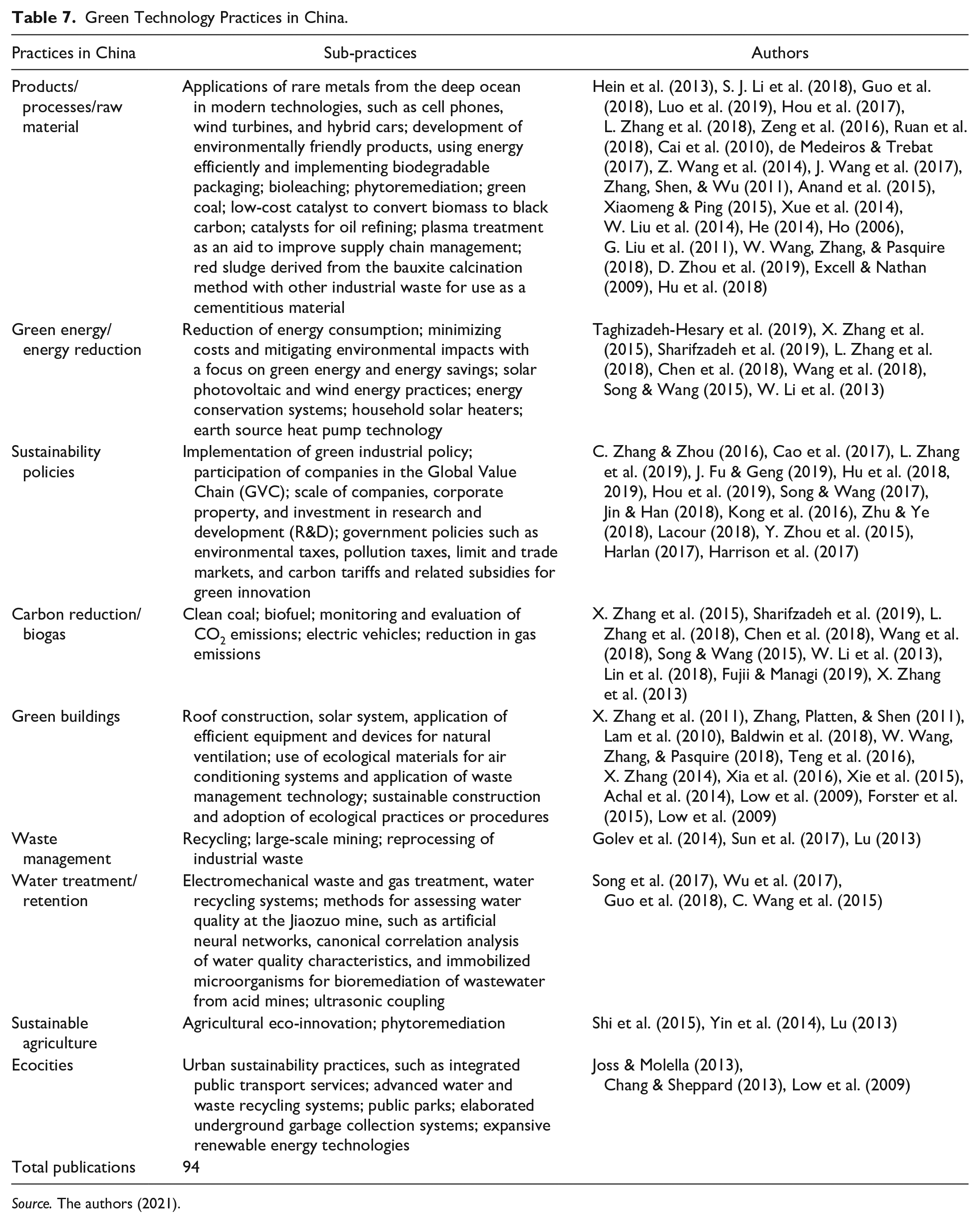
Table 7 summarizes the Green Technology practices and sub-practices adopted by China:
Green Technology Practices in China.
Source. The authors (2021).
Most research on Green Technology practices is published by China, which can be explained by its more sustainable development, greater number of sustainable actions, and growing local interest by the country’s scientific academy. The most practices are related to products/processes/raw material, sustainability policies, carbon reduction/biogas, and green energy/energy reduction.
Green Technology practices in South Africa
With regard of Green Technology practices in South Africa, only five articles were published on the subject. The practices in South Africa involve the thematic product/processes/raw material. Discussions were observed regarding business incubators, green economy, and improved quality of life.
Business incubators are endorsed as a positive approach to development in the country. A special form of business incubator is the Climate Innovation Center (CIC), which is part of the international debates on green economies and appropriate technologies for climate-compatible development (Gonsalves & Rogerson, 2019).
Regarding green economy, a culture of recycling, reuse, waste reduction, and energy conservation is present, highlighting the themes improving human well-being and social equity, and reducing environmental risk and ecological scarcity (Karakul, 2016; Musango et al., 2014; Topgül, 2015).
In relation to the practices of green energy/energy reduction and carbon reduction/biogas, there was a predominance of energy and clean technology themes, highlighting the more dynamic growth opportunity, with a focus on technology, sustainability, and profitability (A. Singh et al., 2014). Nuclear power could be the way to achieve sustainable access and energy security in South Africa, because nuclear power is among the low-carbon technologies available that could help combat energy poverty anywhere in the world (Olutola, 2019).
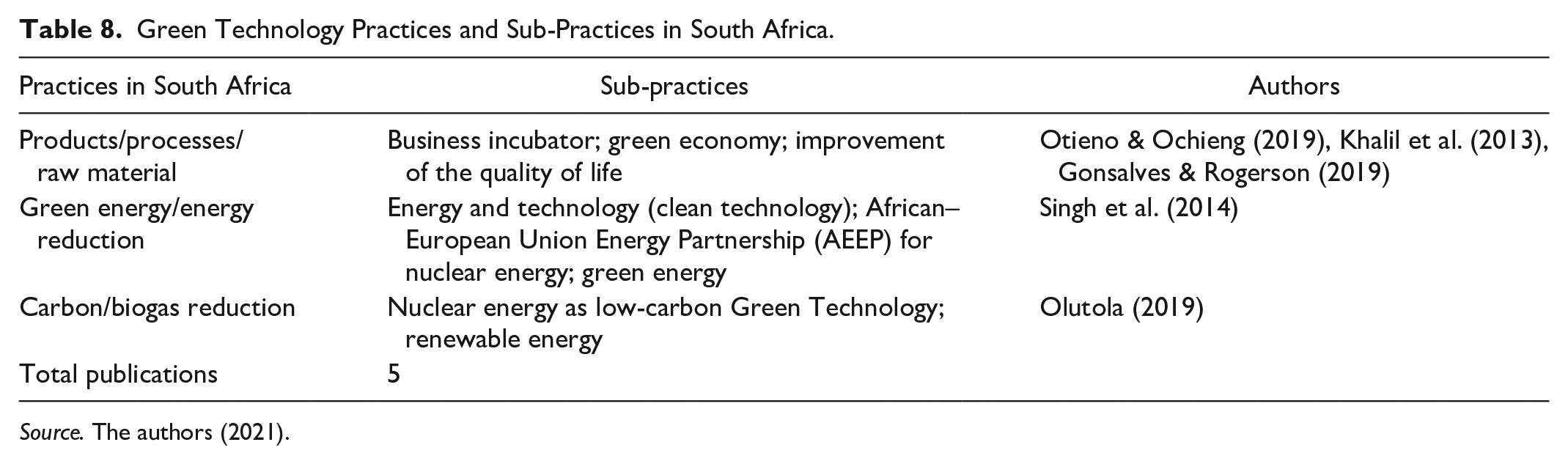
Table 8 summarizes the Green Technology practices and sub-practices adopted by South Africa.
Green Technology Practices and Sub-Practices in South Africa.
Source. The authors (2021).
South Africa environmental performance presents the lowest number of articles. Their practices are related with products/processes/raw material, green energy/energy reduction, and carbon reduction/biogas.
Intersection of Green Technology practices at BRICS
In the last three decades, the gross domestic product (GDP) of the BRICS economies has presented an average annual growth of almost 6.5% (World Bank, 2020). BRICS hold more than 21% of the world’s GDP, forming the group of countries on the planet that most grow (Danish & Ulucak, 2020). In addition, they represent 42% of the world population and 45% of the workforce, the largest consumption power in the world (Alam & Murad, 2020). They consume almost 40% of the world’s energy and contribute a substantial amount of global CO2 emissions (World Economic Forum, 2016). BRICS are emerging as an economic superpower and are capable of becoming world leaders; however, there is a concern related to climate change and to carbon emissions due to the higher rates of economic growth and environmental impacts (Balsalobre-Lorente et al., 2019; Santra, 2017).
This way, considering the BRICS countries as a political set of economic, social, and environmental cooperation, there was considerable potential in representing Green Technology practices, as well as in adopting innovative solutions for sustainable development, with emphasis on products/processes/raw material identified present in all countries. In this line of reasoning presented, governments turn to incentive and guidance strategies together with organizations for the use of Green Technology practices that can contribute to sustainable development (Alam & Murad, 2020).
The present study also provides insights for managers and researchers, and goes beyond the bibliographic survey to identify Green Technology practices, as it shows that innovation and performance for such practices depend on employee motivation and continuous learning in organizations (Awan, 2019), as well as the government incentive and a culture focused on environmental responsibility (Otieno & Ochieng, 2019; Porfiryev, 2018).
The sustainability initiatives of organizations must be based on the involvement of employees, as well as the development of human capital through training and initiatives to improve the motivation and engagement of employees in relation to organizational practices, increasing the effectiveness of implementing actions (Awan, 2019).
The organizational culture of sustainable organizations is emphasized in the study by Awan et al. (2018), which points out that “. . . cultural understanding can strongly affect the development of collaboration and the exchange relationship between companies” (p. 362). In this sense, the author points out that growth aimed at sustainable development and the firm ability to capture and understand social cohesion are an important element in the process of developing collaborative ties and thus improving sustainability practices. Another important factor pointed out in the study by Awan and Sroufe (2020) is the investment of resources in knowledge, which tends to engage collaboration and increase performance aimed at innovation in organizations and for sustainability practices.
In this context, it was possible to observe through the literature that there is a need to broaden the perspective on issues related to sustainability in low-income countries (Awan et al., 2018). The authors also emphasize social sustainability with a focus on health and safety issues, work patterns, and community development as essential factors linked to the survival of human beings. Awan et al. (2018) also suggest a strategic link between policies and guidelines of institutional actors as factors of positive influence in the actions of social initiatives. In this sense, they recommend internal incentive programs, involvement of the operational team in the planning, and support policies of the institutions that can encourage the industry to implement social sustainability practices.
The study results have relevant organizational, economic, and political implications. Continuous development in technologies related to the environment in BRICS countries is necessary. These technologies should concentrate on policies that focus on investments in environmental technologies, renewable energy, and with research and development in sectors with better economic performance (Dauda et al., 2019). The expected results are related to the reduction of pollution, through the development of sustainable practices, promoting mechanisms that allow the reduction of environmental impacts throughout the life cycle; the opening and creation of new markets; and the development of new products, services, or processes (Bocken et al., 2014; Mylan, 2015). Investing in Green Technology, in the development of projects related to the environment and in research and development in the energy sectors, reduces the carbon emissions of production processes, in addition to the possibility of addressing the issue of global climate change and regional pollution (Danish & Ulucak, 2020).
Finally, Figure 6 shows the intersection of Green Technology practices from BRICS countries. From the mapping of the nine practices identified, it was observed that the products/processes/raw material practice were pointed out in all the countries under study, representing the largest number of works found in the literature. The second largest intersecting relationship between countries is related to the practice reducing carbon/biogas. Third, present in all BRICS countries, considering the same number of articles analyzed, green constructions and sustainability policies/practices stand out.

Intersection of Green Technology practices from BRICS countries.
In this context, sustainable development measures are necessary to expand their relations, of a new international order, with environmental concerns discussed and encouraged to boost sustainability actions.
This study contributes as a guidance for other countries that are concerned with sustainability. It is worth mentioning that the political interest in this topic was identified, because there are political actions that encourage green practices, as well as directing sustainability actions to developing countries.
Final Considerations
The purpose of the present study was to identify Green Technology practices adopted by the BRICS countries through a systematic literature review. For this purpose, Methodi Ordinatio was used, which made possible to identify 281 relevant articles on the topic, of which 170 presented Green Technology practices.
The results pointed out that the main practices identified have a focus on products/processes/raw material; sustainable agriculture; water treatment and retention; waste management; green energy/energy reduction; carbon/biogas; green buildings; and sustainability policies and ecocities.
It was observed that in relation to the BRICS countries, the largest number of researches on Green Technology and its practices occurred in China and India. China and India have a greater number of articles on Green Technology practices that can be explained due to their more sustainable development, greater number of sustainable actions, and growing local interest in the country’s academy.
The largest number of researches in China is related to the practice of products, processes, and raw materials, followed by practices on policies, carbon reduction, and energy. In India, the highlight of environmental actions is also focused on the practice of products, processes, and raw materials, followed by energy and agricultural practices. In Brazil, most research on Green Technology practices is linked to products, processes, and raw materials, with a focus on discussions about comparing the country with emerging economies; green biotechnology; biotechnological applications to the development of compounds based on biomaterials; and the use of extracts in the pharmaceutical and food industries.
Russia has a greater focus on research aimed at Green Buildings and Policies, with emphasis on government incentive methods, use of renewable energy sources and measures to save water and energy, implementation of progressive technologies for filtering industrial emissions into the atmosphere, wastewater treatment and waste processing, improving the quality of the urban environment while carrying out the green city development project, combining economic and ecological advantages.
In turn, South Africa had the worst environmental performance and the lowest number of articles published on the subject, with studies on the practice of products, processes and raw materials, energy, and carbon reduction.
This study contributes as a guidance for other countries that are concerned with sustainability. It is worth mentioning that the political interest in this topic was identified, because there are political actions that encourage green practices.
Directions for Future Work
The results found in the current research encourage gaps for future research. The following are some suggestions for approaches that were not covered in this study:
Extend the comparisons in relation to environmental management practices with other emerging countries that were not included in the present study;
Check trends in environmental management practices in developing countries, allowing a comparison between the group of emerging countries and the group of developed countries;
Deepen the research on Green Technology practices in South Africa, seeking justifications for the country’s little interest or development in the theme;
Finally, it is suggested to conduct a longitudinal research, with the same methodology used, seeking to verify whether there was any evolution or transformation in the scenario identified in this study over the years.
Footnotes
Declaration of Conflicting Interests
The author(s) declared no potential conflicts of interest with respect to the research, authorship, and/or publication of this article.
Funding
The author(s) disclosed receipt of the following financial support for the research and/or authorship of this article: This study was financed in part by the Conselho Nacional de Desenvolvimento Científico e Tecnológico (CNPq) and also Fundação Araucária. The authors are grateful for the support of the research laboratory “Organizations and Society” from Federal University of Technology—Paraná (UTFPR)—Campus Ponta Grossa.
