




Abstract
This study examined the simultaneous effects of L2 individual difference (ID) variables (aptitude, motivation, strategy use, language processing experience, and gender) on English as a foreign language (EFL) breadth and depth of L2 vocabulary knowledge of 492 Korean university–level learners. Independent variable measures included the (a) Korean version of the Modern Language Aptitude Test, (b) L2 Attitude/Motivation Battery, (c) L2 Vocabulary Learning Strategies Survey, and (d) L2 Language Processing Experience Survey. The dependent variables (i.e., vocabulary breadth and depth) were assessed via the Vocabulary Levels Test and Word Associates Test, respectively. Employing multigroup structural equation modeling (SEM), results revealed positive significant effects of (a) aptitude on vocabulary breadth and depth, (b) motivation on strategy use, and (c) motivation on both dependent variables, however mediated by a significant direct effect of language processing experience on the dependent variables. There were no effects obtained for L2 strategy use nor for participant gender in the model.
Introduction
Vocabulary knowledge is critical to second language (L2) and literacy development (Nation, 2001). Over the years L2 research has investigated myriad factors affecting L2 vocabulary acquisition. For example, individual difference (ID) variables have received considerable attention due to their relevant and variable contributions to L2 proficiency (e.g., Dörnyei, 2005) as well as L2 vocabulary achievement. Considering aptitude, motivation, and learning strategies, research demonstrates that aptitude and motivation play a key role in second language acquisition (SLA; e.g., Dörnyei, 2005) and vocabulary growth (e.g., Dahlen & Caldwell-Harris, 2013; Fontecha & Gallego, 2012; Lee, 2017). Likewise, strategy use is relevant for second language learning, as this requires specific attention to language and specific vocabulary in L2 learning tasks. The role of strategy use has been investigated by various researchers (e.g., Lee, 2007, 2017) and has yielded variable effects. In addition, Pulido and Hambrick (2008) illustrated that L2 vocabulary knowledge develops as learners obtain more experience in processing the L2 in its various skills (e.g., reading, writing, listening, and speaking). Finally, participant gender has been identified as a relevant factor in SLA and L2 vocabulary development (Dörnyei & Csizér, 2002; Lee & Pulido, 2017). Although SLA and vocabulary research on the aforementioned factors advances understanding the degree of relevancy of such individual factors, more research is needed into the nature of the simultaneous contributions of these factors to multiple dimensions of L2 vocabulary knowledge and growth (e.g., breadth and depth). This study expands on prior research by investigating the simultaneous contributions of the variables that have been identified as relevant to L2 vocabulary growth.
Theoretically, L2 vocabulary acquisition entails cognitive and motivational involvement (Laufer & Hulstijn, 2001). Thus, the present study proposes that aptitude and motivation are key distal predictors of L2 vocabulary development. It also proposes that the more proximal influences of the factors of L2 strategy use and L2 processing experience mediate the roles of the distal factors in L2 vocabulary development. Also, this investigation tests whether participant gender affects the nature of the simultaneous interrelationships among the cognitive and motivational constructs in question (e.g., Lee & Pulido, 2017). Determining the nature of the interrelationships among relevant IDs (e.g., aptitude, motivation, strategy use, language processing experience, and gender) could advance language educators’ understanding of mechanisms underlying L2 vocabulary development and provide them more insight into best practices in the classroom. The following section reviews results from pertinent research on the roles of the aforementioned ID factors in L2 vocabulary learning.
Review of Related Literature
Vocabulary Breadth and Depth
Vocabulary knowledge is multifaceted linguistic information that plays a critical role in receptive (e.g., reading) and productive (e.g., speaking) L2 acquisition and use. L2 learners of English must acquire approximately 8,000 to 9,000 word families to read efficiently, and 5,000 to 7,000 word families for effective oral communication (Schmitt, 2008). Not only does vocabulary knowledge pertain to the quantity of words known (i.e., breadth), but it also includes how well words are known (i.e., depth). Regarding vocabulary breadth and depth, Nation (2001) discussed various receptive and productive dimensions of knowledge, such as form, meaning, and use. First, knowledge of form includes knowledge of written and spoken modalities of words (i.e., orthography and phonetics), as well as knowledge of how words are formed (i.e., morphology). Next, meaning-based knowledge involves conceptual reference and associational knowledge between words (i.e., semantics). Last, knowing how to use words requires familiarity with their grammatical functions and their collocations, as well as any constraints on word use in context (i.e., syntax). Thus, L2 learners must master thousands of form-meaning connections and their accurate use for efficient spoken and written discourse.
L2 Aptitude
L2 aptitude concerns “strengths individual learners have—relative to their population—in the cognitive abilities information processing draws on during L2 learning and performance in various contexts and at different stages” (Robinson, 2005, p. 46). Dörnyei (2005) also suggested that L2 aptitude was highly predictive of L2 achievement. Aptitude is also associated with other ID factors (e.g., motivation and strategy use) for their combined contributions to L2 development. For instance, Dörnyei (2010) illustrated an interaction between aptitude and language learning motivation. Also, Winke (2013) suggested a possible mediating role of strategy use on the relationship between L2 aptitude and L2 listening, reading, and speaking. To date, few published studies demonstrate a significant association between L2 aptitude and L2 vocabulary learning. One study by Dahlen and Caldwell-Harris (2013) demonstrated significant effects of aptitude on vocabulary breadth (i.e., word recall). Another study reported that L2 aptitude was a significant predictor of L2 vocabulary depth via collocational knowledge (Granena & Long, 2012). Such research illustrates the predictive power of L2 aptitude on some of the multiple dimensions of L2 vocabulary knowledge. As yet, there is scant evidence to demonstrate whether or not the effect of L2 aptitude is mediated by other ID factors known to be relevant to L2 vocabulary breadth and depth development.
Motivation
Dörnyei (2005) also identified motivation as a robust variable affecting L2 development based on the results of numerous studies. Research by Kormos and Csizér (2014) corroborated this proposal in their finding that motivation contributed positively to L2 development because it encouraged learners to pursue opportunities to use the L2 and to employ strategies during such use. In contrast, Gardner et al. (1997) reported that motivation contributed to 23% of the variance in strategy use; however, this result was qualified by results illustrating negative correlations between strategy use and L2 grammar and writing proficiency. Such results cast doubt on the nature of the role of motivation in L2 development.
Regarding the role of motivation on L2 vocabulary acquisition, there are also conflicting findings. In their study, Fontecha and Gallego (2012) reported that higher levels of motivation only contributed to increases in receptive vocabulary breadth for 9th graders, but not for 8th graders. Y. Zhang et al. (2016) also obtained a significant positive effect of motivation on vocabulary breadth, however that the ID variable of strategy use partially mediated this effect. These studies suggest variability in the role of motivation in L2 vocabulary breadth development. Meanwhile, empirical studies have overlooked the role of motivation in vocabulary depth development, in particular, how strategy use may mediate the effect of motivation.
Strategy Use
Language learning strategies are “specific actions, behaviors, steps, or techniques that students use to improve their own progress in developing skills in a second or foreign language. These strategies can facilitate the internalization, storage, retrieval, or use of the new language” (Oxford, 1999, p. 518). Yet, empirical studies report conflicting results. In one study, Kormos and Csizér (2014) observed significant positive contributions of learner engagement with L2 strategies on L2 development. This finding differs from Gardner et al.’s (1997) results, which illustrated that frequent strategy use inconsistently predicted L2 achievement.
Concerning the role of strategy use in L2 vocabulary development, there are varied results. Some studies reported positive relationships between strategy use and vocabulary breadth (e.g., Gu, 2002; Lee, 2007) and also depth (X. Zhang & Lu, 2015); however, others have not confirmed such observations. For instance, Tseng and Schmitt (2008) observed a nonsignificant association between frequency of strategy use and L2 vocabulary learning. Thus, more research is needed on the precise role of strategy use in L2 vocabulary learning.
Language Processing Experience
Exposure to language is necessary for its acquisition. During reading, listening, writing, and speaking activities, language learners must process various form- and meaning-related elements of language. Reading is a primary mode through which vocabulary development occurs. For example, Krashen’s (1989) seminal research observed that, over time and in various environments, reading frequency and quantity were key contributors to L2 vocabulary development. A later study by Pulido and Hambrick (2008) reported that L2 processing experience and exposure were significant determinants of L2 vocabulary knowledge and reading achievement, which, in turn, predicted subsequent L2 vocabulary learning. In addition, listening is a critical modality for language processing and acquisition. Via a multidimensional approach utilizing listening activities, van Zeeland and Schmitt (2013) reported strong effects of lexical frequency on several aspects of vocabulary development (e.g., lexical meaning comprehension and uptake of lexical form and word class). Oral interaction also offers exposure and practice with L2 vocabulary. For example, Rydland et al. (2014) reported that variation in talk exposure among teacher and peer communication strongly predicted L2 vocabulary use and growth through a growth analyses approach. Writing also contributes to L2 vocabulary growth because it allows learners to extend their use of L2 words productively and with opportunities for planning and revision. For instance, Webb (2005) reported a greater effect of writing tasks—versus reading tasks—on receptive and productive measures of multiple aspects of vocabulary knowledge (e.g., orthography, syntax, association, grammatical functions, and meaning). In sum, these studies illustrated that greater exposure to the L2 contributed to more growth of L2 vocabulary. However, there is a dearth of research concerning the effects of exposure frequency—when combined with other ID variables—on both breadth and depth of L2 vocabulary development.
Gender
In L2 studies, gender has been defined as “not only the biologically-based, dichotomous variable of sex (i.e., male or female) but also the socially-constructed roles (i.e., gender) which are created by the different ways the sexes are socialized within a certain culture” (Nyikos, 2008, pp. 73–74). Several studies have considered gender differences in ID factors (aptitude, motivation, strategy use, and language processing experience) and their effects on L2 learning approaches and outcomes. Such studies considered both biological aspects (e.g., neurological differences in the brains of males and females) and sociocultural influences. Concerning aptitude, researchers have noted that females tend to have superior verbal aptitude. In a review of studies, Spinath et al. (2014) demonstrated that girls have a small to moderate advantage over boys on verbal intelligence. However, a meta-analysis by Hyde and Linn (1988) noted that the small effect size of female superiority in verbal aptitude might not have meaningful implications. Regarding L2 motivation, Dörnyei and Csizér’s (2002) large-scale longitudinal study revealed gender differences whereby girls demonstrated significantly higher motivation and more commitment than boys in L2 learning. Through extensive review of L2 motivation research, Henry (2011) also demonstrated females’ higher integrative motives, which explained the obtained gender differences in light of females’ interdependent self-construal and males’ independent self-construal. Meanwhile, in their study of French immersion students, MacIntyre et al. (2002) reported no effects of gender on L2 motivation. Concerning gender differences in strategy use, Oxford and her associates (e.g., Oxford et al., 1988) reported that females use a wider range of language learning strategies, and more frequently, than males because of females’ greater social orientation and integrative motivation. They also found significant variations in strategy use by gender due to different preferred learning styles by the men and women in the study. Regarding language processing experience and gender differences, females reportedly spent more time on learning L2 than males and, in turn, outperformed the males on measures of L2 proficiency (Gu, 2002).
There is scant research on the relationship between gender variation and L2 vocabulary learning. For instance, Gu (2002) reported that female students used significantly more vocabulary learning strategies and outperformed their male counterparts on measures of vocabulary size. Catalán (2003), corroborating Gu, also studied gender differences in L2 vocabulary learning strategies and reported that females, due to a higher degree of motivation for language learning, used a significantly greater number and range of vocabulary strategies than males. However, Lee (2007) later obtained opposing results and demonstrated no effects of gender on the pattern and frequency of vocabulary strategy use. These contradictory findings regarding gender variations (for more information, see Catalán, 2010) require further research into the nature of the interactions between gender and IDs relative to their effects on L2 vocabulary learning. More recently, via multivariate techniques, Lee and Pulido (2017) examined the effects of gender and other ID variables (e.g., motivation) on L2 vocabulary learning. Results revealed significant moderating effects of gender such that vocabulary learning was significantly affected by the factor of motivation for the male adolescents in the study, but not for the female ones. Thus, further research is needed to offer an explanation for the differences in performance by gender.
In summary, previous studies were limited in scope due to methodology. Some did not simultaneously address ID factors known to contribute to L2 vocabulary acquisition. Others either investigated breadth or aspects of depth, while excluding other elements of vocabulary knowledge. To date, few studies have examined how relevant ID factors may be interrelated and also potentially moderated by participant gender. Such research will advance language educators’ understanding of the intricacy of L2 vocabulary acquisition and could lend to more specific pedagogical interventions for vocabulary breadth and depth acquisition. The present study addresses the following questions:
What is the nature of the combined contributions of L2 aptitude, L2 motivation, strategy use, and language processing experience on L2 vocabulary breadth and depth development?
How are the interrelationships between the variables under study mediated by gender?
Method
Participants
The present study used a sample size of 492 participants to expand upon the results from Lee and Pulido’s (2017) multicomponential study with 141 participants (99 males and 42 females) as a minimum sample size of 200 cases is considered appropriate to produce accurate and stable results in structural equation modeling (SEM) studies (Kelloway, 1998; Kline, 2011). In addition, based on results from previous research (Dörnyei & Csizér, 2002; Lee & Pulido, 2017), the present study included the factor of participant gender with 492 participants. There were 284 males and 208 females (n ≥ 200 for male and female group, respectively) for the accuracy and stability of multigroup SEM results (Nevitt & Hancock, 2001). On average, participants of the present study had more than 10 years of EFL English study during their primary and secondary school years; however, none of the participants had previously lived or studied abroad. Recruited from academic English writing classes at a Korean university, participants were intermediate and advanced EFL students, per the university’s entrance requirements based on the results of the National College Scholastic Ability Test of English.
Measures
Independent variables
Modern Language Aptitude Test (MLAT)
This study utilized the Korean version of the MLAT, which was validated by Chung (1987) with 1,080 Korean EFL learners. First introduced by Caroll and Sapon (1959), the MLAT has been used in numerous studies on SLA to assess capacity for learning a second or foreign language. The Korean version includes 119 test items encompassing the following abilities: (a) phonetic/phonemic coding ability (i.e., formation and retention of connections between sounds and symbols), (b) grammatical sensitivity (i.e., recognition of the grammatical functions of words in sentences), and (c) rote memory (i.e., speed and efficiency in the formation and retention of word forms and meaning connections).
Attitude/Motivation Test Battery (AMTB)
Participants’ motivation for learning a second language was assessed via the AMTB, noted for its reliability and validity for measuring L2 motivation (Gardner, 1985, 2010). The AMTB consists of three subtests that measure the following: (a) attitude toward learning an L2 via eight items, (b) desire to learn an L2 via eight items, and (c) learners’ motivational intensity via six items. For each item learners indicated their opinions on a 6-point rating scale (e.g., 1—not at all true of me; 6—very true of me).
Vocabulary Learning Strategies Survey (VLSS)
Schmitt’s (1997) VLSS was used to measure use of L2 vocabulary learning strategies. This survey contains four types of strategies (i.e., cognitive, metacognitive, memory, and social), each of which was measured with 12, five, 18, and four items, respectively. For each item learners indicated the frequency of their use of a given strategy on a 6-point rating scale (e.g., 1—very infrequently; 6—very frequently).
Language processing experience
Language processing experience was recorded via participants’ answers to four questions from the study’s background questionnaire. Participants estimated the amount of time (hours per week) that they spent on the skills of reading, listening, speaking, and writing in the L2 (i.e., English) outside of class (e.g., Freed et al., 2004; Pulido & Hambrick, 2008).
Gender
Gender of the participants, as indicated on the background questionnaire, was included as an independent variable to examine its potential moderating effects on the nature of the interrelationships between the IDs and L2 vocabulary knowledge.
Dependent variables
The Vocabulary Levels Test (VLT)—Breadth
The VLT was used to measure the size of participants’ English vocabulary. The VLT (Figure 1, Online Appendix 1) is a 150-item test with five sections, each of which measures receptive (recognition) knowledge of 30 target words from the following frequency levels: (a) 2,000, (b) 3,000, (c) 5,000, (d) 10,000, and (e) academic vocabulary level (Schmitt et al., 2001). In this test participants matched target words with their corresponding definition. Correct answers received one point, whereas incorrect answers received no points.

The Vocabulary Levels Test.
The Word Associates Test (WAT)—Depth
This study used the WAT (Read, 1998) to assess learners’ depth of vocabulary knowledge (i.e., synonymy, polysemy, and collocation). The WAT (Figure 2, Online Appendix 2) is a 40-item measure. Each item illustrates a target word (TW) and two corresponding columns, each with four words, for a total of eight words. Within both columns four of the words are related to the TW, whereas the remaining four are not. The left column tests knowledge of synonyms or polysemes (i.e., additional meanings) of the TW. The right column tests collocational knowledge. Participants were required to circle words in the columns that were related to the TW. The responses for each column (i.e., accuracy of word selection) were scored separately. Correct answers received one point, whereas incorrect answers received no points. A correct answer included correctly circled words and also correct responses to the distractors (i.e., no circling) for words that had no associations with the item’s TW. The lack of a response for a complete test item (i.e., across both columns) received no points. No partial points were awarded. The maximum total points for the test was 320 as there were eight points possible per item.

The Word Associates Test.
Procedure
The study was conducted during three sessions that were carried out more than 3 weeks (one session per week). In Session 1, students were informed about the study and completed an informed consent. At the end of the first session, students completed the VLT, followed by the WAT. In the following Session (i.e., Week 2), participants completed the three additional measures in the following order: (a) background questionnaire, (b) AMTB, and (c) VLSS. In the last Session (i.e., Week 3), participants completed the aptitude test (i.e., Korean version of the MLAT).
Analysis
The hypothesized model
The present study proposes a structural model based on prior research and individual studies to investigate the interrelationships between the ID factors involved in vocabulary learning (Figure 3). Based on Laufer and Hulstijn’s (2001) involvement load theory, the model below includes aptitude and motivation as distal cognitive and motivational components contributing directly and indirectly to L2 vocabulary knowledge (i.e., breadth and depth). First, the researcher hypothesized that aptitude would directly affect L2 vocabulary breadth and depth knowledge (e.g., Dahlen & Caldwell-Harris, 2013; Granena & Long, 2012), and also that motivation would directly affect vocabulary knowledge (Fontecha & Gallego, 2012). In addition, the researcher predicted significant effects of L2 strategy use and L2 processing experience on the two dependent variables (i.e., breadth and depth of vocabulary knowledge). The researcher further predicted that the effects of aptitude and motivation on L2 vocabulary breadth and depth would be mediated by both L2 strategy use and L2 processing experience (e.g., Kormos & Csizér, 2014; Winke, 2013; Y. Zhang et al., 2016). The researcher also predicted a significant correlation between aptitude and motivation based on Dörnyei’s (2010) conclusion that there exists a significant link between aptitude and motivation. Finally, the researcher predicted that gender would have differential effects on the roles of the IDs on L2 vocabulary knowledge based on prior research by Lee and Pulido (2017).

Hypothesized model.
The SEM approach
The present study used SEM techniques to illustrate the relationships between the measured and/or latent variables. Three stages of analyses were conducted using Amos 21. First, the measurement model stage used confirmatory factor analysis (CFA) to verify whether the measured variables (as represented with rectangles) were adequate indicators of the latent variables (as represented with ovals). Second, the structural model stage investigated the degree of significance of the relationships among all of the measured and latent variables. Third, the multigroup SEM stage determined whether there were any effects of participant gender on the relationships among the factors via model invariance testing.
Results
Descriptive Statistics
Table 1 displays the descriptive statistics 1 for the independent (i.e., aptitude, motivation, strategy use, and language processing experience) and dependent (i.e., breadth and depth of L2 vocabulary knowledge) variables. The various measures showed an acceptable degree of reliability, ranging from .70 to .93 (Cronbach’s α) (see Table 1).
Descriptive Statistics.

Note. IV = independent variables; DV = dependent variables; Items = number of items on measure; Pts = number of points possible; α = reliability coefficient Cronbach’s alpha.
All of the variables approached normal distribution, except the estimates of language processing experience, which tended to be positively skewed (>2) and kurtosed (>7) (Curran et al., 1996). To address this issue, the researcher employed bias-corrected bootstrapping procedures, which do not assume normality (Bollen & Stine, 1990; Kline, 2011; Lockwood & MacKinnon, 1998; MacKinnon et al., 2004; Nevitt & Hancock, 2001; Shrout & Bolger, 2002), using 5,000 bootstrapped samples (Preacher & Hayes, 2008), to test the relationships between the six factors.
The Measurement Model
The measurement model, which did not specify any structural relationships among the variables, produced acceptable model-data fits (Table 2). All factor loadings of the CFA measurement models were significant. Results illustrate that attitude, intensity, and desire loaded significantly on the latent variable of motivation (p < .001). Also, phonetic/phonemic coding ability, grammatical sensitivity, and rote memory loaded significantly on the latent variable of aptitude (p < .001). Likewise, cognitive, metacognitive, memory, and social strategy loaded significantly on the latent variable of strategy use (p < .001), and similarly, reading, writing, listening, and speaking loaded significantly on the latent variable of language processing experience (p < .001).
Fit Indices of the Measurement Model.

Note. CFI = comparative fit index; TLI = Tucker–Lewis index; SRMR = standardized root mean square residual; RMSEA = root mean square error of approximation.
The Structural Equation Model
To examine the relationships between the factors of motivation, aptitude, strategy use, language processing experience, vocabulary breadth, and vocabulary depth, an SEM analysis was performed. Bias-corrected bootstrapping procedures were used to examine the significance of the direct and indirect effects as previously explained in the Descriptive Results section. When using these procedures, the significance of the direct and indirect effects is determined by relying on confidence intervals: both the direct and indirect effects are considered significant if the 95% confidence intervals did not include zero (Preacher & Hayes, 2004; Shrout & Bolger, 2002).
Figure 4 illustrates the structural equation model, with the resulting standardized regression coefficients. The model shows the relationships between IDs and the measures of breadth/depth of L2 vocabulary knowledge. In the model, the independent variables include four latent variables (aptitude, motivation, strategy use, and language processing experience, as represented with ovals) and the dependent variables include two measured variables (breadth and depth of L2 vocabulary knowledge), as represented with a rectangle. The model also includes correlated errors based on modification indexes and theoretical accordance (Purpura, 1997; Schmitt, 2014). The model’s direct effects are illustrated with single directional arrows, and the correlations are illustrated with bidirectional ones. Table 3 provides the model fit indices. The results suggest a good fit of the proposed model to the observed data, allowing for safe interpretation of the regression coefficients in the model.

Structural equation model.
Fit Indices of the Structural Equation Model.
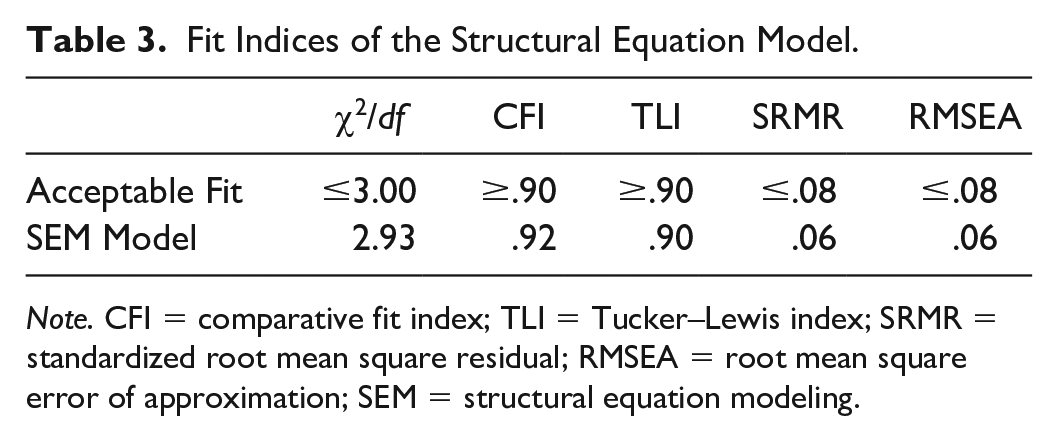
Note. CFI = comparative fit index; TLI = Tucker–Lewis index; SRMR = standardized root mean square residual; RMSEA = root mean square error of approximation; SEM = structural equation modeling.
In Figure 4, solid lines indicate significant paths, whereas dotted lines indicate insignificant paths. As shown in Figure 4 and Table 4, the direct effect of aptitude on L2 vocabulary breadth was significant (B = 2.41), with bias-corrected 95% confidence intervals ranging from 1.01 to 4.50. The direct effect of aptitude on L2 vocabulary depth was also significant (B = 3.98), with bias-corrected 95% confidence intervals ranging from 2.10 to 6.56. Motivation had a significant effect on strategy use (B = 0.39), with bias-corrected 95% confidence intervals ranging from 0.24 to 0.54. Motivation also had a significant effect on language processing experience (B = 0.05), with bias-corrected 95% confidence intervals ranging from 0.03 to 0.07. Language processing experience had a significant effect on (a) vocabulary breadth (B = 7.58), with bias-corrected 95% confidence intervals ranging from 3.75 to 13.72, and (b) on vocabulary depth (B = 11.02), with bias-corrected 95% confidence intervals ranging from 4.07 to 22.56. The indirect effect of motivation on vocabulary breadth and depth through the mediation of language processing experience was tested by bootstrapping procedures (Chan, 2007). The indirect effect of motivation on vocabulary breadth was significant (B = 0.34), with bias-corrected 95% confidence intervals ranging from 0.19 to 0.65. The indirect effect of motivation on vocabulary depth was also significant (B = 0.50), with bias-corrected 95% confidence intervals ranging from 0.21 to 1.04. In other words, motivation indirectly affected both breadth and depth of vocabulary knowledge development through language processing experience. None of the other paths were statistically significant.
Path Coefficients of the SEM Model.

Note. SEM = structural equation modeling; CI = confidence interval.
Multigroup comparisons for testing invariance were then conducted to determine whether the structural model was operating equivalently for males and females (Table 5). In testing for multigroup invariance, the change in comparative fit index (CFI) was consulted because the CFI difference approach is more practical than the sensitive chi-square difference test (Cheung & Rensvold, 2002). A change in CFI of .01 or more between the two models indicates noninvariance.
Model Comparisons for Testing Invariance Across Gender.

Note. CFI = comparative fit index; SRMR = standardized root mean square residual; RMSEA = root mean square error of approximation.
As the first step in invariance testing, configural invariance across groups (males and females) was established (Model 1 in Table 5). The root mean square error of approximation (RMSEA) was adjusted by multiplying the reported RMSEA by the square root of two (i.e., the number of groups; Keith, 2006). The fit indices of the configural model suggested a good fit of the model to the data, indicating that the model served as a good baseline for comparing subsequent models.
Next, metric invariance was verified by constraining all factor loadings to be equal for males and females (Model 2). The CFI change of less than .01 (∆CFI = .007) indicates that the measurement model is invariant across groups (i.e., the same latent constructs are being measured across groups). Such measurement equivalence permitted statistical testing of the structural invariance across the two groups.
In the final step, structural invariance was established by constraining all paths in the model to be the same across groups (Model 3). The CFI change of less than .01 (∆CFI = .002) indicates that there are no significant differences in the model’s path coefficients between the male and female groups. These results mean that no significant gender-based differences emerged concerning the interrelationships between ID variables with respect to L2 vocabulary knowledge.
Figure 5 and Table 6, which are both based on Model 3, show that the model operates consistently for males and females. The direct effect of aptitude on vocabulary breadth was significant (B = 2.88), with bias-corrected 95% confidence intervals ranging from 1.20 to 6.38. The direct effect of aptitude on vocabulary depth was also significant (B = 4.24), with bias-corrected 95% confidence intervals ranging from 2.13 to 8.39.

Structural invariance model.
Path Coefficients of the Structural Invariance Model.

CI = confidence interval.
Motivation had a significant effect on strategy use (B = 0.40), with bias-corrected 95% confidence intervals ranging from 0.26 to 0.54. Motivation also had a significant effect on language processing experience (B = 0.04), with bias-corrected 95% confidence intervals ranging from 0.03 to 0.07. Language processing experience, in turn, had a significant effect on (a) vocabulary breadth (B = 7.06), with bias-corrected 95% confidence intervals ranging from 3.68 to 14.00, and (b) on vocabulary depth (B = 10.78), with bias-corrected 95% confidence intervals ranging from 4.62 to 25.56.
The indirect effect of motivation on vocabulary breadth was significant (males: B = 0.28; females: B = 0.27), with bias-corrected 95% confidence intervals ranging from 0.10 to 0.58 (males) and 0.06 to 2.57 (females). Likewise, the indirect effect of motivation on vocabulary depth was significant (males: B = 0.49; females: B = 0.37), with bias-corrected 95% confidence intervals ranging from 0.14 to 1.04 (males) and 0.05 to 3.26 (females). That is, motivation indirectly affected breadth and depth of vocabulary knowledge through language processing experience for both males and females in the study. None of the other paths were statistically significant.
Discussion
This study investigated the nature of the interactions and contributions made by ID factors in L2 vocabulary development. Specifically, it tested the nature of the relationships between aptitude, motivation, strategy use, and language processing experience and their combined effects on L2 vocabulary breadth and depth with university-level EFL learners. It also examined the effects of gender on the interrelationships among the aforementioned ID factors. There were several major findings: (a) aptitude directly affected vocabulary breadth and depth knowledge; (b) motivation indirectly affected vocabulary breadth and depth knowledge via the direct effects of the variable of language processing experience; (c) motivation directly affected L2 vocabulary strategy use; however, no effects were obtained between strategy use and L2 vocabulary knowledge; and (d) participant gender did not influence the interrelationships among the ID variables with respect to L2 vocabulary knowledge.
What Is the Nature of the Combined Contributions of L2 Aptitude, L2 Motivation, Strategy Use, and Language Processing Experience on L2 Vocabulary Breadth and Depth Development?
The results of this study partially confirm Lee’s (2017) results and introduce new findings. While Lee (2017) reported direct effects of aptitude on vocabulary breadth and indirect effects of motivation on vocabulary depth via language processing experience, the sample size was small for SEM analysis (e.g., N = 141). The current study’s sample size is much larger (N = 492), and thus the results are more reliable because of the higher statistical power. This study illustrates direct effects of L2 aptitude on both vocabulary breadth and depth, whereas motivation had a similarly indirect effect, however on both variables of vocabulary breadth and depth knowledge. That L2 aptitude significantly affected L2 vocabulary breadth and depth also expands on previous research for this variable (e.g., for breadth—Dahlen & Caldwell-Harris, 2013; for depth—Granena & Long, 2012) with a larger sample size. The ability to form and retain associations between a new language’s sounds and symbols (i.e., phonetic/phonemic coding) is crucial for the acquisition and growth of vocabulary in terms of both breadth and depth. Also, the ability to efficiently connect form with meaning for new words (i.e., rote ability) is significant for the growth of both vocabulary breadth and depth knowledge. In addition, as measured by the MLAT, this study confirms the significance of learners’ ability for establishing relationships between words (i.e., synonymy and polysemy) and their appropriate usage with other words (i.e., collocations) for vocabulary knowledge growth. Furthermore, as language aptitude also consists of grammatical sensitivity (i.e., ability to recognize the grammatical functions of words in sentences), this study illustrates the relevance of this component in that it presumably facilitated knowledge of collocations (e.g., combinations of adjectives + nouns, powerful engine; or verbs + adverbs, whisper softly)—through contextualized sentential input, or as lexical items in isolation.
This study also illustrates the effects of motivation on both breadth and depth of L2 vocabulary knowledge, however via learners’ L2 processing experience as reflected by extracurricular self-reported engagement in reading, writing, listening, and speaking activity. This confirms Laufer and Hulstijn’s (2001) hypothesis that not only cognitive but also motivational factors influence L2 vocabulary learning. Kormos and Csizér (2014) identified motivation as crucial for L2 development because it promotes active pursuit of learning opportunities, which provide additional exposure to the L2. The present study corroborates this notion and previous research on vocabulary breadth (Fontecha & Gallego, 2012). It also expands the relevance of motivation to vocabulary depth knowledge, also via L2 processing experience. Motivation is strongly associated with students’ engagement in the four skills noted above, which provide extensive exposure to L2 vocabulary within various contexts. Presumably motivation compels learners to interact with the L2 in the first place. Such interactions may then lead to growth of L2 vocabulary knowledge. The current model suggests that motivation plays a relevant role in L2 vocabulary knowledge acquisition, however, only vis-à-vis learners’ frequency of engagement with L2 in multiple modalities.
The present results also revealed significant effects of motivation on frequency of vocabulary strategy use, based on the VLSS measure. However, such use had no effect on either measure of L2 vocabulary knowledge. This differs from studies reporting significant positive relationships between strategy use and L2 vocabulary learning (e.g., Kojic-Sabo & Lightbown, 1999; Sanaoui, 1995). It also diverges from Y. Zhang et al.’s (2016) finding that strategy use mediated the effects of motivation on vocabulary breadth. The present results align with Gardner et al.’s (1997) research revealing variable effects of strategy use on L2 attainment. First, while less proficient learners may adopt multiple strategies for vocabulary learning, more proficient learners may use their effective strategies more selectively (e.g., analyzing roots and affixes), or not at all (Ehrman & Oxford, 1995; Gardner et al., 1997; Lessard-Clouston, 1996; Winke, 2013). Second, the current study revealed variable directional relationships between strategy use and vocabulary knowledge (e.g., r = .120, p < .01 when connecting words to synonyms/antonyms, yet, r = −.039 with written repetition), consistent with results from previous research (e.g., Fan, 2003; Gu & Johnson, 1996; X. Zhang & Lu, 2015). Third, factors beyond strategy use (e.g., aptitude, motivation, and L2 processing experience) apparently play a larger role on L2 vocabulary knowledge, as illustrated in the current SEM analysis, and previously suggested in Lessard-Clouston (1996).
The current study also demonstrates that L2 processing experience, rather than strategy use (e.g., Y. Zhang et al., 2016), mediates the positive effect of motivation on vocabulary breadth and depth. This result confirms proposals by Fan (2003) and Schmitt (2008), who suggested that L2 exposure via authentic texts provides opportunities to incidentally encounter mid-frequency (3,000–9,000 word levels) and low-frequency (higher than 9,000 word levels) vocabulary and to consolidate previously studied words. Vocabulary depth (e.g., collocations and associations) also can be acquired/enhanced through extensive reading, listening, speaking, and writing. The participants of the present study were more proficient adult EFL learners who met university entrance requirements compared with adolescent EFL learners ranging in L2 proficiency (e.g., Y. Zhang et al., 2016). Motivation is a catalyst for varied involvement in reading, listening, speaking, and writing, which plays a crucial role in L2 vocabulary knowledge acquisition.
How Are the Interrelationships Between the Variables Under Study Mediated by Gender?
The results of this study revealed no differential effects of gender on the patterns of interrelationships between ID factors with respect to L2 vocabulary knowledge. Previous studies on this factor illustrated variable results. While some reported that gender and other ID factors (e.g., motivation) lead to significant moderating effects on L2 vocabulary learning (e.g., Lee & Pulido, 2017), others obtained null effects (e.g., Lee, 2007). Perhaps, the effect of gender depends on age (e.g., Lee & Pulido’s middle school vs. Lee’s university participants). Halpern (2004) suggested that girls might benefit from classroom learning and language learning tasks due to differences in maturational development compared with boys (e.g., earlier maturation and better scholastic performance, including languages). Girls also tend to differ in their achievement orientations (e.g., girls value literacy tasks more than boys). Such early advantages might contribute to girls’ L2 vocabulary development until adolescence, but such gender differences appear to decline with age. Thus, for the adult learners in the current study, the results provide empirical evidence that a similar mechanism may operate across gender in terms of the contribution of various IDs to L2 vocabulary knowledge. To wit, this is the first SEM study testing the effects of gender on L2 vocabulary knowledge. A fundamental learner characteristic, gender has received inadequate attention in L2 vocabulary research. Gender differences—resulting from biological or sociocultural influences—are relevant in learning (e.g., Dörnyei & Csizér, 2002; Henry, 2011; Lee & Pulido, 2017; Spinath et al., 2014). Given the dearth of research on this variable, this study provides a preliminary, yet multifaceted, picture of the effects of gender, in combination with an array of ID factors, on L2 vocabulary knowledge via sophisticated SEM techniques.
Limitations
There are some limitations of the present study. First, in terms of instrumentation, the survey used to assess language processing experience (i.e., 4-item measure) might have yielded stronger effects by including additional items. Second, in terms of participant characteristics, future studies might include more heterogeneous populations with respect to L2 proficiency and age to yield a more comprehensive model of the nature of the interrelationships between IDs and their effects on L2 vocabulary knowledge.
Pedagogical Implications
The results of this study may assist foreign language educators in understanding the complexity of the factors related to L2 vocabulary knowledge and growth, and also the multiple components comprising L2 vocabulary knowledge. Given the combined results that L2 motivation indirectly affects L2 vocabulary knowledge via the direct effect of L2 language processing experience, teachers may wish to carefully monitor learner motivation and learner engagement with the foreign language outside of the classroom. Fostering extracurricular opportunities with the L2 in its various modalities may help learners to choose additional ways to engage with the L2 based on need or interest, which might allow them to notice new words or notice new uses and associations for known vocabulary, thus lending to growth in breadth and depth. Such tailor-made learning activity is often difficult, if not impossible, to offer explicitly during the regular class time. Likewise, educators may wish to regularly emphasize, and perhaps reward, extracurricular L2 exposure via extensive reading and listening, and access to websites and smartphone applications. Also, concerning aptitude, instructors may wish to assess phonological awareness and, where needed, to include related learning opportunities to bolster ability in making sound-symbol and form-meaning associations in the L2.
The null result for L2 strategy use does not imply that using or promoting L2 vocabulary strategies is not relevant for language learning, rather it suggests that when considering the complexity of vocabulary knowledge development, there are individual factors that may not be as pertinent as others. Learners’ choice and use of strategies may be more related to factors of age, proficiency, experience, and learning modality during specific learning instances. Such factors may not be under the teacher’s control or observation. However, given that some strategies in the present study were negatively correlated with vocabulary knowledge, language educators could discuss ineffective/effective strategies so that students might select them appropriately. Likewise, the null effect of gender may indicate that effects of learning due to gender differences may decline over time. This seems apparent from the present study suggesting that at certain ages or levels of proficiency (i.e., university-level in the present study vs. adolescents in Lee & Pulido (2017)) and motivation, foreign language teachers may not need to prioritize this variable relative to others related to L2 vocabulary knowledge development.
Conclusion
In summary, via SEM techniques, this study has extended previous research with various methodological limitations by examining the joint influences of various ID factors on L2 vocabulary breadth and depth knowledge. Several factors obtained significance among the tested factors of aptitude, motivation, strategy use, language processing experience, and gender. The results illustrated that cognitive (e.g., aptitude) and affective (e.g., motivation) variables are pivotal in L2 vocabulary breadth and depth knowledge. There was a direct effect of aptitude and indirect effect of motivation, thus lending support to the involvement load hypothesis (Laufer & Hulstijn, 2001). Also, this study sheds new light on the role of motivation with empirical evidence that this factor affects L2 vocabulary knowledge, however only through extracurricular experience with listening, reading, speaking, and writing activities. The inclusion of gender in this study, and its null effect, expands research on the variable itself and the topic on the whole. Despite the lack of an effect for gender as demonstrated in this study, future research may wish to investigate its effect among populations with varying demographic backgrounds.
Supplemental Material
sj-pdf-1-sgo-10.1177_2158244020977883 – Supplemental material for Examining the Roles of Aptitude, Motivation, Strategy Use, Language Processing Experience, and Gender in the Development of the Breadth and Depth of EFL Learners’ Vocabulary Knowledge
Supplemental material, sj-pdf-1-sgo-10.1177_2158244020977883 for Examining the Roles of Aptitude, Motivation, Strategy Use, Language Processing Experience, and Gender in the Development of the Breadth and Depth of EFL Learners’ Vocabulary Knowledge by Sunjung Lee in SAGE Open
Footnotes
Declaration of Conflicting Interests
The author(s) declared no potential conflicts of interest with respect to the research, authorship, and/or publication of this article.
Funding
The author(s) disclosed receipt of the following financial support for the research, authorship, and/or publication of this article: This research was supported by the research fund of Hanbat National University (Grant No. 202003320001).

Supplemental Material
Supplemental material for this article is available online.
Notes
References
Supplementary Material
Please find the following supplemental material available below.
For Open Access articles published under a Creative Commons License, all supplemental material carries the same license as the article it is associated with.
For non-Open Access articles published, all supplemental material carries a non-exclusive license, and permission requests for re-use of supplemental material or any part of supplemental material shall be sent directly to the copyright owner as specified in the copyright notice associated with the article.
