




Abstract
This study examines a possible dark side of emotional intelligence (EI). Specifically, a meta-analytic investigation of 5,687 participants was conducted to examine the relationship between EI and emotional manipulation. The findings revealed that self-reported ability-based EI was positively correlated to non-prosocial emotional manipulation (as measured by the Emotional Manipulation Scale), with a 0.10 effect size. Whereas, a negative relationship emerged between self-reported trait EI and non-prosocial emotional manipulation (as measured by the Worsen factor of the Managing Emotions of Others Scale [MEOS]), with a −0.16 effect size. Moreover, self-reported trait-based EI was positively correlated with prosocial emotional manipulation (as measured by the Enhance and Divert factors of the MEOS), with effect sizes of 0.40 and 0.34, respectively. Furthermore, gender had a moderating effect on the relationship between self-reported ability-based EI and non-prosocial emotional manipulation; this relationship was stronger among males than females. We discuss the implications of these findings across academic and practice settings.
Salovey and Mayer (1990) were the first to define the modern concept of emotional intelligence (EI) as the ability to perceive and understand one’s own and others’ emotions, and to use this information to guide decision-making. Over the last three decades, EI has emerged as an important topic in the psychological, organizational, and educational fields because of ongoing debates pertaining to its definition, measurement, research-worthiness, and business value (Ashkanasy & Daus, 2005). Specifically, there have been debates among scholars whether EI should be considered as an ability, a trait, or a mixture of both and some other skills (Côté, 2014; Mayer et al., 2008). Arguments about which instruments may best measure EI have also been widely discussed (Côté, 2014; van der Linden et al., 2017). As a result of employing different definitions and measurements in research, their findings have created inconsistent implications about EI’s values in practice (Ashkanasy & Dorris, 2017; Joseph et al., 2015).
Among the three most noticeable streams of EI, namely, ability-based, trait-based, and mixed model of EI, ability-based EI has gained preference among researchers. It served as a basis for numerous studies, as it differentiates from the Big Five personality traits and cognitive intelligence (Joseph et al., 2015; Kluemper et al., 2013; van der Linden et al., 2017). Ability-based EI is widely defined as “the ability to accurately perceive emotions; use emotions to facilitate thinking, problem solving, and creativity; understand emotions; and manage emotions for personal growth” (Mayer & Salovey, 1997, p. 5). Trait-based EI or trait emotional self-efficacy is defined as a constellation of dispositions and self-perceived ability which stems from different domains such as assertiveness, empathy, personal intelligence, and social intelligence (Petrides et al., 2007; Petrides & Furnham, 2001).
Different measures have been developed corresponding to each stream of EI, but these are primarily performance-based ability EI assessments (e.g., Mayer–Salovey–Caruso Emotional Intelligence test), self-reported ability-based EI instruments (e.g., Wong Law EI scale, Schutte et al. scale), self-reported trait-based EI scales (e.g., Trait EI questionnaire), and mixed-based EI assessments (e.g., Bar-on Emotional Quotient Inventory) (Bar-On, 1997; Petrides & Furnham, 2001; Salovey et al., 2003; Schutte et al., 1998; Wong & Law, 2002). Ability-based EI measures are generally criticized for weakly capturing emotional experiences (Petrides et al., 2007), while trait EI scales are criticized for overlapping significantly with general personality factors (van der Linden et al., 2017). Performance-based measures are time-consuming and difficult to use with large samples from countries where the test publisher does not support automatic and professional translation; on the contrary, self-reported questionnaires are criticized for entailing a social desirability or response bias. The conceptual distinctions among different EI streams are directly reflected in the corresponding EI instruments, causing inconsistency in the empirical findings of EI research (Petrides et al., 2007). Thus, meta-analyses may be necessary to consider sufficient coverage of the literature to address such inconsistencies.
EI has been proven to be a critical factor that helps explain considerable variance in mental health, academic performance, and success in the workplace, even after controlling for cognitive ability and personal traits (MacCann et al., 2011; Martins et al., 2010; O’Boyle et al., 2011; Schutte et al., 2007). However, one should keep in mind that, like “traditional” intelligence, EI is not inherently positive; it can be a tool used for either adaptive or maladaptive purposes (Bariso, 2018; Davis & Nichols, 2016; Kilduff et al., 2010).
In the last decade, there has been a growing interest in exploring the dark side of EI; it can be harmful and lead to problems among all parties involved. For instance, individuals may utilize EI to conduct their strategic behaviors to achieve personal benefits at the expense of others (Kilduff et al., 2010). These tactics may include intentionally expressing specific emotions for self-serving interest or manipulating and shaping emotions of others for personal gains (Kilduff et al., 2010). Similarly, Davis and Nichols (2016) argued that EI may become a tool for antisocial and manipulative behaviors, especially when it is used by people having complex personalities such as Machiavellians, narcissists, and psychopaths. Thus, a call for further investigating a possible dark side of EI has been raised (Côté et al., 2011; Davis & Nichols, 2016; Kilduff et al., 2010).
One of the most potentially harmful traits of people with high EI is their ability to manipulate others’ emotions for non-prosocial purposes. Austin et al. (2007) and Bariso (2018) claimed that such individuals may use their skills to advance their own agendas or self-serving motives at the expense of others. Theory of mind, which refers to the belief that others’ minds are analogous to one’s own, is based on reciprocal social interactions; this is observable in the functional use of language and comprehension of others’ emotions and actions (Baron-Cohen, 1991; Carruthers & Smith, 1996; Premack & Woodruff, 1978). It proposes that one can understand the mental state of others and use such information to explain and predict their behavior during social interactions (Lyons et al., 2010). Accordingly, successful manipulators need to understand others’ emotions and intentions to foresee and influence their reactions. Therefore, a positive correlation between theory of mind and emotional manipulation would be expected (Barlow et al., 2010; Lyons et al., 2010). Conceptually, theory of mind is relatively similar to EI in the sense that both constructs refer to the ability to use emotional information in social communication and decision-making. Moreover, there has been evidence showing a considerable correlation between theory of mind and EI, especially with ability-based EI (Barlow et al., 2010; Ferguson & Austin, 2010; Qualter et al., 2011). Thus, EI and emotional manipulation would have a positive association. If this is done for the benefit of others, it reflects the positive aspects of EI; however, it may turn disadvantageous to individuals who are being manipulated by those who seek to achieve their own self-serving goals.
Empathy is another allied social construct which has been reported to positively correlate with EI and theory of mind (Bagozzi et al., 2013; Ibanez et al., 2013; Petrides et al., 2007; Petrides & Furnham, 2001). Most research on empathy has investigated two components, namely, cognitive empathy, which is the ability to perceptually recognize and understand others’ emotions (Baskin-Sommers et al., 2014; Clark et al., 2019), and affective or emotional empathy, which is the ability to share the feelings of others with them (Baskin-Sommers et al., 2014). Generally, cognitive empathy is more correlated with ability EI and emotional empathy is more correlated with trait EI (Baskin-Sommers et al., 2014; Clark et al., 2019). Research has revealed a positive relationship between non-prosocial manipulative behaviors and cognitive empathy, and a negative relationship with emotional empathy among Machiavellians and narcissists (Turner et al., 2019; Wai & Tiliopoulos, 2012).
Empirical studies have produced mixed results about the EI-emotional manipulation relationship. There has been evidence to support that EI is positively related to emotional manipulation (Grieve & Mahar, 2010; Grieve & Panebianco, 2013; J. Hyde & Grieve, 2014). However, some studies have found negative associations (Casale et al., 2019) and nonsignificant correlations (Grieve et al., 2019; Grieve & Mahar, 2010) between the two factors. While studies reporting a positive correlation between EI and emotional manipulation used ability-based EI instruments to assess EI, trait-based EI scales were utilized in the studies reporting a negative correlation the two constructs. It is also important to note that emotional manipulation in these studies is for non-prosocial purposes.
Austin and O’Donnell (2013) developed the Managing the Emotions of Others Scale (MEOS), which measures an individual’s interpersonal emotion management; this assessment taps into both prosocial and non-prosocial behaviors (Austin et al., 2018). This study divides MEOS into two facets: prosocial and non-prosocial manipulative behaviors. The literature shows that trait-based EI has a positive relationship with prosocial aspects of the MEOS, such as the enhancement and diversion of others’ emotions (Austin & Vahle, 2016; Bacon & Regan, 2016; Jankowski et al., 2016), and a negative relationship with non-prosocial aspects, such as worsening others’ experiences of their emotions and using inauthentic displays of emotion for self-serving purposes (Austin et al., 2014, 2018). It may be noteworthy that emotional empathy is a key element of the trait-based EI, which may explain the negative association between trait-based EI and non-prosocial emotional manipulation tactics. If individuals have high levels of EI measured by trait-based scales, they have less intentions to manipulate others’ emotions for non-prosocial motives because their emotional empathy with those exploited is high.
Indeed, whether individuals with high EI capability become manipulators for maladaptive purposes perhaps depends on conditional factors such as whether they have non-prosocial self-serving motives, low moral identity (Côté et al., 2011), dark personalities (Nagler et al., 2014), whether they want to empathize with others (Bagozzi et al., 2013; Lyons et al., 2010), or even how their EI is measured. This is consistent with conclusions that EI is necessary to facilitate emotional manipulation, but it needs preexisting conditions before a dark side (non-prosocial manipulation and antisocial behaviors) can emerge (Côté et al., 2011; Davis & Nichols, 2016; Nagler et al., 2014). The inconsistency in both theoretical foundations and research findings motivated us to conduct a meta-analysis to synthesize empirical findings on the relationship between EI and emotional manipulation. Hence, this study contributes to the literature by systematically providing an overview of the relationship between EI and emotional manipulation; moreover, it examines possible moderators in this association. These two issues have not been adequately addressed in the existing literature.
Literature Review
EI and Emotional Manipulation: Definition, Measurement, and Construct Development
We review the definitions and measurements of EI, emotional manipulation, and other related concepts to provide an overview of the possible dark side of EI. EI is simply defined as cognitive abilities or personal traits concerning emotional information processing in social interaction and decision-making (Petrides & Furnham, 2001; Salovey & Mayer, 1997). The third widely discussed EI stream is the mixed-based model which defined EI as a collection of both the ability and trait related to emotions and some other skills such as self-efficacy and self-motivation (Bar-On, 1997). There have been different instruments developed to measure EI corresponding to each stream. Each measurement has its own advantages and disadvantages, and researchers have used different scales to suit their research’s purposes.
Emotional manipulation can be defined as the ability to influence others’ feelings and behaviors for one’s own self-interest or benefit (Austin et al., 2007). It can be beneficial for others in some circumstances, such as those where one tries to turn negative emotions and behaviors to positive ones in physical, mental, and spiritual ways. Another example of adaptive emotional manipulation pertains to a leader’s ability to inspire his or her followers by stirring their emotions. Using descriptions of real-life situations related to emotional manipulation, Austin et al. (2007) developed the 10-item Emotional Manipulation Scale (EMS), which measures emotional manipulation by focusing on the non-prosocial aspects of the construct.
Austin and O’Donnell (2013) developed the MEOS, which assess interpersonal emotion management in terms of both non-prosocial and prosocial behaviors; as is evident, the EMS does not assess prosocial behaviors (Austin et al., 2018; Austin & O’Donnell, 2013). The MEOS (Austin & O’Donnell, 2013) measures the construct in terms of the following six skill subsets: Mood enhancing (Enhance), including offering help or reassurance, showing understanding, and allowing the other to express their feelings; mood worsening (Worsen), including use of criticism/negative comments, undermining confidence, and displaying anger; concealing emotions from others (Conceal); use of inauthentic displays for self-serving purposes (Inauthentic), including niceness, flattery, or sulking or inducing guilt, sympathy, and jealousy in others; poor emotion skills (Poor skills), consisting of items related to the inability to change the mood or motivate others; and use of diversion to enhance another’s mood (Divert), including being positive, using humor, and arranging an enjoyable activity. (p. 836)
Studies that have used this measure are in the process of validating it across different cultures and shortening it so that it is more convenient for research use (Austin et al., 2018; Jankowski et al., 2016; Saklofske et al., 2016). Although items from the EMS (Austin et al., 2007) were included in the MEOS, they cross-loaded across the four factors of the MEOS, namely, Conceal, Inauthentic, Poor Skills, and Worsen. Among the six factors of the MEOS, Enhance and Divert, as well as Inauthentic and Worsen, were strongly correlated. Enhancing others’ emotions includes increasing positive affects and decreasing negative affects by showing support, encouragement, and empathy when someone experiences negative feelings or encountering problems. To divert someone’s bad mood, individuals may employ strategies such as talking about positive things, behaving in a happy way, and telling funny stories (Austin & O’Donnell, 2013). Enhance and Divert factors can be collectively referred to as the prosocial aspects of the MEOS and Inauthentic and Worsen factors as the non-prosocial aspects. Poor skills showed low reliability while Conceal did not belong to either the prosocial or non-prosocial aspects (Austin et al., 2018; Austin & O’Donnell, 2013); therefore, these two MEOS aspects were excluded from our analysis.
Another term for MEOS which has recently received growing recognition from research is interpersonal emotion regulation, referred to as using strategies to regulate the emotional experiences and expressions of others or using others to regulate one’s own emotions (e.g., individuals may use social interaction and sharing to regulate their own emotions) (Niven, 2017; Troth et al., 2018; Zaki & Williams, 2013). Interpersonal emotion regulation is either intrinsically or extrinsically targeted and is either response-dependent or response-independent (Little et al., 2012; Reeck et al., 2016; Troth et al., 2018; Zaki & Williams, 2013). To date, research about interpersonal emotion regulation has mainly focused on prosocial consequences: increasing pleasant emotions and decreasing unpleasant emotions of the strategies employed in the emotional regulating process through social interaction (Netzer et al., 2015; Zaki, 2020); and how to measure and operationalize interpersonal emotion regulation. Conceptually, emotional manipulation may be one aspect of interpersonal emotion regulation that is extrinsic and response-dependent to fulfill conscious personal motives (Troth et al., 2018). Developed scales in interpersonal emotion regulation field measure two main aspects of interpersonal emotion regulation’s strategies, namely, affect-improving and affect-worsening.
Next, to fully understand emotional manipulation, we discuss two other constructs: prosociality and non-prosociality. Prosocial behaviors are described as those which are voluntary, intentional, and conducive to other people or the organization and society as a whole (Austin et al., 2018; Eisenberg & Miller, 1987). Prosociality is defined as being of high social value, nonindividualistic, and not for pro-self-purposes (Jensen, 2016). Whereas, non-prosociality targets the fulfillment of personal gains and self-serving interests at the cost of others (Austin & O’Donnell, 2013; Davis & Nichols, 2016; J. Hyde & Grieve, 2014, 2018).
On the basis of the discussion above, emotional manipulation in this study has three aspects. First, it refers to as ability to influence others’ feelings and emotions. Second, it carries out the conscious intention of the manipulator to serve their goals. Third, the purposes of emotional manipulation activities are either prosocial or non-prosocial. Regarding measurements, this study employed EMS scale (Austin et al., 2007) which focused on non-prosociality of emotional manipulation and MEOS which may cover both prosociality and non-prosociality aspects of emotional manipulation (prosocial emotional manipulation: Enhance and Divert; non-prosocial manipulation: Inauthentic and Worsen; Austin & O’Donnell, 2013). Available scales that were directly developed to measure interpersonal emotion regulation, for example, the instrument developed by Little et al. (2012) focused on decreasing or increasing either negative emotion or positive emotion (Netzer et al., 2015; Nozaki & Mikolajczak, 2020) without implying prosocial and non-prosocial purposes. Besides, studies in this field have been often conducted at interpersonal level while EI and emotional manipulation in this study are analyzed at intrapersonal level. Thus, measures of interpersonal emotion regulation will be excluded from the meta-analysis.
Relationship Between EI and Emotional Manipulation
In the recent past, emotional manipulation has been recognized as one of the possible dark sides of EI. Although the positive effects of emotional manipulation are still being questioned in literature, its negative consequences have received growing attention. For example, Kessler et al. (2010) found that manipulative behaviors are positively related to counterproductive work behaviors. Moreover, manipulation can cause conflict among coworkers (Kim, 2016) and adversely affect the interests of the people being manipulated. More specifically, if manipulative managers use their skills to get what they want at the cost of others and the organization, it can have devastating consequences (Grant, 2014; Kilduff et al., 2010). Thus, emotional manipulation can become an unwanted behavior in certain conditions, especially when it is used for non-prosocial purposes.
According to theory of mind, people have the ability to read others’ desires, emotions, and intentions, thereby allowing them to easily attribute their own intentions to others’ decisions and reactions (Baron-Cohen, 1991; Carruthers & Smith, 1996; Premack & Woodruff, 1978). This ability is highly correlated with EI, especially ability EI (Barlow et al., 2010; Ferguson & Austin, 2010; Qualter et al., 2011). Both theory of mind and ability EI may be referred to as a cognitive ability concerning emotions. With the ability to perceive and understand emotions, one can not only read the context but also explain and predict others’ actions, using it as a tool for both prosocial and non-prosocial emotional manipulation.
Furthermore, social functional accounts imply that the display of emotions is a communication channel as emotional expression can provide important information about one’s attitudes, goals, and intentions (Côté & Hideg, 2011). By paying attention to others’ emotions, individuals can determine how they may expect others to behave (Frijda & Mesquita, 1994; Keltner & Haidt, 1999). Therefore, the ability to quickly identify and respond to others’ emotion displays is advantageous because it allows one to determine which emotions to display and which emotional strategies to apply. Without such abilities, a manipulator is less likely to be able to influence others’ feelings and behaviors. Higher EI facilitates the shaping or modification of others’ affective states through displays of emotions that have the desired impact (Côté & Hideg, 2011). Hence, similar to theory of mind, social functional accounts suggest a positive association between EI and emotional manipulation generally.
More specifically, for prosocial purposes, manipulators may use strategies to reduce others’ negative emotions or divert them to positive ones in physical, mental, and spiritual ways. Another example is when managers try to stir emotions of followers to trigger their motivation to achieve goals which benefit themselves or even the society as a whole. To successfully intervene with how others feel, one should first have the ability to recognize and understand the current emotional states of others. Then, they need to choose suitable strategies and tactics to change the emotions others feel or help them to reappraise situations. Generally, the purpose of prosocial emotional manipulation is to increase the positive affects and decrease the negative affects for the benefit of the individuals manipulated.
However, non-prosocial emotional manipulation is more likely to happen when those with high EI try to influence others’ experienced emotions for personal gains, even at the expense of others. For example, when someone is in a good mood, a manipulator may take advantage of this and make the person agree with proposals that he or she may otherwise not have been amenable to (Keltner & Lerner, 2010; Lerner et al., 2015). Moreover, those with the superior skills of managing and expressing their emotions may purposefully display negative emotions to gain sympathy (Davis & Nichols, 2016; Kilduff et al., 2010). Such tactics are effective because it is often easier to obtain affirmative responses when people are happy or feel sorry for the other person (Bariso, 2018; Keltner & Lerner, 2010; Lerner et al., 2015; Preston, 2014). The ability to observe and understand others’ emotions enables manipulators to scare people by exaggerating facts and overemphasizing specific aspects of a problem. Alternatively, they may hide the truth or attempt to expose others to only one side of a story (Bariso, 2018; Preston, 2014). Another common scenario pertains to a manipulator who makes people feel guilty (Austin et al., 2007) if they do not follow his or her arrangement; this is typically preceded by the manipulator doing the other person a favor. Therefore, people with high EI may find it easier to manipulate others’ emotions. In other words, high EI can facilitate better abilities and skills related to emotional manipulation. Hence, a positive relationship between EI and both prosocial and non-prosocial emotional manipulation would be expected generally.
However, a general positive relationship between EI and emotional manipulation has not been a consensus among researchers. For example, Konrath et al. (2014) have suggested that EI may be negatively related to emotional manipulation because empathy, which is central to trait-based and mixed-based EI, was found deficient in narcissists and psychopaths, who display manipulative behaviors. In fact, their argument pertains to empathy as a whole. Baskin-Sommers et al. (2014) proposed that multiple relationships may exist between empathy and emotional manipulation. Cognitive empathy, which is more correlated with ability EI (Baskin-Sommers et al., 2014; Clark et al., 2019), has been reported to have a positive relationship with manipulative behaviors. In contrast, affective empathy, which is more correlated with trait EI, has been found to be negatively correlated with manipulative behaviors (Turner et al., 2019; Wai & Tiliopoulos, 2012).
Here again, we need to consider the two purposes of emotional manipulation. For prosocial purposes, a positive correlation between both types of EI and emotional manipulation would be expected because without EI as a cognitive emotionally ability (ability-based EI), potential manipulators may not be able to influence emotions of others and their adaptive motives would not be implemented if they do not have desires to empathize with others (trait-based EI). Both cognitive empathy and emotional empathy, which are more associated with ability EI and trait EI, correspondingly, showed a positive relationship with prosocial emotional manipulation (Bagozzi & Moore, 1994; Berger et al., 2015; Carlo et al., 2010; Eisenberg & Miller, 1987; Rodriguez et al., 2019).
In terms of emotional manipulation for non-prosocial purposes, EI is necessary, but it may need conditional factors such as low moral identity (Côté et al., 2011), dark personalities (Nagler et al., 2014), and lack of empathy, perhaps affective empathy (Bagozzi et al., 2013; Lyons et al., 2010). Indeed, the two types of empathy are differentially activated in the brain in response to emotional issues (Clark et al., 2019; Nummenmaa et al., 2008). Accordingly, in controlled conditions, whereby the region of the brain that is responsible for cognitive empathy is activated to a greater extent than the region that is responsible for emotional empathy, a positive relationship between EI and non-prosocial emotional manipulation is likely to emerge. On the contrary, non-prosocial emotional manipulation is less likely to happen if one of the three scenarios occur. First, emotional empathy is more activated than cognitive empathy. Second, highly emotional intelligent people have high moral orientation. Third, people have high EI, but do not have dark triad characteristics. Said differently, in such specific contexts, EI and non-prosocial emotional manipulation would have a negative relationship. Otherwise, the relationship between the two constructs would be expected to be positive. Moreover, how a person’s EI be measured may also matter, as evident in the literature with mixed results among studies using ability-based and trait-based EI instruments.
Indeed, empirical studies have reported mixed results regarding correlations between EI and EMS scores which focused on non-prosocial emotional manipulation. In particular, researchers who have used samples of both students and employees have found positive relationships between ability EI and non-prosocial emotional manipulation (Grieve & Mahar, 2010; Grieve & Panebianco, 2013; J. Hyde & Grieve, 2014). Whereas, Casale et al. (2019) found that people with high EI as a trait demonstrated a lower tendency and willingness to manipulate others. Moreover, Austin et al. (2007), using trait EI scale, found that trait EI was not related to non-prosocial emotional manipulation. Using ability scale to measure EI, Grieve et al. (2019) found a similar result, but the insignificant relationship between EI and non-prosocial emotional manipulation emerged among women only.
Regarding prosocial and non-prosocial emotional manipulation measured by MEOS, there is evidence of a positive relationship between both ability and trait-based EI and prosocial emotional manipulation (Austin & Vahle, 2016; Bacon & Regan, 2016; Jankowski et al., 2016), and a negative relationship between both types of EI and non-prosocial emotional manipulation (Austin et al., 2014, 2018). Owing to mixed empirical findings as well as contradictory theories in the literature, we proposed the following research question:
Sex as a Moderator
Sex differences in psychological constructs can be explained from various perspectives (J. S. Hyde, 2014), such as evolutionary psychology, social role theory, and the biosocial model approach, which has been supported by numerous empirical studies (Cross et al., 2011; Grijalva et al., 2015; Joseph & Newman, 2010). Differences in the correlation magnitude of the relationship between EI and emotional manipulation can also be attributed to sex differences. Indeed, recent research has demonstrated that the relationship between EI and non-prosocial emotional manipulation is weaker among females than among males (Bacon & Regan, 2016; Grieve & Mahar, 2010; Grieve & Panebianco, 2013; J. Hyde & Grieve, 2018). On the contrary, the relationship between EI and prosocial emotional manipulation is expected to be stronger among females than among males; however, studies have not yet tested this hypothesis. Therefore, sex can be a moderator that explains the dispersion of correlation coefficients pertaining to the associations between EI and emotional manipulation.
According to the social role theory (Eagly & Wood, 1999), males are expected to occupy more important positions and hold higher statuses in society compared with females. As a result, their ambitions and desires to make strides in their career may be higher than those of females. Although societal norms are changing, such characteristic of sex differences are still prevalent. Therefore, it is not surprising that males display a higher tendency toward non-prosocial emotional manipulation in the course of achieving their goals. The theory also implies that males have lower levels of empathy (particularly emotional empathy) than females because they do not spend as much time taking care of the family and children; these tasks are typically associated with the provision of significant amounts of affection and love. Consequently, among people with high EI, males are more likely to manipulate others using non-prosocial behaviors and are less likely to use prosocial behaviors than females. Therefore, we hypothesized that gender moderates the relationship between EI and non-prosocial and prosocial emotional manipulation: the relationship between EI and non-prosocial emotional manipulation is stronger among males, whereas the relationship between EI and prosocial emotional manipulation is stronger among females.
Method
Literature Search
A comprehensive search was conducted to retrieve relevant studies from research databases. First, five electronic databases, namely, Google Scholar, Scopus, Web of Science, EBSCO (including PsycINFO, PsycARTICLES, ERIC, and Academic Search Complete), and ProQuest Dissertations and Theses, were searched. We used a combination of the term “emotional intelligence” and each of the following keywords: “dark side,” “emotional manipulation,” “manipulative behavior,” and “managing emotions of others.” Regarding the year of publication, we took into consideration papers from 2007 (when the first relevant paper was published) to May 2019. Second, we manually searched relevant journals in the fields of management and psychology, such as the Academy of Management Journal, Personnel Psychology, Journal of Organizational Behavior, Journal of Applied Psychology, Journal of Management, and Personality and Individual Differences (the final one of which was the first to publish an article presenting the development and validation of an emotional manipulation measure). Third, we posted requests to two academic mailing lists (i.e., Organizational Behavior Division and Human Resources Division of the Academy of Management) for unpublished works that focus on issues pertinent to our investigation.
Inclusion Criteria
To be eligible for analysis, a study had to satisfy the following six criteria: empirical and quantitative nature; reporting correlation coefficients or statistics that could be transformed to effect sizes; examining the association between EI and emotional manipulation; conducted at the intra-individual level (i.e., studies that had evaluated managers’ EI and subordinates’ manipulative behaviors were excluded); conducted in English; and assessing EI as a composite variable regardless of the measure used.
Variable Coding
First, the studies were scrutinized to determine if the dependent variables matched our targeted outcomes. Studies complying with this requisite criterion were further reviewed to search for information associated with the moderators. Following this, measures used, research design, results, and other information (i.e., construct reliability and characteristics of the samples: mean age, gender distribution, country, and participant features) were sequentially coded. If a study reported separate correlation coefficients for male and female participants, those were separately coded as well. Female samples were coded as 1 and male samples as 0 in the moderating effect analysis. Two of the authors independently coded the data; in case of disagreements, they worked together until a consensus was reached. They achieved the final coding results with 98% agreement in the first round.
Analysis
Before running the main analysis, potential publication bias was assessed by conducting the following: visual inspections of the funnel plot, Begg and Mazumdar (1994) test, Egger’s test (Egger et al., 1997), Rosenthal’s Fail-Safe N test (Egger et al., 1997; Rosenthal, 1991), and the “trim and fill” method (Duval & Tweedie, 2000). These tests were conducted with Comprehensive Meta-Analysis software (CMA), version 3.
Unlike fixed-effects models, random-effects models do not assume that all the studies are drawn from the same population and that they are functionally identical (Hedges & Vevea, 1998). Therefore, heterogeneity was checked in advance to decide which model should be used for analysis. Results obtained from studies using the EMS supported the use of a fixed-effects model with I2 = 20.66 and p = .23. The I2 value was 0.00 with p = .51, also indicating that the use of the fixed-effects model was appropriate to check heterogeneity among studies investigating the Divert factor of prosocial emotional manipulation. On the contrary, for the Enhance factor of prosocial emotional manipulation and non-prosocial emotional manipulation (i.e., Worsen and Inauthentic factors of the MEOS), I2 values were 59.59, 65.01, and 83.12, respectively with p values of .01, .002, and .00, respectively, supporting the use of a random-effects model.
For the main analyses, the procedures were taken from Schmidt and Hunter (2015). Software for the Hunter–Schmidt meta-analysis methods version 2.0 (Schmidt & Le, 2014) was used. The measurement errors in EI and three kinds of emotional manipulation constructs were corrected. Corrected sample-size-weighted mean correlation was also calculated in addition to uncorrected sample-size-weighted mean correlation. To determine the level of statistical significance of the effect sizes, we computed the corrected 95% confidence intervals (CIs) to check whether they contained 0 or not. Furthermore, we computed the corrected 80% credibility intervals (CVs) and variance of artifacts statistics to identify possible moderators. Finally, meta-regression analysis was used to examine the moderating effect of gender in the association between EI and emotional manipulation.
Results
We analyzed 24 eligible studies, which amounted to a sample size of 5,687. Fourteen of these studies (n = 2,465) investigated non-prosocial emotional manipulation, as measured by the EMS (Austin et al., 2007), whereas 10 studies (n = 3,222) investigated prosocial and non-prosocial emotional manipulation, as measured by the MEOS (Austin & O’Donnell, 2013). Notably, among the 14 studies assessing emotional manipulation using the EMS, 13 were conducted in Australia, using self-reported ability-based EI instruments to measure EI (the scale developed by Schutte et al., 1998). Furthermore, among 10 studies investigating MEOS, eight studies utilized self-reported trait-based EI scales to measure EI (the scale developed by Petrides & Furnham, 2001). Figure 1 illustrates this study’s search process. Table 1 provides descriptive information of all studies included in the meta-analysis.

PRISMA flowchart of the search process.
Descriptive Information of All Studies Included in the Meta-Analysis.

Note. EMS = Emotional Manipulation Scale; EI = emotional intelligence; MEOS = Managing Emotions of Others Scale.
Publication Bias
Publication bias was determined using different methods. Figures 2 to 6 illustrate the visual funnel plot inspection conducted for studies examining the EMS and the Enhance, Divert, Inauthentic, and Worsen factors of the MEOS, respectively. Egger’s regression intercept test (Egger et al., 1997) and Kendall’s S statistic (Begg & Mazumdar, 1994) produced non-significant results (ps > .05) for the EMS and Enhance, Divert, and Worsen factors. Nevertheless, both the above-mentioned tests were statistically significant in the case of the Inauthentic factor of the MEOS, thereby indicating the presence of publication bias. Determining consistency in these findings, we did not proceed further with the Inauthentic factor of non-prosocial emotional manipulation. In addition, Rosenthal’s Fail-Safe N test (Rosenthal, 1991) indicated that 51, 997, 568, and 152 studies were needed to nullify the correlation between EI and each of the following: EMS, Enhance, Divert, and Worsen factors, respectively. These numbers signify the extent of publication bias. The higher the number in relative comparison with the number of studies used in the meta-analysis, the lower the publication bias. The trim-and-fill method (Duval & Tweedie, 2000) did not result in adjusted values for the fixed-effects model with regard to the EMS and Divert factor of the MEOS and the random-effects model with regard to the Worsen factor of non-prosocial emotional manipulation. However, for the Enhance factor of prosocial emotional manipulation, as per the trim-and-fill method, one study needed to be adjusted for the effects of publication bias. Small differences between the “trimmed” estimates and the adjusted estimates (i.e., 0.01) indicated negligible or absent publication bias (Duval, 2005; Duval & Tweedie, 2000). Together, these indices reduced the possibility of publication bias for the studies that were included in this meta-analytic investigation, thereby allowing us to proceed with further analysis. Table 2 provides more information regarding publication bias checking. Besides, correlations between EI, the EMS, and the three studied aspects of the MEOS were reported for reference. Those sample-size-weighted mean correlations calculated using CMA were not corrected for measurement errors.

Funnel plot for studies used EMS.
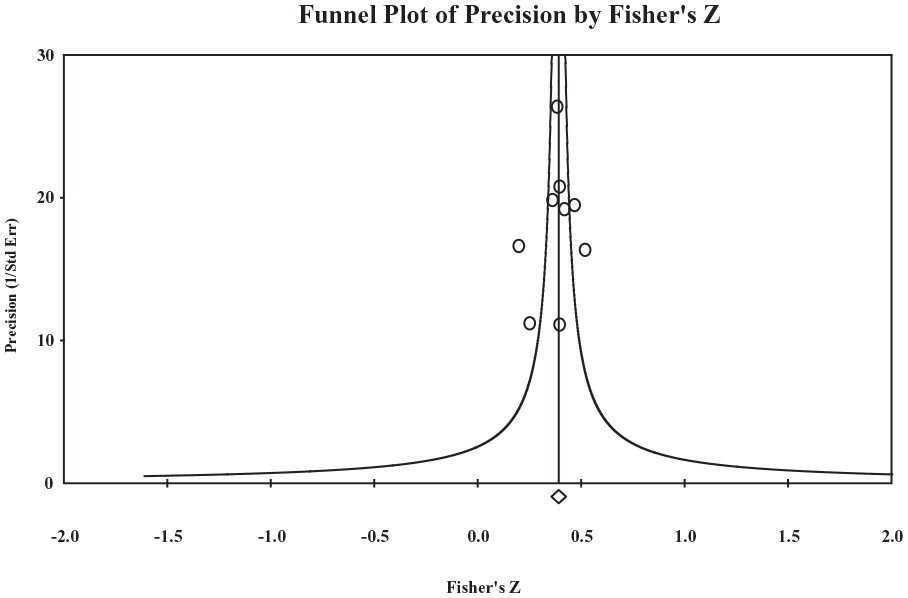
Funnel plot for studies used enhance factor of MEOS.
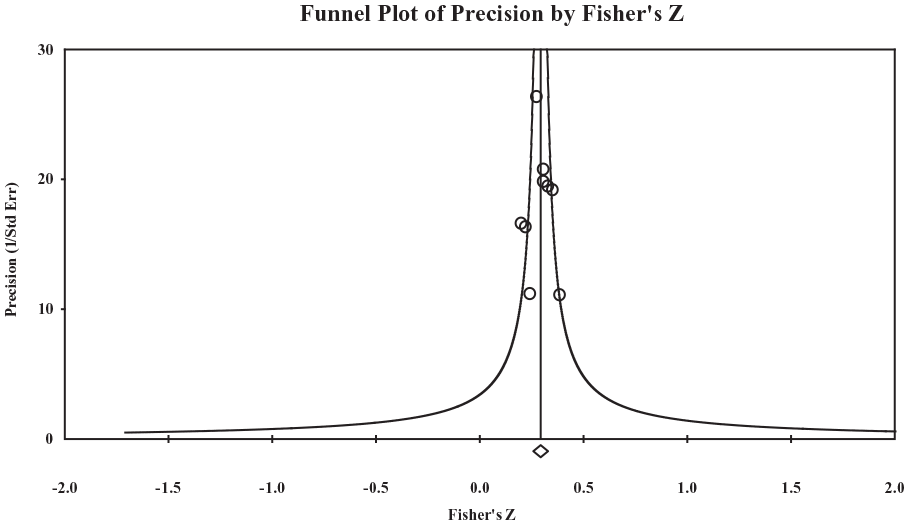
Funnel plot for divert factor of MEOS.

Funnel plot for inauthentic factor of MEOS.

Funnel plot for worsen factor of MEOS.
The Results of Heterogeneity and Publication Bias Checking.

Note. k = number of studies; N = sample size; r = sample-size-weighted mean correlation; CI = confidence interval; LL = lower bound; UL = upper bound; QT = measure of heterogeneity of effect sizes; I2 = percentage of heterogeneity; Egger’s intercept = Egger’s test of regression to the intercept; KTF = number of imputed studies as part of trim and fill method; r+ = adjusted correlation in trim and fill method. EMS = Emotional Manipulation Scale; MEOS = Managing Emotions of Others Scale.
EI and the EMS
Table 3 depicts the meta-analytic correlations that emerged between EI and EMS score. There was a positive relationship between EI and non-prosocial emotional manipulation, with an average effect size of 0.09, which was corrected for sampling and measurement errors. The 95% CI = [0.04, 0.14] indicating that the correlation was significant. The 80% CV = [–0.02, 0.20]. Moreover, a subanalysis was conducted, and the results showed that self-reported ability-based EI had a positive relationship with non-prosocial emotional manipulation, with an average effect size of 0.10, 95% CI = [0.05, 0.15], and 80% CV = [0.07, 0.13].
Meta-Analysis of the Relationship Between EI and EMS, Prosocial Emotional Manipulation (Enhance and Divert) and Non-Prosocial Emotional Manipulation (Worsen).

Note. k = number of independent samples; N = sample size; r = uncorrected sample-size-weighted mean correlation; SDr = sample-size-weighted standard deviation of observed mean correlation; p̂ = corrected sample-size-weighted mean correlation; SDp̂ = sample-size-weighted standard deviation of corrected mean correlations; Varart% = percent of variance in p̂ explained by statistical artifacts. EI = emotional intelligence; EMS = Emotional Manipulation Scale; MEOS = Managing Emotions of Others Scale.
EI and Prosocial/Non-Prosocial Emotional Manipulation of MEOS
Table 3 depicts the estimated correlations of EI with prosocial and non-prosocial emotional manipulation. Specifically, EI was positively related to prosocial emotional manipulation (i.e., Enhance and Divert) and negatively related to non-prosocial emotional manipulation (i.e., Worsen). The estimated corrected sample-size-weighted mean correlations were 0.41, 0.34, and −0.17 with the following corresponding 95% CIs for the associations between EI and Enhance, Divert, and Worsen, respectively: [0.36, 0.46], [0.30, 0.37], and [−0.23, −0.11]. As these 95% CIs did not include 0, all the correlations between EI and Enhance, Divert, and Worsen were significant. The 80% CVs were [0.36, 0.48], [0.34, 0.34], and [−0.27, −0.07], respectively. As noticed, most studies investigating MEOS used self-reported trait-based EI; therefore, subsample analyses were made. The results were not changed significantly. Accordingly, self-reported trait-based EI had a positive correlation with Enhance and Divert factors of MEOS, and a negative correlation with Worsen factor of MEOS, with the effect sizes of 0.40; 0.34; and −0.16, respectively. Ability-based EI also had a negative correlation with Worsen factor of MESO, with an effect size of −0.24, though the number of studies for this analysis is limited.
Moderating Effect of Gender
Consistent with our hypothesis, the moderating effect of gender in the relationship between ability-based EI and non-prosocial emotional manipulation, which was measured by EMS, was significant. Concretely, the dummy variable was used: female samples were coded as 1 and male samples as 0. The coefficient was −0.15, standard error = 0.06, 95% CI = [−0.26, −0.04], and p = .008. As the number of studies that examined the relationships between trait-based EI and non-prosocial emotional manipulation as well as between EI generally and prosocial emotional manipulation was insufficient for gender moderating effect analysis, we could not check this possibility. There was no study that separately reported the correlations between trait-based EI and non-prosocial emotional manipulation among males and females while there was only one study with the same kind of correlations between EI and prosocial emotional manipulation.
Discussion
Three findings related to the relationship between EI and emotional manipulation were obtained. Overall, EI was related to emotional manipulation, which can be used to either help or harm people, depending on the manipulator’s motivation. Regarding the “bright side” of EI and in accordance with theoretical expectations, the relationship between trait-based EI and prosocial emotional manipulation was positive, although we could not analyze the case of ability-based EI due to the unavailability of the previous studies. Furthermore, prosocial aspects assessed by the MEOS covered the adaptive features of emotional manipulation. For instance, people with high EI can use their emotional competencies to make others feel better, such as by offering help, displaying understanding and allowing others to express their feelings, using humor, and arranging enjoyable activities (Austin & O’Donnell, 2013). However, contradictory results made it difficult to draw specific conclusions about the relationship between EI and non-prosocial emotional manipulation. More specifically, the relationship between ability-based EI and EMS score was positive, whereas the relationship between trait-based EI and the Worsen factor of the MEOS was negative.
Higher EI facilitates emotionally manipulative behaviors by affording one superior abilities and skills related to emotions. With respect to the EMS, non-prosocial manipulation helps manipulators further their self-interests at the expense of others. In other words, the positive relationship between ability-based EI and EMS score revealed a possible dark side of EI. It is noteworthy that the EMS captures only the “evil” aspects of emotional manipulation.
Furthermore, a negative relationship between trait-based EI and the Worsen factor of the MEOS was found. To measure this non-prosocial aspect of emotional manipulation, researchers used 13 items, wherein four of these items were taken from the EMS. This finding is contradictory to what has been found regarding the relationship between ability-based EI and the EMS, which is attributable to differences in items across the two questionnaires. More importantly, most studies which examined the EMS used the self-reported ability-based EI assessment developed by Schutte et al. (1998), whereas most studies which examined the Worsen factor of the MEOS used a trait-based EI instrument developed by Petrides and Furnham (2001). Therefore, the contradictory results could also be attributed to differences in EI measures. Schutte et al.’s (1998) assessment was developed based on the four dimensions of Mayer and Salovey’s (1990) ability-based EI model. However, scores yielded by trait-based EI measures (Petrides & Furnham, 2001) significantly correlated with the general factor of personality (van der Linden et al., 2017). The overlap between the aforementioned factors (especially emotional empathy) with EI may have resulted in a negative relationship between trait EI and non-prosocial emotional manipulation. This is consistent with the findings that when emotional empathy is high, people with high EI have less intention to manipulate emotions of others for non-prosocial purposes. We also noted that almost all the studies that used the EMS were conducted in Australia. Although these studies used diverse samples, homogeneity was detected; therefore, the different findings might have been due to country-level differences. Moreover, high I2 value and relatively low Varart value—the value representing the percentage of variance in the estimated correlation explained by statistical artifacts—indicated the presence of moderators in studies that investigated the Worsen factor; such moderators might have changed the relationship between EI and non-prosocial emotional manipulation (i.e., from positive to negative). Non-zero I2 values emerged in all studies except those examining the Divert factor, indicating that moderators such as emotional empathy deficit, gender, dark personality traits, low moral identity, and self-serving goals (Bagozzi et al., 2013; Côté et al., 2011; Nagler et al., 2014) may explain the varying correlations that emerged in these studies.
Besides, gender was found to have a moderating effect in the relationship between ability-based EI and non-prosocial emotional manipulation. The relationship was stronger for males than females, thereby supporting our hypothesis. This suggests that, if males and females have equally high EI, males can be expected to be more manipulative for non-prosocial purposes than females; conversely, if the level of EI is low across genders, they may not differ in their levels of emotional manipulation.
Conclusion
Theoretical Contributions
We examined the existing literature on theory of mind, social functional accounts, empathy, and EI to investigate inconclusive findings about the relationship between EI and emotional manipulation. The findings revealed that self-reported ability-based EI was positively correlated to non-prosocial emotional manipulation (as measured by the Emotional Manipulation Scale). Moreover, self-reported trait-based EI was positively correlated with prosocial emotional manipulation (as measured by the Enhance and Divert factors of the MEOS). A negative relationship emerged between self-reported trait-based EI with non-prosocial emotional manipulation (as measured by the Worsen factor of the MEOS). The results confirmed the possibility of a dark side of EI. Furthermore, this study provides an empirical evidence pertaining to the moderating effect of gender in the relationship between ability-based EI and non-prosocial emotional manipulation. The contradictory findings regarding the relationship between the different measurements of EI and the different types of emotional manipulation underscore the need for the development of nuanced assessments. More specifically, assessments that measure emotional manipulation must be subjected to rigorous validation across diverse contexts.
Practical Implications
The practical implications of the findings merit further explication. Managers should pay careful attention to benefit from employees’ EI. In addition, assessments that measure EI should be built into recruitment materials so that companies are made aware of their prospective employees’ EI levels right from the outset. Judging from the general benefits of EI, those with high EI should be recruited; furthermore, their EI should be constantly nurtured. Although we can expect prosocial emotional manipulation from such employees, there is also the risk of increased non-prosocial emotional manipulation. Identifying individuals who obtain both high EI ability and conditional factors such as low moral identity, high self-serving motives, and dark personalities are useful to mitigate manipulative behaviors at the workplace. Then, interventions that attenuate the dark side of EI should be implemented. More specifically, among those with high EI, orientation workshops or short courses about morality and work ethics may help decrease their intentions and tendencies to manipulate others in a non-prosocial manner. Another solution might be to strengthen interpersonal relationships among employees through team-building activities and simultaneously enhance employees’ affective commitment. However, the effectiveness of such interventions needs to be tested in future studies. Furthermore, interventions for those with low EI should be considered, especially because there is evidence to suggest that experience and training can improve EI (Hodzic et al., 2018; Mattingly & Kraiger, 2019). This is important because a person with a higher level of any aspect of EI is less likely to be emotionally manipulated by others.
Limitations and Future Research Directions
This study has several noteworthy limitations. As the results of this meta-analysis were based on cross-sectional studies, a causal relationship between EI and emotional manipulation cannot be deduced. Future researchers can employ experimental or longitudinal research designs to test such a hypothesis. The results of a meta-analysis involving a satisfactory number of such studies will be more reliable.
Furthermore, the number of studies in the subgroups that were used to examine moderating effects was small; this might have subjected some of our results to second-order sampling error (Hunter & Schmidt, 2015). Therefore, these results must be interpreted with caution. However, as Miao et al. (2017) have stated, preliminary results derived from small samples are still beneficial because they provide a rough evaluation of extant literature and identify areas where more research is necessary.
Another limitation of this study pertains to the potential interdependence of effect sizes across studies; this violates the assumptions of random-effects models. In other words, the inclusion of different studies conducted by the same groups of authors might have led to coincidences in the operationalization of variables, sample selection methods, or population characteristics, which, in turn, may have caused some of the estimated effect sizes to be related (Varela, 2017). However, Varela (2017) has contended that it is not possible to rule out any of these circumstances in meta-analytic studies.
The fact that the study only considered research conducted in English and that almost all the studies that had used the EMS were conducted in Australia are two further noteworthy limitations. Nevertheless, this concern is mitigated by the fact that these studies used diverse samples. However, more empirical studies from other countries need to be explored to obtain a comprehensive picture of the relationship between EI and emotional manipulation. We also included studies that measured the composite construct of EI; however, we noted that different aspects of EI can have varying effects, each of which can be a meaningful line of inquiry for future researchers. Furthermore, all studies included in the meta-analysis used either self-reported ability-based or self-reported trait-based EI scales to measure EI. Thus, future researchers may investigate the relationship between EI and emotional manipulation using performance-based ability EI measurements. Owing to this limitation, a moderating effect from different types and measures of EI could not be explored, though the difference of the EI-emotional manipulation relationship has been partly assumed due to instruments used to evaluate two constructs. Finally, majority of the samples that were used in the studies included in our investigation were university students; this limits the generalizability of the study findings to workplace settings. Therefore, future researchers should utilize samples of employees to identify their specific characteristics.
Footnotes
Declaration of Conflicting Interests
The author(s) declared no potential conflicts of interest with respect to the research, authorship, and/or publication of this article.
Funding
The author(s) disclosed receipt of the following financial support for the research, authorship, and/or publication of this article: This research is funded by Vietnam National Foundation for Science and Technology Development (NAFOSTED) under grant number 502.02-2020.05.
