




Abstract
This study applies affective events theory (AET) and resource dependence theory to introduce the moderating variable social network structure hole; a theoretical model is applied to better understand construction project managers’ emotional intelligence (EI), the innovative behavior of employees, and job performance. A questionnaire survey was conducted with Chinese construction project managers and their employees, with 169 valid questionnaires analyzed using structural equation modeling. The results show that (a) managers with high EI have more potential to make use of structural holes; (b) managers with high EI can stimulate employees’ innovative behavior, thus improving employees’ job performance; (c) structural holes can enhance the relationship between managers’ EI and employees’ innovative behavior and strengthen the relationship between EI and employees’ job performance. Using the lens of AET, this study examines the influencing path of managers’ EI on employees’ job performance from two aspects: emotion-driven behavior and judgment-driven behavior. The study also discusses the moderating mechanism of social network structure hole. The conclusion may help project managers better understand and make use of the influence of social network structure holes.
Introduction
There has been a brisk boom in construction projects as a result of urban renewal and sprawl, especially in developing countries like China. The increasingly complex environment of construction projects has led to an urgent need for project managers to improve their ability to lead teams and adapt to complexity and uncertainty (Müller & Turner, 2010; Zhang et al., 2018). The personal attribute ability of the project manager has more influence on the employees than the technical ability (Khosravi et al., 2020). Specifically, emotional intelligence (EI) reflects an ability to guide thinking and action and is a key factor in daily managerial success (Rezvani et al., 2016). Stephens and Carmeli (2016) believed that individuals with a high level of EI expand their knowledge and skills base to improve their ability to communicate and cooperate effectively. Managers with high EI stimulate good attitudes and work behavior by meeting the emotional needs of employees.
Although studies have shown that manager EI is related to performance and effective results in the project environment, research on its impact is still limited (Ashkanasy & Dorris, 2017; Khosravi et al., 2020). In addition, the internal and external environments of construction projects are complex, the construction period is long, and there are many stakeholders (Luo et al., 2017) It is difficult for managers to complete project tasks independently from their own social network (Dogan et al., 2013; Wu, Zhao, & Zuo, 2019). A structural hole refers to the phenomenon that there is a direct relationship between some individuals in the social network, but not with other individuals (Ronald, 1992). Therefore, structural holes are a particularly important feature of the social network and highlight the need for construction project managers to have EI and maximize project resources to improve the project management level (Sarkar & Aulakh, 2009). However, there is little literature to explore the impact of structural holes on employee innovation behavior and job performance in the construction project network with high complexity and uncertainty. In particular, according to the basic principles of affective events theory (AET), this article holds that the personal resource richness of project managers can adjust the relationship between project managers’ EI and employee attitudes and behaviors.
The AET model proposes that events that occur at work cause employees to have emotional responses that determine their work attitude and behavior. Scholars (Michaellis & Stegmaier, 2009; Montoai & Courcy, 2017) have revealed that high EI managers are important factors to stimulate employees’ innovative behavior. Researchers (Rezvani et al., 2016) proved that a higher level of EI of managers will also promote employees to produce higher job performance. Furthermore, this article believes that a higher level of structural holes is more likely to promote EQ managers to better manage employees’ work results (Berson & Avolio, 2004; Grosser et al., 2018).
In the construction project network, the EI of managers is considered a trigger event that affects the mood of employees. The EI level relates to the harmonious and efficient relationship between superiors and subordinates (Rezvani et al., 2016); an employee’s innovative behavior is associated with the direct behavior driven by emotional response (Berson & Avolio, 2004; Grosser et al., 2018). Job performance is a judgmental behavior indirectly driven by emotional response; that is, job performance emerges under the dual action of managers’ EI and employees’ positive innovation behavior. In addition, the occupants of structural holes can detect opportunities or threats earlier than those in other network locations, and can gain opportunities for cooperation from potential allies and partners. Resource dependence theory proposes that organizational survival depends on absorbing resources from the surrounding environment. Therefore, as a network structure characteristic, structural hole can be incorporated into the theoretical framework of AET to regulate the relationship between manager EI, employee innovation, and job performance.
In summary, this study is guided by the following overarching research questions:
This study provides a possible scheme for project managers to interact more efficiently with network members than others and proposes effective methods to improve employee performance on projects. It has both theoretical and practical value for realizing the smooth delivery of construction projects.
Literature and Theoretical Background
Emotional Intelligence
The concept of “EI,” as proposed by Salovey and Mayer (1989), is defined as “the ability to monitor the feelings and emotions of yourself and others, to distinguish and use this information to guide your thoughts and actions.” Bar-on et al. (2013) described “EI” as almost every aspect not measured by the intelligence quotient (IQ). Rezvani et al. (2016) described project manager EI as an ability to take advantage of, understand, and manage emotions. EI is considered to be key for leadership ability, such as in construction projects with heavy tasks and frequent conflicts (Clarke, 2010; Joseph & Newman, 2010; Müller et al., 2012). Managers with high EI are more likely to feel and actively express emotions and generate positive and effective communication to alleviate project conflicts.
Past studies have confirmed that a manager’s EI is closely related to the management efficiency of the construction project (Rezvani et al., 2016; Zhang et al., 2018); EI also positively impacts employee job performance (Dasborough, 2006; Kollée et al., 2013). In particular, and Müller and Turner (2010) found that managers with high EI will create high-quality and effective relationships in their own social network relationships. This is because in the complex context of project management, there is a close relationship between the personal attributes of EI as a manager and management effectiveness. Therefore, combined with construction project characteristics, this article defines EI as a kind of emotional ability that project managers can improve through continuous learning in an increasingly complex project environment.
Social Network Structural Hole
When studying construction projects, social networks are used to represent different relationships within or among project participants (Dogan et al., 2013). Specifically, social networks can reflect the relationship, level, and overall situation of the construction project organization (Borgatti & Foster, 2003; Wu, Hu, et al., 2019). As a characteristic of a social network structure, structural hole can reflect important characteristics of a construction project organization. Structural hole theory was proposed by Burt (1992) as “the phenomenon that one or some individuals in a social network have a direct connection, but have a discontinuous relationship with other individuals.” For example, Figure 1 shows three members: Members B and C are connected to member A, but B and C are not connected. This lack of direct connection constitutes a structural hole. The people who occupy these structural holes have the advantages of information and resources (Burt, 2000), which can be valuable to the project. Briona et al. (2012) established the structural hole as being representative of social resources when the boundary was expanded in the research project. Di Vincenzo and Mascia (2012) explored the impact of social network structure holes on project performance in construction projects. Based on this past work, this study considers the hole in a social network structure to be representative of social resources.
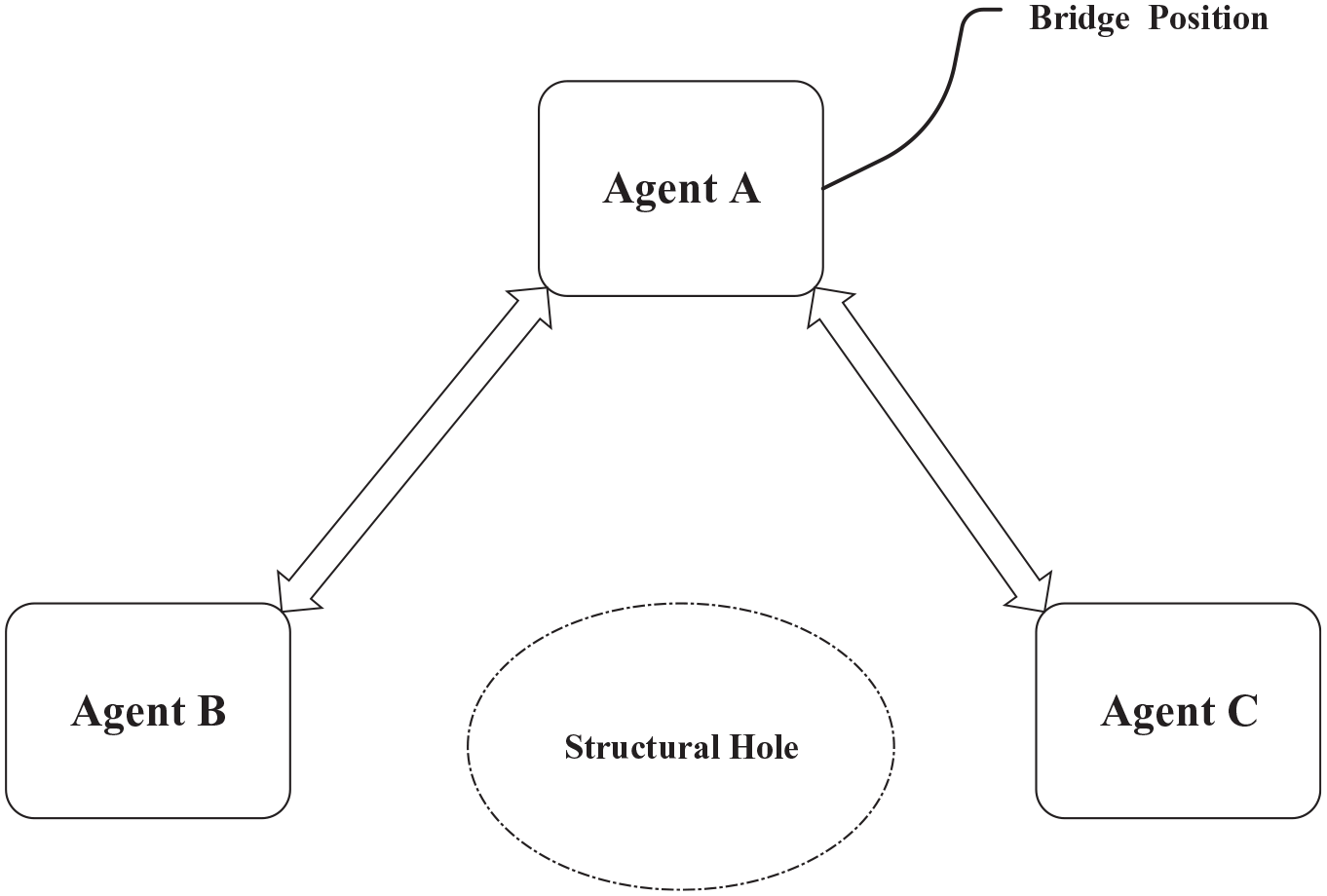
Illustration of the concept of structural hole and bridge positions.
Innovative Behavior
Innovation has a unique definition in the field of construction projects. Brandon (2008) defined innovation as a change to the construction project. Ling et al. (2007) defined innovation as a concept used by project owners to generate additional benefits. Innovative behavior by employees is a concept with rich context. From a personal trait point of view, it reflects a willingness to change the status quo of an individual in a broad sense (Hurt et al., 1977). The full process of innovation is divided into two steps: the generation of innovation (members of the organization produce a new and useful idea), and the implementation of innovation (members successfully practice this idea) (Scott, 1994).
In practice, innovative behavior is out-of-role behavior that is freely chosen by employees, is not restricted by the explicit regulations of the organization, and is rarely covered by the reward system of the organization (Kanter, 1988). This article draws lessons from the definition of construction engineering innovation proposed by Ling et al. (2007) and refers to effective employee innovative behavior in construction project as the behavior associated with proposing useful innovative ideas and suggestions to solve technical and management problems in engineering construction; applying new technology, new technology, new materials and new equipment; or adopting new construction production methods and construction methods to solve practical engineering problems.
Job Performance
Job performance is a multidimensional concept. Katz and Kahn (1978) noted that job performance includes in-role behavior and out-of-role behavior. Borman (1991) proposed that job performance includes task performance and relationship performance. However, the construction industry consists of complex organizations, making it difficult to fully measure overall employee performance. This is because work results in construction projects are the result of multiple interdependent work processes. As such, studying the work performance of construction employees can be regarded as performance in a specific dimension (Meyer et al., 1989). Construction projects are task-oriented, with the main purpose being to meet time, quality, and cost requirements (Hoboken, 2014). For task performance and relationship performance, task performance is related to the final project result (Cheng et al., 2007). Relational performance supports organizational goals; however, it reflects neither a task activity nor a direct interaction between production and service. Therefore, in this study, task performance serves as the only criterion for assessing the work performance of construction project managers. The work performance of construction project employees is defined as the behavior of construction project employees who are committed to achieving established organizational and preset project goals.
Research Model and Hypotheses Development
Theoretical Framework
AET focuses on the structure, inducement, and consequence of individual emotional responses at work. An employee’s experience of work events will trigger an emotional response, further affecting individual attitude and behavior (Weiss & Cropanzano, 1996). Many studies have shown the effectiveness of using AET (Mignonac & Herrbach, 2004; Pirola-Merlo et al., 2002; Rezvani et al., 2016; H. Zhao et al., 2007) in project management research. For example, Ashkanasy and Dorris (2017) applied AET to identify the causes and consequences of employees’ work attitude and behavior in complex project management studies. Pirola-Merlo et al. (2002) applied AET in a leadership study to explain the impact of work events on team atmosphere and on team performance.
In the framework of emotional event theory, manager EI is associated with the event that triggers employees’ emotional response; EI has an important impact on employees’ work attitude and behavior. At the same time, to study the moderating effect of EI and innovation and job performance, we applied lessons from resource dependence theory. Resource dependence theory proposes that all the resources needed cannot be obtained within the organization. As such, necessary resources must be obtained through other organizations in the environment to obtain better results. Managers are a mechanism to connect with the external environment to obtain the company’s operational resources, and avoid the harm caused by threats in the environment to the company (Hillman, 2009). A structural hole is the embodiment of social resources and the information richness of project leaders. This can be incorporated into the theoretical framework of AET, which can further regulate the relationship between managers’ EI, employee innovative behavior, and job performance. Based on the analysis above, a theoretical model (Figure 2) was constructed to explore the relationship between manager EI, employee innovative behavior, and job performance. The model was also used to verify the moderating role of network structure holes.

Theoretical model underlying empirical research.
Emotional Intelligence and Job Performance
There is a strong relationship between employee job performance and emotional experience (Close & Ashton-James, 2005; Weiss & Cropanzano, 1996). Construction projects have long working hours, high complexity of tasks, and great pressure on employees (Galinsky et al., 2005). Construction project managers need to have a certain level of EI to effectively unite project members to form project team cohesion. In general, a positive emotional experience will positively impact employee performance at work (Mayer et al., 2008). In contrast, negative emotions will reduce employees’ enthusiasm for work and lead to a decrease in performance (Von Glinow et al., 2004). There are often differences among project members due to project objectives, planning, resource allocations, and other problems. To better lead members to achieve expected work performance, project managers need to adjust internal relationships on the project and adjust the cross-interest relationships among many stakeholders to ensure smooth project implementation (Mazur et al., 2014; Rezvani et al., 2016; Slaski & Cartwright, 2002). These factors make the manager’s EI ability even more important. Therefore, the following assumptions are proposed:
Emotional Intelligence and Innovation Behavior
High EI leadership is employee-oriented, focuses on cultivating good relationships, and is an important factor for stimulating employee innovative behavior (Michaellis & Stegmaier, 2009; Montoai & Courcy, 2017). Leaders positively impact employees’ innovative activities through effective management and by adjusting employee emotions in complex construction projects (Song et al., 2019; Zhao, Hwang, & Lee, 2016). Construction projects have a large workload, long construction periods, and high costs of innovation. The courage of subordinates to break the rules and find new ideas to implement new programs largely comes from the emotional support and psychological encouragement shown by leaders to their subordinates (Gong & Huang, 2009; Zhao et al., 2014).
Managers with high EI are also better at implementing innovations, because they have a higher ability to build more harmonious relationships with their colleagues, especially project stakeholders who are key to implementing innovations. Leaders’ keen observations and effective management of subordinates’ emotional states can enable employees to get emotional support and can positively impact the emergence, improvement, and implementation of employees’ innovative ideas (Michaellis & Stegmaier, 2009). Therefore, the following assumptions are proposed:
Innovation Behavior and Job Performance
Construction projects have complex and dynamic characteristics, and emergencies and new problems are constantly encountered (Zhu & Mostafavi, 2017). Employees use new methods and new programs, so they can better complete scheduled tasks. Wuyts and Dutta (2004) proposed that meaningful innovation activities can bring competitive advantages, and members’ job performance has room for improvements. Due to the limited duration of construction project organizations, high uncertainty, and team heterogeneity, innovative approaches are often needed in construction project work.
Janssen (2004) found a positive correlation between employee innovation and employee performance evaluations, and it has been proposed that innovation plays a key role in harnessing competitiveness in the construction industry (Staniewski et al., 2016). In construction projects, employee behaviors that solve practical project problems may positively impact the work performance of construction project employees. This is done by proposing useful innovative ideas and suggestions, or by applying new technologies, new processes, new materials, and new equipment. Therefore, the following assumptions are proposed:
The Moderating Effect of the Hole in the Structure of Social Network
Studies on structural holes have confirmed the presence of an important relationship between social network structural holes, innovative behavior, and job performance (Burt 2004; Krackhardt, 1997). Grosser et al. (2018) proposed that structural holes can moderate the relationship between managers’ skills and employee innovation, impacting performance. The internal and external environment of the construction project team is complex, the construction project investment is large, the construction period is long, and there are many stakeholders (Shuangliang et al., 2009). Managers need to have corresponding resources when encouraging employee innovation and good work performance.
Construction project management involves typical task-driven management. Due to the asymmetry of resources and information, it is important that managers collect and control resource information (Slevin & Pinto, 1987). Managers occupy middleman positions (Katila, 2002) in construction projects, providing the opportunity to collect and control information. The presence of structural holes is a network structure feature that is directly related to these opportunities. Specifically, structural holes provide individuals with faster access to valuable information and control who they share that information with. Therefore, the structural hole provides managers with influence, as they are able to control information and resources. The study makes the following assumptions:
Methods
Sampling and Data Collection
This study applied non-probabilistic random sampling, based on the willingness of respondents to participate and the ease of obtaining corresponding data (Greene & Robbins, 2015; Zhao & Hwang, 2015). The study sample consisted of two groups: the first group included project managers involved in a Chinese construction project, and the second group included the project staff managed by the project managers who participated in the survey. In the first stage, 500 questionnaires were sent to the construction project managers to investigate EI and structural holes; 310 were received (for a recovery rate of 62.0%). Another 54 were either not fully completed or were repeats with others.
In the second stage, we invited the project managers whose responses were considered valid in the first stage to send the questionnaire to their project employees, to investigate the innovation behavior and work performance. To avoid sample deviations, the project manager was asked to evaluate employee performance. We then compared the two groups of data, and the resulting analysis of variance showed no significant differences between the two groups. Therefore, the sampling deviation did not affect the research results.
After removing unmatched and invalid questionnaires, 169 questionnaires with successful manager and subordinate matching were retained. To avoid a nonresponse bias, the data were divided into two parts (one with the non-response data, the other without it). The results of independent sample T test show that the p value of each potential variable exceeded .05 (EI: F = 0.296, p = .627; innovation behavior: F = 0.856, p = .271; job performance: F = 0.216, p = .642). This indicated there was no nonresponse bias. Table 1 provides detailed demographic characteristics.
Demographic Characteristics of the Sample (N = 169).

Variable Measurement
The first step included the measurement of EI, innovative behavior, and job performance. These measurement provisions came from two sources: the first source included measurement provisions from the existing literature; the second source included modified and improved measurement provisions from the existing literature based on Chinese construction project characteristics. Seven experts (including researchers and project managers) were selected for face-to-face interviews to develop, modify, and delete measurement terms for each variable according to their opinions. Finally, they developed a formal questionnaire. With the exception of the basic demographic variables and social structure holes, the other variables used a 5-point Likert-type scale (1 for “strong disagreement” and 5 for “strong agreement”). Table 2 provides the standardized factor load (SFL) for each measurement term.
Variable Measurements.

Note. SFL = standard factor loading; EI = emotional intelligence; CX = innovative behavior; JP = job performance.
The other part of the study involved measuring structural holes in social networks. In the network of construction project managers, the degree of aggregation is used to express the richness of structural holes (Grosser et al., 2018). This is a function of the size, density, and hierarchy of the network; the main goal was to measure the degree of lack of structural holes in a network of focused members. We used Xiao and Tsui (2007) and Grosser et al. (2018) to study the structural holes of social networks and collect self-centered network data. The same group of interviewees from different projects was asked to list network members using a name generator, and to identify the relationship between the network members and the interviewees, and to identify the pairwise relationship between the network members through the name interpreter (Table 3). Figure 3 shows the resulting network of the project managers. The degree of constraint is calculated using the constraint formula, expressed as follows:

In this expression,
Social Network Data Collection.


(A) Networks with low richness in structural gaps; (B) network with high richness in structural holes.
Data Analysis and Results
Analysis Strategy
Smart-PLS was used for structural equation analysis. PLS-SEM software is often used to measure the relationship between two or more endogenous and exogenous variables (Hair et al., 2013). This technique has been applied in social science research (Haq et al., 2019) and is suitable for analyzing complex models and small data samples (Lu et al., 2015). In addition, the common method of Harman single factor test was used to test the deviation (Podsakoff, 1986). The results show that the deviation of the common method did not affect the research results. Specific research processes are shown in Figure 4.
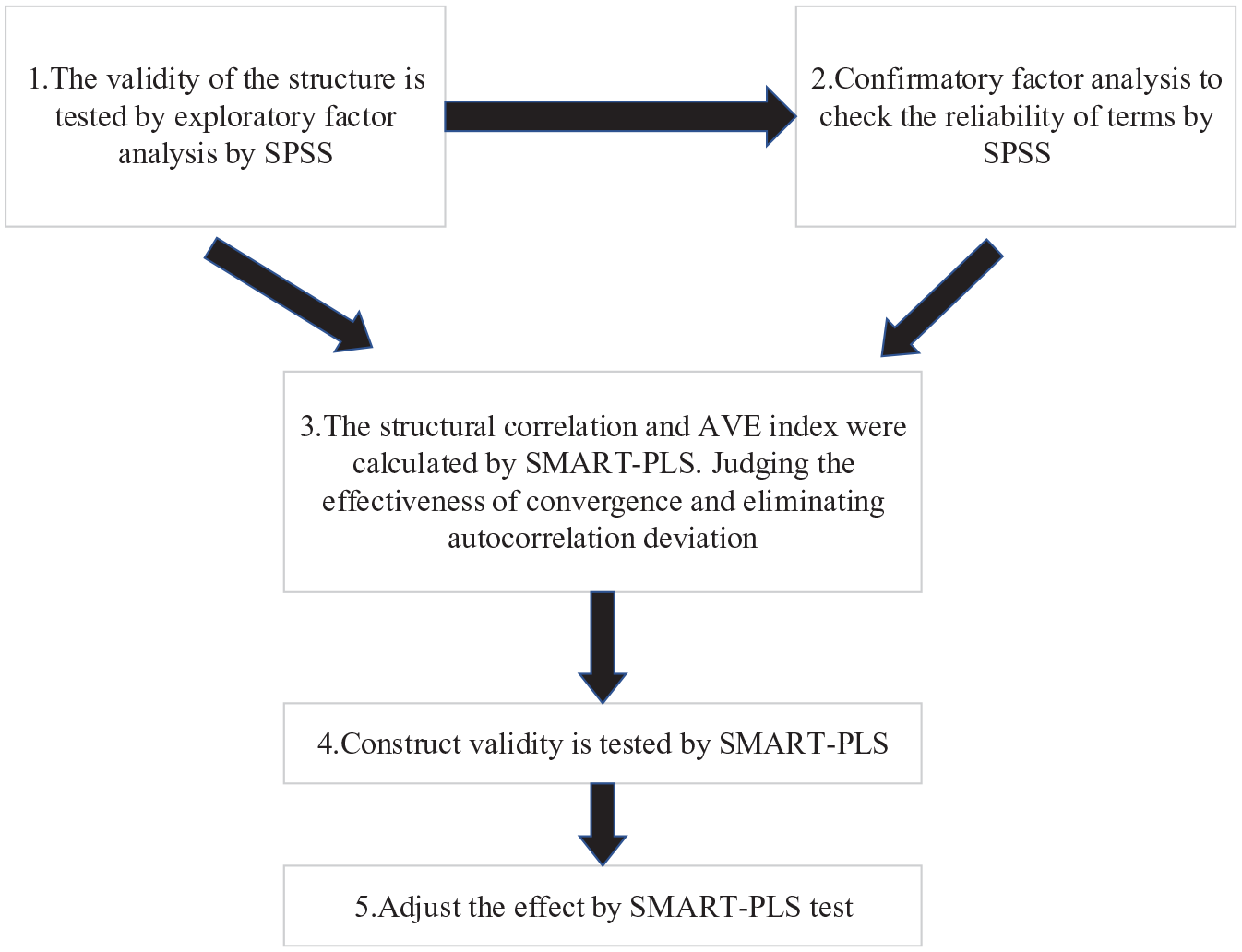
Analytical process.
Assessment of Measurement Model
Confirmatory factor analysis was used to assess the reliability and reliability of each measurement clause. Cronbach’s alpha was used to test the reliability of different constructs, with a target value of greater than 0.7 (Nunnally et al., 1967). In this study, the Cronbach’s alpha values of all variables exceeded 0.80. Combination reliability (CR) is an index for measuring internal consistency; Albright and Park (2009) recommend a target CR value of greater than 0.7. In this study, all CR values exceeded 0.9, indicating that each construct has good validity.
After the reliability test, data validity was tested. The average variance extracted (AVE) was used to measure the convergence validity of the data, with a target value exceeding 0.5 (Petter et al., 2007). In addition, to test the differential validity between the variables, the value of the square root of AVE should be greater than the correlation between the construct and other constructs. The heterotrait–monotrait (HTMT) values were below the threshold of 0.85 (Henseler et al., 2015). Tables 4 to 6 show that the AVE of each variable is consistent with the relevant standards, indicating that each variable has a good discriminant validity. Table 7 shows that the hypothesized model with four factors resulted in an excellent fit. The one factor model and three-factor model resulted in a poorer fit. As the values of χ2/df increased, the values of normed fit index (NFI) and
Convergent Validity.

Note. CR = combination reliability; AVE = average variance extracted.
Descriptive Statistics (Figures in Italics on Diagonal are SRAVE Results).
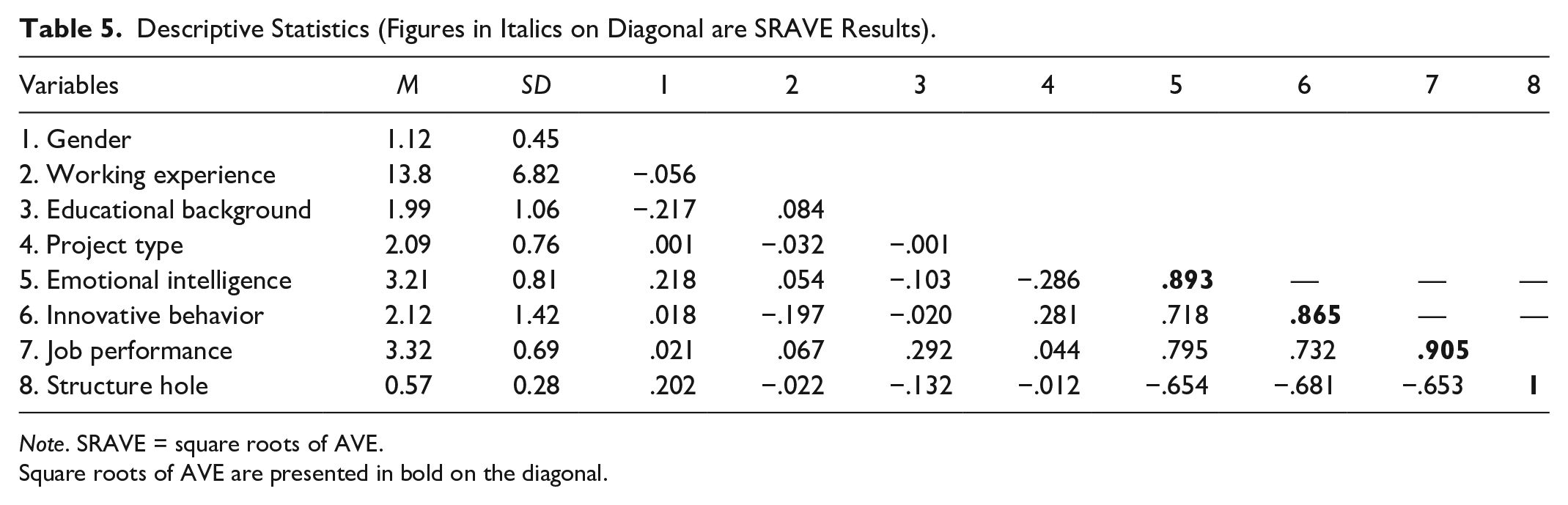
Note. SRAVE = square roots of AVE.
Square roots of AVE are presented in bold on the diagonal.
HTMT.

Note. HTMT = heterotrait–monotrait.
Comparative Results of Alternative Models.

Note. RMSEA = root mean square error approximation; NFI = normed fit index; EI = emotional intelligence; CS = representative structure hole; CX = innovative behavior; JP = job performance.
Structural Model Evaluation
In this study, the hierarchical regression analysis method was applied to test the theoretical model. First, the study introduced the main influence of EI on employees’ innovative behavior and job performance. Second, regulatory variables were introduced to analyze their respective role. At the same time, the fitting degree of the model was assessed using NFI, standardized root mean square residual (SRMR), and other measures. Table 8 and Figure 5 show that the model’s fitness indicators all met the relevant standards. The fitness χ2/df value was 2.885, which is below the more stringent threshold of 3. The NFI was 0.926, exceeding the threshold of 0.9. The results show an ideal overall degree of fit for the model.
Hypotheses Decision Table.
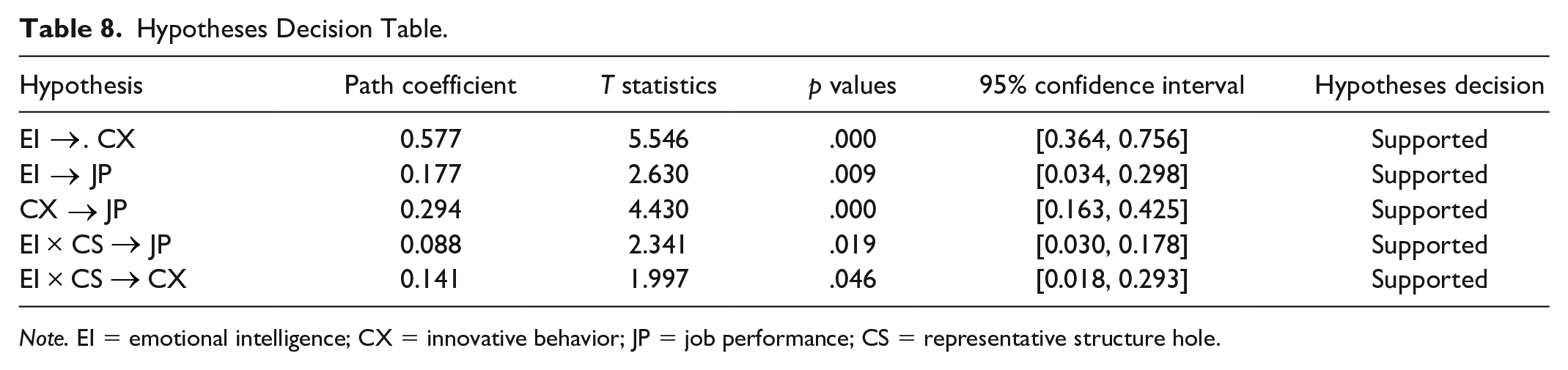
Note. EI = emotional intelligence; CX = innovative behavior; JP = job performance; CS = representative structure hole.
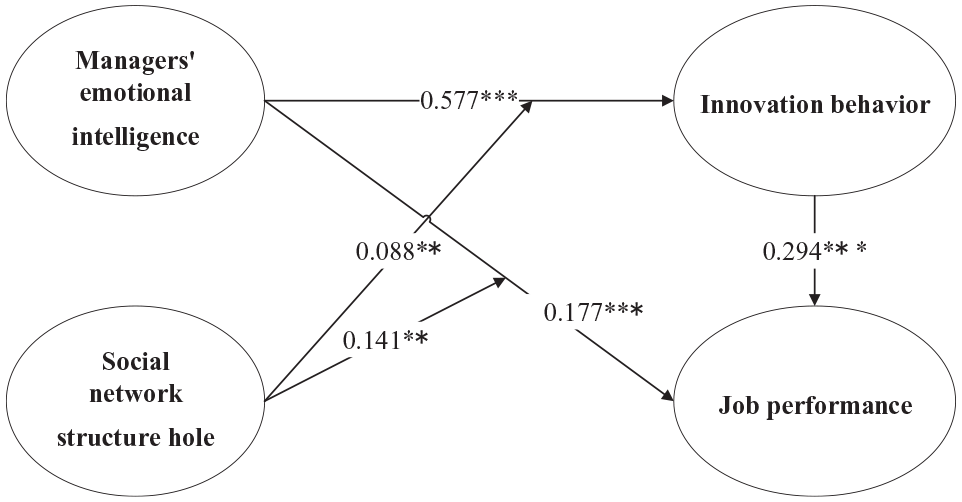
Model and hypothesis test results.
Moderating Effect
This study applied the social network structure hole as a moderator to investigate its impact on (a) EI and job performance; and (b) the relationship between EI and innovative behavior. This regulatory effect is measured by “regulation under interaction conditions” (Haq et al., 2019). Based on, Henseler and Chin (2010), three steps were measured. First, the path coefficients between EI and job performance and innovation were calculated,
To fully understand the influence of the regulation effect, a simple slope analysis was conducted. Figure 6 shows that when the degree of structural hole is high (+1SD), baked 0.384 and p < .05. When the degree of the structural hole is low (−1SD), baking 0.105 is less than 0.05. Figure 7 shows that when the structural hole degree is high (+1SD), the baud 0.726 direction p < .05, and when the structural hole degree is low (−1SD), the baud 0.158 score pendant 0.13 relationship is not significant. The results of the moderation analysis show that the hole of social network structure positively regulates the relationship between EI and innovation behavior, and the relationship between EI and employee job performance.

The relationship between structural holes and EI and JP.

The relationship between structural holes and EI and CX.
Discussion
Emotional Intelligence and Job Performance
This study applied AET theory as an overall theoretical framework to study the impact of EI on job performance. As a key indicator of leadership ability among construction project managers, EI can positively affect employees’ work performance. This work deepens the research of Grosser et al. (2018), who found that the political ability of managers can improve job performance. In construction projects, long construction periods and heavy tasks create burdens and stress for employees (Stark et al., 2014). Construction project managers with high EI values can effectively detect and control negative emotions and encourage project employees to more actively participate. This is consistent with conclusions by Rezvani et al. (2016), who found that EI affects trust and job satisfaction, thus affecting performance. This study also considered the background of the management ability associated with managers’ social network resources, and expanded the influence of EI from the psychological category to the category of social resources.
In addition to the path that directly affects job performance, EI can also facilitate improvements in job performance by promoting innovative behavior. In construction projects, project managers with high EI that are experiencing high costs and difficulties in innovation are more likely to consider all kinds of knowledge, helping employees effectively judge the value of potential ideas. This positively impacts their ability to manage employees’ creativity (Zhou, 2003). Construction projects experience many changes in project requirements, extremely complex tasks, and increasing work requirements (Hwang et al., 2016; Zhao, Hwang, & Low, 2016). Projects need management innovation to make the organization operate more harmoniously. Furthermore, technological innovations are needed to better solve the problems encountered in the work. Therefore, innovative behavior by employees greatly improves work performance.
The Moderating Function of Structural Holes
The structural hole served as a moderating variable in this study. This differs from previous studies on EI effects that only considered psychological effects, such as trust and satisfaction (Jiang & Zhao, 2019; Khosravi et al., 2020; Suliman, 2007; Sy et al., 2006) This is because this study considered the background context for applying EI: the hole in the social network structure that represents social resources. In particular, we emphasize that individual skills and competencies cannot be considered in isolation. Rather, to be effective, these skills and competencies must be linked to appropriate implementation contexts such as personal networks. The internal and external environment of the construction project is complex, the investment is large, the construction period is long, and there are many stakeholders (Wu, Zuo, & Zhao, 2017). In the complex social network relationship of the construction project, managers with high EI can make use of the information enhancement and resource control benefits created by structural holes (Carnabuci, 2015).
This differs from Di Vincenzo and Mascia’s (2012) exploration of the structural hole when studying the impact of social capital on performance in construction projects. This is because we also considered the leadership ability of EI and its role in mitigating the structural hole of the social network. When the EI of construction project managers is low, high-level structural holes not only bring resources but also negatively impact performance. Too many structural holes lead the project manager “middleman” to encounter too much conflicting heterogeneous information, resulting in conflicts, coordination difficulties, slow action, and other disadvantages (Kellermanns et al., 2005).
Conflict is a key management problem that managers must mitigate in construction projects (Wu et al., 2018). As a result, construction project managers need to have a stronger ability to perceive, manage, and coordinate the emotions of each node, to increase trust and promote the exchange of different information to alleviate conflicts (Wu, Zhao, & Zuo, 2017). This conclusion is consistent with Khosravi et al. (2020), who found that EI will effectively alleviate conflicts. The richness of the structural hole determines the diversification of the construction project manager’s own resources and affects the scope and effect of the construction project manager’s EI. This is specifically reflected in the work performance of employees.
Finally, the results show that senior managers should be aware of the importance of managers’ EI and social network resources, both of which improve staff performance and management efficiency in construction projects. Therefore, improving the EI of project managers and increasing the richness of their own social network structure should be part of leadership development plans.
Theoretical Implications
Using the AET model, this study studied the impact of EI on innovation and job performance, and the regulatory role of structural holes by connecting these four structures in the context of the construction project. The research results have important theoretical significance for construction project management. First, this study adds to existing EI literature (Rezvani et al., 2016; Zhang et al., 2018) by defining EI in the context of the construction project. It also clarifies that the employees’ innovative behavior in the construction project includes the entire innovation process, from generation to implementation. Furthermore, by combining AET theory and resource dependence theory and moving from emotion-driven behavior to judgment-driven behavior, this article discusses the influence path of managers’ EI on employees’ job performance. This is an important supplement to the existing EI research.
Second, this study provides new knowledge to the construction management literature, particularly related to increasing employee innovation and improving employee performance. This study considers the EI of managers’ management ability and the influence of the hole in social network structure, which represents the richness of managers’ social network resources, and discusses the moderating mechanism formed by the hole in social network structure, helping researchers better understand how to exert the influence of social network structure hole.
Practical Implications
The current research provides insights about how to make better use of the social network resources of construction project managers to improve employees’ work performance. It also helps construction project managers make full use of employees’ innovative consciousness and behavior and provides a reference for the development of construction project management.
For managers, first, project managers should be aware that improving EI may have an important impact on employees’ work attitude and behavior. Construction project requirements have become higher and higher, and the tasks have become increasingly complex. Project managers with high EI increase employees’ positive attitude and behavior and reduce project conflicts. Second, companies should help project managers develop their personal networks, because these networks advance the performance of project employees. These network relationships may lead to additional resources to better support the project, disseminate positive information about the project, and ensure prioritization over other projects.
Third, project managers should be aware that the innovative behavior by employees will significantly improve job performance. This is even more important because project managers usually come from a technical background, perform construction tasks “instinctively,” or do not consider innovative behaviors at all, because they are not “directly related” to the project. Finally, project managers should be aware that their personal network affects employees’ job performance, especially when the network has structural holes.
For construction project employees, employees should be encouraged to innovate. Construction project managers should establish a tolerant environment for innovation, enhance rewards for innovative performance, and increase investments in project innovations. This is because innovation has an important impact on job performance. Employees should be given more emotional care in their work, so employees can complete their work in a more relaxed and pleasant working environment, improving their work performance.
Limitations and Future Work
This study explored ways to improve the job performance of construction project employees by studying the relationship among managers’ EI, innovative behavior, job performance, and social network structure holes. The study makes significant contributions and could significantly impact academia and practice. However, like all studies, the research had some limitations that could be supplemented with future research. First, the universality of the results may be limited, because the data were limited to specific regions of China. Future studies should explore whether these findings apply in the environment of other countries. Second, this study focused on managers. Future studies should explore the role of EI on nonmanagers and its impact on job performance. Finally, the study did not consider the influence of the five personality traits on the research results. Future research could include the personality characteristics into the research to analyze the impact of the big five personality traits on employee job performance.
Conclusion
The continuous expansion of construction project scale and their increased complexity create challenges for the management abilities of construction project managers. Therefore, research has increasingly focused on improving the management ability of construction project managers. Based on emotional event theory, this study analyzed the relationship among innovative behavior, job performance, and the social network structure of EI and employees. The results show that (a) manager EI has a significant positive effect on employee innovative behavior and job performance; (b) innovative behavior has a significant positive impact on job performance; (c) the managers’ social network structure hole positively moderates the relationship between EI and innovation behavior; and (d) the managers’ social network structure hole positively regulates the relationship between EI and job performance.
Footnotes
Author Contributions
Handong Tang designed and completed the paper in English. Ge Wang, Junwei Zheng, and Lan Luo provided significant advice and revised the manuscript. Guangdong Wu conceived this study.
Declaration of Conflicting Interests
The author(s) declared no potential conflicts of interest with respect to the research, authorship, and/or publication of this article.
Funding
The author(s) disclosed receipt of the following financial support for the research, authorship, and/or publication of this article: This study is supported by the National Natural Science Foundation of China (71972018, 71901101, 71701083, and 71901113).
