




Abstract
Successful inclusive education for students with severe disabilities (SD) relies on the preparedness of their teachers. This descriptive study investigated special education teachers’ perceptions of their preparedness to teach students with SD in inclusive educational settings. A survey was sent to 382 teachers of such students. In general, findings indicate that participants were confident that they were prepared to teach students with SD in inclusive education. Findings also show that the lowest levels of confidence were reported by participants with the shortest working experience, participants who have taught students with moderate and severe intellectual disabilities and those with multiple disabilities, participants who have taught in the lower grades, and those who have already taught in general classrooms. The practical implications of the findings are discussed for supporting successful implementation of inclusive education for students with SD in terms of improving special education teachers’ preparedness.
Introduction
Inclusive education is a topical issue in modern society, and it is focused because it is on access to quality education for all students while considering their diverse needs. The term inclusive education defines when students with or without disabilities attend the same classes, learning together to achieve appropriate results and integration with society (Ali & Jelas, 2006; Browder & Cooper-Duffy, 2003; Kurth et al., 2015). This perspective on education is preconditioned by the latest research which indicates that individuals with disabilities might significantly benefit from attending classes with their typically developing peers (Calculator, 2009; Leko et al., 2012; Rogers & Johnson, 2018; Ruppar et al., 2016). Thus, it is essential to introduce this model in educational establishments globally.
Inclusive education rests on the idea that every student is unique and should be valued regardless of his or her existing problems, disabilities, or disorders (Calculator, 2009). Therefore, impaired students deserve equal opportunities for development and self-realization (Benitez et al., 2009; Ruppar et al., 2015). This approach requires increased emphasis on the paradigm for students with severe disabilities (SD). Inclusive education enables students with SD to socialize and avoid being discriminated against or limited because of their unique needs (Rogers & Johnson, 2018; Ruppar et al., 2016). Research shows that inclusive education offers more positive results compared to other educational placements (Alquraini & Gut, 2012; Ayres et al., 1994; Ballard & Dymond, 2017; Boyd et al., 2005). Activating the benefits of inclusive education provides new opportunities for this group to become successful in the future.
The category of SD considered in this discussion includes individuals with severe intellectual disabilities (ID), multiple disabilities (MD), or autism spectrum disorder (ASD), who need specific and extensive support to participate in social functioning (Alquraini & Gut, 2012; Benitez et al., 2009; Collins, 2007; Ruppar et al., 2016). This category is characterized by significant behavior and communication challenges (Collins, 2007). In the most complex cases, individuals with SD have difficulties in communicating and engaging in relations with others, two basic elements of successful development (Collins, 2007; Zagona et al., 2017). It is critical that they have an environment that promotes their social growth and provides them with a chance to master these skills.
Because of the special needs of students with SD, their teachers need specific skills and knowledge geared to aiding them in achieving appropriate results. Several research devoted to the issue emphasizes that teachers should be committed to educational innovation. They need flexibility to adapt to diverse requirements and alter existing styles to work individually with students (Smith, 2007; Whitten & Westling, 1985; Zagona et al., 2017). They should collaborate with other professionals in the educational process to align the continuity of teaching, assess all existing needs, and provide the most appropriate help to students (Theeb et al., 2013). Special education teachers (SETs) bear responsibility for their students, which means they need increased understanding of the nature of SD, ways to mitigate SD’s negative impact, and know how to navigate complex cases (Da Fonte & Barton-Arwood, 2017; Eichinger & Downing, 2000; Mock & Kauffman, 2002; Ruppar et al., 2015). Finally, there is a fundamental need to establish a new culture and identity of what SD are so all students can work together, share the same goals, and benefit from collaboration (Badri et al., 2016).
There are specific professional qualities that should be required of teachers in this category to ensure their ability to work with students and help them improve. First, teachers should have additional and continuous training on how to assess the needs of students with SD in order to create an appropriate learning environment (Rakap et al., 2017; Reese et al., 2018). Teachers might also request special classrooms that have been adapted to the existing problems to minimize risks traditionally associated with this field of education (Florian, 2012). An inclusive classroom presupposes cooperation among all students regardless of their ability status (Downing, 2005; Florian, 2012; Gable et al., 2012). For this reason, teachers might need support from other school professionals (Hamilton-Jones & Vail, 2014; Johnson & Semmelroth, 2014; Jones & Brownell, 2014).
Because of the difficulties and specific demands of this field, SETs are still in short supply despite the growing need for them. Unfortunately, many teachers have had little training in inclusive or special education, which means they would have to master their skills during the teaching process (Brownell et al., 2005, 2010; Nagro & deBettencourt, 2017; Ruppar et al., 2016). Attempts to improve the situation have evolved through introducing special courses to enable teachers to work with students with SD (Ruppar et al., 2018; Ryndak et al., 2001). These classes are designed for traditional teachers who want to acquire the knowledge needed to expand into working with students with SD (Alquraini & Rao, 2017; Ballard & Dymond, 2017; Fox & Williams, 1992). In such courses, emphasis is on the extra needs these students might have, provision of new methods to work in inclusive classrooms and creation of appropriate environments (Boe & Shin, 2007; Bouck, 2005; Calculator, 2009; Whitten & Westling, 1985). Certification of having completed such training results in improved outcomes and increased effectiveness of the inclusive education approach (Rainforth, 2000).
In Saudi Arabia, special education services have been provided for students with various disabilities since 1960 (Aldabas, 2015). Students with mild and moderate disabilities were educated in special education classrooms in public schools, while those with SD were educated in special education institutes (Aldabas, 2015). Inclusive education has become a major concern of contemporary society globally because it meets demands for tolerance, a humanistic approach, and values (Petersen, 2016; Ruppar et al., 2017; Smith, 2007). In Saudi Arabia, a bachelor’s degree (BA) in special education is required to be an SET. If the teacher holds a BA in another major, an associate degree (AD) in special education is required to become a qualified SET (Ministry of Education, 2015). Although the Saudi SET-preparation programs cover most of the competencies related to inclusive education (Alquraini & Rao, 2017), little information is available about what professional training in-service SETs need regarding inclusive education for students with SD. Hence, it is important to analyze the current practices of SETs in Saudi Arabia to determine gaps and flaws in teacher education (e.g., Alquraini & Rao, 2017; Florian et al., 2010; Ruppar et al., 2016; Walker et al., 2018). This study differs by not focusing solely on needs of students with SD. It also deeply explored the preparedness level of the teachers in terms of how ready they felt to teach those students within inclusive education.
The literature also has addressed some socio-demographic factors which might affect the teachers’ perceptions of their preparedness to teach students with SD. The factors included educational degree, years of teaching experience, disability type of students, grade level taught, and type of classroom. For example, Ruppar et al. (2016) found that teachers with higher educational degrees felt more confident about teaching students with SD than others with lower degrees. Furthermore, Bannister-Tyrrell et al. (2018) and Ruppar et al. (2016) pointed out that teaching experience might influence teachers’ perceptions regarding their preparedness to teach the students in inclusive education. Teachers with longer experience in teaching students with disabilities showed a higher degree of confidence regarding teaching in inclusive classrooms. Another factor is the disability type of students whom teachers taught. For example, Ruppar et al. (2016) indicated that teachers of students with cognitive disabilities had greater confidence in teaching students with SD than did other teachers. This would suggest that characteristics and needs of each type of disability might impact teachers’ confidence in their preparedness regarding teaching in inclusive education.
Furthermore, previous studies (e.g., Ruppar et al., 2016, 2018; Sucuoğlu et al., 2013) suggested that the grade level taught might affect teachers’ perceptions about teaching in inclusive education. The type of classroom might also be an influence in teachers’ perceptions about their role in inclusive education. Past research (e.g., Ruppar et al., 2018) indicated that teachers who had taught in special education classrooms had low confidence in their knowledge and skills to teach in inclusive education. Moreover, as male teachers teach schools for boys and females teach in schools for girls (Aldabas, 2015), gender might impact teachers’ perceptions about teaching in inclusive education. Therefore, this study attempted to investigate how teachers perceived their preparedness to teach students with SD in inclusive education and to examine how those factors would impact the teachers’ perceptions.
Accordingly, it was essential to investigate the views of SETs about their current knowledge and skills for teaching students with SD to outline existing gaps in inclusive education and teacher preparation. These steps need to be taken to meet the diverse needs of students with SD and to guarantee their learning. Thus, this study had two distinctive aims. The first was to determine SETs’ perceptions regarding their preparedness to teach students with SD in inclusive education. The second aim was to investigate the potential influence of socio-demographic factors (i.e., gender, educational degree, disability type of students taught, years of teaching experience, grade taught, and type of classroom) on SETs’ perceptions of their preparedness to teach students with SD in inclusive education.
Specifically, this study attempted to answer the following questions:
What is the current level of SETs’ perceptions of their preparedness to teach students with SD to meet existing demands for inclusive education?
What socio-demographic factors influence the teachers’ perceptions of their preparedness to teach students with SD in inclusive education?
Method
Participants and Setting
A nonprobability convenience sampling was used to select the potential participants who were SETs (Creswell, 2009). To recruit participants, a total of 700 invitations, including copies of the questionnaire, were distributed among 100 institutions, schools, and centers in Riyadh, Saudi Arabia, that offer educational services for students with SD, including moderate/severe intellectual disabilities (MSID), ASD, and MD. Of the 700 questionnaires, 382 were completed and returned for a 54.7% response rate.
As Table 1 shows, there were 203 (53.1%) females and 179 (46.9%) males. The majority of the participants (56%) held BA degrees while 28.5% held master’s degrees (MA) or higher. One-hundred fifty-three participants had taught students with MSID, and 128 had taught students with ASD. Of the participants, 40% had more than 5 years and less than 10 years of teaching experience, while 31.4% of the participants had more than 10 years. Moreover, 36.4% of the participants had taught in elementary schools, and only 20.4% had taught in high school. Of the participants, only 13% had taught in general classrooms, while 54.5% had taught in special education classrooms.
Participant Demographics.

Note. ASD = autism spectrum disorder; MSID = moderate/severe intellectual disabilities; MD = multiple disabilities.
Research Design
This study was primarily a quantitative, descriptive, survey research method. The quantitative descriptive survey research design gives explicatory data purposed to understanding an issue under investigation and testing hypotheses proposed (Creswell, 2009). Thus, a cross-sectional survey was used to collect descriptive data for obtaining a clear picture of the current situation and, then, answering the research questions.
Hypotheses
This study proposed the following hypotheses:
There are significant differences in teachers’ perceptions of their preparedness to teach students with SD based on teachers’ gender.
There are significant differences in teachers’ perceptions of their preparedness to teach students with SD based on previous teaching experience.
There are significant differences in teachers’ perceptions of their preparedness to teach students with SD based on teachers’ educational degree.
There are significant differences in teachers’ perceptions of their preparedness to teach students with SD based on disability type of students taught.
There are significant differences in teachers’ perceptions of their preparedness to teach students with SD based on grade schooling level taught.
There are significant differences in teachers’ perceptions of their preparedness to teach students with SD based on type of classroom taught.
Instrument
Based on a review of the literature (e.g., Alquraini & Rao, 2017; Ruppar et al., 2016), a questionnaire, titled “Teachers’ Perceptions of Preparedness for Teaching Students with Severe Disabilities in Inclusive Education,” was developed to address skills and knowledge needed by SETs to teach students with SD in inclusive educational settings. The questionnaire was divided into two sections. The first section asked for demographic information about the participants (i.e., gender, level of education, disability type of students taught, previous teaching experience, school grade level taught, and type of classroom). The second section consisted of 31 items asking the participants about their perceptions of their preparedness to educate students with SD in inclusive education. The 31 items were divided into six subscales: (a) collaboration and teamwork skills, (b) using effective instructional methods, (c) skills for implementation of inclusion, (d) skills for planning and implementation of behavioral interventions, (e) skills for accessing general education curriculum, and (f) skills for transition planning. The participants answered the items using a 5-point Likert-type Scale ranging from 1 = Not confident to 5 = Very confident. The questionnaire took approximately 15 minutes to complete.
Validity of instrument
An expert review was conducted to determine the validity of the instrument (Lynn, 1986). Six university experts in SD, inclusive education and teacher education reviewed the questionnaire. They suggested deleting some items and rewording others, with a 92% agreement rate. Based on their suggestions, the first draft of the questionnaire (34 items) was revised, and the final draft with 31 items was finalized. In addition, 15 SETs (eight females and seven males) who did not participate in this study were invited to complete the questionnaire for piloting the instrument. They completed the questionnaire successfully without misunderstanding any of the items.
Reliability of instrument
To assess the internal consistency of the questionnaire, a series of correlations was performed for each of the six subscales and the total questionnaire score. As Table 2 shows, the correlations between the six subscales and the total score were statistically significant (p < .01). Therefore, the six subscales were positively related to the total scale, indicating that the questionnaire demonstrates internal consistency. The results also indicated high reliability for the six subscales (ranging between 0.90 and 0.96). Moreover, Cronbach’s alpha coefficient for the whole questionnaire was 0.99, indicating high reliability (Creswell, 2009).
Reliability Statistics of the Questionnaire.

p < .01.
Procedures
Data collection and analysis
After obtaining approval from the University Institutional Review Board and the General Administration of Public Education in Riyadh, an invitation to participate in the study was sent to all the institutions and schools where students with SD are educated in Riyadh. The invitation, including objectives of the study, instructions on how to participate, and an Informed Consent form, was enclosed with the questionnaire for the potential participants (i.e., SETs). The potential participants were also provided with information on how to return the invitation envelope.
After the completed questionnaires were received, responses were entered into the SPSS (version 24) data analysis program for statistical analysis. Descriptive statistics, including frequencies, means, and standard deviations, were determined to answer the main research question. Socio-demographic group differences in the mean scores of the scales used were determined to detect factors’ influence using t-tests for independent samples and a series of one-way multivariate analyses of variance (MANOVAs) with interpretation of Scheffe post hoc tests as an indicator of significant mean differences.
Results
Teachers’ Perceptions About Their Preparedness to Teach Students With SD in Inclusive Education
The total mean score for all the survey items indicated that participants were between neutral and confident in their preparedness to teach students with SD in inclusive education (M = 3.50, SD = 1.22). Table 3 shows that participants achieved similar mean scores on all 31 items. As the results suggested, the mean response for the communication and teamwork skills subscale was the highest of the six subscales (M = 3.55, SD = 1.37), indicating higher confidence. More than one in four teachers felt from confident to very confident in their ability to use communication and teamwork skills (27.7% were confident and 37.4% were very confident). Most of the highest responses concerned item 1, the ability to work collaboratively with all members of the Individualized Education Program (IEP), with 67.1% indicating that they were confident or very confident about that skill, and item 4, the ability to train school staff to work with the students, with 66.7% indicating that they were confident to very confident about these skills. Responses to items 2 and 3 showed that teachers had lower confidence compared to the other items within the subscale (M = 3.47, SD = 1.34 and M = 3.53, SD = 1.37, respectively).
Confidence in Item-level descriptive statistics (N = 382).

Participants expressed higher confidence about their skills to access the general education curriculum (M = 3.54, SD = 1.32) compared to what they expressed on other subscales. On items 25 and 26, 26.7% of participants reported feeling very confident, while only 23.8% of them were very confident on item 24, which addressed the ability to use strategies of adaptation in teaching and evaluation. When it came to the skills for using effective instructional methods, participants expressed a high degree of confidence for this subscale (M = 3.51, SD = 1.33). One third of participants (30.4%) felt very confident on item 9, the ability to teach students social skills and daily life skills. The lowest ratings of this subscale were for item 11, the ability to train students to build friendships (M = 3.40, SD = 1.39).
Teachers reported lower confidence (M = 3.48, SD = 1.35) about their skills for planning and implementing behavioral interventions compared to other subscales. The highest rating, very confident (29.1%), was for item 20, the ability to build behavioral intervention plans (M = 3.59, SD = 1.31). The lowest rating of little confidence was for item 21 (M = 3.38, SD = 1.38), which concerned the ability to collect and use data for developing behavior hypotheses. In addition, results suggested that the participants had lower confidence (M = 3.47, SD = 1.35) about their skills for planning transition programs compared to other subscales. Item 30, which addressed the ability to teach students independence skills, had the highest rating (60%) for confident and very confident (M = 3.54, SD = 1.39). Results also showed that item 31 (M = 3.38, SD = 1.38), which concerned the ability to teach students self-determination skills, was the lowest-rating item.
Finally, findings indicated that SETs had lower confidence about their skills for the implementation of the inclusion subscale when compared to other subscales in general (M = 3.42, SD = 1.31). However, participants achieved the highest mean score on item 12, which dealt with teachers’ ability to communicate with school professionals (M = 3.63, SD = 1.33), while lowest-rated item 15 concerned developing children’s independence within inclusive schools (M = 3.35, SD = 1.32).
The Influence of Socio-Demographic Factors on SETs’ Perceptions of Their Preparedness to Teach Students With SD in Inclusive Education
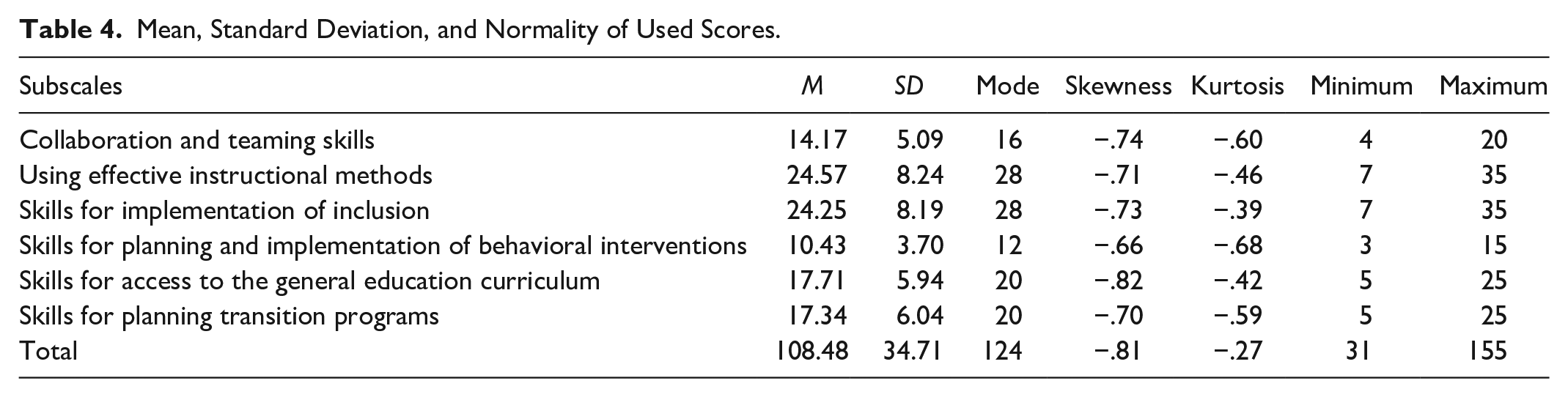
Relying solely on the results of item-level statistics, total scores for each of the original subscales were calculated and compared on socio-demographic variables using t-tests for independent samples and a one-way MANOVA. Based on the values of skewness (±1) and kurtosis (±3) in Table 4, it can be assumed that the distribution of subscales’ total scores was close to normal.
Mean, Standard Deviation, and Normality of Used Scores.
Effects of gender
The obtained results of the t-tests did not reveal any significant gender differences (p > .05), thus suggesting that female teachers did not significantly differ from male teachers in levels of their confidence to teach students with SD in inclusive education. This finding rejects the first hypothesis and indicates no gender difference was found.
Effects of previous teaching experience
In Table 5, the results of a one-way MANOVA revealed significant differences among SETs who had different working experiences in their perceptions about preparedness to teach students with SD in inclusive education, F (12, 748) = 6.37, p < .001; Wilks’ Λ = .82, partial η2 = .09. Furthermore, SETs with the longest working experience (more than 10 years) showed higher confidence in their preparedness on all subscales concerning their teaching skills in inclusive education than did those with shorter working experience (less than 10 or 5 years), according to the Scheffe post hoc test. Thus, this finding supports the second hypothesis that significant differences existed among teachers’ perceptions regarding their preparedness to teach students with SD in inclusive education based on years of teaching experience.
F-Tests and Mean Differences Among Teachers With Different Previous Teaching Experiences.
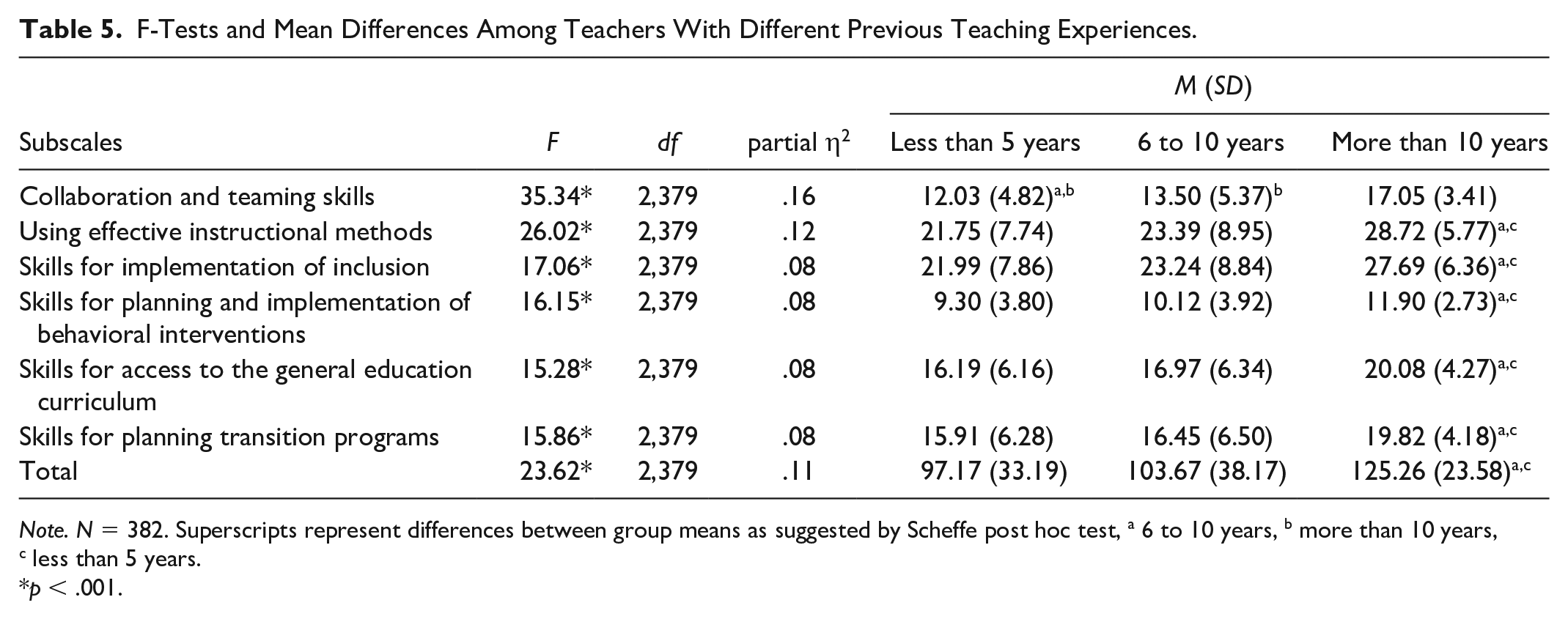
Note. N = 382. Superscripts represent differences between group means as suggested by Scheffe post hoc test, a 6 to 10 years, b more than 10 years, c less than 5 years.
p < .001.
Effects of teachers’ educational degree
Table 6 indicates a statistically significant difference in total scores of SETs’ perceptions about confidence in their preparedness to teach students with SD in inclusive education based on their educational degrees, F (12, 748) = 5.45, p < .001; Wilks’ Λ = .84, partial η2 = .08. Furthermore, the results of Scheffe tests suggested that SETs with ADs showed lower confidence in their preparedness to teach such students in inclusive education than did those with BA or MA/higher degrees. This finding confirms the third hypothesis that teachers with higher degrees felt more confident in their preparedness to teach students with SD in inclusive education compared to teachers with lower degrees.
F-Tests and Mean Difference Among Teachers With Different Educational Degrees.

Note. N =382. Superscripts represent differences between group means as suggested by Scheffe post hoc test, a BA, b MA and higher degree, c AD. AD = associate degree; BA = bachelor’s degree; MA = master’s degrees.
p < .001.
Effects of disability type
Table 7 shows a significant difference in mean scores between SETs who worked with different types of students’ disabilities in their perceptions about their preparedness to teach students with SD in inclusive education, F (12, 748) = 3.47, p < .001; Wilks’ Λ = .89, partial η2 = .05. Further post hoc tests showed that those SETs who had taught students with ASD felt higher confidence in their preparedness to teach students with SD in inclusive education given their responses on all subscales when compared to others who had taught students with MSID, and/or MD. Therefore, this finding supports the fourth hypothesis that significant differences found in teachers’ perceptions regarding their preparedness to teach students with SD in inclusive education based on disability type of students taught.
F-Tests and Mean Difference Between Teachers Who Work With Students by Disability Type.

Note. N = 382. Superscripts represent differences between group means as suggested by Scheffe post hoc test, a MDS, b MD, c ASD. MSID = moderate/severe intellectual disabilities; MD = multiple disabilities; ASD = autism spectrum disorder.
p < .001.
Effects of grade schooling level
Table 8 indicates a statistically significant difference in total scores of SETs’ perceptions about their preparedness to teach students with SD in inclusive education among those who had taught different grades, F (18, 1,055) = 3.98, p < .001; Wilks’ Λ = .83, partial η2 = .06. The results of post hoc tests revealed that SETs who had taught in pre-school grades showed a lower level of confidence in their preparedness to teach students with SD in inclusive education on most of the subscales compared to others who taught in middle schools and high schools, while SETs from elementary schools generally showed lower confidence than did others who had taught in high schools (and middle schools on some subscales). This finding supports the fifth hypothesis that there were significant differences in teachers’ perceptions regarding their preparedness to teach students with SD in inclusive education based on grade schooling level taught.
F-Tests and Mean Difference Among Teachers by Grade Schooling Level.

Note. N = 382. Superscripts represent differences between group means as suggested by Scheffe post hoc test, a middle school, b high school, c preschool, d elementary.
p < .001.
Effects of classroom type
Table 9 shows that working in different classroom types affected SETs’ perception about their preparedness to teach students with SD in inclusive education on all measures of the subscales, F (12, 748) = 5.91, p < .001; Wilks’ Λ = .83, partial η2 = .09. SETs who had taught in general classrooms showed the lowest confidence in their preparedness to teach in inclusive education when compared to others who had taught in other different types of classrooms (i.e., special education classrooms and special education schools). This finding confirms the sixth hypothesis that significant differences found in teachers’ perceptions regarding their preparedness to teach students with SD in inclusive teachers based on type of classroom taught.
F-Tests and Mean Difference Among Teachers by Classroom Type.
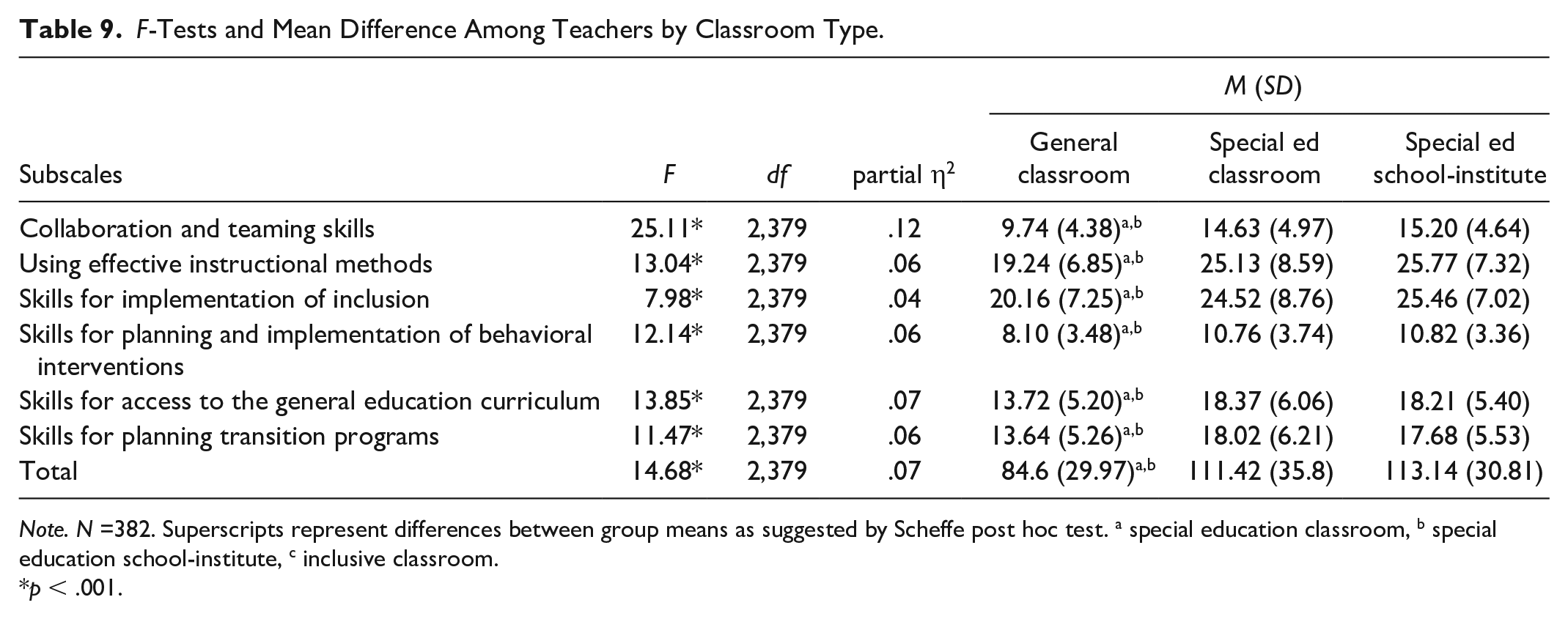
Note. N =382. Superscripts represent differences between group means as suggested by Scheffe post hoc test. a special education classroom, b special education school-institute, c inclusive classroom.
p < .001.
Discussion and Implication for Practice
Preparing educators to teach students in inclusive education has not drawn enough attention from researchers and, consequentially, there has been little systematic investigation of their self-confidence in their ability to perform different inclusive practices (Florian et al., 2010). This study’s findings indicate that most of the participants felt a level of confidence in their preparedness for teaching students with SD in inclusive education. The findings also highlight that the majority of participants showed a higher level of confidence in the collaboration and teamwork skills dimension while they had lower confidence in skills for the implementation of an inclusion dimension. This indicates that participants’ preparation programs may have covered more about the collaborative approaches than content on how to implement inclusion.
Particularly, SETs’ responses showed that they needed more knowledge and skills in different areas, such as developing IEPs, assessing the progression of their students, and adapting and modifying the curriculum to meet their students’ needs, which has also been reported by past studies (e.g., Ruppar et al., 2016; Sucuoğlu et al., 2013). These concerns and potential preoccupation with them could influence teachers’ confidence and make their teaching practices fraught with difficulties and unpleasant experiences (Crane-Mitchell & Hedge, 2007). It also reaffirmed the conclusion of past studies that there is a need for more in-service training in inclusive education for teachers of students with SD. In addition, more content and knowledge related to inclusive education should be offered for SETs through professional training programs. Such programs should be more concentrated in improving SETs’ preparedness to meet existing demands for inclusive education.
This study provided new insights about relationships between SETs’ socio-demographic characteristics and their perception of readiness for teaching students with SD in inclusive education. It was found that SETs with shorter working experience had lower confidence in their preparedness, while those with the longest experience showed higher confidence in their preparedness to teach students with SD in inclusive education. Teachers with ADs also showed lower confidence in their preparedness, followed by those who worked with younger students (i.e., preschool and elementary school) and even those who taught in inclusive classrooms. Finally, SETs who worked with children with ASD felt more prepared for teaching such students in inclusive education when compared to others who taught students with MSID or MD. However, no gender difference was revealed in this study, suggesting no differences exist between female and male teachers in their preparedness to teach students with SD in inclusive education. This could imply that SETs have received the same type of training for teaching those students in inclusive education, regardless of their gender. Although boys are educated separately from girls in schools in Riyadh (Aldabas, 2015), there is no difference between their teachers’ preparedness to teach students with SD in inclusive education.
The socio-demographic factors and differences between SETs have clearly implied that some features should be considered when developing trainings to help the teachers meet new and difficult challenges in work within inclusive education. To teach students with SD in inclusive education, well-prepared teachers should be able to plan, fully control, and facilitate interaction in the classroom, while always considering the appropriateness of the planned activities and different needs and abilities of their students (Rabi & Zulkefli, 2018). This study’s finding is consistent with the finding of Ruppar et al. (2016) in which teachers who had ADs reported lower confidence in their preparedness compared to those who had BA or MA degrees. It suggests that the content of courses in the BA and MA programs had provided more knowledge and skills concerning inclusive education in general compared to AD programs.
Furthermore, past research has showed that SETs who had longer experience teaching students with disabilities had increased confidence in teaching in inclusive classrooms (Bannister-Tyrrell et al., 2018; Ruppar et al., 2016), which is in compliance with the results obtained in this study. This confirms that SETs obtain more knowledge and skills while teaching and practicing. Since it was previously reported that providing teachers with real-life experiences positively influenced their attitudes toward inclusion (Rakap et al., 2017), those teachers with no or low experience should be provided with a tool for extending their existing theoretical and practical knowledge. This could be achieved with development and delivery of different courses where teachers would be able to acquire new pedagogical strategies and techniques for supporting the learning of all students (Alquraini & Rao, 2017; Ballard & Dymond, 2017).
Previous studies have also emphasized that preschool and elementary school teachers do not feel prepared to teach students with disabilities. They reported there was a lack of specific knowledge and skills to teach in inclusive classrooms (e.g., Ruppar et al., 2016, 2018; Sucuoğlu et al., 2013), which is indirectly confirmed in this study. A common reasoning suggested for this difference is that teaching young children with SD tends to be more difficult than teaching similarly challenged older children. Furthermore, linking to findings of Brownell et al. (2005, 2010) that teachers showed a lack of specific training in specificities of inclusive and special education, it is possible that those SETs who taught lower grades did not have an opportunity to attend specialized courses or training, during which they could learn how to accommodate the needs of students with SD in different schooling grades and ages. This suggests that SETs’ preservice and in-service training programs should be designed in terms of covering essential knowledge and skills in teaching students with SD in inclusive schools regardless of the students’ ages and grade levels.
Students with disabilities frequently feel segregated and their teachers might feel the same due to the lack of understanding by their school principals and general education teachers, or even due to physical segregation of their classrooms or desks (Ruppar et al., 2018). Interestingly, this study might confirm this finding due to the result that SETs who reported to work in general classrooms had lower confidence in their preparedness for teaching such students. This would be linked to past findings indicating that, although these SETs have taught within a general context, they might have felt misunderstood and separated from their colleagues and other school professionals (Greenway et al., 2013; Ruppar et al., 2018). These findings may be explained by the possibility that school principals and other professionals might tend to underestimate the struggles and concerns of SETs because of the primary concern of the school professionals is directed to typically developing students (Greenway et al., 2013). This could lead to tensions between the professionals and SETs who sense devaluation of their work in addition to facing difficulties in teaching students with SD in inclusive education. Minimizing this gap between SETs’ needs and concerns that their problems are overlooked in the focus on the majority of students could help SETs feel more confident in their preparedness for teaching students with SD in inclusive education. Accordingly, special training programs concerning inclusive education should be provided to help all school professionals to succeed at teaching students with SD in inclusive education environments.
Finally, the findings showed that teachers of students with ASD expressed more confidence to teach students with SD in inclusive education than teachers of MSID and MD. This is inconsistent with the finding of Ruppar et al. (2016) that teachers with cognitive disabilities licensure (i.e., teaching students with MSID) reported higher self-confidence in teaching students with SD compared to teachers with generalist licensure (i.e., teaching students with varying disabilities). This finding casts new light on the impact of type and nature of disability on how teachers perceive their preparedness to teach such students in inclusive classrooms. This finding also may be explained by how teachers perceive the characteristics and needs of their students with SD. For example, teachers of students with ASD would view inclusive classrooms as meeting the specific characteristics and needs of their students. This educational placement would thus be viewed by the teachers as more appropriate for students with ASD compared to other students.
Furthermore, this suggests that teachers of students with ASD have received adequate knowledge and skills covering the main competencies for teaching the students in inclusive education. This is indicative also of a lack of SET-preparation programs addressing inclusive education provided for teachers of students with MSID and MD. Therefore, SET-preparation programs and/or professional training covering essential knowledge and skills related to teaching in inclusive classrooms should be provided for the teachers. This would support placing such students in general classrooms along with providing appropriate education to the students.
Limitations and Future Directions
This study had several limitations that require further research. First, this survey was distributed to SETs who teach in one city in Saudi Arabia, which significantly lowered the generalizability of the obtained findings. Thus, future research should consider replicating this study with a larger sample of participants from across Saudi Arabia as well as from across the world. Future research may examine if there are significant differences among teachers’ preparedness from different cities and countries to obtain more reliable results. As only SETs participated in the study, future research might include general education teachers for greater understanding about all teachers’ preparedness to teach students with SD in inclusive education. Moreover, since the study used a questionnaire that only asked teachers to rate their perceptions of preparedness to teach students with SD in inclusive education, the current findings would reflect self-reported perceptions rather than the real level of preparedness. Consequently, self-reported quantitative data should be supported by data from other sources (e.g., data qualitative in nature, such as structured interviews and observations) to increase the generalizability of the obtained findings. Using mixed-design methods would provide more accurate data and deep understanding of teachers’ preparedness, and not only about their self-perceptions. Future research should validate more specific surveys that operationalize teachers’ preparedness to teach regardless of the setting (e.g., inclusive or general education), and they need to be correlated with some personal features, among which personality traits first come in mind. For example, measuring “Big Five” personality traits in SETs (i.e., extraversion, agreeableness, conscientiousness, emotional stability, and openness to experience; Costa & McCrae, 1992) could suggest possible effects on their readiness to teach in inclusive education.
A closer examination of individual differences among SETs could emphasize some of the potential sources of their confidence levels when working with students with SD and, in general, their expertise in teaching. If such measures are validated using techniques other than surveys (e.g., in-depth interviews, observations of lessons), research could provide more insights about how different experiences during their professional careers could influence teachers’ readiness to teach in inclusive education. Methods of structured lesson observation have been recommended to become the standard of teaching and improving teachers’ classroom management and other necessary instructional skills (Jones & Brownell, 2014). Observational data could provide additional and more objective evaluations of teachers’ practices in classrooms. Hence, future research might use observation protocols to understand the relationship between teachers’ individual differences and teaching quality. This could lead to development of specific guidelines for teachers to help them improve their preparedness (Holdheide, 2013).
Finally, parental involvement and the relationship that could be established between parents and teachers should also be carefully investigated in future research. This relationship might be essential when attempting to understand what specific skills related to parents and teachers’ collaboration are missing during student teaching and should not be neglected.
Conclusion
This study adds to the research on teachers’ individual differences in their perceptions of confidence in teaching in inclusive education. Results suggested that teachers with ADs; those teaching in preschool, elementary, and general classrooms; as well as those who teach students with MSID or MD report lower confidence in their preparedness to teach students with SD in inclusive education. Yet, although SETs’ preparedness to teach in inclusive education is a significant precursor to students’ academic success, the base of this research is quite limited (Morningstar et al., 2016). Teacher education programs for SETs should respond to the challenges encountered within the classrooms by adapting and improving pedagogies and practices. This could be achieved by providing SETs with meaningful learning opportunities during which they would cover a range of possible SD. Moreover, ensuring internship placements that include students with SD could help inexperienced teachers gain necessary practical experience and knowledge about efficient and effective practices in inclusive education. Hence, by adding qualitative data obtained from teachers to the development of specialized training, hidden factors influencing preparedness may be revealed which could result in better understanding of teachers’ expertise development. Finally, additional research is essential to establish a set of recommended practices in inclusive education, and to enact a series of SET competencies needed to work with students with SD.
Footnotes
Acknowledgements
The author would like to extend his sincere appreciation to the Deanship of Scientific Research at King Saud University for funding this research.
Declaration of Conflicting Interests
The author(s) declared no potential conflicts of interest with respect to the research, authorship, and/or publication of this article.
Funding
The author(s) received no financial support for the research, authorship, and/or publication of this article.
Ethical Approval
Informed consent was obtained from participants included in the study. The procedures used in this study adhere to the tenets of the Declaration of Helsinki. All procedures performed in studies involving human participants were in accordance with the ethical standards of the institutional and/or national research committee and with the 1964 Helsinki Declaration and its later amendments or comparable ethical standards.
