




Abstract
The prevalence of project-based learning (PBL) has increased significantly, contributing to serious discussions about its advent. PBL’s critics doubt whether accentuating the practice supports teachers in using a technocratic method in education, instead of promoting instruction that is responsive to students’ ideas. Thus, this study aims to develop on using the effectiveness of the PBL approach, as a way to engage students in learning as well as to incorporate literature on the PBL method for educational purposes. The research hypotheses therefore measure the influence of the PBL method on collaborative learning, disciplinary subject learning, iterative learning, and authentic learning, which, in turn, engage students in learning. To achieve the research purpose, a questionnaire was employed as the main method of collecting data and dispensed to 124 teachers who were using the PBL approach. Structural equation modeling (SEM), a quantitative research method, was employed to obtain the findings. A significant relation was found between the PBL method and collaborative learning, disciplinary subject learning, iterative learning, and authentic learning, which, in turn, produced student engagement. The results show that the PBL technique improves student engagement by enabling knowledge and information sharing and discussion. Thus, the PBL approach is highly recommended for educational use by students and should be encouraged in universities.
Keywords
Introduction
Whereas most project-based learning (PBL) literature concentrates on curricula, our goal is to build a framework focused on teaching practice. This effort is based on studies by some teacher educators who have attempted to ensure that teachers can advance practices in ambitious directions, so that all students, particularly those who were previously underserved by schools, can experience opportunities for rich learning (e.g., Ball & Forzani, 2009; Grossman et al., 2009). Anyon (1980) asserted that upper track students, in particular, or those in elite environments, are expected to have such opportunities. Improving PBL-related practices among teachers could help put an end to the rule of rote learning and test prep schooling, which pervade many impoverished schools. Many terms have been proposed by educational researchers to characterize learning and learning methods that focus on students’ sensemaking such as “learning for understanding,” “intellectually ambitious learning,” and “authentic pedagogy” (Smith et al., 2001). Whereas such terms refer to subtle differences in technique, most indicate that students’ developing ideas should be elicited, considered, and explored by teachers. Responsiveness is of the utmost importance in such a learning perspective: Instruction is not provided or given by the teacher; rather, it is negotiated between students and teachers collaboratively and develops as ideas of students emerge and grow (Kavanagh & Rainey, 2017; Reisman et al., 2018). Accordingly, the PBL approach has been referred to by some scholars as a type of teacher education that focuses on educational experience and the preparation of teachers to follow instruction (Ball & Forzani, 2009; Grossman et al., 2018). Supporters of this approach are willing to short circuit the implementation difficulties that arise as beginner teachers navigate the “two worlds” of education universities and K–12 schools, as Feiman-Nemser and Buchmann (1985) have stated, by accepting responsibility for endorsing teachers to follow the practice. Various PBL techniques have been presented by scholars, some of which foreground practices or characteristics of specific effective routine activities in learning such as modeling or discussion facilitation (Ball & Forzani, 2009), whereas others foreground practices or teachers’ learning experience design that engage beginners in approximating learning, with the aim of advancement (Schutz et al., 2019; Von Esch & Kavanagh, 2018). There are indications among such approaches that the PBL approach to working with experienced and beginner teachers may affect the instruction that novices enact in the field (Kavanagh & Rainey, 2017; Reisman et al., 2018). Although the PBL approach is suitable for all students, a single educational practice is not suitable all of the time (Grossman et al., 2019). Therefore, our framework is focused on educational goals. The background and goal of a lesson and the larger purposes for learning must be taken into account in instructional decisions, when a practice is enacted at a specific moment with a specific group of students. As affected stakeholders have begun to call for the PBL method (American Association of Colleges for Teacher Education, 2010), discussion of the advantages in teacher instruction have become prevalent as well (Philip et al., 2019). PBL opponents claim that such practices including predetermined routines can undermine the underlying assumptions of conversational and responsive education (Kennedy, 2016). However, no comprehensive research has been conducted on the experiences of students and teachers as participants in PBL processes throughout, specifically with respect to participants’ experiences and personal insights into occurrences, situations, and phenomena (Tsybulsky & Muchnik-Rozanov, 2019). Hence, this study aims to develop a model to analyze the efficiency of applying a PBL approach as a method to engage students in learning.
Concept of the PBL Approach
The PBL concept implies collaboration of two or more teachers at a specific level when planning, implementing, and/or evaluating a course (Carpenter et al., 2007), which mainly involves the exchange of training expertise and reflective conversation (Chang & Lee, 2010). It has been shown that the PBL approach provides inexperienced teachers with varied and valuable learning experiences and supports their professional and personal development (Tsybulsky & Muchnik-Rozanov, 2019). Functioning within a team allows teachers to share knowledge and skills in a variety of subjects, leading to a transition from “expert learner” to “expert.” Classroom collaboration enables teachers and students to share a discovery process (Wentworth & Davis, 2002). Specific topics can be addressed from a distinct perspective or with a pedagogical approach involving teamwork that provides a very rewarding experience for learners. Student teachers can benefit from the PBL technique (Simons & Baeten, 2016) through professional and emotional support (e.g., Gardiner & Robinson, 2009), increased professional learning (e.g., educational skills), and personal development (e.g., a gain in confidence; King, 2006). They are able to review their practices during learning by interaction and exchange experiences, as Wassell and LaVan have claimed (Wassell & LaVan, 2009). Despite these, teachers working in groups achieve more in comparison with when they work alone, as a result of collaboration (Gardiner, 2010). When receiving support from peers, teachers achieve higher performance (Walsh & Elmslie, 2005). The role of mentors is of the utmost importance in the PBL process. For example, they encourage student teachers to form professional relationships. Moreover, group and individual feedback (Scantlebury et al., 2008) as well as support for student teachers are provided by mentors (Carter & Francis, 2001); however, peers are more frequently helpful for student teachers than mentors (Hsu, 2005), who play a less direct role in the PBL method process (Bullough et al., 2003). In addition to its benefits, the PBL approach also has its demerits. The increased workload of PBL (i.e., participatory lesson planning, peer reflection) is rather time-consuming for student teachers (Gardiner & Robinson, 2009; Nokes et al., 2008). Moreover, unfriendliness among group members can lead to negative experiences for all participants (Bashan & Holsblat, 2012; Gardiner & Robinson, 2009). As students and teachers have become accustomed to working alone, working with peers is usually an unfamiliar situation that can lead to anxiety or difficulty (Bashan & Holsblat, 2012). In addition, student teachers dispute that their personal attainment in PBL may be less significant than in an individual learning environment and that they could lose confidence in their independent learning because of a lack of individual experience (Gardiner & Robinson, 2009; Kamens, 2007).
Theoretical Model
This study identified five main aspects of the PBL approach: collaborative learning (CL), disciplinary subject learning (DSL), iterative learning (IL), and authentic learning (AL), which, in turn, produced student engagement. This study developed 11 hypotheses to come up with a model of how PBL can affect students’ engagement (Figure 1). The hypotheses are as follows:

Research model and hypotheses.
PBL Approach
In spite of the fact that the PBL approach does not have a precise definition, its proponents usually agree on some of its basic features (Larmer & Mergendoller, 2015). The PBL approach is a typical form of cooperative and research-based learning technique, characterized by active student engagement and comparative learning (Loyens et al., 2015). Students who learn through the PBL method usually work together to solve a specific problem, develop a product for a specific audience, and then evaluate the project and development process (Kokotsaki et al., 2016). The PBL approach is an effective way to develop 21st-century capabilities by promoting critical thinking as well as problem-solving, interpersonal communication, information and media literacy, cooperation, leadership and teamwork, innovation, and creativity (Häkkinen et al., 2017). Studies examining the impact of the PBL approach on student teachers have shown that the PBL method improves problem-solving abilities (Mettas & Constantinou, 2008) and academic performance (Baran & Maskan, 2011), and influences a positive perception of the learning profession (Lavy & Shriki, 2008). Moreover, formative evaluation is beneficial for student teachers (Frank & Barzilai, 2008) as it helps them to achieve a proper awareness of their learning goals, which, as a result, can enhance the learning experiences of students under their supervision (Ljung-Djärf et al., 2014). These entail providing students with the opportunity to work on a challenging problem, engage in persistent issues, find valid answers, help with project selection, think about trends, critique and reconsider work, and create a generic product. However, these elements were operationalized in different ways in our study by teachers although they all incorporated such elements into their PBL approach.
CL
Teachers do not provide knowledge; they negotiate it in cooperation with students in a dialogic interaction as they share and revise ideas (Al-Rahmi et al., 2017; Nystrand & Gamoran, 1991). A PBL approach model developed by Dong and Warter-Perez (2009) was adopted to address the specific learning needs of underprepared minority students within the urban context of this study. CL, the cornerstone of the PBL approach (McGrath, 2004), not only requires knowledge building but also explanation, mutual support, and order, or non-adaptation, which pulls out related cognitive processes, for example, acquiring knowledge, internalizing, or reducing cognitive burden through teamwork activities (Al-Rahmi et al., 2015b; Hron & Friedrich, 2003a). Participatory learning simplifies interactions among students and is capable of enhancing the quality of knowledge and developing the necessary skills (Al-Rahmi, Yahaya, Aldraiweesh, et al., 2019; Bouta & Retalis, 2013). A combination of PBL and CL leads to positive results for students (Chu et al., 2011). Various studies have demonstrated improvement in the quality of student learning and the capability of working together by cooperative project-driven activities (Kapp, 2009). The PBL collaborative approach has the capacity to create learning conditions that expand the skills and knowledge required for the 21st century, and the characteristics of the learning environment have an important role to play in achieving this (Wolff, 2003). Wolff (2003) presented design characteristics of the environment of an optimal collaborative PBL approach at the academic level in a National Research Center for Career and Technical Education report.
DSL
The study results demonstrated that a disciplinary, participatory PBL approach encourages students’ willingness to develop their information technology (IT) and collaborative skills and integrate them with science, validating previous work (Hron & Friedrich, 2003). A disciplinary, collaborative PBL approach has been proven to be an efficacious way to improve students’ IT skills (Bagheri et al., 2013), integration of technology into science, and cooperative skills (Imafuku et al., 2014). A goal of the PBL approach is to learn concepts of fundamental disciplinary subjects in the context of real-life issues students face in their daily lives (Rogers et al., 2011). Furthermore, several students reported that they not only studied the chosen scientific topics for their websites but also improved their IT skills through their disciplinary projects, which corresponds to the studies of Matovinovic and Nocente (2000) and Morales et al. (2013). As learning is more than just knowledge transfer, there are different relationships between research and learning that vary across disciplines (Al-Rahmi et al., 2018; Al-Rahmi, Yahaya, Alamri, et al., 2019; Colbeck, 2004). The PBL environment shifts the focus of learning from “true and unquestionable” responses to the process of convergence to solutions; they create a dynamic environment in which power, authority, and control are inevitably shared between teachers, students, and disciplinary practices (Rogers et al., 2011).
AL
Engaging students in valid disciplinary and discourse activities, in which they participate instead of simply being receptive, is part of creating meaningful learning experiences (Moje, 2015). Based on these cultural and social assumptions about the nature of learning, learning responsively entails that students will participate authentically in the activities of the classroom instead of playing a pre-written role in a teacher-made script (Hammer et al., 2012). To facilitate education that is inviting and responsive to students’ ideas, students must perform authentic, meaningful tasks that encourage them to generate new ideas, share those ideas, develop one another’s thinking, and assess their own and their colleagues’ academic thoughts (Moje, 2015). Current practice in learning approaches mainly refers to approximations of training, a term coined by Grossman et al., (2009) to characterize methods of simulating certain professional practice features prior to deploying them in a fully valid classroom context.
In particular, for abilities such as student responsiveness, the presence of real students provides learning opportunities that cannot be simulated in less credible environments, where students are not present. The PBL approach and learning are basically situated to produce usable and powerful knowledge assisted by authentic environments and tasks (Brown et al., 1989). Conversely, typical learning environments usually include decontextualized difficulties and “canned” experiments that deprive students of working on valid problems, using real science tools and techniques (Spitulnik et al., 1995). In general, authenticity corresponds to a willingness to ensure that the importance of a student’s classroom work reaches beyond the walls of the classroom; practitioners involved in PBL firmly believe that learning should be meaningful and valuable outside the classroom (Grossman et al., 2019).
IL
In PBL environments, students primarily learn by creating knowledge and meaning through repetitive questioning, active learning, reflection, and sharing (Blumenfeld et al., 1991). Activities in the PBL approach include repetitive cycles of data gathering, meaning-making, reflection, and testing of results by examining evidence; doing experiments; using reason and logic; receiving input from peers and teachers; and revising as necessary (Mergendoller et al., 2006). To support the repetitive nature of the PBL concept in the classroom, students should also assist in giving, receiving, and using peer feedback (Grossman et al., 2019). Teachers can simplify the PBL process by conducting formative evaluation and providing repetitive cycles of feedback and revision during inquiry, creation, and production (Kolodner et al., 2003). Brinko (1993), who studied the effectiveness of feedback collected from students to advance learning, claimed that “feedback is more effective when it is considered as a process, not a one-time quick fix” (p. 47) (indicating the need for repetitive filtering) and that “feedback is more effective when it is descriptive, rather than evaluative” (p. 179). It is probable that students receive a great deal of feedback but do not have the interest or ability to use it effectively. For this reason, as part of the PBL approach, teachers assess not only learners’ perceptions of content but also their ability to use feedback for reflection and repetition (Grossman et al., 2019).
Student Engagement in Learning (SEL)
Although many teachers encourage the sharing of students’ ideas and discussion about content, according to research on classroom practice, classrooms are typically places where the teacher talks, and students listen (Bain, 2006). This teacher-based approach assumes that the teacher’s task is to transfer knowledge to a passive learner who receives this knowledge (Jackson, 1986). Another assumption, based on a deep sociocultural study, is that learning takes place during social participation in cultural and historical activities and discourses of particular practice communities (Lave & Wenger, 1991; Rogoff, 2003). The PBL approach is based on the belief that students in school are competent simulators with a wide range of resources to create meaning and that productive activity provides new insights to which teachers can respond in productive ways (Lampert et al., 2013). Learning any practice, whether it is law or medicine, involves learning activities usually intended not just for one person but for a community of professionals, which has been improved over time by others (Lampert, 2010). Gómez-Pablos et al. (2017) noted that the PBL approach is one of the best academic options because it represents a student-based learning process that considers the interests of students and encourages them to participate actively in the learning process, which should be considered a research process goal. A major PBL principle presented by Bilbao et al. (2018) is that it offers the best learning opportunities, compared with the direct learning method, at present, by contributing to the development of essential skills, interaction, and learning of course materials.
Research Method
Many universities have encouraged the PBL approach, including King Faisal University (KFU). Thus, this study’s research goal is to develop, through an empirical investigation of PBL, a model to examine the effectiveness of using this approach as a method to engage students in learning. Five factors were taken into account to measure the PBL approach: CL, DSL, IL, and AL, which in turn produces student engagement; therefore, teachers were given questionnaires. The questionnaire consisted of two main groups of factors. The first comprised the independent factors of PBL: CL, DSL, IL, and AL. The second represented the dependent factor, SEL. The participants were teachers involved in PBL. A structured questionnaire with a 5-point Likert-type scale was prepared and administered to a larger sample (23 items). The population was selected through a simple random sampling size technique (Krejcie & Morgan, 1970). Two experts checked the face and content validity to validate the questionnaire, and a 5-point Likert-type scale, 1 = strongly disagree, 2 = disagree, 3 = undecided, 4 = agree, and 5 = strongly agree, was used to assess students’ ratings of various items. Of the data collected from KFU, 124 questionnaires were entered and tabulated in the Statistical Package for the Social Sciences (SPSS), which was the main tool for analyzing student responses to the various questionnaire items. Specifically, structural equation modeling (SEM-AMOS) was used for the analysis. Based on Hair et al. (2012), SEM-AMOS was performed in two phases. The purpose of the first phase was to calculate the structure and convergence and discriminate the validities of the measurement model, whereas the second aimed to examine the structural model.
Measurement Instruments
The construct items were adapted, with the intention of achieving a satisfactory result in terms of content validity. The research consisted of two main parts. The designed purpose of the first part was to collect teachers’ demographic information such as age and gender and to discern the frequency of respondents using the PBL approach to engage students in learning. The second part adjusted the factors as follows: For the PBL approach, six items were adapted from Grossman et al. (2019); for collaborative, disciplinary subject, iterative, and AL, three items were considered for each factor, which were also adapted from Grossman et al. (2019); and for SEL, five items were adapted from Grossman et al. (2019) and Al-Rahmi, Aldraiweesh, et al. (2019).
Sample Characteristics
A total of 124 questionnaires were used for the analysis (65 male respondents [52.4%] and 59 female respondents [47.6%]). Twenty-one respondents (16.9%) were aged from 25 to 30 years, 29 (23.4%) were aged from 31 to 35 years, 19 (15.3%) were aged from 36 to 40 years, 21 (16.9%) were aged from 41 to 45 years, 20 (16.1%) were aged from 46 to 50 years, and 14 (11.3%) were older than 51 years of age. In terms of education level, 29 (23.4%) respondents had a bachelor’s degree, 24 (19.4%) had a master’s degree, 28 (22.6%) had a PhD degree, 24 (19.4%) were associate professors, and 19 (15.3%) were full professors. Finally, in terms of faculty, 13 (10.5%) were from the Faculty of Art and Humanities, 41 (33.1%) were from the Faculty of Education, 34 (27.4%) were from the Faculty of Management, and 36 (29.0%) were from the Faculty of Computer Science.
Data Analysis and Results
The related factors affected cooperation and communication in learning, taking into consideration Cronbach’s reliability coefficient of .947. This study evaluated discriminant validity based on three criteria: variable index value below 0.80 (Hair et al., 2012), average variance extracted (AVE) value assumed to be equal to or more than 0.5, and AVE square considered bigger than the inter-construct correlations (IC) related to the factors (Fornell & Larcker, 1981). As a result, the items and factors of the construct’s investigation showed factor loading of 0.7 or higher, which is acceptable for Cronbach’s alpha, and a composite confidence value of 0.70 or more (Hair et al., 2012; see Table 1).
Goodness of Model Fit and Reliability.

Note. RMR = root mean square residual; IFI = incremental fit index; NFI = normed fit index; RFI = relative fit index; CFI = comparative fit index; TLI = Tucker–Lewis index; RMSEA = root mean square error of approximation; AVE = average variance extracted.
Analysis of Measurement Model
In this research, SEM-AMOS was used as the main statistical technique for analyzing the results, based on confirmatory factor analysis (CFA) in AMOS 23. This model uses convergent validity, one-dimensionality, consistency, and discriminant validity. Furthermore, Hair et al. (2012) suggested that model evaluation should be conducted with the highest probability estimation procedure, using suitable fitting strategies, for instance, chi-square, normed chi-square, normed fit index (NFI), relative fit index (RFI), Tucker–Lewis index (TLI), comparative fit index (CFI), incremental fit index (IFI), parsimonious goodness-of-fit index (PGFI), root mean square residual (RMR), and root mean square error of approximation (RMSEA). The fitting profiles used for the model evaluation are summarized in Table 1, and Figure 2 presents the measurement model.
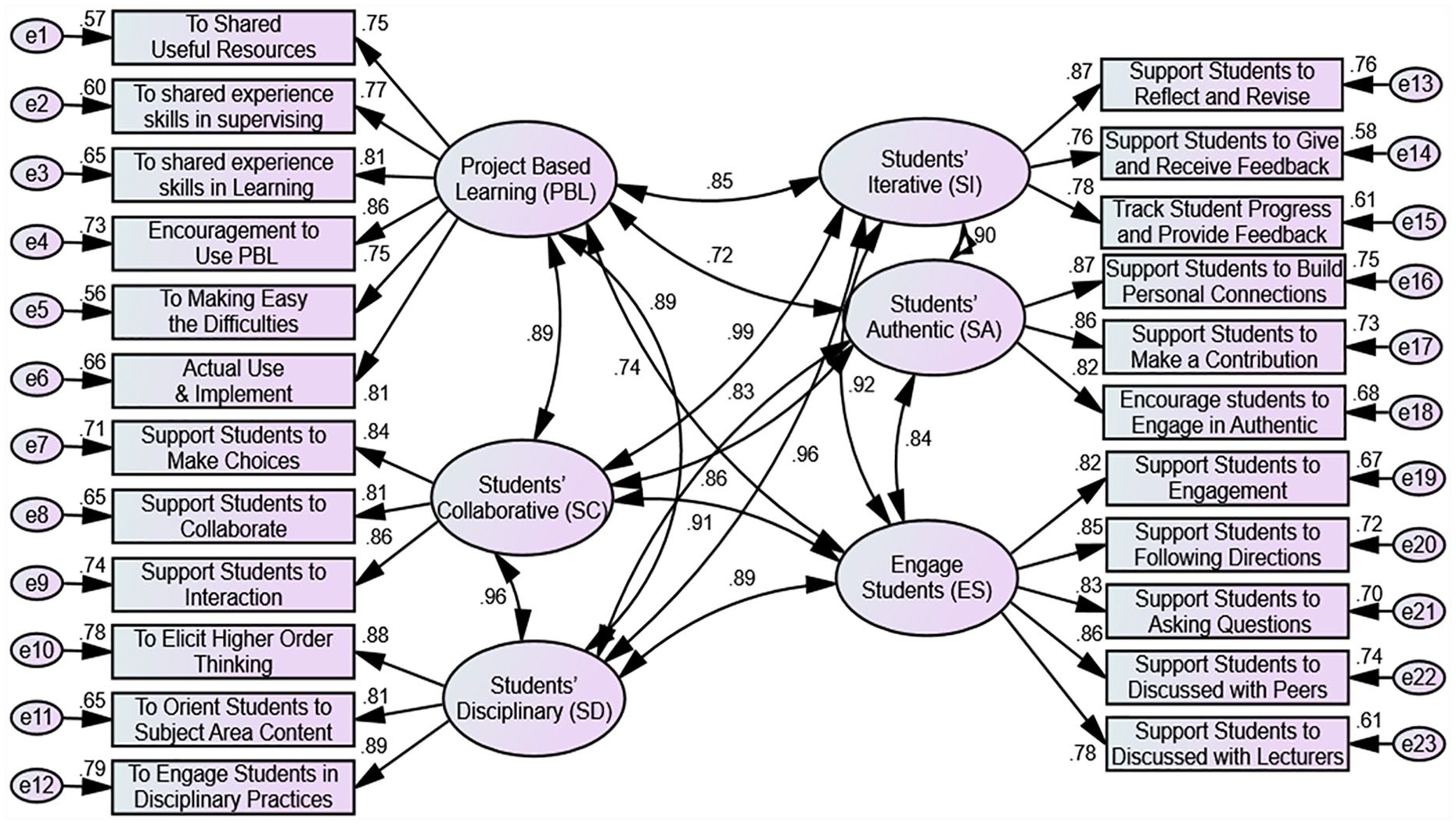
Measurement model.
Validity and reliability of the measurement model
Discriminant validity scrutinizes the level of understanding, including different indicators related to various concepts (Bagozzi et al., 1998). Based on the AVE values obtained, all values exceeded 0.50 (cutoff) with a p value of .001, indicating agreement of discriminant validity for all structures studied (Fornell & Larcker, 1981). Furthermore, Hair et al. (2012) explained that the relationship of elements among structures cannot be more than the square root of the mean variance share in one of the structures. The obtained composite reliability values are shown, and they are obviously within the recommended value range of 0.70 or above. In addition, the Cronbach’s alpha values are in the range of the advised value of 0.70 or higher, and the AVE values are 0.50 or higher, as recommended. This demonstrates that the total factor loading surpasses 0.50, which is of utmost importance, thus satisfying the recommendations of Fornell and Larcker (1981) and Hair et al. (2012; see Figure 2 and Table 2).
Discriminant Validity.

Bold values refers to more than .700.
Structural Model Analysis
All results are presented for SEL through PBL, CL, DSL, IL, and AL, using path modeling analysis. The findings are also compared in the hypothesis test discussion (see Figure 3 and Table 3).

Structural model and hypotheses testing.
Hypotheses Testing.

Note. CR = critical ratio or t-value; PBL = project-based learning; CL = collaborative learning; DSL = disciplinary subject learning; AL = authentic learning; SEL = student engagement in learning; IL = iterative learning.
p < .001.
As shown in Figure 3 and Table 3, the results demonstrate a significant connection between the PBL approach and CL (β = .279, t = 8.719, p < .001), showing a positive and significant correlation for the first hypothesis (H1). In other words, in this sample, all respondents considered that the PBL approach enhanced CL. The next effect is between the PBL approach and DSL and shows a positive and significant correlation for the second hypothesis (H2; β = .084, t = 3.009, p < .001); in this sample, all respondents considered that the PBL approach affects DSL. The relationship between the PBL approach and AL (β = .344, t = 9.814, p < .001) indicates a positive and significant correlation for the third hypothesis (H3); that is, in this sample, all respondents considered that the PBL approach affected AL. Furthermore, the relationship between PBL and SEL (β = .332, t = 8.923, p < .001) shows a positive and significant correlation for the fourth hypothesis (H4); in this sample, all respondents considered that the PBL approach enhanced SEL. Moreover, the relationship between the PBL approach and IL (β = .154, t = 5.382, p < .001) indicates a positive and significant correlation for the fifth hypothesis (H5); in this sample, all respondents considered that the PBL approach affected IL. Added to the above result, the relationship between CL and AL (β = .213, t = 6.110, p < .001) indicates a positive and significant correlation for the sixth hypothesis (H6); in this sample, all respondents considered that CL affected AL. Similarly, the relationship between CL and SEL (β = .430, t = 10.438, p < .001) shows a positive and significant correlation for the seventh hypothesis (H7); in this sample, all respondents considered that CL enhanced SEL. Based on Table 3, the relationship between DSL and IL (β = .424, t = 10.019, p < .001) indicates a positive and significant correlation for the eighth hypothesis (H8); in this sample, all respondents considered DSL to affect IL. Similarly, the relationship between DSL and SEL (β = .241, t = 8.118, p < .001) shows a positive and significant correlation for the ninth hypothesis (H9); in this sample, all respondents considered DSL to enhance SEL. The relationship between AL and SEL (β = .203, t = 7.991, p < .001) shows a positive and significant correlation for the 10th hypothesis (H10); in this sample, all respondents considered AL to affect SEL. Finally, the relationship between AL and SEL (β = .414, t = 9.952, p < .001) indicates a positive and significant correlation for the 11th hypothesis (H11); in this sample, all respondents considered IL to affect SEL.
Factors Analysis Results
The results demonstrated that most teachers partly agree or strongly agree that the PBL approach had a positive effect on CL. Thus, this study describes the PBL approach in which teachers consider that CL enhances SEL, which 37.9% agree and 41.1% strongly agree (see Figure 4).

Measuring collaborative learning in PBL.
The outcomes also demonstrated that most teachers partly agree or strongly agree that the PBL approach had a positive effect on DSL. Thus, this study describes the PBL approach as the degree to which teachers consider that DSL enhances SEL, which 45.2% agree and 25% strongly agree (see Figure 5).

Measuring disciplinary subject learning in PBL.
Similarly, the outcomes also demonstrated that most teachers partly agree or strongly agree that the PBL approach had a positive effect on AL. Thus, this study describes the PBL approach as the degree to which teachers consider that AL enhances SEL, which 50% agree and 27.4% strongly agree (see Figure 6).

Measuring authentic learning in PBL.
The outcomes also demonstrated that most teachers partly agree or strongly agree that the PBL approach had a positive effect on IL. Therefore, this study describes the PBL approach as the degree to which teachers consider that IL enhances SEL, which 40.3% agree and 20.2% strongly agree (see Figure 7).
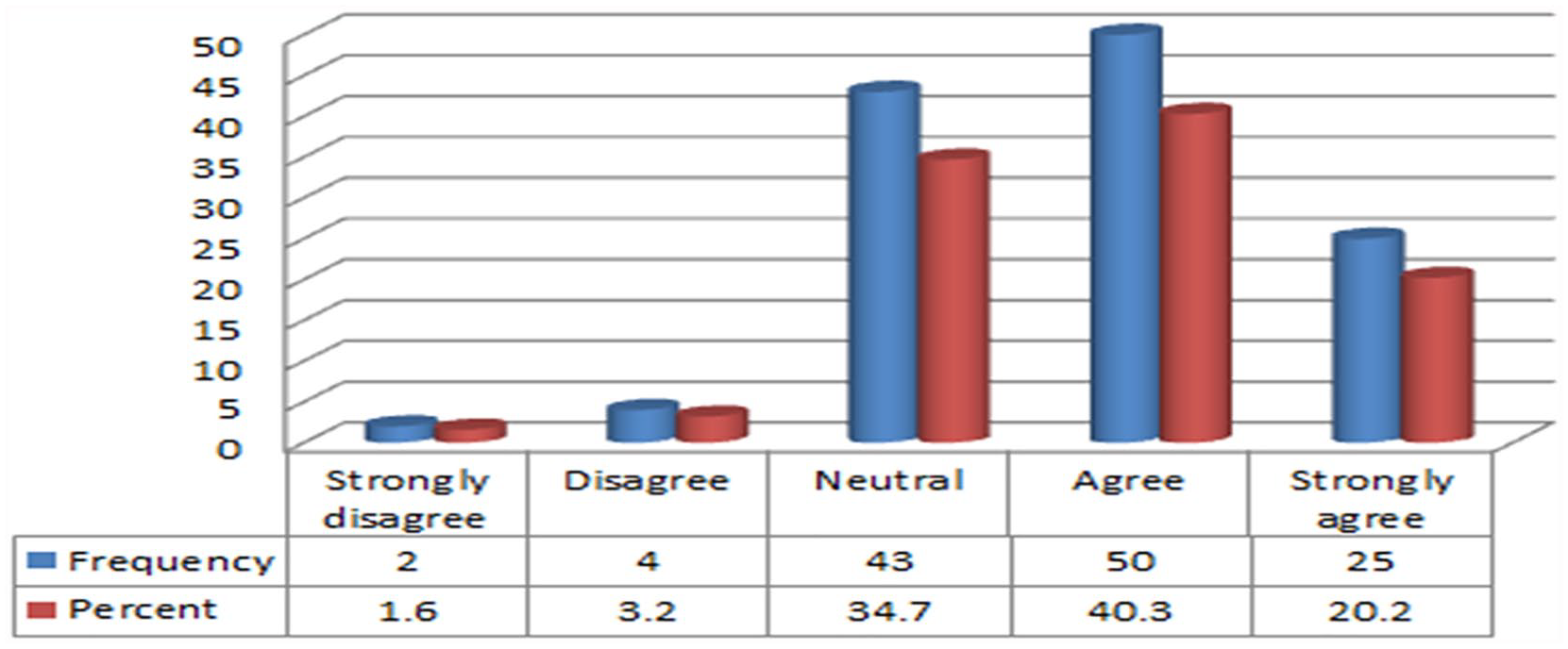
Measuring iterative learning in PBL.
The outcomes also demonstrated that most teachers partly agree or strongly agree that the PBL approach had a positive effect on SEL. Therefore, this study describes the PBL approach as the degree to which teachers consider that SEL is enhanced by collaborative, disciplinary subject, iterative, and AL, which 34.7% agree and 27.4% strongly agree (see Figure 8).

Measuring student engagement in learning in PBL.
Furthermore, the outcomes also demonstrated that most teachers partly agree or strongly agree that the PBL approach had a positive effect on CL, DSL, IL, AL, and SEL. Therefore, this study describes the PBL approach as the degree to which teachers consider that CL, DSL, IL, and AL enhance SEL, which 41.9% agree and 12.1% strongly agree (see Figure 9).
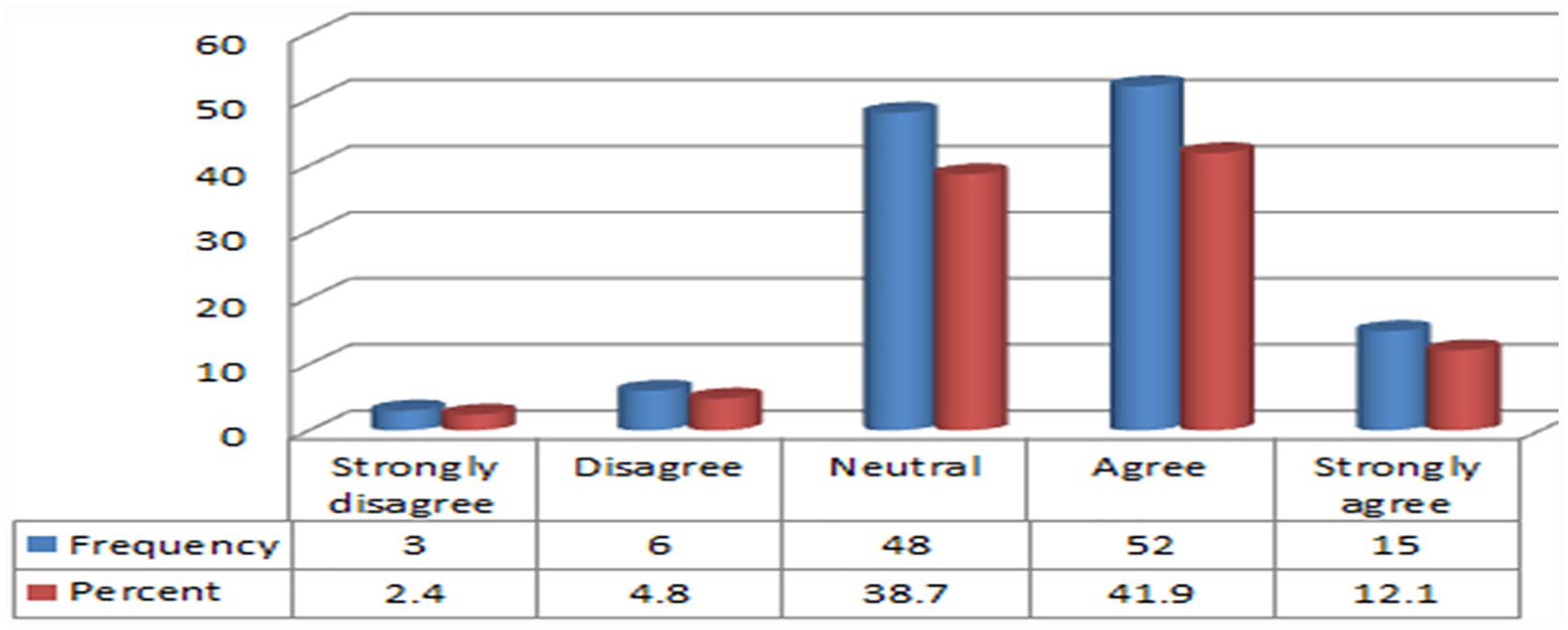
Measuring PBL.
Discussion and Implications
The present study aims to create a new paradigm for how the PBL approach can enhance CL, DSL, IL, and AL, which, in turn, can engage students in learning in higher education institutions. This study was a groundbreaking attempt to employ the PBL approach with college students. According to the proposed model, the relations among the 11 hypotheses and the PBL approach were examined with these factors: CL, DSL, IL, AL, and SEL (see Figure 2). Given the study goals, the application of the PBL approach among university students is underlined and argued to shed light on the significance of CL, DSL, IL, and AL, which in turn engage students in learning. Thus, the PBL approach prepares students for the difficulties and rich situations of everyday life that can be addressed to achieve this goal (Häkkinen et al., 2017; Kokotsaki et al., 2016; Larmer & Mergendoller, 2015).
The results of this study indicate that teachers’ understanding develops through the PBL approach, which may positively influence SEL. Therefore, teachers are capable of using the PBL approach to improve the educational information of learning through CL, DSL, IL, and AL, which in turn engage students in learning. Therefore, the findings revealed that the PBL approach has a positive impact on CL, DSL, IL, AL, and student engagement. In addition, students of the university were helped by the PBL approach in exploring and sharing information (Chu et al., 2011; Dong & Warter-Perez, 2009; Lampert et al., 2013). Therefore, advantageous results are yielded by the perception of the PBL approach as students engaged in learning are highly inclined to improve their academic performance (Bilbao et al., 2018; Gómez-Pablos et al., 2017; Lampert, 2010). Furthermore, the results of this study showed that the PBL approach is an essential element of the lives of many young students and teachers of the younger generation. For example, the approach improves the learning environment of students by ensuring that they can manage their studies efficiently. The interaction that exists in the PBL approach is helpful in accomplishing academic goals and maintaining the relation between students and teachers through CL, DSL, IL, and AL, which in turn engage students in learning.
The PBL approach also encourages students to engage in authentic works and tasks profoundly and actively (Lampert et al., 2013) and to find novel solutions that utilize more resources more broadly as well as knowledge sharing, collaboration, and SEL (Gómez-Pablos et al., 2017; Lampert, 2010). In addition, with this technique, learners have the opportunity to formulate their own learning requirements and eventually become autonomous and engaged learners who can solve problems (Bilbao et al., 2018). Thus, the PBL approach provides students with a sense of connection to the course material and their peers. Consequently, the current educational environment would be enhanced through the design of a PBL approach linking student assignments as well as prior course tasks, which in turn engage students in learning. Complete support is provided for all the hypotheses of this study in the statistical analyses presented in this article. The hypotheses and research models confirmed the many advantageous aspects of the PBL approach through CL, DSL, IL, and AL, which in turn engage students in learning. Moreover, the CL, DSL, IL, AL, and SEL factors of the PBL approach were also validated based on the results of this research. The results are in accordance with those of prior related research, supporting the idea that the PBL approach can be completely effective through CL, DSL, IL, and AL, which in turn engage students in learning (Al-Rahmi et al., 2015a, 2018; Bain, 2006; Frank & Barzilai, 2004; Grossman et al., 2019; Imafuku et al., 2014; Loyens et al., 2015; Moje, 2015; Wolff, 2003).
Many experts in the field have documented this finding (Grossman et al., 2019; Loyens et al., 2015), describing the PBL approach as “constructivist.” For example, it is clearly emphasized by Savery and Duffy (1996) as “one of the best exemplars of a constructivist learning environment” (p. 135). Besides, in many disciplines, it is important to understand the design of higher education courses, such as online learning and massive open online course and practices and tasks based on constructivism that eventually lead students to collaborate and engage in learning (Al-Rahmi et al., 2015a; Al-Rahmi, Aldraiweesh, et al., 2019; Russell, 2009), based on the results of the current PBL approach research model to improve CL, DSL, IL, and AL, which, in turn, engage students in learning. Therefore, universities should encourage teachers to use the PBL approach. They should also make students aware, by utilizing this approach in the learning process, of the various advantages they can gain by using the PBL approach to considerably improve their educational achievements. The current study presents two pieces of empirical evidence of the PBL approach: the first being the use of CL, DSL, IL, AL, and SEL, and the second being CL, DSL, IL, AL, which in turn engage students in learning (refer to the hypotheses in Table 3). According to the findings of this study, two implications are recognized:
The use of a PBL approach in learning and the learning process supports students by addressing their questions, which is the role that teachers must play.
Teachers in higher education institutions and universities need to be encouraged to train students in utilizing a PBL approach, by understanding that CL, DSL, IL, AL are considered significant for the PBL approach, which, in turn, engages students in learning.
Conclusion and Future Work
The results indicated that CL, DSL, IL, and AL engage students in learning. Thus, the findings of this research approve the acceptability of all hypotheses. The results for all hypotheses were significant, indicating that there exists a favorable attitude among students and teachers toward employing the PBL approach in learning. Therefore, future work should consider establishing guidelines for teachers to incorporate the PBL approach in different areas of learning and learning processes. Future efforts should also reflect the opinions of teachers as well as other higher education stakeholders regarding the PBL approach for use in academic environments. It is recommended to explore constraints and facilitating actions in future work, given that different points of view from different regions and cultures of the world will undoubtedly improve the research. Future work may also provide more insights into how to deal with this issue in universities in different educational settings.
Footnotes
Declaration of Conflicting Interests
The author(s) declared no potential conflicts of interest with respect to the research, authorship, and/or publication of this article.
Funding
The author(s) disclosed receipt of the following financial support for the research, authorship, and/or publication of this article: The author acknowledges the Deanship of Scientific Research at King Faisal University for the financial support under Nasher Track (Grant No. 186322).
