




Abstract
The use of iPad and other handheld devices in classrooms is spreading. Their use can empower learners and expose them to a plethora of resources. Yet, when it comes to learning a foreign language, reasonably little has been done to empirically ascertain the influence of iPad apps on facilitating language learning as well as engaging language learners. Thus, this study endeavored to illumine the extent to which a selection of iPad applications, used as a pedagogical tool, augment young learners’ engagement and learning in English as a foreign language (EFL) environments. The participants were a group of 20 middle school girls in Saudi Arabia. The study adopted a mixed-methods approach by utilizing a self-reported Likert-type scale questionnaire divided into three constructs, namely, helpfulness, ease of use, and engagement to measure learners’ perception after the intervention of the iPad apps. In addition, observational data were gathered to record students’ primary actions toward the apps. Ultimately, based on the statistical evidence, learners exhibited highly positive attitudes toward the use of the apps in their EFL classes (reading and vocabulary) as they found the apps bolstering their level of engagement and learning compared to traditional teaching paradigms. It was also found that the apps helped foster more active learning in the classroom. This investigation hopes to assist EFL/English as a second language (ESL) practitioners, particularly in the growing domain of iPads in education.
Keywords
Introduction
The current generation of students is highly immersed in multimedia that “they think it’s all part of the natural landscape” (Tapscott, 2010, p. 2). With this in mind, what fascinates today’s students? Two decades ago, a colorful book or stickers would do the trick to motivate students and keep them engaged in class. However, one can argue that today’s students are too modern to learn in a traditional setting and perhaps too aware to simply take teachers’ words for granted. With a click, students can today access a wide range of information and find answers to their questions on their own. The notion that the teacher, as she or he is older and has received specialized education in a field, always knows better than the students has always been unfairly presumptuous and is gradually changing, to a great extent due to the access to information via the internet and mobile devices that are readily available to youngsters today. As a result, technology has been indisputably woven into the tapestry of education. Thus, many researchers have embraced findings that point to the positive link between the use of technology and student engagement in the classroom (Heiberger & Harper, 2008). These findings have led to the emergence of several terms that attempt to describe and better understand the mind-set of this generation, including terms such as the “net generation” (Tapscott, 2010), “digital natives” (Prensky, 2001), and the tech-savvy generation. It has become apparent that using technology in class can improve students’ levels of motivation, which, in this sense, is an indicator of student’s engagement (Bryant et al., 2015).
In English as a foreign language (EFL) classes in particular, it has been a consistent struggle for teachers to engage young learners in reading activities that promote their learning. As Fareh (2010) explains, the general perception among students is that EFL classes are demotivating and uninteresting. Outdated and traditional teaching methods have been cited as one of the most important reasons that have contributed to students’ low levels of performance and loss of interest in EFL classes (Mahboob & Elyas, 2014). To address these issues, an innovative approach is needed that meets students’ needs, while enhancing their engagement and improving their learning experience. With the advent of the iPad in 2010, schools worldwide have looked into incorporating the device into their classrooms to enhance the learning experience of their students (Garwood, 2013; McKenzie et al., 2018). For these initiatives to be effective, research-based insight is necessary to understand the effectiveness of the iPad as a pedagogical tool, and more specifically, to measure its capacity to enhance students’ engagement and improve their learning. While there is a consensus among a number of studies that iPad usage positively impacts students’ engagement (Henderson & Yeow, 2012; Hilton & Canciello, 2013; Park, 2013), there is a dearth of studies that attempt to measure students’ engagement and learning in the EFL context. Specifically, in the context of EFL education in Saudi Arabia, research conducted on young and middle school learners who have integrated iPad use at school is virtually limited.
That being the case, this study is required to shed light on the possibility and the viability of utilizing devices, such as the iPad in school, especially with young EFL learners in Saudi Arabia. The purpose of this study is to gain comprehensive answers to the following established research questions:
To what extent does using iPad help learners become more active learners and engage in classroom activities?
Theoretical Framework
This study draws on the theory of constructivism as a general paradigm that guides the implementation of the iPad in EFL classes. Constructivism can be traced to the work of seminal figures in the field of learning: Dewey (1916) and Piaget and Cook (1952). It can be generally defined as the theory of learning and knowledge that views human beings as responsible for constructing their own knowledge (Juhan, 2016). According to the constructivist view, knowledge is not an absolute or a given; rather, it is constructed from previous human experience (Yilmaz, 2008). Learning, thus, becomes a process of making, “involving the active construction of knowledge; it is both a social and cognitive activity, occurring within a rich milieu of physical and cultural tools, settings and interactions” (Taylor et al., 2006, p. 144). Although it was generally proposed as a theory of learning, its applicability to the classroom was extended (Trowler, 2010). Akour (2009) defined constructivism in the classroom as “activities in which learners actively construct new ideas or concepts based on both their previous and current knowledge” (p. 56). Therefore, the teacher’s role in this learning environment is to design activities and guide the students to accomplish them. The teacher, simply put, is the coach or facilitator, a model that is in contrast with the traditional model, according to which the teacher is considered as a lecturer, the holder and the controller of knowledge (Singer, 2015).
In the 1980s, the advent of computers reshaped constructivist practices in the classroom ecology. Computers offered plenty of opportunities to access different websites, which empowering users to be responsible for their own learning (Ryu & Parsons, 2008). Now, in the age of mobile technologies, the advent of mobile phones and tablets has proposed a fundamental change to the paradigm of learning and teaching to one that strongly “favor[s] constructivist and collaborative approaches to learning” (Manuguerra & Petocz, 2011, p. 61).
The iPad, as part of the mobile generation, holds the potential to shift the learning process in the classroom toward a more constructivist view (Culén & Gasparini, 2012), enabling students to construct their knowledge. Such constructivist practices are manifested in students’ ability to discover and seek information, to create and design content using tablets. In addition, “e-books could move textbook study into the arena of the interactive, combining the activities of acquiring, storing, reading, and annotating” (Melhuish & Falloon, 2010, p. 8).
Literature Review
Definition of Student Engagement
The notion of student engagement might appear straightforward; however, it has been interpreted in numerous ways by researchers over the years. Early studies such as Newmann et al. (1992) define engagement generally as “active involvement, commitment, and concentrated attention, in contrast to superficial participation, apathy, or lack of interest” (p. 11). While Marks (2000) conceptualizes student engagement as “a psychological process, specifically, the attention, interest, investment, and effort students expend in the work of learning” (pp. 154–155).
Currently, an agreement has been established among researchers, recognizing engagement as a construct with multidimensional interpretations. However, disagreement has emerged with respect to the classification and number of dimensions of engagement (Christenson et al., 2012). Some scholars have suggested a framework for engagement that entails four components: academic, behavioral, affective, and cognitive (Appleton et al., 2006; Christenson et al., 2008), while others opt for a model of three different dimensions of student engagement namely: cognitive engagement, behavioral engagement, and emotional engagement (Fredricks et al., 2004). Despite the multidimensional standpoint articulated by researchers, most definitions hold the same basic premise, viewing the concept of engagement as student participation, investment, or interest in learning activities (Steinbrenner & Watson, 2015). As a result, Christenson et al. (2012) indicate that researchers must delineate their conceptualization of the concept. In accordance with this view, this study measures the construct of engagement specifically in relation to classroom instruction. Thus, the current research study conceptualizes engagement as outlined by Marks (2000), in which engagement consists of two domains: affective and behavioral participation in learning. Affective engagement comprises students’ “emotional involvement” or “motivation to learn” (Marks, 2000), while behavioral engagement relates to students’ participation.
The Importance of Student Engagement
Both educators and researchers point to student engagement as key to improving low academic achievement, boredom in the classroom, alienation, and high dropout rates (Fredricks et al., 2004). In the same vein, the level of student engagement in learning activities in school, Garwood (2013) posits, is regarded as one of the better predictors in determining high student academic achievement and learning. The more the students actively focus and participate in class, the more likely they will be able to learn, retain information, and find school more enjoyable.
Several researchers have arrived at an agreement regarding the association of student engagement and improved desired outcomes, such as critical thinking (Carini et al., 2006; DeNoyelles & Reyes-Foster, 2015; Elyas & Al-Bogami, 2018; Elyas & Al-Zahrani, 2019a, 2019b) enhanced grades (Kuh et al., 2008; Lindt & Miller, 2014), and cognitive and personal development (Pascarella et al., 2010). Student engagement does not only lead to better academic performance, but it also improves students’ creativity. As Harmer (2001) suggests, engaged students—especially teenagers—“have a great capacity to learn, a great potential for creativity, and a passionate commitment to things which interest them” (p. 39). On the contrary, as Newmann (1992) asserts, disengaged students display signs of class disturbance, often skipping class, turning in incomplete assignments and, even when they do accomplish classwork, doing it with little indication of commitment or excitement. The problem in education, Newmann (1992) further indicates, does not reside in students’ low achievement but their disengagement. Overall, it is evident that ameliorating student engagement is crucial to attaining the anticipated learning outcomes.
Handheld Devices and Mobile Learning (MALL)
Over the past few decades, as technology became prevalent in our daily lives, it also began exerting its influence in the educational domain. The re-purposing of some of these technologies for their integration into the process of learning and teaching led to the emergence of the concept of mobile-assisted language learning (MALL) (Melhuish & Falloon, 2010). Rossing et al. (2012) define MALL as the resourceful and effective utilization of portable wireless digital devices to enrich learners’ engagement in learning activities. Thus, many schools and universities worldwide utilize handheld devices such as iPads, tablet PCs, and iPods owing to their mobility, portability, and the abundant access to authentic materials offered by these devices (Melhuish & Falloon, 2010). Mobile technologies, as Cobcroft et al. (2006) contend, provide the opportunity to optimize learner engagement in “creative, collaborative, critical, and communicative learning activities” (p. 25). In accordance with these views, Traxler (2010) states that the practicality of using these devices relies on their ability to create a learning environment that is not detached from real-life contexts. Students should be able to engage and interact with information, ideas, and people “to produce, consume, and store content and conversation” (p. 3) by utilizing their handheld devices. Although numerous handheld devices that are ready to be transplanted into the educational context are available in the market, the iPad is one of the most favorable tools implemented in schools worldwide (Brown et al., 2012).
Small Device, Great Potential: The iPad in Teaching and Learning
The iPad has become a universal tool. It is now ubiquitously available in most households and more recently has been fused into the classroom dynamic. As educators began gradually fusing the iPad into their educational practices to address their students’ needs, whether in special education (Cumming & Rodriguez, 2013), higher education (Nguyen et al., 2015; Whalley et al., 2018), or literacy development (Harmon, 2012), encouraging results have been reported. It has also been shown to promote students’ creativity and collaboration. For instance, Batham et al. (2014) noted that the use of a variety of iPad apps can effectively boost young learners’ creativity and collaboration skills. In 2012, Henderson and Yeow conducted an exploratory case study to explore the benefit of integrating iPads in a primary school setting in New Zealand. By interviewing teachers, they found that students’ engagement and collaboration improved as the iPad provided portability and fast access to information through the internet. Similarly, a study by Culén and Gasparini (2012) showed that while students found the iPad to support their learning, their evaluation of the successfulness of iPad integration into the classroom centered on criteria related to the perception of the iPad as “fun, cool, and enjoyable.” Their teachers, on the other hand, argued that a more traditional teaching method would be more productive than using iPads in the classroom. Their assessment of the effectiveness of the iPad was focused primarily in terms of student outcomes, which were reportedly less productive in comparison to traditional methods of teaching. Thus, technology in general, and mobile learning specifically, can be perceived by some teachers as an “intruder” affecting their traditional teaching pedagogy and, as a result, they may resist these changes, affecting the effectiveness of their utilization of the device (Henderson & Yeow, 2012).
In light of such resistance, Rossing et al. (2012) contend, “without innovative activity design, mobile tablets may simply repackage old content and mimic ineffective learning approaches. In order to maximize the benefits of mobile tablets, educators must carefully adapt the technology to specific learning goals and outcomes” (p. 15). Overall, it is important to point out that lacking a clear pedagogical approach and not setting certain learning outcomes can be an indicator of the ineffective integration of the iPad. After all, the iPad is only a technological tool and as with all tools, what is most important is how the tool is used.
iPad Apps in EFL/ESL Classroom
Despite the growing number of scholarly investigations of iPad usage in teaching and learning, only a few studies have been conducted in the EFL/English as a second language (ESL) context (Pellerin, 2018). B. T. Wang et al. (2015) employed a research study to investigate the impact of the iPad on students’ vocabulary learning and motivation in an English classroom in Taiwan. Two classes of freshman students were assigned (control and experimental group). The control group used more traditional methods of teaching vocabulary (i.e., semantic map). Simultaneously, the experimental group was taught using the iPad. The findings of the pretest and posttest as well as the questionnaire indicate that the iPad motivated students in the language learning environment by providing visual and audio stimulus and practice and thus had a significant impact on improving their English vocabulary acquisition.
In a Saudi university setting, Albadry (2015) found that incorporating the iPad with preloaded apps in the EFL course heightened students’ motivation and learning. This mixed-method study further revealed that the iPad fostered students’ autonomy, collaboration, and peer-to-peer interaction.
Arriving at similar results in the area of teaching reading, Y. Wang (2017) recently reported the findings of the incorporation of a self-paced mobile app to enhance students reading comprehension in the EFL course at a Taiwan college with a total of 196 students. The results of the posttest indicate that students in the experimental group outperformed their counterparts in the control group. Furthermore, questionnaire findings regarding students’ satisfaction in the experimental group showed a high level of satisfaction. Accordingly, the interactive exercises, videos, and glossaries on the iPad allowed the students to be more active and autonomous, enabling student-centric learning.
In the sphere of education, according to Hilton and Canciello (2013), student involvement is improved in English courses when iPad-based texts and applications are used. Students accordingly found it easier and more useful to perform classroom tasks using iPad devices, which maximized their level of involvement.
Xin and Affrunti (2019) state that using the iPad and iPad app appears to provide a potential avenue for English language learners (ELLs) in learning English vocabulary words. Tseng (2019) recently has investigated four Taiwanese EFL teachers who enacted their TPACK in the context of teaching English with iPads. Their results suggested although some of the teachers’ iPad-based teaching indicated their competency in transforming their teaching, their teaching was predominantly enhanced by the tablets as a substitute to deliver linguistic input to their students in conventional teacher-centered classrooms. What is noticed in these studies is that using the iPad in language learning has its feasibility in augmenting student learning.
Negative Aspects of Handheld Devices and Mobile Learning (MALL)
As there are positive aspects of using iPad in the classrooms, there are certainly negative aspects as well. Predominant among the reported challenges in the literature of mobile learning are technical issues established during implementation. These issues manifest mostly in terms of Wi-Fi connection problems, unformatted tablets, and battery charging difficulties, which lead to the sudden shutdown of tablets (Brown et al., 2012; Elyas & Al-Bogami, 2018; Pegrum et al., 2013).
Moreover, research has shown that the level of experience a user has with mobile technology will influence their perception of the level of effort they need and the ease of using mobile learning (W.-T. Wang & Wang, 2009). Others have highlighted the important role that specific prior skill and experience have on students’ perceptions of mobile technology (Mac Callum & Jeffrey, 2013). Research has also shown that prior mobile experience can also influence how useful an individual perceives mobile learning to be (Akour, 2009).
Some teachers, as well as students, may not be willing to “accept” the use of mobile technology in their classes. User acceptance has been defined as “the demonstrable willingness within a user group to employ information technology for the tasks it is designed to support” (Dillon & Morris, 1996, p. 5).
Here, researchers argue that past studies may not have explored the full potential of the iPad technology, as they may have been integrated ineffectively, as the teachers did not have a specific pedagogical goal in applying the iPad learning. Instead, the iPad was used more like a “plug in” or “add on” to their traditional teaching (Culén & Gasparini, 2012; Hutchison et al., 2012). Consequently, the main focus of this article is to present the iPad as an instructional tool that should be accompanied by a pedagogical plan.
Method
The current investigation implements a mixed-methods approach, underpinning convergent parallel design, to determine the influence of the iPad on enhancing students’ engagement in Saudi EFL classes. In this design, the researchers collect both qualitative and quantitative data during the same phase, analyze them separately, merge and interpret the findings. (Creswell, 2012). The rationale for the selection of such design is to provide a holistic understanding of the research question. It also aims to “offset” the weakness that might be brought about the use of seemingly small sample size in the quantitative part of the study (Creswell, 2012). To this end, a questionnaire was distributed among students to measure their engagement and learning. To gain in-depth information and enrich the data, a classroom diary reporting students’ main behavioural engagement was recorded.
Participants
A total of 20 female middle school students, who are registered in a private school for girls in Jeddah, Saudi Arabia, participated in the study. They were selected due to their availability and easy access to iPad devices. The school had already implemented the use of iPad in most subjects except English classes, where the iPad was not being extensively used. Therefore, it was most suitable to explore the potential of different apps to ameliorate student engagement in English. One class from grade seven was selected randomly. Ethical approval was granted by research ethics unit at the institute. The purpose of the study was explained explicitly in a consent form, which was signed by students’ parents allowing their child(ren) to participate in the study. The participants and school officials’ right to anonymity and confidentiality is protected.
Data Collection Instrument
Questionnaire
A 5-point Likert-type scale questionnaire ranging from strongly disagree to strongly agree was utilized to measure students’ engagement after the implementation of the iPad in EFL classes. To achieve this goal, 17 items were adopted from four different studies (Diemer et al., 2013; Hilton & Canciello, 2013; Itayem, 2014; Mango, 2015). The questionnaire was categorized into three categories, namely: helpfulness (six items), ease of use (five items), and engagement (six items).
Questionnaire validity and reliability
To certify that the questionnaire would yield meaningful and adequate measurements, the following two steps were taken: establishing the content validity and the reliability of the questionnaire.
First, for the sake of achieving validity, the questionnaire was authenticated by a panel of experts in the field of TESOL (Teaching English to Speakers of Other Languages; two assistant professors and two expert lecturers), and modifications were made accordingly. To ensure the accuracy of the participants’ responses, the questionnaire was translated into the Arabic language (the mother tongue of the participants). A qualified translator at the institute authorized the translation, and based on that, a bilingual questionnaire (English and Arabic) was produced.
Second, to quantify the reliability of the questionnaire, the questionnaire was piloted to five students. The piloted questionnaire enabled the researcher to check the clarity of the questions and to perform a reliability test. Statistical analysis to test the internal consistency among the questionnaire items was employed through SPSS®. Cronbach’s alpha reliability test was computed using the SPSS® software. The value of Cronbach’s alpha was .883, which indicated a significantly adequate level of reliability. According to Gliem and Gliem (2003), an alpha value of .8 is considered an acceptable measurement for an instrument. One item from the questionnaire (item no. 17) was excluded because students found it confusing. Thus, the number of items in the questionnaire totaled 16.
Observation
The observation of students’ main behavioral engagement was recorded at the end of each teaching session in a Microsoft Word® document and was analyzed descriptively. A total of 10 sessions (40 min each) were observed over the course of 5 weeks.
Procedure
The students received one training session during which the iPad apps were introduced and their different features were explained. Then, they were directed to download the apps from the App Store. Five apps were selected to achieve the goal of the course, namely: Quizlet®, iBook®, Popplet Lite®, Polleverywhere®, and Pixton Comic Maker®. The iPad was used during the class time for the group, for paired and individual activities (see Appendix for a list of activities incorporated/included). At the end of the teaching sessions assigned to teach reading and vocabulary, a printed copy of the questionnaire was distributed to students to measure their perception of engagement after using the iPad in class.
Data Analysis and Findings
This section commences with the quantitative statistic results. Second, it presents a detailed exposition of the observed data.
Descriptive statistics were employed using IBM Statistical Programme for Social Science (SPSS® ver. 24) to analyze students’ responses to the questionnaire items in terms of frequency, percentage, mean, and standard deviation to verify students’ level of engagement toward iPad usage with the proposed applications. The 5-point Likert-type scale questionnaire (Strongly disagree, Disagree, Neutral, Agree, Strongly Agree) was given a code from 1 to 5. Code 1 was assigned if the student response was Strongly disagree, code 2 was in case of Disagree, code 3 was for the Neutral option, code 4 was for Agree, and code 5 for Strongly agree.
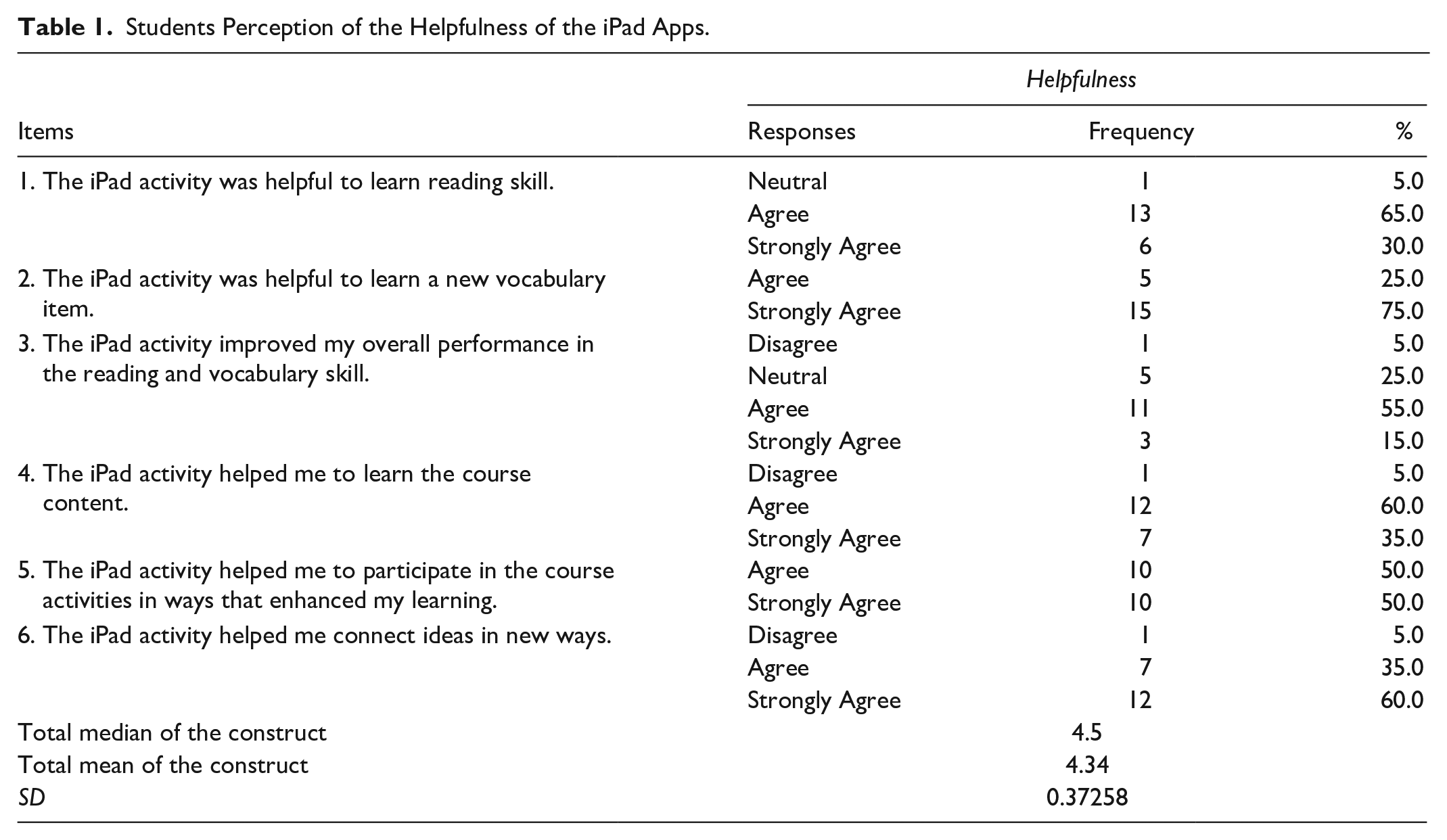
Table 1 displays students’ perception of the helpfulness of using the iPad during class. As indicated, students reported general agreement that the iPad was helpful in learning both reading skills (65% Agree and 30% Strongly agree) and vocabulary (25% Agree and 75% Strongly agree). Twenty-five percent of the students were undecided on whether the use of iPad improved their performance or not. However, 55% and 15% of the students emphasized that the iPad did aid or foster their performance in reading and vocabulary skills. In addition, 60% of students chose Strongly agree and 35% chose Agree regarding how the iPad enabled them to form novel ways of connecting ideas. Holistically, it can be inferred from these results that students displayed a generally positive perception toward the usefulness of the iPad in class.
Students Perception of the Helpfulness of the iPad Apps.
The results of the students’ perception regarding the ease of use of the iPad are set out in Table 2. 95% of students indicated that the use of the iPad in class facilitated their reading and vocabulary learning, while two thirds of the students showed a strong agreement (80%), stating that the iPad was easy to use, particularly in enabling them to create their own content. Similarly, the majority of students (80%) commented that reading comprehension passages on the iPad was easier than using the traditional (print) textbook in comparison to approximately 15% who showed a preference for reading from the traditional textbook. The overall response to the construct of ease of use was positive, as the majority of students did not indicate any difficulties in using the iPad during instruction.
Students’ Perception of the Ease of Use of iPad Apps in Facilitating Learning.

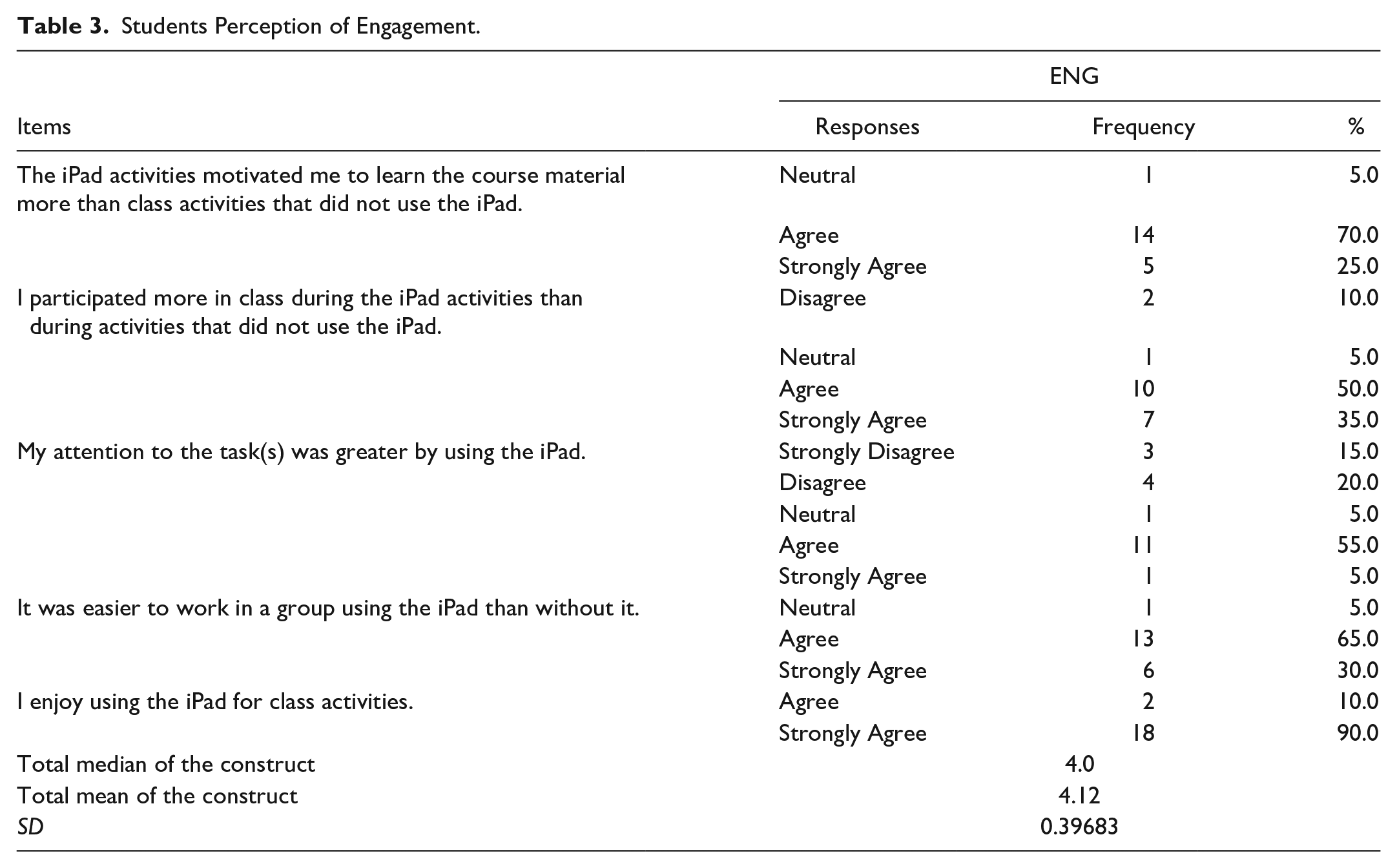
The third table presents students’ perception of engagement upon implementing iPad applications during the teaching instruction.
Students hold general agreement (70% Agree, 25% Strongly agree) that the use of the iPad motivated them to learn the course material in contrast to conventional class instruction. Over half of the students surveyed felt that their participation in the reading class increased after the introduction of the iPad, while a minority (10%) indicated that the iPad did not significantly augment their participation. Interestingly, more than half of the students (60%) agreed that having the iPad in class helped them better focus on tasks. A significant number of students (95%) stated that the iPad facilitated their group work. Among the construct items, the principle of enjoyment obtained the highest approval among students. On the whole, the students confirmed that the iPad is a motivating tool to be used in class as it empowered their sense of engagement in their EFL reading classes.
Following Boone and Boone’s (2012) recommendation in analyzing Likert-type scale items representative of a construct, applying means and standard deviations is the most appropriate analysis to be carried out. Consequently, three scales of each of the student’s responses that are representative of each of the constructs with the total mean of each item were aggregated. These scales were generated to employ the appropriate analysis, such as mean and standard deviation, to answer the research question.
Based on the statistical evidence in Table 3, the mean construct shows that the participants hold a positive reaction toward three constructs—helpfulness (M = 4.34, SD = 0.372), ease of use (M = 4.42, SD = 0.296), and ENG (M = 4.12, SD = 0.396). This suggests that students found the iPad easy to use, useful, and engaging during learning. This clearly shows iPads as a helpful tool. This finding is in line with Rossing et al. (2012). The learning process with such devices needs to be user-friendly and innovative.
Students Perception of Engagement.
Observational Data
Student Engagement
To enable the researchers to conduct a more focused observation, a classroom observational sheet was created. It was divided into three main sections: the type of iPad activity and how it is utilized, students’ engagement, and the comments/reflection for the observer. The inferences on students’ engagement were drawn based on a set of prompts/questions targeted to measure their main behavioral engagement (see Appendix C). Thereupon, these prompts were adopted from the literature and tailored to meet the goal of the current investigation (see Singer, 2015). To further optimize the clarity of the observational sheet—in terms of face and content validity—it was reviewed by a professional party in TESOL. On this basis, the observation of students’ main behavioral engagement was recorded at the end of each teaching session in a Microsoft Word® document and was analyzed descriptively. A total of 10 sessions (40 min each) were observed over the course of 5 weeks. The researcher adopted the role of a participant-observer, simultaneously acting as both the teacher and the observer. As Creswell (2012) states, a participant-observer actively “take[s] part in activities in the setting they observe” (p. 627). The decision to teach and observe was made to reduce the limitations that may accompany a teachers’ negative attitude toward using technology in class. However, the researchers acknowledged the impact of the Hawthorne effect (Parsons, 1974), which concerns research participation, the consequent awareness of being studied, and possible impact on behavior (Chiesa & Hobbs, 2008; Kompier, 2006). There is a sense of social desirability that might cause the behavior to change in line with the teachers’ expectations.
The Hawthorne effect has also been widely used without any necessary connection to the original studies and has usually taken on the meaning of alteration in behavior as a consequence of its observation (McCambridge et al., 2014).
The narrative results provided in this section disclose accounts of the main activities used with the five proposed applications (Quizlet®, iBook®, Popplet®, Polleverywhere®, Pixton Comic Maker®) and portrays students’ primary reaction toward them.
Quizlet®
As a part of the study, the researchers created two sets of vocabulary for a new chapter of study. The students joined the class set and were able to study the cards or play a matching game by entering the code number for the vocabulary set. The code was shared with the students at the beginning of each class.
The students would then join the set and flip through the words’ definitions and listen to the pronunciation of the words by clicking on the audio icon. Likewise, they used the “Learn” mode to practice what they learnt by typing words when given the definition and vice versa (see Figures 1 and 2). Through this, they showed signs of immediate interest and participation. After giving them some time to experiment and practice their vocabulary sets, the students were then directed to take a quiz in the “Test” mode for the purpose of checking their retention. The immediate feedback given in the application meant that they were provided with the correct answers and were informed of the questions they got wrong. With enthusiasm, one student raised her hand and said “I got 100” meaning that she scored 100% in the quiz, while other students were clearly frustrated to get lower results. Some students even attempted to take the test again to improve their results before the end of the lesson. It was observed that the immediate feedback provided by the application created a platform that allowed students to reduce their dependency on the teacher, tapping into the notion of autonomous learning.

Quizlet app feature A.
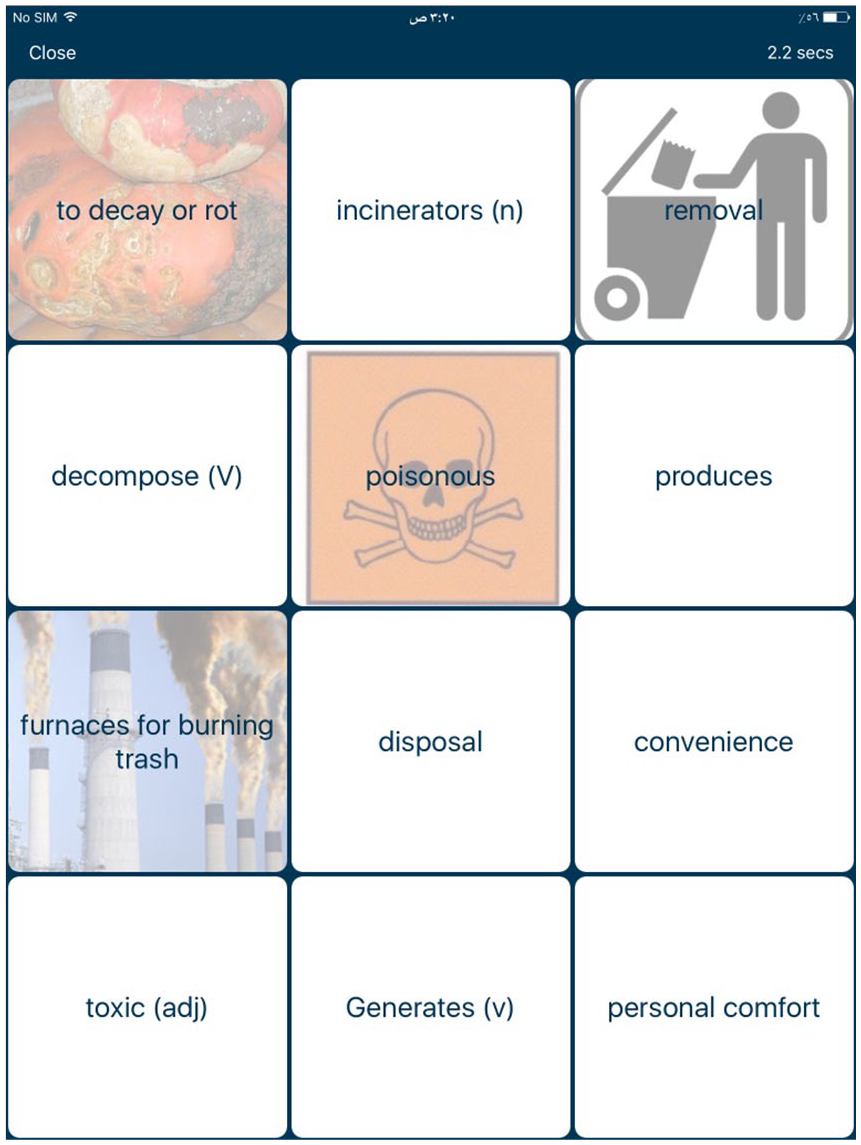
Quizlet app feature B.
While observing students using the “Match” game feature, the researcher noted that students exhibited a sense of competitiveness to beat their records and to compete with their classmates. The first time students were introduced to this game, they were highly engaged and were enjoying themselves, with even weaker students interested in beating the clock. They were observed bragging to each other about how fast they could match the words. Another instance in which the “Match” game was used was in a group activity, where students were required to place one iPad on a desk and line up in front of it. Each student would then select one match and go to the back of the line if she got it wrong. During this exercise, they were highly intrigued and were encouraging each other to finish before the other teams. Through observing the students’ reactions and interactions, it was clear that their level of enjoyment, motivation, and participation was heightened while using the application Quizlet®. Furthermore, when students were asked what their favorite application was, they immediately replied that they were Quizlet® and Pixton Comic Maker®. The researcher noted that applications that incorporate some sort of game element were more likely to draw students in.
iBook®
The application iBook® was used to replace the traditional textbook. It was mainly used to aid students’ comprehension of reading passages and to demonstrate their understanding. Through observation, it appeared that the use of the iBook® appealed to the students as it provided them with plenty of opportunities to shape their learning. Students showed a preference to use the iBook® over their textbook. One student stated “[O]ur textbook is frightening I prefer the iBook,” and her classmates shyly nodded in agreement. The student continued explaining her thought in Arabic, referring to the way the traditional book was presented with static pictures and overwhelming words, making reading a “fighting” experience for them.
Conversely, students using the iBook® were actively participating, and it was noted that they were more self-directed. For instance, one of the comprehension questions was raised and before explaining further, the students were directed to find the answer to the question by watching a video in their iBook®. With excitement one student replied, “I know the answer,” then she said “I already saw the video three times at home.” The student tried to answer and explain her thoughts in Arabic, but she was encouraged to speak in English. She became quite reluctant, but then she said “smoking.” Although her vocabulary was limited, she was able to get the right answer.
During group work tasks with the iBook®, it was clear that the students felt that they had control over their learning which in turn increased their sense of engagement. It was observed that the majority of students were motivated and excited to participate in the jigsaw activities, while a few students showed signs of disinterest. Due to the mobility of the device, group work among students was facilitated as they could pass around the iPad while they looked for answers. While some students tried to dominate the group by holding the iPad, they were reminded that the goal of the task was to work as a team to make sure that each member understood. For instance, one of the questions was to find the meaning of the word “inevitable.” Students did not seek help but instead tapped on the word in the iBook® to look up the meaning. At the end of the activity, all students had managed to answer all of the questions with little guidance from the teacher. It was evident that they felt a sense of ownership.
Another area of observation included students’ reluctance to read. Surprisingly, many students initially exhibited a high level of reading anxiety. It was noticed that they were frightened to read aloud because they were anxious to make mistakes in front of their classmates. Reading from the iBook® provided students with the chance to reduce their anxiety levels by allowing them to learn the pronunciation of the words at their own pace. Toward the beginning of the study, students reported that the speed of the sound in their iPad was too fast for them to listen and practice reading. They were then directed to how they could adjust the sound settings on their iPads. One student said, “[T]he sound is [still] too fast, I can’t understand.” Then her friend took her iPad and assisted her in adjusting the speed in the iPad settings. By allowing each student to adjust the audio to her own self-selected pace, it also allowed students to become more responsible for their own learning.
Before reading a new paragraph in the reading passage, the teacher would ask students to put on their headphones to listen to the passage as long as they wanted for 3 min. While some students were shy to raise their hand to read out loud, others would refuse to read all together. An improvement in their behavior was recognized after listening to the audio of the reading passages. For instance, one student who was extremely timid to read said, “[P]lease don’t listen to me” to her classmate when her turn came but she found the courage to start reading. As she made mistakes, she was prompted to listen to the section again and would be asked to read again later. She was focusing on reading while listening and confirmed that she was ready to read. It was evident that her reading had moderately improved in comparison to her first attempt. It was also evident that students developed more confidence in their reading ability if they can immediately check their pronunciation.
Popplet®
Following iBook®, the students were given the opportunity to apply what they had learned by using the application Popplet®. They were given the freedom to execute the task any way they wanted and to express whether they agreed or disagreed with the statement given. Most importantly, they were encouraged to provide reasons, to support their claims and convince other groups, as this was part of the chapter objectives for the lesson. It was noted that a few students were reluctant to participate in their groups.
At first, the students were shy and uncertain of their ability to provide the same answer differently than the one in their book. It was clear that the students had not been encouraged before to have or form their own opinions. However, they slowly developed the courage to express their insights and discussed with each other what they should write as reasons for their thoughts. After that, each group came to the board to present their work to the whole class. Students displayed a moderate level of engagement when using the application Popplet®. One noteworthy incident that occurred was that one of the groups struggled to express their ideas in English. Interestingly, they did not seek the teacher’s guidance. Instead, they decided to use Google Translate to help them translate their thoughts. The task made it clear that the students were becoming more self-directed in the sense that they reduced dependency on the teacher to complete challenging tasks.
After explaining the task instructions to the students, they were told that if they needed any help, they could ask the teacher. They confidently stated that they could manage to complete the task by themselves. It seemed that students’ affective filter was lowered when they had a tool to support their learning without much control from the teacher. However, despite their confidence, students did stumble over some parts that they could not find answers for. It was only at that point that the teacher stepped in to offer her help to locate the answer. It is important to note that the students’ level of participation increased when they received this information as a means to solving a problem in which they needed to find an answer. The application created a platform for the students to analyze and break information into smaller, more digestible parts when used in conjunction with the application iBook®. The students were able to make inferences about the writer’s opinion and find evidence that supports his claim from the reading passage. See Figure 3 for a sample of students’ work.
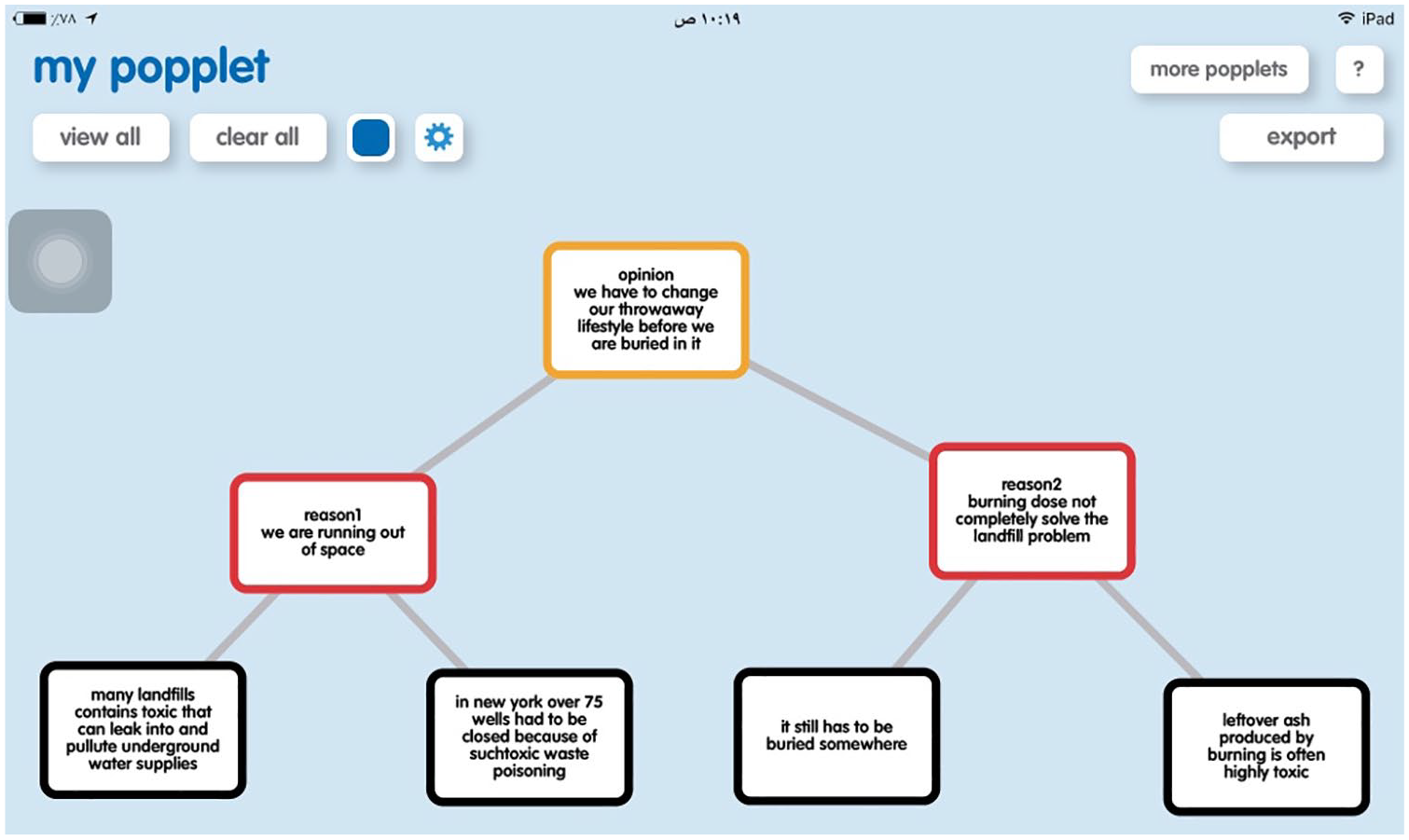
Sample of students work in the application Popplet®.
Polleverywhere®
The application was used to allow students to express their opinions about different inquiries. For this reason, different modes within the application for displaying answers on the screen was used, such as word cloud, rating, clustering in which students could write their own answers instead of simply choosing.
The students joined the poll that the researchers had created earlier on the website by entering the teacher’s code. Students demonstrated a moderate level of engagement while using the application, and what grabbed their attention the most seemed to be watching their answers as they appeared on the screen. A discussion was conducted to discuss the students’ answers. It was noted that the students felt more confident to share their opinions and express their thoughts, since the answers were projected anonymously. For example, one of the questions was “Why do you think electricity is important?” (Figure 4). Students provided different answers, such as “[so] we can search the internet,” “Because the iPad not work,” and “[I]t keeps the light on.” From these responses, it was clear that while each student holds different opinions, they were much more timid to express them overtly. Thus, the use of an application such as Polleverywhere® allows them to be more open in voicing their ideas.
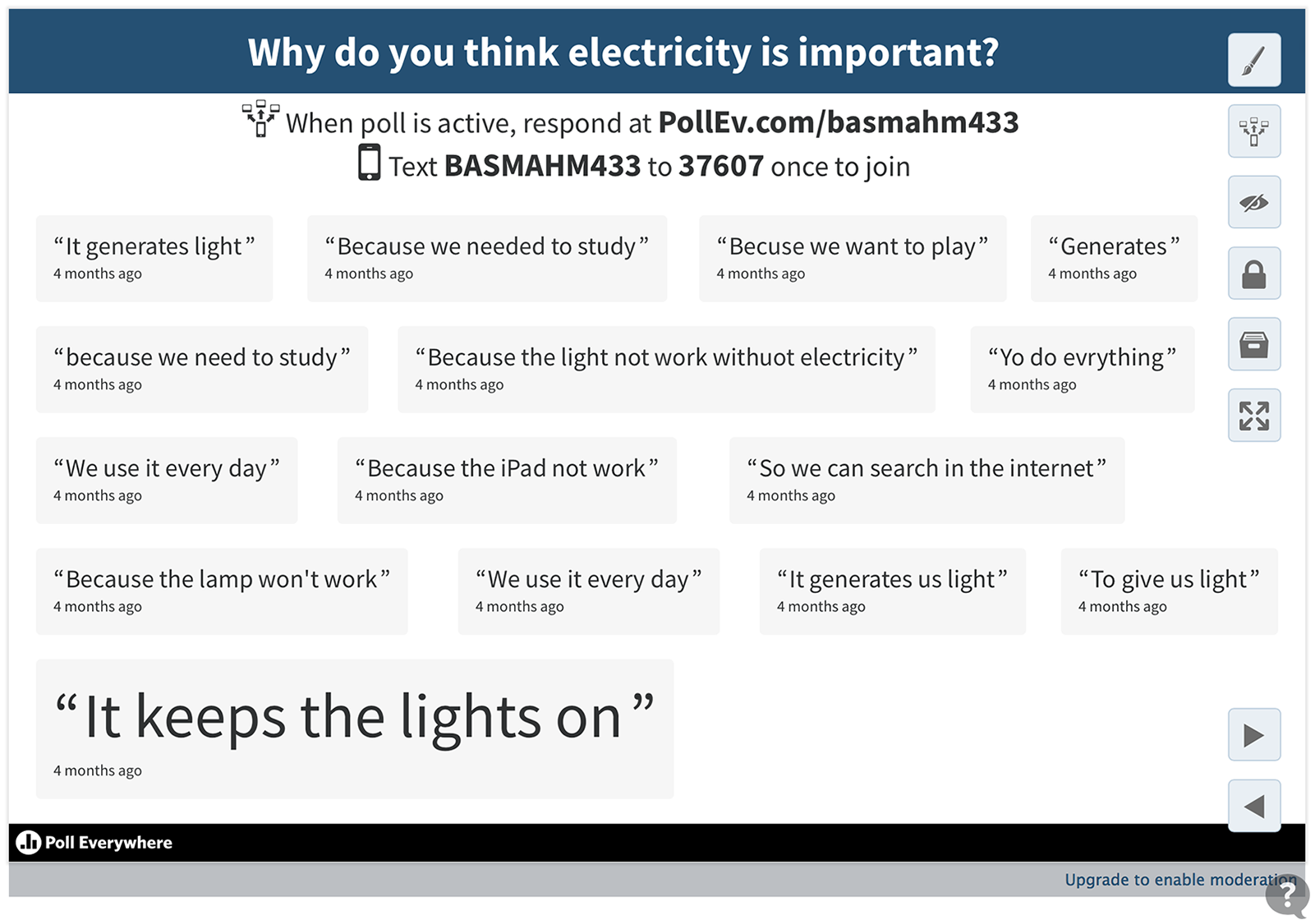
Sample of students’ response in Polleverywhere®.
Pixton Comic Maker®
Pixton® was selected to foster the development of students’ cognitive level of creating. The students immediately jumped right into designing the characters and coming up with scenes. They were able to invent and imagine scenes, compose dialogues, create their own characters, and use the vocabulary they had learned in different contexts. The application provided a good deal of graphic features, such as props, background scenes, and characters, allowing students the opportunity to freely express their creativity. They used a fair amount of body movements and gestures to express their enjoyment while using the application. Their communication and collaboration skills were reinforced while discussing how they should design their scenes with their group members. After finishing the activity, each group came in front of the class to show their group work. Each group was observed proudly holding their comic and they could be heard bragging, making statements like “[O]ur design is the best,” and “look at our characters” (Figure 5). In addition, it was noted that technical matters, such as internet connection and battery charging, came to light during the activities. Particularly, the slow internet connection affected the teaching instructions and hampered the flow of some of the classroom activities. These issues were troubleshooted with support from the school’s IT department.
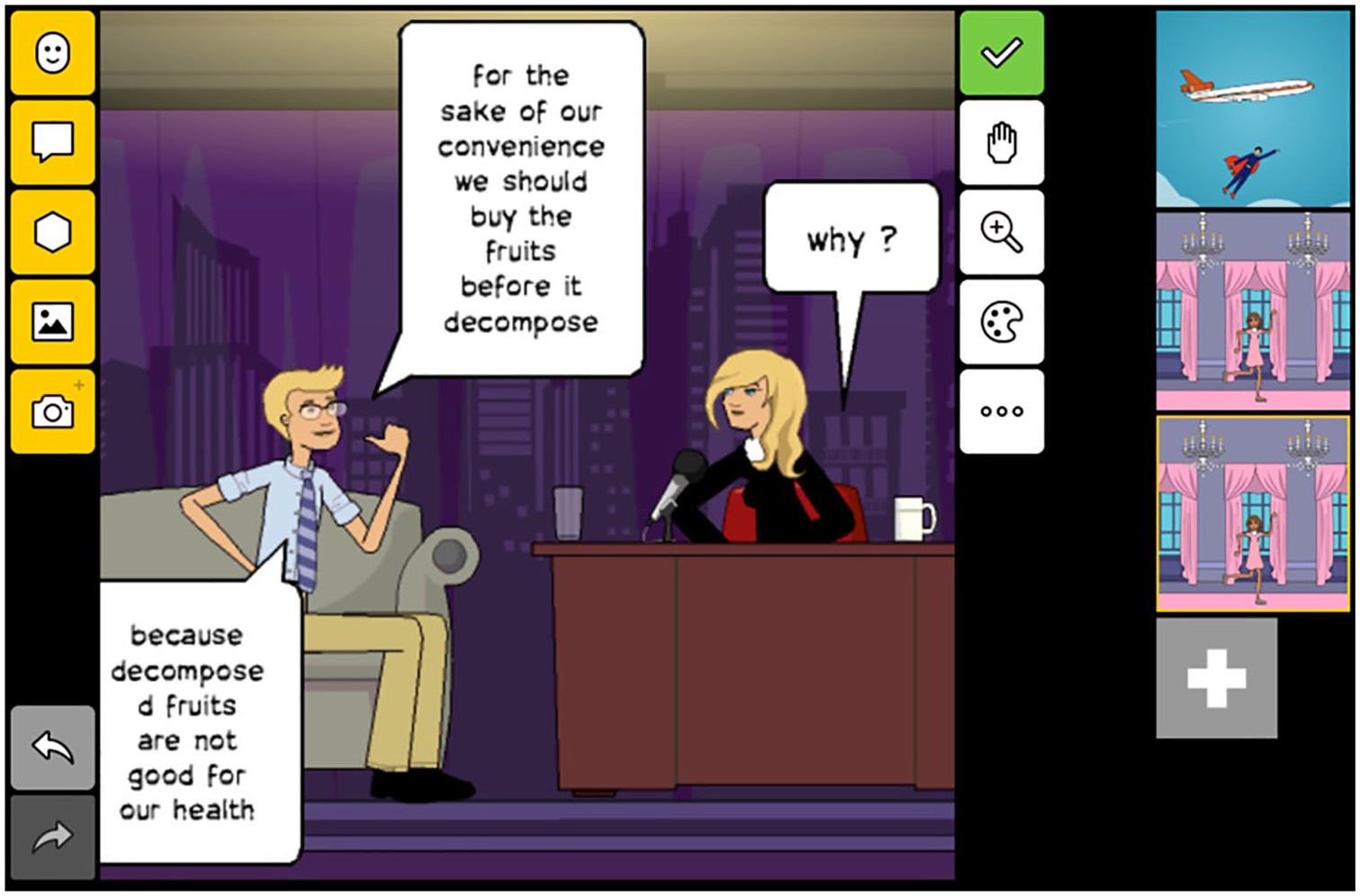
Sample of students work for Pixton®.
Discussion
Student engagement in this study was quantified by employing two research tools (i.e., questionnaire and observation). In terms of the quantitative data, student’s response showed a positive tendency to the construct of engagement (with a total of 4.12). They found that the iPad apps consolidated their motivation to learn, increased their participation, enabled them to stay on task, facilitated their group work, and enhanced their sense of enjoyment in EFL classes. These results are in alignment with the findings of Diemer et al. (2013) and Mango (2015). Both studies, conducted at a university level, reported that student engagement was heightened after using the iPad in class activities, according to responses to the survey items. Similarly, a recent study conducted by Ferguson (2017) in a middle school setting in Western New York reported the increased engagement from students’ perception on survey items, particularly, in the way the iPad made learning “more fun and interesting.” The findings of this study add to the emerging literature that indicates the use of the iPad in the classroom does indeed improve students’ engagement and motivation (Alsufi, 2014; Culén & Gasparini, 2012; Henderson & Yeow, 2012).
In addition, the questionnaire results on the topic of helpfulness confirmed these findings. The students, on the whole, confirmed iPad as a beneficial aid to their learning, stating that using the iPad in class was helpful and made reading and vocabulary learning easier; it improved their performance, permitted them to participate in ways that enhanced their learning, and helped them form and connect ideas in new ways. Regarding students’ perception of improvement in their learning with the use of the iPad, these findings are generally in accordance with Diemer et al. (2013).
The findings of the qualitative observations help to better understand students’ engagement in depth when using the iPad in EFL classes. As the qualitative data shows, students have enthusiastically participated in and enjoyed class activities when the iPad was used, which corroborates the findings of the quantitative data. The iPad learning apps provide students with a platform to activate their different level of cognitive thinking such as to memorize, understand, apply, analyze, evaluate, and create. This provides evidence supporting the notion that students feel more in control over their learning when they are presented with stimuli that empowers them. The use of the iPad led students to gradually lose dependency on the teacher, which made the learning experience “an active rather than passive experience” (Geist, 2011, p. 766). This is consistent with the findings of Albadry (2015), in the Saudi university context, in which she reported that using the iPad in the EFL classroom enables students to be more autonomous learners and indeed “shift the current conventional teacher-centred classroom to [a] more dynamic one by involving students in an active and independent approach to learning” (p. 3). Thus, the iPad provides a platform for establishing a student-centered pedagogy if it is implemented with the pedagogical purpose to accomplish the same.
It is worth mentioning that observation factors were gleaned from the qualitative data. For instance, students’ level of interest and participation were heightened when they felt they had control over their learning and, thus, developed a sense of self-directedness and ownership. In line with Newmann’s (1992) sentiments, students’ sense of ownership and the feeling of competence are factors that cultivate their engagement in school. In the same vein, the qualitative data gathered here showed that students are drawn to and are most engaged with apps that have game elements, such as Quizlet® and Pixton®. This suggests that students’ engagement is influenced by the idea of gamification, which states that students learn through games. A recent body of literature has indicated the potential effect of gamification on engaging students in EFL classes (Anyaegbu et al., 2012). However, there is a need for empirical evidence to support this notion (Flores, 2015).
From these results, it can be inferred that students’ sense of self-directness, ownership, and the notion of gamification brought about by the use of the iPad in EFL class influence students’ engagement. Nevertheless, further investigations need to be carried out, especially in relation to the qualitative findings.
Conclusion
It can be concluded that using the iPad for reading and vocabulary instruction has a positive impact on students, to the end that it bolsters their engagement and learning in EFL/ESL classes. Through a Likert-type scale questionnaire, the students’ feedback showed general positive responses toward the use of the iPad in English classes, as they found it useful and easy to use, and it ameliorated their engagement.
However, integrating mobile technology in the sphere of classroom does not eliminate the crucial role of the teacher. Teachers should gauge their students’ proficiency and ability level and accordingly provide a selection of iPad applications that can be utilized by both teachers and learners to facilitate language learning. It is not an easy task for teachers to quantify the most suitable iPad application that serves the needs of her or his students as well as its effectiveness in the midst of all other classroom activities. For such a task to be fulfilled, the teacher must be fully aware of the challenges of teaching a tech-savvy generation and accordingly develop the ability to cope with such demands. In the case of novice teachers, achieving this task can be quite a challenge. Furthermore, teachers may fear that they might not be able to utilize technology in the classroom appropriately, which increases the level of anxiety. Therefore, it is recommended that teachers be trained to use all technology, especially the iPad, before it is implemented in their classrooms. Holding a workshop where teachers are provided with a list of applications they can use with EFL classes is a favorable accommodation to such challenges. Proper training will help heighten teachers’ efficacy when using the iPad and help build a sense of security and confidence.
Study Limitations
One of the major shortcomings of the study at hand is the sample size. This shortcoming may seemingly limit its generalization. Nevertheless, the researchers maintain that the small sample size enabled them to have a more focused observation and provide richer qualitative data to support the quantitative part. Posit that there is a fundamental misconception about this issue is that the minimum sample size, or the minimum ratio of sample size to the number of variables, is invariant across studies (MacCallum et al., 1999). The sample size is dependent on several aspects of any given study which is the case for our study in-hand. In addition, the researchers would like to address the Hawthorne effect on the teachers as well as this might have impacted their observation in the class. There is a widespread social psychological explanation of the possible mechanism for the Hawthorne effect, which is that the awareness of being observed or having behavior assessed engenders beliefs about researcher expectations (Chiesa & Hobbs, 2008). Conformity and social desirability considerations then lead behavior to change in line with these expectations. Despite these limitations, it is anticipated that the findings will provide a solid foundation that will enable EFL teachers in similar contexts to establish substantial knowledge regarding the implementation of iPads in classrooms.
Furthermore, the duration of the study is reasonably short. This might be considered as a potential limitation as students’ engagement was heightened due to the novelty of the apps.
Suggestion for Future Direction/Work
This study will hopefully lay the groundwork for further research in the domain of iPad usage in EFL teaching and learning, particularly, at the middle school level. Thus, it is suggested for upcoming research studies to expand upon the current investigation by empirically testing on a larger sample (as this study was limited in population) and carrying out further empirical procedures such as student and teacher interviews.
It is worthy of potential endeavors to be built upon our understanding of teachers’ attitudes toward the integration of the iPad in the classroom and how these views may potentially affect the process of implementation, as teachers’ attitudes have been marked in the literature as one of the barriers to the effective utilization of devices in the classroom (Benton, 2012; Geist, 2011; Pamuk et al., 2013; Pegrum et al., 2013).
Finally, the study measured student engagement through a questionnaire and classroom observation without empirically investigating the factors affecting their level of engagement. Thus, future studies are advised to gauge these factors to help develop pedagogical plans that enhance student engagement. Moreover, it would be interesting for future research to extend the duration to study if students’ engagement when using the iPad will sustain or fade over time.
Footnotes
Appendix A
Appendix B
Appendix C

|
|
- Are students engaged? - At what level and in what way? - Is the engagement sustained? - Were they more willingly active participants? - Was there a higher level of student participation? - How have the iPads helped to create a more student centered classroom where students construct their own learning? |
|
|
Declaration of Conflicting Interests
The author(s) declared no potential conflicts of interest with respect to the research, authorship, and/or publication of this article.
Funding
The author(s) received no financial support for the research and/or authorship of this article.
