




Abstract
Multinational enterprises (MNEs) are key drivers of globalization. The study investigated the performance of leading Chinese electronics MNEs, Huawei, Lenovo, and Haier, and made a comparison between Chinese electronics MNEs and American electronics MNEs along with their specifications in terms of globalization by using Asmussen’s model, Petersen’s model, Rugman’s firm-specific and country-specific advantage (FSA-CSA) matrix, and the Porter’s diamond model. Findings revealed that only Huawei is the truly global company at present; nevertheless, Lenovo and Haier are both on the right track, reaching the same status as Huawei. These firms can successfully utilize their country-specific advantages by capitalizing on China’s external partnerships and existing trade agreements. Chinese projects seem to be able to provide Chinese MNEs with the ability to maximize their opportunity to seek growth externally and enter the global market. An examination of MNE practices facilitated by American and Chinese firms imparts relevant commonalities but differences in operational practices. Small enterprises can follow the process and strategy, while policymakers will receive a suggestion to implicate an industrial-friendly policy.
Introduction
Through globalization, multinational enterprises (MNEs) have now become one of the key players in the global political economy (Irogbe, 2013; Khan, 2018). National interest or state-bound challenges are overwhelmed by MNEs as they produce and manufacture goods solely for the interest of profit. This characteristic makes such enterprises bound by several advantages and limitations that could be felt within their overall operational activities; nevertheless, the continued rise and success of MNEs proves that the current market setup provides income-generating benefits. The emergence of MNEs facilitated by globalization provides an avenue for “internationalization,” or the process by which it introduces products in the global market (see Online Appendix 1.2). MNEs may begin their operations anywhere around the world to display company successes, but the United States and Japan are two powerhouse economies that have established a significant presence in the global market as the home base of many MNEs, many of which are among the Fortune Global 500 (Cheung, 2018). Among these countries is China which, in 1978, was one of the poorest nations in the world (Zhu, 2012) but eventually emerged as the second largest economy, at present (Qu et al., 2018; Rashidin et al., 2019). China’s agricultural, state, and non-state reforms from 1978 to 2007 comprised pro-people incentive systems, more efficient resource allocation, and the expansion of non-state sectors (Zhu, 2012).
In particular, China created both direct and indirect policies, regulations that increased the market demand and domestic productivity for electronics (Fujii & Managi, 2019). While the country continues to develop policies and state-own initiatives from the last 30 years to now, China raised as the third largest electronics producer in the world after the United States and Japan (Huang & Qiao, 2005). At the beginning of 1980, when China’s economic reforms started, only 3,900 electronics enterprises were recorded to be in operation, earning a total annual output of 11-billion RMB; however, by 2003, the number of enterprises almost tripled to 10,600, and China’s total annual output increased to 1.7-trillion RMB (National Bureau of Statistics, 2003–2007 1 ; Huang & Qiao, 2005). In 2003, China’s exports had already amounted to 142-billion RMB (Huang & Qiao, 2005), and during this time, leaders of China’s electronics industry have already established trade partnerships with the United States and Japan to further boost their MNEs (Tilley, 1995). These developments have led to the foundation of many large firms and MNEs that continue to facilitate the growth of China’s economy (Zou et al., 2018). Developments within China’s MNEs are part of its “centrally planned economy” that aims to place the country as a leading economic power within the next few years (Lukas et al., 2001). According to Buckley et al. (2007) and Hong et al. (2018), China’s MNEs rely heavily on foreign direct investments (FDIs) that are not in line with its domestic economic strategies. In China, the strategy of attracting inward-oriented FDI is also utilized in domestic policies and local economic practices. As a response to this, several changes within China’s technological industry have been proposed and promoted. For example, a study on the electronics industry in Mainland China found that foreign technology transfer that is facilitated through local innovations could significantly improve technological outputs for foreign integration (Tilley & Williams, 1997). Tilley and Williams (1997) cited that enabling Chinese electronics MNEs to achieve improvements in such outputs would enable the nation to rival Japan and South Korea as major forces in the global technology industry.
Studies have shown that the role of FDI on Chinese MNEs remains to be understudied. This would imply that such an endeavor may pose some limitations or challenges on the expansion of MNEs in the global arena, including domestic competition, capital draining, and problematic labor markets. Records of FDIs into China from January to November 2018 showed that there was a slight decline (1.3%) in total FDI rates. However, an upward trend in FDI integration within the Chinese economy is still expected until early 2019 (“China Foreign Direct Investment”). An examination of data between 2000 and 2018 would also show an increasing trend in FDI integration over the years. These data support the idea that China can garner the numbers of foreign investors, but it still needs a more strategic use of such resource to facilitate better outcomes for the globalization of MNEs.
In particular, Chinese-owned MNEs place importance on strategic ownerships and nonoptimal locations, but domestic companies would emphasize “excessive internalization” and stricter measures for foreign-owned companies to put up businesses in China (Buckley et al., 2007). The emergence of Chinese MNEs has been started since the Chinese economic reform in the 1980s, and it reached a turning point in 2001 when China became a member of the World Trade Organization (WTO) and opened its market further with “Chinese open-door policy” (Chow, 2011). China’s accession into the WTO presents an enhanced competitive pressure and also been the key factors influencing the internationalization process of Chinese enterprises (Hong Kong Monetary Authority, 2002). 2 This market opening may lead to the increasing competition among domestic firms, the sharpening of their comparative advantage, and the increase of the country’s power in the international markets. This change is the great attraction of inward-oriented FDI (Shatz & Venables, 2000). China’s successful and fast-paced economic rehabilitation would easily facilitate its economy as a strong competitor in the global market, especially in the industry of technology and electronics; however, newer studies on economic growth have postulated that the largest global firms at present only garnered success through their local or domestic operation rather than through the global market (He et al., 2019). This would lead to questions regarding the efficiency and value of globalization in improving economic performance and the track of China’s MNEs, which are heavily reliant on internationalization. However, international competitiveness of a firm is a broad and complex topic. It is difficult to identify internationalization processes and competitiveness from different firms. So, to come up with a clear analysis and understanding, the researcher has to limit it to one type of firm. The present study has chosen Chinese electronics industry as the main point of this research because of its presently garnering attention from the global market and its emergence that reflects the globalization (Yuan & Pangarkar, 2015).
The researcher found that there were only three Chinese electronics MNEs included in the 2017–2018 United Nations Conference on Trade and Development (UNCTAD), a ranking of the top 100 nonfinancial MNEs from transition and developing economies. These companies are Lenovo Group, Huawei Technologies, and Haier Group Corporation. The result corresponds to the outcome of existing studies; therefore, leading to the questions on the validity of Chinese electronics MNEs’ competitiveness, particularly in its actual performance and success rate in comparison with other states and emergent electronics MNEs.
Objective
The present study focused on several salient points:
To assess the role of globalization in the emergence and success of Chinese electronics MNEs;
To assess the performance of Huawei Technologies, Lenovo Group, and Haier Group Corporation in the global market;
To make conceptualized a comparison between Chinese electronics MNEs with other well-established electronics MNEs such as American MNEs;
To look into future trends and expectations from Chinese electronics MNEs.
Research Questions
The present study strives to find answers to the following questions:
Is Chinese MNEs growing faster because of heavy reliance on internationalization?
How Chinese MNEs are becoming eye catchers in the global market?
Are Chinese MNEs getting success progressively in the electronic sector than other MNEs?
Research Gap
The findings from recent studies formulate a gap in previously known information about the success and performance of Chinese electronics MNEs. Wei and Nguyen (2017) explained this phenomenon by stating that prior researches on Chinese MNEs have only focused on a few case studies that limit opportunities to explain the role and impact of such MNEs in internationalization. Given this, the researcher could realize it that a generalizable assessment of Chinese electronics MNEs’ international competitiveness is not widely studied. The emergence of this research problem entices the researcher to provide an empirically and theoretically based assessment of the global competitiveness of Chinese electronics MNEs. Previous studies only focus on Chinese merger and acquisition which is a disproportion in this globalization era (Branch et al., 2008; J. Zhang et al., 2011). So, we offered to extend the research area to include merger and acquisition, organization strategy with state-own concern included. Policymakers, managers, and the academic environment will receive vast knowledge on future development progress. Small enterprises/organizations can follow the process and strategy, while policymakers will get a suggestion to implicate industrial-friendly policy.
Literature Review
The existing literature displays that there are several ways to index a firm’s degree of internationalization. Despite the variety of indices, most of them are normally composed of one or more of these dimensions: (a) firm’s distribution of employees, assets, activities, and so on between home country and foreign countries; (b) psychological management, that is, international orientation of employees; and (c) firm’s sales across countries or regions. According to Asmussen et al. (2007), they indicated that there are two different measures to index firm’s degree of internationalization: unidimensional measure (or dichotomous measure) and multidimensional (or composite) measure. The literature review indicated that there are many indices based on the unidimensional measure. The overview of Sullivan’s (1994) internationalization indices presented a list of 16 studies relying solely on the ratio of foreign sales to total sales (Rashidin et al., 2019; Reeb, 2006; Reeb et al., 1998; Singh et al., 2003). T. Nguyen and Cosset (1995) investigated the properties and interrelatedness of single internationalization measures. Chen et al. (2010) used the ratio of foreign pretax income.
Meanwhile, a few kinds of literature present multidimensional or composite indices. For instance, Sullivan (1994) chose five variables to measure internationalization: (a) the foreign sales as a percentage of total sales, (b) the overseas subsidiaries as a percentage of total subsidiaries, (c) foreign assets as a percentage of total assets, (d) psychic dispersion of international operations, and (e) top manager’s international experience. However, Fisch and Oesterle (2003) appealed that the most common way of measuring the degree of globalization and internationalization of the firms is to simply calculate the ratio of foreign sales to total sales, such as in the study of Rugman and Verbeke (2004). As the researcher believes that a unidimensional measure does not suffice, in this article, we would make an endeavor to highlight the importance and utilization of a multidimensional measure (Kin & Gray, 2017). Therefore, the case examples in this article are based on UNCTAD’s source. In addition, the methods used in this study is consistent with multidimensional or composite indices developed by Asmussen (2006) and Asmussen et al. (2007), to measure and explain heterogeneous aspects of operations. Through the review, we can conclude that the most utilized method in determining globalization level is F/T and R/T, the well-established regional theory by Rugman and Verbeke (2004) 3 . The studies that utilized F/T-R/T model include regional multinationals and the Korean cosmetics industry but not globally (Oh & Rugman, 2006); meanwhile, Oh (2009) could confirm that retail and merchandizing firms are predominately regional. At the country level, Collison and Rugman (2007) demonstrated that the largest enterprises in Europe and Asia operate, on average, at a regional level. Rugman and Verbeke’s (2004) measurement is simple; business researchers would only need to calculate the ratio of foreign (F) to total (T) sales (F/T) and the intra-regional (R) to total (T) sales (R/T) of the firms, then divide them into four groups, which are home region–oriented firms, bi-regional firms, host region–oriented firms, and global firms. Rugman and Verbeke’s (2004) found that approximately 72% of MNEs’ sales took place in their home region of the triad (North America, the European Union, and Asia) and were oriented within their home country, whereas very few MNEs had global dispersion or expansion. These data show a lack of globalization levels for some MNEs, since they mostly operate intra-regionally, rather than inter-regionally. However, Fisch and Oesterle (2003) suggested that the measurement of globalization should be from a global economic view rather than from a regional perspective. Fisch and Oesterle (2003) and Asmussen (2006) argued that the theory of Rugman and Verbeke (2004) and Kin and Gray (2017) is only based on a micro-firm level as regional sales ratio would fail to show the effect of home orientation. Thus, Asmussen (2006) proposed the concept that the sales distribution of a global firm must match the distribution of global gross domestic product (GDP). Apart from this, Asmussen et al. (2007) also proposed a continuation of the study by delving on the global specialization indices to determine a firm’s globalization level.
To qualitatively analyze the international competitiveness of a firm, it is necessary to understand the internal factors and external factors of MNEs. According to the existing literature of MNEs, firm-specific advantages and country-specific advantages (FSAs-CSAs) are important factors in determining the performance of MNEs (Dunning, 1981; Ramamurti & Hillemann, 2018). Several pieces of literature also suggest that the unique and heterogeneous capabilities of a firm and home country can generate competitive advantages and lead to sustainable returns (Rugman et al., 2014; Rugman & Verbeke, 2004). FSAs may include knowledge of technology, efficient production processes, managerial skills, and skilled labor (Madhani, 2010; Wernerfelt, 1984). Rugman and Verbeke (2004) suggested that in more general terms, they should view FSAs as knowledge bundles, which can be the intangible assets, learning capabilities, and even privileged relationships with outside actors. They use intangible assets as proxies for FSAs in many empirical types of research (Rugman & Oh, 2011; Morck & Yeung, 1991; Q. T. K. Nguyen, 2016; Rugman, 1981). Meanwhile, CSAs may include natural resources, cheap labor, and economies of scale that many developed countries do not offer. From a macro-economic perspective, Chinese outward-oriented FDI has been attributed to public policies and support by the Chinese government in encouraging domestic firms to go abroad (Buckley et al., 2007; Tsai & Rosenheck, 2013). At micro level perspective, for internalization strategy i-e merger & acquisition location and management structure of foreign subsidiaries are home country institutional incentives for Chinese MNEs’ (Fuad & Gaur, 2019; J. Zhang et al., 2011). According to Buckley et al. (2007), Chinese government’s support and the role of state ownership, which is a type of Chinese CSAs, confer Chinese firms’ resource advantages in their outward-oriented FDI, thus compensate for their lack of intangible knowledge-based FSAs. Some argue that internationalization may enhance the Chinese firm’s capabilities to take risks abroad. Government’s support and artificially cheap credit also have increased the Chinese firm’s purchasing power in international M&A (Gammeltoft et al., 2010; Luo et al., 2010). Despite the large support from the government, Rugman et al. (2014) found that less than half of the announced foreign acquisitions of Chinese firms have been successfully completed.
Aside from the FSA-CSA model, the researcher implemented Porter’s (1990) diamond model as another method to analyze the international competitiveness of the firms. Porter presented that certain factors in the home country can prepare the firm to work more or less efficient in the international market and can provide the firm competitive advantages over its competitors. The diamond model can analyze why some states are more competitive and why some industries in those states are more competitive than others (Smit, 2010). The model comprises four national determinants of competitiveness: demand conditions, factor conditions, related and supporting industries, and company’s strategy, structure, and rivalry (Bakan & Dogan, 2012). Change and government factors are also presented in the diamond model. These two factors affect competitiveness as a support of the four main factors (Deniz et al., 2013). Beleska-Spasova et al. (2016) adapted the model by adding these two factors in the capacity of a company to gain competitive advantage and also claimed that the diamond model cannot be only analyzed at a national level, but must present a local, regional, national, foreign, and global analysis. In the past few years, there has been an explosion of research on the internationalization–performance relationship. The beginnings of a theoretical framework are emerging, but there is still broad disagreement of definition and method of a firm’s internationalization. This article present aims to show that multidimensional methods can provide a strong underpinning for analyzing a firm’s international competitiveness.
Method
This section, therefore, would focus on measuring the global competitiveness of Chinese electronics MNEs’ key players (He et al., 2017; M. W. Peng, 2012)—Huawei, Lenovo, and Haier—through the use of three models of assessment (Arregle et al., 2018; Fu et al., 2018; Li et al., 2018).
Case Study
According to Fortune 100 global 4 brand ranking and WPP’s BrandZ rankings (see Online Appendix 1 and 1.1) list, Huawei, Lenovo, and Haier got position in those ranking lists, displaying growing impact in Global Brand recognition. Not only in the higher position in the ranking but also they are investing higher amount of R&D, customer satisfaction, product development, and line products (Du, 2003; Guo et al., 2019; Liu & Buck, 2009; H. Peng, 2014). Due to these reasons we select these top three Chinese brands.
Huawei. a .
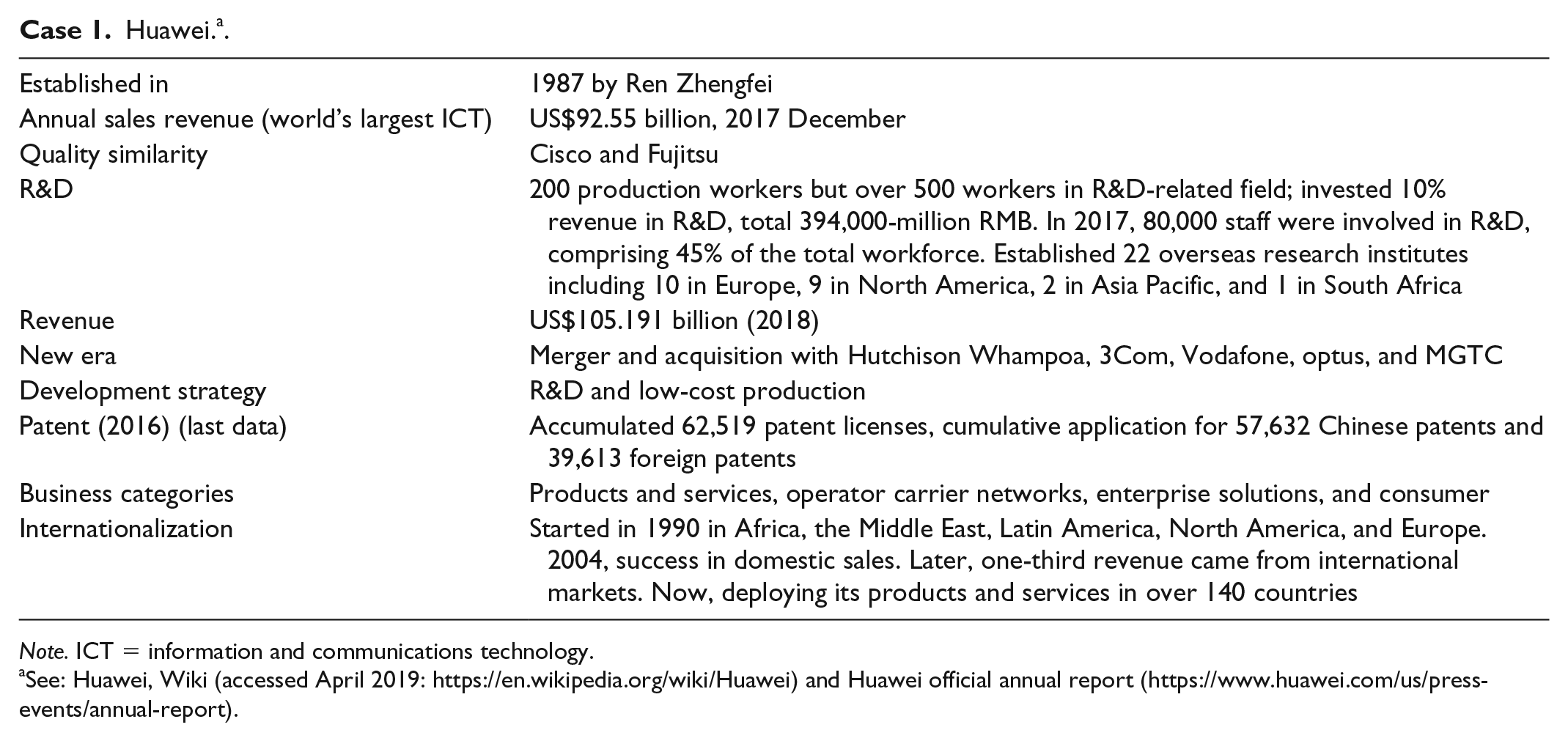
Note. ICT = information and communications technology.
See: Huawei, Wiki (accessed April 2019: https://en.wikipedia.org/wiki/Huawei) and Huawei official annual report (https://www.huawei.com/us/press-events/annual-report).
Lenovo. b .

Note. ICT = information and communication technology.
See Lenovo, Wiki (accessed March 2019: https://en.wikipedia.org/wiki/Lenovo) and Official Portal (https://www.lenovo.com/us/en/about).
Haier. c .

Note. Due to lack of the data and reliable source, we used 2017, 2018, and 2019 data set. OEM = original equipment manufacturer; ICT = information and communication technology.
See Haier, Wiki (accessed March 2019: https://en.wikipedia.org/wiki/Haier) and Official Portal (https://www.haierappliances.com/about-us).
Research Method
The emergence of Chinese multinational companies in the global market today is a research focus of many business scientists and economists. In the study of Fisch and Oesterle (2003), there are many methods for measuring the degree of globalization for a particular company. For instance, Chen et al. (2010) used the ratio of foreign pretax income to total pretax income to calculate global competitiveness; meanwhile, Sullivan (1994) used various variables to measure, which include foreign sales as a percentage of total sales, overseas subsidiaries as a percentage of total subsidiaries, foreign assets as a percentage of total assets, psychic dispersion of international operations, and top managers’ international experience. However, Fisch and Oesterle (2003) appealed that the most common way of measuring the degree of globalization and internationalization of the firms is to simply calculate the ratio of foreign sales to total sales, such as in the study of Rugman and Verbeke (2004).
Studies on other means to measure globalization and internationalization found that Fisch and Oesterle’s (2003) claim is true. The most utilized method in determining globalization level is F/T and R/T, the regional theory by Rugman and Verbeke (2004). Utilized in many types of research for business studies, the reliability of the F/T-R/T model has been established. For example, Oh and Rugman (2006), through such method, confirmed that the cosmetic industry operates regionally but not globally. Meanwhile, Oh (2009) could confirm that retail and merchandising firms are predominately regional. At the country level, Collison and Rugman (2007) demonstrated that the largest enterprises in Europe operate, on average, at a regional level.
Rugman and Verbeke’s (2004) measurement is simple; business researchers would only need to calculate the ratio of foreign (F) to total (T) sales (F/T) and the intra-regional (R) to total (T) sales (R/T) of the firms, then divide them into four groups, which are home region–oriented firms, bi-regional firms, host region–oriented firms, and global firms. The researcher explains the criterion of each group below:
Home region–oriented firms have at least 50% of their sales in their home region of the triad (North America, the European Union, and Asia).
Bi-regional firms are groups with at least 20% of their sales in each of two regions, but less than 50% in any one region.
Host region–oriented firms have over 50% of their sales in a triad market other than their home region.
Global firms have sales of 20% or more in each of the three parts of the triad, but less than 50% in any one region of the triad.
The study of Rugman and Verbeke (2004) measured MNEs based on the world’s 500 largest firms of 2004 in the Fortune Global 500. Results showed that approximately 72% of MNEs’ sales took place in their home region of triad and were oriented within their home country, whereas very few MNEs had global dispersion or expansion. These data show a lack of globalization levels for some MNEs, as they mostly operate intra-regional, rather than inter-regionally.
Fisch and Oesterle (2003), meanwhile, attached importance to the utilization of multidimensional measures. They pointed out that the measurement of globalization should be from a global economic view rather than from a regional perspective. They assumed that the purchasing power of a country is an outcome of its gross domestic product (GDP). The study of Asmussen (2006) supported the concept of Fisch and Oesterle (2003). He argued that the theory of Rugman and Verbeke (2004) using regional sales data is solely based on a micro-firm level as regional sales ratio would fail to show the effect of home orientation. In addition, he suggested that it should not apply the same classification criterion to firms from different countries, as the metric does not take into account the relative sizes of home and host countries. In response to the imperfect theory, Asmussen (2006) proposed the index of regional and global market penetration by incorporating an objective criterion of globalization, suggested by Fisch and Oesterle (2003). He extended the metric by adding the market size differences to the regional strategy. The principle of his theory is that the sales distribution of a global firm must match the distribution of global GDP. Alongside this, Asmussen et al. (2007) also proposed a continuation of the study by delving on the global specialization indices to determine a firm’s globalization level. These measurement models shall be utilized in this article alongside another measurement strategy.
The extant literature advocates that utilization of three models provides a holistic measure for each company, including a (a) integration of Asmussen’s (2006) and Asmussen et al.’s (2007) related models for determining globalization levels, (b) Rugman’s firm-specific and country-specific advantages, and (c) Porter’s diamond model.
Data on the performance and statistics of Huawei, Lenovo, and Haier were acquired online from their company websites, existing researches on the companies, and reliable third-party statistical data sites. Results of all analyses are integrated and triangulated to come up with a conclusion regarding the current state and level of competitiveness of Chinese MNEs. Through analyzing the three main MNE players from China, the researcher expects to meet such a goal.
Asmussen’s (2006) model and Asmussen et al.’s (2007) model
Asmussen (2006) proposed that the level of “reach” of MNEs may be quantified through a set of formulas that compare the global GDP standard with the sales distribution of the firm. Ideally, an MNE may be considered a “global” firm when its sales distribution falls closely to the global GDP. In quantitative terms, an MNE’s host market sales ratios e and w are the sales in each host area divided by the total sales:


where e = host market sales ratio within the home region (E/T), w = host market sales ratio outside the home region (W/T), H = home country sales, E = sales in the rest of the home region, and W = sales in the rest of the world.
Once such values have been determined, one can solve for the implied values and the geographic scope of the firms using the following formulas:


where e = host market sales ratio within the home region (E/T), w = host market sales ratio outside the home region (W/T), h = host market sales (H/T), h1 = GDP of the home country, e1 = GDP of the rest of the home region, w1 = GDP of the rest of the world, R = intra-regionalization, and G = inter-regionalization.
Asmussen (2006) suggested that a purely globalized MNE would yield R = G = 1; however, as no purely globalized firm is expected to exist, a truly global firm would just be expected to yield results that are R = G, or values close to each other. Lower values of R compared to G would suggest large home country sales and therefore, home-region orientation or a local MNE. Lower values of G compared to R, meanwhile, would suggest host-region orientation or a regional MNE.
The abovementioned formulas shall be utilized to quantify the geographic scope of Huawei, Lenovo, and Haier. Note that the researcher used the data for 2017 because of lack of available data for the year 2018. Table 1 summarizes pertinent data needed in the analysis and GDP rates also essential at 2017.
Company Sales and GDP in 2017 (in Billion, USD).

Note. GDP = gross domestic product.
To further assess and explain the globalization levels of these companies, Asmussen et al.’s (2007) model shall also be utilized. While measures of firm internationalization are available, there is no index that would appropriately measure the level of “global specialization” that certain company would hold (Asmussen et al., 2007). According to Asmussen et al. (2007), determining an MNE’s resource allocation would facilitate an understanding of how a firm manages its resources and how it involves specific countries in doing so. They hypothesized that a well-established and truly globalized firm would have heterogeneous structural and operational qualities wherein production is not centrally based on the home country. Rather, independent processes are made in other host countries, and activity volume (such as research and product development) is generated in many geographical areas. The main difference about Asmussen et al.’s (2007) model in comparison with existing measures of globalization, such as dichotomous and spread measures, is that the former frames globalization beyond revenue and market shares. Instead, the model takes into account the specialized activities operating within all geographical locations of MNEs, and sometimes, even the volume of local and foreign manpower, to come up with a distinct globalization specialization index.
Asmussen et al. (2007) came up with a formula to determine the global specialization index. The formula depends on a volume matrix:

where

where T is the sum of area-level variances that could be fully acquired by manually following the below formulas.
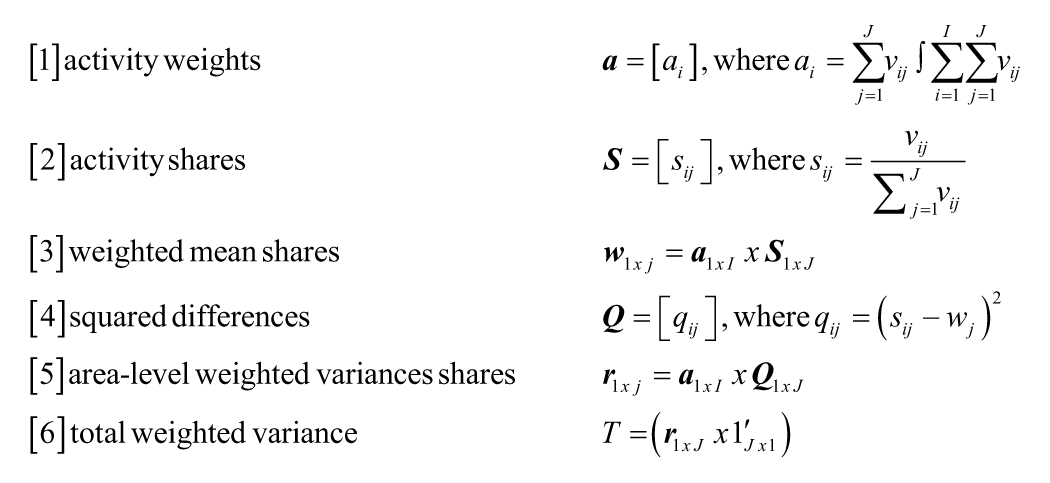
The formulas presented above provide an overview of how V is transformed into G. However, statistical software could also determine the global specialization index G at a faster rate. It is imperative to determine the global specialization index of Huawei, Lenovo, and Haier to quantitatively determine their level of global competitiveness and to confirm whether they could be considered as global MNEs in the electronics industry. The abovementioned formulations will serve as a guide for determining the G of each of these Chinese electronics companies. To determine such information, statistical data on performing Huawei, Lenovo, and Haier were acquired through reliable third-party sites. In particular, the researcher gained data on the I or the total number of value chain activities of each company and J or the total geographical areas where the company operates within a particular year. A 5-year period from 2013 to 2017 was included in the study. Presented in Table 2 is a summary of the value chain activities and geographical areas of each country in particular years.
Value Chain Activities and Geographical Areas.

In acquiring the global specialization index G of each MNE, the research must compute the weighted variance. A secondary approach to the above formulas shall be utilized to facilitate an easier understanding of the variables. In this approach, it shall acquire the weighted mean and a weighted sum of squares acquired using the following formulas:

where W = weight mean for data point and D = amount of data point.

where

In acquiring the weighted variance, the research shall examine company revenues. The researcher acquired the sales revenues of Huawei, Lenovo, and Haier from 2013 to 2017 in terms of their most popular product, alongside the average annual product price, and total units sold. Table 3 summarizes the data of the sales report.
Sales Report.

The abovementioned formulas were used to acquire the weighted mean, a weighted sum of squares, and weighted variance of the presented data. The researcher used these data in gaining the global specialization index G. In computing for the global specialization index, the following formula shall be used:

where T = weighted variance and J = average number of geographical locations. In establishing the significance of these data, Asmussen et al. (2007) emphasized that the G value would determine global specialization, with higher values signifying stronger hold in the international market.
Firm-specific advantages and country-specific advantages
FSA-CSA matrix is first developed by Rugman (1981). The model comprises two building blocks, which can be used in analyzing the international competitiveness of large MNEs. FSAs are the elements that determine the unique capability and competitive advantage of a firm (Table 6). They might base it upon product or process innovation and technology, marketing, or distributional abilities. Some argue FSAs of an organization can be examined by testing downstream and upstream processes to find its strengths and weaknesses. Ohmae (1985), the well-known Japanese management consultant, suggested that there is a threefold movement toward integration and cross-fertilization. First, downstream to control interfaces with the customer; second, upstream to acquire new technologies;and third, tethered horizontally to share complementary technologies prior to joint market exploitation. He shared that upstream activities are R&D, product design, manufacturing, while downstream activities are marketing, distribution, and sales. CSAs are country-oriented factors unique to the business in each country.
In Figure 1, CSAs are placed either low or high on a vertical axis and it placed FSAs either low or high on a horizontal axis, building four quadrants of analysis. Quadrant 1 represents a situation that CSAs are strong, but FSAs are weak. In contrast, Quadrant 4 is a company that purely relies on its FSAs and not influenced by CSAs. Quadrant 3 is a quadrant applicable for international business because its both FSAs and CSAs are strong. In Quadrant 2, neither FSAs nor CSAs are strong. As Chinese-owned enterprises, Huawei, Lenovo, and Haier are driven by similar CSAs that are characterized by China’s lenient provisions on domestic taxation, operational expenses, and resource allocation. Research has shown that CSAs are the “cornerstone” of FDI in the Chinese domestic market (H. R. Zhang, 2016). Chinese investments are market-seeking, implying for Chinese companies to dwell on opportunities that would allow their businesses to grow and expand. CSAs are also influential in FDI location choices. With China, it provides multinational companies with an array of choices regarding potential location and business expansions through sociopolitical mechanisms and China’s culturally specific overall business model. Chinese companies usually select FDIs from areas where business expansion is possible. The Chinese government is made by multinational companies to foster growth and development for both public and private business interests. H. R. Zhang (2016) also stated that another CSA for Chinese multinational corporations would be their expanded equity options. Chinese companies, through China’s many partnerships and business endeavors globally, can expand its operations through many shares in many other companies. Measuring the global competitiveness of Huawei, Lenovo, and Haier could be facilitated by creating an assessment of the companies based on the highlighted criteria for gaining CSAs, namely impact on (a) market-seeking endeavors, (b) location choices, and (c) equity.
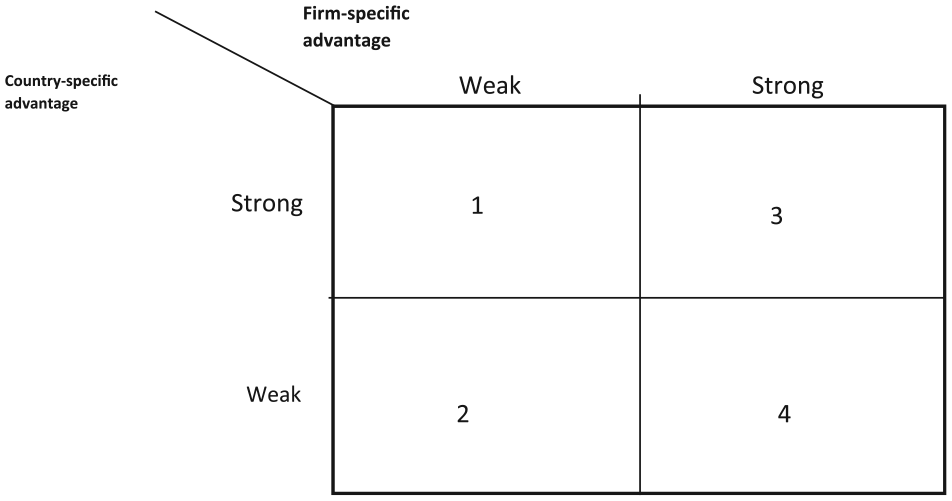
FSA-CSA matrix.
Porter’s diamond model (1990)
In further analyzing the aforementioned models, a revised Porter’s diamond model shall be utilized. Porter (1990), the founder of diamond model, proposed that international competitiveness of an industry depends on a configuration of home country’s diamond model conditions, also known as the four corners of the diamond. Diamond model is a model that attempts to explain why particular nations or enterprises are internationally competitive (Figure 2).

Porter’s diamond model.
It examines the capabilities of companies based on strategy, structure, and rivalry (whereby strong rivalry and benchmarking against the toughest competitors are critical to innovation); demand conditions (with a focus on total demand and sophistication of demand); factor conditions (with a focus on created and advanced production factors); related supporting industries (with a focus on the presence of world-class firms with which cluster-type linkages exist); and government facilitation.
Empirical Findings
The study utilized two methodologies of data analysis, quantitative and qualitative, to assess the level of globalization of Huawei, Lenovo, and Haier. Regarding quantitative analysis, Asmussen’s model (2006) was used to determine whether the three companies are truly globalized firms. Regarding qualitative analysis, the study focused on determining the CSAs and FSAs of each company. The research compared them against Porter’s diamond model to create a better understanding. Below are the empirical results of each company.
Findings of Quantitative Methods
Presented below (Table 4) is the summary of the computations of Asmussen’s (2006) model.
Results of Analysis.

Presented below (Table 5) are results from the computations of Asmussen et al.’s (2007) model.
Summary of Weighted Mean, Sum of Squares, and Variance.

In Table 5, they presented it that Huawei possesses the largest weighted variance (T = 673.71) while Lenovo yielded the smallest (T = 346.22). Using the formula, Huawei’s global specialization index was pegged at G = 677, Lenovo’s at G = 346.22, and Haier’s at G = 618.58. The G value would determine global specialization, with higher values signifying stronger hold in the international market. These results are consistent with the findings using Asmussen’s (2006) model. The summary of the internationalization of the three companies using Asmussen’s (2006) model and Asmussen et al.’s (2007) model is presented below.
Huawei
The results of the computations of Asmussen’s model show that Huawei would have R and G values that are closest to each other among the three companies. This would mean that the company is a globalized firm whose revenues are near global GDP averages. The difference between the R and G values of Huawei is 206, implying more opportunities for the company to further expand its reach and move toward becoming a purely globalized firm. Given these tests, it can be inferred that Huawei is the most globalized firm. In Table 5 of the summary of weighted mean, sum of squares, and variance, Huawei possesses the largest weighted variance (T = 673.71). Using the formula, Huawei’s global specialization index was pegged at G = 677. Therefore, Huawei technologies could be considered as the strongest global MNE’s among of three.
Lenovo
The results of the computations of Asmussen’s model show that Lenovo was found to have a greater G value compared to R, implying that it may focus its presence on regionalization or internationalization. This would mean that the company is making efforts to ensure its presence in the global setting, with fewer regards to its domestic operations. It can imply that Lenovo is a regional firm moving toward internationalization. In Table 5 of the summary of weighted mean, sum of squares, and variance, Lenovo possesses the smallest weighted variance (T = 346.22). Using the formula, Lenovo’s global specialization index was pegged at G = 346.22. This shows that although Lenovo is trying to gear its regionalization or internationalization considering its regional sales computed by Asmussen’s model, the firm is still lacking a lot to be “internationalized” compared to Huawei and Haier. Its activity volume and geographic locations are not heterogeneous enough compared to Huawei’s. It can be implied that Lenovo is on the right path to achieve its internationalization but still has a long way to do so.
Haier
Results of the computations of Asmussen’s model show that Haier yielded a G value exceeding 1, which implies over-internationalization. So, a company is heavily focused on expansion at a global and relatively faster scale. It limits regional and local operations, which may ultimately pose threats to the business when internationalization strategies fail. The research can summarize it that Haier is over-internationalizing with very limited focus on local and regional expansion. In Table 5 of the summary of weighted mean, sum of squares, and variance, Haier possesses the high weighted variance (T = 600.39) and its G is 618.58 using the formula. The result of abovementioned Asmussen’s model also shows that the firm has a very strong internationalization strategy. Despite these, the firm is not “internationalized” yet. It’s because of considerations of its actual activity volume and geographic locations. Its activity volume, while continuously trying to be heterogeneous, shows to be lacking in terms of more internationally driven measures.
Findings of Qualitative Methods
Huawei
Huawei, as a rapidly expanding business, is actively taking part in the global arena for electronics by utilizing CSA. First, with its 170 areas of operations worldwide, there appears to be market-seeking mechanisms that enable Huawei to enter such numerous markets. In terms of location choices, there would also be country-specific interventions because of the large number of geographical areas that the company has gained access. In addition, Huawei could also achieve greater equity through its expansion and increased sales. In enabling the company to expand, Huawei also uses its own FSAs. In Huawei’s case, there are certain FSAs that facilitated the growth of the company, particularly (a) market-seeking growth as a response to telecommunication needs, (b) new technologies and management, (c) minimal domestic competition, (d) sideward crawl strategy, (e) market strategies, and (f) joint ventures. Huawei’s market-seeking growth began alongside the need for telecommunications and increased avenues to establish networks and communications. Huawei’s new technologies range from ultra-cheap mobile phones to regularly priced communications devices that are all user-friendly, affordable, and feature intensive. Compared to other leading brands of mobile phones, Huawei could innovate cellular phones with almost the same features as that of more expensive phones. Huawei’s global expansion and internationalization strategy, meanwhile, focuses on expanding in various geographical zones which are key electronics areas, such as in Bangalore, Stockholm, and Silicon Valley. Huawei can create new technologies alongside other leading technology innovators at a low cost. Their expansion is facilitated by a unique market strategy that targets less developed and developing countries rather than in developed countries. These FSAs have allowed Huawei to establish itself as a household name for mobile phone products in many countries around the world.
In using (Figure 3) Porter’s diamond model in assessing the capability of Huawei, it could be realized that they could see all pertinent factors in the company’s operations. For instance, the firm has sufficient strategies to enable it to expand globally. Through opening its doors and operations away from developing countries, Huawei could establish itself as an affordable brand a variety of consumers could use. This enabled Huawei to efficiently take on its rival companies and expand globally, as shown by its rapidly and continuously increasing product range and revenues. Even today, demands for mobile phones and mechanisms for communication remain big. This ensures Huawei’s presence in the coming years as a leading provider of mobile phones. Alongside this, the influence of the Chinese government in enabling Huawei to establish itself globally is still in effect. The factor conditions that enable Huawei to succeed include the continuous need for technological advances and the ever-growing number of mobile phone consumers.

Huawei’s FSA-CSA matrix.
Lenovo
Lenovo particularly focuses on equity expansion by its acquisition of IBM (International Business Machines). Meanwhile, Lenovo’s FSAs revolve around consumers’ need for personal computers and communicative devices. However, its business strategy has always been conservative. This implies that their goal became centered more on strengthening corporate business deals with IBM where computer sales relied on, rather than reaching for global expansion.
Regarding (Figure 4) Porter’s diamond model, Lenovo’s global competitiveness is challenged by its limited firm strategy for growth that is only focused on strengthening ties with IBM. This disabled Lenovo from creating new opportunities for expansion. Although partnerships with IBM would bring about positive changes in improving the company’s name, this would also serve as a limitation for bringing out developing products that spark consumer and customer needs or interests with trust as well as low prices. Going back to the presented data about the demand for computers between 2013 and 2017, they could realize it that the number continues to go down. This would mean that Lenovo’s primary products (personal computers) are being overshadowed by other factors such as cellular phones and decreased demand. While the government is also keen on supporting Lenovo’s goals of increased productivity, there seems to be no other related supporting industries and partnerships that Lenovo has established apart from IBM. This would provide insights into Lenovo’s limitation regarding global competitiveness and internationalization.

Lenovo’s FSA-CSA matrix.
Haier
Haier is also using the same CSAs in expanding its business toward becoming global electronics MNEs. A particular focus provided to Haier would be its equity expansion by its acquisition of Whirlpool. In doing so, it could establish itself as a global name for household appliances. This expansion, however, reflects Haier’s internal operations more than a CSA. In terms of FSAs, Haier’s FSAs are developed from a series of firm-specific disadvantages that have existed since the early 1990s (Marinova et al., 2010). Haier directly addressed these disadvantages at the beginning of the 21st century. In particular, Haier could facilitate the following changes and advantages: (a) independent innovation, (b) customer-driven market strategies, (c) preferential support, (d) improved production and design capability, (e) competitiveness in the global market, (f) expertise in internationalization, (g) customer brand equity, and (h) value-for-money goods. These FSAs showcase Haier’s integrative model of internationalization that is centered on holistic growth and customer satisfaction. These FSAs have enabled Haier to expand its growth globally (Figure 5).

Haier’s FSA-CSA matrix.
Through its strategies for expansion, it could acquire many companies such as Whirlpool to facilitate larger operations and drive increased sales. They made this opportunity possible through the company’s initial goal of expanding its business and beating out other home appliance companies with the consumer-centered approach. Because of these, many consumers choose Haier products as their primary choice for home appliances. However, a particular concern that may be raised about Haier would be the demand conditions of home appliances. Compared with cellular phones, there is definitely less demand for home appliances. In addition, there are fewer target markets for such types of products. This disables Haier to fully become a globalized company because the product range is specifically targeted to a decreased number of populations in comparison with a mobile phone and computer companies such as Huawei and Lenovo. The three charts presented a summary of Huawei’s, Lenovo’s, and Haier’s capabilities for internationalization and global competitiveness. In the data, the research output noticed that only Huawei could yield all strong points in its country-specific and firm-specific advantages; meanwhile, Lenovo and Haier faced weaknesses in some areas of their CSAs and FSAs.
Discussion
The results of the analysis and discussions present the reasons behind such results, the company dispositions that support these findings, further issues that may be associated with the findings, and the implications of such results in these companies’ attempt to be truly globalized.
Huawei
Research could link the success of Huawei to its many FSAs that are heavily focused on market-driven and service-inclusive innovation, architectural innovation, and grafting innovation (He & Fallon, 2013). The company also facilitates partnerships with external researches through the Huawei Innovation Research Program, a collaborative endeavor to fund leading universities, research institutes, or individuals to create world-class solutions in technology. This endeavor promotes Huawei in two ways, as a customer-oriented company and as an innovative company. This market-seeking strategy is only one of Huawei’s many unique mechanisms in enabling rapid company growth.
Another market-seeking mechanism of Huawei is its market orientation. Previously, it was discussed that Huawei Technologies opted to move from the “tradition” of expanding businesses to developed nations. According to Bartlett and Ghoshal (2000) and Rugman, A. M. (2012), this market-seeking behavior toward providing low-cost services for consumers has already been a long-standing strategy of companies intending to go global. In addition, motives for internationalization are usually motivated by creating innovative products that may be perceived as “fitting” the global consumer market (Vernon, 1966). The market-seeking behavior of Huawei toward the low-cost market is a strategy utilized by the company as providing low-cost services would entail the expansion of its target markets and consumers. The foundation of Huawei’s global presence could be accounted by its FSA called the “sideward crawl strategy” which, as mentioned, focused on entering developing countries (or countries which are as far away as possible from current internationalization settings), and expanding businesses in there. This strategy is comparatively different from what other Chinese companies would do, particularly from establishing operations in one country and moving on to the next (Lazonick & Li, 2012). Different marketing strategies are utilized by foreign investors in entering particular markets, such as joint ventures or mergers and acquisitions (Buckley & Casson, 2009; Driscoll, 1995), but with Huawei, all available market entry strategies were utilized in order to determine the best-fitting strategy to succeed in the selected market. The market-seeking behavior of Huawei is also motivated by domestic factors in China. With China’s endeavor to formulate a centrally planned economy, the state is akin to support businesses that aim for international expansion. A country-significant advantage for Huawei was when China entered the WTO, because this allowed Huawei as a MNE, to be backed by the administrative policies of the supranational organization and be protected from any state intervention from member host countries. The WTO membership also benefits China as a state as the partnership fosters more trade partnerships for China. For instance, in 2005 alone, China’s exports amounted to US$750 billion. The researchers expect this to grow as more Chinese companies attempt to go global. They also found the domestic environment to be Huawei’s advantage in enabling itself to enter the global market. Despite the success of Huawei in the Chinese market, the company continues to foster innovation that would reach the global scale (Pohle & Chapman, 2006). This implied that Huawei’s long-term vision has always been to expand beyond China, and to create a world of “connectivity in a fully connected, intelligent world.” However, regional protectionism, limited access to capital, and limits in intellectual property rights are a few of the problems that Huawei encountered in the Chinese market (H. R. Zhang, 2016). Huawei’s success in internationalization is evident in its track record. In 2011, it reported total sales of US$32 billion, and it could patent 23,522 innovations and inventions (He & Fallon, 2013). Given this, the success of Huawei in establishing itself as a truly global company is without doubt. However, it would still be pertinent to explain some relevant findings generated from this research. Specifically, while Huawei was confirmed as a global company operating in numerous countries and enabling numerous activities, the Asmussen, Pedersen, and Petersen model utilized for testing its globalization level yielded a global specialization rating G = 677. This result, alongside the result of Asmussen’s (2006) model, implies that Huawei is a globalized MNE. Furthermore, this suggests that Huawei’s activity volume is adaptive even to its expansive areas of operation. This result is validated by examining Huawei’s global activities which heavily include research and development, market operations, and market-seeking innovations. Particularly, Huawei runs its operations in eight major zones that would comprise all 170 countries where it operates, along with five research and development areas globally. This would show consistency in the findings generated from the Asmussen (2006) and Asmussen et al. (2007) models. However, comparing the relatively large global specialization rating of Huawei with its upward performance trend over the past 5 years, it could also be assumed that the increase in Huawei’s performance are not solely accounted by its activity volume, but rather by factors that are not part of its internal performance (e.g. customer preference for Huawei) and quantitatively proven to be a truly globalized MNE.
Lenovo
Similar to Huawei, Lenovo has been benefiting from China’s partnership with the WTO and its support to expand Chinese MNEs in the global market. In particular, the Chinese government urged institutions and consumers to purchase high-technology products reflective of Lenovo’s brand, alongside intangible benefits that were provided to Lenovo as tariffs and quotas on imports, distribution and ownership restrictions, and trade restrictions that were upheld among foreign companies intending to enter China’s domestic market (Ahrens & Zhou, 2013). However, as the findings would suggest, Lenovo faces several limitations that disable the company from fully becoming globalized. First, Lenovo’s marketing strategy was found to be more conservative than its competitors. Marinova et al. (2010) found that Lenovo’s business strategy provided a heavy emphasis on strengthening ties with IBM. In some ways, such movement is strategic because it allowed Lenovo to establish itself as a quality provider of computers and electronics with the strong backing of IBM. However, market-wise, the strategy may be not considered as the best decisions because the company’s competitors have been establishing means to expand its consumer range and generate new products for specific markets. Lenovo’s business strategy is limiting its market-seeking mechanism that, historically, is proven to be an effective tool in internationalizing. For instance, Lenovo’s partnership with IBM was also strengthened in its acquisition of the former IBM PC Division and rights to the ThinkPad, both of which ensured Lenovo’s access to global consumers and the company’s bargaining power (He & Fallon, 2013). However, no strong follow-up marketing strategies were garnered after these acquisitions, and Lenovo continues to work behind the “prestige” of IBM. In 2013, the company ranked as the fourth leading PC provider in the world (He & Fallon, 2013). Lenovo uses a “horse race strategy” in marketing wherein the best “horse” or product is placed in the market to compete with other opponents (Ahrens & Zhou, 2013). This strategy helped Lenovo to find operations in developing economies, with emphasis on a manufacturing base and a distribution channel. While the company offers other products apart from PCs, it composes its main product line of computers. Data between 2013 and 2017 would show that there is little to no increase in the demand for computers over the last 5 years. With the continued advancement of technologies in communications, such as the cellular phone enterprise, it now makes functions that were once available only in computers available to mobile devices. This phenomenon affects the sale of personal computers as consumers would naturally purchase mobile phones which are cheaper and handier than personal computers. The increase in the demand for cellular phones, as shown by Huawei’s sales data from 2013 to 2017, is expected to negatively affect the PC market, in such a way that a downward trend is expected regarding the sale of personal computers in the coming years. Based on the analysis of the Asmussen (2006) and Asmussen et al. (2007) models, Lenovo is yet to establish itself as a global company.
Haier
Haier’s FSAs were developed to respond to its firm-specific disadvantages during the 1990s (Marinova et al., 2010). In particular, Haier faced issues on lack of production and technological knowledge, limited knowledge on foreign markets, lack of internationally recognized brands, and inconsistent global brand image (Marinova et al., 2010). A notable FSA of Haier is its customer-driven marketing strategies that are focused on providing consumers with the best experience with Haier products. Haier prides itself as a company whose main success driver is its integration with customer needs. The innovative approach of Haier also allowed the company to develop improved production and design capability.
Another advantage of Haier is the establishment of its competitiveness in the global market. It also bases the competitiveness of Haier in the global market on its personal experience with its firm-specific disadvantages in the 1990s. To increase the company’s reach and promote competitiveness, Haier used multiple business strategies, including the adoption of a total quality management (TQM) framework in operation, building better plants and production facilities, building its domestic branding in China, introducing new management practices, innovative product development in both home and the host market, and strong market presence through greenfield investment (Marinova et al., 2010). Notable among these strategies is the innovation of new products both in the home and in the host country. This would mean that Haier’s global operations are heterogeneous, a quality which most global multinational corporations possess. This orientation would also allow Haier to continue with its customer-oriented approach. The target market of Haier per product is relatively limited compared to the previously presented industries such as Huawei and Lenovo. While Haier has a wider array of home appliances, its production is not centralized on a single product, such as mobile phones for Huawei or personal computers for Lenovo. However, as the analysis from the Asmussen (2006) and Asmussen et al. (2007) models would suggest, Haier could still not be considered as a global company. The reason for this could be the relatively lower geographic reach of Haier despite acquiring Whirlpool. Table 6 is showing the assessment of FSAs and CSAs of Haier, lenovo and Huawei, and their performance. It highlights that during few years back, Haier is on its way to establishing itself as a global MNE (see Table 6). As presented previously, the findings presented regarding Huawei, Lenovo, and Haier could also be linked with Porter’s diamond model. The findings suggest that only Huawei can satisfy all segments of the model because of its strategic sideward crawl strategy, expansive use of CSAs, increased markets through its low-cost marketing strategy, and innovative research or development endeavors. Meanwhile, Lenovo and Haier are both faced with issues on demand conditions, which could not be easily controlled. In addition, Lenovo is also challenged by the need to create better firm strategies that would allow customer integration into its marketing endeavors. Given these, results would suggest that for Lenovo and Haier to fully establish themselves as global companies, their activity volume should significantly focus on increasing product demand for their products. Both Haier and Lenovo should also implement better research strategies to retain or improve their position in the global market.
Summary of the FSAs and CSAs.

Note. FSA = firm-specific advantage; CSA = country-specific advantage; MNE = multinational enterprise.
Comparing Chinese and American MNEs
Today, Chinese MNEs are a continuously emerging industry that is continuously faced with challenges and limitations in fully establishing itself in the global arena. Meanwhile, many MNEs from the United States have already made a name for themselves and are continuously driving revenues or positive outcomes for the U.S. economy. While China has Lenovo, Haier, and Huawei as its frontline firms in the international electronics market, the United States has Intel, Google, NetApp, and Microsoft (Rogers, 2011). These American companies, especially Google, could be considered “household names” in electronics and technology as almost any gadget or consumer electronics enables the use of such. For example, all Android cellular phones have built-in Google applications such as Google Drive or Google Play. Meanwhile, Microsoft products such as Microsoft Office could be easily downloaded online. This software is offered separately from consumer electronics from the same brand, such as personal computers from Microsoft or tablets from Google.
In comparing and contrasting Chinese and U.S. MNEs, it is pertinent to first establish commonalities between the two enterprises. First, both Chinese and American MNEs serve as major players for their state’s economic capacity. Although China recently experienced a backlash brought about by an extended period of overinvestment, projections for future production activities show that Chinese innovations brought about by the continued improvement and emergence of electronics as well as technological MNEs would improve the country’s GDP (Kindergan, 2016). Similarly, the U.S. economy saw significant positive economic implications of U.S. parent companies, accounting for large shares and increased GDP growth (Slaughter, 2009). Second, both Chinese and American MNEs are usually internationally concentrated in high-income countries. Among Chinese electronics MNEs, the decision to facilitate operations in high-income nations is brought about because of limiting business operations within locations or areas with high exchange rates. For U.S. electronics MNEs, foreign affiliation with high-income countries was found to produce more economic benefits. In 2014, high-income countries accounted to 75.9% of U.S. MNEs’ foreign affiliates (BEA News, 2016). These data would imply that MNEs are effective drivers of economic growth, especially when integrated appropriately with other macro-level political and economic activities.
Meanwhile, several operational practices differentiate Chinese MNEs from U.S. MNEs. For instance, while Chinese MNEs continue their effort to expand internationally through a strict selection process of potential host countries, U.S. MNEs’ global operations are heavily centralized within America (Slaughter, 2009). Compared with foreign affiliates, U.S. MNEs ensure more concentration within its parent countries to alleviate the idea that the industry would “abandon” its local roots. This phenomenon is evident through the United States’ continued economic growth and transformation. Another difference between Chinese MNEs and U.S. MNEs is the latter’s focus on many aspects of growth and development. Chinese MNEs are generally concerned about maximizing profits and improving the macro-economy, but not so much about employment or research and development. American MNEs use a more holistic treatment for their firms by utilizing employment, output, capital investment, exports, as well as research and development levels to assess the success or productivity of their operations (Slaughter, 2009). For instance, recent data showed that U.S. MNEs are dominated or led by large companies or firms which have greater than 10,000 employees (BEA News, 2016), suggesting that operational activities entailing employees are provided resolutions in U.S. MNEs.
Another major difference of U.S. MNEs from Chinese MNEs is in terms of specific international configurations. This would refer to the changes in policies and adaptations that the United States facilitated to successfully and appropriately operate within specific foreign premises. Berry (2017) cited that U.S. MNEs utilized major frameworks in ensuring that foreign integration remains successful and appropriate, including low levels of integration, various methods of regional expansion, limited geographic expansion, and specialized global sourcing arrangements. Unlike the United States, China facilitates stricter and more selective practices for its MNEs. For instance, it usually creates no state adjustments or negotiations for both parties (China and host country) to agree upon. Instead, Chinese MNEs choose their preferred locations and setups based on their preexisting requirements. These salient differences imply varying outcomes for U.S. and Chinese MNEs.
An examination of MNE practices facilitated by American and Chinese firms imparts relevant commonalities or differences in operational practices. While such common practices exist between the two economies, U.S. MNEs showcase an edge and an advantage in comparison with Chinese MNEs. American multinational corporations have already established salient processes or practices to maintain their status and immerse themselves with potential foreign partners. Meanwhile, Chinese MNEs have yet to discover a sustainable and long-term approach in dealing with its operations.
Conclusion
China continuously attempts to boost its economy through expanding its international partnerships; the emergence of multinational corporations provides promise on the future of China and its continuously growing electronics MNEs in the global arena. The findings also revealed that the three firms could successfully utilize their CSAs by capitalizing on China’s external partnerships and existing trade agreements. This phenomenon provides opportunities for Chinese MNEs to shape their course by adapting best practices facilitated by Huawei. In particular, the sideward crawl strategy has proven useful in enabling the expansion of the consumer population and introducing products to larger markets. The results also implied that gaining already well-known companies such as Marconi for Huawei, ThinkPad for Lenovo, and Whirlpool for Haier is a good strategy to facilitate new partnerships and touch on more conservative markets. The results of the study determine that Chinese MNEs should adopt heterogeneous measures in expansion by decentralizing production and operations in various countries. This ensures more activity volume and greater opportunities for developing multiple innovative products at the same time. Doing so could address multiple market needs at a relatively shorter time.
A particular implication of the emergence of Chinese MNEs in the electronics sector is perceived through China’s Belt and Road Initiative (BRI), an economic strategy and foreign policy of the People’s Republic that attempts to tie Eurasia, Africa, and Oceania into land as well as maritime routes (Rashidin et al., 2019; Wade, 2018). This endeavor is beneficial for China which foresees that the development of land-based and maritime-based infrastructures would facilitate the easier development of economic policies, creation of more connected facilities network, the strengthening of trade and investment relations, the enhancement of financial cooperation, and the deepening of cultural or social exchange (Wade, 2018). Research perceives this strategy by China as the beginning of its next economic trade growth, wherein Chinese exports could be easily accessed by the global market (Ngai, 2016). This endeavor should be pursued, and Chinese electronics MNEs will feel significant contributions in globalization.
For Huawei, the BRI would help expand its sideward crawl strategy for more areas of operation. For Haier and Lenovo, the facilitation of the BRI would be a good opportunity to expand their global capabilities to become global MNEs. Therefore, as developing economies, Southeast Asia enterprises can gain several positive aspects in learning Chinese MNEs.
First, following the emergence of Chinese electronics MNEs, most of them have expanded to outside via direct overseas investment. Exogenous investments, either domestic or foreign, only temporarily increase the amount of capital per capita. Inward-oriented FDI can only evoke long-term economic growth if it has a positive impact on technological development in the respective economy (Knell & Radosevic, 2000). Because of this assumption, FDI will have a full impact on electronics enterprises particularly. It is necessary for Southeast Asia countries to attract FDI and make an economic environment conducive to FDI.
Second, most of the Chinese electronics’ MNEs in the study (Huawei, Lenovo, and Haier) expand their internationalization process through cross-border mergers and acquisitions (M&A) instrument. Last, companies from small emerging companies can come with niche thinking to dominate niche foreign markets.
While this research can provide significant information regarding the course and future of Chinese electronics MNEs, future studies may attempt to focus on analyzing Chinese MNEs that have yet to reach an expansive global market. Comparing the results of such a study with this research would facilitate an understanding of the “gap” existing between already-globalized Chinese MNEs and those who are yet to overcome the global arena. It may be applied to use this study in determining the direction of Haier, Lenovo, and Huawei in terms of China’s international economic initiatives. Understanding such a phenomenon would also help in gaining an idea about how such MNEs would plan to integrate themselves both in the Chinese domestic economy and the global market in the years to come.
Limitations
This study has some limitations. The foremost limitation is a lack of data. Second, it is based on selected Chinese enterprise internationalized processes not categorized as product lines. Third, this study adopted a comparative approach and measured the Chinese top enterprise internationalization processes with American enterprises than other nations.
Supplemental Material
Online_Appendix – Supplemental material for Assessing the Competitiveness of Chinese Multinational Enterprises Development: Evidence From Electronics Sector
Supplemental material, Online_Appendix for Assessing the Competitiveness of Chinese Multinational Enterprises Development: Evidence From Electronics Sector by Md. Salamun Rashidin, Sara Javed, Lingming Chen and Wang Jian in SAGE Open
Footnotes
Declaration of Conflicting Interests
The author(s) declared no potential conflicts of interest with respect to the research, authorship, and/or publication of this article.
Funding
The author(s) disclosed receipt of the following financial support for the research, authorship, and/or publication of this article: “The Fundamental Research Funds for the Central Universities” in UIBE of China (CXTD10-11); Jiangxi Provincial Department of Education Science and Technology Project “An Empirical Study on the Factors Affecting the Executive Compensation of Jiangxi GEM Listed Companies” (No. 161295).

Supplemental Material
Supplemental material for this article is available online.
Notes
Author Biographies
References
Supplementary Material
Please find the following supplemental material available below.
For Open Access articles published under a Creative Commons License, all supplemental material carries the same license as the article it is associated with.
For non-Open Access articles published, all supplemental material carries a non-exclusive license, and permission requests for re-use of supplemental material or any part of supplemental material shall be sent directly to the copyright owner as specified in the copyright notice associated with the article.
