




Abstract
This research investigates the impact of culture, leadership, and power on staff motivation in selected international organizations (IOs) and develops a theoretical framework to assist with the practice of workforce motivation. Utilizing critical theory as a paradigm of inquiry, the study’s philosophical perspective leans heavily on “phenomenology.” Concern for understanding the cultural aspect led to the result of utilizing critical ethnography methodology. Moreover, three qualitative methods were used: semi-structured interviews, focus groups, and, non-participant observations. Twenty-two supervisors, and the same number of staff, from the World Trade Organization (WTO), the International Trade Centre (ITC), the United Nations Conference on Trade and Development (UNCTAD), and the World Health Organization (WHO) took part in interviews and focus groups. Non-participatory observations were also carried out on a 3-day working schedule for the four IOs. For the first time in the existing literature, the findings of this research have established a theoretical framework which demonstrates linkages between concepts of culture, leadership, and power on staff motivation.
Introduction
Due to the high salaries and prestige provided by international organizations (IOs), they became a most attractive job destination for members of manifold nationalities. Therefore, IOs have recently begun to acquire an abundant source of labor power with a distinctly international character. However, along with this cultural diversity, a number of administrative difficulties have also emerged. In line with this state of affairs, as they are different from public managers, IO supervisors should take into consideration cultural differences while managing multicultural teams. They should also develop specific motivational approaches as regards dealing with a multicultural workforce. Otherwise, the number of inefficient and discontented IO staff could increase and the resulting negative work environment would reflect on services provided by the institutions. To explore this phenomenon, from the varying perspectives of both the supervisors and their staff in social and cultural contexts, a qualitative study is undertaken with the following research question:
Theoretical Framework
To understand the roots of staff motivation in the context of IOs, theories are divided into three categories as regards this research: motivation, culture, and leadership. The GLOBE study, Implicit Leadership Theory (ILT), Schein’s culture and leadership theory, and McClelland’s human motivation theory will be used as the theoretical framework of this research. Their correlation to each other is demonstrated in Figure 1.

The relationship of meso theories.
The GLOBE Study
The GLOBE research project examines the relationship of leadership, organizational culture, and societal culture. The GLOBE is one of the largest scaled multinational studies conducted from 62 cultures and based on a survey of 17,300 middle managers in 950 organizations (Chhokar, Brodbeck, & House, 2007). Its theoretical framework is comprised of ILT (Lord & Maher, 1991), value/belief theory of culture (Hofstede, 1980), implicit motivation theory (McClelland, 1985b), and structural contingency theory of organizational form and effectiveness (Donaldson, 1993; Hickson, Hinings, McMillan, & Schwitter, 1974; House et al., 1999). The GLOBE study developed nine dimensions for evaluating cultural differentiation: (a) Power Distance (PD) demonstrates the extent of a community’s acceptance and endorsement of authority, power differences, and status privileges (House, Hanges, Javidan, Dorfman, & Gupta, 2004); (b) Uncertainty Avoidance (UA) investigates “the extent to which ambiguous situations are threatening to individuals, to which rules and order are preferred, and to which uncertainty is tolerated in a society” (House et al., 2004, p. 602); (c) Institutional Collectivism (IC) encourages organizational and institutional actions; (d) In-Group Collectivism (IGC) stimulates individuals’ pride, loyalty, and cohesiveness in their organizations or families (House et al., 2004); (e) Future Orientation (FO) fosters future-oriented behaviors, like delaying gratification, planning, and investing in the future (House et al., 1999); (f) Assertiveness investigates the characteristics of being assertive, confrontational, and aggressive in social relationships (House et al., 2004); (g) Gender Egalitarianism (GE) tries to minimize gender inequality and supports gender equality; (h) Humane Orientaion (HO) emphasizes the importance of being fair, altruistic, generous, caring, and kind to others; and (i) Performance Orientation (PO) encourages group members’ performance improvement and excellence (House et al., 2004).
Moreover, the GLOBE study developed its own culturally endorsed ILT that is composed of six leadership dimensions: (a) the charismatic/value-based, (b) the team-oriented, (c) the participative, (d) the humane-oriented, (e) the autonomous, and (f) the self-protective (and group-protective) (House et al., 2004). The GLOBE study is separated from other models with a direct link between culture and leadership. In addition, it is the newest model among them and has brought a more holistic approach to cultural diversity research with its profound and developed dimensions (House et al., 2004). Through its multinational aspects, theoretical structure, nine dimensions of cultural theory, and links between leadership, culture, and motivation, the GLOBE study will be used as a cultural meso theory for the research at hand.
McClelland’s Human Motivation Theory
McClelland based his human motivation theory on three needs, achievement, affiliation, and power, which were derived from the work of Murray (1938). McClelland, Atkinson, Clark, and Lowell (1958) defined the achievement need as follows: . . . success in competition with some standard of excellence. That is, the goal of some individual in the story is to be successful in terms of competition with some standard of excellence. The individual may fail to achieve this goal, but the concern over competition with a standard of excellence still enables one to identify the goal sought as an achievement goal. This, then, is our generic definition of need Achievement. (p. 181)
The need achievement implies doing something better. To be clearer about achievement needs’ definition, McClelland offered using the term “efficiency motive” instead of “achievement motive” (McClelland, 1985b; McClelland & Koestner, 1992). The definition of achievement (Maehr, 1974) and the relative importance of it vary in different cultures (McClelland & Koestner, 1992), but achievement need itself is common among all individuals and across all cultures (McClelland, 1961, 1985b). McClelland, Atkinson, Clark, and Lowell (1953) utilized Thematic Apperception Test (TAT) to measure the levels of individual achievement motivation through gathered participants’ imaginative stories about picture stimuli. After they had coded these stories, they scored levels of achievement with a coding system (Engeser, Rheinberg, & Moller, 2009). While analyzing data, McClelland evaluated achievement need from the perspective of being successful (French, 1955; McClelland et al., 1953; McClelland, Clark, Roby, & Atkinson, 1949). However, Atkinson (1958) focused on the negative part of achievement and tested the impact of fear of failure. Thus, he developed a “Resultant Achievement Motivation Score” which combined the impact of positive and negative aspects of achievement need. To this effect, subsequent studies gave importance to both aspects of this need (Knowles, 1969; Miron & McClelland, 1979; Moore, Grabsch, & Rotter, 2010; Revelle & Michaels, 1976; Sagie & Elizer, 1999; Thrash & Elliot, 2002; Weiner, 1979, 1985).
McClelland (1961) measured the need for achievement among managers and professionals in different countries and under various contexts. He mainly classified levels of need as high and low. Wishing to know if an act is useful while solving a problem (McClelland, 1978), being determined to work hard on the task no matter the circumstance (McClelland, 1985a), and taking moderate risks (McClelland, 1961) are main characteristics of high achievement need. Contrary of these characteristics stands for low achievement need. The second fundamental need is “Affiliation,” which, defined shortly, is the need to be with other people. Atkinson et al. (1954) provided a broader definition: “ . . . the concern over establishing, maintaining, or restoring a positive, affective relationship with another person or persons” (p. 407). Affiliation need is very similar to Maslow’s love, 1 and Alderfer’s relatedness needs. 2 The characteristics of high affiliation need are preferring friends rather than experts as work-partners (French, 1956), spending more time while interacting with other people (Koestner & McClelland, 1992), performing better on tasks when “affiliative” incentives are present, having desire to maintain interpersonal networks, becoming more cooperative, demonstrating the wish to conform to others, avoiding conflict, spending more time with subordinates, and having fear of disapproval from other people (McClelland, 1985b).
Power need is related to having an impact on others (Winter, 1992). It is to be strong and influential toward others, not to show dictatorial behavior (McClelland & Burnham, 2003). People high in the need for power usually take extreme risks, aim at high goals (McClelland & Watson, 1973), seek to build alliances with others (Winter, 1992), desire to control events (McClelland, 1992) and the environment, and tend to become more interested in collecting prestige symbols (McClelland, 1985b; Winter, 1992). They become successful leaders when they combine positive behavior attitudes and task-oriented manners in a group setting (McClelland, 1985b). McClelland developed an empirical relation between motivational subjects in cultural models and national events (Boyatzis, Murphy, & Wheeler, 2000). He concludes that different people may be motivated differently (McClelland, 1985a). Moreover, there is a direct link between human motivation theory and the GLOBE study. Therefore, as a motivational meso theory, McClelland human motivation theory shall be used in this research.
ILT
The origin of ILT finds roots in Implicit Personality Theory (IPT). Bruner and Tagiuri (1954) were first to use the term for describing inferential relationship among individual traits (Schneider, 1973). Later, Norman and Goldberg (1966) pointed out the unique role of the shared “IPT” of the raters to obtain multiple-factor structure. While investigating preconceptions of leadership variables patterning, Eden and Leviatan (1975) utilized ILT in place of IPT. Nonetheless, ILT gained its popularity in today’s context definition thanks to the work of Lord and Maher (1991). ILT tries to explain leadership attributions and perceptions (Lord, Foti, & De Vader, 1984; Lord, Foti, & Phillips, 1982; Lord & Maher, 1991; Offermann, Kennedy, & Wirtz, 1994). To distinguish different types of leadership, individuals have implicit theories regarding attributes and behaviors of leadership. ILT provides for individuals to make social categorizations between leaders and non-leaders. Individuals have an ideal type of leadership in their mind and this idealization type of leadership may show similarities in societies, but due to impact of different factors, such as culture, social environment, and individual characteristics, the ideal type of leadership may vary in variant societies (Lord & Maher, 1991).
Offermann et al. (1994) defined three types of leadership in ILT: leader, effective leader, and, supervisor. To differentiate these types, they developed eight distinct factors: sensitivity, dedication, tyranny, charisma, attractiveness, masculinity, intelligence, and strength. Among these factors, sensitivity, charisma, dedication, intelligence, and strength are positive traits. The main difference between types of leadership is that a supervisor has less of these positive attributes than the other two types. On the contrary, leader and supervisor show more tendencies toward tyranny than effective leader. The GLOBE study also utilizes some of these traits while defining effective leadership: charisma, team orientation, and participativeness are accepted as the main characteristics of effective leadership (Nolley & Ayman, 2005). ILT categorizes leadership types with a cognitive structure that is based on social understanding and individual traits (Levy, Plaks, & Dweck, 1999; Uhl-Bien, 2005). These understandings and traits are mainly shaped by the culture and previous experiences of leader and followers (Epitropaki, Sy, Martin, Quon, & Topakas, 2013). The reason for placing culture in the center of the leadership theory is that it makes ILT more accepted as one of the meso theories of this research.
Schein’s Culture and Leadership Theory
Schein (2004) saw culture as a living organism nourished by interactions between individual members, leadership behavior, set of rules, structures, and norms of a society. Herein, this dynamic process of culture is also the core of leadership. To this effect, leadership and culture are seen inseparable from each other as Schein’s (2004) metaphor states: they are two sides of the same coin. Hereby, in place of reviewing general leadership concepts, he focuses specifically on how leadership influenced the creation and management of culture and puts an emphasis on a reflexive relation between culture and leadership. First, leaders create culture through defining and imposing their own values and beliefs. Then, if all followers align with these values, they become values and beliefs of the whole groups. For next generations, when the group seeks out a leader, members of the group define leadership on the axis of these values and beliefs (Schein, 2004). He also emphasizes the importance of a history of shared experience while creating a common culture in a large organization. Schein describes three culture levels: artifacts, espoused values, and basic underlying assumptions. Due to the attribute of shared basic assumptions of leader, culture emerges at visible artifacts and shared espoused value levels (Schein, 2004). The GLOBE study as one of the other meso theories also utilized Schein’s culture concept and evaluated culture as the product of society’s common experimentations. With its dynamic process between culture and leadership, Schein’s theory connects the two main grand theories and demonstrates ongoing relations between culture and leadership. Therefore, it is utilized as one of the meso theories in the research.
The Links of Theoretical Framework
Staff motivation in the context of IOs is a complex phenomenon that is based on the interactions of different theories. First of all, both leaders and followers come from different nationalities and work in a multicultural setting. As a result, understanding national and organizational culture has gained more importance. Herein, the GLOBE study has clarified national culture aspect through its nine dimensions and has proposed a link between leadership, culture, and motivation. Likewise, to understand the organizational culture aspect, Schein’s model, with its three layers and connection of culture and leadership theories, has been preferred as a meso theory.
Leadership is another determining factor that shapes staff motivation. Without understanding leadership theories and current approaches of leaders in IOs, developing a motivational theoretical framework will not assist with the practice of staff management. Therefore, leadership and its interactions with motivation, culture, and power must be investigated separately. Herein, ILT with its cognitive structure that is based on social understanding, individual traits, and cultural-centric understanding has been chosen as another of the meso theories of this research. To understand motivation aspect, McClelland need of motivation theory has brought a deeper understanding with its three main needs of affiliation, achievement, and power. To this effect, it has been chosen as a meso theory as well.
Paradigms of the Inquiry
Paradigms are based on ontological, epistemological, and methodical assumptions. The responses to these three fundamental questions are interconnected with each other, and every response affects the answers to all the other questions (Guba & Lincoln, 1994). The reality of IOs has been shaped by economic, social, political, cultural, and historical developments. When the first IOs were established, in response to atrocious wartime experiences, the main intention for their formation was solely for maintaining peace. However, during the Cold War, IOs adapted their ontological position according to tensions between the United States and USSR and mostly played a balanced role in a bipolar world (Ozkan & Cetin, 2016). After the Cold War, with the rise of neoliberalism, the reality of IOs shifted toward the efforts of economic and social development (Womack, 2006). Moreover, they began to emerge as important political and economic actors in the setting up of world policy. On the contrary, since September 11, the mission of most of IOs has been altered into one dealing with security issues.
To be able to make comparisons among IOs, first, three sister intergovernmental organizations, in the sectors of economy and development, were selected: the United Nations Conference on Trade and Development (UNCTAD), the World Trade Organization (WTO), and the International Trade Centre (ITC). Then, to bring a variant perspective about IOs, unlike economic- and development-oriented intergovernmental organizations, as a specialized agency of the United Nations, the World Health Organization (WHO) was included in the empirical segment of the research.
Not just the concept of IOs but also that of grand theories of research, and specifically research topics themselves, have been shaped by economic, social, political, cultural, and historical developments. Furthermore, due to the impact of new reforms at IOs, the value of IO staff crystallized over time. The researcher of this study has work experiences in the North Atlantic Treaty Organization (NATO) and the United Nations. To this effect, he is familiar with organizational dynamics of IOs and their staff values. Herein, the researcher and the research subject are linked, and his personal values have naturally influenced the process. Therefore, the epistemological approach will be subjective in this research.
This research investigates the impact of different national cultural background of IO members on motivation. Hence, to gain a better understanding of emic and etic aspects of research, and social transformations between these two cultural perspectives, as regards the methodological facet, the need to develop a dialogue between the researcher and participants becomes imperative. Based on all the above-mentioned points, subject and object are inter-subjective in this study, with a historical understanding. To this effect, the best paradigm to be utilized in the research is critical theory. A theoretical framework will be developed from a subjective perspective through an analysis of historical and cultural contexts within critical theory.
Methodology
This research investigates motivation concept in a multicultural environment. Culture is one of the grand theories of this research. Group, or societal values, and distinct cultures from different perspectives are important components of research progress. Understanding and interpreting cultural aspects gains importance in almost every step of the research. Ethnography renders insight into groups and provides us a better understanding of group members’ world of existence (Howell & Annansingh, 2013). Furthermore, ethnography requires direct and sustained contact with group members (O’Reilly, 2009). Especially, while investigating emic perspective of participants, ethnography is a pretty utile methodology.
There are different types of research methodologies that reflect the assumptions of research paradigms in a study (Collis & Hussey, 2003). From the ontological view of research, understanding cultural development holds a very fundamental place. In addition, epistemologically, the dialogue between the researcher and the inquiry is necessary while creating knowledge during the research process. To these effects, to make the necessary linkages with this research’s paradigm of inquiry (critical theory), and to respond to research questions thoroughly, critical ethnography will be used as a methodology.
Method
Interpretation and theoretical analysis capacity are the most important skills a critical ethnographer needs while dealing with empirical data (Howell, 2013). Interviews provide a window into the various in-depth insights of participants, and to this effect, the researcher gains a greater range of divergent data for the analysis process. Diversification of data brings richness to interpretation. Three types of interviewing can be utilized in both positivist and phenomenological studies. Then again, structured interviews with closed questions fit best into a positivist and post-positivist research. On the contrary, for phenomenological studies, semi-structured and unstructured interviews are the most appropriate types to be considered (Howell, 2013). Semi-structured interview uses fixed questions that can be adapted during the interview process. Thus, it provides a more open discussion and a better understanding of the research. Supervisors of IOs are well occupied and the best way to meet with them is an individual appointment according to their availabilities. In addition, due to the hierarchical order in organizations and power struggles among them, some supervisors may be sensitive about sharing their ideas in a group discussion. To these effects, a semi-structured interview method was used while collecting primary data for this research. As a critical ethnographic researcher, before beginning to conduct interviews, implementing pre-tests holds an important place in the process of gathering information as they provide different perceptions on the reflection of theoretical questions vis-à-vis the practice area. Hence, five interviews, as pre-tests, were conducted with IO supervisors.
Six supervisors for interviews, and the same number of staff for focus groups from each the WTO and the WHO, besides five supervisors for interviews and again five staff for focus groups for each the ITC and the UNCTAD, a total of 44 participants were included in this research. In the selection of these participants, different managerial levels, national background, age, and sex were taken into consideration, and according to their feedback and reaction to questions, the questions were revised. Moreover, while conducting interview method, Kvale’s (1996) seven stages of inquiry were pursued.
On the contrary, staff in IOs mostly spend time with their colleagues at lunch or while taking a drink. They have a tendency to be part of a common discussion. Therefore, to provide a better understanding of group dynamics and to explore various experiences and opinions of participants, a focus group was utilized as the second method in the research as another provider of primary data. Principally, stemming from the positivist approach, there is a real concern about ascertaining if the focus group participants are being honest. To ensure validity, in most cases, a questionnaire is what is utilized to double check. Contrariwise, phenomenological studies perceive truth as relative and focus on gathering information on different concerns and perspectives rather than only recognizing one definitive view (Barbour, 2007). Therefore, creating a free atmosphere for discussion is a crucial component of a successful focus group process in phenomenological studies. To provide a relaxed discussion environment, in lieu of classical techniques, showing cartoons, asking a tricky question, and utilizing a famous quotation were utilized in this research as focus group stimuli.
A focus group research map was linked to research aims and questions, paradigms of inquiry, ethnographic methodology, and meso theories. During focus group activities, the researcher also became the moderator and a professional research assistant was hired for each focus group session to assist him. The assistant took comprehensive notes, focused on capturing the implicit and nuanced particulars of the discussions, and recorded them with a voice recorder, but did not intercede in them. After each of the focus group sessions, the assistant presented a summary of the important points, and the participants’ verbal and non-verbal reactions, in the group interactions. Hence, while the researcher limited himself to only presiding over the discussions, his assistant facilitated in the transcription of the gathered data and understanding of group dynamics, norms, and meanings. As well, the assistant acted as a second pair of eyes for the moderator, providing further credibility to the quality of data collected through reviewing and verifying of notes and recordings with the moderator. However, before commencing focus group discussions, to test the questions and enhance researcher’s moderating skills, a pilot focus group study was conducted with the participation of four IO staff who had different nationalities, positions, ages, and sex. Again, as a critical ethnographer, seeing different perspectives and perceptions is very important for a researcher. Thus, after the pilot study, the participants filled a focus group evaluation form. According to their comments and feedback, the questions were modified and the researcher re-evaluated his stance as a moderator. Moreover, to conduct effective discussions, a focus group guide was prepared in advance, and during sessions, the moderator followed this guide.
As a meso theory, Schein’s organizational culture model holds an important place in the determination of cultural aspects of IOs. While Schein (2004) was investigating organizational culture concept in his clinical studies, he actively utilized observation method as well. Observation method not only provides an in-depth understanding of artifacts, but it also provides an idea of other layers of organizational culture, such as espoused beliefs and values, and basic underlying assumptions. Likewise, this research is shaped by critical ethnography methodology which is based on grasping cultural perspectives of the subject area. To these effects, based on the observation plan, non-participant, structured, and overt observations were also conducted in this research.
Findings, Analysis, and Interpretation
When we look at the evolution of motivation theory and research in chronological order, it is seen that content, process, and mix theories dominated the history of work motivation. However, with the progress of multinational workforces, cross-cultural motivational research is beginning to gain importance in the existing literature (Ahmad, 2013; Aycan, Kanungo, & Mendonça, 2014; Zhao & Pan, 2017). As part of the historical portion of motivational inquiries, one of the fundamental aims of this research is to clarify the impact of culture on staff motivation at IOs. To this effect, the participants evaluated the impact of multicultural work environment on staff motivation. Only two WTO staff inferred that they had difficulty adapting to the work culture; one UNCTAD supervisor stated the impact of national background on the perception of promotion and how this view may lead to a demoralization effect among some nationalities. The other 41 participants posited that national background did not have an impact on staff motivation. In lieu of nationality, they put emphasis on the differences of personality, and the leaders. While investigating culture’s impact on motivation, this result underscored the indispensable importance of leadership in staff motivation.
Common motivating factors for all participants were being appreciated through explicitly highlighting their achievements, being given responsibility and autonomy, and having promotional opportunities. These factors can be evaluated under the category of non-monetary motivational tools. Herein, there is an emphasis on individual progress. Except for participants of the WHO, none others highlighted PSM (Public Service Motivation). They saw motivation as an individual entity which made them internally satisfied. On the contrary, the common demotivating factors were as follows: receiving negative feedback and boring duties, lack of communication, limited promotion opportunities, and being unrecognized.
According to participant views, the most effective common motivational tools for IO staff fall under the two categories of monetary and non-monetary. However, they generally prefer non-monetary incentives, such as recognition of achievements, emphasis on PSM (WHO), career development programs, greater challenges, higher responsibilities, and reducing bureaucracy. On the contrary, for a common monetary motivational tool, all organization participants chose increasing the opportunities for permanent contracts. This result is also related to the organizational culture of IOs. There are a few monetary incentives in these organizations, and their organizational culture does not support expansion of these materialistic motivational tools.
Furthermore, McClelland’s human motivation theory is evaluated in the following part as well. However, to provide a more holistic understanding, power need has been evaluated in the power section. Affiliation need is evaluated from five different aspects: (a) dealing with unexpected events, (b) encouraging good human nature, (c) creating team spirit, (d) encouraging a sense of belonging, and (e) having out of workplace relations. The supervisors showed high affiliation need tendencies, with the exception of having out of work relations. Only three WTO supervisors have high affiliation need, while the same number at the ITC have a midlevel affiliation need. Apart from them, the others show low affiliation need toward meeting out of work with their staff. There is a remarkable separation between work and personal actions among supervisors. This is also consistent with supervisors’ preference of high power distance. In addition, the relationship between affiliation need and leadership is somewhat vague, because while staff defined effective leadership characteristics, they did not enumerate being friends or establishing close relationships with their supervisors. Alternatively, the staff of the WTO and WHO—with the exception of one from the WTO and three from the WHO—demonstrate low affiliation need. Therein, one finds a big divergence in the findings vis-à-vis the supervisors and staff of these two organizations. Into the bargain, another remarkable discovery belongs to the participants of the UNCTAD. Due to the currently limited communication and relationship problems of the organization, they may develop a sense of high affiliation need being satisfied within the work context.
Achievement need is low in both supervisors and staff of the WTO. This result may stem from two main causes: first is related to one of the basic underlying assumptions, “there is not much room for being creative,” and second is the limited promotion opportunities at the organization. Accordingly, they may show low achievement need. Oppositely, there is a remarkable contradiction among the participants of the other organizations: while all the supervisors have high achievement need, per contra, except for one staff at the WHO, all the others have low achievement need. When looking at the profiles of the supervisors, they hold professional status with permanent contracts, while inversely, most of the staff have temporary positions and contracts, thereby, the supervisors may be more determined to work hard, and as a result, this sharp differentiation could emerge between participants. Their responses demonstrate that achievement motive is related to effective leadership. High achievement motivation attributes such as obtaining desired resources, the ability to set directions, being result-oriented, and driving the mission are enumerated by staff as main characteristics of effective leaders. In a nutshell, a comparison of the IOs’ motivation approaches is shown in Table 1.
The Comparison for the IOs’ Motivation Approaches.

Note. IOs = international organizations; WTO = World Trade Organization; UNCTAD = United Nations Conference on Trade and Development; ITC = International Trade Centre; WHO = World Health Organization; PSM = Public Service Motivation.
A New Framework
During the process of findings, analyses, and interpretations of gathered data, I realized that “power” is the basic foundation and driving force of all three grand theories. As power types go, these main categories emerged: soft and hard power. Typically, these expressions are used to explain power terms in international relations. Nonetheless, IOs are an important component of international relations. Thus, it is inevitable to see the impact of international relations on IOs. Nye (2009) defined hard power as “coercive power wielded through inducements or threats” (p. 63). In the context of IOs, it is pretty difficult to use hard power concept, because, as some of the participants inferred, a tangible carrot and stick approach is rather difficult to employ in this environment, as due to limited authority over dismissal and punishment vis-à-vis promotion and financial incentive, such tools are generally not at disposal. Hence, hard power is represented by holding a higher position in the organization. On the contrary, according to Wilson (2008), “soft power is the capacity to persuade others to do what one wants” (p. 114). Soft power in the context of IOs is based on usage of intangible methods, such as utilizing knowledge, encouraging individual recognition, being able to develop resources and information, reaching desired goals, setting and shaping an agenda, defining rules, developing a vision of final aims, and a subtle showing of respect. While Foucault (1980) made a linkage of power with knowledge production, Lukes (2005) focused on the decision-making process, controlling the agenda and creating a false consciousness through socialization by institutions. Herein, the results of Foucault’s and Lukes’s power understandings are presented in soft power preferences of participants, such as decision making, shaping agendas, and utilizing knowledge. As explained above, soft power is thereby more practical than hard power in the context of IOs. However, to provide a better understanding, especially for necessary motivational tools for staff, both the resources of soft and hard power must be identified by the researcher.
In addition, IOs’ philosophical conception was influenced by Kantian notion of a civil society and his theory of perpetual peace. Kant also supported these theories with his deontological ethics concept. Nevertheless, interestingly, except for the ITC participants, Machiavellian teleological approach is common in the power notion of other members. In place of virtue, Machiavelli preferred to follow the concept of virtù, whereby to gain power for the good of the state, a leader can disregard some ethical universal rules for a while. Most participants do not have any objections to this understanding.
There is an interaction between leadership and power theories. IOs utilize status perquisites as the main provider of their power concept. To gain these benefits, the main condition is to hold a managerial position. The charismatic value-based leadership type is the interface for all the participants while describing their view of effective leadership. In this type of leadership, having knowledge is one of the fundamental factors for gaining and holding on to power. The main difference between the types of leadership—supervisor versus leader and effective leader—stems from how they gain and maintain power in the organization. While supervisors are acquiring and maintaining power through law, regulations, or their status, leaders and effective leaders gain it mainly through their character. As it is indicated in ILT, the principal difference between leadership and effective leadership stems from the quantity of positive leadership features.
Likewise, another interaction is between culture and power theories. Viewed from their own cultural perspective, some staff see more money or a bigger office as a symbol of power. Moreover, according to the results of the observations, it is deduced that having materialistic objects, such as one’s own printer, bureau, or furniture, symbolizes power status as regards the organizational culture of IOs. Hence, power is interrelated with both national and organizational culture theories. Even more, as McClelland and Watson (1973) inferred holding power, especially status or responsibility, is an important element of motivation. The participants saw these elements as vital foundations for being recognized, and recognition is one of the most important elements of individual motivation of staff. To these effects, power is at the center of the three grand theories regarding interaction.
Furthermore, leadership behavior has a direct impact on motivation theory. Without the existence of good or effective leadership, it is rather difficult to mention motivation strategies, as leaders are the main implementers of these policies. As Schein (2004) stated, leadership is one of the original sources of organizational culture, because, during the process of culture formation, primarily, leaders impose their own values and beliefs. After these values are accepted and embraced by group members, they become the whole groups’ values and beliefs. Yet after a while, the latter also begins to affect leadership concept, and in the process of leader selection, these values become the most important selection criteria. In addition, organizational culture is not the only phenomenon that impacts leadership, but national culture also influences the form and development of leaders’ behavior. In this research, the impact of another cultural element, international culture, was also exposed. As some of the participants expressed, after getting used to working in a multicultural environment, leadership attitudes are also influenced through this process.
The concept of culture has been investigated in this research under two main categories: as organizational and national culture. Organizational culture, with its components of organizational climate, structure, working principles, rituals, symbols, and language, directly influences motivation of the workforce in the context of IOs. Per contra, it was realized in the findings that “motivation concept is related to individual characteristics rather than nationalities.” This is one of the common basic underlying assumptions for all the organizations. However, as Hofstede et al. (2010) stated, national cultures are part of our mental software which contain most of our basic values and has an undeniable impact on forming the character and attitudes of leaders and their staff. Hence, to understand staff’s motivation, it is necessary to analyze national culture as well. In addition, there is a Marxist dialectical relation between national culture and organizational culture, which leads a struggle of two opposites.
Motivation concept has an ongoing interaction with leadership, culture, and power concepts. In addition to these relations, it has its own dynamics. The findings reveal that there are three main components of motivation in the context of IOs, as individual, group, and organizational. First, while the staff were elaborating the difficulties of motivation as regards different nationalities, with consensus, they expressed a basic underlying assumption that “motivation concept is related to individual characteristics rather than nationalities.” Specifically, non-monetary motivational tools, such as establishing communication between supervisors and staff, giving clearly structured and defined objectives to the workforce, recognizing individual achievements, performing horizontal changes in staff positions, giving more power and responsibility to the staff, ensuring particular titles, and paying attention to staff’s needs by the organization, motivate the workforce individually. To these effects, individual understanding of motivation gains importance while identifying the research topic.
As well, while the participants were expressing their opinions about team spirit and motivational tools, they put an emphasis on the impact of group dynamics on staff’s motivation. Even though not as strong as individual motivation, group motivation also affects motivation concept, especially through showing fairness while distributing power, building a feeling of being included in the team, and establishing team spirit among team members.
The final component of motivation concept is organizational motivation. This term is related more to a sense of belonging and in-group collectivism. When we look at the profiles of some of the supervisors and staff, it is easily seen that they have excellent educational and work backgrounds. Even though they do not get astronomical salaries from IOs, they show a desire to serve for the common good. They want to serve all their mental forte for a greater good. Consequently, in addition to individual and group motivation, organizational motivation is also gaining importance for understanding a holistic perspective of motivation concept. To motivate staff in IOs, supervisors must take into consideration these different types of motivation. The interaction of the new framework is presented in Figure 2. This figure brings all grand theories together and shows their flow of interactions through arrows. In addition, as described above, sub-components of the grand theories can be seen here.
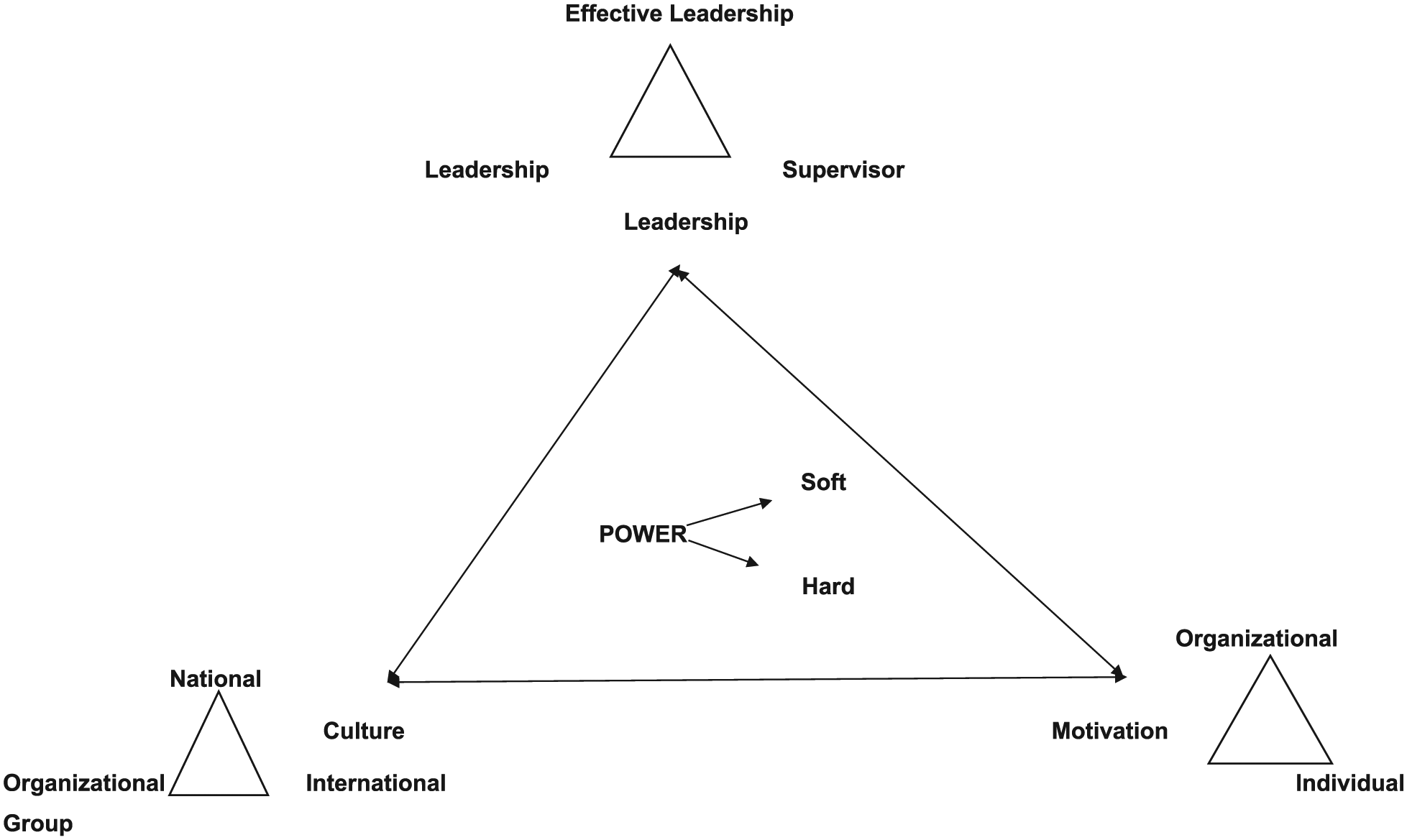
The flow diagram of the theoretical framework.
Conclusion
After gathering data from the 44 participants of the WTO, the UNCTAD, the ITC, and the WHO, through interviews and focus groups, and 3 days of observations for each organization, the data were analyzed by using ethnographic data content analysis. The findings of the research afforded an opportunity to establish a theoretical framework which demonstrated how concepts related to staff motivation were divided into their subcomponents and how they interacted with each other. For the first time in the existing literature, this framework demonstrated which concepts interact to influence motivation of IO staff. Likewise, in line with motivation, establishing well-designed appraisal and performance systems, developing clear leadership guidance, acknowledging followers, providing more promotion options, recognizing individual success, reducing bureaucracy, and establishing effective communication are essential expectations of followers from supervisors.
This study explored the impact of culture, leadership, and power on staff motivation in the context of IOs, through the lenses of critical theory as a paradigm of inquiry. This approach provided a holistic understanding, especially as regards the philosophical conceptualism of IOs, and encouraged the use of qualitative research typology as the paradigm for methodology. Explorative and qualitative research facilitated understanding of complex concepts, such as motivation, leadership, culture, and power. Nonetheless, this approach did bring some limitations, especially where it concerns generalization of findings. As a future research area, quantitative inquiries which take into consideration generalization concerns may be conducted. In addition, this research attained its main objective by developing a theoretical framework to assist with the practice of staff motivation. Further deductive studies may apply this framework into a living work environment and test the areas of applicability for it.
Footnotes
Author’s Note
This article has been produced from author’s PhD thesis, “The Impact of Culture, Leadership, and Power, on Staff Motivation in the Context of International Organizations.”
Declaration of Conflicting Interests
The author(s) declared no potential conflicts of interest with respect to the research, authorship, and/or publication of this article.
Funding
The author(s) received no financial support for the research, authorship, and/or publication of this article.
