




Abstract
Mobility and urbanization are shaping cities in Southern Africa. Peri-urban areas in particular are transforming at such a pace that municipalities are struggling to keep up with the changes. Local government is trying to build appropriate capacity to respond to a mobile population, but it is not always clear where to focus capacity development efforts. Applying a diagnostic tool on local government capacity to respond to mobility, researchers both tested the tool and drew conclusions about the capacity of local government. This provides lessons for both how we measure the readiness of municipalities to respond to a mobile population and how we may focus capacity-building efforts.
Introduction
Local government officials in South Africa are on the front lines of providing services to communities that are being transformed by migration. There is no question that mobility is changing African cities at a rapid rate, and that municipalities are struggling to keep up with the adaptive planning and changing needs that this mobility entails. As policy makers struggle to keep up with the way mobility is understood, and researchers scramble to explain its dynamics and consequences, migration continues to transform cities across Africa (O’Loghlen, 2017; Potts, 2011).
The constraints to state capacity in South Africa, at the local government level particularly, are well documented, although research is still ongoing to understand the causes and consequences of these constraints (Picard, 2005). Municipal authorities are facing a range of challenges to plan for a mobile population. This ranges from the fact that municipal authorities do not necessarily embrace mobility as a catalyst for development (Landau, Segatti, & Misago, 2013; Ruiters, 2018), to the fact that migration is framed as a national competence, therefore irrelevant to officials at a municipal level (Landau, Segatti, & Misago, 2011).
Although the South African state has espoused aspirations of driving democratic development, it has struggled to shift institutional practices away from its predatory past (Beall, Crankshaw, & Parnell, 2014). Local government in particular has struggled to transform public management institutions that had systematized patterns of exclusion and patronage (Dawson, 2014). Since 1994, government has repositioned the role of participation, so that all administrative processes, from planning to budgeting, are grounded in participation. However, it has not adequately specified who should participate and how this participation should translate into bureaucratic practice, and this has been at the nexus of much of the tension around mobility and migrant access to services. Institutionalizing these ideals and transforming administrative systems into hubs that are capable of applying sophisticated participatory practices has been an uneven process (Tomlinson, 2017). Migration has been one nexus of this unevenness; some municipalities have made considerable progress toward inclusive service delivery, but the legitimacy of migrants to access services and participate in planning process remains contested (Landau, 2018).
A range of stakeholders have been working collaboratively to build the capacity of local authorities to act inclusively, and reform exclusionary systems of accountability, planning, and budgeting (Nel & Binns, 2003). However, due to the complex and multifaceted nature of both migration and municipal governance, it is often difficult for both scholars and practitioners to take part in a common conversation about governing a mobile populace. To overcome this obstacle, this article introduces a diagnostic tool that allows for stakeholders that come from a range of different disciplinary backgrounds to engage around a common understanding of the various dimensions through which municipalities govern a mobile population. A better understanding of the ways this is currently practiced will help inform how local government is currently planning toward a mobile population, and where attention is most needed.
Conceptualizing Migration and State Capacity
Migration is shaping South African cities in many forms. Africa is urbanizing faster than any other region in the world, and in South Africa, this growth is concentrated in secondary cities and peri-urban areas (Pieterse & Parnell, 2014). However, urban migration is only one form of mobility. South Africa has nearly half a million unsettled asylum cases, and labor migration, driven by a range of economic forces, has reshaped the way people interact with the region’s borders and the way people define home. Although data quality is varied and statistics on migrants are contested, it is clear that mobility is an important factor shaping South Africa’s demographic landscape (Tomlinson, 2017). This context of mobility calls into question many of the traditionally fixed social and political categories scholars use to understand communities (Baumann, 2002). The study of migration often stems from literature on cosmopolitanism and crossing international borders, trying to understand the discourse and practice of defining “foreignness.” However, an important growth in the field is increasing integration with discussions of more localized migration experiences. Rather than requiring an international border to be crossed for the category of resident to change, membership in a community is a more dynamic process, and mobility is one of a wide range of interrelated processes through which communities of people assert their rights to a space. This links the field of migration not only to discussions of international organization and law, but also to processes of community formation and social reproduction (Blaser & Landau, 2016; Landau, 2006).
This shift is important in understanding the relationships between migration and governance. Initially framed around border spaces, or gray areas of geographic control by the state, using a lens of mobility is redefining conversations social geographers and scholars of local governance are having about how access to services is negotiated as people move (Stock & Duhamel, 2005). However, given the prevalence of geographically grounded systems of planning and governance, these different categories of migrants create a range of conceptual challenges for understanding rights and governance. At its most empirical, governments need a mechanism for defining who they serve, and migration complicates this mechanism (Kaufmann, 2002). It is relatively easy to categorize citizens and noncitizens. But what about the huge spectrum between permanent and temporary residents? How much time must a person spend somewhere to become “resident”? Does this change according to their linguistic background, family ties, or other social category? These questions demonstrate the challenges in theorizing mobility, and applying a lens of mobility to other fields, particularly including governance and public administration.
Due to the complexity inherent in the intersection of migration and governance, the capacities required by local authorities to govern a mobile population are equally complex. The South African public sector faces a range of capacity constraints, ranging from technical to culture. However, recognized benchmarks for public sector capacity are often developed in different contexts. Without considering the context of mobility on state capacity, it is difficult to know whether the right measures of capacity are being used. Migration is unique in the way it shapes community identity, rights to access state resources, definitions of borders, and participation and use of public resources. There are a range of benchmarks for understanding good local governance, which include service delivery capacity, but go beyond this to interrogate the causal mechanisms and systems that enable this (Bovaird & Löffler, 2002). Although there are certain core features that are required to govern any community well, mobile communities require certain specific governance competencies. Although these are fundamental to shaping the capacity of South African municipalities, given the importance of migration, they are not well understood. This is the gap this research aims to address, and through the development and piloting of a diagnostic tool, the authors aim to contribute to a growing discussion.
Background to Local Governance and Migration in South Africa
Local government in South Africa faces multiple challenges that have changed shape over the past two decades. Local government structures were established through the Municipal Structures Act (South Africa, 1998), which outlines obligations around Integrated Development Planning, designed to be a participatory process to engage local government and communities. Since its formation, local government has struggled to match the high expectations for service delivery held by the majority of the country that had been excluded from infrastructure development and public service provision. At the same time, local administrations have struggled to shake both perceptions and practices of the violent and exclusionary state of the apartheid past. Even while structures democratized, local government was not presented with a solution to deeply divided communities, and political party structures that rely on patronage and the politicization of identity (Pithouse, 2008).
Since the establishment of democratic local government structures, there have been frequent processes of demarcation (Atkinson, 2007). This means that local authorities are responsible for not only changing geographic boundaries, but also changing populations within them. Furthermore, although rates of urbanization in South Africa may be relatively low compared with the rest of the region (United Nations Department of Economic and Social Affairs [UNDESA], 2011), mobility within cities, and secondary cities particularly, as well as between rural and urban “homes” are still reshaping peri-urban areas and redefining services needs (van der Merwe, 2016). In addition, mobility within municipal boundaries is high, and accurate information on this is difficult to access. With migration often perceived by local authorities as falling within the mandate of national government (Landau et al., 2011), and with limited data available to better understand often informalized sectors of the population, it is hardly surprising that officials are unequipped to plan for a mobile population.
The constraints to a more responsive local government approach are threefold. There are needs not only to address the technical issues, such as the availability of useable data, and skills of local government officials to use these data. In addition, there are systemic challenges around planning and service delivery policies, clarifying mandates among various organs of government, and so on. Finally, there are issues of culture within the public sector through which mobility is understood. Not only is the reality of migration, and its impact on reshaping cities and the use of services, relatively poorly understood, it is also stigmatized.
What this all points to is a need to shift fundamental beliefs of what it means to govern people whose lives are not grounded in a single geographical space. For example, people may not plan to stay in their current place of residence for the whole cycle through which local governments plan. With precarious housing situations and increased informalization of the labor force, people within cities may have little incentive to engage with local government. Often, people living in cities are rooting their lives elsewhere, with extended families, longer term planning, and even some current service delivery needs based somewhere else (Landau, 2014). For local governments to respond to the realities of these populations, it is important to better understand the current local government response.
Methods and Approach
The research design for this article sought to answer the central question of how local government officials are responding to mobility in South Africa, and it did this through two primary methodological pillars. The first is an institutional ethnography of the municipality, which included key stakeholder interviews with municipal officials, participant observation of processes of municipal participation, and focus groups. Data collection built in triangulation, and this method was chosen to understand the bureaucratic logic of municipal settings (Smith, 2005). The second pillar was a comparative case study approach, chosen because of its ability to help the research team understand processes within their context (Hartley, 2004; Yin, 2017).
These two approaches together allowed the research team to gather contextually rich data from each municipal site, while still maintaining components of comparability across these different landscapes of mobility. The data were then analyzed through a grounded theory approach. This article marks an important step in the grounded theory process; specifically, the development of a diagnostic tool and its retrospective application to municipal case study data was one step in theory building, drawing from the available data on municipal practice.
The research informing this article took an inductive approach to building a diagnostic tool that looks at municipal capacity to govern a mobile population. Based on more than 4 years of field research in seven municipalities across Southern Africa, the diagnostic tool was developed based on the authors’ categorization of the key municipal competencies required to respond effectively to a mobile population. This categorization emerged from a thematic analysis that took place on the basis of data gathered according to the process described below. To pilot the diagnostic tool, it was applied retrospectively to the municipalities with the most robust data in the identified categories, and this article discusses this process and results. Although it would be possible to apply the tool to a context where data are not as robust and still get a high-level overview suitable for comparison, the intention of interrogating the tool itself, necessary in this pilot stage, would not have been sufficiently accomplished, so additional cases are not included in this article, which emphasizes a reflection on the application of the tool itself.
This article compares municipal capacity to respond to mobility in the municipalities of Bushbuckridge and Lephalale. These are two different municipalities that are both being shaped by migration through different causes and resulting in different consequences. To do this, the article applies a diagnostic tool that was developed through a wider exploration of all seven municipalities to two specific case studies, to allow for more in depth discussion of both the municipal dynamics, and the strengths and weaknesses of the diagnostic tool in allowing for comparison across these different contexts (Blaser & Landau, 2014). The first phase of the research project included the municipalities of Mossel Bay, Tshwane, Nelson Mandela Bay, and Merafong. The second phase of the research included Gabarone, Lephalale, and Bushbuckridge.
The municipalities in both phases of research were identified through collaboration with the African Centre for Migration and Society (ACMS) and the South African Local Government Association (SALGA). The sites of research identified were peri-urban areas or secondary cities, due first to the important theoretical contribution of the unique way these communities are being shaped by migration (Landau et al., 2011), but also due to their objectively high levels of migration. According to a recent community survey, more than 8% of the residents of Lephalale were born in a different province of country, nearly twice the provincial average. Bushbuckridge, on the contrary, reflects a lower rate of migration than the norm in Limpopo and Mpumalanga according to the recent Community Survey, but as a municipality with an international border, it has been the site of many important theoretical contributions in South Africa’s migration scholarship, and the social and political mechanisms of demographic change in the community are relatively well understood and could be brought to bear on a situation where official statistics reflect a relatively low level of migration, but resident reports, municipal official accounts, and academic research all point to the critical and fundamental ways migration is reshaping the community. This was reinforced by the next selection criteria of municipalities for the study, because communities were identified based on self-selection into a request for capacity development around migration management. This indicated the bureaucracies of the municipalities acknowledged that migration was an issue that was affecting either local development or social cohesion in some way. This was methodologically important, due to the low levels of awareness and engagement demonstrated by municipalities in previous research (Landau et al., 2013).
In each municipality, a team of three researchers, including both South African citizens and migrants, spent 2 months initially scoping the municipal dynamics and carrying out a community mapping, and then participating in municipal processes and interviewing more than 50 key stakeholders per site, including municipal officials, leaders of migrant communities, and other community leaders. Interviews were semi-structured, with specific follow-up questions defined in an iterative process as the research team came to understand the unique social dynamics within the municipality. This comprehensive approach provided robust qualitative data and allowed each dimension of the diagnostic tool to be triangulated by several sources.
These municipal case studies were synthesized, and following a process of thematic analysis, a diagnostic tool was developed that looks at the dimensions of municipalities’ ability to respond to a mobile population and helps make explicit differences in municipal capacity. As the diagnostic tool was being developed, the research team considered existing tools to measure local government capacity. This included Bovaird and Loffler’s (2002) benchmarking of good local governance, the Department of Planning, Monitoring and Evaluation’s Local Government Management Improvement Model (LGMIM), as well as analysis that has not explicitly been articulated as a measurement tool, such as Mogale’s (2003) Developmental Local Government and Decentralised Service Delivery. This was done to validate that the patterns and trends emerging from the empirical data in the case study confirmed the hypothesis that an awareness of migration indicated a different prioritization and focus in defining and understanding municipal capacity.
It was clear from this review that migration was absent in the existing tools. A few other trends were evident in reviewing existing tools. First is that individual and institutional capacity were rarely considered together, and given the confluence of social and institutional factors that shape migration, the authors felt this was an important innovation in the diagnostic tool. Second is that most tools choose to focus on either technical components of municipal management (such as the LGMIM) or governance (Mogale, 2003), and for the purposes of migration, considering them both is essential given both the political and bureaucratic mechanisms that affect migrants (Landau et al., 2013).
Description of the Diagnostic Tool
The diagnostic tool applied in this article identifies six dimensions that represent critical capacities for municipalities to respond effectively to mobility. They were initially drawn from a thematic analysis of the empirical research conducted, but then refined on the basis of additional desktop research on governance theories around municipal capacity. They are largely indicative, to allow for comparative analysis, and point to priorities for capacity building or other interventions. A more detailed description of each dimension, and how it is situated in current local governance theory can be found in Blaser and Landau (2014). The dimensions are outlined as follows:
Budgeting—whether systems for budgeting are responsive to demographic changes and forward planning, including their ability to incorporate multilocal populations, and multisite planning and collaboration
Data—collection and management systems that are able to accommodate mobility, including being sufficiently disaggregated, of sufficient quality, and sufficiently accessible to officials
Participation—whether the perspectives of migrants are included in technocratic mechanisms built to address the needs of residents
Accountability—whether the needs of migrants can be brought into political processes of accountability and oversight. Given that migrants are usually not a key voter base or key performance indicators of municipal management, what accountability mechanisms can accommodate this unique minority group
Perceptions—the extent to which officials think mobile populations fall within their responsibility, and understand some of the implications of this
Social cohesion—the extent to which officials are accommodating the unique challenges of communities that have diverse needs, from class to ethnolinguistic diversity
Within each of these six areas, there are five indicators, which can score the extent to which a municipality is able to respond to migrants’ needs. As an example, under the budgeting category, indicators include the following:
Do budgetary authorities at the municipal level use accurate and forward-looking data on settlement patterns and economic activities to plan resource allocations and intergovernmental transfers?
Do budgetary authorities at the provincial or national level use accurate and forward-looking data on settlement patterns and economic activities to plan resource allocations and inter-governmental transfers?
Are there mechanisms which allow resource allocation and intergovernmental transfers to be reconsidered in light of dramatic changes in settlement patterns?
Is an adequate proportion of municipal resources allocated to investing to prepare for future population patterns (work and settlement)?
Is an adequate proportion of public resources dedicated to meeting the needs of economically marginalized populations including recent migrants?
These categories and indicators simply illustrate strengths and areas for concern within municipalities that will allow for comparison. Each category has five indicators that have been developed on the basis of the qualitative empirical research, which was then organized through thematic analysis. These indicators are, for the time being, indicative of indicators that should be tested and refined through future research and application of the diagnostic tool. Part of the goal of this article is, through their initial application, to refine them by this additional step in engaging with the literature around each category in the local governance context. As they have been developed, the indicators are simply an indicative scoring, and not a specific performance measure.
Figure 1 demonstrates the scoring of a fictitious, perfect municipality that has full capacity to respond to mobility effectively. Although such scoring would be unlikely to be achieved anywhere, it can help provide a benchmark against which to assess other municipalities and to identify gaps in their systems.

A perfectly responsive municipality.
This article applies the tool retrospectively to qualitative data from the Bushbuckridge and Lephalale municipalities, which are both dealing with different migration dynamics. The case studies from these two municipalities had the most robust data in each dimension of the diagnostic, making them appropriate choices for piloting the tool. Although other municipalities could be added in future comparisons, the authors believed that piloting the tool based on the deepest interrogation of the themes identified from the widest spectrum of stakeholders was best for the initial tool formation. First, the overall capacities of each municipality to respond effectively to a mobile population will be discussed. Then, the tool itself will be discussed on the basis of its application.
Comparing Municipal Capacity
Bushbuckridge and Lephalale are both small municipalities in northern South Africa (Figure 2). Lephalale is in the province of Limpopo, and although Bushbuckridge used to be part of the Limpopo province, it was moved to Mpumalanga through part of a redistricting process that was contested in the early years of democracy and finalized in 2005. Bushbuckridge is a rural municipality, which means much of the land is held under traditional tenure, and it has a high dependency ratio (Hunter et al., 2014). It is close to the border of Mozambique, and there are strongly maintained historical migration patterns both across the border, and to the Rustenburg mines and Johannesburg for employment (Polzer, 2007). Lephalale, on the contrary, is a rural coal-mining town. Formerly a largely agricultural municipality with occasional tourists passing overland to Botswana, the biggest coal reserves in the country were recently discovered within the boundaries of the municipality, and the construction of the Medupi power station has prompted huge growth in both the population and the economy (Crush, & Ramachandran, 2015).
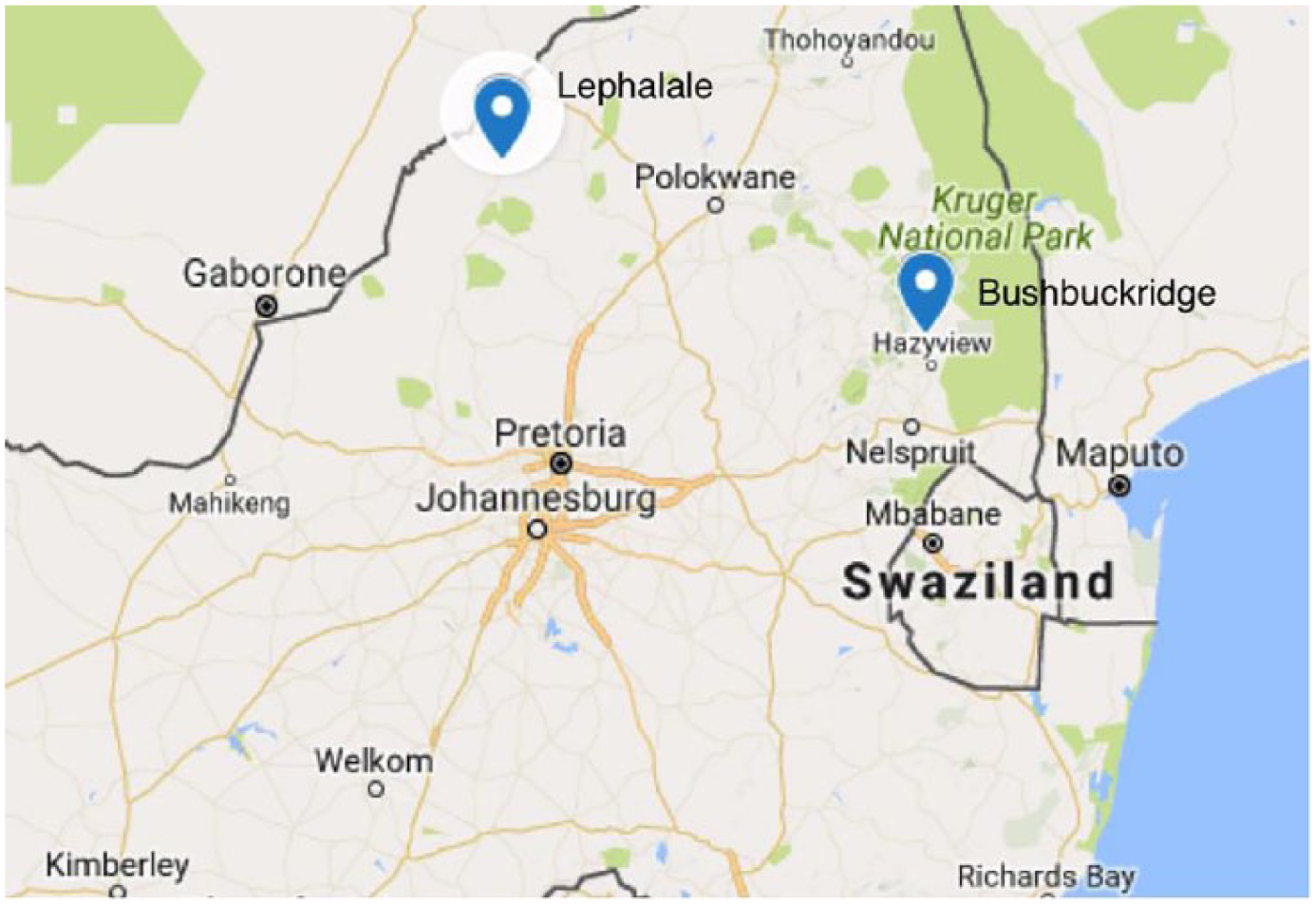
A map of northern South Africa, marking Lephalale and Bushbuckridge.
The different geographies, histories, and demographics of the two municipalities may imply different capacities to respond to migration, but comparison across diverse contexts can be a challenge. Applying the diagnostic tool confirms that each municipality has uneven capacity to respond to mobility, but they fall into different categories.
Given the levels of poverty in Bushbuckridge as well as South African systems of municipal finance, the municipality lacked revenue sources for certain fundamental technical capacities (McDonald & Pape, 2002). As a result, the municipality scored relatively low on the technical dimensions of the diagnostic, specifically data collection and use, and budgeting. There was not only limited capacity to gather and use data, but also limited systems in place to feed this into budgeting and planning processes. This is in keeping with results from a range of other studies seeking to understand the financial management capacity of the municipality, which validates the ability of the diagnostic dimensions to assess municipal capacity in certain areas (Monkam, 2014). While the municipality had not developed a plan for using forward-looking data on settlement patterns to allocate resources, the only significant resources to allocate were through national government transfers, which already have fixed formulae (Venter, 2007). This system was designed to promote equitable distribution of services, but does not easily accommodate predictive planning. Some officials, like the one quoted below, expressed frustration with these policies: We know people are moving to Thulamahashe. By the time we get water to the village, there won’t be people there to drink it.
What Bushbuckridge lacked in technical capacity, however, it gained in a political culture of openness, particularly in the provision of basic services. Acknowledging the poverty that characterized the community, affecting residents from all geographic origins, municipal officials from Bushbuckridge worked to take on board the needs of marginalized communities within the municipality through active outreach in participation processes. A number of channels were in place to encourage all residents to participate in the municipality’s processes and services. This was even apparent in the research team’s access to the municipality, which was greater than any other case studied.
Some examples of the proactive systems put in place to encourage diverse participation include the establishment of several satellite offices of the municipality to limit the amount of travel required for residents to access basic services. There were mobile clinics that traveled to community members who were unable to reach local facilities. There were awareness campaigns on the radio and at taxi ranks to make new mothers aware of the regulatory changes at home affairs. The municipality was engaging with traditional authorities, church leaders, and other key stakeholders in the community to better understand the barriers residents were facing in accessing social grants. As one South Africa Social Security Agency (SASSA) official pointed out, Sometimes, the systems we use keep us back. Like, unless we have an ID number for an individual, we cannot enter them into the system. But we understand, when a house burns down, we can’t expect that person to have their ID, and they still need to eat. Home affairs can be slow, but a child can’t get lost because they haven’t been registered. So, we can’t say that these people are looked after by the system, but we do know the people working at health. We do know the people at education. If there are people falling through the cracks, we really try and accommodate them, and understand their situation.
Bushbuckridge was the only municipal case study that had active programs in place to reach undocumented migrants. This is a commendable demonstration of inclusiveness in South Africa, where communities are often facing xenophobic or other forms of identity-based violence (Pithouse, 2008). However, these elements of supporting migrants may not present the full picture. Most Mozambican migrants share ethnolinguistic ties with residents of the community and represent a powerful political group within the municipality (Niehaus, 2006). It then makes sense that in the dimension on social cohesion, the municipality had taken a range of positive steps, such as adopting a policy in favor of supporting social integration. It also means that in this unique case, capacity of the municipality to serve a mobile population could be reinforcing the political status quo in the community (Figure 3). It is important to consider this case and acknowledge that while migrants are often categorized as vulnerable due to a range of characteristics in the migrant experience, that does not imply that migrant interests cannot be aligned to local political hegemony (da Cunha, 2016) or that they have to be at odds with the interests of other vulnerable groups.

Municipal capacity to respond to mobility in Bushbuckridge.
On the issue of perceptions and political accountability, Bushbuckridge scored only one and two, respectively, for two reasons. The first is that the municipality was under administration, which means that central government took over responsibility for financial and administrative management, due to lack of capacity and maladministration within the municipality. This shifted not only perceptions, but also actual arrangements about roles and responsibilities within the municipality, creating limits on the boundaries of municipal control; for example, procurement responsibilities were removed from the municipality and placed in the hands of the province, significantly shaping structures of accountability (Tau, 2015). While municipal officials in many municipalities do not consider migration as something that fits within their mandate (Landau et al., 2013), it becomes more appropriate for a municipal official under administration to see this as something outside their remit, given the range of responsibilities that have been removed from the municipality. Furthermore, given that many of Bushbuckridge’s migration dynamics center around an international boundary and that international migrants are subject to a range of policy decisions at the national level by home affairs, it is also understandable that municipalities, which have little say over the policies that affect them, are hesitant to accept responsibility for the outcomes of these policies. In this case, the diagnostic tool is simply reflecting what could be intuited by municipal context, but confirming this empirically still allows this information to inform future research and practice (Rodríguez Bolívar, Navarro Galera, Alcaide Muñoz, & López Subirés, 2016).
Applying this diagnostic tool to the case of Bushbuckridge demonstrated that the municipality has limited technical capacity, struggling to gather and use data, and also few political incentives to take responsibility for responding to mobility. At the same time, there was an openness to ensuring everyone has access to basic services, including taking necessary steps to include people marginalized by a range of factors. In between the two, the municipality faced challenges as a result of its institutional positioning. Under administration, the municipality had limited scope to act, but was saddled with the consequences of policies of which they have little ownership.
Lephalale received different scores in the diagnostic, and this reflects the different municipal capacity and trends in migration (Figure 4).

Municipal responses to mobility in Lephalale.
The figure above demonstrates the capacity of the municipality in Lephalale to respond to mobility. Unlike Bushbuckridge, Lephalale has a mine, and various commercial farms, all of which provide a strong resource base for the municipality. It is a rural area, but has relatively strong capacity for planning. However, the construction of the Medupi power station is one of the largest development initiatives taking place in South Africa, so the scale of the migration, including not only construction workers, but also cognate workers like traders, and job seekers, was overwhelming such a small town. Its population growth from 2011-2016, not including transient workers, has been nearly 4%, which is more than twice the national average. As an additional dynamic, the presence of the mine has created a heavy gender skew in the population, with nearly 10% more men than women in the community (Stats, 2016). Furthermore, the rapid influx of resources created political contestation in a number of spheres that had not been the case in Bushbuckridge. For example, the municipality had a team of people who were skilled at using spatialized demographic data for planning, which is very rare for a municipality of its size. However, there was contestation about how informal settlements were described. Opposition party counselors highlighted ballooning informal settlements, while ruling party counselors were accused of ignoring data on growing townships in favor of diverting resources to develop surrounding villages, which provided their voting supporter base. As one official explained, We are sticking to our plans in the villages. It is true, people are moving to the township, and they are staying in shacks. They need everything, water, electricity. But, they are also new here. Will they still be here when it’s time to vote?
This technical capacity was apparent in the diagnostic, including relatively strong capacity to use evidence in budgeting processes. However, the municipality was struggling with the political dimensions of the tool, like areas of downward accountability and participation. This has been corroborated by other scholars of participation in the municipality, demonstrating that the diagnostic tool is largely consistent with other research approaches (Mbeki & Phago, 2014; Xavier, Komendantova, Jarbandhan, & Nel, 2017). Even before data collection began to develop the dimensions of the diagnostic tool, this was apparent to the research team, as accessing the municipal offices and setting up appointments was a challenge that threatened the viability of the research. The municipality demonstrated a strong culture of exclusion and violence toward many constituencies, and migrants were often politically expedient constituencies to target (Blaser Mapitsa, 2018). These structures of political violence made it evident that there were strong incentives for upward political accountability, which can inhibit meaningful participation (Nel & Binns, 2003).
This context made it challenging for municipal officials to put in place the institutions and systems to strengthen evidence use, and several municipal officials acknowledged this gap. One official said of a community consultation meeting, “We are required to consult, but if I’m a member of the community, I’m not sure I would go. Because everybody knows the decisions have already been made.” Public participation became a compliance exercise, as they did not meaningfully shape the political decision-making process. One respondent summarized things simply. “This town is run by the mayor, and the mine. Nobody else counts.” This made it difficult for the municipality to use participation as a tool to promote social cohesion. This was highlighted by the regular strikes and protests that took place during the period of research. As Xavier et al. (2017) emphasize, community participation is too often seen as mitigating future risk of conflict, rather than an integral component of decision making. This purpose, when migrants are already on the brink of social conflict, certainly shifts the way the municipality engages migrants. However, the redeeming feature of this framing is that municipal officials themselves articulated this as a problem. They understood both the obligations to facilitation inclusion and were upfront about where they were falling short; this is an important foundation to strengthening municipal capacity.
The section above illustrates that Bushbuckridge and Lephalale have different strengths and shortcomings in responding to their mobile populations. These differences are both a cause and a result of the different dynamics of migration in the localities, the different histories of each place, and the different community dynamics. The diagnostic tool, while not comprehensive, provides a framework for comparing these different issues across contexts.
Reflecting on the Diagnostic Tool
The diagnostic tool developed by the authors allows for comparability of a municipality’s response to mobility across different municipal contexts. Although it balances technical capacity, institutional capacity, and political capacity, the technical and institutional components of the tool lend themselves best for comparison across municipalities. The political capacity dimension requires a more detailed analysis of the context than this diagnostic tool is able to provide. It remains important that this diagnostic tool not be seen as a stand-alone panacea for understanding a municipality, but rather that it be one tool that can provide a unique angle as part of a broader, multimethods approach. In the case of understanding Lephalale and Bushbuckridge above, the diagnostic tool allowed an element of comparability that would have been difficult to achieve through other qualitative approaches and their analysis.
A shortcoming of the diagnostic tool is that it fails to capture the directionality between the various components it measures. In fact, there is a strong relationship between whether the political leadership of a municipality believes that responding to a mobile population is part of their job, and a municipality having the capacity to collect and use data. Similarly, participation processes are both causes and consequences of structures of accountability. As this tool is further developed, it would be useful to take a more integrated, systems approach to municipal practice, which would accommodate these multidirectional linkages and feedback loops (Cabrera, Colosi, & Lobdell, 2008). Efforts are currently underway to develop the application of a more detailed pilot for each dimension of the diagnostic tool individually, and once this process is complete, the next step will be to refine the diagnostic in a way that takes a more integrated systems approach to municipal capacity.
In the future, there is scope to develop a more detailed tool, with dimensions that bring out the institutional linkages between the technical, institutional, and political components of responding to a mobile population more explicitly. In the meantime, however, the strength of the diagnostic tool is that it gives a simple snapshot of the relative strengths and weaknesses of a municipality, and provides an innovative definition of what municipal capacity looks like when a population is on the move. Due to its simplicity and indicative nature, it allows for a level of comparison across different contexts, and easily identifies priority areas of capacity development or further research.
Conclusion
All too often, local government’s capacity to respond to a mobile population is seen as a technical challenge. Building migration into planning processes is a requirement to building cohesive and prosperous communities. However, for municipalities to engage with human mobility effectively, there is a need to rethink the role of local government. Planning for a mobile population is not an additional piece of work, added to the end of overstretched planning processes, but rather an opportunity that should be integrated with what is already ongoing, and that must start with awareness on the parts of officials.
Issues of social fragmentation and exclusion seem like “soft” issues. However, the culture around using data to plan effectively is in fact a driver of the use of evidence in planning processes (Stewart, 2015). This means that social fragmentation can be a significant barrier to service delivery. With migrants often symbolizing various forms of social cohesion, bringing research on migration into debates on social cohesion, public management, and local governance is important for understanding the fault lines of diversity and expressions of power within South African municipalities (Berger, 2018; Simone, 2004).
What our research found was a strong correlation between management and planning strength more generally, and the capacity to manage the various dimensions of mobility. Furthermore, while this is linked to the resource base of municipalities, it is not necessarily the case that municipalities that are better resourced have stronger capacity across each dimension of the diagnostic. Even in municipalities that are quite technically effective, local authorities face notable constraints to planning, particularly around data quality, participation, budgeting cycles, and institutional arrangements. Furthermore, the understanding, attitudes, and perceptions of municipal officials remain an important constraint in responding effectively to mobility. Many of these issues do not sit exclusively in the domain of municipalities, but given the level of independence municipalities have to act (South Africa, 1998), they are an important unit of analysis.
Migration and mobility are by definition deeply spatialized. There is no question that people are moving, both within and between municipalities, and planning around this is crucial to effective local governance. Municipalities are on the front line of these changes, and with service delivery backlogs and social fragmentation, it is not surprising that migrants are at the crux of both technical and political challenges in planning and management processes (Landau, 2018). Better understanding these catalytic issues will help understand local government capacity in more conventional areas of research.
Applying this diagnostic tool to the municipalities of Bushbuckridge and Lephalale demonstrated the need to reframe the debate around migrants at a municipal level. Traditionally, social inclusion and state capacity to use data for planning are seen as wildly separate issues. However, if a lens of mobility is applied to municipal capacity, they are simply different sides of the same coin, of delivering services that are appropriate to the existing community, and planning for a future community. Looking at the capacity to plan toward a mobile population can unlock technical, political, and conceptual challenges municipalities currently face in a wide range of programs.
Footnotes
Declaration of Conflicting Interests
The author(s) declared no potential conflicts of interest with respect to the research, authorship, and/or publication of this article.
Funding
The author(s) disclosed receipt of the following financial support for the research, authorship, and/or publication of this article: Research for this article was supported through the Migrating out of Poverty research consortium coordinated by the University of Sussex with support from the United Kingdom’s Department for International Development. It builds on preliminary research sponsored by the Programme to Support Pro-poor Policy Development (PSPPD) based in the President’s office of the Republic of South Africa.
