




Abstract
This research aims to study the success factors of an online entrepreneur. With the recent rapid growth of the online market for different goods and services, the need to investigate the business strategy of online entrepreneurs in specific markets such as in Thailand and extract relevant success factors is dire. The researcher collected data by using a seven-point Likert-type scale that measured the responses of 180 online businesses in Bangkok, Thailand. The study used Structural Equation Modeling (SEM) and Statistical Package for the Social Sciences (SPSS) for statistical analysis. The results indicated that the thirteen most relevant factors related to an online entrepreneur are ACO, EOU, government support, networking, risk-taking propensity, reliability, AFF, BIM, logistics and transportation, product quality, product price, advertising on social media and staff and employee.
Introduction
Online trading or e-commerce is an increasingly popular application of the Internet where people buy and sell products and services via online platforms. The main benefits of online shopping include convenience, lower price, and variety of products. Since 2014, there has been a significant increase in the value of online trading. Data on the total revenue from online trading between Thailand and the rest of the world are depicted in Figure 1 where an increasing trend is seen for both cases.

Comparison of total revenue from online trading between Thailand and Global (worldwide).
Despite conducting business on an online platform, an online entrepreneur launches a business, operates and develops an organizational culture for it, thus knows the business risks involved but still works to make a profit (Casson, 2003). As such, online entrepreneurs also have the typical traits and characteristics of entrepreneurs such as having a creative plan, innovative products, risk-taking skills, skills in general management, and performance intention. According to Schumpeter (2011), the performance of a business in an entrepreneurial way is the creation of a new and unique product by using a novel technique and then distributing the product into the market irrespective of the platform used. Hence, online entrepreneurs aim run their businesses using a creative business plan and an effective organizational structure. This sense of urgency, risk taking, and product innovation distinguishes entrepreneurs from small business owners as summarized on Table 1.
The Differences Between Entrepreneur and the Owner of Small Business.

Source. Schumpeter (2011).
International entrepreneurship (IE) defines an entrepreneur as one who performs innovative activities in a global market (Al-Aali & Teece, 2014). As such, all online entrepreneurs are by nature international entrepreneurs catering to a global market. The Global Entrepreneurship Monitor (GEM) is a trusted resource on entrepreneurship used in various studies (Cullen, Johnson, & Parboteeah, 2014; Estrin, Mickiewicz, & Stephan, 2013; Hughes, Jennings, Brush, Carter, & Welter, 2012). In Thailand, the digital economy thrives through the use of digital devices and information technology to increase quality and quantity of products while significantly reducing processing time. Through the digital economy, Thai companies effectively compete with foreign firms or multinational corporations because more value is added (Buddhisatyarini, 2017). For instance, digital marketing helps sellers expand their distribution channels and rapidly receive response from their consumers. Consumers can also easily access products or services and information pertaining to them freely. An online entrepreneur starts an online business operating and organizing the business according to a creatively unique business plan. For instance, Amazon, the biggest online shopping website in the world, caters for almost half of U.S. online (Amazon.com, 2017) while Alibaba has gained significant global online market share despite emerging at a time when online shopping was already well-established (Alibaba Group, 2017). Tables 2 and 3 demonstrate the increasing values of online trading globally and in Thailand respectively. These online companies are led by successful entrepreneurs who identify and exploit many competitive advantages while maintaining low cost and convenience to customers thus adding value throughout the e-commerce process. The successful entrepreneurs leading the companies, Jeff Besoz and Jack Ma respectively, exhibit similar traits and habits that underscore the factors facilitating their success in e-commerce.
The Value of Global Online Trading Worldwide.

Note. The Statistics Portal (2018).
The Value of Online Trading in Thailand.
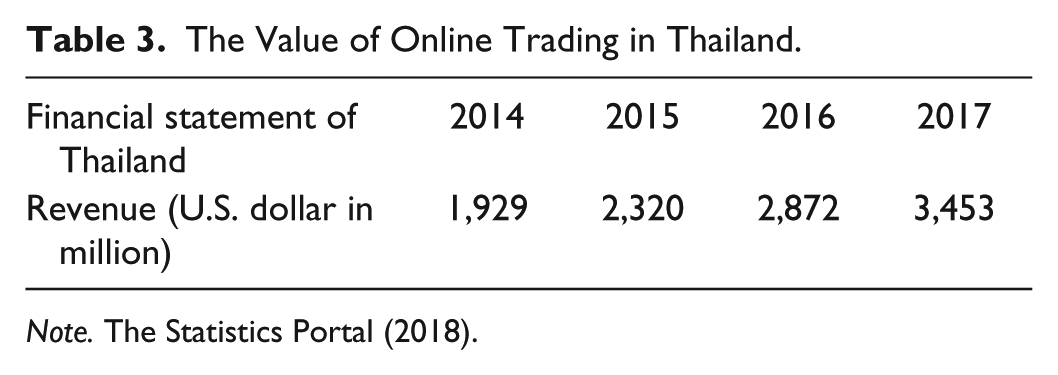
Note. The Statistics Portal (2018).
In Thailand, data on e-commerce enterprises are relatively limited with the number of registered online entrepreneurs only being 4% of the estimated number engaged in e-commerce (see Figure 2). Part of the reason is the limited effort placed in e-commerce by businesses that also have brick and mortar locations. Like in other markets, e-commerce is mainly perceived as a convenient way of shopping when one cannot reach a brick and mortar location living most businesses to focus on direct sales mechanisms while using online platforms for marketing (Department of Business Development [DBD], 2007). Nonetheless, the success of e-commerce companies such as Amazon and Alibaba and estimated size of the Thai e-commerce market indicates online entrepreneurs could benefit more by adopting traits and practices by successful online companies. These issues motivate for this study. Although many Thai entrepreneurs founded their online businesses, majority do not make, sustainably, satisfactory profit levels. Therefore, it is important to identify the success factors of being an online entrepreneur in Thailand. This study aims to examine how an online entrepreneur can identify and utilize business factors for success through a quantitative analysis using survey questionnaires.

The number of online Thai entrepreneurs registered at the Department of Business Development (2007).
Study References
Theory
The long tail of marketing
According to Scott (2015), the long tail marketing principle states that entrepreneurs need to pay attention to customers with low purchasing power as the proportion of this group of customers is relatively larger compared to customers with high purchasing power. Ironically, customers with low purchasing power receive less attention from the market. Long tail marketing does not focus on e-commerce but on the automatic trading systems in place where buyer and seller trade goods openly. Serrano-Cinca and Gutiérrez-Nieto (2014) argue that long tail marketing is a useful theory for online entrepreneurs because it encourages them to achieve growth by exploiting the demand of products in the tail region that receives limited attention from companies with large market shares. Using long tail marketing, online entrepreneurs can target both mass and niche consumers thereby increasing sales revenue and profits. The concept of long tail marketing is outlined in Figure 3.

The concept of long tail marketing.
Locus of control
Locus of control is defined as the individual perception of the reasons for successes and failures in life (Rotter, 1966). The concept has been an important aspect of personality. He argued that people can be classified into two: externals (people who believe that chance, luck, and fate can affect their lives) and internals (people believing that their own effort can be used to control the direction of the results of any events of their lives) (see Figure 4; Rotter, 1966). Rotter (1966) argued that the internal locus of control is associated with learning through motivation where an individual’s actions are self-encouraged. In entrepreneurship, the internal locus determines whether an online entrepreneur achieves success. Fortunately, research indicates most entrepreneurs are internals (Lefcourt, 1991).

The concept of locus of control.
Literature Review
Success factors of being entrepreneur
In e-commerce, a successful entrepreneur exhibits traits that provide various competitive advantages when running a business. Unfortunately, only 10% of the businesses created by entrepreneurs survive (Arend, 2016). Hence, it is important to determine the factors of success. The study of entrepreneurial success has attracted a great deal of research interest. Vesper (1990) reviewed the earliest studies on factors for entrepreneurial success including leadership styles, entrepreneurial vision, and the capacity to solve an existing social problem. Comparatively, Emami (2017) highlights contemporary gender-related factors inherent after the global financial crisis of 2008 including preference for well-framed high-risk opportunities among entrepreneurs, particularly male entrepreneurs. Similarly, Emami, Saghafi, Zarei, Ebrahimzadeh, and Davari (2011) illustrate the extent framing effects (FE) inherent from the manner in which information about entrepreneurial opportunities is presented affect risk perception. Exploiting opportunities through effective decision making is a critical factor for entrepreneurial success with most entrepreneurs using stage gates to assess risk continuously during the innovation process (Shepherd & Patzelt, 2017). Shepherd and Patzelt (2017) identify six stage-gates including idea generation, preliminary assessment, detailed assessment, development, validation, and launch. However, other studies consider entrepreneurial success in case by case situations due to the contrasting e-commerce performances in different markets.
Using research questions and focusing on Pakistani entrepreneurs, Zafar and Khan (2013) argue that
Successful entrepreneurs are likely to be college educated.
Lack of government support (GMS) is not an inhibiting factor from the successful entrepreneurs’ point of view.
Family background in business is a success factor.
Devece, Peris-Ortiz, and Rueda-Armengot (2016) also analyze factors related to the success and failure of entrepreneurs under different economic conditions. They focused on the economic crisis and economic boom in Spain noting that innovation is a basic factor for success for a typical entrepreneur during an economic crisis. They also noted that perceptions on opportunities of an entrepreneur can cause failure during an economic boom. Franco, Haase, and Correia (2018) explored the success factors in creative incubators from a cultural entrepreneurship perspective. They argue that common success factors for incubators are not consistent because of the high flexibility of the process. Nonetheless, practical implications that facilitated accelerated growth among entrepreneurs significantly enhanced the effectiveness of success factors identified (Franco et al., 2018). On the contrary, Hsu, Wiklund, and Cotton (2017) studied the success and failure of serial entrepreneurship (when an entrepreneur exits from entrepreneurship but then reenters) using two main theories: prospect theory and self-efficacy, essentially highlighting the importance of risk assessment and endurance or perseverance among online entrepreneurs. Studying the entrepreneurs’ decisions, attitudes, and behaviors before reentry showed that success and failure can both influence the attractiveness of reentry (Hsu et al., 2017). Hence, success factors for online entrepreneurship differ across regions with similar underlying factors being affected differently by sociocultural factors that define consumption patterns and entrepreneurial ventures/resilience among entrepreneurs.
Opportunities for Thai entrepreneurs
Thailand and nine other countries formed an economic group, ASEAN Economic Community (AEC). The group aims to increase the regional economy’s bargaining power in the global market, enhance its competitiveness globally, develop regional economic systems, increase regional political stability, and attract tourists to spend their time in ASEAN. Like the European Union, a single market and production base are the main motivations of forming AEC (n.d.). Following its creation, Thailand has gained global reputation, flexible trade agreements among ASEAN countries, greater business opportunities, stronger communication networks, and plays a critical role in ASEAN logistics. Therefore, Thai online entrepreneurs have the opportunity to exploit more opportunities in a large market (Thai Entrepreneur, n.d.). However, there are several challenges for Thai entrepreneurs to enter and succeed in the AEC market. Such demerits include higher competition in the larger market, skilled Thai labor moving to rival countries for higher earnings, higher probability of facing health issues because of low public health standards in other countries, and low value of Thai agricultural products because of lower production cost in the other countries. Ha et al. (2014) analyzed 250 successful entrepreneurs from various industry sectors in Thailand and noted the following as the key success factors for management:
Time management
Organizational roles
Work values
These three factors support the elements affecting the success of entrepreneurs: health, innovation, investment, profitability, and stability, as well as reputation, image, and branding. They recommend small- and medium-size entrepreneurs should consider habituate the factors to create successful businesses (Ha et al., 2014).
Online entrepreneurship in Thailand
The DBD has encouraged online Thai entrepreneurs to register their online businesses to increase reliability (RLB) since 2014. The bar chart displayed on Figure 2 shows the number of registered online Thai entrepreneurs since 2014. It indicates that the number of registered Thai online entrepreneurs has been increasing from 2014 to 2017 starting from 11,188 to 14,457 to 19,660 to 21,167 respectively. DBD (2007) also mentioned that the total number of online entrepreneurs in Thailand is 527,324 while the number of registered Thai online entrepreneurs is only 4%. Considering that the value of the Thai e-commerce market is estimated to be 2.52 trillion baht, which is 40% of the total value of the products and services bought/sold in Thailand, online entrepreneurship is currently very popular in Thailand with various opportunities to explore (DBD, 2007).
Like other parts of the world, e-commerce is popular in Thailand because of its convenience (DBD, 2007). Online trade is the process of buying or selling products/services through the use of Internet-based applications. E-commerce, online business, online shopping, and Internet trade are directly associated with online trade with the common benefit being convenience for both sellers and buyers, low cost to initiate, easy and low advertising costs, lower risk compared with conventional trade, and smaller workforce required. Even though starting a business online is easy to establish through the Internet, utilizing and reaping from the said advantages is never easy. Loane (2005) argues that the Internet has become an essential tool for every entrepreneur both online and offline. Conventional entrepreneurs can learn about online trading to increase competitiveness in the market. The entrepreneur who is globally or internationally oriented connects directly to the Internet, hence an online entrepreneur and digital entrepreneur cannot be distinguished (Nambisan, 2017).
According to the Electronic Transactions Development Agency (ETDA), there were 527,324 online entrepreneurs in Thailand by the end of 2016. The value of online trade was estimated to be 2.52 trillion baht, 40% of the total economic market value of Thailand. Despite the high volume, the major obstacle of online trade in Thailand is low RLB. The DBD attempted to create a high level of online trade reliability by inviting online entrepreneurs to perform legal commercial registration. Unfortunately, only 4% of 527,324 online entrepreneurs responded to this registration (DBD, n.d.). Nonetheless, many successful online businesses feature in Thai society. For example, Lazada, Kaidee, and Welove shopping are well-known online shopping places. However, most Thai online entrepreneurs do not survive in this digital era.
Sebora, Lee, and Sukasame (2009) studied success factors of online entrepreneurs in Thailand. They classified them into three categories including Founder factors (achievement, risk-taking propensity (RTP), locus of control, and e-networking), e-Service factors (reliability, responsiveness, ease of use (EOU), and self-service), and GMS (treated as an external factor; Sebora et al., 2009). They found that only four factors led to success: achievement orientation (ACO), locus of control, reliability, and EOU (Sebora et al., 2009). The first two factors relate to the founder while the last two factors correspond to online trade performance. As such, this study provides a critical foundation for this research through its findings.
Theoretical Framework
To identify the factors necessary for success among online entrepreneurs in Thailand, this research is based on a number of theoretical observations of other studies. Specifically, the theoretical foundations informing this research include EOU, the concept of ACO, theorized role of government support in developing or impeding online entrepreneurship, RTP, reliability, the role of product price (PDP) and product quality (PDQ), after-sale services (AFF), brand image (BIM), and the role of staff and employees (SAE).
ACO
ACO is the innate desire to attain a goal. It is also called achievement motivation and refers to the factor that motivates entrepreneurs more compared with non-entrepreneurs (Stewart & Roth, 2007). Sebora et al. (2009) argue that ACO is important for an entrepreneur. ACO is positively related to the competitive success of e-commerce entrepreneurs (Sebora et al., 2009; Stewart & Roth, 2007). This theory also underscores the first hypothesis.
EOU
Sebora et al. (2009) define EOU as a level of customer convenience for buying products or services. In this case, this refers to the usefulness of the online application used for trading. Many researchers have discovered that EOU has a great impact on the decision-making process of customers when buying products and services (Korper & Ellis, 2000). Sebora et al. (2009) argue that the success of Thai online entrepreneurs is associated with EOU. This concept underscores the second hypothesis.
Government support
Government support refers to the help the government provides to enhance business processes and the overall experience. Sebora et al. (2009) argue that to develop e-commerce, the government must assist entrepreneurs by promoting their businesses through various government channels and by implementing policies that facilitate the creation of online businesses. Sebora et al. (2009) argue that government support has little effect on the success of online entrepreneurs. However, Michael Hallsworth (2009) argue that advanced policies from the government can accelerate the development of online businesses. This concept defines the third hypothesis.
Networking (NWK)
Nowadays, entrepreneurs use online NWK to contact other entrepreneurs. Partnerships in the global economic community are made through online networking. Sebora et al. (2009) also investigated the impact of partnerships on the performance of online businesses, noting a positive correlation. This correlation underscores the fourth hypothesis.
Risk-taking propensity
Danso, Adomako, Damoah, and Uddin (2016) define risk-taking propensity as the extent an entrepreneur contemplates taking chances to gain profit. Research indicated that several entrepreneurs have high risk-taking propensity. Sebora et al. (2009) argue that the success of Thai online entrepreneurs is associated with the founder’s risk-taking propensity. Moreover, many successful entrepreneurs are brave and take risks (van Gelderen, Thurik, & Bosma, 2005; Norton & Moore, 2006). The fifth hypothesis stems from this association.
Reliability
Reliability is the ability of entrepreneurs to provide the promised services to the customers as agreed prior to selling products. Sebora et al. (2009) found that reliability informs the decision-making process of customers. Thus, the sixth hypothesis of this research is derived from this association.
AFF
AFF is the help and information provided to the consumers after buying products or services (Parts, 2015). AFF is one of the most important factors to create customer loyalty and satisfaction (Santos, 2003). Using a comparative study, Dinu and Tachiciu (2009) argue that a traditional salesperson provides less or no AFFs while an entrepreneurial salesperson gives 110% AFFs to the customers. It is thus important to analyze the relationship between AFF and the success of an entrepreneur. Hypothesis 7 is based on this issue.
BIM
This is a set of brand-related content that connects to a memory about a specific brand among potential consumers. It also relates to the combination of the buyer’s understanding and beliefs about the brand. BIM is one of the most important concepts in contemporary marketing (Aaker, 2009). BIM and brand awareness are strongly related to brand credibility and consumers’ brand trade motive (Wang & Yang, 2010). Moreover, BIM and brand loyalty can add value to brand equity (Alhaddad, 2014). The study found that BIM has a significantly positive effect on brand equity. Hypothesis 8 of this research is, therefore, founded on this essential relationship.
Logistics and transportation (LAT)
Logistics is the strategic management of movement, warehousing, and information relating to product manufacturing and distribution. Online businesses require good LAT to manage the delivery of products and services. Cooper, Lambert, and Pagh (1997) argue that supply chain management (an extension of logistics) plays an important role in many activities and processes of modern businesses. Giunipero, Denslow, and Eltantawy (2005) argue that entrepreneurs need various skills to attain purchasing and supply chain management flexibility, crucial for success in a rapidly changing business environment. The ninth hypothesis of this research is based on this relationship.
PDQ
Product quality refers to a product/service’s ability to fulfill the consumers’ needs and wants. Olbrich, Christian, Jansen, and Hundt (2017) analyze the effect of product quality on key factors such as income and total sales. They found that product quality has an impact on market share (Olbrich et al., 2017). Thus, it informs the 10th hypothesis.
PDP
This refers to the establishment of the selling price. There are two basic rules of pricing: The price must include cost and profit, and lower production cost is the most effective way to lower prices. Pitt, Berthon, and Morris (1997) analyzed the effect of entrepreneurial pricing behavior within firms and found that the pricing rule is the last important factor in the marketing strategy that influences the success or failure of a company. This pertinent relationship informs the 11th hypothesis.
Advertising on social media (ASM)
Presently, almost all advertising techniques of online entrepreneurs are done through social media (Nakara, Benmoussa, & Jaouen, 2012). In examining the trends in social media marketing, the researcher actually found that 66% of entrepreneurs strongly agreed that social media is important for business. They argued that entrepreneurs can create good marketing strategies by incorporating social media platforms. The 12th hypothesis of this research is based on this realization.
SAEs
Employees contribute directly to the performance of an organization. Enhanced business performance can be achieved through efficient staff management (Cook, 2008). Hayton (2005) argue that human resource management is an important driver of success. As such, the last hypothesis of the research is based on this observation.
According to Sebora et al. (2009), success can be measured using various factors including the rate of growth, revenue, stability, customer acceptance, and overall satisfaction. This study will rate these factors using a 5-point Likert-type scale. The scores obtained from the rating will then be interpreted to determine success rates. However, in this study, the success of being an online entrepreneur will be measured in relation to the possible success factors (PSFs) listed in hypotheses shown above.
The ultimate target of this research is to analyze the factors necessary to become a successful online entrepreneur. This research primarily focuses on Thai online entrepreneurs due to the convenience of investigation and time constraint. Figure 5 illustrates the conceptual framework of this research. The possible 13 factors for success considered in this research as related to success are shown.

Conceptual framework.
Research Hypotheses
Following analysis of the different theories and concepts on which this research is founded upon, the following hypotheses were selected to inform its course:
Method
Populations and Samples
At the end of February 2017, the DBD and the Ministry of Commerce in Thailand revealed that there are 21,167 online stores registered with the DBD. Thus, they represent the target population. Boddy (2016) argues that the appropriate sample size value to draw from a target population is:

where A is the number of studied variables, that is, the total number of hypotheses. They recommend that (8
The firms must have been operating for more than 1 year.
The firms are profitable.
Area of Study
The data from the DBD indicated that the number of registered online entrepreneur is approximately 21,167. Therefore, the study requires a sample of 154 to 180 businesses. The data also revealed that most of the registered online entrepreneurs are based in Bangkok, thus it became the main area of study.
Research Instrumentation
The research is a quantitative analysis study. The interview questions related to PSF were appropriately designed, and in-depth interviews with a sample of entrepreneurs were done. For the interviews, the online entrepreneurs gave their opinions about each success factor by using a 7-point Likert-type scale 7 = strongly agree, 6 = moderately agree, 5 = somewhat agree, 4 = neutral, 3 = somewhat disagree, 2 = moderately disagree, and 1 = strongly disagree (Dukes, 2014).
The obtained data were analyzed using IBM SPSS Statistics 24 and AMOS program. IBM SPSS Statistics 24 is the powerful statistical analysis software used for business and research problems while AMOS is an added module modeling structural equations and can quickly perform the computations for desired equations and display the results (Armand Ruiz, 2016). The AMOS program was utilized for in-depth analysis of the relationships between variables. The correlation analysis among all PSFs is presented and the hypotheses testing concluded.
Reliability
From the result of the pilot test, the value of Cronbach’s alpha obtained from the reliability test was 0.917. This value is very close to 1 implying that the reliability of the questionnaire is very high (see Tables 4 and 5).
Reliability Test.

Listwise deletion based on all variables in the procedure.
Reliability Statistics.

Source. Authors (2018).
Results
Demographic Information of Respondents
This section provides demographic information of the descriptive statistics of questionnaire respondents. The following information including gender, education, age, occupation, type of business, and income is summarized.
Table 6 shows the information about the gender of respondents. In all, 42.22% (76) of respondents are male and 57.78% (104) are female out of the total 180 respondents. Therefore, the female respondents were more than the male. The education of respondents is provided in Table 7. The education is classified into four levels: high school level, bachelor’s degree, master’s degree, and doctoral degree. The results were 22 reached high school (12.22%), 118 had bachelor’s degree (65.56%), 37 had master’s (20.56%), and three had doctorate degrees (1.67%). Thus, more than half of respondents had a bachelor’s degree or more.
Data Descriptive Statistic—Gender.

Source. Authors (2018).
Data Descriptive Statistic—Education.
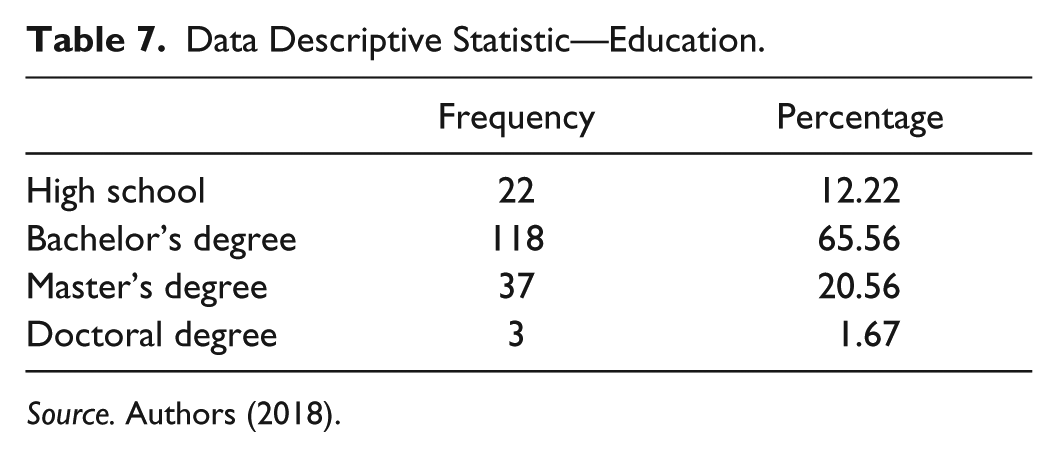
Source. Authors (2018).
Table 8 highlights the occupation of respondents. The respondents who focus their job only on online business are denoted by “online,” and the owners of non-online business are labeled as “personal business.” The four main occupations of the respondents are online, government officer, student, and personal business while those with other occupations, for example, company employee and freelancer, are denoted by “Others.” It is indicated that the most popular occupation is the personal business at about 41%.
Data Descriptive Statistic—Occupation.
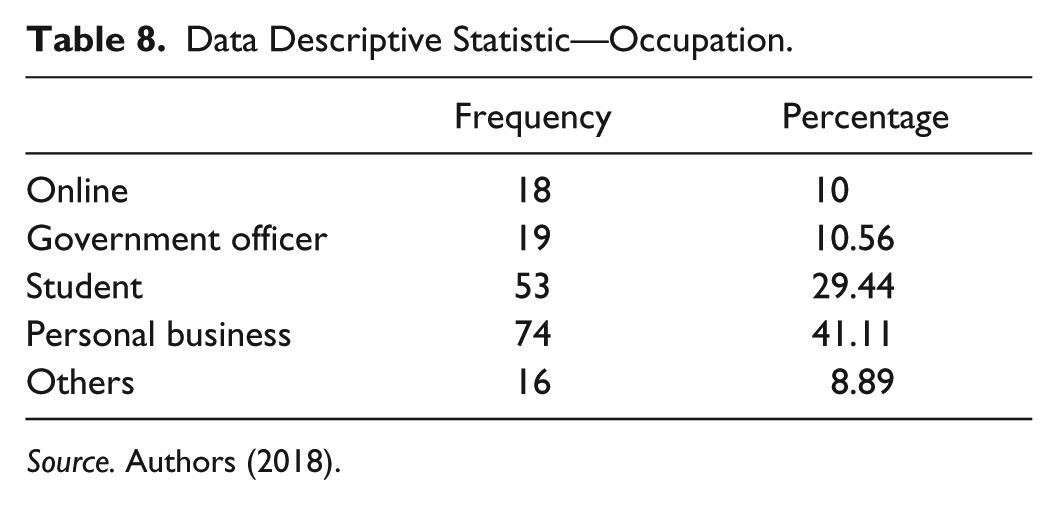
Source. Authors (2018).
Table 9 shows the types of businesses respondents engaged in including textile, jewelry, bag and shoes, cosmetics, supplementary food, and electronic devices. Approximately 19% of the respondents have more than one business. The maximum frequency (51%) is textile, and the minimum frequency (15%) is jewelry.
Data Descriptive Statistic—Type of Business.

Source. Authors (2018).
The age of respondents is shown in Table 10 and is categorized into four class intervals ranging from 21 to 60. It can be seen that most of the online entrepreneurs are between 21 and 30 years with those between 51 and 60 years having the minimum presence. The arithmetic mean is 30.72, mean and median are the same, and the standard deviation is about 0.9, which is quite low.
Data Descriptive Statistic—Age.

The income (US$) of respondents is shown in Table 11 where six class intervals show the respondent income. The income interval of 10k-30k has the highest frequency of 71 while the average income of respondents is about 44,000. Median and mode are roughly 26,000 and 20,000 respectively, different from mean.
Data Descriptive Statistic—Income.

Results of Data Verification Before Using Structural Equation Model Analysis
The analysis result of fundamental statistics of observed variables
The analysis of fundamental statistics of observed variables is aimed at verifying a normal distribution of one variable which is a preliminary agreement of data verification before analyzing data with LISREL program. This enables researchers to know which characteristics of normal distribution in variables will be used. The study used descriptive analysis using mean, standard deviation, skewness, and kurtosis to determine whether the variables have normal distribution or not and how. The verification of normal distribution of one variable is commonly implemented by considering skewness, kurtosis composed of fundamental statistics of observed variables being indicators of Latent Variables.
Figure 6 indicates the descriptive statistics of the features of variables where the observed variables have a mean of 4.15 to 6.00. The skewness or asymmetry of distribution overall indicates that 12 sub-factors have a skewness of −0.39 to −1.36, a negative skew. This indicates that most of the samples with the 12 sub-factors score higher than the mean. One sub-factor has a skewness of 0.10; a positive skew indicating that the samples have a score of one sub-factor lower than the mean and the kurtosis is measured between 0.22 and 2.84, a positive result. Nine sub-factors refer to the dispersion that is quite small, and the distribution of data is higher than a normal curve with a negative result. The four sub-factors are measured as −0.07 to −0.98, showing quite a large dispersion. The distribution of data gives a flatter curve. However, considering skewness and kurtosis, they are both slightly close to the center. The assumption is that the observed variables have a normal distribution curve and suitable for analysis using a structural equation model.

The descriptive statistics of the features of variables.
The analysis result of Pearson product–moment correlation
The Pearson product–moment correlation was analyzed among the observed variables and obtained a correlation matrix to verify the preliminary agreement of the analysis of structural equation modeling. This analysis of variables is needed to relate them to each other serving the main objective of the factor analysis in combining the group of family-related variables. To verify the variables related to each other, two types of statistics are used, Kaiser–Meyer–Olkin (KMO) measure of sampling adequacy and Bartlett’s test of sphericity, to verify whether all the observed variables are identity matrix or not. The analysis results are presented in Figure 7.

Pearson product–moment correlation among the observed variables.
Figure 7 indicates that 91 pairs of observed variables have a linear relationship and the correlation coefficient among the variables is positive. The size of correlation coefficient is between .004 and .740 with statistical significance at the .01 and .05 level. However, considering the correlation coefficient in each pair of observed variables as a whole, the correlation coefficient of each pair of observed variables does not exceed .80. This relationship reveals that the observed variables have no significant relationship to trigger multicollinearity problems and all the observed variables share loadings on the same factors. Therefore, they are suitable to use for analysis of structural equation modeling.
Bartlett’s test of sphericity is defined as 943.643, df = 91 (p = .000), meaning that the correlation matrix is not an identity matrix with statistical significance at the .01 level. The variables have a significant relationship that can be used for factor analysis corresponding to the KMO statistical result being close to 1 (0.881). It is shown that the observed variables are significantly related to one another and thus suitable for verification of coherence-consistency with the research model and empirical data accordingly. The index measured by 0.80 onward shows that the data are suitable to implement factor analysis, thus an excellent model.
PSFs
PSFs are comprised of 13 components: ACO, AFF, BIM, EOU, government support (GMS), logistics and transportation (LAT), networking (NWK), product quality (PDQ), product price (PDP), risk-taking propensity (RTP), reliability (RLB), advertising on social media (ASM), and staff and employee (SAE). The researcher verifies correlation value of these 13 components detailed in Figure 8.

The correlation matrix of mean and standard deviation of the observed variables of the possible success factors model.
Figure 8 indicates that the research examined the correlation between the 13 elements totaling 78 pairs, and the correlation coefficient observed differed from zero with statistical significance level of .01 and .05. In all, 75 pairs had a relationship ranging from 0.177 to 0.740. The results of the analysis on matrix correlation with Bartlett’s test of sphericity, with the chi-square = 922.960, df = 75, p = .000, different from zero with statistical significance at .01. This indicated that the observed variables were not of identity matrix. The variable correlation indicated that the identity matrix did not have a significant correlation for the elements to be analyzed. The KMO index = 0.886 indicated that variables are appropriate to also analyze the elements.
Figures 9 and 10 indicate that chi-square was 36.495 and p value was equal to 0.671, more than 0.05. The index was equal to 0.890, less than 2.00. The comparative fit index (CFI) value was 1.000, more than 0.90. The goodness of fit index (GFI) was 0.970, more than 0.900. The adjusted goodness of fit index (AGFI) was 0.934, greater than 0.90. The IFI index was 1.005, more than 0.90. The normed fit index (NFI) value was 0.962, more than 0.90. The RMR index was 0.046. This is from 0 to 0.05, while the root mean square error of approximation (RMSEA) index was 0.000, less than 0.05. Therefore, it can be concluded that the model fitted with the empirical data.

Possible success factors measuring model.
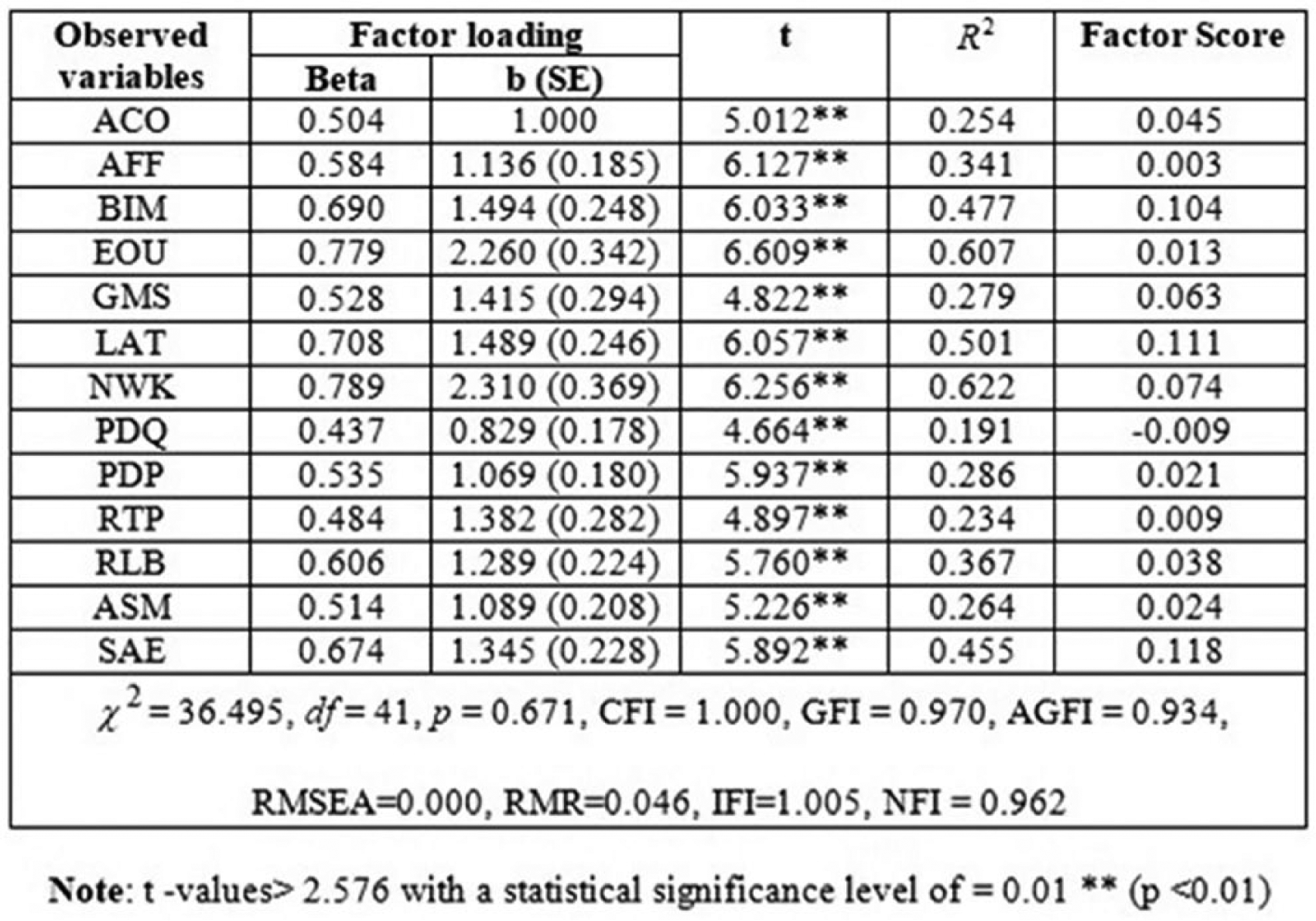
Results of confirmatory factor analysis of the possible success factors measuring model after the model modification.
Confirmatory factor analysis (CFA) of measurement model of each latent variable
The research used a CFA to verify the suitability and accuracy of structural equation modeling by considering the weight factors and R2 values to verify variance-related indicators.
Figure 10 indicates that the variables were significant in the identification of PSFs prioritized from most to least were networking (NWK), EOU, logistics and transportation (LAT), BIM, staff and employee (SAE), reliability (RLB), AFF, product price (PDP), government support (GMS), ACO, advertising on social media (ASM), risk-taking propensity (RTP), and product quality (PDQ), respectively.
The analysis results of structural equation model based on the hypotheses
The data with a causal relationship containing PSFs and success of being online entrepreneur (SOBOE) are shown in Figure 11 and Tables 4 and 5.
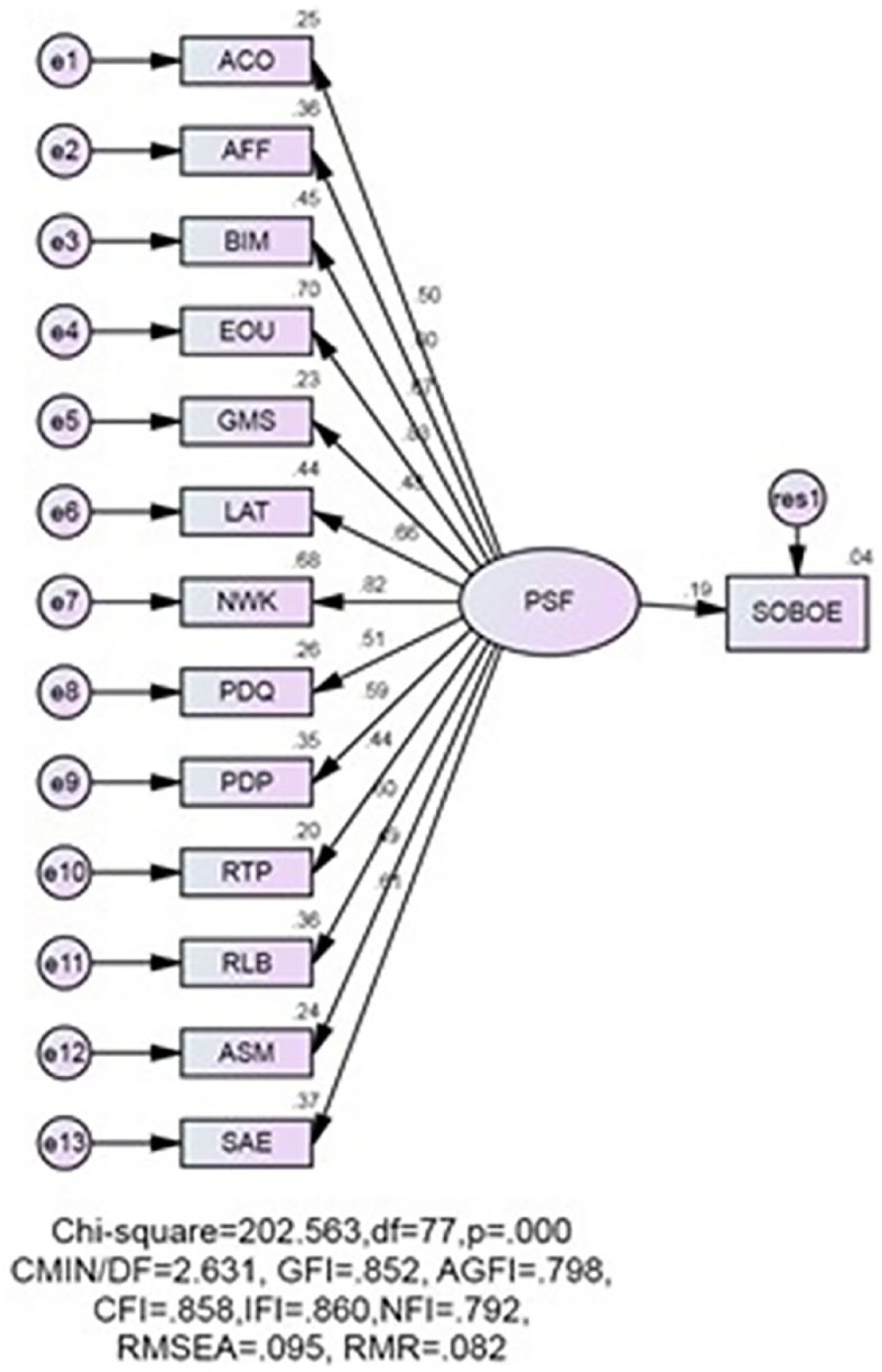
Analysis of the overall goodness of fit index of the model (before model modification).
Figure 12 indicates that the relationship model between the PSFs and SOBOE developed by the researcher is not consistent with the empirical data based on the calculated values. All important statistics did not meet the set criteria. Model modification indices (MI) were performed in the study, and the parameter tolerance was agreed for the correlation coefficient that was consistent with the empirical data. The model was modified 4 times. The change in the model was changed in a better direction. Value decreased from 202.563 to 60.302 and the RMSEA value decreased from 0.095 to 0.023, thus the modification of the model was consistent with the empirical data and was relatively good. The correlation between the variables in the model was not changed by the results of the analysis of the overall GFI after the model was modified. The results are presented in Figures 13 and 14.

Analysis of overall goodness of fit index of the model (before model modification).
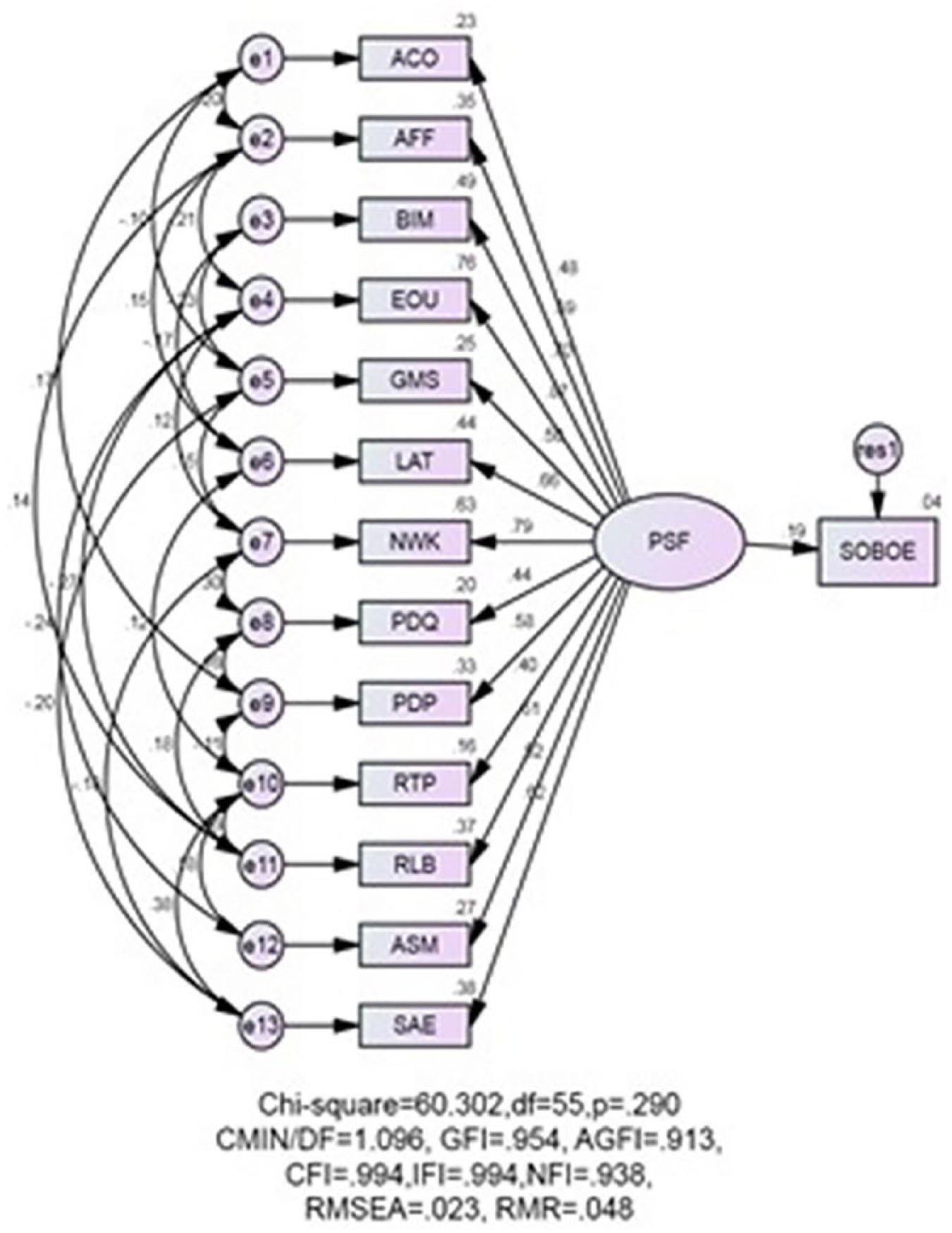
Analysis on the overall goodness of fit index of the model (after model modification).

Analysis of overall goodness of fit index of the model (after model modification).
From Figure 14, when the GFI of models was considered, it was found that the Models met the criteria and were accepted. Therefore, the model of structural equation model was appropriate and fitted with the empirical data.
Path Analysis
Analysis of causal influence that affects the success of online entrepreneurs
The causal factors that affect the success of online entrepreneurs are presented as direct effects (DEs), indirect effects (IEs), and total effects (TEs). From Figure 15, it was found that PSFs have a direct positive influence on the SOBOE with the DE equating to 0.295 with statistical significance of .05. The coefficient prediction (R2) of success was equal to 0.036 and variance at 3.6%.

Analysis of influence of variables on casual model on factor that affects the success of being online entrepreneurs.
Findings
This research aimed to identify the success factors of online entrepreneurs. The scope of this study involved Thai online entrepreneurs registered with the DBD. There are 13 factors related to characteristics of entrepreneurs that can be considered to be the success factors (Table 12).
The Results of the Hypothesis Testing.

Source. Authors (2018).
ACO is a factor that relates to the SOBOE (Sebora et al., 2009). The theory of locus of control focuses on individual perceptions about reasons for success and failure in life. Stake (1979) argues that a positive correlation exists between ACO and locus of control. The results show that ACO is greater than critical value meaning that Hypothesis 1 is accepted at the confidence level of 99%. Therefore, the success of online entrepreneur relates to founder’s ACO as also found in Renko, El Tarabishy, Carsrud, and Brännback (2015); Sebora et al. (2009); and Stewart and Roth (2007).
Literature indicated that EOU correlates with the SOBOE (Gupta, Niranjan, Goktan, & Eriskon, 2016; Sebora et al., 2009). The results of the study found that EOU is greater than the critical value meaning that Hypothesis 2 is accepted at the confidence level 99%. Therefore, the success of Thai online entrepreneurs is associated with EOU. Thus, customers will have high satisfaction if the online entrepreneurs provide an easy to use trading tool.
Sebora et al. (2009) showed that ACO is not related with the SOBOE. The results indicate that governmental support (GMS) is greater than critical value meaning that Hypothesis 3 is accepted at the confidence level 99%. Stam (2015) also concluded that government policies and environment either enable or disable entrepreneurship. However, unlike in Sebora et al.’s (2009) study, the success of Thai online entrepreneurs is positively related to GMS. This is because the government has many useful policies to facilitate online entrepreneurs in establishing their businesses and forming partnerships.
Basu and Virick (2015) found out that active network participation over a period of time has a positive correlation with new venture growth. From the results, it is clear that networking (NWK) has maximum beta value implying that this factor plays an important role in regression model. The Hypothesis 4 is accepted at the confidence level 99%. Although this contradicts Sebora et al.’s (2009) findings, the success of Thai online entrepreneurs is related to networking because complimentary businesses like textile and jewelry support each other through partnerships.
Contrastingly, Sebora et al. (2009) argued that risk-taking propensity is not related with the SOBOE. This factor is related to the theory of long tail marketing, which suggests that online entrepreneurs have to focus on all types of customers. Same observations are related to the findings by Banalieva, Puffer, McCarthy, and Vaiman (2018). The findings indicate that risk-taking propensity (RTP) is greater than critical value meaning that Hypothesis 5 is accepted at the confidence level 99%. Therefore, the success of Thai online entrepreneurs is associated with risk-taking propensity. Risk-taking propensity can promote an entrepreneur to a larger market mind-set. Moreover, long tail marketing suggests that the entrepreneur pays attention to the niche market, something not commonly seen.
The results of this study found that reliability (RLB) is greater than critical value meaning that Hypothesis 6 is accepted at the confidence level 99%. Therefore, reliability directly correlates with the success of Thai online entrepreneurs. It is concluded that reliability can build confidence with customers making it easier to sell to them.
Santos (2003) demonstrated that AFF is one of the most important factors to create customer loyalty and satisfaction. The findings of this study found that AFF is greater than critical value meaning that Hypothesis 7 is accepted at the confidence level 99% where the success of online entrepreneur relates to AFF. There are many companies selling similar products but with good AFF gives a good reputation. Thus, this attracts the new customers.
Wang and Yang (2010) argued that BIM and brand awareness have a strong relationship to brand credibility and consumers’ brand trade motive. The results indicated that value of BIM is greater than critical value meaning that Hypothesis 8 is accepted at the confidence level 99%; thus, BIM has a significant positive effect on the success of an online entrepreneur. A positive BIM can add more value to a product/service.
Cooper et al. (1997) argued that supply chain management, an extension of logistics, plays an important role in many activities and processes of modern businesses. Giunipero et al. (2005) also mentioned that entrepreneurs need many skills to attain purchasing and supply chain management flexibility, crucial for the current rapidly changing business environment. This is found in the study where logistics and transportation (LAT) is greater than critical value meaning that Hypothesis 9 is accepted at the confidence level 99%; thus, the success of Thai online entrepreneurs is associated with logistics and transportation. The product will get to the customer safely and rapidly if the online entrepreneur has good logistics and transportation.
Olbrich et al. (2017) showed that product quality has an effect to income and total sales. The findings indicate product quality (PDQ) is greater than critical value meaning that Hypothesis 10 is accepted at the confidence level 99%; thus, product quality has an impact on the success of an online entrepreneur. This factor had the lowest beta and t values. Therefore, repurchase occurs when the quality of the product is high enough to satisfy the customer.
The pricing rule is an important factor in marketing strategy that can lead to the success or failure of a company (Pitt et al., 1997). The results indicated that product price (PDP) is greater than critical value meaning that Hypothesis 11 is accepted at the confidence level 99% and thus, the success of Thai online entrepreneurs is related to product price. It is normal to see that online products with the same product quality have a lower price.
It is noted that almost all advertising techniques of online entrepreneurs are done through social media (Nakara et al., 2012). This research found that advertising on social media (ASM) is greater than critical value meaning that Hypothesis 12 is accepted at the confidence level 99% and thus, the success of Thai online entrepreneurs is associated with advertising on social media. Currently, social media is the fastest and cheapest way to advertise and also the most effective.
Better business performance can be achieved through efficient staff management (Cook, 2008). The results indicate that staff and employee (SAE) is greater than critical value meaning that Hypothesis 13 is accepted at the confidence level 99% and thus is concluded that staff and employees is an important driver of success of Thai online entrepreneurs. When employees and other staff are trained well, they are able to work harder and give more profit to the company and thus have better performance.
Summary
The discussion above indicates that the hypotheses are acceptable as per the possible factors. Some of the factors are contrary to previous studies but most of them indicate that they are related to the success of an online Thai entrepreneur. Therefore, it is significant to look further into these factors of success when online entrepreneurs establish their businesses.
Discussion
The findings and results indicate that all success factors are important and contribute to success with clear prioritization in Figure 10. Indeed, Figure 10 indicates that the variables were significant in the identification of PSFs prioritized from most to least were networking (NWK), EOU, logistics and transportation (LAT), BIM, staff and employee (SAE), reliability (RLB), AFF, product price (PDP), government support (GMS), ACO, advertising on social media (ASM), risk-taking propensity (RTP), and product quality (PDQ), respectively. As such, government should continue to support online entrepreneurs with platforms through which to develop business networks and partnerships that help the businesses grow and succeed collectively rather than as isolated agents in individual markets as the case in most conventional stores. Future research should investigate the effect of these partnerships on the risk-taking preferences of online entrepreneurs. Whereas some businesses find partnerships to mitigate risk thus encourage high risk, others find them to increase risk thus minimizing risk taken in partnerships due to cases of delayed payments and poor product quality.
Conclusion and Recommendations
This research assesses success factors for online entrepreneurs in Thailand. Research on this topic is based on the perception of existing online entrepreneurs who run their businesses in Thailand. The study included 13 success factors associated with the success of an online entrepreneur: ACO, EOU, government support, networking, risk-taking propensity, reliability, AFF, BIM, logistics and transportation, product quality, product price, advertising on social media, and staff and employee. From the findings, it was indicated that all factors are significantly related to the success of an online entrepreneur. These findings collaborated with previous studies, verified by literature and the correlations they found.
These findings contribute toward better understanding of the value of online business start-up experience in relation to the 13 factors of success. Given the fact that networking is an important factor for success of an entrepreneurship venture, it follows that prospective online entrepreneurs and budding entrepreneurs within Thailand may immensely benefit from networking with experienced online entrepreneurs. Like any other business, starting an online business involves risks and requires risk-taking attitude to start up and sustain. It would also be imperative to understand that for the success of online start-ups, entrepreneurs need to be more willing to take risks than to view their online businesses as necessities. Even after meeting the personalities and traits needed for entrepreneurship, it will be necessary for the Thai government to create a good entrepreneurial ecosystem for the online entrepreneurs.
The contributions of this study are based on providing the 13 factors related to the success of an online entrepreneur while also revealing the views of Thai online entrepreneurs that correspond to the success of online entrepreneurs. Out of the 13 factors, seven factors had not been investigated before though they had been mentioned. This research provides knowledge enhancement on how Thai online entrepreneurs can run online businesses successfully. It also provides information on how Thai online entrepreneurs can develop their businesses. The research can, therefore, be used for further study in similar research by students and potential online entrepreneurs.
Footnotes
Declaration of Conflicting Interests
The author(s) declared no potential conflicts of interest with respect to the research, authorship, and/or publication of this article.
Funding
The author(s) received no financial support for the research, authorship, and/or publication of this article.
