




Abstract
This study determines the relationship between types of employee participation (delegative, consultative, worker director, and worker union) on employee retention and the moderation of employee compensation in this relationship. The authors analyzed four types of employee participation, employee retention, and compensation in two major sectors of Pakistan (n = 1,054): service (n = 535) and manufacturing (n = 519). Self-administered questionnaires were distributed to first-line and middle-level employees. After establishing the reliability and validity of the scale, descriptive statistics, correlation, univariate analysis, multiple regression analysis, and independent-sample t test were conducted. All types of employee participation influence employee retention positively in both sectors. Employee compensation moderated the relationship between types of employee participation and employee retention. Delegative participation had a stronger influence on retention as compared with other types in both sectors. This is the first quantitative study to examine the influence of compensation on the relationship between direct and indirect types of employee participation on employee retention in six industries (Cement, Pharmaceutical, Food and Beverages, Health Care, Banking, and Higher Education) of Pakistan. The authors extend previous research studies by using comparative analysis tools to generalize the results in South Asian organizations.
Keywords
Introduction
In this era of hyperactive environment, the formulation and implementation of traditional human resource management (HRM) strategies and practices are not enough to retain talented workforce. With the inclusion of more and more Generation X and Y employees in the workforce, utilization of these traditional retention strategies is becoming less effective to meet the requirements of these generations (Kashyap & Rangnekar, 2014). Organizations are compelled to find gateways to be more adaptive, accommodative, and cooperative as the challenges and pressures of competition in the global changing markets are nerve breaking and highly intense (Park, Appelbaum, & Kruse, 2010). Taken in this context, combination of employee participation practices (e.g., delegation and consultation) and employee compensation can be a novel idea and unique methodology that could help organizations to achieve success and could outwit the competitors (Yukl, 2010).
Employee retention is considered as the heart of organizational success. It is defined as “A process in which the employees are encouraged to remain with the organization for the maximum period of time or until the completion of the objectives” (Singh & Dixit, 2011, p. 442). The basic aim of employee retention strategies and practices is twofold within the organizations. One is to reduce employee turnover and, second, to considerably reduce the associated expenses of hiring and training and orientation of the new employees (Iqbal & Hashmi, 2015).
To analyze the influence of these participation practices on employee retention in manufacturing and services sectors of Pakistan, this study differentiates between direct participation (task delegation and consultation) and indirect participation (worker director and worker unions), in relation to employee’s compensation and retention.
Organizations cannot forbid or lockout their employees from looking for more attractive and lucrative opportunities; instead, the purpose of the retention strategies is to make employees loyal for the time they stay with the organization. It is an observation that strategies like career aspirations, autonomy, delegation, involvement, and cooperative and supportive working environment could be the key factors of employee retention (Agarwala, 2003).
Employee consultation and delegation by managers is an immediate force, which influences their perception regarding work environment (Amabile, Schatzela, Monetaa, & Kramer, 2004). Managerial consultation, delegation, and encouragement are frequently viewed as variables that have effects on employee’s performance and employee retention (Agwu & Olele, 2014). Thus, employee participation or involvement becomes a key aspect of organizational structure to achieve positive perceptions from employees and to increase efficiency and retention.
Theories and assumptions regarding employee’s participation hold a number of complex characteristics. Participation can be both direct and indirect which can effectively serve various operational and structural properties leading to multiple outcomes (Looise, Torka, & Wigboldus, 2011). Therefore, this study helps us to analyze the relationship between types of employee participation and employee retention in manufacturing and service sectors of Pakistan.
Employee participation and employee retention are interdependent as both results in either high productivity or exceptionally poor productivity. According to Wilkinson, Mowbray, and Sun (2018), employee participation has shifted from its origin of indirect form (worker union, worker direction, and joint consultation committees) to more direct employee–manager collaborations in the form of delegative and consultative participation. Therefore, employees have now more opportunities to participate in their task-related decisions and to give suggestions, recommendations, or ideas for productive organizational change (Barry & Wilkinson, 2016).
Apart from afore-mentioned solution, the current research implies compensation as a moderating function to create equilibrium between employee participative practices and employee retention. According to Milkovich and Newman (2011), compensation means “all forms of financial returns and tangible services and benefits employees receive as part of an employment relationship (Milkovich & Newman, 2011, p. 5).” Employee compensation is defined as “All forms of pay going to employees as an outcome of their employment” (Dessler & Varkkey, 2011, p. 394). To ensure best talent within the organization, they must implement effective compensation policies that could influence an employee’s perceptions and personal well-being, thus resulting in high productivity and high financial turnover (Gupta, 2014).
Even though studies conducted by Agarwala (2003); Gupta (2014); Kashyap and Rangnekar (2014); Ready, Hill, and Conger (2008) have provided enough empirical evidence on the influence of employee participation practices on employee retention, still it requires an elaborated model that provides an insight on employee retention in a country like Pakistan, which is developing and facing high inflation, high unemployment, and high skilled brain drain.
Findings of this study also provide an insight to the organizations working in other developing countries such as Bangladesh, India, Nepal, Sri Lanka, Thailand, Malaysia, and Philippines who have higher level of brain drain as in Pakistan. The results would help them to devise strategies for retention of their talented and skilled workforce.
Significance of Study
This study investigates the changes in employee’s retention through employee participation practices moderated by employee’s compensatory effects. This study benefits both manufacturing and service sector organizations by helping organizations and the executives to understand the role of compensation in employee retention, which, in turn, can affect their organizational performance and decrease employee retention.
Research Objective
This study contains the following core objectives:
To understand and analyze the types of participative practices employed for employee retention in service and manufacturing sector organizations of Pakistan.
To explore the extent of association among types of participative practices and employee retention in service and manufacturing sector organizations of Pakistan.
To explore the moderating effect of compensation on the relationship between participative practices and employee retention.
Why Pakistan?
Selecting Pakistan for this study has three major reasons. First, Pakistan is an emerging economy where government is attempting to accelerate country’s economic growth by creating a conducive macroeconomic environment and developing infrastructure to increase local production and generate competition and efficiency in the economy (Shahbaz & Rahman, 2014). Because of the uncertain economic situation, organizations working in Pakistan have to face severe competition from within and outside the country for attracting and retaining competent employees. Second, external brain drain from the country is exceeding at an alarming rate. Brain drain from the country is due to lack of satisfaction with compensation, even with a regular increase in compensation by public and private sector organizations (Sajjad, 2011). For employee retention, organizations have to work on something more than compensation only. Different studies have shown that nonfinancial incentives including delegation, consultation, and empowerment influence employee retention (Sajjad, 2011). Third, total population of Pakistan was approximately 188 million in 2014, which increased to 193.85 million in 2016. Despite the continued population planning, Pakistan will be the sixth highly populated country of the world and it is predicted to reach around 342 million by 2050 at the recent consensus (Sheikh, Sadaqat, & Meraj, 2014). According to Pakistan Bureau of Statistics 2016, total population of Pakistan between the age group of 25 and 54 years range approximately 7.45 million and the median age is 23.4. These statistics show that most of the Generation X are either working in the organizations or are ready to enter the working environment. With the Generation X entering the organizations and limited economic and financial situation of the organization, they need techniques and practices (employee participation) to retain competent employees.
According to Gallup survey 2016 and Hay group 2017, around 50% of employees in Pakistan and India are set to exit their present organizations before 2017 and stated companies with highly engaged workforces outperform their peers by 147% in earnings per share.
Literature Review
Employee Participation
Employee participation is a process in which employees take control of their work and its conditions by incorporating their involvement in decisions regarding their work (Strauss, 2006). In this process, employees share decision-making power regarding their tasks with their superiors. A meta-analysis on employee participation conducted by Pereira and Osburn (2007) analyzed that organizations equalize the hierarchical inequality among employees and supervisors by means of shared influence and authority.
Employee participation includes direct and indirect forms, including employee’s task delegation and consultation, employee representations, and shared ownership schemes. Employee participation schemes promote equal opportunities and incentives that enhance employee’s commitment and retention (Allen, 2015).
Direct participation
Participation can be informal, formal, consultative, delegative, and direct or indirect. This form of employee participation occurs in the everyday practice of the job itself. It consists of the capacity to influence the design of or change in the system of organization in which the employee is involved, and it might take the form of consultation about broader and long-term organizational issues. All these forms have their own individual influence on employee retention, organizational productivity, and efficiency (Bhatti, Nawab, & Akbar, 2011). Substantial employee involvement in decisions, on one hand, can make them fortify their own interests while, on the other hand, it can reduce the probability of opportunism carried out by the managers (Allen, Bryant, & Vardaman, 2010).
Delegative participation
Delegative participation is distinguished as the degree to which subordinates are allowed to influence their tasks and responsibilities to put into action. This form of participation gives them a discretionary authority or a say with respect to implementation of their tasks. This enhances subordinate’s degree of situational task control thus inducing positive attitudinal outcomes (Krause, Gebert, & Kearney, 2007). Delegation means that the manager assigns duties to others, and divides work in such a way that it executes effectively. In a way, delegation reduces the manager’s workload and ensures that he manages instead of focusing on functionally executed tasks. This form of delegation restricts participation to only operational aspects of the organization.
Any form of employee participation (delegation, empowerment, or autonomy) supports employee retention decisions and builds positive perception regarding organization and its management (Liu, Zhang, Wang, & Lee, 2011). Findings of Liu et al. (2011) have significant implications for academicians in the form of employee retention and participation literature, along with it has managerial implications to enhance retention.
Consultative participation
Consultative participation is distinguished as an ailment of opportunities for participation to employees by organization. In this process, subordinates provide inputs to managers before taking decisions in the form of suggestions or recommendations, but managers retain control over the final decisions (Ruiz & Rivero, 2018). It allows exchange of ideas and different points of view to take place between the management and employees, and among employees themselves (Fleetwood & Hesketh, 2010). In consultative participation, employees engage in long-term, formal, and direct participation, and the content of the participative decision making focuses on job issues. In consultative participation, employees give their opinions and management encourages them to share their views but retain the right to take the action.
Indirect participation
Indirect participation is classified as formal, indirect, and of medium to low influence. Employees participate indirectly through their representatives who were elected in a governing council or the board of directors (Akkerman, Sluiter, & Jansen, 2015). It is similar to employee ownership, except that the influence of employees is generally lower. Indirect forms of participation include employee representation in joint consultative committees, works councils, and employee members of board of directors (worker director) or management committees. Direct employee participation means the direct interaction between employer and employees in the process of decision making, while in indirect participation, employers interact with employees through representatives (Akkerman et al., 2015).
Industrial Relations Act (IRO) of 2008 and its predecessors, IRO 2002, contained requirements for employees to form trade unions or worker union at the factory or organization level and can appeal in law courts and national organizations to raise their voice and concerns nationally and protect and promote their rights (Ghayur, 2009). It has a three-pronged system of employee participation in management. This system includes works council, the management committee, and the joint management board; they work independent of each other and each having its own sphere of activities.
Worker director
Worker directors are representative of employees who are part of board of directors or organizational supervisory board. The appointment of a worker director requires the agreement of the organizational employees and can be elected or selected from the worker union body or employees (Addison & Schnabel, 2011). The concept of worker director might be considered more effective employee retention and efficiency, as they are involved in top management of the organization and can influence the interests of both management and workers (Strauss, 2006). Theorists with a collective bargaining perspective evaluate the board representation as ineffective or as a half success at best. They welcome the legitimate access of employees to corporate decision-making processes, permitting them to compete for influence particularly on issues directly affecting employee interests.
Worker union
The purpose of worker union is to use collective bargaining as a tool to force organizations for better employee welfare programs and work life (Levine, 1995). In general, worker unions cooperate with management and help them in issues related to compensation reduction or organizational restructuring or reengineering. In most South Asian countries (Pakistan, China, India, and Bangladesh), worker unions are part of corporate law. They are usually interested in participating in strategic-level decision making to safeguard employee rights in terms of fairness and equity of resource distribution (Nam, 2003).
Employee Retention
To accomplish organizational business objectives, efforts that an organization adopts to keep productive and desirable employees are referred as employee retention (Frank, Finnegan, & Taylor, 2004). In every sector, employee retention is a major issue because high turnover cost results in failure for achieving organizational objectives. Highest attention is paid to retention as it helps not only in reducing turnover outlays or in minimizing the cost of recruiting and training but because it aids in retaining talented workforce from getting poached (Sandhya & Kumar, 2011). However, when an employee terminates his job, the organization suffers loss of customer loyalty (in service sector), loss of expertise, more organizational cost (hiring, administrative, and training), and interruption in daily workflow, which may prove disastrous for the organizations in the end (Brandt, Bielitz, & Georgi, 2016; Karsan, 2007; Ton & Huckman, 2008).
Study conducted by Marescaux, De Winne, and Sels (2013) indicates that practices like delegative participation, consultative participation, worker director, and worker union can result in enhancing employee retention. To retain talented employees, employers and supervisors have to provide employees opportunities such as challenging task and a certain level of autonomy and freedom in their jobs (Ready et al., 2008).
According to organizational equilibrium theory (March & Simon, 1958), an individual tends to stay with an employer as long as the inducement offers (compensation, working environment, growth opportunities) are similar or greater than the contributions (such as time, energy, and effort) that an employee offers. Individual’s desire and ease also matter in this context.
Organizations with effective employee participation practices (direct and indirect) have more positive attitudinal outcomes (commitment, job and pay satisfaction, retention). When employees have effective role in devising policies and decisions within their organization, leaving the organization can become difficult for them (Ojasalo & Tahtinen, 2016).
In developing countries like Pakistan, which offer limited financial compensation to their employees, employee participation practices could be an effective tool to retain employees (Akhtar, Aamir, Khurshid, Abro, & Hussain, 2015). This leads us to our first hypothesis:
Employee Participation, Compensation, and Retention
To attain and retain the productive and skillful employees in a competitive market and workplace, organizations have to initiate practices like employee participation (Iheriohanma, 2007). Organization cares about their employees by giving the opportunity to enhance their skills and career and valuing their participation (direct or indirect), makes employees feel as a part of the organization, and results in increased retention (Allen et al., 2010).
Once a company has captured exceptionally talented employees, they are required to close the backdoor to curb their impulse of walking out (Kaye & Jordan, 2001). Employers should not get deceived that money is the only employee retention factor; employees in today’s environment are also concerned with personal growth and career development (Chiboiwa, Samuel, & Chipunza, 2010). Hence, they get more fascinated if offered meaningful and dynamic challenges at workplace. Apart from that, good supervisors and opportunities for grooming also count a lot. Compensation is not among the top influential factors for nonmanagement turnover; however, for increasing retention, compensation can play a critical role (Moncraz, Zhao, & Kay, 2009). Studies conducted by Hytter (2007) and Hausknecht, Rodda, and Howard (2009) stated that compensation has an indirect influence in employee retention. They also stated that salary or wage has a moderate influence on compensation. Whereas compensation satisfaction and transparency could have a direct influence on retention.
Employees who have low compensation often do not involve in practices like delegation, consultation, and suggestions, resulting in low level of employee retention at first-line employees. Moreover, they consider these practices as a challenge in their work–life balance and belief as not worthy of required efforts (Agustine & Ssemugenyi, 2014). Study conducted by Bhatnagar (2007) also stated that organizations with higher level of participation have more retention and productivity. Middle and top-level management can influence compensation on the bases of participation practices and employee retention requirement. Managers have to devise innovative mix of participation practices and utilize different forms of compensation to make talented employees view their employment with the organization as more useful.
Employee retention increases when employees have some voice and authority regarding their work-related decision. This relationship can be affected with the fair and transparent compensation practices (George, 2015). This leads to our second hypothesis:
In service sector organization, unlike manufacturing sector organization, employee attitude and behavior is an essential part of the organizational outcome, which results in more efforts from organizations to involve them in making decisions regarding their jobs or seeking opinion rather than just seeking compliance from employees (Saeed et al., 2013). According to Cania (2014), both organizational sectors have basic differences in their core organizational practices that influence their organizational performance. Manufacturing sector organizations have more focus on staffing and compensation practices, whereas service sector organizations emphasize more on customer satisfaction, thus focusing on HRM practices like participation and training.
According to Zahra, Irum, Mir, and Chishti (2013), with the increase in service sector organizations (higher education institutions and hospitals) in Pakistan, employees have now more job opportunities and they can select organizations according to their own preferences and satisfactory factors, resulting in lower employee retention. These satisfactory factors include more participation, compensation, training opportunities, and authority.
Moreover, manufacturing organizations have more worker unions, and mostly unionized organizations have lower skilled employees, which results in lower level or less delegative and consultative participation than within service sector organizations (Schmitt, 2009). To sum up our considerations so far, there is a theoretical argument that suggests that there is a difference regarding employee participation in manufacturing and service sector organizations. This leads to our third hypothesis:
Method
We examined our research hypotheses with the help of datasets from manufacturing (cement, pharmaceutical, and food and beverage) and service sectors (health care, higher education, and banking) of Pakistan. To construct a comprehensive list of populations, we included the higher education institutes that are approved either by the Higher Education Commission of Pakistan; banks, cement, and food and beverage companies that are listed in Securities and Exchange Commission of Pakistan (SECP); health care that are approved by Pakistan Medical and Dental Association (PMDA); and pharmaceutical companies that approved by Drug Regularity Authority of Pakistan (DRAP). Recognized organizations are included because nonrecognized organizations are often reluctant to share information due to their own legal and financial concerns. Employees working at the middle level and first-line faculty members (i.e., Lecturer, Assistant Professor, Associate Professor, and Professor) from higher education institutions, from health care (doctors, surgeons, and department heads), and managers, assistant managers, and department heads from banks, pharmaceutical, cement, and food and beverage organizations were approached for data collection.
Data Collection and Sample
Two mechanisms were adopted for data collection: first, data were collected through a self-administration questionnaire from organizations in Islamabad, Rawalpindi, Lahore, and Peshawar (response rate = 95%). Second, data were collected through emails (with two reminders after every 3 days gap) from Karachi and Quetta (response rate = 62%). The total response rate from manufacturing sector was 79.84%, while from service sector, it was 82.30%. In each sector organization, 650 questionnaires were distributed (food and beverage = 250, cement = 200, pharmaceutical = 200, higher education institutions = 250, banks = 250, and health care = 250). These types of organizations were selected because according to the data of SECP 2016, they altogether make around 30% contribution in their sectors. Based upon this, study results can be generalized.
The two samples were collected as convenient samples where the individual workers were personally approached in their workplaces. After a brief introduction to this study, the voluntary participants were handed the surveys that were to be collected at the end of the day. Although the survey requires only 10 min for completing, some surveys were collected in the next 2 days to give them enough time to attempt the survey attentively. As shown in Table 1, 68.8% of the respondents were male. From universities, most of the faculty members were either PhDs or were registered in PhD programs. In banks, almost all employees were Master degree holders while very few employees were with MPhil or MS degrees, whereas in health care, mostly respondents were MBBS or Master degree holders. On the contrary, most employees in manufacturing sector organizations were Master and Bachelor degree holders.
Respondent’s Demographics.

Instrument Validity
In pilot test phase for content validity of the scale, three types of methods were executed. These methods included focus group discussion, general interviews from two manufacturing organization and two service organization managers, and doing pilot testing of the survey form. After completion of these three experiments, survey form was modified in terms of simplifying survey language and translating survey form into Urdu (by using back translation method) for those who find difficulty in understanding English. Survey statements were modified for each sector and two questions were added in employee retention variable.
Measures
The survey includes items for demographics (i.e., age, education, sector, industry, and employment status). For the measuring employee participation, six-item scale of Lammers, Meurs, and Mijs (1987) was used with 5-point Likert-type scale ranging from highly disagree to highly agree. For construct validity, exploratory factor analysis revealed that six items of delegative participation explain 62.46% of the variance; five items of consultative participation explain 60% variance; three items of worker union scale explain 60.98% variance, whereas three items of worker director scale explain 53.42% of the variance. To measure employee retention, 10-item scale of Govaerts, Kyndt, Dochy, and Baert (2011) was used. Exploratory factor analysis revealed that it explains 65.15% of the variance. To measure employee compensation, a self-developed three-item scale was used. The sample included items such as mark your pay grade and salary range. For construct validity, exploratory factor analysis revealed that three items explain 50% of the variance in compensation.
As a first step, an exploratory principal components analysis with varimax rotation on all multiple-scale items to determine item retention was performed. A principle components factor analysis with varimax rotation was conducted to validate the basic structure of delegative participation, consultative participation, worker union, worker director, employee retention, and employee compensation. In interpreting the factors, only a loading of 0.50 or greater on the factor has been considered. The Kaiser–Meyer–Olkin (KMO) measure of sampling adequacy value for items was 0.726, indicating sufficient intercorrelations with Bartlett test of sphericity was also found to be significant (chi-square = 7,840.151; significance = .000, p < .001). These factors can be used as variables for further analysis.
Goodness of model fit presented satisfactory results of indices—minimum discrepancy, divided by its degrees of freedom (CMIN/DF) = 2.41; goodness of fit index (GFI) = 0.74; adjusted goodness of fit index (AGFI) = 0.73; comparative fit index (CFI) = 0.82; root mean square error of approximation (RMSEA) = 0.04. Cronbach’s alpha coefficient values ranged between .70 and .81, composite reliability (CR) ranged from .74 to .83, and average variance extracted (AVE) ranged from 0.53 to 0.64.
Prior to the analysis of structural model, multicollinearity issues were also checked. For that, variance inflation factor (VIF) and tolerance tests were conducted on all variables separately. Results indicated no issue of multicollinearity as tolerance values are above 0.10 and VIF values are less than 10 as recommended by O’brien (2007).
Data Analysis
Descriptive Statistics and Pearson Correlation Analysis
The descriptive statistics in Table 3 indicates that the responses for all the study scales were above the neutral response options. Results of mean and standard deviation show that data have normal distribution. Results of Pearson correlation analysis indicate in Table 1 that employee retention was positively correlated with salary, delegative participation, consultative participation, worker director, and worker union. Employee retention was negatively associated with gender, age, and qualification. Employee retention has a strong association with delegative participation while it has a weak association with worker director.
Univariate Analysis
Univariate analysis was conducted to further investigate the influence of compensation and the interaction effect of compensation with employee participation (delegative, consultative, worker union, and worker director) on employee retention. The findings from these tests shown in Table 4 are for manufacturing and service sectors. For both sectors of Pakistan, three forms of employee participation had significant main effect on employee retention. Delegative participation had a positive influence on employee retention. The interactions among forms of employee participation, employee retention and compensation is shown in Figure 1 as theoratical framework.
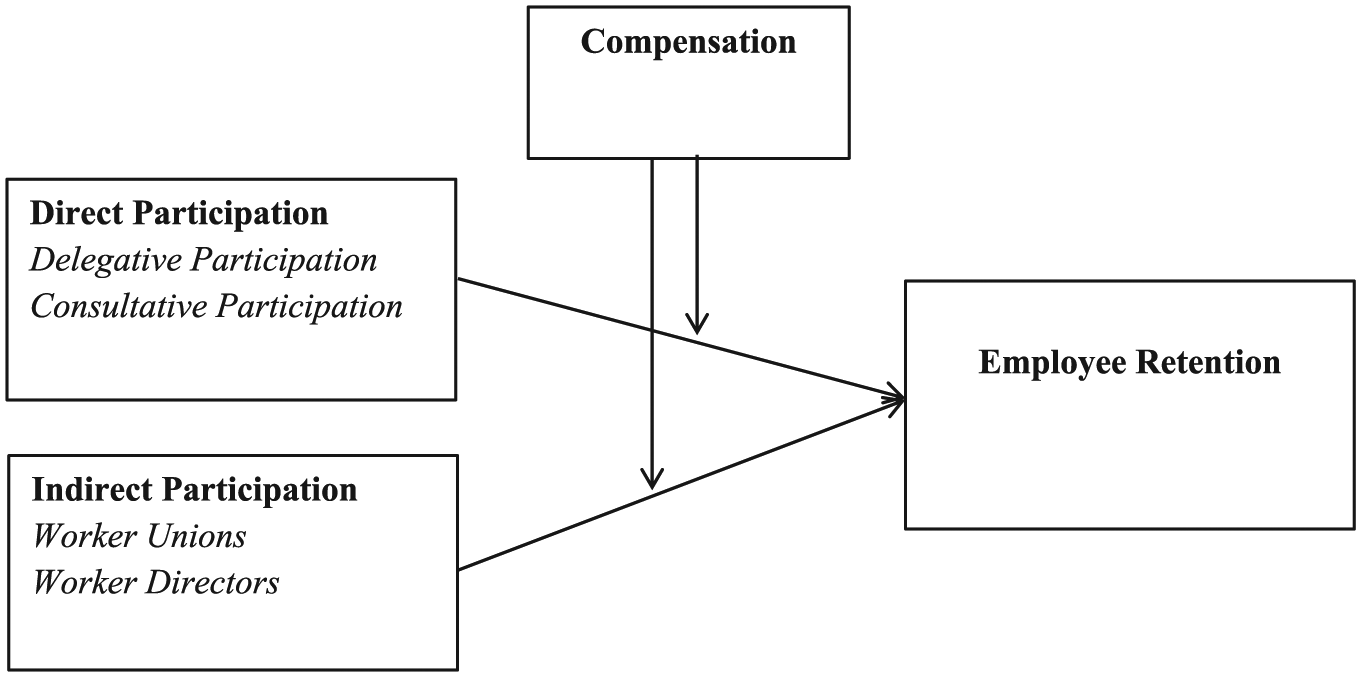
Theoretical model.
The interaction between compensation and delegative participation also had a significant effect on retention predicting that level of compensation influences the relationship between delegative participation and employee retention.
Delegative participation interacted with higher compensation to enhance employee retention is shown in interactional plots (Figure 2 and 3). Interactive Figures 2 and 3 show with higher level of compensation, the influence of delegative participation on employee retention becomes stronger in both sectors. Results of Table 4 show that interactive influence of compensation and delegative participation on employee retention is stronger within service sector than manufacturing sector. In Table 2 rotations were converged in seven iterations.

Delegative Participation × Compensation (manufacturing sector).

Delegative Participation × Compensation (service sector).
Consultative participation had a positive influence on employee retention. The interaction between compensation and consultative participation also had a significant effect on retention, predicting that level of compensation influences the relationship between consultative participation and employee retention. Consultative participation interacted with higher compensation to enhance employee retention is shown in interactional plots (Figures 4 and 5).
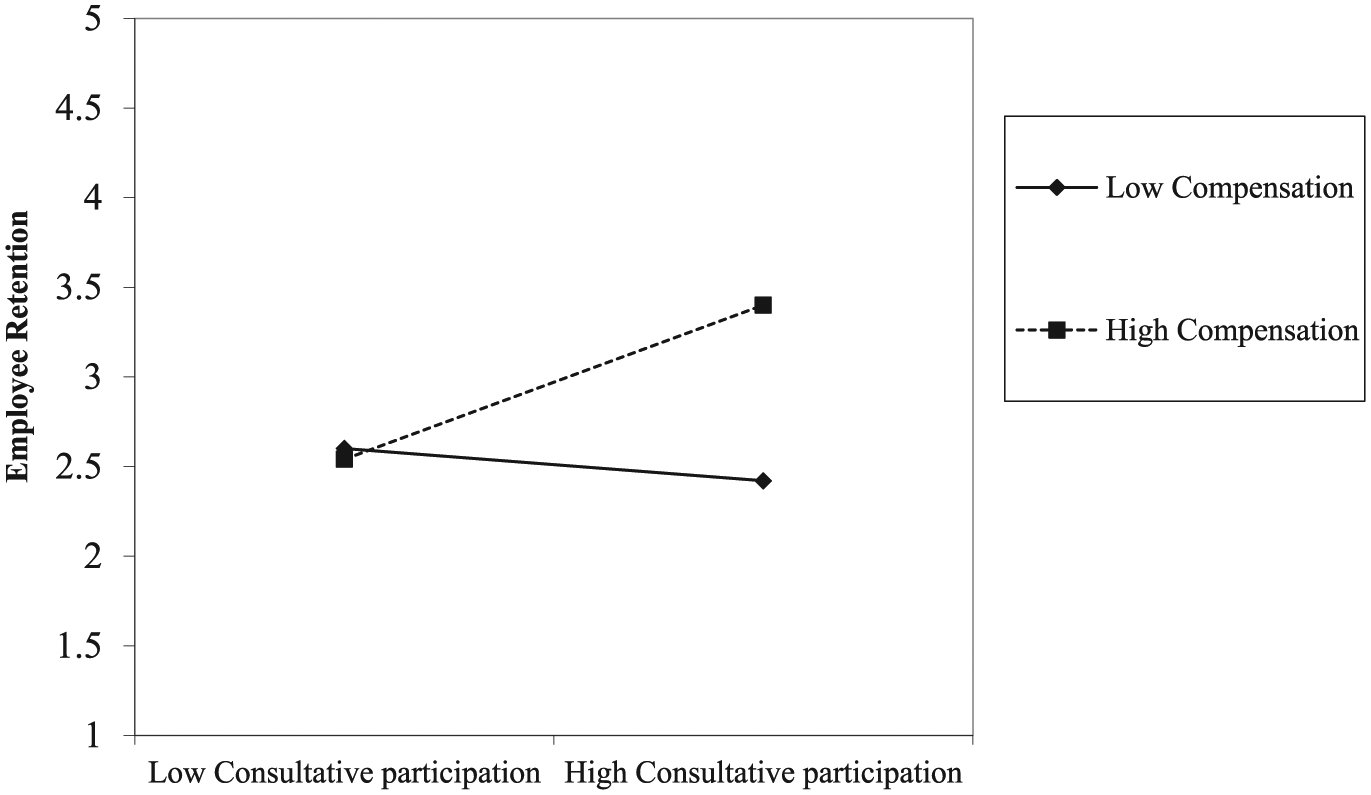
Consultative Participation × Compensation (manufacturing sector).

Consultative Participation × Compensation (service sector).
Interactive Figures 4 and 5 show with higher level of compensation, the influence of consultative participation on employee retention becomes stronger in both sectors. Results of Tables 2 and 3 show that interactive influence of compensation and consultative participation on employee retention is stronger within service sector than manufacturing sector.
Rotated Factor Matrix. a

Note. Extraction method = principal axis factoring; rotation method = varimax with Kaiser normalization. DP = delegative participation; CP = consultative participation; WU = worker union; WD = worker director; ER = employee retention; EC = employee compensation.
Rotation converged in seven iterations.
Descriptive and Pearson Correlations Analysis.
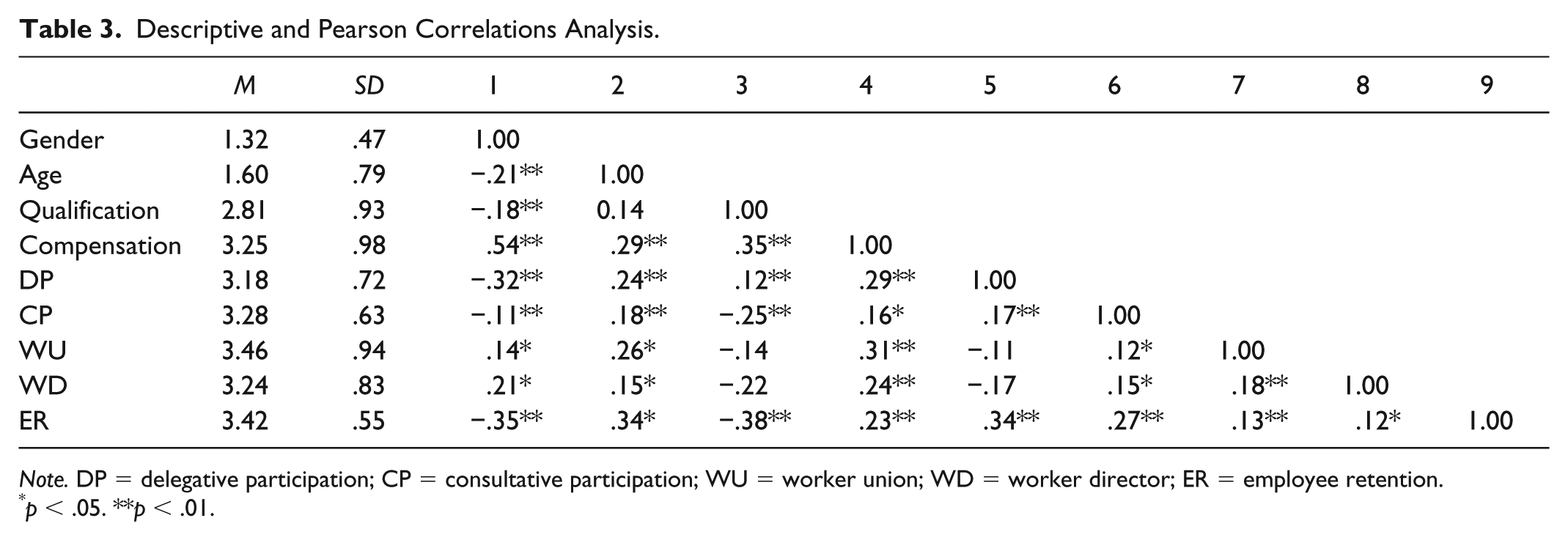
Note. DP = delegative participation; CP = consultative participation; WU = worker union; WD = worker director; ER = employee retention.
p < .05. **p < .01.
For both manufacturing and service sector, indirect participation (worker unions and worker directors) had significant effect on employee retention. The results showed that indirect participation has a positive influence on employee retention. The interaction between compensation and worker director also had a significant effect on retention, predicting that level of compensation influences the relationship between worker director and employee retention. In both sectors, worker director interacted with higher compensation to enhance employee retention is shown in interactional plots (Figures 6 and 7); employee retention is reduced with lower compensation levels in both sectors even with high levels of worker director.

Worker Director × Compensation (manufacturing sector).
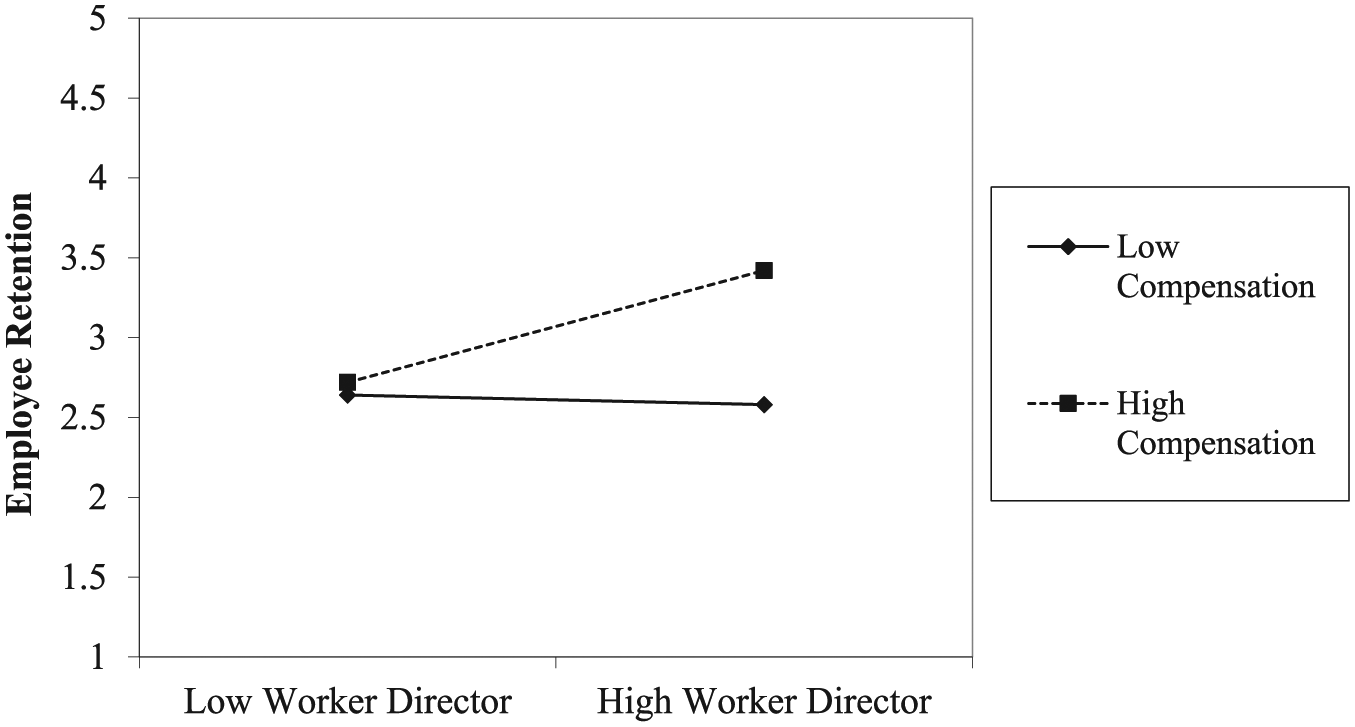
Worker Director × Compensation (service sector).
The interaction between compensation and worker union also had a significant effect on employee retention predicting that in both sectors, level of compensation influences the relationship of worker union and employee retention. Worker union interacted with higher levels of compensation to enhance employee retention as shown in interactional plots (Figures 8 and 9). Between both sectors, influence of compensation is stronger on the relationship of worker union and retention in manufacturing sector than in service sector.
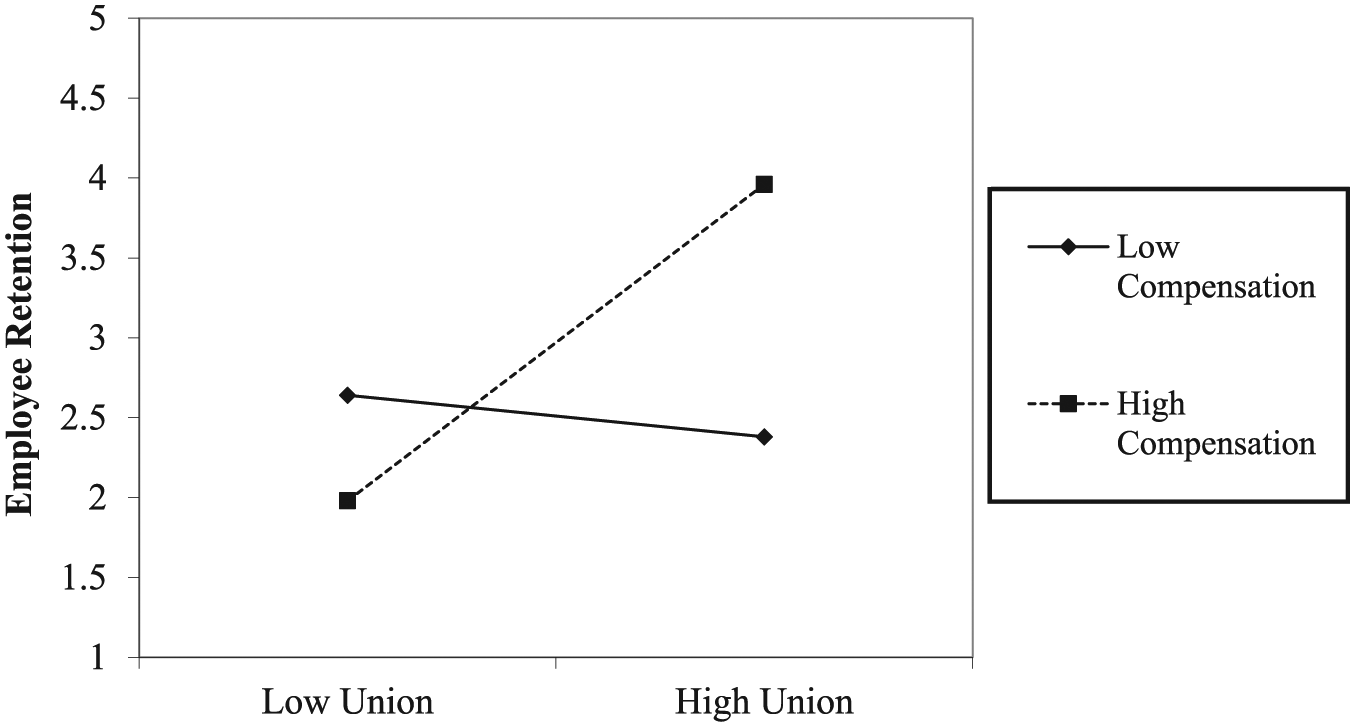
Worker Union × Compensation (manufacturing sector).
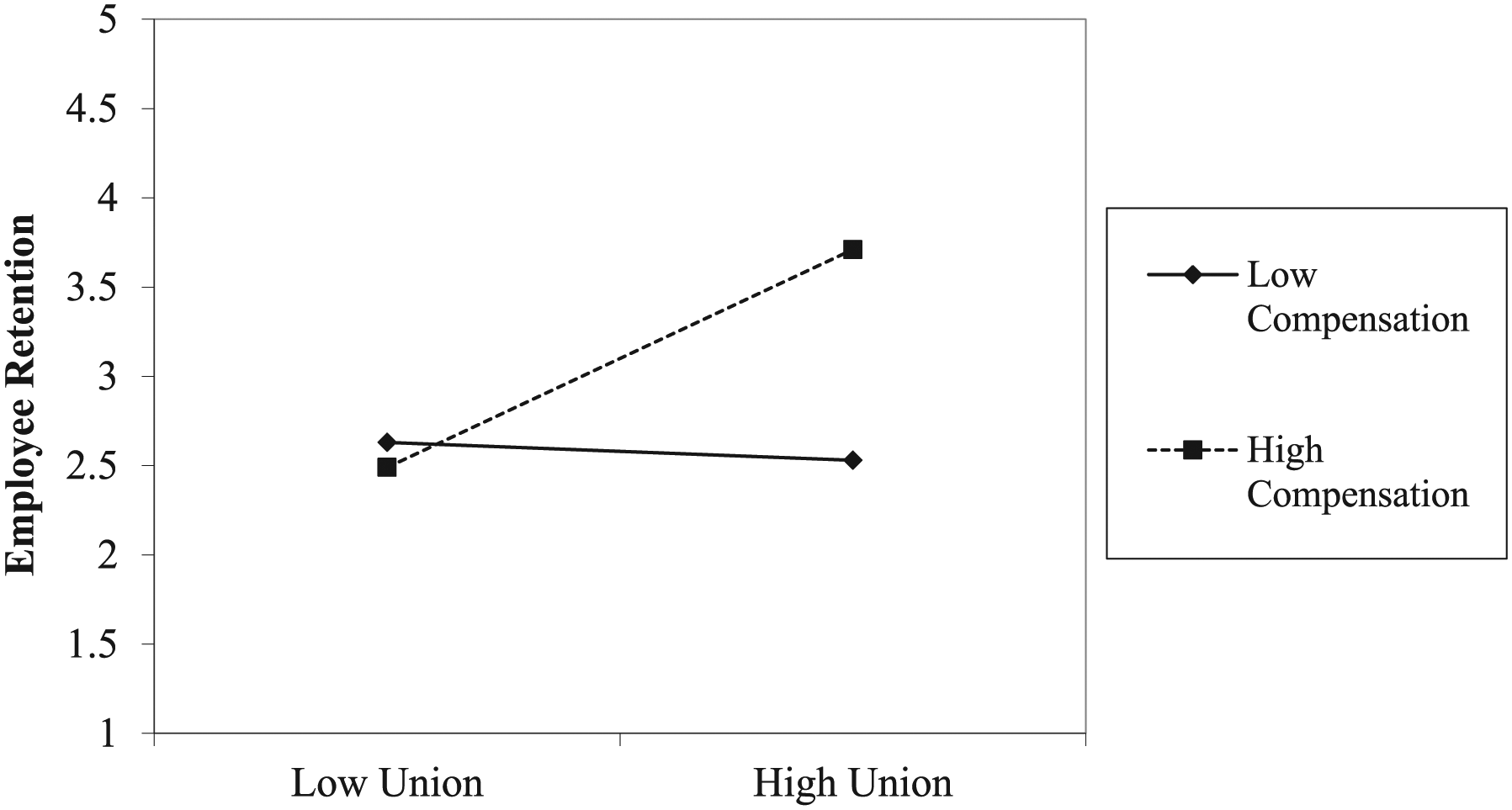
Worker Union × Compensation (service sector).
Compensation had a stronger moderation effect on direct participation (delegative and consultative) and retention relation than indirect participation (worker director and worker union) and retention relationship. Overall, R statistics showed that employee participation (delegative, consultative, worker director, and worker union) and their relationships with compensation predicted 39% variation in employee retention in manufacturing sector while 56% variation in employee participation in service sector. Moreover, the values of F statistics showed that model is significant.
Results of the study supported the first hypothesis by showing positive significant main effects of employee participation (delegative, consultative, worker director, and worker union) on employee retention. Second hypothesis was supported by the results of Table 4, which showed significant moderation effect of compensation on the relationships of forms of employee participation and employee retention in the two sectors.
Univariate Analysis (Dependent Variable = Employee Retention).
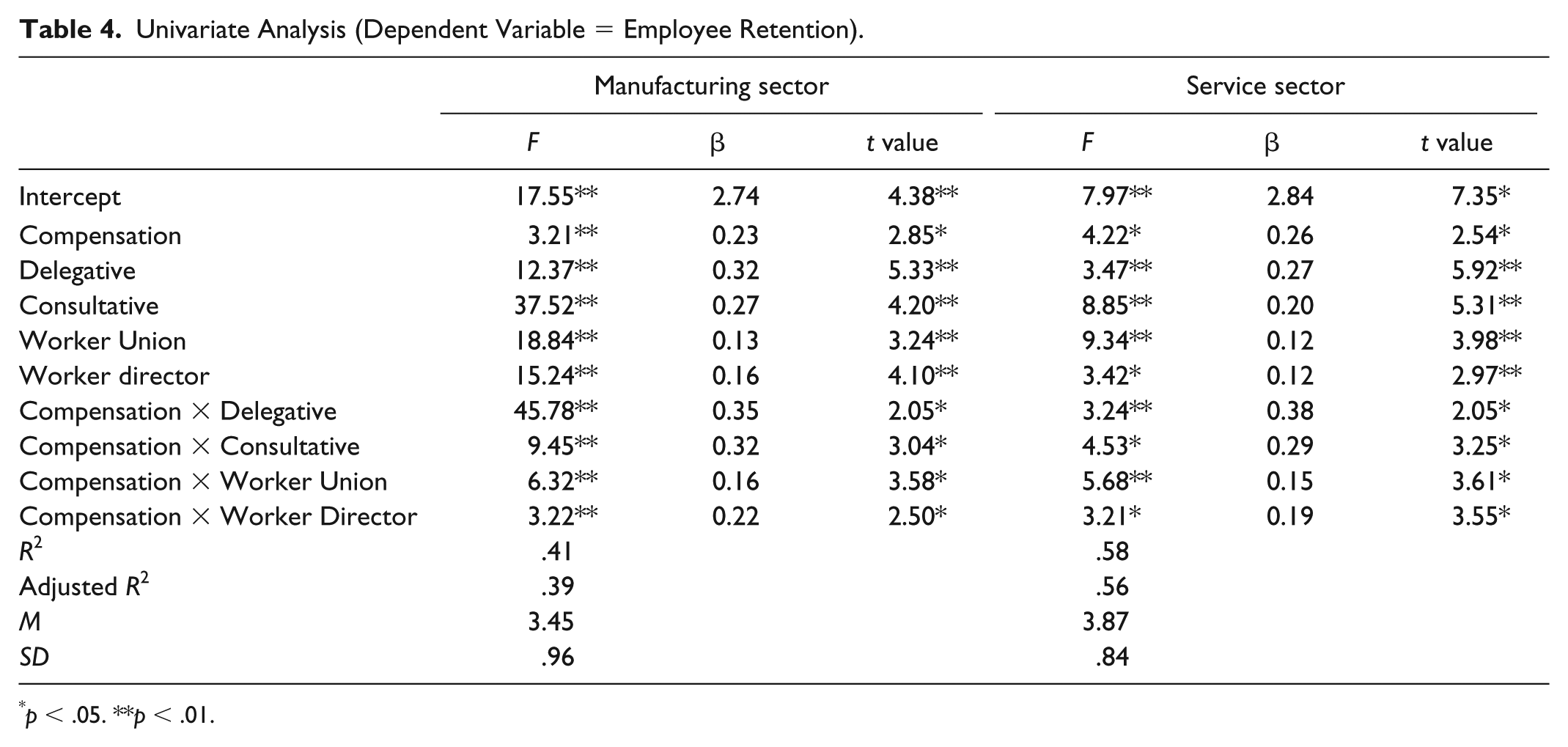
p < .05. **p < .01.
Multiple Regression Analysis
Multiple regression analysis was conducted to analyze each industry (cement, pharmaceutical, food and beverages, higher education, bank, and health care). As shown in Table 5, among manufacturing sector organizations, direct and indirect participation, compensation, and their moderation influence employee’s retention in cement industry (36%), pharmaceutical industry (36%), and food and beverage industry (39%). On the contrary, these independent and moderating variables influence employee’s retention in higher education industry (53%), banking industry (49%), and health care industry (51%). Results showed that among manufacturing sector organizations, food and beverage industry employee’s retention is more effected by direct participation (delegative and consultative) and indirect participation (worker director and worker union).
Sector Type Wise Regression Analysis for Industrial Comparison (Dependent Variable = Employee Retention).

Note. DP = delegative participation; CP = consultative participation; WD = worker director; WU = worker union; C = compensation.
p < .05. **p < .01.
In higher education sector type, impact of direct participation (delegation and consultation) on employee’s participation is more than other two types of service sector organizations while impact of indirect participation (worker director and worker union) on employee’s retention is least as compared with other types of service sector organizations. In food and beverage industry, influence of both types of employee participation on employee’s retention is greater than other two sector types (cement and pharmaceutical).
Independent-Sample t Test
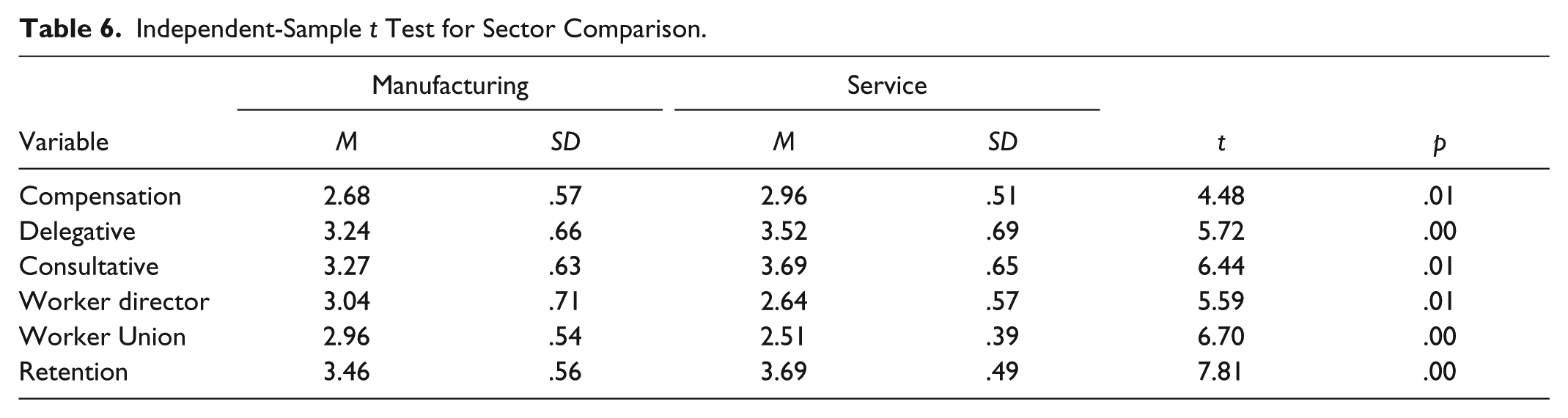
Independent-sample t test was used to explore difference in both sectors. The results of delegative participation, consultative participation, worker director, worker union, employee retention, and compensation were significant as shown in Table 6. These results predict that there is a significant difference in both sectors (manufacturing and service) regarding the model variables, thus proving third hypothesis of the study.
Independent-Sample t Test for Sector Comparison.
Discussions, Implications, and Conclusion
Discussion
The study was conducted to analyze the influence of types of employee participation practices on employee retention in manufacturing and services sector of Pakistan. One of the main purpose of this study was also to explore impact of compensation on participation–retention relationship in both sectors. Univariate analysis was being used to examine the moderation influence of compensation on the relationship of employee participation forms (delegative, consultative, worker director, and worker union) and employee retention. Results showed that all forms of employee participation (delegative, consultative, worker director, and worker union) had a significant and positive relationship with employee retention. To enhance employee retention within the organization, employers have to design both direct and indirect forms of employee participation and employee compensation vigilantly. Forms of employee participation have a significant influence on employee’s retention and are consistent with the study conducted by Gutherie (2001) which stated that for retaining vital workforce and reducing distractions related to employee turnover, most organizations use employee participation practices. When organizations provide employees with opportunities of participation in decisions related to their job, employee’s retention increase.
In manufacturing sector of Pakistan, 39% variation in employee retention is due to factors of employee participation, while 56% variation in service sector was being recorded. In the service sector organizations, employee retention is more influenced by employee participation (delegative, consultative, worker director, and worker union) than manufacturing sector because service sector has more human influence than in manufacturing sector. Employers should acknowledge that by using employee participation, they could enhance their dependence on specialized employee’s knowledge, which make them very critical for organizational survival.
Retaining valuable employees within the organizations present organizations with the real challenge. Organizations that are willing to attract and retain these talented employees can not only rely on nonfinancial practices (i.e., career development, appreciation, or work–life balance). They also have to offer them attractive financial rewards (compensation) (Turnea, 2018). Specifically, in service sector organizations where most of the procedures are based on employee’s explicit and tacit knowledge, practices for employee’s retention become very crucial (Gutherie, 2001). In service sector organizations, greater impact of participation on employee retention could also be due to their better understanding regarding the effect of satisfied employees in terms of providing service to the customers (Bell & Menguc, 2002).
For both manufacturing and service sectors, when higher levels of compensation influence delegative participation and consultative participation, employee retention increases. This study also suggests that organizations in both sectors should give due importance to employee compensation and create an environment where employees can work as a team and employees participate in decision-making practices enthusiastically. These results are in accord with the study conducted in Kenya by Agustine and Ssemugenyi in 2014, showing that if employees have low level of compensation, they will consider participation as a burden. In this scenario, despite of participation source of high retention, it can become a source of high employee turnover. The results verified that weather it is Africa, Asia, or any developed country, if employees perceive that their efforts and contributions are not justified, their intention to stay in the organization reduces. Moreover, if there is organizational procedural and distributive transparency, employees would know what they can get (financial and nonfinancial compensation) and how they can get (tasks and processes), and their performance and retention can be increased (Sharma, Sharma, & Agarwal, 2016).
As suggested by Kashyap and Rangnekar (2014) that utilization of employee participation practices, that is, employee delegation, employee consultation, worker director, and participation in the tasks of worker union, organizations can plan reward and career development strategies, thus resulting in more visibility of talented employees. Employer–employee relationship should be strengthened through open door policy and regular communications so that an environment of trust can be developed between them. This can help employers and managers and also employees for better decisions in succession planning, employee career progression, and retention.
Among all industries, only higher education industry worker directors had no impact on employee retention. It could be due to absence of worker director in the board of directors. In Pakistan, universities and colleges have usually two types of boards: one is board of directors, which usually take decisions regarding university administration and often do not have faculty members on the board. Hence, no worker directors are in universities, which depict nonsignificant influence of worker director on retention (Table 5). Second is the education council, which take decisions regarding educational affairs of their universities. The education council members are usually faculty deans and department heads. The tasks which education council performs are delegative and consultative in nature.
In service sector organizations, managers and employers need to recognize and promote practices (delegation, consultation, autonomy, and empowerment) in the organizational environment for knowledge workers (professors, doctors, and bankers). This would help these employees in developing a positive perception toward employee retention (Smith, Capitulo, Griffin, & Fitzpatrick, 2012).
Among all forms of employee participation, direct form of employee participation influences employee retention more than indirect forms of employee participation, because in delegation and consultation practices, employee perception regarding their voice is more effective and influential.
Implications of the Study
The results of the study offer useful insights on employee retention in relation with employee compensation and participation strategies in Pakistani organizations. This study through multiple regression analysis and ANOVA theoretically identified the commonalities and differences in employee participation practices (delegation, consultation, worker director, and worker union) across different industries (cement, pharmaceutical, food and beverage, health care, higher education, and banking). In Pakistan, it also investigated the role of these participation practices in shaping employee retention. The study has seven important managerial implications for Pakistani managers working in cement, pharmaceutical, food and beverages, health care, higher education, and banking industries:
The study provides valuable information for HRM and development practitioners due to its pragmatic significance in enhancing employee participation practices that can influence retention.
We observed that managers or employers who delegate tasks or responsibilities to their subordinates form a good quality relationship with their subordinates, which is characterized by respect, loyalty, motivation, and mutual trust. Employee delegation and consultation also enhance employee explicit knowledge regarding their job and can reduce employee training and development cost.
Several initiatives should be taken by the employers to educate employees about the role, importance, and implementation of employee participation practices (delegation, consultation) within their organizations. This also would help them in their task-related knowledge and skills.
This study also provides an insight to managers of developing countries like Bangladesh, Nepal, Sri Lanka, Malaysia, and Bhutan, where there is a high level of skilled brain drain and economic inflation. By providing information that how they can utilize participation–retention relationship while having cost-effective compensation strategies.
This study also provides HRM practitioner an insight that how they can devise employee compensation that can positively influence participation–retention relationship.
Results of industrial comparison provide an insight for industrial managers belonging to different industries that what forms of employee participation practices and compensation combination can better influence employee retention in their respective industry.
As most of the study respondents belong to Generation X which is characterized as having less organizational loyalty but more people loyalty, high self-esteem, desire to have more organizational voice (consultation), and autonomy (delegation) (Deal, Altman, & Rogelberg, 2010), thus, to retain talented employees, managers and employers have to treat employees as valuable assets of the organizations and have to find ways of displaying their commitment toward subordinates and employees. Organizations where employees feel that they are valued, recognized, and supported might result in higher retention (Tolbize, 2008).
The industrial comparison found that service sector due to its nature of procedures can acquire more benefits from direct and indirect forms of employee participation, whereas in interviews from manufacturing sector organizations, it has observed that retention is more influenced by financial form of employee participation.
Employee retention is not always examined effectively although human resource (HR) professionals reflect it as a lethal issue for organizations. Even during the interviews with the faculty members and university administrators, there is an absence of any formal retention strategy. On a practical point of view, if university management proactively examine faculty intent to turnover, it will provide them an opportunity to delay turnover or enhance retention. Organizations can get the same information at the time of exit interviews of the employees, but it would be a reactive or rather a delayed approach.
Based on our research findings, delegative and consultative employee participations have a greater influence on faculty’s employee retention. Hence, it can be used for enhancing employee retention at faculty level of the universities and doctors and surgeons from health care sector. It has been observed that brain drain in these two service sectors is maximum. Specifically, in health care and higher education sectors, compensation can have a strong positive influence on delegative participation–retention relationship and can stop external brain drain.
Recommendations for Future Researchers
Recommendations for future research are as follows:
The application of the direct and indirect participation questionnaire to other sectors such as banking, telecommunication, health care, restaurants, and even primary and secondary schools.
Use different measurement scales for the same sample of employees to analyze whether the results remain same or use the same measurement tool for the longitudinal study.
The employee participation–retention relationship should be examined in the light of economic conditions. In good economic conditions, when there is no recession and jobs are easily available, employees may leave the jobs if they are not satisfied. In times of inflation, however, when there are less job opportunities available, employees will have less turnover. Therefore, in countries where there is economic inflation, HRM practitioners should use participation and cost-effective compensation strategies to enhance employee retention.
Due to time constraints, the researcher utilized a limited sample size. More generalized results can be drawn by covering a larger portion of the population. In this study, only one method of data collection is utilized, which is survey forms, but future studies can utilize other methods of data collection like focus groups, interview, and observation methods to further strengthen our study.
Conclusion
The two main hypotheses of this study were to investigate the influence of forms of employee participation (delegative, consultative, worker director, and worker union) on employee retention and to examine the moderating effect of compensation on this relationship in manufacturing and service sector of Pakistan. There is a significant relationship between employee participation (delegative, consultative, worker director, and worker union) and employee retention. In addition, employee compensation significantly moderated the relationship between types of employee participation and employee retention. This study further concludes that organizations of both manufacturing and service sectors should develop such practices, which could enhance employee engagement and voice within their task-related decisions. These participation practices would in turn enhance employee retention and would give organizations its aligned benefits.
Footnotes
Declaration of Conflicting Interests
The author(s) declared no potential conflicts of interest with respect to the research, authorship, and/or publication of this article.
Funding
The author(s) received no financial support for the research, authorship, and/or publication of this article.