




Abstract
South Africa’s rising urbanization has exacerbated the levels of urban poverty and inequality. The urban poor are increasingly vulnerable to the impacts of climate variability and have weak household risk response capacities. The study, through the use of a questionnaire survey, investigated how climate stressors such as the change of seasons, drought, heat waves, cold spells, hailstorms, floods, disease outbreaks, and veld fires are affecting four socioeconomically marginalized urban communities in Pietermaritzburg, KwaZulu-Natal. The respondents identified eight stressors that affect lifestyles and livelihoods; however, the majority do not have the means to cope adequately. Moreover, the coping strategies that were adopted were stop-gap reactive-type measures and provide limited capacity to build resilience and response capacity. With the projections that climate stressors will increase in frequency and duration in the region, the local government must increase investment in urban pro-poor climate change projects, which have been successful in some rural and urban areas, and educate the communities on climate-related risks so as to increase their knowledge and response capacities.
Introduction
South Africa, much like the rest of sub-Saharan Africa (SSA), is undergoing a large-scale urban transformation with the anticipation that 71% of the population will be urban by 2030 (Republic of South Africa [RSA], 2015). The high rates of urbanization are met by governments that are underprepared to address the challenges and complexities that are associated with urban growth (Ruocco, Gasparini, & Weets, 2015; United Nations Economic Commission for Africa, 2014; Wahba, 2015; World Bank, 2009). As the urbanization rates continue to exceed the rates of economic and infrastructure development, unemployment levels are increasing and there has been a proliferation of low-cost housing where the people are often denied access to basic infrastructure and services (Ruocco et al., 2015; Turok & Borel-Saladin, 2014; United Nations [UN] System Task Team, 2011). Approximately 60% to 70% of the urban population in SSA reside in informal settlements, making them more vulnerable to the impacts of climate variability 1 (Bulkeley, 2010; Mafusire, Yaméogo, & Ncube, 2014; Olsson et al., 2014; UN System Task Team, 2011; Wahba, 2015). The Intergovernmental Panel on Climate Change (IPCC) anticipates that by 2100, climate impacts and hazards will produce new pockets of urban poverty, shift urban households in transient poverty to chronic poverty, jeopardize development endeavors and poverty alleviation efforts, and threaten the fulfillment of sustainable development goals (SDGs; Olsson et al., 2014). Against this backdrop, the aim of this article is to investigate the impacts of climate variability on marginalized urban communities within the city of Pietermaritzburg, which serves as the capital of the second most populous province in South Africa, KwaZulu-Natal (KZN), and to investigate how these communities are responding.
Studies on the impacts of climate variability on the poor have focused on the impacts within low-income countries with little attention paid to middle- or high-income countries (Olsson et al., 2014), such as South Africa. The country is unique in that although it is categorized as middle-income, it is grappling with high levels of poverty and inequality which have been inherited from a history of colonialism, and climate variability aggravates the stresses, making it more difficult to rectify the injustices of the past.
Urban Vulnerability to Climate Variability in South Africa
Cities are hubs of economic growth that have been associated with improved livelihoods, better education, living standards, social and economic independence, and human development (Boadi, Kuitunen, Raheem, & Hanninen, 2005). However, this “promise” of a better life has propelled the urban growth rates to unprecedented levels in a nation that is already grappling with high urban poverty levels and widening inequalities (Frye, Farred, & Nojekwa, 2011). The spatial divisions that were inherited from the Apartheid regime in South Africa have contributed toward high levels of inequalities within its cities (Frye et al., 2011; Goebel, 2007; Hickmann & Stehle, 2017; RSA, 2015; Taylor, Cartwright, & Sutherland, 2014). As a result, approximately 60% of the urban population resides in areas that suffer from structural deficiencies (Hickmann & Stehle, 2017). However, the living conditions under which the urban poor are surviving have done nothing to quell the movement of people from rural to urban areas, and it is projected that approximately 80% of South Africa will be urban by 2050 (Mafusire et al., 2014; RSA, 2015). Currently, South African cities are struggling to meet their developmental goals, redress poverty and inequality, and meet the needs of the growing population (RSA, 2015; Taylor et al., 2014). This is predominantly due to the lack of financial and institutional capacity to effectively address the multidimensional challenges of urban development, namely, demographic, social, economic, and environmental (RSA, 2015). This status quo has been exacerbated by the impacts of climate variability which are likely to reverse developmental advances of the post-Apartheid regime and increase the socioeconomic vulnerability 2 of the marginalized, making the reduction of poverty difficult (Bartlett, Mitlin, & Satterthwaite, 2012; Heltberg, Jorgensen, & Siegel, 2008; Hickmann & Stehle, 2017; Olsson et al., 2014; United Nations Economic Commission for Africa, 2014; Wahba, 2015). Many of these impacts are already taking place and tend to exacerbate vulnerabilities to produce direct impacts on livelihoods, health, incomes, living conditions, and assets (social and economic), with the poor bearing the brunt of these impacts (Chuku, 2010; National Planning Commission, 2012; Satterthwaite, Huq, Pelling, Reid, & Lankao, 2007).
The vulnerability of the urban poor to climate variability in South Africa is attributed to nonclimatic and socioeconomic factors, namely, exclusion from social and economic opportunities, low income, poor housing and infrastructure, food insecurity, land degradation, high rates of population growth, and poor service delivery (Alber, 2011; Hickmann & Stehle, 2017; RSA, 2015; Satterthwaite, 2007; Wahba, 2015). Unlike high-income populations who can utilize their savings or insurance or sell assets to cope with climate risks, the ability of the urban poor to cope depends on the assets that they have at their disposal on a short-term basis to respond to such risks (Alber, 2011; Habtezion, 2012). Those with fewer assets are less likely to cope or adapt to the impacts of climate variability and have to make difficult decisions, which include decisions to sacrifice on food consumption, opting for quantity rather than nutrition, the sale of productive assets, or reducing costs such as their children’s education (Heltberg et al., 2008; UN System Task Team, 2011). These kinds of coping strategies or maladaptation are destructive to the household unit as they not only reinforce inequalities but also perpetuate poverty and inequality across generations (Heltberg et al., 2008). Taylor et al. (2014) notes that “new patterns of vulnerability are already emerging alongside on-going urban expansion” (p. 33); therefore, adequate responses that aim to reduce the vulnerability of urban poor, improve their response 3 and adaptive capacity, and increase their resilience 4 are required.
The urban poor, in particular, marginalized women, children, outdoor laborers, and the elderly, contribute the least to the causes of climate variability and change, yet face a “double vulnerability in the forms of climate variability and poverty” (Jabeen, Johnson, & Allen, 2010, p. 429; Mearns & Norton, 2010). Moreover, “they are disproportionately affected by their exposure to climate-related risks and by the limited resources at their disposal to respond to such risks” (Jabeen et al., 2010, p. 429). As climate risk increases in intensity, frequency, and duration, the role of city governments in climate risk management will grow as will the reliance of low-income households on policies and institutions for assistance (Heltberg et al., 2008).
Method
Study Sites and Data Collection
A questionnaire survey of 378 households was carried out among four communities in the surrounding city of Pietermaritzburg, in the province of KZN, South Africa. These communities are France, Swapo, and Willowfontein, which are located outside the central business district (CBD), and Mpophomeni Township, which is on the boundary of the city (Figure 1). France, Swapo, and Willowfontein are classified as urban, whereas Mpophomeni is peri-urban.
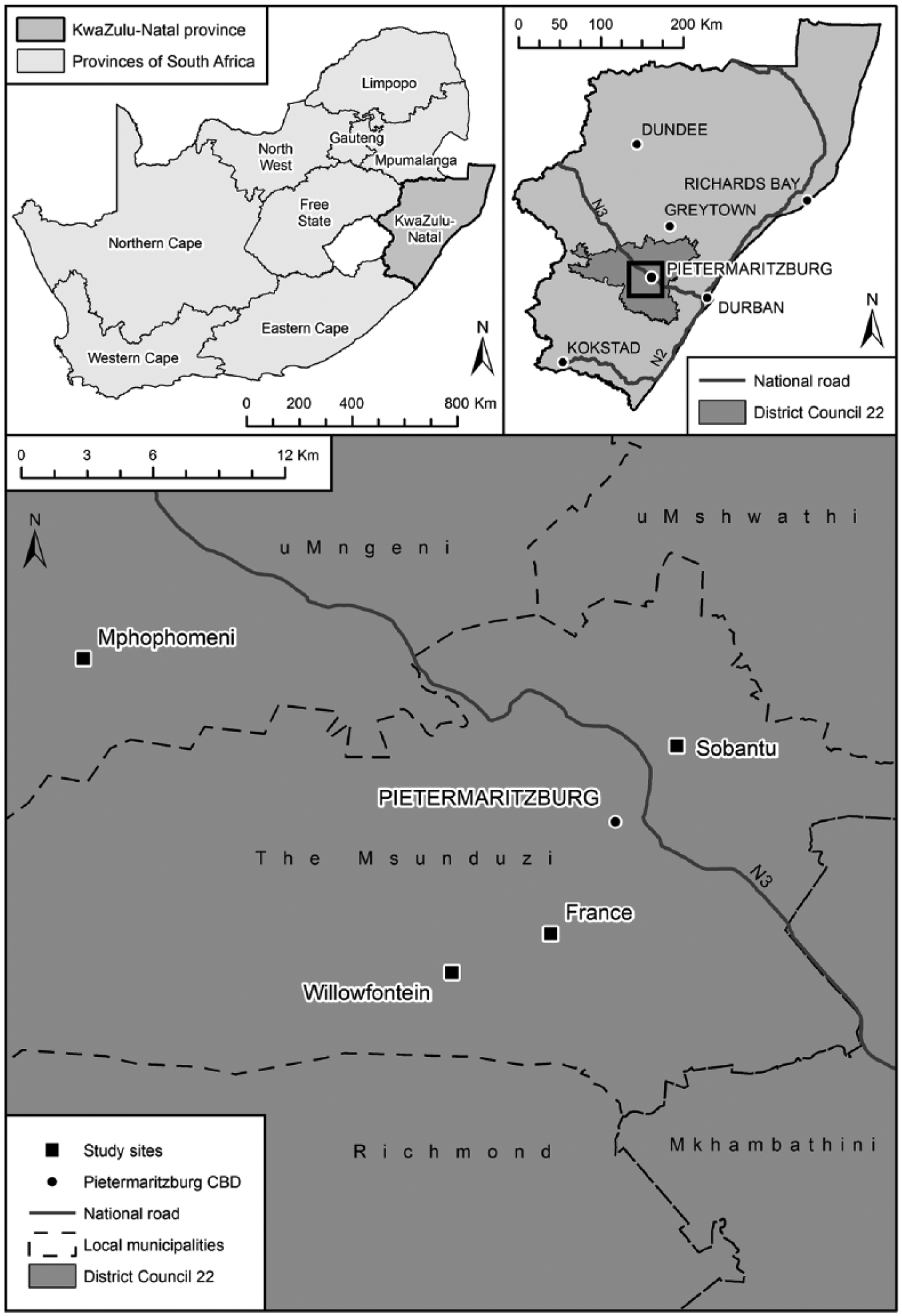
Map of the study areas France, Mpophomeni, Sobantu, and Willowfontein, Pietermaritzburg, KwaZulu-Natal, South Africa.
The communities were chosen as they are urban and peri-urban in nature and are located in a province associated with high levels of poverty, high rates of unemployment, socioeconomic vulnerabilities, and low adaptive capacity (Gbetibouo, Ringler, & Hassan, 2010; Golder Associates Africa, 2013; Wilk, Andersson, & Warburton, 2013). A pilot survey was conducted in September 2015, which was followed by the full-scale study in November and December 2015, during the summer season. The majority of respondents (33%) were from Willowfontein, and the remaining respondents were evenly distributed between France, Swapo, and Mpophomeni. The questionnaires were administered in the local language of isiZulu.
The questionnaire survey examined socioeconomic information and issues pertaining to the communities’ perception of climate variability and change and how they engage with any resultant impacts. More specifically, this article focuses on the types of climate impacts that the community members have encountered, how the impacts affect the livelihoods and lifestyles of the communities, the level of concern for the impacts of climate variability, the positioning of climate variability and change among the communities’ list of priorities, the coping strategies, and the reasons for not adopting any coping mechanisms. Approximately 61% of the households surveyed were female-headed and respondents were either the head of the household or an individual who served as a representative of the head. Seventy percent of respondents were female and the majority of respondents were within the 16 to 45 and over 65 age groups. Furthermore, more than half of the respondents (55%) have received a secondary level of education where climate change, or some aspects of it, is a part of the school curricula.
Pietermaritzburg is the capital of KZN and is one of the major urban economic and service hubs of the province (uMgungundlovu District Municipality [UMDM], 2015, 2016). South Africa’s 2011 census document found the population of Pietermaritzburg to be 223,448 and approximately 52% female (Statistics South Africa, 2011). The city has high levels of socioeconomic vulnerability due to the growing population and increasing levels of poverty and unemployment (Msunduzi Municipality, 2012). Climate variability exacerbates this vulnerability and has contributed to the city’s low adaptive capacity (Golder Associates Africa, 2013). Furthermore, the local government, Msunduzi local municipality, is facing backlogs in service delivery and there is a significant proportion of the urban poor residing in substandard low-cost housing with limited access to quality service delivery (Caesar, Crush, & Hill, 2013; Msunduzi Municipality, 2012; Taylor et al., 2014). Moreover, 93% of the urban poor within Msunduzi are considered to be food insecure (Caesar et al., 2013).
Data Analysis
The questionnaire comprised both structured and open-ended questions. Quantitative data from the closed questions were coded and placed into categories for statistical analysis using the Statistical Package for Social Sciences (SPSS), version 23.0. Descriptive statistics such as frequency data were incorporated into the results to establish trends in the data. The qualitative, open-ended responses and the interview questions were analyzed using thematic analysis (King & Horrocks, 2010). In addition, there was document review of policy documents supplied by the municipal officials.
Biophysical Environment
Pietermaritzburg is characterized by summer rainfall and its climate is said to be warm and temperate with an average annual rainfall of 865.3 mm, while the average maximum temperatures range from 22.6°C to 24.5°C and the minimum temperatures range from 9.9°C to 16°C (Climate Information Platform, n.d.; World Weather Online, 2016). Intermediate future climate scenarios anticipate a temperature increase of 2.25°C between 2045 and 2065, which will affect livelihoods, food and water security, and human and livestock health (UMDM, 2016). There have been increases in short-term high-risk rainfall hazards such as lightning/thunder/hail storms and floods (Table 1), and it is highly probable that the hazards will recur (Singh & Bartholomew, 2014; UMDM, 2013, 2016).
Climate Stressors and Extreme Weather Events in KZN, Since 1978, That Affected Pietermaritzburg and Surrounds.

Source. uMgungundlovu District Municipality (2013); Newspaper and online articles of extreme weather events within Pietermaritzburg and its surrounding areas.
Note. KZN = KwaZulu-Natal.
Results
This section presents the survey results under the following themes: (a) the types of climate stressors that the community members have encountered, (b) how climate-related risks are affecting the livelihoods and lifestyles of the communities, (c) the level of concern for the impacts of climate variability, (d) the positioning of climate variability and change among the communities’ list of priorities, (e) the coping strategies, and (f) the reasons for not adopting any coping mechanisms.
Exposure to Climate-Related Stressors
The community members identified eight climate-related stressors, namely, increasing temperatures, longer summers and shorter winters (76%), drought (60%), heat waves (59%), hailstorms (44%), flooding (41%), cold spells (27%), disease outbreaks (9%), and grass fires (3%) (Figure 2). With regard to heavier rains and flooding events, the respondents listed six flooding events that were of significance and had devastating consequences. These occurred during the years of 1985, 1986/1987, 1989, 1995, 1997, and 2005. Some respondents noted that “houses and crops were damaged during the flood of 1985 and 1987, and assets were lost” (Personal communication 1, November 16, 2015), and another stated that “in 1995 and 1997, there were serious floods in which many people lost their lives and property. Some people were living in the local primary school” (Personal communication 2, November 16, 2015). One more recalled that “the floods of 1987 and 1995 were severe. Elders had to be rescued by helicopters. Imbali suffered the most during the 1995 flood” (Personal communication 3, November 18, 2015). Imbali is a township outside Pietermaritzburg’s CBD which is in close proximity to Willowfontein and Sobantu. In 1995, there were two major flood events, one in January and another in December. The December flood resulted in 169 fatalities and displaced 6,000 families, earning the name the Black Christmas floods (Eveleth, 1996). Prior to this, in September 1987, there was a flood which has been described as the worst disaster in the history of KZN as it killed 388 people and displaced 68,000 (Grobler, 2003; UMDM, 2013).

Climate stressors experienced in the communities.
Impact of Climate Variability on the Communities
Half the respondents (50%) reported being affected by climate variability, either directly or indirectly. Approximately 61% (Figure 3) of these respondents stated that climate stressors had damaged their crops, thereby affecting their agricultural activities, and ranked it as the activity most affected by climate variability. These crops include maize, cabbage, spinach, potatoes, beans, butternuts, beetroot, carrots, and onions and are grown in the respondents’ gardens. The crops are grown for personal consumption or for sale within the communities. Approximately one quarter of respondents stated that climate variability has had an impact on their health (24%), general well-being and comfort (25%), income (26%), and their property and infrastructure (25%) (Figure 3). Fewer respondents stated that their education (2%), livestock (3%), and water supply/price (9%) have been affected (Figure 3). With regard to health, the community members complained that their children are of ill health, whereas others complained that the high temperatures and erratic weather changes cause skin rashes, influenza, and headaches and worsen their blood pressure, diabetes, and epilepsy.

Impacts of climate variability on community members.
Community Level of Concern for the Impacts of Climate Variability
Seventy-nine percent were concerned with climate variability and its impacts and pointed out that their lives have become significantly difficult as they are facing challenges that they have not faced before. Interestingly, contrary to the previous finding where only 7% identified food insecurity as a potential impact of climate-related change on their livelihoods, the majority of respondents identified food security (33%) as the primary reason for their high level of concern for climate variability (Figure 4). One respondent expressed concern for the impact of climate variability on rural food security (Table 2) as during a drought, or any other climate-related impact, urban populations are forced to send financial remittances to their relatives in rural areas to enable them to purchase food (Personal communication 4, November 19, 2015). In many cases, these funds are sent in addition to remittances that they are sending on a monthly basis. Hence, the household incurs additional costs on already limited funds.

Reasons for concern.
Reasons for Concern.
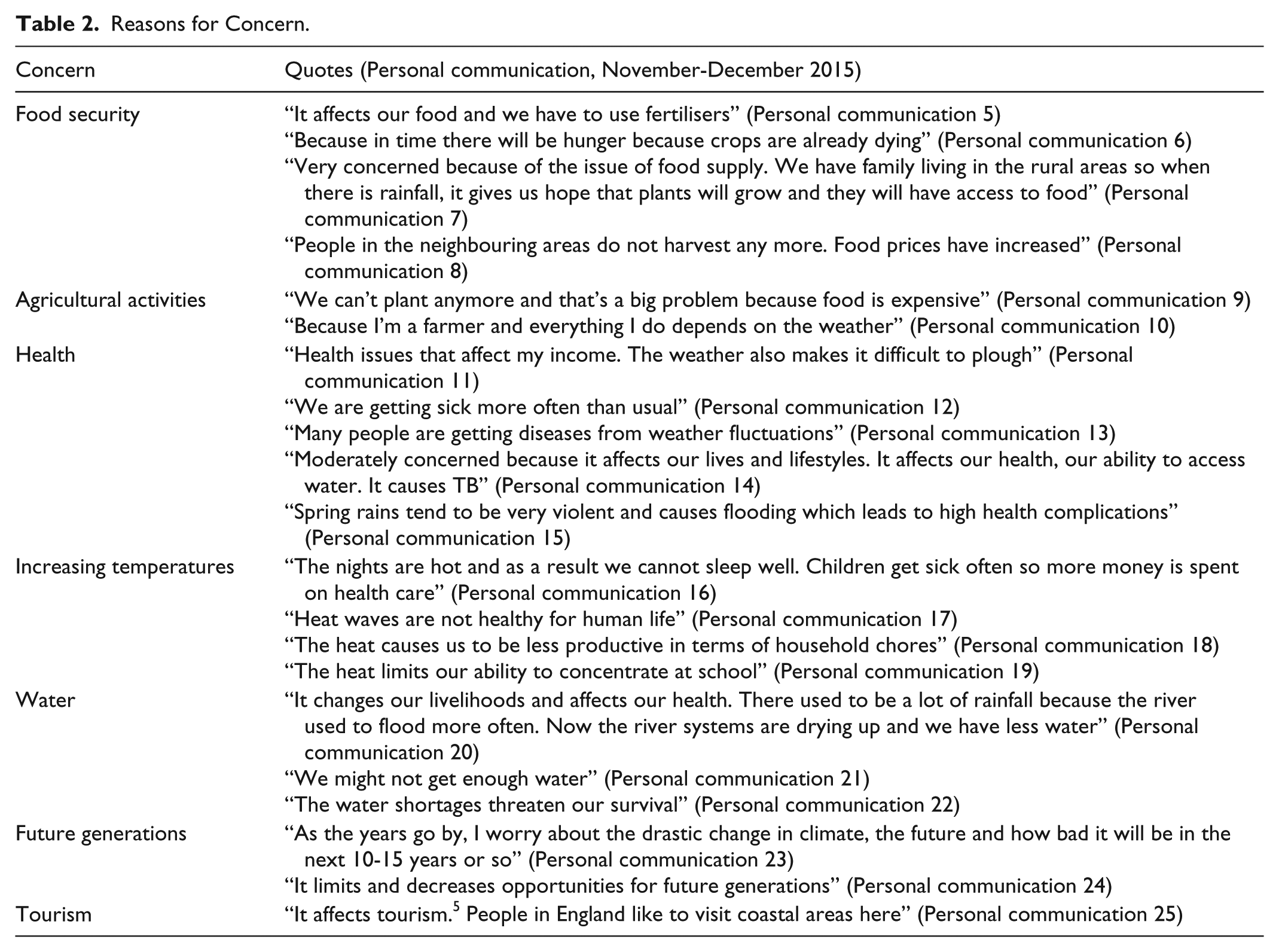
Other reasons for the high level concern were the impact on crops and garden (32%), health (28%), extreme weather events (24%), and increasing temperatures (20%). A few respondents (2%) expressed concern for future generations, whereas others feared that the world is coming to an end. Interestingly, one respondent pointed out that climate variability can have an impact on tourism (Table 2). Two older female respondents from Willowfontein noted how the Wilgerfontein River is drying up and “getting wider” (Personal communication 26, December 01, 2015).
One community member expressed concern with regard to climate variability but complained that while they are affected, they have “no platform to raise their concerns” (Personal communication 27, November 30, 2015). Two other respondents expressed a similar concern by stating that “the changing of climate is a big problem for us because we are neglected by the local government” (Personal communication 28, November 30, 2015) and “climate change affects us a lot. We don’t have information as it is not given to us. So when the weather fluctuates, it is difficult to cope” (Personal communication 29, December 02, 2015). Another noted that “it is very difficult to adapt to the changes” because of a lack of knowledge.
Those who were not concerned argued that damage had already been done and cannot be reversed, whereas others asserted that “climate variability and change are natural things so nature will fix itself” (Personal communication 30, December 02, 2015). On a different note, one respondent confessed that while he is concerned, climate variability benefits him as “every time heavy rains destroy houses, the residents call me to fix so I make money from it” (Personal communication 31, December 01, 2015).
Ranking of Climate Variability and Change Among the Communities’ Priorities
When the respondents were asked to list and rank the issues their households and communities are facing, they listed nine common issues: climate change, poverty, unemployment, food security, crime, lack of clean drinking water, refuse collection, sanitation, and affordable health services. One respondent mentioned housing and infrastructure, and another complained about drug use among the youth. Poverty is the most challenging issue affecting the communities, followed closely by unemployment and climate change. One respondent stated, “poverty is the 1st challenge because it’s caused by a lack of skills. If one is not educated or does not have the skills, they do not qualify for jobs. Then crime is result of poverty and unemployment” (Personal communication, 2015). Regarding climate change, while it is in the Top 3 of the most challenging, it is also among the Top 2 of the least challenging problem the respondents are facing (Figure 5).

Ranking of the main issues that the community members identified.
Coping Strategies
Even though nearly half the respondents reported that climate variability affects their lifestyles and livelihoods, less than half, that is, 37%, are taking steps to cope with or respond to the changes (Table 3). The strategies are short-term responses to the eight climate stressors to which they have been exposed. These stressors are change in seasons, flooding, drought, heat waves, cold spells, hailstorms, disease outbreaks, and grass fires. It is important to note that the respondents did not have coping responses for each of the climate stressors. They only provided responses for the stressors to which they have been exposed and for which they felt they have adequate responses.
Coping Strategies.

Note. 1 = changes in seasons; 2 = flooding; 3 = drought; 4 = heat waves; 5 = cold spells; 6 = hailstorms; 7 = disease outbreaks; 8 = increase in grass fires. NGOs = nongovernmental organizations.
In response to the “change in seasons,” a stressor the majority (53%) claim to have the least difficulty coping with, the majority of strategies focused on agricultural activities, with more respondents stating that they would plant more crops (5%) to replace those damaged by the unpredictable seasonal changes. Other strategies related to increasing respondents’ comfort, namely, the use of fans and heaters as the temperatures changed, or staying indoors. One tenth of respondents stated that they would reduce their household carbon footprints by reducing the amount of waste their households produce.
In response to “flooding,” a stressor the majority (38%) have the greatest difficulty coping with, more than half of the respondents (52%) would evacuate to higher ground or to the community hall, where they believe the local government can tend to their needs or move in with their relatives in other areas. They stated that they would make sure that they carry their valuables and important documentation with them, and 7% would move their property to a safe place. Approximately 12% of respondents stated that they would create drainage furrows to divert flood waters, whereas 8% of respondents confessed that they would rather stay indoors in their homes than move. Part of the reason for opting to stay indoors during a flood event was that the respondents believe that the media reports false weather information.
Five respondents stated that they would “plant trees around the yard to protect the house from damage and plant grasses to protect the soil” (Personal communication, 2015). Only three respondents stated that they would rely on social networks to cope with flooding. The social networks include their neighbors and relatives, receiving greater assistance from the former than the latter. The type of assistance provided is predominantly nonfinancial and entails the provision of labor to drain water that would have entered the houses, building trenches, moving and keeping assets, providing building materials to rebuild, mostly iron, assisting with the rebuilding, where necessary, providing temporary accommodation, and helping to raise funds for those affected. Moreover, community members can sometimes provide food, clothes, furniture, basic necessities, and money.
Interestingly, although 60% of respondents perceive that it is the responsibility of government, in particular, local government to address climate-related issues, only five respondents reported that they would seek government assistance and one would seek assistance from nongovernmental organizations (NGOs). Only one respondent stated that she would utilize insurance to respond to flooding.
In response to “drought,” a stressor that the majority (38%) have some difficulty coping with, the more popular responses were to water the crops more (13%), store water for household use (10%), and minimize waste to reduce impact (9%) (Table 3). The latter refers to the recycling of water whereby the respondents would use graywater to water crops. Approximately 5% of respondents opted to plant more crops, whereas another 5% opted to not plant at all, in which case food will need to be purchased. However, only half of those no longer planting admitted that they would purchase food.
The majority of respondents expressed that they have great difficulty in coping with “heat waves” (41%) and no difficulty in responding to “cold spells” (43%). In response to the latter, 13% opt to use heaters or make fires or use the stove to keep warm, whereas 9% stated that they would implement measures to reduce household’s carbon footprint (Table 3). Thirty-seven percent of respondents stated that they would stay hydrated to cope with heat waves and to reduce their levels of discomfort, some respondents would stay indoors (11%) or use fans (9%) or sunscreen, wear hats, or stand under the shade (7%) (Table 3). Regarding their crops in the event of a heatwave, 12% of respondents would water the plants more, whereas 3% would plant more crops if their crops are damaged by the heat and 4% would not plant at all. Approximately one-tenth stated that they would take steps to reduce their household’s carbon footprint.
In response to “hailstorms,” a stressor the majority (42%) have great difficulty coping with, 13% of respondents would opt to stay indoors and 2% would move property such as cars to safe positions. If crops are damaged during the storm, 2% stated that they would plant more crops to replace the crops that have been lost, whereas 4% would not plant at all (Table 3). Only one respondent stated that she would use grant money, another would request assistance from NGOs, and the other would use insurance to cope.
The majority of respondents (46%) stated that they face medium difficulty in responding to “disease outbreaks,” whereas 70% do not face any difficulty in responding to “grass fires.” The reason for latter is that grass fires are quite uncommon in Pietermaritzburg; hence, the majority of respondents do not feel that it is a threat and do not know how they would respond to such a stressor. However, one participant asserted that he would rely on funding from NGOs to cope. In response to disease outbreaks, one respondent stated that she would take her child to the clinic when ill and another stated that he would rely on assistance form NGOs to cope (Table 3). The respondents feel that children are most vulnerable to climate shocks, hence, they believe that children are most likely to get sick from climate stressors.
When asked whether they felt that their coping strategies were effective, more than half (57%) of the respondents admitted that they were not.
Reasons for Not Coping
Despite the growing acknowledgement that climate is changing and affecting their livelihoods, 63% of respondents stated that they have no means of responding to the impacts. This is mainly due to a lack of knowledge (20%) and the belief that nothing can be done to deal with climate variability and change (16%) (Figure 6). One respondent stated that “while climate change has been on the global agenda for decades, for many within the community, it is a relatively new concept, hence attempting to cope is difficult, without assistance” (Personal communication, 2015). Some respondents (1%) believe that climate variability and change are natural processes and that “the nature can fix itself” (Personal communication, 2015). Others believe that only God can address the issue: “God is the one person who can control the weather” (Personal communication, 2015).
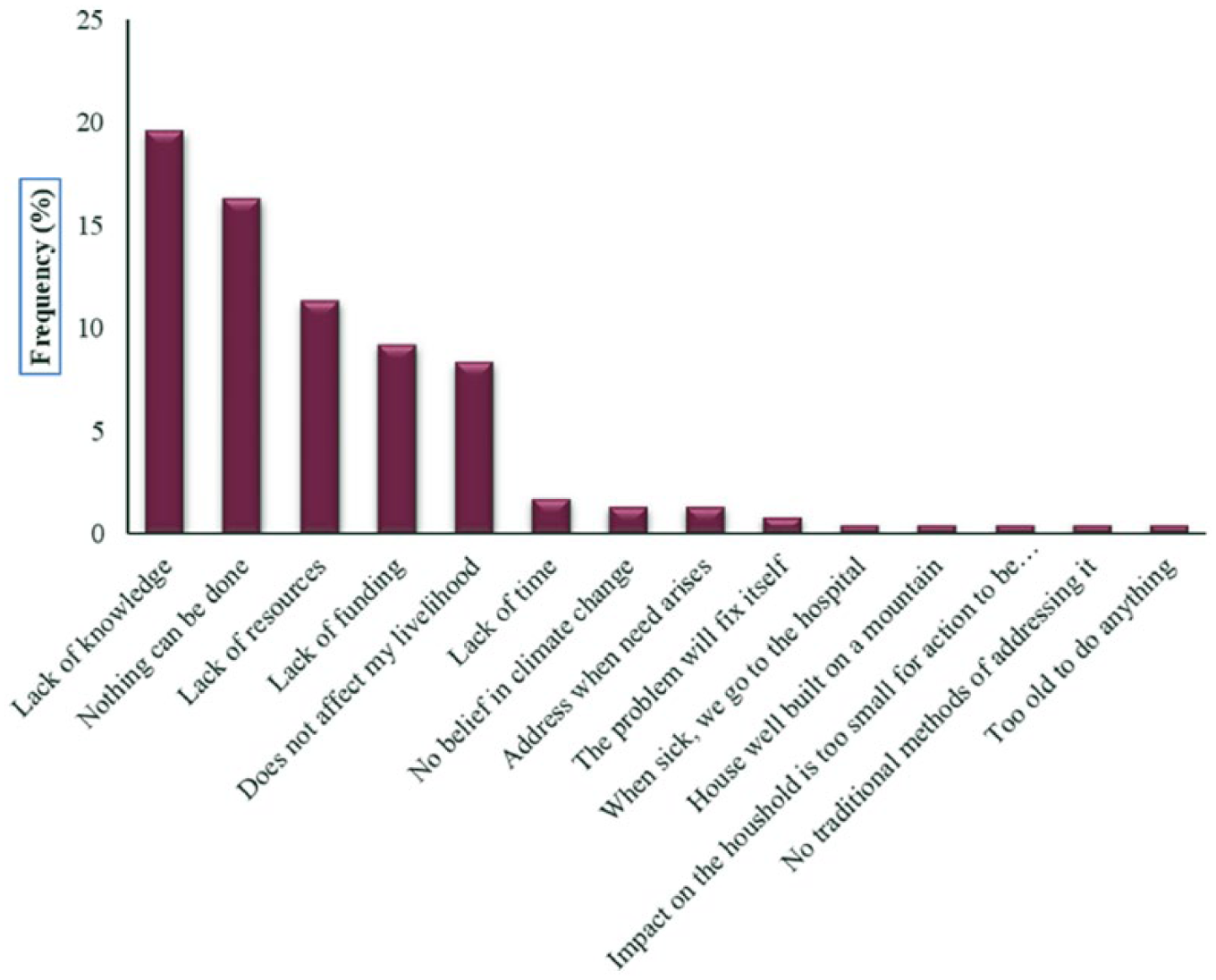
Reasons for not coping.
A lack of funding (9%) and resources (11%) was another barrier identified by the community, whereas 8% of respondents (Figure 6) felt that climate variability does not affect their livelihood; therefore, there is no reason to worry. Others (1%) have chosen to respond when the need arises. One respondent noted that the community members had no traditional way of coping with climate variability.
Discussion
Although respondents acknowledge that the climate is changing and affecting their livelihoods and lifestyles, the issue is not as much a priority as poverty and unemployment. Moreover, the respondents’ opinion of climate variability and change is divided as the number of people who view the phenomenom as one of the most challenging issues they are currently facing, is nearly equal to the number that do not perceive it as a challenge. This will undoubtedly affect the manner in which they respond and accounts for why only half the respondents felt that they have been affected. Shackleton, Ziervogel, Sallu, Gill, and Tschakert (2015) concur by stating that how climate change “sits” in relation to other, possibly more immediate and context-specific stressors, on people’s lives is also an important factor influencing the decision to take action or not in response to climate stimuli; often, other problems may take priority particularly in poor regions such as SSA. (pp. 4-5)
One thing is clear, the respondents want jobs to get out of poverty. As of 2017, 9.3 million people in South Africa are unemployed, and the number continues to grow (Statistics South Africa, 2017), meaning that the government is falling short of meeting its goal of “eliminating poverty and reducing inequality by 2030,” by creating 5 million jobs by 2020 and 11 million by 2030 (National Planning Commission, 2011, p. 10). Drastic measures need to be taken to not only create employment but also address climate variability and change which, if not addressed, will serve to reverse any developmental gains. There is need for greater investment in the implementation of well-designed community-based projects that can link poverty with climate variability and change, allowing one to leverage co-benefits from the other. The South African national government is already implementing such projects in rural areas, in partnership with local authorities, environmental organizations, NGOs, and conservation groups to generate green jobs in the rural economy and protect the environment by employing rural communities to remove alien plants and trees. The initiative is known as the Working for Water (WfW) Programme and has created employment for, and skills, approximately 20,000 people per year, rural women comprising 52% of the total (Maia et al., 2011; Musyoki, 2012; Poverty-Environment Partnership, 2012). Similarly, a few respondents mentioned that such projects are already underway in other communities, under the tutelage of local NGOs—projects that focus on waste collection and recycling in exchange for money or on teaching community members how to grow food for subsistence or indigenous trees that can be sold to the NGOs. Lim, Burton, Malone, and Huq (2004, p. 24) note that “piggy-backing” climate-related response strategies onto poverty alleviation and development activities will garner the public’s interest in addressing climate change, and the implementation of policies will be met with less resistance (Lim et al., 2004). However, these projects have not reached all the communities; hence, partnerships are necessary. The government and private sector need to partner with local NGOs and the communities to implement such initiatives in urban areas and teach the communities to adapt as opposed to merely responding with stop-gap measures. This will help to reduce poverty levels and increase household response capacities within the communities.
Urban agriculture promotes dietary diversity and by extension, food security (Zezza & Tasciotti, 2010). The study revealed that the agricultural activities of the majority of respondents have been compromised by the changing climate and weather patterns, threatening food security due to reduced harvest and the increase in food prices. In a study carried out by Caesar et al. (2013) within households under the jurisdiction of the Msunduzi Municipality, Pietermaritzburg, it was found that the households most affected by an increase in food prices were female-headed households, and the households were forced to compromise on food quality, trading dietary nutrition and diversity for quantity (Caesar et al., 2013). Similarly, in a study conducted by Tibesigwa and Visser (2015) in South Africa, it was found that urban female-headed households are more food insecure than male-headed ones due to the prominence of off-farm employment in male-headed households. This is cause for concern as majority of households within the current study are female-headed and likely to fall into a similar trap unless measures are found to cope with the climate stressors and increase resilience.
Less than half of the respondents were able to identify means of coping with climate variability, and the majority of the strategies were reactive and will not sustain the communities. This is a reflection of the limited knowledge that communities have regarding climate variability and change and how to respond. The respondents confirmed this when the majority identified a lack of knowledge as the main reason as to why they have not adopted any coping strategies and stated that nothing can be done to respond. Admittedly, the lack of knowledge is a surprising finding given the fact that more than half of the respondents (55%) have received a secondary level of education where climate change, or some aspects of it, is a part of the school curricula. Moreover, they can access climate information via the television and radio. Perhaps the respondents are more concerned with surviving financially than they are about climate issues. Notwithstanding this finding, a few respondents have greater understanding of the issue and have adopted coping strategies that are mitigative and risk averse, such as the use of graywater to reduce their household carbon footprints. Such measures have potential long-term effects.
Only one respondent stated that she would utilize insurance to respond to flooding and hailstorms, which is unsurprising. Insurance is only a viable option for those who can meet their daily basic needs and set some funds aside for savings. According to the study, only 18% of respondents have savings; hence, the majority cannot afford insurance. Furthermore, even though some insurance companies in South Africa offer insurance for property damaged during weather-related catastrophes such as floods, fires, thunderstorms, and hailstorms, the unpredictability of weather conditions makes it difficult for insurance companies to model the risk and underwrite any extra costs (Cliffe Dekker Hofmeyr, 2014; Hawker, 2007).
In response to heat waves and cold spells, air conditioners are reported to be the most effective way to shield people from the impacts of heat waves and cold spells; however, poverty prevents access to such technologies (Kim, Kim, Cheong, Ahn, & Choi, 2012). Hence, staying hydrated, staying indoors, and using heaters or making fires or using the stove to keep warm are more feasible options for the communities. However, some of the strategies such as the use of fans and heaters consume much energy and are not environmentally friendly. Therefore, as climate stressors, such as heat waves, are expected to increase in severity, frequency, and duration, the call to find cost-effective solutions that cater to the socioeconomically vulnerable has become even more urgent (Ceccherini, Russo, Ameztoy, Marchese, & Carmona-Moreno, 2017).
Interestingly, unlike in rural areas, there is little reliance on social networks for assistance with coping in this urban setting. A decrease in social capital is one of the byproducts of urbanization (McKenzie, 2008; Organisation for Economic Co-operation and Development & China Development Research Foundation, 2010) and the use of social capital as a coping mechanism depends on the scale of the stress. If the stress affects most members of the community, as is the case with flooding and droughts, social networks cannot be relied on for coping (Delisle & Turner, 2016). Moreover, each household differs in their coping or risk management capacities. Those with a greater coping capacity are able to assist those who are unable to cope. In a study carried out by Delisle and Turner (2016) in the northern rural mountainous parts of Vietnam, it was found that social capital was an important coping strategy and central to household safety nets. However, in the event of weather extremes such as droughts and floods, these networks are not dependable, unless a household has access to extensive social networks (Delisle & Turner, 2016).
A few respondents stated that they would seek assistance from the government organizations and NGOs to respond to the climate stressors. This may be attributed to a lack of trust in the government and community-based organizations. The respondents even doubt the government, via media, is providing them with correct information regarding weather forecasts. The unpredictability of the weather may lead to the release of inaccurate information, and the more this occurs, the more likely the public are to lose faith in the hazard predictions and early warning systems. Failure to heed the warnings of early warning systems could have catastrophic consequences for households.
Brinkerhoff, Wetterberg, and Wibbels (2018, p. 4) note that “citizen’s assessments of government quality and trustworthiness may become negative as service access and quality decline” (Brinkerhoff et al., 2018). Hence, the lack of tolerance for the local government’s poor service delivery has generated a lack of belief that the government is willing and able to meet their basic needs. Therefore, they have no reason to believe that the government “will come to their rescue” with regard to climate variability, even though the majority feel believe that it is the responsibility of government, in particular, local government, to address the issues. A few respondents stated that they cannot rely on government to assist them and they have no platform to raise their concerns. Implementing community-based projects that link poverty with climate variability and change, as mentioned earlier, would be a good starting point for the government to help to rebuild the trust that has been lost. As it stands, the communities are socioeconomically vulnerable to climate variability, and though they feel that it is the responsibility of the local government to address the issue, they do not trust them to do so.
Another interesting finding or “coping mechanism” was the belief that only God can address the issue of climate variability and change. This response stems from a long-standing belief held by some people that climate is God’s way of punishing mankind for their sins. Simatele (2010) and Debela, Mohammed, Bridle, Corkrey, and McNeil (2015) reported similar findings in studies carried out in Zambia and South Ethiopia, respectively. The respondents stated that mankind is not powerful enough to influence weather or change the climate; hence, only God or other supernatural forces must be responsible (Debela et al., 2015; Simatele, 2010). This, once again, illustrates that there is a lack of knowledge and awareness with regard to climate change, and such a belief can act as a barrier to adaptation “through creating misunderstanding and mistrust” between government and the communities (Shackleton et al., 2015, p. 334). Hence, it is necessary to educate the public to increase their knowledge and garner community interest in the topic. This can be facilitated by visiting the communities and discussing the issue with them. It is quite possible that hearing about climate change on the television or the radio makes it hard for them to relate to it and makes it less of a reality, whereas a discussion in person can help them to grasp and understand the severity of the issue.
In a study carried out by Cutter, Ash, and Emrich (2016) on the urban–rural differences in disaster resilience in the United States, it was concluded that disaster resilience in urban areas is driven in by human and financial resources, whereas in rural areas, it is driven by social capital, community knowledge, and ties to the environment. In this regard, rural areas are said to be self-reliant (Cutter et al., 2016). This is not the case in urban poor communities in the global South. As is evident from the study, the urban poor lack access to human and financial resources to cope, lack strong social networks, and feel they cannot rely on their political capital. As a result, the communities have low adaptive capacities and remain vulnerable to the climate-related impacts, many of which are weather-related and tend to be gradual and difficult to detect or track using standard climate observations due to the lack of adequate data (Olsson et al., 2014; Simatele, 2010). Unless measures are taken to improve their capacities to respond to climate variability, the communities and the future generations will remain vulnerable and entrenched in poverty, as climate risk increases in intensity, frequency, and duration. In the face of this, the role of city governments in climate risk management will have to grow.
Local governments in South Africa have taken cognizance of this and where capacity and resources are available have begun to institute measures to respond to climate risk. However, this process has not been without its challenges. Responses to climate-related risk and weather extremes in urban areas are taking place in the context of social injustices and disproportional vulnerabilities that are product of Apartheid (Taylor et al., 2014). Hence, local governments are under pressure to rectify these injustices and fulfill the socioeconomic needs of the communities under their jurisdiction, making climate risk less of a priority, especially in smaller, nonmetropolitan municipalities. Moreover, poverty and inequality make it difficult for the people to pay city rates which form part of municipal revenue, and local governments’ capacity for revenue generation is further compromised by institutional inefficiency and inadequacies (Mafusire et al., 2014). Notwithstanding these barriers, local governments have an important role to play in building local level resilience against the unavoidable impacts of climate variability and change, and strong governance structures are crucial for fulfilling this role.
Conclusion
Post-colonial South Africa is characterized by unsustainable urbanization rates, which has been accompanied by an increase in urban poverty. Poverty is one factor that stands in the way of effective responses to climate variability, whose impacts are increasing in magnitude and frequency (Olsson et al., 2014). The study investigated how urban marginalized communities in Pietermaritzburg, South Africa, are responding to the impacts of climate variability. It was found that while nearly half the respondents are being affected by eight climate stressors, even fewer have adopted some form of coping mechanisms. Moreover, the responses are merely stop-gap measures that are taken in response to the stressors. The communities, who are more concerned about poverty and unemployment than they are about climate-related risk, need assistance from their local governments and community-based organizations to improve their adaptive capacity. Central to decreasing their vulnerability is poverty alleviation and green job creation.
The local governments have an opportunity here to intervene by increasing investment in projects that reduce poverty levels and address climate issues in urban areas. Such programs are being implemented by the national government in rural areas and some in urban areas; however, too many communities have not had the opportunity to participate or benefit from such initiatives. These initiatives are important as they can, in addition to empowering the communities economically, provide a platform to increase community members’ existing knowledge by informing them about climate variability and change and how to adapt to it—knowledge which was found to be lacking. Furthermore, effective pro-poor urban planning and pro-active policies are required to improve access of the urban poor to basic services, infrastructure, and affordable, adequate housing that is climate proof. This will help to improve urban households’ response capacity and enable them to recover their assets quickly after extreme events.
Footnotes
Acknowledgements
The authors would like to thank the Association of African Universities (AAU) and South Africa’s National Research Foundation (NRF) for funding the research. The participants from the different communities are thanked for their participation in the study.
Declaration of Conflicting Interests
The author(s) declared no potential conflicts of interest with respect to the research, authorship, and/or publication of this article.
Funding
The author(s) disclosed receipt of the following financial support for the research, authorship, and/or publication of this article: The research was funded by the Association of African Universities (AAU) and South Africa’s National Research Foundation (NRF).