




Abstract
This article evaluates the factors involved in the acceptance of Blended Learning (BL) with executives based on the Extended Unified Theory of Acceptance and Use of Technology (UTAUT2) model in executive education. The empirical analysis uses data from 307 responses to an online questionnaire by senior and middle-ranking managers. The confirmatory factor analysis and structural equation modeling demonstrated the applicability of the UTAUT2 model in BL in executive education. The results showed that hedonic motivation, performance expectancy, and effort expectancy predict the intention to adopt BL. Results also prove no significant effect on social influence and habits. The relevance of this article is to contribute to the understanding of the factors that influence the intention to adopt BL in a group not typically considered in higher education research.
Introduction
The increased use of technology has changed student behavior and has modified the manner of learning (Okaz, 2015). According to this global trend, the integration of new technologies in the educational process presents new challenges for these institutions. Traditional educational process for more dynamic models demands new skills, cognitive processes, and behavior for students and teachers. These trends show the need for different approaches to teaching such as Blended Learning (BL).
BL is defined as a convergence of face-to-face teaching and e-learning (Asare, Yun-Fei, & Adjei-Budu, 2016; Martín García, García del Dujo, & Muñoz Rodríguez, 2014), integrating classroom teaching with online experiences, and combining different media to reinforce the interaction and direct contact with students with the other participants in a course, which provide meaningful and motivating learning (Garrison & Kanuka, 2004; Lakhal, Khechine, & Pascot, 2013; Okaz, 2015; Singh, 2003), through different synchronous and asynchronous teaching strategies (webinars, social networking, blog and forums, live chats, etc.). In this research, we assume the definition of BL suggested by Garrison and Kanuka (2004), which view BL as a combination of classroom teaching with online experiences. In particular, we are interested in online asynchronous learning activities.
Graham (2006) highlights that BL offers more flexibility and improves the teaching and learning process, providing more opportunities for feedback and reflection. For instance, BL can influence the quality of extension programs (i.e., such as nondegree programs)
Therefore, Martins and Kellermanns (2004) point out that the use of a web-based course management system increases student participation (i.e., thorough discussions development of technological and communications skills).
Different authors have pointed to the importance of BL in the education process, especially in business schools (Arbaugh et al., 2009; Martins & Kellermanns, 2004; Popovich & Neel, 2005). Executive education represents one of the most important academic areas for business school due to its connections with the stakeholders in the real sector. According to Harvard, executive education refers to an immersive learning experience empowering senior executives to reflect, recharge, and improve their performance in their organizations (Harvard Business School, 2016).
Executive education is an opportunity for business schools to be more accessible to managers across all fields and educational backgrounds. It is relevant since it connects the business school by engaging with industry and impacting the business community, highly valued by the international accreditation such as Association to Advance Collegiate Schools of Business International (AACSB; 2016), The association of MBAs (AMBA), and European Quality Improvement System (EQUIS) (AMBAS, 2013; EFMD, 2016).
For example, EQUIS assesses institutions as a whole, not only degree programs but also all the activities and subunits of the institution, including research, e-learning units, executive education provision, and community outreach. Institutions must be primarily devoted to management education (EFMD, 2016).
The consolidated corporate connections are an important quality dimension of EQUIS, which places importance on balance between classroom and managerial practices.
BL presents opportunities for business schools by (a) facilitating the integration of education with other professional responsibilities due to its emphasis on work experience (AACSB, 2016), (b) providing benefits for international accreditation (Popovich & Neel, 2005), (c) attracting professional and academics from distinct backgrounds and countries, (d) reducing the barriers of cost and accessibility with respect to traditional programs, and (e) delivering a more engaging learning experience (Bidder, Mogindol, & Saibin, 2016).
Despite the many benefits that BL offers, many business schools have failed to develop an online educational model due to the high cost of technology, poor decisions, competition, and the absence of a coherent strategy (Park, 2009). For this reason, it is essential to understand the factors associated with BL in executive education, considering the students as one of the most important variables in this process.
The adoption of technology is a starting point to develop and implement a plan for BL. Despite the fact that adoption of new technology has been extensively studied with respect to learning effectiveness, in the context of executive education both use and effectiveness have been ignored. For this reason, this research is founded on potential user acceptance because an effective plan to implement BL should start with the disposition to use this technology.
Different authors have put forward different theoretical models to understand and predict the success of technology adoption (Decman, 2015; Lwoga & Komba, 2014).
The UTAUT has resulted in being the most accurate model used by academics in educational research (Venkatesh, Thong, & Xu, 2016), but principally in undergraduate and graduate business studies ignoring a representative group of industry practitioners (EFMD, 2016).
Due to the importance of executive education for business schools and the increasing use of technology in educational programs, the primary purpose of this research is to evaluate the factors involved in the acceptance of BL in executive education based on the Extended Unified Theory of Acceptance and Use of Technology (UTAUT2). Due to the heterogeneity of BL definitions, this research is focused on the intention to use an intermixing with face-to-face and asynchronous e-learning methods for professional business training.
The relevance of this article is to address the lack of evidence in executive student population, which provide relevant information to create and develop educational strategies. The findings of this study will enable academic institutions and especially the area of executive education to develop more effective strategies for implementing BL.
Theoretical Background
Venkatesh, Morris, Davis, and Davis (2003) developed the Unified Theory of Acceptance and Use of Technology through the review and integration of eight major theories about the use and acceptance of new technology introduction (Theory of Reasoned Action, Theory of Planned Behavior [TPB], Technology Acceptance Model [TAM], Combined TAM and TPB, Motivational Model, Model of PC Utilization, Innovation Diffusion Theory, and Social Cognitive Theory), collecting the constructs that have the greatest empirical support in the literature on the intent and the use of technological innovations (Martín García et al., 2014). The model proposes four core constructs: (a) performance expectancy, (b) effort expectancy, (c) social influence, and (d) facilitating conditions as determinants of behavioral intention and behavior. The model also proposes that these constructs are moderated by gender, age, experience, and voluntariness of use (Venkatesh et al., 2003). The relationship between the variables significantly influence the four core determinants (Asare et al., 2016; Cheng, Yu, Huang, Yu, & Yu, 2011; Khechine, Pascot, Lakhal, & Bytha, 2014; Lwoga & Komba, 2014; Sumak, Polancic, & Hericko, 2010; Venkatesh et al., 2003). Figure 1 shows the original configuration of the Unified Theory of Acceptance and Use of Technology:

Unified Theory of Acceptance and Use of Technology (UTAUT).
Behavioral intention derives from the Theory of Reasoned Action referring to “indications of how hard people are willing to try, of how much of an effort they are planning to exert, performing the behavior” (Ajzen, 1991, p. 181), in this case to BL. The evidence suggests that the behavioral intention to educate or train oneself online is the best predictor of that person participating in BL (Khechine et al., 2014; Martín Garciá & Sánchez Gomez, 2014; Martins & Kellermanns, 2004; Venkatesh, Thong, & Xu, 2012).
Another relevant component of this model is performance expectancy, which is defined by Venkatesh et al. (2003) as the “degree to which an individual believes that using the system will help him or her to attain gains in job performance” (p. 447). In the case of BL, performance expectancy refers to what level students’ goals can be achieved when they use online learning; in other words, the degree to which the person perceives that BL is a valuable and advantageous, meaning that it improves the learning experience. In different theoretical models, the performance expectancy is represented by the following five similar constructs: (a) perceived usefulness, (b) extrinsic motivation, (c) job fit, (d) relative advantage, and (e) outcome expectations (Asare et al., 2016; Lakhal et al., 2013; Pardamean & Susanto, 2012; Venkatesh et al., 2003).
Venkatesh et al. (2003) found a significant direct effect of performance expectancy on behavioral intention to use a system, and it is the best predictor of behavioral intention. Also, Williams, Rana, and Dwived (2014) conducted a literature review about UTAUT to evaluate the predictive power of the model. In this research, they reported that the relationship “performance expectancy–behavioral intention” was studied in 116 out of the 174 studies, and in 93 of these studies, performance expectancy significantly predicted behavioral intention, indicating that performance expectancy was the best predictor.
In higher education, various researchers have confirmed the positive and significant influence of performance expectancy on behavioral intention. These include information services for e-learning (Hsu, 2012; Oh & Yoon, 2014; Raman & Don, 2013), web-based learning systems (Jong & Wang, 2009; Lwoga & Komba, 2014; Masadeh, Tarhini, Mohammed, & Maqableh, 2016), Moodle (Decman, 2015; Olatubosun, Olusoga, & Samuel, 2015), and social media (Kasaj & Xhindi, 2016).
The predictive power of performance expectancy has also been proved in the case of BL. In this regard, Chan, Cheung, Wan, Brown, and Luk (2015) found that performance expectancy had a positive and significant influence on intention to use student’s response system for BL with mobile devices when working with undergraduate students from Hong Kong. Khechine et al. (2014) also confirmed the performance expectancy–behavioral intention relationship upon studying the acceptance of a webinar system in a BL course with Canadian business students. Finally, working with Spanish university professors, Martín García et al. (2014) found that the more favorable perception teachers had of BL, the greater their intention to use this methodology. Based on previous evidence, it is hypothesized as follows:
The second construct of the UTAUT model is effort expectancy, which is defined as the “degree of ease associated with the use of the system” (Venkatesh et al., 2003, p. 450). According to Asare et al. (2016), Pardamean and Susanto (2012), and Venkatesh et al. (2003), this construct captures the essence of the following three constructs proposed in other theories: (a) perceived ease of use, (b) complexity, and (c) ease of use.
Even though the predictive power of effort expectancy can be lower than the rest of the components of the model (Morosan & Defranco, 2016), several authors have reported that effort expectancy had a positive and significant effect on the intention to use different technological services, such as the digital library (Nov & Ye, 2009), e-learning, and online gaming services (Oh & Yoon, 2014). In addition, Lwoga and Komba (2014) found that effort expectancy had a significant and positive impact on the intention to continue using a web-based learning management system.
In the case of BL, in Hong Kong, Chan et al. (2015) found that effort expectancy had a positive and significant influence on behavioral intention to use the students’ response system with mobile devices. This allows us to propose the following hypothesis:
The third construct of the UTAUT is the social influence, defined as the “degree to which an individual perceives it important that others believe that he or she should use a system” (Venkatesh et al., 2003, p. 451). In the context of BL, social influence is the degree to which the individual believes that peers encourage the use of BL. According to Asare et al. (2016), Pardamean and Susanto (2012), and Venkatesh et al. (2003), social influence is represented in other construct theories, referring to behavior alteration such as (a) subjective norms in the TPB and Theory of Reasoned Action (Ajzen, 1991; Ajzen & Fishbein, 1980; Fishbein & Ajzen, 1975), (b) social factors in Social Learning Theory, and (c) external variables in TAM.
Williams et al. (2014) in their literature review found that social influence was the second best predictor of behavioral intention, after performance expectancy. Consistent with these findings, authors such as Decman (2015), Hsu (2012), Olatubosun et al. (2015), Raman and Don (2013), and Sumak et al. (2010) confirmed that social influence had a positive and significant influence on the behavioral intention to use Moodle e-learning system by undergraduate students.
The direct, positive, and significant relationship has also been confirmed between social influence and behavioral intention when we studied the intention to (a) adopt e-learning (Asare et al., 2016), (b) use e-learning based on cloud computing (Nguyen, Nguyen, & Cao, 2014), (c) use blogs as a learning tool (Pardamean & Susanto, 2012), (d) employ English language e-learning websites (Tran, 2013), (e) apply Facebook (Kasaj & Xhindi, 2016), (f) use videoconferencing (Lakhal et al., 2013), (g) manage webinar system in a BL course (Khechine et al., 2014), and (h) use BL by university professors (Martín García et al., 2014). Based on previous results, this study hypothesizes the following:
The fourth construct is the facilitating conditions, referring to consumers’ perception of the resources and support available for the use of BL (Venkatesh et al., 2003; Venkatesh et al., 2016) and the consumers’ perception that he or she has the knowledge, resources, and skills necessary to use the system. This construct captures the concept of perceived behavioral control and compatibility from previous models (Asare et al., 2016; Lakhal et al., 2013; Venkatesh et al., 2003; Venkatesh et al., 2016).
Oh and Yoon (2014) predicting the use of online information services in e-learning based on a modified UTAUT model with the university student in South Korea observed that facilitating conditions significantly predicted behavioral intention to adopt e-learning and online gaming. Also, Asare et al. (2016) and Masadeh et al. (2016) revealed that the facilitating conditions factor has a significant positive effect on student’s behavioral intention to adopt e-learning. Consistent with the finding above, it was established that facilitating conditions significantly predicted the intention to use: (a) English language e-learning websites (Tran, 2013), (b) web-based learning systems (Jong & Wang, 2009), and (c) desktop videoconferencing in a distance course (Lakhal et al., 2013). Thus, it is hypothesized as follows:
More recently, Venkatesh et al. (2012) developed the Extended Unified Theory of Acceptance and Use of Technology (UTAUT2), which incorporates three new variables: (a) hedonic motivation, (b) price value, and (c) habit that complements the original model. Figure 2 shows the extension of the UTAUT model, UTAUT2.
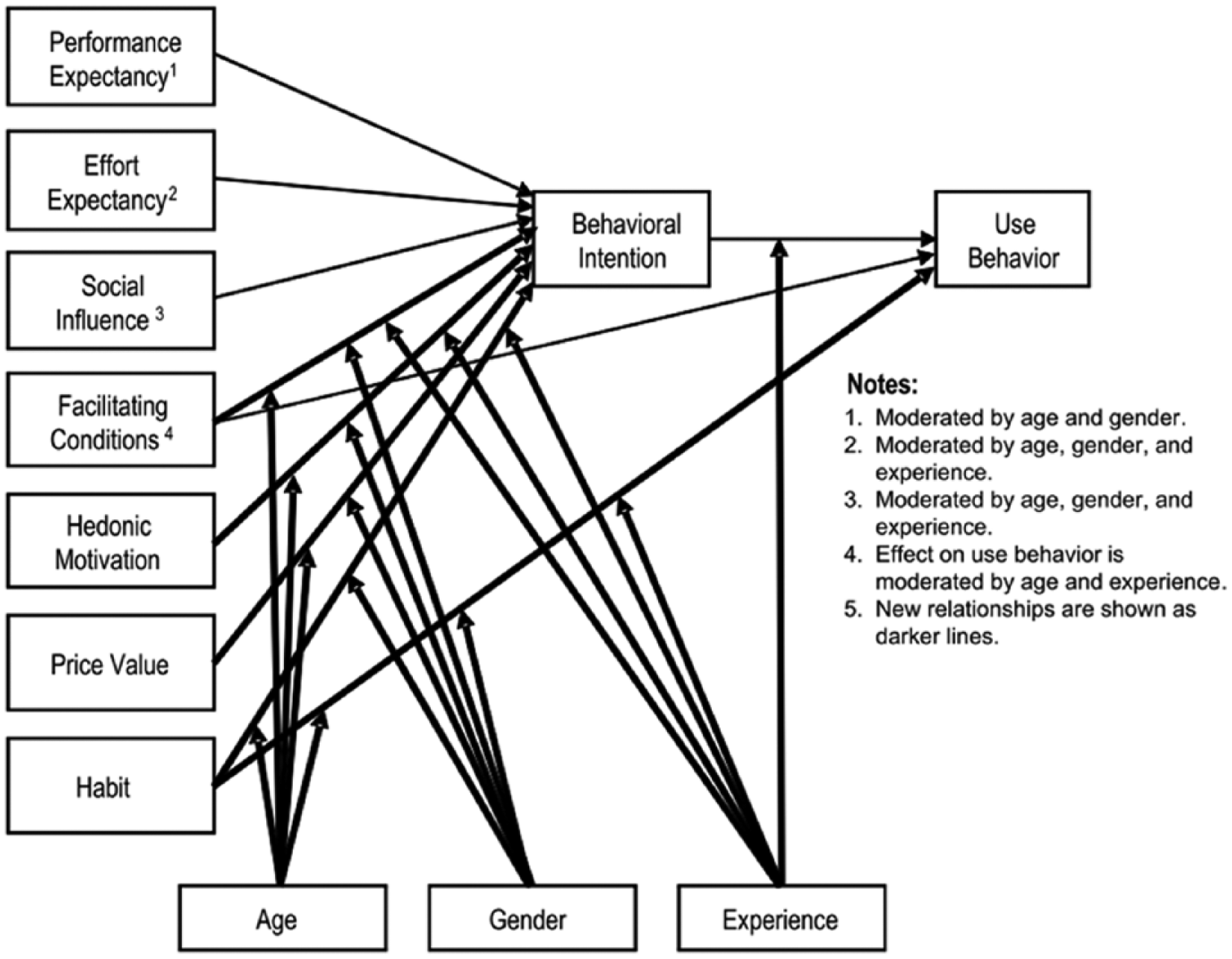
Extended Unified Theory of Acceptance and Use of Technology (UTAUT2).
In this extension, the authors include hedonic motivation to consider the intrinsic property of this process since the original model only emphasized extrinsic motivation (performance expectancy). Hedonic motivation is defined as the pleasure involved in using technology (Brown & Venkatesh, 2005). Hedonic motivation is a result of the fun, enjoyable, and entertaining experience of online learning and the potential of entertainment in learning situations.
The empirical results suggest that hedonic motivation as enjoyment or happiness arising out of using technology can play a significant role in determining new technology adoption (Brown & Venkatesh, 2005). While, in an academic context, few studies have included this variable in the evaluated models, authors such as Ali (2015) and Garrison and Kanuka (2004) indicate that the hedonic attributes of pedagogical resources are an important factor in improving the learning experience.
Therefore, Masadeh et al. (2016) evaluated the factors affecting the intention of the Lebanese university students in using e-learning systems and found that the hedonic motivation had a direct and positive influence on student’s plan to use these systems. Also, different research studies have reported a direct and significant relationship between hedonic motivation and behavioral intention, and have considered the hedonic motivation as one of the best predictors of the model (Kasaj & Xhindi, 2016; Nguyen et al., 2014; Raman & Don, 2013).
The next variable in this extension is the habit, understood as the extent to which an individual believes the behavior to be automatic (Venkatesh et al., 2012). Different approaches to the study of technology adoption established that habits influence the intention to use technology (Greenhow & Lewin, 2016; Masadeh et al., 2016; Nguyen et al., 2014) and confirmed that the habit positively and significantly predicted the intention of students to use e-learning systems and e-learning based on cloud computing.
Taken as a starting point the postulates of the UTAUT2 and the previous results, this study hypothesizes the following:
Despite the importance of price, this variable has been used only to study consumer behavior in other technological conditions such as (a) e-commerce (Pappas, 2016), (b) e-banking (Arenas-Gaitan, Peral-Peral, & Ramón-Jeronimo, 2015), and (c) online payment (Morosan & Defranco, 2016). Due to the context of BL users do not have to pay extra for services or use of technological tools, for this reason, this variable was not included in the theoretical model.
Regarding the moderator roles of age, sex, and experience, Venkatesh et al. (2012) established a moderate effect in the UTAUT2 model. The authors suggest that due to the decline in cognitive abilities associated with age, older consumers tend to have more difficulty learning to use new technologies than for younger people. Thus, the relationship facilitating conditions over behavioral intention should be of greater magnitude in the case of older consumers.
In the context of the adoption of a webinar system in a BL course, Khechine et al. (2014) effectively confirmed with a group of Canadian students between 19 and 23 years old that the positive effect of facilitating conditions on behavioral intention was stronger for older students. While working with a sample of Spanish university professors, Martín García et al. (2014) found that the facilitating conditions positively and significantly predicted the intention to adopt BL in only the group of teachers aged between 41 and 50 years. Other authors also confirmed the moderating role of age in the relationship between facilitating conditions and intention (Lakhal et al., 2013).
Based on gender, the finding shows that women tend to put more emphasis on external support factors than men when considering the use of new technology (Venkatesh et al., 2012); for this reason, the relationship facilitating conditions → behavioral intention should be greatest in the case of women. This prediction was confirmed by Lakhal et al. (2013), noting that the relationship facilitating conditions → behavioral intention was significant only in the case of women. However, Martín García et al. (2014) found that the relationship facilitating conditions → behavioral intention was significant only for men. Venkatesh et al. (2012) found that the combined effect of age and gender was more significant than simple interaction.
Regarding experience, Venkatesh et al. (2012) proposed that this variable acts by moderating the relationship facilitating conditions → behavioral intention. The increase in time when a person first used a technology enhances the familiarity of it, thus reducing the need for external support factors to use it. Consequently, the magnitude of the relationship facilitating conditions → behavioral intention should decrease with increasing experience. Based on this empirical evidence, we hypothesize the following:
Venkatesh et al. (2012) argued that the relationship hedonic motivation → behavioral intention would be moderated by gender, age, and experience, given that the individuals have different needs when interacting with technology. The authors reported that the effect of hedonic motivation on behavioral intention was stronger among younger men who had less experience (Interaction Hedonic Motivation × Gender × Age × Experience = −0.21; p < .001). However, simple interactions were not statistically significant. Therefore, the following hypotheses are proposed:
Finally, concerning the relationship between habit and behavioral intention, Venkatesh et al. (2012) point out that rapid changes in the technological environments contribute to the dependency on habits to guide their behavior. Concerning this, the acquisition of habits requires a relatively long period of extensive practice, so it would be expected that the effect of this variable on the behavioral intention would be stronger in consumers with more experience.
Following the same reasoning, given that older people tend to use automated information processing to a greater extent, their habits hinder new learning, having more problems in adapting to changing environments (Venkatesh et al., 2012). Thus, one would expect that the relationship habit → behavioral intention is greatest in the elderly.
Regarding the moderating effect of gender, it would be expected that the strength of the relationship habit → behavioral intention is greater in men, because they tend to process information based on the previous cognitive schemas ignoring the details about the system, being less sensitive to contextual cue changes (Venkatesh et al., 2012). According to Kasaj and Xhindi (2016), only in the case of men does the habit correlated positively and significantly with the behavioral intention to use Facebook as a learning tool.
In connection with the above predictions, Venkatesh et al. (2012) confirmed that the effect of habit on the behavioral intention was stronger among older men and less experienced users (Interaction Habit × Gender × Age × Experience = −0.22; p < .001). But again, the simple interactions Habit × Age, Habit × Gender, and Habit × Experience were not statistically significant. In this case, we propose the following:
Compared with UTAUT, the UTAUT2 model produced a substantial improvement in the variance explained in behavioral intention (56%-74%) and technology use (40%-52%; Venkatesh et al., 2012). In this regard, it is reasonable to use this extended model to explore what factors influence the intention to adopt new technology. Based upon relevant theoretical and empirical evidence to use the UTAUT2 in academics process with technology, the research model of the hypothesis is summarized in the following:
Method
Participants
The sample consisted of 307 subjects, selected nonprobabilistically. The questionnaire was sent by email to those who had participated in executive education in the past 2 years in Bogotá, Colombia. Originally, the questionnaire was sent to 12,598 persons, responses were received from 548, and finally, 307 were selected who had completed the entire survey. The email invitation contained information about the study’s primary purpose, the voluntary nature of the participation, and the confidentiality of provided information. Data were collected from June to September 2016.
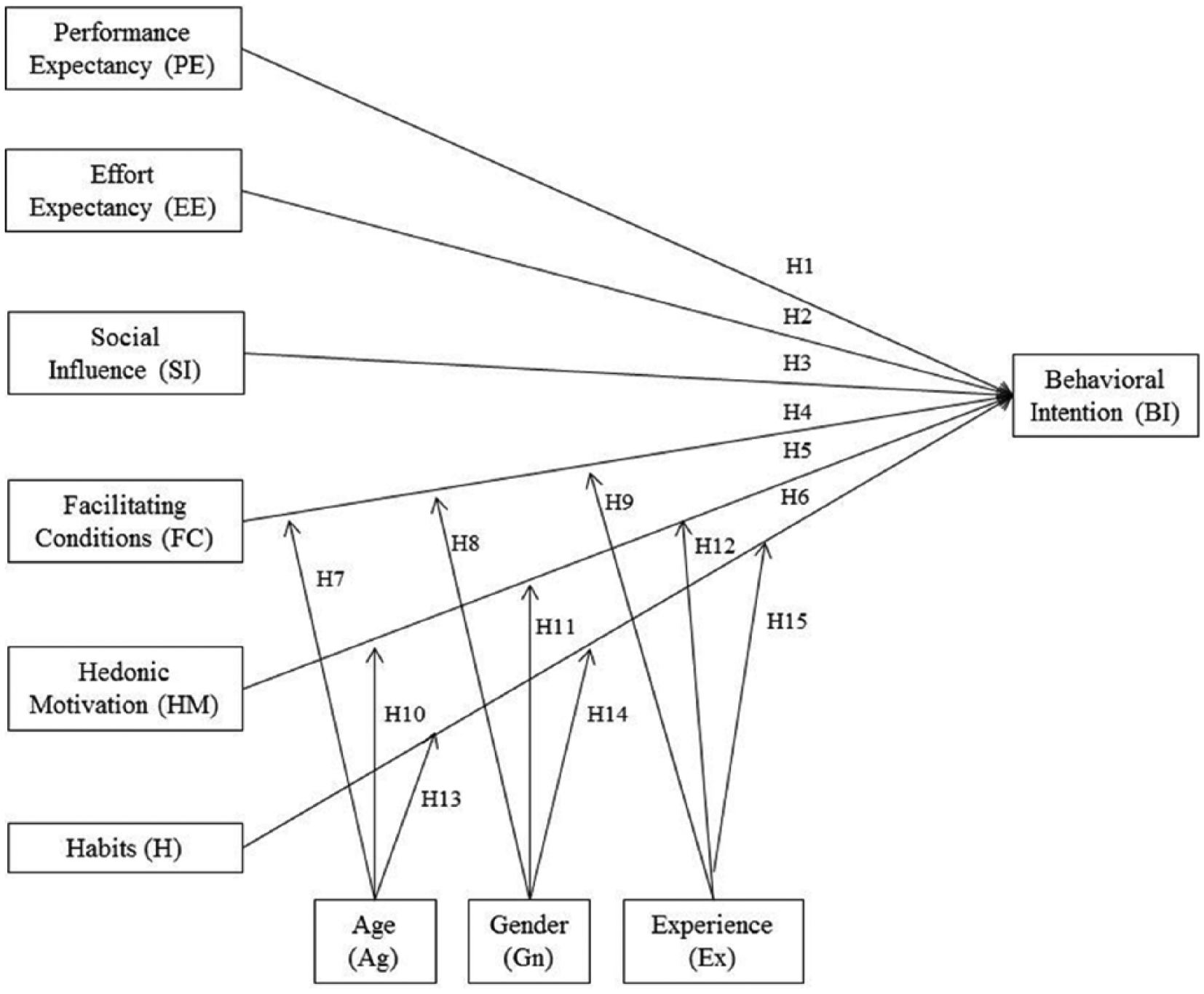
Research model.
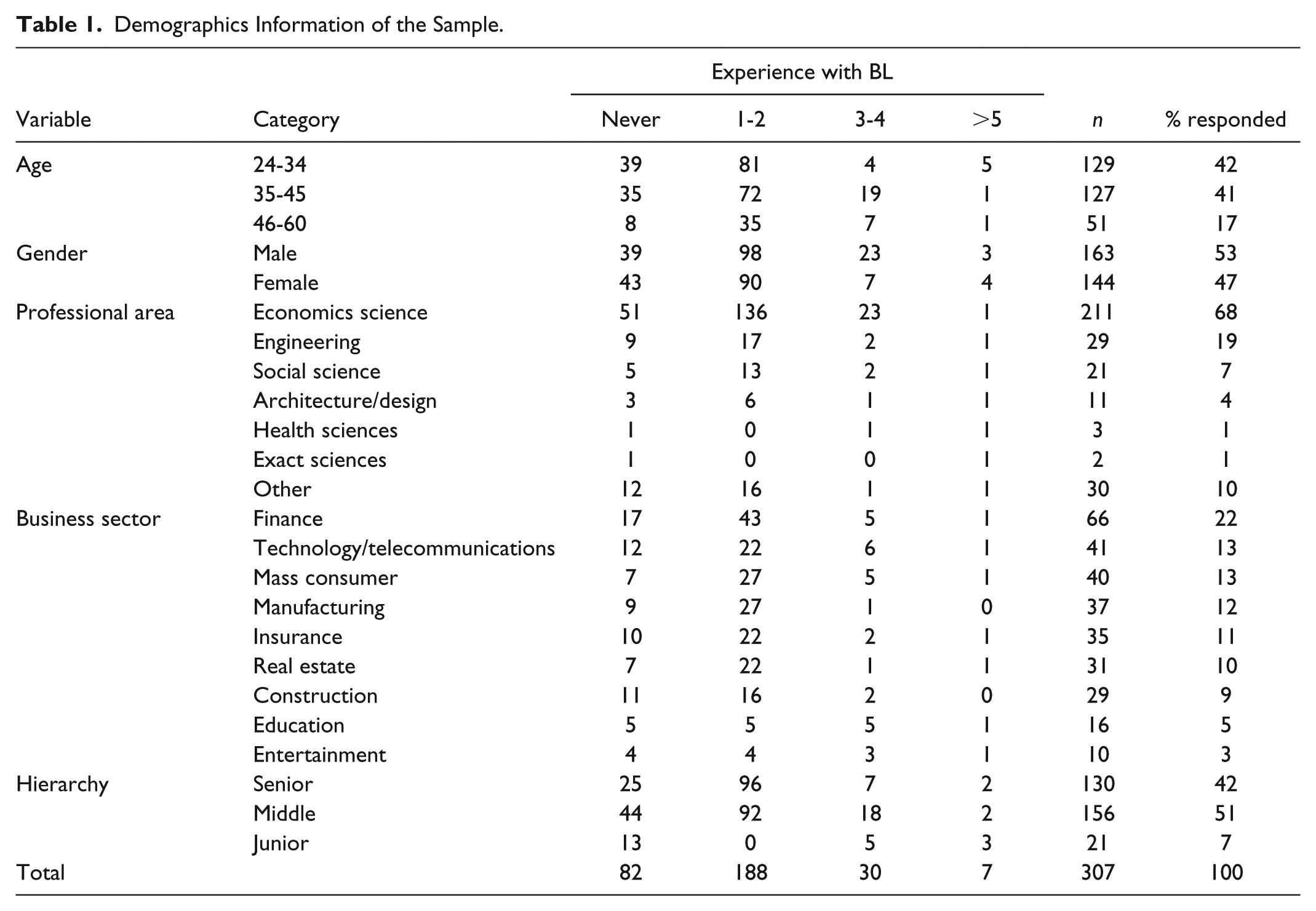
A demographic profile of participants is summarized in Table 1. The age groups with the most significant number of responses were the age group 24 to 34 years and 35 to 45 years, with 83% of the total responses. The mean age was 37.4 and standard deviation 8.1. Regarding gender, there is a slightly higher proportion of male (53%) compared with female (47%). The majority of participants (68%) studied economics and administrative sciences; they were working in middle management at the time of the evaluation (51%) and previously had little experience in executive education course using BL, at least once (49%) or 2 times (12%) in the last year. All the participants in the survey who had participated in BL executive programs (73%) had done so with face-to-face and asynchronous learning activities. Nevertheless, all the participants considered themselves as novice users.
Demographics Information of the Sample.
Measures
The final questionnaire included 39 items adapted from UTAUT2 Model (see Table 2) and demographic information. All items use 7-point Likert-type scales, in which 1 indicates completely disagree and 7 indicates completely agree.
Measurement Scales: Question Items Used in This Study.
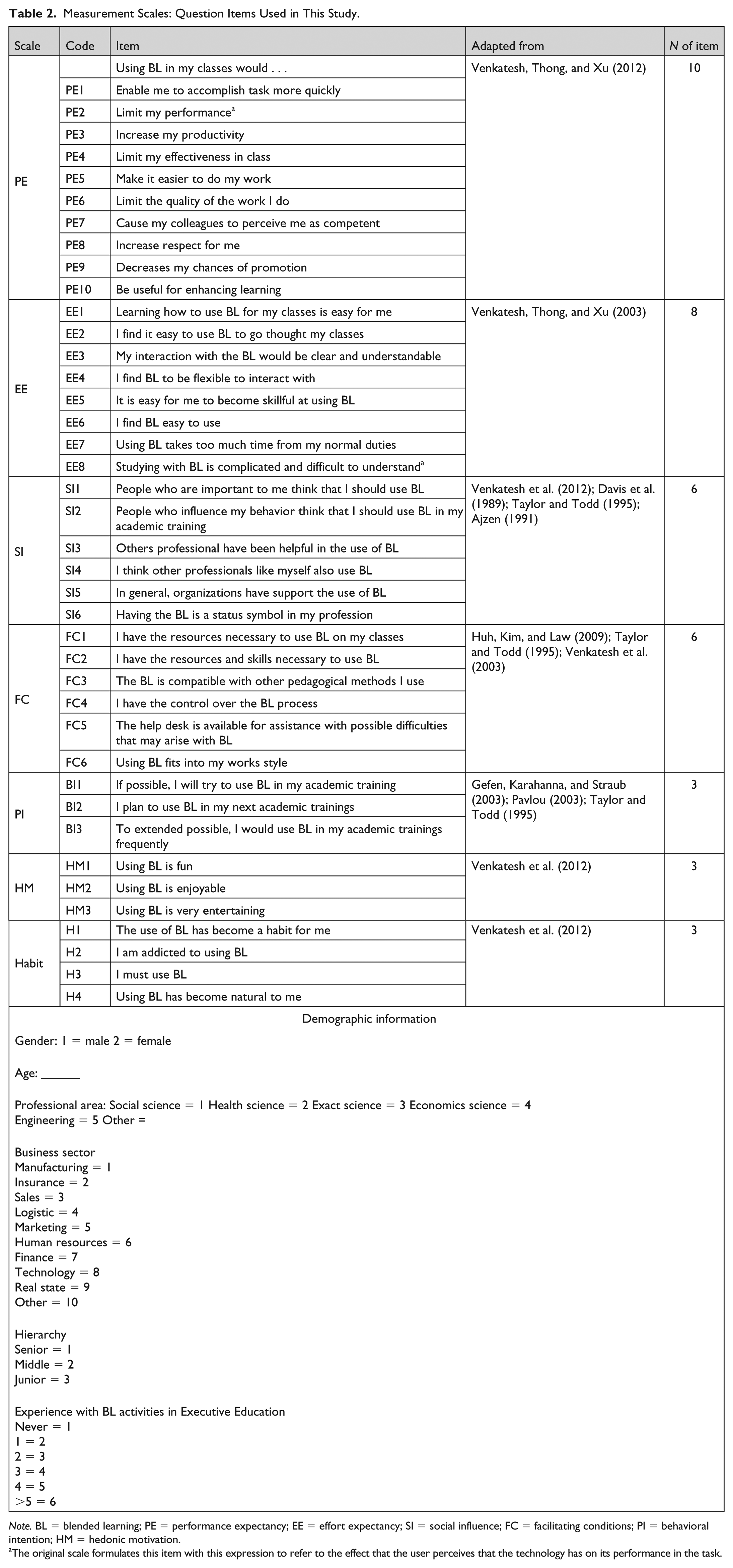
Note. BL = blended learning; PE = performance expectancy; EE = effort expectancy; SI = social influence; FC = facilitating conditions; PI = behavioral intention; HM = hedonic motivation.
The original scale formulates this item with this expression to refer to the effect that the user perceives that the technology has on its performance in the task.
Item elaboration took place in five steps: (a) translation into Spanish and item adaptation; (b) validation by experts in BL, psychometric, technology, and educational psychology; (c) wording proposal; (d) face-to-face interviews with a random group of seven persons who completed the questionnaire and gave feedback on items to ensure they were understandable; and (e) sending the final version of the questionnaire to the databases. In the case of the participant with no experience with BL, they were presented with the same items but phrased in the conditional verb tense. In all cases, the participants were given the definition of BL that we described previously.
Data Analysis
Initially, we conducted a descriptive and exploratory analysis of the data to assess all the assumptions to carry out a multivariate analysis (normality, homoscedasticity, and linearity). Reliability and validity properties of the scales were examined by conducting a confirmatory factor analysis to refine the scales. The next step was to analyze the relationships postulated in the research model, performing a structural equation modeling.
Results
Properties of the Scales
Psychometric properties of scales were examined by conducting a confirmatory factor analysis with robust maximum likelihood using SPSS 19 and Amos 23. To guarantee the convergent validity, we selected the items which completed the standardized loadings over 0.6 (Bagozzi & Yi, 1988) and also the Lagrange Multipliers Test which did not show significant relations between dimensions (O’Rourke & Hatcher, 2013). According to these criteria, 15 items were deleted (PE1, PE2, PE4, PE6, EE4, EE5, SI4, SI5, SI6, H3, BI2, FC1, FC2, FC3, FC4, FC5, FC6) and obtained a good model fit (chi-square = 398.324, df = 137, χ2/gl = 2.90, comparative fit index [CFI] = 0.934, root mean square error approximation [RMSEA] = 0.079, normed fit index [NFI] = 0.903, incremental fit index [IFI] = 0.934, relative fit index [RFI] = 0.909, goodness-of-fit index [GFI] = 0.899, adjusted goodness-of-fit index [AGFI] = 0.893; see Table 3).
Confirmatory Factor Analysis.

Note. χ2 = 398.324; df = 137; χ2/df = 2.90; CFI = 0.934; RMSEA = 0.079; NFI = 0.903; IFI = 0.934; RFI = 0.909; GFI = 0.899; AGFI = 0.893. PE = performance expectancy; EE = effort expectancy; SI = social influence; HM = hedonic motivation; H = habit; BI = behavioral intention; CFI = comparative fit index; RMSEA = root mean square error of approximation; NFI = normalized fit index; IFI = incremental fit index; RFI = relative fit index; GFI = goodness-of-fit index; AGFI = adjusted goodness-of-fit index.
The discriminate validity was assessed by testing the correlations between pairs of construct items and was significantly different from unity (Anderson & Gerbin, 1984), and the root square of variance extracted (AVE) of each factor was higher than the correlations between factors with respect each pair of constructs (see Table 4).
Discriminant Validity.

Note. The bold value on the diagonal is the square root of the average variance extracted (AVE).
As for the reliability, the Cronbach’s alpha coefficient was calculated for each one of the scales, verifying that the same was superior to .7 in all cases (see Table 3) and that all the items positively correlated with the total score in the scales. In addition, the composite reliability was calculated and the average of variance extracted, verifying that they were close to or above 0.7 and 0.5, respectively (Fornell & Larcker, 1981; see Table 3). In summary, all the measured variables explain the variance of latent constructs and support the validity and reliability of the measurement model.
Structural Model and Hypothesis Testing
We employed maximum likelihood estimation to compare the structure coefficients between the latent variables. The structural model analysis has also shown a good fit according to the estimates of different goodness-of-fit indices, except for the RFI (0.879). Table 5 provides the recommended values for individual goodness-of-fit indices and the estimates for the final structural model.
Goodness-of-Fit Statistics for the Structural Model.

Note. NFI = normalized fit index; CFI = comparative fit index; IFI = incremental fit index; RFI = relative fit index; GFI = goodness-of-fit index; AGFI = adjusted goodness-of-fit index; RMSEA = root mean square error of approximation; SEM = structural equation modeling.
Table 6 shows the test of hypotheses in the research model. The results show that performance expectancy (β = 0.28, p < .001), effort expectancy (β = 0.26, p < .01), and hedonic motivation (β = 0.41, p < .05) positively affect the behavioral intention to adopt BL in student of executive education. These results provide support for hypotheses H1, H2, and H5. However, there was no statistical evidence regarding the direct impact of social influence and habit on behavioral intention to adopt BL, meaning that the analysis did not confirm hypotheses H3 and H6. The hypothesis H4 (facilitating conditions → behavioral intention) could not be evaluated since the variable did not meet the criteria of reliability and validity.
Hypothesis Testing.

Note: C.R. = critical ratio.
Subsequently, to evaluate the moderating effects, a hierarchical regression was performed. All the moderate variables—age, gender, and experiences—moderated the relationship between hedonic motivation and habit over behavioral intention (see Table 7), but the results confirm only three of six hypotheses.
Hypothesis Testing of Moderating Effects.

The results of H10 (Hedonic Motivation × Age → Behavioral Intention) reveal that R2 value was .47, which means that 47% of the variance in the behavioral intention to adopt BL is explained by the interaction between hedonic motivation and age. The path coefficient was β = −0.03 (p = .000), which indicates that age has a negative and significant moderating effect on the relationship hedonic motivation → behavioral intention, meaning that the relationship between hedonic motivation and behavioral intention increased in younger students.
Regarding H11 (Hedonic Motivation × Gender → Behavioral Intention), it was found that the combined effect of hedonic motivation and gender accounts for 40% of the variance of the behavioral intention, and also the path coefficient indicates that the moderating effect of gender in the relationship is negative and significant (β = −0.45; p = .000), so that the relationship between hedonic motivation and behavioral intention is stronger in men than in women.
The results of H12 (Hedonic Motivation × Experience → Behavioral Intention) contribute to explaining 40% of the variance of behavioral intention, which also shows a positive and significant relationship of experience in moderating the relationship between hedonic motivation and behavioral intention, implying that the relationship between hedonic motivation and behavioral intention is stronger when the user has more experience using BL (β = 0.63; p = .000).
About H13 (Habit × Age → Behavioral Intention), it was established that the combined effect of habit and age explained 17% of the variance of behavioral intention. However, although the percentage of variance explained is low, the moderating effect of age on the relation of habit to the behavioral intention is negative and significant (β = −0.72; p = .000), meaning that as age increases, the relationship between habit over behavioral intention tends to decrease.
Furthermore, the results of H14 (Habit × Gender → Behavioral Intention) explain for only 13% of the variance; however, the relation of the moderating effect of gender between habit and behavioral intention was positive and significant, so that mean habit has a more important influence on women over the intention to adopt BL (β = 0.67; p = .000).
Finally, the evaluation of the moderating effect of experience on habit → behavioral intention shows that experience and habit (H15) together explained 12% of variance, despite that the moderating effect was positive and significant (β = 0.10; p = .000), indicating that with more experience, the greater the relationship between habit and behavioral intention.
Discussion
The aim of the present study was to evaluate the intention to adopt BL in executive education using the Extended Unified Theory of Acceptance and Use of Technology. In respect to the direct effect, the evidence shows that three hypotheses were confirmed. More specifically, the results point out that performance expectancy, effort expectancy, and hedonic motivation are the best predictors of the intention to use BL in senior- and middle-ranking executives, implying that as BL is perceived as more advantageous to their learning, making it more efficient and of higher quality, they believe that it is easy to use, fun, enjoyable, and entertaining, the more likely the user will intend to use it.
In relation to performance expectancy → behavioral intention relationship, our results are consistent with those reported by authors who have tested the suitability of the UTAUT model in the general educational context (Asare et al., 2016; Hsu, 2012; Jong & Wang, 2009; Lakhal et al., 2013; Lwoga & Komba, 2014; Oh & Yoon, 2014; Olatubosun et al., 2015; Pardamean & Susanto, 2012; Tran, 2013). Likewise, they agree with Chan et al. (2015), Decman (2015), and Khechine et al. (2014) in the case of BL, and those found by Kasaj and Xhindi (2016), Masadeh et al. (2016), Nguyen et al. (2014), and Raman and Don (2013) in evaluating the UTAUT2 model’s fit.
Regarding the predictive power of performance expectancy, other authors have found that this construct is the best predictor of behavioral intention to use a specific technology (Chang, 2015; Decman, 2015; Hsu, 2012; Kasaj & Xhindi, 2016; Khechine et al., 2014; Lakhal et al., 2013; Lwoga & Komba, 2014; Masadeh et al., 2016; Pardamean & Susanto, 2012), and this is confirmed by the literature review conducted by Williams et al. (2014). However, according to other authors (Asare et al., 2016; Jong & Wang, 2009; Nguyen et al., 2014; Oh & Yoon, 2014; Olatubosun et al., 2015; Raman & Don, 2013), performance expectancy was not the best predictor of the intention to use BL by Colombian executives. In this regard, it is important to consider that in most studies which report that performance expectancy was the best predictor of behavioral intention, the authors did not include in their models habit or hedonic motivation. When these two variables were considered, hedonic motivation factors occupy the first places, suggesting that the importance of performance expectancy is reduced when intrinsic motivation and habit are found in the model and confirm the proposal of Venkatesh et al. (2012) about the relevance to incorporate these constructs in explaining the acceptance and the use of technology in different contexts.
Since effort expectancy was positively and significantly related to the intention to use BL, our results are consistent with findings in other educational settings (Asare et al., 2016; Hsu, 2012; Kasaj & Xhindi, 2016; Lwoga & Komba, 2014; Oh & Yoon, 2014; Olatubosun et al., 2015; Raman & Don, 2013; Tran, 2013) and with what was found by Chan et al. (2015) in the case of BL. Also, our results confirm that the predictive power of this construct is lower than the rest of the constructs considered—the UTAUT and UTAUT2 (Asare et al., 2016; Chan et al., 2015; Hsu, 2012; Kasaj & Xhindi, 2016; Lwoga & Komba, 2014; Raman & Don, 2013; Tran, 2013).
Regarding the positive and significant impact of hedonic motivation on the intention to use BL, our results agree with those found by Kasaj and Xhindi (2016), Masadeh et al. (2016), Nguyen et al. (2014), and Raman and Don (2013). In fact, as observed by Nguyen et al. (2014) when studying the intention to use e-learning based on cloud computing, the hedonic motivation was the best predictor of the intention to use BL by the Colombian executives who had participated in executive education.
In contrast with the research model, habit and social influence are not important in determining the behavioral intention to adopt BL in executive education. The absence of a significant impact of the social influence on behavioral intention is consistent with what was found in e-learning contexts by Jambulingam (2013) when using the UTAUT to study the plan to use the Smartphone for learning purposes, and by Masadeh et al. (2016) by testing the predictions of the UTAUT2 model. Similarly, they coincide with what was found by Chan et al. (2015) when studying the intention to use Students’ Response System with mobile devices for BL.
An argument that can explain our results is related to the characteristics of the executive educational programs because these types of programs are not a continuous activity in which habit is a crucial factor in the learning process. On the contrary, the executive programs are usually short and intensive, according to the skills needed by managers. The same argument could explain why the social influence does not explain the behavioral intention since the decision to participate in executive education is principally made by the organizations. In conclusion, based on these results, the influencer and the duration of the learning activity could modify the effect of habit and social influence on behavioral intention.
According to the theoretical framework (Venkatesh et al., 2012), age, gender, and experience moderated the effect of hedonic motivation and habit. Although Venkatesh et al. (2012) found that the simple interactions between Hedonic Motivation × Age, Hedonic Motivation × Gender, and Hedonic Motivation × Experience were not statistically significant, the results of the present study show that, as hypothesized, the relation between hedonic motivation and behavioral intention was higher for younger students. Similarly, with the evidence reported by Kasaj and Xhindi (2016), the relationship between hedonic motivation and behavioral intention was stronger in men than in women. These results could be explained why men and younger people show a higher tendency to look for new information stimuli and are more receptive to new ideas, which increases the relative importance of hedonic motivation as a determinant of behavioral intention (Venkatesh et al., 2012).
However, contrary to expectations, the present result reflects that the relation between hedonic motivation and behavioral intention was stronger for a student who has greater experience using BL. Venkatesh et al. (2012) expected that hedonic motivation would play a more important role in determining the acceptance and use of technology by those with less experience, in view of the theoretical argument which assumes that the more time a person uses a given technology, it ceases to be novel and the person begins to use it for more pragmatic and less hedonic purposes. However, it may also be that the experience diminishes the relevance of hedonic motivation, as found in the present study, because when a person has more time using a given technological system and increases his knowledge of how to use it, his employment becomes more monotonous, and the intention to continue using it will depend more on how pleasant and entertaining it is.
Also, our results regarding the relationship between habit and behavioral intention are consistent with the research conducted by Raman and Don (2013), which also reported no direct effect. The absence of a direct relationship between habit and behavioral intention can be explained by the fact that the relevance of habit as a predictor of behavioral intention was moderated by age, gender, and experience.
In this sense, our results showed that the habit → behavioral intention relationship was stronger in people who had more experience. According to Venkatesh et al. (2012), the above result is because the acquisition of habits requires extensive practice for relatively extended periods of time so that the associations between the contextual keys and the behavior can be stored in long-term memory and override other behavioral patterns. Thus, when a person use a technology, increase, the possibility that its use becomes automatic. For this reason, habit becomes more relevant as a determinant of behavioral intention as experience increases.
Finally, contrary to expectations, in the present study, it was found that as the age of the individual increases, the magnitude of the habit → behavioral intention relationship is reduced and that this relationship is stronger in women than in the men. Venkatesh et al. (2012) point out that the strength of the habit → behavioral intention relationship is greater in older people because, once these individuals have acquired the habit of using a particular technology, they find it more difficult to override that habit and change their behavior to adapt to changing environments. However, the validity of this reasoning requires confirming the assumption that the older people consider that the use of a given technology is habitual behavior for them, which is not necessarily true in all cases. In fact, Venkatesh et al. (2012) found that the simple interaction Habit × Age was not statistically significant, and our results suggest that in the case of executives participating in executive education, for older people the perception of using BL as an automatic and natural behavior is less relevant as a determinant of the intention to use it than for the younger individuals.
In summary, a significant contribution of our results is that intrinsic variables (HM) performed better than external variables (PE, EE) in the prediction of technology acceptance. One of the most important practical implications of this finding is that the principal factors that promote the acceptance of executive BL programs are the autonomy of the student to meet the academic objectives independently in a fun, entertaining, and enjoyable learning context. This result is reasonable given that executive education programs are alternatives to traditional education, responding to the demands of the real sector so that they are also expected to offer a different learning experience. This evidence is a relevant insight into the development and implementation of these types of programs in business education to engage the student in the learning process.
Another important contribution is that habit and social influence did not show a significant influence to adopt BL in executive education, which leads us to consider other factors that could be important to extend and validate this model: the duration of the program and who is the influential decision maker in starting a BL business program. When the decisions depend entirely on the student to take a short and intensive course, perhaps the factors to be considered in an educational BL offer are different from those in which other actors in the decision making are involved, or if it is a long-term program.
Implications, Limitations, and Further Research
Despite the significant contributions of this research to provide evidence in a relevant sample in business education, it also has some limitations. Our sample involved only senior- and middle-ranking executives in evaluating executive education; to generalize these results, it is important to compare this sample with other business-related studies and the sample in other higher education learning activities. In future research with executive education, comparing different professional areas and program content (finance, marketing, human resources, and management) should be considered since those variables could modify the relationship to adopt new technologies in executive education. Also includes the decision makers in the organizations (CEO, directors, and junior employees) and universities responsible (deans and professors) for executive education activities.
Finally, a well-designed BL course should allow students with little experience with this kind of program perform the proposed tasks without affecting the learning effectiveness. In further research, it is relevant to include variables related to human–computer interaction to evaluate which characteristic contributes to achieving the desired learning objectives while engaging the students. The principal benefit to consider this variable is gaining knowledge about what factors can improve the learning experience in diverse areas.
Footnotes
Declaration of Conflicting Interests
The author(s) declared no potential conflicts of interest with respect to the research, authorship, and/or publication of this article.
Funding
The author(s) received no financial support for the research, authorship, and/or publication of this article.
