




Abstract
The present research addressed the problem of common good production referring to a real-world problem in an urban residential complex in Mashhad city, Iran. The residential complex includes four blocks showing different rates of success in the common good production. Analyzing the qualitative field data, using grounded theory framework, we distinguished seven different strategies among residents: vandal, robber, cheater, abider, cooperator, compensator, and punisher. The other main agents’ property that seems to be determining in the production of common good is their desirability for them which we quantified it referring to a couple of personal variables. The outputs of the qualitative phase of research let us to design an agent-based model in computer to apply some artificial experiments and find ways for promoting the situation. The results showed that some specific minor changes in agent combinations can make a great difference in the outcomes and solve the complex of cooperation.
Introduction
In a classic definition, each member of the group is a stakeholder who has the right to take parts of common good independently of others. Common good can be roughly defined as a shared resource from which all group members may benefit, regardless of whether they have provided their fair share for producing it or not. In other words, as goods are nonexcludable, that is, people enjoy a common good without having contributed in its creation or maintenance. Anyway, the unintended result happens when all individuals do the same, the common good declines and all are worse off (Ostrom, 1990; Kollock, 1998). Most common good are products of collective efforts, but this does not essentially mean that producers are exactly the utilizers of them. In addition, the amount of contributions in a common good production may differ based on people’s strategies and ways of decision making (Balliet & Van Lange, 2013), that is, in the most simple categorization, they are called free riders and cooperators. Free riders are agents who enjoy the advantages of common good but do not contribute their fair share in the common good production (Farjam, Faillo, Sprinkhuizen-Kuyper, & Haselager, 2015; Kollock, 1998). In this case, punishments against free riders are needed to prohibit defections (Fehr & Gintis, 2007). Cooperators are agents who act as the socially expected way and take their role in the common good production responsibly. The main area of interest in analyzing common good includes the situations in which people decide to cooperate/defect and why they decide to do so.
Social dilemmas are situations in which agents have to decide whether to cooperate or defect, but as they do not have enough information about others’ decisions, this is not simply a matter of calculation. In other words, the situation in which individual rationality leads to collective irrationality is called social dilemma. Hardin (2009) called this “the tragedy of commons” since individually reasonable behavior brings about a situation in which everyone may worse off than what otherwise they might have been (Kollock, 1998). Social dilemmas enjoy some characteristics including (a) the social payoff to each individual for defecting behavior is more than cooperative behavior, not considering the fact that other society members do, yet (b) all individuals in the society receive a lower payoff if all defect than if all cooperate(Dawes, 1980).
Prisoners’ dilemma is the most popular and simplest possible model of such situation which describes how agents may face unintended outcomes since they may lose advantages when they try to earn most (Kollock, 1998). Lack of full information and unintended outcomes may be the most interesting issue in this area. Agents’ information and strategies to choose whether to cooperate or not is examined by Chiang (2013). He concludes that agent’s information about characteristics of the networks would promote cooperation, one can find many real examples for such problems, since in everyday social life, people need to take into account others’ decisions or form a collective cooperation to do some particular actions.
There are two factors involved in leading individuals to cooperate in a social dilemma situation. First, people must “think about” and figure out the nature of the dilemma, so that moral, normative, and altruistic concerns and external payoffs can influence behavior. Second, there should be some reasons for people to believe that others will not defect, for while the difference in payoffs may always favor defection regardless of what others do, the absolute payoff is higher if others cooperate than if they do not (Dawes, 1980).
Although a list of real examples of common good production and problems that agents face is a long one, many of them are the most interesting ones for sociologists, who try to analyze bases and mechanisms of social order. This includes any kind of collective actions, common ownerships in the areas like natural resources, public initiatives, and governance. In this article, we have focused on a real exemplar situation which happens in a residential apartment complex in Mashhad city, Iran. This case is chosen to study because of observed problems of forming collective actions and producing common good there.
Improving the quality of urban residential environments has become one of the key goals of city policy and urban planning (Ge & Hokao, 2006). To explain importance of the case, since most people in large urban areas live in residential complexes and these are a small sample of a civil society without direct interfering of the government, challenges of common good production are so obvious and ready to study. Here, many considerable examples of such challenges can be found since residents often confront many problems that originate from lack of enough cooperation and collective actions. Managing such difficulties, including bothering noises, of green spaces, providing common costs, dividing parking spaces, and so on, needs coordination of actions, which has many details and should be carefully studied regarding the history of interactions (Agrawal, 2003)
Then we decided to use agent-based modeling (ABM) as a proper tool to model complex bottom-up representations of social phenomena (Gilbert, 2008). Agent-based computational models as new scientific instruments in social sciences (Dilaver, 2015; Epstein, 1999) can simulate evolutionary procedures and can illustrate how attitudes and actions of agents in the microlevel may lead to unexpected macro outcomes (Dilaver, 2015). To make an ABM includes clear definition of agents, their attributes, and ways of conducting. More precise empirical inputs of the model lead to higher quality representation of the target. The empirical inputs may be quantitative or qualitative. Using qualitative data in ABM has received more attention recently (e.g., Agar, 2005; Yang & Gilbert, 2008)
In this article, we have tried to empirically enrich the theoretical problem of common good production with reference to a captivating case, which lies in the scope of urban sociology. The main aim is to give a detailed description of the responsible mechanisms for production of the common good, which are relevant for living in a residential apartment complex. Here, we are focused on “security” as a common good. To do so, we will give a short review of works in this field. After describing the model, we will analyze the findings and discuss them.
Background
Most studies on cooperation have investigated the relationship between interaction continuity and emergence of cooperation (Axelrod, Ford, Riolo, & Cohen, 2002, Dal Bó, 2005). Roth and Murnighan (1978) have shown that the higher probability of continuation increases the levels of cooperation. Investigations indicate that behavioral reciprocity is known as central mechanism in the evolution of cooperation (Axelrod & Hamilton, 1981; Balliet & Van Lange, 2013; Fehr & Fischbacher, 2003; Fischbacher & Gächter, 2010; Gintis, 2004; Gintis, Bowles, Boyd, & Fehr, 2003; Nowak & Sigmund, 2005). In evolutionary game, reciprocity means that individual actions depend on past interaction (Rand, Arbesman, & Christakis, 2011). Fehr and Fischbacher (2003) demonstrated that if strong reciprocators believe that no one will cooperate, they will also do not do so. Also, Fischbacher and Gächter (2008) have examined the role of beliefs and social preferences in voluntary cooperation and the dynamics of free riding in public good. Reduction of cooperation can be explained by heterogeneous social preferences like conditional cooperation. They ran two experiments to explain individual’s social preferences and beliefs. Achieved data have shown that individuals are extremely different in social preferences. In other words, large groups of people are conditional cooperator, that is, if others cooperate, they do so.
Computer simulations of repeated prisoners’ dilemma games have propounded that trust mechanism facilitates cooperation among people when histories of interactions are clear for them (Nowak & Sigmund, 2005), so mutual trust is a base for a simple dyad cooperation. Sutcliffe and Wang (2012) recommended that the level of mutual trust increases in case of continuous interactions among individuals. If cooperative behavior continues over outstretched period of time, it will change the stage in which emotion becomes more important than reward of cooperation. At macroscale, trust turns into reputation. Referring to what we said above, ABM (Boyd & Richerson, 1988) has demonstrated that a reputation mechanism, such as indirect reciprocity (Mohtashemi & Mui, 2003; Nowak & Sigmund, 2005), facilitates cooperation when the history of an agent’s previous interactions is visible as a reputation. The presence of a third person in the relationship affects trust as Burt and Knez (1995) have demonstrated that third parties often observe interactions between individuals in the focal relationships.
Despite pervious investigations, a social scientist faces a key question, which is “How do groups and societies minimize free riding and instead promote contributions to common good?” Widespread investigations have searched to achieve a single panacea, but Ostrom, Janssen, and Anderies (2007) correctly confirmed that there is no unique solution for the problem of such systems. One of recent ones is altruistic punishment, which “means that individuals punish, although the punishment is costly for them and yields no material gain” (Fehr & Gächter, 2002).
Most previous studies of cooperation and punishment have focused on altruistic punishment that has the central role in promoting cooperation in common good (Almenberg, Dreber, Apicella, & Rand, 2010; Farjam et al., 2015; Fehr, Fischbacher, & Gächter, 2002; Fehr & Gächter, 2000). Fehr and Gintis (2007) have shown that public good is known as one of the fundamental aspects of the formation of social order. They ran this experiment to answer the question that how individuals can choose between personal interests and norms? Punishment opportunity is entered to their experiment as a control variable. In this case, subjects can punish free riders after the end of each round, and their feedback was observed by them. The experiment was carried out in 20 rounds. In the first 10 rounds, individuals did not have the opportunity to punish, while in the later 10 rounds, they had. Their result has shown that in the first half of rounds, cooperation is decreased, and in the second half, it is increased. Also, Farjam et al. (2015) have explained that punishment can play a facilitating role for the evolution of cooperation in a common good situation. Even when it is not explicitly needed to keep cooperation going on, punishment has different effects in different societies. Balliet and Van Lange (2013) have reviewed 83 studies across 18 societies to investigate the effect of punishment on cooperation. They have founded that Punishment is more effective in the societies with high trust in comparison with societies with low trust. For example, Ye, Tan, Ding, Jia, and Chen (2011) reported that in some societies as Denmark and China, punishment is efficient, whereas in other societies, such as Turkey and South Africa, it is not. Possibility to show an appreciation for unselfish behavior may be proper for unselfish behavior to develop and help the group to figure out how to collaborate.
According to some studies (García & Traulsen, 2012; Herrmann, Thöni, & Gächter, 2008; Rand, Armao, Nakamaru, & Ohtsuki, 2010), investigating this deal, there is an antisocial punishment in the face of social punishment, which means that sometimes free riders punish participants. In this case, punishment not only does not have a role in facilitating cooperation but it also prevents the coevolution of cooperation. On the contrary, by increasing group members, reciprocity can be problematic, as punishment can also harm the other cooperators in one’s group (Boyd & Richerson, 1988). So researchers have tried to seek for a new solution known as ostracism and partner selection in dynamic network which has shown to promote cooperation effectively (Bravo, Squazzoni, & Boero, 2012; Cinyabuguma, Page, & Putterman, 2005; Masclet, 2003; Rand et al., 2011). Free riding in the relationships would be prohibited by a couple of mechanisms, for example, giving cooperators in a network the capability of creating “more links and isolating free-riders” (Bravo, Squazzoni, & Boero, 2012).
Creating more links and isolating free riders are kinds of punishment that allow one to choose which player discharges from the gathering utilizing different voting schemes, for launched out players continuously universally excluded starting with the profits of whatever participation embraced toward nonelected aggregation parts (Rand et al., 2011). Cinyabuguma et al. (2005) have explained in a common good experiment, permitting the expulsion of some group members increase cooperation compared with when there was no possibility of expulsion. Hauk (2001) have implied simulation model of prisoner dilemma where “partner selection” is known as best strategy for agents in uncertain situations. Bravo et al. (2012) have demonstrated that in dynamic networks when cooperators can create more links and isolate free riders, cooperation among agents will become strong. Rand et al. (2011) found that when networks are random or fixed, cooperation is decayed so that only when agents can update their network frequently, cooperation is maintained at a high level. Similarly, Jordan, Rand, Arbesman, Fowler, and Christakis (2013) found that in fixed networks, both selfish and cooperative behaviors are contagious, but in a dynamic network, selfish behavior is contagious and cooperative behavior is not.
According to Neumann (2015), evidence-based modeling presents additional sources to truly arrive at a theory through the inductive process of a grounded theory approach. Qualitative and quantitative data are needed in case of building empirically grounded artificial societies of agents to inform individual behavior and reasoning and document macrolevel emerging patterns (Ghorbani, Dijkema, & Schrauwen, 2015). Qualitative data cannot be converted into numeric values without distorting the data (Yang & Gilbert, 2008), but regarding guidelines proposed by Yang and Gilbert (2008), translating ethnographical data into an agent-based model is not as difficult as it seems. The research design integrates grounded theory (Glaser & Strauss, 2009) with ABM, and, as a result, this kind of social simulation is called grounded simulation (GS). Advantages of GS are followed:
GS can build a closer connection to the way various rules of the game are perceived and made sense of by individuals compared with more general theories.
GS is suitable for studying complex social phenomena. It has the capability of generalizing the research findings to higher levels or new hypothesized contexts. Emergence is a central concept in both grounded theory and social simulation.
GS improves content validity of ABM. It also provides instantly validating procedures.
It can help producing abstractions that are more relevant through cutting the distance between qualitative research participants and agents in simulation models.
GS design helps researchers addressing issues that are important for understanding complexity of social phenomena.(Dilaver, 2015).
To modify and calibrate an ABM with qualitative findings, we tried to inform a common good game with relevant results of the qualitative inquiry.
The Model
Grounded Basis of the Model
The case of this article 1 is a residential apartment complex in Mashhad city (second largest city in Iran with 2.7 million population in the 2011 census) that possesses some typical challenges of living in residential complexes. The complex comprised four blocks, each including 14, and 56 flats; it is in the lower middle part of the city (for both housing price and prestige) and is 15 years old. This complex is selected to study since the residents complain for many problems that exist due to the lack of cooperation and commitment to regulations, and the authors have had easy and full access to details of conflicts and cooperation and could conduct interviews with all available residents.
The complex is located between a highway (east) and a boulevard (west) with an entrance gate for each and between a business warehouse (north) and another residential complex (south). The whole area is fenced for security and two security staffs monitor the bigger gate (highway) interchangeably. There are small green spaces around the buildings and some places for car parking used by residents of apartments which do not have parking lot in blocks. (Figure 1)

The schema of the case of study.
There are single bills for gas and running water costs of the complex which should be paid by all. Each block has a representative, except one of them and the whole complex has a manager who keeps the costs and manages any other collective action. Parking lots are located at the ground floor and the number of them is less than the flats which sometimes causes problems for the residents. In all blocks, except Block 3, the apartment rules are specified on a board, rules like the place of each flat parking lot, charges and bills, time of meetings. In this article, we are concentrated on modeling security as a common good. This does not mean that all residents abide the rules, for example, it is noted that all flats in the complex must have the same facade, but some flats’ views have been renewed differently.
The qualitative data include 35 interviews with all accessible residents in a period of 2 weeks in summer (14 apartments did not have permanent residents and others were inaccessible because of other reasons).
In Table 1, respondents include 80% female and 20% men. The majority of respondents were married and only 13% of them are single or widow. The average age of respondents is 39 years. Nearly half of residents are tenants and the other half are owners. Regarding their education, majority of them have a high school diploma. Most of the residents have lived only for a short period of time.
Demographic Characteristics of Respondents.
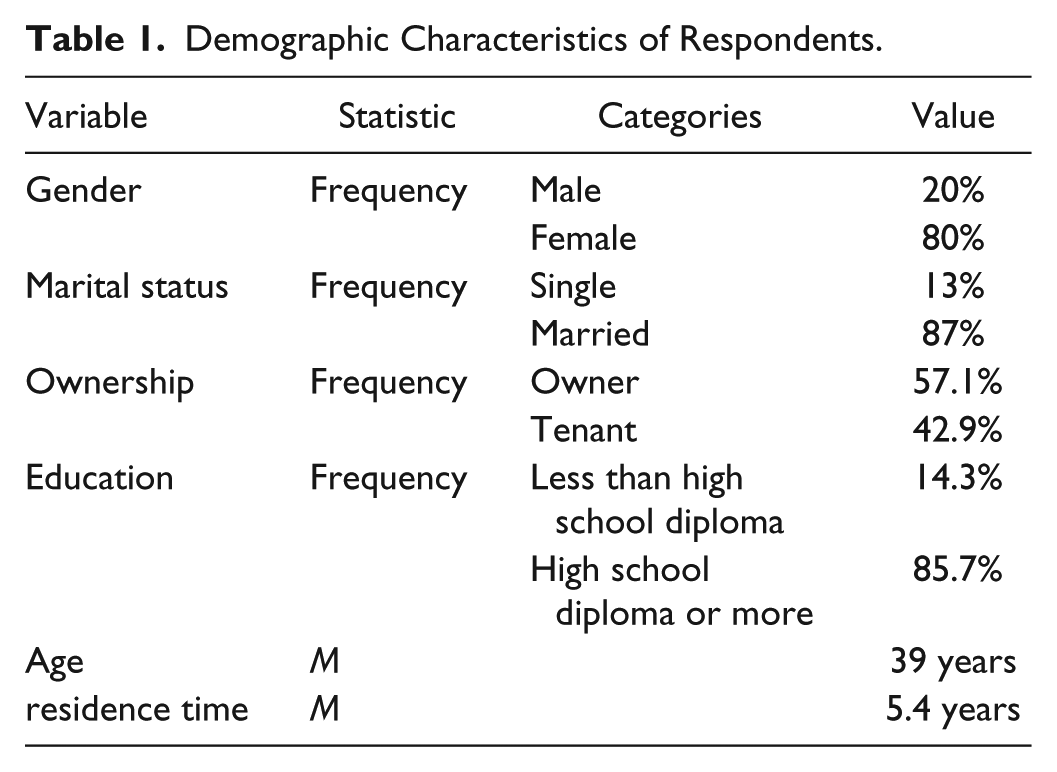
Along with interview, people’s interactions and any other phenomena that could indicate conflicts and cooperation were recorded. The qualitative data have been analyzed step by step according to grounded theory methodology to achieve a sophisticated model, called “fragile cooperation” among residents. This model comprised some “axial codes” in the terminology of Strauss and Corbin (2008, p. 123) which are explained below.
The qualitative data have shown that residents in terms of participation in common good are classified into three categories. (a) Egoists, who do not pay their share for producing common good but have access to benefits of it. It is obvious that free riders were different from wrongdoers who broke the rules just because of lack of information and have modified their behavior after notification by other residents. (b) Conformists are the majority of residents and usually pay just for maintaining of common good not producing it. (c) Altruists are a minority who take into account others’ payoffs as well as their own in making decisions. They pay even more than their share to produce the common good, accepting more cost compared with maintaining it and make up the egoists’ free ridings. Each category of residents applies different strategy in dealing with this condition, which includes egoists may have one of three strategies: (a) cheating, (b) robbery, and (c) vandalism. Conformists just have one strategy called abiding. Altruists may have one of these three strategies: (a) cooperating, (b) compensating, and (c) punishing.
Imperfect modernity forms personality that is not the traditional and modern characteristic. They are not enough Universalist to be able to live with strangers and are not enough particularistic to tend to live with relatives. The majority of resident who are called conformist do not have intrinsic motivation to produce common good. In such circumstances, for motivating participation in the common good production, external factors are needed that create apartment norms. Forming the norms can happen in two ways. (a) Residents spontaneously create the norms. (b) Norms are created by Altruists. Norms are not formed in the former way as most of the residents are greedy and indifferent to the problems of building. On the contrary, distrust to others’ cooperation makes residents to become discouraged to produce and maintain common good so the norms are created by altruists. Central control is inefficient, so it will not be able to make complex cooperation and minimal cooperation occur which are very fragile. The majority of residents calling conformists abide rules that govern either altruistic or free riders. This situation happens in three blocks of the residential complex and makes a fragile cooperation.
The consequences of such interactions can be observed in the following cases. (a) Even if the norms clearly govern the complexes, the situation will be very unstable. As the contribution of conformists to produce common good is low, they are also very passive in maintaining it. (b) On one hand, this condition increases the cost of production of common good for altruists and, on the other hand, encourages egoists to free ride as they know there is not enough resistance against free riding. (c) Common good are not developed and cooperation has remained simple that may destroy any moment. (d) As literature confirmed, presence of at least free rider is enough to disrupt order, which has been observed in one block. Such instances show that it does not have rules including conflict with the board and residents, bullying, vandalism, insults and threatening each other, creating bothering noise, as well as apartment’s visual problems. Many of the residents do not pay for repair problems and they prefer to leave unfavorable environment or indifference to problems. In these circumstances, the costs of maintaining order get higher, as a result, the arena is open for free riders.
As we decided to investigate the responsible mechanisms for shaping such a fragile cooperation and manipulate the system inputs and check the outputs, we selected ABM as the tool because of ontological correspondence and methodological appropriateness.
Model Description
Our model is a version of common good game that is modified to be analogue to the situation in the studied residential apartment complex. As the diagnosed problem was “fragile cooperation,” which means lack of enough social power and commitment to regulations, that provide the ground for common good production, then, it seems that the common good game is the most proper model of it. The model is described in Overview, Design concepts, and Details (ODD) protocol (Grimm et al., 2010) as follows:
Overview Purpose: Modeling production of security as a common good in the residential complex. Security is the common feeling of residents about any physical and mental attack by others. Entities, state variables, and scales: Entities are heads of households who possess income, desirability, payoff, and endowment. The number of entities in the model is equal to the target case. Process overview and scheduling: Agents would make one of six decisions about their contribution in the production of the common good. Each agent has an initial endowment and can decide to invest none to all of it in the common good. The accumulated shares will be multiplied by a coefficient which represents the marginal per capita return, then the sum will be divided among all agents (unless, in case, some agents have strategies based on which they attain more or less shares of the sum). The common good comprised sum of the contributions of all group members, multiplied by the marginal per capita return. Agents’ level of cooperation, payoff, and endowment update at the end of each time tick. Although we cannot calculate the exact real-time equivalent of a tick in model, it seems that a week would be a proper estimate. Since in a week most residents of any blocks meet each other and may play their role in the production of the common good “security.” One hundred ticks approximately equal to 2 years which is reasonable for forming security in a residential complex.
Design concepts Emergence: Security as a common good in each block is the emergent phenomenon. Adaptation: Agents’ level of cooperation update as a function of social pressure and the individual’s desirability. Objectives: Agents seek to gain “security” according to the level of its desirability for them. They try to comply with others’ opinion as well by modifying their level of cooperation. Learning: No procedures related to this item are included in the model. Prediction: Agents cannot predict the outcome of their actions. Sensing: Agents can sense the level of social pressure. Interaction: Agents interact at the level of block when they contribute to the production of the common good. No direct interactions between individuals are included in the model. Stochasticity: Agents’ decision on their contribution in the common good is dependent on their level of cooperation and partly stochastic. Collectives: Agents are organized in four blocks; in each, a separate common good is produced. Observation: Measured parameters include common good production in the blocks, individual total-payoffs, and the number of agents with each level of cooperation.
Details Initialization: Thirty four agents distributed in four blocks with specified amount of income and desirability for the common good (“security”) and level of cooperation. Input data: No input data are included in the model. Submodels: The model comprised five submodels: to setup the world (initializing the model), to set endowment (gives agents a specified amount of endowment), to set social pressure (calculates individual social pressure), to treat the common good (includes agents actions about the common good), and to calculate payoff (agents receive their payoff).
We follow Bravo et al.’s (2012) account of multilevel empirical validation in this research, based on which any model should be informed by empirical data and the model outcomes should be evaluated against empirical data as well. As the structure and parameters of this model is derived from extensive qualitative data, and initial model outcomes conform field observations, the model is highly validated.
Explaining Agents Decisions
Based on the grounded theory, agents would make one of six decisions regarding the production of the common good at any time, which are introduced in Table 2.
The Specification of the Couple of Decisions About Cooperation in the Common Good Production.

In Table 2, Decision to Contribute (DTC) refers to probable decision of an agent to contribute part of his or her endowment in the common good. Decision to Compensate (DTCO) happens when an agent not only contributes in the common good but also makes up lacks caused by others’ defections. The difference between Decision to Contribute Always (DTAL) and DTC is that the former decisively contributes his or her share but the latter probably does this. Decision to Punish Defectors (DTP) means in addition to contributing to the common good, the agent pays a cost of defectors punishment. Attack to Common Good (DTA) happens when the agent in addition to defecting, steals part of the common good. The only difference between Decision to Harm Oneself (DTH) and DTA is that the former robs part of the common good for his or her own benefit but the latter destroys it with no benefit for no one. If we illustrate agents’ decisions to show their relationships and put agents in some categories, the result will be Figure 2.

LC based on combinations of agents’ decisions.
In Figure 2, rectangles show levels of Cooperation (LC), which are outcomes of combinations of decisions, and diamonds represent the six above decisions about the common good. The LSs are ordered by number according to intensity of their inherent altruism. For example, when an agent decides to contribute, and decides to do it always but not to compensate others’ defections, he or she is a cooperator and has the Level 5 of LS. To make clear the occurrence of various decisions in the LC, Table 3 is provided.
The Probability of Choosing Decisions by Each Level of Cooperation.

In Table 3, cells are filled with probability of taking a decision for a particular strategy level. For example, a robber never takes DTC, DTCO, DTAL, DTP, and DTH, but the probability for DTA is p3 which is between 0 and 1.
The determiners of agents’ LCs are preferences and social pressure (SP). Preferences, which have been explained in the previous section, represent the desirability of the common good for an agent. SP is the social force from other agents influencing decisions and behaviors of one. SP is defined as the number of more cooperative agents divided by total number of agents in a block,
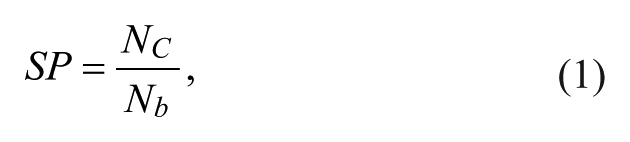
In the above equation, NC is the number of more cooperative agents in a block. These agents’ LC include abider, cooperator, compensator, and compensator–punisher (LC ≥ 4). The less SP in a block means less number of more cooperator agents and lack of proper social atmosphere for cooperation betterment. Figure 3 depicts the casual process of how agents treat the common good.

Effective parameters to determine the agents’ decision for contribution.
Agent’s level of cooperation is not fixed and possibly changes over time:

Based on the determining parameters, change in LC is a function of Di and SP which is simply defined as the multiplying result of these two:

Applying Equation 6, agent’s strategy can be changed according to the following classification:

When the level of cooperation for an agent is computed then it behaves according to Figure 2 against the common good. Any agent should decide about five costs: contribution, robbery, damage, compensation, and punishment, total of which is the cost of any agent.
In Table 4, all costs are one unit of endowment. Vandals are agents who do not pay any contribution to the common good but they pay for damaging it. Although cheaters pay nothing, robbers pay for robbing a part of the common good. Cooperators always pay their shares for the common good but abiders sometime do this. Compensators pay to make up defections and punishers pay to penalize the defectors as well.
Agents’ Decisions About the Common Good According to Their Levels of Cooperation.

The core idea of the model is forming a common good by accumulation of individual shares paid by the agents in each round. Each agent has an initial endowment and can decide to invest zero to all of it in the common good. The accumulated shares will be multiplied by a coefficient, which represents the marginal per capita return, then the sum will be divided among all agents (unless, in case, some agents have strategies based on which they attain more or less shares of the sum). The common good comprised sum of the contributions of all group members, multiplied by the marginal per capita return (Equation 1).

where Ci is the contribution of agent i to the common good and Di is the marginal per capita return which is [0.1], defined as follows:
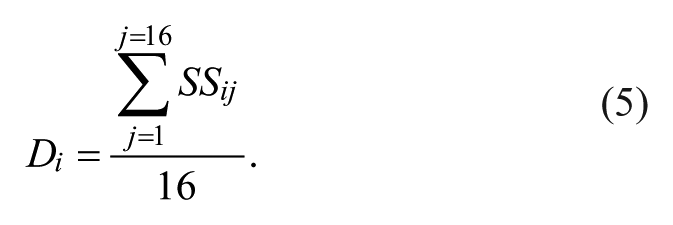
This is the main difference of our common good game with the standard one, so that, in our model, any agent has its specific value of Di, but in the standard version of common good, this value is constant. This assumption is drawn from the field findings of the research and can explain differential desirability of a common good for agents. To assign every agent a value Di, we calculated the mean of responses to desirability of occurrence in 16 cases.
An overall value for the studied common good can be defined as mean of personal Di:
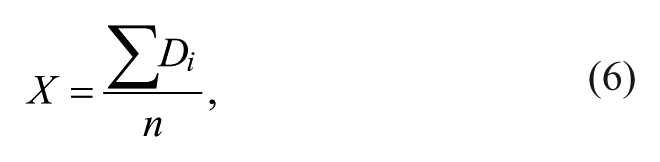
where X represents the overall marginal per capita return of a given common in such situation.
In Equation 3, the payoff function is given as follows:

where n is the number of agents, Ei is the amount of endowment at time t and is the function of agent’s income,
Applying Equation 3, total income for the agent i in all rounds of the game is defined as follows:

Model Parameters
Model features of the model including number of agents (No), average income (Income), and average desirability (D) for each strategy are presented in Table 5. Other parameters as social pressure and endowment are fully discussed before. All results presented here are driven from 100 time ticks (from tick number 10 to 111) and are repeated for 50 times. First 10 time ticks are neglected to let the model reach stability.
Model Features of the Model: The Number of Agents (No), Average Income (Income) in Iranian Toman, and Average Desirability (D).

Note. LC = levels of cooperation.
According to Table 5, Block 3 has the most number of defectors (vandal, robber, and cheater). However, in the Block 4 most people are abiders. In the Blocks 1 and 2, agents have more diverse strategies. In the Block 3, just one desirability is more than 0, while in the Block 2, the total desirability is the highest.
Results
The Main Setting
Table 4 shows the initial and steady state number of each strategy in all four blocks (from 11 to 111 ticks). As can be observed in Block 1, although the majority were initially abiders, but punishers overcame after a longtime interactions in steady state. In Block 2, at the beginning, there have been a variety of strategies, but punishers overcame. In fact, most abiders have upgraded their collaboration strategy, and they have decided to be punisher too. In Block 3, the reverse situation occurred, that is, same number of abiders plus others changed their strategy and became vandal. In Block 4, initial conditions did not change much and remained almost stable.
In Table 6, the number of individuals doing all the five categories of actions is presented. The actions include damage, robbery, contribution, compensation as well as punishment. In Block 1, there was contribution and robbery, but the rate of the former was more than the latter. In Block 2, the value of last three decisions was the same, but in Block 3, all values are zero except the first one which was 5.57. In Block 4, the pattern is the same as Block 2 with a tiny difference: In Block 3, the number of contributing individuals was less than Block 2.
LC in Each Block: Initial and Mean After 50 Runs.
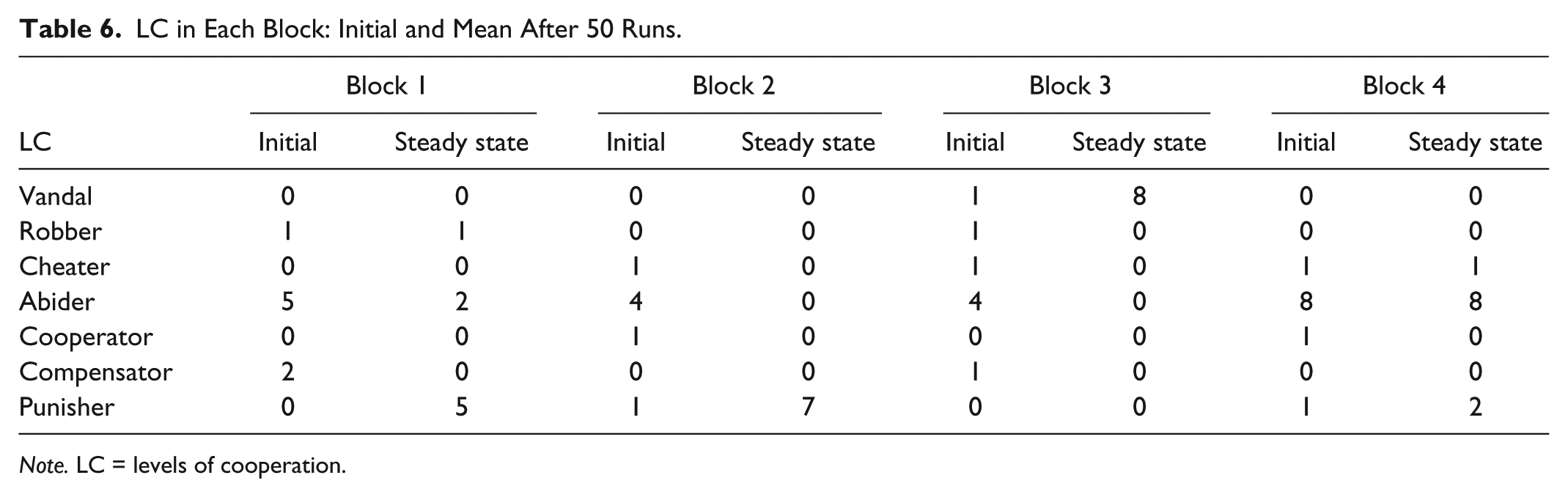
Note. LC = levels of cooperation.
According to Table 7, the highest rate of common good production is related to Block 2, while in Block 3, this rate has reached to 0. After Block 2, we can say that Block 1 and Block 4 had the highest rate of common good production.
Mean Number of Agents and Common Good in Each Block.

The Figure 4 shows the changes in common good production in all blocks during ticks 11 to 111. As it can be seen, the many changes were done in Block 2 and the least changes in Block 3 which has approached its balance when not producing common good.

Common good in each block.
Table 8 indicates total payoff in each LC and block according to the strategies. In Block 1, the highest payoff belongs to abiders, while punishers gained the least amount of payoff. In Block 2, there is no possibility for comparison as all individuals’ strategies are equal. This is the same for Block 3. And, finally, in Block 4, cheaters are those who enjoyed the highest payoff, while punishers gained the least one. The highest mean rate of payoff belongs to Block 4 inhabitants and after that we can refer to Blocks 2 and 1. The important point is the effect of desirability rate on amount of payoff as in Block 4 the high rate of desirability brought about higher rate of payoff among individuals.
Mean of Total Payoff in Each LC and Block.

Note. LC = levels of cooperation.
Artificial Experiments
Inspired from Ostrom (2009) and Cox, Arnold, and Tomás (2010) and to help to make a positive social change in the residential complex, the effective parameters which shall be changed should be discovered. To attain this, three artificial experiments are designed to change the unsuitable condition in Block 3.
The experimental design is based on the authors’ reception of the factors that are both critical in the determination of the orientation of agents and ready to be manipulated. These three experiments are as follows:
Replacing one vandal and one cheater with two punishers.
Assigning desirability 1 to all agents (agents in main setting).
Assigning desirability 1 to all agents (agents in main setting) and replacing one vandal with one punisher.
In the main setting, Table 9 indicates that three residents are vandal, cheater, and robber, respectively, four of them are abider, and only one resident is compensator. The desirability for all agents except abiders is 0. Abider’s desirability is .25 which is not so high. In this condition, even though the agent is compensator, it has no desire to engage in the common good production.
LC in Block 3 (Initial and Three Experiments After 50 Runs).

Note. LC = levels of cooperation; S.S = steady state.
Agent’s strategy shifts to vandalism and none of the residents are willing to produce common good through the time. Then, to make a positive change in such condition, we designed some modifications in the initial number of agents and their desirability.
In the first experiment, one vandal and one cheater are replaced with two punishers. By this change, fewer agents than the main setting shift to vandalism, and strategies are distributed among agents over time.
Despite this change in the number of agents in the main setting, due to low desirability, vandals overcome others soon. In the Experiment 2, the main setting is changed, the desirability is set 1 for everyone. Results show that desirability is very effective in common good production and maintenance. In the Experiment 3, the number of agents and their desirability in the Experiment 2 are retained and only one vandal is replaced with one punisher. In this case, the opposite was observed with the main setting and all residents have become punishers.
According to Table 10, in the main setting, vandals have better conditions. Everything is in favor of free riders because their payoff increases over time. However, other strategies’ payoff will be decreased and they would not be able to attend in the common good production.
Mean of Total Payoff in Each LC in Block 3 (Main Setting and Three Experiments After 50 Runs).

Note. LC = levels of cooperation.
In the Experiment 1, payoff is distributed among vandals, cooperators, and punishers, but still vandals have greater payoff. In the Experiment 2, payoff is distributed among all strategies, but abiders have greater payoff and compensators have lower payoff. In the Experiment 3, by contrasting conditions compared with the main setting, all payoffs go to punishers, and the common good production is higher.
In sum, the first experiment includes replacing a vandal and a robber with two punishers. This may happen in real world by replacing some tenants by others. Although this scenario is not completely successful, it improves the situation as some actors still insist on their cooperative strategies.
The second experiment is focused on checking the consequences of consolidating actors’ desirability for security. This may happen in real world when all of them feel the emergency and necessity for this common good. When we changed level of desirability to 1 which is the maximum amount of this parameter, the actors did not change their strategies at all. This means that high levels of desirability for common good can prevent it from declining.
The first two experiments are combined to design the last one, as both replacement and desirability change exerted in the model. The result was completely different from the main setting. All agents converted to punishing strategy and all of them received the maximum payoffs compared with former experiments. This is the ideal output of interfering in the block.
Discussion
In this research, the main goal was modeling the mechanisms of producing security as a common good in a typical example of cooperation problem. Two methodological approaches complemented each other when we used qualitative results in making and calibrating an agent-based model of the case. Based on the qualitative results, “fragile cooperation” is the core phenomenon in the residential complex, although a significant number of residents abides the regulations of producing the common good, they do not insist on following them. So it seems that they tend to behave like defectors when they feel intimidations from them.
Based on the qualitative data, the residential complex is constructed in a virtual world in an agent-based model. Comparing the model with the field observations illustrates good accordance and assures that the model outputs can be taken as a proper proxy of what may happen in the real world. This led us to examine the consequences of making some particular changes in the model, so called artificial experiences, for the common production.
Results show that even when most actors are not defectors, they may be affected by the minor number of defectors and lose the common good. In our case, defectors do not obey the regulations of security (e.g., locking the entrance door of the building). In Block 3, the majority are abiders who tend to act based on regulations in a conservative way and do not compensate defectors’ faults or ignore them. These actors will change their strategy into defection since they feel strong social pressure. This process of strategy shift is well studied and confirmed in the literature (Centola & Macy, 2007; Granovetter, 1978; Hu, Lin, & Cui, 2015; Siegel, 2009; Valente, 1996; Watts & Dodds, 2007). In our case, this process ends with turning all actors into defectors and total declination of the common good.
As the main problem of the common good production is identified in Block 3, three artificial experiments are designed and conducted to examine the mechanisms of change in this block. In the relevant literature, two main factors are claimed to be effective for promoting cooperation for common good production: punishment (Almenberg et al., 2010; Balliet & Van Lange, 2013; Farjam et al., 2015; Fehr et al., 2002; Fehr & Gächter, 2002; Fehr & Gintis, 2007; Ostrom et al., 2007; Ye et al., 2011) and partner selection (Bravo et al., 2012; Cinyabuguma et al., 2005; Hauk, 2001; Jordan et al., 2013; Masclet, 2003; Rand et al., 2010; Rand & Nowak, 2011).
The main contribution of this study is realization of one of advantages of grounded ABM which is checking the consequences of probable scenarios in the artificial world and making applicable advices for policy making. Connecting ABM with applied problems serves the discipline since it convinces public bodies for investing in it and counting more on results of this kind of research. Although this area is not much investigated and used in the current literature, we believe that this can benefit policy making. In this case, policy makers are the complex managers who can make or change regulations of renting flats. Replacing defecting residents with cooperators is not possible in short time. But putting renting regulations in advantage of families who come here for longtime residence can promote the desirability of security in the complex. As a rough sample of using our results for policy making, they are discussed extensively with one of residents of the complex who is a social researcher as well. He is now one of volunteer managers of the complex and has used some of ideas discussed here. We suggested him to put enough time for making reasonable arguments for the residents that they can promote security in the complex if they cooperate. In addition, the field part of the study had positive influences on the social atmosphere since all residents expressed their perceived problems and considerations.
Footnotes
Declaration of Conflicting Interests
The author(s) declared no potential conflicts of interest with respect to the research, authorship, and/or publication of this article.
Funding
The author(s) received no financial support for the research, authorship, and/or publication of this article.