




Abstract
This study investigated farmers’ strategies for coping with disease in large cardamom in eastern Nepal, which has undergone a tremendous decline in production. Conducting a political economy analysis on data from Ilam district, this study investigated the impact of crop disease on farmers’ livelihoods, as well as both individual and institutional efforts to combat the disease. Strategies varied by household circumstances (size of landholding, alternative income sources, and access to supporting institutions). They included burning fields, changing land use patterns, diversifying crops, and seeking institutional support. Due to weak capacity, local government support was limited to providing training and distributing new varieties of cardamom. During a crisis, farmers expect government institutions to help, especially when customary practices have not solved the problem. To protect and improve farmers’ livelihoods, institutional innovation at the community level is needed, along with policies that provide immediate and sustainable support during crises.
Introduction
In Nepal, cardamom, coffee, tea, pulses, and some fruits are high-value crops in high demand in national and international markets (Ministry of Agriculture and Cooperatives, 2012). In recent years, production of these cash crops has increased with high market prices, benefiting farmers and motivating them to produce more. Large cardamom (Amomum subulatum Roxb.), also known as the “queen of spices,” is the most prominent cash crop, attracting high revenues across the globe (Stanley, Chandrasekaran, Preetha, Kuttalam, & Sheeba, 2014). In Nepal, cardamom accounts for 7% of total agricultural exports, ranking second after lentils (29.6%; Ministry of Agriculture and Development [MoAD], 2014b). Nepali laborers in Sikkim, India, introduced cardamom to Ilam district during the 19th century. This crop became commercial in 1953, influencing farmers from agrarian Nepal to embrace a new livelihood option.
Studies show cash crop production contributes to job opportunities and improves livelihoods (Maharjan, 2014; Thongyou, 2014; Wamalwa, 2011). A recent report shows 67,000 households engaged in cardamom farming across Nepal, which includes 25,000 households from Ilam, Taplejung, and Panchthar districts (“Farmers Worried Due to Failing Cardamom Production,” 2014). These districts are the major producers of cardamom as well. These districts are highlighted in Figure 1.

Districts of Nepal highlighting Ilam, Taplejung, and Panchthar.
For years, Nepal has been recognized as a major producer and exporter of cardamom, second only to Sikkim (Chapagain, Pathak, & Rai, 2014; Durbeck & Torstan, 2010; Partap, Sharma, Gurung, Chhetri, & Sharma, 2014). Exports increased to 5,200 MT of cardamom in 2009 (Stoep, Pokharel, Rajbhandari, & Shrestha, 2010), and in 2012/2013, Nepal became the world’s largest cardamom producer, with a total of 5,763 MT of cardamom, worth Rs. 2,528 million or about US$23.6 million, on about 14,847 ha of land in 40 districts (MoAD, 2015).
About 84% of the cardamom harvest comes from the eastern region, including Ilam, Taplejung, Sankhuwasabha, Dhankuta, Bhojpur, Tehrathum, and Panchthar districts (Durbeck & Torstan, 2010; MoAD, 2013). The eastern hills produce much of Nepal’s cash crops; besides cardamom, these include ginger, broom grass, vegetables, fruits including mandarin oranges and limes (Munakarmi et al., 2014), and grains including maize (Govind, Karki, Shrestha, & Achhami, 2015).
Of 75 districts in Nepal, 41 produce large cardamom (Table 1). Some districts outside the eastern hills produce cardamom in lesser quantities, including 56 MT in Kavre in the central region and 50 MT in Lamjung in the western region (MoAD, 2013). The markets for these districts are smaller than the markets in the eastern region.
Large Cardamom Production by Region.

About 90% of large cardamom produced in Nepal is exported to India through the port of Birtamode in Jhapa district. Other markets are Singapore, United Kingdom, and United Arab Emirates (Maharjan, 2014; Nepal Trade Integration Strategy, 2010). Cardamom exports have generated high revenues, about US$20 million annually, including US$12 million as export earnings (Maharjan, 2014; The World Bank, 2013).
Despite these high revenues, cardamom production in Nepal is declining due to disease (Khadka, 2011; National Research Programme for Plantation Development, 2012; SNV Netherlands Development Organization [SNV], 2008; Stoep et al., 2010). The main causes of this decline are climate change and disease, in particular chirke (mosaic streak), furkey (bushy dwarf), and a fungus (rhizome rot; see Chapagain et al., 2014; Khadka, 2011; Maharjan, 2014; Singh & Pothula, 2013; SNV, 2008; Stoep et al., 2010). Between 2007 and 2013, cardamom production declined by about 1,000 MT, and the area of production declined by about 2,000 ha (MoAD, 2013). Similarly, in Sikkim, India, cardamom cultivated by the indigenous Lepcha people in the upper Dzongu has declined due to disease (Bhasin, 2011; Bhattarai, Deka, Chhetri, Harsha, & Gupta, 2013).
There is dearth of information about the impact of this crop failure on farmers’ livelihoods, their coping strategies, and institutional support for them during the crisis. Lack of production is occurring not only in cardamom but also in other crops, such as lime (Munakarmi et al., 2014) and maize (Govind et al., 2015), in eastern Nepal. Reasons for the decline include land degradation causing reduction in manure production, improper use of chemical fertilizers, use of old and nonviable seeds, and lack of irrigation facilities, especially in the hills with their difficult topography (Govind et al., 2015). The drop in production has led to increased food insecurity and decreased household income (Coulibaly, Gbetibouo, Kundhlande, Sileshi, & Beedy, 2015; Famine Early Warning Systems Network [FEWS NET], 2013; Klasen, Priebe, & Rudolf, 2013).
In a crisis like this, the role of resilience—defined as the ability to respond to changes (Coulibaly et al., 2015)—is central. Some cardamom farmers in eastern Nepal have diversified their crops or stopped growing cardamom (Chapagain et al., 2014; Khadka, 2011). One recent study found differences in coping strategies among farmers in far-west Nepal depending on their income levels: Poorer farmer families engaged in wage labor (by both adults and children) and sold livestock, while wealthier farmers relied on savings and stored grains (Gentle & Maraseni, 2012). The hilly regions of Nepal are prone to disasters and shocks, and more research is needed on coping mechanisms in these regions.
The global literature includes reflections on various coping strategies adopted by farmers to reduce vulnerability, particularly in cash crop production. During crises in African countries including Uganda, Nigeria, Ghana, and Ethiopia, farmers have adopted measures such as diversifying incomes, performing off-farm labor, eating fewer meals, and selling assets (see Codjoe, Ocansey, Boateng, & Ofori, 2013; Ogalleh, Vogl, Eitzinger, & Hauser, 2012; Okonya, Syndikus, & Kroschel, 2013; Oluwatusin, 2014; Oyekale & Oladele, 2012; Tesso, Emana, & Mengistu, 2012). In Bangladesh, farmers have worked in the garment and textile industries and performed wage labor when crops failed (Rakib, Rahman, Akter, & Bhuiyan, 2014). This suggests that rural farmers relying on market-oriented livelihoods adopt different coping strategies during a crisis than those who rely on customary farm-based livelihoods (Berman, Quinn, & Paavola, 2013).
Coping strategies adopted in Africa are likely to be different than those adopted in Nepal due to geographical and other factors. However, elements that they do have in common include a rural setting and basic livelihood activities. Studies in Nepal have focused less on coping strategies and more on crop failure due to disease and climate change and production decline (see Bhasin, 2011; Bhattarai et al., 2013; Chapagain et al., 2014; Khadka, 2011; Singh & Pothula, 2013; Stoep et al., 2010). In contrast, this study focuses on farmers’ strategies for coping with crop loss, in particular, in the case of large cardamom.
Studies have highlighted the important role of government institutions during crises—in particular, in the transfer of knowledge about farming, disease control, and adaptation to climate change, and in support for sustainable livelihoods—and have called for institutional innovation (Akanda & Howlader, 2015; Codjoe et al., 2013; Coulibaly et al., 2015; Okonya et al., 2013; Oluwatusin, 2014; Oyekale & Oladele, 2012; Wilk, Andersson, & Warburton, 2012). Other researchers have pointed out the need for sound policies and institutions to protect crops during crisis (Sharma, Sharma, & Sharma, 2009), and have argued (Singh & Pothula, 2013) that, despite policies on cardamom improvement, farmers still face problems because of their rural orientation and limited knowledge about policies due to weak institutional capacity.
“Innovation,” in this article, refers to a systematic process of interaction between institutions, policies, and stakeholders to produce new processes of social and economic transformation (Edquist, 1997; Lundvall, 1992). It also refers to people working together to reframe methods and approaches and research questions (Clark, Hall, Sulaiman, & Naik, 2003; Prasad, 2007). Innovation transforms the ways institutions function by improving policies, regulations, and their implementation (Inter-American Institute for Cooperation on Agriculture [IICA], 2014).
Institutional innovation in the agriculture sector in Nepal emerged in 1924 with the establishment of the Department of Agriculture to conduct research and develop agricultural technologies (Chhetri, Chaudhary, Tiwari, & Yadav, 2011). To promote innovation, the National Agricultural Research and Service Center was established under the authority of the Ministry of Agriculture; the name was changed to Nepal Agricultural Research Council in 1991 (Chhetri et al., 2011). The Council aims to develop agricultural technology, prioritize indigenous farming practices, and support changes in farming to adapt to climatic conditions. Other private to public entities have also collaborated on agricultural research and technological support. However, this innovation and support has had little impact on the current cardamom crisis.
This study employed a purely qualitative approach to understanding the situation of cardamom farmers in Ilam district, performing a political economy analysis to explore three issues:
The impact of crop disease on cardamom farmers’ livelihoods;
Farmers’ strategies for coping with disease and shocks; and
The institutional arrangements and channels for addressing crop disease, as well as policy interventions at the local and national levels.
Materials and Methods
Research Site
The study area, Ilam district in eastern Nepal, lies in the Mahabharata range, and is 600 km east of Kathmandu. Ilam covers an area of 1,703 km2 with a population of 290,254. The largest ethnic group in Ilam is the Rai, followed by the Brahmin, Limbu, Tamang, Chhetri, and Dalit (Central Bureau of Statistics, 2011).
There are 46 village development committees (VDCs) and three municipalities in Ilam. A VDC is the lower administrative unit and a decentralized body run by the VDC Secretary, appointed and governed by the central government. Likewise, a municipality is a single administrative unit governed by a mayor with full authority given by the national laws. The VDC, also lower in population than the municipality, has to abide by the central government’s rules, while the municipality can have their own rules.
Besides touristic destinations, Ilam is known for production of tea, ginger, cardamom, fruits, chilies, vegetables, and dairy products. It has been the highest producer of cardamom in Nepal for centuries.
This study began with a context mapping exercise conducted in March and April 2015 to explore the situation of cardamom farming in Ilam after disease infestation. We invited stakeholders from various disciplines, including officials from the Agriculture Development Office, Cardamom Development Center, Women’s Empowerment Association, and Ilam Chamber of Commerce, as well as other cardamom researchers, journalists, traders, and farmers. Based on the results of the mapping, four VDCs were selected for research: Chamaita, Naya Bazar, Pyang, and Jirmale (Figure 2).
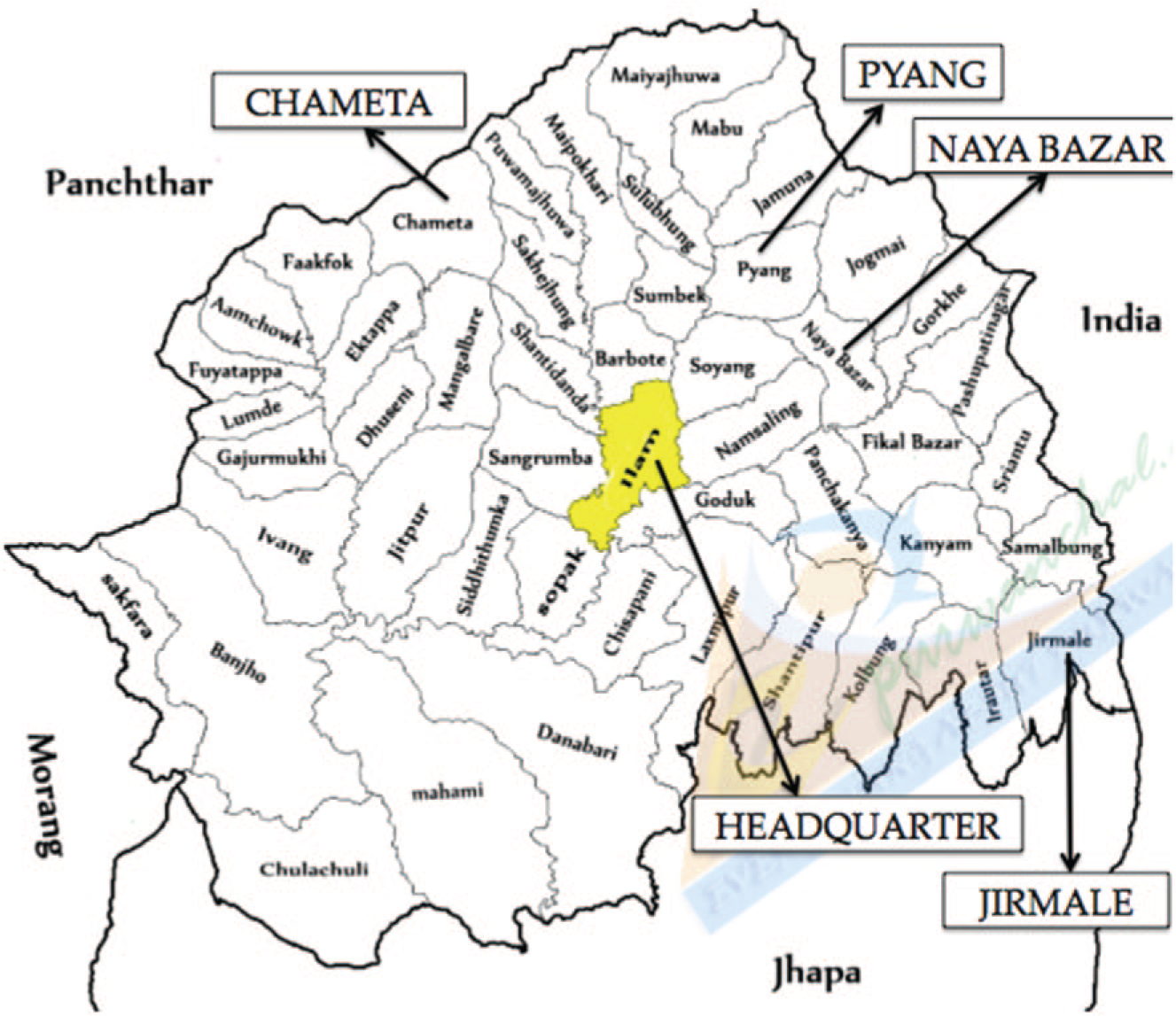
Map of Ilam district showing study sites.
Chamaita, in northern Ilam, has an area of 35.10 km2, elevation ranging from 980 to 2,840 meters (m), and a population of 6,818 people in 1,294 households. Pyang, in northeastern Ilam, covers an area of 20.98 km2 with elevation ranging from 900 to 2,500 m and has 600 households with 3,205 people. Naya Bazar, in northeastern Ilam, has an area of 21.51 km2 and elevation ranging from 600 to 2,200 m. Naya Bazar has 1,090 households with 4,743 people. Jirmale covers an area of 37.78 km2 and borders Darjeeling, India, which lies to the east; elevation ranges from 275 to 1,625 m. There are 1,074 households in Jirmale with 5,191 people (Central Bureau of Statistics, 2011). Each of these VDC consists of nine wards or settlements. The largest ethnic group in these VDCs is the Rai, followed by the Tamang, Gurung, Brahmin, Chhetri, Dalit, and Sherpa.
Ilam district remains foggy and misty all year round. The VDCs in the north, including Chamaita, Pyang, and Naya Bazar, experience snowfall during winter. Despite the snowfall and cold winters, agricultural crops including cardamom, ginger, maize, broom grass, chilies, kiwi, mandarin oranges, and limes are grown. Ilam, is well known for its fertile soil and variety of agricultural production (Central Bureau of Statistics, 2011). Subsistence and commercial crops grown in the study areas, including cardamom, are summarized in Table 2.
Study Areas and Main Crops Grown.

Source. Context mapping exercise, 2015.
Note. VDC = village development committees.
The Mechi Highway connects Ilam to Jhapa district. However, not all VDCs and wards have equal access to roads and transportation networks. The lack of roads and infrastructure has limited some rural areas’ access to markets.
Research Approach
This study applied political economy analysis to qualitative research (Harris, 2013). The political economy analysis assesses the link between “structure and agency” to understand the interaction mechanism between the two parties (Harris, McCord, & K. C., 2013, p. 5). By interaction mechanism, we mean, the behavior of one party with the other when demanding support or supplying services, during crisis or in general. The political economy analysis investigates accountability of concerned agency in meeting the demands of service seekers. This analysis identifies the problems between the service providers and service seekers by assessing the system in which the agency functions, analyzing the structural issues based on power relations between the actors engaged in the negotiation process, and by identifying the gaps that exist in the interaction process between the actors.
In a nutshell, the political economy analysis allows researchers to investigate the cause and effect of a particular event and to identify a specific problem, diagnose it, and prescribe possible solutions (Figure 3). In this study, it was used to explore the gap between farmers’ efforts to cope with cardamom disease and the institutional support for those efforts.

Political economy analysis framework.
Due to the dearth of documentation on crop disease and its impact, primary data were collected for this study. The literature review was followed by focus group discussions, in-depth interviews, and key informant interviews. Questions covered elements of cardamom farming and livelihoods before and after disease infestation, perceptions about the disease infestation and resulting crop failure, farmers’ knowledge of the disease, impacts of the decline in production, coping strategies, and institutional support during the crisis. The fieldwork was conducted between May and July 2015, shortly after the context mapping.
A total of 31 in-depth interviews were conducted, using a semistructured checklist, based on availability of cardamom farmers in each VDC. A mixed group of men (14) and women (17) producing cardamom and other crops were reached. Households were selected purposively after conducting community mapping in each VDC office with the VDC officials. Community mapping helped identify cardamom-cultivating households with different ethnic group memberships and land-ownership and wealth statuses. The main aim of these interviews was to understand the origin of the disease on cardamom farms, its impact on the lives of farmers, and the coping strategies they adopted.
Eight focus group discussions were conducted—two in each study area, with men and women engaged in cardamom farming, ranging in age from 19 to 70 years—to validate the information attained from the in-depth interviews. Focus group discussion is an effective tool to acquire a vivid sense of shocks, vulnerability, and coping strategies (Mengistu, 2011). The focus group members were new to the study and had not participated in the interviews. Each focus group had six people. Including members of different generations provided insights on farming technique ranging from indigenous to modern, changes in livelihoods due to disease infestation in cardamom farms, coping strategies, and respondents’ views on institutional intervention.
Finally, six key informant interviews were conducted with officials from the cardamom sector, to understand the supply side of institutional assistance for farmers affected by the crop disease outbreak. These were officials from the Cardamom Development Center in Fikkal (another VDC in Ilam) and the Ilam Chamber of Commerce in Ilam municipality, the president of the agriculture cooperative in Jirmale, the VDC secretaries of Pyang and Jirmale, and a representative of the Agriculture Development Office of Ilam district. The secretaries of Chamaita and Naya Bazar VDCs were unavailable during the fieldwork.
The interviews were recorded, with the consent of the respondents and in accordance with ethical research norms. The recorded interviews were transcribed in Nepali and then translated into English. The information obtained was categorized in terms of problem identification, situational diagnosis, and institutional diagnosis, based on the political economy analysis framework. Codes were generated from the findings using manual open coding. Themes were generated on the basis of the coding, and a narrative analysis was developed to explain the findings, grounded in the existing literature.
Results and Discussion
Large cardamom production has declined in recent decades due to viruses, including chirke (mosaic streak) and furkey (bushy dwarf), and fungi (SNV, 2008). Cardamom production fluctuated between 3,000 and 7,000 MT from 1994 to 2013 (Table 3). This variation has been attributed to climate change and disease.
Large Cardamom Production and Yield in Nepal.

Of the major cardamom-producing districts, Ilam was the first to face severe loss in production, although other districts, including Panchthar and Taplejung, have since experienced similar problems. As Table 4 shows, cardamom production dropped sharply from 2007/2008 to 2012/2013, then rose somewhat in the following year (possibly due to measures taken to combat disease). Despite declines in production, the good return on investment has encouraged farmers to continue growing cardamom.
Large Cardamom Production in Ilam, 2006-2014.

Cardamom Farming and Livelihoods
For centuries, cardamom production has been the main source of livelihoods for people in Ilam. A majority of farmers reported cardamom growing techniques being passed down through their families, describing it as “learning by seeing and doing.” Some acquired training from local institutions.
The rise in cardamom prices over the years has dismayed farmers who lost their farms to crop disease, because of their perception that they could have earned good returns if their crops had not been infected. However, the revival process is ongoing, and many farmers reported that cardamom production for export was the only means to improve their livelihoods. This resonates with previous findings that cash crops produced for export contribute to livelihood improvement (Diao, Thurlow, Benin, & Fan, 2012), as they produce income relatively rapidly.
All 31 participants in in-depth interviews said cardamom farming had improved their livelihoods. Five respondents (three male and two female) stated that cardamom farming helped them pay debts. Before cardamom, they produced other crops such as maize and paddy rice. These crops, however, were sold in small amounts and generated lower returns than cardamom. Also, most of the maize and rice harvests were consumed at home. One female respondent from an indigenous ethnic group stated,
There is no comparison of other crops with cardamom . . . This year, by selling cardamom, I paid my debts, which was a huge relief . . . I had taken loans from my relatives to cure my son’s illness. He has been ill for a long time, and I was tired of paying the lenders a small amount every month.
In addition, one male Brahmin respondent, a teacher in a local school, also considered an elite, used his profits from selling cardamom 1 year to invest in a small hydropower project in the community or the village. This shows that farmers use returns, after fulfilling their food and health needs, to invest in business. The rise in prices has improved people’s economic status as they can invest and build assets. Similar findings have been reflected in a global context (Thongyou, 2014; Wamalwa, 2011).
However, respondents also reported huge losses of their cardamom crops due to disease, which has had an adverse impact on their livelihoods. For 15 respondents, this amounted to total loss of their centuries-old cardamom farms. The other 16 respondents were still producing cardamom in small amounts despite the disease infestation. Of these, nine were from Jirmale, where cardamom farming started only 15 years ago.
Findings suggest that cash crop like cardamom produces income quickly; however, decline in production can result in negative consequences for farmers’ livelihoods. To minimize the risks to crops and protect farmers’ livelihoods, adaptive measures are required (Wilcock, Elliott, Hudson, Parkyn, & Quinn, 2008). These could include shifting from farm to nonfarm livelihood sources (Cooper, Dimes, Rao, & Shapiro, 2008; Gentle & Maraseni, 2012; Ogalleh et al., 2012; Oluwatusin, 2014; Oyekale & Oladele, 2012; Rakib et al., 2014). They could also include addressing issues of crop loss, vulnerability, livelihoods, and food security at the household or community level.
The Problem: Cardamom Disease and Impact on Livelihoods
In Chamaita, Pyang, and Naya Bazar, farmers lost a tremendous amount of cardamom to disease at a time when they were attempting to revive the cardamom crop. In Jirmale, where households adopted cardamom farming only a decade ago, some are already witnessing production decline.
The in-depth interviews, focus group discussions, and key informant interviews in Chamaita, Pyang, and Naya Bazar revealed a more than 90% decline in cardamom production. Participants reported that, before the onset of cardamom disease, the crop had been their major source of income. In the VDCs affected by disease, the process of decline took 10 to 15 years. In the study by VDCs, very few settlements have been able to continue producing cardamom. Table 5 summarizes respondents’ reports of crop decline; there are no recorded data of production decline at the local level in Nepal.
Decline in Cardamom Production in the Study Sites.

Source. Field survey, 2015.
Note. VDC = village development committees.
Although disease was the main reported cause of crop decline, respondents also revealed other causes, including insufficient use of irrigation due to lack of water and improper use of fertilizer and use of conventional farming methods without understanding the changes in climate and soil conditions. This coincides with reports on recent studies of cardamom farming in Sikkim, which emphasize climate change as the major cause of production decline (see Bhattarai et al., 2013; Partap et al., 2014). This highlights the need to meticulously inspect disease infestation in high-value crops and identify measures to combat it.
Very few farmers have been able to produce a high quantity of cardamom. Respondents mentioned attempts to revive the crop using new species of cardamom. In one focus group discussion, a male cardamom farmer reflected,
We lost the old cardamom farms to diseases, and currently we are in the process of reviving it. We have been replacing our old species like Ramsai and Golsai with new species such as Bharlang, which comes from Sikkim, and Salakpurey, which comes from Jirmale VDC.
Different people experienced the impact of disease in cardamom farms differently. Elderly people reported they were distressed to see their centuries-old farm disappear. Men and young people persevered to revive their farms, despite failures. They were among the first in their settlements to adopt alternative livelihood activities and had a keen interest in protecting cardamom.
Women were especially worried, as they saw cardamom farming as their main income source. Of the 17 female participants in in-depth interviews, 13 stated that cardamom produced more than 70% of their income. These women spent their share from cardamom farming on food and items needed by their children, like books. Decline in cardamom production led these women to worry about livelihoods and their children’s education.
In Nepal, rural people with a decent income tend to send their children to school in urban areas for a better education. Government schools have poor infrastructure, insufficient facilities, and weak teaching quality compared with private schools (Pherali, Smith, & Vaux, 2011). Cardamom producers were able to send their children to cities for higher education, but with the decline in production, they were worried about maintaining their children’s education.
In-depth interviews also revealed that poorer households with smaller landholdings were especially distressed by and vulnerable to cardamom disease. Although their cardamom-producing areas were small, the high returns on this crop had made it possible to fill their food needs; replacing cardamom with lower value crops was likely to generate lower income or none at all. Other studies have shown that disease in cash crops may increase hunger, decrease income, and make smallholder farmers vulnerable (FEWS NET, 2013; Klasen et al., 2013; Ogalleh et al., 2012; Oyekale & Oladele, 2012). Moreover, adaptation of coping strategies during crop failure is sometimes hindered due to limited availability of land (Tucker, Eakin, & Castellanos, 2009).
Study participants also reported, particularly in the focus group discussions, that reviving cardamom farming was difficult for poorer households because cardamom takes time to mature before bearing fruit, like some other cash crops (Achterbosch, van Berkum, & Meijerink, 2014). After maturing, these cash crops bear fruit for 10 to 15 years. However, production is not the same every year, which creates an adverse impact on farmers’ livelihoods (Achterbosch et al., 2014). Respondents from poorer households reported that, if the cardamom revival attempt failed, they would go hungry.
The focus group discussions revealed that households with larger landholdings were equally distressed about losing their cardamom farms; however, they were less vulnerable. About four respondents, with landholdings ranging from 10 to 15 ha, reported using their land for dairy farming and tea cultivation. However, the return was not even half of what they earned from cardamom. For households with sufficient land, the decline in production affected not their basic food needs but their standard of living. For example, it reduced their ability to send their children to cities for education or business and to invest in education or business.
Households with at least one educated member with a job in the public or private sector reported a lower impact of crop loss on their livelihoods. A few respondents were both cardamom producers and teachers in public schools. They were distressed about the loss of cardamom farming but had secured jobs. Even so, they reported that cardamom farming had been their traditional primary occupation. These respondents also diversified their crops. This contradicts earlier findings that educated farmers cared less about diversifying crops or growing more crops during a crop failure (Oyekale & Oladele, 2012), but it is in line with findings that education and age do not particularly impact crop diversification (Kumari, Thiruchelvam, Dissanayake, & Lasantha, 2010).
Common issues that emerged from the in-depth interviews, focus group discussions, and key informant interviews included lack of markets for alternative crops grown as a substitute for cardamom. For example, in Pyang, farmers produced ground apples or yam like fruits with taste of apples, cauliflowers, and other vegetables. Despite good harvests, farmers made no income due to lack of market access; respondents reported feeding the ground apples to their cattle. Previous studies have found that lack of human resources for marketing and of proper infrastructure hinders Nepal’s agriculture sector (Upreti, K. C., Mallett, & Babajanian, 2012; Yadav & Lian, 2009). Institutional innovation is needed to support farmers in overcoming the geographical challenges of rural areas.
Problem Diagnosis: Coping Strategies and Livelihoods
Large cardamom is one of the oldest crops in Ilam, and farmers reported adopting various measures to combat disease and secure their livelihoods (Table 6).
Measures Adopted by Farmers to Combat Cardamom Disease.

Source. Field survey, 2015.
Farmers burned their fields as an immediate response to cardamom disease, a recommendation that spread by word of mouth among them. In in-depth interviews, respondents revealed that they thought this would kill the diseases permanently, but it was ineffective, and production continued to decline. Thus, farmers generated their own coping strategy and relied on each other, yet failed.
Respondents also reported either diversifying crops or performing nonfarm activities (including labor and sale of nonfarm products). Cooper et al. (2008) categorize these as ex-ante and ex-post risk management strategies; the ex-ante strategy also includes using irrigation. Respondents reported diversifying with crops including tea, ginger, ground apples, oranges, kiwis, potatoes, and squash.
Although coping strategies, particularly crop substitution and diversification, remained similar among rich and poor farmers, seeking wage work was common among the latter, who worked, for example, as carpenters and porters. Most women worked as maids. Previous studies in the global context report similar coping strategies during crop failure (Ogalleh et al., 2012; Oyekale & Oladele, 2012; Shuaibu, Akpoko, & Umar, 2014). Some respondents who had been ill reported selling assets, such as gold and livestock, to pay for treatment.
Planting new species of cardamom was reported as one coping strategy. Respondents were not willing to give up cardamom farming due to its high return. Previous findings suggest farmers are highly likely to cultivate cash crops when international prices rise (Coello, 2008). To buy a new species called Salakpurey cardamom, respondents visited Salakpur village in Jirmale. Some reported buying these from neighbors who had already visited Salakpur or from government institutions. Men reported traveling to fetch new species, while women and elderly people helped plant. A focus group participant stated,
Men mostly do the traveling because we [women] have to perform household work, which we have been doing for a long time. We [families] have to divide our work between husband and wife . . . Most of us are unaware of the roads and location of the institutions . . . Also, we do not know who to approach and how.
As another risk management option, respondents frequently sought support from institutions. Every respondent expected support from the government, but was ready to accept help from any other institution. Beekman and Meijerink (2010) reveal two risk management strategies: self-help mechanisms (such as diversifying crops, selling livestock, and seeking other jobs) and reaching out to other parties, such as government or private institutions, for assistance.
In the study sites, farmers had little access to agricultural institutions, for which reviving cardamom was in any case not the only priority. Pyang, Naya Bazar, and Jirmale had just established a cardamom cooperative during the time of the field visit, and only the cooperative in Jirmale was functional. Chamaita did not have a cooperative. Despite constraints, farmers—particularly educated men who were also known as local cardamom traders—traveled to the Cardamom Development Center in Ilam and nearby cities including Kathmandu to explore possible ways to revive the cardamom crop. These farmers reported managing their own time and travel expenses. They bought fungicides and plant nutrients, which benefited the crops but were costly.
Several study participants said that voluntarily seeking assistance from agricultural institutions was challenging. Respondents reported receiving new species of cardamom seedlings and training from the government institutions. But they also shared their dissatisfaction with poor targeting in providing seedlings. There were reports of government officials only visiting the upper belt of the village close to the roads. This reflects weak institutional arrangements in the agriculture sector. Weak institutions may have adverse impacts on farmer’s lives, while stronger institutions might help transform agriculture (African Union, 2014). Therefore, risks faced by farmers could be minimized through institutional innovation (Achterbosch et al., 2014). Moreover, local institutions are beneficial in extracting context-based information including challenges faced by farmers and solutions adopted to confront the challenges (Barrett et al., 2012; Ekboir, 2012; IICA, 2014).
It can be inferred that cardamom cultivators are still waiting for institutions to emerge with effective programs. Such programs may include institutional arrangements with action plans, guidance, and a framework to address crop issues in rural areas and proper targeting of vulnerable farmers. The current support mechanisms reflect the institutions’ lack of ability to reach the farmers and call into question the institutional capacities in the Nepalese agriculture sector.
Problem Diagnosis: Institutional Intervention
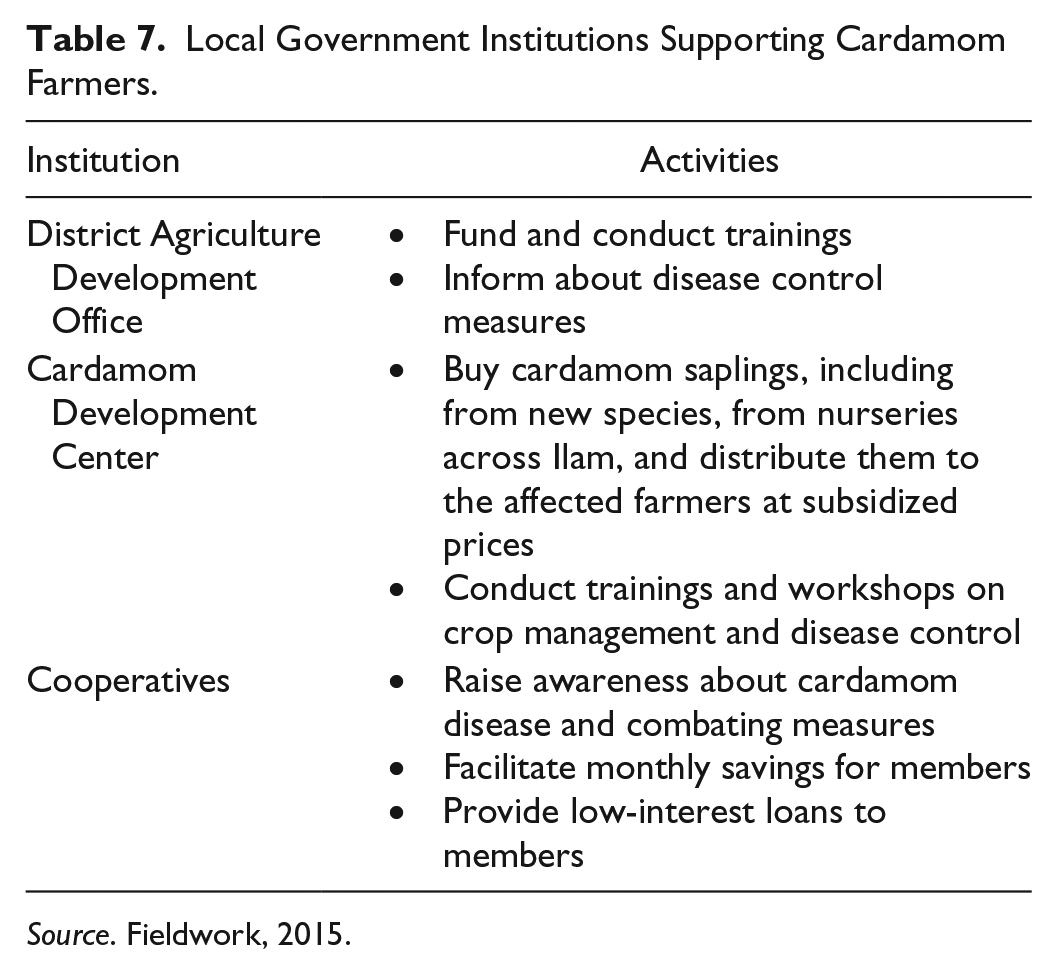
The main local institutions, from the government level, that support cardamom farmers are the Cardamom Development Center and the District Agriculture Development Office, both operating under the auspices of the national MoAD, and the cardamom cooperatives. The role of each is detailed in Table 7.
Local Government Institutions Supporting Cardamom Farmers.
Source. Fieldwork, 2015.
From the supply side, officials reported that cardamom farms require intensive care in plantation and management. Farmers have to apply fertilizer and irrigate regularly. Officials agreed that they did not have technical experts on crop disease. Some commented that farmers were unwilling to admit that crop patterns have changed due to factors such as climate change. The situation we encountered during fieldwork coincides with previous findings that institutions should help address climate change issues through transfer of knowledge about farming techniques and disease control (Akanda & Howlader, 2015; Codjoe et al., 2013; Coulibaly et al., 2015; Okonya et al., 2013; Oluwatusin, 2014; Oyekale & Oladele, 2012; Wilk et al., 2012).
From the demand side, farmers expressed concern about lack of proper targeting in the distribution of cardamom seedlings. But lack of staff and insufficient supply of new species of cardamom limited the officials. Due to the inability to meet increased demand, the relationship between institutions and farmers has become strained. This reflects issues of trust between local institutions and beneficiaries, and suggests weak monitoring of institutions.
There are nine cardamom cooperatives in Ilam. Of the VDCs covered by this study, Naya Bazar, Pyang, and Jirmale each have a cooperative, but Chamaita does not; most products from Chamaita go through Naya Bazar. Respondents revealed that these cooperatives were relatively new and had been established to revive and promote cardamom farming. The cooperative in Jirmale has been running smoothly since its establishment 5 years ago. One member of each household producing cardamom, either male or female, can join this cooperative, which acts as a savings institution and provides loans to members. However, cooperatives in other VDCs have not been successful due to lack of leadership.
This may call into question the objective on which cooperatives are established and the framework in which these cooperatives function. It also reveals distressed farmers’ unwillingness to take the lead due to loss of cardamom. And it calls for an intervention by national- and district-level officials and other concerned parties to strengthen the cooperatives, which would be a process of institutional innovation.
The presence and support of local government institutions and cooperatives suggest some hope for cardamom revival. The innovation process may seem challenging because of the weak trust between farmers and officials: While farmers see institutional interventions as ineffective, officials see farmers as unwilling to accept change. This calls into question the institutional innovation system for Nepalese agriculture, since transformation in the agriculture system, despite existing interventions, remains meager. It also calls into question claims in previous studies that the current agricultural alliance and collaboration engages farmers and local and grass-roots bodies to participate in creating objectives, making decisions, and sharing knowledge on issues related to agriculture (Chhetri et al., 2011).
Some respondents also shared their concern that cardamom may have no future. For the farmers, such reflection was based on their own production and knowledge; for the officials, it came from interactions with the farmers and from their own situational assessment. This raises the issue of how institutions can best support farmers who have already taken some steps of their own to address the problem. The failure of the ground apple project in Pyang is one concrete example of market failure caused by lack of institutional innovation. Farmers have tried to commercialize their products but have failed due to weak or absent market channels. According to Von Thunen’s theory, infrastructure is essential to the expansion of agricultural markets (Peet, 2010). The study sites face severe infrastructural challenges, particularly poor roads. This may suggest the need for a collaborative innovation between local people, agricultural institutions, and institutions concerned with roads and networks.
Overall, efforts to address the issues of cardamom disease remain incomplete. Although awareness has been raised and training has been provided, alternatives have not been thoroughly assessed. For example, farmers have diversified crops without knowing the new crops’ market value. In addition, lack of roads to transfer products to market has put farmers’ livelihoods at risk. Hence, institutional guidance and innovation are crucial to lower farmers’ vulnerability.
Prescription: Assessment of Institutional Interaction and Political Economy
Findings suggest a serious need for institutional innovation to manage cardamom farms. Innovation refers to a set of fruitful interactions between various stakeholders to achieve successful transformation (Clark et al., 2003; Edquist, 1997; Lundvall, 1992; Prasad, 2007), but the interaction between policy makers, farmers, and stakeholders in the cardamom sector (Figure 4) is weak, due to poor institutional capacity and expertise. There is a need for a systematic approach to cardamom disease that not only addresses crop problems but also involves stakeholders including farmers, officials, technicians, experts, and policy makers (Klerkx, Mierlo, & Leeuwis, 2012; Pautasso & Pautasso, 2010; Rodenburg et al., 2015; Schut, van Paassen, Leeuwis, & Klerkx, 2014).

Stakeholder interaction mapping.
Sharma et al. (2009) assert that there is a need for sound policies and institutions to protect the cardamom crop. Most farmers who participated in this study knew little and cared less about government policies, on cardamom or agriculture in general, stating that they would do no good. Study participants referred to the agriculture sector as the most neglected despite its engagement of a large portion of the population. Local officials who shared their views about the Agriculture Development Strategy were unsure whether the strategy, currently in its initial phase, would be implemented wisely.
The strategy was released in 2014 with a 20-year vision to manage the agriculture sector (MoAD, 2014a). One of the goals of the strategy is to develop special programs and produce virus-free cardamom plants. It aims to create potential corrective measures for the value chain of top commodities, including cardamom. This reflects the central government’s concern about crop disease and related issues. However, the plan fails to map the interactions between farmers and officials at the national and local levels, and this situation seeks a platform for institutional innovation.
The mismatch between demand and supply for agricultural support suggests the need for reconsideration of the types of support offered and the channels through which it is offered. First, the Cardamom Development Center alone cannot fulfill farmers’ needs. Community-level institutions are essential to smooth service delivery and have the best potential to strengthen farmers’ capacity through extension services and provision of agricultural inputs (Salau, Onuk, & Ibrahim, 2012).
Second, supports should be prioritized based on households’ immediate needs. Using the VDC profile, the local government could target poorer households first. Pathak (2014) indicates that institutional innovation should act as a channel beneficial to the poor, where the poor can also be a part of the interaction.
Third, information about crop diseases and measures to combat them can be provided through the use of technology, such as mobile phones, which most farmers in Ilam possess. In the cardamom sector, technology use remains null.
At the policy level, cardamom remains a priority crop. The Agriculture Development Strategy focuses on increasing cardamom productivity by reducing disease. However, agriculture policy also needs to include a safety net for farmers during crop failure. For example, crop insurance can help farmers stabilize their income, invest in agriculture, and decrease their vulnerability and need for outside assistance when a crop fails (Swain, 2014). It can give farmers time to prepare alternative measures at a reasonable pace without being distressed.
It is also crucial to assess the institutions and key players engaged in shaping and implementing policy in the agricultural sector. This would help improve institutional management, operation, effectiveness, and overall function (Babu, 2013). For example, respondents revealed that cooperatives were inactive due to lack of leadership. Providing incentives to encourage participation could help improve this situation. At the institutional level, leadership training could be an important step.
Institutional innovation in the agriculture sector may also relate to those conducting research, providing extension services and education, promoting markets, and framing policies (Babu, Glendenning, Asenso-Okyere, & Govindarajan, 2012). The cardamom sector lacks technical research. There is a need to assess issues of political economy while aiming for institutional innovation. This could relate to change in government officials or policies, which could restrict implementation or change existing policies or actions (Birner & Resnick, 2010).
Conclusion
This study explored issues of disease infestation in large cardamom, farmers’ coping strategies, and institutional support for cardamom farmers. It was conducted in only one district, and thus did not address the issues of other districts in Nepal’s eastern hills that also produce cardamom. This PhD research is a small component of a project titled Feminization of Agriculture Transition and Rural Employment (FATE), which investigates cash crop farming in the eastern hills and will explore the elements of cash crop farming, disease, livelihoods, and institutions at a broader level.
The study focused on the attempts made by local institutions to address crop disease. However, the innovation process as a whole, and related interactions between different stakeholders, still need closer attention. Government policy focuses on combating cardamom disease and the decline in production, but it does not cover the use of information technology to facilitate interactions or the provision of a farmers’ safety net. Future research should also identify policy gaps and make policy recommendations.
Despite acquiring substantial revenue from cardamom, the national government has failed to appoint adequate crop experts at the local level. Local institutions hence cannot meet the demands of farmers dealing with the cardamom crisis. This calls for institutional innovation at the micro level.
To promote cardamom revival, policies have to be framed that focus strictly on preventing or combating disease through research. Because cardamom entered Nepal from Sikkim, the Nepal government could collaborate with Sikkim to learn about the situation of cardamom there and progress toward sustainable cardamom farming.
If the future of cardamom is uncertain, as stated by officials, experts, and farmers, the government’s institutional capacity and support for innovation is crucial. Institutions should be formed to support farmers taking alternative measures. These institutions should formulate proper innovation methods and reach out to farmers of diverse groups. This will be the focus of broader research within the ongoing FATE project.
Finally, the results of this study suggest that merely identifying a crop as having high value is not enough to ensure economic growth in a country like Nepal, which faces challenges of geography, topography, lack of markets, weak infrastructure, and meager institutional capacity. Further assessment of the political economy of institutions, from micro to macro level, in addressing vulnerability and building coping strategies can help frame sound policies for commercial farming in Nepal.
Footnotes
Acknowledgements
The authors would like to acknowledge the entire Feminization of Agriculture, Transition and Rural Employment (FATE) team for their direct and indirect support. The authors are grateful to the people of Pyang, Chamaita, Naya Bazar, and Jirmale village development committees (VDCs) of Ilam district for their valuable information.
Author’s Note
This research is a part of R4D, Research Project, Feminization of Agriculture, Transition and Rural Employment (FATE) led by University of Bern, Switzerland.
Declaration of Conflicting Interests
The author(s) declared no potential conflicts of interest with respect to the research, authorship, and/or publication of this article.
Funding
The author(s) disclosed receipt of the following financial support for the research, authorship, and/or publication of this article: This research was financially supported by FATE project but author has received no financial support for the publication of this article.