




Abstract
Resistance to girls’ education in Pakistan has long been an intractable problem; the lowest enrolment figures are in Pashtun areas. This study focused on Pashtun men’s perceptions of girls’ education. Pashtun men of diverse backgrounds participated in a two-round Delphi exercise, followed by in-depth qualitative interviews in Khyber Pakhtunkhwa Province of Pakistan bordering Afghanistan. Although contradictory ideas from religion, culture, and politics were elicited, consensus developed on major barriers to girls’ access to education: poverty, Pashtunwali (tribal code), religion, accessibility, resources, shortage of female teachers, curriculum, and political apathy and corruption. Understanding the barriers to girls’ education could help development professionals overcome them.
Throughout history, girls’ education has been a contested social, economic, political, and religious issue in the Pashtun region of Pakistan. Studies suggest that the root causes of this gender gap are multifaceted and complex. Poverty, the lower status of women in society, and sociocultural issues—coupled with poor access to schools, security, transportation, and lack of female teachers—are some key areas discussed in the literature (Khalid & Mujahid-Mukhtar, 2002). Two decades of continuing war and conflict, extremism, and the introduction of strict cultural and religious ideologies have further complicated and magnified the issue of gender justice in education.
The impact of these pressures is most clearly visible in the Pashtun tribes of Pakistan bordering Afghanistan, where only 13% of primary-school-aged girls are enrolled (the United Nations International Children’s Emergency Fund [UNICEF], 2010). Despite some progress in South and West Asian countries, where the number of girls out of school shrank from 24.2 million in 2000 to 6.6 million in 2011 (Ackerman, 2013), a continuing pattern of extremely high levels of gender disparity has been observed among the Pashtun tribes (Latif, 2010; Pakistan Integrated Household Survey, 2002; United Nations Development Programme [UNDP], 2011; UNICEF 2005, 2010).
A significant amount of research has been done on women’s development and gender issues in the Pashtun regions of Afghanistan and Pakistan (Akbar, 1983; Chavis, 2001; Mann, 2005; Moghadam, 1992; Zulfacar, 2006). Little, however, is known specifically about the complex issue of community engagement and inclusive approaches to women’s education. Most of the existing research has involved women, the very group generally barred from decision making in the patriarchal society of Pashtuns (Agarwal, 1998; Latif, 2010; Mumtaz, 2006).
By contrast, the present study engages Pashtun men in conversation about gender justice, as it is men who hold the power to either create obstacles to women’s education or to remove them. Men’s collective efforts for gender-related issues have the potential to be an effective strategy for social justice, as such initiatives would involve the members of a privileged group questioning that same privilege (Flood, 2001). Studies of gender equality in Muslim societies usually focus on issues of hijab and oppression, whereas studies of men’s participation in gender and development discourse are rare (Esplen, 2006; Ouzgane, 2006). Given the sensitive issue of gender and development within Muslim communities, the need for more research in this area has never been greater.
Purpose of the Study
The global objectives of my research were to investigate how male perceptions of female education and discourses of power construct barriers to girls’ education, and to identify ways of overcoming those barriers through the involvement of Pashtun men. The research described here focuses on Pashtun men’s perceptions of women’s education, in particular, on men’s perceptions of barriers to gender parity in education. I examine both internal and external forces that create barriers to schooling for girls (ages 7 to 15). Internal forces include sociocultural and religious interpretations, the patriarchal structure of society, household poverty, and gender discrimination in the tribal codes and traditions. External forces include economic conditions, government education policies, national agencies and bureaucracies, development priorities of donors and nongovernmental organizations, and the geopolitical situation of the region.
Background and Context
The gender gap in education reflects the broader social, political, and economic inequality of women, with far-reaching implications for most developing communities. Within the social development community, there is general agreement that women’s education plays a critically important role in socioeconomic development, although the precise method by which it does so is debated (Balatchandirane, 2003; Schultz, 1993). In 2000, the United Nations (UN) Millennium Summit adopted Millennium Development Goals to put “development at the heart of the global agenda.” The third such goal is to “promote gender equality and empower women, with the target of eliminating gender disparities in primary and secondary education by 2005, and in all levels of education by 2015” (United Nations Educational, Scientific and Cultural Organization [UNESCO], 2005, p. 7).
It is legitimate to ask why, despite international consensus on the significance of girls’ education, and despite considerable allocation of resources and development to so many girls’ education initiatives, the girls’ education sector in developing countries such as Pakistan is still in crisis.
Status of Girls’ Education in Pakistan
The literacy rate of Pakistan is 50%, one of the lowest in the world. The situation is especially serious for girls, whose literacy rate in rural areas is 25%, and whose enrolment drops from 55% to 20% from Grades 1 to 6 (Education Census, 2005; Latif, 2010). By Grade 12, it is down to 10%. UNICEF (2005) reports that although gender disparities in formal education have been decreasing in most countries in south Asia, in Pakistan, they are increasing.
There is significant regional variation. The Pakistan Integrated Household Survey (2002) found that the largest gap in enrolment between boys and girls was in the rural Pashtun areas of Khyber Pakhtunkhwa (KPK) province. Likewise, girls in the Federally Administered Tribal Areas (FATA; Pashtun tribal areas bordering Afghanistan) receive much less education than do girls in Punjab, Sindh, and Kashmir provinces. In 2004, the Pashtun FATA areas had a female literacy rate of 3%—the lowest in the country (Government of Pakistan, 2006).
The question is why. In most research on girls’ education, supply-side issues, such as poverty, lack of female teachers, and inadequate infrastructure have been amply discussed, whereas demand-side factors—notably, perceptions of parents, community leaders, and family decision makers—have not been closely examined (Hunte, 2006). International organizations have also addressed supply-side concerns by building private schools and developing infrastructure.
Yet development policies and programs cannot be separated from local social contexts. Community resistance to the gender-related development programs in Pakistan and Afghanistan is often caused by lack of understanding of the local culture. When there is a disconnect between the social reality of the community and the development policies of intervening organizations, programs fail (Keiko & Yoshinori, 2006; Shaheed & Mumtaz, 1993; Zulfacar, 2006). To understand why the gender gap in education is proving so difficult to overcome, we therefore need to examine the deep-rooted assumptions of the Pashtun community.
Pashtun Tribes
The total population of the Pashtun tribes is estimated at 40 to 45 million, but an accurate count remains elusive due to the nomadic nature of many tribes and the tradition of secluding women (Ahmed, 2004; Khan, 1991). Most Pashtun tribes are settled in Pakistan’s KPK province (previously known as North West Frontier province) and the FATA. They are also found in the adjacent southern regions of Afghanistan. Pakistan’s largest city, Karachi, and Baluchistan province also have a considerable number of Pashtuns (Hassan, 2007). FATA runs north–south, forming a 2,430-kilometer wedge between Afghanistan and Pakistan. Many of the tribal codes—the social and cultural traditions defining the identity of the Pashtun population—are present on both sides of the Durand Line, a long, porous frontier inhabited by some 22 million people.
Status of Women
In Pashtun society, particularly in rural areas, the realities of a woman’s deprivations are manifested even before her birth because the girl child is not a particularly “wanted” child. Once in this world, her life may be a journey of suffering and continual discrimination. According to traditional culture, from a girl’s earliest age, men start practicing their decisive role in the most important issues of her life, ranging from education to selection of her husband. After marriage, her husband and in-laws may take control of her life. They could decide, for example, the number of children she will have, her role in the community, and her limits in seeking education or employment.
Women in these communities are often the first to rise and the last to go to sleep; when there is little food, they may go hungry (Shaheed & Mumtaz, 1993). Thus, the word woman in Pashtun society is synonymous with “obedience” and “loyalty.” She simply must accept certain harsh realities of a patriarchal society. As described by Ahmed (1980), “The ideal Pashtun woman is a model of virtue, chastity and loyalty” (p. 78). She is expected to live according to prevailing social norms, cultural values, and the tribal code.
Research Design and Method
I used a qualitative research design based on a modified two-round Delphi method to determine group consensus concerning the identification of barriers to girls’ education. The Delphi method was chosen because of its structured communication process as well as its practical suitability given the insecure nature of the region (Bradshaw, 2008; Ismael, Ismael, & Langille, 2011; Powell, 2003). An overview of the research process is provided in Figure 1.
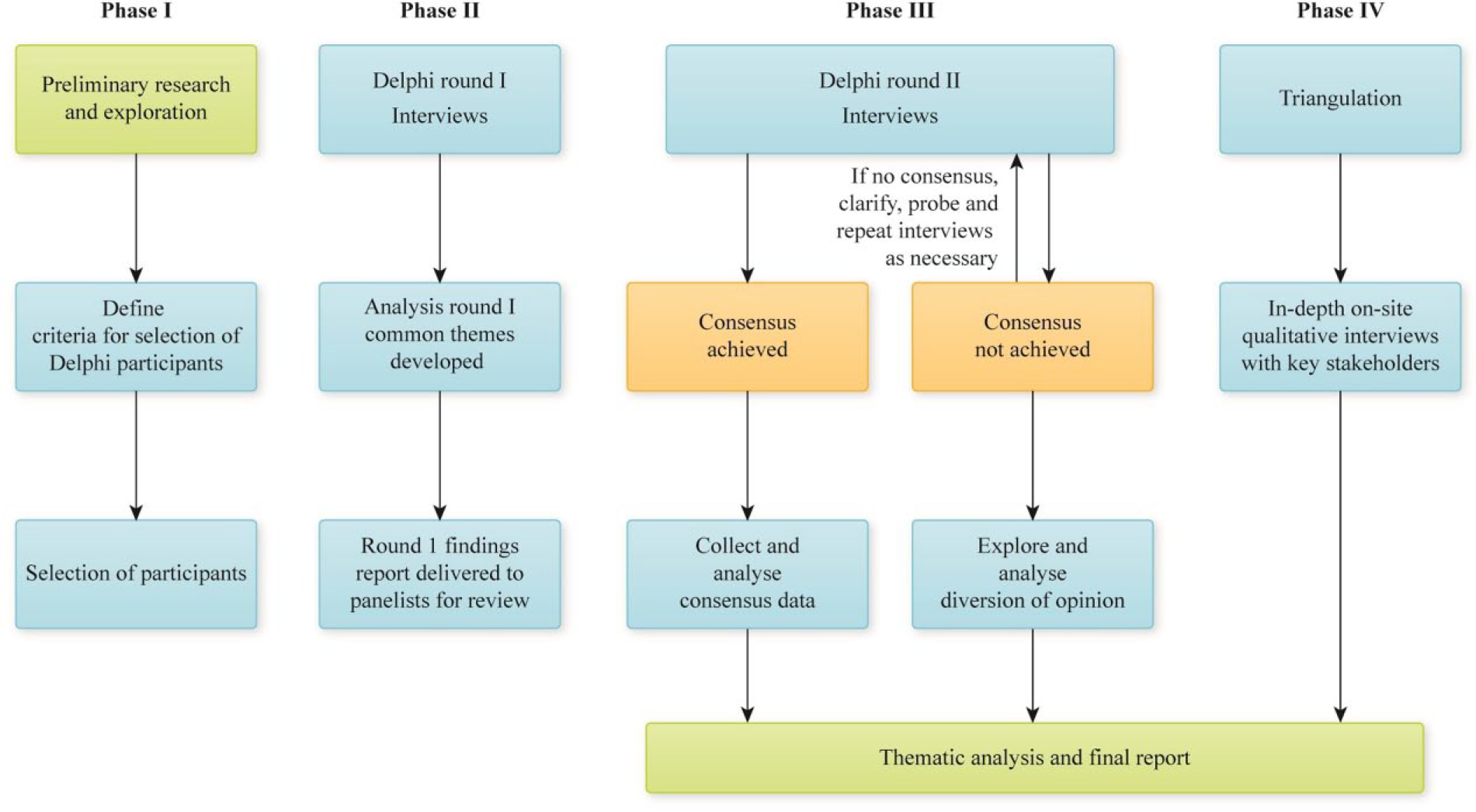
Modified Delphi process.
Recruitment of Participants
During the initial visit to Peshawar, Pakistan, a pool of 25 participants was developed through purposive sampling. These were men from diverse categories of stakeholders in the girls’ education sector, as well as those expected to be good interviewees based on the strength of their social network, their capacity to keep confidence, and their perceived stability, flexibility, and general awareness of the relevant issues of their community.
From this pool, 20 Pashtun men from the following groups agreed to participate: tribal councils of elders (Jirga), religious leaders (Imams), rural community leaders, politicians from Pashtun constituencies, NGOs, the Ministry of Education, Pashtun men with low incomes, fathers of daughters, scholars in the field, and government officials of KPK province (Table 1). There was considerable diversity in education level: three participants with a postgraduate degree, six with a graduate degree, five with an undergraduate degree, three with religious education in a Madrassa (religious school), and three participants without any formal schooling. Coverage ranged from major cities to small rural communities, from the mountainous and tribal terrain of KPK province to FATA bordering Afghanistan (Figure 2). Common barriers of access, cultural legitimacy, and language were significantly reduced because I was born and raised in a Pashtun tribe of Northwest Pakistan.
Participants of the Delphi Study.

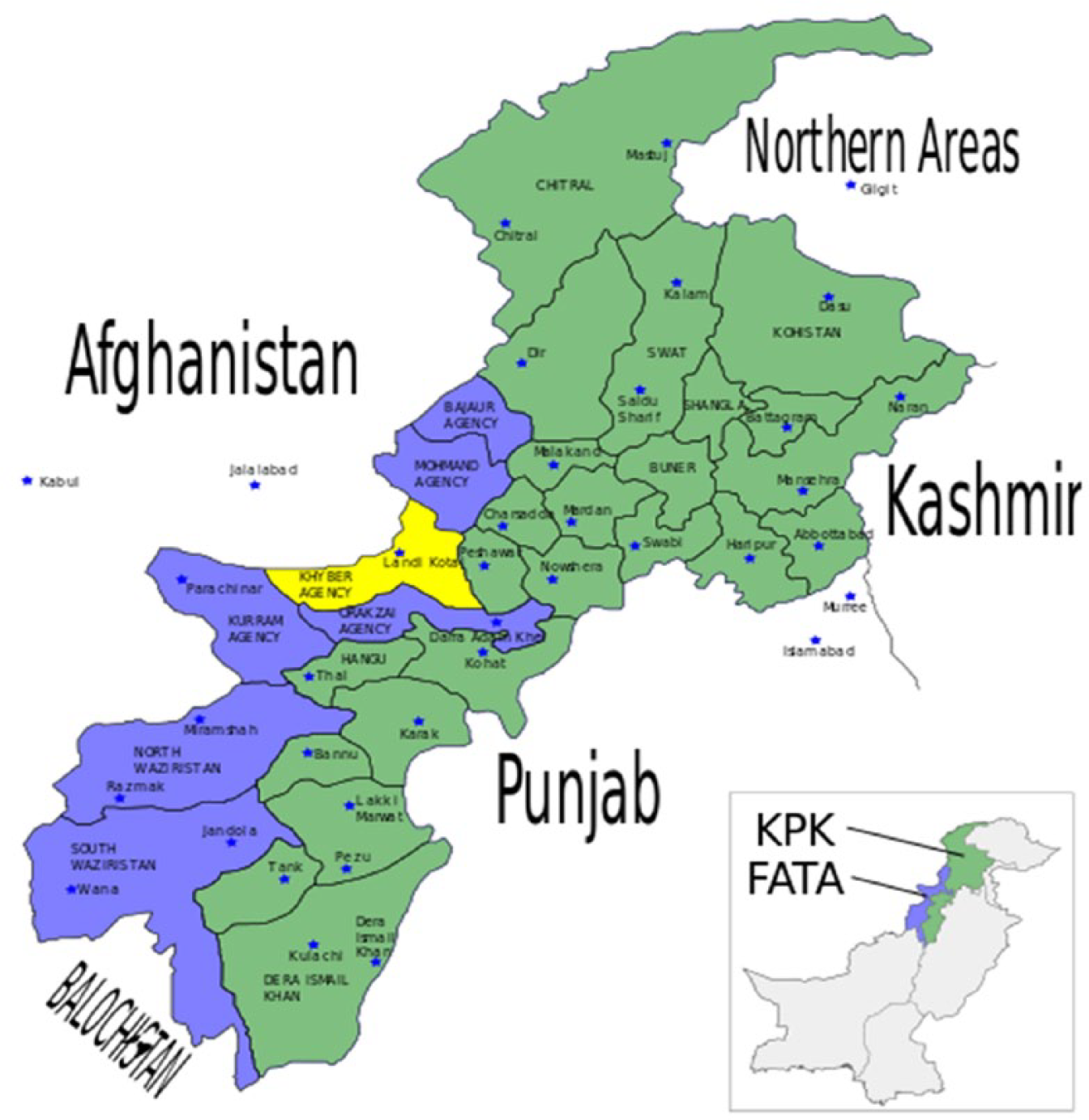
Map of KPK province and FATA, Pakistan.
Round 1 Data Collection and Analysis
In summer 2010, I conducted semi-structured telephone interviews with 16 participants. Interview questions were based on the study’s guiding research questions. They were open-ended, non-leading, and broad in context “so as to widely cast the research net” (Skulmoski, Hartman, & Krahn, 2007, p. 10). The interviews were digitally recorded, translated into English from the Pashtu language, and transcribed verbatim. Then I conducted a qualitative analysis to identify relationships, themes, categories, and areas where there was a difference of opinion among participants. I summarized these in the form of a 2000-word report. A hard copy of the report was distributed to the participants, each of whom was given at least 2 weeks to reflect on the analysis.
Round 2 Data Collection and Analysis
The second round of the Delphi exercise, in which 14 men participated, confirmed the degree of consensus on the themes that emerged from Round 1 data. At this stage, participants were encouraged to carefully evaluate the summary report of Round 1, which included responses of other participants, and, if necessary, to reconsider their previous responses in the context of the group response (Bradshaw, 2008; Powell, 2003). Three participants were not able to read. The local research coordinator translated and read the questions and summary report for them.
Compared with Round 1, interviews in Round 2 were more structured. They concentrated on key issues involving barriers to girls’ education. Specific questions were developed to probe agreed-on areas and those needing further clarity. During this process, the range of the answers decreased: The panel converged toward consensus on some issues.
Nevertheless, special attention was paid to areas of disagreement and to changes of opinion from Round 1. Dissenting participants were asked for the rationale and context of their point of view, and their responses were included in the subsequent analysis. Much can be learned from such disagreements, negative cases, or “alternative thinking” in a Delphi study (Bradshaw, 2008).
On-Site, In-Depth Interviews
The Delphi exercise was followed by in-depth, face-to-face qualitative interviews with four Pashtun men representing diverse interests in the girls’ education sector in Peshawar, Pakistan (Table 2). I visited the Pashtun region of Northwest Pakistan during summer 2011 to conduct the interviews. The goal was to improve the credibility and applicability of the Delphi findings by changing the circumstances and mode of data collection. The Delphi literature includes many such examples of triangulation (e.g., Boote, Barber, & Cooper, 2005; Bradshaw, 2008; Delbecq, Van de Ven, & Gustafson, 1975; Van Dijk, 1990; Van Zolingen & Klaassen, 2003).
Participants for the On-Site Individual Interviews Conducted in KPK Province of Pakistan.
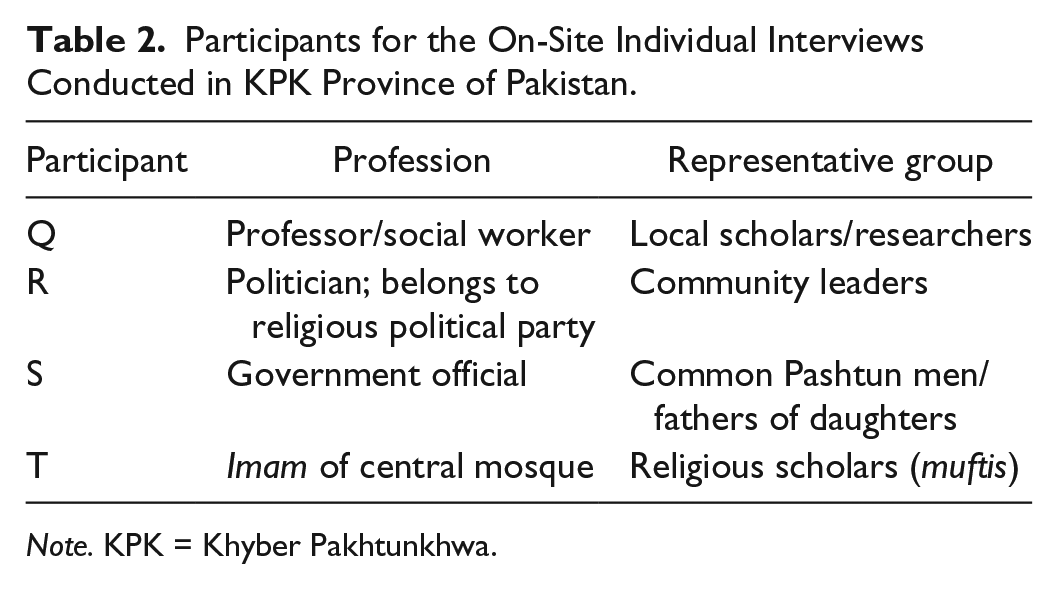
Note. KPK = Khyber Pakhtunkhwa.
Findings
There was consensus that gender discrimination is widespread in Pashtun communities, including in the area of education. During Round 2 of the Delphi exercise, participants agreed that the following are major barriers to girls’ education: poverty, Pashtun tribal code (Pashtunwali), religion, poor accessibility, inadequate physical resources, lack of female teachers, irrelevance of the curriculum, and corruption and lack of political will.
Poverty
A key obstacle for girls’ education in the war- and poverty-stricken Pashtun region is the basic cost of tuition, books, travel, uniforms, and shoes. Girls are therefore encouraged to either stay at home to help their mothers with cooking, cleaning, and caring for siblings, or to go out and bring water and firewood for day-to-day living. One participant (A), a security guard working at a village school in a rural area of the Mardan district, shared his personal situation:
I have stopped sending my daughter to school after Grade 5 because middle school is away from our village. My boy still goes to school using bicycle but a girl would need to use public transportation that would cost me money. Besides I would need to give her five to ten rupees daily for her lunch that I can’t afford.
A community leader (P), who lives in a remote mountainous area bordering Afghanistan (Mohmand tribe), explained that for the last few decades, this region has suffered extreme poverty, wars, and chronic underdevelopment:
Due to decreased agricultural resources, men of rural areas usually go to cities to find work. Girls at home are then responsible for farming and cattle care. If we send her to school, then who will do the work at home?
There was consensus among participants that poverty is a key factor in early marriage, which itself prevents girls going to school. In most rural areas, girls are married between 12 and 15 years of age. Even if a girl had been going to primary school, after the wedding, she is usually forced to stop. A participant (H) who runs an NGO in a remote area described the issue:
A girl is engaged to a boy by the family when she is a little child and when they grow up they are married together. Here, it is not important whether the girl really wants to marry the boy or not or whether her husband works or not. It is also not important whether the girl gets education or not.
The majority of participants (12 of 16) agreed that even if parents have some savings, they spend less on their daughters. Spending on daughters is not considered a good investment. Girls will be married within a few years and would have to follow their in-laws’ traditions and decisions. As one participant (M) said, “Girls are considered other people’s property.” Another participant (I) described it this way:
In our Pashtun society, people give more attention to the boy’s education because he will one day support the whole family. As for the woman, she has traditionally been limited to the house. So this is why the son would be preferred. This is not because they are doing gender discrimination. No, they don’t. They pay more attention to their male children because he will one day support them.
However, one participant (C), disagreeing with this conclusion, said, with much laughter, “I rather prefer to invest in my daughter’s education because she is going to bring me a son-in-law and on the other hand my son would get married and will be taken away by my daughter-in-law.”
Some participants thought that the tradition of spending less on daughters may be slowly changing, particularly among Pashtuns living in settled areas. Such people have more connections with the external world, are more exposed to mass media, and have more contact with relatives living in urban areas and abroad. A participant (G) who served as director of education agreed that change is possible:
Societies change. They change slowly. They think one way and then later slowly they change. You see when a girl is doing a job. She becomes a teacher or something. Then she is a source of income as well. We have such school in which there is lack of space now so we can arrange accommodation there. Out of these I will give you an example. We have a high school in Loon Khawar [a village in Mardan district] and now there are sixteen hundred girls studying in it.
I believe this “alternative thinking” shows a pattern of changing values concerning girls’ education. However, there is more change in urban and settled areas than in remote mountainous areas.
Pashtun Tribal Code: Pashtunwali
Pashtunwali is the tribal code according to which men’s honor and the dignity of family and clan supersede many other priorities. All respondents in Round 2 agreed that it is a major barrier to girls’ education. One panelist (A) indicated that Pashtunwali is often discussed in the context of girls’ education:
I know many people in our village who are financially fairly comfortable too. Even though they had enough money to live comfortably but over this thing [Pashtunwali] they took their girls out of school. There have been fights within families too over female education. I have witnessed such things. There have been many fights over female education.
According to Pashtunwali, a woman’s life is centered in the home. She has predefined roles and responsibilities: homemaking, food preparation, and childbearing, which do not support her education. As described by a participant (F), “The old traditions of Pashtuns [Pashtunwali] compel Pashtuns to do such things [restrict her schooling]. He does not let her go out. She is stuck inside. This is embedded culture of the Pashtuns.” If a man is seen doing women’s work, he is ridiculed by his family and friends. A man is not supposed to work in the kitchen, take care of children, or do cleaning work at home. In one participant’s (H) words,
In mountainous areas, you know, water has to be brought from the outside. It is the job of women to bring water. If a man does it, then he is bullied and called various types of insulting names. They use a particular word for such a man: khazoonak [women’s puppet]. So people will say “Boy, what a khazoonak.” So women bring the water, firewood. Women harvest crops. If a girl goes to school and then comes home to do her homework, then she can’t do these things.
However, there was consensus that making decisions about girls’ education varied from district to district and even from village to village. For example, the Pashtunwali code of restricting girls from schooling is not as widely practiced in the plains and settled areas as it is in tribal and mountainous regions. Some of the stricter traditions are practiced only in remote hilly areas bordering Afghanistan. Differentiating the plains and hilly areas, one participant (O) explained,
The restriction [to girls’ education] differs area-wise. In some areas you don’t have to work hard to persuade the people to educate their girls. There are problems in the hilly areas such as upper Swat, Dir, and the tribal areas, FATA.
This regional division of the province into plains and mountainous areas was a common theme in many discussions. Participants agreed that the plains areas—where the major cities are located—were more open to socioeconomic and cultural changes, including less gender discrimination.
Religion
There was consensus that religion has been a major factor in shaping Pashtun identity and social structures. Some participants argued that a particular religious interpretation indirectly restricts girls’ education via practices such as wearing the niqab, strict observance of purdah (veiling of women), early marriage, and women’s defined core responsibilities at home. The strongest argument for this idea was given by a member of an NGO (I) who works on gender-related issues in the tribal areas of Dir, Swat, and Mohmand Agency: “Some [religious leaders] argue that if you are sending your daughter to school, you are basically disregarding a basic foundation of Islam and that is purdah. Now this extraordinary purdah restriction creates obstacles to girls’ education.”
A majority of participants agreed that due to continued wars and conflict in the region, an extreme and violent version of Islam flourished among Pashtuns. In this version of Islam, girls are not allowed to go to school. A participant (I) reported that in some rural areas, there were even incidents where imams announced through the mosque’s loudspeakers that girls’ education was restricted. This issue of extremism received strong agreement. One participant (P), who lives in a tribal area bordering Afghanistan, stated that the Taliban version of Islam is widely accepted in the region. The Taliban interpretation includes restraints on girls’ education:
Our people already had this mentality that there should be only religious education. The education of the world [universal education] is not necessary. These kinds of ideas made ground and brought things to this stage that now they blew up so many schools. Forget female education, now we don’t even have schools for boys.
Tensions concerning extremism and security were highlighted by many participants. Thirteen of the 16 agreed that the emergence of the Taliban and their radical ideology directly threaten girls’ education. One participant (J), who was once captured by the Taliban for ransom and lived with them for more than 5 weeks, shared his experience:
As I also had knowledge about Quran and Prophet teachings, I used to argue with my captors, Taliban, about many religious issues. They have a clear stance against girls’ education. Indeed, it’s an ideology. There is a common saying they always use: “Sabaq da madrassay wayee, Dapara da paisay waee Jannat ke baye zae na wee, dozakh ke ba gassay waee.” [“Whoever is going to school, studies to earn money, They will have no place in heaven, but will be crying in hell.”]
Participants agreed that mullahs (religious leaders in local mosques) have a strong influence in rural areas. They misinterpret some verses of the holy Quran to reinforce their stance against girls’ education; unfortunately, many common Pashtun men blindly follow them.
However, three participants disagreed that the Taliban’s religious ideology is solely responsible for restrictions on girls’ education. They argued that the “burning of girls’ schools” has many other political and conflict-related implications: “Girls’ schools are burned because they are considered symbols of Western imperialism” (G). One participant (N), who belongs to the war-affected Swat area, suggested that the only schools destroyed were ones being used by paramilitary forces against the Taliban insurgency.
Participant R, an active member of a religious political party, argued that Islam does not create any restrictions on girls’ education but rather fully supports it. He quoted from religious scripture and the preaching of the Prophet about making girls’ education mandatory for each Muslim. When I inquired about the Taliban and a few famous imams’ verdict on restrictions of women’s education, he said,
That’s right, but all our religious political parties were earlier penetrated by some evil people in the garb of scholars. All the violence that flowed into Pakistan from Afghanistan was actually a seditious trend, a great trail. All our great scholars called it a fitna [conflict, chaos].
When I asked why authentic ulemas (religious leaders) are either silent or do not openly speak against this non-Islamic verdict perpetuated by the Taliban, Participant O tried to clarify with examples of a few famous scholars of Islam in the province:
You know Maulana Hasan Jan Sayb, who was martyred because he spoke against the Taliban. There was a scholar in district Tanra up north [Swat region in KPK]. He was shot when he openly spoke against the Taliban. Everyone knows what those militant people were. They did not have anything to do with scholars. The good scholars are still there in the society and are making their contribution to it.
In Round 2, another participant, who is in charge of a famous madrassa and is a well-known religious scholar in the area, responded to my query concerning why ulema do not speak up with the authentic religious scripture that supports girls’ education: “It’s easy to speak about gender equality while living in a peaceful place; here, living in the middle of militants, and talking about women’s issues and girls’ education is a different story.”
During Round 2, participants, including three religious leaders, agreed that fear is a major factor. They added their own examples of renowned religious scholars killed by the Taliban due to their verdict against the extremist activities of the Taliban, including the ban on girls’ education and the burning of schools.
Poor Accessibility
A common theme of inadequate transportation and concerns for the security and safety of girls emerged. There was agreement that poor access to school is a major barrier, particularly after primary education. Even if parents want to send their daughter to school, they usually take her out after primary school. Participant A explained,
The high schools are usually away from the village. Girls have to travel in Suzuki [van] and then walk in the fields. They are harassed on their way to school so parents are not comfortable to take the risk. If such an incident happens, it’s a serious issue for the family and whole tribe. Many such conflicts ended up with armed confrontations and loss of lives. Due to these security reasons, many girls would drop out of school after primary education.
Two participants (A and K) personally experienced these concerns. They were willing to send their daughters to school, but, due to the long distances involved and security issues, they took the girls out after primary education. If the daughter of poor parents gets into trouble, they cannot expect justice from the court system. A farmer and father of daughters (K) shared his distress:
I have three daughters. I wanted all of them to be educated. My older daughter has graduated from high school but I had to drop other two after primary school. Now the security situation is terrible. Police force and justice system is all corrupted. There is no justice. Rich and elites will get away with anything they do! If something happen to my daughter or someone bothered her, where will I go? Who will give me justice? I am a poor man. Instead of sending them to a faraway school and taking the risk to their chastity and safety, I better keep my daughters safe and keep them at home.
Inadequate Physical Resources
Emphasis was placed on the lack of adequate facilities in schools. Participants especially discussed the deteriorating situation in government-run schools, where basic facilities—such as toilets, sanitation, drinking water, and furniture—are increasingly scarce. As one participant (E) said, “If there is no proper wall around school and no proper toilet facility, parents would not feel comfortable sending their girls to school.” In most schools, girls have to sit on the floor in their classroom, besides having no proper sanitation or toilet facilities. A political activist and social worker (O) made an interesting point about the negative role of politicians and members of parliament:
If any member of parliament has made a school in those areas through government-allocated funds, it has been constructed in such a place where he [member of parliament] can keep his cows and sheep and can use the school as a barn, but it is difficult for the girls to reach that area for education. For example, some schools in Badin, Swat, Upper Dir, and Kohistan. So the government investment is done in a wrong way and people from the local community are using those places [girls’ schools] to keep their cattle or for socializing, but girls cannot access those areas.
Lack of Female Teachers
An issue that received extensive commentary from participants was the shortage of female teachers. If there are no female teachers, parents will not send their daughters to school. Even if the government has allocated a female teacher, she hardly visits the school due to security and transportation concerns.
One participant (G), who served as a director of education for the Swat region, spoke of the challenges female teachers face in reaching schools in remote rural areas:
I will give you the example of small villages here in Mardan in the outlying areas of the district near District Swabi, like Grumat Meray, Toroo Maray. No bus, no car or horse coach goes there. It is impossible for the female teacher to walk to the school through farm fields. She just can’t do it. So there are major transport problems. Fact is that girls do want to study, but if there is no teacher then what can they do?
Some participants also voiced concerns about “ghost schools.” These are officially registered schools with staff, but in reality, the schools do not exist. The school building might be used by landlords for their cattle or farm needs, but teacher and staff pay is distributed even so. One participant (H), an NGO worker who regularly visits the remote mountainous areas of Mansehra, Hazara, and Kaghan, described the situation:
In most remote areas, very few schools are open and the teachers come. It often happens that just one teacher will come or even the absent teachers will hire another half-educated girl from the village and have her sit in the school. This girl does not really teach. She is there to inform the actual teachers in case there is a visit by the higher official for [school] inspection. There is hardly any inspection visit because they will talk to the inspectors too and give them some part of their salaries as bribe. Besides, village people do not have the awareness and they don’t care enough to come together and ask for teacher to be regular at school.
Irrelevance of the Curriculum
Some participants suggested that the irrelevance of the curriculum to community needs and priorities resulted in resistance to girls’ education. This was mentioned by a few participants in Round 1; in Round 2, a consensus developed on the irrelevance of the curriculum for community needs.
As the curriculum is founded in Western ideology, some believe that it makes girls Westernized and less attentive to Pashtun values: “The conservative Pashtuns avoid sending their girls to schools, especially in villages. They say girls are taught liberal ideas” (F). Teaching the English language is a key element from early grades on, which also “brings girls toward Westernization” (F).
Participants agreed that the current curriculum of primary as well as high school does not match the specific needs of the community. The existing curriculum is not relevant to the world in which these girls are living. One participant (G), a former director of schools, suggested that a few small changes to the curriculum could make it acceptable to the community:
Besides science and basic education, the other thing I feel must be taught is handicraft. I went to a girl’s primary school. There was only one teacher but I appreciated her a lot because I saw that they hung up charts about stitching, showing how to stitch. There are various technicalities of stitching like small geendha [patterns] or large patterns. I really appreciated her for this. Then in a meeting with other primary school teachers in the area, I gave them example of those charts and told them that you should teach these things to children. What that lady teacher has done—you can do it too.
Corruption and Lack of Political Will
Many participants, particularly those working in the education and gender-related sectors, shared concerns about the lack of attention to education by governments. Participants explained that many politicians and elected members of parliament in KPK province are illiterate. Why would they be concerned about girls’ education if they have not gone to school themselves? Participant D said, “We had an illiterate education minister, who was not even able to sign his name, and next term we had an education minister who graduated from a madrassa [religious school].”
Participants agreed that education—particularly girls’ education—has never been a priority for government. If government took the lead, however, people would follow. Participant C said,
Once the government wants to do it, people will respond positively because the government carries some trust and authority. When it says something is good, people believe it. They [government] need to put their stamp of approval on female education.
As noted earlier, however, there is significant regional variation in government priorities within the KPK. Female education receives much more attention in urban than in remote mountainous and rural areas.
A number of participants spoke about systemic, entrenched corruption, as well as mismanagement within the government-run school system. Most of the funds allocated for the girls’ education sector “is either eaten by corrupt government officials or wasted due to negligence and mismanagement” (I). Participant F, an NGO worker, suggested that the government is simply not taking ownership of girls’ education. There is widespread corruption, which everyone knows about, but no one is serious enough to take a step to stop that corruption. When I inquired about specific examples of such issues, participants shared their personal experiences:
In Kohistan [remote border area of KPK], many female teachers had gathered on the first day of the month and those ladies were not there to teach but just to get their salaries. In the Mansehra area there are teachers who do not even go to the school but find some students for less money to go in their place. There are many such bogus teachers in rural and tribal areas of the KPK. In Mansehra, we had an officer who was involved in major corruption, in millions it must be. But alas, he never got punished. Even he was a bit smaller fish. Who will catch the bigger ones? (Participant F)
Discussion
Having identified eight specific impediments to girls’ education, it remains to discuss some general, overarching issues.
Poverty
Over the last few decades, the Pashtun region has experienced continued war and conflict as well as chronic underdevelopment and poverty. Local businesses and agriculture have been destroyed, forcing men to urban areas to feed their families. In the absence of men, women have to take care of both farming and home chores. In such circumstances, girls cannot attend school. The Delphi panel unanimously declared poverty to be the single biggest barrier to girls’ education.
The Sustainable Development Policy Institute (SDPI) reported that 58.7 million Pakistanis are living below poverty line, with highest poverty rates in Baluchistan (52%) and KPK (32%; Navid & Ali, 2012). The gendered dimension of poverty is reflected in the fact that Pakistan is making the slowest progress in girls’ education in the South Asian region. For instance, in Pakistan, between 1999 and 2012, the percentage of poorest girls out of school fell from 78% to 62%, but this figure is small compared with India (from 66% to 30%), Nepal (52% to 22%), and Bangladesh (91% to 44%; UNESCO, 2012). Again, it is important to note that the impact of poverty varies by cultural and geographical region, with an especially alarming situation in rural and tribal areas of KPK and Baluchistan. Malik and Rose (2015) found that 65% of the poorest girls in Baluchistan never attend school, compared with only 10% of the richest girls in Punjab.
Linked to poverty is early marriage. Particularly relevant here is the concept of “opportunity cost” (Schultz, 1993). Schultz (1993) argues that parents may invest in a daughter’s education until the return exceeds the cost of the investment. Given early marriage, parents have little interest in paying for the education of their daughters. Nearly 50% Pakistani girls are married by age 19, 40% are married by age 18, and about 13% girls enter marriage before their 15th birthday (National Institute of Population Studies, 2008). Daughters are considered expendable, soon to become “other people’s property” (Duncan, Brooks-Gunn, & Klebanov, 1994). Even if a girl does go to school, after the wedding, she will be taken out.
To further explore this Pashtun priority, I asked all participants, “If you had a daughter and a son, with financial resources to educate only one child, whom would you send to school?” Participants unanimously responded, “the boy.”
In a situation where it is hard for parents to feed and clothe their children, education becomes a low priority, especially for girls as they are expected to marry early and thus will not contribute income to the household. Therefore, as suggested by the Delphi panel and consistent with earlier studies, it is important to contextualize girls’ education in terms of the macro socioeconomic and political situation of the region.
Impact of Wars and Extremism Across the Border
For several decades, the Pashtun region has undergone continued struggle, possibly due to its strategic location as the gateway for central Asia. Bordered by Afghanistan, the people of KPK have faced threat and insecurity since the Soviet invasion of Afghanistan in 1979. More than 1.5 million Afghans fled across the border to take refuge in the province, and most still reside there. With the invasion of Afghanistan by the North Atlantic Treaty Organization (NATO) forces in 2002, a fresh round of extremism and militancy started in the region.
These continued wars and the resultant instability have had a significant impact on the overall progress and socioeconomic condition of the area. A UNDP (2011) report concluded,
The refugees and the politics of the war in the vicinity has eroded the traditional social order in the province, broken down law and order, crippled the economy, discouraged investment and resulted in large-scale emigration of skilled labor to the rest of Pakistan and the growing economies of the region. Above all, the refugees taxed the social and physical infrastructure of the province. Finally the province has become the battleground of an insurgency since 2007, which has its roots in the war in Afghanistan. (p. 1)
This war-like situation, prolonged for more than a decade, has produced severe consequences for girls’ education in the province. In addition, the extremism has brought with it radical and extreme religious views about women’s roles and girls’ education. The same UNDP (2011) study found that militancy has created a fearful environment where diverse or critical views about the existing social order and religious interpretations are forcefully discouraged and extreme views are enforced on the public.
Rigid Interpretations of the Quran and Sunnah
Religion was a dominant theme in both rounds of the Delphi process. A few participants talked about colonial influences and the reaction of religious leaders against the Western educational system. Others mentioned a clash of moderate and extreme interpretations of the Quran and Islamic scripture concerning women’s issues. These findings are consistent with other studies (Hoodfar, 2007; Kabeer, 2001; Shaheed & Mumtaz, 1993) in which religion, especially a few particular religious interpretations, was considered to have a significant influence on gender roles and girls’ education.
However, many—including some of the men interviewed for this study—argue that there is no evidence of direct restrictions on girls’ education in either the Quran or the Sunnah (teachings of the Prophet Mohammad). Instead, these men point out that the Quran and the Sunnah clearly encourage education of both boys and girls. Some religious groups and leaders have interpreted religious texts for their personal and political agendas, and, in a conservative culture like the Pashtun, few would question any religious verdict (Rugh, 2000). However, this study found strong evidence of support for girls’ education in the participants’ interpretations of the Quran and Sunnah. For example, there are many Hadiths (teachings of the Prophet Mohammad) that encourage girls’ education:
Whoever has three (or two or one) girls or sisters and treats them well and does not prefer male children over them and educates them in the best manner, Allah [God] will make them a shield against hell and will put them in heaven. (Abu Davud)
Further evidence that Islam does not restrict girls’ education can be found in the education ratio in the most conservative Islamic countries. Kuwait, Saudi Arabia, and the United Arab Emirates show a reverse gender gap favoring girls over boys in higher education and an almost zero gender gap at primary and secondary levels (Rugh, 2000).
Moreover, one of the conservative Islamic political parties has established hundreds of girls’ schools and women’s colleges in Pakistan, particularly in urban Pashtun regions. These schools maintain a religiously relevant academic environment, blending modern education with Islamic teachings. This Islamic group has recently established the Women’s University in Islamabad, where women are given both modern and religious education (M. T. Gulzar, personal communication, August 25, 2009). It is interesting to note that most religious leaders on the panel were sending their daughters to modern schools but were reluctant to speak out against the Taliban’s views. This study demonstrates that it is not religion in general that is creating resistance to educating girls; rather, it is a particular interpretation of religion, one dominated by the Pashtuns’ tribal code and cultural values concerning the subordination of women.
Furthermore, during the last two decades, a particularly rigid interpretation of Islam has been strengthened by the importing of an extreme version of Islamic ideology from the Middle East. Some foreigners, with radical ideologies and rigid interpretations of scripture, infiltrated Pashtun societies during the Soviet–Afghan war in the 1980s. Many of them arrived with the help of Gulf States and Western Nations who were also major financiers of the Afghan mujahideen (freedom fighters or Muslims who believe they are doing jihad) during the Cold War era. Those foreigners quickly became fully socialized within Pashtun societies and later were commonly known as Afghan Arabs in the Pashtun areas (Rashid, 2010). Some of them even married into Pashtun families, particularly from rural tribes bordering Afghanistan.
As Pashtuns are both a very hospitable and conservative people, they were significantly influenced by the Arab influx. The Arabic language—the language of the Quran—gave Arab nationals more authority with respect to Islamic jurisdiction, interpretation of scripture, and views on religious issues over the local ulemas. This was a major shift in Pashtun communities that in turn reshaped mind-sets and restructured women’s roles and responsibilities (Tarzi & Lamb, 2011). For example, despite living in a patriarchal society, Pashtun women had long established informal household, neighborhood, and community networks (Ismael et al., 2011). Pashtun women used to go out and collect wood for cooking or take some role in farming, using such activities as opportunities for socializing with other women. I have witnessed rural women going to Eid (fair) and other community celebrations: women-only gatherings, filled with hundreds of women and girls from surrounding villages with much fun, play, and social activities. Newly introduced, rigid interpretations of scripture by the extremists banned all such activities of women outside the home and thereby had an adverse effect on women’s social well-being.
Insecurity and Fear
Participants’ concerns about insecurity and extremism were mentioned on many occasions. Thirteen of 16 participants agreed that the emergence of the Taliban and their extreme ideology directly threatens girls’ education. As related earlier, one participant (J) was captured by the Taliban and held for ransom. During his more than 5 weeks’ stay with them, he heard firsthand the Taliban’s clear stance against girls’ education. Many religious leaders have been threatened and/or killed due to their open critique of extremist religious groups. Clearly, an environment of fear and insecurity has been created; as a result, people with diverse views are reluctant to openly share their views on sensitive issues.
Pashtunwali Code
As discussed earlier, Pashtunwali, Pashtuns’ code of living, is a critically important aspect of their social structure. Some still consider women’s place in society is “either kor [home] or gor [grave].” Pashtuns are very sensitive to women’s image and identity. Sometimes they will not take their wives to the hospital because other men may be able to see them. Participant G stated that Pashtuns do not even like to say the names of their wives or daughters in public. If they have to mention their names in government offices or hospitals for identification purposes, they will first look around to make sure no other man is within hearing before they whisper the name. Participant G shared the following example:
I will give you an example of a friend of mine. He has done his MSc. He is the director of an NGO. He has served people greatly through his NGO but even if today you ask his little son what is the name of his mother, he will shout from the corner of the room and stop his son from mentioning his mom’s name.
Nevertheless, participants agreed that there is a significant shift in attitudes toward women. In many urban areas, especially, women’s education and their active participation in the socioeconomic fabric of society are widely accepted. Here, educated women are taking the lead in challenging patriarchy by redefining women’s roles. One participant (C) observed significant shifts in the household status of girls and boys:
Change is taking place right now. For the parents both the boy and the girl are their children. They are their own flesh. Both are sweet. In situations, when guest comes, then the best is given to the male guest and the female will eat whatever is left. You see that trend of male preference is also changing. Now good food is shared by both male and female children. They eat whatever is cooked. It is the same in my house. These days children will often eat eggs for breakfast. There are eggs for both the girl and the boy. Some place where there is still any discrimination that is also going to end Inshallah [by the will of God].
Discussing attitudes toward girls’ education, one participant shared his recent encounter with his older brother who was living with his family in an urban setting, but was reluctant to send his daughters to school:
Well, initially, my eldest brother was not ready to send his daughters to school. I told him, “Look, brother! If you are not sending your girls to school, then you might as well get them married in the village.” I know many people whose girls grew up in cities with all the facilities that cities offer, like electricity, markets, hospitals, etc., but because they [girls] were not educated, they were married off to people in villages back in the land [mountainous tribal areas]. And at the same time, I have seen girls who grew up in villages without roads, water, electricity, and all that a city offers, but because they acquired education, they are now living city lives. You see, people are deaf and blind, but some of them might have closed their eyes but they are not actually blind. (Participant G)
Moreover, it is very difficult for girls who are born and raised in the cities to adjust to remote rural areas. Hence, most Pashtun parents in cities are now sending their daughters to school so they can find a good match for their girls in urban communities.
The Delphi panel findings were consistent with earlier research (Jackson, 2011; Mann, 2005; Rugh, 2000; Shaheed & Mumtaz, 1993) indicating that a major barrier to girls’ education is local culture and customs. In a study conducted in Afghanistan, Hunte (2006) found that
if a daughter is enrolled in school, the fear of being shamed by extended family members in other households, neighbors and others is widespread. “People talk,” and often this is too humiliating for members of a household—both male and female—to bear. (p. 5)
In Round 2, a religious leader on the Delphi panel (B), supporting the idea of Pashtunwali as a major barrier to girls’ education, argued that Pashtuns are very rigid in adherence to their culture. If Islamic teachings conflicted with their deep-rooted tribal norms and traditions, they would try to find a way out so as not to compromise their tribal values. Another religious participant (C) explained,
You see a Pashtun, no matter how big a scholar or educated person he might become, he will not give inheritance to his daughter. Rather, he would prefer giving his daughter’s share [in land inheritance] to his sons and this is against the ruling of Islam.
However, Pashtunwali traditions are not as rigidly practiced in urban areas of KPK as they are in rural and tribal areas. Delphi participants agreed that there is a clear divide between rural and urban (mountains and plains) regions in perceptions of female education and in actual access to schooling. The most alarming situation for girls’ education is in geographically isolated and politically fragile tribal areas of KPK.
During my visits to urban Pashtun areas, I met many parents who had moved to cities expressly to educate their daughters. These parents explained that their elders and extended family members do not like them sending their daughters to school. In line with Jackson’s (2011) study in Afghanistan, I also found that in rural areas, parents of school-going girls face even stronger resistance from their families, who consider it against Pashtunwali and will gossip and make negative comments about the school-going girls. Such attitudes are humiliating for the parents and families of the girls.
Overcoming Resistance to Girls’ Education
Although not the focus of the present study (but see Jamal, 2015), the Delphi panel agreed that to overcome resistance to girls’ education, it is critical to understand Pashtunwali norms and values, and to strategically use cultural institutions to leverage support for gender justice. Three historically established, highly respected institutions of the Pashtun community could be useful in this regard: the men’s guest house (hujra), council of elders (jirga), and mosque (jumaat).
Hujra, a central spot for gatherings of village men, is the most appropriate place to initiate conversations about extending education initiatives for girls. As a member of the Delphi panel (Participant I) said, “The best way to discuss girls’ education is to sit in the hujra and win the confidence of the elders of the village.” The jirga is another respected institution in the Pashtun tribes. The jirga norms and decision-making processes define indigenous ways that Pashtuns discuss and resolve social, economic, and political issues at village, tribal, and regional levels (Wardak, 2003). Therefore, the jirga could provide a powerful platform to engage community elders in addressing issues of gender justice. One such elder, Participant D, suggested that jirga members would possess meaningful authority in community discussions about girls’ education by virtue of their cultural and religious standing.
Conclusion
Participants achieved consensus on major barriers to girls’ education: poverty, the Pashtunwali code, religion, accessibility, resources, shortage of female teachers, curriculum, and lack of political will. Although religion stands out as a crucial component of the Pashtun sociocultural and political environment, the Pashtunwali code also exerts significant influence, especially in rural, tribal areas.
These findings suggest the need for a systemic approach to overcoming barriers to girls’ education. Instead of considering only supply-side improvements (such as more schools), policy makers should give proper attention to the demand side. That is, they should take into account local, on-the-ground social realities, such as Pashtun tribal and cultural traditions. Given the patriarchal nature of these traditions, girls’ access to education may improve only when the community and particularly Pashtun men are actively involved in changing the situation.
Footnotes
Acknowledgements
The author is thankful to Dr. Douglas Vipond and Priscilla Pratt for their review and valuable feedback on the earlier draft. I am also grateful to anonymous reviewers for useful comments. My deepest gratitude goes to several volunteers and research participants in Pakistan for their willingness and trust to share their stories and experiences.
Declaration of Conflicting Interests
The author(s) declared no potential conflicts of interest with respect to the research, authorship, and/or publication of this article.
Funding
The author(s) disclosed receipt of the following financial support for the research, authorship, and/or publication of this article: This study was partially supported through the Izaak Walton Killam Doctoral Award.