




Abstract
After the rise to power of the German National Socialist Party (January 30, 1933), German academia soon realized that a requirement for “muddling through” was to avoid the stigma of being regarded as “politically unreliable,” thus to appear aligned and loyal to the state policies. The focus is here on the physics community. A rhetoric of alignment developed with the objective to justify collaboration as a rational and morally justified strategy. In the early post-war years, the rhetoric was reoriented to deny any involvement (other than as resistance) systematically using a conceptual framework foreshadowing the principles of Cognitive Dissonance Reduction (CDR) and the related framework of Rhetorical (Informal) Fallacies. This affinity is here studied with reference to statements from the period.
Keywords
If falsehood had, like truth, but one face only, we should be on better terms; for we should then take for certain the contrary to what the liar says: but the reverse of truth has a hundred thousand forms, and a field indefinite, without bounds or limit.
Michel de Montaigne: Essais, Tôme I:9 (1580) (Drawing by Fr. Quesnel, c.1590; Desan, 2007, p. 67)

Introduction
The rise of National Socialism (NS) to power was widely met with enthusiasm in Germany, including the scientific community. For those not directly targeted as enemies to the regime, it was tempting to rationalize the situation as a brief phase of transition to stability and ideas of a patriotic duty to participate in the resurrection of the role of the Vaterland. Even many supporters who were not convinced National Socialists ignored or suppressed unmistakable warning signals of the Nazi agenda toward a totalitarian state, such as coercive anti-democratic legislation, nazification in all areas of society, and violent action of paramilitary NS organizations. Thus, on March 21, 1933, Lise Meitner, who was certainly not an NS supporter, could still write to Otto Hahn about the opening of the Reichstag: “It was harmonious and dignified throughout. Hindenburg said a few short sentences and then yielded to Hitler, who spoke in a very moderate, tactful, and conciliatory way. Hopefully, it will continue this way” (quoted in Sime, 1996, p. 136; cf. also Heisenberg’s letter to Born quoted in “Virtual Political Conformism” section). Very soon it became evident that to pursue a career in NS Germany, one must at any cost avoid being regarded as “politically unreliable.” When on November 11, 1933, 900 university professors made a collective declaration of allegiance to Hitler and the National Socialist State (Bekenntnis der Professoren), it was evidently not advisable to refuse signing. The predicament can be illustrated by a letter from Werner Heisenberg to his mother. He had been denounced as “white Jew” in fellow Nobelist Johannes Stark’s campaign known as the Deutsche Physik episode (Walker, 1989, p. 60 ff.). With the help of his mother (Cassidy, 1992, p. 386), he had appealed to Reichsführer Heinrich Himmler for exoneration. On November 4, 1938, he wrote,
Regrettably, I have concluded that my prospects for coming to Munich [as Sommerferld’s successor] are very bleak. Indeed, my political reliability is no longer questioned after Himmler’s letter, but the personnel adviser in the ministry [of education] wants to send me to Vienna, probably he is bribed by the Stark-clique. (Hirsch-Heisenberg, 2003, p. 282, emphasis added)
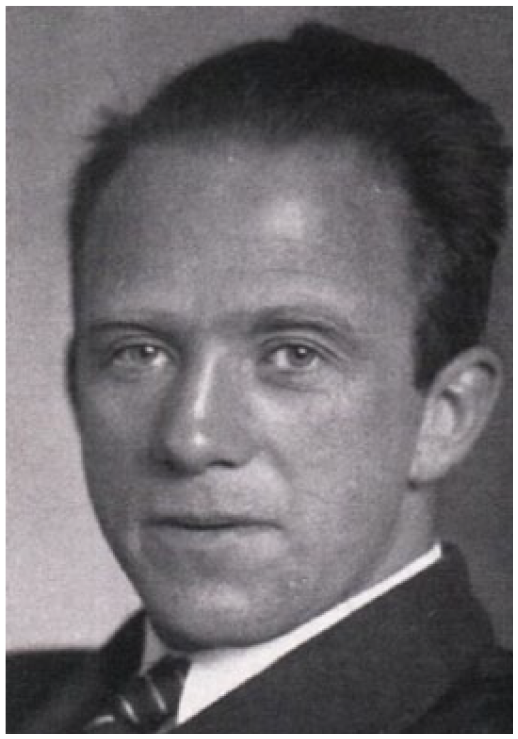
Werner Heisenberg (Bundesarchiv, Koblenz: 183-R57262)
With an arsenal of rationalizations, metaphors, and historicist and moral-philosophical reasoning, arguments were constructed (by those who felt the need) to justify alignment to meet the criteria for loyalty. In the early post-war period, when a massive “denazification” process was demanded by the Allies (see “The Early Post-War Period” section), there was a need among those targeted and their legal council to convincingly deny any involvement with the NS state (other than by resistance) and to claim that one did not compromise oneself by compromising with the NS system. For this purpose, there evolved in this population an idiom for formulating declarations of impeccable conduct. By combining decontextualization, selective presentation of records, vague concepts, and misleading or inconclusive arguments, many of these “whitewash affidavits” (see “The Persilschein Culture and Its Rhetoric” section) transgress the categorical requirement of intellectual honesty upheld in science itself. For an analysis of the arguments defending the strategy of alignment and mimicry, the framework of the theory of Cognitive Dissonance Reduction (CDR; Aronson, 2011; Festinger, 1957; Tavris & Aronson, 2007) proves effective. This is really a subset of the framework of the theory of rhetorical fallacies (Corbett, 1971; Tindale, 2007; Walton, 2008), here called “traps of persuasion,” which proves useful for analysis of the exculpatory post-war arguments. Such analyses provide insight into the underlying mentality. The story has implications far beyond its own context. Even in a well-functioning democratic system, there can exist pockets where practice of management and decision making has many similarities with totalitarian systems. Aligning to current conditions too unreflectingly can easily, despite one’s self-assurance of personal integrity and firm values, by successive compliance (the CDR concept of entrapment is relevant), lead to compromises with one’s basic principles and values (including one’s honesty to oneself)—perhaps for a “higher purpose,” perhaps simply due to opportunism. 1
Aligning and Rationalizing
Studies of the social system of science in the Third Reich reveal a striking feature. It concerns not so much the successful alignment to the new political system after the Machtübernahme (the term referring to the appointment of Hitler as Chancellor on January 30, 1933), as the way this alignment was justified and how motives and actions were afterward reconstructed or reinvented to look like active opposition. The frequently stereotypical arguments consist of rationalizations and rhetorical fallacies that are essentially incompatible with the strict codes of intellectual honesty and objectivity honored by the scientific enterprise.
On April 8, 1933, Toronto Star Weekly published an interview with Otto Hahn, who was at Cornell University on leave from his position as Director of the Kaiser Wilhelm Institute for Chemistry (KWI-C) in Berlin. 2 Presumably, the article does not reproduce Hahn’s wording verbatim, but the main points are certainly transmitted correctly.
I am not a Hitlerite. But he is the hope, the towering hope, of the youth of Germany . . . At least twenty million adore him . . . the youth, the coming nation—to them Hitler is hero, leader, saint . . . He is almost a saint in his living. No alcohol, not even any tobacco, no girl-friends. . . . In a word, Hitler is a decided Christian. . . . Those “persecutions” [of the Jews] have been grossly exaggerated, in my opinion. Largely the work of young lads, I think. And I believe they were stopped in three or four days. I am in touch with my collegiate colleagues [sic] in Berlin and hear nothing of any violence . . . I have every reason to believe that those who have been thrown into prison are communists who also happen to be Jews. I am absolutely convinced—and what I know of the man confirms my opinion—that Hitler has not been guilty of the atrocities attributed to him. (Toronto Star Weekly, April 8, 1933; see also Sime, 2006, p. 6)
Otto Hahn (Max Planck Society Archive, Berlin)

Hahn here appeals to positive connotations of “Christian morals,” “saint,” and “hero” in an essentially circular argument, suppresses any knowledge of Nazi policies, belittles reports in the international press on massive outrages and persecution (Sturm-abteilung [SA] thugs euphemistically called “young lads”), and subtly echoes the NS insistence on criminalizing Jews and communists as one and the same cohort of enemies of the people.
Hahn has attained a kind of iconic status for his post-war role in reestablishing German research and development. In retrospect, it is therefore relevant to consider why he gave this interview and why he expressed himself in this way. The Toronto statement has been defended by some historians as politically naïve and innocent. I do not share that view, or rather, the word “naïve” is ambiguous and its use can entail a rhetorical fallacy (as will be evident in the sequel). 3
The interview was published the day after the publication of the anti-Semitic Civil Service Law, which Hahn could not know. But he had lived in Berlin in the politically turbulent years, with the growth of the NS movement, up to the Machtübernahme and another 3 weeks, where the daily events and the political implications were the dominant concern. Even at Cornell, he could not have avoided information on what was going on (the summary arrests, detentions, and dismissals; the officially sponsored boycott of Jewish business; the ravages of SA-hooligans; the rhetoric of the Nazi press), and not least reports on the Reichstagsbrand Verordnung (decree following the fire of the Parliament building, February 27, 1933) and the Ermächtigungsgesetz (Enabling Act, March, 24, 1933) which de facto established the totalitarian NS state. It is evident from Hahn’s pocket calendar (Sime, 2006) that Hahn read The New York Times, and that he discussed the situation in Germany with colleagues. If he felt ignorant or confused by the tidings, why did he not choose to decline the interview or avoid making specific political statements, an obvious stance for a scientist? And if he wanted to air his nationalist affinity to Germany, why the personal, devote, and high-strung eulogy to the “Führer,” even using the strong phrase “I am absolutely convinced,” and the flat rejection of congruent reports on outrages? 4 Had he sensed that, with the aggressive implementation of the totalitarian state, he was compelled, whatever he thought about the NS regime, to signal alignment not to jeopardize his position as director of KWI-C?
There is an alternative interpretation: There was among the right nationalist German elite, also in academia, a deep-rooted skepticism against democratic values, and craving for a strong leader to replace the failed democratic experiment of the Weimar Republic. This discourse is studied in some detail inter alia in Struve (1973), Mommsen (1989), and Walker (1989, introduction). Hahn may have entertained a pious hope that Hitler would be that autocratic leader, and that the incontestable atrocities and encroachments on civil rights would cease once the strong man had full control of the situation (cf. “Aligning and Rationalizing” section). This is a kind of naivety that combines wishful thinking with a lack of political intuition, and seems incompatible with Hahn’s immediately and successfully applied Realpolitik (cf. Note 3). Yet it would allow for a measure of sincerity in the statement, explaining the wording and indicating submission to the leader. Perhaps there was an ambivalence, still unresolved and repressed at the time.
Virtual Political Conformism (VPC)
Hahn would not have been alone in getting the message of prudence: As noted before, after the Machtübernahme, it was—in any position of some importance—not “healthy,” to put it mildly, to be regarded as an opponent to the regime and thus as “politically unreliable.” One had at least to simulate loyalty, irrespective of one’s mental stance, and to accept the situation as “a new normality” and act so as to appear indistinguishable from a true supporter (or at least avoid any act that might be denounced as indicating a lack of loyalty). I venture here to use the term virtual political conformism (VPC) for this mimetic role (cf. Note 7).
Hahn is a good example: He was incontestably successful in NS Germany, at the highest level of the research system. However (inter alia being a former student of greatly important British physicist Ernest Rutherford), he was regarded outside Germany as a thoroughly decent non-Nazi. This became the basis for Allied support for his post-war success in the Federal Republic, as is corroborated, for example, by the conversations between Hahn and Blackett at Farm Hall. (Blackett: “ I may say that your reputation is very well known over here because of your fine record as anti-Nazi. It is very much appreciated. So don’t you worry.” Bernstein, 2001, p. 227.)
Consider an example of the obsequious tone of VPC rhetoric that soon became standard: For the 25th annual meeting of the Kaiser Wilhelm Gesellschaft (KWG, the dominant research organization coordinating the funding and research programs of numerous institutes, KWIs) in 1936, Planck as KWG president sent an invitation to the National Chancellor:
I would be happy to use the opportunity of this event to report to you, my Führer, on what has been achieved in industry and science throughout 25 years in the service of the Fatherland, and on the plans we entertain for the future. Science and industry stand loyally to the German Reich, that has been united, under your leadership, and we know that only under your leadership and under the protection of the armed forces can the useful work be carried out. It would redound a particular honor to me to be able to make this vow in front of our members. Heil, mein Führer! Planck. (Hachtmann, 2007, p. 347)
Max Planck (Max Planck Society Archive, Berlin)

This is pure flattery, a dubious strategy whose aim apparently was to make Planck himself and KWG considered as “politically reliable.” In the present analysis, this technique is regarded as “counter-attitudinal advocacy.” Perhaps Planck was under pressure, from the Ministry of Education (REM), or from the KWG directorate (Präsidium), or he was trying to safeguard his position as president of the KWG.
Some preferred self-deludingly to see the bright side. Consider as an example a letter (June 2, 1933), where Heisenberg tries to persuade Max Born to return to Germany:
Planck . . . has spoken to the head of government and has received the assurance that the government will not undertake anything that might impede our science beyond the new Civil Service Law. As on the other hand only very few are affected by the law—certainly not you and Franck, affects few surely also not Courant—the political changes could take place without any damage to physics in Göttingen. . . . A few nasty things have even been happening within the workings of science itself. Even so, I know that there are leading people also in the new political arena who are well worth our patient endurance. In the course of time the ugly elements will be severed from the fine ones. (von Mayenn, 1985, Vol. 2, p. 167; English translation in Hentschel, 1996, p. 61; emphasis added)
Planck had in fact been to an audience with Hitler, probably on May 16, 1933 (Hentschel, 1996), but to no effect. Heisenberg here trivializes the purges as a passing phenomenon with little consequence, in particular for science. The anonymous “leading politicians” represent non-committal wishful thinking, into the uncertainty of which he was ready to entice his mentor. Implicitly, there is reference to the idea of science as “apolitical” and therefore allegedly unconcerned with the political realities.
Cognitive Dissonance Reduction (CDR) and Rhetorical Fallacies
The quotations just presented share the common feature that the speaker tries to find convincing arguments to “explain away” a dissonance between his honest judgment of the situation and his optimistic hopes, beliefs, and values. For the subsequent analysis of the role of rationalization and fallacious reasoning in defense arguments, we here consider the concepts of Cognitive Dissonance, CDR, and Rhetorical Fallacies (Aronson, 2011; Corbett, 1971; Ryding, 1971; Tindale, 2007; Walton, 2008). For the present purpose, I will use the following.
Definition: Cognitive Dissonance is the mental conflict that occurs when beliefs or assumptions are contradicted by new information or apprehensions. CDR is the mental process pursued to resolve CD by defensive maneuvers: rejecting or ignoring, explaining away, or rationalizing as non-existing or irrelevant, and so on to reestablish order in one’s conception of the world and oneself.
CDR often amounts to rationalization based on one or several types of Rhetorical Fallacies, that is, formal or informal arguments of questionable relevance or validity, even misleading, deceptive, or otherwise intellectually unsound, aiming primarily at persuading oneself and others that one’s ideas and actions are justified. Studies of CDR reasoning do not really generate a theory (in the sense of predictability), but rather provide a conceptual framework useful for analyzing and understanding incidents of self-serving rationalization in defense of personal conduct.
In the sequel, I will discuss the types of rhetorical fallacies most common in the context of constructing CDR arguments. It will become evident that several different types of fallacies may be at work in one single argument.
Note that in experimental natural sciences, we can recognize a strong form of CDR (let us say with the prefix “rational” or “objective”) when instances of conflict between experiment and theory are tackled by extended data capture, refinement of data analysis, and ultimately modification of theories. For example, if an experiment designed to test an hypothesis does not convincingly corroborate the hypothesis, one tries to find problems with the equipment, or with data analysis, before discarding the hypothesis. When applying the falsification principle (in the sense of Popper, 1935), one looks actively for discrepancies between observation and theory, but one has to be pretty sure about the quality of data before questioning theory, keeping strictly to the rules of rational argument and avoiding anything like informal fallacies. A recent interesting example is the sensational observation at CERN (European Organization for Nuclear Research) of particles moving faster than light (Brumfield, 2011), which was withdrawn when an error of measurement was identified. However, the discovery of neutrino oscillations (Nobel Prize 2015) is an example of theory development due to strong experimental evidence.
In the arguments constructed to defend alignment and alleged involvement with NS atrocities discussed in the present article, there is, on the contrary, from the outset a desired outcome of the reasoning. Here, the process of CDR often resorts to rhetorical fallacies where the factual and rational elements are overruled by the politically or strategically expedient, to yield the desired “conclusion.” One might see this process as an emulation of the scientific method to provide the illusion of reliability and rationality.
Metaphorical Justifications
A common technique of CDR describes a predicament in terms of a dramatic metaphor. Planck speaks about the events of spring 1933 as an avalanche that cannot be averted (Cassidy, 1992) and of trees that bend in a storm but stand upright as the storm abates. W. Heisenberg (1969) states,
When a ship is forced out into a hurricane, all shutters are locked, ropes are tightened and all mobile parts are fastened or screwed tight, so that one can meet the storm with greatest possible safety. (p. 230)
Furthermore, there is the responsibility:
. . . to steer the small boat of life with as firm a hand as possible through the violent tempest without being struck by disaster on its way. (Hentschel, 2005/2007, p. 160)
Similarly, Elizabeth Heisenberg (1980) writes about her husband: “His courage was of a spiritual nature (geistlicher Art) and he regarded compromises only as ripples on the surface of an ocean, by which one could easily be engulfed” (p. 72).
Such metaphors can be self-defeating: Here, the safety desired is obtained by allowing the boat to be tossed around as the wind blows, hinting at the alternative metaphor “trimming one’s sails to every wind,” thus suggesting opportunism. The moral aspect of compromise is easily obscured by stretching a metaphor beyond its validity as an analogue.
An almost biblical metaphoric reflection on the situation in 1942 is due to Ernst von Weizsäcker: “Every gardener is compelled to eliminate weeds from his garden. But the struggle against Evil is not enough by itself. The constructive has to supplement the negative. One must have positive plans. Land craves fertilizing, trees need cultivating” (Weizsäcker’s diary July 20, 1942, in Hill, 1974, p. 297). 5 The gardener metaphor is cognate to the “good shepherd” metaphor (John 10:14) here suggesting the Führer saving the nation and taking on the responsibility of actions required. Klemperer (1947) gives other examples of messianic NS rhetoric. Weizsäcker seems to need a justification to reconcile his alignment and his official duties with his self-image, noblesse oblige. As Secretary of State (second in command) in the Foreign Office, Weizsäcker was well informed about the Bodenreinigung (cleansing of the area, a euphemistic rendering of the mass murder of unwanted civilians), carried out by Einsatzgruppen (special Schutzstaffel [SS]-commands set up for the purpose) behind the Eastern front, and of the genocidal policies announced at the Wannsee conference in January 1942, soon himself contributing to the “weeding” (Conze, Frei, Hayes, & Zimmermann, 2010, p. 397). Weizsäcker had noted in his diary on June 7, 1942, upon hearing about the death of Reinhard Heydrich, Himmler’s right hand in designing the Holocaust: “I feel grieved when again a friend of mine disappears in his grave . . . I do not know who could replace Heydrich . . . I cannot, rebus sic stantibus [under present conditions], imagine a change of weather to the mild side” (Hill, 1974, p. 292). It is worth noting that the gardener metaphor is also cognate to the expression “das Übel mit der Wurzel ausrotten” (to wipe out—or eradicate—the evil with its root), where the word ausrotten acquired a particularly sinister meaning in the anti-Semitic jargon of the time.
The problem of using metaphors in CDR arguments lies in the limitation of similes. As long as the similarity is telling, it can contribute to understanding. But when similarity is forced beyond its validity, it gives a false impression of understanding and becomes a rhetorical fallacy. This problem of metaphors has been aphoristically formulated by Blaise Pascal (1958, Article VI:347, p. 162): “Man is a reed, the frailest in nature, but he is a reflecting reed . . . let us therefore toil to think straight. This is the principle of morality”. To me, this is a timeless principle in metaphorical form, about individual responsibility, and a warning against facile excuses and deception in CDR reasoning.
Compassion and Sentimentality
Max von Laue, who certainly cannot be regarded as a supporter of the NS regime, apparently also felt the need to prop up his self-image by justifying his choice of the passive role of “inner exile.” In a letter to Lise Meitner (October 3, 1941) he writes, appealing to authority,
I must tell you that you seem to be in error. You allow yourself to be seized by compassion. But Kant instructs us that it cannot possibly be our duty to increase the sum of suffering in the world even more by co-suffering. And the present times truly compel us to realize the truth of his statement. I have myself committed this error in the past but am now fairly free. (Lemmerich, 1998, p. 140)
In Metaphysics of Morals (Kant, 1977), Kant denies that feelings, such as compassion, have any moral significance:
Indeed, when another suffers and, through my imagination, I allow myself to be infected by his pain although I cannot assuage it, then two suffer although the evil after all in reality only strikes one. However, it cannot possibly be our duty to increase the suffering in the world, nor, therefore, to do good from compassion. (§34, p. 594, emphasis in original)
Actually, Kant does not deny that the situation giving rise to compassion can have moral implications in accord with his categorical imperative. This is in fact what he suggests in the subsequent section (§ 35).
Not surprisingly, isolated statements misrepresent Kant’s theory, which of course does not stand alone in the history of ideas of social responsibility, as shown, for example, by Frazer (2010) and Salomon (2004). Notably, Niezsche went even further in hardening the citation discussed:
Compassion (das Mitleid) is a squandering of feeling, a parasite harmful to moral health: “there cannot possibly be a duty to increase the ills in the world”: If one does good merely out of compassion, it is really oneself one does good to, and not the other. Compassion does not depend upon maxims but on effects; it is pathological. The suffering of the other infects us; compassion is an infection. (The Will to Power, quoted in Frazer, 2010, p. 203)
Laue uses the milder form, but still seems to suggest that by classifying an involvement as “compassion,” one is entitled to ignore the moral point of view. The invocation of authorities by selected citations, just as the appeal to questionable extrapolations of the meaning of metaphors, corroborates the thought that we here are dealing with instances of CDR to justify withdrawal or alignment.
Burckhardt and Historicism
(The term “historicism” is used here in the sense of Popper (1957), not to be confounded with its use in history of art.) The figurative speech about forces of nature and inevitable course of events is expressions of a then prevalent notion of historical necessity and laws of history, about the rights of the stronger (social Darwinism), of the state as expression of the norms of society (sittlichkeit), and of “progress” in some undefined mode. These ideas have roots in 19th century German social philosophy and philosophy of history, but in the colloquial expressions of scientists in the 1930s, they were rather idées reçues. One source for philosophizing was Jacob Burckhardt’s widely read Weltgeschichtliche Betrachtungen lecture notes from Bern, edited and published posthumously (Burckhardt, 1978), a strange assembly of generalizing arguments and statements about historical trends that evidently was congruent with the “spirit of the times” (Zeitgeist).
6
In a testimony, important as it gives a credible firsthand insight into the political thinking of her husband, Elisabeth Heisenberg (1980) observes that he “regarded politics from the perspective of scientific method”:
Just as he [Heisenberg] wanted to know how nature works and how it is constructed, he also wanted to know how politics is made and according to which laws it functions. He had an unbridled urge for knowledge about the principles and regularities that govern the destinies of individuals and entire nations, and by which world history is enacted. His greatest teacher was Jacob Burckhardt and his textbook was Burckhardt’s Weltgeschichtliche Betrachtungen [1978]. Particularly in the depressing and dangerous times of Nazi rule and war he always returned to this book in order to understand the events around him. In his very carefully considered and crystallized analysis of historical events, in the theory of the cyclical recurrence of political forms (republic—aristocracy—monarchy—democracy—autocracy), and foremost in the chapter on “crises,” Burckhardt shows in detail, with examples from the great world-transforming revolutions in classical antiquity and in the course of the French revolution, that such revolutions always evolve following certain general regularities. This analysis implied for Heisenberg that certain events and the criminal development that took place before his eye—and which as it seemed could not be prevented by any interference—could be partly objectivized [ins Objektive verlagert]. The agreement between Burckhardt’s well-nigh prophetically sounding analysis and the events that were so depressing, was to him a powerful comfort. It made it possible for him to go on living in times where all values and all morals were breaking down. (pp. 184-185)
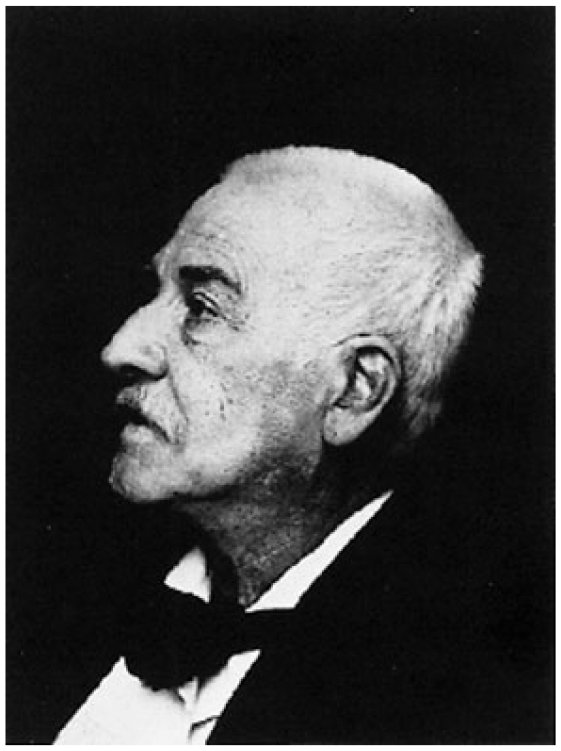
Jacob Burckhardt
Elisabeth Heisenberg’s testimony on her husband’s belief in “historical necessity” does not stand alone. In a wide-ranging essay Ordnung der Wirklichkeit (Heisenberg, 1942/1989), Werner Heisenberg makes numerous declarations which reflect readings of Burckhardt, some practically being citations. Consider the following examples: (a) “To sharpen our comprehension we must primarily remind ourselves that political power yet always has been founded on felony” (Heisenberg, 1942/1989, p. 172). By comparison, Burckhardt (1978) says, “And now it becomes obvious that power is intrinsically evil” (p. 36), and “Now it is a fact that no power has ever been established without felony” (p. 242). (b) “[I]t is surely fortunate that there apparently remains a narrow scope for exercising one’s personal responsibility and the moral conscience. But at large a higher power decides on the beliefs within human communities” (Heisenberg, 1942/1989, p. 169, emphasis added). This is an obscure statement—from the context, it could be metaphysical, religious, or political. Note the term “apparently” (scheinbar), and the expression “higher power,” suggesting “destiny,” a concept recurrent in NS rhetoric (cf. Klemperer, 1947). (c) “It is often said that, in the struggle for existence, weakness must decline and that only strength will assert itself successfully. I suppose this is true” (Heisenberg, 1942/1989, p. 173).
Planck’s advice (in a phrasing reminiscent of Chekhov’s Uncle Vanya but with different implications) was to muddle through by keeping a low profile politically and working dutifully without much reflection on one’s integrity and moral responsibility. In a lecture about “Determinism and Indeterminism” at the Technical University in Munich (December 4, 1937), Planck had said,
But however high the waves of passion rise, you should hold on to the old truth that public welfare is best served when everyone fulfills the duties with which he is charged in the place where destiny has placed him, and doing this after the best of his knowledge and abilities even though in obscurity and unaffected by external encroachment. This is what we have to engage in wholeheartedly . . . to the blessing of our dear Fatherland. (Hachtmann, 2007, p. 611)
Heisenberg seems to echo this statement several years later:
To us there remains nothing but returning to the simple: we must fulfill the duties and tasks that life itself confronts us with, conscientiously and without asking from where and where to. We must forward the beauty we still experience to the next generation and recreate what has been destroyed. Beyond the turmoil of passions we must meet our fellow humans with confidence. And then we have to await the course of events; the novel may not be discernible immediately but even that we should welcome—reality transforms itself without our interference. (Heisenberg, 1942/1989, p. 172) . . . World history is created by other and stronger powers, and the spirit of times [Geist der Zeiten] is not made by Man. The single individual can at best feel the spirit of times and anticipate its impact. (Heisenberg, 1942/1989, p. 153)
The moral point of view is suppressed under the weight of duty to authority and patriotism, and the undefeatable force of a postulated “destiny.”
A post-war statement is relevant in the present context—here in a social-Darwinist formulation:
One also has to realize that what initially appear to be crimes and direct contagion of the depravity of individual persons is often simply the material form in which that great process of life called natural selection unfolds. (Heisenberg to Wergeland, July 27, 1947; quoted in Hentschel, 2005/2007, p. 161)
To sum up, the frequent nature-lyrical imagery and the historicistic arguments are characteristic examples of rationalizations in defense of what could (somewhat euphemistically) be called pragmatic survival strategies. One cultivates the illusion of being victim to forces of nature or historic necessity, where normal reactions and norms of decency are ineffective or self-destructive, perhaps even signs of weakness and sentimentality. We can here see how rhetorical techniques, which we recognize as instances of CDR, are repeatedly used in arguments where the freedom of will is denied and thereby the moral dimension is wiped out.
The Early Post-War Period
The defeat and the Allied occupation of Germany resulted in an awkward change of conditions for many of those, who had, in a capacity of some importance, contributed to the functioning of the NS state. A new form of adaptation was required.
Election poster 1949

Facing the threat of denazification procedures and possible exclusion from certain careers, arguments were constructed by those directly or indirectly concerned to convince the new authorities in the occupied zones of their “internal resentment” of NS ideology on a scale ranging up to “fanatic anti-NS stance.” The nature metaphors (storms, avalanches, natural catastrophes) and historicist interpretations (historic necessity, historic cycles, progress in long-term perspective) where one could stylize oneself as victim of the circumstances had become obsolete. They gave way to “proactive” narratives, where the agents emerge as defenders of classical values (the freedom of research, objectivity, absence of prejudice, value neutrality, integrity, civil courage) with respect to the ideological alignment imposed by the totalitarian state.
The German population responded with widespread resentment of the occupying powers and their control. Massive legal procedures against functionaries of the NS state and of German industry were regarded as both unjustified and destructive for the process of rebuilding an effective new state. General amnesty was demanded, with few evident exceptions concerning the inner circle of the NS power elite. It was thought reasonable (and convenient) to draw a line across the past, to turn a page, and to look to the future (Reichel, 2007).
In a petition in support of Ernst von Weizsäcker in the Wilhemstrasse case in Nuremberg (Conze et al., 2010), W. Heisenberg (1947) makes a general reflection on the VPC role. The principle was basically a defense of the colloquial advice “if you can’t fight them, then join them” and thus of acting as a moderator or mitigator (Abmilderer). Behind the argument was the realization that personal motives are complex and variable over time, and that they can, in consequence, be reconstructed or reinvented to suit current and future needs of self-image and justification of conduct (Schwarz, 2013, 2014). The gist of Heisenberg’s (1947) arguments is given by the following extract:
Many of the people [who tried open resistance] but failed to understand the stability of a modern dictatorship did try, in the first years, the path of open, immediate resistance and ended up in concentration camps. For the others, who had understood the futility of direct attack on the dictatorship, the only practicable route remaining was to attain and retain a certain measure of influence, that is, a conduct that must appear to the external world as collaboration. It is essential to realize clearly, that this indeed was the only way, to really make anything change. This attitude, which indeed offered unique prospects of replacing National Socialism with something better without enormous sacrifices, I wish to call active opposition. In practice the position of these people was much more difficult than that of the others. A member of the active opposition had, again and again, to make concessions to the system on less important issues in order to still keep influence on the more important ones. In a certain sense he had to play a double role. It was inevitable that a member of the active opposition would be facing difficult moral problems . . . (p. 1)
7
Heisenberg even places Ernst von Weizsäcker on a par with the central figures of the conspiracy of July 20, 1944 (the failed coup d’état, which cost the lives of hundreds of dissidents, including Max Planck’s son Erwin).
With this definition of “active opposition,” any participation in the NS system—even NS activism—could in retrospect be reconstructed as a brave preliminary to moderating action which, “due to compelling circumstances,” never became reality. The subject is brought up by Hannah Arendt in her book about the Eichmann case. She writes sarcastically,
We need mention here only in passing the so-called “inner emigration” in Germany—those people who frequently had held positions, even high ones in the Third Reich, and who, after the end of the war, told themselves and the world at large that they had always been “inwardly opposed” to the regime. The question is not whether or not they are telling the truth; the point is, rather, that no secret in the secret-ridden atmosphere of the Hitler regime was better kept than such “inner opposition” . . . they had to appear “outwardly” even more like Nazis than ordinary Nazis did, in order to keep their secret . . . [Eichmann] must have been well acquainted with many of those numerous civil servants who today assert hat they stayed in their jobs for no other reason than to “mitigate” matters and to prevent “real Nazis” from taking over their posts . . . Clearly, the story of the “mitigators” in Hitler’s offices belongs to the postwar fairy tales . . . (Arendt, 1963, pp. 126-129)
The Persilschein Culture and Its Rhetoric
Immediately following the German surrender, there evolved a new literary genre, the “whitewashing certificate,” colloquially called Persilscheine (PS) after the well-known laundry detergent Persil. These certificates were composed on the appeal of individuals under scrutiny in denazification procedures, in support of acquittal [Entlastung], alternatively a reduction of charges to the level of “fellow traveler” [Mitläufer] that could entail fines and temporary career problems. The affidavits were, by their nature, not intended as witness testimonies in a legal sense, but were sometimes claimed to be presented under oath. They were by definition designed in the interest of the person concerned, and it was commonly understood that in accepting the task, one should suppress any information, opinion, or argument that was not obviously supportive (Beyler, 2004; Hentschel, 2005/2007; Sachse, 2009; Schwarz, 2014).

In general, the certificates were brief and the arguments stereotypical. Virtually identical statements could be issued, even in incomparable cases. Along with a request from a person needing authoritative support, there was usually a joined selection of (more or less reliable) background information and arguments to be used in the statement, sometimes in the form of a draft for a text, which was apparently accepted at face value without any critical assessment. Sometimes, even the PS-requestor’s solicitor could return the affidavit with suggestions for a more convincing revised statement.
It is not possible to ascertain whether the opinions expressed really represent the authors’ genuine views and (critically assessed) knowledge about relevant facts, or whether they considered the task as fulfillment of a—possibly unpleasant—social or institutional obligation in the transition stage to post-war normality, even justifying obviously misleading rhetoric. One instance (Otto Hahn writing to and on his assistant Gottfried von Droste) shows that there could be a personal disapproval, which is entirely absent in Hahn’s PS text (January 31, 1947; quoted in Sime, 2006; Schwarz, 2014). This is not surprising, considering the consensual resentment of the principles of denazification. W. Heisenberg’s (1974) memorandum for Ernst von Weizsäcker has the character of arguing in general against the principle of denazification procedures.
As mentioned, a salient characteristic of the PS idiom is the recurrent use of rhetorical techniques which are derivatives of what has become known as “informal (or rhetorical) fallacies of reasoning,” here called “traps of persuasion.” Such arguments, described already by Aristotle, have been extensively analyzed in applied philosophy (see, for example, Corbett, 1971; Tindale, 2007; Walton, 2008). As I note elsewhere (Schwarz, 2013, 2014), the theme of PS has of course been brought up in studies of the denazification process. The approach taken here, namely, using the conceptual framework of CDR and of informal fallacies of reasoning for the analysis of what might be called the “fine structure” of different strategies of rationalization and reinventing of the past, does not seem having been used directly in this context. It will be evident from the sequel how these tools work in practice. Furthermore, it will hopefully become evident that this perspective is also applicable in everyday life when we encounter rationalization that seems biased by personal interests.
Traps of Persuasion
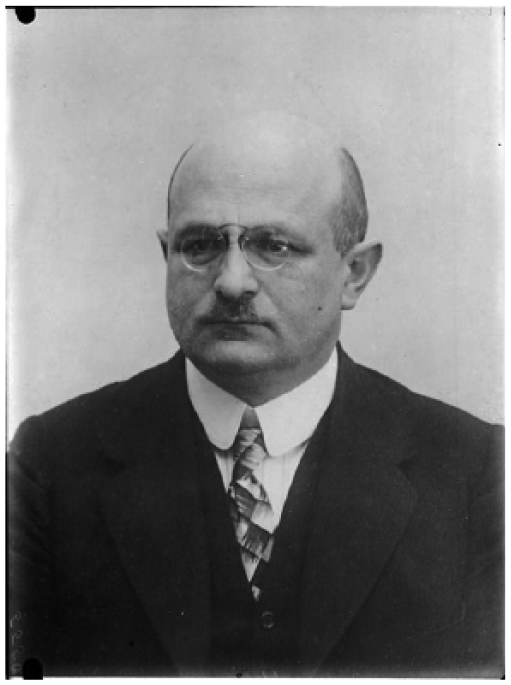
The dilemma of writing favorable certificates was reduced by systematically evading the key issue—here the part of the activities of the person defended that could be the direct reason for the denazification scrutiny. The effect is obtained by focusing attention on a loosely related or even unrelated factor (a red herring), an example of the more general type of irrelevant argument, in the Latin form of Aristotelian rhetoric called ignoratio elenchi. Testimony was limited to expressing opinions or assumptions (without further obligations) about the person’s character and mentality, professional motives, and an assessment of his scientific status and (as deemed applicable) his alleged courageous interventions for the benefit of the research community, leaving to the courts to draw their own conclusions about the relevance for the case at hand. In this way, the affidavits largely consist of value statements, opinions, and other subjective assertions that could not be verified, and whose weight in the court’s legal considerations was provided by the author’s own status. An extreme example is Arnold Sommerfeld on the industrial physicist and president of the German Physical Society (DPG), Carl Ramsauer, where the core issue (i.e., active collaboration) is declared to be irrelevant: “I have no knowledge about his relations to NSDAP, and this is also without importance for the following statement” (March 22, 1946, addressed to DPG on request; quoted in Hentschel, 2005/2007, p. 107, Note 267).
Carl Ramsauer (Bundesarchiv, Koblenz: 102-05559/G. Pahl)
A common trap of persuasion is character assassination (argumentum ad hominem) whereby, with the aim of gaining own advantage, one tries to influence an evaluation via false, maliciously interpreted, or only insinuated discrediting personal factors expected to stick as weakness of character. This is normally not relevant in the case of PS-writing, other than in situations, like the case of P. A. Thiessen, a very influential physical chemist who was denied the group loyalty of his colleagues after transferring to the USSR at the German surrender, eventually receiving the Stalin Prize (Hachtmann, 2007; Hentschel, 1996; Schwarz, 2014). In such cases, “scapegoating” is used to divert attention from the main issue. There is, however, an inverted trap: character glorification which focuses on commendable personal features (even if unjustified or greatly exaggerated) with the objective to neutralize incriminating information available to the court. By diverting the considerations from the main issue (the defendant’s role in the NS system) to a more subjective aspect (e.g., the defendant’s commendable personality), one can even try to trivialize the accusation. The method is also a classical example of “arguing beside the point.” A case in point is Otto Hahn’s affidavits for the IG Farben directors Heinrich Hörlein and Fritz ter Meer (Schwarz, 2014). Actually, the two directors had funded Hahn’s KWI.
A further characteristic trap, indeed a principal feature of the Persilschein culture, is reference to solidly established authorities or esteemed public figures, whose opinions—even outside their expertise—are supposed to be beyond and above dispute, and therefore should be accepted uncritically (argumentum ad verecundiam). PS authors systematically use this situation when they make statements about the PS-requestor’s character, motives, and attitudes without any supporting evidence. In many cases, the authors seize the opportunity to enhance their own status, as in the stereotypical reference to their own confidence in and support of staff and colleagues allegedly known as regime-critical, claiming that this “shows that he cannot be described as an active Nazi”—for example, Planck on KWG Secretary General Ernst Telschow (August 20, 1945, quoted in Hachtmann, 2007, p. 1126). Another example, when Otto Hahn writes about Ernst von Weizsäcker, “that part of German science that was preserved through the war period would in all likelihood not have been preserved if the KWG had not been able to ally itself with men who embodied his conduct” (April 13, 1948, Sime, 2006, p. 35, cf. W. Heisenberg, 1947), he is confident that his own status will provide credibility (even if unjustified) in the perception of the court. However, nothing specific is said about Weizsäcker’s character and convictions, nor about his work as a Secretary of State (second in command) in the ministry of foreign affairs (AA) for which he was sentenced at the Wilhelmstrasse tribunal in Nuremberg (cf. Conze et al., 2010; Hill, 1974; Lindner, 1997; Weizsäcker, 1950). In particular, there is a claim that his involvement with research policy—through his role as senator of KWG—had direct beneficial importance for the survival of science in Germany in general. This very vague assertion lacks factual evidence and credibility.
Ernst von Weizsäcker (Bundesarchiv, Koblenz: 146-1797-093-29)

A significant type of traps of persuasion is the introduction (often indirectly) of invalid premises (also an error of elementary logic). This is the case in the explicit or implicit recourse to the myth of “clean science” (cf. Beyler, 2004, p. 28). It is taken for granted that “good science” is incompatible with NS ideology or, more generally, with political incentives. From this categorical yet fuzzy assumption, it is concluded that a prominent scientist ipso facto cannot be politically corrupt, and that prominent research organizations cannot be persuaded or compelled to align their research to political goals. A related argument concerns research funding and management: An individual who has (allegedly) sometimes defended the freedom of research against (unspecified) encroachment and abuse from the NS regime (assumed to have been hostile to science) cannot reasonably be accused of having worked in this regime’s interest. The problem in such arguments is that central concepts are not properly defined, that the “evidence” is unspecified or even incorrect, and that (with any reasonably defined terms) the premises are invalid.
Rudolf Mentzel (Bundesarchiv, Koblenz: 183-R57262)
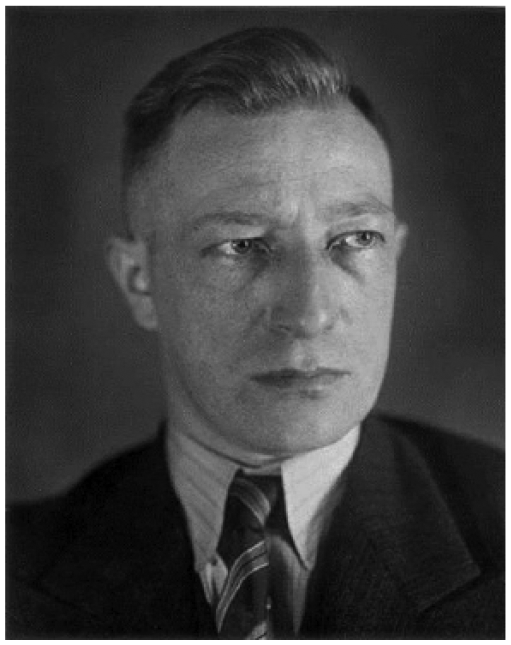
Another important technique is taking a definite position without sufficient background knowledge (argumentum ad ignorantiam). This comprises extrapolation and induction based on insufficient information and ignoring or actively excluding information or other sources inappropriate for defense purposes. Generally, statements about the PS-requestor’s intentions and motives, including claims about Abmilderer roles, are of this kind. Striking examples of inconclusive arguments presented as “conviction,” respectively “proof,” are Walther Gerlach’s claim of Rudolf Mentzel’s non-involvement with unethical research 8 and Ramsauer on his assistant Finkelnburg’s motives for joining Nationalsozialistische Deutsche Arbeiterpartei (NSDAP). To this category should also be counted arguments where PS authors make statements against better knowledge, or uncritically reproduce biased assertions, for example, self-serving assertions contributed by the PS-requestor himself. A case in point is Sommerfeld’s PS for Carl Ramsauer, mentioned above.
Frequently, there are unverifiable claims that lack credibility, in the form of (unconsciously?) embellished “recovered memories,” or pure fiction. Characteristically, there are vague hints at antagonism with authorities in politically sensitive matters. Statements about the PS-requestor’s “inner motives and convictions” despite appearance are purely subjective but are presented as justification for a favorable reassessment of his criticized actions, a common example is provided by expressions like “He has in many personal conversations expressed categorical rejection of National Socialism.” The individual is here presented as a decent and audacious fellow, really to be regarded as an “active opponent.” But it can be questioned whether such conversations ever actually happened. It has been noted earlier that outspoken criticism of the regime required extreme mutual confidence and prudence, as any indiscretion could have serious or fatal consequences. Such statements of course also serve the interest of the PS-author’s own qualifications as a witness, namely, as someone who inspired unquestioned confidence among critics of the NS system. 9
A common technique of persuasion is the false dichotomy or antinomy (a form of the continuum fallacy), an invalid reference to the principle of the excluded third (tertium non datur). An instance is the claim that every Volksgenosse was either a NS or an anti-NS. This is a meaningless partition, as it assumes a simplification inconsistent with realities—thus the need for the concept of VPC. By introducing this dichotomy and a selection of moderating descriptors, it was possible to “denazify” even individuals who could not be honestly described as anti-NS, simply by arguing that they had not been active, real, convinced, fanatic, or rabid National Socialists. The effect of such descriptors was a benevolent characterization, which permitted upgrading to a kind of moderator role (Abmilderer) or even part of “active opposition” (in the optic of W. Heisenberg, 1947). With similar arguments, practically anyone could be made to appear as an opponent to the regime. There are numerous examples of this fallacy in Persilschein rhetoric.
Similar fallacies are equivocation and vagueness, the use of unclear or ambiguous concepts with the purpose of making the interlocutor assign to a statement a connotation more supportive for the argument than a conscientious judgment would normally justify, considering the facts. One example is the expression “the struggle against party physics,” for example, by Ramsauer on Finkelnburg (quoted in Hentschel, 2005/2007, p. 85, Note 208), where the term Parteiphysik suggests an unscientific political doctrine imposed by NSDAP and therefore unassailable in open debate. This does not represent the factual circumstances and is thus misleading. Furthermore, the word “struggle” (Kampf), with obvious connotations, overdramatizes the Deutsche Physik affair into a modern St. George myth (or Siegfried is perhaps a better allusion here). In the context of equivocation and vagueness, one should also consider metaphors and other similes (like the historicist “explanations”) where the persuasive fallacy lies in the unclear limits of how far the similitude is “conclusive” (cf. various articles in Hoffmann & Walker, 2007/2012).
Ernst Telschow (Max Planck Society Archiuve, Berlin)

To this class of “traps of persuasion” also belongs the use of fuzzy concepts with emotive or value-laden content. Terms like reasonable, factual/objective, decent, responsible, conscientious, and apolitical are ubiquitous in the PS culture. These unspecific terms are generally perceived as carrying favorable connotations. When Planck writes about the secretary general of KWG (August 20, 1945, cited in Hachtmann, 2007): “Also to the issue of the treatment of non-Aryans has Dr. Telschow always taken a reasonable stance,” the interpretation expected of the word “reasonable” is “helpful, decent, responsible” (p. 1126). But it can also mean “avoiding problems with NS authorities and opportunistic or activist NS colleagues,” which corresponds better to Telschow’s policy in concrete matters. Also the term objective is ambiguous in this context. Thus, Telschow writes about Herbert Backe (January 3, 1949):
Herr Backe belonged to those personalities who have to an exceptional degree supported the cause of German scientific research. He was aware of the necessity of keeping it free from all political influence and also of the influence of state authorities and bureaucracy. I know that he often defended the independence of KWG and its institutions against such tendencies even in his own ministry . . . (Deichmann, 1992/1996, p. 125; Schüring, 2006, p. 270)
The reader is expected to conclude that Backe was a pragmatist who solved practical problems objectively and used his influence to counteract unsound ideologically motivated interference. But Backe’s practical project was planning for ruthless realization of NS expansion politics with a particularly cynical rationality. The PS-author’s statement is in flagrant disaccord with the relevant facts, which were well known at the time of writing.
Herbert Backe (Bundesarchiv, Koblenz: 183-J020734)

Werner Heisenberg on Konrad Meyer
Space allows only one full (and brief) example of the PS idiom (for several other examples, see Schwarz, 2014):
To the question of the political assessment of Herr Dr. Konrad Meyer, leader of the research institute for agricultural sciences, I want to state the following: During the war, I have got to know Herr Konrad Meyer cursorily in Berlin on the occasion of some common activities. In conversations where matters of science policy and general politics were touched upon, I always had the impression, that Herr Konrad Meyer reflected objectively and was willing to exert his political influence for professionally reasonable purposes, that he therefore was not a political fanatic who would refuse to learn from mistakes. (6 July 1947; Schüring, 2006, p. 273; Heisenberg archive, MPI f. Physics, Munich)
Hess, Himmler, Bouhler, Todt, Heydrich in policy discussion with Meyer. Bouhler was head of Hitler’s chancellery and in charge of the euthanasia program T4. (Bundesarchiv, Koblenz: 183-B01718)
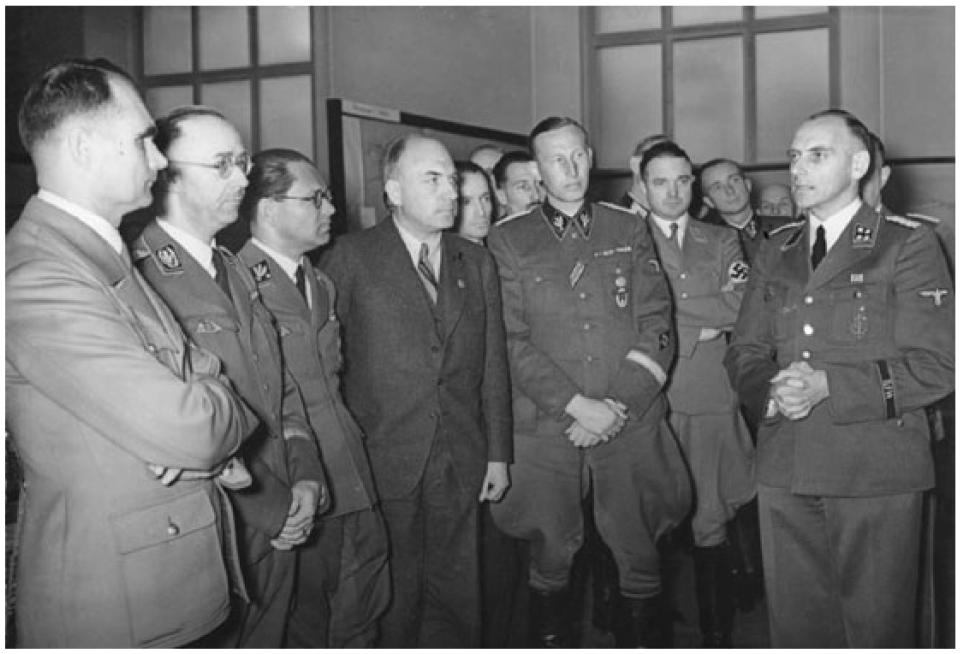
Heisenberg knew Meyer from the Prussian Academy of Sciences (which had been “nazified,” Walker, 1995, p. 65ff.) where both were members. The term sachlich is here to be understood as the opposite of “NS-political,” which in the PS idiom was pejorative. This point is often formulated as “without imposing political or ideological aspects.” There is an interesting slant in the expression “exerting one’s political influence.” Politics is here seen favorably as long as it serves the interests of the research community. Or alternatively, Meyer is presented as a moderator (Abmilderer). The cardinal point is in the word “reasonable”—as it can often be deemed “politically reasonable” to yield to political pressure (i.e., aligning or conforming). It is very unlikely that Heisenberg had talked with Meyer on “general political issues” in any way that could be called critical of the regime, as their acquaintance was casual (cf. note 9). Heisenberg was undoubtedly aware of the fact that Meyer was head of planning in Himmler’s Reichskommissariat für Förderung des deutschen Volkstums associated with Germanization of occupied territories in Eastern Europe, and Fachspartenleiter (responsible for funding of research) for biology in the National Research Council, inter alia funding research for management of the new Lebensraum (Heinemann, 2006). At the Nuremberg trial, Meyer described this excessively cynical long-term planning activity merely as a Gedankenexperiment (thought experiment).
Max von Laue on Antigone
’Tis not in my nature to join in hating
but in loving. Sophocles: Antigone (442 B.C.; line 523)
Laue introduces this quotation 10 in the end of a discussion about the attitudes and alignment of physicists in the Third Reich, pointing inter alia at the mimicry (actually the VPC role) deemed necessary to avoid being stigmatized as “politically unreliable” (Hentschel, 1996, Doc. 117; von Laue, 1948). In reality, his point is a defense of the role of VPC as a strategy for survival and for making the best of the situation in the service of science, the fatherland, or some other “higher purpose.” Laue takes the Sophocles quotation as a motto for a kind of a bygonistic 11 (Schlußstrich) mentality which can be summarized as: The victorious must be magnanimous and allow the past to be left behind. No-one is without guilt. A total and unconditional amnesty is an evident and natural prerequisite for reconciliation.
Max von Laue (Max Planck Society Archive, Berlin)

However, both the situation and the deeper meaning of Antigone’s line are thereby misrepresented, or indeed corrupted. In Sophocles, the context is not an argument about the moral right of the defeated to have any culpability disregarded. Antigone speaks to Kreon—she has decided to go to her death for having chosen to show her dead brother an act of elementary love and respect, in violation of Kreon’s ban on burial. In contrast to Antigone, her sister Ismene argues for the “pragmatic” or realpolitisch strategy—submitting to the dictator’s ruling, a striking example of CDR. Despite his remarkable classical culture, Laue may have deemed it purposeful to repress this reading of Antigone. Those convinced Nazis or VPCs who had chosen to make the concessions required, made precisely such pragmatic considerations when their “brothers” (colleagues and country-men) were expelled from social life and disappeared. Love to these “brothers” was in current circumstances not, as with Antigone, a categorical principle but subject to a particular moral that could be defended with reference to “higher values” that had been liberated from restrictions introduced by humanitarian ideologies (Gross, 2010; Herbert, 2004; Reiter, 1996; Tugendhat, 2009).
Footnotes
Acknowledgements
The author wishes to thank Klaus Hentschel, Dieter Hoffmann, Ruth Sime, and Mark Walker for discussions and encouragement over several years. Thanks to Klaus Hentschel and Ruth Sime also for important critical comments on early versions of this article, and to Richard Beyler for extensive and seminal comments on the manuscript to the present text, and valuable guidance in the labyrinth of APA rules.
Declaration of Conflicting Interests
The author(s) declared no potential conflicts of interest with respect to the research, authorship, and/or publication of this article.
Funding
The author(s) received no financial support for the research and/or authorship of this article.