




Abstract
Longitudinal or time line studies of change in the architecture of a particular culture are common, but an area still open to further research is change across space or place. In particular, there is need for studies on architectural change of cultures stemming from the same ethnic source split between their homeland and other Diasporas. This change may range from minor deviations to drastic shifts away from an architectural norm and the accumulation of these shifts within a time frame constitutes variations. This article focuses on identifying variations in the architecture of the Ijo fishing group that migrates along the coastline of West Africa. It examines the causes of cross-cultural variation between base camp dwellings of Ijo migrant fishermen in the Bakassi Peninsula in Cameroon and Bayelsa State in Nigeria. The study draws on the idea of the inevitability of cultural and social change over time as proposed in the theories of cultural dynamism and evolution. It tests aspects of cultural transmission theory using the principal coordinates analysis to ascertain the possible causes of variation. From the findings, this research argues that migration has enhanced the forces of cultural dynamism, which have resulted in significant variations in the architecture of this fishing group.
Introduction
The need for investigating change in society through material culture such as vernacular architecture was emphasized by Turan (1990). He posits that changing conditions and variability remain one of the major characteristics of vernacular architecture. This is based on the concept of cultural change, which emphasizes the dynamism of culture in every given society with time. In essence, the tendency to change does not only depend on external forces acting on it, but is inherent in any cultural system and affects all its forms of material culture. The material culture being investigated here is vernacular architecture. Rapoport and Hardie (1991) argue that for vernacular architecture, the process of culture change and associated changes to the built environment is dynamic, so that the problem is to identify persisting traditional elements, as well as disappearing, changing, or new elements in the built environment. Based on this concept, architecture is subject to change not only by external influences but also by its inherent tendency to do so.
As such, this article focuses on examining the extent to which migration facilitates external influences and acts as an agent of cultural change, bringing about architectural variations in dwellings from the same society. The results of this research may not necessarily address the issue of change in a way that is applicable to all vernacular environments, but it can contribute to overall knowledge by addressing it from the culture-specific viewpoint of Ijo migrant fishermen.
From a review on existing literature on variations in architecture, certain gaps and paucity of research were identified. First, most of the studies on architectural variation are longitudinal or chronological studies from a mixture of anthropology, archaeology, and cultural geographical from an architectural viewpoint, focusing on change in a single community over time (Bailey, 1990; Cochrane, 2002; Dawson, 2001; Domenig, 1990; Gilman, 1987; Pfalzner, 1996; Rodman, 1985; Rollefson, 1997; Romanou, 2007; Schwerdtfeger, 1982; Watkins, 1996; Wills, 2001). However, only few studies have actually examined the architectural variations of a group with the same ethnic source but living in different locations due to migration (Lawrence, 1987; Noussia, 2004; Pader, 1993). In the few cases identified, the studies focused on analyzing domestic space in relation to social change, using primarily qualitative methods to identify variations. But all three of these previous studies fall short of investigating the causes of these variations. Furthermore, only studies related to archaeology employed the use of quantitative methods in analyzing these architectural variations. This research is intended on taking a step further by investigating architectural variations and their causes, for which quantitative and qualitative methods have been used.
“Fishermen Without Borders”
Migration is a common socioeconomic activity in the lifestyle of artisanal fishermen of Ijo ethnic origin. The Ijos are one of 10 prominent migrant fishing tribes in the West African subregion and the fourth largest ethnic group in Nigeria. They migrate to different locations along the inshore rivers and coastline of Nigeria and even beyond. This has contributed in spreading their population among other regions in Nigeria and Africa, although their ancestral homeland is in the central Niger Delta area of Nigeria.
These fishermen embark on two forms of migration: the first is an interregional and sometimes transnational form of migration, where the fishermen relocate and become settlers in other geographic regions or countries; and second, an intersite or intraregional form of migration, where the fishermen carry out various short migratory or commuting trips within the region they choose to settle during different fishing seasons in the year. Some scholars refer to them as “international” and “internal” migrations. Openness of the borders of the territorial waters between coastal countries in West and Central Africa were identified as the key factor that makes such international migration possible (Njock & Westlund, 2008). In both forms of migration, residential movement is involved. Often, one main dwelling along a river route known as the base camp and a number of satellite dwellings in offshore and inshore waters are established.
The other parts of Africa where Ijo fishermen have migrated to include Benin republic (Olawepo, 2008); the Bakassi Peninsula and Littoral regions of Cameroon (N. B. Leis, 1964, P. E. Leis, 1972); the Lake Chad regions which border Nigeria, and the Republic of Chad; and the coastal regions of Equatorial Guinea, Gabon, and the Republic of Congo (Agoro, Asuk, Olali, & Etekpe, 2009; Chauveau, 1991; Haakonsen, 1989; see Figure 1). However, this article is narrowed down to the comparative analysis of the dwelling models in Bayelsa (Nigeria) and Bakassi (Cameroon) only as shown on the map in Figure 2. Most of the current populations of Ijo fishermen in Cameroon are descendants of these early settlers in Bakassi or other regions in the Sud Ouest Province.

Outward migration to coastal regions of West and Central African Countries.

Location of study areas. Fishermen and Migration in Nigeria
Fishermen and Migration in Nigeria
The term migrant fisherman was developed in Nigeria during the early 1980s as research interests in coastal and inshore fisheries grew. It became an official term used to describe the fishing communities that were the focus of a government research initiative. Part of the results of the study showed that the fishermen and their families moved residence up to an average of three locations a year according to seasons, tides, and fish movements (Ezewu & Tahir, 1997). Figure 3 shows Ezewu and Tahir’s model that explains the three locations fishermen reside in each season. These are the base camps, offshore camps, and villages of origin.

The annual fishing cycle of Ijo migrant fishermen.
The villages of origin are large settlements made up of several clans or families. Although the base camps transit settlements, they also serve as places of extended stay often for considerable lengths of time. They are often established to bring the fishermen closer to the fishing grounds. The offshore camps are seasonal sites with temporary homesteads within or close to the fishing grounds and are not intended for extended periods of stay or designed as such. In this study, the focus is on the base camp as the primary settlement from which architectural data are obtained.
Method
A combination of quantitative and qualitative methods was adopted for this study. For data collection, focus group discussions proved very useful at the base camps. The gathering of all the household heads in a multi-homestead base camp for discussions is a preexisting social practice which was capitalized upon. The information derived from these group discussions was often self-validating as any information offered by a member was likely to be confirmed, corrected, or refuted by others. Factual credibility rested on collective memory which is essential for the narrative and descriptive approaches used in studies of the vernacular environment. Capturing different aspects of the vernacular environment, from different views, and showing various building elements and details for dichotomous (binary) data categorization required the use of drawings and photographs.
To analyze the data, the use of coefficients for the purpose of measuring similarity was adopted. A coefficient is a statistical technique used in analyzing binary data in a matrix format that produces values ranging from 0.1 to 1.0. Although using coefficients to determine similarities is effective, it is, however, not conclusive enough as it only shows similarities but does not show whether the similarities are as a result of same ancestry “branching” or borrowing from other cultures “blending.” As such, it is necessary to ascertain the type of similarity using more graphical or diagrammatic methods like the principal coordinate analysis (PCA). The XLSTAT software, which is a form of multidimensional scaling, was used. The end result is a simple graphical display of dots on a two-dimensional scatter diagram. The position of these dots would indicate the level of similarities and source of variations between the dwellings of the different migrant fishing groups in the Bakassi Peninsula.
The reason for adopting a combination of research methods is to first ascertain quantitatively the causes of variation and then offer possible interpretations from qualitative data for the reasons behind these variations.
Types of Base Camp Dwellings
A total of 74 fishing camps were visited for this study, 25 in Bakassi and 49 in Bayelsa, the location of which are shown on the maps in Figures 4 and 5, respectively. There are three main types of base camp dwellings built by Ijo migrant fishermen; these are the agbada ware (house on stilts) and the atọu or atọukọ ware (house on mud foundation). The third type is simply a combination of features obtained from the first two types. It is referred to as the agbada–atou mo ware (stilt house with mud foundation). These building types are distinguished by the materials used and construction methods used in their substructure. They form the basic base camp typologies built by Ijo migrant fishermen in all locations they migrate to. For example, both the migrant fishermen in Bayelsa and in Bakassi build these dwelling types, but their similarities are in the substructure only, aside from that there may be variations.
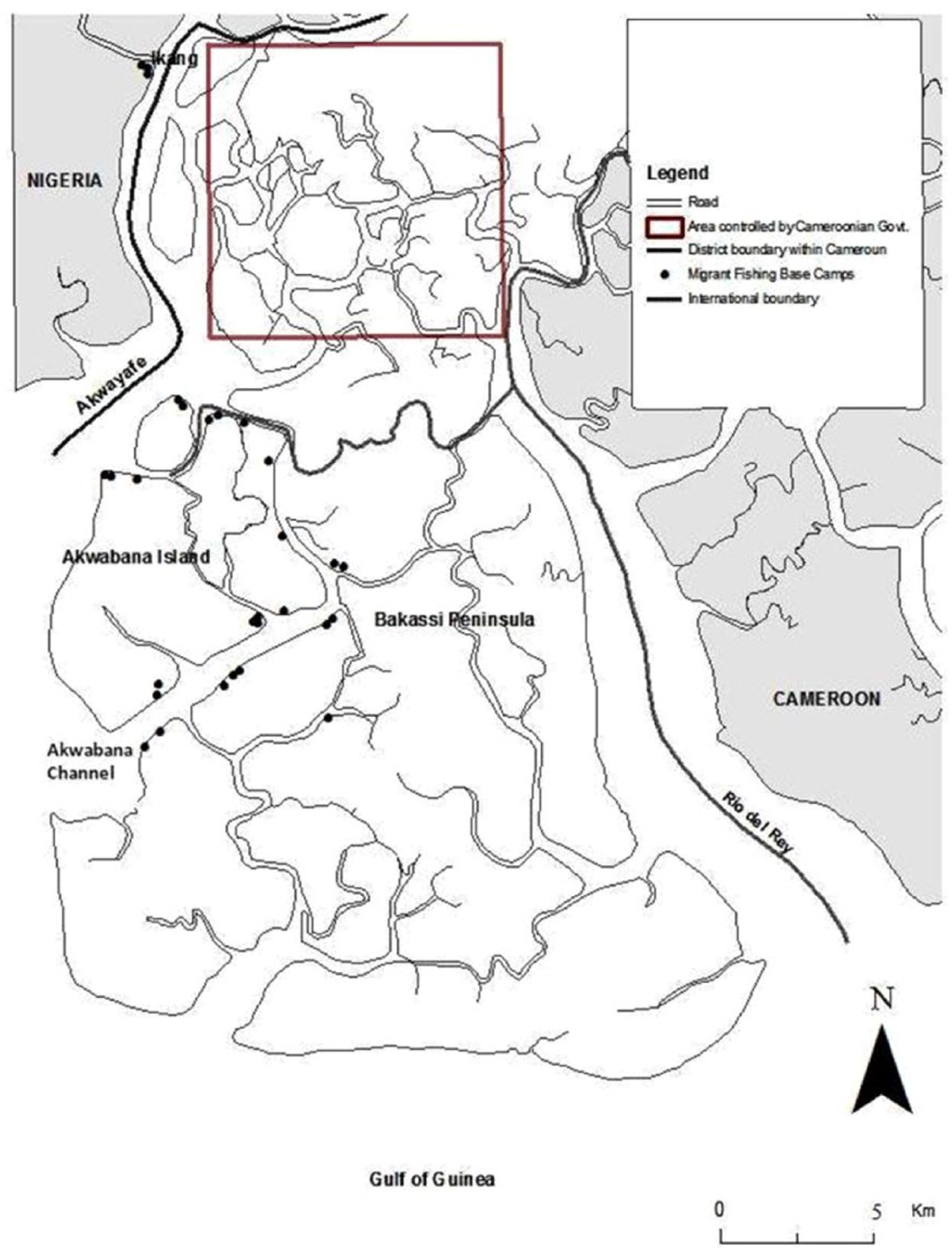
Map showing 25 base camps visited and area under Cameroonian control before August 12, 2008.

Three river routes and locations of 49 selected base camps in Bayelsa state.
Agbada Ware (House on Stilts)
The stilt house is the most prominent feature on the Ijo riverine landscape. It is built on the edge of the river for easy access to the waterways and to fishing grounds. The dwellings are erected on timber posts or stilts, which create a raised platform providing protection from high tides and floods that can reach heights of up to 2 m. Details are shown below in Figure 6.
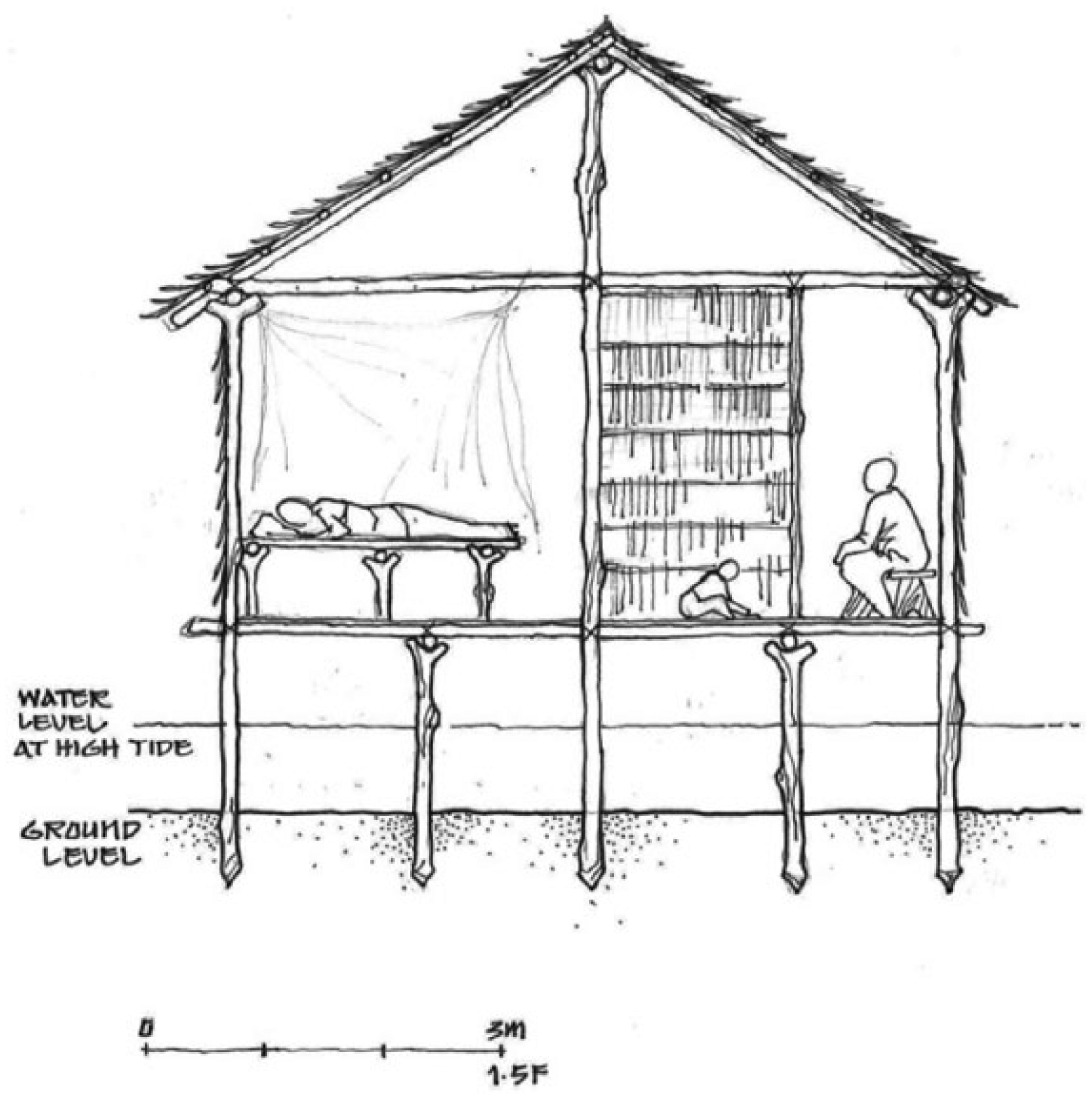
Agbada ware—Dwelling on stilt foundation.
Ato.uko ware (House on Mud-Foundation)
The main feature of the atouko ware is its elevated mud foundation (see Figure 7). The term atouko is derived from the Ijo word atou which means mud. The type of mud referred to here is the chikoko mud. It is a mixture of clay soil and dead vegetable matter, which makes it resilient to the eroding effects of constantly flowing water.

Atouko ware—Dwelling with compact mud foundation.
Agbada-atou mo ware (Mud and Stilt Hybrid House)
In this type of built form, a part of the foundation is erected on stilts and the other part made up of compact and elevated chikoko mud. This occurs when dwellings combine both living/sleeping spaces and hearth spaces as shown in Figure 8 below. Another common practice is where a part of the building is sited on marshy land and the other part over water.

Agbada–Atouko mo ware—Dwelling using both mud and stilt foundations.
Migration and Theories of Change
Change can be identified in any cultural system, which is made up of many subsystems. These include art, architecture, folklore, and so on, all of which experience change. Several studies carried out in this area have all attempted to answer questions relating to variation or change. Such as, the extent of this change and then if this change comes as a result of internal (immanent) or external (externalistic) forces. As a result of cultural dynamism, changes are bound to occur and the accumulation of such changes over time constitutes variations.
Studies in this area suggest that there are two main mechanisms by which variation is produced in material culture: variations generated as a result of copying or “Lateral borrowing” of other ideas during the production process, and variations produced from within the group by “cognitive mechanisms.” Both way, such changes could occur during production and an accumulation of these could result in significant variations. Lateral borrowing may or may not be intentional but may arise via association with other groups.
Cognitive mechanisms are sometimes deliberate or erroneous modifications made to an original pattern that brings about variations. They can also be innovations necessitated by production of material culture in a different context or through changing “worldviews” of the society in question. Moreover, the change may come about as a response to new challenges posed by a different climate or location (Gabora, 2000, 2004). But the main difference between the two mechanisms is that one is borrowed from neighboring groups and the other is developed from within the group.
In relation to migration, this article examines how much change can be attributed to cognitive mechanisms brought about by the expansion or splitting of a society into daughter populations during migration. Also, how much change can be attributed to lateral borrowing of other cultural traits from other groups encountered during migration? The former is known as phylogenesis or “branching” (Collard & Shennan 2008; Gray, Greenhill, & Ross, 2007; Lipo, O’Brien, Shennan, & Collard, 2006; Mace, Holden, & Shennan, 2005), while the latter is referred to as ethnogenesis or “blending” (Diaw, 1992; P. D. Jordan, 2007; P. Jordan & Shennan, 2009; Terrell, 1988, 2001).
This article shows how quantitative methods are used to test the influence of immanent forces such as “phylogenesis or branching” and/or externalistic forces such as “ethnogenesis or blending” in architectural variation. The aim is to ascertain the effect of migration on the migrant fisher base camp dwellings of the Ijo ethnic group in Bayelsa and Bakassi.
Identifying Causes of Architectural Variations Quantitatively
The study was initiated based on the supposition that issues relating to migration could result in changes that constitute significant variations between the dwelling models. These changes may either be developed from within the society itself or brought about by external influence from other neighboring groups. In this research, four of the neighboring fishing groups were selected for comparative study. The ethnic groups selected are the Ibibios, Andonis, Ilajes, and the Urhobos, each of which has been known to live in the same region as the Ijos at one point or the other during migration. Also, these groups practice migrant fishing and build base camp dwellings. Only architectural data involving external features of the base camp dwellings which were collected have been used. These external features or traits are required to produce the dichotomous or binary data used in the statistical analysis.
In addition to the architectural data obtained from the neighboring ethnic groups, corresponding data from the migrant fishing dwellings in Bayelsa state were also included. The addition of these data was meant to serve two purposes: first, to serve as a basis for comparison between the base camp dwellings in the ethnic homeland and in Bakassi. Second, it serves as a control to indicate whether any of the other ethnic groups have any form of relatedness to the parent Ijo ethnic group in Bayelsa, which could then suggest phylogenetic (common ancestry) possibilities between them. A list of all exterior features of base camp dwellings in Bakassi and Bayelsa are presented as dichotomous data below.
Dichotomous/Binary Data
The main architectural traits in the base camp dwellings are listed from 1 through to 14, but there are subtraits as well. These subtraits are known as multistate variables and have been treated as individual traits. The digit “1” records that a trait is present among a particular ethnic group, while “0” records traits that are absent. The use of the “1” and “0” digits are the reason this form of data are being referred to as “Dichotomous” or simply “Binary” data (Shennan, 1997). The building traits recorded include construction elements, house components, or other associated features. This research focuses on external features and as such does not consider internal fixtures or furnishings.
Measuring Similarity: Coefficients and Dichotomous Data
To represent the data in dichotomous or binary form, a total of 32 external architectural features or traits were first identified. These traits are a compilation of the external features of base camp dwellings in the Bakassi peninsula common to all the five groups being compared, including the Ijos. There are a number of techniques which can be used in analyzing dichotomous data to ascertain similarity between the groups. One of such techniques is the coefficients. Shennan (1997) examines the use of coefficients for the purpose of measuring similarity and discusses the different types of coefficients that can be used. However, in this study, coefficients will be used simply to derive the matrix for the PCA, which is the quantitative method required to analyze the data. The coefficients used are the simple matching coefficient, the Jaccard coefficient, and the alternative to the Jaccard coefficient.
The major point of variance between the first two coefficients is how negative matches are treated. Negative matches occur when traits are absent in all cases. An example is the negative match in Trait 12 (ii) of Table 1, where none of the six individual ethnic groups possess the trait in question. For the simple matching coefficient, the 1 and the 0 values are equally important, which means that even if all the groups or units indicate absence for a particular variable or trait, the negative match still counts when compiling the matrix. It suggests that similarity between groups (in this case, base camp dwellings of different migrant fishing groups) can still be determined by the joint absence of traits in or on them. In the Jaccard coefficient, if the individuals all indicate absence for a trait, then it is disregarded altogether, that is, the negative match does not count when compiling the matrix, further suggesting that joint absence of traits does not indicate similarity between the individuals being considered.
Presence/Absence (Dichotomous) Data Showing External Architectural Traits of Each Ethnic Group.

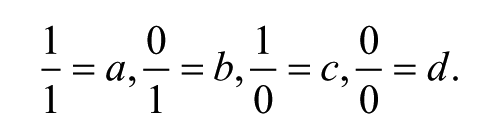
For deriving the coefficient,
a = positive match (joint presence)
b = positive–negative match (top presence, bottom absence)
c = negative–positive match (top absence, bottom presence)
d = negative match (joint absences)
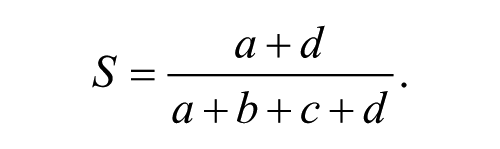
For simple matching coefficient, it is calculated as follows:
For Jaccard coefficient, it is calculated as follows:

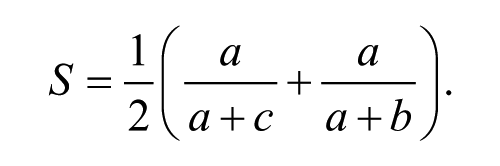
The alternative to the Jaccard coefficient is as follows:
All three methods of coefficients were used to calculate for similarity measure and to see whether the results obtained were comparatively similar. Table 2 shows the multistate data being treated as mutually exclusive attributes and presented as individual variables.
Dichotomous Data Showing Multistate Variables as Individual Variables.

Note. BY = Bayelsa; BK = Bakassi.
Tables 3 and 4 exemplify how the matrices are developed by counting positive matches (joint presence) indicated by “a,” mismatches (one presence, one absence) indicated by “b” and “c,” and negative matches (joint absences) indicated by “d.” This defines the mathematical functions a, b, c, and d, respectively, which are then used to calculate the simple matching coefficient = Zs, the Jaccard coefficient = Zj, and the alternative to the Jaccard = Za as shown.
Matching External Traits of Two Groups.

Note. BY = Bayelsa; BK = Bakassi.
Calculating Joint Matches, Negative Matches, and Mismatches Using Approximate Values of Coefficients.

Tables 5, 6, and 7 show the matrices for the three different coefficients used. It shows the level of similarity in the base camp architecture of the various migrant fishing groups. In Table 8, an average of the three coefficients of the matrices was taken and the results show a range of between 0.4 and more than 0.7. What this means is that for any coefficient below the threshold of 0.4, which bears less than half the attributes of the other tribe, there are lesser possibilities of borrowing or ethnic blending due to fewer similarities between the two groups being compared. But for coefficients with values of more than 0.7, it shows that there are stronger possibilities of borrowing or ethnic blending, due to more similarities between the two groups in question. Coefficients with values of 0.5 to 0.6 where half the attributes are shared are inconclusive.
Matrix of Simple Matching Coefficient.

Matrix of Jaccard Coefficient.

Matrix of Alternative to Jaccard Coefficient.

Average of All Three Coefficients.

Interpreting PCA: Similarities Between Ethnic Groups
To analyze the data matrix and derive two-dimensional scatter diagrams that indicate similarities between the ethnic groups, the XLSTAT software was used. Three different matrix data were used in this analysis, and these are the matrices of the simple matching coefficient, the Jaccard coefficient, and the alternative to the Jaccard coefficient. The three different matrices were analyzed separately to see whether the results of the various scattergrams they generate would be similar.
The scatter diagram or scattergram is a simple two-dimensional representation of the results with the ethnic groups indicated as dots in the space. The distance between these dots on the scatter diagram represents the similarity between the ethnic groups. The scattergram is divided into four quadrants by the two axes F1 and F2. The dots, or in this case ethnic groups, which are seen to cluster within a particular quadrant with the shortest distances between them are regarded as those that bare the strongest similarities. The axes can also be seen as dividing the space into two halves: the left and right halves and the top and bottom halves. The dots (groups) that conglomerate or cluster on a particular side of the halves can also be interpreted as having some form of similarity although not as strong as when the dots (groups) cluster within a particular quadrant. The dots positioned across diagonally or farthest from each other are the most dissimilar of all the groups.
The values obtained from the coefficients was used to generate values for the four coordinate points for the PCA shown in Tables 9 to 11, which is then used to plot the scattergrams shown below in Figures 9 to 11, revealing the position of the dots (groups) on the diagram.
Similarity Matrix for Simple Matching Coefficient.

Similarity Matrix for Jaccard Coefficient.

Similarity Matrix for Alternative to Jaccard Coefficient.

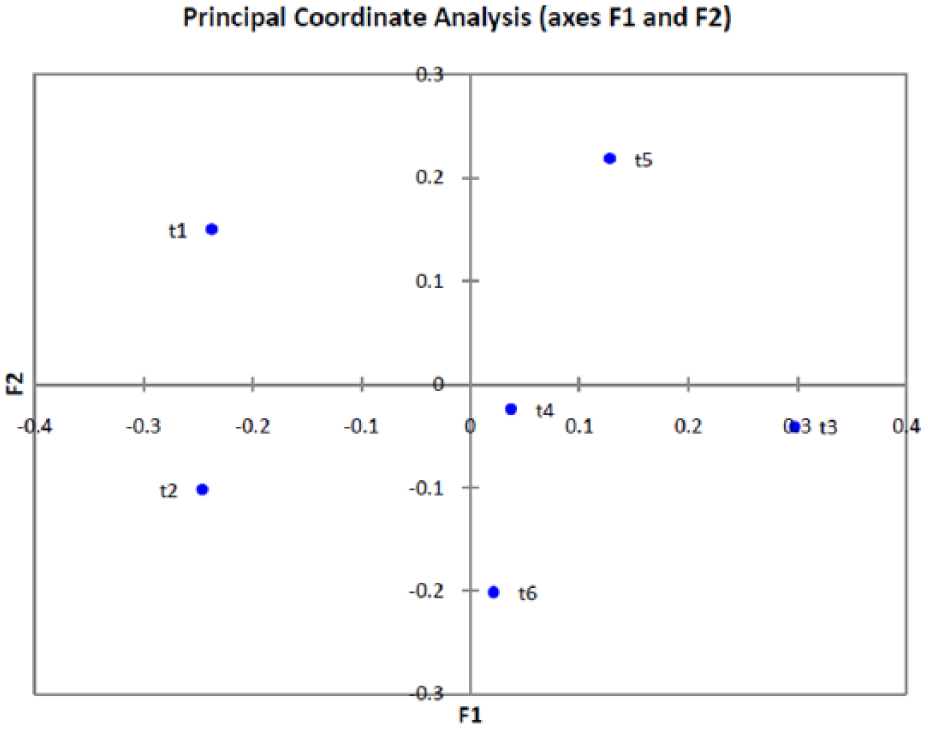
Scattergram showing the similarity of the groups from simple matching coefficient.
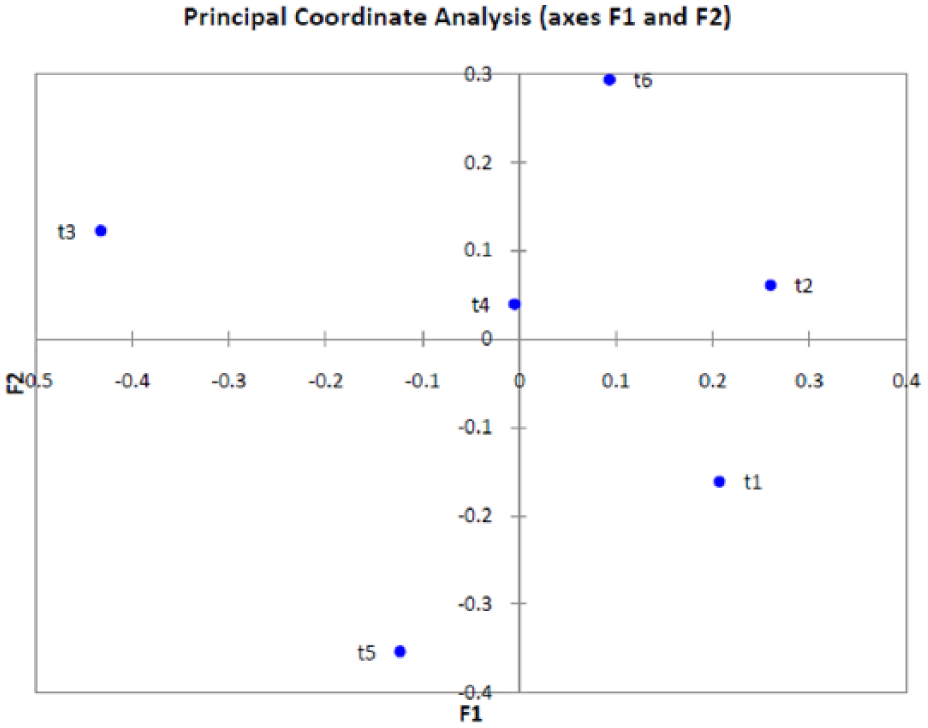
Scattergram of group similarity generated from Jaccard coefficient matrix.

Scattergram of group similarity generated from alternative to Jaccard coefficient matrix.
PCA Using the Simple Matching Coefficient Matrix
XLSTAT 2010.3.06—Principal Coordinate Analysis—on May 20, 2010, at 15:48:26.
PCA Using the Jaccard Coefficient Matrix
XLSTAT 2010.3.06—Principal Coordinate Analysis—on May 20, 2010, at 15:48:54.
PCA Using the Alternative to the Jaccard Coefficient Matrix
XLSTAT 2010.3.06—Principal Coordinate Analysis—on May 20, 2010, at 15:49:24.
Discussion on Matrix of Coefficients and PCA
The interpretation of the results obtained from the matrix of coefficient is as follows: For any coefficient below the threshold of 0.5, in which a group bears less than half the attributes of the other group, it suggests that there are fewer similarities between both groups. But for coefficients with values of more than 0.7, it shows that there are strong similarities between the two groups (see Tables 1 and 2). This result does not indicate whether the two groups share a common ancestry (branching) or whether borrowing (blending) occurs between them. To ascertain whether the similarities are due to “blending” or “branching,” the PCA was used and the result was represented in two-dimensional scatter diagrams or scattergrams.
Interpretation of Scatter Diagram Generated From All Three Coefficient Matrices
Based on the simple matching coefficient where negative matches are considered, the list should show that t3 (Ibibio), t4 (Andoni), and t6 (Urhobo) are the groups with the strongest similarities in terms of external architectural features in their base camp buildings. This is supported by the clustering of the points within the bottom-right quadrant in the scattergram. This only partly supports the results of the simple matching coefficient by indicating strong similarities between t4 (Andoni) and t6 (Urhobo), as the distance between these two points is the shortest. However, the fact that negative matches have been considered in the build-up to this scatter diagram has clearly had an effect on the result.
The scatter diagram derived from the alternative to Jaccard Coefficient matrix is similar to that derived from the Jaccard Coefficient matrix, in that, it also disregards negative matches. The results are similar as the distance between points (groups) t2, t1, t4, and t6 are closer together than t5 and t3. But more specifically, the space between t2 and t1, and t2 and t6 are equidistant, which suggests that t2 (Ijos in Bakassi) bares strong similarities to both t1 (Ijos in Bayelsa) and t6 (Urhobos). This supports the initial findings that phylogenetic or branching forces exist between t1 and t2, while ethnogenetic or blending forces exist between t2 and t6. However, the distance between t1 (Ijos in Bayelsa) and t6 (Urhobos) is far apart, suggesting that similarities between these two groups are not strong, which reduces the possibility of common ancestry between the Ijo (Bayelsa) and Urhobo.
The results from the scattergram show that the strongest similarities exist between the external architectural features of the Ijo migrant fisher dwellings in Bakassi (T2) and those of their Urhobo (T6) neighbors. Similarities between the Ijo and the Urhobos in Bakassi show that there are variations between the Ijos and their parent group in Bayelsa (T1). However, because the similarities between the Ijos and Urhobos are only in external architectural traits, it means that the PCA analysis has only revealed external similarities and not internal ones. The fact that stronger similarities exist between these two groups, amid all the other groups in Bakassi that have same levels of proximity to the Ijo migrant fishers, raises questions as to why this is the case. Responses from interviews suggest a number of possible reasons that could have fostered this selective ethnogenetic activity.
Although, results show no indications of both groups sharing a common ancestry, the data obtained from respondents during fieldwork confirm that a stronger level of business relationship and proximity exists between the Urhobo and Ijo migrant fishermen. Over the years, fishermen of the Urhobo group migrate into inshore brackish water regions dominated by Ijo tribes to carry out fishing activities. They are the only non-Ijo group allowed to operate within the inshore territorial waters of the region while other tribes within the region are limited to the marine or offshore waters. However, it shows that there has been increased proximity and relations due to migration between the Urhobo and the Ijo migrant fishermen. The evidence suggests that these increased relations have led to possible “blending” activities between the two groups.
Conclusion
The PCA analysis therefore reveals that one of the causes of variations between the Ijo base camp dwellings in Bakassi and Bayelsa is ethnogenesis, due to the Ijos in Bakassi borrowing cultural traits from the Urhobos, whom they had more contact with during migration. However, it is important to note that the traits borrowed from their neighboring group relates more to building components and external architectural features as listed in Table 1 and not to spatial configuration. Of these two aspects, the PCA only revealed the source of the exterior variations. Because the PCA analysis was based on data obtained from only external architectural features of all the groups, the results cannot be used to explain variations in the spatial configurations of the dwellings.
Furthermore, from Table 1, the data show that the use of connecting walkways to indicate kinship ties and the use of living areas were used only by Ijos in Bakassi, which suggests that some of the architectural traits were not borrowed but are a result of cognitive mechanisms. This means that in addition to lateral borrowing of traits, variations in Ijo base camp dwellings in Bakassi also resulted from cognitive mechanisms which are modifications made by successive generations of fishermen over the years. So based on the empirical evidence, the conclusions drawn from this research is that causes of variations in Ijo migrant fisher architecture can be traced to two sources or factors: lateral borrowing of traits from neighboring groups as well as modifications due to cognitive mechanisms made by the Ijos in Bakassi over time.
As such, the study supports findings of past works by Sorokin (1985) who argued that change is determined not only by external circumstances but also by the nature of the system itself. It also supports the claims by Diaw (1992) on how ethnogenesis influences lateral borrowing among migrant fishing groups. In addition, we could also deduce from the findings that similarities in base camp dwelling designs, due to possible lateral borrowing between Ijos and Urhobos in Bakassi, are not a function of language similarity. This supports the claims made by Welsch, Terrell, and Nadolski (1992) that there are no associations between similarity of material culture and language, than those made by Roberts, Moore, and Romney (1995) who suggest that there is such an association. Finally, the result showing notable variations between base camp designs challenges the previous hypothesis made by Hollos (1989) that no evident change in culture, livelihood, and behavior was observed from those who had settled in the Cameroons over the years.
This study does not totally attribute change or architectural variations solely to migration; it, however, shows how migration acts as an agent of contact and communication between different groups. It is this contact that inevitably results in cross-pollination of social and material cultural traits between neighboring groups and one of such material culture is vernacular architecture.
Footnotes
Declaration of Conflicting Interests
The author(s) declared no potential conflicts of interest with respect to the research, authorship, and/or publication of this article.
Funding
The author(s) received no financial support for the research and/or authorship of this article.