




Abstract
This study examines contemporary migration patterns in the Hirakud Command Area, an agriculturally prosperous region in Eastern India. Traditionally, internal migration in India has been associated with factors such as backwardness, agrarian distress, and food insecurity. However, this research challenges this perspective by uncovering a growing trend of migration among the upper socio-economic strata. Contrary to popular belief, present study shows an increasing trend of migration among the educated, unmarried male youths belong to the upper strata of the socio-economic hierarchy, guided by their aspirations, accessibility, and ability of migrants rather than merely by hunger and distress. By highlighting these findings, this study urges a departure from conventional economic determinants and suggests a broader understanding of migration dynamics. It reveals that individuals from marginalized backgrounds are less likely to migrate, while migrants from higher caste-class categories possess better positions, income, and occupational status in their migration destinations. These insights contribute to a more nuanced comprehension of contemporary migration in the Hirakud Command Area. It underscores the importance of considering non-economic factors in migration analysis and calls for tailored policy interventions that address the specific needs and aspirations of different migrant groups.
Plain language summary
This study looked at why people moving out from Hirakud Command Area, a relatively agricully Prospoous region in Eastern India. According to popular understanding of migrarion, people migrate because they are poor or hungry and lack of economic oppertunities at origin. But this study found that young men who are educated and belongs to well to do families are migrating more than poor and marginalised families. They move because they want to, not because they have to. This means that we need to think differently about why people move. The study also found that poor people are less likely to move. People who do move usually have better jobs and make more money than poor people who don’t move.
Introduction
In developing economies, including India, contemporary discourse on migration seeks to revisit the conventional binary approach of distress and development-induced migration. The new paradigm sees migration as the economic reason, a strategy to escape poverty, including among chronically poor and distress migration (Shah et al., 2018). Considering the complex, fluid, and dynamic nature of recent migration, it tends to see migration as a coping strategy among people experiencing poverty (de Haan, 1999; Deshingkar, 2010; Shah, 2010; Shah et al., 2018). Such theorization, however, re-emphasizes the economic rationale for the movement of the labor force backwards to developed regions to upgrade the economic and social status of migrants. Nevertheless, the recent discourse on migration looks and analyses beyond the conventional neo-economic theories on the one hand and the structural theories of exploitative process on the other, which provides a more nuanced, dynamic and context-specific approach to unravel the situations that trigger responses to the changing environment (Shah et al., 2018). Despite the remarkable agricultural productivity, subsistence employability, and livelihood opportunities, Hirakud Command Area (HCA) recently witnessed an increasing trend of out-migration (Podh, 2014). The incidence of migration in the region is very complex in pace and depth.
On the one hand, farmers in HCA complain about labor scarcity for agricultural operations. This continues to bring migrants labor from neighboring districts and States (at least during the peak seasons, i.e., plantation and harvesting). On the other hand, it is witnessing an increasing trend of out-migration, that is, sending migrant workers from HCA. Employment opportunity in the area is not scarce per se, unlike other parts of the state. Agriculture is the most labor-intensive sector, and it still holds around 60% of the work nationally, as in Odisha (GoI, 2017; OES, 2014). In HCA, people can find work (mostly in agriculture and allied sectors) around the year due to its high cropping intensities and labor-intensive nature. Additionally, there are other employment opportunities available in the study villages (see Table 2).
However, the transformation of the socio-economic organization in the rural areas that cause an exodus of a significant portion of its population needs to examine carefully to provide a meaningful explanation. The nature of migration changed following the rapid industrialization and mushrooming growth of real estate, from resource-driven (archaic) migration to opportunity-driven migration. The “resource-driven” migration refers to the migration of people from zero or low resources to the resourceful region. A classic example would be the large-scale in-migration to places with water and irrigation facilities in the formative years of civilizations worldwide. This archaic form of migration is primarily resource-based, such as food, irrigation and other forms of substantial livelihoods, for example, river valley civilizations. On the other hand, “opportunity-driven” migration occurs with increasing urbanization and industrialization as an avenue of alternative or/and new income/employment opportunities. Rapid industrialization in India has impacted the accelerated growth in migration. It creates a new avenue for employment opportunities.
The conventional economic theory of migration is purely tautological and applies an individualistic functionalist approach, which overlooks the relationship between migration and production. While the Marxist dependency approach sees migration as a unidirectional framework of core-periphery relations, which leads to impoverishment of the periphery. Thus, seasonal or circular, short-term and return migration is considered failed migration because it considers the permanent settlement of migrants at the destination successful. This ignores and contrasts the Great Indian Migration Waves, that is, broadly characterizing India’s entire migration process (Tumbe, 2018). Further, the New Economics of Labor Migration depart from the neo-classical theories and looks at it as a two-way inhibiting process, that is, period and location, as an alternative approach to these theories. Deshingkar et al. (2008) proposed an analytical framework for understanding circular migration, which differs from the neoclassical and Marxist frameworks by adopting a livelihood perspective (Iyer, 2017, p. 110). Two forms of migration identified by Deshingkar et al. (2008) are—First, “coping migration” which refers to “circular migration” of poor and least educated individual or/and social groups, migrate primarily for survival and usually does not accumulate savings and assets even if it allows the households to manage consumption need and risks. Second, “accumulative migration” is found among the better-off households mainly for diversification of work, which leads to the accumulation of capital and assets. However, the categorization suggested by Deshingkar et al., as others, does not explain the conditions of internal migration, as contemporary migration is not merely the “coping” and “accumulative” or both. Therefore, this paper deviates from these categorizations and provides an alternative and perhaps a broader framework to understand contemporary internal migration. It argues that internal migration in India can be best described as opportunities-driven migration, a rational choice action of individual migrants governed by opportunities, aspirations and expectations of modern lifestyle, freedom from parental and social control and improving self-respect. The opportunity-driven contemporary migration is found more among unmarried, educated youths belonging to relatively well-to-do families, primarily because of diversification of work and does not necessarily accumulate assets. At the same time, they may manage to fulfil the consumption needs and debt repayment of the family.
So-called “value-expectancy models” have studied individual dimensions, assuming that individuals rationally calculate the costs and benefits of migration when making decisions (de Jong et al., 1983). Current analytical approaches focus on individual dimensions beyond economic rationalities (Carling & Collins, 2018). For example, they emphasize the life cycle dimensions of migration aspirations (Boccagni, 2017; Grabska et al., 2019; Koikkalainen & Kyle, 2016). van Naerssen and van der Velde (2015) differentiate between “thresholds” that aspiring migrants must cross and provide conceptual tools for studying migration aspirations. The mental threshold pertains to a person’s mindset about migrating; the locational threshold involves deciding on a destination, and crossing the trajectory threshold entails identifying border crossings and routes. Other migration scholars have used the theory of planned behavior (Ajzen, 1991) to analyze the processes involved in prospective emigrants’ decision-making at different stages. They concentrate on person-level predictors of intentions shaped by subjective beliefs about the consequences of migration, social approval of migration, and their ability to overcome obstacles to migration (Hoppe & Fujishiro, 2015; Willekens, 2017).
However, contemporary migration is no longer merely an outcome of the “income differential” between the place of origin and destinations (Todaro, 1969). Neither is it only due to the agricultural crisis in rural areas (Bhagat, 2010; Breman, 1990; Keshri & Bhagat, 2012) nor what Breman (1974) calls the “footloose labor.” Rather it is also a rational choice of individual migrants, and the decision for migration is collectively taken by the members of the households (de Haan, 1997). Generally, migrants are not the bread earner of the households and have few or no dependents at home. Hence family does not expect much remittance from such migrants. It is found that migrants hardly save or send remittances to their families. The socio-economic analysis of internal migration in India suggests some new trends; for example, the poor, Dalits and marginalized groups are not even privileged enough to migrate out (Chandrasekhar & Mitra, 2019; Mitra & Pradhan, 2016; Tumbe, 2012, 2015). Long before, in his study of Kerala’s agrarian society, Oommen (1971) argued that the green revolution was profitable only for the landed propertied castes to diversify their resources and re-established their social, economic and political hegemony in the village.
Further, Jodhka (2006, 2012) and Gupta and Thakur (2017) suggested that upper-caste landed propertied class diversified their resources to urban areas; thus, they can manage to exercise their hegemony and influence in the social, economic as well as political spheres in the village. However, the state of small and marginal farmers (usually those who belong to the bottom of the social strata) are becoming more precarious instead. Furthermore, it has been witnessed that migrants who belong to upper castes have better educational qualifications and possess better positions even in the destinations (see Figure 5) and have a comparatively better income than migrants who belong to the bottom of the socio-economic hierarchies (Figure 6).
Objectives
Considering the oversights by the existing researches and broader generalization, including both macro and micro as well as qualitative and quantitative studies. The context-specific analysis of the migration studies are scarce. As a result, regional specificity within migration studies has not been adequately understood. Therefore, the present studies tried to understand the migration trend in relatively developed regions regarding agriculture. The first objective aims to investigate the socio-economic background of the study participants to provide context for their migration experiences. The second objective seeks to better explore migration characteristics in the Hirakud Command Areas to understand migration patterns and trends in this region. The third objective aims to identify the underlying reasons for migration to provide insight into why people migrate from this region. The fourth objective seeks to assess the impact of migration on individuals and communities to understand the consequences for those who migrate and those who are left behind.
Methodology
The methodology section describes the research design and methods used to collect and analyze data for the study. In this case, the study was conducted over 3 months, from August to October 2013, in two villages in the Attabira block of Bargarh district. The villages were selected as study sites because they are located in the Hirakud Command Area (HCA), a region known for its agricultural productivity. Primary data was collected from 100 migrants who were identified using the snowball sampling technique. This technique involves identifying initial participants who refer the researcher to other potential participants. This process is repeated until the desired sample size is reached. This study conducted personal interviews with the migrants using a structured interview schedule to collect data on their migration experiences. The study villages are situated in a region that benefits from excellent irrigation facilities provided by the Hirakud Dam, the world’s longest earthen dam. Agriculture is the primary occupation and source of livelihood for most people in this region, and social and economic activities revolve around agriculture and the agricultural lifestyle.
Political Economy of Study Region: Hirakud Command Area
The Hirakud Dam was built on the Mahanadi River, aiming at flood control, irrigation and electricity production in the state, and irrigation from the dam started in 1957. The catchment area of HCA has spread partly over five districts with an area of 392,993 acres of agricultural land in the Kharif season and 48% to 55% of the (total irrigated) area during the Rabi season, depending upon the availability of water (Baboo, 1991, 1992; Nayak, 2010; Podh, 2015). Following the success of the green revolution in (primarily) Punjab and Haryana, unlike other states, Odisha (mainly HCA) adopted the pathways of the green revolution as the model of agricultural development. HCA is one of the first places in the state to adopt green revolution technology, irrigation, and high-yielding variety seeds, positively increasing agricultural production. With assured irrigation and green revolution technologies, HCA is able to increase agricultural productivity. Bargagrh district is among the highest rice-producing regions in the state and can supply food grains to other parts of Odisha. Subsequently, the Bargarh district is famed as the Rice Bowl of the State for its significant production potential. People continue to come from different places and gradually settle here as farmers, tenant farmers and agricultural laborers (Baboo, 1992; Nayak, 2010; Panda, 2013). Most (Telugu) farmers from Andhra Pradesh have now become large farmers in most villages in the HCA region. The productivity of the land has constantly increased, albeit with a significant rise in the input cost. They (Telgu farmers) have had prior knowledge of working with green revolution technology as they were experienced cultivators in Andhra Pradesh. They manage to profit from agriculture. Therefore, local farmers learn from them about the new agricultural practice.
Trends and Pattern of Out-Migration in Odisha
NSS data suggests that Odisha is the sixth-highest state in the country to receive domestic remittances, suggesting that a large number of people from the state migrate to other parts of the country. Notably, rural areas in the state received at least 14.25 billion dollars in remittances from internal migration during 2007 to 2008 (Tumbe, 2011). The migration trends in Odisha have been broadly categorized according to destinations, nature of work they are involved in, and duration of stay. First, the migrants from coastal Odisha primarily migrate to Kerala, Gujarat, Maharashtra, and Jammu-Kashmir. Many works in the construction, transportation, factory, and textile sectors. In contrast, migrants from Western Odisha outnumbered their coastal counterparts in the construction sectors and brick kiln of Chhattisgarh, Maharashtra, Uttar Pradesh and Gujarat (Ali & Amrita, 2014). Second, distress migration in the state broadly refers to migrants from Western and Southern districts of Odisha, including (undivided) Kalahandi, Balangir and Koraput (KBK) districts, the region known for its backwardness, acute poverty, hunger, and mass distressed migration in the western part Odisha. They often ended up in brick kilns across the country, including Hyderabad in (undivided) Andhra Pradesh, Chennai (including other places) in Tamil Nadu, Bangalore in Karnataka, Mumbai and Pune in Maharashtra, and Lucknow in Uttar Pradesh and Delhi.
However, such broad categorizations overlooked other forms of spatial and contextual sub-categorizations, such as migration from the HCA, which is crucial to understanding the context-specific spatial complexities of migration. The trends and patterns of migration from HCA are a peculiar case of migration (if not then) from a comparatively resourceful place with substantial employment and other livelihood opportunities. Regional disparity is widely acknowledged as one of the most significant determinants of migration (Reja & Das, 2019). People generally do not expect out-migration from such an agriculturally prosperous region primarily due to the over-emphasis on economic reasons as the driver of migration, overshadowing all other significant contributing factors.
Significant differences exist in nature and migration intensity between migration from HCA and other rainfed regions of Western Odisha. Migration from agriculturally prosperous regions like HCA is a comparatively recent and complex phenomenon that needs careful understanding. Migration in HCA is characterized as the seasonal, individual (not family migration like rainfed regions), male, unmarried, literate youths between 18 and 30 years of age. The primary destinations of these migrants are different industrial zones, such as Tamil Nadu, Andhra Pradesh, Maharashtra, and Delhi, in different capacities. Migrants from HCA share relatively better occupational engagement than those from rain-fed areas in the state. Unlike other regions in regions of Odisha, migration of aspiring, educated, unmarried youth from found in HCA is not a forced migration due to distress and livelihood challenges as found in other rainfed regions of Western Odisha; instead, it is a rational choice, voluntary and individual migration of able-bodied (see Table 1 and Figure 1). Similar to the Great Indian Migration Waves, migration from HCA is gender-blind.
Social Categories Wise Educational Qualifications of the Migrants.

Source. Field Survey.

Age of migrants at the time of out-migration.
Notwithstanding, the incidence of migration in rainfed areas in the state is characterized as the distress-induced seasonal migration of whole families, primarily ending up in brick kilns and other hazardous work environments across the country. Usually, they migrate after Diwali or harvesting of their crops and returns home before sowing of next season around May or June. However, these migrants from single-crop areas, that is, Balangir, Kalahandi, and Nuapada districts, often face exploitation by their employers and labor contractors. Migrants in brick kilns of Andhra Pradesh and Tamil Nadu, including the sexual exploitation of female migrant workers in a brick kiln, is not an alien or unknown phenomenon, and such are being reported in newspapers almost regularly (Ali & Amrita, 2014; Deb, 2013; Jha, 2005).
(In)Voluntary Migration in Hirakud Command Areas
Being one of the agriculturally prosperous regions in the state, HCA continues to attract migrants from neighboring districts and states. At the same, time out-migration of youth increasingly reported in recent times. Therefore, the dynamics of out-migration from HCA is a complex phenomenon crucial to understanding its underlying trajectories in contemporary developmentalism. As an agriculturally progressive region, so much importance is given to the improvement in agricultural production and redistribution and marketing are ignored. It is important to understand here who migrates, for why and where, and for how long, considering land’s productive capacity and available employment (see Figure 2 and Table 2, respectively). The green revolution did not bring prosperity among the poor farmers but helped the big landowners in the villages grow their productivity and expand their agricultural area (Oommen, 1971). That is how large farmers could mobilize their resources to urban centers and re-establish their hegemony in the village’s socio-economic, political, and cultural spheres. Therefore, it is crucial to understand who migrates from such an agriculturally prosperous region. Immigrants are still enjoying their livelihood very smoothly, for example, farmers from Andhra Pradesh. They constitute the majority among the large operational holders in the region.
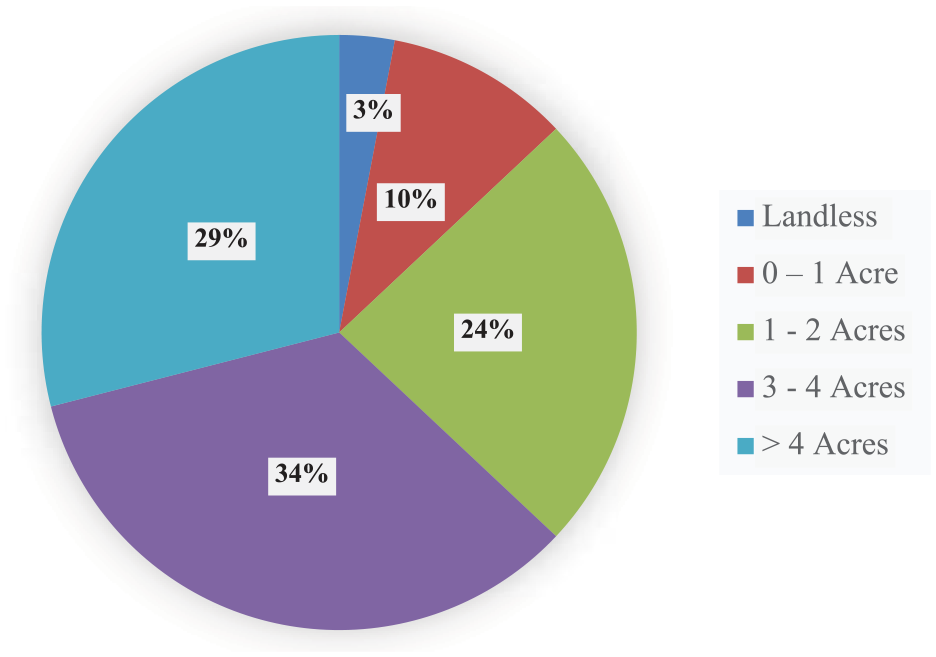
Land holding status of migrants.
Employment and Earning Opportunities in the Localities.

Source. Field Survey.
Note. *Panchayati Raj Institutions.
Findings suggest that the incidence of migration is high among people with relatively better socio-economic conditions (Chandrasekhar & Mitra, 2019; Oommen, 1971). However, micro-level studies (Mitra & Pradhan, 2016; Oberai & Singh, 1980; Shah et al., 2018; Tumbe, 2011) from various places suggest that relatively well-to-do or middle and lower-middle farmers are more likely to migrate than wealthy and impoverished farmer’s households (discussed earlier). Similarly, the migration seen in HCA depicts a different image from that of distressed migration primarily found in single-crop areas. Migrants from single-crop areas are forced to migrate due to unfavorable geophysical and climatic conditions (Jha, 2005; Keshri & Bhagat, 2012; Upadhya, 2013). These migrants are generally illiterate or less educated and most often are engaged in unpleasant or heavy, menial jobs, associated with frequent reports of exploitation and atrocities (Ali & Amrita, 2014; Bhatt, 2009; Deb, 2013; Jha, 2005; Sarap, 1991). Here, the whole family migrates to maintain their livelihood and a higher migration rate is found among the SCs and STs who have significantly lower economic opportunities in their native place (Ali & Amrita, 2014; Jha, 2005; Patnaik, 2004). On the other hand, migration in HCA was found more among the relatively educated youths. These migrants are more motivated by aspirations for a better life and experiencing a dignified urban lifestyle. They are neither dying of hunger nor in distress like their single-crop counterparts. They work in different places within the country, such as Tamil Nadu, Andhra Pradesh, Gujarat, Goa, and Karnataka. Some work in industrial sectors and are associated with sophisticated jobs, decent working conditions, and handsome salaries.
Who Are They? Socio-Economic Background of Migrants
Generally, people from the bottom of the social hierarchy migrate to earn their livelihood (Patnaik, 2004). Consequently, a higher rate of distress migration can be seen among the Scheduled Castes (SCs) and (Scheduled Tribes) STs, who often engage in unpleasant jobs with low wages (Paris et al., 2005; Upadhya, 2013). Unlike other East and South-East Asian countries, most migrants have little or no education (Srivastava & Sasikumar, 2003). However, a significant percentage of migrants in HCA, characterized as people from higher socio-economic classes, are more likely to migrate. The present study of study villages in HCA recorded more migration among the educated youths having better socio-economic opportunities. Table 1 and Figure 2 illustrate significant numbers (70) of migrants with better socio-economic standing at their origin; again, most were educated youths. People migrate for better opportunities and prosperity. Average migrant households possess a substantial amount of land, with an average of 3.26 acres per household.
Consequently, among the educated youths, out-migration is found in Western Odisha, especially in HCA. Table 1 shows the composition of out-migrants from the villages who move out in search of jobs. It is found that a number of educated youths belonging to the higher castes have substantial economic opportunities (land and other livelihood option available in the locality).
Landholding Status of the Migrants
Although the share of agriculture in the gross domestic product (GDP) has significantly declined over time, according to Census 2011 the agricultural sector in India still holds a majority of its workforce (around 60%).In the present day, agriculture in India is considered a non-remunerative occupation. There is a very significant difference in the input cost and the profit. As described earlier, Odisha comprises the majority (86%) of marginal and small farmers. Usually, small landholding size, low productivity, inadequate means of transport and communication, and availability of industrial units in the region for employment forced the younger generation to migrate outside to places having better livelihood opportunities than the native place (de Haan, 1997; Deshingkar, 2010). In HCA, circular migration among youths has increasingly been found since 1997. They have substantial land holdings, and their productivity is very high. Besides, this is very close to the well-known industrial belt of Odisha, that is, Jharsuguda, where a number of industries were set up, and the worker from various corners of the country, even from abroad, continue to work there. The present study divulges that a significant percentage (34%) of respondents identified as medium farmers with land holdings of up to three to four acres (see Figure 2), where 29% possess more than four acres and 24% have one to two acres. Only 10% of migrants have less than one acre of land. On the other hand, few people belong to the landless category (only 3%; Figure 2). The findings of this study corroborate the findings of Tumbe (2012, 2015) and Chandrasekhar and Mitra (2019), which suggests the inability to move out among the Dalits and other marginalized groups.
Why? Causes of Out-Migration
Generally, rural-urban migration refers to the movements of people from the countryside primarily searching for jobs, often due to a lack of alternative employment at the origin. Much of Indian historiography and other colonial reports claim that the poorest were being “pushed” from rural areas. On the other hand, some economist sees migration as the rational action and migrants as the rational actors because they respond to income incentives through migration (e.g., Todaro, 1969). As we discussed, the economic determination of migration is not necessarily always the case. People come out from rural areas for various reasons, the fascination of urban and modern lifestyle is one of them. Furthermore, youths are the leading population in the migration demography, who are more fond of modern lifestyles and always up for explorations. On the other hand, the livelihood activities of rural people are no longer confined to farming thanks to the impact of globalization, the development of industries, the construction of cities and better transportation facilities. These are some of the factors that attract people toward urban areas. Again, the absence of adequate employment opportunities and less wage in the native place, coupled with declining interest of (young) people in agriculture, urban life, and less urban opportunity in their locality, creates a conducive environment for people to migrate outwards. HCA is also encountering similar changes, and the level of migration is very high. Western Odisha (highland) is geographically situated in an arid climatic zone, contributing to land infertility. Consequently, the lack of irrigation facilities serves as the pavement to conduit unemployment and underemployment, leading to poverty and starvation.
Several factors responsible for migration have different dimensions and could be analyzed in terms of “WHO” migrates and “why.” The migration of people from one place to another for their livelihood remains a prominent sociological problem, despite the government’s implementation of various developmental and welfare plans and programs. Rural-to-urban migration is rated higher than urban-to-urban migration. Rural society is primarily restricted to agriculture, which is no longer treated as a profitable occupation and is dominated by caste hierarchies where lesser opportunities are available for social and economic mobility. Agriculture is affected by migration in less developed countries (LDCs) among farming communities (Jokisch, 2002).
As an economic transformation from bringing predominantly rural to urban migration, urbanization assumes a rapid pace in the process. Individuals migrating from rural areas are a decision to reap economic rewards through better (employment/business) opportunities. In this study, most of the migrants, about 77% of them were between 21 and 30 years of age. While about 93% of them are unmarried move out of unprofitable, lower-rank occupations of farming and agricultural laborers. Among the Dalit youth, most of them reported that they get equal treatment from employers and outsiders. Nevertheless, upper castes youths (mostly from touchable SCs, tribal and others) are in better positions regarding jobs, income, safety, and risk than their Dalit counterparts. An analysis of migrations in this area showed an alarming result that migrants belonging to Dalits and tribal castes engaged in lower-class menial job(s), such as laborers in agricultural and non-agricultural sectors. Their social disability does not end following even in their migration destinations; marginalized sections migrate from their native place to eliminate this (sometimes extreme) poverty and inequality (social, economic, and political). The migrants from upper castes with better socio-economic backgrounds are found to be engaged in blue-collar jobs, such as a helper to mechanics in industries at the place of destinations.
Livelihood Opportunities Available at the Place of Origin
It is perceived that migration from Odisha is distress-driven in nature, as rightly claimed by Wasudha (Bhatt, 2009), due to the collapse of rural employment and the economic difficulties primarily among the peasant households. At the same time, urban areas fail to accommodate all the new migrants as inadequate employment opportunities in urban centers in the local area. According to census 2011, about 50% (1,245 persons out of 2,572) of the villagers belonged to working groups, and 85% depended upon agriculture. More than 85% of the total workforce is directly associated with agricultural activities, and 95.26% of main workers got opportunities to work for more than 6 months. Table 2 shows the availability of employment and earning opportunities in the villages; on the other hand, most belong to marginal and small farming households.
Similar to the findings by Jodhka and Kumar (2017), the prevalence of various sources of employment opportunities and means of earnings in the study villages is found. The availability of various sources of employment opportunities (see Table 2) in the village confirmed that people are not migrating merely due to the lack of employment opportunities or distress situations in their place of origin (Bhattarai, 2005; Keshri & Bhagat, 2012; Patnaik, 2004). The village has good irrigation facilities from the Hirakud water, which ascertain crop production and prevent the destruction caused by droughts and famines.
Since there is no paucity of earning sources, the younger generation shows the least interest (significant numbers, for example, 45%) in agriculture. The inspiration for experiencing the modern lifestyle and travelling to various parts of the country motivates them more to migrate. They want to grasp the dazzling life of the urban centers, economic freedom, and freedom from familial restrictions in taking alcohol and moving to new places. Whereas less wages (response 75%) in the village fueled to move out from the traditional village agriculture system (see Table 3).
Factors Responsible for Out-Ward Migration*.
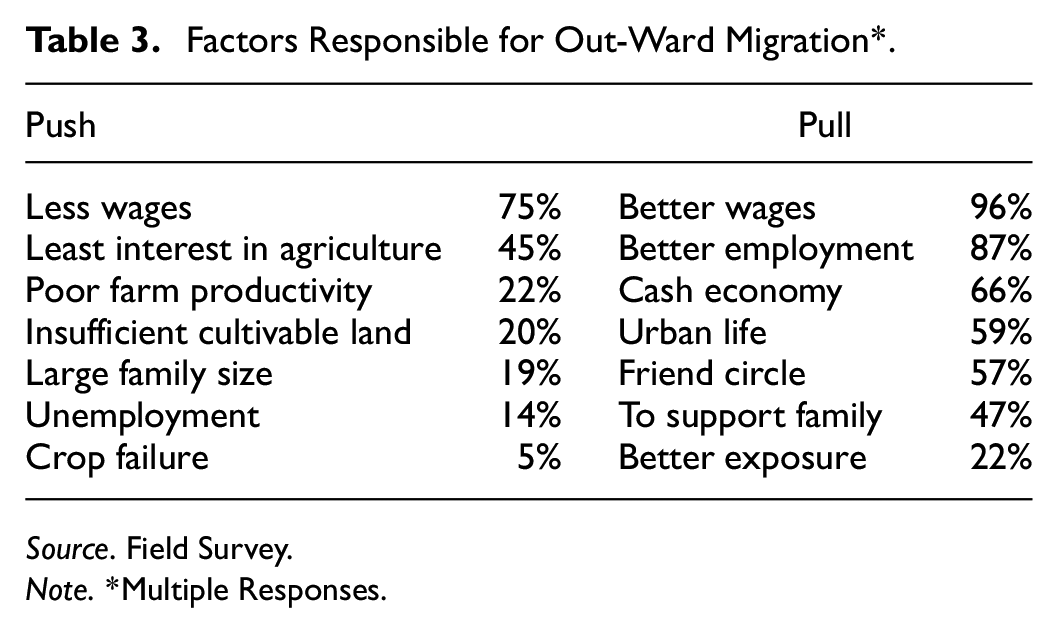
Source. Field Survey.
Note. *Multiple Responses.
Trend and Pattern of Migration in Study Area (HCA)
Out-migration for work among the youth has become an important trend in HCA. A steady rise in out-migration was recorded during 1995 to 2014 in the study (see Figure 5). On the other hand, the migration in the HCA is not likely to the findings of a large volume of studies. For example, the nature of nature and trend of migration found in HCA is seasonal, albeit not forced migration; not everyone from villages are moving out (Table 1). The experience at the destination is not quite similar to the findings of most of the earlier studies. The nature of migration found in HCA is characterized as opportunity-driven migration, where migrants have employment opportunities in their place of origin but are not interested in working there.
Although “income differentials” (Harris & Todaro, 1970), agricultural distress at origin (Breman, 1990; Keshri & Bhagat, 2012) and the “footloose labor” (Breman, 1978) are important drivers in the conceptualizations of internal migration in India, such conventional approaches to the understanding of migrations cannot incorporate the entirety of the complex process. Therefore, there is a need for newer approaches (including the conventional); for example, the inspirational instinct to experience urban life and being modern are major contributing factors for contemporary migrations (Reja & Das, 2019), apart from factors such as poverty and income differentials in both places (Breman, 1978; Keshri & Bhagat, 2010). The inspirational aspect of migration has been ignored in the conventional understanding of migration studies. On the other hand, distance is no longer a matter of obstruction for contemporary migration. He stated that “as the distance between two places increases, the volume of migration decreases.” In contrast, migrants from the HCA move to Tamil Nadu in the far South and to Gujarat and Delhi in western and northern India.
However, the social network plays a crucial role in the process of migration, particularly in disseminating knowledge about destinations, including initial accommodation at the destinations. Thus, the social networks of the intended migrants influence them; heavily in their migration decision (see Figure 3). Such social network impact indicates a chain migration trend in the study region. Every year, new people join them when they return to work, this process becomes more frequent, and more friends and relatives (primarily the youth) join their migrant friends to the workplace. The trend of out-migration started during 1995 to 1996 in HCA (see Figure 4); initially, migrants used to engage in unpleasant works like repairing railway tracks and bridges. However, after 2005 migrants started working in factories as manual labor under labor contractors. There is a significant rise in the number of migrations in the study area after 2004 to 2005, and most migrants prefer to work in any industrial sector. They are not interested in working in the railway tracts primarily because of the lower or impure status attached to working on human excretion (as found in the railway tracts in India), and it is risky working in the railway tracts and bridges. Every time the migrants return home for vacation, a new group of migrants from the younger generation are interested in going with them for work. Thus, the process of migration started in the village. Figure 3 illustrates considerable numbers (38%) of migrants influenced by the peer groups, 30% of them were moving outwards with villagers, 23% decided because of the labor contractor, 6% were influenced by relatives and decided to migrate, and only 3% of migrants moved because of influence of other sources (Figure 3).

Agency influencing migration.

Trend of out-migration.
Migrants at the Place of Work
Migrants belong to socially and economically well-off backgrounds working as technical assistants; most are in better-off jobs and positions. They have had the privilege of receiving education and technical degrees such as ITI and diplomas. Some of them can get jobs in shops and other relatively privileged positions in the workplaces, for example, Table 1 and Figure 5. Besides this, those with lower socio-economic status, such as Dalits and other marginalized groups, are associated with heavy, menial labor (as the loader and rack picker). The informal estimate of the labor exchange market for the Western Odisha Dadan labor is anywhere between Rs. 700 and 800 million per year, Deb (2013) reported its amount to 500 crores. Dey (2014) claims that migration research in India primarily focuses on the determining factors and ignores its effects. The NSSO 2007-08 report demonstrated that migrants from rural India tend to remit more than urban migrants. However, it is a fact that urban areas serve higher wages than rural areas. There is a growing realization that remittances gained from migration can serve as a “bottom-up” source for reducing the incidence, depth and severity of poverty at home has realized (de Haan & Dubey, 2005; Dey, 2014; Jones, 1998). Remittances sent by migrants to their homes could use for poverty reduction, overcoming credit constraints, and investment in productivity through human capital and physical capital with long-run implications for poverty alleviation (Acosta et al., 2008; Taylor, 1999).

Migrants at the place of work.
A significant percentage (43%) of migrants shows their monthly income was between Rs. 6,000 and Rs. 8,000, and 27% earned between 8,000 and 10,000 rupees per month compared to 2,500 to 3,000 at home (see Figure 6). About 27% of migrants get salaries between 8,000 and 10,000 rupees per month. The difference in income among the respondents depends on their work type, the number of days worked, and the workplace duration. Relatively old and experienced migrants get more wages as compared to new migrants. The impact of migrants’ remittance to their homes has appeared to be non or less apparent in households’ poverty. They would earn similarly to remittance if they had not migrated, so the substitution of migrants with its remittances no longer be the only way of analysis (as described in Cox-Edwards & Rodríguez-Oreggia, 2009).

Monthly income of migrants.
Further, it has been argued that the inherent endogeneity in assessing the impact of remittances on households’ poverty, poverty, or lack of it could influence the decision or ability to migrate (Dey, 2014). The cost of migration has not been properly addressed and misled; it has been neglected through the data of remittances and seeing it as the safety valve among internal migration (Khadria, 1991; Landale et al., 2011; Srivastava & Sasikumar, 2003). Thus, the mere comparison of the poverty ratio between remittance-receiving and non-remittance households leads to a biased conclusion. The cost and benefit of migration cannot be estimated solely based on financial loss gain and loss of families/migrants, which most of the studies does some way or other; rather, it should also consider the impact on loss and gain of human and social capital, deprivation of familial bonds, social exclusion. Besides these, migrants also faced difficulties at destinations, such as harassment (physical and mental) by labor contractors, landlords, co-workers, and masters (Kawachi et al., 1999; Mitra & Pradhan, 2016). A majority (69%) of migrants engaged as industrial laborers (Figure 5), 19% of them as laborers engaged in construction works. Besides this, 10 migrants identify as service holders in the industrial setup and other places. A small proportion of respondents are involved in other occupations such as business, transport, and agricultural field.
People voluntarily and/or forcibly migrate to different places to improve their life chances and well-being. Nonetheless, the migration process characterized by impediments is susceptible to structural or cultural constraints affecting their choices and is associated with emotional and psychological pressures (Bhatt, 2009). New urban migrants are relatively vulnerable; the host society expects them to assimilate rather than upward mobility (Song, 2016). Migrants dealt with fears of losing the scarce job they managed to get, use of public resources, and sanctioned discriminatory practices, both informal and formal (Abbas, 2016). Ethnic and linguistic diversity is an important factor in states like India among internal migrants (Abbas, 2016). The migrants in Tamil Nadu and Andhra Pradesh reported facing many problems, mainly due to language barriers, culture, and food habits, which are very different from their place of origin. They often found communicating with local people, shopkeepers, and vendors difficult. More often, migrants feel marginalized due to their non-native language, as pointed out by Abbas (2016, p. 151) that “they are marginalized ethnolinguistic minorities in a locality that does not even offer full citizenship rights to the ‘native’ population because of low administrative capacity or economic development. In other words, the state both will not and cannot grant or safeguard the citizenship rights of some internal migrants.” They assigned jobs with comparatively less prominent, less significant, or attached lower ranks/statuses.
The studies found that the majority of migrants who belongs to scheduled castes, scheduled tribes, and other socio-economically backward sections of society were working as typical manual labor due to their lower educational qualification. Thus, they are (so-called) less skilled according to the employers’ demand and given fewer wages on the one hand. Furthermore, migrants from higher caste(s) had the privilege of getting more education and could get better jobs even at the migration destinations than their SCs and STs counterparts. Moreover, they engaged in blue-collar jobs, for example, clerks and assistants, and even few of them work as assistants to machine operators because of their industrial training degrees.
Conclusion
Internal migration in India is a complex phenomenon and needs contextual treatment; therefore, it owes a context-specific explanation rather than broader generalizations. We have to look beyond the explanations given by neoclassical theory to understand contemporary migration. The present study of out-migration from Hirakud Command Areas suggests the need for a spatial and contextual understanding of migration and draws the inability of conventional methods of understanding migration. The relationship between poverty and migration seems not necessarily positive but absent or weak. People do not always migrate merely for economic reasons, although it is a significant contributor. It does not provide a true picture of migration and often overlooks the context-specific nature of migration. However, contemporary migration has moved beyond the hunger-distress binary of migration. As we discussed, micro-level studies suggest the incidence of migration is high among the comparatively better-up farmers. Yogendra Singh pointed out that “people try for agriculture innovations to improve their conditions, but they do not find support and linkages to the market. So they move to the cities” (Singh, 2016).
Lives in rural areas no longer solely depend upon agriculture due to alternative resources, livelihood options, and avenues. Industrial development and employment opportunities play a crucial role in the diversification of occupations. The least interest of youths in agriculture and attraction toward city life ignites migration even in the rural hinterland. The underlying causes of migration are one, the non-remunerative nature of agriculture, two repayments of existing debts irrespective of spatial differences (whether the distressed agricultural scenario or well irrigated). The rate of migration was found to be very significant (70%) among unmarried, educated youth in the study region (HCA) across landholding positions. They are comparatively free to go outside for work, as they are educated, able to work and also, more importantly, have no or lesser dependence on the native place. Moreover, the temporary migration of youths has not proved to be a sustainable alternative to agrarian distress or a reliable employment strategy.
Limitations of the Study
As mentioned earlier, one limitation of the present study present study is that it was conducted only in Hirakud Command Area, a relatively agriculturally prosperous region in Eastern India. This means that the findings of the study may not be applicable to other regions with different socio-economic conditions. For example, the study found that migration among relatively educated, unmarried male youths belonging to the upper strata of the socio-economic hierarchies is guided by their aspirations, accessibility, and ability. However, this may not be the case in regions that are not as agriculturally prosperous as Hirakud Command Area. Again, the present study has not taken other forms of migration into account. Methodologically, it has also adopted purposive sampling and used the snowball sampling method (due to the unavailability of secondary data about the sample frame) to identify the respondent. This study has not taken international migration into account.
Scope for Further Research
Future studies on migration from the study region may find it interesting in studying to understand the economic aspect of the migration, its impact on social capital at origin, and the nature of difficulties migrants faced at the destination. Further, future research could focus on understanding the nature and trends of contemporary migration in other regions with different socio-economic conditions. This could help to determine whether the findings of the present study are generalizable to other regions or whether there are regional differences in the factors that influence migration. Future research could also explore the experiences of migrants belonging to different socio-economic hierarchies in their destinations better to understand the impact of migration on their lives. Is there anything else you would like to know?
Footnotes
Declaration of Conflicting Interests
The author(s) declared no potential conflicts of interest with respect to the research, authorship, and/or publication of this article.
Funding
The author(s) received no financial support for the research, authorship, and/or publication of this article.

Data Availability Statement
Data sharing not applicable to this article as no datasets were generated or analyzed during the current study.