



Abstract
Amidst the accelerated restructuring of the global economic landscape, technological innovation, and industrial transformation, vocational education, as the core carrier of human capital cultivation, is undergoing systematic changes. The UNESCO's “Education 2030 Framework for Action” (UNESCO, 2024) clearly states that vocational education is a key lever for promoting inclusive growth and addressing structural unemployment and skills gaps. Between 2022 and 2024, countries have gradually formed a dominant trend toward the modernization of vocational education through policy innovation and practical exploration. These trends have not only reshaped the education supply model but also become an important support for enhancing national competitiveness and achieving the Sustainable Development Goals (SDGs). Against this backdrop, the landscape of global vocational education is undergoing a transformative shift, driven by technological advancements, economic changes, and the evolving needs of the workforce.
This article explores 10 key trends shaping vocational education between 2022 and 2024, which can be grouped into three broad categories: technological empowerment, industry–education integration, and ecological sustainability. These trends highlight how vocational education is evolving from traditional skill development to a more dynamic system that fosters lifelong learning, global mobility, and sustainable economic growth. From digital transformation and AI integration to the promotion of green skills and the deepening of industry partnerships, each trend reflects a strategic response to the demands of an increasingly interconnected and rapidly changing world. In this context, the paper provides valuable insights for global readers, offering a clearer understanding of how vocational education systems worldwide are adapting to the evolving socioeconomic landscape, and how these developments contribute to achieving broader goals of sustainable development and competitiveness in the global economy.
Trend #1—Innovation-Driven Development: Economic Strategy Drives Innovation in Talent Cultivation Mechanism of Vocational Education
In recent years, innovation-driven development has become a core element of global economic strategies, catalyzing profound reforms in talent cultivation mechanisms within vocational education systems across countries (Table 1).
Trend
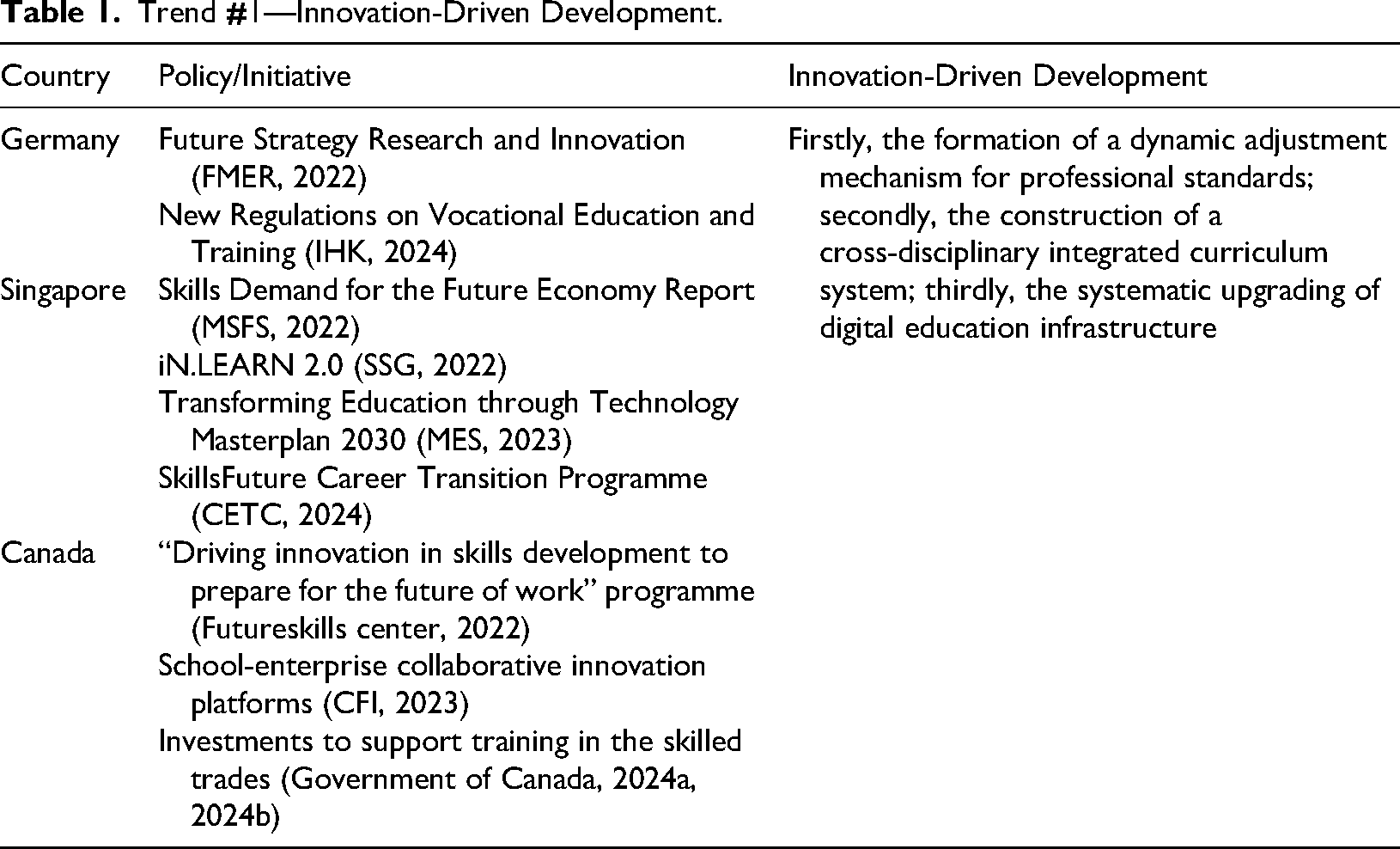
These reform measures indicate that the innovation of the modern vocational education system has transcended mere reforms within the educational field and evolved into a strategic institutional arrangement supporting the transformation and upgrading of the national economy. The core lies in cultivating new technical and skilled talents with adaptability to future industries through innovative changes on the supply side of education.
Trend #2—Faculty Development: Diversified Paths to Strengthen the Cultivation of Dual-Qualified Teachers
In the strategic layout for the high-quality development of vocational education, developing “dual-qualified” teachers has emerged as a pivotal lever for enhancing educational outcomes. Countries around the world have established diversified teacher development paths through institutional innovation (Table 2).
Trend
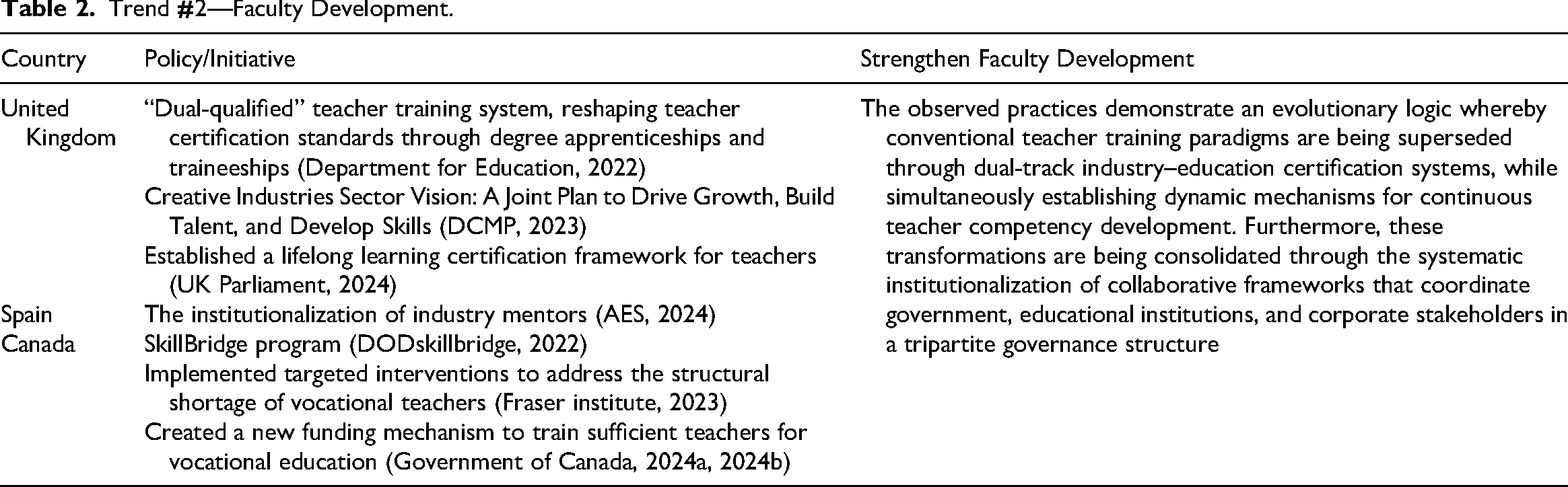
Data monitoring shows that the increase in the proportion of dual-qualified teachers has led to higher participation rates in practical training courses and increased frequency of teacher–student interaction, confirming the positive driving effect of teacher structure optimization on education quality. This marks a shift in faculty development of vocational education from a singular focus on enhancing teaching abilities to a strategic project supporting the overall transformation of the education system.
Trend #3—Diversified Modes: Flexible Training Modes Enhance the Attractiveness and Practicality of Vocational Education
In the process of modernizing vocational education, diversified innovation in training models has become a key path to enhancing the inclusiveness and practical effectiveness of the education system (Table 3).
Trend
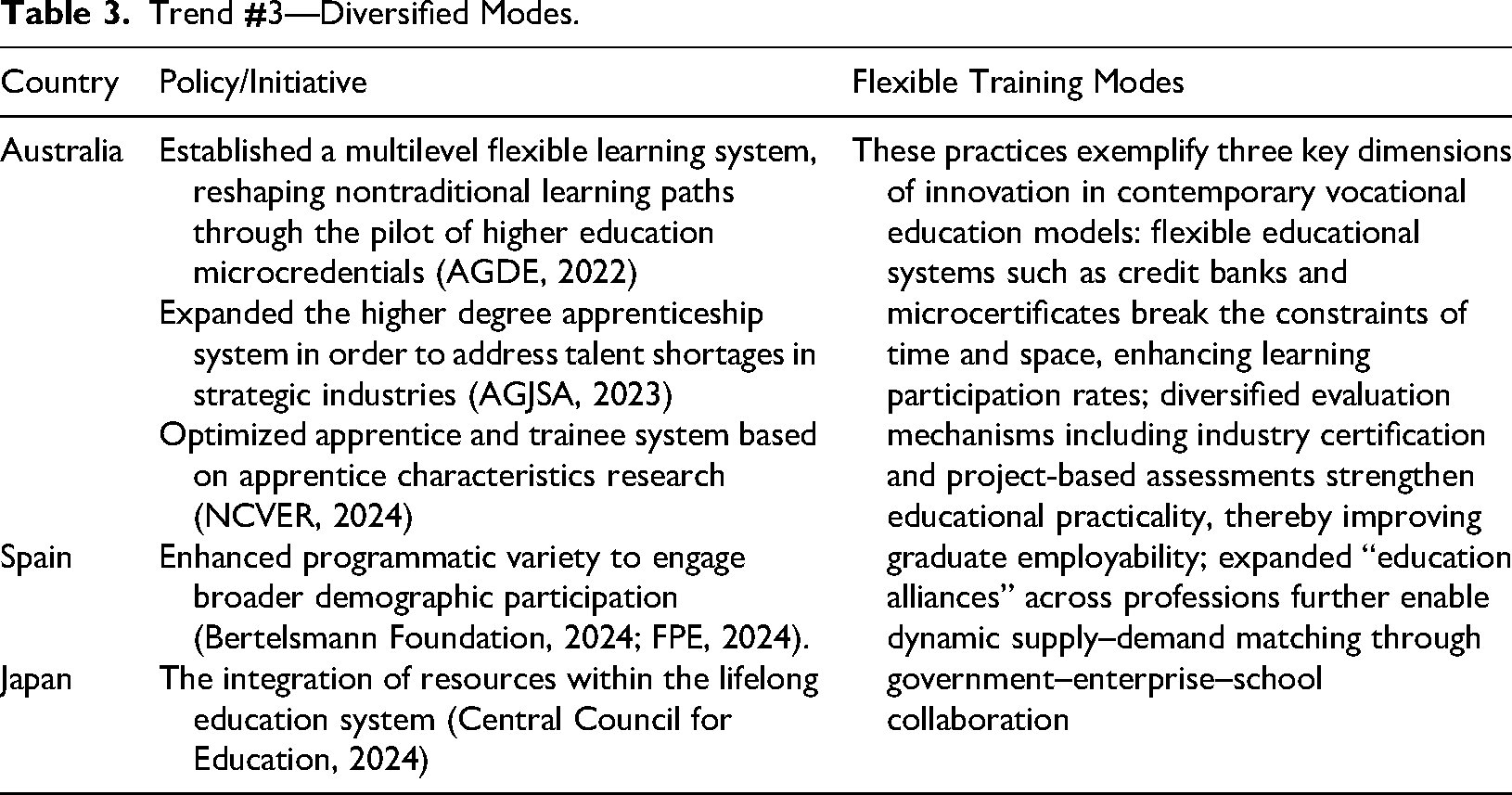
This model innovation not only increases the resumption rate of vocational education but also drives the transformation of vocational education from a phased academic education to a lifelong ability development support system through a virtuous cycle mechanism of “education, employment, and re-education,” providing an institutional solution for building a learning-oriented society.
Trend #4—Digital Transformation: Enhancing Flexibility and Expanding the Audience of Vocational Education
Amidst the structural transformation of global vocational education systems, digital transformation is reshaping the form of educational supply, emerging as a strategic tool to enhance system resilience and promote inclusive education (Table 4).
Trend
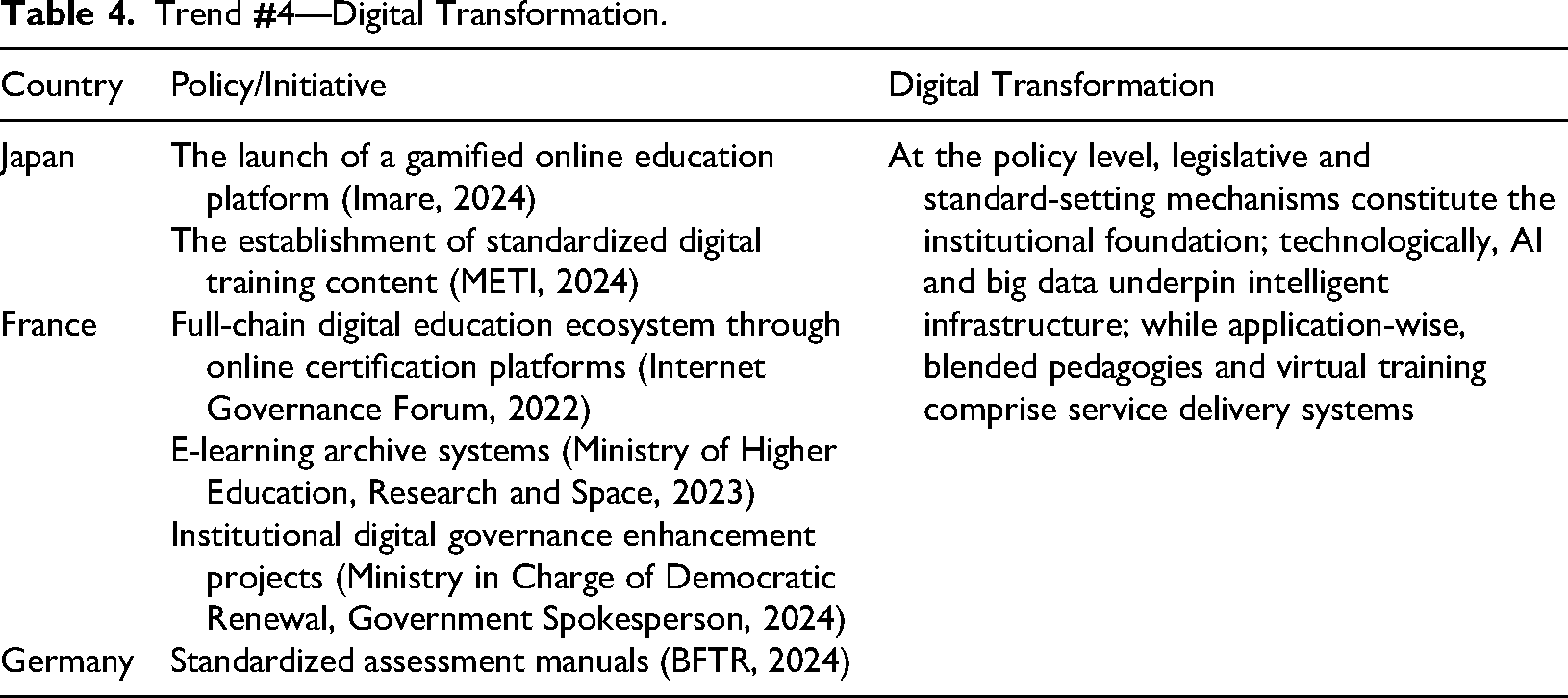
Data show that digital transformation has improved the remote teaching capacity of vocational education institutions. During the pandemic, the number of online registrants increased markedly, significantly enhancing the participation rate of learners in remote areas. This transformation not only breaks geographical and physical constraints through the construction of cloud resource pools but also leverages adaptive learning systems to enhance the coverage of personalized teaching, marking a paradigm shift from large-scale supply to precision-based services in vocational education. The digital transformation strategy is reshaping the era value of vocational education as a core carrier of lifelong learning for all by enhancing the system's risk resistance and service scalability.
Trend #5—AI Empowerment: Driving the Vocational Education System Toward Intelligence and Precision
In the process of modernizing vocational education, the deep application of artificial intelligence (AI) technology is catalyzing concurrent transformations in both educational content production and governance models, driving the vocational education system towards intelligence and precision (Table 5).
Trend
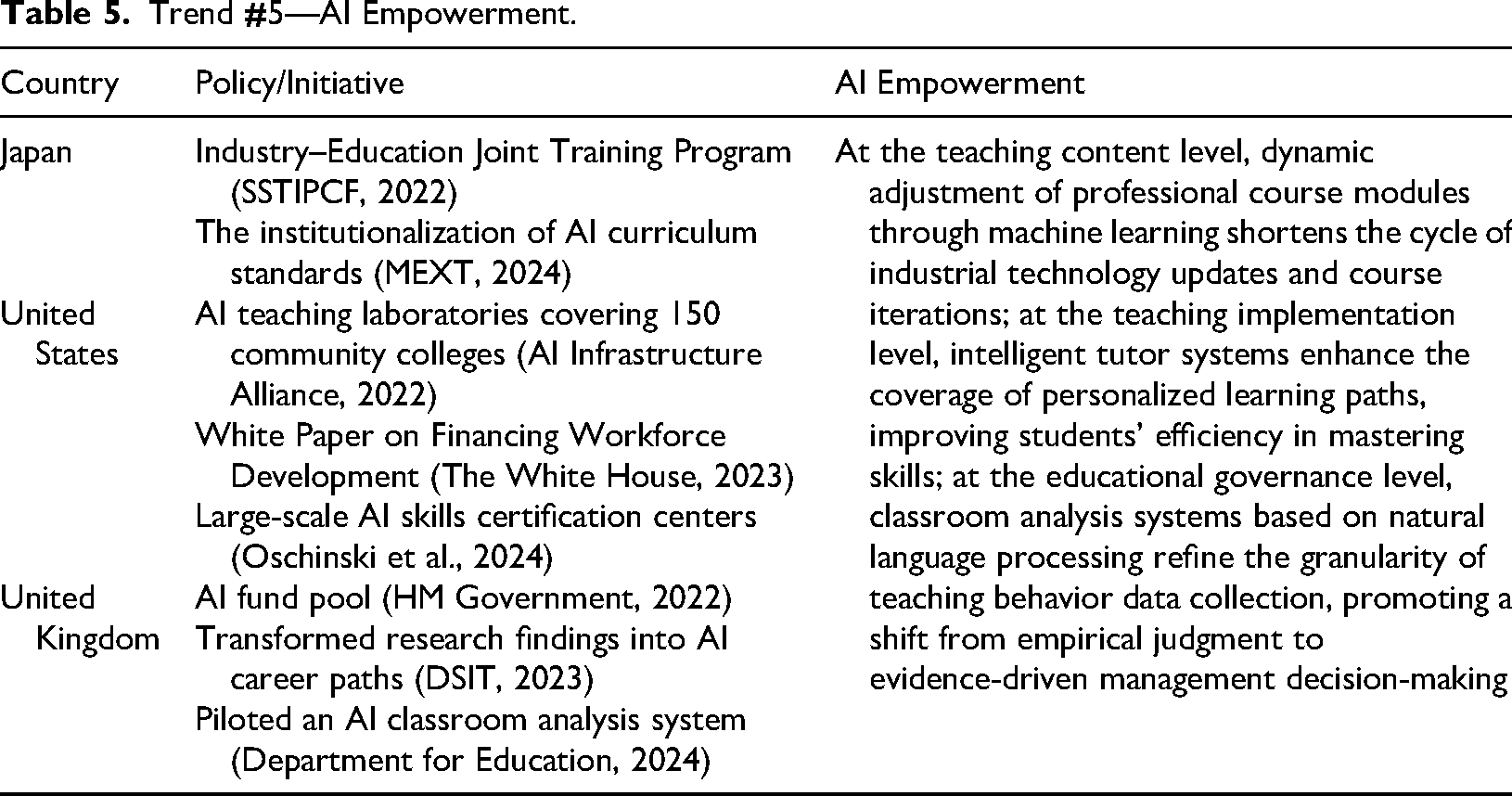
Data show that AI's deep empowerment enhances the responsiveness of vocational education institutions to curriculum updates and increases learners’ success rate in career transitions, marking the transformation of vocational education from “manual adaptation” to “intelligent prediction.” This change not only reshapes the way knowledge is imparted but also, through the value mining of educational big data, makes vocational education an intelligent infrastructure supporting the dynamic optimization of human capital.
Trend #6—Deepening Industry–Education Integration: From Resource Exchange to Co-Constructed Standards and Collaborative Evaluation
In the new stage of collaborative development between vocational education and industry, industry–education integration is undergoing a paradigm shift from resource exchange to institutional co-construction, promoting the formation of a new governance relationship that establishes structural linkages between education supply networks and industry production chains (Table 6).
Trend
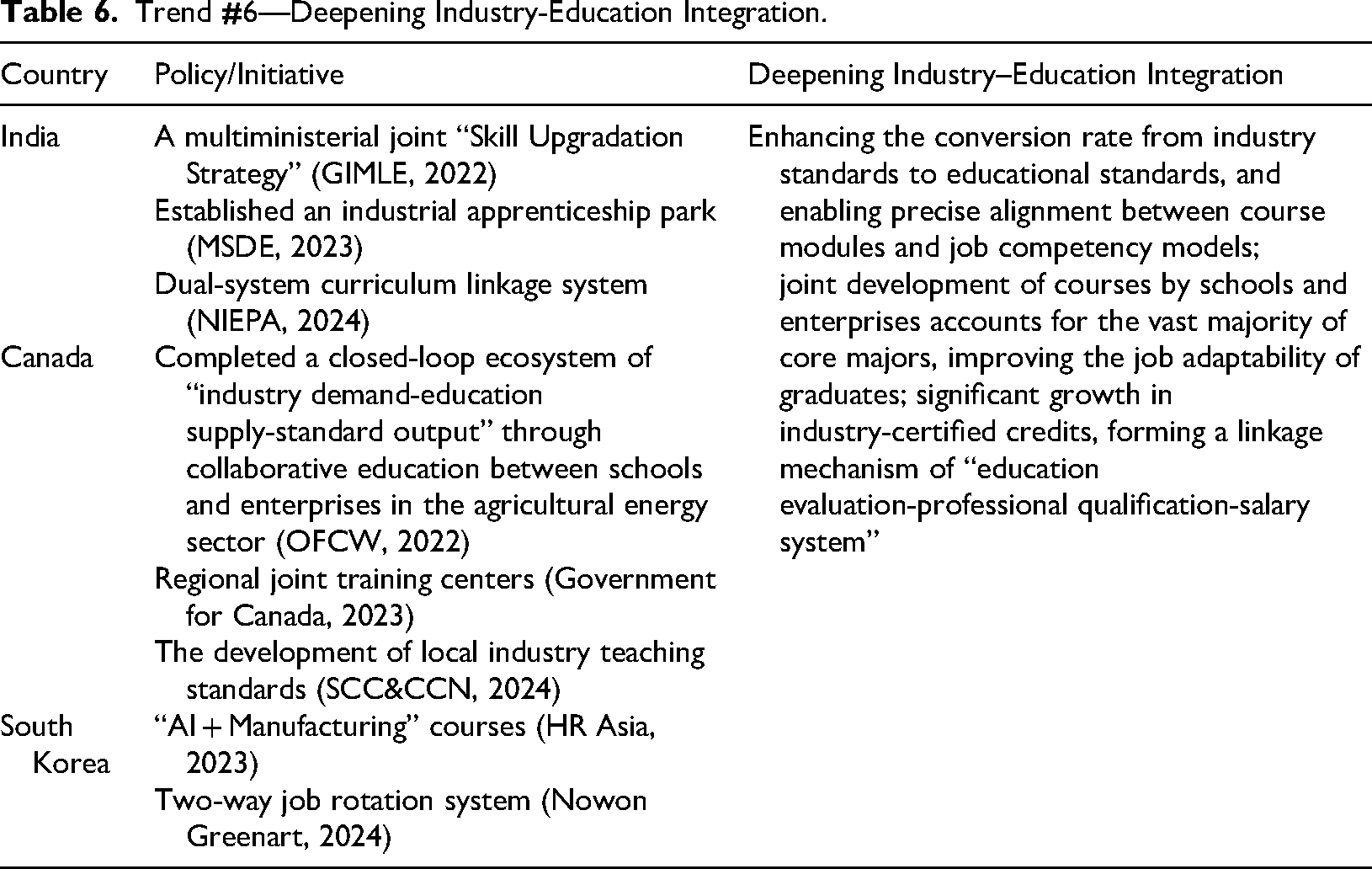
This deep integration not only gives birth to a “third space” of educational governance, where standardization committees composed of government, school, and enterprise cover an increasing number of key industries, but also establishes a dynamic capability map, making vocational education standards the benchmark coordinate system for industrial upgrading. The in-depth development of industry–education integration marks that school–enterprise cooperation has transcended the traditional logic of complementary resources and evolved into an institutional infrastructure supporting the construction of a modern economic system.
Trend #7—Promotion of Green Skills: Integrating Green Skills into Vocational Education Curricula and Qualification Frameworks
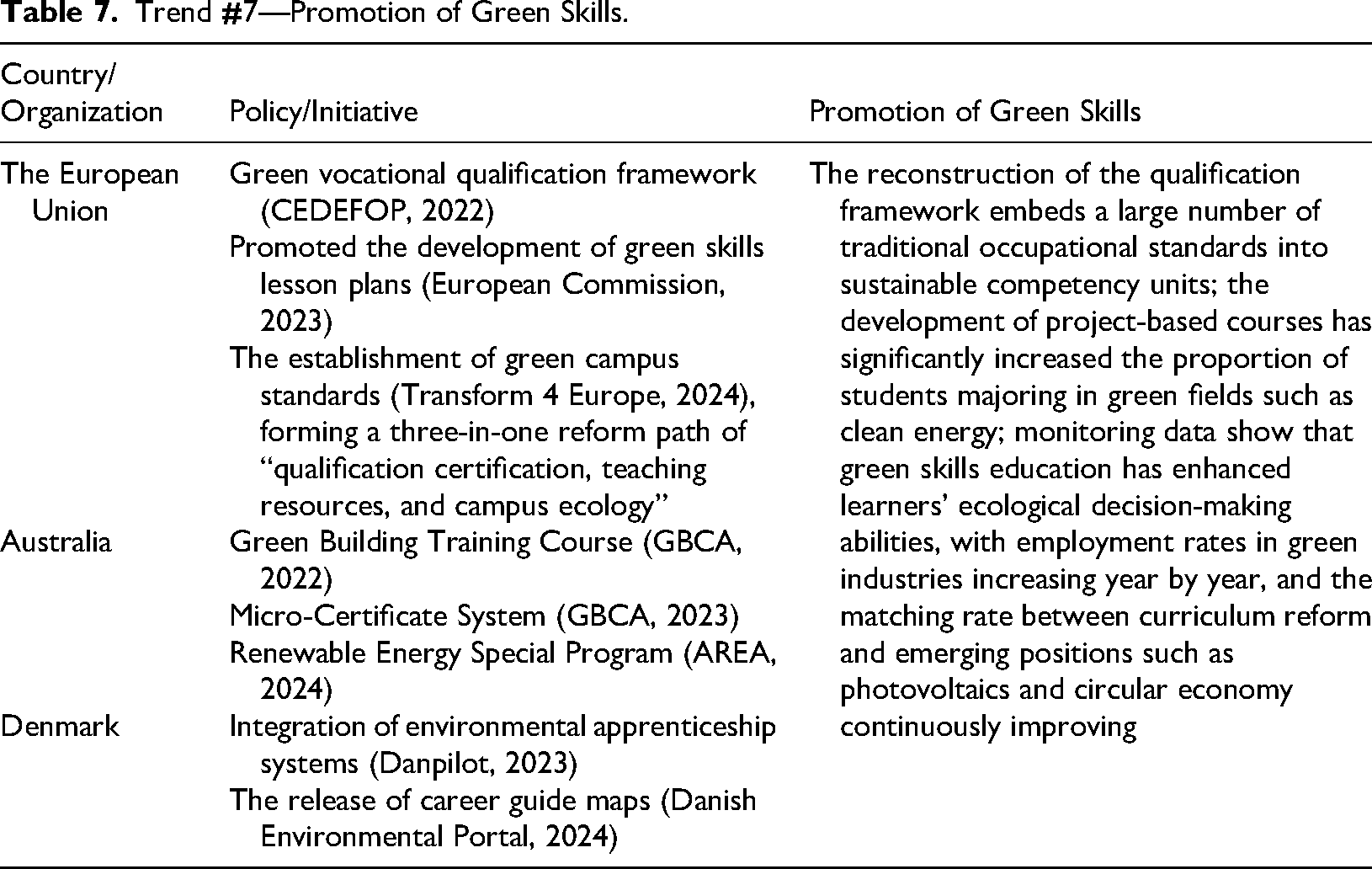
As global sustainability agendas advance, green skills education is being upgraded from a marginal course to the core structure of the vocational education system, driving the strategic coupling of human capital development and low-carbon economic transformation (Table 7).
Trend
Trend
Trend
Trend
This transformation not only achieves ability accumulation across educational stages through the “Green Credit Bank” but also leverages the linkage of industrial policies under the carbon peaking and carbon neutrality targets, making vocational education a key actor in implementing the SDGs. The deep integration of green skills signifies that vocational education has broken through the singular employment orientation and evolved into a cornerstone institutional arrangement for cultivating ecological citizens and supporting the transformation of the green economy.
The global vocational education sector is undergoing a profound structural transformation, with the promotion of green skills emerging as a key driver. This shift reflects not only the growing global focus on sustainable development but also the significant influence of the worldwide energy transition and carbon neutrality strategies. With the rapid advancement of green technologies and intensified climate change mitigation efforts, vocational education systems must continually adapt to new labor market demands. They must cultivate talent equipped with green skills to propel the development of a low-carbon economy and achieve environmental sustainability goals. Consequently, the integration of green skills not only drives the renewal of vocational education content and structures but also presents new opportunities and challenges for global education policies and labor markets.
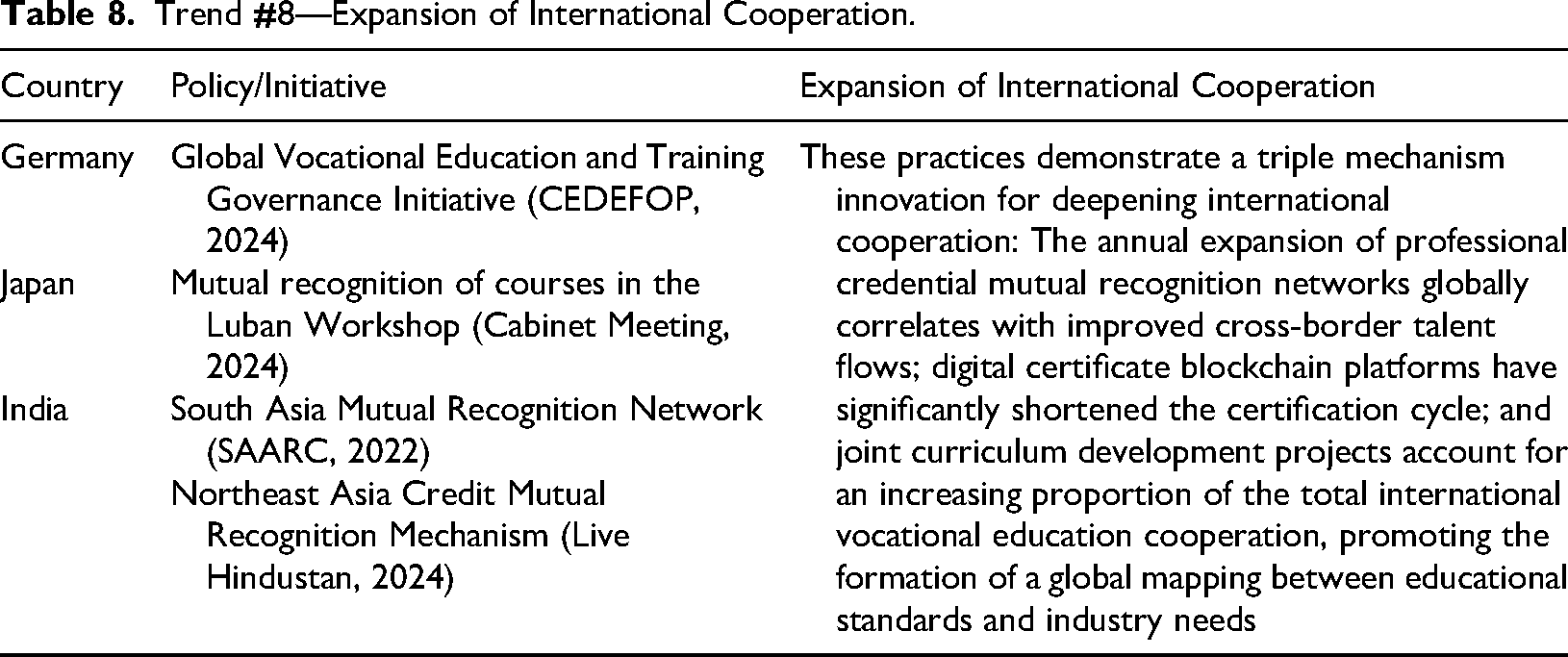
Trend #8—Expansion of International Cooperation: Cross-Border Mutual Recognition of Skills Certificates Promotes International Mobility of Talents
Amidst the reconfiguration of the global human capital allocation landscape, international cooperation in vocational education is undergoing a paradigm shift from personnel exchanges to institutional collaboration, driving the formation of a new governance framework for cross-border mutual recognition of skills and qualifications.
Monitoring data show that the international employment rate of graduates participating in the cross-border mutual recognition mechanism is continuously increasing, and the cost of local talent training for multinational enterprises is continuously decreasing. This institutional collaboration not only reconstructs the talent mobility paradigm through the “skills passport” system, but also leverages governance tools such as the Global Skills Pact to make vocational education a key support for addressing the global restructuring of the industrial chain. The in-depth expansion of international cooperation marks that vocational education has broken through the physical constraints of national boundaries and evolved into a strategic infrastructure for promoting the global allocation of human capital.
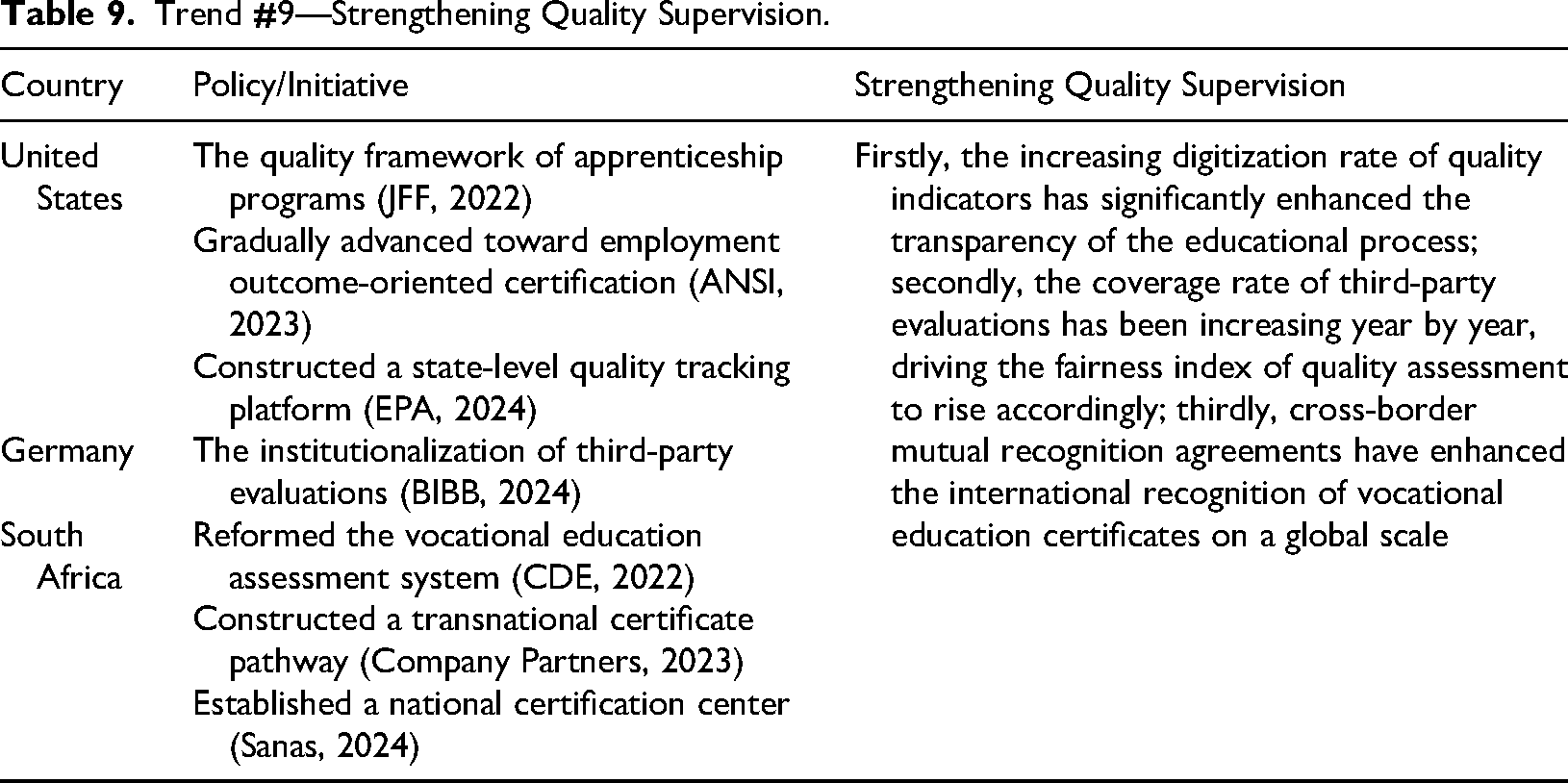
Trend #9—Strengthening Quality Supervision: Improving the Quality and Recognition of Vocational Education and Training System
In the process of transformation and upgrading of global vocational education systems, the innovation of quality governance mechanisms is transitioning from a single assessment tool to a systematic governance framework, driving vocational education to shift from scale expansion to connotative development.
Monitoring data show that the employment quality index of graduates in regions implementing quality tracking systems has improved, along with increased enterprise satisfaction, and the speed at which courses update to respond to changes in industry demand has been shortened. The systematic strengthening of quality supervision indicates that vocational education is breaking through traditional extensive management models and evolving into a strategic quality infrastructure for national human resource development through the triple iteration of “standard governance-data governance-global governance.”
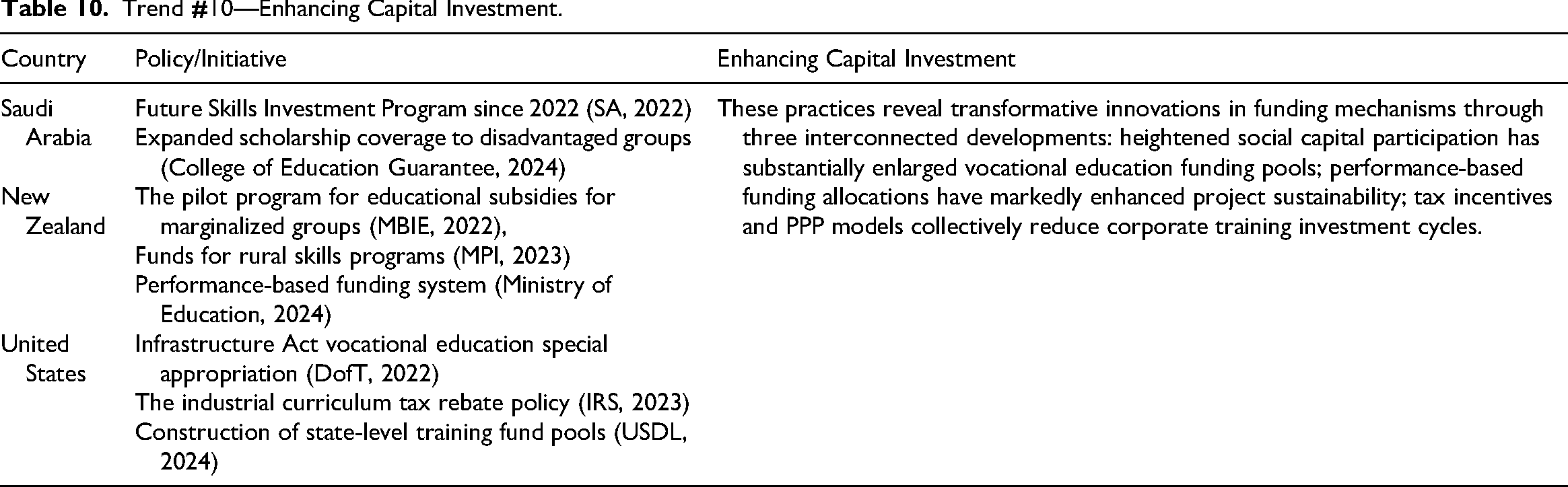
Trend #10—Enhancing Capital Investment: Expanding the Educated Population and Improving Project Sustainability
Driven by the dual demands of fairness and sustainable development in global vocational education, the funding mechanism is undergoing a paradigm shift from one-way fiscal support to diversified value co-creation, promoting the coordinated improvement of efficiency and inclusiveness in educational resource allocation.
Data show that the diversified funding mechanism has increased participation rates among low-income groups, boosted enrollment among marginalized groups such as indigenous people, and enhanced the survival rate of projects in strategic areas like green skills compared to traditional projects. The systematic reconstruction of the funding mechanism signifies that vocational education is breaking away from sole reliance on public finance and evolving into a leveraged infrastructure for promoting social mobility and economic development through a three-dimensional innovation of “strategic investment-value co-creation-ecosystem cultivation.”
From global practices, the development of vocational education exhibits three core characteristics: technology empowerment, where artificial intelligence and digitization reshape teaching and governance models; concurrently, industry–education collaboration, where school–enterprise cooperation shifts from resource complementarity to joint standard setting; ultimately, ecological integration, where green skills and international cooperation become key drivers for sustainable development.
This comprehensive transformation repositions vocational education as a dynamic infrastructure addressing the following challenges in tandem: achieving pedagogical adaptability through faculty development and teaching innovation, enhancing technological responsiveness via digital–AI integration; promoting sustainable development through green economy alignment, strengthening institutional robustness through quality-capital reforms, and realizing global interoperability through credential co-recognition. These trends signify that vocational education is transitioning from single-skill training to lifelong learning systems, evolving from localization to globalization, balancing individual employability, economic competitiveness, and planetary well-being, with significantly enhanced flexibility and inclusivity.
Takeaway Message
Vocational education is undergoing a global paradigm shift from traditional skill training to lifelong learning systems integrating innovation, sustainability, and inclusivity.
Technology, especially AI and digitalization, is transforming teaching, assessment, and governance, enhancing flexibility and precision.
Industry–education integration has evolved from cooperation in resources to co-construction of standards, linking education with industrial upgrading.
Green skills have become a strategic driver aligning human capital development with global sustainability and carbon-neutral goals.
International cooperation and mutual recognition of skills are fostering global talent mobility, positioning vocational education as a cornerstone of sustainable and inclusive global development.
Footnotes

Author Contributions
Shanshan Guan is responsible for data analysis and article writing. Xiaoyong Tian is responsible for data collection. Hui Jin is responsible for designing the structure of the article as well as revising and improving it.
Funding
The authors disclosed receipt of the following financial support for the research, authorship, and/or publication of this article: General Project of Humanities and Social Sciences of the Ministry of Education “Research on the Internationalization Path and Strategy of Vocational Education in China from the Perspective of Regional and Country Analysis” (22YJC880018); the 2023 open research project of the Institute of Global Governance and Regional Studies, Shanghai International Studies University Shanghai (2023kty004).
Declaration of Conflicting Interests
The authors declared no potential conflicts of interest with respect to the research, authorship, and/or publication of this article.