



Abstract
Purpose
This study aims to answer the following questions: (1) Why have attempts to transplant Western vocational education models failed? (2) Is there anything we can learn from the experiences of Eastern Asian countries when developing their own vocational education models?
Design/Approach/Methods
This study reviews the history of transplanting Western skill formation schemes into developing countries, an often-failed die-hard practice supported by both bilateral and multilateral donors.
Findings
Our findings suggest that developing countries should design their technical and vocational education and training systems based on their unique cultural, sociological, and economic contexts. It offers two alternative pathways based on the experiences of the People's Republic of China and the Republic of Korea.
Originality/Value
These East Asian examples could broaden the perspectives of policymakers in developing countries aspiring to develop functional skill formation schemes.
Keywords
Technical and Vocational Education and Training (TVET) represents an important area of development, especially in developing countries that desire to take advantage of employment opportunities in low- to medium-skilled areas. TVET remains somewhat understudied and less well-understood than general education. As discussed in this essay, TVET development strategies are generally based on the experiences of several developed Western nations. Their “success stories” have been encapsulated into a set of “best practices” advocated by international organizations, multilateral development banks, and other aid-focused organizations. The attempt to collate a set of practices that are considered universally the best, albeit well-intentioned, have potentially overlooked the perspectives and experiences of developing countries where different circumstances related to economics, politics, culture, and history can render their policy needs substantially different from those addressed by the “best practices.”
This article conducts insightful analyses of TVET approaches on a global scale and the history of their development, and offers case studies of two countries: the Republic of Korea (ROK) and the People's Republic of China (PRC). Both countries have forged unique paths for TVET development and managed to create a TVET system that complements their economies. This study illustrates the strategies employed in each country, and how they serve as functional alternatives to the Western model. This article aims to highlight the importance of national context and applying a flexible approach to TVET development, and we hope to provide alternative perspectives for TVET development as well as development, more broadly.
The search for global TVET solutions: History, development, and failings
The evolution of unified TVET policy and the significance of Western models
TVET has come full circle over the past six decades. Originally glorified as the key to Africa's economic performance in the 1960s, a lack of return on investments by the 1980s saw a shift toward universal primary education (Balogh, 1964; Psacharopoulos, 2006; UNESCO-UNEVOC, 2008; World Bank, 1991). The “Education for All” Initiative dominated the 1990s and the early 2000s, but after young graduates were seen as the parties suffering most significantly from the economic crisis of 2007/2008, the world turned to TVET once again to search for a potential solution for unemployment, leading to a tripling of the investment levels in TVET between 2002 and 2009.
With the ebbing and flowing of TVET investments, a particular trend has emerged. In the aftermath of the perceived failure of TVET in the 1980s, some researchers concluded that the problem lies in the naive transplanting of TVET models from the North to the South, and that the success of TVET hinges on its specificity with regard to the local context (Carbonnier et al., 2014; Okwuanaso, 1984; Watson, 1994). Unfortunately, this lesson has not been learned completely within the circle of international development. The trend of prescribing “building blocks” based on the experiences of successful western nations is still very prevalent in international development today (Table 1). For instance, in 2018, UNESCO advocated that policymakers ensure 10 essential “building blocks” for TVET (UNESCO & ILO, 2018). The very idea of prescribing “building blocks” for nations is contradictory to the notion of giving nations the discretion to formulate TVET systems based on their specific needs. Similarly, consultants from the United States Agency for International Development (USAID) summarized eight key ingredients of an effective TVET system; however, they drew primarily from TVET models in the United Kingdom, Germany, and France. Some of these features have subsequently become staples in the language for recommendation and program design of TVET systems, such as National Qualification Frameworks (NQF), Sector Skills Councils, Public–Private Partnerships (PPP), and Labor Market Information Systems.
TVET “building-block” approaches.
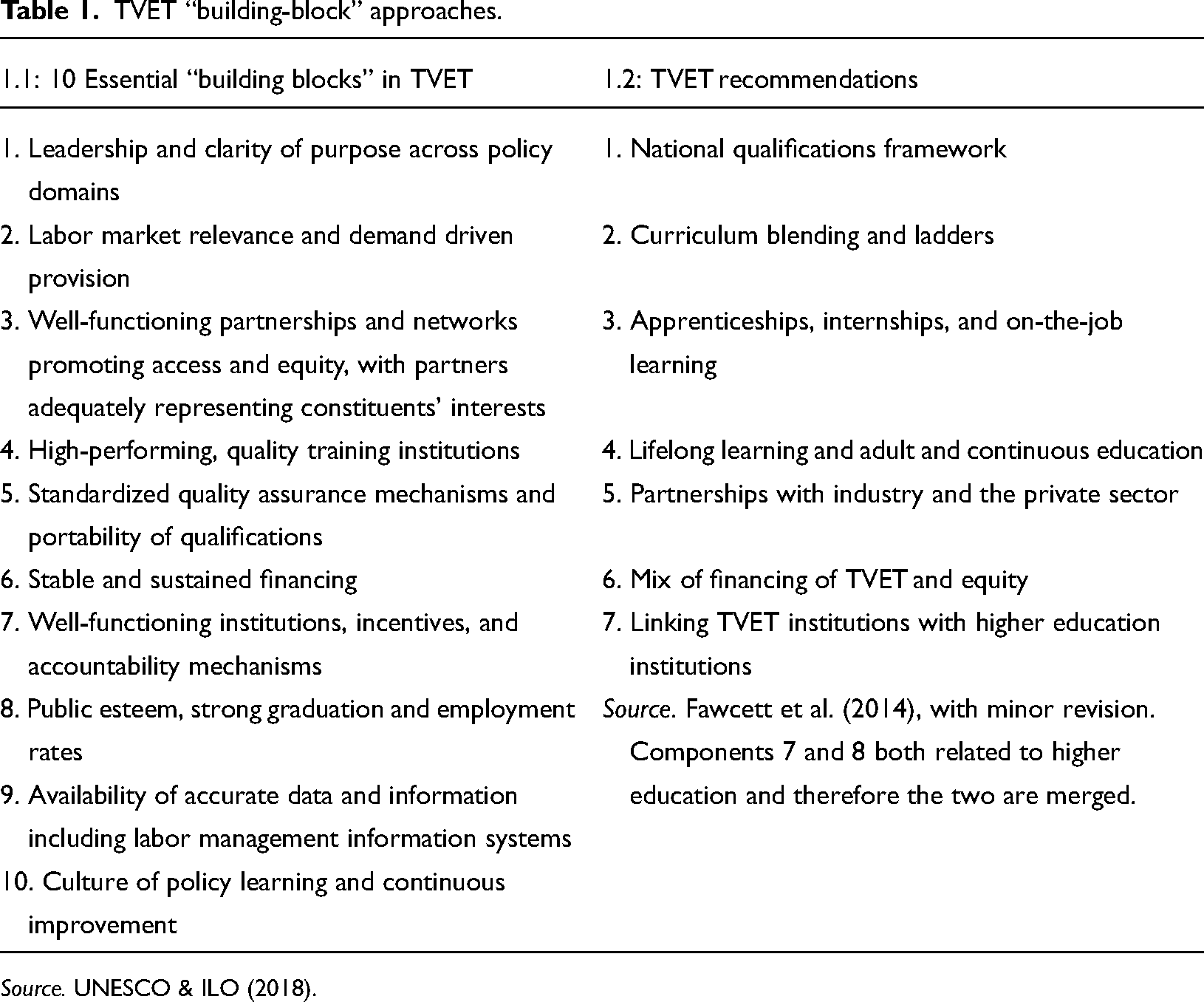
Source. UNESCO & ILO (2018).
Concurrent with the on-going theoretical studies on TVET, scholars have attempted to create useful classification systems, or “typologies,” of different types of TVET to help differentiate distinct TVET systems. Busemeyer and Trampusch (2012) divided TVET systems along two separate dimensions: private sector involvement in TVET and the commitment of the public sector to the establishment and funding of TVET. Examining the relative positions of different Western nations within this framework (Figure 1), it is clear that even within developed nations, there are vast differences between the various types of TVET systems (Table 2).
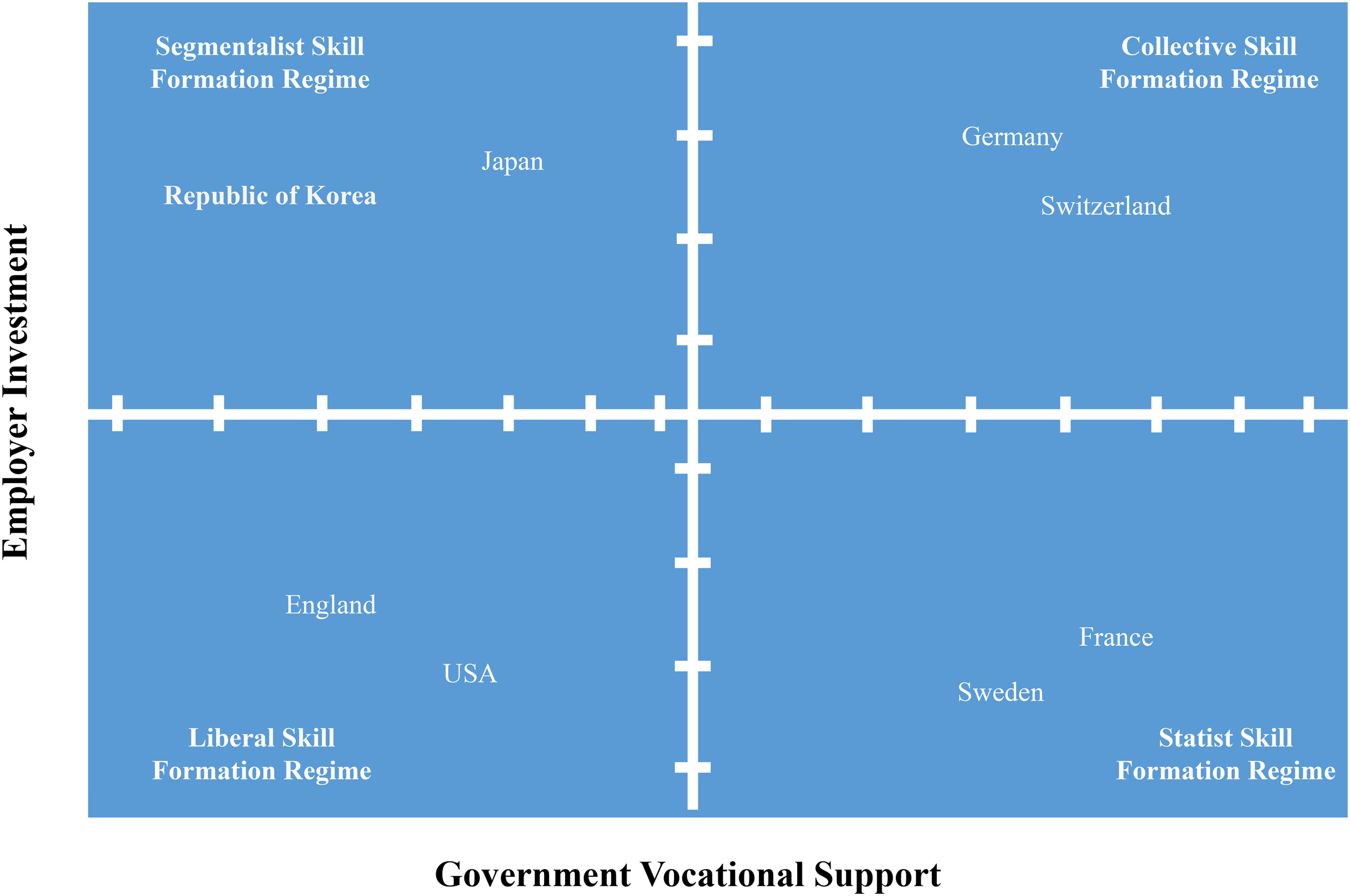
Four TVET regimes.
Key areas in TVET transfer.
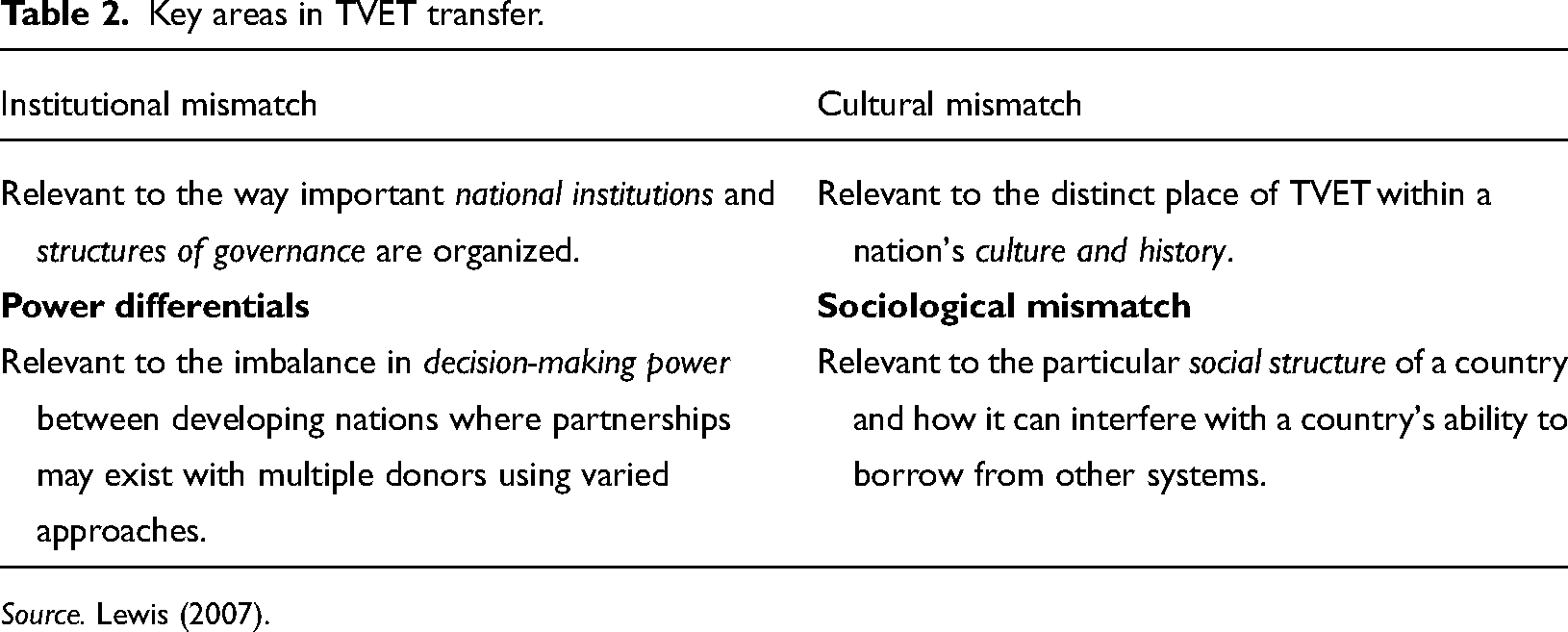
Source. Lewis (2007).
The reasons for the institutional diversity observed above relate to a multitude of cultural and contextual factors, as exemplified by the historical development of TVET in Great Britain and Germany. Deissinger (1994, 2002, 2004, 2015) has written extensively on the development of TVET in these two countries, and his analysis forms the foundation for the history recounted in this study. Britain and Germany shared a guild system in pre-industrial Europe. However, around the time of the Industrial Revolution, the system began to diverge significantly. In both regions, the guilds lost all power due to the massive rise in the import of unskilled labor and were eventually dismantled. Notably, the effects of the economic “liberalization” (an idea which was born in Great Britain, as well as the industrial revolution itself) were more severe in Great Britain, as evidenced by the rampant issue of child labor and the relative unwillingness of the government to intervene. Conversely, in Germany, a new class of unified workers propounded ideas of socialism and, out of a fear of political uprising, the Wilhelmine government reintroduced the guilds and their various protections, including wage guarantees and the ability to conduct apprenticeships. From this point onwards, the German Dual System has gone from strength to strength, while the lingering influence of liberalism has weakened the British system.
In modern times, the German and British TVET systems are generally considered the most influential within the international community. The aforementioned “building blocks” and “key ingredients” for TVET were largely drawn from the combined experiences of the two systems, despite the fact they are fundamentally based on different approaches to the “coordination problem.” Despite their benefits for a nascent TVET system, theoretically, these “building blocks” may be unsuitable for a TVET model in a developing nation for numerous reasons. First, features of the German and British TVET models can be inherently contradictory, as evidenced by the fact that these two countries are often placed on opposite ends of a standard TVET typology. Germany is considered a collective skills formation regime, where the organization and operation of the TVET system are sustained by close cooperation between the private and public sectors. In contrast, the United Kingdom is considered a liberal skills formation regime, where state or private involvement in the organization and operation of the TVET system are both low. The entirely distinct institutional environment between these two countries raises the question of why they are often considered in tandem in theoretical studies of TVET. Furthermore, many other types of TVET systems exist in developed countries; however, each addresses the specific needs of the respective country. France's statist skills formation regime features high state involvement but a lack of involvement from the private sector. In contrast, the segmentalist skills formation regime has a high degree of employer involvement in training but lacks state regulation, as seen in countries like Japan.
The shortcomings of the unified approach
While typologies are a convenient tool for viewing and describing a variety of TVET systems and how TVET policy needs depend on the existing structure of institutions, the focus on typologies has perhaps obscured the most fundamental issue regarding the success of TVET systems, which is the mitigation of the “coordination problem”—skills learned from training are public goods, in the sense that they are non-excludable, as other firms could later benefit from this training by poaching the trained employees. Such risks could lead to the unwillingness of private enterprises to participate in vocational training entirely, and thus workers are forced to invest in “general skills” that allow for flexibility in the pursuit of employment but command a lower wage (Becker, 1964). Simultaneously, an overabundance of general skills means that the private sector is hindered by a lack of sufficient skills in the labor market, particularly skilled technicians working in narrowly defined areas.
The German Dual System is held up as a system that has resolved the “coordination problem.” Anchored by a strong level of coordination between industry and the government, companies play a strong role in apprenticeships, funding TVET, and advising on training content and policies, while public schools provide a steady supply of well-prepared students who are incentivized to continue to work in the same organization that has sponsored their apprenticeships. The balanced relationship between public and private institutions in Germany is responsible for the strong presence of sector skills councils and PPP within TVET programs. Furthermore, competency-based curricula can emerge from the meticulous definition and standardization of professions and skills, which is also a fundamental feature of TVET in Germany. Conversely, in the UK, the government traditionally played a minimal role in regulating training. This dates back to the liberal practice of allowing industrial firms to train factory workers exclusively in-house. Eventually, to improve and further regulate the TVET sector, dominated by private trainers of highly variable quality, the government introduced the NQF. This had the benefit of harmonizing the vastly different types of training providers and content into a cohesive framework, but it has also often been criticized as a quick-fix that still allows private trainers to exert too much influence over training, producing skills that might be excessively firm-specific. Thus, within these two examples it can be clearly seen how the various “building blocks” represent isolated attempts to solve the same “coordination problem,” and furthermore how the concurrent development of these strategies is illogical on a certain level (though an NQF has been adopted within Germany following its inception in the UK).
Attempts to transfer features from either of these systems to a new context within regions or across the developmental spectrum have generally failed (Wilson, 2001). As Deissinger (2015) points out, there might be successful attempts to transplant the dual system from Germany to other contexts, but these attempts would typically not result in creating the dynamic one observed in Germany. The problem is not with the building blocks per se, but with the lack of consideration for the specificity of the local environment. For a government to identify a system that suits its needs, it must, as stressed by Sadler (1912, pp. 49–51), peek inside the “homes of the people,” and try to discover the “intangible, impalpable, spiritual force” that governs the dynamics of their own country and build from there. This logic rings true when considered alongside the poor record of TVET policy transfers between developed and developing countries over the past 70 years (Wilson, 2001).
Lewis (2007) provides a framework for examining various types of mismatches that can prevent the successful transfer of policies from one region to another. As discussed later in this article, the ROK and the PRC represent two obvious cases of cultural mismatch regarding the general esteem for vocational education in the public domain. These two countries have historically celebrated academic scholarship, which contrasts sharply with Germany's high esteem of vocational education throughout the 20th century. This “cultural mismatch” would make it much more difficult for governments to effectively institute a German-inspired dual system. Otherwise, in an attempt to adapt a British-style NQF by the PRC in the 1990s, the split management of the “vocational” education system and the “technical” education system by different government ministries doomed the framework to be much more limited in coverage than that of the UK. In America, the potential for inequality-preserving mechanisms within the dual system to exacerbate racial inequality was a key reason for not pursuing reform. The problem of coordination may be fundamental to all countries; however, specific factors must be considered in each case.
A tale of two countries: TVET development in the ROK and the PRC
In this section, we discuss four specific subsections of the TVET policy and how the ROK and the PRC managed to solve them using individualized approaches that suit the specific needs and qualities of their own economic and social development. This paper does not offer a unilateral endorsement of the approaches adopted by the ROK and the PRC, and it will be seen that these approaches have not always achieved the desired outcomes. However, this study attempts to highlight the benefits of a broad strategy that involves disregarding international best practice norms and using TVET as an instrument to achieve more immediate and specific development goals.
Integrating TVET and national development
Before rapid economic development in the second half of the 20th century, the ROK and the PRC were two of the poorest countries in the world. Both were coming off devastating civil wars and resulted in weak industrial bases. Neither country was in any position to rely strongly on a developmental model based on natural resources, particularly the ROK. Thus, both would rely heavily on the development of their human capital to kickstart their economies.
In the ROK, the First Five-Year Technology Promotion Plan was established in 1962 to ensure an adequate supply of manpower for the improvement of technological development. The plan stated that the ratio of the number of experts, technicians, and skilled workers in the target year was 1:5:25. Following this, plans and measures for training experts and technicians at different skill levels in each field have been conceived to achieve a “desirable” manpower ratio (Kim & Sung, 2005). Subsequently, the Second Five-Year Plan mandated the Ministry of Labor to set up a central vocational training center to provide practical support for vocational training, including the training of vocational teachers, the implementation of qualification skills assessments, and the publishing of training materials. Lastly, the Third Five-Year Economic Development Plan shifted the focus from increasing the scale of vocational training to improving its quality—a process that entailed a more comprehensive supply–demand skill-matching process and promoted further private sector responsibility in TVET. Guidelines for nurturing manpower were further developed to legitimize some of the responsibilities for vocational training that other ministries had been undertaking informally, providing a platform for the Labor Administration to implement foundational vocational training policies from the beginning of its establishment and allowing for the expansion of the operation of vocational training programs by utilizing spare facilities, which was a major development as training spaces had to be rented prior to this policy.
Another issue faced by the ROK in the early stages of educational development was the lack of expertise among policymakers. To overcome this situation, the ROK would immediately learn from the lessons of, or receive practical assistance from, Western countries such as the US, Germany, and Belgium that helped the ROK develop its education system. Furthermore, in 1967, the ROK attempted to adopt a modified version of Japan's TVET system under the Vocational Training Act. Nevertheless, owing to the large development gulf between the ROK and other more developed nations, the latter's contributions to the ROK's TVET development are limited. The German Dual System was benchmarked but not pursued due to the lack of a proper “training culture” in an immature private sector and the inability to create an effective coordination between the private and public sectors.
Following in the footsteps of the Soviet Union, the PRC decided to pursue the “Catch-Up Industrialization Strategy” at the start of its first 5-year planning in 1953. However, in contrast to the ROK, the idea of the PRC receiving Western assistance was unimaginable because of the hostile geopolitical climate at the time. Since the PRC's catch-up strategy placed a heavy emphasis on heavy industrial development and central economic planning, the core mission of skills development was then two-pronged: to conduct mass literacy education campaigns and to prepare skilled workers and technicians for key industrial projects. To do this, the PRC utilized a training model from the Soviet Union based on workplace training, created secondary vocational and technical schools affiliated to state-owned enterprises (SOEs), and adopted Soviet-style technical criteria for worker evaluation in the 1950s. Meanwhile, schools and universities were repurposed by the government to provide specialized training in technical and vocational education, meeting the skill demands of a narrowly defined heavy industrial base. Vocational education and training reforms at both the secondary and tertiary levels had a far-reaching impact on skills accreditation and vocational qualification since they also matched skills supply with demand, enhanced the linkage between TVET schools and industries, and bridged the gap between general and vocational education.
The “cultural revolution” brought tremendous pressure on both components of the TVET system between 1966 and 1976 (Risler, 1989). By the 1980s, the PRC's urban labor market was in disarray, suffering from a shortage of technicians and skilled workers, and riddled with high levels of unemployment and widespread underemployment (World Bank, 1992). Subsequently, the state began to look for new strategies for the TVET reforms, this time considering feasible models from other foreign countries (Thøgersen, 1990). The State Education Commission was willing to try Germany's dual system of apprenticeship training, whereas the Ministry of Labor was more inclined to implement the National Vocational Qualification system observed in Britain (Müller, 2021). Ultimately, after a 15-year bureaucratic conflict between the two, the attempt to transfer the German Dual System never materialized in the PRC (Stockmann et al., 2000), while the British National Vocational Qualification system was only partially adopted by the government as part of a hybridized system in the late 1990s. In 1993, the State Council released its Outline for Educational Reform and Development, signaling more future changes in the PRC's skills development system and foreshadowing a shift in focus from a workplace-based training system to a school-based training system (see Figure 2 for a structured illustration of policy evolution).
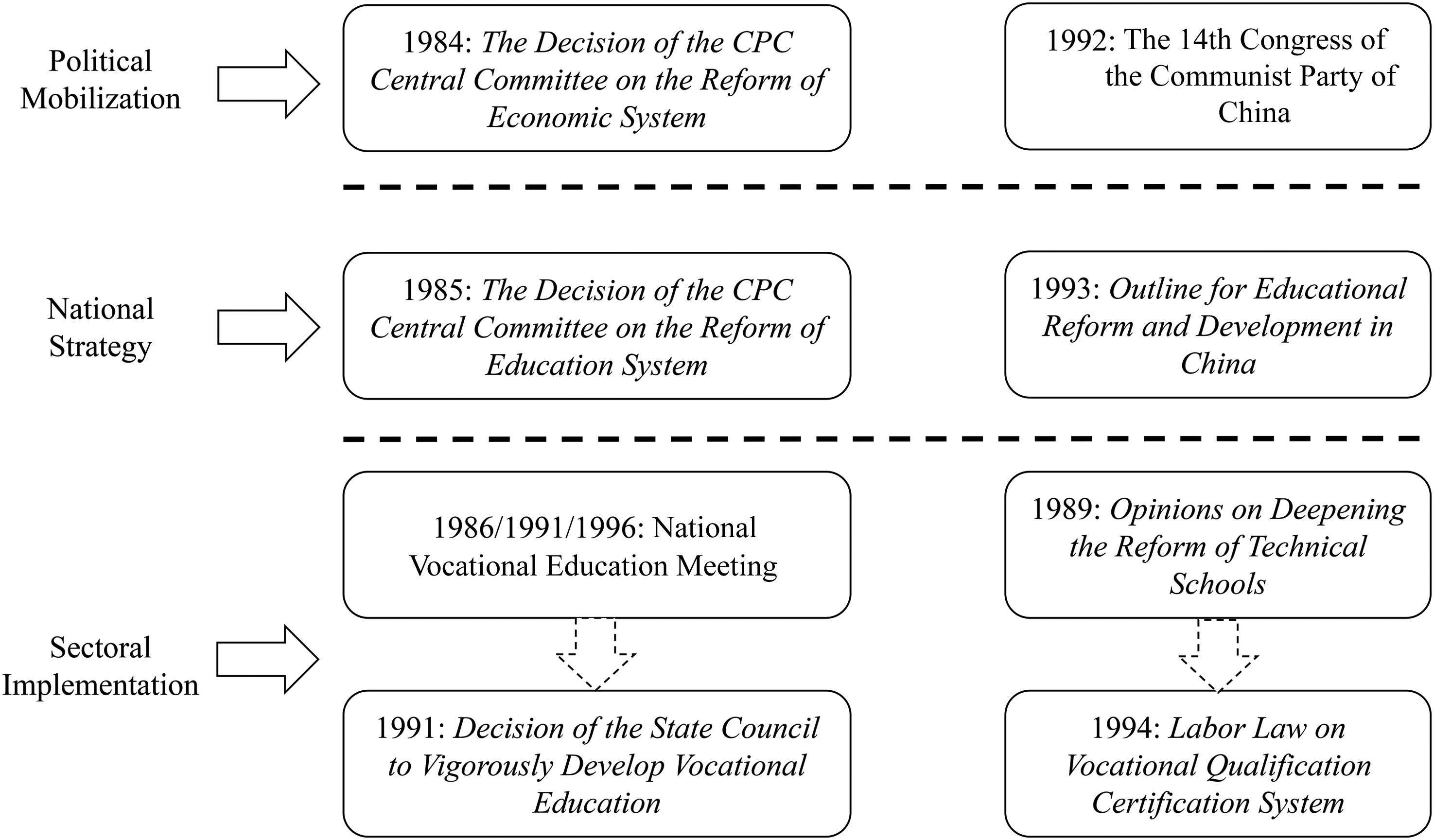
Integrating vocational education with national development strategy.
Within both examples, we can see the challenges of adopting social policy from another context and why it made more sense for both countries to be cautious when adopting foreign approaches. For both the PRC and the ROK, there were great challenges in fully integrating foreign models; thus, these models were either entirely adapted or abandoned. During the early stages of Chinese development, policymakers turned to the Soviet model, given their shared similarities in the goal of industrialization. It was only much later (when the Soviet approach had outlived its usefulness) that the PRC began to consider Western models. However, even when they did, only hybridized versions of elements from Western models were adopted to suit the PRC's existing circumstances. Analogously, in the ROK, even though the relationship with foreign consultants constituted a sizeable aspect of its TVET strategy, they still applied caution when it came to adopting foreign policies, such as the German Dual System, being fully cognizant of the fact that they lacked the “training culture” to adequately rely on the private sector. Here we can see an environmental mismatch which may render the transfer “incomplete.”
Both the ROK and the PRC applied an integrated approach to TVET development, which depended on the political mobilization of high-level authorities in its first phases. In the context of the PRC, the top decision-making bodies comprise the Political Bureau of the Central Committee of the Chinese Communist Party and the Executive Meeting of the State Council. The views of these elites on vocational education and training were instrumental. Mirroring the Soviet Union's past experience, the core leadership considered TVET an indispensable part of manpower planning in the planned economy. The prioritization of TVET persisted at the secondary education level after the 1980s, even as the country shifted away from a central planned economy to a socialist market economy following the beginning of the Reform and Opening-up. The top authorities’ support for TVET education provided the necessary legitimacy for policymakers to integrate TVET policies into the broader national development strategy. Similarly, in the ROK context, President Park's backing provided an instrumental moment in mobilizing TVET policy; thus, TVET was seen as a key facet of the broader human-resource-focused development strategy employed by the Korean State.
Following the initial political mobilization, the core leadership's political visions were translated into national strategies, which were then followed by the creation of specific policies and their implementation by different authorities. The former was most evident in the creation of five-year development plans in both countries, and the latter was evident in the various policies that would follow. Clearly, political mobilization and the trickle-down process that follows are much more important in authoritarian centralized governments than in Western democracies. This highlights another area where successful TVET development has occurred outside of the typical policy prescriptions of the “building block,” which would generally advocate for a much less centralized process.
Identification of labor market skill needs with weak sector skills councils
Before peak economic development, the ROK had an extremely vulnerable industrial base. A labor force survey of workplaces showed that of the 8.52 million employed individuals in 1960 in the ROK, only 0.98 million employees had wage contracts. This amounted to a mere 11.6% employment. A small wage employment sector means that engagement with employers would often be unfruitful in terms of correctly identifying what skills were demanded by industries; only a limited number of employers possessed sufficient expertise in human resource development. Meanwhile, since production in many companies depended on low-wage unskilled labor, most employers were indifferent to the skill development of their employees, especially those that required a long-term commitment to vocational education and training.
As employers played a limited role in forming the content of vocational education and training, the government inevitably assumed a leading role. For instance, in preparation for the implementation of the vocational training project in 1967, the Labor Office drew up detailed content for vocational training courses and curriculum standards and created a statistical infrastructure to measure supply and demand in the labor market (Seo, 2002). To develop this content, the government set up a specialized “Vocational Training Standards Deliberation Committee” and invited a handful of experts and professionals. Initially, experts were expected to have a certain level of field experience. However, this expectation was deemed too high at a later stage, given the low levels of industrialization in Korea at the time. Therefore, many underqualified persons were also included in the specialized committee. The committee developed 139 training standards for 200 occupations. These standards were imperfect; nevertheless, they had a lasting and significant impact on the process of officially formalizing the rules and processes around TVET. Eventually, by 1984, the government established vocational training institutes, which were responsible for a more systematic development of training standards.
The PRC had a weak socioeconomic foundation. The national output of industry and agriculture combined was merely RMB 46.6 billion in 1949, with more than 70% of it coming from the agriculture sector. The average unemployment rate remained high, at 23.6%, from 1949 to 1952 (Wang, 2014). At that time, the PRC government viewed central planning and the “Catch-Up Industrialization Strategy” as solutions to its myriad socioeconomic problems. Employers played a limited role in the central planning economic system. Thus, the skills formation system in the early days of the PRC was centralized or “internally planned” as part of the manpower planning conducted by the State Planning Commission. Furthermore, there was no labor market per se, and the implementation of the skill formation system was under the supervision of the State Economic Commission. Skill coordination was conducted by the state based on skill forecasting and five-year planning.
The planned economy structure lasted for nearly four decades. In the 1980s, as the “internal planning model” came under fierce criticism, the government began to restore the matching function of an external labor market in the mid-1980s and gradually switched to a socialist market economic system. The Ministry of Labor and Personnel implemented a “training first, employment afterwards” policy for SOEs personnel, and it mandated labor contracts on all new employees from 1983 onwards. These policies were all signs of the opening-up of a blue-collar labor market as well as an end to both lifetime employment and the employment quota system. Under these new labor market institutions, the country began to witness a more significant role of market forces in matching and balancing the demand and supply of skills. The development of an external planning model would eventually be further facilitated by the introduction of a partial national vocational qualification system in the 1990s, which has produced mixed results.
The Sector Skills Council plays an indispensable role in identifying the skills needed in the labor markets of developed countries. However, the employer-led nature of such organizations is often missing in countries where industrial development is still nascent, thus rendering the creation of such organizations difficult. This problem is compounded if most employers prefer to employ low-wage, low-skilled workers.
The ROK and the PRC are no exceptions to this logic. In the early stages of economic development, instead of systematically sourcing information from employers on their skill needs, both countries attempted to understand the industry's skill needs by communicating directly with industry experts. While this might have been a flawed approach in both countries, it was still the second-best approach when it was available because of the underdevelopment of the private sector, low skill levels, and low demand for specialized technical skills.
The Korean and Chinese governments eventually recognized the limitations of developing standards by temporarily gathering individual experts; therefore, they developed vocational training standards several years later through the support of stable research institutes. Concomitant with the institutionalization and specialization of the making of skills standards was the advancement of Korean industry, which led to a rising interest among employers in skill development. In particular, from the 1990s onwards, the need to build a demand-oriented human resource development system to address these companies became much more evident. At the same time, in the PRC, the move to the externally planned model from the 1980s and the associated human resources branches of sector organizations, which specialized in identifying industries’ skill demands and drawing up industry-wide skills development plans, represented the next evolutionary step for the Chinese TVET system.
The experiences of these two countries suggest that sector skills councils are neither necessary nor sufficient to obtain the right information on industry skill demand, especially in countries with small and weak industrial bases. It must be remembered that these councils remain a legacy of the trade guilds dating back as far as the Middle Ages in many Western countries. It would be unreasonable to assume that most Asian countries would have trade guild traditions or a “training culture” within the private sector, given its history of late industrialization. In addition, civil societies in these developing economies are not fully developed, and the space for enterprises’ collective action is limited. Under such circumstances, expert committees in collaboration with local governments can be sought as functional alternatives to sector skills councils.
Pursuit of private–public partnerships and the role of government
Private schools have long been a fixture in the ROK education. In the earliest stages, the ROK government cultivated the establishment of new private schools through incentives such as tax cuts or financial subsidies. As of 1965, 54% of high schools and 35% of vocational education schools were in the private sector. In addition, the proportion of students in privately owned high schools was 59% for general education and 39% for vocational education. Through acts such as the Private School Act of 1963, more formal standards and regulations around private schooling would be built up. However, despite the increased expectation of accountability of private education providers, the private sector has remained a driving force behind the progress of education in the ROK.
In vocational training, private resources have also been extensively mobilized (Choi et al., 2009; Jeong, 2008). Vocational training through private institutions began in the mid-1970s. Previously, the primary providers of vocational training were government-led public institutions and in-house training workshops within individual enterprises. The rising need for vocational training later revealed an undersupply of training capacity, and the inadequacy of public and private training facilities became apparent. In response, in 1976, the government enacted the Basic Act on Vocational Training to approve “accredited vocational training,” which was reserved for training provided privately. Between 1977 and 1991, the number of accredited vocational training institutions increased from 33 to 106, and the number of trainees rose from 9,817 to 25,190 during the same period. Since 1993, government support for accredited vocational training has expanded, with the number of accredited vocational training institutions exceeding 130 by the mid-1990s. Private training institutes have typically focused on training for occupations that are not covered within the public system, as well as occupations that are in high demand in a region or industry. Therefore, private training institutions play a significant role in responding to unmet demands.
Despite the rapid expansion of the scale of the TVET sector in the late 1990s, meeting the skill demands of the industry remained a challenge. At the heart of the challenge was the inability to tackle the coordination problem. There was limited collaboration between firms due to the increased risk of a company's talents being poached by others in an increasingly fluid labor market. As a result, firms invested little in the cultivation of skills within the company and were reluctant to hire from the external labor market. This has resulted in an insufficient supply of skills.
One tested solution to coordination failure is PPPs. Indeed, since the early 2000s, the private sector has been involved in the development of the TVET system in the PRC in various areas such as education services, facility construction, and overall operations (Han, 2016). Political support for the TVET PPP among the country's top leaders has also strengthened over time. Another boost to the PPP model was provided by the State Council when it called for deeper collaboration between vocational schools and industry partners in 2005, and later by legitimizing private vocational schools through the legal establishment of mixed ownership in 2014 (Yang, 2017).
Under this general national framework for PPP, the National Development and Reform Committee and the Ministry of Finance have actively engaged with each other and set up a framework for PPP in vocational training programs. A key actor in a viable PPP model in the vocational sector is the intermediary organization, which helps organize and facilitate the existing PPP structure. These nodes link training providers, employers, government bodies, and other organizations. Intermediary organizations include sector and regional business chambers, industry councils, educational organizations, training centers, and government agencies (Remington & Yang, 2020). Four types of PPP cooperation models exist depending on the degree of inter-employer cooperation and TVET–firm collaboration (Figure 3): the “loose coupling” model, the “firm-led” model, the “government-led” model, and the “joint-led” model. Each model differs in terms of who the intermediaries and participants are, what type of training cooperation exists, how the cost is shared, where skills formation takes place, and what types of skills are produced (Yang, 2017). Depending on the context, the PRC government has adopted suitable models. Thus, a broad spectrum of PPP models exists across various regions.
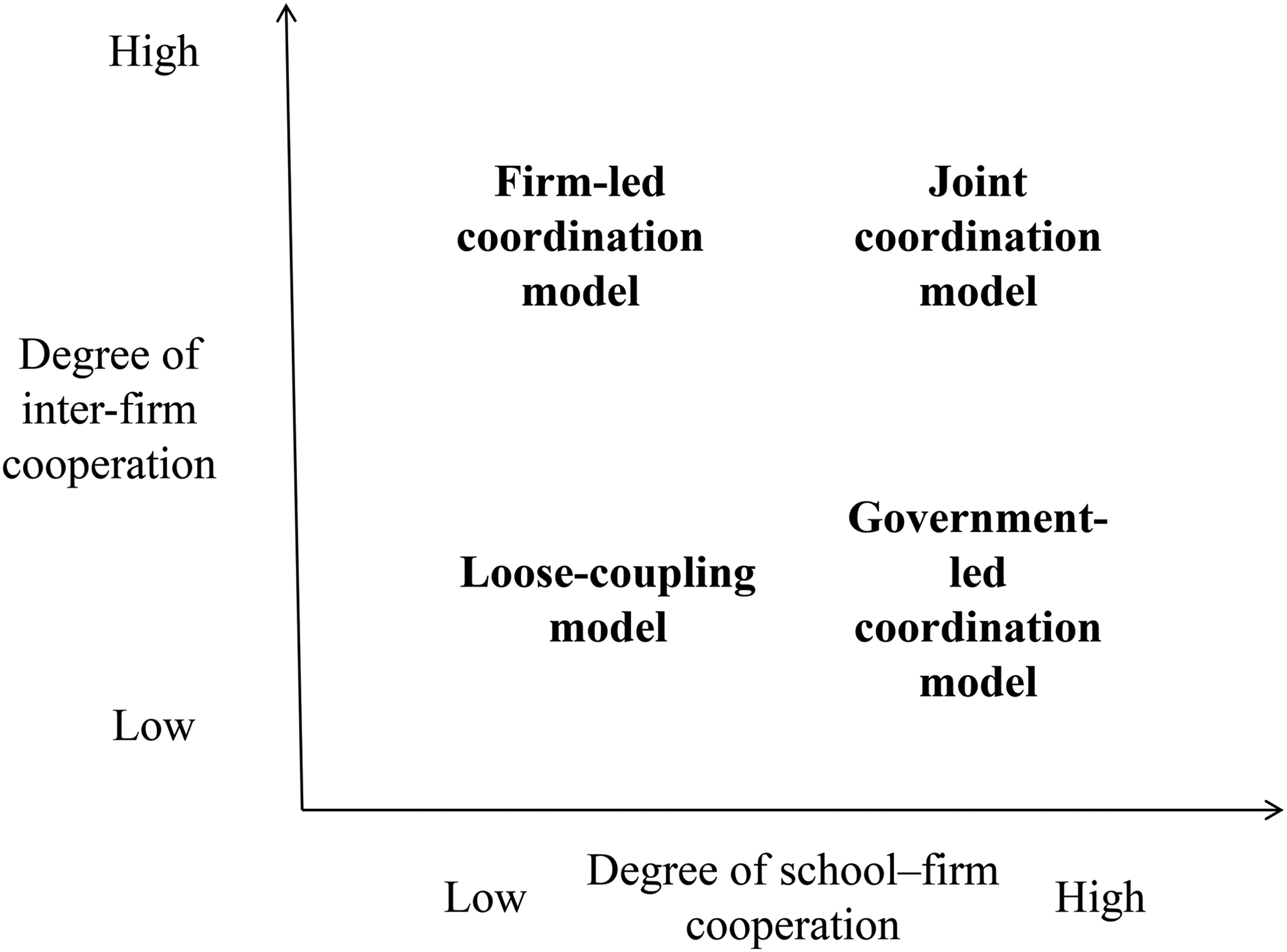
Typology of PPP coordination models.
In the case of the ROK, the inclusion of the private sector in the TVET education sector helped expand the size of vocational education and training and enhanced the diversity of the associated programs. The expansion of the private sector in vocational education and training has also broadened training opportunities for youths and adults alike. On the other hand, the quality of privately provided education has been called into question and remained a controversial issue. There have been cases in which private vocational schools were too profit-oriented, or where the quality of education provided to students was lacking. This story of the ROK acutely highlights the unavoidable dilemma for developing countries: As important as the mobilization of private resources is for broadening opportunities for vocational education and training, one ultimately must rely on the goodwill of private investors in providing high-quality education resources.
With regard to the PRC, the ability of an intermediary to effectively set up incentives and regulations is crucial to solving the same “coordination problem.” Using an intermediary presents an institutional solution to the collective-action dilemma and is particularly effective in solving the problem of commitment to organizational partners. From the perspective of institutional partners, having an effective intermediary can coordinate activities between the government, firms, and schools; ensure the commitment of each party; and generate credibility in the assignment of rewards or sanctions (Doner & Schneider, 2016). Without proper intermediaries, skill partnerships may be fragile and unsustainable, as they are crucial for ensuring that organizational actions are consistent with commitments.
Therefore, through these examples, we can see the extent of the dilemma faced by developing countries such as the ROK and the PRC and the solutions that have been adopted to remedy this dilemma. PPPs serve as an example of a policy transfer that may be nominally useful, but what is perhaps more important to their success is still the careful consideration of the landscape of public–private relations within the region. Blanket endorsements of PPPs in developing countries should be replaced with more nuanced recommendations.
Contributions of the qualification system despite the absence of a comprehensive qualification framework for all education and training programs
The number of professional qualifications had begun to increase in the early 1960s in the ROK. Until then, most jobs had been congregated in the agricultural sector. The labor market displayed worker homogeneity, since employment was not specialized by occupation, and few positions required professional qualifications. However, with economic advancement, new occupations have emerged, most of which are concentrated in the manufacturing sector. Simultaneously, the demand for professional qualifications increased. Consequently, in the 1960s, new professional qualifications began to appear in various occupations, mostly imitating those of their foreign counterparts (Human Resources Development Service Korea, 2002; Jeong, 2008; Seo, 2002). The government maintained control over the formulation of professional standards for fear of the private sector having too much freedom, but this would eventually result in qualifications that were functionally homogenous and skill levels that were not consistent across professions.
Recognizing the need for more consistent management of qualifications, the Korean government made several changes. First, the Vocational Training Act enacted in 1967 stipulated that the training of workers, in the form of conducting vocational training and administering skill tests for workers, is compulsory for manufacturing and other industries. Given its limited capacity to oversee the actual training courses offered at individual institutions, skills tests became a practical and cheap way for the Korean government to ensure firms’ compliance with the Act and monitor training quality. Furthermore, an integrated qualification system was introduced in which the state granted professional qualifications according to a uniform standard designed for technicians and skilled workers. Soon after, the Korean government enacted the National Technical Qualifications Act in 1973, which enabled the consolidation of a variety of professional qualifications regulated under different laws into one statute, thereby allowing the government to abolish qualifications that functionally overlapped with others.
In 1976, the Korea Technical Validation Authority was established as a designated agency to ensure that various technical qualification assessments are tailored to the requirements of the National Technical Qualification Act. The Korean government has created, adjusted, and removed qualifications from time to time based on the specific needs of occupations or industries. This was accomplished without a comprehensive qualification framework or true central authority.
The PRC was a newcomer in terms of developing occupational classification systems. Before 1949, labor market occupation standards did not explicitly exist. In 1956, the State Council mandated that the worker compensation was to be matched by one's skill level, adopting the Soviet-style worker assessment. This compensation system separates SOE workers into eight technical grades, each with a unified salary level (Chen, 2000).
In 1999, the technical procedures for formulating National Occupational Standards were formalized with the release of the National Occupational Standards by the Ministry of Human Resources and Social Security. Each set of occupational standards was formulated by a panel of 5–10 experts who had both theoretical and industry knowledge of the standards and were well acquainted with the standard formulation methodologies.
Along with the national occupation standards, the PRC conveniently borrowed the Soviet system for national occupation assessments. At the time, SOEs independently evaluated the occupational skills of workers in their workplaces. In the early 1990s, the Ministry of Labor adopted a more centralized approach to appraise occupational skills. In 1993, it issued a blueprint for extending the use of skills assessments beyond just SOE workers to the unemployed, students, and employees in other sectors. The PRC's Labor Law in 1994 provides a framework for occupational standards, occupational skills testing, and an occupational qualification certificate system. The Ministry of Labor then exerted regulatory authority over skills certification through its National Occupational Testing Authority.
As mentioned previously, during the liberalization of the labor market in the 1980s and the 1990s, the government considered two approaches to the development of vocational qualifications: the German Dual System of Apprenticeship training and British National Vocational Qualifications. In the late 1980s, the Ministry of Education advocated that the PRC adopt Germany's dual system. However, as economic reform picked up pace in 1992, the Ministry of Labor began to develop its own system akin to the British version of national vocational qualifications (Müller, 2021).
Eventually, the vocational certificate system implemented in the PRC was a hybrid model that encompassed elements from both the British national vocational qualifications system with five hierarchical levels and occupational standards from the Soviet model. Hybridization of the PRC TVET system was also evident in many other areas, such as the practice of vocational schools of retaining discipline-based curricula while simultaneously mandating that students acquire vocational certification before graduation (Figure 4).
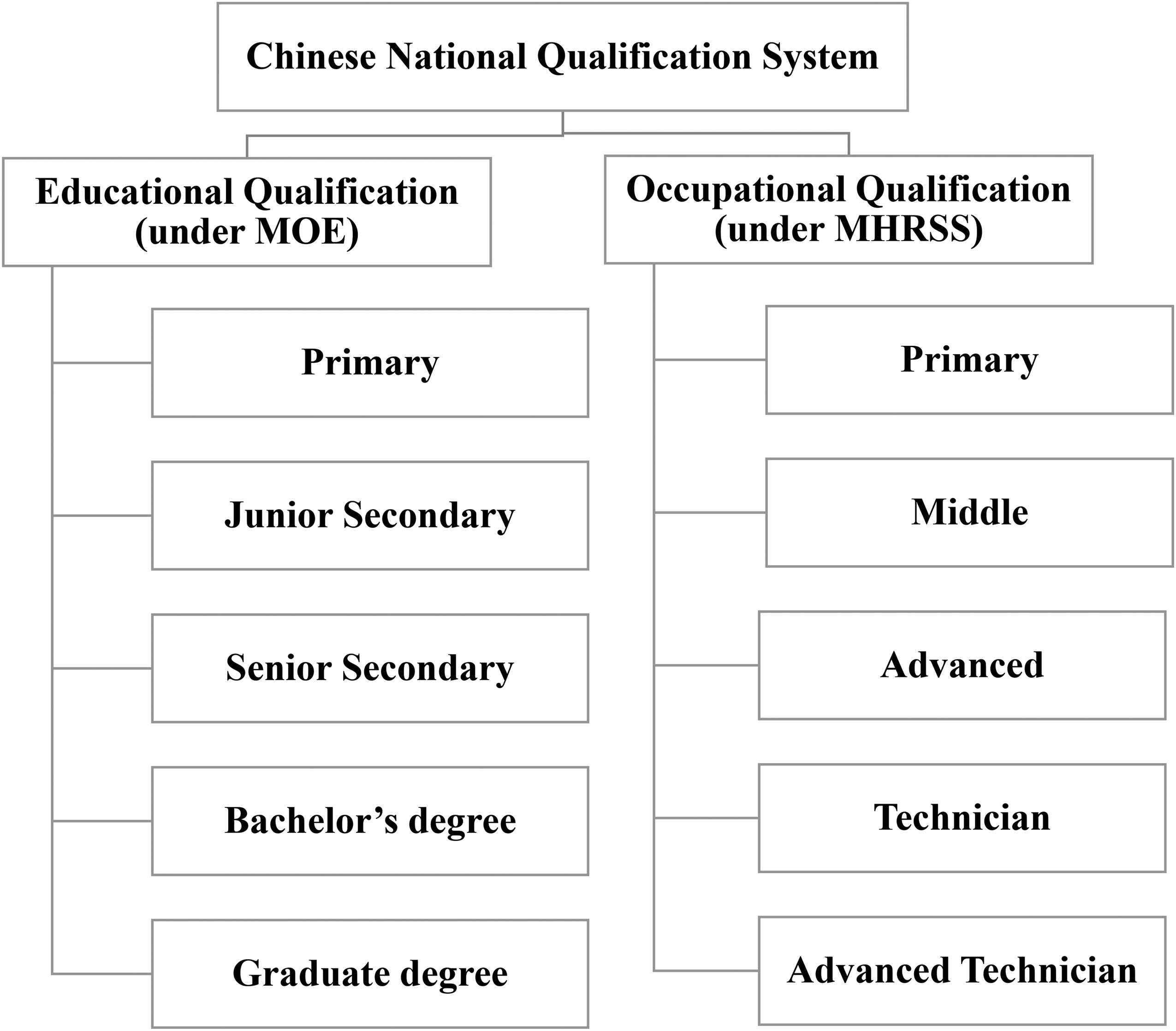
The PRC national qualification system since 2000.
There are many obvious advantages of using a unified qualification framework. For instance, it establishes commonalities across various qualification types and specifies qualifications in terms of standards, levels, and outcomes. However, formulating a NQF depends on certain technical and institutional conditions. As a result, the PRC and the ROK are unprepared to implement a complete NQF.
The development of a vocational qualification system without a comprehensive framework has advantages and disadvantages. For example, the ROK was able to respond flexibly to evolving labor market demands by changing the configuration of its qualifications. This makes it easier for governments to respond to newly emerging qualifications in a rapidly growing economy. On the other hand, its flexibility has also created confusion and even conflict. There were cases in which firms and workers were perplexed by qualifications with similar titles but different descriptions.
In addition to its advantages and disadvantages, it is important to consider the existing context of the National Vocational Qualification Framework and how well it fits into the existing system. In the PRC, the centralization of qualifications has been resisted in the past by factions of the bureaucracy, and the very different notions of analytic knowledge within Chinese general education and synthetic knowledge within vocational education make it extremely difficult for both sets of education to be classed within a single framework.
Both examples show that NQF is not a mandatory condition for development as a country attempts to reach the standard of a middle-income country. In the various attempts to expand and develop the qualification infrastructure of both countries, beyond being established as middle-income countries and attempting to reach greater heights, we can see how the features of a comprehensive NQF can be of great benefit. The crucial point to consider here is that both the PRC and the ROK serve as evidence that it may be better to “walk before you can run,” and postpone attempts to fully develop the NQF until such a time that it is truly necessary.
Conclusion
This paper has examined approaches to TVET development employed by the ROK and the PRC, paying special attention to the critical areas most frequently subject to policy recommendations that fall within the “building-block” narrative in international development. The “building-block” features that have emerged in the latest era of TVET development are clearly based on sound principles; however, this study finds evidence that they are not the best fit for developing nations.
Examples from the ROK and the PRC clearly demonstrate that success in TVET development does not necessarily rely on “best-practice” solutions. They show that there is a strong argument for an incremental policy of liberalization that can address the specific needs of each developmental stage. Both countries have not been reluctant to consider these approaches while devising their own strategies, but have creatively adjusted elements or even made wholesale changes where these approaches did not seem to fit, especially within the earliest stages of development. Policies from both countries have come to increasingly resemble building blocks as governments’ confidence in bureaucratic infrastructure has increased; however, even at their current levels of development, these approaches are being applied liberally. Through the examples of these countries, it can be concluded that TVET development tends to be subject to a confluence of seemingly unrelated issues, including national geography, international relations, sociocultural customs, and national leadership styles. These examples support the argument that neither of the two cases can be reasonably considered the same in international development.
It is also important to remember that the policies in neither country were successful. Both were required to continuously cross one river (challenge) after another by touching the stones. China's transition towards a market economy and integration into the global economy imposed a series of challenges on its TVET system: The decline of SOEs in the mid-1990s marginalized enterprises’ role in skill training; tertiary education expansion made vocational education an unappealing option for youth; and secondary-level, school-based vocational schooling system became less relevant for skill formation as the success of the “Made-in-China” strategy was largely driven by unskilled migrant workers. Over the past 20 years, China has initiated a sequence of skill-development reforms addressing prior policy shortcomings, among which one salient feature is encouraging local experimentation. Regional experimentation provides leeway for adjusting policies to local conditions and creating positive feedback loops. For instance, the state has encouraged local innovation in skill partnerships between schools and industry. In 2010, the central authority claimed that enterprises would be on equal footing in skill partnerships with VET schools. In 2017, the 19th National Congress of the Communist Party of China explicitly called for deepening such collaboration, and the State Council issued an opinion on promoting education–industry integration in 2018. In practice, regional governments and enterprises have nurtured various local skill partnerships in line with national strategies, including parental, liberal, consortium, and solidarity models (Remington & Yang, 2020). These models vary in terms of the degree of coordination across firms operating in the same labor market and the cost of resources committed to cooperative arrangements by partners. Local adoption of various models can accommodate regional variations in socioeconomic development level, industry structure, and characteristics of local VET systems and help the state strategically revise its policy guidelines.
In the case of the ROK, the development of TVET was an evolutionary process in which success and failure continuously intersected. However, the ROK ensured the success of skill development reform largely thanks to the internal professional expertise that had accumulated and developed over the years. This internal expertise allowed the ROK to identify and refine its contextualized solutions. In Korea, government-funded research institutes, starting with the Korea Development Institute, established in 1971, were established in various fields of the economy and society by the 2000s. In the field of vocational training, the Vocational Training Research Center was established under the Ministry of Labor in 1980, and then expanded to the Korea Research Institute for Vocational Education and Training in 1997, which continues to this day.
One case in point was the replacement of mandatory training systems with the Employment Insurance Vocational Skills Development Program after the mid-1990s. The Korean government implemented mandatory training for large corporations in the 1970s to supply the skilled labor necessary for heavy chemical industrialization. However, as the 1980s passed, the initial training demand of companies decreased, and the demand for continuous improvement training of incumbent workers increased. As a result, companies started complaining that mandatory training was excessively burdensome and that institutional regulation was inappropriate. Accordingly, in the mid-1990s, the Korean government introduced an employment insurance system that benchmarked foreign unemployment insurance systems but was also coupled with a new program to support continuous training of all workers, replacing the old mandatory training focused on initial training. In this process, the Korean government benchmarked related systems in the United States, Japan, and Canada through the active utilization of domestic experts to design an employment insurance system that met the specific contextual needs of Korea.
This by no means suggests that “building blocks” would fail in all developing countries. However, we emphasize that it is only through flexibly adapting the “building blocks” strategies that a developing country can bring about sustainable progress for local TVET development. The findings of this study should not be limited to TVET development of TVETs. We expect the same conclusion to hold across many areas and policies. We also encourage scholars to conduct research in other areas.
Footnotes
Authors’ note
This article is partially adapted from the authors' earlier report commissioned by the Asian Development Bank (ADB) on technical and vocational education and training (TVET). However, in the current article, the authors not only sharpen its focus on four key building blocks out of seven in a functioning TVET system but also compare the Korean case with the Chinese case in a point-by-point fashion which gives more emphasis on the importance of local historical, economic, and social context in the emergence of different TVET models. The use of the analytical results from the earlier ADB report has been authorized by the Asian Development Bank and acknowledged by ECNU Review of Education.
Contributorship
Sungsup Ra conceived the conceptual idea behind this paper with assistance from Ryotaro Hayashi. Wei Ha summarized the historical quest for global TVET solutions and what has gone wrong with it with assistance from Conor McCutcheon. Youngsup Choi conducted the case study on the ROK while Po Yang distilled the Chinese experience.
Declaration of conflicting interests
The authors declared no potential conflicts of interest with respect to the research, authorship, and/or publication of this article.
Funding
The authors disclosed receipt of the following financial support for the research, authorship, and/or publication of this article: Three of the authors, Wei Ha, Po Yang, and Youngsup Choi, acknowledge the funding from Asian Development Bank.
