



Abstract

In the past decade, digital education has transformed from a technology-assisted learning tool into a multifaceted field integrating technological innovation, pedagogical evolution, and socio-cultural dynamics. This study examines the development of digital education research from 2018 to 2023, identifying key publication trends, influential research themes, and regional differences in academic impact. Through bibliometric analysis, we explore the dominant topics, leading contributors, and collaborative networks that have shaped the field.
To assess research influence, this study employs the Field-Weighted Citation Impact (FWCI), which measures a publication's citation performance in relation to similar works from the same field, publication year, and document type. Unlike raw citation counts, FWCI accounts for differences in citation practices across disciplines, providing a more balanced basis for comparison. An FWCI of 1.0 indicates a citation rate in line with the global average for comparable publications, while values above 1.0 reflect higher-than-average impact, and values below 1.0 suggest lower-than-average citation levels. By adjusting for variations in publication volume and disciplinary norms, the FWCI offers a clearer measure of academic influence.
In addition to FWCI, this study considers research topics that group publications with shared research interests. In Scopus, articles are categorized into approximately 96,000 research topics based on citation relationships, with closely connected papers forming a topic while loosely linked ones are classified separately. This structure helps identify key themes and research trends in digital education. To further evaluate the significance of these topics, we use the Prominence Percentile metric, which is calculated from citation counts, Scopus views, and CiteScore. A higher prominence percentile indicates greater academic attention and stronger development momentum, often aligning with increased research funding and scholarly impact.
Research scope and methodology: A multidisciplinary analysis of digital education
This report examines 2,767 international research papers published by global scholars between 2018 and November 2023, focusing on the concept of “digital education.” The study leverages the Scopus database, Elsevier's comprehensive peer-reviewed abstract and citation platform, which encompasses a wide range of serial publications, including journals, trade journals, book series, and conference proceedings.
To ensure a systematic and relevant selection, we included publications that explicitly focused on digital education in their title, abstract, or keywords. The search strategy encompassed key terms such as “digital education,” “education digitalization,” “smart learning,” “smart education,” “digital pedagogy,” and “sustainable digital transformation.” The full search formula is as follows:
TITLE-ABS-KEY (“digital education” OR “education digitalization” OR “smart learning” OR “smart education” OR ((“Teaching” OR “Learning”) AND “Digital Transformation”) OR “Digital Pedagogy” OR “Sustainable Digital Transformation”) AND SUBJAREA (soci).
Publications that did not directly engage with digital education, such as broader discussions on technology without an educational context, were excluded. Additionally, nonpeer-reviewed sources, editorials, and short conference abstracts were omitted to uphold academic rigor.
The selected papers span multiple disciplines, with a significant concentration in the social sciences, comprising education, sociology, political science, culture, and language studies. Within this domain, over 65% of the literature is published specifically in the field of education, highlighting its central role in advancing digital education research.
Global trends in digital education research
Global growth and trends
The global landscape of digital education research has shown remarkable expansion between 2018 and 2023, with the volume of publications increasing from 168 papers in 2018 to 754 papers in 2023, reflecting a compound annual growth rate (CAGR) of 35%. The Chinese mainland has emerged as a significant contributor to this growth, with a CAGR of 47.2%, particularly in the last 3 years, bringing its total publications to 232 papers.
The global share of digital education research has steadily increased, from 6.5% of total academic publications in 2018 to 10.1% in 2023 (Figure 1). This growth is mirrored by a surge in the field's academic impact, with a total of 19,113 citations, averaging 6.9 citations per paper. The average normalized citation impact (FWCI) for digital education research stands at 1.9, which is 90% higher than the global average, while research from the Chinese mainland in this field has an FWCI of 1.2. This suggests that digital education research is more influential than the average academic field.
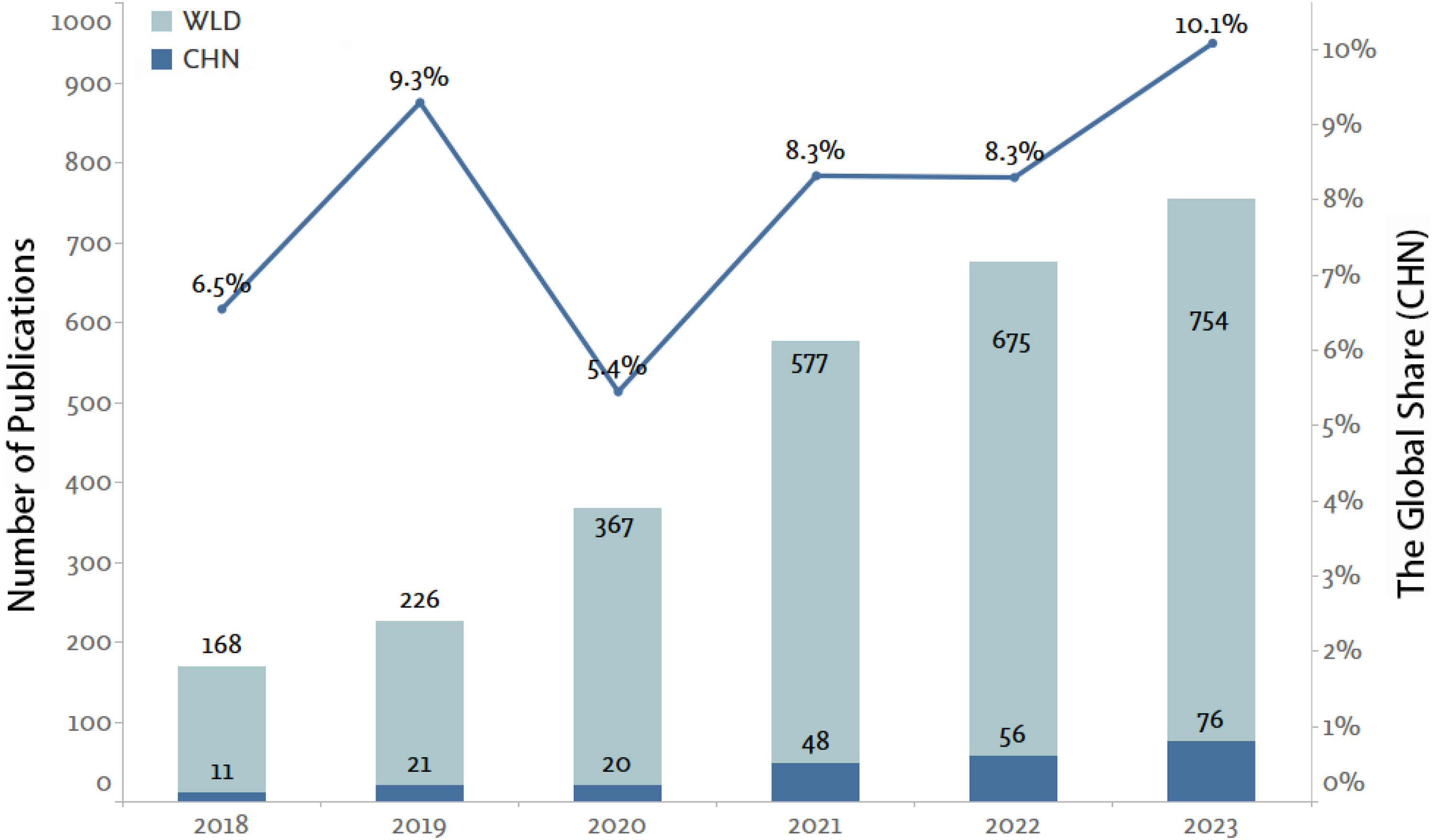
Annual trends in publication volume on digital education globally and in Chinese mainland (2018–2023 YTD).
A key indicator of the field's rising influence is the increase in highly cited papers. Between 2018 and 2023, 336 digital education papers were classified in the top 10% of highly cited literature, accounting for 12.1% of the total publications, indicating that the field is producing influential research. This proportion surpassed 10% in 2020, signaling growing academic recognition. Notably, in the Chinese mainland, the proportion of papers published in the top 10% of highly cited journals remained below 10% from 2018 to 2022, but saw a sharp rise in 2023, reaching 25.0%, surpassing the global average (Figure 2). On a global scale, 379 papers were published in high-impact journals, comprising 21.2% of the total, while the Chinese mainland published 45 papers in these journals, accounting for 36.6%, marking a significant increase from 12.8% in 2018 to 27.9% in 2023 (Figure 3).
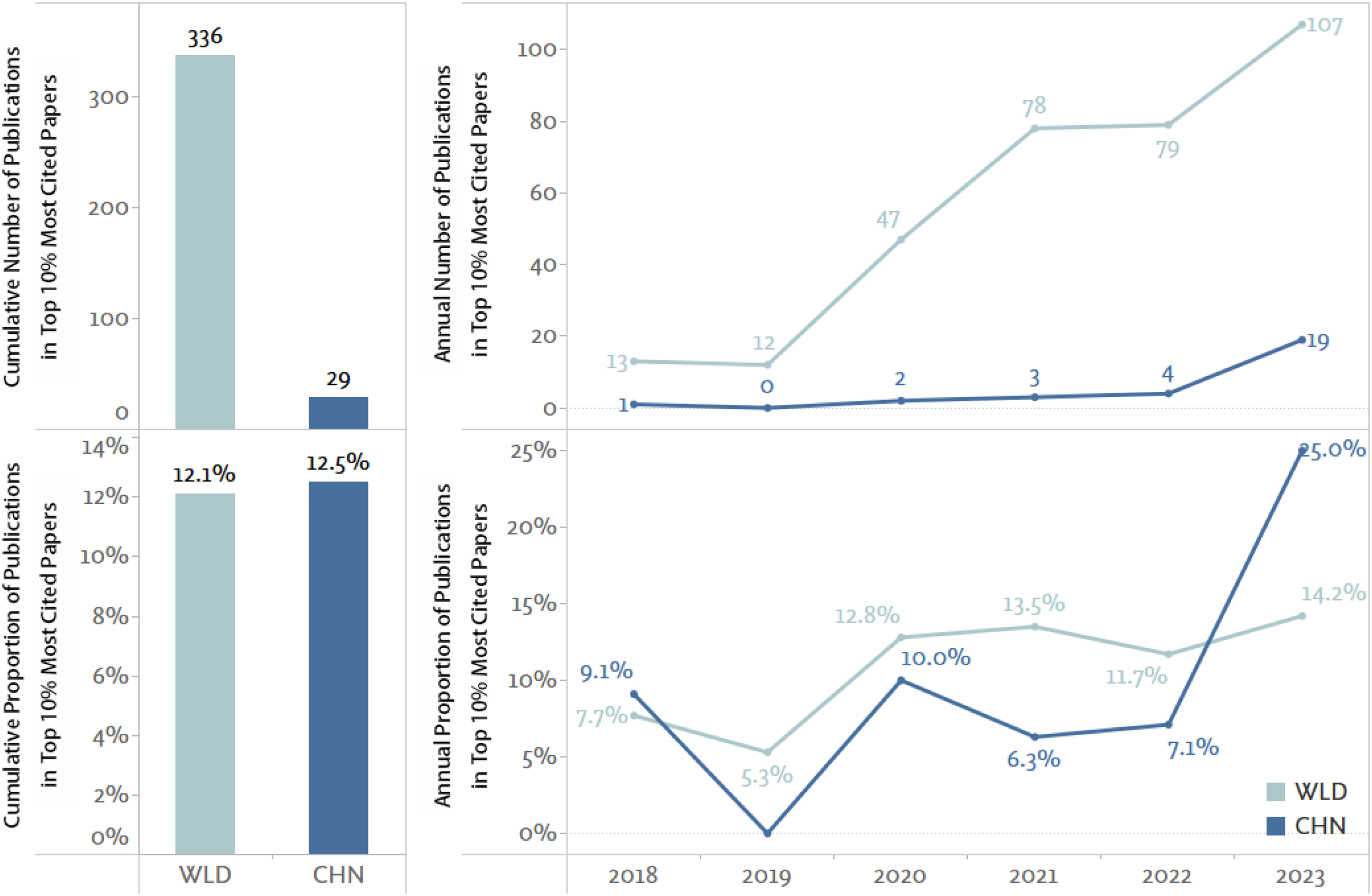
Annual trends in publication volume and proportional share of the top 10% most cited documents in digital education globally and in Chinese mainland (2018–2023 YTD).
Rapid growth in high-impact journals
The proportion of the Chinese mainland's publications in high-impact journals grew steadily, surpassing 15% in 2019 and exceeding the global average for the same period. By 2023, this share had increased to 48.3% (Figure 3), meaning that nearly half of the Chinese mainland's publications in the digital education field were published in high-impact journals. Globally, the share of publications in high-impact journals continued to rise, with Russia and the Chinese mainland emerging as key contributors in this regard. These trends indicate that the academic impact of digital education research is being increasingly recognized in top-tier academic journals.
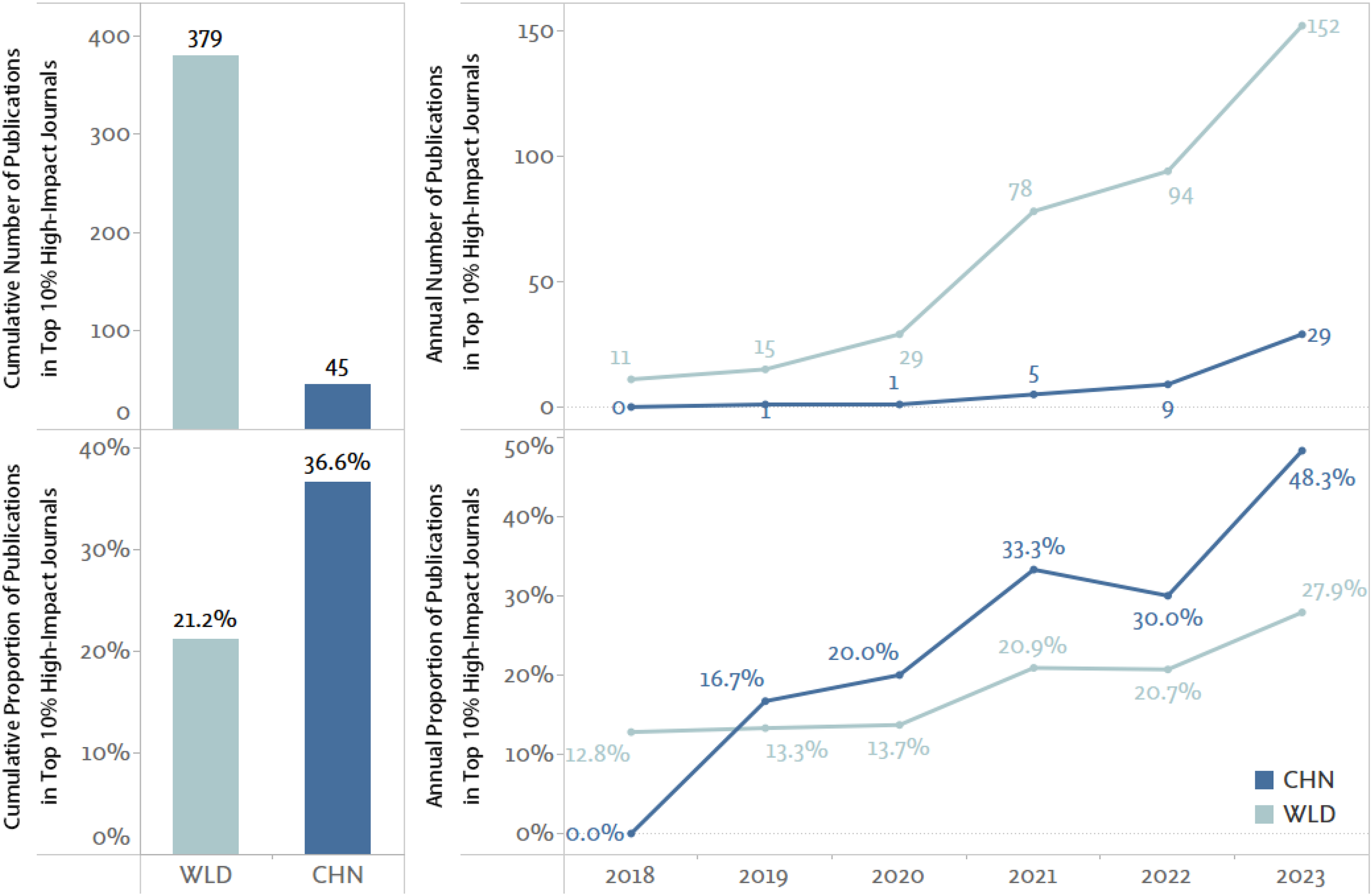
Annual trends in publication volume and proportional share of the top 10% most influential journals in digital education globally and in Chinese mainland (2018–2023 YTD).
Prominent research topics
Between 2018 and 2023, the top 10 research topics in digital education were closely aligned with global trends such as online courses, distance education, and technology integration. The most prolific research topic globally was “Content Knowledge; Pre-service Teachers; Technology Integration,” with 185 publications and an FWCI of 1.7. The second-most productive topic was “Online Courses; Mooc; Blended Learning,” with 95 publications and an FWCI of 2.3. Additionally, the global visibility of these high-output research topics is generally high, with more than half of these topics having an FWCI exceeding the global average for digital education publications. The topic “Distance Learning; Online Education; COVID-19” stood out with the highest FWCI of 6.5, reflecting the rapid development of online education driven by the pandemic (Figure 4).
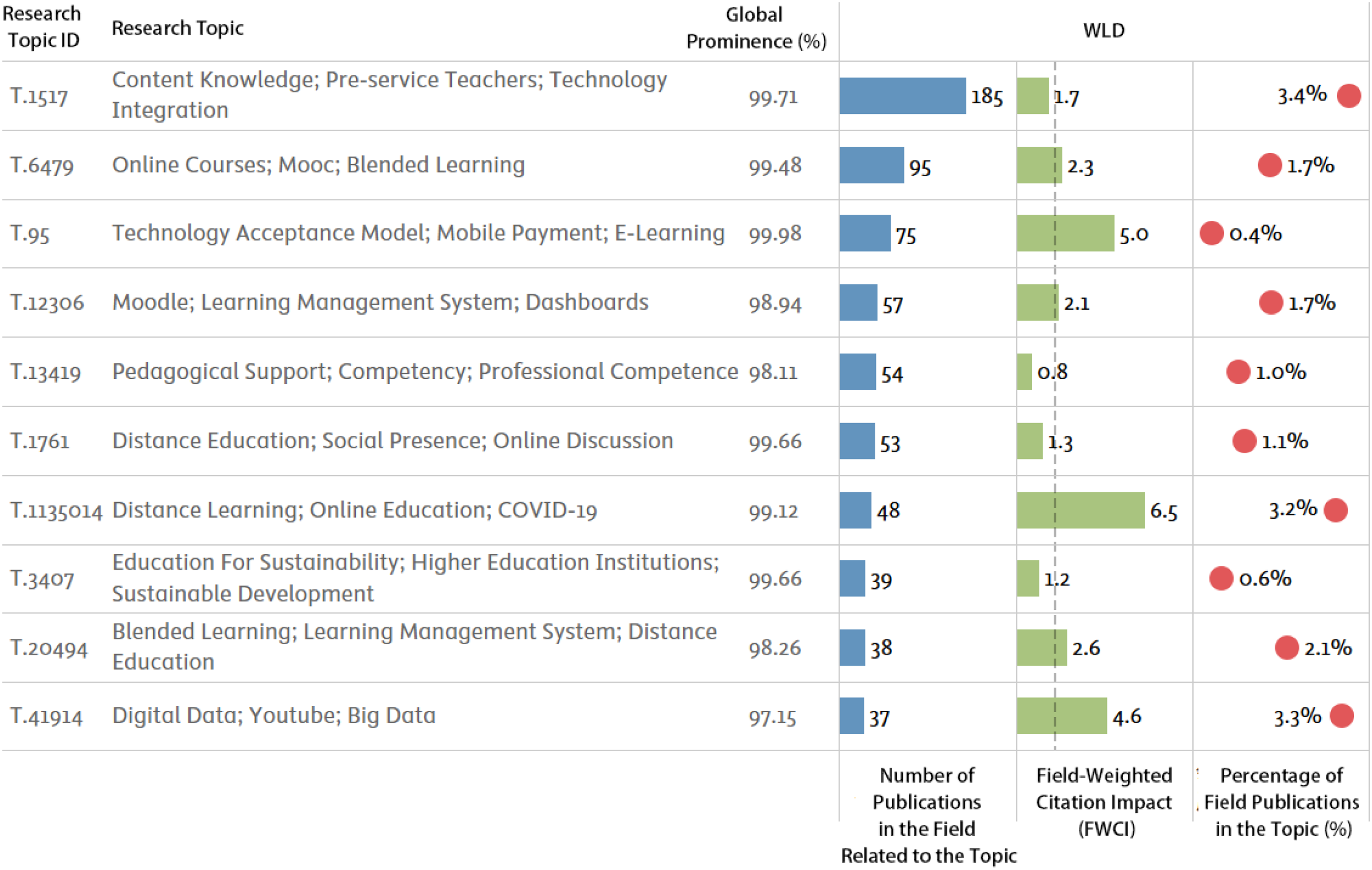
Top ten research topics in digital education globally (2018–2023 YTD).
Regional research interests: Chinese mainland's focus and global alignment
While Chinese mainland's research topics largely align with global trends, several unique themes have emerged, such as “Electronic Books; Ubiquitous; Context-Aware”and “Computer-Aided Instruction; Tutor; Computer-Based Learning.” These topics highlight both shared global priorities and region-specific research interests. In contrast, Russia, which leads globally in publication volume in this field, has focused more on topics like “Pedagogical Support; Competency; Professional Competence.” This reflects the diversity in research priorities across regions (Figure 5).
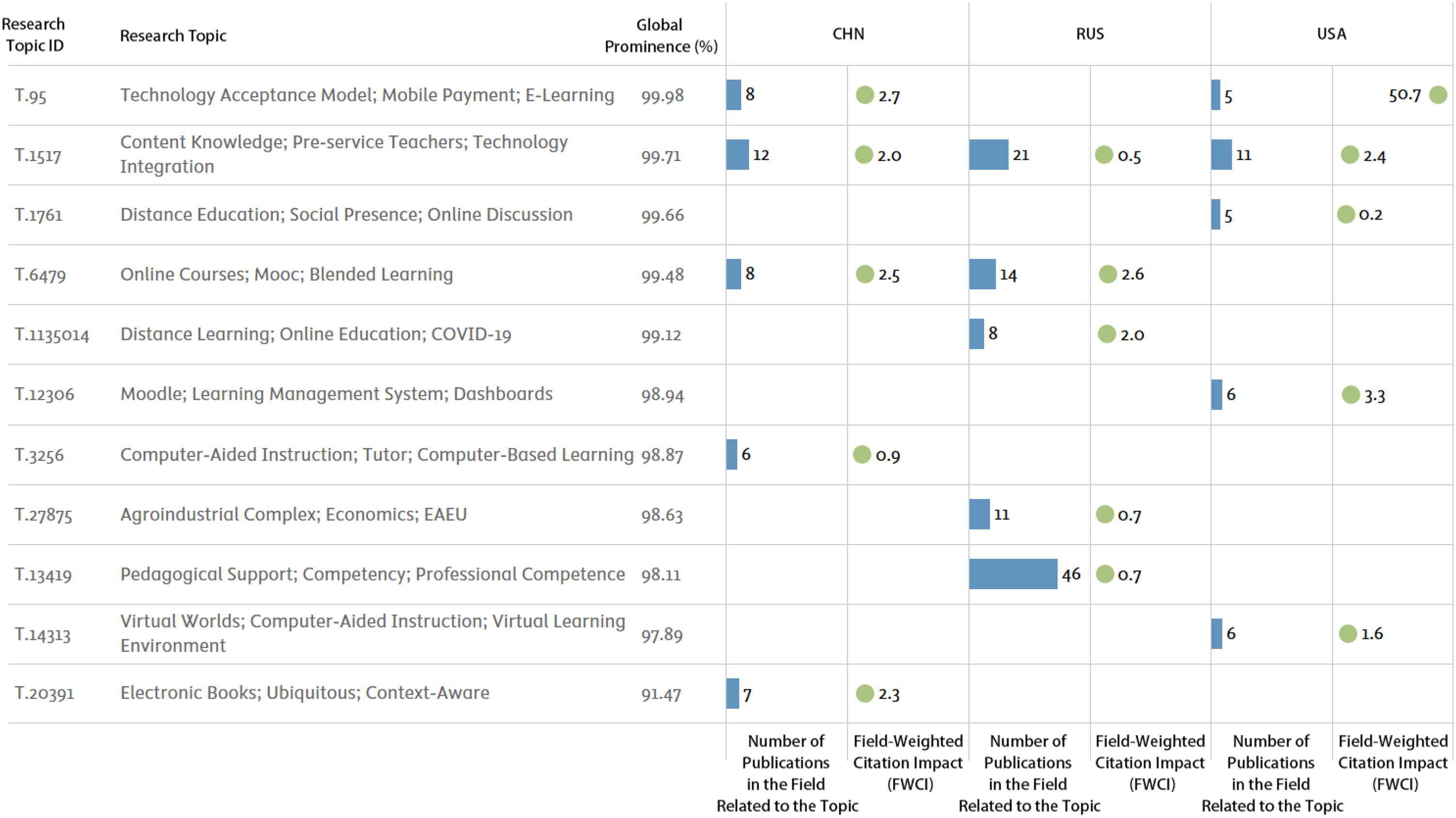
Comparison of the top five research topics in digital education by the top three publishing countries/regions (2018–2023 YTD).
Leading countries/regions and institutions
Russia, the United States, and the Chinese mainland are the top countries/regions contributing to global research in digital education. Russia not only leads in publication volume but also boasts two Russian-language journals ranked among the top 20 global publications in the field, while other leading journals are primarily in English. In the Chinese mainland, key institutions focusing on digital education include Beijing Normal University, Central China Normal University, and East China Normal University. Beijing Normal University ranks first globally in publication volume, with 29 papers and an FWCI of 1.1. Kazan Volga Region Federal University in Russia ranks second with 28 papers and an FWCI of 1.7. Meanwhile, the University of Johannesburg in South Africa stands out with the highest citation count among the top 10 institutions, with 19 publications and 535 citations (Figure 6).
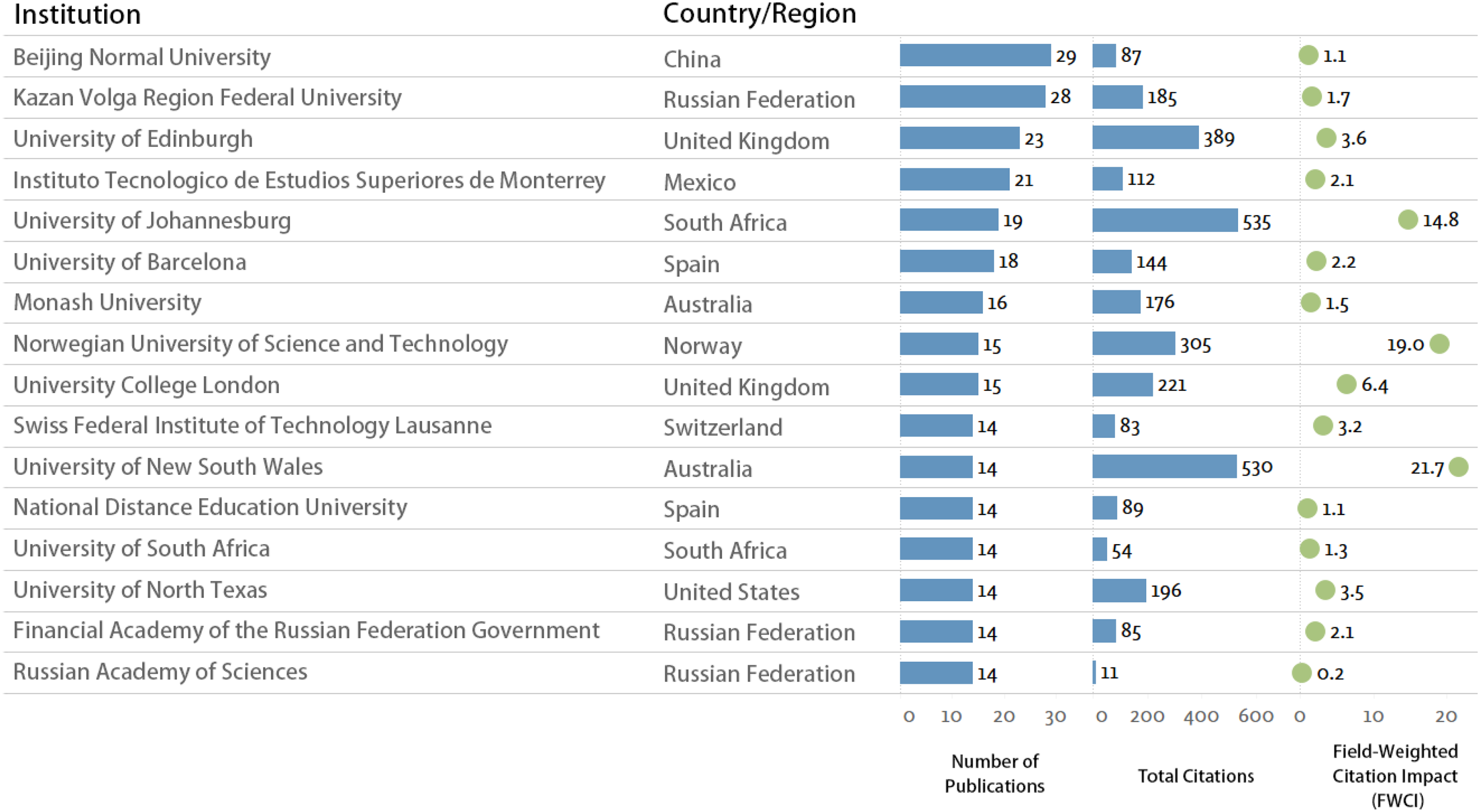
Top 10 institutions by publication volume in digital education globally (including ties) (2018–2023 YTD).
Leading journals and top authors
Between 2018 and 2023, Sustainability was the journal with the highest number of publications in the digital education field, publishing 126 papers, which were cited a total of 1,920 times, far outpacing other journals. The journal's FWCI is 2.2, indicating its higher academic impact. Education and Information Technologies is the second most prolific journal, with 52 publications and an impressive FWCI of 3.7 (Figure 7). Chinese mainland's research institutions also lead the Smart Learning Environments journal and the book series Lecture Notes in Educational Technology.
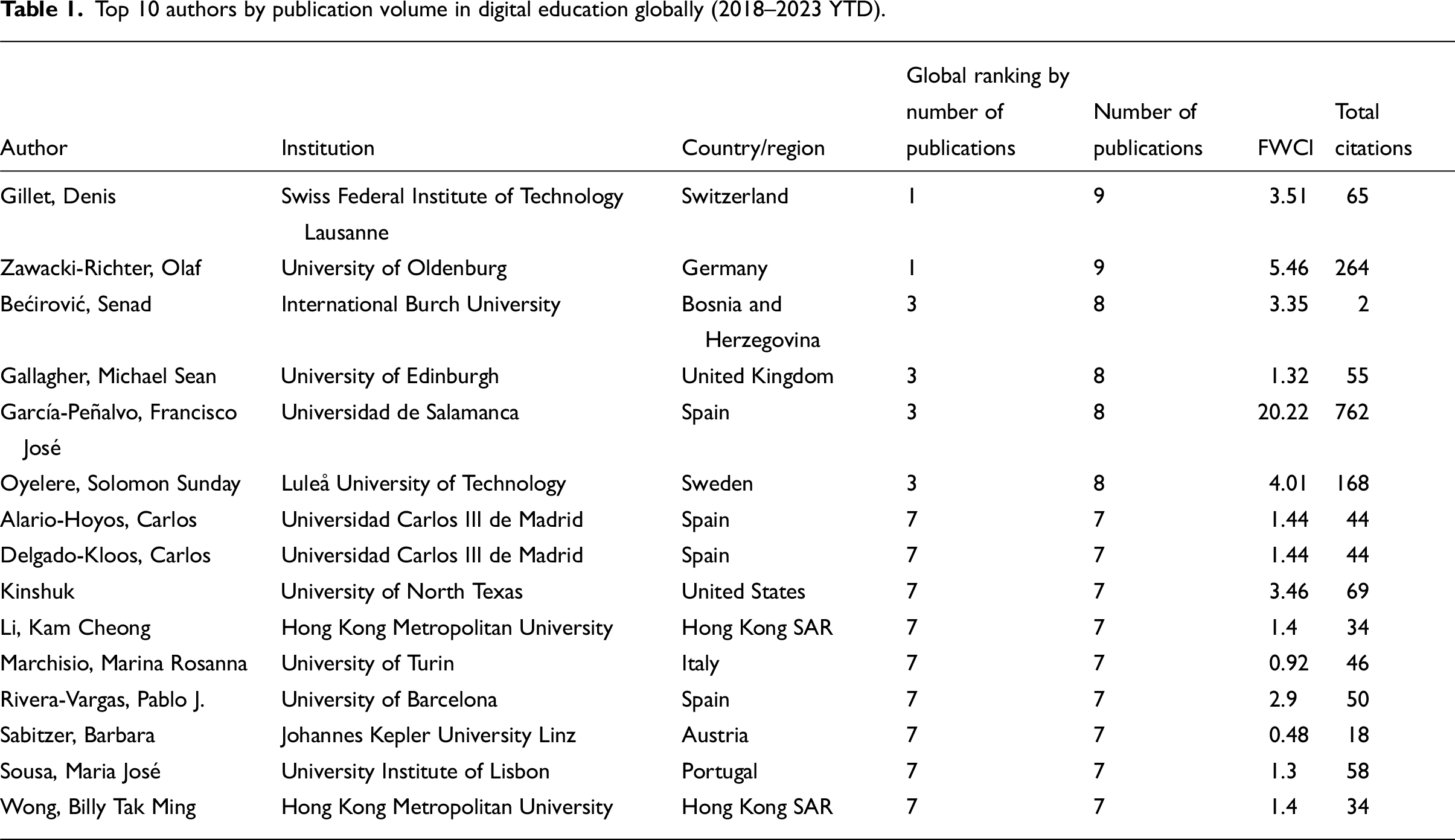
Among the top 10 authors globally in terms of publication volume, none are from the Chinese mainland (Table 1); however, two of the top authors have close collaborations with Chinese mainland's institutions. Notably, Professor Junhong Xiao from Shantou Radio and Television University, in collaboration with Olaf Zawacki-Richter (the second-highest ranked author globally), co-edits the book series Springer Briefs in Open and Distance Education and serves as a section editor for the Handbook of Open, Distance and Digital Education.
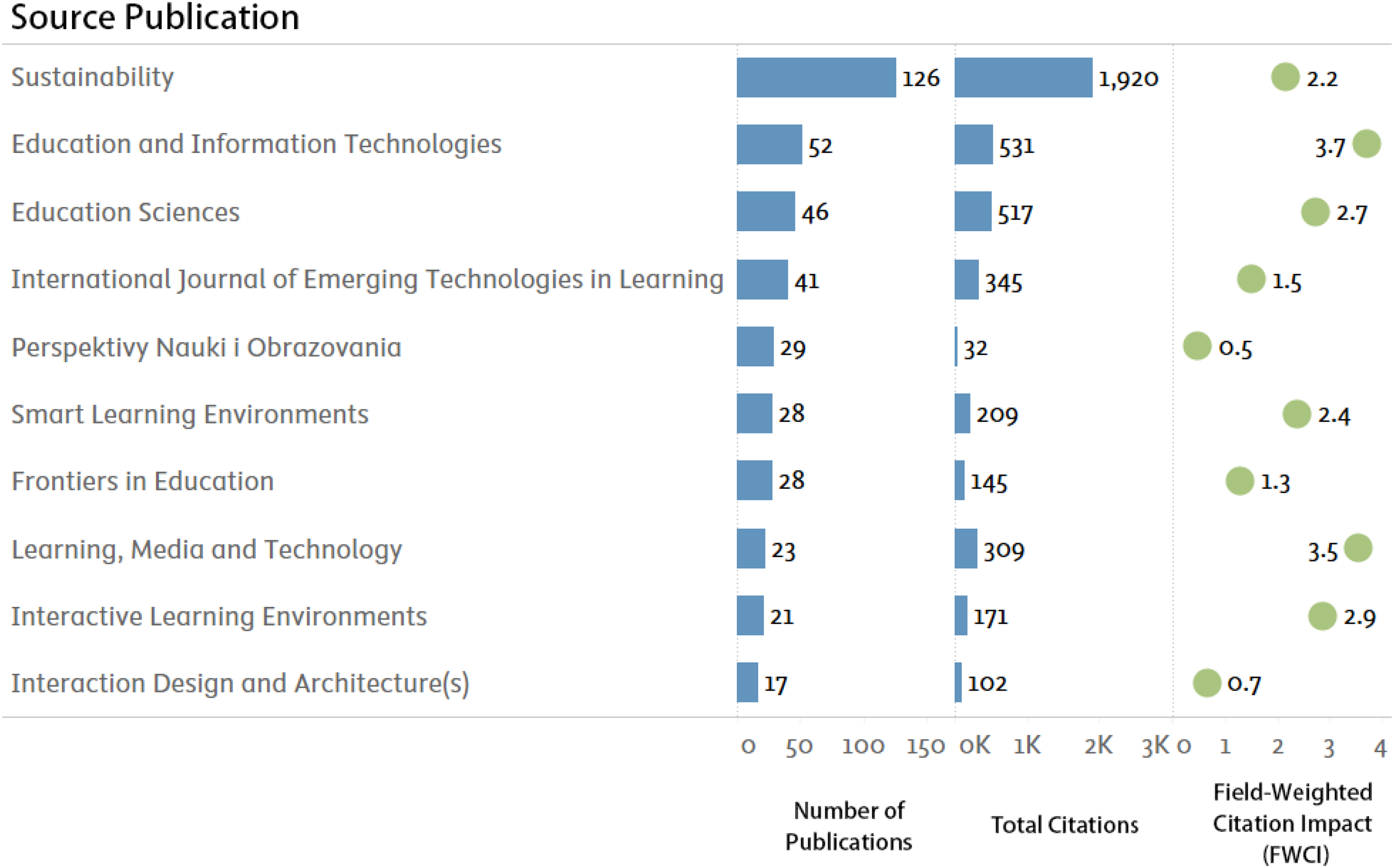
Distribution of the top 10 journals by publication volume in digital education globally (2018–2023 YTD).
Top 10 authors by publication volume in digital education globally (2018–2023 YTD).
Citation patterns: Global impact and institutional contributions
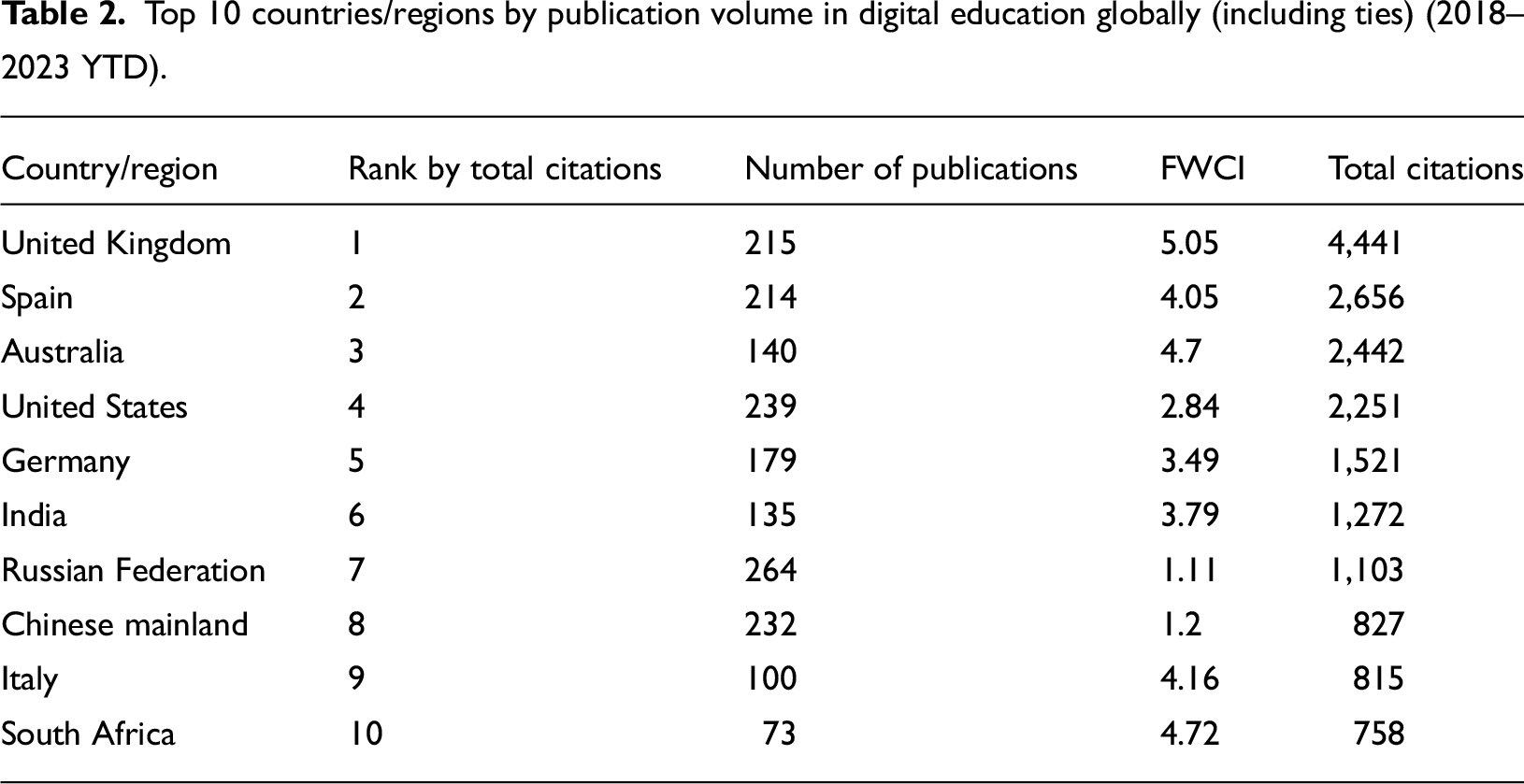
While the Chinese mainland and Russia have high publication volumes, their citation counts rank only eighth and seventh globally, behind countries like the United Kingdom, Spain, and Australia, which lead in total citations (Table 2). The University of New South Wales in Australia has the highest FWCI. Among the top 10 institutions, Russian institutions are the most prevalent. These citation patterns suggest that while publication volume is high in the Chinese mainland and Russia, their research may not yet achieve the same level of academic influence as institutions in the UK or Australia.
Top 10 countries/regions by publication volume in digital education globally (including ties) (2018–2023 YTD).
Collaboration trends: Domestic versus international partnerships
In terms of collaboration, domestic collaboration and institutional collaboration remain the primary modes in the field of digital education, with a total of 1,035 papers (37.4% of the total output) globally resulting from these forms of cooperation. In the Chinese mainland, 99 publications (42.7%) were produced through domestic and institutional collaboration, slightly higher than the global level (Figure 8). However, international collaboration has been steadily increasing, with the share of international collaborative publications reaching 23.4% globally in 2023. In the Chinese mainland, international collaboration has grown significantly in the past 2 years, with 21 publications in 2022. By 2023, the share of international collaborative publications in the Chinese mainland reached 27.6%, surpassing the global average (Figure 9).
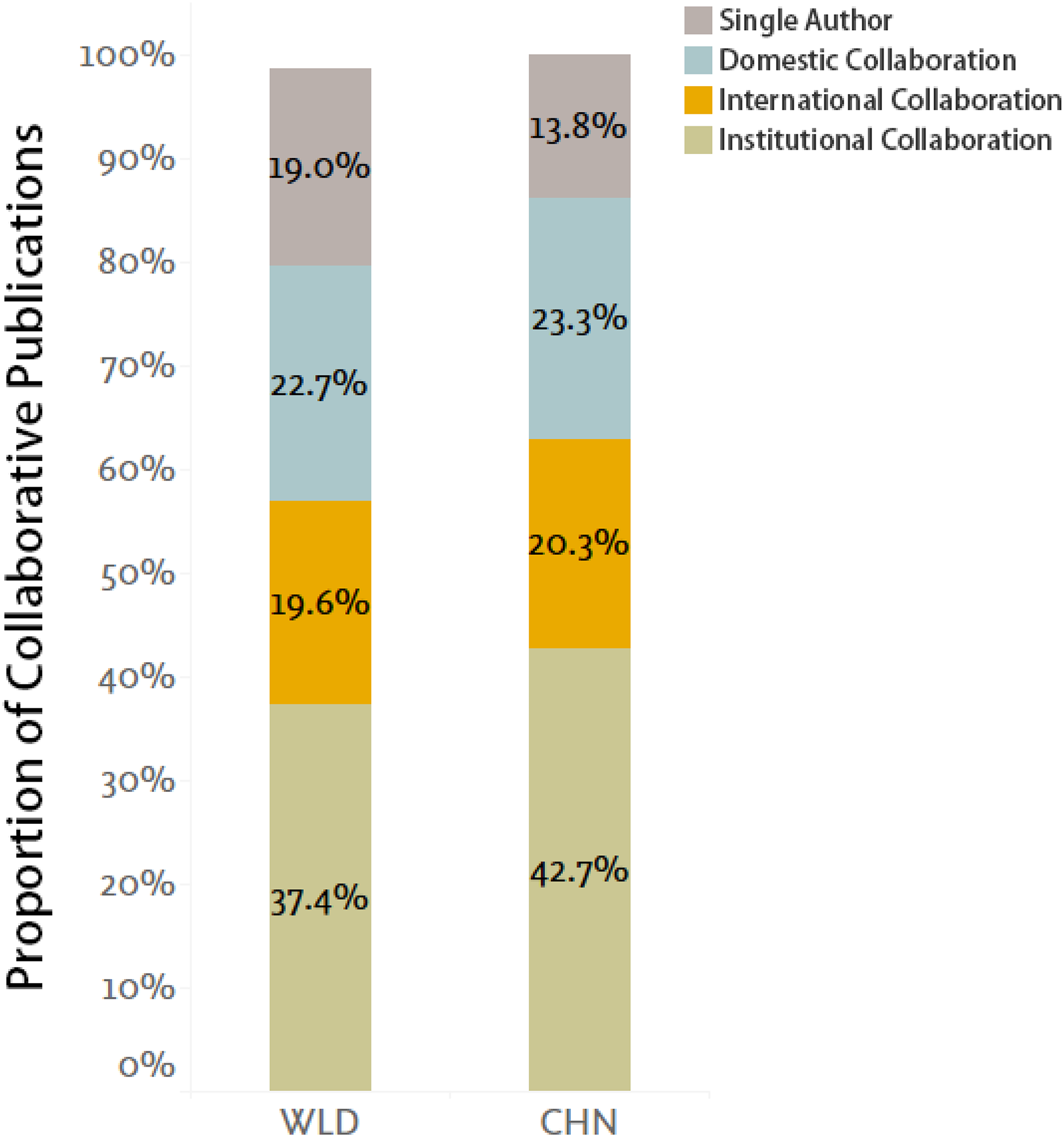
Distribution of types of research collaborations in digital education globally and in Chinese mainland (2018–2023 YTD).
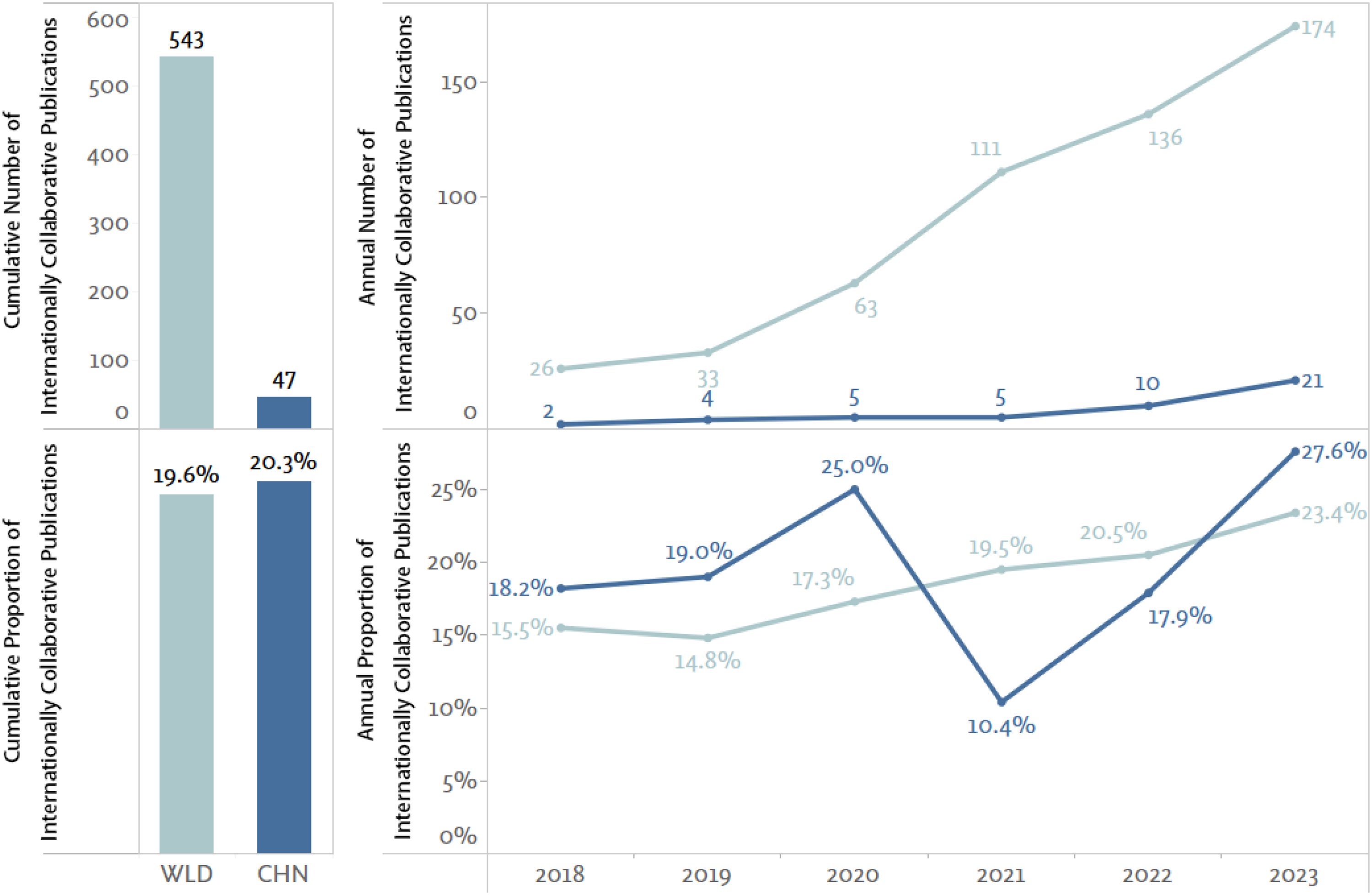
Annual trends in publication volume and proportional share of international collaborations in digital education globally and in China (2018–2023 YTD).
Academic impact of international collaboration
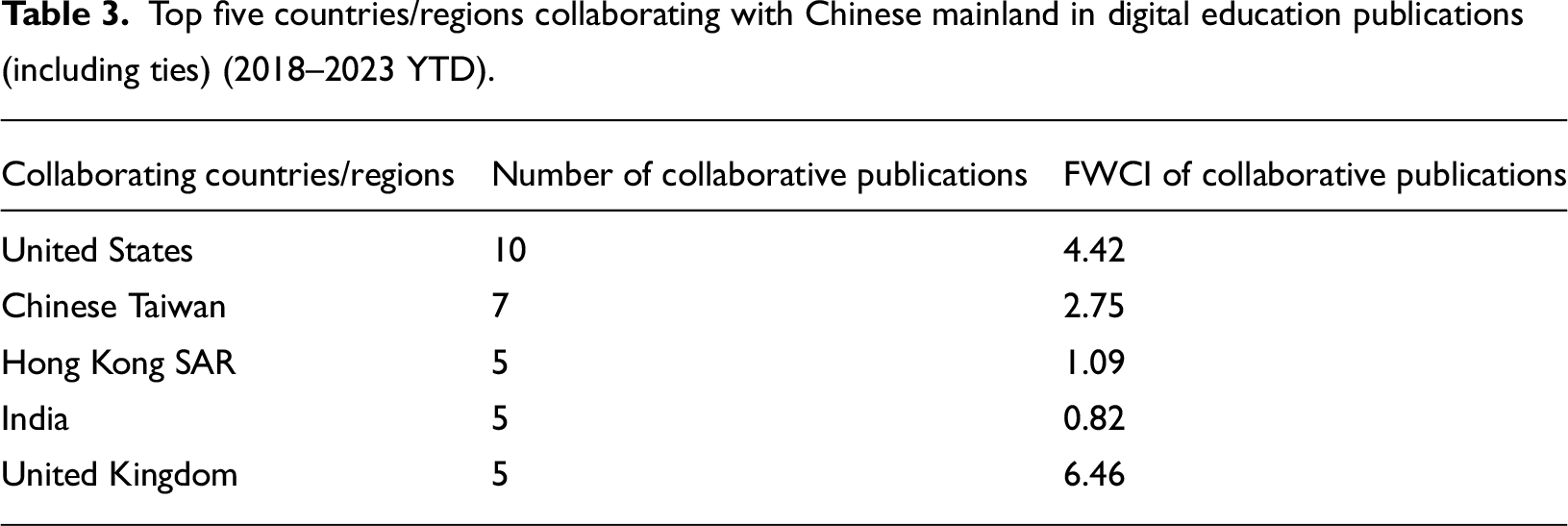
Publications resulting from international collaboration have significantly higher academic impact, as evidenced by their higher FWCI compared to domestic or institutional collaborations. Globally, the FWCI for international collaboration publications is 3.4, while in the Chinese mainland, it stands at 3.0, both significantly higher than the FWCI for domestic or institutional collaborations (Figure 10). Globally, the FWCI for internationally collaborative publications is 1.68 times higher than that for domestic collaborations, while in the Chinese mainland, the difference is even more pronounced, with the FWCI for international collaborations being 3.37 times higher. This highlights the importance of international collaboration in boosting the academic visibility and impact of digital education research. The United States is the most frequent collaborator with Chinese mainland's institutions, while the United Kingdom has the highest FWCI for collaborative publications with the Chinese mainland (Table 3).
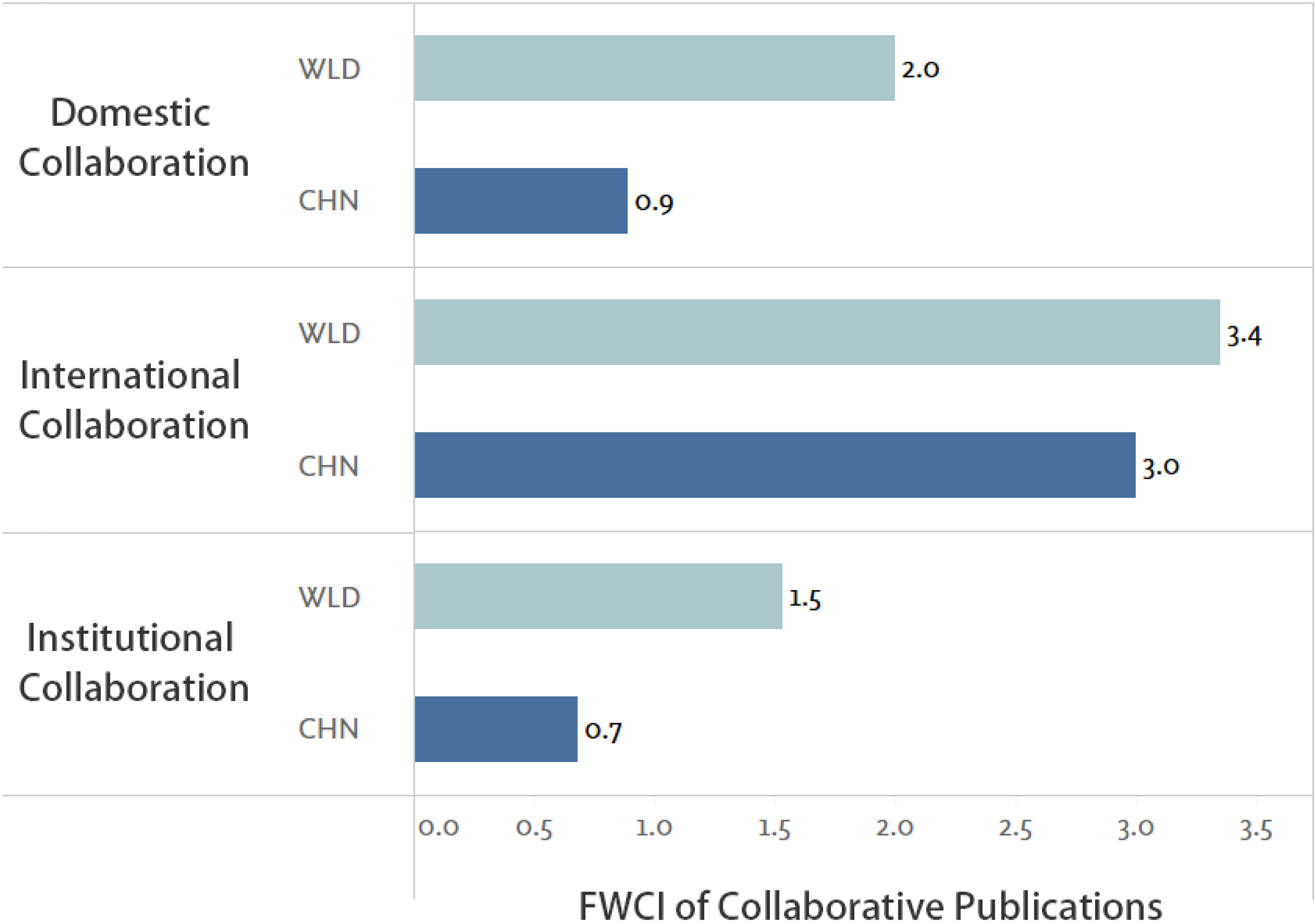
Field-weighted citation impact (FWCI) of research collaborations in digital education globally and in Chinese mainland (2018–2023 YTD).
Top five countries/regions collaborating with Chinese mainland in digital education publications (including ties) (2018–2023 YTD).
The influence of digital education research on policy and media
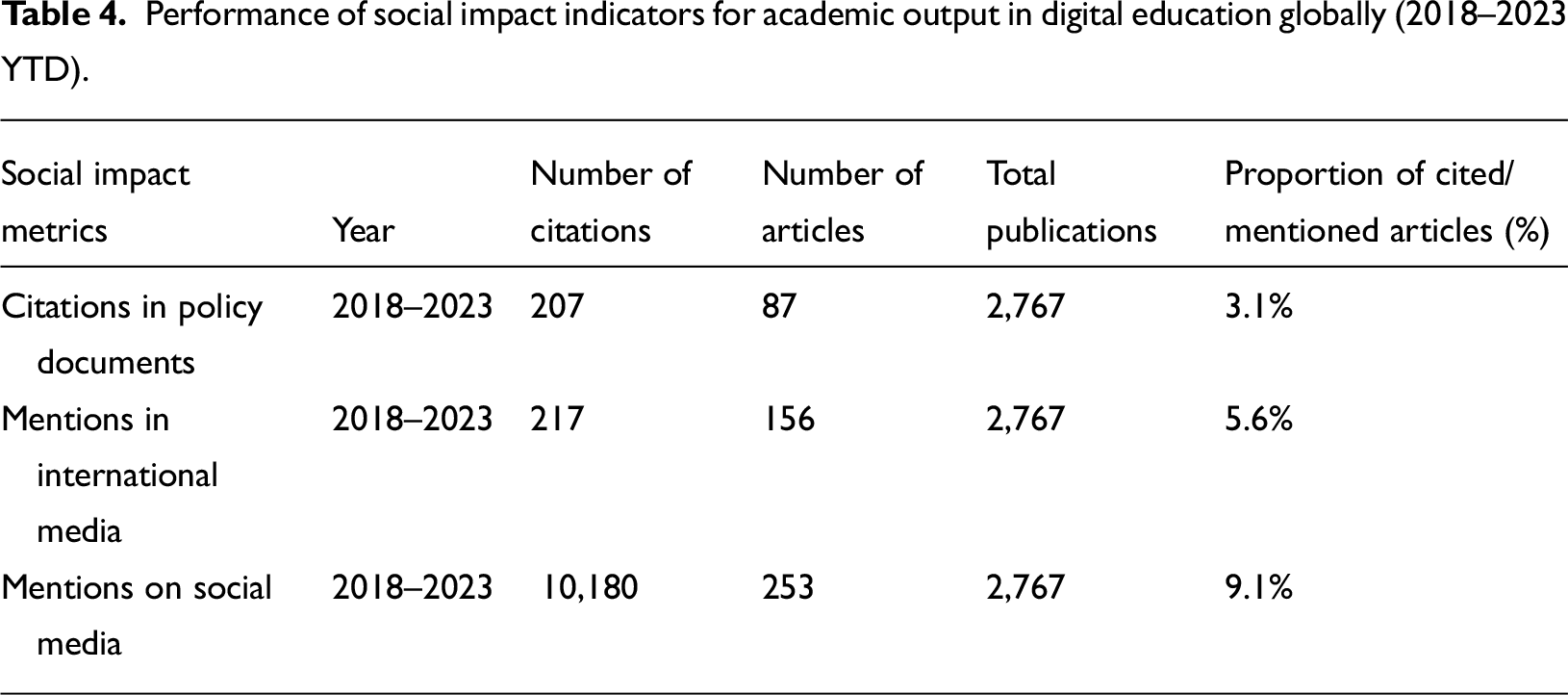
Between 2018 and 2023, a total of 406 articles in digital education were cited in policy documents or mentioned in the media. This highlights that digital education research is not only academically relevant but also has real-world applications and influence on policymaking and public discussions. Among these, 87 articles were cited in policy documents 207 times, accounting for 3.1% of the global output in this research domain. On the media front, these articles received 217 mentions in international media and 10,180 mentions on social media. Specifically, 156 articles were mentioned in international media (5.6% of total publications), while 253 articles (9.1% of total publications) were mentioned on social media (Table 4).
Performance of social impact indicators for academic output in digital education globally (2018–2023 YTD).
Research themes in policy and media: Citation and engagement trends
The most frequently cited or mentioned research themes align closely with global high-output topics, such as “Content Knowledge; Pre-service Teachers; Technology Integration,” which has remained the most prominent topic globally. Additionally, certain themes received exceptional engagement, including “Digital Data; YouTube; Big Data,” “Education for Sustainability; Higher Education Institutions; Sustainable Development,” and “Augmented Reality; Education; Online Learning,” with over 25% of their articles referenced in policy documents or media (Figure 11).
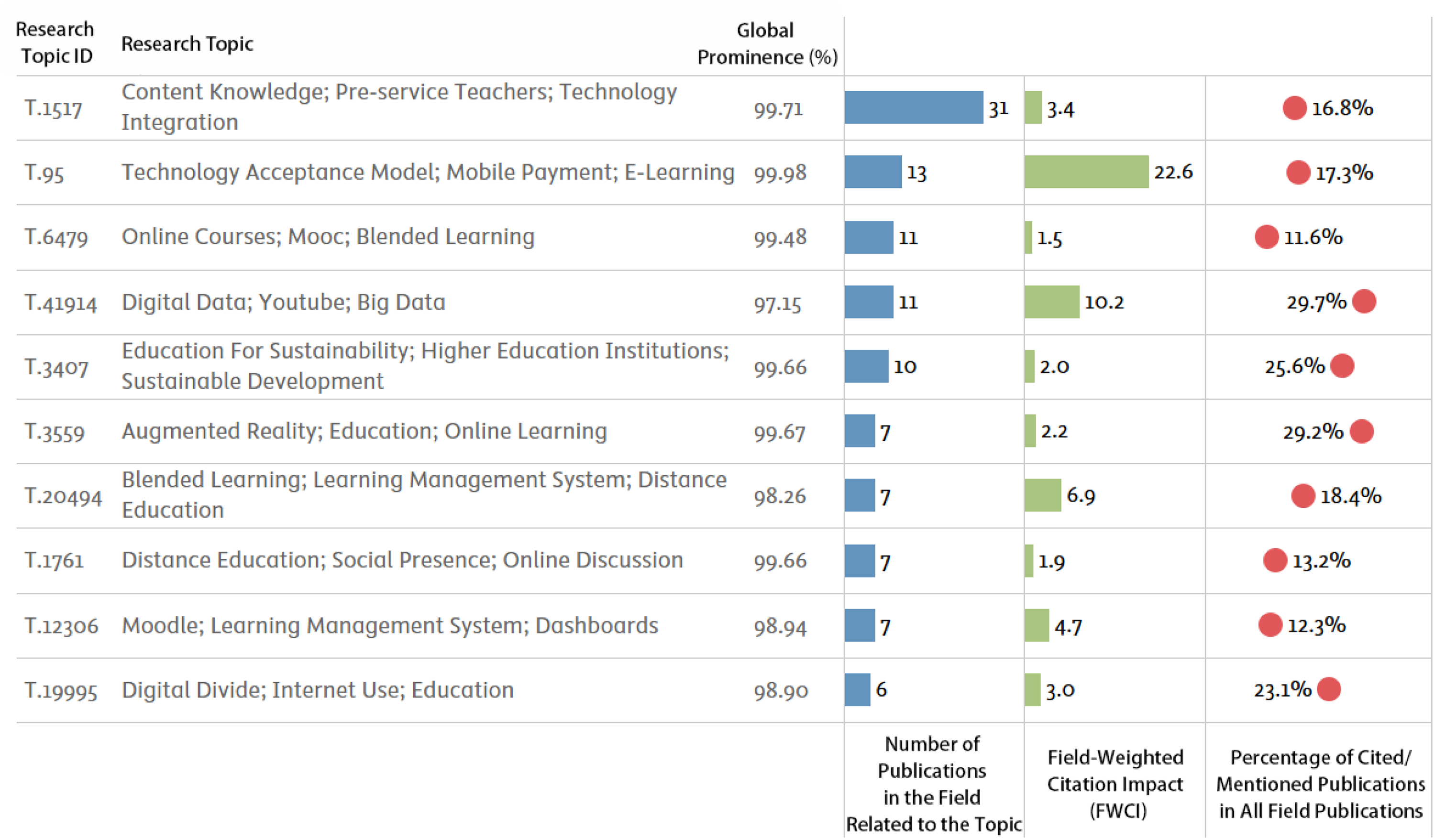
Distribution of high-output research topics cited in policy documents or mentioned in media (2018–2023 YTD).
Institutional contributions to policy and media impact: Citation trends
The journal Sustainability played a key role during this period, contributing 66 articles that were cited or mentioned in policy documents or media, with a total of 1,217 citations. Its FWCI of 2.6 surpassed the journal's overall FWCI of 2.2 (Figure 12). The University of Edinburgh in the UK stood out with eight articles and an FWCI of 8.6. The University of Johannesburg and University College London each contributed seven articles, with impressive FWCI scores of 37.5 and 11.6, respectively (Figure 13). These statistics underscore the alignment between high-output research institutions and significant academic influence in the digital education field.
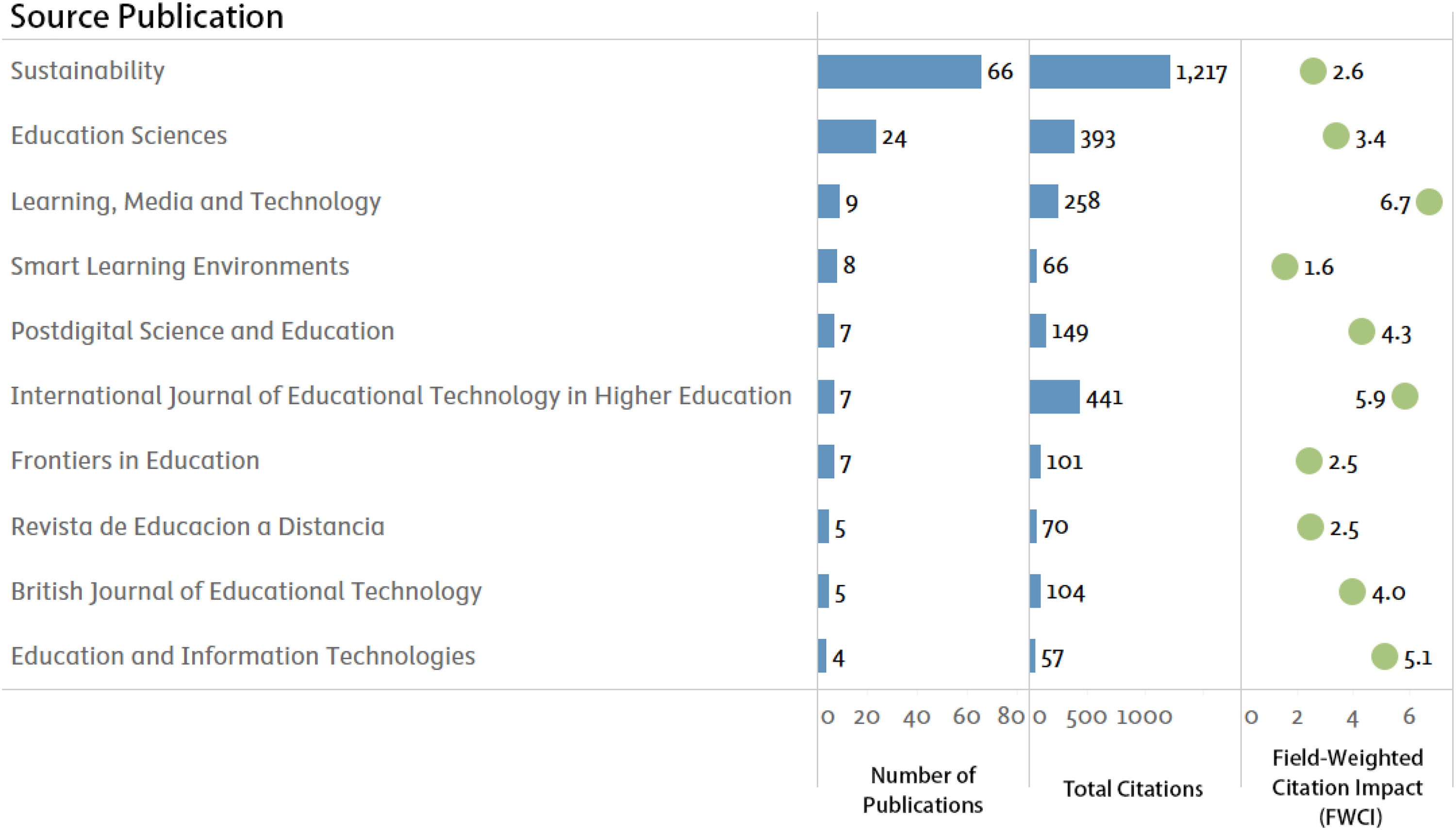
Top 10 publications citing articles in policy documents or mentioned in media (2018–2023 YTD).
Driving factors behind the Chinese mainland's digital education achievements
In the Chinese mainland, a notable growth trend emerged, with the proportion of highly cited publications hovering around 10% until 2023, when it surged to 25%, significantly surpassing the global average. While this trend aligns with broader global shifts in digital education research, several contextual factors may have contributed to this rise, including national strategic initiatives, improved infrastructure, increased international collaboration, and advancements in digital technology.
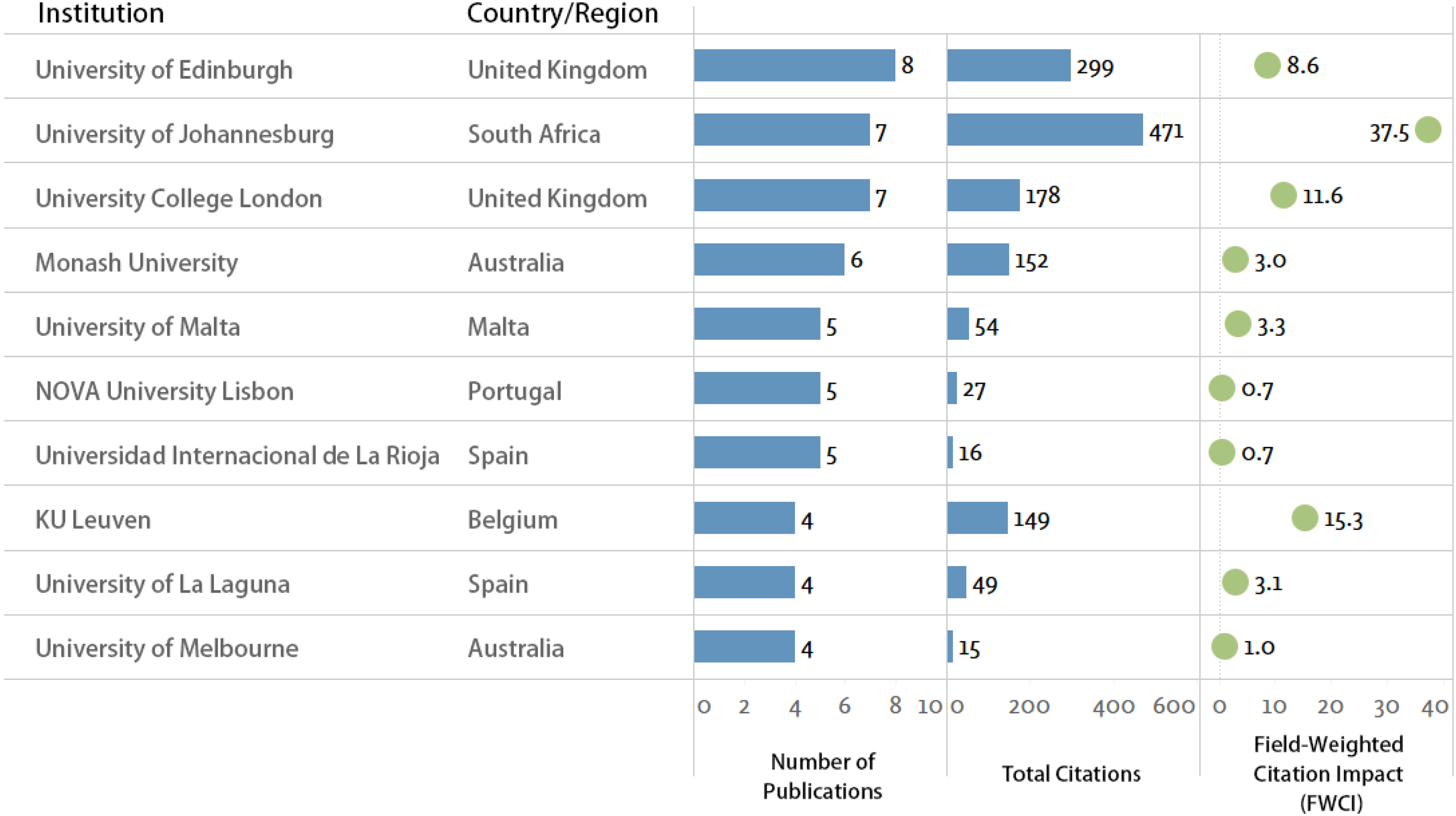
Distribution of the top 10 institutions publishing articles cited in policy documents or mentioned in media (2018–2023 YTD).
National strategic support
The Chinese mainland has prioritized digital education as a key strategy for educational advancement (Duan & Qian, 2024). This strategic focus has driven policy support and resource investment, enhancing the quality of research output.
Infrastructure and technical resources
The Chinese mainland's higher education system benefits from a strong foundation in digital education and smart learning environments, providing the necessary hardware and software to produce high-quality research.
International collaboration
Although historically limited, Chinese mainland's international research collaborations have surged in recent years. Publications resulting from these collaborations tend to have higher academic influence (Secretariat of the World MOOC and Online Education Alliance, 2023), contributing to the increased citation rates.
Advances in digital technology
The adoption of cutting-edge technologies—from audio-visual and computer-assisted learning to mobile Internet and smart education—has enhanced the quality of education, indirectly boosting the impact and citation of research (Yang, 2024a).
Academic exchange platforms
The Chinese mainland has actively built and participated in platforms like the National Education Smart Platform (Yang, 2024b) and the World MOOCs and Online Education alliances, facilitating international dissemination of academic work.
Educational governance innovation
The Chinese mainland has introduced new models such as virtual internationalization and online education, drawing international academic interest and increasing the visibility and citation of its research.
Current challenges and future paths of the Chinese mainland's digital education
From 2018 to 2023, the Chinese mainland demonstrated strong development momentum in the field of digital education, achieving remarkable results. However, to align with global development goals and lead the way forward, the Chinese mainland must continue to enhance research quality, foster academic team development, and establish independent academic platforms.
Quality over quantity: Elevating research excellence in academic pursuits
Although the Chinese mainland ranked among the global leaders in both the number and quality of publications in the field of digital education, there remains a gap between the quantity of research and its impact. Specifically, the Chinese mainland ranked third globally in terms of publication numbers, but only ninth in terms of FWCI. This gap indicates that despite the considerable output of Chinese researchers in this area, the academic quality and international impact of their work still need improvement. The next task is to continue improving quality while maintaining a leading position in quantity. Research should better identify and address key challenges in the digital education development process, proposing scientifically sound plans, and producing high-quality research with substantial impact to drive meaningful policy and academic dialogue (Lyu, 2024). The progress of the Chinese mainland's research in digital education needs to accompany the nation's transition from a major educational power to an education superpower (Song, 2021).
Beyond competition: Cultivating leadership in academic team development
Research in the field of digital education in the Chinese mainland is concentrated in a few leading institutions, such as Beijing Normal University, which ranks first globally in terms of publication volume among all research institutions, with an FWCI of 1.1. However, other Chinese universities have not made it into the top 10. At the same time, the FWCI for international collaborations from the Chinese mainland is 3.37 times higher than that for domestic collaborations, double the global average. Both the quantity and impact of the Chinese mainland's international collaborative publications exceeded the global level during the same period. This indicates that international collaboration plays a crucial role in enhancing research quality and impact. However, relying solely on a few institutions and international collaborations is insufficient. In the future, more domestic universities and research institutions must join the field of digital education research, engaging in interdisciplinary, interorganizational, and even interregional and international cooperation (Zhang & Xun, 2023). By fostering multilevel, multichannel academic team development, the Chinese mainland can promote balanced growth in the field of digital education.
Reimagining academic platforms: Shifting from outward expansion to internal empowerment
In the global digital education landscape, the Chinese mainland does not yet have journals among the top 10 in terms of publication volume, and none of the top 10 authors in terms of publications are from the Chinese mainland. This reflects that, over the last 5 years, the Chinese mainland has not developed leading international academic journals or publications in the field of digital education. Chinese researchers primarily rely on foreign journals for academic recognition, indicating a lack of local academic platforms. To enhance the international influence of this discipline, building independent academic journals—vital resources for academic exchange and discourse—is essential (Luo & Jiang, 2020). Establishing academic journals and organizing international academic conferences and forums will allow both domestic and international researchers to publish high-quality research.
Conclusion
The past 5 years have witnessed significant growth in the field of digital education research, particularly in the Chinese mainland. This growth has been driven by strategic policies, robust infrastructure, and increased international collaboration, leading to a notable rise in both publication volume and academic impact. The sharp increase in highly cited papers, especially in 2023, reflects the growing recognition of digital education as a key area for educational development. Digital education is where our country can achieve breakthroughs in opening up new areas and forming fresh strength of educational development. More should be done to encourage digital education to support personalized learning, lifelong learning, expanding the reach of quality educational resources, and modern education. (Ministry of Education of the People's Republic of China, 2023)
Takeaway message
• Digital education research has grown rapidly worldwide, with a CAGR of 35% from 2018 to 2023. The Chinese mainland has emerged as a major contributor with increasing influence.
• International collaboration significantly boosts academic impact, highlighting the value of global partnerships in enhancing research quality and visibility.
• Establishing independent academic platforms and increasing policy and media engagement will be key to further strengthening the field's global influence and practical relevance.
Footnotes
Acknowledgments
This is to acknowledge support from Elsevier's report team for collecting raw datasets, data cleaning, validation, and visualization.
Contributorship
The authors contributed equally to this work. Yiting Wang was responsible for organizing and preparing the figures and tables. Shuyue Zhang and Rongli Quan contributed to data analysis and interpretation of results. Miao Zhang and Chenxi Gu led the manuscript drafting and provided overall coordination. All authors reviewed and approved the final version of the manuscript.
Declaration of Conflicting Interests
The authors declared no potential conflicts of interest with respect to the research, authorship, and/or publication of this article.
Funding
The authors received no financial support for the research, authorship, and/or publication of this article.
