




Abstract
Purpose
This study examines the influence of higher education and the digital economy on common prosperity at the provincial, urban, and rural levels, as well as how the digital economy mediates the effect of higher education on common prosperity.
Design/Approach/Methods
Based on Chinese provincial panel data from 2011 to 2020, this study constructs a novel index to measure the common prosperity index at the provincial, urban, and rural levels that comprise the dimensions of “development” and “sharing.” The panel data method is used to accomplish the empirical studies.
Findings
First, increasing the proportion of higher education had a significant positive impact on common prosperity at the provincial, urban, and rural levels. Second, the development of the digital economy had a significant impact on common prosperity at the rural level only. Third, developing the digital economy strengthened the positive role of higher education in promoting common prosperity at the provincial and urban levels.
Originality/Value
The results indicate that expanding the scale of higher education and deepening the development of the digital economy are effective means of promoting common prosperity. Government can exert the positive moderating role of the digital economy in the beneficial effect of higher education on common prosperity.
Introduction
Human capital is a key determinant of residents’ ability to generate income. In November 2021, the Sixth Plenary Session of the 19th Central Committee of the Communist Party of China (CPC) approved the “Resolution of the CPC Central Committee on the Major Achievements and Historical Experience of the Party Over the Past Century,” a clear strategic plan identifying “more notable and substantive progress toward achieving well-rounded human development and common prosperity for all” (Xinhua News, 2022) as a key strategic task in the new era. As a policy development goal in China, “common prosperity” refers to achieving a more equitable distribution of wealth and resources within a society, ensuring that the benefits of economic growth are shared by all community members. Increasing the proportion of the population receiving higher education is an objective requirement for economic development and is vital to expand the middle classes, substantially promoting common prosperity. Conversely, human capital is also characterized by increasing returns. Individuals who have received systematic higher education are more likely to obtain better employment opportunities in the market and receive higher income, expanding the gap between the better- and less-educated.
As global development advances, the digital economy will profoundly impact future economic growth, improve efficiency, and alter the social structure. China's focus on common prosperity coincides with the era of the digital economy (Xia & Liu, 2021). Given its significant effect on income growth and poverty reduction (Ahmed & Al-Roubaie, 2013; Zhou & Guo, 2022), the digital economy has become a driving force in promoting common prosperity. However, some studies indicate that the digital economy has a crowding-out effect on the development of the real economy (Ma et al., 2021), with the “winner takes all” phenomenon of the digital economy tending to undermine the right to income among low- and medium-skilled workers (Bai & Zhang, 2021). Exacerbating the income gap between laborers at different skill levels (Liu et al., 2021), this byproduct of the digital economy negatively affects common prosperity goals.
China has an urgent need for higher education, scientific knowledge, and outstanding talent. However, there is a marked spatial difference in the development of higher education and the digital economy. In addition to imbalances across provinces, there are striking differences between urban and rural areas. In this context, there is a pressing need to clarify the impact of higher education and the digital economy on common prosperity and how the digital economy affects the role of higher education in achieving common prosperity at the provincial, urban, and rural levels. Such research will aid in the identification of the best pathways to achieve common prosperity goals.
Addressing this gap, this study makes two contributions to the field. First, existing research has tended to focus on the impact of education on common prosperity at the provincial level and on improving equality in education. From the perspective of “development” and “sharing,” this study uses panel data from 31 Chinese provinces from 2011 to 2020 to construct a novel index to measure common prosperity at the provincial, urban, and rural levels. Using this index, this study investigates the role of higher education in achieving common prosperity at each level. Second, existing studies have largely concentrated on the impact of the digital economy on common prosperity at the provincial level. Few studies have introduced the digital economy into the analysis of the relationship between higher education and common prosperity at the provincial, urban, and rural levels; this study addresses this oversight and further investigates how the digital economy mediates the effect of higher education on common prosperity at each respective level.
Literature review and research hypotheses
Relationship between higher education and common prosperity
Common prosperity comprises development and sharing (Wan & Chen, 2021). From the development perspective, school education contributes to economic growth by improving human capital in general while endowing laborers with knowledge and skills, which improves the general quality of labor (Wu & Min, 2022). In theory, education is widely regarded as a primary means for accumulating human capital and is often recognized as a key tool in fostering social equality. Higher education improves the quality of human capital and facilitates knowledge and technological innovation. As high-quality labor expands and laborers’ skills improve, human capital becomes an advantage in economic growth.
From the sharing perspective, higher education contributes to society by cultivating diversified, high-quality, and specialized talent. As an advanced production factor, human capital is important for promoting balanced economic development (Acemoglu & Autor, 2012; Becker, 1964; Schultz, 1960). As Schultz (1960) demonstrated, an increase in the stock of human capital in society weakens the influence of resource endowments, social status, and institutions on the income gap, reducing the overall income gap. In the Chinese context, Chen et al. (2004) have shown how higher education's sustained and balanced development has narrowed the income gap between regions. Similarly, Li and Wang (2006) revealed that increasing the average years of education received by the population reduced the Gini coefficient of human capital, narrowing the regional economic gap. Based on the above analysis, this study proposes the following hypothesis:
However, higher education may have a negative impact on “sharing.” According to the human capital model developed by Schultz (1960), Mincer (1974), and Becker (1975), the average level of education and the distribution of education within the population can both impact income inequality. The effect of an increase in the average level of education on income inequality can be either positive or negative, depending on the evolution of the education return rate. After all, receiving more education increases the skills and creativity of workers and provides the opportunity to obtain higher remuneration. More importantly, receiving education increases individuals’ social capital and is conducive to obtaining more support from public resources (Luan, 2022). In theory, the structural effect resulting from the relative expansion of the highly educated population initially leads to an increase in income inequality; later, it will reduce income inequality (Knight & Sabot, 1983). Marin and Psacharopoulos (1976) found that, for every 5% increase in higher education among the general population in the United States, the income distribution index declined by 2%. According to the hypothesis of maximally maintained inequality in education (Raftery & Hout, 1993), prior to the enrollment rate of the advantaged class reaching saturation, the expanded learning opportunities are primarily concentrated in households with upper-middle economic and social status, further expanding educational inequality and the income gap. Therefore, this study proposes the following competing hypothesis:
Relationship between digital economy and common prosperity
As a new economic model, the digital economy has a positive impact on the “development” dimension of common prosperity. More specifically, the digital economy has provided new driving forces promoting high-quality productivity (Zhou & Guo, 2022), while the integration of digital technology and production has advanced digital industrialization and industrial digitalization, laying the material foundation for common prosperity (Jiang & Meng, 2021). Moreover, the digital economy may have a positive impact on the “sharing” dimension of common prosperity. According to Xia and Liu (2021), the digital economy facilitates coordinated development between regions and industries, narrowing the development gap across various dimensions and supporting more equitable earnings. The digital economy's inclusive, spillover and synergistic effects elicit equal development opportunities, benefit rural and remote cities (Forman et al., 2005), and improve inclusive growth and income distribution (Zhang et al., 2019).
However, the digital economy may have a negative impact on the “sharing” dimension of common prosperity. Indeed, the development of the digital economy may result in a “winner takes all” phenomenon, crowding out the relative right to income for low- and medium-skilled workers (Bai & Zhang, 2021) and exacerbating the income gap between laborers with different skills (Liu et al., 2021). Furthermore, the unbalanced development of the digital economy may lead to a digital divide, widening the economic divide between regions (Yin et al., 2021) and creating a new gap between the rich and the poor. When the negative impact of the digital economy on “sharing” exceeds its positive impact on “development,” it may hinder common prosperity goals. Accordingly, this study proposes the following competing hypotheses:
Influence of digital economy on the effect of higher education on common prosperity
The development of digital technology has fostered new supply service networks and business models, promoted the modularization of innovation and entrepreneurship, and created conditions for human capital to exert its full effectiveness (Li, 2022). The digital economy also effectively reduces the problem of the lack of learning resources in underdeveloped regions. Compared to the high human capital stock in developed regions, there is greater room for improved human capital in underdeveloped regions. New educational resources derived from the integration of digital technology and education and new educational methods, such as distance education, have significantly improved the fair acquisition of knowledge, bringing us closer to the goal of “achieving prosperity through education” (Li & Chen, 2022).
Nevertheless, in the era of the digital economy, low-skilled workers may become the “new digital proletarians,” who can only engage in high-intensity simple labor work (Zhou & Guo, 2022), making it difficult to obtain equal development opportunities (Jiang & Kang, 2022). Consequently, the gap between these workers and groups with greater digital skills may widen (Wang & Hu, 2022). According to Yuan et al. (2022), a new industrial revolution may occur. Characterized by the digital economy and artificial intelligence, this new industrial revolution will lead to the large-scale replacement or empowerment of the labor force, lowering the prices of abundant production factors, increasing the prices of scarce production factors, and exacerbating the income gap. With the rapid development of the digital economy, income distribution inequality is increasing in some nations and regions (Acemoglu & Restrepo, 2020; Guellec & Paunov, 2017). The unbalanced allocation of labor digitalization and digital skills is likely to restrict the progress of underdeveloped regions and intensify regional disparities (Chen & Wu, 2021; Hu & Wang, 2016; Tian & Li, 2018). Thus, this study proposes the following competing hypotheses:
Indices and modeling
Indices
Common prosperity index
Despite abundant research on the gap between rich and poor (Novokmet et al., 2018; Piketty et al., 2019; Yang & Zhou, 2012), few studies have focused on measuring China's common prosperity. Drawing on Ravallion's (2011) method of constructing human development indices, Wan and Chen (2021) constructed a common prosperity index by assigning equal weight to “overall prosperity” and “shared prosperity.” Using this index to analyze the common prosperity of 162 nations/regions, they demonstrated its logic, ease of use, and accuracy in reflecting the most important aspects of the problem and its value in covering both dimensions of common prosperity—development and sharing.
Building on Wan and Chen (2021), this study constructs a common prosperity index at the provincial, urban, and rural levels using the following formula:

Notably, the common prosperity index (CP) ranges from 0 to 100. Regions with greater PGDP (disposable income) and a smaller Gini coefficient have a CP closer to 100, indicating a closer proximity to common prosperity. Conversely, a CP closer to 0 indicates a greater distance from common prosperity.
Digital economy index
Drawing on the approach of Huang et al. (2019), this study uses the development of the Internet as its core measurement. More specifically, the number of broadband users per 100 people, the ratio of employees in the computer service and software industry to employees in urban corporations, the per capita revenue of telecommunication services, and the number of mobile phone users per 100 are used to measure Internet development. This study also uses China's Digital Financial Inclusion Index as a supplementary measure to reflect digital financial development. 1 Principal component analysis is adopted to reduce the dimensionality of the five indicators and obtain the digital economic index. All data are extracted from the China Statistical Yearbook, except for the digital financial inclusion index. As the digital financial inclusion index is only available from 2011, the digital economic index starts in 2011.
Empirical model
Model (2) examines the impact of higher education on common prosperity at the provincial, urban, and rural levels:

Model (2) is a two-way fixed effect model, Province and Time represent the fixed effects of province and time, respectively. Trend is the linear time trend represented by the variable 1, 2, …, T, with T being the number of years.
Model (3) examines the impact of the digital economy on common prosperity, while the moderated moderation Model (4) explores how the digital economy influences the effect of higher education on common prosperity:



Data description
The sample period is 2010–2020. As noted, the explanatory variables in Models (2)–(4) are lagged by one period. As the digital economy indices in Models (3) and (4) are only available since 2011, the sample range of the explained and explanatory variables in Model (2) are defined as 2011–2020 and 2010–2019, respectively, while that of the explained and explanatory variables in Models (3) and (4) are defined as 2012–2020 and 2011–2019, respectively.
Table 1 presents the descriptive statistics of the core variables. The means of the common prosperity indices at the provincial, urban, and rural levels are all around 45. Although the mean and median of each sample group are approximate to one another, the degree of dispersion is relatively high (the standard deviation was around 20), indicating significant disparity in common prosperity within each sample group. The results indicate that the mean proportion of higher education at the urban level is 20.0018, significantly higher than that at the rural level (3.5448)—the spatial distribution of higher education between urban and rural areas is significantly unbalanced.
Statistical description of the variables.
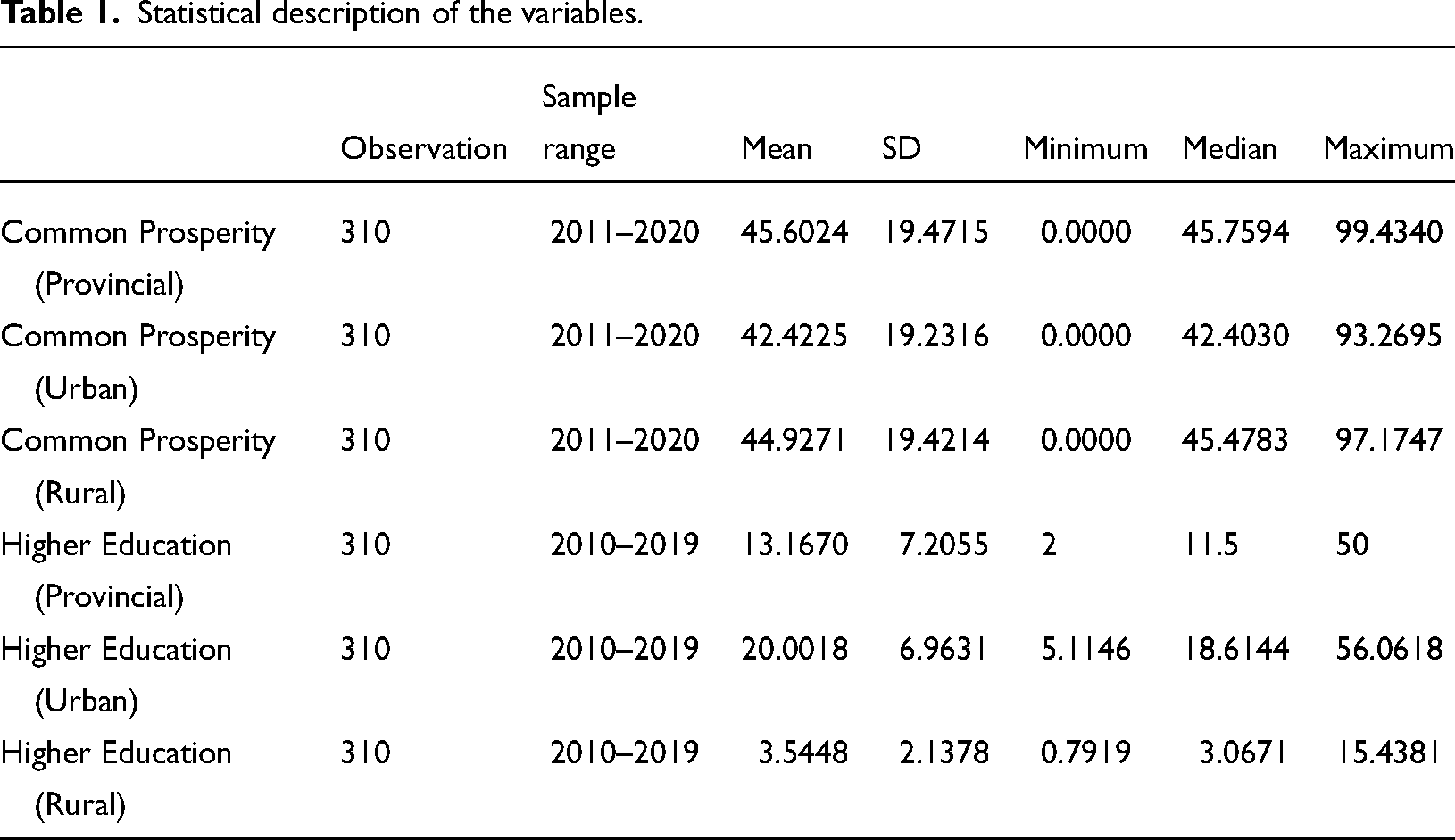
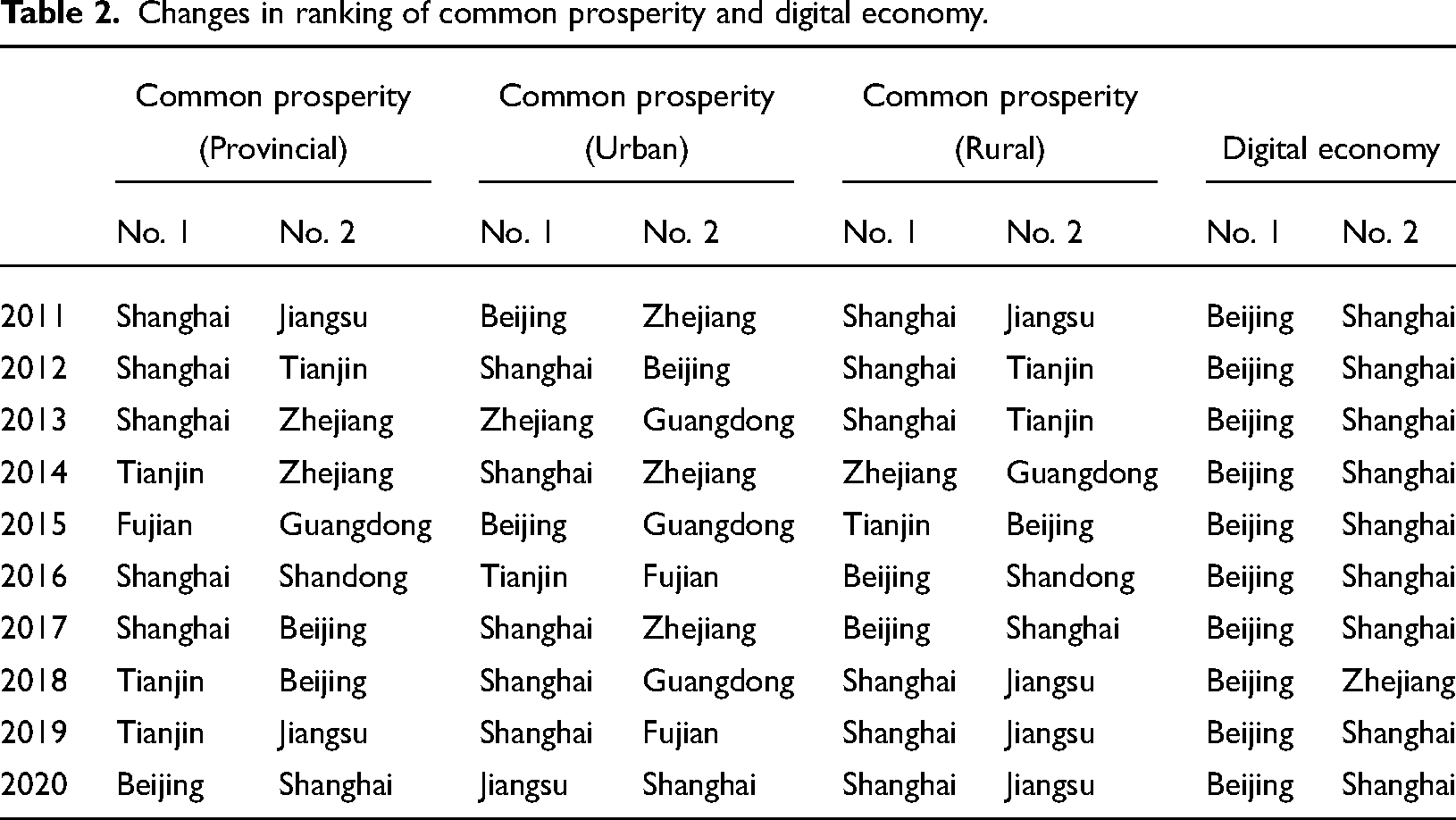
Table 2 shows the changes in the top two provinces/municipalities in terms of common prosperity and the digital economy, revealing frequent positional changes in common prosperity at all three levels. More specifically, for the top two positions, at the provincial level, Shanghai, Tianjin, and Beijing appeared a total of six, four, and three times, respectively; at the urban level, Shanghai, Zhejiang, and Beijing appeared a total of six, four, and three times, respectively; at the rural level, Shanghai, Jiangsu, Beijing, and Tianjin appeared seven, four, three, and three times, respectively. Overall, the eastern provinces with more developed economies rank higher in terms of common prosperity, suggesting that common prosperity must be achieved based on economic development and that efforts should be made to narrow the gap in regional economic development. Regarding the digital economy, except for 2018, the rankings are generally stable, with Beijing and Shanghai consistently ranking in the top two.
Changes in ranking of common prosperity and digital economy.
Empirical analysis
Impact of higher education on common prosperity
Table 3 reports the regression results of Model (2), with the first, second, and third columns presenting the results at the provincial, urban, and rural levels, respectively. When controlling the provincial variables, province fixed effect, time fixed effect, and province time trend, higher education is found to have a positive impact on common prosperity at the provincial (p < .05), urban (p < .05), and rural (p < .01) levels. Therefore, H1a is supported. For rural areas, the development of higher education is found to significantly improve the rural labor force's overall quality. In this respect, vocational education has long focused on cultivating the professional agricultural knowledge and skills of rural farmers. With its emphasis on applicability and practicality, vocational education is well aligned with the growth characteristics of the rural labor force and has played an important role in poverty reduction and agricultural and rural development (Yi et al., 2022).
Impact of higher education on common prosperity.
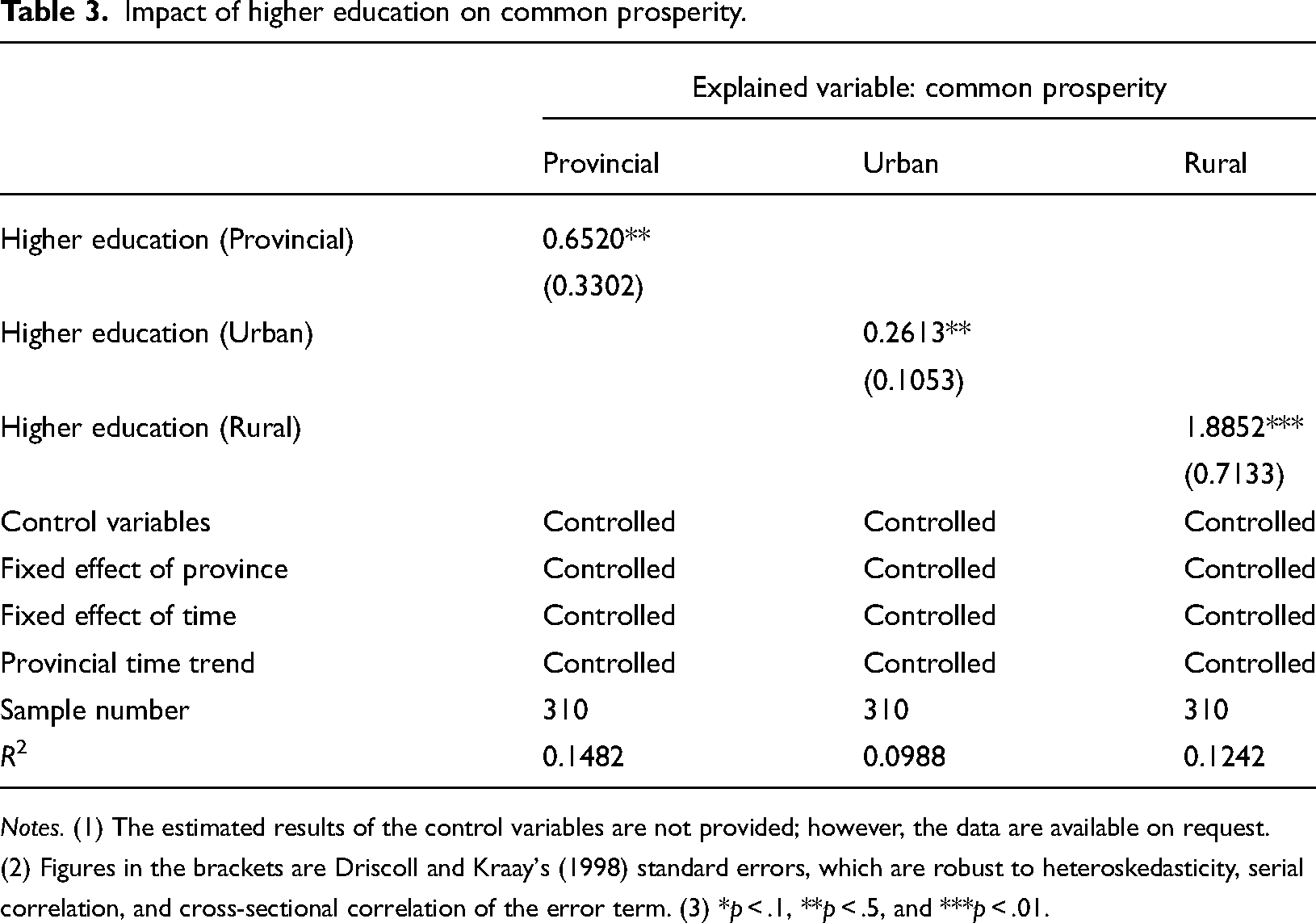
Notes. (1) The estimated results of the control variables are not provided; however, the data are available on request. (2) Figures in the brackets are Driscoll and Kraay's (1998) standard errors, which are robust to heteroskedasticity, serial correlation, and cross-sectional correlation of the error term. (3) *p < .1, **p < .5, and ***p < .01.
Impact of digital economy on common prosperity
Table 4 reports the regression results of Model (3), with the first, second, and third columns presenting the results at the provincial, urban, and rural levels, respectively. When controlling for the fixed effects of province and provincial time trends, the digital economy is found to have a positive impact on common prosperity at the provincial and urban levels. However, the results are not statistically significant (p > .1). Following the robust test, the results remained positive but non-significant (results available upon request). Conversely, results at the rural level are statistically significant (p < .1), indicating that the digital economy has a positive impact on common prosperity in rural areas. Therefore, H2a is partially supported. Following the robustness test, the results remain positive (p < .01) (results available upon request).
Impact of digital economy on common prosperity.
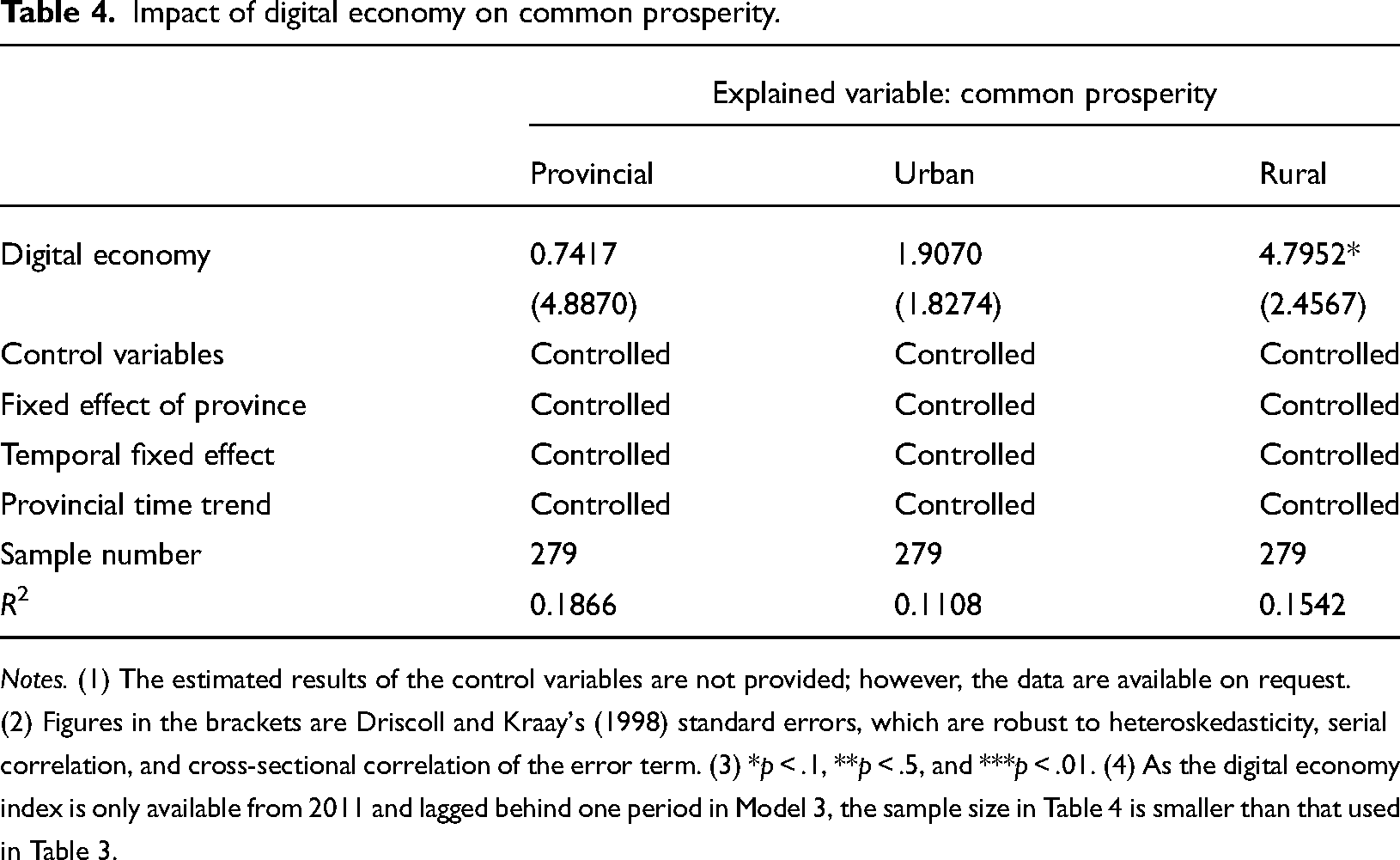
Notes. (1) The estimated results of the control variables are not provided; however, the data are available on request. (2) Figures in the brackets are Driscoll and Kraay's (1998) standard errors, which are robust to heteroskedasticity, serial correlation, and cross-sectional correlation of the error term. (3) *p < .1, **p < .5, and ***p < .01. (4) As the digital economy index is only available from 2011 and lagged behind one period in Model 3, the sample size in Table 4 is smaller than that used in Table 3.
These findings demonstrate that the digital economy has a positive impact on the “development” and “sharing” dimensions of common prosperity in rural areas. More specifically, the digital economy stimulates the endogenous driving force for development. By improving the modernization of agriculture in rural areas, increasing the availability of financial products in rural areas through digital finance, and providing sales channels for rural products through e-commerce, the digital economy could boost rural economic development and industrial revitalization. Moreover, the digital economy provides equal development opportunities that can benefit rural and remote towns (Forman et al., 2005), stimulating the inclusive growth of the economy and improving income distribution (Zhang et al., 2019).
Influence of the digital economy on the effect of higher education on common prosperity
Table 5 reports the regression results of Model (4), with the first, second, and third columns presenting the results at the provincial, urban, and rural levels, respectively. When controlling for the fixed effects of province and time and provincial time trend, the digital economy strengthens the positive effect of higher education on common prosperity at the provincial (p < .01) and urban (p < .1) levels. Therefore, H3a is supported. The development of digital technology fosters novel supply service networks and business models, promotes the modularization of innovation and entrepreneurship, and creates conditions for highly educated talent to exert their capabilities (Li, 2022). In urban areas, the higher population density and economic activities could facilitate knowledge diffusion and information exchange, making the spillover effect of human capital agglomeration more prominent (Wang & Xu, 2021).
Influence of digital economy on the effect of higher education on common prosperity.
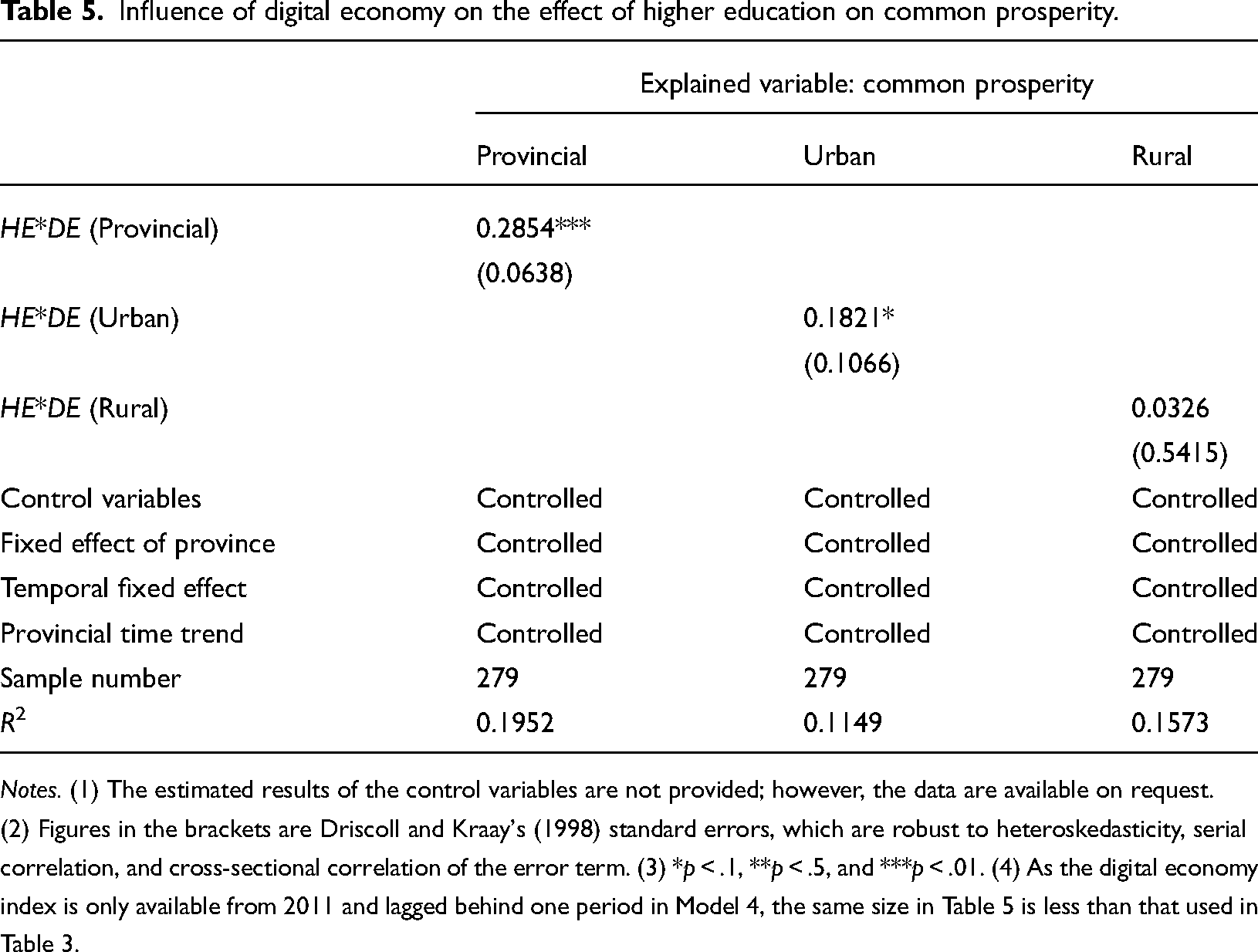
Notes. (1) The estimated results of the control variables are not provided; however, the data are available on request. (2) Figures in the brackets are Driscoll and Kraay's (1998) standard errors, which are robust to heteroskedasticity, serial correlation, and cross-sectional correlation of the error term. (3) *p < .1, **p < .5, and ***p < .01. (4) As the digital economy index is only available from 2011 and lagged behind one period in Model 4, the same size in Table 5 is less than that used in Table 3.
Although the influence of the digital economy on the relationship between higher education and common prosperity is also positive at the rural level, the result is not statistically significant (p > .1). The robust test similarly yields an insignificant positive result (results available upon request). As the empirical results presented in Tables 3 and 4 show, although both the digital economy and higher education have a positive impact on common prosperity in rural areas, there is insufficient integration between the two, and the digital economy could not enhance the positive effect of higher education on common prosperity.
Conclusions and policy implications
This study uses balanced panel data of 31 provinces (municipalities) from 2011 to 2020 to construct a novel common prosperity index incorporating the dimensions of “development” and “sharing.” Data at the provincial, urban, and rural levels were used to investigate how higher education and the digital economy impact common prosperity under the same framework. Analysis revealed three main findings. First, higher education has a significant positive impact on common prosperity at the provincial, urban, and rural levels. Second, although the digital economy has a positive impact on common prosperity at all levels, only the results at the rural level are statistically significant. Third, the digital economy strengthens the positive impact of higher education on common prosperity at the provincial and urban levels. Based on these findings, this study proposes the following three policy suggestions or pathways to facilitate the achievement of common prosperity goals.
First, the scale of higher education should be expanded, and the enrollment rates should be increased. The development of higher education in China currently lags behind that of many other countries. In 2020, the enrollment rate of tertiary education in China was 58.4%, notably less than the average enrollment rate of 79.4% in high-income countries and 87.9% in the United States in 2019 (Ma & Xie, 2022). 2 As such, it is necessary to expand the scale of higher education, extend the average number of years of education per capita through educational reforms, and continue the pursuit of a lifelong learning society, increasing human capital accumulation and facilitating common prosperity. Many developing countries with lagging higher education systems could also accelerate the development of higher education, expand its scale, and increase its contribution to economic growth. Increasing education service consumption and improving the population's overall scientific and educational quality is necessary.
Second, China should develop the digital economy in rural areas and use the digital economy as a key indicator to promote common prosperity at the rural level. In this respect, this study suggests optimizing development policies around the digital economy according to local conditions in rural areas, combining the advantages of the central and western regions (e.g., low costs and access to resources) with those of the eastern region (e.g., technological advancement and enriched markets and digital industries), increasing investment in digital infrastructure in rural areas, and popularizing knowledge of digital finance. China should also provide easy access to the digital economy for rural residents, promote the construction of digital villages, stimulate endogenous drivers for the development of rural areas, promote the transformation and upgrading of rural industries, and improve the modernization of agriculture and rural areas. In an era driven by digitalization, this principle applies to other countries worldwide as well since the uneven distribution of digitalization popularization and digitalization skills restricts the development of less developed regions and exacerbates the regional gap (Acemoglu & Restrepo, 2020; Guellec & Paunov, 2017).
Third, full play should be given to the digital economy to strengthen the role of higher education in promoting common prosperity. Relevant authorities should continue to optimize their top-level designs, develop and innovate training models for digital talent, and stimulate the positive moderating role of the digital economy in the relationship between higher education and common prosperity, which applies equally to other countries. By promoting digital literacy programs that help individuals, especially disadvantaged groups, acquire the necessary skills to effectively use digital tools and technologies, the government could bridge and reduce the wealth gap. Greater efforts should be made to expand the digital supply of higher educational resources, direct high-quality educational resources to regions with underdeveloped economies and higher marginal educational returns, and narrow the economic gap between regions. This study further suggests that the government actively shapes the digital environment around educational revitalization in rural areas, improves the allocation efficiency of educational resources, and designs policies to attract talent back to rural areas. Thus, the government can exert a positive moderating role of the digital economy in terms of the beneficial effect of higher education on common prosperity.
Footnotes
Contributorship
Qian Wang was responsible for writing the Abstract, the majority of the main body, researching and analyzing data, writing the original draft, finalizing the paper, and responding to reviewers’ comments. Yupeng Zhang covered various aspects of the paper, including theorizing and analyzing how evidence-based higher education could advance Chinese common prosperity, how the digital economy affects the common prosperity and moderates the effect of higher education on common prosperity in China.
Declaration of conflicting interests
The authors declared no potential conflicts of interest with respect to the research, authorship, and/or publication of this article.
Funding
The authors disclosed receipt of the following financial support for the research, authorship, and/or publication of this article: This study is sponsored by Key Project of Shanghai Planning of Philosophy and Social Science (2022ZJB008) and Shanghai Pujiang Talent Plan (22PJC037, 21PJC064).
