




Abstract
Purpose
This article presents collaborative research by the UNESCO International Institute for Educational Planning (IIEP) and Education Development Trust, focusing on the roles and impact of the instructional middle.
Design/Approach/Methods
The study examines innovative reforms through case studies in Delhi (India), Jordan, Rwanda, Shanghai (China), and Wales (UK), specifically chosen for their progressive middle-tier reforms involving coaching and support. Qualitative methods, including interviews and focus groups, were used alongside secondary data from program documents.
Findings
The instructional middle tier fulfilled four pivotal roles. Firstly, it provided accessible support mechanisms, enhancing learning outcomes within schools. Secondly, professionals utilized international and local knowledge, creating a knowledge-sharing network. Thirdly, they fostered collaboration, promoting shared learning within and between schools. Lastly, these professionals served as intermediaries, bridging the gap between the Ministry of Education and schools.
Originality/Value
This research emphasizes the transformative impact of the instructional middle tier. Unlike singular training events, the middle-tier approach provides sustainable, relationship-based support, creating trust and networks among teachers, emphasizing every teacher's potential for excellence through tailored support, localized knowledge, and ongoing collaboration. These insights are crucial for education policymakers and practitioners, offering evidence-based strategies to enhance educational quality and empower teachers within complex educational systems.
Keywords
Introduction
Most adults remember at least one teacher who inspired them or had a significant impact on their lives. However, most people can also remember teachers who struggled or who had given up following years of working alone in challenging classrooms. Both kinds of teachers exist, in the same schools or in the same school system. Similarly, two schools in the same community can have significantly different learning outcomes for students, despite the teachers being recruited from the same pool and receiving the same training. It's evident that pockets of excellence exist; the challenge lies in bringing all teachers in a system up to speed.
What if teachers had more ongoing instructional support and more opportunities to connect and learn from each other? What if their education systems had explicit mechanisms to prevent the sense of isolation and to provide accessible guidance from their own professional communities? Some systems are doing just that by creating or reorientating instructional leadership roles at the middle tier of education systems, in the space above the individual school but below the central ministry, where they can support teachers in achieving their students’ learning outcomes.
This research jointly undertaken by the UNESCO International Institute for Educational Planning (IIEP) and Education Development Trust between 2019 and 2023, investigates five jurisdictions around the world that created these middle-tier instructional leader roles in low-, middle-, and high-income contexts (Tournier et al., 2023). We will unpack the specifications of these positions, their success, their challenges, their value as a policy option, implementation considerations, and outstanding questions for future research.
Who are middle-tier instructional leaders?
By middle tier, we refer here to the sub-district, district, or regional levels of education systems— the often-complex space situated between schools and the central level. The nature of the middle tier can vary significantly from one country to another, depending on factors such as the country's size, administrative structure, level of (de)centralization, and the breadth of its mandate. We define middle-tier actors as intermediaries within systems who are tasked with implementing and monitoring national education policies at the local level. They act as representatives of the ministry closest to the schools and serve as a bridge between schools/practitioners and the central level. The workforce at the middle tier typically includes a range of professionals, including those working in finance, human resources, and school planning. However, in this research, we intentionally focus on actors with instructional leadership responsibilities.
Instructional leaders in the middle tier are dedicated to supporting teachers and school leaders in their practice and professional growth. Instructional leaders have an acute understanding of teachers’ needs, which guides them in their positions as supervisors, cluster coordinators, school leaders, or teachers working across a network of schools. Their role may include developing and implementing policies that support students, providing feedback to teachers on instructional techniques, role modeling effective instruction, and supporting the use and application of data (Ainley & Carstens, 2018).
Previous research and rationale for the study
Teachers have complex and challenging jobs, and they learn and grow as professionals throughout their careers. For several decades, pedagogical researchers focused on how various types of learners have promoted the idea of high-challenge, high-support scaffolding, in which educators set high goals for students’ learning outcomes but simultaneously offer significant support to help their learners reach these goals (Athanases, 2012; Larkin & Richardson, 2013; Mariani, 1997; Wilson & Devereux, 2014). More recently, the high-challenge, high-support model has been explored for professionals such as social workers, medical faculty, and teachers (Bower, 1998; McNally & Martin, 1998; Ofsted, 2012). Building on existing models, we refer to the following matrix to visualize the high-challenge, high-support framework as applied to teachers (“Support and Challenge,” n.d.) (Figure 1):
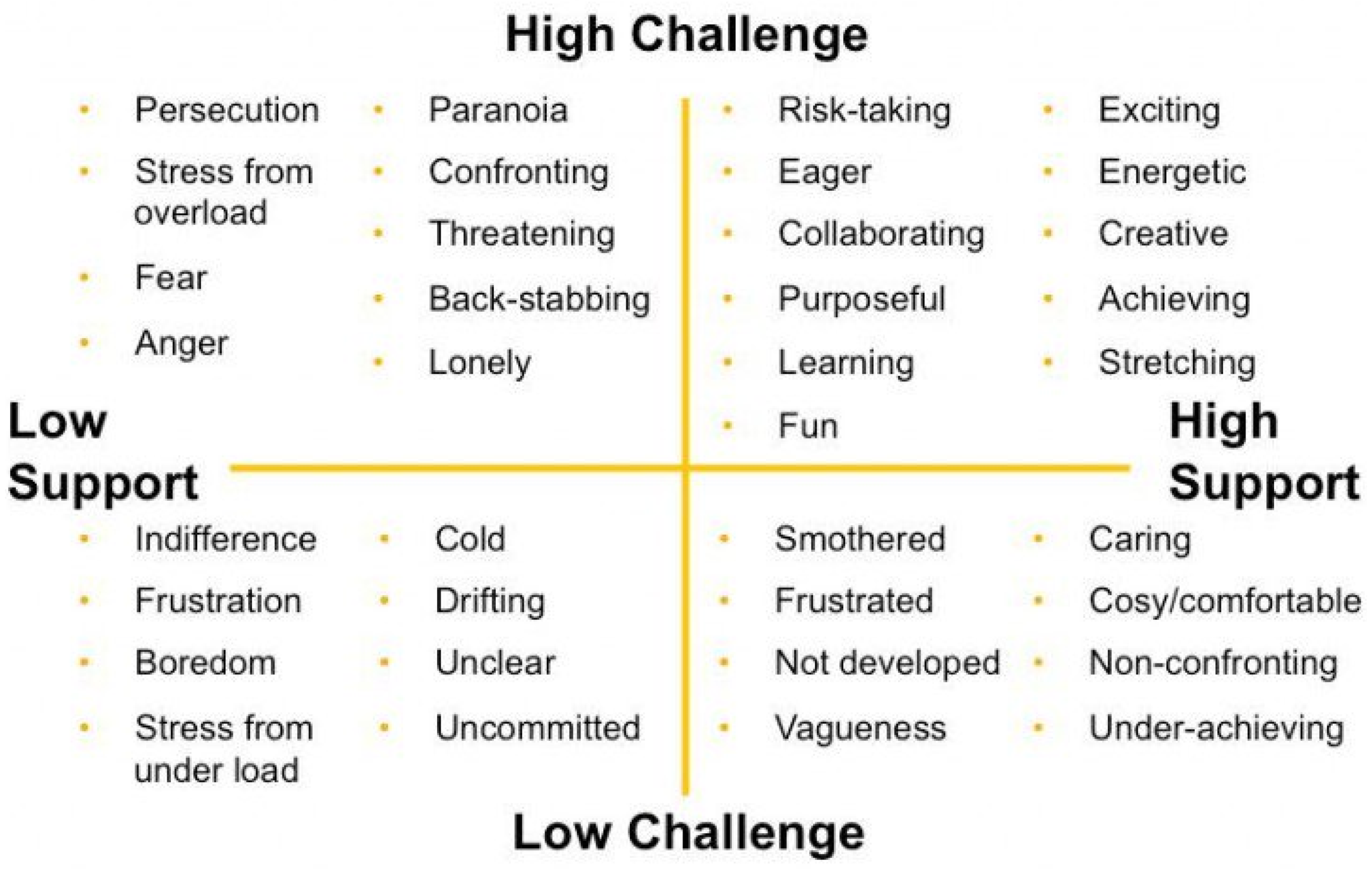
Support and challenge matrix.
In accordance with this model, highly challenged teachers with little support may feel a sense of isolation and helplessness that leads to demotivation and giving up. On the other hand, highly challenged teachers with high support may be more motivated to improve their teaching and to engage with other professionals and new material. Middle-tier instructional leaders have the potential to reach teachers with ongoing, organic support that can help them rise to the challenges they face and meet the high expectations of public education systems.
Professionals within the broader middle-tier workforce are increasingly recognized as pivotal agents who can significantly influence the success or failure of policy reforms and enhance the overall quality of education, a trend supported by the growing interest in individuals operating at this level within educational systems (Asim et al., 2023; Childress et al., 2020; Fullan, 2015; Hargreaves, 2023; Leithwood, 2013). In higher-income contexts, investments made in the middle tier over the past two decades are widely acknowledged for their substantial contribution to enhancing teaching and learning in schools in multifaceted ways (Asim et al., 2023). Analysis of global evidence demonstrates that when empowered, instructional leaders can foster system-wide learning by serving as knowledge brokers and sharing best practices across schools (Childress et al., 2020). Moreover, middle-tier instructional leaders can act as vital conduits, offering guidance and establishing channels of communication between schools and central authorities, providing the necessary support for principals and teachers to effectively implement reform initiatives.
However, the middle tier of the education system often receives minimal attention in terms of reforms or research studies, leaving policymakers with limited reference material (Asim et al., 2023; Leithwood, 2013; Rorrer et al., 2008). This issue is especially pronounced in low- and middle-income countries. In their systematic review of education systems in these countries spanning from 2004 to 2021, Asim et al. (2023) highlighted the conspicuous absence of the middle tier in discussions aimed at improving learning outcomes. Existing research has predominantly focused on district or middle management as compliance monitors, neglecting interventions aimed at enhancing instructional leadership. Consequently, our understanding of the role played by subnational actors in improving student outcomes remains severely limited, particularly in low- and middle-income countries.
To address this gap in the literature, we developed a hypothesis: Middle-tier instructional leaders can act as agents for change, enhancing teaching and learning outcomes across various contexts, including low- and middle-income countries. We sought out promising—and potentially disruptive—global examples where middle-tier instructional leaders have catalyzed positive educational change. Recognizing that not all middle-tier reform efforts are effective (Aiyar et al., 2015; Carron & De Grauwe, 1997; Hargreaves, 2023; Honig, 2023; Muralidharan & Singh, 2020), our research aims to contribute to the global literature by showcasing effective ideas and systems from diverse geographical and socioeconomic contexts.
Methodology
Our case studies, Delhi (India), Jordan, Rwanda, Shanghai (China), and Wales (UK), were all selected because they offer promising examples of middle-tier reforms, either where roles are being re-oriented around coaching and support, or where new roles have been created. We collected qualitative primary data from semi-structured interviews and focus group discussions with teachers and/or instructional leaders, and other pertinent stakeholders in each program's design structure, and from online consultations with experts. To gain a fuller picture, we also used qualitative and quantitative secondary data from unpublished program monitoring and evaluation data. We sought to better understand the specific functions and roles of middle-tier instructional leaders and how these roles are implemented on the ground to influence best practices, as well as the enabling conditions within a system or country that allow instructional leaders to be effective.
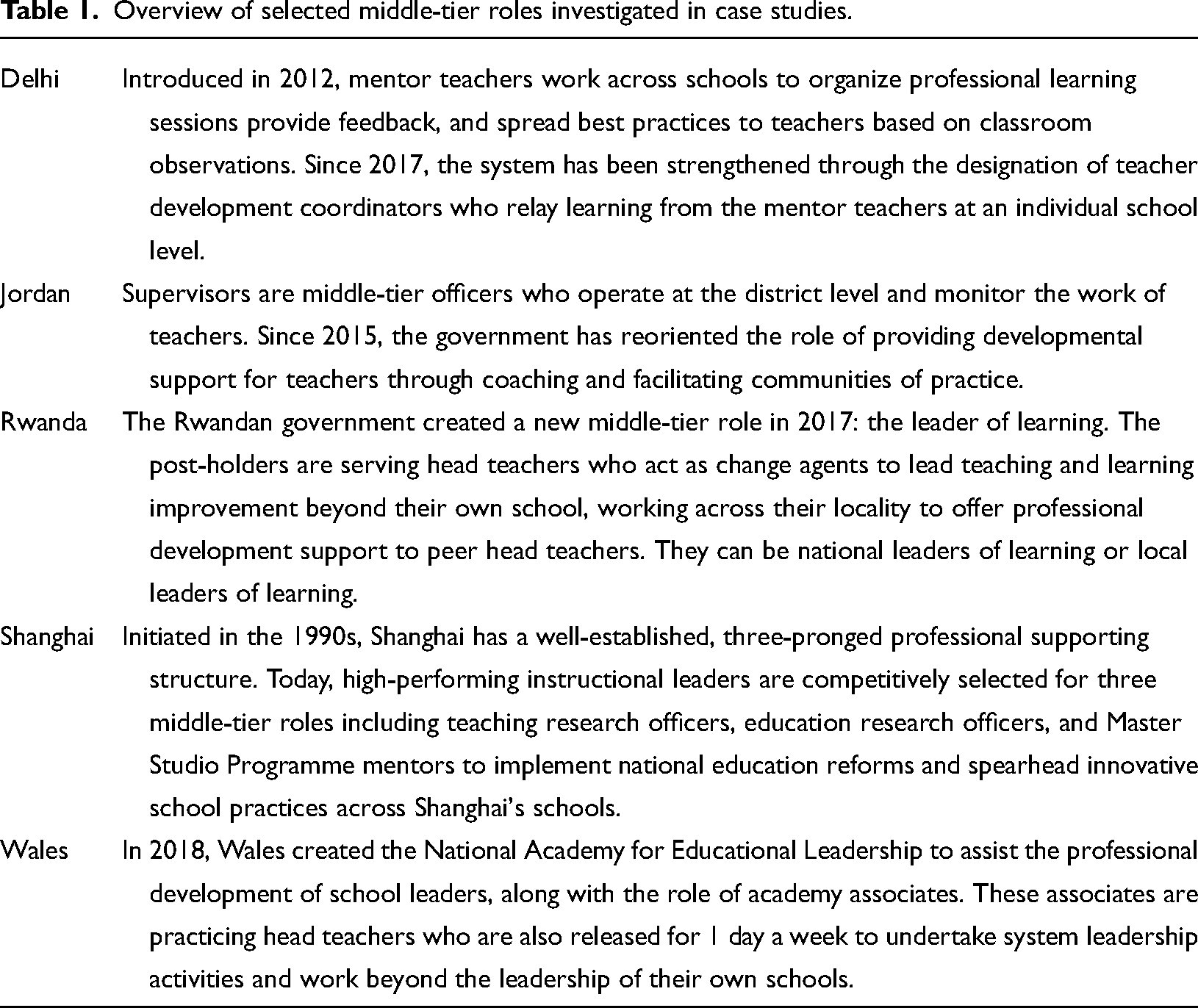
Each highlighted jurisdiction has unique roles and structures in place, with varying terminology and responsibilities for their middle-tier instructional leaders. The following table provides a brief overview, detailing which middle-tier instructional roles were created or strengthened in the systems considered (Table 1).
Overview of selected middle-tier roles investigated in case studies.
It is worth noting that, due to the pandemic, in some of the five jurisdictions, several interviews could not be conducted, especially with teachers (Wales, Jordan, and Rwanda), due to school closures and the overall crisis context. Thus, capturing teachers’ experiences and perceptions of the effects of middle-tier roles on their practice could only be achieved to a certain extent.
Findings: Middle-tier instructional leaders’ value added
Overall, we found that the middle-tier instructional leaders were able to support teachers and enact change in several ways, which we have grouped into four key themes: providing accessible support for improved teaching, utilizing international and local knowledge and evidence, promoting professional collaboration within and across schools, and serving as an intermediary between the Ministry of Education and schools.
Providing accessible support for improved teaching
Too frequently, teachers are encouraged to improve their practice with new curriculum or pedagogy ideas by educational bureaucracies but are given little to no support in implementing these ideas, with limited opportunities to reflect on what is and isn’t working, and without proper feedback mechanisms. For example, U.S. education system improvement plans have historically been ambitious but unrealistic because they do not consider the reality that many teachers have significant limitations in accessing learning materials and often see themselves as isolated practitioners (Elmore, 2010). Yet, international evidence shows that teachers learn best when offered on-site training and coaching for practical guidance in school- or classroom-level actions (Cilliers et al., 2019; Darling-Hammond et al., 2017; Kraft et al., 2018; Popova et al., 2016).
Middle-tier instructional leaders can provide the easily accessible support that a one-time training or a distant central office cannot. When middle-tier leaders are available, teachers have to jump through fewer hoops to get the support they need, which can motivate them to seek guidance more often. As one instructional leader in Delhi commented, It's difficult for teachers to go out and seek help from the [training and research] institutions, so we have to think of certain structures where the teachers have access within the school. This middle tier is that structure, that support system that is available to teachers within the boundary of this school. (Mentor teacher, Dehli)
Even if teachers are not actively reaching out for help, middle-tier instructional leaders regularly provide on-the-job professional development opportunities. This delivery could come in the form of coaching, lesson observations, role-modeling effective practices, or delivering needs-based professional development. Regardless of the specific delivery method, instructional leaders tend to use their local experience as expert practitioners to relate to both teachers and head teachers and to best demonstrate proper techniques at the grassroots level.
As one example, coaching usually consists of a one-to-one conversation that encourages self-awareness and promotes self-responsibility through questioning, active listening, and setting appropriate challenges within a supportive environment (van Nieuwerburgh, 2012). In Jordan, Rwanda, and Wales, instructional leaders are both trained to deliver coaching and are responsible for coaching teachers and head teachers, especially the novice ones. Their coaching involves questioning teachers and head teachers, encouraging them to reflect on their practice, and guiding them to come up with their own solutions. In a similar method, instructional leaders also provide on-site support through classroom observations or role-modeling effective pedagogical practices. In Delhi, instructional leaders observe classes and teachers and give feedback on their performance in a supportive, non-judgmental manner. In group workshops, these same leaders also role model techniques, providing teachers an opportunity for feedback and allowing them the freedom to implement the techniques they find most effective for their own classrooms.
Meaningful access to support across case studies was sustained by peer leadership, which implies a sense of both trust and credibility. Middle-tier instructional leaders are accessible in the sense that they are usually closer to being peer leaders of teachers than managers. In most of the case studies, the leaders themselves had been—or continued to be—high-performing teachers who had earned the respect of their colleagues and who knew exactly what challenges teachers were facing day-to-day. They therefore often seemed both more credible and more accessible than non-teachers. For example, in Wales, associates keep their responsibility as serving head teachers. An official from the National Academy for Educational Leadership commented: Your credibility as a school leader diminishes quickly the longer that you are out of that setting … So [associates] are very credible … When they start saying, “That is not going to work in schools,” the other people around the table have to listen. (Official in Wales)
In the five settings, the supportive professional environment fostered by instructional leaders resulted in a stronger focus on teaching improvement, as well as enhanced professionalism and capacities. For example, in Rwanda, monitoring data tracking gains in head teachers competencies indicated a notable increase from 41% meeting competency standards in February 2018, to 66% in March 2020. Encouraged by instructional leaders, teachers take more responsibility for pupil outcomes and adopt more optimistic attitudes toward student potential. One supervisor in Jordan commented: “Teachers are more cooperative and work to student needs … supervisors, teachers, and students all work as a team.” In turn, this resulted in improvements in teaching skills and classroom practices.
Utilizing international and local knowledge and evidence
Continuous improvement in any professional field is strengthened when practice is based on the best available evidence. However, it can be difficult for busy frontline practitioners, namely teachers and head teachers, to access evidence, identify what might be relevant for their setting, and meaningfully apply it to their daily practice. To rectify this, instructional leaders at the middle tier can act as knowledge brokers and translate evidence and research into practical solutions for teachers and head teachers to try in their schools and classrooms. For example, through their ongoing professional development courses, leaders of learning in Rwanda are constantly refreshed and trained on innovative ideas to spread across schools and communities of practice. Instructional leaders are then able to contextualize this knowledge and translate it into digestible and actionable guidance for busy school-level actors who do not always have the time to catch up with the latest evidence or who are unsure of how they could apply it in their unique contexts. After all, international evidence is only useful if it can be applied appropriately.
In Jordan, a critical thinking process is at the core of the Evidence-Based Supervision model applied by supervisors in which supervisors provide structured feedback to teachers using a bank of resource cards summarizing international evidence on pedagogical effectiveness. This model mirrors practices used in healthcare in which doctors and nurses are asked to reflect on how their practices compare to the best available robust research on the topic at hand. The cycle begins with diagnostic lesson observations and a discussion about aspects of practice on which the teacher wants to reflect and improve. Teachers then examine evidence related to that particular facet of pedagogy, including various examples and references, before receiving coaching to apply the new information in practice. Additionally, the model is made to be flexible for different contexts, such as different school subjects or student ages. Supervisors do not promote a single pedagogical approach as the “right way” to teach but rather guide teachers through the process of identifying suitable solutions to the issues that have been diagnosed (Figure 2).
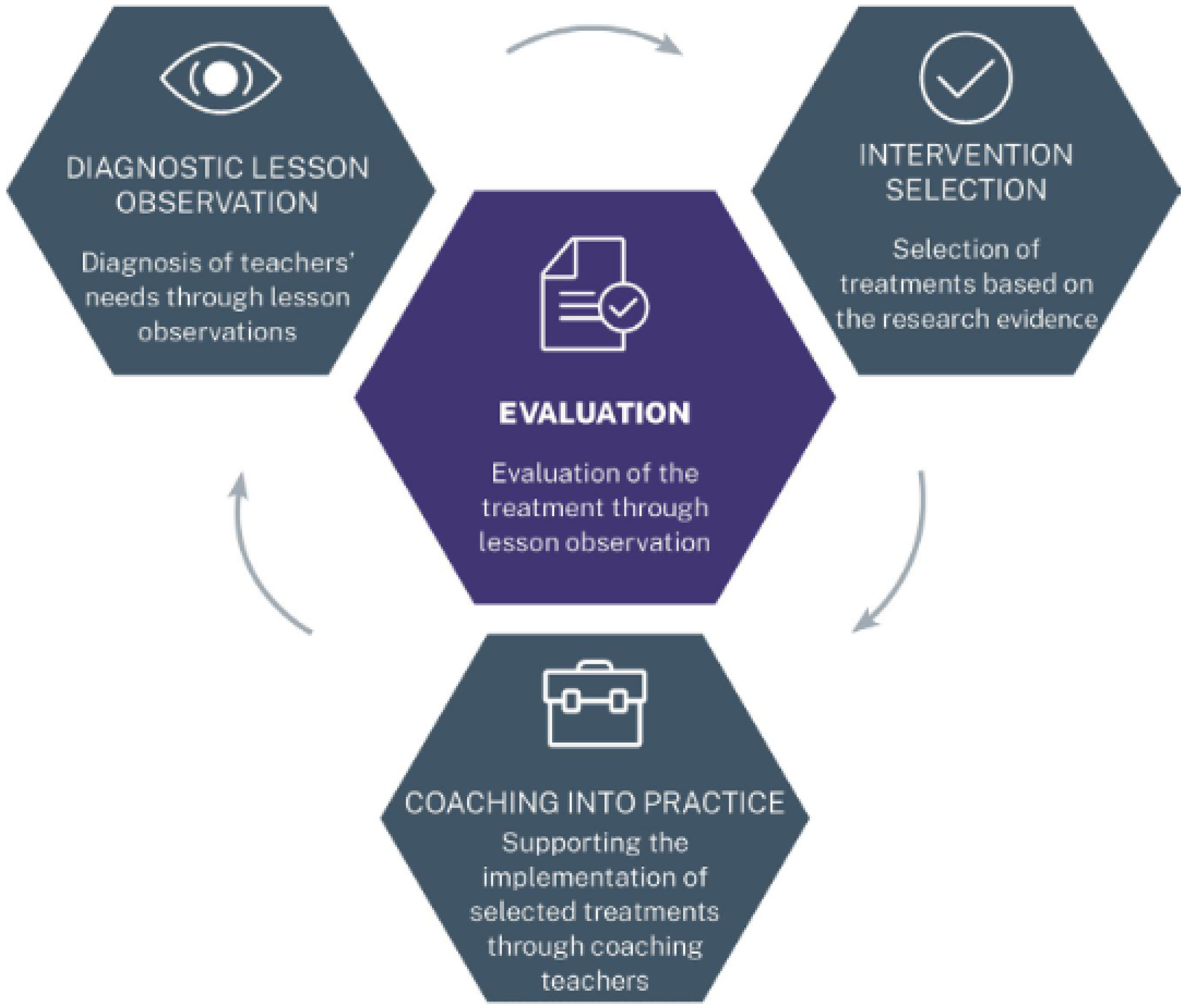
Evidence-based supervision model used in Jordan.
At the same time, middle-tier instructional leaders are in an ideal position to identify existing exceptional practices among teachers they work with and share them with a wider network of teachers at other schools. Middle-tier instructional leaders in the case studies often noticed these pockets of excellence, which are already existing and working in the local context, and spread them to other educators. One instructional leader in Delhi likened his job to that of a “busy bee,” noticing and picking up exceptional teaching practices observed in one subject teacher and carrying those ideas to the other hundreds of teachers in his network. We are like busy bees, collecting best practices in a school and bringing it to another. (Instructional leader in Delhi)
Recognizing promising practices that teachers are already using may also foster better confidence in teachers and help to cultivate a relationship of mutual trust and respect between instructional leaders and teachers.
Beyond their function as knowledge brokers, middle-tier instructional leaders can also create new evidence and play a key role in nurturing strong knowledge ecosystems. In Shanghai, some middle-tier staff specifically focus on researching new and innovative strategies and translating those findings into practical trainings for teachers and head teachers. They are also responsible for generating evidence that feeds into policymaking. They thus have a formal role in conducting “action research” and promoting tested educational experiences through writing articles, editing books, and presenting exemplary cases in seminars and policy background papers.
An educational research officer describes the process followed in an integrated curriculum reform: We did not know whether it would work, how it could work, and what it would mean for teachers. We turned the reform needs into projects, and then we used projects to promote reforms and to lead reforms. We had to experiment and pilot first. We used the projects to investigate and discover rules (the theory for practice) and approaches to reform. With that knowledge, we improved and expanded our practice to move the reform forward. (Educational researcher in Shanghai)
By focusing on contextualizing international evidence and formalizing local knowledge, middle-tier instructional leaders are in an advantageous position to disrupt the standard top-down flow of information that may or may not be relevant from the Global North to the Global South while recognizing and building capacity and autonomy in their education systems. Shanghai, which has had middle-tier instructional leadership for several decades now, may be considered a success story in this regard. According to one of the researchers: China did benefit from its external support, but the real engine for China's rapid education development was to select, empower, and harness the most outstanding educators from the front line of our schools so that they can guide, supervise, and support schools and teachers in need. (Researcher from Shanghai)
Promoting professional collaboration within and across schools
Instructional leaders at the middle tier foster professional collaboration between school-based professionals, but also across schools within localities and even at the system level. International research indicates that collaboration can build the motivation of a teaching corps and even lead to improved student outcomes (Darling-Hammond et al., 2017; Earl & Timperley, 2009; Hattie & Timperley, 2007). Research also suggests that teachers improve most when they work in supportive environments with peers seeking to improve on similar dimensions (Johnson et al., 2012). In fact, teachers across the OECD report that professional development based on collaboration and collaborative approaches to teaching is among the most impactful for them (OECD, 2019).
Other evidence shows that when school professionals collaborate to learn together, their practice improves, but that effective collaboration needs strong facilitation (Silvia, 2011). As Hargreaves points out, poorly steered networks can be a waste of time for members or even enthusiastically circulate unfounded ideas. To avoid these pitfalls, network leadership should inspire meaningful member engagement, provide clarity of purpose, circulate internal and external innovation and expertise, introduce new evidence and research, and monitor impacts and outcomes (Hargreaves, 2023). Middle-tier instructional leaders are ideally positioned to serve these functions, as they have both technical teaching expertise and the organizational authority required to leverage their relationships with many teachers or schools in a way that makes collaboration the norm.
By formalizing and guiding this collaboration, middle-tier instructional leaders give teachers the opportunity to learn from each other, not just from the instructional leader. In Rwanda, leaders of learning have a specific responsibility for developing collaborative professional practices at both school and middle levels of the education system. Participants in these professional learning communities report that they have developed a collaborative culture, providing a space where teachers and head teachers share successful strategies and “think together” to find solutions to their issues. Before, every head teacher worked alone, but now we share the experience. If I have got best practice in my school, I have to share it with my colleagues in these Professional Learning Communities. (…) We have a strong collaboration because we sit together, and we share what we can’t do alone. (National leader of learning in Rwanda)
In Jordan, middle-tier supervisors established lively WhatsApp groups for teachers to share resources and experiences, allowing for continued collective conversations beyond their one-to-one interactions with teachers. Supervisors participating in the program also set up WhatsApp groups for themselves to develop their own resources and share ideas for improvement, thus creating technology-based communities of practice. This type of collaboration has proved especially beneficial during pandemic-related restrictions, which have greatly limited in-person collaborative opportunities around the world. It can also increase collaboration between geographically distant educators. In Wales, middle-tier leaders cultivated greater communication and connection between educators in different parts of the country.
Professional collaboration can also build a sense of comradery and trust among colleagues, leading to more openness and sharing (UNESCO, 2017). When educators trust each other and trust that everyone shares the same goals for student learning outcomes, they can take on shared accountability to their communities. In Delhi, a teacher development coordinator observed: “Before, we were just grumbling over the things saying this is not happening, that is not happening, [there is] this problem and that problem. Now we are putting our heads together to see how we can solve it.”
Similarly, in the context of Wales, an Associate reflects on this shared responsibility: “Wanting to have a collective responsibility for all leaders and children across Wales and wanting to really work with others, not just tick a box … it's got to be what drives you” (Associate in Wales).
Another effect of the networks we observed was an increase in teachers’ confidence. In Delhi, for example, many teachers were initially apprehensive about using more technology in their practices when the pandemic set in, but the online network established by the middle-tier instructional leaders provided them with a source of both support and validation. A Teacher Development Coordinator described how one of their supported network teachers improved her sense of agency: The moment she posted [her students’ collaborative videos] and the appreciation she got, she was more than happy, and she was like … wow, I think I also can do it. (Teacher Development Coordinator, Delhi)
Serving as an intermediary between the ministry of education and schools
Many teachers around the world feel that the central education authority is out of touch with the realities they face in the classroom, while central education authorities often feel like they can’t seem to have enough effect on changing teachers’ behavior. The World Development Report recognizes that “education systems are often poorly aligned with learning goals” and that “getting all parts of an education system to work together is difficult” (World Bank, 2018, p. 171). A typical example of misalignment is when a curriculum reform is not followed through with adjustments to the content of assessments. Although challenging, the importance of building coherent and aligned instructional systems is widely acknowledged (Looney, 2011; Pritchett, 2015).
Through their role as mediators and brokers, middle-tier change agents can reduce the risk of opposition to new policies or strategies. They can help teachers understand the broader vision of district, state, or national education goals. In this way, instructional leaders at the middle tier often “translate” or “interpret” policy changes from central education authorities to make them more digestible, and support teachers to enact those changes in schools. In Delhi, for example, instructional leaders play an important role in cascading priority pedagogical themes identified at the state level by introducing the new themes and workshopping them with frontline school staff. This aligns with previous research findings showing that middle-tier leaders can help to incorporate the goals and aims of policymakers at the school level (Leithwood, 2013). Respondents across the five case studies repeatedly brought up this concept, referring to middle-tier leaders as a “conduit” or “bridge” between school-level and higher-level officials. As an example, Shanghai's middle tier is seen as a buffer where resistance and tensions are moderated (Chen & Zhang, 2023).
On the other hand, middle-tier leaders can also act as the voice of educators to policymakers, recognizing teachers’ lived experiences and expertise. Subverting the traditional top-down flow of decision-making, they advocate upward for teachers and head teachers by influencing policy and ensuring their feedback is taken seriously as part of system learning and improvement. Past research has shown that involving teachers in decision-making processes and giving them a voice in this manner can increase their levels of motivation and job satisfaction (OECD, 2014). This feedback loop also ensures that policies are responding to actual conditions and needs in schools.
The Welsh system reflects this, as the associate role elevates active head teachers to an additional role in the middle tier. Thus, they are well placed to voice the needs of practitioners to policymakers, bringing reality into high-level discussions. One associate emphasized the importance of speaking out for the profession, explaining that policymakers “need to know the impact [policy] will have on schools … I feel we are the only voice.” This is encouraging to other head teachers as interviewees mentioned they felt the associates were their advocates since policies were “being checked by somebody who knows how it is in real life” (head teacher in Wales). Going a step further, each cohort of associates is assigned a research project to help find solutions to a problem using local and international best practices. Findings are then presented to the government with the potential to influence policy.
During times of crisis, such as the pandemic, middle-tier instructional leaders also played a crucial role in navigating changing national policies with immediate local needs and circumstances. In Rwanda, leaders of learning have been pivotal in organizing Rwanda's response to the pandemic crisis at the school level. The PLCs they facilitate provided a flexible structure to convene head teachers to plan for school re-opening, paying specific attention to the most vulnerable children as prioritized by the Rwandan Back to School campaign. In each setting, pre-existing collaborative groups and feedback loops contributed to efficient communication and planning in a period of crisis.
Findings: Challenges and considerations for implementation
Time constraints
Despite the numerous successes and positive outcomes showcased by the highlighted programs, they were not without their challenges. A recurring theme across the case studies was the time pressures faced by instructional leaders. Effective time management proved to be a critical concern for those juggling their primary roles as teachers or head teachers. For instance, associates in Wales struggled to find sufficient time to support other schools and head teachers when they served in that capacity only one day per week. Challenges of this nature demand careful consideration when designing and implementing middle-tier reforms. It is crucial to adapt swiftly to prevent the workload from becoming overwhelming and individuals from becoming demotivated, as these factors can undermine momentum and jeopardize reform efforts. In our case studies, adaptations were made over time to address such challenges. In Delhi, policymakers had to modify the original program after quickly realizing that they couldn’t provide the necessary level of support to teachers. Consequently, they introduced a new role that could offer broader coverage and provide more tailored support.
Shifting from an accountability frame to a collaborative approach
Another challenge we observed arose from the shift from an accountability framework to a collaborative approach, allowing for openness about challenges. This transition often faced initial resistance and confusion, requiring time to establish trust in these new relationships. It has been noted in various contexts that teachers can resist peer coaching as a method of professional development. This resistance partly stems from questioning the established tradition of hierarchy in training processes (Kelsall et al., 2016) and partly from a preference for learning from highly trained and experienced “real professionals” rather than “peers” (Bill and Melinda Gates Foundation, 2014). One instructional leader in Delhi expressed that this may be a particularly salient problem in post-colonial contexts in which the education system is deeply hierarchical.
The shift can be equally unsettling for middle-tier professionals, who need to move away from a role based on traditional authority, toward one focusing on “softer” influencing and support skills. For example, the supervisor role in Jordan had long been more associated with teacher oversight than development, but reforms in 2015 shifted that focus to emphasize formative evaluation and support. This took time for both supervisors and teachers to adjust to the new structure. Teachers usually feel a little bit worried when supervisors come to observe their lessons. In this sense, my teachers through this project have come to feel more secure and comfortable with a lot of readiness and willingness. In other words, they have become accustomed to seeing me among them for guidance and advice. (Supervisor in Jordan)
Buy-in
A third challenge involved establishing buy-in from teachers and others, as policymakers in most settings encountered some resistance due to disengaged stakeholders, many of whom were experiencing “reform fatigue” from competing initiatives which placed demands on their time. One mentor teacher pointed out that “in Delhi, principals and teachers … everyone is a state functionary as well. We have to deal with so many beneficiary schemes and so many other things for the students.” However, across our case studies, as the programs became established and gained momentum, stakeholders started witnessing benefits and buying into the support and collaboration offered by these instructional leaders. In Delhi, Rwanda, and Jordan, interviewees referenced increased collaboration across all stakeholders as a significant positive outcome and one that took time to develop. In Jordan, despite initial challenges related to shifting practices, a 2021 program survey among supervisors revealed a consistent and positive adoption of evidence-based supervision techniques 3 years after their initial training. Nevertheless, in other contexts, positive initial buy-in may be counteracted by disillusion later on. In Shanghai, where a more established middle tier is highly regarded, the high levels of competition and accountability among both middle-tier leaders and schools can lead some actors to pursue reforms for the sake of competition rather than need. Some teachers complained that they were given so much extra work due to the middle-tier projects that they became indifferent to them. At the same time, middle-tier leaders, who have increased access to funding opportunities and considerable professional prestige, faced high social and financial costs from failed projects. From the perspective of the schools, the middle-tier projects fostered both competition and collaboration, as experiences were shared and transferred from one school to another. These findings point to tensions around what constitutes an appropriate amount of ambition, competition, and collaboration in the middle tier, and how to make these positions attractive and authoritative without carrying so many social and financial risks.
In addition to identifying common challenges across our case studies, we also noted key facilitating conditions for successful implementation. These insights are particularly valuable for policymakers considering investment in the instructional middle tier.
Aiming for system-level reform
Firstly, policymakers undertook building the instructional middle tier as a system-level reform. In some of the case studies this meant that roles were purposefully re-designed to deliver change. They were tasked with getting teachers and school leaders on board with new policies, persuading them to adopt new practices, and setting up new ways of working. Wales perhaps best exemplifies this as the associate role was designed to address shortcomings in the already robust and complex middle-tier system. By designing a role that acted both as a policy translator and as a voice to teachers and head teachers, Welsh officials were explicit in creating a role that would bridge the gap between policy and practice. Meanwhile, in Shanghai, the reimagining of the middle tier stemmed directly from a motivation to improve education quality at scale: It is not so difficult for the government to build one or several successful schools, but it is extremely difficult to improve the quality and equity of a whole schooling system. The middle tier is a structure to join the knots. (Researcher in Shanghai)
Empowering instructional leaders
To make these new roles work, policymakers also had to nurture an empowering culture and a collective vision. Instead of mandating change from the top, policymakers instead asked middle-tier leaders to drive change by working collaboratively with frontline professionals. Specifically, they sought to allow for co-construction, enhance collaboration, and prioritize collective learning. This perspective is grounded in a vision of distributed leadership, where knowledge is held by actors at all levels of an education system and is actively created through situated learning (Mundy et al., 2021).
Policymakers empowered middle-tier instructional leaders in our case studies, valuing their professional knowledge and seeing them as allies and collaborators in the change process rather than simply administrators cascading policy. In Wales, for example, the associates were tasked with “co-constructing” leadership reforms, to become deeply involved in how top-level policy was unpacked and delivered at the local level. In Shanghai, professional collaboration was at the heart of the sophisticated three-pillar institutional infrastructure created by policymakers, creating a “third space” (Tsui & Wong, 2010) where instructional leaders could undertake collaborative projects and create and exchange professional knowledge. Reflecting, the 2018 report of the OECD Teaching and Learning International Survey, 70% of teachers in Shanghai reported participating in collaborative professional learning at least once a month, while the OECD average was just 20% (Schwabe, 2019).
In tandem with giving instructional leaders more agency and more responsibility, policymakers also invested in strengthening and professionalizing the middle-tier cadre, for example investing in stronger recruitment policies, enhanced professional status, and high-quality professional development. For example, in Rwanda the recruitment process for leaders of learning focused on sourcing candidates with instructional leadership practices and the potential to lead improvement. The recruitment process was highly formal and visible, comprising a district panel with a range of local system stakeholders, adding to the sense of status and high expectations for the role. The process also included a practical assessment of current leadership performance and future leadership potential, involving a site visit to their school to observe practices and talk to teachers, students, and community members.
To entice the most able candidates, reform leaders sought to make the positions attractive. When middle-tier instructional leaders acted as a kind of peer leader, it offered an opportunity for professional growth and served to recognize practitioners’ advanced skill sets. In some contexts, a highly meritocratic system had developed. For example, in Shanghai, interviewees commented that only the top 10% of professionals got the opportunity to be middle-tier leaders.
Thinking long-term
Though the instructional leaders in our case studies had significant positive impacts on their education systems, it is important to remember that the changes did not happen overnight. As with any system-level reform, policies building the instructional middle tier require patience and flexibility as they are implemented and adapted. Policymakers can expect some resistance or even confusion at first, and should be prepared to make necessary changes and work to get stakeholders on board over time.
Furthermore, governments must be prepared to commit resources and accompany the development of the middle tier as systems mature. It is important that a formalized system of monitoring and evaluation is established to better assess the effectiveness and value of middle-tier roles, as well as monitor and adjust as the reform unfolds. This allows for transparency to officials, schools, and parents as to what the roles are doing and accomplishing. In tandem with proper monitoring and evaluation, systems need to establish a clear communications or public relations plan to promote the results. By designing and applying such measures from the start, it can help address the challenge of gaining initial buy-in from teachers and head teachers that many of our case studies experienced as the rollout occurred.
Conclusion and outstanding questions
Our research aimed to enhance the understanding of the pivotal role instructional leaders in the middle tier can play in improving teaching and learning outcomes. By documenting the experiences of instructional leaders in contexts where their roles were strengthened, we sought to illuminate their professional practices and perceived impacts. The instructional middle tier emerged as crucial to a high-functioning education system, offering vital support for teachers in their challenging roles. While promising, our findings present policymakers with various options for educational reform and teacher performance improvement.
The instructional middle tier tends to emphasize local expertise, incorporating external evidence through the lens of high-performing local educators. This is particularly significant in the Global South, where locally produced knowledge is often overlooked in favor of practices from higher-income countries. Investing in the instructional middle tier acknowledges the contributions of local practitioners, promoting a sense of autonomy.
Importantly, investing in the instructional middle tier doesn’t necessitate significant system changes, as many education systems already have middle-tier positions. Leveraging outstanding teachers and head teachers, as seen in Delhi, Rwanda, and Wales, can be an effective approach. Instructional leaders, with their broader reach, can offer a multiplier effect across schools, potentially being more resource-efficient and sustainable than programs involving every teacher or head teacher. Instead of a one-time training, which has proven to be less effective than ongoing programs, or a longer training course that will eventually be out of date, the instructional middle tier creates system-level reform by providing long-term support to teachers. The tier grows and adapts along with the needs of teachers and the education system at large.
The sustainability of the instructional middle tier lies in its long-term, relationship-based support. Instead of receiving training from an official or researcher with whom they will never speak again, teachers can gradually build relationships with their instructional leaders that are founded on trust and mutual respect. Instructional leaders foster professional networks that enhance teacher relationships and confidence, and a sense of collective responsibility. In this way, instructional middle-tier professionals, and the networks they create, can provide the ongoing high support that teachers need in order to rise to the challenges they face and constantly improve their practice. This sustainable and adaptable support can serve as critical scaffolding for high-performing systems over time.
Several outstanding questions remain for future research and practitioners. How can policymakers sustain the motivation of instructional leaders over time? What are the costs and benefits of formalizing roles versus relying on teachers and head teachers’ intrinsic motivation? When is it appropriate to hire instructional leaders solely for support, as opposed to distributing this leadership among active teachers, and should additional remuneration be considered for teachers taking on extra duties? Addressing these questions is crucial for understanding the career progression of instructional leaders, reflecting the importance of working conditions and professional development for effective teaching. Unsurprisingly, they were also among the most frequently asked by practitioners, reflecting the importance of working conditions and professional development for effective teaching.
Despite these areas for further research, instructional middle-tier systems uniquely uplift teachers, promoting their self-development rather than viewing them as passive recipients of information who can be sent to a few trainings per year and may or may not change their practice. By providing accessible and context-specific support, guiding networks for teachers to help each other, and bridging the gap between teachers and policymakers, instructional leaders have the potential to help every teacher become—and remain—highly skilled and motivated professionals. At the same time, they can serve as the oil in the machine that is an education system by fomenting feedback loops between teachers and policymakers as well as building a culture of local knowledge, so that every system can continuously improve using its own experiences and evidence.
Footnotes
Authors' note
As noted at the outset, this article is grounded in content sourced from a 2023 report published by IIEP-UNESCO and EDT. The article has undergone substantial condensation and updates from the original report, integrating additional insights acquired from two subsequent online webinars.
Contributorship
Barbara Tournier and Chloé Chimier led direction of this paper, including conceptualization and conducting draft reviews. Elena Klein wrote the original draft, added additional references, and meticulously reviewed and edited the manuscript.
Declaration of conflicting interests
The authors declared no potential conflicts of interest with respect to the research, authorship, and/or publication of this article.
Ethical statement
Respondents gave their informed consent for participation in the case studies. To ensure anonymity, the names of people were coded in the interview transcripts.
Funding
The authors received no financial support for the research, authorship, and/or publication of this article.
