




Abstract
Purpose:
This exploratory study investigates the relationship between teachers’ perceptions of professional learning communities (PLCs) and their differentiated instruction (DI) practice in a Hong Kong primary education context.
Design/Approach/Methods:
Three subsidized primary schools participated in the study. A total of 121 teachers completed surveys regarding their perceptions of PLC engagement and DI practice.
Findings:
Using principal component analysis, three dimensions of PLC engagement were identified: student learning, reflective dialogue, and shared and supportive leadership. Two distinctive PLC engagement profiles were generated based on cluster analysis: high PLC engagement and low PLC engagement. Teachers’ PLC engagement profiles were correlated with their DI practices.
Originality/Value:
The findings have implications for fostering teacher engagement in PLCs. Increased teacher participation in PLCs has great potential for promoting the use of DI.
Keywords
Introduction
Professional learning communities (PLCs) have been hotly discussed and studied over the past decade (DuFour, 2004; Giles & Hargreaves, 2006; Hord, 2009; Vescio et al., 2008). The term “PLC” generally refers to a group of people working together and learning from each other. “PLC” is often associated with in-depth, systematic, and collaborative professional development activities (OECD, 2013). PLCs have drawn extensive attention in the field of education. Numerous studies have identified how the balkanization of teacher culture serves as an obstacle to school improvement (e.g., de Lima, 2003; Flores, 2004; Hargreaves, 1994; Ng, 2011), particularly in situations in which teachers work in isolation without the collegial relationships necessary to facilitate student learning. The emergence of PLCs in the educational context has widely been recognized as a significant development toward improving the quality of learning and teaching through the promotion of shared values and expectations among teachers to support student learning; PLCs can provide “a powerful, proven conceptual framework” that helps school transformation for improving student learning through teacher collaboration (DuFour, 2011, p. 162). Various scholars (e.g., Battersby & Verdi, 2015; Bolam et al., 2005) have documented the significance of PLCs in supporting student learning. Avalos (2011) conducted a systematic review of the concepts behind PLCs and found evidence demonstrating the importance of PLCs in facilitating student learning. More recently, researchers have focused on teacher engagement in PLCs and have analyzed the conditions necessary for constructing and sustaining PLCs in order to promote teacher development and student learning (Carpenter, 2015; Dogan et al., 2016).
The conceptual basics of PLCs
Based on Senge’s (1990) ideas of learning organizations, together with Wenger’s (1998) notion of communities of practice, the concept of PLCs highlights the importance of continuous professional learning within dynamic and complex systems. In the educational context, schools are viewed as organizations that actively engage in learning in order to improve student outcomes and accelerate learning and teaching effectiveness (Leithwood & Louis, 1998). Bolam et al. (2005) highlighted the conceptual difference between “community” and “organization.” “Community” is related to “inclusive membership, mutual trust, respect and support, and the particular emphasis on the collective learning of professionals within the community” (p. viii), while “organizations” are systems that focus on the restructuring of an institution in which “people continually expand their capacity to create the results they truly desire, where new and expansive patterns of thinking are nurtured, where collective aspiration is set free, and where people are continually learning how to learn together” (Senge, 1990, p. 3).
Scholars have devised a wide range of definitions to capture the essence of PLCs. Lieberman et al. (2011) defined PLC as a learning community where “[p]rofessional learning that increases educator effectiveness and results for all students occurs within learning communities committed to continuous improvement, collective responsibility, and goal alignment” (p. 17).
Lambert (1998) identified PLCs as “places in which teachers participate in decision making, have a shared sense of purpose, engage in collaborative work, and accept joint responsibility for the outcomes of their work” (p. 11). Even so, PLCs are commonly characterized by shared values and vision, collective responsibility, teacher collaboration, reflective dialogue, deprivatization of practice (shared practice), shared (widespread) leadership, trust, respect, and group and individual learning (Bolam et al., 2005; DuFour, 2011; Fulton & Britton, 2011; Huffman & Hipp, 2001; Huffman et al., 2001; Lindahl, 2011; Reichstetter, 2006). Hord (1997) proposed that the basic requirements necessary for building PLCs include shared leadership, shared vision, collective learning, peer feedback, and available physical conditions and human capacities. Research has demonstrated that strong leadership support also plays a significant role in making PLCs effective (Fulton & Britton, 2011; Turner et al., 2018; Vanblaere & Devos, 2016, 2018).
Dimensions of PLCs
Huffman et al. (2003) suggested five dimensions of PLCs: shared and supportive leadership, shared values and vision, collective learning and application, shared personal practice, and supportive conditions. Bolam et al. (2005) argued that PLCs have 12 dimensions, eight of which relate to PLC characteristics and four of which relate to process. The 12 dimensions include shared values and vision; collective responsibility for pupils’ learning; collaboration focused on learning; professional learning: individual and collective; reflective professional enquiry; openness, networks, and partnerships; inclusive membership; mutual trust, respect, and support; optimizing resources and structures; promoting individual and collective professional learning; evaluating and sustaining a PLC; and leading and managing the PLC. Hord (2009, pp. 41–42) identified six research-based dimensions of PLCs:
Shared beliefs, values, and a vision of what the school should be;
Shared and supportive leadership where power, authority, and decision making are distributed across the community;
Supportive structural conditions, such as time, place, and resources;
Supportive relational conditions that include respect and caring among the community, with trust as an imperative;
Collective learning, intentionally determined, to address students’ needs and the increased effectiveness of the professionals; and
Peers sharing their practice to gain feedback, and thus individual and organizational improvement.
The various PLC dimensions identified in the literature share many common elements. In studying PLCs, scholars have focused on the ways in which schools interested in implementing reform…shift the organization and structure of their professional development efforts toward integrating teacher learning into communities of practice with the goal of meeting the educational needs of their students through collaboratively examining their day-to-day practice. (Vescio et al., 2008, p. 81)
PLCs in Hong Kong
The conceptual framework behind PLCs has primarily been developed by Western scholars (Bolam et al., 2005). Nevertheless, many governments in Asia have embraced the idea of PLCs and have made efforts to integrate the concept into their educational reform efforts. PLCs are expected to build teacher leadership capacity in schools (Tam, 2015). In Hong Kong, PLCs have been one of the key catalysts in facilitating school improvement and curriculum development. In the area of teacher professional development, proposed by the Advisory Committee on Teacher Education and Qualifications (ACTEQ, 2003), the official document Towards a Learning Profession: The Teacher Competencies Framework and the Continuing Professional Development of Teachers, more emphasis was put on the formation of PLCs. One of the principles of Teacher Competencies Framework (ACTEQ, 2003) states that “schools should be developed as professional learning communities, [while] teachers’ professional development should be regarded as an important force in school development” (p. 7). In this connection, regarding curriculum development, Curriculum Development Council (CDC, 2009) recommends “[d]eveloping a learning community in the school, i.e. where teachers and students learn together and from each other,” while “Every school is unique in terms of its strengths such as history, experiences in curriculum development, pedagogy, teachers, leadership, community context, and the changes it proposes to make each year” (CDC, 2014, p. 1). ACTEQ (2003) clarified that the development of “professional” leadership in support of the establishment of a PLC “is NOT to be confused with the executive leadership of school administration. Rather, it is the professional leadership by which a teacher builds up a collegial culture of professional learning and sharing” (p. 10). In other words, the PLC concept is expected to be readily developed in the minds of teachers. This implies that teachers are expected to support and participate in PLCs in their schools.
Differentiated instruction (DI) and its implementation
DI is regarded as one of the important approaches to catering to learner diversity. There are two dimensions in understanding DI, namely, a philosophical dimension and a pragmatic dimension (Wan, 2019). From a philosophical dimension, DI “represents a humanistic orientation in realizing and embracing the individual differences of each student in a loving learning environment” where “the central promises of democracy and social justice…rest on the inclusion of all diverse groups, regardless of academic, emotional, gender, and cultural differences” (Wan, 2019, p. 2). From a pragmatic dimension, DI represents a systematic way of organizing and structuring curriculum by modifying content, process, product, and the learning environment to reflect students’ readiness, interests, and learning profiles. Different studies have found that teacher self-efficacy is one of the key factors affecting the degree to which teachers cater for learner diversity. School-level characteristics also influence the manner, and extent to which, teachers cater to the diverse needs of their students. Chao et al. (2017) found that teacher confidence and school type (i.e., primary or secondary schools) were significant predictors for teacher self-efficacy in catering to learner diversity. Meanwhile, certain studies have shown that collective teacher efficacy can also influence teachers’ practice in adjusting instruction and content to reflect the needs of diverse groups of students. De Neve et al. (2015) demonstrated that teacher self-efficacy, autonomy, and reflective dialogue are predictors of changes in DI practice, while teacher self-efficacy helps mediate the path between collective responsibility and DI practices. Providing DI often requires collaboration among teachers, which can be facilitated through PLCs that embrace a shared vision of optimizing student learning (De Neve & Devos, 2017; Fogarty & Pete, 2011; Thessin, 2015). Grierson and Woloshyn (2013) conducted a 7-month reading-focused, professional development initiative centered on the assessment-to-instruction cycle and revealed that teacher collaboration through small group sessions and individualized coaching enabled teachers to build capacity for change and bring about differentiated professional learning. Lakshmanan et al. (2011) indicated that science teachers’ participation in PLCs can enhance science teaching efficacy and lead to better implementation of inquiry-based instruction. Rigelman and Ruben (2012) proposed establishing a collaborative inquiry regarding teaching and learning within school/university partnerships in teacher education for supporting the implementation of DI. This recommendation was based on their finding that collaboration can favorably contribute to teaching candidates’ commitment to teach to the needs of each student. These previous studies, however, focused either on teaching approach or on specific subjects and were conducted in a Western context. Recently, Wan & Wan (2013, 2016, 2017) found that preservice and in-service teachers in Hong Kong lack the training and confidence necessary to provide DI and that they found DI implementation difficult due to classroom management (i.e., class size and diversity), personal beliefs, time, and understanding of teaching strategies. However, these previous studies did not examine how teachers may work together as a team to implement DI practice in schools. The issue of how teachers in Hong Kong engage in PLCs and DI practice remains largely unexplored. To fill this gap, the present study sought to explore teachers’ perceptions of PLCs and DI practice. More specifically, the study was guided by the following three research questions: (1) What are teachers’ perceptions of engagement in PLCs? (2) What are teachers’ practices with respect to differentiated instruction? and (3) Is there any relationship between teachers’ PLC engagement profiles and DI practice?
Method
Participants
Using convenience sampling method, the researcher invited three Hong Kong subsidized primary schools to participate in the study. A total of 121 teachers provided written responses to a survey concerning their perceptions of PLC engagement and DI practice. Around 70% of the teachers surveyed had received training on how to cater for learner diversity. More than 40% of teachers surveyed had 16–23 years of teaching experience, in which this group of teachers are in the professional life phase of “Work-life Tensions: Challenges to Motivation and Commitment” (Day et al., 2006). It is noted that during each professional life phase, teachers may have increased and commitment as a result of further career advancement and good pupil results, or sustained motivation, commitment, and effectiveness, or decreased motivation, commitment, and effectiveness due to workload or competing tensions or career stagnation (see Online Appendix I).
Data collection
The survey was composed of three sections. Based on Bolam et al. (2005) and Hord (2009), the first section addressed teachers’ perceptions of PLCs, using a 6-point Likert-type scale ranging from 1 (strongly disagree) to 6 (strongly agree). A total of 19 items were included in the section. Examples of the items include I take collective responsibility for student learning (Pt1Q1); Teachers can carry out decisions and plans designed for school-wide improvement (Pt1Q11). Additional details can be found in Online Appendix II. The second section concerned DI practice and was developed according to Tomlinson (2001) and De Neve and Devos (2017). The section consisted of 10 items, using a 6-point Likert-type scale ranging from 1 (strongly disagree) to 6 (strongly agree). Examples of the items include I match my instructional strategies to the specific learning needs of my students (Pt2Q2); I match the learning content to the students’ interests (Pt2Q6). The third section solicited demographic information from the participants, including gender, academic qualifications, years of teaching experience, as well as professional training focused on catering for learner diversity. Ethical approval was officially obtained from the author’s affiliated university. Participants were informed of the purpose of the study and assured of the confidentiality of their responses. Participation was voluntary. Consent forms were collected from participants who were provided an information sheet regarding the study.
Data analysis
Before processing the survey data, screening was carried out to check for any missing data (defined as nonresponsive or incompletely completed survey items) (Karanja et al., 2013). Data analysis of the valid data from a total of 117 participants was completed using Statistical Package for the Social Sciences version 22.0, including both descriptive analysis (i.e., mean score, standard deviations, reliability analysis) and inferential analysis, including principal component analysis (PCA), correlational analysis, cluster analysis, one-way analysis of variance (ANOVA) testing, the Kruskal–Wallis test, and the Mann–Whitney test, which are described below.
Reliability analysis
The reliability of the survey, together with the individual items of the survey, was tested, where a Cronbach’s α of .70 is regarded as a good internal consistency (Cronbach, 1951). Each survey item, and the survey as a whole, was found to have good internal consistency. In order to ensure the reliability and validity of the instrument (Churchill, 1979), an item-total correlation test was used to check whether any item in the scale was inconsistent with the average behavior of the others. During the test, no items were discarded, where cutoff points were adopted at .30 (Cristobal et al., 2007) (see Online Appendices II and III), while all survey items were retained for exploratory factor analysis.
Principal component analysis
PCA was used in identifying the underlying structure of the variables so as to ensure the validity of the survey. The item loadings were examined with cutoff factor eigenvalues less than 1. Those variables with loadings <.40 and those with overlapped loadings with <.40 were removed (Fabrigar et al., 1999) (Table 2). A total of three components were identified, namely, Component 1—Collective Focus on Student Learning, Component 2—Reflective Dialogue, and Component 3—Shared and Supportive Leadership, which were labeled with reference to the definitions by Bolam et al. (2005) and Hord (2009).
Correlational analysis
Pearson’s correlational coefficient (r) was used to measure the strength of the association between the components (subscales) of PLC engagement, where −1.00 represents a perfect negative correlation and +1.00 represents a perfect positive relationship (Taylor, 1990).
Cluster analysis
Cluster analysis was applied to summarize and identify groups of similar characteristics related to PLC engagement (Churchill & Iacobucci, 2007; Ketchen & Shook, 1996). The three variables followed the subscales of PLC engagement from PCA, namely, Student Learning, Reflective Dialogue, and Shared and Supportive Leadership. Hierarchical cluster analysis applying Ward’s linkage method with the use of Euclidean distance for measuring the homogeneity was carried out to examine patterns of teachers’ PLC engagement (Hayenga & Corpus, 2010; Yim & Ramdeen, 2015). A k-means clustering method was used to verify the stability of clusters. The k-means cluster profiles were aligned with those as found in hierarchical cluster analysis. Both proposed the two-cluster solution (Kuncheva & Vetrov, 2006).
One-way ANOVA test
A one-way ANOVA test was applied to compare group means according to cluster membership and test whether there were differences between the two clusters on each component of PLC engagement.
Kruskal–Wallis test
The Kruskal–Wallis test is a nonparametric method for testing whether samples originate from the same distribution (Allen, 2017; Feir-Walsh & Toothaker, 1974). It is used for comparing two or more independent samples of equal or different sample sizes.
Mann–Whitney test
The Mann–Whitney test was applied owing to non-normally distributed data (Chakraborti et al., 2010; Field, 2009; McKnight & Najab, 2010).
Findings
Teachers’ PLC engagement
Using PCA, three dimensions of PLC engagement were identified, including student learning, reflective dialogue, and shared and supportive leadership (see Table 1).
Rotated component matrix.
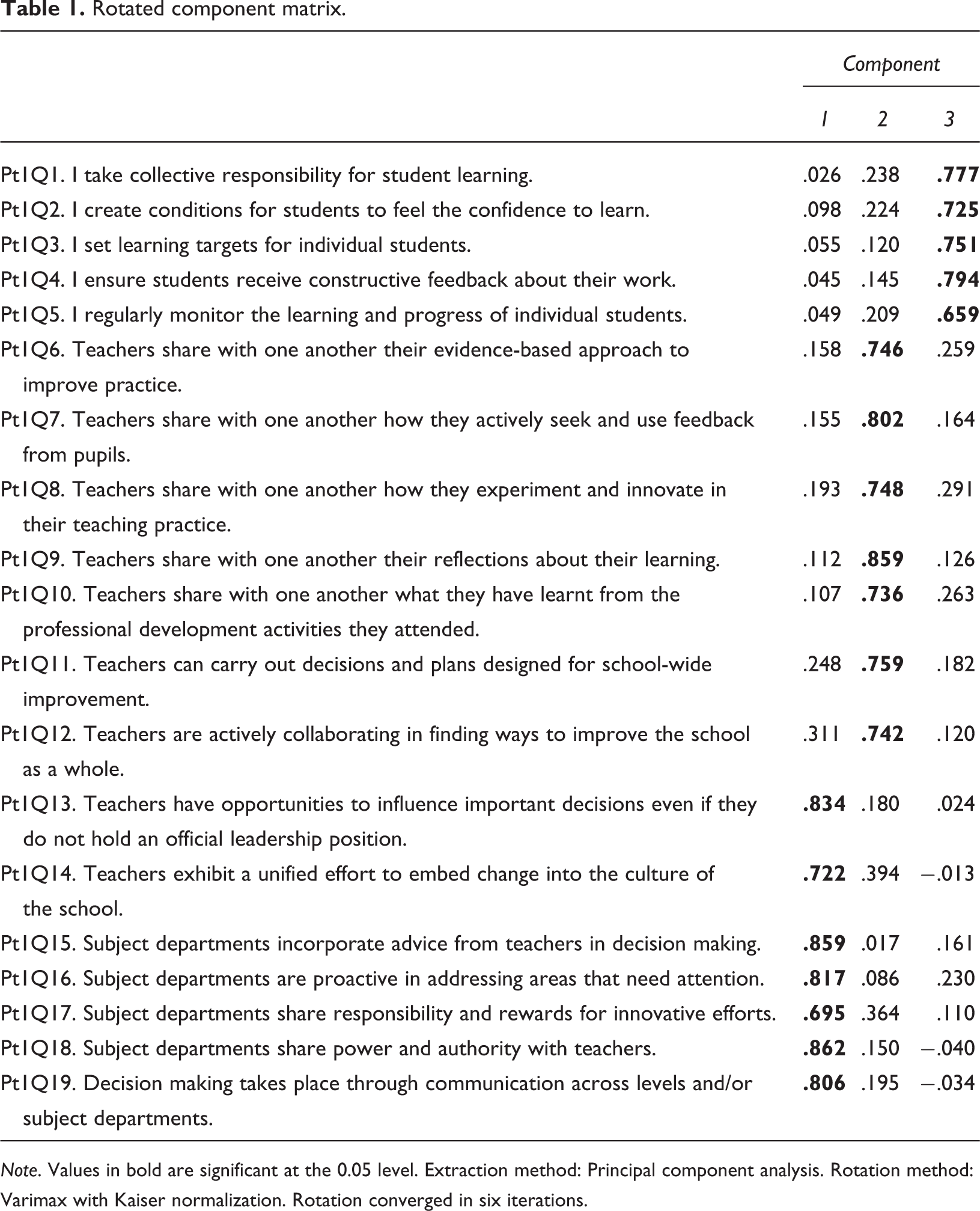
Note. Values in bold are significant at the 0.05 level. Extraction method: Principal component analysis. Rotation method: Varimax with Kaiser normalization. Rotation converged in six iterations.
Teachers were oriented toward student learning, but they less likely experienced shared and supportive leadership. Table 2 presents the mean scores and standard deviations for teachers’ perceptions of PLC engagement. The scale had a good internal consistency, that is, Cronbach’s α =.93, while each component had good internal consistency, ranging from .91 to .93. Teachers held positive attitudes toward PLC engagement: The mean scores of each component were above 4.0. Teachers had the highest mean score in Component 1—Collective Focus on Student Learning (M = 4.89, SD = .49). The lowest mean score was in Component 3—Shared and Supportive Leadership (M = 4.17, SD = .68). Teachers tended to focus on student learning, but they seemingly were not well supported by schools in making curriculum decisions, while their leadership roles were not apparently shared across different teachers (i.e., seniors and ordinary teachers).
Descriptive statistics of the items and scales representing teachers’ perceptions of PLCs engagement (N = 117).
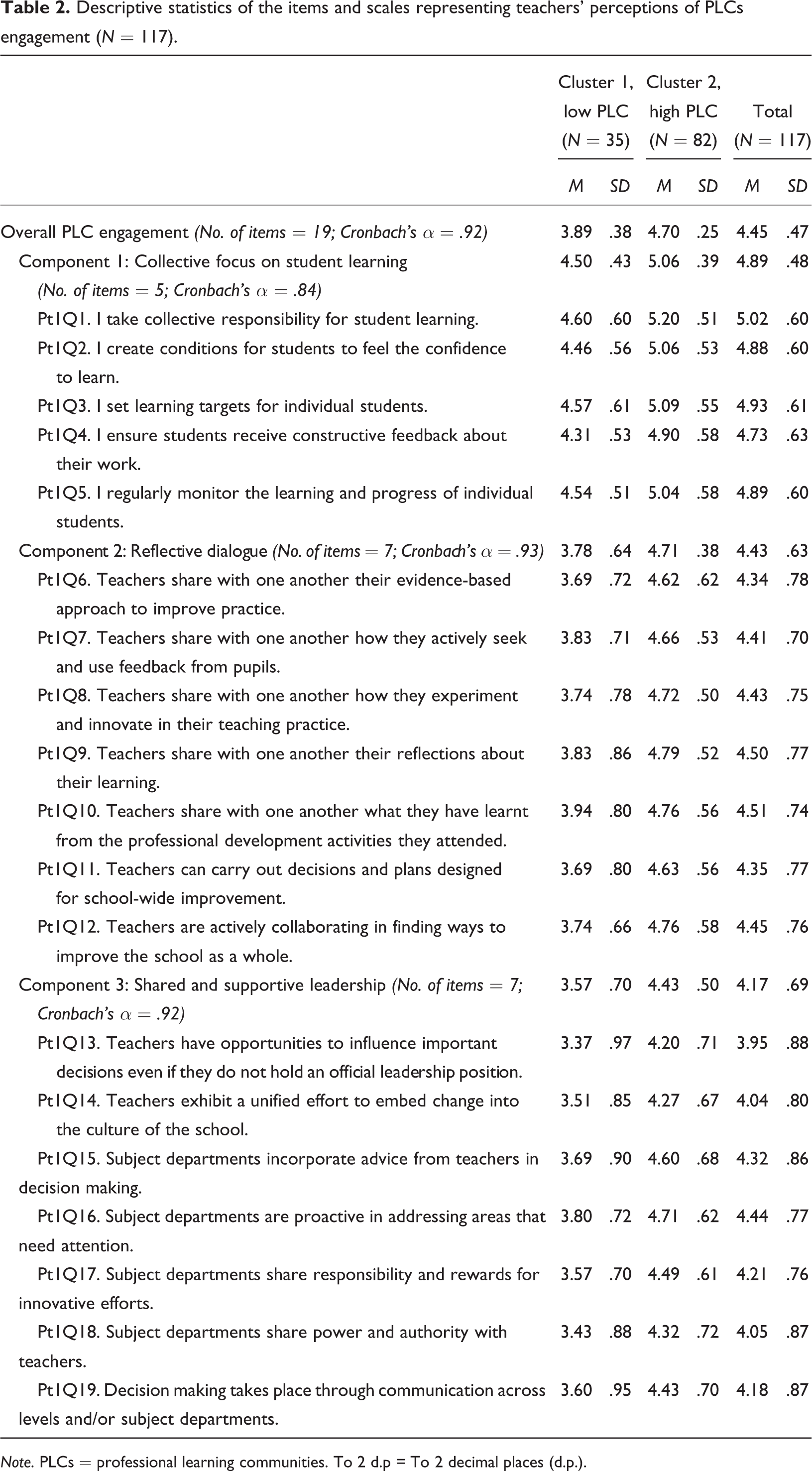
Note. PLCs = professional learning communities. To 2 d.p = To 2 decimal places (d.p.).
Teachers’ PLC engagement profiles
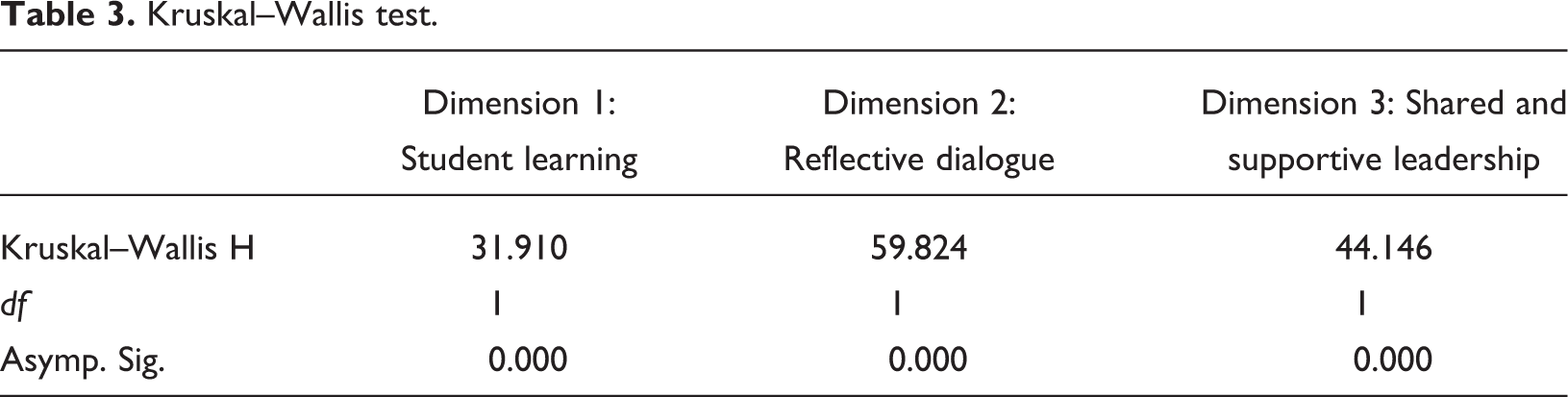
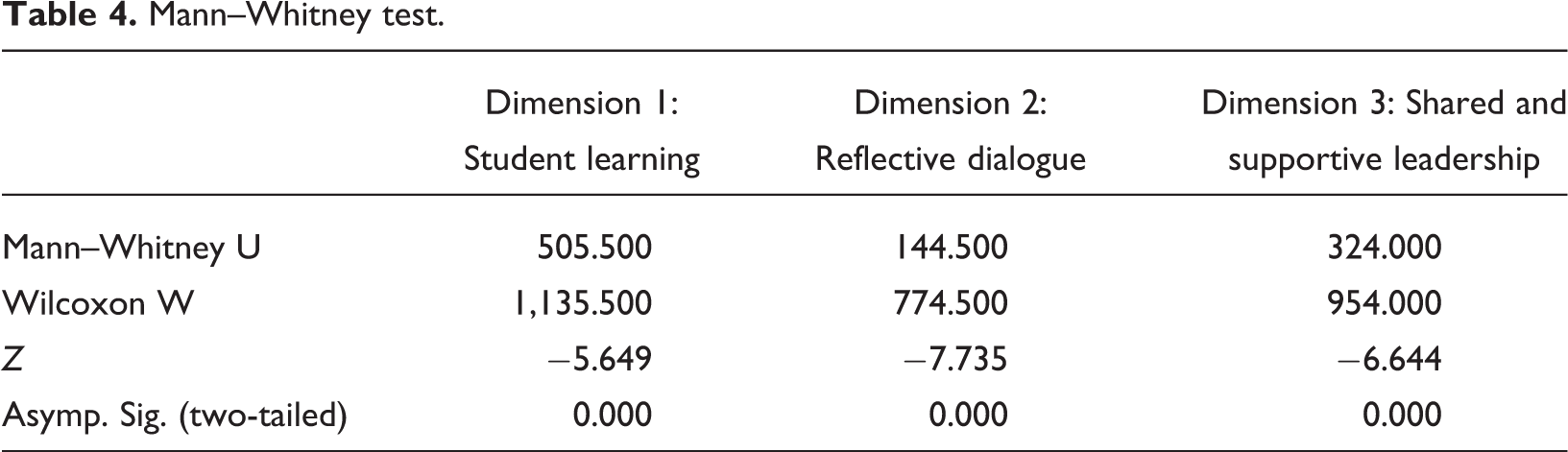
Hierarchical cluster analysis with the application of Ward’s method (Ketchen & Shook, 1996) was used to identify the profiles of teachers’ PLC engagement. Clusters were determined based on the three components (subscales) of the scale of teachers’ perceptions of PLC engagement. Two clusters were emerged from the dendrogram. Such clustering was confirmed with the use of k-means clustering method, which provided cluster means. The first cluster was labeled “high PLC engagement” as all of the mean scores were high on all components (i.e., collective focus on student learning, reflective dialogue, shared and supported leadership). The second cluster was labeled “low PLC engagement,” because all of the components received low mean scores. The results of the Kruskal–Wallis Test and Mann–Whitney Test showed significant differences in each of the three components according to the cluster membership and confirmed the distinctive typologies of teacher PLC engagement (see Tables 3 and 4).
Kruskal–Wallis test.
Mann–Whitney test.
DI practice
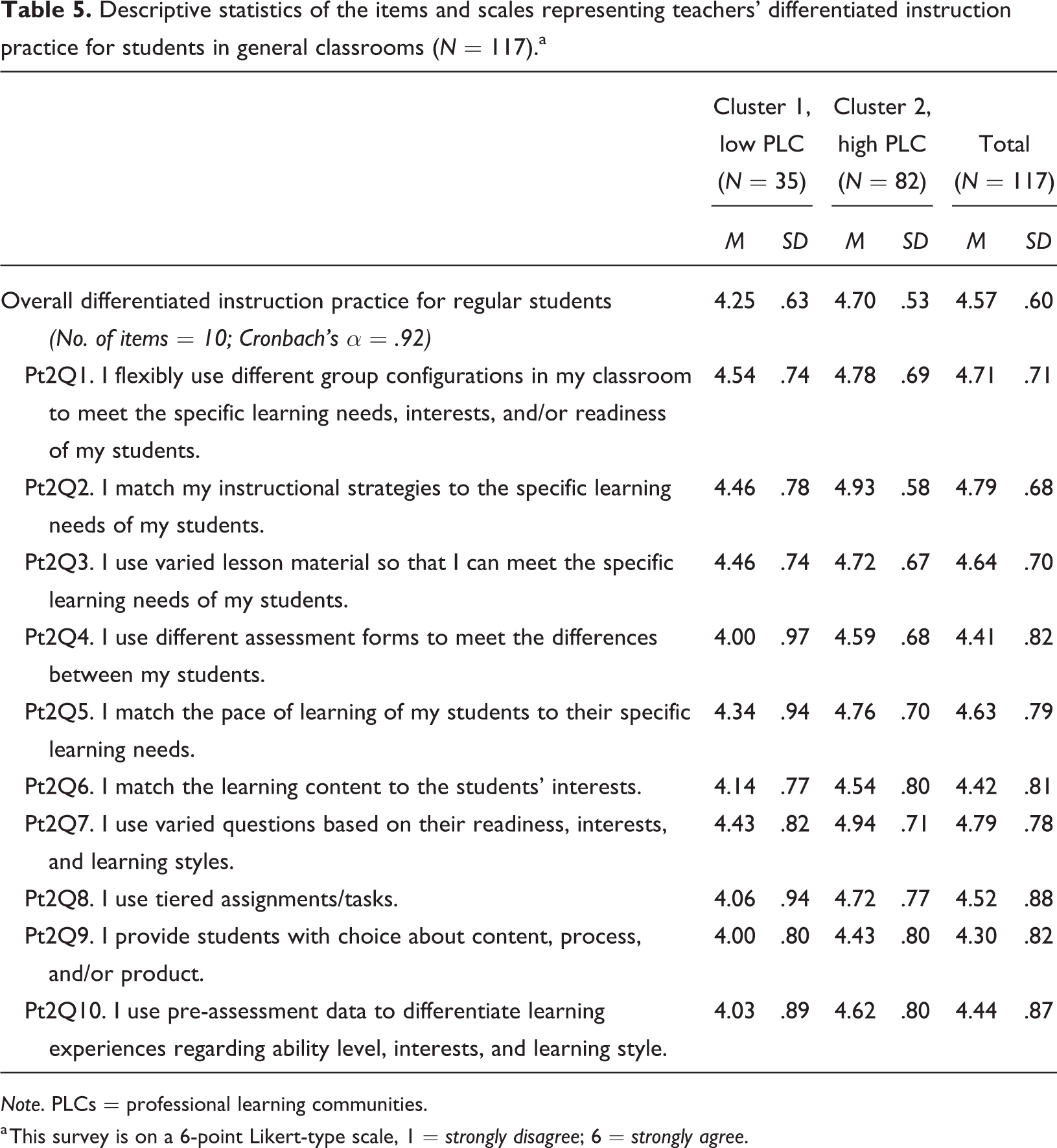
In general, teachers more likely practiced differentiation instruction in their classrooms, with an overall mean score of 4.57 (SD = .60), whereas all items were above 4.0 (Table 5). The item “I match my instructional strategies to the specific learning needs of my students” obtained the highest mean score, that is, M = 4.79, SD = .68. The item “I provide students with choice about content, process, and/or product” had the lowest mean score (M = 4.30, SD = .82).
Using an ANOVA test, the findings indicated that teachers’ PLC engagement was positively associated with DI practice: the greater teachers’ engagement in PLCs, the more DI practice teachers have. This represents that teachers had higher levels of PLC engagement while they put DI into practice more frequently. The “low PLC engagement” group had a lower mean score for DI practice (M = 4.25, SD = .63). The mean score of the “high PLC engagement” group for DI practice was 4.70 (SD = .53).
Descriptive statistics of the items and scales representing teachers’ differentiated instruction practice for students in general classrooms (N = 117).a
Note. PLCs = professional learning communities.
a This survey is on a 6-point Likert-type scale, 1 = strongly disagree; 6 = strongly agree.
Relationship between teachers’ PLC engagement profiles and DI practice
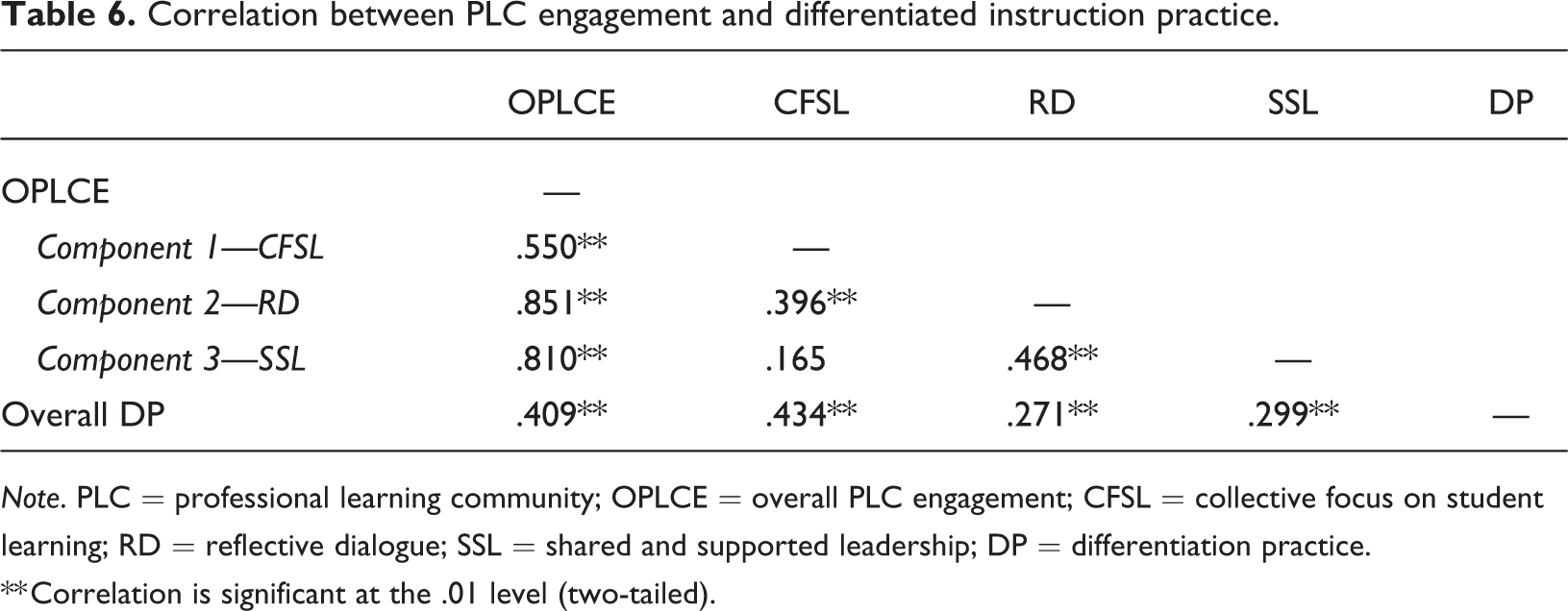
Based on the analysis of the survey data, there was positive correlation between PLC engagement and DI practice (r = .41) (Table 6). Collective focus on student learning (Component 1) was positively associated with DI (r = .43), while the other two components of PLC engagement (i.e., reflective dialogue and shared and supported leadership) were moderately, positively correlated with DI practice (r = .27 and r = .30, respectively).
Significant differences were found in the following eight survey items: I use varied lesson materials so that I can meet the specific learning needs of my students (Pt2Q2). I use different assessment forms to meet the differences between my students (Pt2Q4). I match the pace of learning of my students to their specific learning needs (Pt2Q5). I match the learning content to the students’ interests (Pt2Q6). I use varied questions based on their readiness, interests, and learning styles (Pt2Q7). I use tiered assignments/tasks (Pt2Q8). I provide students with choice about content, process, and/or product (Pt2Q9). I use pre-assessment data to differentiate learning experiences regarding ability level, interests, and learning style (Pt2Q10), where p < .05 (see Online Appendix IV). This reveals that both PLC groups demonstrated different levels of using DI strategies in schools. It is worth noting that the “low PLC engagement” group had less professional training in catering for learner diversity.
Correlation between PLC engagement and differentiated instruction practice.
Note. PLC = professional learning community; OPLCE = overall PLC engagement; CFSL = collective focus on student learning; RD = reflective dialogue; SSL = shared and supported leadership; DP = differentiation practice.
** Correlation is significant at the .01 level (two-tailed).
Discussion, conclusion, and implications
The study investigated teachers’ perceptions of PLCs and DI practice. The purpose of the study was to examine the extent to which teachers’ PLC engagement was associated with differences in their DI practice. In the study, high scores on the scales (i.e., collective focus on student learning, reflective dialogues, and shared and supported leadership) represented a generally higher level of PLC engagement.
Past studies have separately examined teachers’ perceptions of PLCs and DI; however, very little emphasis has been placed on the relationship between PLC engagement and DI practice. Smit and Humpert (2012) demonstrated that team collaboration that includes pedagogical topics enhances teachers’ use of DI. De Neve et al. (2015) found that teacher autonomy and collective responsibility could indirectly predict teachers’ self-reported changes in DI practice via self-efficacy. De Neve and Devos (2017) revealed that principal and middle leadership could play a significant role in developing structural and cultural school conditions for supporting DI practice. The findings of this study provide additional evidence regarding teachers’ PLC engagement and its relationship with DI practice. The survey data suggest that the key components of PLC, including collective focus on student learning, reflective dialogues, and shared and supported leadership are significantly and positively related to higher levels of DI practice. Professional training in catering for learner diversity may also be important in supporting DI practice.
The study illustrates the value of understanding teachers’ PLC engagement, as well as providing a better understanding of how PLC engagement is intended to foster DI practice. The findings suggest that teachers’ PLC engagement is related to DI practice: Higher levels of PLC engagement are closely associated with higher levels of DI practice.
Building PLCs relies on the collective processes of teachers engaging in reflective dialogues and shared practice, where power is distributed to every single teacher who shares responsibilities in making decisions for instructional improvement (Muijs & Harris, 2003). Teachers in this study demonstrated a high level of collective sense of responsibility in student learning but there were variations in teachers’ engagement in reflective dialogue and shared leadership. Obviously, teacher participation in reflective dialogues tended to be marginalized and may be confined by the school environment, in which teachers may not have sufficient opportunities to take up leadership roles in making decisions for instructional practice. Therefore, there is a need for reconsideration for coordinating, co-constructing, and creating conditions for developing PLCs in schools, which is discussed as follows.
First of all, there is a need for school administrators to embrace new forms of shared leadership within school organizational structures in order to promote teacher participation in student learning and to encourage and support DI across grade levels, subjects, and departments (Ainscow & Sandill, 2010; Fransen et al., 2018; Hallinger, 2003; Ni et al., 2018; Smylie & Eckert, 2018). The teachers included in the survey appeared to have narrow perspectives on the concepts of teacher leadership: They generally upheld the prevailing view of formal leadership (i.e., delegated roles and responsibilities) while neglecting and excluding the significance of informal leadership that emphasizes teachers’ own professional judgements and ethical decision making in contributing to the betterment of school and classroom practice (Orchard & Wan, 2019).
Second, opportunities for teacher collaboration through job-embedded professional development and training should be provided (DuFour & DuFour, 2009; Teague & Anfara, 2012; Woodland & Mazur, 2015). The training should be designed to empower teachers to make informed, experience-based pedagogical decisions in using DI. With reference to the results of the study, teachers, especially those in low PLC engagement group, may not have sufficient opportunities to engage themselves in working together in planning differentiated lessons, including preparing varied questions, lesson material, and assessment. More attention should be devoted to lesson planning, including questions, lesson material design, and assessment (both formative and summative) when promoting PLC in schools. Teachers should be encouraged to engage in reflective dialogues regarding lesson planning through collective problem-solving, sharing, and exchanging ideas.
Moreover, teachers may not commonly use evidence-based approach in promoting reflective dialogues among teachers (Lane, 2007). In other words, as suggested in other studies (e.g., Bradley et al., 2008; Donhost & Anfara, 2010; Hoogland et al., 2016; Kippers et al., 2018; Mandinach & Jimerson, 2016; Young, 2006), data-driven curriculum decision making is still disconnected from actual practice when it comes to addressing the needs of students (Lezotte & Bancroft, 1985; Marsh & Farrell, 2015; Reynolds et al., 1993). How to use data for improving student learning and promoting DI should be explicitly introduced in supporting teachers’ engagement in PLCs. Sustained routines and infrastructures for the data use should be actively supported through “strong school leadership and establishing shared goals” (Hubers et al., 2017, p. 518) so as to firmly build the capacity of teachers to use data. This study faced certain limitations. First of all, the sampling size was relatively small and only subsidized schools were included. Second, the study was quantitative in nature and may have failed to capture certain complexities underlying the teachers’ responses. Future research may extend upon the findings contained in this study as follows: In order to obtain a more holistic picture of schools’ PLC and DI practice, a wider range of schools should be analyzed. To obtain a more in-depth understanding of how teachers collaborate through PLCs to promote DI, further studies may explore how teachers participate in PLC activities (e.g., peer observation, collaborative lesson planning) and how such participations support their differentiated teaching. Finally, additional research methods such as observation and interviews should be utilized to examine teachers’ views regarding PLC engagement as well as their DI practice.
Supplemental material
Supplemental Material, sj-pdf-1-roe-10.1177_2096531120969988 - Unpacking the Relationship Between Teachers’ Perceptions of Professional Learning Communities and Differentiated Instruction Practice
Supplemental Material, sj-pdf-1-roe-10.1177_2096531120969988 for Unpacking the Relationship Between Teachers’ Perceptions of Professional Learning Communities and Differentiated Instruction Practice by Sally Wai-Yan Wan in ECNU Review of Education
Footnotes
Declaration of conflicting interests
The author(s) declared no potential conflicts of interest with respect to the research, authorship, and/or publication of this article.
Funding
The author(s) received no financial support for the research, authorship, and/or publication of this article.

References
Supplementary Material
Please find the following supplemental material available below.
For Open Access articles published under a Creative Commons License, all supplemental material carries the same license as the article it is associated with.
For non-Open Access articles published, all supplemental material carries a non-exclusive license, and permission requests for re-use of supplemental material or any part of supplemental material shall be sent directly to the copyright owner as specified in the copyright notice associated with the article.
