




Abstract
Purpose
Based on the theory of planned behavior and social cognitive theory, this study investigates the relationship between entrepreneurial alertness (EA) and entrepreneurial intention (EI) through the mediating role of entrepreneurial self-efficacy (ESE) and the moderating role of entrepreneurial climate (EC) in the “triple disruptions” of pandemic, Industry 4.0, and innovative technology.
Design/Approach/Methods
This study collected data from 717 Chinese university students and adopted a moderated mediation model to verify the proposed construct. All data were acquired online via Wenjuanxing software and analyzed with SPSS and SmartPLS.
Findings
Results show that (1) EA, ESE, and EC are significant predictors of EI; (2) ESE partially mediates the relationship between EA and EI; and (3) EC moderates the relationship between ESE and EI.
Originality/Value
The originality of this study lies in its use of an inner- and outer-moderator framework to examine student entrepreneurial intentions. The results of this study demonstrate that EA, ESE, and EC are crucial determinants of EI among Chinese university students. These findings of this study have empirical implications for governments, universities, and individuals insofar as they can be used to enhance students’ ability to recognize entrepreneurial opportunities, foster ESE, create ECs, and facilitate EI by offering multiple entrepreneurship-related resources.
Keywords
Introduction
The pandemic prompted a wave of firm closures and unemployment, substantially impairing the social entrepreneurial climate and marring individual entrepreneurial passion and intention. According to the International Labour Organization (ILO, 2023), the unemployment rate of Chinese individuals aged 15–24 was 13.2% in 2022—higher than the 12.4% and 12.7% rates in 2021 and 2020, respectively, and markedly higher than that of 10.7% in 2019 and 9.7% in 2018. According to the most recent Global Entrepreneurship Monitor report (GEM, 2023), China's economic growth was lower in 2022/2023 than it was during the pandemic. In this context, fostering entrepreneurial intention becomes increasingly important as a means of driving economic recovery and creating career opportunities. Given that awareness of external challenges and opportunities influences people's inclination to pursue entrepreneurship, such a pessimistic employment context may hinder the promotion of entrepreneurial aspiration.
Moreover, an individual's belief in their abilities to effectively perform in a job influences their confidence and motivation to engage in entrepreneurship. Indeed, job seekers are inclined to secure more stable positions—such as a public office or civil service job—to survive in an uncertain labor market. Indeed, the number of graduates who participated in the civil service exam gradually increased over the three-year pandemic. The pursuit of further education to defer employment has also emerged as a popular strategy among university graduates. According to data released by the Ministry of Education of the People's Republic of China, postgraduate enrollment averaged at 17% during the pandemic, peaking at 21.22% in 2022. Evidently, the explosive growth in safe employment catalyzed a rapid decrease in entrepreneurial passion and willingness among university graduates.
Meanwhile, the thriving of Industry 4.0 and technological innovation, such as the popular ChatGPT, has led to increasingly intense competitiveness, demanding higher skills and capital investment. Despite the emergent consumption methods and entrepreneurial opportunities in health protection, contactless delivery, and cloud technology, graduates are at high risk of entrepreneurship failure due to insufficient financial support and technology accumulation, which may hinder their early career development and diminish their confidence. Chinese universities are focusing on nurturing students’ entrepreneurial competency and offering greater support and resources in and through science and technology, including organizing entrepreneurial events like the China International College Students’ “Internet+” Innovation and Entrepreneurship Competition, establishing technical gardens for entrepreneurial practices, and other university–industry activities. Despite such initiatives, the rate of students starting their own businesses is relatively low. Indeed, current graduates prefer to pursue an assured profession and are much more cautious about engaging in entrepreneurial behavior, despite being aware of excellent entrepreneurial opportunities. Therefore, it is worth evaluating student preferences toward entrepreneurial endeavors in the context of the technology era.
In view of the foregoing, this study explores Chinese university students’ entrepreneurial attitudes in the context of the “triple disruptions” of Industry 4.0, innovative technology, and pandemic. More specifically, this study investigates the relationship between entrepreneurial alertness, intention, self-efficacy, and climate, and determines their interplay mechanisms. This study contributes to the theoretical literature on entrepreneurial theory and empirical research on university students’ entrepreneurial behaviors by designing a complex conceptual model using a Chinese university student sample.
Literature review
Entrepreneurial alertness and intention
Entrepreneurial alertness (EA) is a conscious entrepreneurial state of mind that can assist individuals in identifying gaps and opportunities in the market (Kirzner, 1997, 1999). EA reflects entrepreneurs’ abilities to recognize opportunities ignored by others (Gaglio & Katz, 2001). Research on patterns of alertness indicates that an individual's EA may be closely associated with their intentional behavior. Entrepreneurial intention (EI) is regarded as a mindset that shapes action and directs attention toward an endeavor (Bird, 1988; Moriano et al., 2012), allowing for the carrying out of entrepreneurial behavior (Ajzen, 1991), such as starting a new business and becoming an entrepreneur. According to the theory of planned behavior (TPB; Ajzen, 1991), EI can be predicted by entrepreneurial attitudes, subjective norms, and perceived behavior control. An entrepreneur's psychological consciousness of scanning, screening, and connecting information can help them become more successful in capturing entrepreneurial opportunities through their intention to become entrepreneurial practitioners (Ardichvili et al., 2003; Baron, 2006; Hu & Ye, 2017; Tang et al., 2012). Therefore, EA may function as an antecedent variable for EI.
Several empirical studies have confirmed the predictive role of EA with respect to EI (Gelderen et al., 2008; Li et al., 2020), demonstrating that individuals with higher EA are more likely to identify entrepreneurial opportunities and actively become entrepreneurs by launching a new venture to achieve their goals. Conversely, individuals with low EA levels may have less willingness and intent to start a business. Similarly, Lu and Wang (2018) proposed that employees’ EA significantly predicts their EI and serves as a mediating variable in explaining the relationship between TPB and EI. Based on previous studies, this study proposes the following hypothesis:
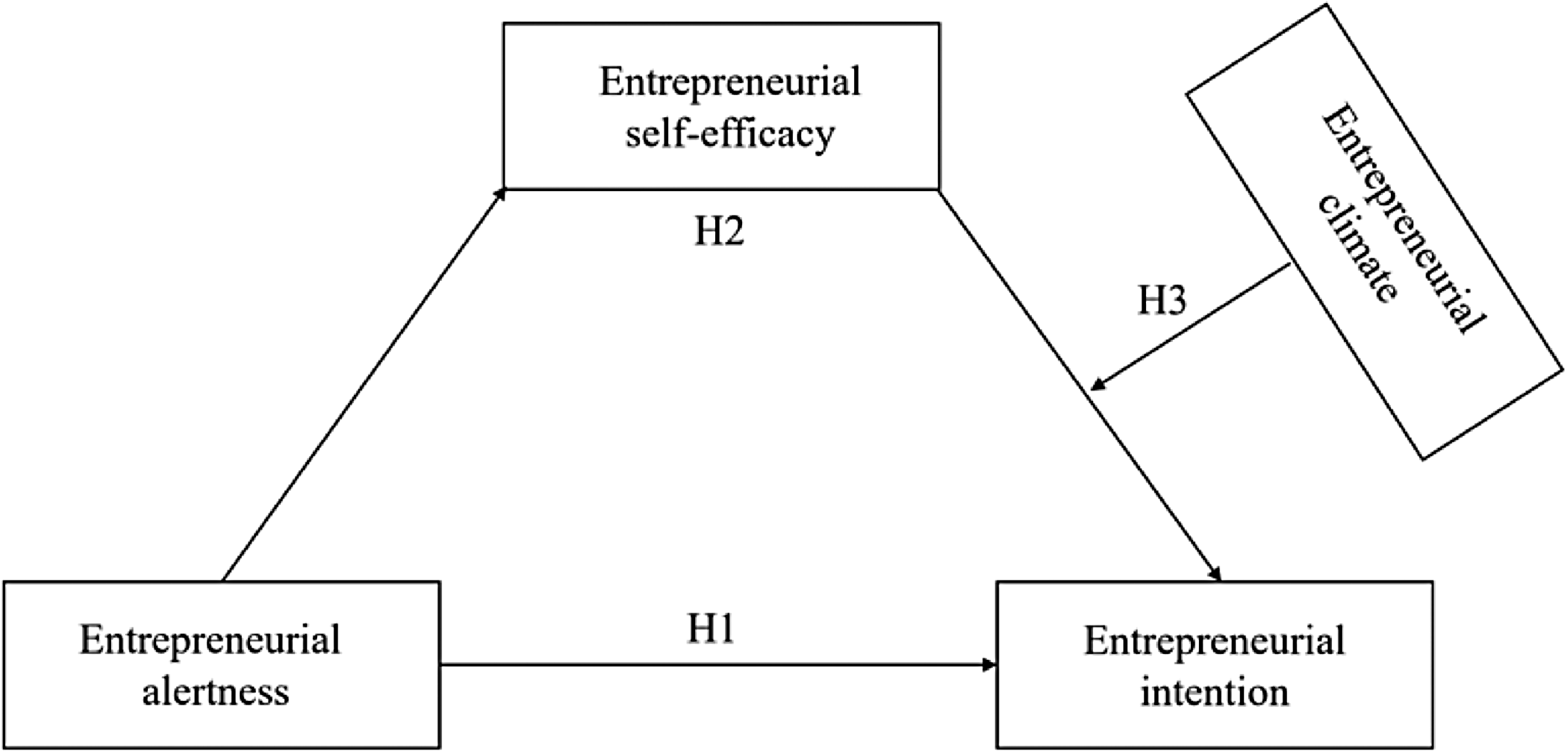
EA positively predicts EI among Chinese university students.
Entrepreneurial self-efficacy as a mediator
Entrepreneurial self-efficacy (ESE) refers to an individual's belief in their capability to successfully perform entrepreneurial roles and tasks (Boyd & Vozikis, 1994; Chen et al., 1998; Scherer et al., 1989). Newman et al. (2019) found that ESE is crucial in determining whether individuals pursue entrepreneurial careers and engage in entrepreneurial behavior, revealing a positive relationship between ESE and students’ intentions to start their own businesses. Similarly, Boyd and Vozikis (1994) proved that ESE is a critical antecedent of EI and entrepreneurial behavior. The relationship between ESE and EI is also supported by social cognitive theory (SCT; Bandura, 1999), which suggests that individuals are more likely to realize their entrepreneurial ideas when they perceive themselves as having high efficiency in entrepreneurial performance (Prabhu et al., 2012).
Existing studies have also shown that ESE is positively associated with EA (Indrawati et al., 2015). For instance, Cao (2021) demonstrated that college students with stronger EA had higher ESE, while Hu and Ye (2017) found that ESE and EA significantly affected students’ intentions to become entrepreneurs. Based on these findings, ESE appears to serve as a mediator in the relationship between EA and EI. Therefore, this study proposes the following hypothesis:
ESE mediates the relationship between EA and EI among Chinese university students.
Entrepreneurial climate as a moderator
Climate refers to the shared perceptions of and the meaning attached to practices, procedures, and policies experienced by organizational members, as well as the types of behaviors that are rewarded, supported, and expected (Schneider et al., 1998). Entrepreneurial climate (EC) refers to an entrepreneur's proximal market environment, which is underpinned by institutional mechanisms (e.g., regulations, labor, capital, and socioeconomics) that influence an entrepreneur's venture (Datta et al., 2020).
EC has typically been viewed as a powerful antecedent of entrepreneurship (Bayarçelik & Özşahin, 2014; Datta et al., 2020; Hjorth & Johannisson, 2008) and an essential external factor for predicting EI (Bao et al., 2018). According to SCT, the social context plays a vital role in shaping individuals’ efficacious beliefs and mobilizing their activities. When external EC are agreeable, an individual's intention to engage in entrepreneurial activities increase (Baron, 1998, 2004; Shane & Venkataraman, 2000). Some empirical studies indicate that favorable EC can inspire an individual's EI (Bergmann et al., 2018; Lee et al., 2011) and boost their confidence in entrepreneurial success (Walter et al., 2013). In contrast, an unfavorable EC can negatively impact and reduce an individual's EI (Tounés & Mahmoudi, 2022). Research also shows that EC can foster students’ EI, regardless of their interest and belief in entrepreneurial behavior (Bergmann et al., 2018), such as ESE (Drnovšek et al., 2010). Therefore, it can be inferred that EC can control the relationship between ESE and EI. Based on the foregoing, this study proposes a third hypothesis, as follows:
EC moderates the relationship between ESE and EI among Chinese university students.
Figure 1 presents this study's complete hypothesized model.
Proposed model.
Data and methods
Participants
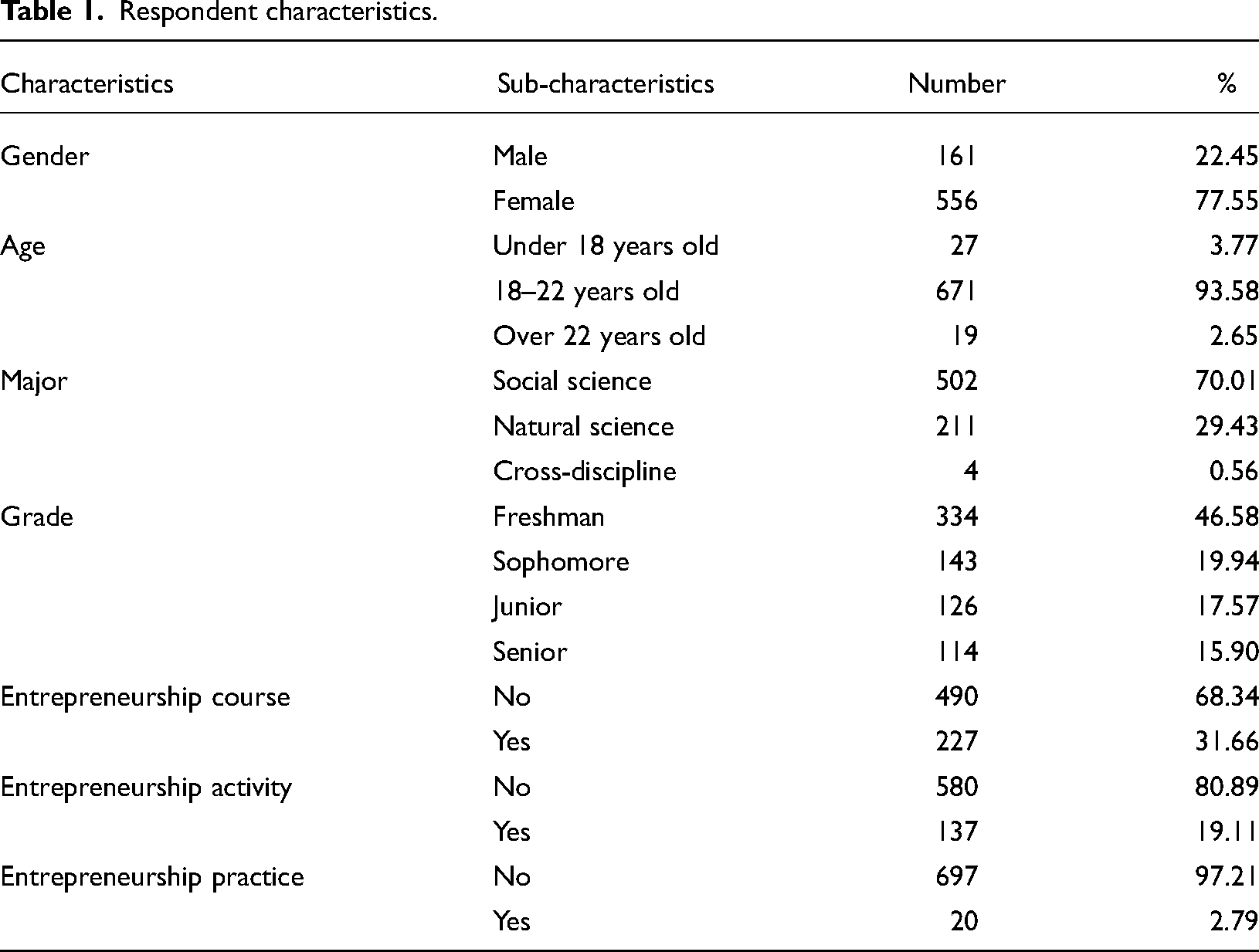
A total of 556 women (77.55%) and 161 men (22.45%) participated in this study. In terms of age, 671 (93.58%) respondents were 18–22 years of age, 27 (3.77%) were under 18 years of age, and 19 (2.65%) were older than 22 years of age. Respondents comprised freshman (46.58%), sophomore (19.94%), junior (17.57%), and senior (15.90%) university students. Approximately 70% majored in social science, 29.43% in natural science, and 0.56% in cross disciplines. Most respondents (68.34%) had never taken an entrepreneurship-related course, with 31.66% stating that they had. Similarly, 80.89% of respondents had never participated in entrepreneurship-related activities, with only 19.11% claiming to have attended relevant entrepreneurial events. Only 2.79% of students had engaged in entrepreneurship practices, while 97.21% of this cohort had no entrepreneurial experience whatsoever. Table 1 presents detailed information of the respondents.
Respondent characteristics.
Measures
Entrepreneurial alertness scale
EA was computed using Boso et al.'s (2019) version of the Entrepreneurial Alertness Scale to measure individuals’ business vigilance. Originally based on Tang et al. (2012), the scale consists of 11 items, such as “I am always actively looking for new information.” The scale comprises three distinct subscales: information scanning and search, information association and connection, and opportunity evaluation and judgment. Responses were rated on a 7-point Likert scale ranging from 1 (strongly disagree) to 7 (strongly agree), with higher scores indicating higher levels of EA. Cronbach's alphas for the three subscales of the revised version were 0.88, 0.91, and 0.93, respectively (Boso et al., 2019). In this study, Cronbach's alpha for the overall scale was 0.92, 0.83, 0.88, and 0.88 for the subscales, respectively.
Entrepreneurial intention scale
EI was estimated using the 6-item Entrepreneurial Intention Scale developed by Liñán and Chen (2009). This scale determines whether an individual intends to start a business and include items like “I am ready to do anything to be an entrepreneur.” Responses were rated on a 7-point Likert scale ranging from 1 (strongly disagree) to 7 (strongly agree), with higher scores indicating a stronger intention to engage in entrepreneurship. Cronbach's alpha for the original version was 0.94 (Liñán & Chen, 2009), and 0.94 for this study.
Entrepreneurial self-efficacy scale
ESE was tested using the 4-item Entrepreneurial Self-Efficacy Scale developed by Zhao et al. (2005). Comprising items like “I am convinced that I can successfully discover new business opportunities,” this scale assesses respondents’ confidence in accomplishing future entrepreneurial goals. Responses were rated on a 5-point Likert scale ranging from 1 (no confidence) to 5 (completely confident), and higher scores denote higher levels of ESE. Cronbach's alpha for the original version was 0.78 (Zhao et al., 2005), and 0.90 for this study.
Entrepreneurial climate scale
EC was calculated using the 12-item Chinese version of the Entrepreneurial Climate Scale developed by Zhu (2014) to capture the external entrepreneurial context. The scale comprises four subscales—administration, education and training, financing, and social culture—and includes items like “Government provides beneficial tax policies.” Responses were rated on a 5-point Likert scale ranging from 1 (strongly disagree) to 5 (strongly agree), with higher scores indicative of a more favorable EC. Cronbach's alphas for the total subscales of the Chinese version exceeded 0.72 in Zhu's (2014) study and 0.77 in Ye and Fang's (2017) study. In this study, the Cronbach's alpha for the total scale was 0.84, and 0.87, 0.81, 0.79, and 0.68 for the subscales, respectively.
Procedure
The scales and personal demographic information were integrated into a single sheet and imported into Wenjuanxing, an online data collection tool. Chinese university students were then recruited as respondents. Before displaying the formal questionnaire, participants were provided an explanatory statement and consent form detailing the study's design, potential risks, and benefits, as well as their right to withdraw from the study at any time. Selecting the “Yes” option commenced the survey, while selecting the “No” option skipped to the end of the session. Data were collected from October 15 to December 20, 2022. Once the participants completed the survey, the data were screened and validated. After removing invalid responses with short response times and repetitive answers, the final sample comprised 717 Chinese university students.
Data analysis
Data were analyzed using SmartPLS 3.3.9 and SPSS PROCESS macro. Harman's one-factor test (Podsakoff et al., 2003) was utilized to examine common method variance (CMV). Results indicated that the single-factor solution explained 35.63% of the variation, which was less than the suggested 40% threshold (Hayes, 2022). Therefore, common bias was not observed in this study. Multicollinearity was assessed using the variance inflation factor (VIF). Results indicated that none of the variables exceeded the cutoff value of 5, as suggested by Hair et al. (2022), inferring that CMV was absent. This study then evaluated the psychometric properties of the proposed model by testing its reliability, convergent validity, and discriminant validity. To improve the model's satisfaction level, items with factor loadings exceeding 0.7 were retained for further analysis (Hair et al., 2013). Finally, the moderated mediation hypothesis was assessed using a bootstrapping procedure with 5,000 subsamples in PROCESS Model 14 (Hair et al., 2012). A simple slope was also produced to present the differences in conditional indirect effects across different levels of the moderator.
Results
Measurement model test
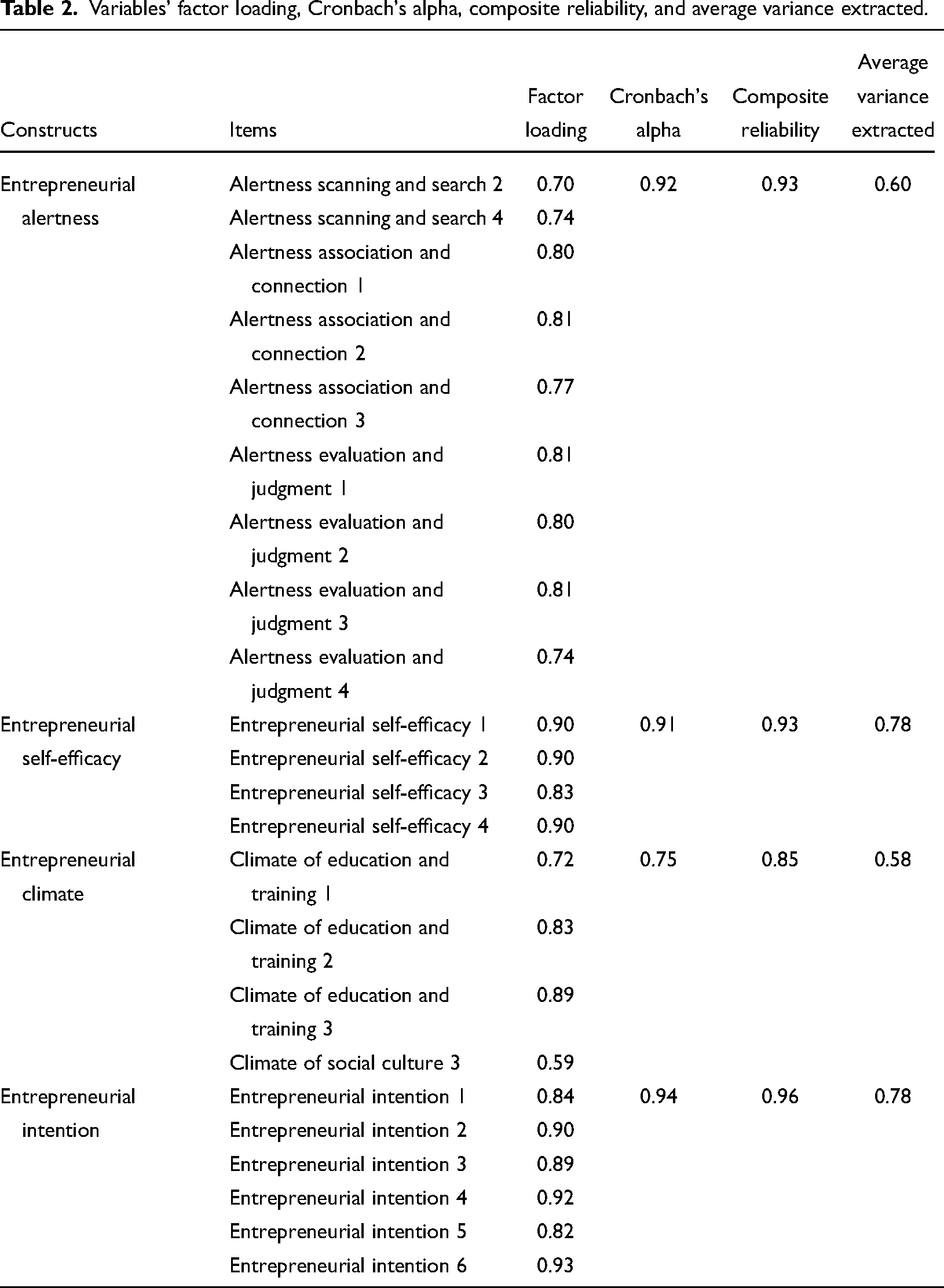
The measurement model was evaluated using the following criteria: factor loading, composite reliability, Cronbach's alpha, and average variance extracted (AVE). The threshold values for factor loading, composite reliability, Cronbach's alpha, and AVE should be greater than 0.7, 0.7, 0.7, and 0.5, respectively. However, MacCallum and Tucker (1991), MacCallum et al. (2001) argued that an item value exceeding 0.60 in a factor model is acceptable. As Table 2 shows, to cover all dimensions, this study extracted the factors with values equal to or greater than 0.7 as observed variables, with the exception of the climate of social culture factor, which had a factor loading of nearly 0.6. The Cronbach's alphas of the latent variables ranged from 0.75 to 0.94, with composite reliabilities of 0.85–0.96. All AVE values exceeded the recommended 0.5 cut-off threshold. Therefore, the modified measurement model demonstrated adequate convergent validity.
Variables’ factor loading, Cronbach's alpha, composite reliability, and average variance extracted.
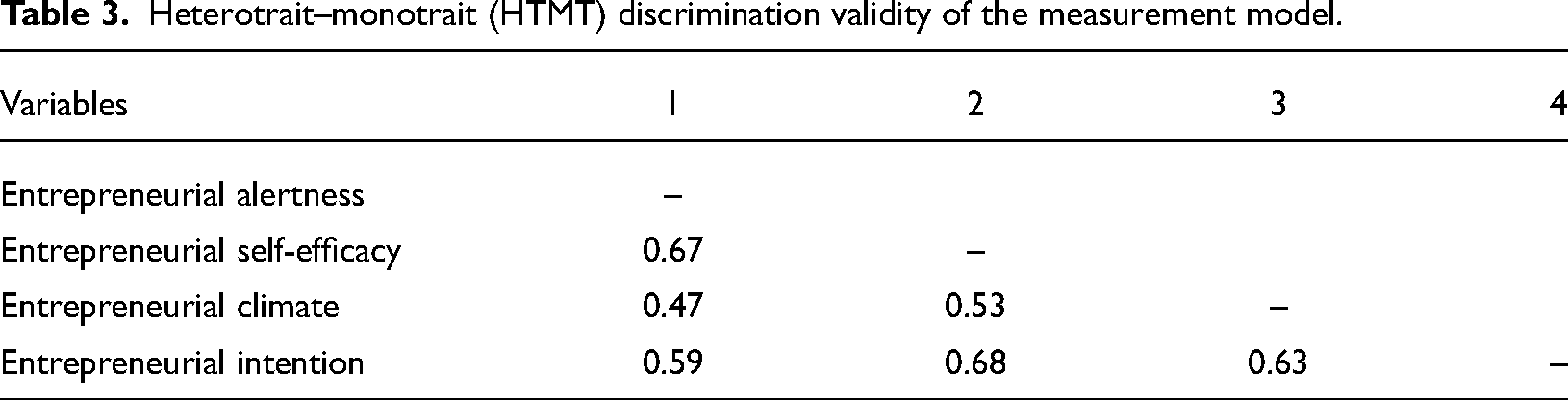
Discriminant validity is also considered an essential index for evaluating the adequacy of a measurement model. Using SmartPLS 3.3.9, this study estimated the heterotrait–monotrait (HTMT) ratio of correlations to assess the discriminant validity of the model. Following Henseler et al.'s (2015) suggestion, the HTMT value should be <0.85. As Table 3 shows, results indicated that all HTMT ratios between the two constructs were less than the recommended values. Therefore, each construct was considered valid and distinct.
Heterotrait–monotrait (HTMT) discrimination validity of the measurement model.
Descriptive statistics
Table 4 presents the minimum and maximum values, means, and standard deviations of the variables and sub-variables. Respondents obtained marginally higher scores than the median for the EA dimensions, indicating that they were highly alert in terms of entrepreneurship. These results suggested greater attentiveness in identifying potential opportunities, trends, and gaps in entrepreneurial domains compared to those who may lack awareness of such aspects, especially in terms of assessing and weighing information within the context of entrepreneurship. In Table 4, the mean for ESE is higher than the median, indicating that, on average, the respondents possessed a higher level of confidence in their entrepreneurial-related tasks. This finding suggests that respondents were more likely to perceive themselves as capable of successfully achieving the tasks using their knowledge and skills. Similarly, the average EC was higher than the median, indicating that the respondents were familiar with their entrepreneurial surroundings, and felt supported from the educational, financing, and cultural perspectives. This was particularly true in terms of relevant entrepreneurial policies, which they perceived as conducive for starting a venture. In general, respondent EI was near the median, indicating that they had a medium intention to engage in entrepreneurship in the future.
The minimum, maximum, average, and standard deviation of variables and sub-variables.
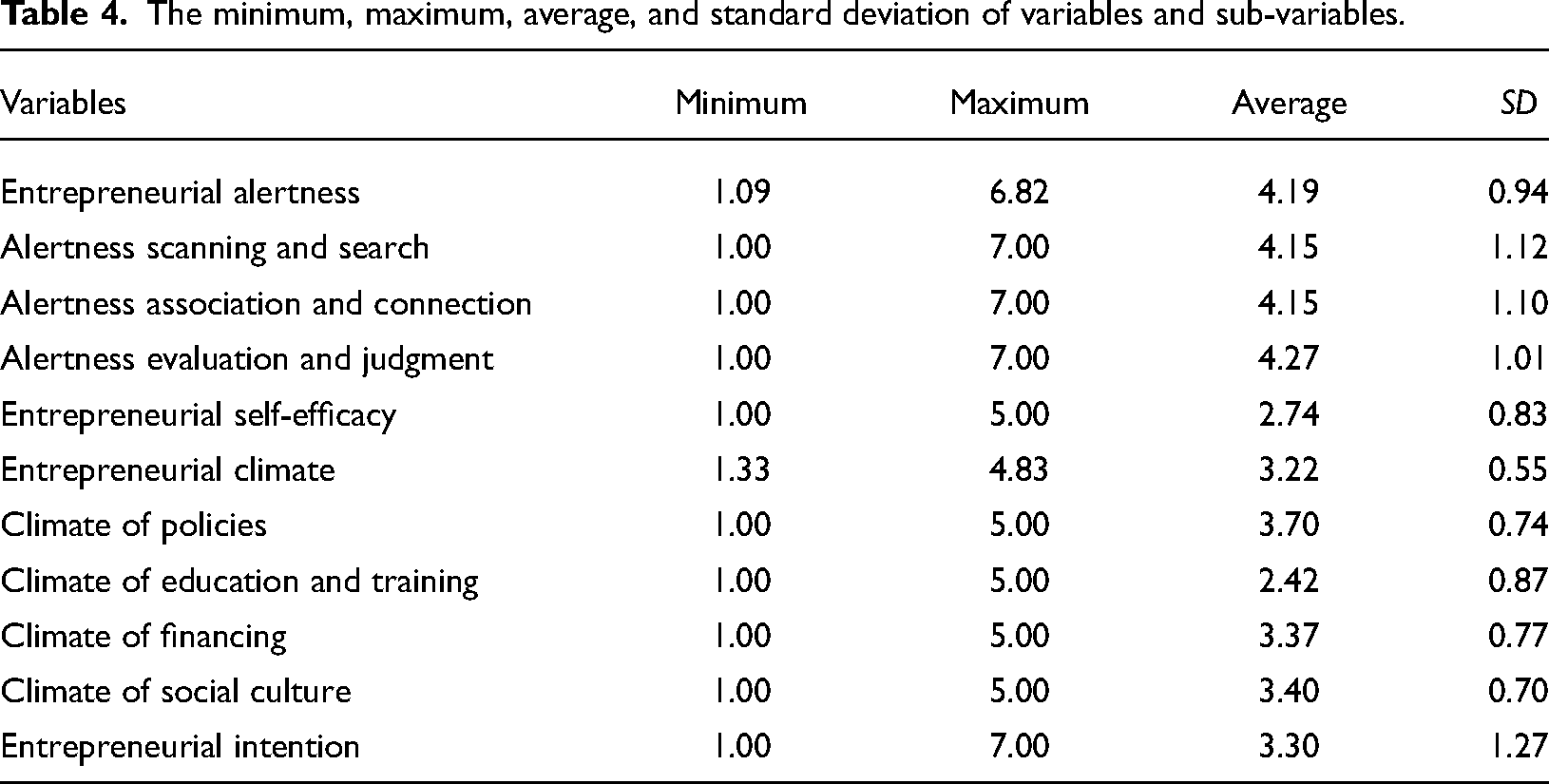
Table 5 presents the significant differences between respondents in terms of gender, grade, entrepreneurship course, entrepreneurship activity, and entrepreneurship practices. Regarding gender differences, male respondents had the highest EA, ESE, and EI scores, with significant differences observed for these three variables (p < .01, .001, and .001, respectively). Although female respondents obtained higher EC scores, no statistically significant differences were observed between males and females. In terms of grades, first-year students received the highest scores for EA and ESE, second-year students received the highest scores for EI, and senior students obtained the highest scores for EA and EC. However, significant differences were observed only in the EA group (p < .05). In terms of entrepreneurship courses, respondents who took an entrepreneurial class achieved higher EA and EC scores, although a significant difference was observed only for EC (p < .001). For entrepreneurship activities, while students who had previously participated in entrepreneurship activities scored higher on all variables, significant differences were observed only for EA (p < .05), ESE (p < .01), and EC (p < .001). Similarly, respondents engaged in entrepreneurship practices obtained higher scores for all variables. With the exception of EC, significant differences were observed in all the remaining variables (p < .05, .01, and .001 for EA, ESE, and EI, respectively).
Significant differences in EA, ESE, EC, and EI among gender, grade, entrepreneurship course, activity, and practice.
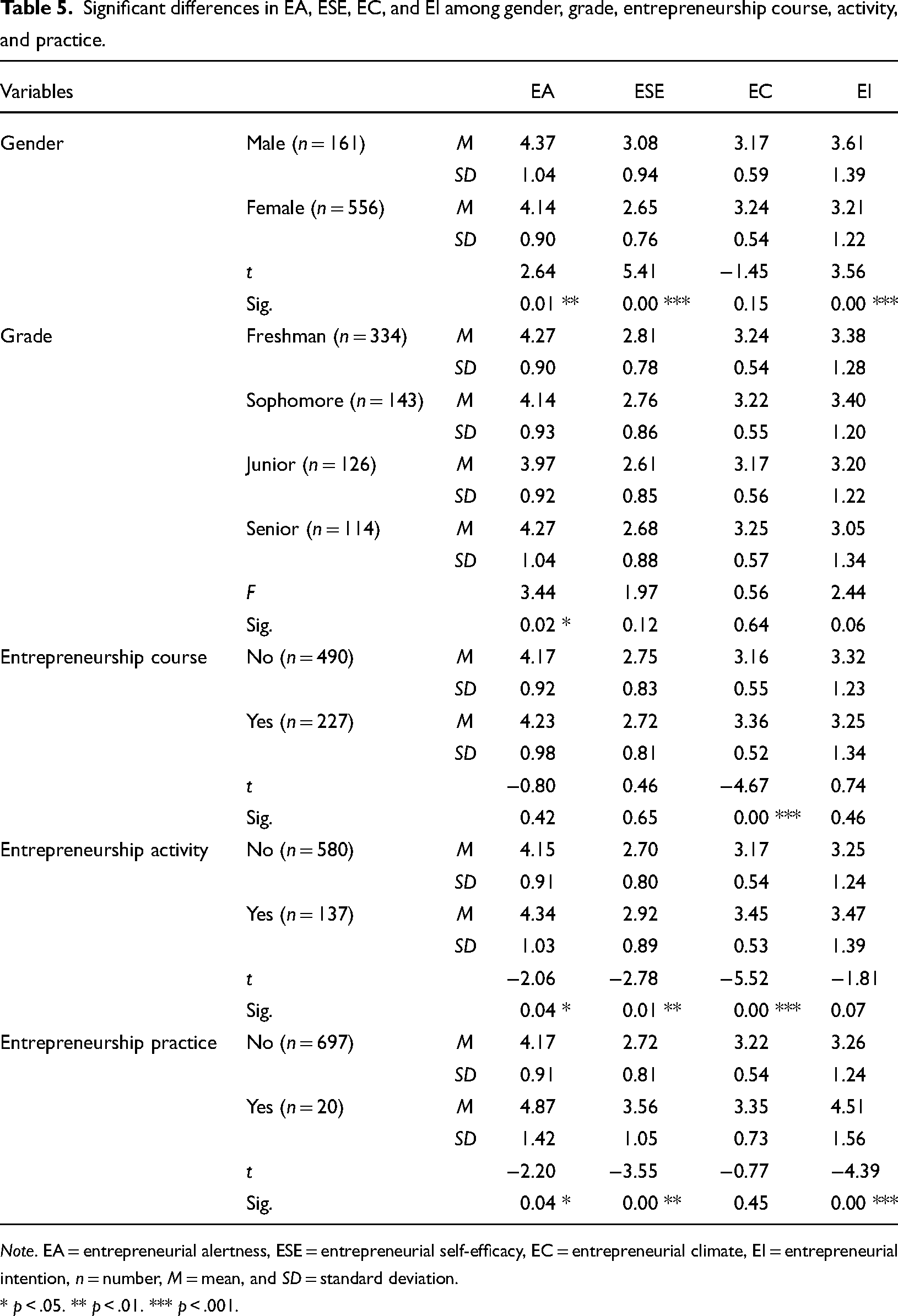
Note. EA = entrepreneurial alertness, ESE = entrepreneurial self-efficacy, EC = entrepreneurial climate, EI = entrepreneurial intention, n = number, M = mean, and SD = standard deviation.
* p < .05. ** p < .01. *** p < .001.
Correlation analysis
Table 6 presents the correlations between the investigated variables and Cronbach's alpha values of the scales. All dimensions were positively and significantly correlated (p < .01). ESE, EC, and EI were moderately associated with EA (r = .4–.6), and ESE was strongly associated with EI (r = .63). However, EI displayed a weak correlation with the EC dimensions, particularly the policy (r = .21) and financing climate (r = .19) dimensions.
Correlations of variables and sub-variables.
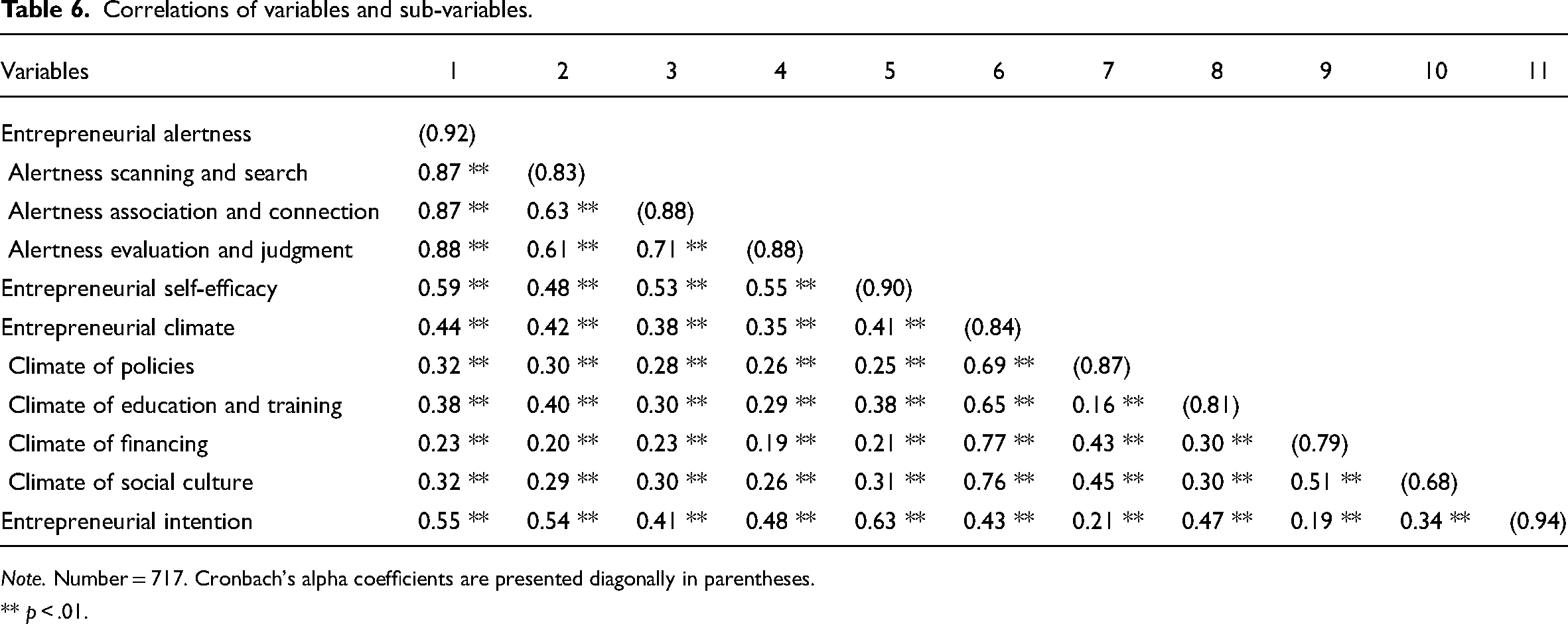
Note. Number = 717. Cronbach's alpha coefficients are presented diagonally in parentheses.
** p < .01.
Structural model test
The structural model was assessed using the following parameters: goodness of fit (GoF) indices, path coefficient, and t-value. The GoF criteria comprised the following: standardized root-mean-square residual (SRMR) at <0.10, as suggested by Kline (2015); squared Euclidean distance (d_ULS) and geodesic distance (d_G) at >0.05, per Dijkstra and Henseler (2015); normed fit index (NFI) at >0.80, following Hooper et al. (2008); and R2 value at >0.30, in accordance with Hair et al. (2021). As Table 7 shows, the results indicated that the estimated structural model had adequate model fit indices.
Fit indices of the structural model.
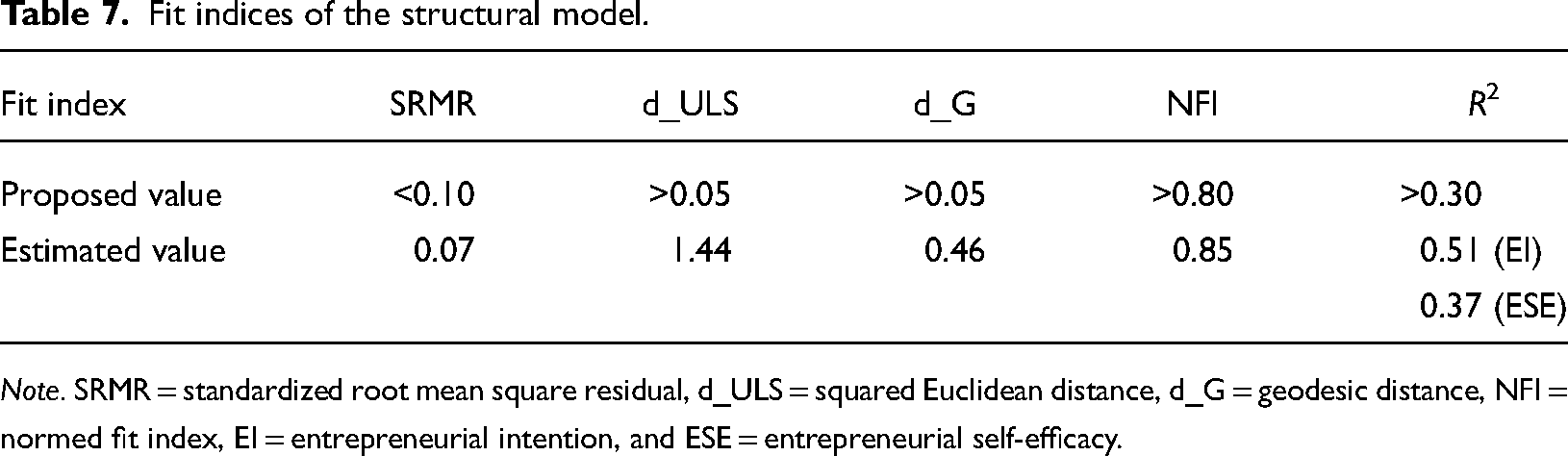
Note. SRMR = standardized root mean square residual, d_ULS = squared Euclidean distance, d_G = geodesic distance, NFI = normed fit index, EI = entrepreneurial intention, and ESE = entrepreneurial self-efficacy.
The path coefficient values were determined using the 5,000-subsample bootstrapping method, and the t-statistics value was required to be above 1.96 and the p-value below .05 (Hair et al., 2021). For convenience, these three indices were combined in the moderated mediation analysis to verify the research hypotheses.
Moderated mediation test
First, PROCESS Model 4 was used to test the mediating role of ESE. As Table 8 shows, EA significantly and positively predicted ESE (β = 0.52, t = 20.37, p < .001), and ESE positively and significantly affected EI (β = 0.71, t = 13.04, p < .001). Moreover, EA had a significant indirect effect on EI through ESE (β = 0.36, t = 9.57, p < .001). The significant mediating effect was also supported by the absence of zero within the 95% confidence interval (0.29, 0.45). Results indicated the existence of both direct and indirect effects (mediation). Therefore, ESE partially mediated the relationship between EA and EI. The final mediating model explained 49.32% of the variance in EI (ab/c). Figure 2 illustrates the specific path coefficients of these variables.
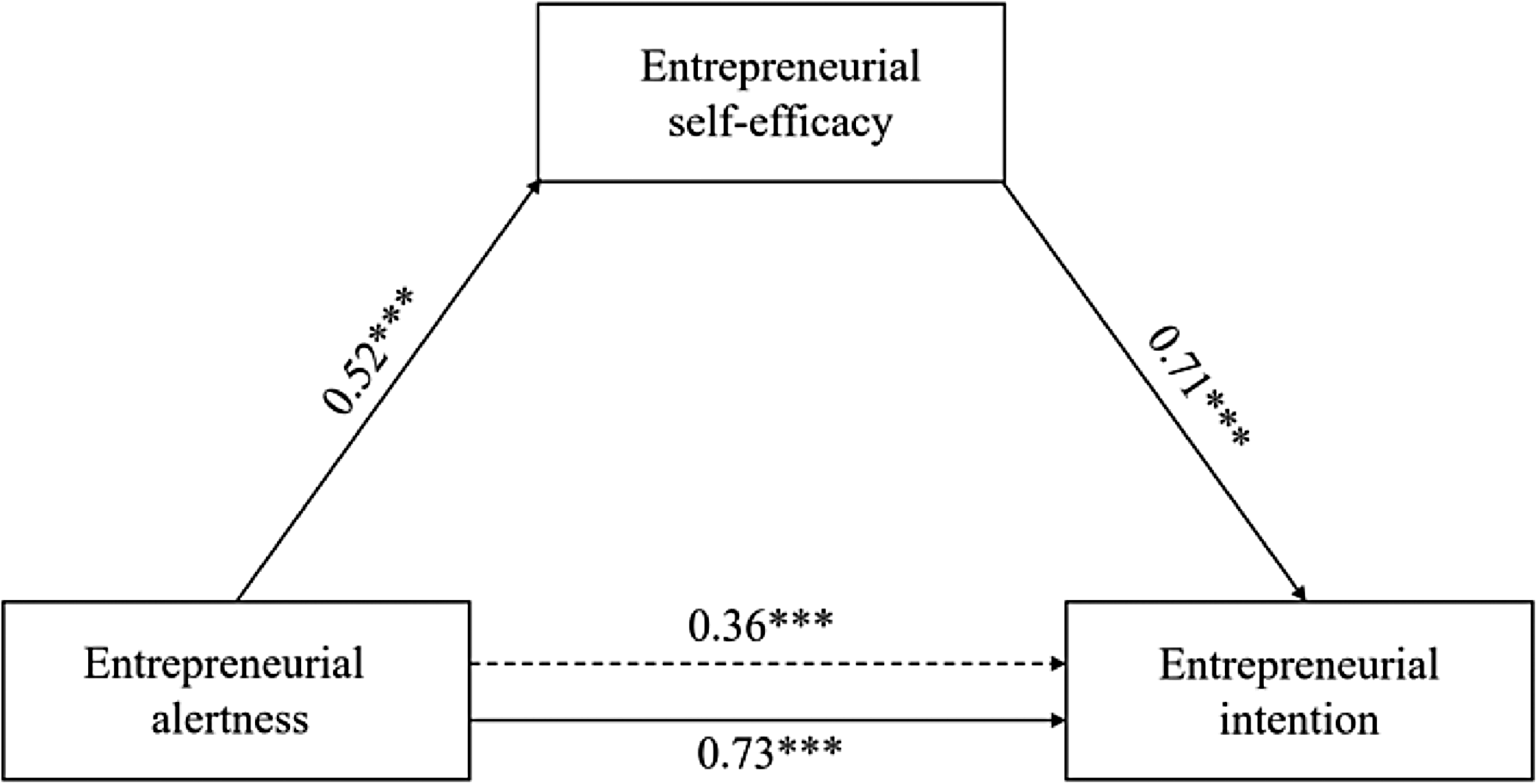
Mediation test.
Results of the mediating effect of ESE on the relationship between EA and EI.
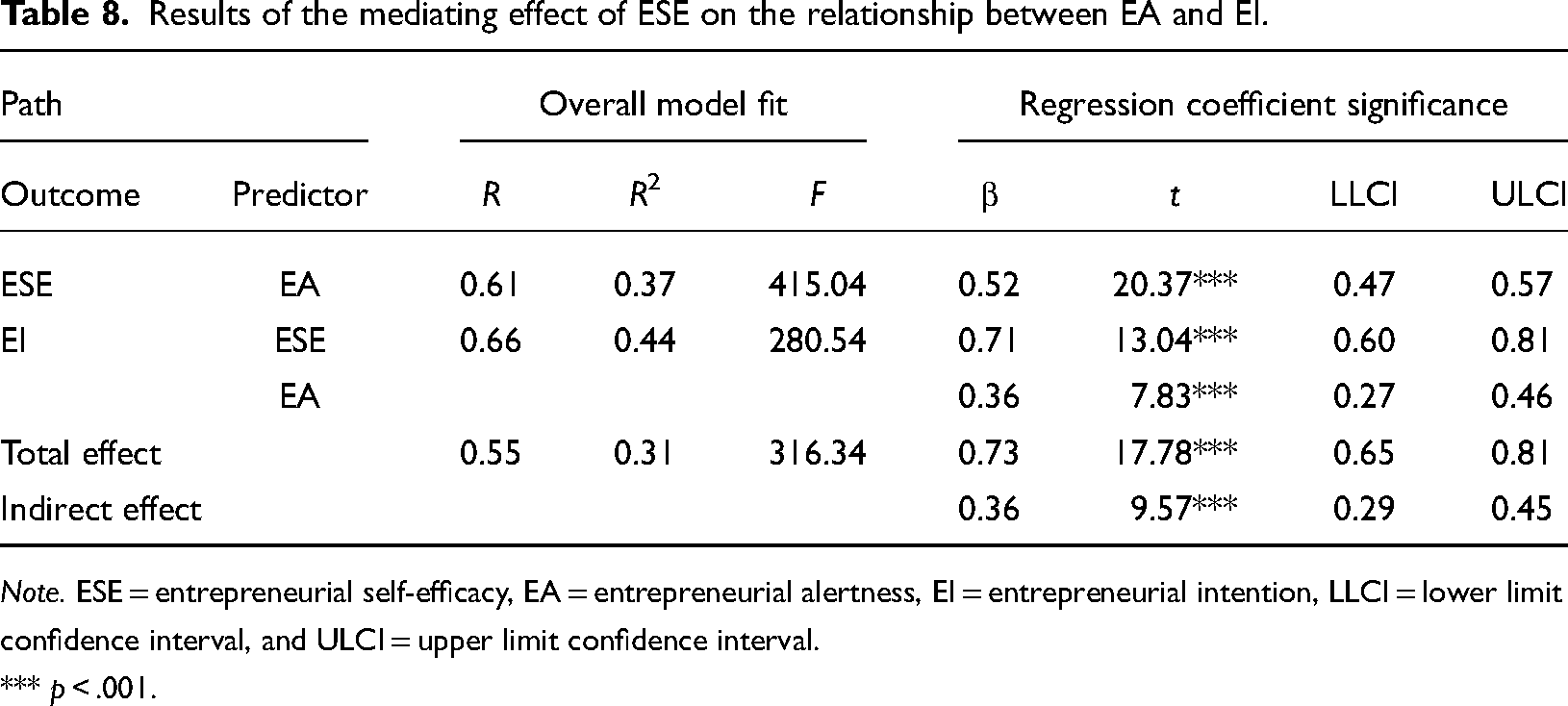
Note. ESE = entrepreneurial self-efficacy, EA = entrepreneurial alertness, EI = entrepreneurial intention, LLCI = lower limit confidence interval, and ULCI = upper limit confidence interval.
*** p < .001.
Following Hayes (2022), this study then used PROCESS Model 14 to test the total moderated mediating effects. As Table 9 shows, regarding the direct path, EA positively and significantly predicted EI (β = 0.29, t = 6.40, p < .001), indicating the presence of moderation. With respect to the indirect path of moderation, ESE (β = 0.58, t = 10.93, p < .001) and EC (β = 0.46, t = 9.09, p < .001) as well as the interaction between them positively and significantly predicted EI (β = 0.10, t = 2.16, p < .05). These results suggest that EC moderated the relationship between ESE and EI. Figure 3 presents the specific path coefficients of the variables.
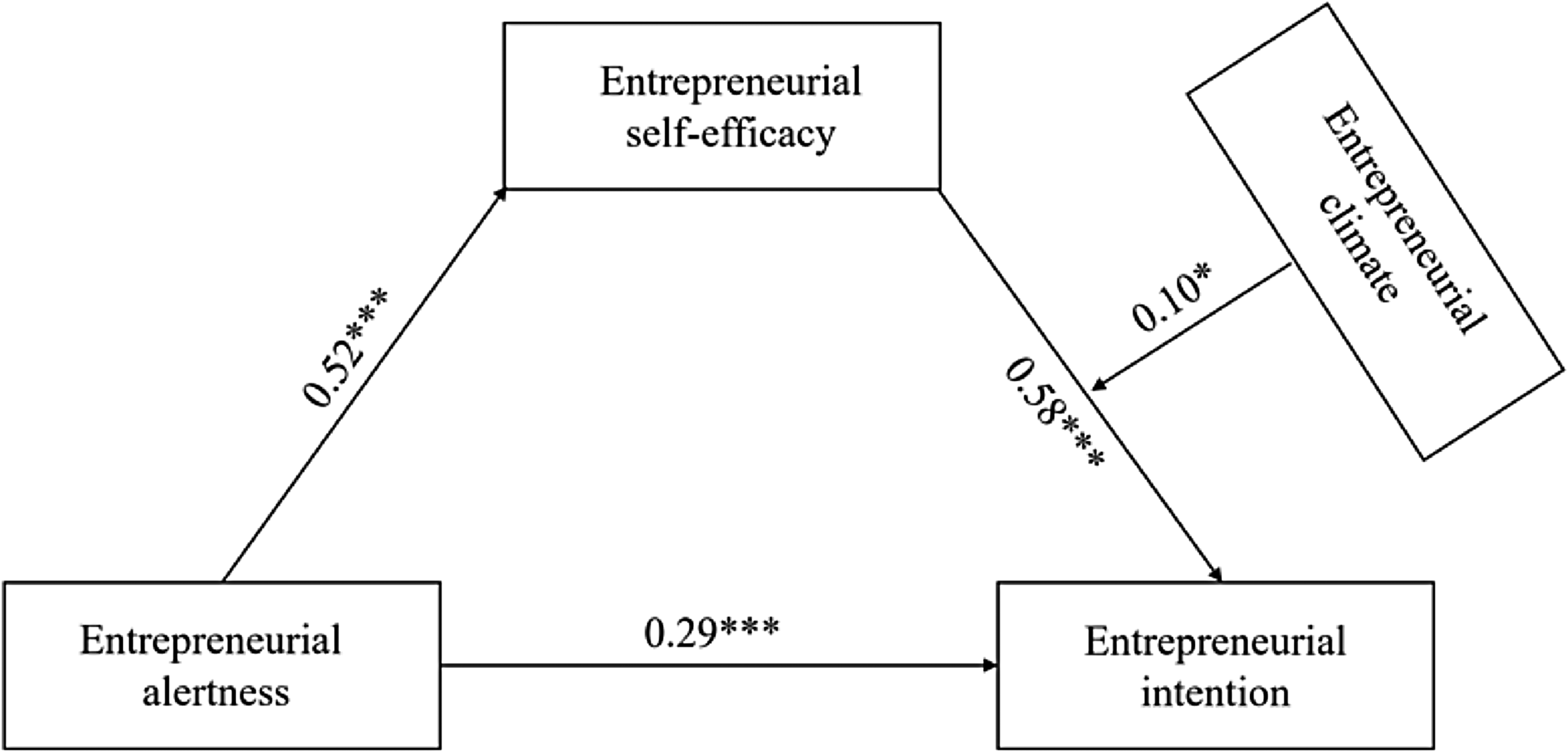
Moderated mediation test.
Results of the moderating effect of EC on the mediating role of ESE in the relationship between EA and EI.
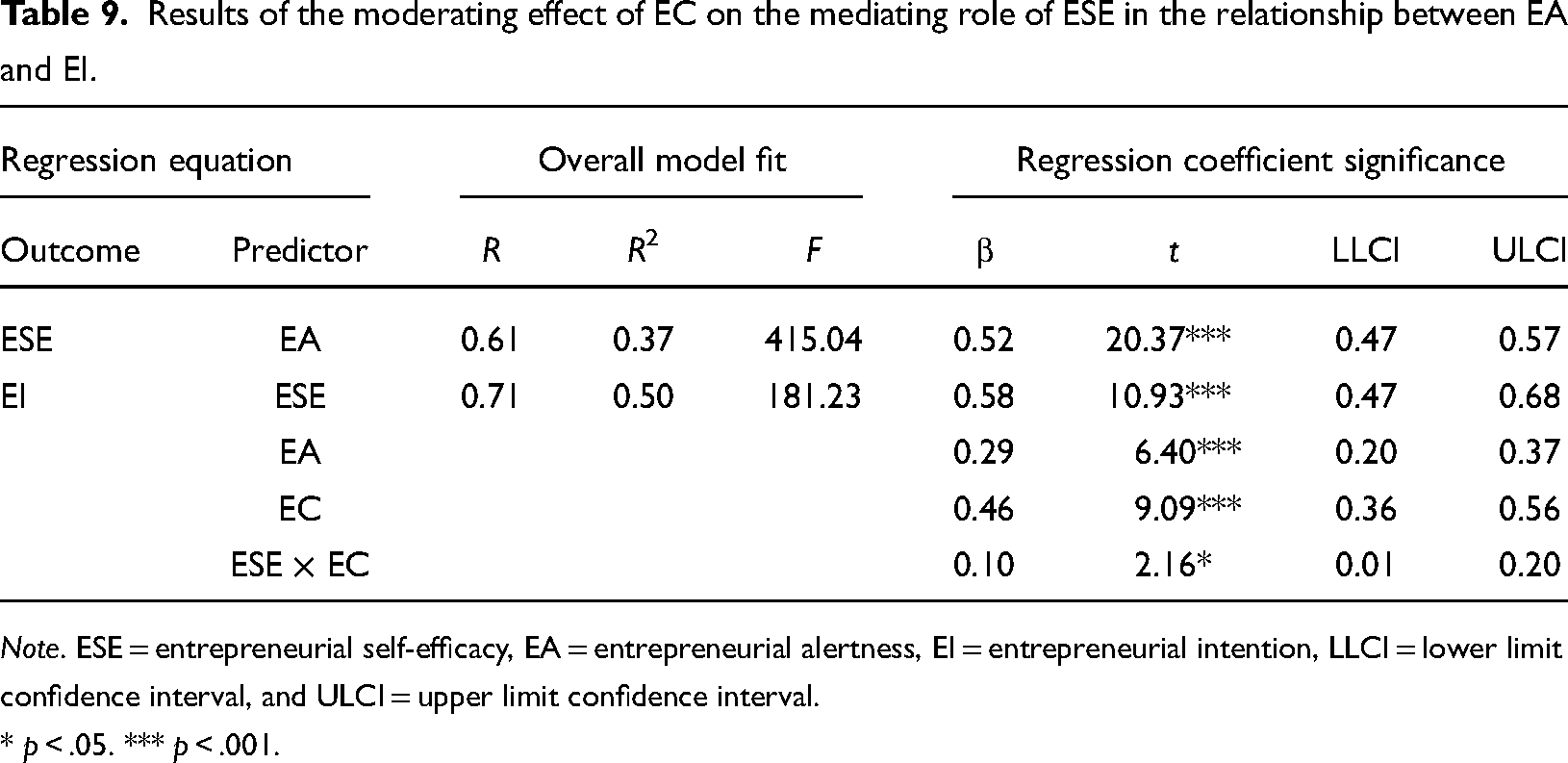
Note. ESE = entrepreneurial self-efficacy, EA = entrepreneurial alertness, EI = entrepreneurial intention, LLCI = lower limit confidence interval, and ULCI = upper limit confidence interval.
* p < .05. *** p < .001.
This study then conducted a simple slope to visualize the moderating effect of EC on the correlation between ESE and EI. With an increase in EC, the predictive effect of ESE on EI gradually increased from 0.50 (t = 7.84, p < .001, 95% CI [0.37, 0.62]) to 0.66 (t = 10.16, p < .001, 95% CI [0.53, 0.78]). As Figure 4 shows, the conditional indirect effect of EA on EI was statistically significant between the interval of one standard deviation lower than the mean (effect = 0.26, SE = 0.04, 95% CI [0.18, 0.35]) and above the ESE mean (effect = 0.34, SE = 0.04, 95% CI [0.26, 0.43]). Coupled with the increase in EC, ESE had a gradual robust effect on EI.
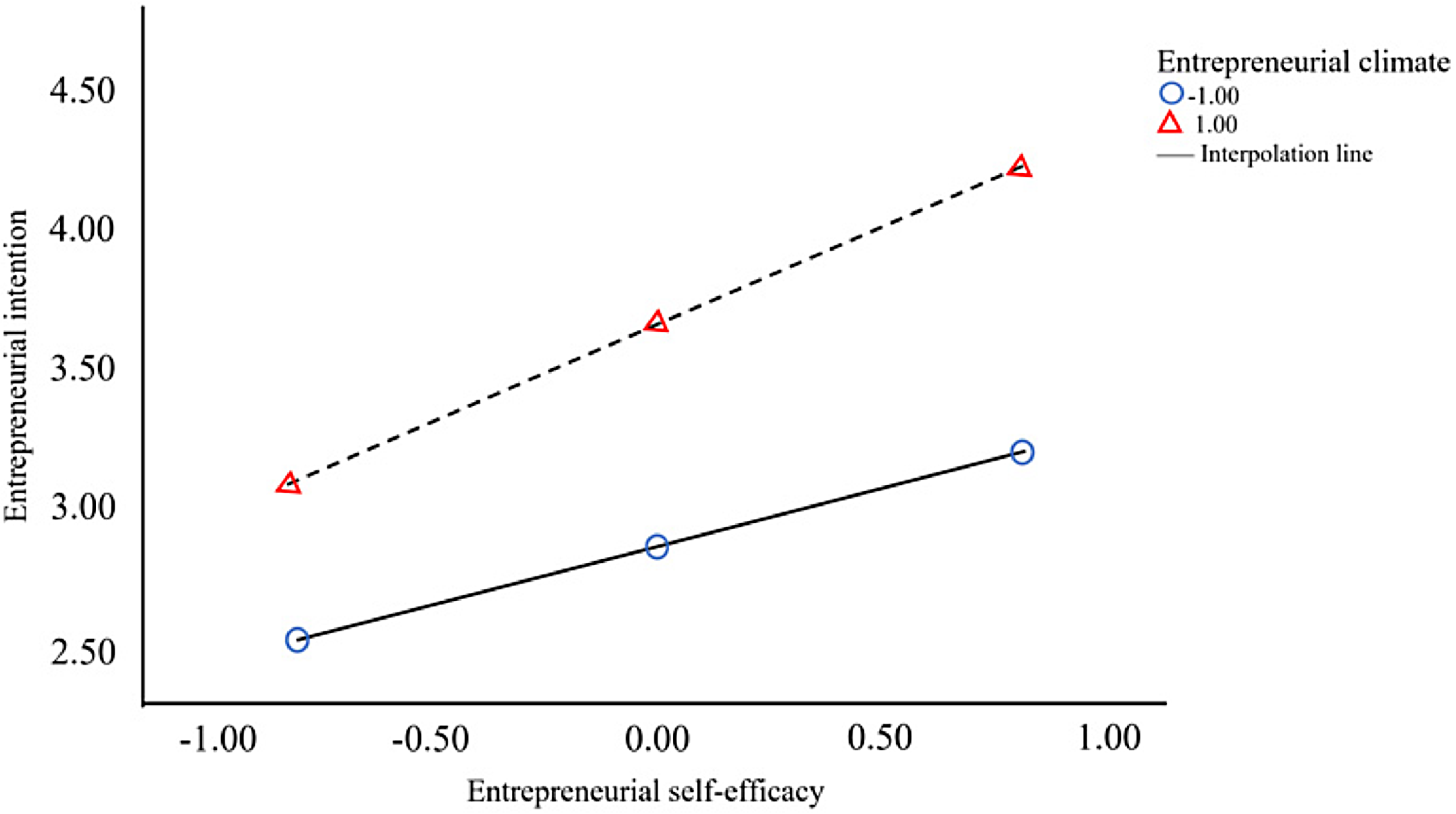
Simple plot image.
In summary, a moderated mediation model was fully established. ESE acted as a mediator in the relationship between EA and EI. Moreover, EC moderated the association between ESE and EI.
Discussion
This study examined the moderating role of EC and the mediating effect of ESE on the relationship between EA and EI among Chinese university students in the face of the pandemic, Industry 4.0, and innovative technology. The respondents’ mean scores for EA, ESE, and EC were intermediate or above the midpoint of the scales. Results suggest the following. First, the increased alertness, self-confidence, and perception toward entrepreneurial conditions can be attributed to the uncertainty caused by the pandemic. In terms of EA, the challenges of the pandemic may have motivated students to be more vigilant in recognizing the needs of and spotting the opportunities within special sectors (Sheng & Chen, 2022), such as medical- and non-touch delivery-related industries. For ESE, the need to experiment in and adapt to severe circumstances may have encouraged students with the ability to handle difficult and unpredictable situations. With respect to students’ perception of EC, support and assistance from the government, institutions, and local society to ensure employment created numerous opportunities for entrepreneurship.
Second, results suggested that the advancement of technology has significantly enhanced students’ access to information. Through various websites, databases, and online communities, students can directly gather knowledge about market dynamics. They can also develop a stronger sense of self-efficacy by enriching their entrepreneurial knowledge and skills through online courses or other e-learning resources available on the Internet or institutional websites (Primario et al., 2022). The increased accessibility to information facilitates students’ awareness of the policies or initiatives released by relevant departments and organizations. However, respondents’ EI was slightly below the midpoint, indicating that they were discreet concerning entrepreneurial affairs due to their awareness of the entrepreneurship ecosystem, which restrained their entrepreneurial desires. Therefore, although changes brought about by the pandemic, industrial evolution, and technical revolution have provided students with new entrepreneurial opportunities, greater requirements in terms of entrepreneur competencies and the higher risk of “losing” dampened their enthusiasm and willingness to undertake entrepreneurial endeavors during school or after graduation.
Third, significant difference analysis revealed that male respondents and those who had engaged in entrepreneurship practice had higher levels of EI than their peers. These results align with those of existing studies, which found that factors influencing the EI of tertiary-level students included prior experience and demographic variables (Biswas & Verma, 2021; Li et al., 2022; Maheshwari et al., 2022). Moreover, higher education students who had previously enrolled in an entrepreneurship course or engaged in entrepreneurship activities were more sensitive to EC than others. In contrast, male university students and those who had previously participated in entrepreneurship activities or had entrepreneurship experiences had higher degrees of EA and ESE. Interestingly, students in their first or last year of studies had higher EA than their peers. These results support entrepreneurship-related theories (e.g., SCT and TPB) proposing that individuals’ knowledge, skills, experiences, and characteristics critically impact their ability to recognize entrepreneurial opportunities, confidence in entrepreneurial success, and adaptability to entrepreneurial support from society and institutions. Consequently, more support should be provided for female students to enhance their EA and ESE and heighten their EI. Universities and industries should collaborate to design more instrumental courses and activities covering various grades and groups to develop students’ entrepreneurial knowledge, skills, and experiences.
Significantly, results revealed close relationships between EA, ESE, EC, and EI among Chinese university students. The following subsections discuss the specific interrelationships between the four observed variables in greater detail.
The relationship between EA and EI
Results indicated that all EA dimensions had a significant positive correlation with EI and could significantly and positively predict EI. In other words, the higher the EA of Chinese university students, the stronger their EI. This finding is consistent with the TPB's assumption that identifying opportunities at the cognitive level is a crucial contributor to individual's ability to turn these opportunities into action (Ajzen, 1991). Alert individuals are more adept at filtering and identifying opportunities from large amounts of information. These results can also be explained using alertness theory. More specifically, Kirzner (1999) emphasized that EA must include the entrepreneur's ability to notice past errors, evaluate current opportunities, and decide on future actions. Therefore, an alert entrepreneurial mindset can help individuals develop EI. This finding corresponds with the empirical findings of Hu et al. (2018) and Samo and Hashim (2016), who found that the EA of university students significantly predicted their EI. By being more alert of entrepreneurial opportunities, students can accelerate the formation of EI and devote themselves to a new business in the future. Conversely, students without positive alertness may experience decreased willingness to become an entrepreneur.
These findings suggest that EA is a pivotal predictor of EI, one that should be considered when seeking to increase the EI of Chinese university students. Therefore, relevant stakeholders—including universities, governments, and enterprises—can improve students’ entrepreneurial willingness by motivating their entrepreneurship awareness, particularly by reinforcing their ability to scan, search, and connect with information. In this respect, enhancing students’ critical thinking competency may be beneficial in improving their ability to evaluate, judge, and create entrepreneurial opportunities.
The mediating role of ESE
The results of this study confirmed that ESE can mediate the relationship between EA and EI among Chinese university students—that is, EA can directly or indirectly impact EI via ESE. This finding provides evidence supporting SCT, which asserts that efficacious individuals are more likely to persist in their beliefs and engage in tasks and actions than those with low self-efficacy (Bandura, 1988). Simply put, the higher students’ self-efficacy, the stronger their attention and willingness to actualize entrepreneurial plans and targets (Bandura, 1988). This finding also corresponds with the empirical findings of Chen et al. (1998) and Hu and Ye (2017), suggesting that EA and ESE can significantly predict students’ intention to start their own businesses. Previous studies on disposition and intention suggest that social awareness can be evoked by cognitive and emotional motivations affecting individuals’ choices, coping ability, and persistence (Bandura, 1999; Şahin et al., 2019). Students lacking entrepreneurship alertness will likely feel less confident about starting a business, reducing their intention to attempt entrepreneurship. This finding is also similar to that of Zhao et al. (2005, 2009), who found that ESE is a mediator in the relationship between individual-level antecedent variables, such as alertness, and the development of EI among students. ESE has also been found to mediate the relationship between EA and EI in South Africa (Urban, 2020).
Based on the foregoing, measures should be initiated to strengthen students’ ESE as a bridge for transforming EA into EI. At the institutional level, universities should provide more instruction and opportunities to assist students in building the confidence necessary to successfully perform various roles in classes and entrepreneurial activities, including appointing mentors and virtual entrepreneurial practice. At the personal level, students should enhance their entrepreneurial resilience by learning to self-adjust and self-encourage when they perceive entrepreneurial setbacks or encounter entrepreneurial failure.
The moderating role of EC
The findings of this study also indicated that, in the indirect effect of EA on EI via ESE, EC significantly moderated the relationship between ESE and EI. More specifically, with an increase in external EC, ESE becomes more predictive of EI. This finding aligns with the argument that external environmental variables—such as national policy, social norms, and organizational regulations—are particularly salient stimuli promoting individuals’ entrepreneurial attitudes, willingness, and behavior (Franke & Lüthje, 2004). It also corresponds with SCT, which posits that individuals adjust their beliefs and behaviors based on their perception of the external environment (Bandura, 1988). In other words, when students perceive a favorable entrepreneurial climate, they tend to exhibit a higher level of confidence and a greater inclination to engage in entrepreneurship. This also satisfies institutional theory, which proposes that both individual disposition (e.g., self-awareness and self-efficacy) and contextual factors (e.g., social, economic, and political dynamics) influence an individual's entrepreneurial inclination (Kuijpers & Eijdenberg, 2021; Scott, 1995). This result is also similar to the empirical findings of Bergmann et al. (2018) and Li et al. (2022), suggesting that students’ perceived risk of external disruption reduced their EI. Conversely, when students perceive and receive the desired entrepreneurial support from society and institutions, they become more effective and proactive in initiating start-ups.
Notably, the conditional effect outcome showed no statistically significant transition point within the investigated moderator interval, suggesting that EC can moderate the positive relationship between ESE and EI, even at a low level. These results can be interpreted using the stimulus-response theory, which suggests that circumstantial factors can ignite individuals’ self-protective and self-motivating responses (Gatersleben & Griffin, 2017). When EC improved, university students had higher ESE and stronger intentions to start a business. This result further emphasizes the importance of the EC in the higher education context for strengthening the relationship between universities and industries and the fostering of students’ EI in starting new businesses.
Based on these findings, several strategies should be implemented to modify university students’ EC. At the governmental level, policymakers should launch more prioritized policies to encourage entrepreneurship, such as allocating entrepreneurial subsidies to graduates, retaining their identities as fresh graduates for at least three years, and establishing entrepreneurship scholarships for undergraduates. At the university level, educators should avail more entrepreneurship-related resources, including entrepreneurship courses, face-to-face talks between potential entrepreneurs and sponsors, and entrepreneurship credits.
Limitations and future research
This study has two limitations. First, due to the pandemic, data were collected using an online self-reported questionnaire, rendering social desirability bias unavoidable. Future studies should adopt more methods to mitigate this issue, such as surveys with bogus items. Second, this study did not consider control variables in the regression analysis, which may have led to statistical bias. Future studies should integrate more covariates—such as gender, grade, and entrepreneurship-related experiences—to identify differences in constructs and improve model satisfaction. Researchers could employ a longitudinal approach to investigate the developmental trajectories of students’ EI over time (e.g., from their freshman year through graduation and even beyond) and examine how factors such as EA, ESE, and EC influence their aspirations toward entrepreneurship and how these factors evolve during and after their university years. In line with social cognitive theory, future research could also endeavor to establish a strong and direct connection between entrepreneurial intention and behavior and discern potential mechanisms to transform EI into action.
Conclusion
This study explored the relationship between EA, ESE, EC, and EI among Chinese university students in the face of the pandemic, Industry 4.0, and innovative technology, as well as their interplay mechanisms. In doing so, this study found that EA is crucial for predicting ESE and EI. Results also revealed that ESE partially mediated the effect of EA on EI, EC moderated the relationship between ESE and EI, and the moderating role of EC was significant even at a low level. These findings contribute to the literature on entrepreneurship, enriching the theory on the effect of external environmental factors on individuals’ internal psychological constructs. This study also provides insights on how to enhance students’ abilities to recognize entrepreneurial opportunities, upgrade their ESE, optimize the EC, and elevate their EI in the context of “triple disruptions.” At the governmental level, findings suggest that policymakers should collaborate with various stakeholders to establish a supportive entrepreneurship ecosystem. Such measures might include reducing the cost of starting a business, providing financial assistance to aspiring start-ups, and establishing incubators to help new ventures grow and thrive. At the institutional level, universities should strengthen their cooperation with local industries or enterprises to provide more entrepreneurial programs and activities, such as entrepreneurial weeks and practice bases. At the curriculum level, educators should design more entrepreneurship-related courses to facilitate students’ entrepreneurial knowledge, skills, and experiences, such as virtual entrepreneurship training and alumni entrepreneurship sharing. Despite the reliability and generalization of the results in this study, it did not fully consider the impact of the control variables (e.g., gender, academic level, and entrepreneurial-related experiences) on EI, EA, ESE, and EC. Future studies can address this issue by updating the statistical method and including more control variables to increase the robustness of the results.
Footnotes
Contributorship
Shuyi Zhou developed the questionnaires, analyzed the data, validated the model, and interpreted the results. Weihui Mei reviewed the paper and acquired the funding. Shuyi Zhou and Weihui Mei collected the data, developed the tables, visualized the figures, and wrote and revised the paper. Both authors have read and agreed to the published version of the manuscript.
Declaration of conflicting interests
The authors declared no potential conflicts of interest with respect to the research, authorship, and/or publication of this article.
Ethical statement
Participants were recruited through the dissemination of an online survey using Wenjuanxing Online Software. Before they could proceed to the formal questionnaire, the participants were provided an explanatory statement and consent form detailing the study's design, potential risks, benefits, and their right to withdraw from the survey at any time. If the participants selected the “Yes” option, they proceeded to the formal questionnaire; if they chose the “No” option, the survey skipped to the end. All procedures performed in the study were in accordance with ethical principles. Informed consent was obtained from all individual participants included in the study. Before the investigation, the authors ensured that all participants received information about the purposes and procedures of the research and outlined how the study would maintain participants’ confidentiality and anonymity. At no point in the investigation process were participants subject to medical or educational interventions. All data collected remain strictly confidential, a point emphasized in the research programs undertaken with partners.
Funding
The authors disclosed receipt of the following financial support for the research, authorship, and/or publication of this article: This article is supported by the 2022 Zhejiang University Innovation and Entrepreneurship Education Study Project “Research on Innovation and Entrepreneurship Education Reform of Universities in the Digital Intelligence Era.”
