




Abstract
Purpose:
Studying abroad is an important way for universities to cultivate talent with international vision and global competitiveness. Based on its analysis of a U.S. university’s study in China program, this study provides policy recommendations to promote the overseas study and exchange of U.S. students in China.
Design/Approach/Methods:
This study examines the Beijing Overseas Learning Program of L University to examine the actual operations of a study abroad program in China. More specifically, this study examines the cooperative institution where the U.S. study program is located in China to analyze the operation mechanism and underlying logical framework of the program.
Findings:
This study provides a comprehensive analysis of the logical factors as well as internal and external reasons behind U.S. students’ decisions to study in China. This study demonstrates that the “peer factor” has a decisive influence on students’ decisions to study in China.
Originality/Value:
Study abroad programs constitute an integral part of China’s initiatives to enhance people-to-people exchanges with other countries. This study improves our understanding of the practical dynamics of study abroad programs in China, thereby enhancing abilities to attract U.S. students to study in China.
Introduction
In China, short-term study abroad programs are an integral part of the country’s overseas education initiatives in the new era. China is actively courting international students from world-class universities to study in the country on a short-term basis, believing that international educational exchange will cultivate greater knowledge of and friendliness toward China. The majority of domestic studies on short-term study abroad programs in China have been conducted at the macro-level. In contrast, this study adopts the perspective of local cooperative institutions associated with U.S. study abroad programs in China. Adopting a multilevel and multiperspective approach, this study observes and analyzes the actual operations of a U.S. study abroad program in China and its development life cycle. In doing so, this study explores the practical mechanism behind U.S. students’ overseas education in China, as well as the macro-environment affecting program development. Examining the operational mechanism and logical framework underlying the program, this study provides policy recommendations to promote the overseas study and exchange of U.S. students in China.
Sachau et al. (2010) divide short-term study abroad programs for U.S. students into three categories: summer school study, travel study, and learning practice. To further specify the research targets, this study defines U.S. students studying abroad in China as students registered at a U.S. university who travel to China for study via various types of program organizations and who obtain credits transferable to their home institution.
Overview of U.S. students studying abroad in China
Higher education institutions consider studying abroad programs as an important means of cultivating talents with a global perspective and international competitiveness. Indeed, the U.S. government places considerable emphasis on overseas study, which is believed to be a cornerstone of higher education development and a matter of national security and growth. In 2015/2016, the total number of U.S. students studying abroad was estimated at 325,000—a significant increase compared with the 140,000 students in 1999/2000. In terms of student mobility, this indicates that the internationalization of higher education in the U.S. has been accelerating continuously.
According to statistics, the majority of U.S. students studying abroad in China were undergraduates who comprised 87.7% of all program participants in 2015/2016. Among them, third-year college students accounted for the largest proportion (approximately 33%). In terms of gender, the majority of students were females (66.5%). Moreover, 10% of U.S. undergraduate students had participated in a study abroad program before graduation (Belyavina, 2013). In the 2014/2015 academic year, a total of 313,415 U.S. students joined a study abroad program—reflecting a 2.9% increase compared to the previous year. A diverse range of U.S. study abroad programs have been available in recent years, including exchange studies, study tours, internships, and voluntary work. However, the majority (59%) are for-credit programs undertaken during the course of study.
Given the importance of China-U.S. relations, widespread attention has been paid to enhancing mutual understanding and encouraging more U.S. students to study in China. While both the Chinese and American governments have introduced a variety of measures intended to actively facilitate the construction of student mobility platforms in recent years, the gap between actual and expected student mobility remains a pressing problem. This issue is especially prominent in regard to U.S. students studying in China.
China’s elevated status as a destination country for study abroad
In recent years, China’s status as a destination for U.S. students to study abroad has increased. Indeed, apart from Western Europe, China has been the most popular study abroad destination among U.S. students since 2007. According to the Ministry of Education of the People’s Republic of China, in terms of the city of choice, Beijing and Shanghai are the most favored Chinese cities for studying abroad among U.S. students. A report by the Institute of International Education (IIE) shows that the 25 most popular study abroad destinations for U.S. college students underwent steady changes between 1999 and 2016. China’s ranking increased from 11th place in 1998 to 5th in 2005 and remained the same until 2016, when it dropped to 6th place—ranking below the U.K., Italy, Spain, France, and Germany. The U.K. has secured its status as the most popular study abroad destination among U.S. students as a result of its linguistic advantages, as well as the shared history and cultural affinity with the U.S. Over the past decade, choosing nonmainstream regions and non-English-speaking countries as a study destination has become a popular trend among U.S. students. Nonetheless, there is still a large gap between the number of U.S. students choosing to study in China and that of those preferring to study in the U.K. and European countries, as shown in Figure 1. This indicates that despite the increasing appeal of China as a study destination, U.S. students still find European countries more attractive.
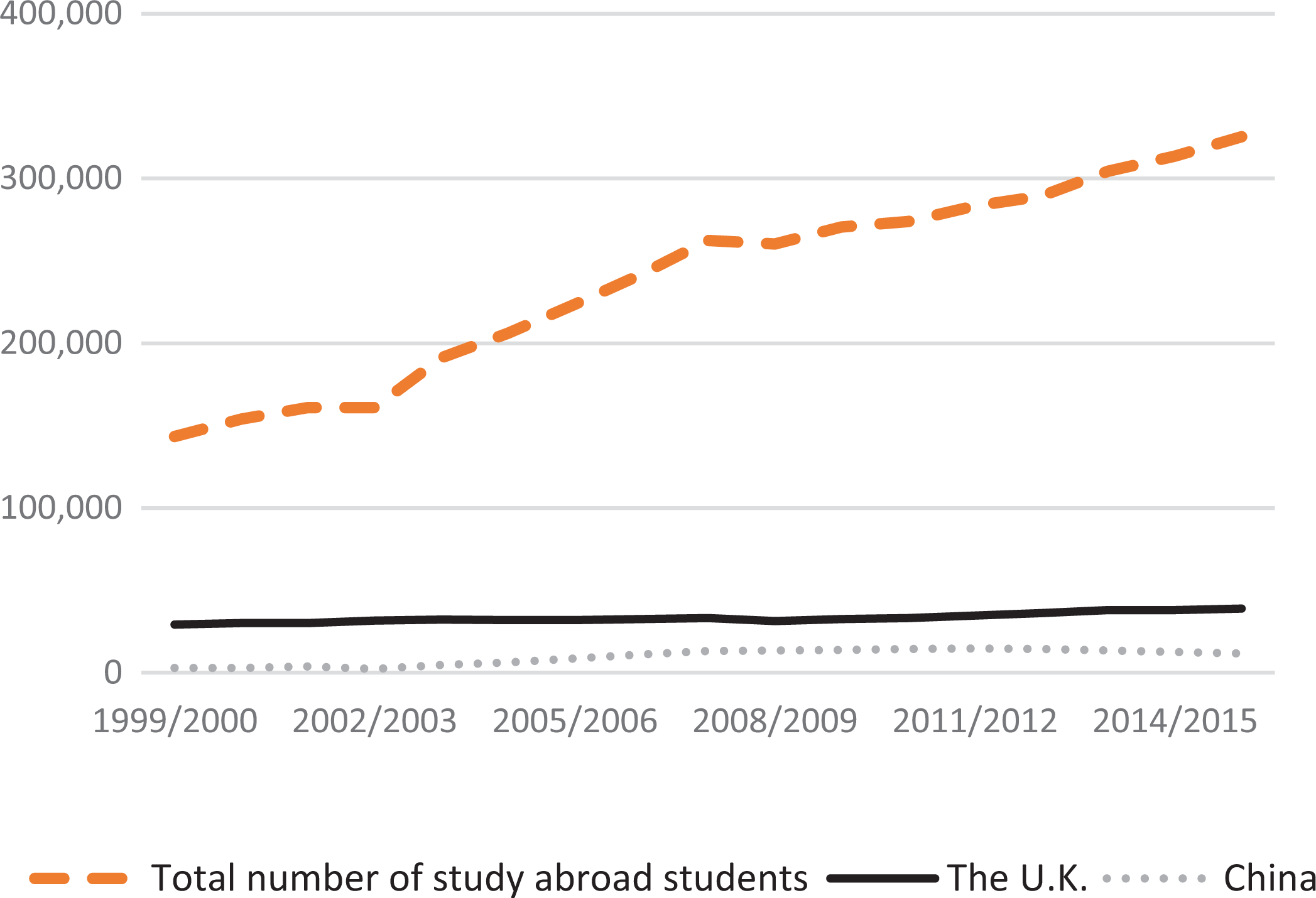
Comparison between the number of U.S. students studying abroad in the U.K. and China, 1999–2016.
Overall increase and recent decline in the number of foreign students studying in China
With the rise in China’s international status and the overall number of Americans studying abroad, the number of U.S. students studying in China is growing. Following some fluctuation, the figure began increasing rapidly in the 2000s—the total number of U.S. students studying in China rocketing from 3,291 in the 2000/2001 academic year to 15,647 in the 2010/2011 academic year, with an average annual increase of 18%. The increasing number of international students studying in China indicates the growing willingness and interest of U.S. students with respect to studying in China. However, in terms of relative values, U.S. students studying in China represent a relatively small percentage of the total number of U.S. students studying abroad—ranging between just 4% and 5% in recent years.
It is worth noting that, despite the steady increase in the number of U.S. students studying abroad in recent years, the number of those studying in China displays a downward trend. As Figures 2 and 3 show, since 2012, there is a modest decline and negative growth—dropping from 14,887 in 2011/2012 to 11,680 in 2015/2016, a decrease of 14%. To some extent, this indicates that China has been losing its appeal as a study abroad destination for U.S. students.
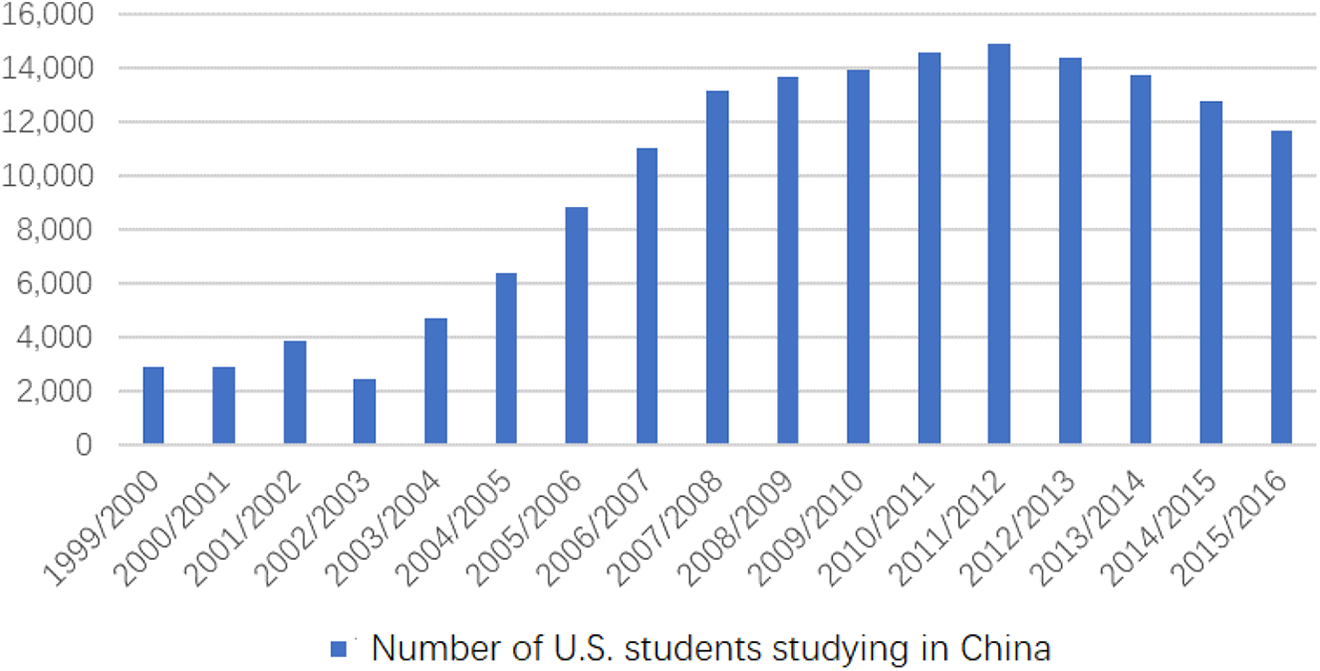
The number of U.S. students studying in China, 1999–2016.
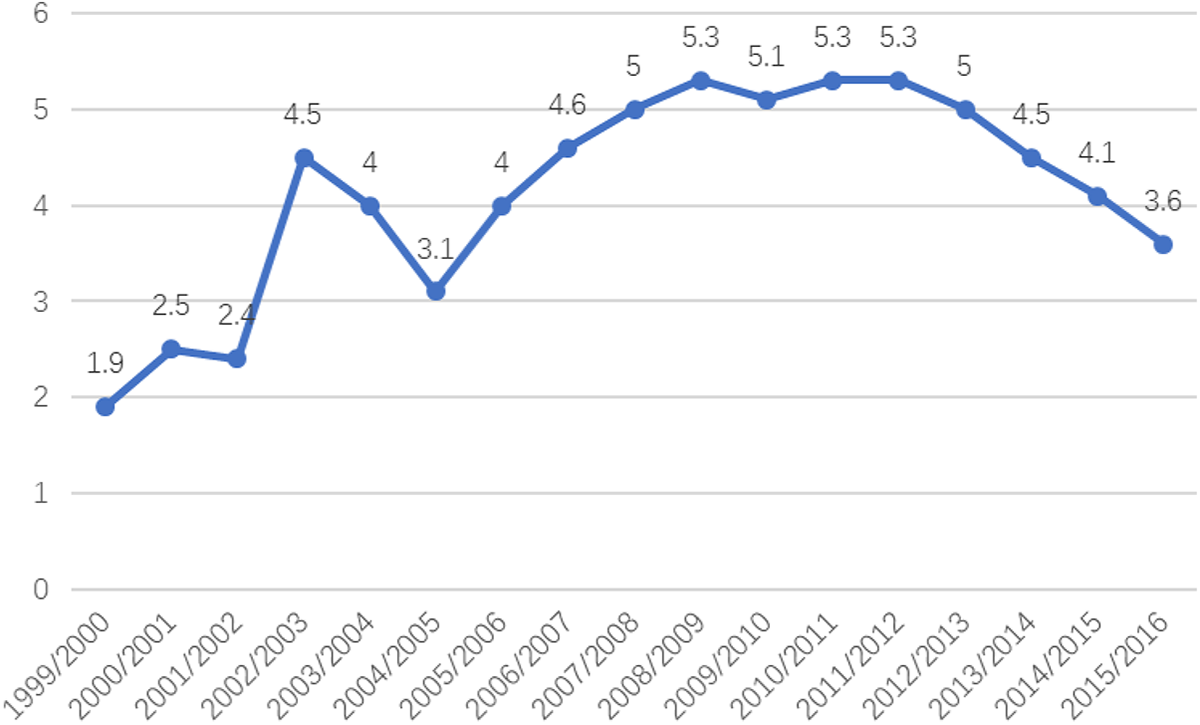
The percentage (%) of U.S. students studying in China among the total number of U.S. students studying abroad, 1999–2016.
Overview of U.S. students studying at Peking University
The above figures reflect the overall conditions and trends of U.S. students studying in China. However, the real status behind the increasing or decreasing number of U.S. students studying in China in recent years remains uncertain. This study uses Peking University as a case study to analyze the status of U.S. students studying in China in recent years at an institutional level.
Over the past decade, Peking University has made continuous progress in developing itself into a world-class university. The total number of international degree students studying at Peking University has also grown—the number of new registrations increasing from less than 500 in 2008 to nearly 700 in 2017. The year-on-year growth in the number of international postgraduate students is particularly prominent. As shown in Figure 4, there has been a significant increase in the number of doctoral students, the figure growing from 24 in 2006 to 72 in 2017. However, the largest increase occurred in the number of international students enrolled in master’s degree programs. This rise is undoubtedly associated with the increased number of English-taught master’s programs offered by Peking University in recent years.
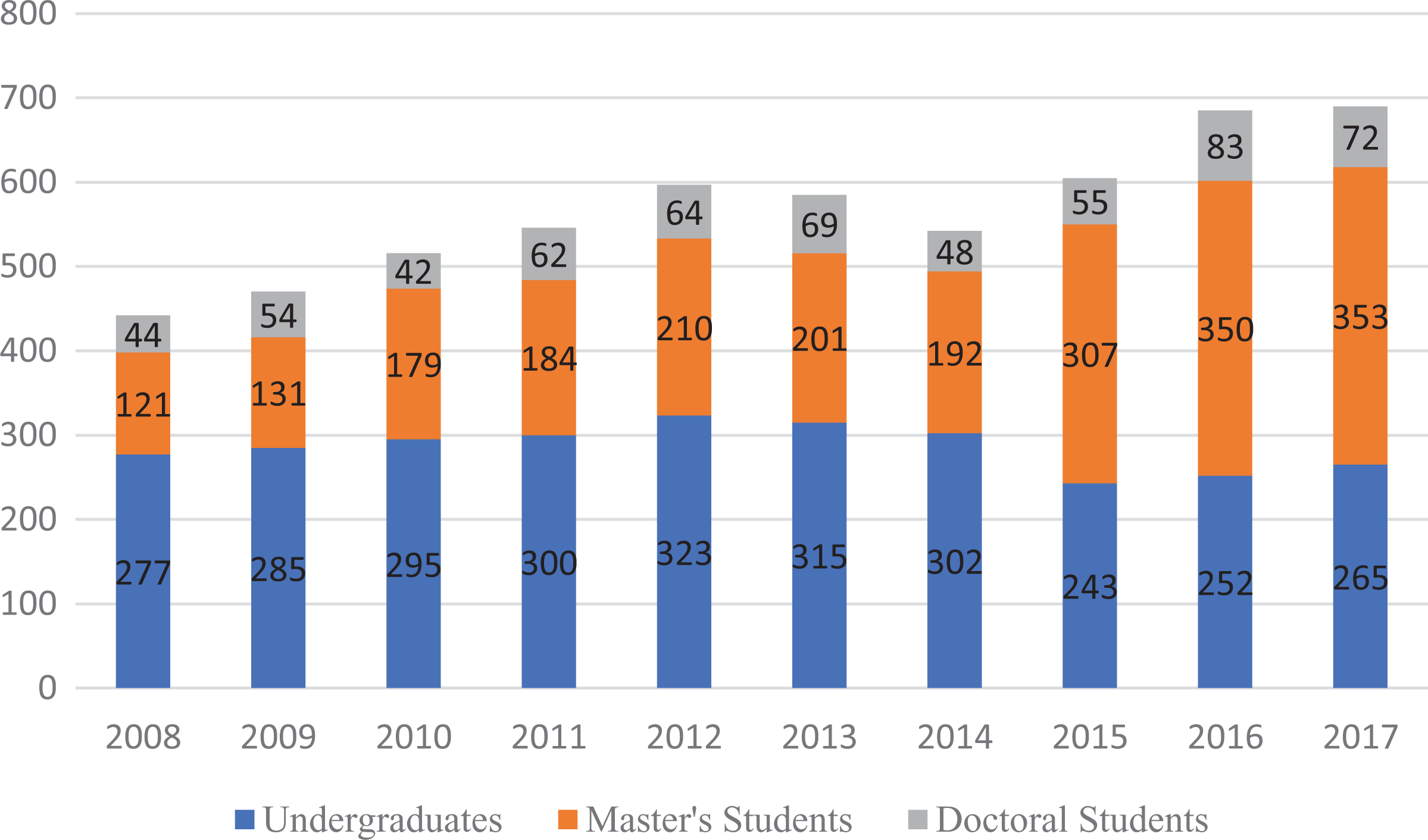
The number of international students (degree students) enrolled in Peking University, 2008–2017.
As Figures 5 and 6 show, since 2008, U.S. students have constituted approximately 15% of all international master’s students at the university. While the overall number of doctoral students from the U.S. has fluctuated, it has remained markedly limited—staying in single digits. Meanwhile, the number and percentage of undergraduate students from the U.S. have remained relatively stable at 5%. The increase in the total number of U.S. degree students studying at Peking University notwithstanding, it is evident that the proportion of U.S. degree students within the total number of international students has remained the same.
However, nondegree exchange students from the U.S. who choose to study at Peking University present a completely different picture. Their exchange programs can be divided into short-, medium-, and long-term studies according to duration. Exchange studies of less than 10 weeks in duration are categorized as short-term programs and predominantly involve summer exchanges. Medium-term programs last from 10 weeks to an entire semester in duration, with most cooperative programs lasting one semester. Long-term exchange studies mainly refer to students who study at Peking University for an academic year (two semesters) while being enrolled in U.S. universities at the time.
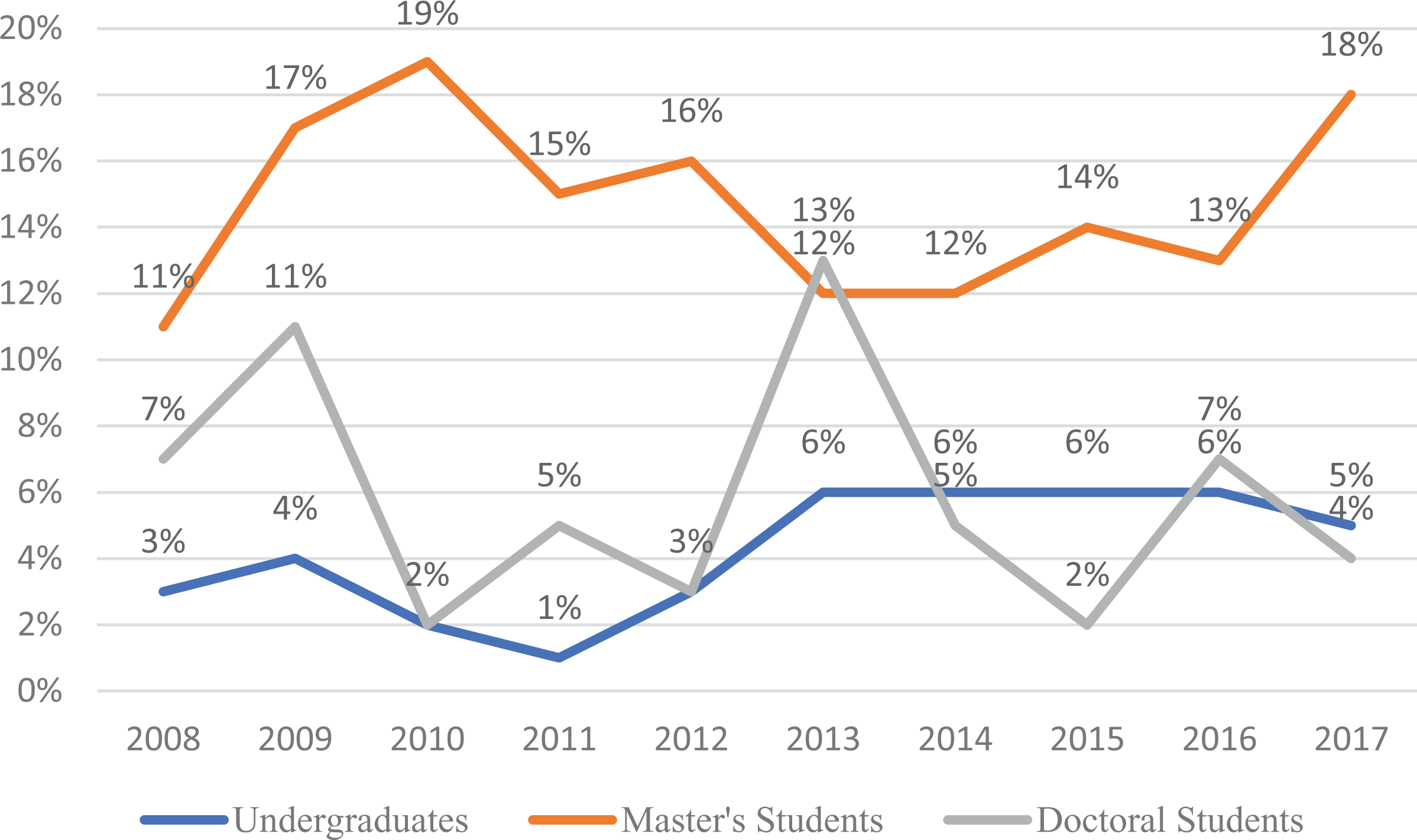
The proportion of U.S. students among the total number of international students (degree students) enrolled in Peking University, 2008–2017.
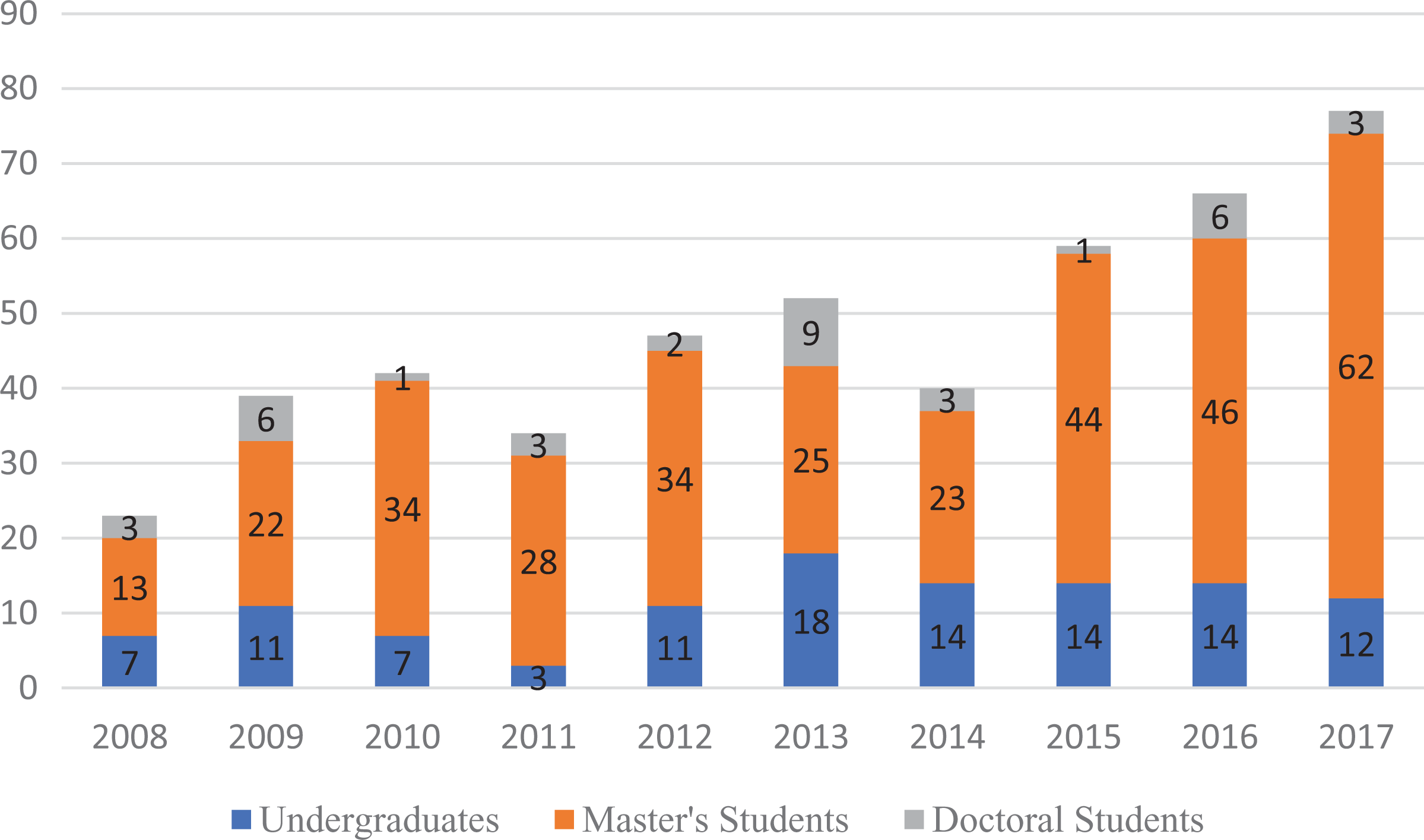
The number of new students from the U.S. enrolled in Peking University, 2008–2017.
Figure 7 shows that between 2006 and 2017, the number of U.S. students choosing to study at Peking University for long-term programs decreased. While the number of U.S. students participating in medium-term programs increased in 2009 and 2010 and peaked in 2011 and 2012 (430 and 429, respectively), it has progressively declined since 2012. Similarly, after steady growth between 2006 and 2010, the number of U.S. students opting for short-term programs also increased significantly in 2011 and 2012, exceeding 980 and 1,100, respectively. However, approximately 750 U.S. students were enrolled on a short-term basis in 2013—indicating a significant decrease. The annual average has remained at around 400 since 2013. Even the 2016 figure of 672—the highest figure of the 2014–2017 period—still fell short of the peak of 1,126 in 2012.
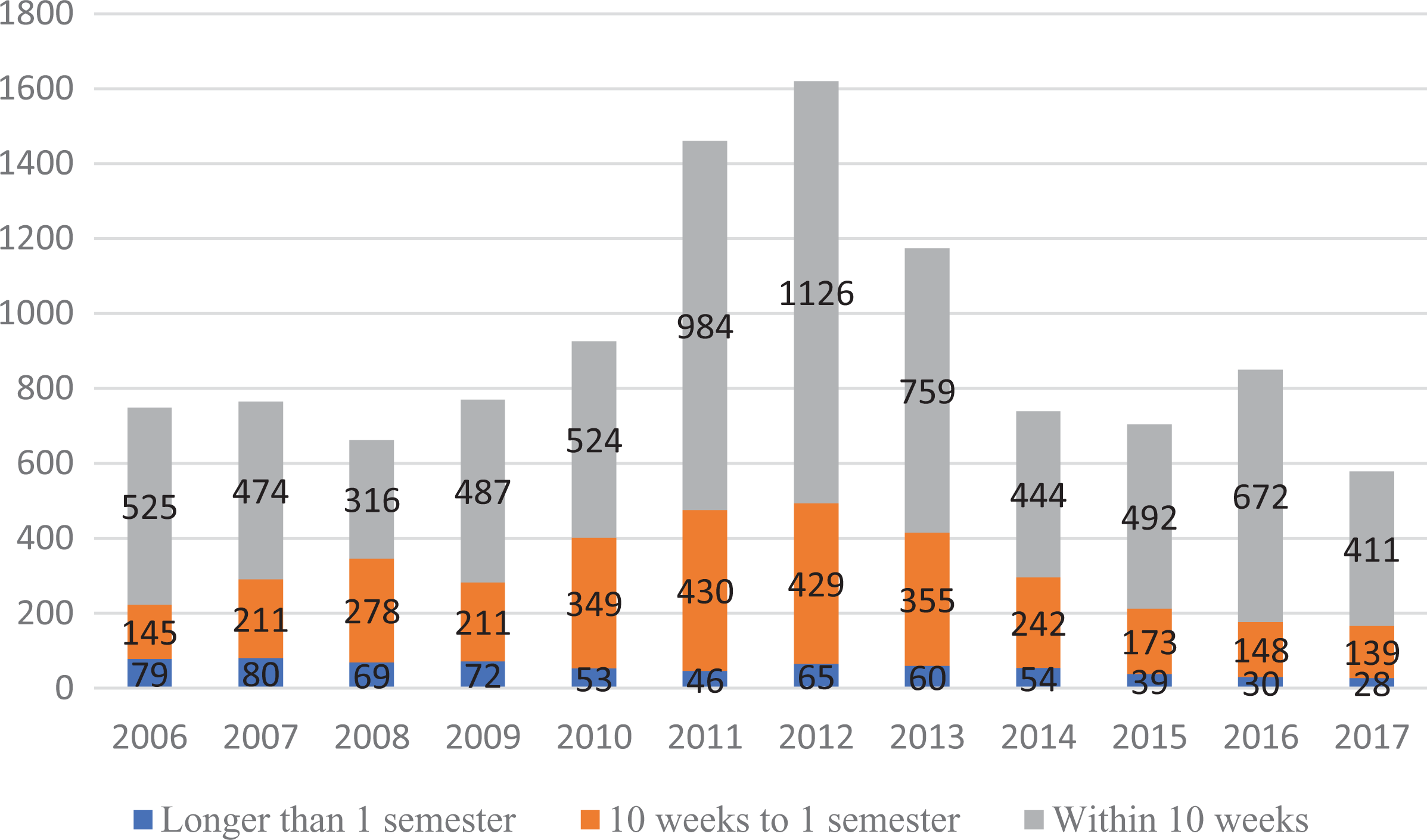
The number of nondegree students enrolled in Peking University: U.S. students, 2006–2017.
Methodology
Eckert’s transnational case study explores the establishment, planning, and implementation of short-term study abroad programs in five countries, namely, Malaysia, Singapore, Chile, Germany, and Australia (Eckert et al., 2013). With sound logical framework analysis, Eckert’s study provides the foundation for case study of short-term overseas study projects; the research data were primarily obtained from the project leader. This study solves this limitation by drawing on multiple perspectives from students, teachers, leaders, and project managers to analyze the ecological operation mechanism of short-term overseas study projects in China.
This study is based on the case of a study abroad program in Beijing offered by L University in the U.S. Employing case analysis, this program was selected to identify the causes behind the aforementioned statistical changes based on an actual program. Data for the 2004–2017 period were analyzed. To maintain confidentiality, the name “L University” is used to refer to the U.S. university engaged in the cooperative program. Data were primarily collected by conducting a questionnaire survey among students during the program; more specifically, surveys were conducted from the autumn semester of 2004 to the spring semester of 2017. Methods such as student questionnaire and interviews with teachers, students, and managerial staff during the program were integrated in analyzing the mechanism influencing program operations. A total of 538 students were surveyed over the course of 26 semesters from the autumn of 2004 to the spring of 2017. A copy of the student questionnaire is provided in the Online Supplemental Material.
Case study analysis
L University is a renowned private university in the U.S. and enjoys considerable worldwide prestige. Its study abroad programs are associated with more than 10 cooperative institutions located across Asia, Europe, Oceania, Africa, and the Americas. Through cooperations with these local institutions, L University sends its undergraduate students on overseas exchange for an academic quarter. In L University, study abroad programs have a significant influence on students’ preference for short-term overseas studies. Over half the undergraduate students chose to go on exchange through this type of program organization.
In 2004, L University initiated a study abroad program in Beijing in cooperation with Peking University. However, in 2017, the two universities decided to terminate the program because of the low level of student participation. This section briefly summarizes and analyzes the program.
Basic framework of the program
The study abroad program offered by L University provided option to study in Beijing. Organizationally, the program was part of an institutionally cooperative-administered program. In recent years, an increasing number of study abroad programs offered by U.S. universities have employed this approach. For instance, some U.S. universities have established branch campuses or study centers in other countries (Knight, 2006). To synchronize these programs with the students’ learning progress over their course of study, L University stipulates that all study abroad programs be divided into fall and spring quarters, each lasting 10 weeks. Each program is scheduled in accordance with L University’s academic calendar, spanning from late-March to mid-June (spring programs) or mid-September to early-December (fall programs) each year.
According to the agreement between the two universities, the program was codeveloped and co-organized by L University and Peking University—the two universities collaborating on various issues, including student recruitment, management, curriculum design, teaching, accommodation, and student activities, as shown in Figure 8. However, L University dominated the practical operations of the program, including curriculum design, acceptance and selection of students, pedagogical management, accreditation of academic results, setting of credit transfer criteria, orientation education, and assignment of on-site staff. According to the needs of its partner university, Peking University assisted in processing the visa applications of teachers and students; coordinating its faculty staff, classrooms, and on-campus accommodation; recruiting local students to participate in the program curriculum and language buddy programs; coordinating and arranging visits and hands-on activities in and beyond Beijing; and promoting and publicizing the program. In terms of campus facilities, students from L University enjoyed the same rights as full-time Peking University students in regard to using all learning and living facilities provided by the host campus.
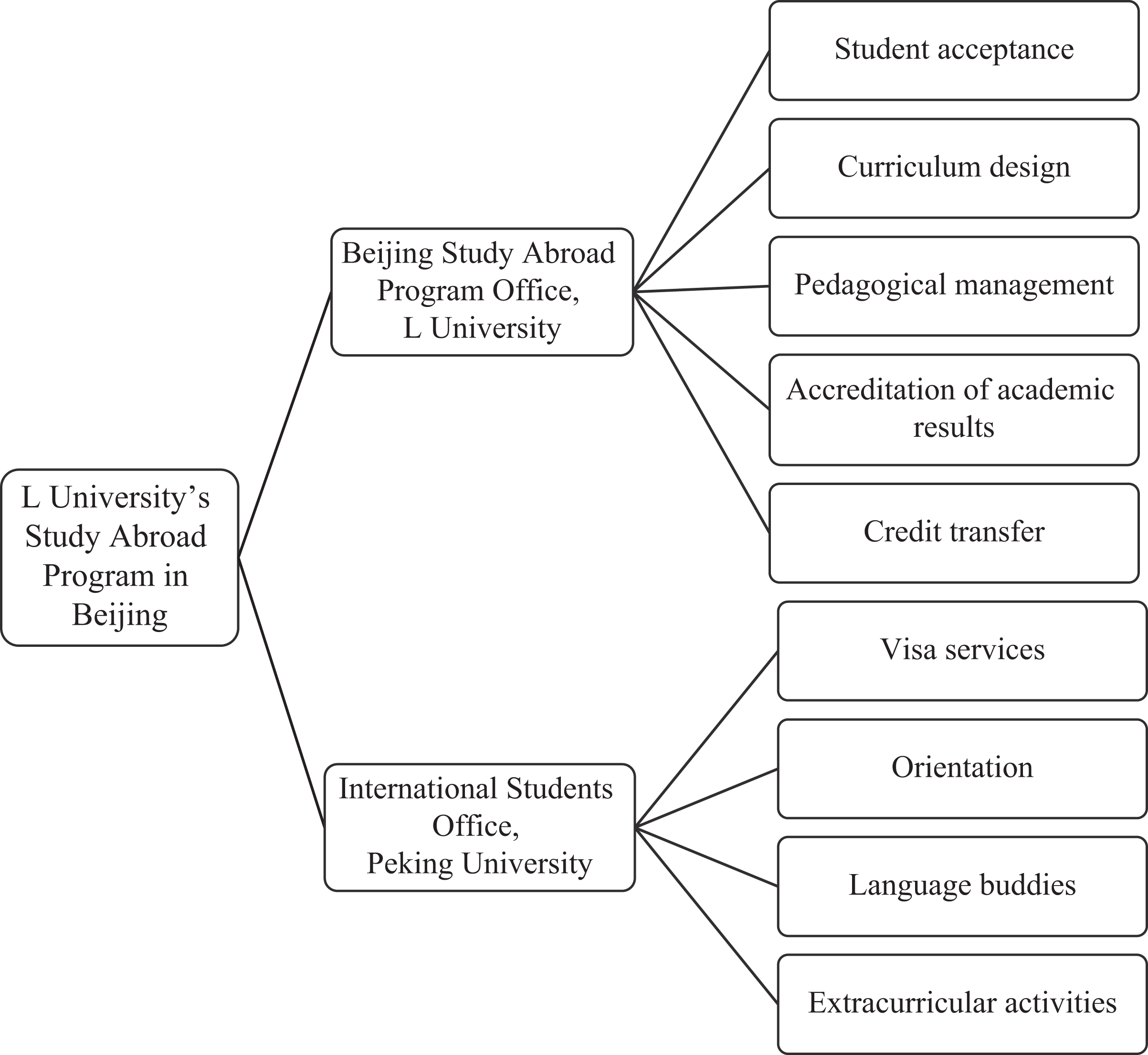
The basic organizational framework of the program.
Regarding the framework of program staff, L University appointed special personnel dedicated to the study abroad program in Beijing at its main campus in the U.S. To ensure the quality and standards of the program, an on-campus program office comprising an American program manager and Chinese staff was established at Peking University. L University was entirely responsible for the employment and management of the office members. The program office was also in constant communication with and reporting to L University headquarter.
Number of students
Figure 9 shows the annual number of students from L University participating in the program between 2004 and 2017, participation displaying an inverted U-shaped curve. These changes are generally consistent with the variations and trends in the number of U.S. students studying in China over the last decade, namely, an upward trend in 2004–2011 followed by a period of decelerated growth until a final decline. In the fall quarter of 2004—the year in which the program was launched—a total of 16 students participated in the program. Thereafter, the number increased steadily, peaking at 55 in 2011. From 2011 onward, the number of program participants continued to drop each year, hitting a record low in the fall quarter of 2016 when only eight students participated in the program. Low student participation compounded the financial burden of the program, making it unsustainable.
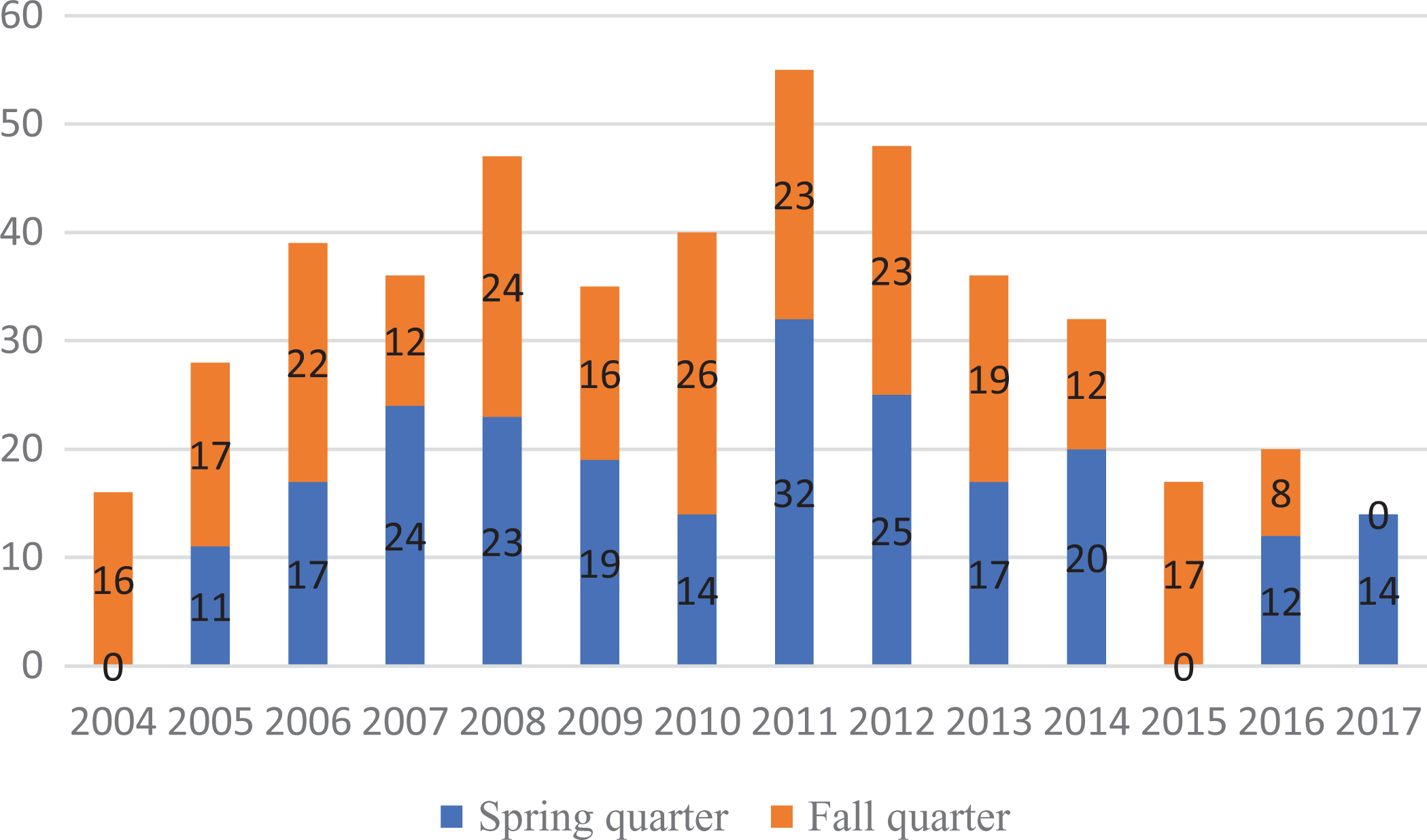
The number of program participants from L University, 2004–2017.
Curriculum design
In terms of the curriculum, the program comprised English-taught specialized and Chinese language courses. Specialized courses were taught in English by teachers from both universities. In each quarter, students could take between three and four specialized courses and Chinese language courses at different levels based on their needs. The course requirements and design for each quarter were proposed by L University and then reviewed by the university departments in charge of undergraduate studies.
Based on some incomplete statistics, the program cumulatively offered more than 130 specialized courses between 2004 and 2017. Of these, over 80 were offered by Peking University and over 60 by L University. Table 1 presents the detailed areas of study and some of the specialized courses.
Curriculum design.
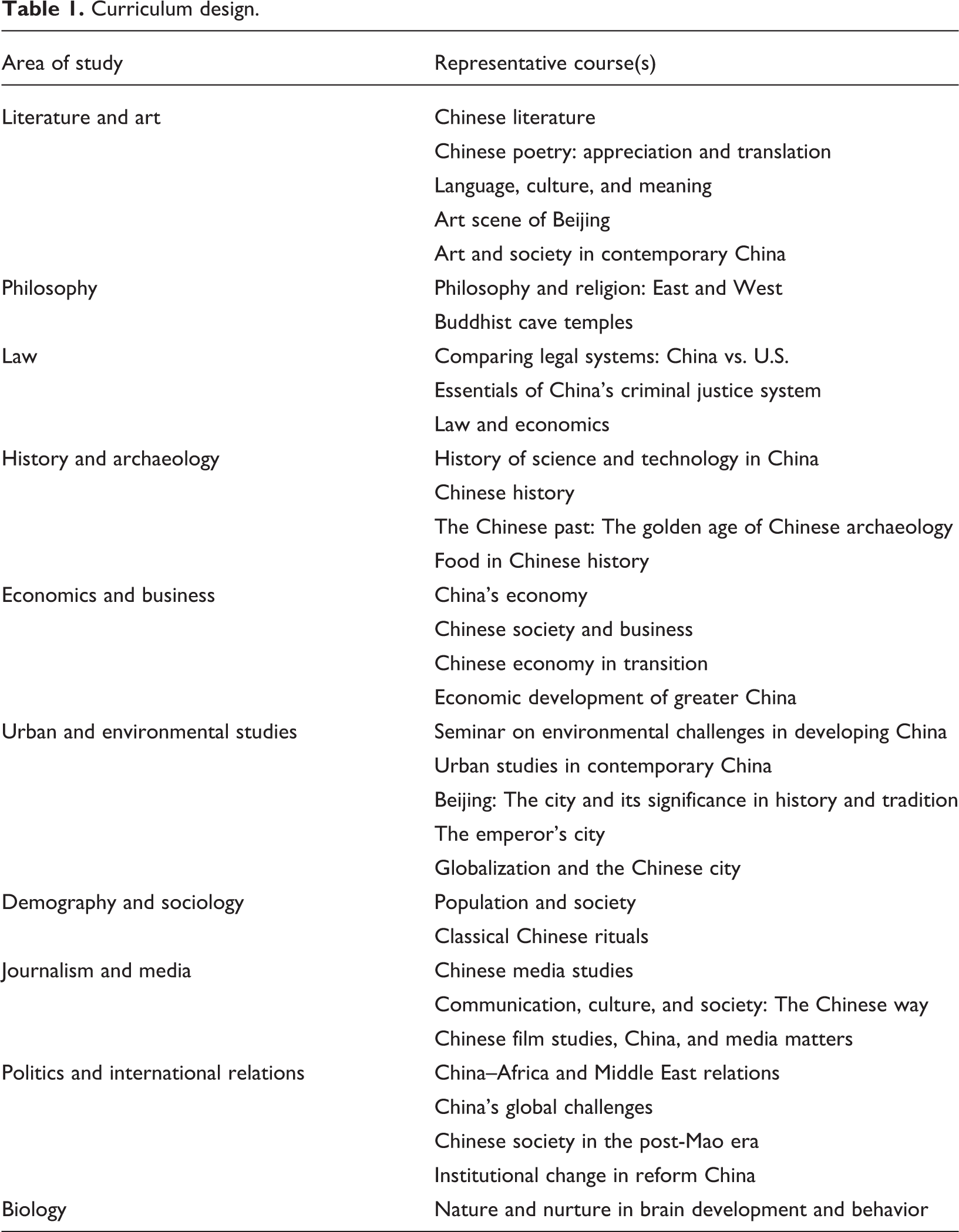
Table 1 presents specialized courses spanned across a wide variety of fields, including the humanities such as history, languages, and culture, as well as the social sciences such as sociology, politics, economics, and law. Science-related and engineering courses on environmental science, design, and other subjects were also available. Moreover, the program placed significant emphasis on the humanities and social sciences. A distinctive characteristic shared among all courses is that they were China-related—either directly or indirectly examining a certain phenomenon or issue in China or analyzing and comparing certain social phenomena and issues in the context of China. The diversity of the curriculum gave students a significant variety of options, allowing them to learn specialized knowledge in different areas.
The program mainly adopted the educational approach used in L University, namely small-group learning. This involved frequent interaction and extensive communication between both teachers and students and students themselves. Each student had the opportunity to express their viewpoints freely in class, thereby developing their capacity to think independently. The small class size also allowed flexible instructions. Teachers were able to bring the class out of the classroom and into natural settings, villages, cities, and towns so that students could truly absorb classroom knowledge. Students also learned how to analyze social issues that were of interest to them in the context of China, thus gaining valuable perspectives from diverse areas.
Extracurricular activities
An array of visits was organized to provide students with more opportunities to engage in cultural experiences and immersion outside the scope of the program. They aimed to offer students a full picture of China by helping them perceive and grasp the rich history and fascinating civilization of China in person. Students were also provided with as many hands-on opportunities as possible to help them integrate classroom knowledge with that pertaining to the actual development of Chinese society. This helped them develop objective knowledge of the country’s history, culture, and contemporary society, thereby constructing a comprehensive view of China.
Results and discussion
To some extent, the analysis above reflects the logical factors, as well as internal and external reasons pertaining to U.S. students’ decisions regarding overseas study in China. Integrating the results of student questionnaire survey and interviews with teachers, students, and managerial staff conducted during the program, this section provides a comprehensive analysis of the mechanism influencing the program’s operations.
Program organization
In recent years, an increasing percentage of study abroad programs offered by U.S. universities have been institutionally cooperative-administered programs. The Beijing program offered by L University was one of this kind. Although this type of program organization comprises the joint cooperation between a U.S. university and local institute, the former usually stresses its dominant position in various aspects to ensure that its students’ overseas studies meet its academic standards. The local institutions do not have a voice in the core aspects of program operations, such as curriculum content and faculty members. As noted, L University established a program office in Peking University, thus facilitating their ability to dominate the academic accreditation of the curriculum. The program office was committed to creating a mini L University campus overseas by replicating the administrative and managerial functions of L University in terms of technologies and operational models. In addition to providing L University students with familiar services and support, this also assured both the students and their parents of the academic accreditation and health-care benefits of the program.
While this type of program organization ensures the most seamless transition from home university study to that at the overseas institution, it inhibits the realization of the academic characteristics and initiatives of the local institution, thereby diminishing the meaningfulness and effectiveness of studying abroad. Regarding the organizational mechanism behind L University’s study abroad program in Beijing, better leveraging of the initiative and motivation of the local institution would have realized the value and core competitiveness of the study abroad program more effectively. Moreover, when establishing a cooperative program, the local institution should assume the key responsibilities more actively and confidently to combine the advantages of both parties during program operations and maximize the effectiveness of the program.
Meanwhile, in terms of actual operations, there was a communication breakdown between the headquarter of L University and the local program office. Over the decade or so of operating the program, the managerial staff at Peking University remained relatively stable, while the program office at L University underwent five different program manager and staff changes. Such employee turnover posed certain challenges to the stable and orderly operations of the program. Furthermore, a questionnaire survey conducted in 2012 revealed that the program staff from L University had problematic work styles and attitudes, including inaccessibility and failure to give prompt feedback to the problems encountered by students, negatively impacting students’ overseas experiences. Additionally, some U.S. students claimed that the performance of managerial staff at the local institution fell short of their expectations in terms of understanding their needs.
According to Evan Ryan, the then Assistant Secretary of State for Educational and Cultural Affairs, U.S. universities face several difficulties in regard to managing their China-based programs, as well as establishing overseas exchange programs and academic ties with Chinese institutions—facilitating the recent decline in the number of U.S. students studying in China. This is an indirect manifestation of the existing issue. Accordingly, how to better select and direct managerial staff to serve teachers and students has become a subject to which both U.S. and Chinese universities should note when developing cooperative study abroad programs.
Curriculum design
Although the specialized courses offered by the L University program covered a relatively extensive scope, most were humanities and social sciences courses on China-U.S. relations or China studies. Integrating theoretical learning and practice, the curriculum was undoubtedly very appealing to students majoring in the social sciences. In contrast, although offered sporadically, not enough courses in engineering, biology, and science were provided to form a curriculum. As a result of the limitations of the curriculum design, many L University students with a science and engineering background were discouraged from joining the program, as they could not study courses that were aligned with their disciplines. According to IIE, in the 2015/2016 academic year, over 25% of all U.S. students studying abroad opted for courses in science, technology, engineering, and mathematics—sustaining the emerging trend. Indeed, just 17.1% of students chose to study social sciences. This indirectly reflects the need to strengthen the development of science and engineering courses.
Language and cultural barriers
According to one survey conducted by National Public Radio of U.S., Chinese is perceived as a difficult language to learn by most U.S. students, with many students giving up halfway. Research indicates that the language barrier significantly impacts the effectiveness of communication and exchange among students (Pan, 2014). In other words, when American students study in countries where English is not the official language, they may face language barriers that negatively impact their study experience (Savicki et al., 2008). Some students fail to obtain an advantageous position in the American or Chinese workplace despite having spent an enormous amount of time and effort learning Chinese and understanding Chinese culture, undoubtedly diminishing their motivation to learn Chinese and study in China. The study abroad program in Beijing offered by L University involved specific criteria and requirements regarding Chinese language proficiency. More specifically, course prerequisites stipulated that students take Chinese language courses for two quarters at L University prior to embarking on the exchange program. As a relatively small percentage of students learned Chinese as a second language at L University, this may have reduced the number of students who met the eligibility requirements.
In addition to language barriers, some students from L University admitted to having trouble adapting to the non-Western culture and non-English-speaking environment (Wen et al., 2014). Many program participants were passionate about Chinese culture. However, according to the questionnaire survey, despite intending to fully leverage every opportunity to practice their Chinese and experience local culture in China, some students found it difficult to adapt to studying and living in Beijing. Compared with the exchange programs established with higher education institutions in Europe, Australia, and South Africa, L University’s program in Beijing appeared to present the greatest cultural differences and language barriers. Nonetheless, 2 years after terminating the program, L University noted its intention to resume the study abroad program in Hong Kong SAR. Based on their own experiences, the alumni of the Beijing program believe that the Hong Kong SAR program is a temporary compromise. Indeed, given China’s increasing influence in global politics and the world economy, the program’s alumni believe that the program will return to Chinese mainland in the future.
In an attempt to facilitate adaptation to campus life, the program assigned local Peking University students to those from L University as one-on-one language buddies. Nevertheless, some students still expressed having difficulties adapting to campus life. The questionnaire survey reveals that the results of this are multifaceted. Some students from L University said that the coursework was too heavy. Indeed, with each course involving an abundance of reading materials, group discussions, essays, and other assignments, students had little time to experience the local culture. Meanwhile, local students were similarly burdened with schoolwork and were seldom available for in-depth and frequent exchanges with the overseas students. Another reason involved the temperament, disposition, and personalities of some of the study abroad students. Some students chose to join the program only to obtain the credits needed for overseas studies and were indifferent to experiencing the local culture and adapting to the local lifestyle. However, such students accounted for a negligible proportion of program participants. Certainly, previous studies have shown that students’ general demographic characteristics and past life experiences may affect their overseas learning experience, rather than the specific characteristics of overseas learning projects (Terzuolo, 2018). Social motivation influences the choice of overseas learning destinations and the formation of preconceptions (Nyaupane et al., 2011). As such, improving the subsequent overseas learning experience may stimulate students’ learning motivation.
Although some program courses were open to local students, the study abroad students from L University noted an overall lack of in-class exchanges with Chinese students. Moreover, to facilitate student management, international students were accommodated separate dormitories, reducing everyday social interactions with local students and compounding difficulties to adapt to and blend in with local society. Indeed, the study abroad students believed that this arrangement negatively impacted their learning of the Chinese language and adaptation to campus life. Despite being in a different country, they reportedly felt no difference in the classroom environment and atmosphere compared with attending classes at L University. Therefore, although the undifferentiated instruction guaranteed teaching quality and satisfied the academic standards set by L University, the students felt that studying abroad had lost its meaning to some extent.
Moreover, the questionnaire survey revealed that the “peer factor” had the most decisive influence on the students’ decision to study in China. In other words, the comments of past participants will directly influence the decisions of L University students considering whether to join the program.
Students' needs changing
In regard to short-term study abroad, we should pay more attention to students' needs. The comparative study conducted by Fiedler and Kremer (2017) indicates a positive correlation between short-term study in Germany and the professional accomplishment and career development of dental students in the U.S. Meanwhile, Cheng (2014) shows that students attach more importance on the benefits to their personal development than they do to academic and professional development. L University is a comprehensive institution famed for its engineering disciplines. In addition to studying, many students intern at enterprises to obtain actual work experience and prepare themselves for the labor market in the future. Growing substantially in recent years, this trend also applies to study abroad programs, with many students expressing the desire to intern at local enterprises and organizations outside of class hours (Li & Zhu, 2015).
Both universities’ program operators failed to produce an active and effective response to such changes in the students’ needs due to both subjective and objective reasons, discouraging students’ motivation to apply for the program. Before applying, students consulted L University’s home office for overseas studies regarding conditions in Beijing. Some students indicated that L University staff had an insufficient understanding of the advantages and highlights of the study abroad program, influencing their judgment to some extent. Given the abundance of resources possessed by L University, students have numerous options from which to choose when selecting their destination for study abroad. Moreover, a fixed number of study abroad institutions are made available—the existing 10 or so destinations, thus competing against one another. As noted, students desire greater internship opportunities, thus selecting study abroad institutions that can meet this need.
Meanwhile, many parents worry that studying abroad will not directly promote their children’s future employment, with doubts about studying abroad involving questions like “Will this help them find better jobs in the future?” (Sachleben, 2016). This doubt presents both a challenge and an opportunity for attracting foreign students to study in China. With the continuous development of China’s economy, the country is becoming an increasingly popular destination for foreign students to find jobs and start businesses. Accordingly, the internship of foreign students in China has gradually become a trend. Their internship experience in China not only improves their professional accomplishment but also deepens their desire to work in China later.
However, the Beijing program was restrained by the Chinese government’s restrictions on the internship visa policy for international students and failed to respond to student needs. In 2016, the Chinese government gradually loosened its policy regarding internships for international students studying in China. However, the study abroad program offered by L University, as an organization, was delayed in responding to the changes in the environment and student needs, thus losing some of its participants. Indeed, the number of participants enrolled in other study abroad programs offered by L University—such as those in Germany and Japan—remained relatively stable, partially as a result of their offering students the opportunity to engage in community service and internships.
In regard to international student flow, China both sends and receives significant amounts of international students (Jiani, 2016). Certainly, China’s future development prospects attract large numbers of international students to study in the country. Meanwhile, a growing number of descendants of Chinese immigrants wish to return to their parents’ home country to receive higher education and cultural identity. This should be emphasized in the marketing of future study exchange projects in China.
Environmental factors
Since 2012, the number of U.S. students studying in China has been in a state of rapid decline, stagnation, and negative growth. This decline reflects the negative impacts of environmental factors on overseas student exchanges. The Western media’s extensive coverage of environmental issues in China—such as the issue of air pollution in Beijing—has magnified the negative perception of haze pollution, health problems, and food safety in China. This has resulted in the reduced willingness of U.S. students to study in China. Although their rooms were equipped with air purifiers, many students enrolled in L University’s study abroad program expressed concerns regarding air and environmental issues in Beijing.
Suggestions for future program development
China has become the world’s third most popular study destination for international students. Compared with long-term study abroad, short-term study abroad has irreplaceable advantages, such as time commitment and funding requirements. Major factors in the changing number of U.S. college students studying in China is the growing importance that the U.S. attaches to China’s international status, as well as supplementary policy support in China. Constructing a new model of power relations between China and the U.S. requires the promotion of intergovernmental trust and, more importantly, an increase in cultural and educational exchange and communication (Liu & Wei, 2015). However, there is a relative lack of research on U.S. students studying in China on a short-term basis. The majority of extant studies have been conducted at the level of shallow and descriptive news reports and lack multilevel and multiperspective in-depth analyses of exchange programs based on their full life cycle from inception to termination. Using case study analysis, this study offers feasible policy recommendations and operational experiences as a reference for the future development of foreign education initiatives in China.
Global research on study abroad experience largely focuses on the quality of teaching and support services, including the provision of preenrollment information, immigration services and assistance for new students upon arrival at the host country, administrative management and medical services during studies, social interaction with local students and assimilation into campus culture, and internship opportunities and career counseling. As discussed earlier, although satisfactory teaching quality of the Beijing study abroad program was guaranteed, the program was dominated by L University—so much so that the students were really studying at a China-based mini-branch campus of L University in the name of overseas studies. Similarly, due to the traditional Chinese virtue of humility, Chinese people often adopt a cooperative and compromising attitude and “tolerate as much as possible” when engaging enemies. As initiatives for overseas education in China continue to advance in the future, top universities in China should boost their self-confidence and leadership spirit and be more confident, sophisticated, open, and self-oriented in terms of teaching and pedagogical management.
On the other hand, providing overseas students with support services beyond the scope of teaching is key to improving their study abroad experiences and overall satisfaction with the program. It is also an effective means of enhancing the appeal and competitiveness of a study abroad destination. Most international students undergo a long period of preparation before studying in China. For instance, some are awarded Confucius Institute Scholarships or have won the “Chinese Bridge,” a Chinese proficiency competition for foreign college students. Others are awarded Chinese Government Scholarships and have passed the entrance examination and selection process for degree students. Such students often have a more comprehensive understanding of Chinese society and culture, facilitating their adaptation to studying abroad. China’s world-class universities possess an exceptional abundance of exchange resources and opportunities. As such, some students apply to study in China randomly or on a whim—particularly for short-term study abroad programs. Although the programs require participants to have certain language and cultural preparations before going abroad, they experience significant cultural shock when arriving in China. Therefore, students on short-term exchange programs to China have much higher requirements for support services than the average international degree students in China. The efforts of dedicated managerial staff are necessary to improve the standards and quality of such support services. More importantly, efforts should be made to facilitate the assimilation of exchange students in campus culture, as well as their social interaction with local students. This will help them understand China and deepen their emotional bonds with the country.
Moreover, as most short-term exchange students adopt English as the medium of instruction, they have limited Chinese proficiency and cannot attend Chinese-taught classes with local students. Therefore, realizing integrated learning between exchange and local students remains a significant challenge. In addition to offering English-taught courses and selecting Chinese students to attend such classes with short-term exchange students, appealing extracurricular activities can be used to expand exchange students’ social circles and enhance their interaction with local students and Chinese society, thereby promoting deeper integration. Furthermore, in the Internet era, it is important to improve the level of informatization by providing study abroad students with highly efficient and transparent information channels, thereby reducing the time and economic costs of accessing information. Institutions should also develop an online campus system for exchange students to learn Chinese culture independently through the Internet, thereby enhancing their assimilation into local campus culture (Li & Fang, 2018). Meanwhile, some studies have shown that flexible teaching methods, especially online teaching, can improve students’ interest in and adaptability to short-term study abroad (Slotkin et al., 2012).
Extant studies show that overseas learning helps students learn and understand global issues more deeply, develop greater respect for other cultures, and improve their understanding of their own culture (Vungkhanching, 2011). Overseas learning often changes students’ attitudes toward both their own and destination countries (Janes, 2008). Indeed, data reveal that U.S. students usually have a better impression of China after returning from their overseas studies in China (Ye, 2013). According to the student questionnaire survey regarding L University’s study abroad program in Beijing, when asked about the most important factor influencing their decision to study in China, most students would answer “other students”; in other words, students’ decision to study abroad in China is directly influenced by the comments made by previous participants regarding the program. As one of the major study abroad destinations for U.S. college students, China should further develop and refine relevant policies and supportive measures for overseas students (Tan, 2016). While learning from positive and negative experiences, China needs to improve and perfect every detail of the actual program to solve the academic, managerial, and cultural challenges involved in attracting U.S. students to study in China.
Furthermore, exchange students come from various countries and thus have diverse religious and cultural backgrounds. As such, students can have substantial value differences from local students and encounter a series of unexpected problems in an alien environment, especially near the end of the semester when they are under greater academic pressure. At present, the psychological counseling centers in China’s higher education institutions are largely overloaded, with local students facing considerable waiting time to secure an appointment. In regard to English counseling services for exchange students, it is evident that the centers have inadequate capacity, as well as a lack of counseling services in other languages. Future initiatives for overseas education in China should address the gap in psychological counseling services and ensure that the scope of services is expanded appropriately. In addition to improving students’ evaluation of their exchange experiences in China, such measures will reduce the occurrence of emergencies among foreign students.
Prospects
Although the Beijing study abroad program offered by L University has been terminated, an increasing number of study abroad in and exchange programs with China are emerging. With the continuing internationalization of China’s higher education, a growing number of foreign exchange students will come to study in China. The expanding variety of exchange students and gradual diversification of home countries present both opportunities and challenges to the initiative for overseas education in China.
Supplemental material
Supplemental Material, Appendix_(1) - Bridging the Unbridged: A Case Study of a U.S. University’s Study Abroad Program in Beijing
Supplemental Material, Appendix_(1) for Bridging the Unbridged: A Case Study of a U.S. University’s Study Abroad Program in Beijing by Yong Wang, Ke Li and Yuan Zhang in ECNU Review of Education
Footnotes
Declaration of conflicting interests
The author(s) declared no potential conflicts of interest with respect to the research, authorship, and/or publication of this article.
Funding
The author(s) received no financial support for the research, authorship, and/or publication of this article.

References
Supplementary Material
Please find the following supplemental material available below.
For Open Access articles published under a Creative Commons License, all supplemental material carries the same license as the article it is associated with.
For non-Open Access articles published, all supplemental material carries a non-exclusive license, and permission requests for re-use of supplemental material or any part of supplemental material shall be sent directly to the copyright owner as specified in the copyright notice associated with the article.
