




Abstract
Purpose:
This study focused on cross-region student mobility to explore whether Macao students have adjustment issues while studying and living in Taiwan.
Design/Approach/Methods:
A total of 663 Macao students were surveyed in Taiwan, and the statistical methods, including correlation, t-test, analysis of variance, and hierarchical regression analysis were addressed to analyze the data.
Findings:
Macao students, even while studying in a Chinese context, did have social and psychological adjustment issues (i.e., social support and self-efficacy).
Originality/Value:
This study could shed some light on understanding cross-region students as well as providing practical guides for relevant governmental departments in their policy regarding outbound students.
Introduction
Asian countries/regions, under the influence of Confucianism, appear to share a common culture in all aspects of life. This is especially true for Chinese societies, such as the Chinese mainland, Hong Kong SAR, Macao SAR, and the Taiwan region. However, in addition to this similarity, dissimilarities could still be seen in subtle ways. Specifically, from the perspective of education, are there any differences in those educational systems, especially when a student, rather than studying in the home region, studies in any of these regions? What would this student experience? This question, unfortunately, is rarely discussed. A possible reason is that researchers seem to regard them more similar than they really do. This limitation can be easily seen in the literature on “international students” because while scrutinizing the relevant studies targeting the group of Chinese students studying abroad (such as Fan & Ashdown, 2014; Huang & Klinger, 2006; Ling & Tran, 2015; Spencer-Oatey & Xiong, 2006; Sun & Chen, 1999), the main focus has been mostly placed on the Chinese students studying in the Western educational systems, usually ignoring adaptation issues in cross-region student mobility. This research was an attempt to focus on the cross-region student mobility—Macao students studying in Taiwan. The main reason for choosing these two regions in China is that Taiwan frequently ranks the top destination for Macao outbound students (Education and Youth Affairs Bureau, 2015).
While the number has been on the rise, it is intriguing to ask: How do Macao students feel and think while participating in Taiwan’s educational systems? Inspired by the studies on international students, language, social, cultural, and psychological aspects are the major issues encountered by international students when they are adjusting to life in new environments (Andrade, 2006; Bista & Foster, 2011; Hsu, 2003; Yeh & Inose, 2003). Hence, certain similarities between students in Macao and Taiwan may include speaking Chinese, using traditional Chinese characters, eating Chinese foods, watching Chinese TV programs, and so on; as for possible differences, however, Macao students may need to deal with more social and psychological issues (i.e., loneliness and homesickness). Past studies have revealed two crucial factors for improving international students’ adjustment: self-efficacy (Poyrazli et al., 2002; Yusoff, 2012) and social support (Yusoff, 2012). Hence, will Macao students studying in Taiwan also experience adjustment problems? To fill this gap, this study aimed at exploring the adjustment difficulties along with the underlying factors that contribute to those difficulties encountered by students originated from Macao who pursue their university education in Taiwan.
Literature review
Some trends: Interaction of higher education between Macao and Taiwan
According to the Annual Report of Macao Higher Education 2015, published by Tertiary Education Services Office (2015) in Macao, there are 10 higher education institutes in Macao, including 4 public institutions and 6 private institutions. These institutions provide approximately 300 degree programs, ranging from doctoral, master’s, bachelor’s, and associate degrees; postgraduate certificate; and diploma programs. In addition to these programs, foreign higher education institutions have launched 31 degree programs in Macao. In order to encourage local citizens to pursue their higher education, Macao SAR Government has introduced various higher education guidance services that provide citizens with comprehensive higher education information. Moreover, postgraduate scholarships are available and designed to motivate students to pursue their master’s and doctoral degrees (Macao SAR Government, 2015).
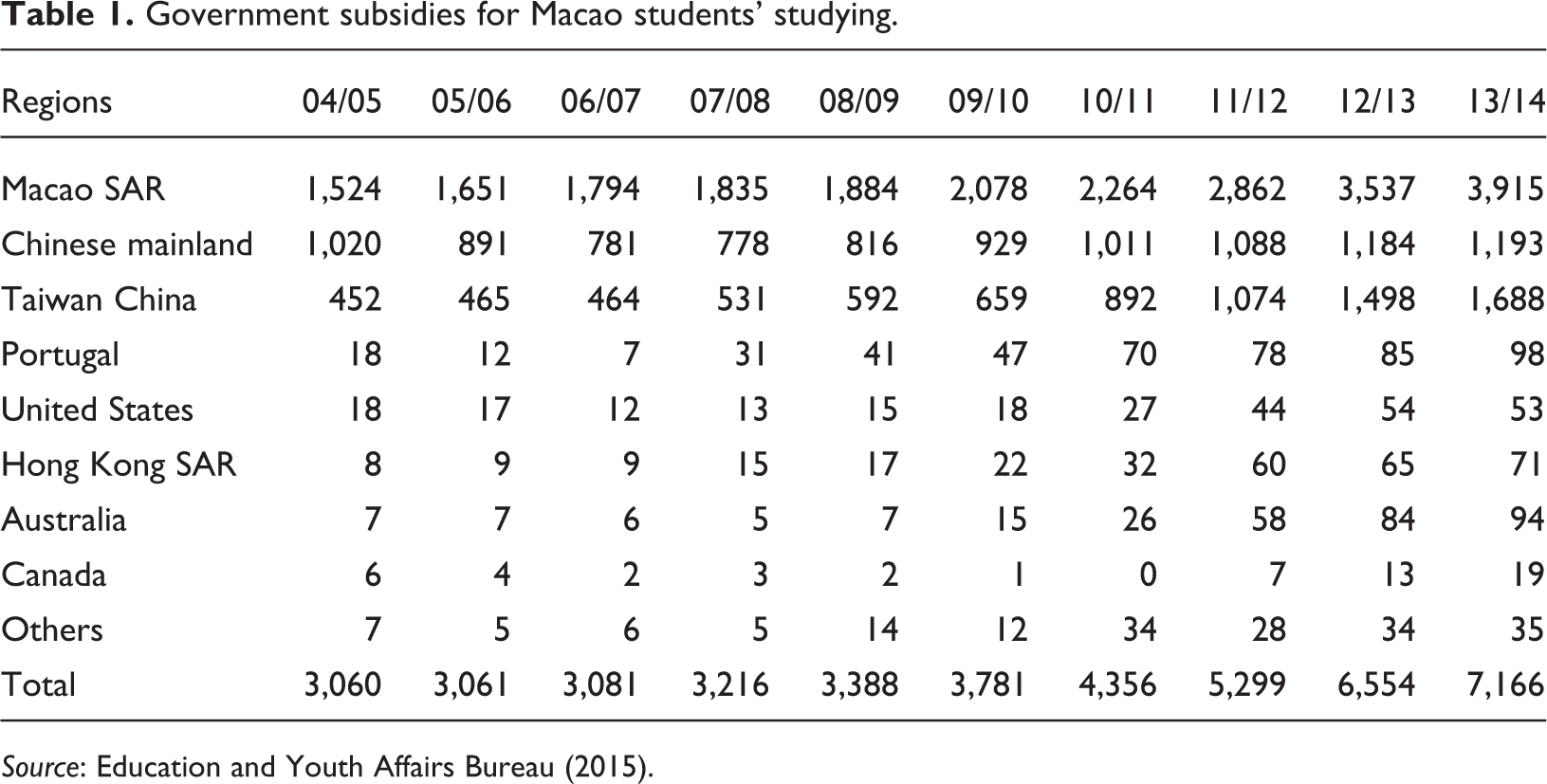
The reports and policies mentioned above demonstrate Macao SAR Government’s efforts in promoting the development of higher education in Macao. It should be noted that besides offering scholarships to students to further their education in Macao, the SAR Government also offers scholarships and subsidies to the thousands of high school graduates who opt to pursue their higher education in other countries/regions. According to the Education and Youth Affairs Bureau (2015), in the 2013–2014 academic year, 3,915 students who studied in local higher education institutes received scholarships or subsidies (see Table 1). For those who studied outside Macao at the same period of time, the top three most popular destinations listed in descending order were the Taiwan region (1,688), the Chinese mainland (1,193), and Portugal (98). As shown in Table 1, the number of students who received subsidies and furthered their study in Taiwan institutes increased from 452 in 2004 to 1,688 in 2014, along with the growing number of students who received government subsidies and studied in local higher education institutes. It is apparent that the number of Macao students who pursue their higher education in Taiwan is growing, and some of the main reasons for why Macao students were drawn to higher education in Taiwan include experiencing different cultures, broadening horizon, and making new friends (Jheng & Chan, 2015).
Government subsidies for Macao students’ studying.
Furthermore, it is also worth noting that some particular policies are designed for and applied to Macao students. For example, if Macao students attempt to pursue higher education in Taiwan, they must be permanent residents of Macao. Moreover, they should also go through a different screening system designed by the committee for the entrance of a desired university.
All of these have shown that the interaction of higher education between Macao and Taiwan has been increasing. But, according to cultural issues, Macao students in Taiwan are different from local students. Hence, it is necessary to understand how they adjust while studying and living in Taiwan.
Adjustment: Psychological and social problems
While examining the previous literature, there is limited research about “cross-region” student mobility. Within the limited literature, according to Macao Youth Research Association (2010), for example, while studying in the universities in Taiwan, the major problems of Macao students included “feeling stressed and depressed” and “loneliness.” Moreover, we turned to studies on “international students” for insights. With an escalating number of students traveling across borders of countries/regions for their education, these international students’ experience in foreign environments has become the topic of many studies. Previous studies have revealed that the “adjustment problem” is the main challenge that international students experience in their learning and living. The term “adjustment,” based on Piaget’s theory (1950), can be defined by “assimilation” and “accommodation.” Namely, while a given individual is able to adjust themselves to a new environment by utilizing the strategies of “assimilation” and “accommodation” to tackle problems, and ultimately reach a new status of “balance,” it demonstrates a successful process of adjustment. Furthermore, Searle and Ward (1990) asserted that “adjustment” can be considered to be general feelings of well-being and satisfaction of a student while successfully reducing the stress of living in a new situation. K. Thomas and Althen (1989) also pointed out that adjustment involves psychological and social dimensions. The former indicates that a student needs to attitudinally and emotionally adjust to a new culture, whereas the latter refers to socially integrate to the social interaction of the host country/region.
Based on the definition of “adjustment” above, when students study in foreign countries or regions, they put themselves in a new situation, so they need to take action (i.e., assimilation and accommodation) to get rid of some problems to adjust themselves to this new environment. According to the findings of the empirical studies (Bista & Foster, 2011; Chou, 2009; Khawaja & Stallman, 2011; Kim, 2012; Lin, 2012; O’Reilly et al., 2010; Sherry et al., 2010; Yusoff, 2012), during this adjusting process, international students need to overcome psychological problems (e.g., mismatched expectation, emotional distress, homesickness, depression, and anxiety) and social ones (e.g., academic problems, cultural differences, language, and social relationship) in host countries/regions.
For example, among the psychological problems, a general one is the mismatch between students’ expectations and the reality. Put it simply, international students leave home and travel a long way to another country/region to further their studies. They usually carry with them high expectations about their university experience and new life (Zhai, 2002). Moreover, the parents of these international students may also have high expectations for their offspring. However, according to previous studies, most universities focus on attracting international students to enroll in their programs, rather than on assisting these students in solving adjustment issues, such as language deficiency, social isolation, and poor academic performance (Altbach & Teichler, 2001; Bista & Foster, 2011). The mismatched expectation about university and courses may cause disappointment and ultimately make international students doubt the value of studying abroad.
In addition, with regard to social problems, social relationship is a crucial one. Namely, traveling across borders to pursue higher education means that students have to leave behind family, friends, and social lives at home and make new friends in new environments. However, research showed that it is not easy for international students to make friends or develop romantic relationships with other students. For example, Sherry et al. (2010) found that international students in Toledo University experienced difficulties in developing social networks, engaging in social groups, and being part of the university community. M. Lin (2012) also reported that it was hard for international students to form new social life and engage in small social groups. The lack of social relationship makes international students feel that they are being abandoned and excluded (Fritz et al., 2008). These international students may feel lonely and homesick as well (Chou, 2009; Poyrazli & Lopez, 2007).
Factors for enhancing adjustment ability
When encountering the abovementioned psychological or social adjustment problems, if no proper intervention is taken, they will have detrimental influence on international students’ psychological and social well-being (Lin & Yi, 1997). Generally speaking, international students may handle these problems in one of the two ways (Bjorck et al., 2001; Khawaja & Dempsey, 2008): First, they may adopt a passive appraisal (e.g., be depressed or seek escape), which worsens the situation; or second, they may adopt a proactive appraisal. Instead of being passive, research has proven that international students can ameliorate stress by taking action for themselves. Those actions can also be classified into two categories: psychological dimension and social dimension. While examining the past studies, the concept of “self-efficacy” is one of the most important psychological traits, whereas “social support” is one of the most discussed factors in the social dimension, which will be discussed in detail below, followed by other possible background factors.
Self-efficacy
Regarding the concept of “self-efficacy,” Bandura (1994) stated that perceived self-efficacy is concerned with people’s beliefs in their capabilities to exercise control over their own functioning and over events that affect their lives. Hence, self-efficacy beliefs can determine how people feel, think, motivate themselves, and behave. In Bandura’s perspective, a strong sense of efficacy can enhance human accomplishment and personal well-being, namely, people with high confidence in their capabilities tend to see difficult tasks as challenges to be mastered rather than as threats to be avoided. In this regard, people who have better self-efficacy can be more optimistic and persistent in the face of problems. As far as international students are concerned, self-efficacy can be seen as one of the personalities that can affect their life and adjustment (Wang, 2009). For instance, Yusoff (2012) studied the correlation between self-efficacy and psychological adjustment among international students pursuing higher education in Malaysia. The study revealed that international students with higher self-efficacy tend to perform better with regard to psychological adjustment. Therefore, international students with higher self-efficacy are able to adhere to and accomplish goals even when problems (e.g., mismatched expectation, homesickness, loneliness, and depression) arise (Poyrazli et al., 2002).
Social support
In terms of the social dimension, the most discussed concept is “social support.” According to Cronkite and Moos (1995), social support refers to social resources that individuals perceive to be available or that are actually offered to them. Social support can operate both by providing individuals with resources available to cope with the stress and by giving them empathy and care from friends, family, or significant others (Barrera et al., 1981; Hobfoll & Vaux, 1993). International students’ perceived social support reflects their available resources to cope with adjustment problems as research has proven that international students can ameliorate stress by making friends or developing romantic relationships with domestic students, or establishing good relations with teachers (Lee et al., 2004; Msengi, 2007; Yusoff, 2012). For example, Sumer et al. (2008) found that international students with low levels of social support reported higher levels of adjustment problems. Similarly, M. Thomas and Choi (2006) indicated that international students who had less perceived social support were more likely to experience higher levels of adjustment problems. Therefore, building a social support system is crucial in improving international students’ learning and life adjustment experiences.
Background factors
In addition to “self-efficacy” and “social support,” it is believed that there are other factors relating to international students’ adjustment. As Sherry et al. (2010) suggested, further research should focus more on the correlation between the personal backgrounds of international students and their overseas study experiences. Similarly, Khawaja and Stallman (2011) called for future studies on the correlation between international students’ university experience and the type of institute (private/public university) that they enroll in. However, there is only limited research targeting on how background factors are related to international students’ adjustment. Within the limited literature, Huang (1999) found that “gender” could be a paramount factor for dealing with emotional issues. That is, male college students tempt to have more emotional problems (i.e., love and friendship) than their female counterparts. Furthermore, according to Chen’s study (1998), the more years of study a given student has, the better adjustment this student shows. In Chou’s study (2009), rooted in the theory of social capital, she found that one of the reasons for international students to study abroad is the expansion of their social networks, namely, the accumulation of social capital. This strategy seems to be more adopted by middle-class students while compared to their working-class counterparts. Also, subsidizing children for cross-border studying, from the perspective of Lareau (2002), can be seen as a parenting strategy of “concerted cultivation” of middle-class families, whereas working-class families may not be able to afford the expense. To conclude, based on those studies, gender, year of study, type of institute, and socioeconomic status (SES) could be significant predictors for students’ outbound experiences.
Based on the analysis of the past literature above, the current study, first, explores the relationship among Macao students’ social support, self-efficacy, and their learning and life adjustment. Second, the study went further to examine whether Macao students’ personal backgrounds were related to their learning and life adjustment.
Methodology
The sample and sampling procedures
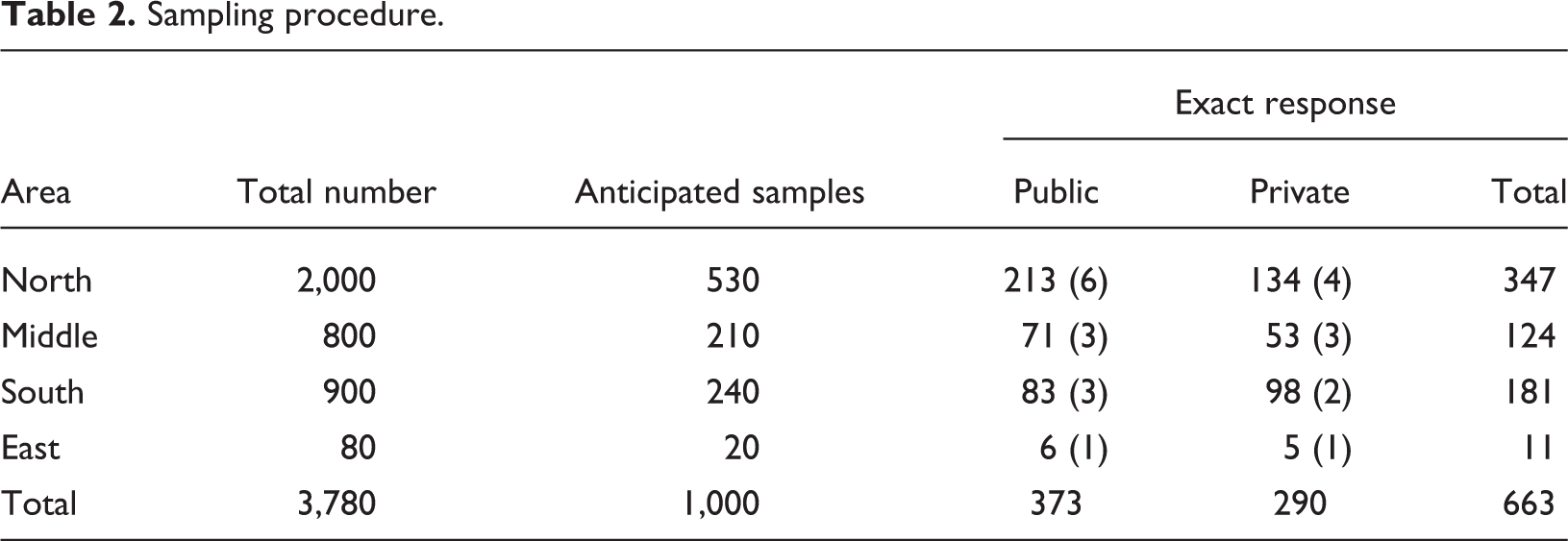
The sample population of the current study was composed of Macao students pursuing higher education in Taiwan in 2015. According to the statistics, there were approximately 4,000 Macao students studying in Taiwan in 2015. Excluding those who were studying preuniversity courses, there were about 3,780 Macao students pursuing higher education in Taiwan (approximately 2,000 in north Taiwan, 800 in middle Taiwan, 900 in south Taiwan, 80 in east Taiwan). The anticipated sample size for this study was 1,000 students (around 27% of the group of Macao students studying in Taiwan). Hence, in order to reflect the proportion of the population, the final sampling number of each area was 530, 210, 240, and 20, respectively. Furthermore, purposive sampling was adopted because the study was targeted on Macao students, namely, drawing the required samples from the universities where there were students from Macao. Specifically, the study first calculated and ranked the numbers of Macao students of each university in the northern, middle, southern, and eastern areas in Taiwan and then selected and sent an official invitation letter to the top-10 universities in each area. After collecting the replies from those universities that agreed to join the study, the questionnaires were distributed to the Macao students and collected by the staff of those universities (including public and private ones).
The final results of sampling, therefore, consisted of 347 from north Taiwan (213 from 6 public universities, 134 from 4 private universities), 124 from middle Taiwan (71 from 3 public universities, 53 from 3 private universities), 181 from south Taiwan (83 from 3 public universities, 98 from 2 private universities), and 11 from east Taiwan (6 from 1 public university, 5 from 1 private university). The exact response rate was 66.3%, so a total of 663 questionnaires were collected (as shown in Table 2).
Sampling procedure.
Measures
Background variables
Regarding the background variables, the study, in order to capture a bigger picture, examined not only “gender” (male and female), “year of study” (year 1, year 2, year 3, and year 4), “parents’ SES” (categorized into high, medium, and low SES, according to the combined number of years of education received by both parents), and “type of institute” (public university and private university) but also included “major” (Category 1: humanities, social sciences, and arts; Category 2: mechanics, engineering and information technology; Category 3: medicine and biology) to preliminarily see whether there was any difference among students with different majors.
Independent variables
The independent variables of the study were “social support” and “self-efficacy.” As previous studies had shown that “social support” was a critical factor relating to students’ adjustment (Chou, 2009; Lin et al., 2009; Ramachandran, 2011; Syue, 2009; Yusoff, 2012), the study explored the correlation between “social support” and Macao students’ “adjustment.” For those Macao students who chose to leave home and further their education in Taiwan, social support came from their peers, teachers, and administrative staff at the university. In order to reflect Taiwan’s cultural characteristics, the study introduced 3 items in the scale survey based on “The Scale of Perceived Social Support” developed by Zimet et al. (1988) and referenced to “The Social Support Scale” of Syue (2009), which was rooted in Taiwan’s context. The 3 items of the scale survey were “Interaction with Teachers” (e.g., I like to discuss with teachers about my life and studying), “Interaction with Peers” (e.g., I like to share my thoughts and feelings with my classmates), and “Interaction with Administrative Staff” (e.g., Staff is willing to help me). Four-point Likert-type scale was introduced with scoring from 1 (strongly disagree) to 4 (strongly agree). Therefore, higher scores indicated receiving better social support from others. Cronbach’s α of the scale was .972.
“Self-efficacy” stands for the perception of an individual on their own confidence and ability to problem-solving (Schwarzer, 1992). It was believed that students with higher levels of self-efficacy performed better in adjustment because an individual’s perception on themselves influenced their learning and life adjustment (Jhang, 1996; Jian, 1986; Syue, 2009; J. Wu, 1993; Yusoff, 2012). With the combination of Schwarzer and Jerusalem’s (1995) “The General Self-Efficacy Scale” and Syue’s (2009) “The Self-Efficacy Scale” in Taiwan, 2 items were consisted in the scale: “Problem-Solving” (e.g., I can stay calm when I face challenges) and “Goal Accomplishment” (e.g., I have confidence in achieving my goal). The scale revealed the psychological state of a subject. Scoring in the 4-point Likert-type scale was from 1 (strongly disagree) to 4 (strongly agree). Hence, higher scores meant higher self-efficacy. Cronbach’s α for the scale was .826.
Dependent variable
The dependent variable of this study was “adjustment.” The scale was the integration of “The Satisfaction with Life Scale” of Diener et al. (1985) and “The Scale of College Students’ Life Satisfaction” of Huang and Li (2005) in Taiwan. This scale measured Macao students’ adjustment in a 4-point Likert-type scale from 1 (strongly disagree) to 4 (strongly agree). It included 5 items: “Learning Adjustment” (e.g., I can do well on a test), “Social Adjustment” (e.g., I know how to communicate with others in a team), “Daily Life Adjustment” (e.g., I like Taiwan foods), “Intimacy Adjustment” (e.g., I know how to chase someone I like), and “Value Adjustment” (e.g., I feel honored to enroll in this university). Thus, higher scores indicated better adjustment. Cronbach’s α for the scale was .948.
Theoretical framework and research hypotheses
Based on the research purpose and the literature review, the theoretical framework of the study was shown in Figure 1.
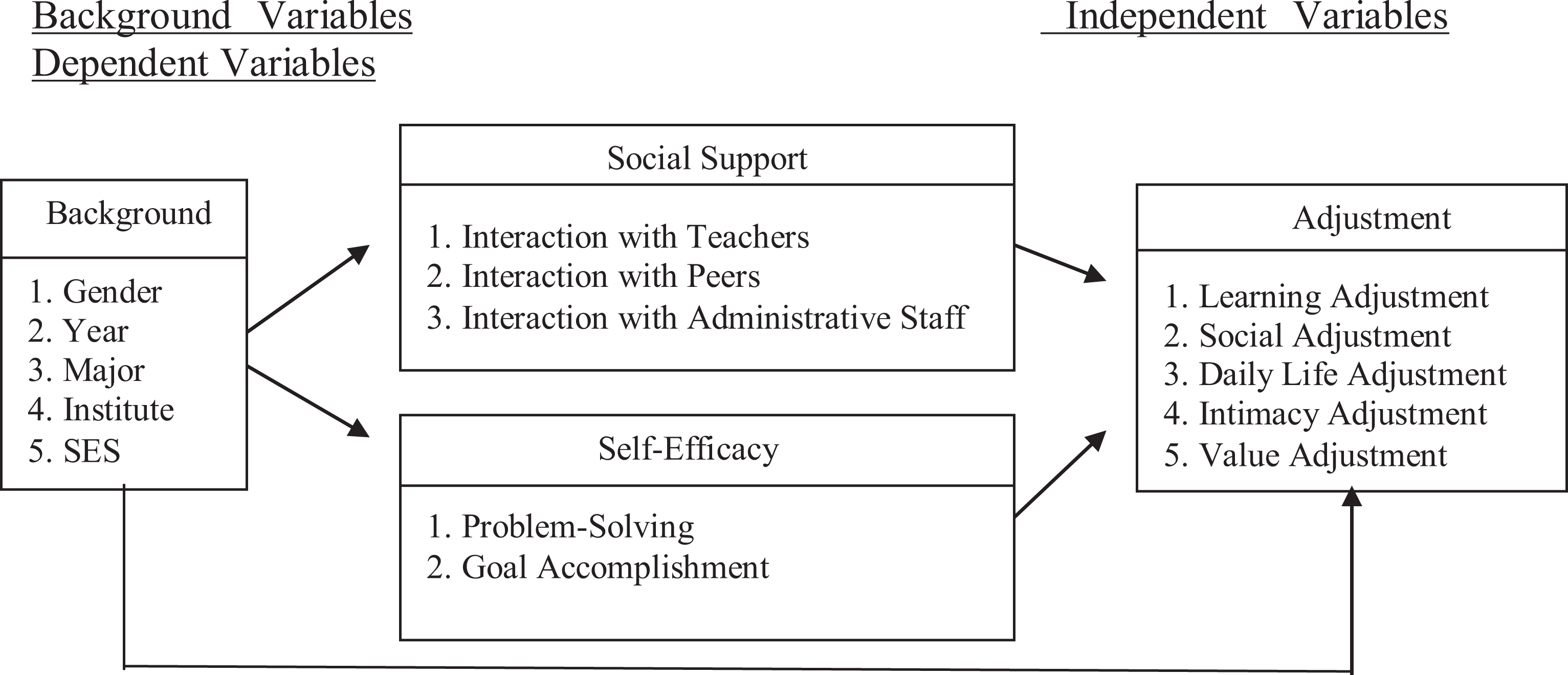
Theoretical framework.
The following hypotheses guided the research: “Social support” and “adjustment” are positively correlated among Macao students pursuing their higher education in Taiwan. “Self-efficacy” and “adjustment” are positively correlated among Macao students pursuing their higher education in Taiwan. “Adjustment” among Macao students with different background variables displays significant difference. “Background factors,” “social support,” and “self-efficacy” have significant effects on Macao students’ adjustment.
Data analysis
Data were analyzed through five methods. To provide a general outlook of Macao students’ adjustment in Taiwan, the mean scores of the three scales were calculated individually. Subsequently, correlation, t-test, analysis of variance (ANOVA), and hierarchical regression analysis were addressed. Specifically, “Pearson Product-Moment Correlation” was used to examine to what extent independent variables relate to dependent variables. “T-test” and “ANOVA” were adopted to identify whether background variables lead to different scorings in social support, self-efficacy, and adjustment. Before utilizing the two techniques, the original data were to meet two main assumptions, namely, “normality” and “homogeneity of variance.” With respect to normality, the range of Skewness for the variables in the study was between −.43 and .39 (−.5 ≤ Skewness ≤ .5), which demonstrated that the data set of the study met the assumption of normal distribution. In addition, “Levene’s Test for Equality of Variances” was used to test homogeneity of variance of the data. According to Levene’s statistics, the assumption of homogeneity was met because the values of F were from 0.409 to 3.201, and no significant differences (p > .05) were found. Regarding “Post Hoc Test,” Scheffé’s method was adopted as it was more rigorous than other methods and was able to minimize possible errors (Wu & Tu, 2010).
The study also applied “Hierarchical Regression Analysis” to figure out which variable influenced the dependent variables the most as well as how much variance of the dependent variables could be explained by all of the variables through regression models. Before using the method of regression analysis, in addition to normality and homogeneity, one more assumption, “Collinearity,” should be tested. The study used “Variance Inflation Factor” (VIF) to test collinearity of the independent variables. The values ranged from 1.055 to 1.747 (VIF ≤ 10), showing that the independent variables in the study were excused from the problem of collinearity. Hence, there were three models in the study:
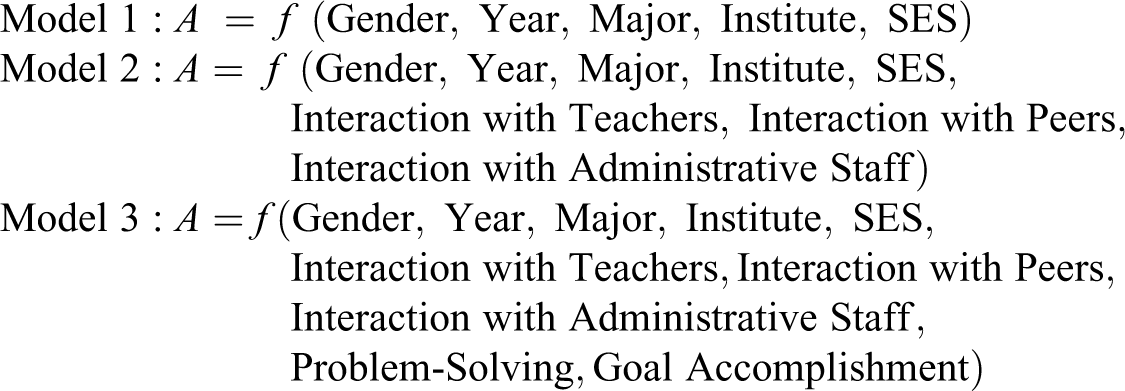
where A referred to the sum score of five types of adjustment and was tested as continuous variable. Model 1, as a basic model, examined the influence of “background factors.” The second model added the variable of “social support.” Model 3 introduced the variable of “self-efficacy” to the formula.
Results
Descriptive statistics
Demographics
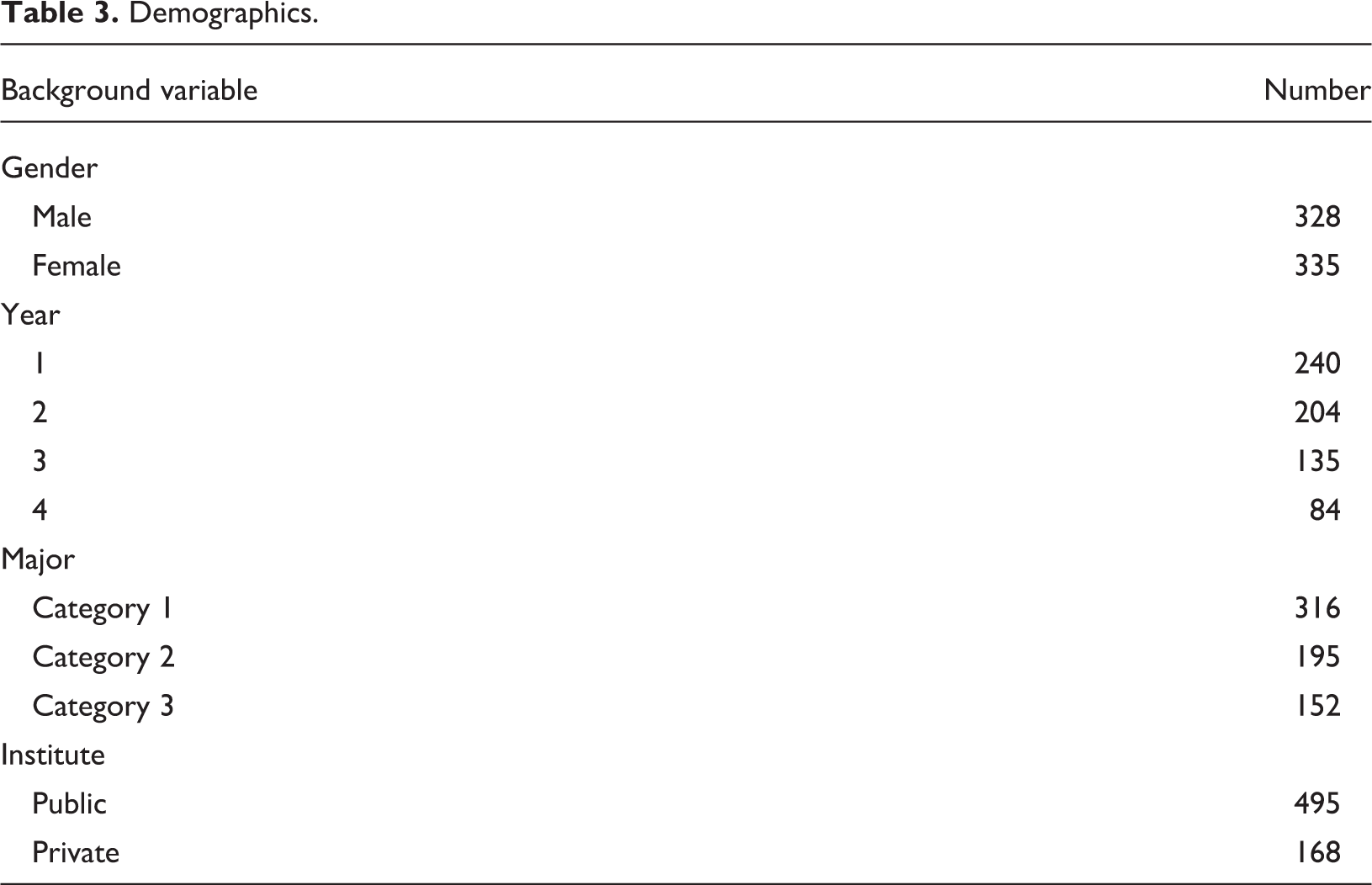
Six hundred and sixty-three Macao students pursuing higher education in Taiwan participated in the research. Among them (as shown in Table 3), 328 were male and 335 were female; 240 were Year 1 students, 204 were Year 2 students, 135 were Year 3 students, and 84 were Year 4 students. Their respective majors were as follows: 316 participants major in Category 1 (e.g., humanities, social sciences, and arts), 195 participants major in Category 2 (e.g., mechanics, engineering, and information technology), and 152 participants major in Category 3 (e.g., medicine and biology). Four hundred and ninety-five participants studied in public universities and 168 studied in private universities.
Demographics.
Preliminary analyses
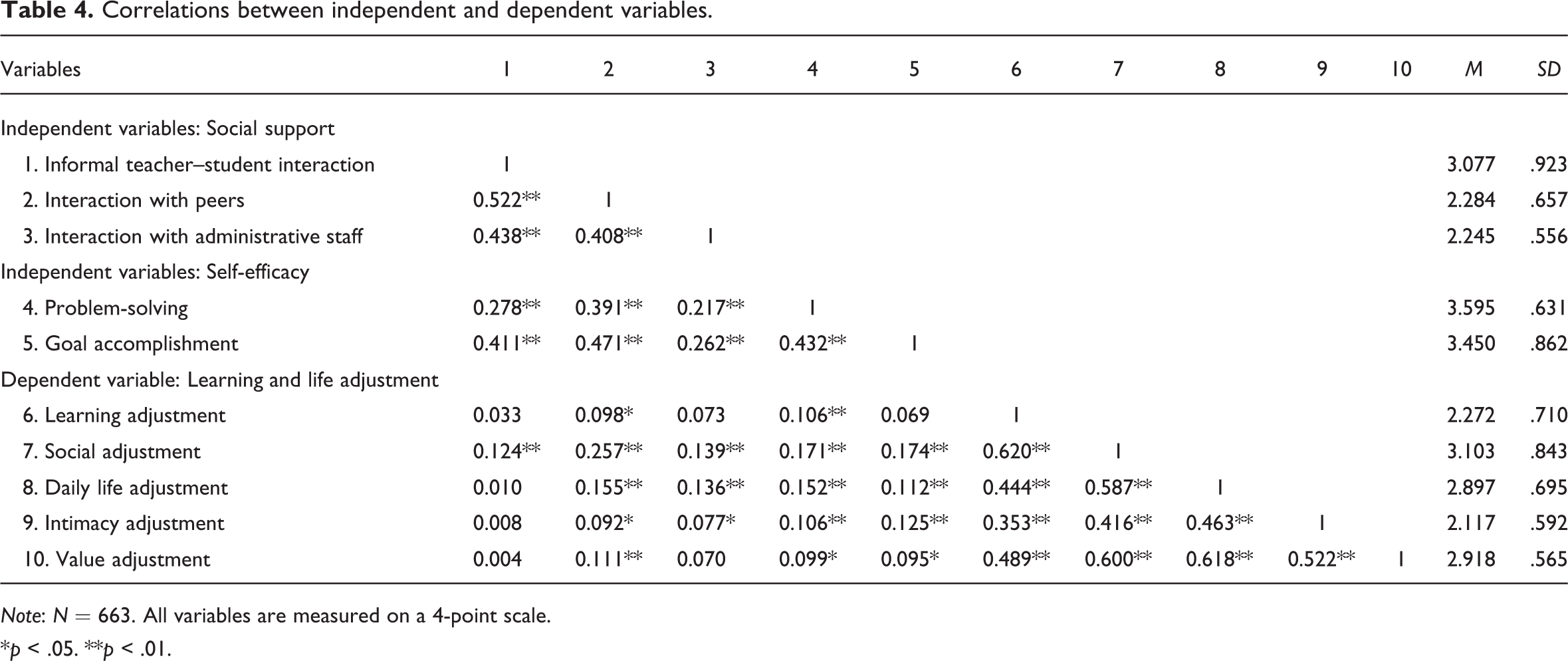
The mean scores of the 3 items of “Social Support Scale” were “Interaction with Teachers” (M = 3.077, SD = .923), “Interaction with Peers” (M = 2.284, SD = .657), and “Interaction with Administrative Staff” (M = 2.245, SD = .556). The mean scores of the 2 items of “Self-Efficacy Scale” were “Problem-Solving” (M = 3.595, SD = .631) and “Goal Accomplishment” (M = 3.450, SD = .862). The average score in the 5 items of the “Life Adjustment Scale” was “Learning Adjustment” (M = 2.272, SD = .710), “Social Adjustment” (M = 3.103, SD = .843), “Daily Life Adjustment” (M = 2.897, SD = .695), “Intimacy Adjustment” (M = 2.117, SD = .592), and “Value Adjustment” (M = 2.918, SD = .565). Generally speaking, as all variables were measured on a 4-point scale, Macao students achieved an above-average score of all items in the scales.
The results provided three insights. First, Macao students who further their studies in Taiwan performed fairly well in developing friendships and relating to teachers and fellow students. Second, judging from the scores of “Self-Efficacy Scale,” Macao students studying in Taiwan had high ability and confidence in independent problem-solving and considered themselves as gradually realizing their goals after arriving in Taiwan. Third, Macao students’ learning and life adjustment was acceptable. However, it should be noted that the average scores only provided a general overview of participants’ experience. Further analysis was needed to reveal internal differences. To this end, in the following section, data were analyzed with advanced statistical methods.
Inferential statistics
Correlation
As shown in Table 4, correlation between the independent variables and the dependent variables did exist. “Social support” and “adjustment” were positively correlated. Specifically, participants performed better in “Social Adjustment,” when more “Informal Teacher–Student Interaction” occurred. The correlation coefficient for this correlation was .124 (p < .01). In addition, more “Interaction with Peers” would result in better “Learning Adjustment” (.098), “Social Adjustment” (.257), “Daily Life Adjustment” (.155), “Intimacy Adjustment” (.092), and “Value Adjustment” (.111). These correlations were significant. Another significant correlation (p < .05) was identified between “Interaction with Administrative Staff” and “Social Adjustment” (.139), “Daily Life Adjustment” (.136; p < .01), and “Intimacy Adjustment” (.077; p < .05). These results demonstrated that the more social support was granted to Macao students, the better they were able to adjust life in Taiwan.
Correlations between independent and dependent variables.
Note, N = 663. All variables are measured on a 4-point scale.
*p < .05. **p < .01.
Also, items in “Self-Efficacy Scale” and “Learning and Life Adjustment Scale” were positively correlated. The higher the score was for “Problem-Solving,” the higher the scores were found for “Learning Adjustment” (.106), “Social Adjustment” (.171), “Daily Life Adjustment” (.152), “Intimacy Adjustment” (.106; p < .01), and “Value Adjustment” (.099; p < .05). Significant correlations were also identified between “Goal Accomplishment” and “Social Adjustment” (.174), “Daily Life Adjustment” (.112), “Intimacy Adjustment” (.125; p < .01), and “Value Adjustment” (.095; p < .05). To sum up, Macao students’ learning and life adjustment was closely related to self-efficacy, and students with higher self-efficacy tend to adjust better in new environments.
Difference in variables
Gender
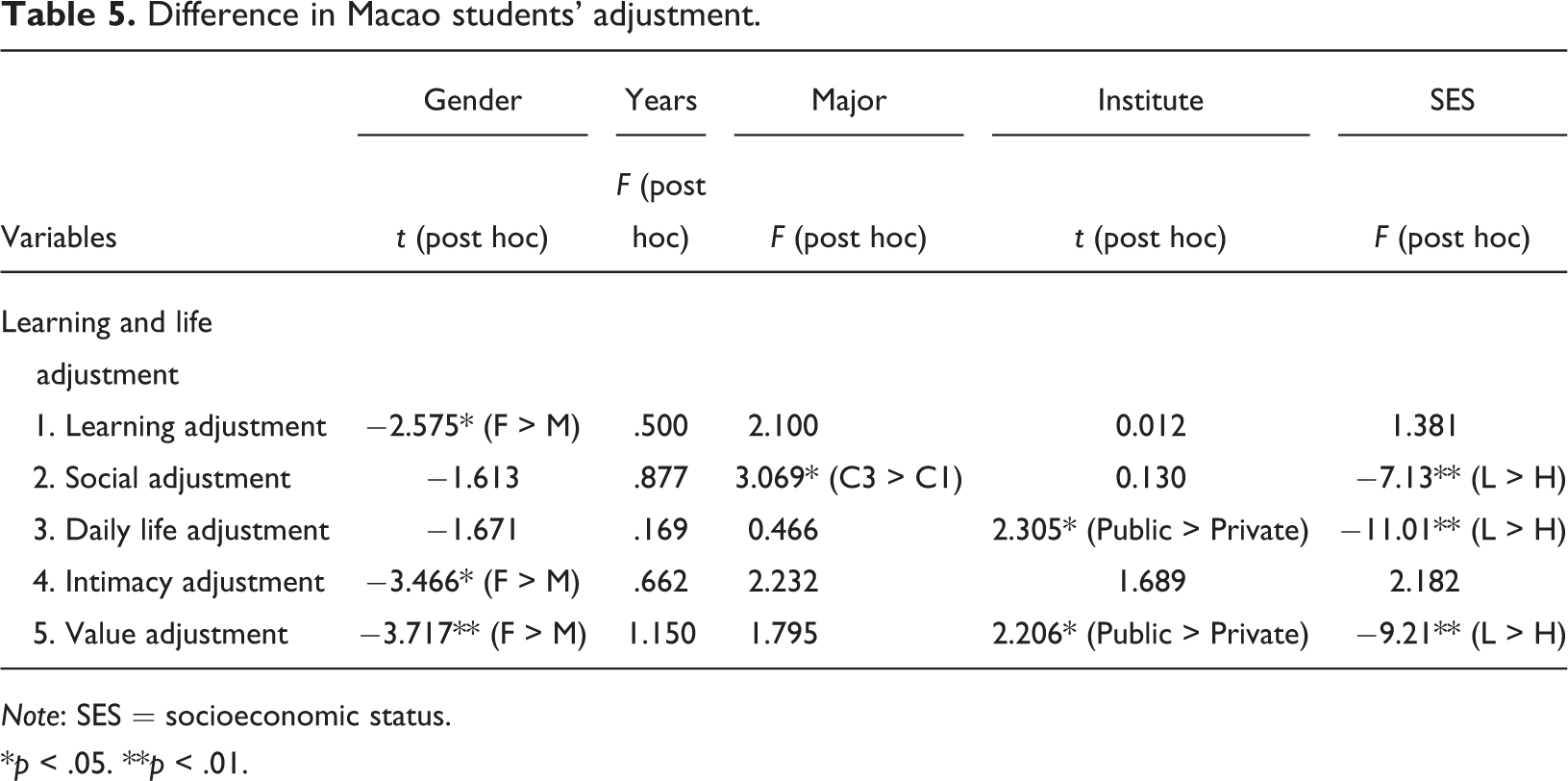
As shown in Table 5, for the 5 items in “adjustment,” females, on average, scored significantly better than males in the following items: “Learning Adjustment” (t = −2.575, p < .05), “Intimacy Adjustment” (t = −3.466, p < .05), and “Value Adjustment” (t = −3.717, p < .01). There were more interactions between teachers and male students than female students. However, female students outperformed male students in “Learning Adjustment,” “Intimacy Adjustment,” and “Value Adjustment.” There were four phenomena that are worth pointing out. First, female students performed better in learning adjustment. Second, female students can better communicate and interact with peers. Third, female students were more satisfied with the universities they attended. Fourth, female students received less pressure from parents than males did.
Difference in Macao students’ adjustment.
Note, SES = socioeconomic status.
*p < .05. **p < .01.
Year of study
Table 5 presented that no significant difference was found in the 5 items of the “Learning and Life Adjustment Scale” among students in different years of university study.
Type of institute
Table 5 demonstrated that, in the 5 items of the “Learning and Life Adjustment Scale,” a prominent difference (p < .05) was found in “Daily Life Adjustment” (t = 2.305) and “Value Adjustment” (t = 2.206). Hence, prominent differences were found in “Daily Life Adjustment” and “Value Adjustment,” where students from private universities underperformed peers in public universities.
Major
As shown in Table 5, a prominent difference (p < .05) was found for “Social Adjustment” (F = 3.069) in the “Learning and Life Adjustment Scale.” According to post hoc analysis, students studying in Category 3 outperformed their peers studying in Category 1 in “Social Adjustment.” Besides the difference in “Social Adjustment,” students from different majors performed consistently in most of the learning and life adjustment scenarios.
Parents’ SES
Does parents’ SES affect Macao students overseas study experience? According to the results (Table 5), in “Learning and Life Adjustment Scale,” significant differences occurred for “Social Adjustment” (F = −7.13), “Daily Life Adjustment” (F = −11.01), and “Value Adjustment” (F = −9.21, p < .01). These indicated that, in terms of learning and life adjustment, Macao students from families of higher SES underperformed those from families of lower SES.
The individual/combined effect size(s) of the variable(s)
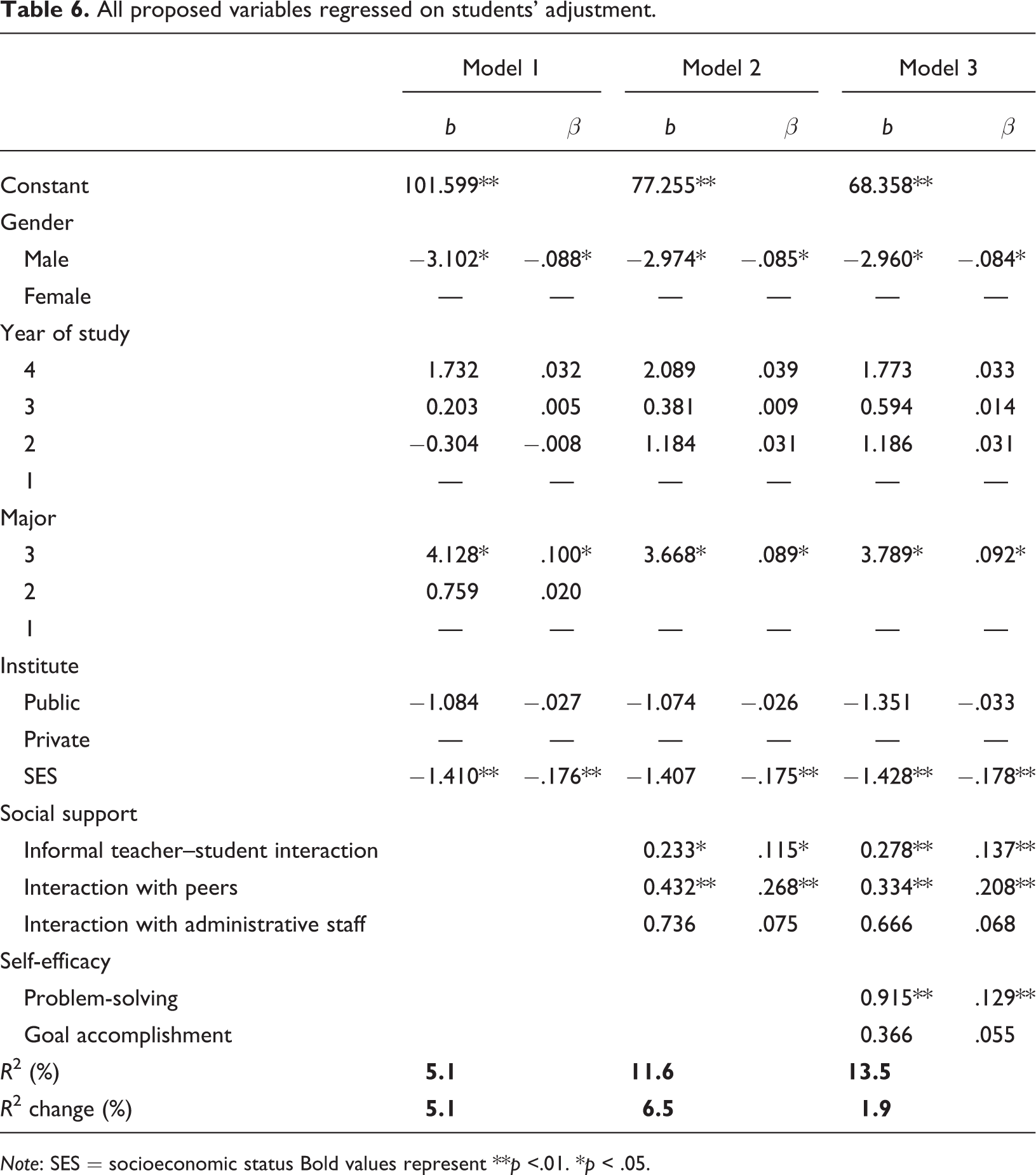
The study further used hierarchical regression analysis to examine the extent to which the variables in terms of background factors (gender, years of study, SES, major, and institute) and independent variables (social support and self-efficacy) could predict students’ adjustment. To this end, three regression models were proposed (see Table 6). In Model 1, among the variable of background factors, gender, major, and SES were significant predictors of students’ adjustment. In particular, male students’ adjustment issues were higher than female students (β = −.008, p < .05), students with the major of Category 3 had less adjustment issues than the other two (β = .100, p < .05), and the higher a given student’s family SES was, the more adjustment issues the student had (β = −.176, p < .01). The variance in students’ adjustment can be accounted for 5.1%.
All proposed variables regressed on students’ adjustment.
Note. SES = socioeconomic status. Bold values represent **p <.01. *p < .05.
The variable of “social support” was added to Model 2, and it also added significantly to the model’s predictive ability for students’ adjustment by 6.5% (the total was 11.6%). Specifically, while students had more informal interactions with teachers, they tended to adjust better (β = .115, p < .05). If students had more interactions with peers, they also appeared to have less adjustment issues (β = .268, p < .01). Gender, major, and SES remained significant.
In Model 3, the variable of “self-efficacy” was introduced into the model, and the results showed that it was also a significant predictor, especially the factor of “Problem-Solving.” Namely, when students had a good confidence in solving problems, they attempted to perform better in adjusting themselves to a new environment (β = .129, p < .01). Similarly, gender, major, SES, and social support still remained significant. The variance of students’ adjustment can be explained for 13.5% by all of the proposed variables. Of the variables, “Interaction with Peers” (β = .208), “SES” (β = −.178), “Informal Teacher–Student Interaction” (β = .137), and “Problem-Solving” (β = .129) were the top-four predictors for students’ adjustment (p < .01), as confirmed in the regression analyses.
Discussion
The first hypothesis we held is that social support and adjustment are positively correlated among Macao students in Taiwan. Based on the statistical evidences, Hypothesis 1 was supported. The result was consistent with previous studies (Chou, 2009; Fritz et al., 2008; Poyrazli & Lopez, 2007), which suggested that social network was related to international students’ learning and life adjustment. Namely, the importance of “Interaction with Teachers” and “Interaction with Peers” in students’ adjustment was supported by data, which were the two factors as suggested by the past studies. Yet, the study revealed that administrative staff seemed not to be functioning in improving students’ adjustment issues. In line with the perspectives of Altbach and Teichler (2001) and Bista and Foster (2011), the study also suggested that instead of only emphasizing how to attract international students to enroll, universities should devote more time and resources to create a better administrative mechanism to help them.
Hypothesis 2, self-efficacy and adjustment are positively correlated among Macao students in Taiwan, was also supported by data. This finding was consistent with previous studies (Poyrazli et al., 2002; Yusoff, 2012). The research went further to identify the aspects of “self-efficacy” relating to Macao students’ learning and life adjustment. The results specifically showed that Macao students with high confidence in “Problem-Solving” performed better in adjustment. In other words, for those students who embodied the abilities to solve problems and had the endurance to accomplish goals, they were expected to have a favorable outbound experience. On the contrary, for those who did not, they may experience otherwise, so they needed to think twice about whether to study outside Macao.
Our hypothesis 3 that adjustment among Macao students with different background variables displays significant difference was partially proven. Specifically, female students performed better than male students in “Learning Adjustment,” “Intimacy Adjustment,” and “Value Adjustment.” One possible reason for these results may be that male students, living in the Asian world deeply influenced by Confucianism, were expected to be more independent as well as under greater parental pressure for the pursuit of success. So, they tended not to share their emotional feelings with family and friends. As a result, male students lacked a proper method to channel their negative emotions, leading to their underperformance in adjustment in comparison with female students. In addition, significant differences in “Daily Life Adjustment” and “Value Adjustment” metrics had been identified between Macao students studying at private and public universities, where students at private universities underperformed in significant manner from their counterparts at public universities. This phenomenon could be explained by the fact that, in Taiwan, unlike public universities that are normally located in urban areas, most private universities are located in remote areas. Therefore, life for Macao students at private universities was less convenient compared with that for those at public universities, leading to the underperformance at “Daily Life Adjustment.” Moreover, public universities enjoy higher reputation in Taiwan’s education system. This may result in lower recognition and sense of value among Macao students at private universities than those at public universities. The situation could become worse when a Macao student was attending a non-first-choice university. Concerning the majors of the students, Macao students who studied Category 3 majors (e.g., medicine and biology) outperformed their counterparts who studied Category 1 majors (e.g., humanities, social sciences, and arts). A possible reason for this phenomenon may be that students who studied biological or medical sciences spent a lot of time in the laboratory to conduct experiments, which provided these students with plenty of opportunities for social interaction, and thus helping to overcome social barriers. The study, however, found that Macao students, despite their different length of studying in university, had no significant difference in their adjustment experiences, which was inconsistent with the results of the past studies. Specifically, some studies pointed out that a given student, with the increase of the years of study, appeared to perform better in adjustment (Chen, 1998; Khawaja & Stallman, 2011), whereas others asserted that first-year students outperformed their senior counterparts in adjustment because they were more willing to make new friends (Lin, 2012). The results of the studies, apparently, have not been conclusive. Further studies, undoubtedly, on this “time” issue are necessary, as it could be a crucial difference between international and cross-region students.
Another remarkable finding in this research was that the higher a given student’s family SES was, the more adjustment issues the student had. This phenomenon has been rarely mentioned in the previous literature. It may be accounted for by parenting styles. Namely, as Lareau (2002) suggested, unlike working-class parents’ parenting style of “natural growth,” higher SES parents appeared to adopt “concerted cultivation,” which meant that they had higher expectations regarding their children’s education; they, therefore, tended to be relatively more protective to their children and provided them with affluent resources, or even helped their offspring plan for the future (in this case, assisting their children to study outside Macao). By analogy, the possible reason for the phenomenon was due to the absence of assistance in everyday chores once students from higher SES left home and studied outside Macao. Moreover, those students may also have higher expectations regarding their living and learning in Taiwan, but when the real situation cannot satisfy their needs, it may lead to low satisfaction as well as adjustment adversity for these Macao students.
The last hypothesis we proposed is that Macao students’ background, social support, and self-efficacy have significant effects on their adjustment. We used multi regression analysis to test the hypothesis. The data supported the hypothesis. That said, Macao students’ adjustment in Taiwan’s education systems could be predicted by their personal background, social support, and self-efficacy. As the findings were consistent with the previous studies (Lee et al., 2004; Yusoff, 2012), we went further to examine which variables served as the powerful predictors. Of the variables, “Interaction with Peers,” “Informal Teacher–Student Interaction,” “SES,” and “Problem-Solving” were the top-four predictors for students’ adjustment.
Conclusion and policy suggestions
Adjusting to a new educational and social environment can be a stressful process. The study was designed to answer a critical question: Do Macao students have adjustment issues while studying and living in Taiwan? To this end, the current study focused on cross-region student mobility by surveying Macao students who pursued higher education in Taiwan. Specifically, it aimed at quantitatively exploring the relationship of “social support,” “self-efficacy,” and individual backgrounds on Macao students’ adjustment. Based on the research findings, the answer to the question is “yes.” Macao students, even while studying in a Chinese context, did have adjustment issues socially and psychologically. Hence, the research can surely shed light on understanding cross-region students as well as providing practical guides for relevant governmental departments in their policy regarding outbound students.
Taking Macao students in Taiwan as examples, our study, first, revealed that better interaction with peers and teachers was linked to better learning and life adjustment among Macao students, and interaction with peers seemed to be the most crucial one. Hence, to improve Macao students’ interaction with peers, we proposed a practical networking plan, “From Near to Far,” that is, helping Macao students make friends with classmates and senior students who are also from Macao through a buddy system when they first arrive in Taiwan. Macao Students Association at some universities plays an important role in gathering Macao students from across a university and provides them with an opportunity to build their personal networks. For those universities where there are not enough Macao students in the university to establish a Macao Students Association, an alternative solution is to establish a regional interuniversity one. In short, the goal of “From Near to Far” is to allow Macao students to expand their social circles through personal exchanges with their counterparts from the same country in the Macao Students Association at a university or in the region. From that, they can further expand their social network by making friends with domestic students and students from other countries. In addition, a regional (i.e., north, middle, south, and east) association of Taiwan universities should be set up and has a Macao counselor to assist Macao students. Normally, a student will be more willing to open up and share their problems with people of the same culture, background, or nationality.
Second, we also proposed the launching of “Macao Students’ Learning and Life Exchange Website.” The website should act as a platform for Macao students to enhance communication and conduct academic consultation. Governmental departments may also announce scholarships, policy changes, career advices, and recruitment information on the website. As we found that administrative members were not functioning well in helping Macao students’ adjustment, the related authorities at the universities should organize regular gatherings for outbound students and assist them. In doing so, it is expected that Macao students might channel their (especially for male students) emotions through communicating with relevant administrative staff.
Third, we discovered that Macao students’ mental health was related to their outbound study experience; that is, higher self-efficacy (especially problem-solving ability) was associated with better performance in learning and life adjustment. As self-efficacy is a mental status that may only be achieved through long-term fostering, we suggest that Macao government should hire professional researchers to design a “Self-Efficacy Scale for Macao Students” and organize workshops to help students who intend to study outside Macao to do the evaluation. The significance of the workshop is twofold. On the one hand, it will provide a reference for Macao students and their parents to understand whether or not they or their children are capable of overcoming common obstacles during the pursuit of a degree outside Macao. On the other hand, the scale will also allow government departments to conduct active intervention for improving students’ capabilities in learning and life adjustment before they leave home.
Finally, we found that Macao students from families of higher SES, while compared to their lower SES counterparts, tended to underperform in both learning and life adjustment. A possible reason contributing to this underperformance was due to the lack of the ability to live independently. Hence, the relevant governmental departments should send the following message to parents of students who intend to further their studies outside Macao: “overprotection makes learning and life adjustment more difficult for their children and may even limit the development of their children.” Moreover, governmental departments could recruit senior students who pursued or are pursuing higher education outside Macao to share their experiences with those students who plan to do so. Such sharing may cover topics such as academic studies, peer interaction, how to live independently, and daily life issues (transportation, accommodation, visa application, etc.).
Although this study identified factors that were related to Macao students’ learning and life adjustment in a Chinese society, Taiwan, this type of cross-region study in the Asian world is still rarely seen. It is possible that Eastern students studying in the Western world (or vice versa), as evidenced in the past literature, may encounter more challenges, but this does not necessarily mean that Eastern students studying in an Eastern country/region (or Western students studying in a Western country) can be excused from adjustment issues. At any rate, the study, along with certain limitations, to some extent, is an attempt to draw more attention to this “ignored group.” For example, the study was unable to integrate personal characters (i.e., humor, humility, and coping styles) in the research design, so further quantitative studies are needed. Moreover, the study did not capture the deep feelings and opinions of this group of Macao students, which invites more qualitative studies. In addition, regarding the research subjects, the study focused solely on Macao students in Taiwan without comparing them to other groups of students or those from other regions. Hence, studies for understanding whether Macao students in Taiwan have more or fewer issues in adjusting themselves to college life than other groups of students are also necessary.
Footnotes
Contributorship
Chi Fong Chan was responsible for the sections of “Introduction,” “Literature review,” and “Conclusion and policy suggestions,” especially focusing on describing the context of Macao as well as the implications for decision-makers in the Macao government. Ying-Jie Jheng was in charge of the sections of “Abstract,” “Methodology,” “Results,” and “Discussion,” in terms of designing the questionnaires, recruiting the research participants, conducting statistical analyses as well as responding to reviewers’ comments. In addition, the two authors carefully exchanged ideas and thoughts throughout the research process to finalize the study.
Declaration of conflicting interests
The authors declared no potential conflicts of interest with respect to the research, authorship, and/or publication of this article.
Funding
The authors received no financial support for the research, authorship, and/or publication of this article.