




Abstract
Purpose
This study examined the role of virtual student mobility (VSM) programs in developing international education partnerships and explored key factors for building successful transnational partnerships.
Design/Approach/Methods
Drawing on Yin’s case study approach, we explored several VSM programs offered by a Japanese national university in partnership with four research universities in China. Data sources included an autoethnographic account of planning and organizing virtual exchange programs and interviews with the partner universities’ virtual exchange program coordinators as well as with students who took different virtual exchange courses under the partnership.
Findings
Our case study showed that VSM models require significant collaboration, support, and commitment from universities to offer high-quality exchange programs. The initial establishment of VSM programs relies on existing relationships, clear communication, and a commitment to collaborate; however, VSM programs’ success depends heavily on the quality of online support, as well as inter-university communication and collaboration between administrators and faculty and intra-university communication and collaboration with partner universities. Based on the research results and the previous literature on international higher education partnerships, we propose a renewed partnership model in VSM comprising three main characteristics: (1) effective coordination and support, (2) effective communication, and (3) a commitment to partnership.
Originality/Value
Amidst emerging VSM models in higher education, this study contributes to the literature by proposing a renewed partnership model for sustaining VSM programs.
Keywords
Introduction
Long-term strategic partnerships have become an important agenda item for the internationalization of higher education institutions (HEIs) and institutional effectiveness in a global context (Vatolkina & Fedotkina, 2018). This phenomenon has been noted all over the world, including among both Western universities (e.g., in the European Union [EU] and Australia) and Asian universities (e.g., in China; Ferencz & Rumbley, 2022; Ma & Ploner, 2022; Saffu & Mamman, 2000; Sweeney & Bonney, 2021). Strategic partnership plays a vital role in effectively implementing a university's sustainable development strategy (Salimova et al., 2014). As an open social system, universities tend to actively engage in knowledge exchange and acquire various resources from the global environment. The main goal of international strategic partnerships can be achieved through a systematic and well-balanced enhancement of mutually beneficial collaborative approaches with diverse international partner groups, all aligned with national political missions and the university's interests (Ma & Ploner, 2022). A similar situation exists in Japan. According to Sato (2021), the internationalization policy for post-300,000 international students aims to foster transnational collaborations to create joint degrees, overseas bases, joint programs, and/or overseas institutes with partner universities rather than mere student mobility. By efficiently allocating and utilizing resources obtained from its partners, it is hoped that Japanese universities can propel themselves toward new stages of growth and advancement, contributing to higher quality education, reputable credentials, financial resources, and market opportunities (Saffu & Mamman, 2000).
During the pandemic, universities worldwide implemented various virtual student mobility (VSM) programs as a response to border closures to continue offering student exchange programs through virtual or online means. In Japan, the government has actively pursued policies to internationalize higher education, aiming to attract exceptional international talents and enhance its global standing in education, research, and industry (Yonezawa, 2014). Consequently, in the post-pandemic era, there has been notable encouragement of information and communication technologies (ICT) based internationalization activities, particularly in the domain of student exchange. As an illustration, the Top Global University Project, designed to internationalize prominent domestic universities, introduced online programs that prompted institutions to adopt ICT-based and virtual models in their internationalization efforts (Sato, 2022).
Although various initiatives in online education and virtual mobility were already present in Japanese universities prior to the pandemic (e.g., Kansai University's collaborative online international learning [COIL] initiatives, telecollaboration, and tandem programs in language learning), a significant portion of Japanese universities, especially national universities, did not have a widespread virtual mobility program. The emergence of international VSM programs during the pandemic motivated certain universities to embrace virtual student exchange in hybrid or blended formats, as well as on-demand or fully online modes, even as the restrictions eased and in-person student exchange resumed, attracting a larger number of students. In essence, the VSM models implemented during the pandemic challenge existing discussions surrounding student mobility (Ota et al., 2023) and offer opportunities to enhance internationalization activities.
In this paper, we examine VSM's role in strengthening international higher education partnerships. We will first review international partnership and virtual mobility as part of the internationalization of higher education activities to shed light on the gap in understanding the interrelation between these two strategies. Then, drawing on Heffernan and Poole's (2005) working model of effective international education partnerships, we will explore a case study of a Japanese national university's collaboration with four Chinese national universities to develop a virtual study mobility program and illustrate factors for successful international higher education partnership.
International partnerships in higher education
In the context of Japan's aging society, declining birth rate, and decreasing higher education student population, coupled with the growing pressure on higher education to contribute to economic revitalization through the development of skilled graduates, there has been a strong national push for internationalization (Ota, 2018; Yonezawa, 2014). This has led to the allocation of government funds to universities for the purpose of “internationalizing” their institutions or establishing overseas networks primarily focused on attracting international talents. As a result of these government policies, the number of international students studying in Japan has seen a significant increase. In 2019, Japan hosted 312,214 inbound students, representing a four-fold increase over a 10-year period since 1999 (Japan Student Services Organization [JASSO], 2019). This figure accounts for 5% of all globally mobile students (United Nations Educational, Scientific and Cultural Organization Institute for Statistics [UNESCO UIS], 2023).
However, the majority of domestic students in Japan do not participate in study abroad programs. In 2019, of the 2.9 million university students in the country, only 107,346 had studied overseas. Among them, 70% had embarked on study durations of less than 1 month, and 35% chose English-speaking countries such as the United States, Australia, and Canada as their study destinations (JASSO, 2021). Factors such as financial constraints, the lengthy job-hunting process, perceived language skill deficiencies, and a lack of motivation to study abroad have contributed to this low participation rate among domestic students (Yokota et al., 2018).
In response to this situation, as well as to the mobility restrictions imposed by the pandemic, Japanese universities have introduced COIL and similar online programs as part of educational initiatives to enhance students’ language skills and intercultural communication abilities (Hofmeyr, 2021). Since the mid-2010s, spearheaded by Kansai University's Institute for Innovative Global Education (IIGE), COIL programs have been developed between Japanese and American universities, as well as universities in Asia, South America, Africa, the Middle East, and Europe (Rubin, 2017). In 2018, the Japanese government's Inter-University Exchange Project, Reinventing Japan, supported the adoption of COIL-style education as a means to facilitate exchange with American universities (IIGE, 2023). Each year, the project selects strategic countries to deepen collaborative programs and partnerships, particularly among HEIs. Thus, by endorsing the COIL initiative, the government has recognized online education as another avenue for strengthening strategic partnerships.
Over the past two decades, international higher education partnerships have seen a significant increase worldwide, although they have been criticized for being “plentiful in number but thin in substance” (Sutton, 2010, p. 61). Many universities engage in international collaborations primarily for the purpose of quantity, institutional branding, and rankings, often resulting in superficial collaborations limited to memoranda of understanding. In contrast, Japan has been slower in adopting transnational higher education practices, such as establishing overseas campuses or offering joint programs. However, international partnerships in higher education in Japan have taken a more strategic approach, moving beyond the pursuit of sheer numbers (Jung et al., 2018). This strategic partnership approach, although not precisely defined, involves cultivating multi-layered and long-standing collaborations in the realms of education, research, and social engagement, with a focus on institutions sharing mutual values and reaping equitable benefits.
These key characteristics have also been identified in previous studies as crucial factors for successful international partnerships. Additionally, locally identified needs and priorities (Bowen et al., 2021), effective and transparent communication, mutual trust, and commitment (Heffernan & Poole, 2005), as well as the inclusion of diverse stakeholders and the setting of compatible goals (Tekleselassie & Ford, 2019), have been highlighted as important considerations. Furthermore, challenges associated with partnerships encompass legal, financial, academic, institutional, cultural, and evaluation-related issues (Tekleselassie & Ford, 2019), particularly in the implementation of transnational education programs such as joint or dual degree programs.
However, the concept of international strategic partnerships in the Japanese higher education context, particularly with other East Asian countries, remains underexplored. Existing research has primarily focused on East–West collaborations and has tended to assume that Eastern universities engage in partnerships with Western institutions to benefit from external expertise, learn from them, and enhance their own educational brands through association (Sanders & Wong, 2021). Considering the variations in national internationalization policies, institution types and rationalities, and program features, these partnerships assume different forms and processes, resulting in diverse sets of success factors and challenges.
Virtual student mobility
During the late 1990s, the EU's Humanities Project first introduced the concept of virtual mobility, as Schweighofer (1996) noted. In early 2000s, ICT-based academic mobility and its potential have been discussed in the literature (e.g., Hoffman, 2009). Europe's Erasmus + Student Mobility Program began implementing virtual exchange in 2018 as a pilot program to usher in more inclusive programs that aim to foster intercultural dialogue and the development of soft skills and emphasize learner interaction (Helm & van der Velden, 2020). The programs are conducted among Erasmus + program members across and outside Europe between two or three universities. Similarly, COIL, introduced by the State University of New York, aims to deliver online learning and exchange through the efforts of at least two collaborating faculties at different institutions overseas.
However, prior to the pandemic, the VSM concept was relatively less known in higher education, especially in the context of international student exchange programs (United Nations Educational, Scientific and Cultural Organization Institute for Higher Education in Latin America and the Caribbean [UNESCO IESALC], 2022). Despite the long-lasting practice of virtual and collaborative learning, the term “virtual student mobility” was first defined in a UNESCO report in 2022 “as a type of mobility that utilizes information and communication technologies to facilitate academic, cultural, and experiential exchanges and collaboration across borders and institutions” (UNESCO IESALC, 2022, p. 6). Drawing on 14 cases worldwide, the report emphasized VSM programs’ potential to expand access to student mobility beyond physical limitations, particularly in a post-pandemic global higher education setting.
Although the literature on the role of VSM in the internationalization of higher education is still limited, previous research has mainly focused on ICT's role in delivering exchange programs, for example, highlighting how “technology-mediated” (Lee et al., 2022) or “technology-enabled” (Giralt et al., 2022) programs have the capacity to deliver international exchange programs. Other studies have examined students’ VSM experiences (Enkhtur et al., 2023) and the outcomes of virtual mobility programs regarding the development of students’ skills (Rajagopal et al., 2020), including their intercultural skills, global competencies (Hackett et al., 2023), and transformative learning (Fritz & Marchewka, 2023). For instance, O’Dowd (2021) observed that virtual exchange programs enhanced students’ second-language communication skills, reshaping their perception of English as a communication tool rather than as an abstract academic activity. Fritz and Marchewka (2023) applied transformative learning theories to virtual exchange programs and found that Japanese students who completed a 4-week pilot virtual program developed new perspectives about themselves and their counterparts in Poland. Enkhtur et al. (2023) illustrated that VSM is a more accessible form of student exchange with the potential to simultaneously promote in-person exchange.
However, few studies have illustrated how collaborative or virtual programs leverage institutional partnerships or how partnerships can be strengthened through virtual exchange programs. Brautlacht et al. (2019), for example, noted three pillars for the successful implementation of virtual exchange: pedagogy, project management, and finance. These pillars emphasize the importance of investing in technology and/or a technical platform, administrative support, and pedagogy that embraces the importance of digital communications and competencies. Rubin and Guth (2023) mentioned contextual factors such as shared educational goals or priorities, such as diversity, equity, and access, which COIL or virtual exchange programs may be able to support. Other factors include being flexible with different time zones, implementing asynchronous activities, or accepting differing academic calendars or credit allocation requirements (Rubin & Guth, 2023). The majority of virtual exchange programs are similar to in-person exchange in that they require an institutional partner to match the curriculum, transfer credits, coordinate the program, and support students before, during, and after study abroad. The Stevens Initiative (2020) developed a virtual exchange typology that considers the type of lead and partner institutions, as well as the type of administration, the learning content, the types of activities, program duration, number of participants, participant demographics, technologies used, the cost for learners, and program credentials. The number of variables in this typology shows that virtual exchange programs may have different processes and outcomes. For example, institutional partnerships may include international or local non-governmental organizations, community organizations, and primary and secondary education institutions, in addition to HEIs. Furthermore, although COIL programs promote faculty-level collaborations to match and develop a shared curriculum with administrative support (Waterval et al., 2015), university-wide VSM programs require much more institutional effort to develop and deliver virtual exchange programs. In this paper, we explore the factors for successful partnerships in the development and implementation of VSM programs. Based on the findings of our case study, we introduce a revised model.
Methodology
This paper draws on Heffernan and Poole's (2005) relationship factor model for developing and maintaining successful international education partnerships. Although various socioeconomic contexts and factors such as resource availability, quality assurance policies, and teaching and learning strategies influence international higher education partnerships, this model specifically focuses on effective relationships that are crucial in implementing VSM programs. Heffernan and Poole's (2005) model identified three main factors, namely communication, trust, and commitment, that are non-linear, meaning each factor contributes to the other. Heffernan and Poole (2005) emphasized “effective communication,” defined as open, honest, clear, face-to-face (formal and informal), culturally sensitive, and timely communication (p. 238). “Trust” is defined as “an orientation—based on the faith or confidence that the overseas partner will act with integrity—which will allow the university to increase its vulnerability” to overseas partners (pp. 238–239). “Commitment” is “a desire to develop a stable relationship, a willingness to make short-term sacrifices to maintain the relationship, and a confidence in the stability of the relationship” (Anderson & Weitz, 1992, p. 19).
To explore the case of VSM between a Japanese national university and its international partner universities, we employed a case study design based on Yin's (2004) framework. The case study approach was selected to facilitate an in-depth exploration of the VSM phenomenon to allow for a comprehensive understanding of its complexities and dynamics. The research design entailed careful selection of case universities and the collection of data from multiple sources, including a document review of publicly available materials and interviews conducted with administrators from four partner universities as well as with students who participated in the VSM program. Additionally, autoethnography was utilized to incorporate insiders’ knowledge and enable a comprehensive examination of the virtual exchange programs and institutional international partnerships. By employing this methodology, we aimed to offer a detailed and insightful analysis of VSM programs by shedding light on the underlying factors, relationships, and contextual influences that shape virtual mobility and institutional partnerships in the Japanese context.
We interviewed senior administrators from partner universities that implemented VSM programs with the lead university over the past 2 years. The four partner universities are nationally recognized research institutions in China and are part of the Chinese government's Project 985, which was initiated to enhance China's top universities’ global competitiveness and reputation. Although the lead university also expanded VSM with other universities, the four Chinese case universities were the first to join the program (see the descriptions of lead and partner universities in Table 1).
Description of case universities.
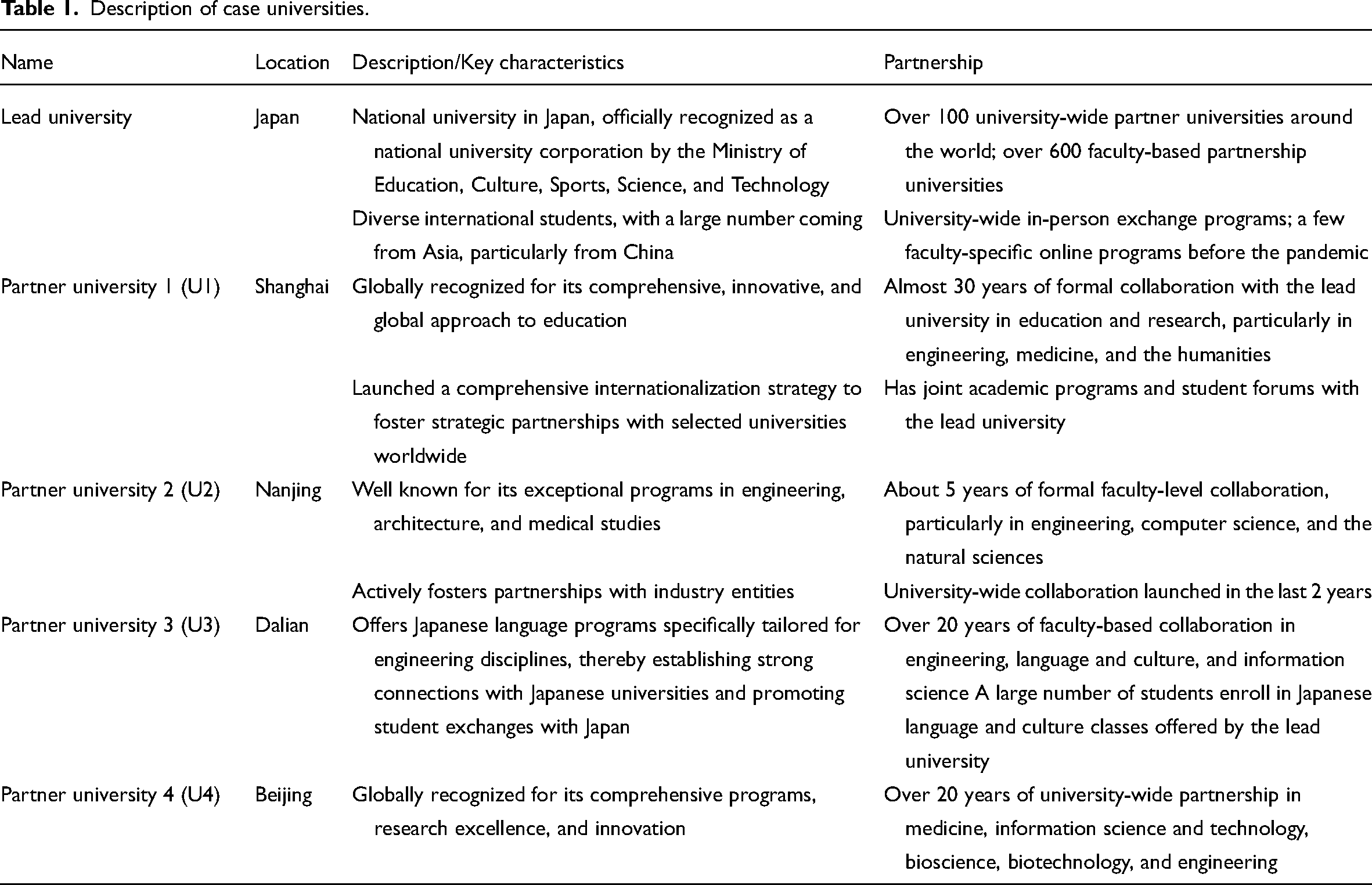
The first and second authors conducted individual interviews in Chinese and sometimes in English, with each interview having a duration of up to 1 h. During the interviews, we asked the universities’ senior administrators in charge of student exchange programs about their motivations for implementing VSM programs, the challenges they encountered (in design and implementation), the benefits the institutions have reaped regarding their internationalization activities, the post-pandemic prospects for the sustainability of virtual exchange programs, and their perceptions of factors for the successful implementation of VSM with partner universities. All interviews conducted in Chinese were transcribed in Chinese before being translated into English for analysis. Although only a limited number of university administrators were interviewed, all the interviewees were senior administrators or the main coordinator of a VSM program. Additionally, the universities sampled for this case study represent over half of all partner universities participating in the lead university's VSM program.
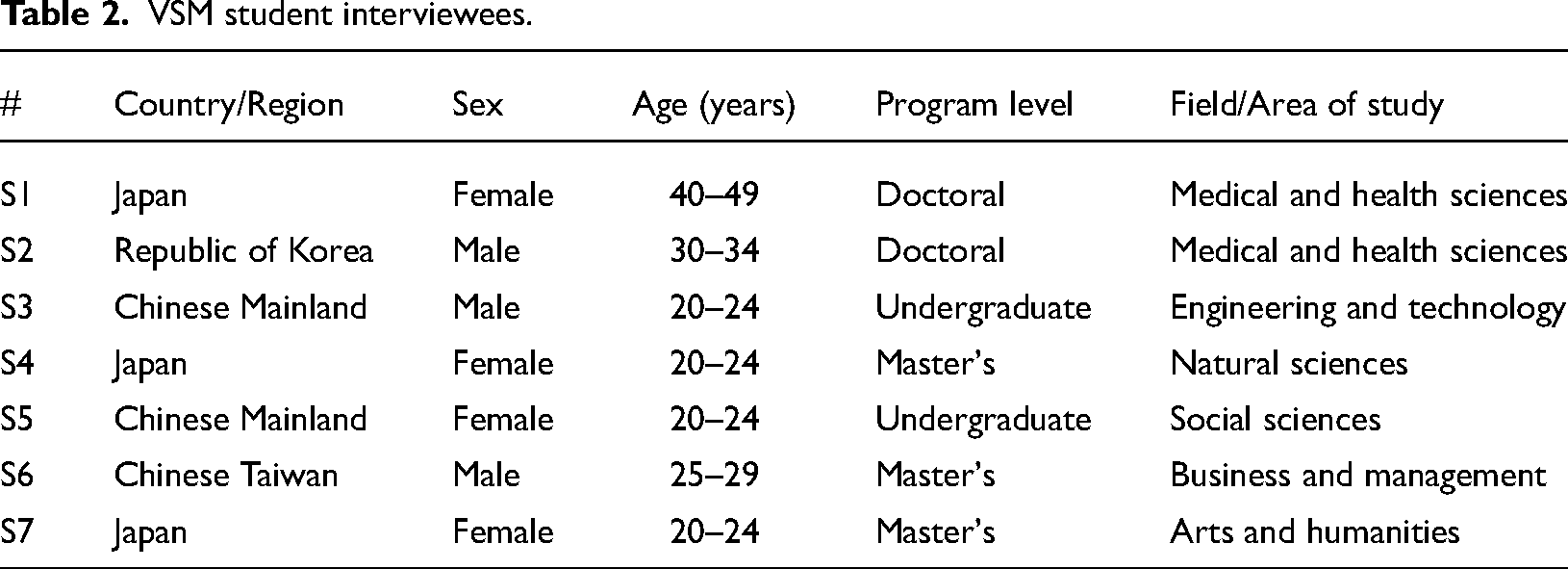
Furthermore, we interviewed students who enrolled in VSM courses offered by the lead university or the partner universities during the 2021–2022 academic year. We identified students who had both positive and negative experiences in the VSM programs based on their responses to the end-of-course survey the lead university administered. The first and third authors interviewed seven students (Table 2) in Japanese, English, or Chinese, and each interview had a duration of 30 min to 1 h. Interviewees were asked to discuss their motivations for participating in the VSM program, their experiences of studying at the host university through virtual exchange, and the challenges and benefits they encountered. This study adhered to the Code of Ethics of the American Educational Research Association; hence, we obtained informed consent from all interviewees, including administrators and students, for the information they provided to be utilized as part of this research.
VSM student interviewees.
Furthermore, utilizing an autoethnographic approach, we actively engaged in self-reflection to gain insights and derive meaning from our own lived experiences in designing, implementing, and evaluating VSM programs. Autoethnography acknowledges the researcher as an integral part of the research process, enabling a nuanced understanding of complex phenomena and facilitating a profound connection between the personal and the social. Such an approach was relevant to this study because this paper's authors have been actively involved in fostering partnerships with overseas universities, particularly in East Asia, to promote education, research, and social engagement. Thus, drawing on the autoethnographic approach allowed us to reflect on our own experiences of promoting partnerships and virtual student exchange to shed light on how the processes of establishing, implementing, and planning for sustainable virtual exchange programs both challenge and foster institutional partnerships.
Findings
Setting up: Institutional partnership-driven VSM
As universities adapted their education, research, and even student support to online platforms during the pandemic, innovative solutions to facilitate international exchange became a priority. Although some universities opted to participate in established programs offered by university associations, such as the Asia Pacific Rim University Association's virtual exchange program under the leadership of the Chinese University of Hong Kong, others sought to develop their own VSM programs. The case universities strategically identified and selected partner institutions based on existing relationships, successful past collaborations, and a commitment to high-quality academic programs.
Through extensive discussions regarding course duration, class hours, the number of students eligible for tuition waivers, and credit allocation, a virtual exchange agreement was initially established with three partner universities operating in Chinese mainland. In the subsequent years, the program expanded to include additional partner universities from Chinese mainland, Chinese Taiwan, Indonesia, Germany, and Korea. Lead university faculty in charge of partnerships played an important role in facilitating these discussions by utilizing their cross-cultural knowledge and language skills.
Supported by institutional leadership, the program administrators brought together faculty from various schools, including graduate schools, as well as from centers and institutes. Simultaneously, the partner universities contributed by offering their existing online courses or modifying some of their courses to hybrid formats and making them available to the lead university and other partner institutions.
The initial universities that entered into VSM agreements shared a common set of characteristics. They were all top Chinese universities with a strong interest in strengthening their partnership with the lead university. Although some had a similar interest in strengthening their digital education offerings, others lacked the infrastructure or systems to support the program. Nevertheless, these universities were eager to experiment with virtual programs.
Our interviews with administrators at these partner universities revealed their strong emphasis on maintaining consistent collaborations during the challenging times of the pandemic. A senior administrator at U4 highlighted the importance of communication, stating, “Especially during the pandemic, being able to maintain communication was important.” Prior to the pandemic, these universities had engaged in fruitful exchanges of researchers and students, as well as joint symposiums and events, which facilitated the establishment of close relationships. However, these exchanges were abruptly disrupted by the pandemic, underscoring the significance of virtual initiatives in sustaining connections.
A U2 administrator stated: It is an important priority for us to strengthen our links with partner universities and offer diverse opportunities for student exchange opportunities . . . when we first announced the VSM program with [lead university], our students were also very interested in taking courses from [lead university] . . . [In the] first year, we had over 100 students signed up to the program from all over the university and we had to cut the number down. It was [a] more logistically possible option to study abroad. And I prefer online exchange because [it is] easier to align with my schedule . . . [the lead university] is well-known in my field and [the course I took] gave me a good overview of current research practices. (S6)
However, building this VSM model at the case universities required much effort from administrators and faculty. All the case institutions developed the programs based on their existing collaborations, and their commitment to building strong partnerships at the administrative level played a crucial role in aligning faculty, student, and institutional interests.
Although these universities had pre-existing university-level partnership agreements for physical student exchange, they had to consider institutional policies and requirements for academic programs and calendars. As students would remain at their home universities and attend classes either online or offline, university administrators had to ensure that the VSM courses aligned with the home university calendar to enable students to earn credits efficiently within the given academic period.
Collaboration with faculty was crucial in identifying courses suitable for VSM and exploring possibilities for developing collaborative courses. Administrators worked closely with faculty, recognizing the complexity of coordinating and communicating with departments when arranging VSM programs. A U1 administrator highlighted the challenge as follows: “Coordination and communication with departments are more complex, requiring additional efforts to support faculty members in enhancing their online teaching skills.”
Enhancing the VSM experience: Student support and coordination
During the VSM program implementation, each university processed student applications and provided a comprehensive student orientation to introduce enrollees to the learning management system and outline the host university's academic and other expectations.
Although the VSM model promises increased access to international education and exchange, its success relies on support and investment from universities to ensure the delivery of high-quality exchange programs. Two case universities (U1 and U4) were able to launch a university-wide online education platform that made it easier for students to register, take courses, and follow instructions. However, the other two universities and the lead university coordinated the VSM classes manually by registering the students in one system and launching the courses in another system while communicating with students and faculty throughout the process.
A U2 administrator said: We do not have [a] designated office for virtual exchange; thus, the staff in charge of physical exchange is also organizing the VSM, which affects our level of support for students.
Students’ interview content showed that responsive and communicative teaching assistants enhanced their VSM experience. A student at the lead university said: I initially had a difficult experience because I could not efficiently interact with the professor or the students at [host university], particularly during in-class activities. However, the TA (teaching assistant) for that class [was] super nice and very supportive; [they] always [made] sure I followed the class [and] even help[ed] me join the classroom discussions by forming [a] Line chat group. (S2) Although the lectures were very interesting, I barely talked to [the] other students in the class. The instructor grouped all [the] students to prepare presentations, so I was grouped with another online student. However, I ended up doing the presentation independently as it was difficult to meet the other online students outside the class time. (S5)
These varying approaches to VSM implementation highlight the need for universities to invest in dedicated resources and support systems to enhance the student experience. By establishing dedicated offices or teams for virtual exchange and streamlining communication channels and systems, universities can better support VSM students and foster a more seamless and engaging virtual learning environment.
Enhancing connections and building stronger relationships through VSM
VSM program implementation has resulted in strengthened connections and closer relationships among the case universities. U1 administrators emphasized the significance of frequent online communication as follows: Online communication facilitates the establishment of cooperative relationships, especially for universities with less closely-knit partnerships. This approach allows for cost-effective collaboration with global target universities, laying a solid foundation for deeper cooperation in other areas.
A U2 administrator said: For school administrators like us, virtual exchange during the pandemic [was] very helpful. I found [that with] many of our partner universities, such as [lead university], with who[m] we conducted the VSM programs, we maintained a good relationship. As soon as the outbreak was over, we were able to plan offline activities at the university leadership level . . . This has been undeniably due to the relationship we have maintained during the pandemic.
Discussion and conclusion
During the pandemic, universities have increasingly adopted VSM programs to provide international education and exchange opportunities. Our case study has shown that although VSM presents more accessible options for international education, it also requires significant coordination, support, and commitment from universities to offer high-quality exchange programs. Initially, establishing VSM programs relies on existing relationships, clear communications, and a commitment to collaborate; however, their success depends heavily on the quality of online support, as well as effective inter-university communication and collaboration among administrators and faculty and effective intra-university communication with partner universities.
Although Heffernan and Poole (2005) identified trust, commitment, and effective communication as essential elements for developing fruitful international education partnerships, our interviewees did not mention the trust factor. This may be attributed to the fact that the VSM programs in our case study were built upon existing institutional partnerships featuring established trust; hence, trust was more of a precursor to effective communication and commitment. On the other hand, we believe that the endeavor strengthened the trust between the institutions because they were able to continue their collaboration during the difficult times brought on by the pandemic; therefore, once physical travel was restored, these institutions were the first to visit the lead university. Our study also highlighted the crucial role of efficient coordination between and within universities, which involves fostering collaboration among faculty, students, and administrators, as well as establishing effective communication channels with partner universities.
Building on our research findings, we propose an adjusted partnership model for successful VSM. The model emphasizes three key characteristics: (1) effective coordination and support, (2) effective communication, and (3) a commitment to partnership (see Figure 1). Although the factors are non-linear, efficient coordination and support cannot be achieved without effective communication and a commitment to partnership as precursors. On the other hand, efficient coordination that results in successful VSM can strengthen commitment to the partnership, which, in turn, encourages efficient communication.
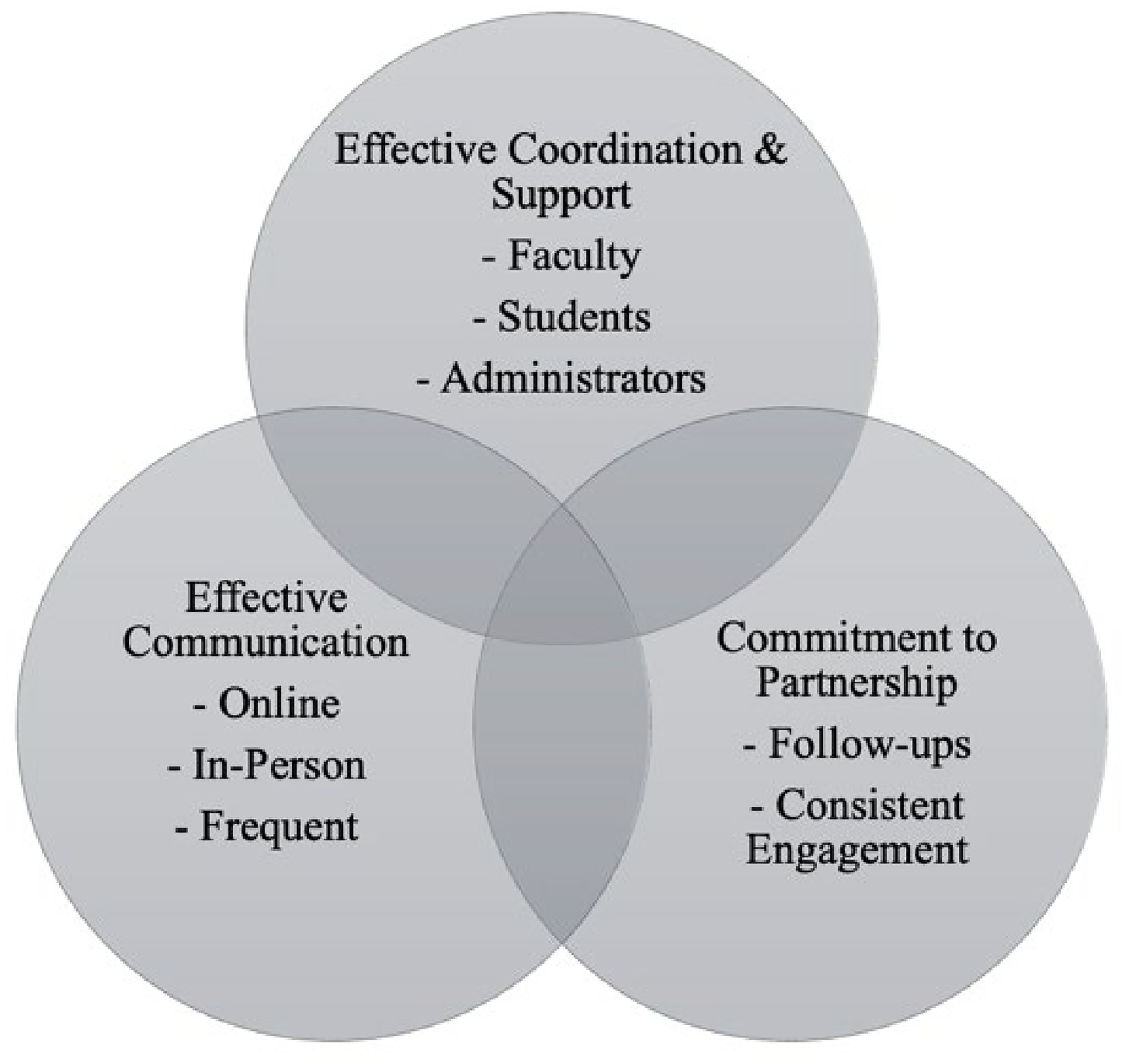
Key factors for successful international higher education partnerships in VSM programs (adapted from Heffernan & Poole, 2005).
As the VSM courses transitioned to blended or hybrid mobility, combining the online and on-site study modes, faculty faced new challenges in managing hybrid classes comprising both in-person and online students. Adequate support, including well-prepared teaching assistants, proved crucial in assisting faculty. Furthermore, supporting students as they attempted to navigate different academic calendars, learning management systems, and academic expectations was essential to ensure a seamless VSM experience. Administrative staff also required additional support and resources to effectively coordinate both online and on-site exchange students.
In our study, effective communication played a crucial role in successful VSM program implementation. Administrators demonstrated efficient online communication by utilizing various platforms and social media (e.g., Teams and WeChat) for meetings and urgent consultations, which facilitated the smooth launch of VSM programs across their institutions. Our interviewees praised this cost-effective and timely communication approach that is still widely utilized.
Moreover, the commitment to building and strengthening partnerships was a significant factor at every stage of the VSM process. Participating institutions’ commitment level influenced their ability to navigate institutional policies and regulations and make necessary adjustments to the VSM programs. This finding aligns with Hefferman and Poole's (2005) emphasis on the importance of commitment in developing effective international partnerships.
Further exploration is warranted to investigate these factors within different types of VSM models that require more intensive faculty–student collaborations. As HEIs increasingly prioritize long-term strategic partnerships and aim to enhance institutional effectiveness in a global context, VSM programs present valuable opportunities to cultivate meaningful and sustainable partnerships.
Universities can enhance their VSM partnerships by drawing on our proposed model, which prioritizes effective coordination and support, the establishment of robust communication channels, and a steadfast commitment to partnership. Continued research in this area, particularly in different national, geopolitical, and institutional contexts, will contribute to the ongoing development and refinement of VSM models and their impact on higher education internationalization.
Footnotes
Contributorship
Ariunaa Enkhtur was responsible for writing the paper overall, finalizing and responding to reviewers’ comments. She contributed in autoethnographic notes, data collection from students, and led the analysis and theorization of the findings as well as literature on virtual student mobility and partnerships in higher education. Xixi Zhang contributed by collecting data from partner universities, writing autoethnographic notes, and helped the analysis of findings from international partnership perspectives. Ming Li contributed by collecting data from students and summarizing the literature on internationalization of higher education in Japan including recent policies on virtual student mobility. Lilan Chen teased out literature on strategic partnerships and internationalization of higher education.
Declaration of conflicting interests
The authors declared no potential conflicts of interest with respect to the research, authorship, and/or publication of this article.
Ethical statement
To adhere to the Code of Ethics of the American Educational Research Association, we obtained the informed consent of all interviewees, including administrators and students, for the utilization of the information they have provided in this study.
Funding
The authors disclosed receipt of the following financial support for the research, authorship, and/or publication of this article: This work was supported by the Japan Society for the Promotion of Science (grant number 21K13602).
