



Abstract
Purpose
Inspired by Kuan-Hsing Chen's “Asia as method,” this study investigates a multicultural approach to education. Using East Asia as the frame of reference, this study explores multiculturalism in middle school classrooms in Chinese Taiwan.
Design/Approach/Methods
Semistructured interviews were conducted with principals, administrators, and teachers at a middle school known for its diversity work. Data were coded based on the conceptual framework and emergent themes analyzed using NVivo.
Findings
Findings elucidate the harmony-oriented multicultural approach adopted by administrators and teachers to empower the youth to embrace their ethnic heritage. This approach was characterized by three Confucian-influenced features: whole-person development, strengthening of the collective school unit, and a school decision-making approach prioritizing “fairness.”
Originality/Value
This study investigates the multicultural responses of teachers and schools to student diversity through a nondeficit lens in East Asia, revealing the harmony-oriented practices adopted in this respect. In addition to establishing a foundation for East Asian scholars to explore how teachers respond to student diversity in their respective contexts through an asset lens, the findings of this study advance our understanding of how to recognize differences and maintain social cohesion.
Introduction
In societies that have been relatively homogeneous in terms of language and ethnicity and have historically prioritized cultural uniformity over difference, how can Asia's educational leaders effectively respond to new forms of student diversity? In Asia, schools are at the risk of responding to increasing student diversity inappropriately by relying on globally dominant multicultural knowledge as a solution. 1 Current global discourse prioritizes multicultural knowledge from research conducted in Western countries and is defined according to Anglo-American paradigms that emphasize individuality, independence, and uniqueness (Ho, 2017a; Hoffman, 1996). The prominence of such “global” multicultural knowledge prompts East Asian researchers to accept multicultural education as an appropriate solution for their schools (Chou et al., 2018; Hue & Kennedy, 2012; Nukaga, 2003; Yang et al., 2014; Yuen, 2018). In doing so, educational leaders frequently overlook local cultures and histories in an effort to develop students’ sociopolitical consciousness, build tolerance among co-citizens, and cultivate national unity through schooling (Chou et al., 2018; Hue & Kennedy, 2012; Nukaga, 2003; Yang et al., 2014; Yuen, 2018). As such, there is an unprecedented need to empower different types of knowledge and explore alternative understandings of multiculturalism, so that multiculturalism becomes “a true reflection of cultural diversity” (Hoffman, 1996, p. 557).
This study is premised on the notion that the cultures, knowledge, and histories of Asia's diverse societies constitute potential assets for, rather than obstacles to, reimagining multicultural education from an East Asian perspective. To date, multicultural education research has overlooked the unique cultures, philosophies, and histories of Asian societies as critical contexts for theorizing alternative multicultural approaches (Kang, 2010; Liu & Lin, 2010). However, research in Hong Kong SAR, Chinese Taiwan, the Chinese mainland, Singapore, and Japan indicates that teachers draw on their local ways of knowing to teach in ways that promote harmony and strengthen relationships (Ho, 2017b; Hue & Kennedy, 2012; Nukaga, 2003; Yang et al., 2014). While the Eurocentric academic community considers such multicultural practices as peripheral (Chou et al., 2018; Hue & Kennedy, 2012; Nukaga, 2003; Yang et al., 2014), these nondominant practices refer to the key principles of Confucianism and serve as the basis for exploring alternative understandings of multiculturalism.
2
Investigating multiculturalism in schools in Singapore, Li-Ching Ho (2017a) asserted, East Asian understandings of multiculturalism may substantially differ from how it has been conceptualized in North America or Europe. … Equity is an integral element of Western conceptualizations of multicultural education. … Given that harmony is a deep-rooted value in societies with Confucian traditions, East Asian perspectives on multiculturalism and its manifestations in education deserve further systematic scholarly attention. (Ho, 2017a, p. 4)
The quote above highlights the sociocultural roots of the globally dominant multicultural education model as originating in the US, underscoring the urgent need for research investigating the multicultural practices and paradigms that have emerged in the unique context of East Asia. Ho (2017a) also emphasizes the significance of Confucius’ notion of harmony as a rich contextual resource, when investigating alternative multicultural models.
This study has three goals. First, inspired by Chen's (2010) “Asia as method,” this study investigates a multicultural education approach with East Asia as the frame of reference through a case study of Chinese Taiwan. More specifically, through an ethnographic study of a school in Chinese Taiwan esteemed for its diverse work, this research documents the harmony-oriented multicultural practices of administrators and teachers as they empower multiethnic youth in Chinese Taiwan to embrace their ethnic heritage. By making visible the macrostructural and exosystem influences of sociocultural and institutional contexts, respectively, on teachers’ multicultural perceptions and practices in Chinese Taiwan, this study contributes to efforts to explore alternatives to the globally dominant multicultural model. Second, this study lays the foundation for further research on how Asian schools can become more inclusive. More specifically, other Asian scholars can use this study as a reference when exploring diversity in neighboring Asian societies that share intertwined histories, cultures, and politics. Third, this study enriches the current framework of multicultural education by accentuating the collective dimension of acknowledging student “differences.” In doing so, it argues that there are lessons the global educational and academic communities can learn from the harmony-based pedagogical approach uncovered by this study.
Multicultural teaching in Chinese Taiwan: Multiculturalism in East Asia from an asset lens
Chinese Taiwan offers an opportunity to develop an alternative multicultural approach in a sociocultural context that has historically emphasized harmony, relationships, and collectivity. Chinese Taiwan has a diverse student population due to the significant increase in multiethnic and transnational marriages and migration since the 1990s. Indeed, according to 2014 statistics, Chinese Taiwan is home to 498,368 migrant spouses, with unions between men and migrant women constituting more than 13% of all marriages in Chinese Taiwan between 2003 and 2014 (Kastner, 2014). The majority of migrant spouses are from the Chinese mainland; among these marriages, the Chinese mainland (64.88%) and Southeast Asian countries (28.11%) are among the main sources of regions/countries from which these wives originate. As the children from these marriages (hereinafter, “new migrant children”) now comprise one out of every ten primary- and middle school-aged children in Chinese Taiwan (Kastner, 2014), the schools in Chinese Taiwan face the challenge of adapting to an increasingly diverse student population.
A small but growing body of research has explored the implementation of multicultural education in East Asia, including Chinese Taiwan, documenting how teachers apply harmony-oriented practices to strengthen relationships. In Chinese Taiwan, teachers seek to ensure the “fair treatment” of “new migrant students” by, not show[ing] preferences to any particular students or treat[ing] others unfairly due to the difference of socioeconomic status of students. In this way, students will feel that teachers treat them fairly, and this will eliminate the[ir] rejection … in class by other students. (Yang et al., 2014, p. 299)
Another study similarly observed that teachers develop a nondiscriminating classroom atmosphere among students through conflict avoidance and promote a hierarchical student–teacher relationship (Chou et al., 2018). Meanwhile, in Hong Kong SAR, teachers aimed to develop a classroom ethos of “cultural harmony” (Hue & Kennedy, 2012, p. 124) that, [L]ed them to treat ethnic minority students similarly to Chinese students, focusing on the similarities of the different racial groups rather than their differences. Teachers … attempted to maintain fairness with both Chinese and ethnic minority students and keep relations harmonious between the majority and the minority. (Hue & Kennedy, 2012, p. 122)
In Singapore, teachers “identified societal harmony as one of the most important goals of education, most of which defined harmony in terms of enhancing interpersonal relationships through shared knowledge and experiences, good communication, empathy, and respect for diversity and differences” (Ho, 2017b, p. 13). Likewise, in Japan, teachers engaged in “multicultural co-existence” emphasizing the importance of “treating all differences equally same” (Nukaga, 2003, p. 90) to avoid conflict.
Significantly, with the exception of Ho (2017a, 2017b), the aforementioned studies viewed teachers’ harmony-oriented practices through a deficit lens. Implicit in their critique is the belief that culturally relevant pedagogy (CRP) 3 is “global” multicultural knowledge that can be universally applied to all educational contexts. As an equity-oriented and culturally sensitive approach to teaching and learning that maintains high expectations for all students, CRP has gained global recognition as “best practice,” “global knowledge,” and “wisdom of practice” in educational and academic communities (Cha et al., 2017; Dasli, 2019). The prominence of such “global” multicultural knowledge motivates East Asian researchers to accept multicultural education as the solution for increasing student diversity in classrooms (Chou et al., 2018; Hue & Kennedy, 2012; Nukaga, 2003; Yang et al., 2014). For example, in Japan, Nukaga (2003) critiqued teachers’ approach of stressing “harmony and unity among students [since it] prevents teachers from addressing social justice issues” (p. 90). Likewise, in Hong Kong SAR, Hue and Kennedy (2012) argued that teacher practices “should be extended from fairness to equity” (p. 129).
Researchers have attributed the challenges of CRP's implementation to the historical influence of Confucianism, a philosophy premised on the harmony of interpersonal relations. According to Hue and Kennedy (2012), [T]eachers’ emphasis … on being fair to everyone, a rationale which can be traced back to the Confucian philosophy of benevolence and equality. … Any special arrangements for some groups of students, but not others, may be regarded as prejudice or favoritism, which violates the principle of fairness. (p. 129)
Similarly, some argue that the sociohistorical roots in Confucianism in Chinese Taiwan “could put it at odds with [culturally relevant pedagogy] and make its implementation … more challenging” (Chou et al., 2018, p. 116). According to Chou et al. (2018), [Teacher candidates] struggled between the push of the CRT theories they had just learned and the pull of the Confucian social traditions which … they had lived with their whole lives and which was reflected in the teaching culture as a hidden curriculum. (p. 125)
However, sociocultural scholars and anthropologists have revealed the implicit issues of power embedded in such cultural-deficit explanations of multicultural teaching (Gutiérrez & Rogoff, 2003). According to these scholars, teaching is shaped by the sociocultural context in which it is embedded and cannot be free of “value” or “culture.” Given its US roots, multicultural education is defined according to Anglo-American paradigms emphasizing equity, individuality, and independence (Ho, 2017a; Hoffman, 1996). 4 Consequently, when multicultural education practices are imported into East Asia, where cultural and ethnic unity have historically been prioritized over diversity, teachers can experience “cultural dissonance” (Alexander, 2001, p. 933). Certainly, research has shown that East Asian teachers struggle to implement multicultural “best practices” (Chou et al., 2018; Hue & Kennedy, 2012; Nukaga, 2003; Yang et al., 2014).
This study is premised on the argument that the practices, beliefs, and values of the teachers in Chinese Taiwan are potential assets, not obstacles, when responding to student diversity and exploring alternative multicultural approaches. Anthropological and curriculum research provides strong evidence that nondominant practices intended to promote harmony and strengthen relationships—typically perceived as insufficient for redressing injustice by the Eurocentric educational and academic community (Chou et al., 2018; Hue & Kennedy, 2012; Nukaga, 2003; Yang et al., 2014)—could be an asset for developing alternative multicultural approaches (Ho, 2017a). 5 Reflecting implicit localized practices on harmony, such teaching practices “can account for ‘dispositions’ they [teachers] may have in new circumstances” (Gutiérrez & Rogoff, 2003, p. 20), such as responding to new forms of student diversity. These “dispositions” and their corresponding practices constitute the focus of this study.
To the best of my knowledge, this is the first study to advocate the development of a multicultural approach that recognizes East Asian culture, knowledge, and history as rich contextual resources for exploring an alternative to the globally dominant model. In this study, I seek to identify effective multicultural practices and strategies to create an inclusive school community that culturally empowers marginalized youth in Chinese Taiwan with a migrant background. To this end, this study addresses the following questions:
How do teachers and staff in Chinese Taiwan attempt to address cultural and identity differences of new migrant children in a school esteemed for its commitment to diversity? What contextual factors (i.e., sociocultural and institutional contexts) influence teachers’ multicultural practices? How might multicultural theorizing and practice respond to such diversity practices?
Reconceptualizing multicultural teaching: Toward a harmony-oriented approach
To examine teachers’ harmony-oriented multicultural practices, I draw on Bronfenbrenner's (1979) ecological framework, which demonstrates the influence of social environments on human development and behavior. I modify his schema to situate teachers, their multicultural teaching practices, and school-based policymaking in a system of contexts that interact with their daily decisions. For simplicity, only the main constructs of interest are included in Figure 1. In other words, I focus on the macro-sociocultural context and exosystem and how it influences teachers’ responses to student diversity, 6 with Confucianism influencing all contexts.
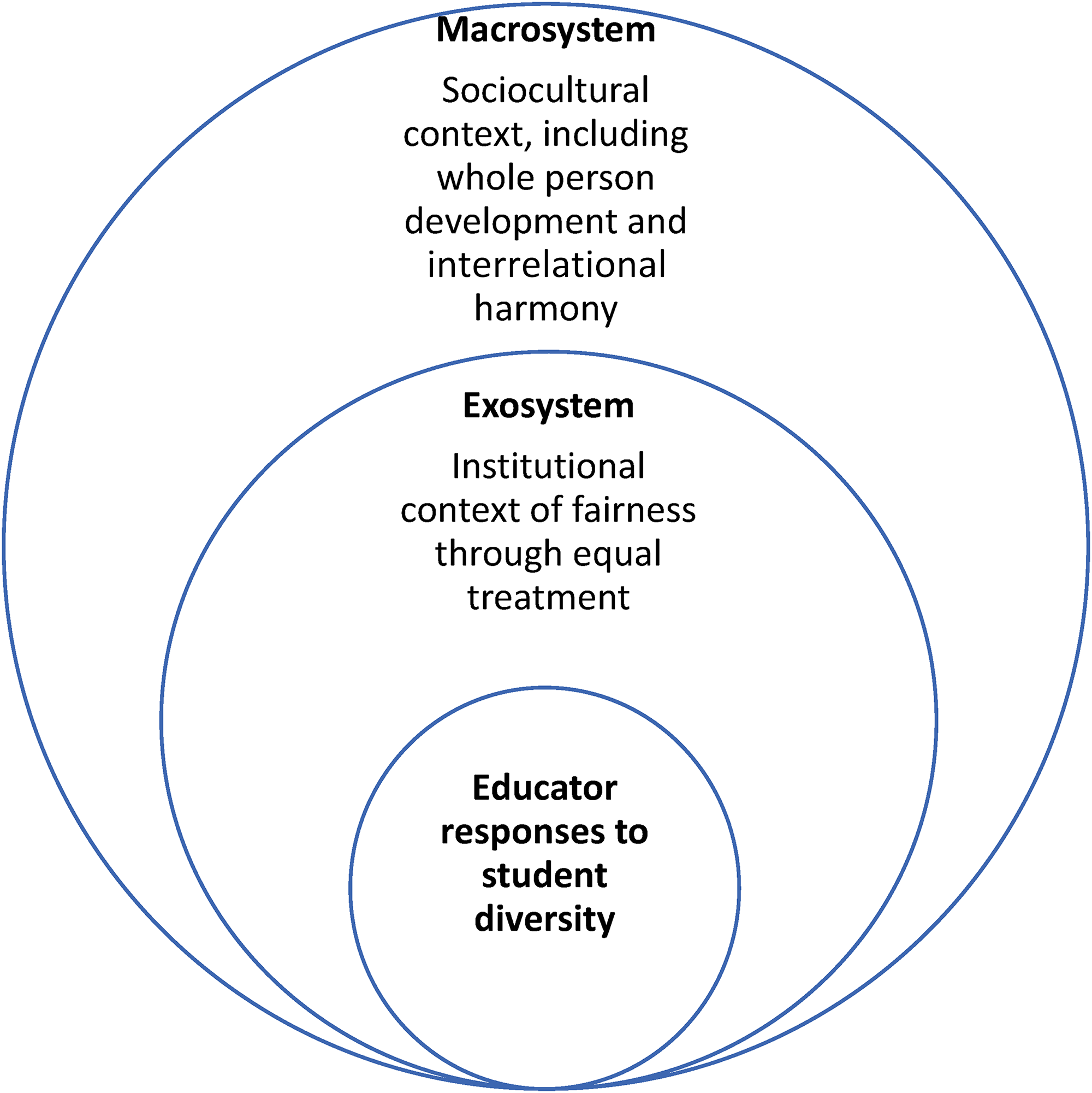
Mapping of this study's main constructs to Bronfenbrenner's (1979) ecological schema.
Macrosystem
Macrosystems refer to an already established society and culture in which the teacher is embedded, rather than the specific environments of the teacher. According to Bronfenbrenner (1979), macrosystems are “consistencies … at the level of the subculture or culture as a whole, along with any belief systems or ideology underlying such consistencies,” such that it appears as though “the various settings had been constructed from the same set of blueprints” (p. 26). In this study, the macrosystem encompasses the sociocultural context or dominant patterns of ideas and practices in the social system, which teachers view as salient in their responses to student diversity. This definition aligns with cultural psychology argument that culture is not a trait possessed by individuals, but a systemic pattern of dynamic interactions between people, institutions, and ideas (Markus & Kitayama, 2010).
Building on research on the influence of the macro-level sociocultural context on teaching practices (Alexander, 2001), I focus on how the sociocultural context shapes teachers’ responses to student diversity. Research on East Asian teachers’ multicultural practices suggests the sociocultural context shapes teacher multicultural practices through Confucian conceptions of “whole-person education” and interrelational harmony.
Education as whole-person development
Confucianism emphasizes “whole-person education,” that is, education as a path of self-improvement that leads to becoming an ethical person. Moral education is considered an essential socialization process that prepares young people for life (Cheng & Wong, 1996). Therefore, education is much more than imparting knowledge and transmitting skills; it should lead to social responsibility toward the family, community, and world.
Sociocultural patterns (macrosystems) influence teachers’ responses to student diversity. As Confucian ethics regard family as the most important social group (Richey, n.d.), teachers in East Asia have been found to use their role to support a diverse student population in “establishing harmonious relationships with family members” (Hue, 2008, p. 307), particularly parents. The family is considered the site where students acquire the virtues needed to serve their school and broader society. Given the integral link between a student's ethnic identity and family relationships (Kiang & Fuligni, 2009), teachers’ multicultural practices should consider students’ relationships with family members.
Interrelational harmony: The Confucian relational self
According to Confucian scholars, harmony emphasizes mutuality and reciprocity while prioritizing group solidarity at the expense of individual rights (Angle, 2008). Rather than an independent self who is distinct from their networks, harmony views the individual as interdependent self-embedded in a social web and defined by their social role within the larger community (e.g., student, child, classmates) (Hue, 2008). Individual actions are shaped by the communal context in which they are embedded. Therefore, the macrosystemic sociocultural context may influence teachers’ multicultural responses by emphasizing the needs of the group rather than the individual. In East Asia, research indicates that teachers’ multicultural practices tend to prioritize group solidarity at the expense of the needs of minority groups (Hue & Kennedy, 2012; Yang et al., 2014).
Exosystem
In Bronfenbrenner's schema (1979), exosystems are “settings that do not involve the developing person as an active participant, but in which events occur that affect, or are affected by, what happens in the setting containing the developing person” (p. 25). When applying his definition to examine teachers’ multicultural responses, the relevant exosystem-level context is the Ministry of Education—an institutional setting in which the teacher does not directly participate, but which indirectly influences the teacher by affecting their school setting. In the East Asian context, the Ministry of Education is responsible for state institutional arrangements, processes, and regulations, which typically emphasize fairness through equal treatment in the education system. Such state control over the curriculum, schooling, and selection processes (e.g., college entrance exams) seeks to guarantee that all children, regardless of background, study under the same conditions. Importantly, ensuring fair and valid educational outcomes is pivotal for legitimizing modern schooling in East Asia.
The institutional context of education is embedded in and shaped by the macrosystem. More specifically, East Asia's current institutional emphasis on fairness via “equal treatment” has strong sociocultural roots in the Confucian pedagogic legacy (Kim, 2009) through the civil service exam, the merit-based process used to select officials over the last 1,300 years (Hu, 1984). The civil service exam's “meritocratic” approach continues to influence contemporary Chinese views on fairness in terms of “perceived equal opportunity [rather] than of equity of educational outcomes” (Hayhoe, 1995, p. 304).
In addition to its interactions with macro-level sociocultural contexts, the exosystem-level institutional context interacts with teachers’ actions and perceptions of student diversity. In this respect, research indicates that teachers in East Asia seek to treat a diverse student population “equally” in order to be “fair” and maintain “harmonious” relationships between different student groups (Hue & Kennedy, 2012, p. 123).
Data and methodology
To develop an alternative multicultural theory of practice, this study draws on Ladson-Billings’s (1995) methodological approach in her seminal study that became the foundation of CRP. In her research on eight “exceptional” teachers of African American students, Ladson-Billings (1995) elicited teachers’ tacit knowledge of classroom practice and synthesized principles from their ideas and practices. Rather than positioning teachers as passive consumers of teaching knowledge, she sought to empower teachers to draw on their “wisdom of practice” (Feldman, 1997; Shulman, 1987), teaching knowledge, and experience. In this study, I applied the same methodological approach to document teachers’ “wisdom of practice” in teaching new migrant children in Chinese Taiwan and used this data to develop principles of multicultural practice in a different context.
Data were obtained from a public school in Chinese Taiwan commended for its work on diversity by multiple education faculty familiar with schools and student diversity in the region. The selected school is a combined middle and high school located in a low-income rural community with a high population of new migrant children and marriage migrants. The middle school population comprised 200 students, of whom 40% were new migrant children while the remaining 60% were non-new-migrant youths in Chinese Taiwan. The high school population comprised 500 students, 20% of whom were new migrant children while 80% were non-new-migrant youths in Chinese Taiwan. All data were collected from Putonghua.
Semistructured interviews were conducted with one principal, two administrators, and twelve teachers (seven middle-school teachers and five high-school teachers). Interview participants varied in terms of the subjects they taught, teaching experience, administrative roles, and personal characteristics (e.g., gender). All interviewees were from Chinese Taiwan, except for one who grew up in Macao SAR. Interview questions focused on multiculturalism and teaching practices. Interviews were conducted between fall and winter in 2017 and in the fall in 2018. Interviews were audio recorded and then transcribed. Following data collection and analysis, findings were verified through feedback and consultation with the interviewees. The author received written informed consent from participants and the Ethical Committee (HREC #EA1710026). These findings are presented in this study.
Nvivo software was used to code teacher practices and inclusionary strategies toward student diversity. Interview data were coded using a coding scheme based on the theoretical framework and research questions (e.g., “harmony,” “interdependence,” “group,” “sameness,” and “difference”), with revisions and additions made to accommodate emergent themes (e.g., “secret” practices, “fair”) in the data. Constructivist grounded theory techniques were applied to reveal patterns in culturally based school responses to diversity (Charmaz, 2014), which sought to diminish stereotyping (coded “labeling”) and develop an inclusive climate that recognized student cultural differences by differentiating between “good” and “bad” practices.
Findings
School background
Upon being assigned to the school four years ago, the principal observed that students from a migrant background were ashamed of their mothers’ Southeast Asian background and the low socioeconomic status of their family. In Chinese Taiwan, a Southeast Asian heritage confers a low cultural status. In this respect, the principal noted how students’ shame toward their mothers led them to reject their Vietnamese heritage, causing strain in the child–mother relationship. The principal shared several stories, including how some students were so ashamed of their mothers’ Vietnamese identity that their classmates were surprised to learn about their mixed heritage after their mothers volunteered in the classroom, and how they still refused to admit that their mothers were Vietnamese when asked. Consequently, the principal and teachers were committed to helping such students recognize their Vietnamese roots in order to “strengthen them.” The principal explained his educational philosophy as follows, What I train the teachers is, first thing, children need to face their identity. They did not need to fear letting their classmates know about it. When classmates find out their mothers are Vietnamese, they could be made fun of. So we need to strengthen them. What they need is confidence and acceptance of their identity. (interview, January 10, 2018)
The principal and teachers thus actively strategized how to increase the social status of migrant students in school.
The following sections illustrate how teachers and staff have attempted to culturally empower new migrant children to “accept their identity” through harmony-oriented pedagogy. The first section reveals the core features of this harmony-oriented pedagogy, which has emerged from the local macro- and exosystem contexts in Chinese Taiwan. The second section examines the pedagogical practices, which seek to foster a sense of belonging to the school community by shaping the school's sociocultural climate.
Key features of the harmony-oriented pedagogy toward student diversity
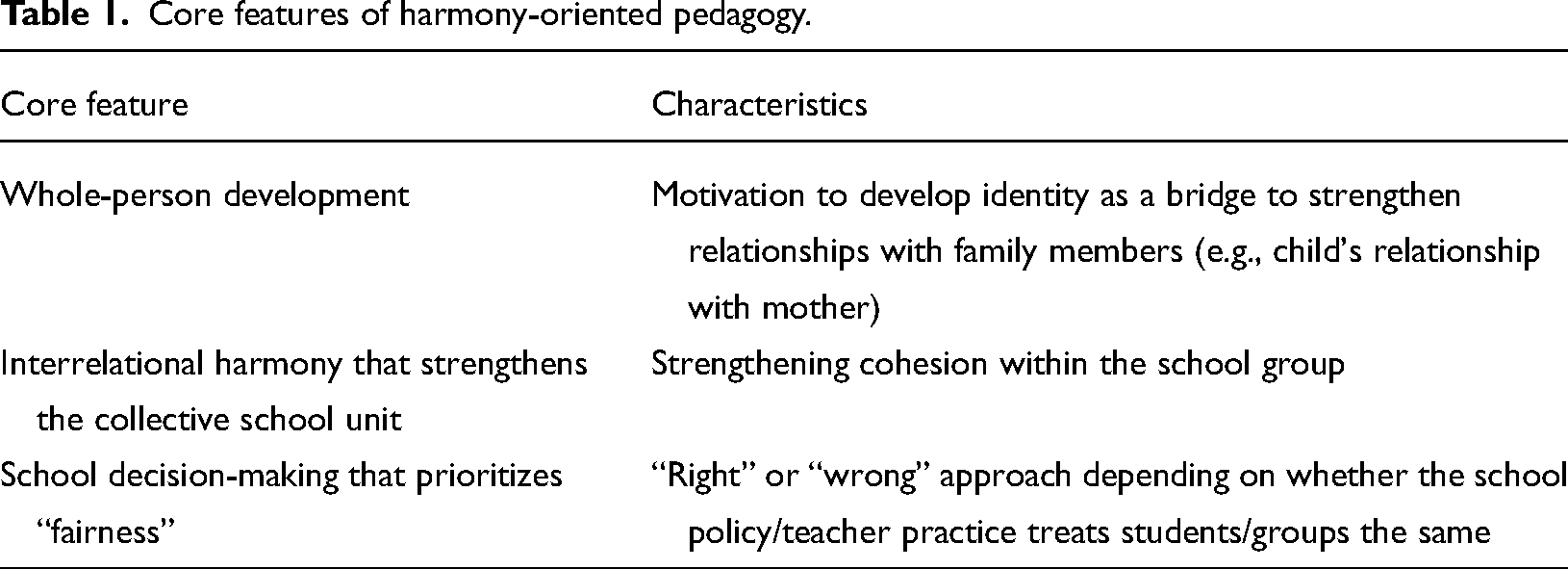
This study's most significant finding was the emergence of a specific pedagogical approach premised on maintaining social harmony (hexie, 和谐) in order to develop an inclusive school community that culturally empowers new migrant children. Seeking to strengthen the identities of new migrant children, this approach comprised three core features: whole-person development, interrelational harmony of strengthening the collective school unit, and a school decision-making approach that prioritizes “fairness” (Table 1).
Core features of harmony-oriented pedagogy.
Whole-person development
New migrant children's identities are stigmatized in society, so it's important they can learn more about their mother's background to gain deeper appreciation of themselves and their family heritage. (History Teacher 2, interview, January 4, 2018)
Teachers’ reasoning for developing the identities of migrant students was not solely intended to benefit the individual students themselves. More specifically, teachers understood identity (自我认同) as “self-recognition.” In other words, teachers perceived identity development as the means by which new migrant children could “recognize” their mother's heritage and strengthen the child–mother relationship. Implicitly referencing the “whole-person education” envisioned by Confucian teaching, the interviewed teachers explained that their motivation for addressing new migrant children's poor self-image was to develop their moral character while helping them deepen bonds with their mother and, more broadly, the family unit. As one teacher explained, I became troubled when I observed three academically-strong new migrant children who did not treat their Vietnamese mothers with respect. As a teacher, I wondered, What am I doing if I train academically outstanding children who do not treat their parents with respect? (English Teacher 2, interview, November 12, 2018)
Strikingly, this teacher prioritized students’ family relationships above academic excellence. The significance that this teacher placed on family relationships was further highlighted by the fact that one of her three new migrant children received a prestigious academic award in Chinese Taiwan.
Teachers’ nonacademic concerns illuminate the macrosystem—specifically, the Confucian belief that education is about more than imparting knowledge, but a path to becoming an ethical person (Cheng & Wong, 1996). In contrast to the globally dominant discourse of CRP, this Confucian-influenced sociocultural conception of education acknowledges schooling as an important socialization pathway to develop students’ moral character by respecting their parents and valuing their family, the most important societal group according to Confucian ethics (Hue, 2008). Other teachers expressed similar concerns regarding the consequences of poor child–mother relationships after observing students rejecting their ethnic identities because they felt embarrassed by their Southeast Asian mothers. Valuing family relationships and the need to develop moral character motivated teachers to create inclusive school policies and practices to encourage new migrant children to foster positive identities in school.
Interrelational harmony of strengthening the school collective unit
It is important that a school activity to develop new migrant children's ethnic identity is not simply for new migrant children to participate, since the exclusion of non-new-migrant children would be [negatively] labeling: You’re “non-new-migrant children.” (Geology Teacher/Administrator, interview, January 4, 2018)
Recognizing that new migrant children are embedded within a broader school community, the principal and teachers designed school activities to develop new migrant children identity without sacrificing cohesion within the school community. To do so, the principal and school leaders actively decided not to focus on new migrant children at the expense of other (non-new-migrant children) students during their school activities. School leaders ensured that participants in school events included both new migrant children and non-new-migrant children. As one teacher explained, During the activity, new migrant children can gain familiarity toward their mother's homeland and enhance their self-recognition [identity]. But, it's important that they see themselves together as a group, and within the group there's no labeling because no new migrant children would be excluded. So, there's nothing like, “you are” and “I’m not.” (History Teacher 3/Administrator, interview, January 4, 2018)
Teachers thus had to strike a balance between recognizing the new migrant children's individual particularities and cultivating a strong collective consciousness among new migrant children and non-new-migrant children. Such a balance reflects the macrosystem, namely, the Confucian notion of harmony, which conceptualizes the individual as interdependent self-defined by their social role within the larger community (e.g., student, classmates) (Hue, 2008). In other words, group solidarity will not be sacrificed for individuals.
The application of the concept of harmony was evident during a special “Mother's Day” school event, when the principal invited mothers from migrant and nonmigrant backgrounds to share their personal stories. In particular, Vietnamese mothers of three new migrant children shared their migration stories with the high school student body. According to the principal, the primary purpose of the event was to “encourage them [all new migrant children] to learn more about their mothers. Vietnamese mothers typically have a lower status at home; therefore, they may not necessarily talk about their backgrounds” (interview, January 10, 2018). Essentially, the event was intended to encourage new migrant children to initiate dialogue, deepen understanding of their heritage, and strengthen relationships with their mothers at home.
However, school leaders were concerned that foregrounding cultural differences as an event focus might disrupt the school's overall sense of harmony. Consequently, mothers from nonmigrant backgrounds were also invited to speak at the event, thereby shifting the focus from the “true” intent of learning about new migrant children's culture and stories from new migrant children's mothers to learning from parents’ experiences, specifically those of mothers. One teacher leader elaborated on the benefits of inviting Vietnamese mothers without exclusively focusing on them as follows: Children felt that their identity was being encouraged, and then had a positive attitude toward their identity. For the non-new-migrant children, it was more like an international view [inviting Vietnamese migrant mothers to speak in the broader context of including non-migrant mothers]. They had a better understanding of this ethnic group when they learned more about Vietnam and the stories of Vietnamese mothers coming to Chinese Taiwan. (History Teacher 1, interview, January 4, 2018)
Ultimately, addressing the individual needs of the new migrant children required creating a school climate that encouraged new migrant children to openly share their mothers’ Southeast Asian heritage within the broader school community. In doing so, the relationships between new migrant children and non-new-migrant children in the school community were strengthened. Additionally, each student group benefitted, with new migrant children gaining a better understanding of their identity, while non-new-migrant children learned more about their new migrant classmates.
School decision-making approach emphasizing “fairness” through equal treatment
Only this [right] method will let the students feel that you’re being fair. When I do it this way, people would think that I’m treating everyone equally (一视同仁). (Principal, interview, January 10, 2018) It's quite important to be equal to all. You have to be fair. (History Teacher 2, interview, December 29, 2017)
Another core characteristic of the harmony-oriented pedagogy was a school decision-making approach that emphasized fairness through the equal treatment of students when deciding on school policies/practices intended to promote the positive self-identity of migrant background youth. According to the principal and teachers, there was a “right” and “wrong” way—that is, an appropriate and inappropriate way—to respond to differences from students with a migrant background. The “right” way fostered harmony and strengthened relationships within the school community by treating students equally and not singling out any one group while developing new migrant children's identity consciousness. The emphasis on fairness through equal treatment reflects education's exosystem level and institutional contexts for social mobility in East Asia. Universal access to quality education was achieved relatively early in East Asia through centralized state management of the curriculum and teachers as well as the egalitarian distribution of funding and other resources, which ensured the identical treatment of all children in the education system. Significantly, contemporary institutional arrangements of “fairness” through equal treatment have strong macrosystem roots in the Confucian pedagogic legacy through the civil service exam, a 1,300-year-old tradition whereby officials are selected based on individual merit through rigorous examinations (Kim, 2009).
As noted, a “right” multicultural practice was inviting migrant and nonmigrant mothers to share their stories with students on Mother's Day. Such an inclusionary approach provided an opportunity for Vietnamese mothers to share their inspiring migration stories and negate any negative stereotypes of new migrant children without singling them out. In contrast, “wrong” multicultural practices were those that reified group boundaries at the expense of group solidarity through differential treatment (i.e., “labeling”). According to the principal, inappropriate practices lead to “labeling” or highlighting differences so that a new migrant child becomes “negatively identified. I mean, to be labeled is when others attach a judgment to you … and affects how non-new-migrant children treat them” (interview, November 28, 2018).
Two types of “wrong” practice emerged in classrooms. One type singled out new migrant children in an affirming and positive way, which could make new migrant children feel uncomfortable and non-new-migrant children feel jealous about the positive attention given to their new migrant classmates. According to one teacher, [Non-new-migrant children] think it is unfair that new migrant children receive many school resources and opportunities. Therefore, when a school decides on policies/practices on a new-migrant-children topic, we must be very careful. We do not want our policies/practices put on a label, to be labeled, like I am treating them [new migrant children] extra nice. If you treat new migrant children differently, then it is unfair to them [new migrant children]. In addition, non-new-migrant children disliked them. If you treat new migrant children better and they receive better treatment, others wonder why they receive preferential treatment. (History Teacher 3/Former Administrator, interview, January 4, 2018)
The other “wrong” practice involved treating low-status youth in a different manner than their classmates as this reinforced their inferior status and the prejudices of their classmates. A multicultural practice or policy developed with “the right motivation,” but implemented in a manner that stigmatizes (“labeled”) a student is “wrong.” The principal provided an example of this, explaining that a researcher had asked to psychologically test new migrant children only. Here, the “wrong” practice was openly requiring new migrant children to take a psychological test and not non-new-migrant children. The principal believed “the approach was not right” because it reinforced new migrant children's negative stereotypes that they were inferior and thus required psychological evaluation, undermining positive identity development. The “right” approach would be to require all youth (both new migrant children and non-new-migrant children) to take the test, regardless of their background, even if only the results of new migrant children would be analyzed. The principal acknowledged that “the data collected from non-new-migrant children might not be useful. But when I do it this way, people think that I am treating everyone equally” (interview, November 28, 2018).
Teacher practices
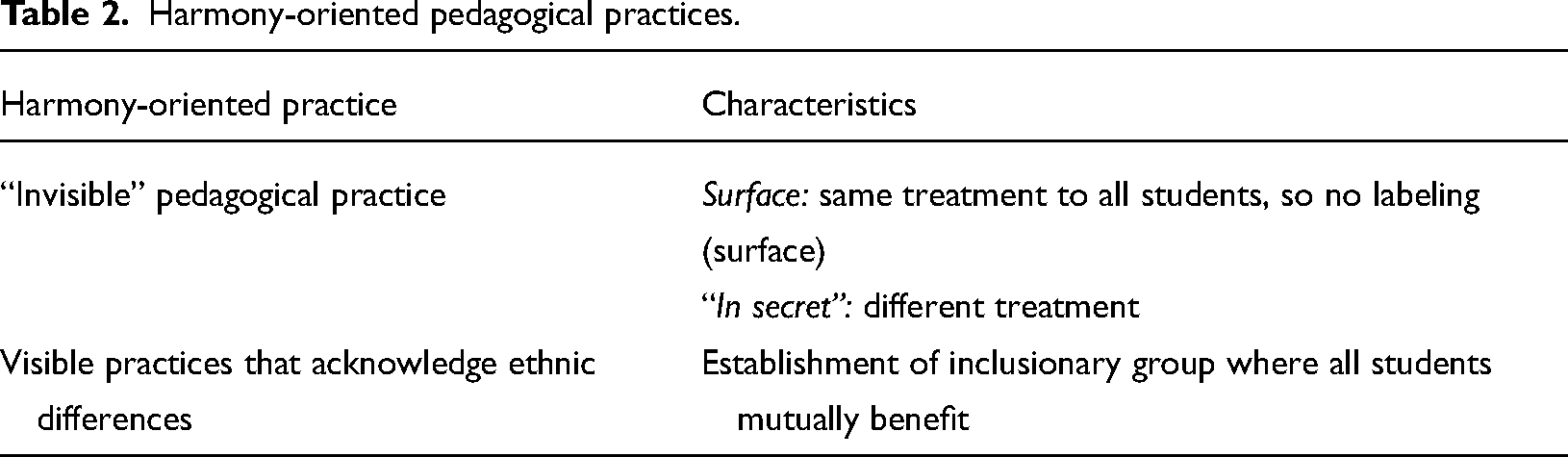
To implement the aforementioned features of the harmony-oriented pedagogy, two “right” practices emerged in responding to migrant-background student differences without singling out a particular group (Table 2). Both practices reflect how school educators respond to the unique needs of migrant-background youth while considering group harmony and relationships. Ultimately, both practices sought to strengthen cohesion within the school community.
Harmony-oriented pedagogical practices.
Practice of visible differences: Benefiting both new migrant children and non-new-migrant children
One practice aimed to mutually benefit all parties and, thus, not uphold one group over another. The principal's school policy sought to minimize labeling or boundaries between migrant and nonmigrant students, which stifled relationship building across ethnic lines. Elaborating on the decision-making process, he noted, “The school leadership team considered [affirmative action] policies to increase test scores, allocate resources, etc. [to new migrant children] in our school. However, nonmigrant students consider these [school-initiated] policies unfair” (interview, November 28, 2018). They also considered other school policies that would affirm the new migrant children's ethnic background and culture by singling them out, such as the establishment of Southeast Asian Heritage Day.
Rejecting the aforementioned exclusionary approaches as “wrong,” the principal and teachers prioritized the affirmation of new migrant children's ethnic background and culture without singling them out, even in a positive manner. Rather, they strategized how new migrant children's background could “matter to all students,” not simply those with migrant parents in school. Ultimately, the school leaders decided on “International Education” as the school's approach to providing an appropriate school environment for students from a migrant background to develop their identity awareness and raise the cultural status of Southeast Asian culture.
Under the broader “International Education” program, the principal and leadership team aimed to benefit all students, regardless of background, while empowering youths from a migrant background. The “International Education” framework allowed the school to target new migrant children and provide resources for their identity development without exclusively focusing on them. More specifically, this program provided new migrant children with the opportunity to visit Vietnam through cross-cultural trips abroad, learn Vietnamese through international language courses, and meet Vietnamese exchange students through the school's hosting of students and teachers from other countries/regions.
Ultimately, the “International Education” approach created an inclusive environment where all students could benefit and learn from each other to develop a global perspective, thus allowing for cultural and identity differences to be acknowledged without singling out any groups. As the principal explained, “international education is a higher lens through which all students can benefit [compared to focusing solely on and benefiting only migrant-background students]. Nonmigrant students also require this lens. In this way, migrant students cannot be ignored” (interview, November 28, 2018). Within this welcoming sociocultural climate, new migrant children embraced their ethnic identities. Moreover, nonmigrant classmates were motivated to understand all of the cultural backgrounds represented at the event, including those of new migrant peers, thus contributing to a welcoming school climate for new migrant children.
Secret practices: Treating students differently
Secrecy is an important pedagogical practice employed by teachers when situations necessitate treating students differently at school. For example, the school received significant funds to support youth from migrant backgrounds, such as economic scholarships for high-achieving migrant background youth from low-income families and travel funds for new migrant children to visit their mothers’ homeland for free. The donor required the school to ensure that a certain proportion of youths with migrant backgrounds (i.e., two-thirds) participated in these externally funded trips. However, according to the principal, such targeted resources and stipulations created a dilemma for the school community insofar as this meant prioritizing one group of students over another. This dilemma was exacerbated by the fact that such resources—especially a free trip to Southeast Asia—would be coveted by non-new-migrant children, as the school was situated in a low-income, rural community where youth rarely had international travel opportunities. To resolve this dilemma, he invited both youth groups to visit Southeast Asia on school-led, externally funded trips.
In a later interview, a Chinese teacher shared a surprising insight about the Southeast Asia trips that revealed the existence of “hidden” practices, a critical component of the harmony pedagogical approach. “The school provides opportunities to all students,” the teacher noted, before adding, almost as an afterthought, “However, youth from a migrant background are the priority. Only extra spaces were allocated to students from a nonmigrant background. It looks the same on the surface but is actually not. It's artificial” (Chinese Teacher 2, interview, November 29, 2018). The teacher's comment revealed the “hidden” pedagogical strategy of treating new migrant children and non-new-migrant children differently.
Similar to the students from migrant and nonmigrant backgrounds that I interviewed, I initially assumed that they had been given equal selection opportunities. However, as one teacher explained, in response to the external donor's requirement that two-thirds of selected students come from a migrant background, “the school doesn’t want to single out the students as having a migrant background, which makes them possibly feel uncomfortable [in a discriminatory or negative way]” (English Teacher 3, interview, October 24, 2018). Teachers were also concerned that non-new-migrant children would reject new migrant children because of their perception that the latter had unfair access to more opportunities and extracurricular activities in the school structure. According to one teacher, “We tell them it's all fair. So, on the surface, it seems like everyone is the same [and has an equal opportunity for selection]” (Civics Teacher 1, interview, November 28, 2018). “Hiding” admission practices that favored new migrant children for the sake of harmony between teachers and students and new migrant children and non-new-migrant children thus comprised a pedagogical strategy. In this way, the school's approach allowed for students’ cultural differences and their specific needs to be acknowledged and met, while promoting a school culture of harmony among migrant and nonmigrant youths.
Discussion
Implications for student diversity in East Asia
Inspired by “Asia as Method” (Chen, 2010), this study explored a harmony-oriented multicultural approach that creates an inclusive school climate for multiethnic youth in Chinese Taiwan. In doing so, this study drew attention to three core features of teachers’ multicultural practices: whole-person education, interrelational harmony of strengthening the collective school unit, and a school decision-making approach that pursues “fairness” through equal treatment. This harmony-oriented model encompassed two multicultural practices. One practice applied an implicit approach that did not single out any particular ethnoracial group, even though the goal was to affirm and develop new migrant children identities. This practice was intended to develop strong group cohesion while benefitting all students. The second type of harmony-oriented practice involved “hiding” differences to protect group solidarity. As Figure 2 illustrates, this harmony-oriented practice encompassed a “visible” and “invisible” or “hidden” dimension to reconcile two divergent goals—namely, acknowledge the differences among students, while treating students in the same way. Like the tip of an iceberg, “visible” teaching practices aimed to maintain harmonious interpersonal relationships through “identical” treatment. Just as a significant portion of the iceberg is hidden below the water surface, so teacher practices that acknowledged differences among students were “invisible.”
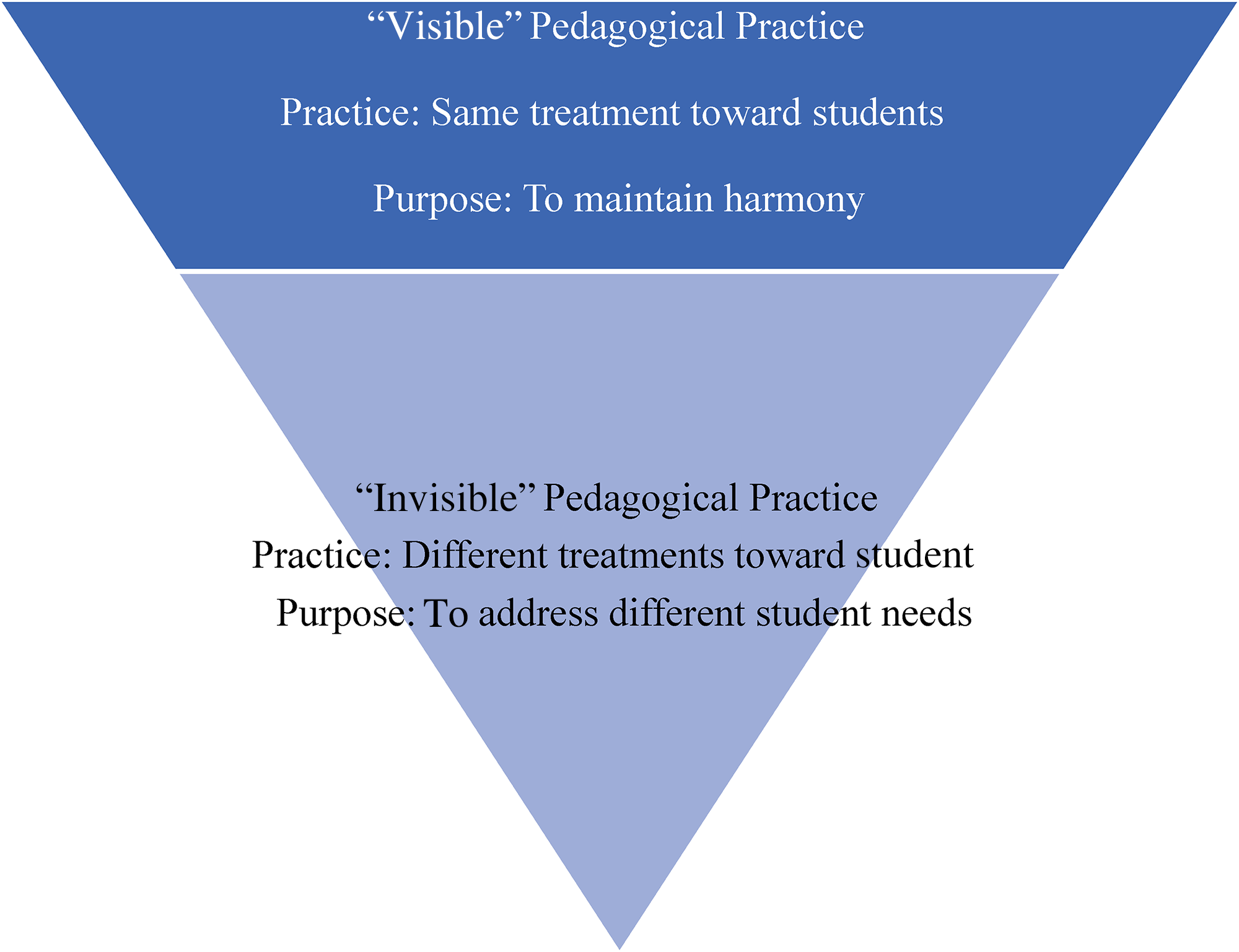
“Visible” and “Invisible” pedagogical practices to maintain social harmony.
These findings have significant implications for theorizing on and researching school responses to student diversity in East Asia. First, the findings of this study regarding a harmony-oriented pedagogical approach enrich the existing literature on school responses to diversity in East Asia. According to the predominant multicultural education model, teachers who do not recognize student differences undermine student success. Applying this framework, the majority of diversity studies conclude that teachers in East Asia do not adequately address student needs because they treat all students “the same” (Chou et al., 2018; Hue & Kennedy, 2012; Nukaga, 2003; Yang et al., 2014). Certainly, the responses of the teachers interviewed for this study reinforce the prevalence of teacher practices that treat students “the same.” However, what might appear to such observers as a neglect of student differences is actually a harmony-oriented professional practice rooted in valuing social harmony. The findings of this study indicate that previous research has largely been limited to focusing on the “visible” dimension of the second type of pedagogical practice to maintain harmony (Figure 2). Based on this study, I argue that “visible” classroom practices constitute a partial understanding of teacher's response to student diversity. It is necessary to consider a “hidden” dimension of pedagogical practices that acknowledge student differences when investigating East Asian educators’ responses to student diversity.
Whether the “visible” and “invisible” pedagogical practices of “maintaining social harmony” constitute an implicit professional practice in Chinese Taiwan requires further investigation. I suggest that these are “implicit” practices because they are not formally taught by teacher training programs, nor are they written into any official curricular policy documents. Indeed, teachers in the schools in Chinese Taiwan are unfamiliar with multicultural education and have never taken professional development courses on diversity. Significantly, the harmony-oriented values reflected in the pedagogical framework explored in this study have been documented in other societal practices in Chinese Taiwan, including business (Lin & Ho, 2009), politics (Chang et al., 2005), and women's engagement with leisure activities (Tsai, 2006).
Second, this study theorized an alternative multicultural approach to student diversity in sociocultural contexts that have historically prioritized harmony, collectivity, and relationships. As an initial attempt to reconceptualize multicultural education, it addresses the absence of multicultural alternatives in the education literature despite calls to expand our approach to diversity (Hoffman, 1996; Moland, 2014). In contrast to the globally dominant model (CRP), this pedagogy's core features are shaped by Confucian-influenced sociocultural macrosystem and institutional exosystem contexts that focus on whole-person education, interrelational harmony to strengthen the school collective unit, and fairness through equal treatment.
The harmony-oriented practices highlighted in this study provide a basis from which other East Asian scholars can explore how teachers respond to student diversity in their respective contexts through an asset lens. A suggested line of research is to explore the distinction and nuances of harmony as a cultural value (philosophy) versus a state goal (political) in motivating teacher practices toward student diversity. For example, it would be fruitful to compare and contrast teaching practices when harmony emerges as an implicit pedagogical practice among teachers with no formal training, as in the case of Chinese Taiwan, or as a state multicultural goal with formal training, as in the case of Singapore. Such research resonates with this Special Issue's guest editors’ insight into the critical distinction between the philosophical and political understandings of Confucius’ conception of harmony (Takayama & Lee, 2024). More in-depth school research across Asia's diverse contexts is required to deepen our understanding of the nature, extent, variation, and consequences of harmony-oriented pedagogical approaches to diversity.
Ultimately, the development of an alternative multicultural approach has important implications for the creation of culturally appropriate teacher-training materials in East Asia. Currently, the literature indicates that Asian teachers struggle to implement “best practices” from Western contexts due to the cultural dissonance between the worldviews of the teacher and imported “best practice” (Chou et al., 2018; Hue & Kennedy, 2012; Nukaga, 2003; Yang et al., 2014). The consequent discrepancies between reform ideals and actual everyday practices reveal the power of implicit localized values in reproducing key educational beliefs and values in daily school life. A harmony-oriented pedagogical approach that prioritizes relationships while accounting for student differences would enable implicit values to be considered as assets rather than obstacles.
Implications for multicultural education and broader educational community
This study has global implications for multicultural theory, education, and educators beyond the scope of Chinese Taiwan and East Asia. While Eurocentric academic and educational circles may consider the harmony-oriented approach and practices highlighted in this study as peripheral (Chou et al., 2018; Hue & Kennedy, 2012; Nukaga, 2003; Yang et al., 2014), I contend that they are legitimate ways of knowing and of being that constitute “repertoires of practices,” which have been passed on in modified ways among community members over time (Gutiérrez & Rogoff, 2003). Such practices include knowledge and beliefs explicitly and implicitly taught in community, school, and societal everyday life. By validating the teacher practices that emerge from nondominant educational and academic communities, I hope that these practices can be considered legitimate contributions to enriching our pedagogical toolkits in the global academic and educational community, particularly in terms of how we respond to student diversity.
Significantly, the harmony-oriented pedagogy, which pursues “fairness” by not singling out any one group, is of value to the global academic and educational community insofar as it advances our understanding of how to recognize identities and difference without destabilizing social cohesion. By emphasizing the relational dimension of responding to student diversity, this harmony-oriented pedagogy addresses a significant limitation of the existing US-based “global” multicultural education model and key concern of critics: namely, that it fosters separatism and threatens societal unity (Bissoondath, 2002). The predominant US multicultural model—which emerged in a context that has historically valued individuality, identity, rights, and justice—often recognizes and accommodates the unique identities and needs of ethnonational groups by singling them out (e.g., the Asian Pacific Islander Heritage Month, ethnic studies courses focused on oppressed minority groups, and affirmative action policies). In practice, “recognition” policies that single out groups or similar policies that aim to provide historical reparation can undermine social cohesion by fostering unintended consequences that harm target and nontargeted groups (e.g., promote internal stigma among the target group, external stigma of doubting the qualifications of others) (Leslie et al., 2014). 7
Moreover, harmony-oriented pedagogy serves as a strong foundation for developing a collective critical consciousness in pursuing social justice and responding to the structural causes of the social issues affecting individuals at home and school. This group-oriented approach serves as an asset for developing students’ critical consciousness and promoting social cohesion. Here, it is worth noting the multicultural work documented in Japan, where teachers develop a collective critical consciousness among students from nonoppressed and oppressed (buraku) 8 classes to become “agents of social change” (Takayama, 2009, p. 356). Importantly, educators apply a group-oriented approach that “design[s] curriculum for the whole classroom to collectively come to terms with the reality of buraku discrimination and to develop ways to change the oppressive status quo” (Takayama, 2009, p. 356). A key characteristic of this approach is intentionally “structuring children's learning experiences such that they develop deep personal commitment to classmates’ wellbeing—inside and outside school” (Takayama, 2009, p. 356). The consequent deep emotional connections between classmates—including those from different backgrounds, social statuses, and worldviews—provide a foundation upon which the class can develop a collective critical consciousness of social action (Barton & Ho, 2020). Through journaling and dialogue with classmates and teachers, children learn about their own struggles at school and home, as well as those of their classmates, which are linked to broader social and structural issues (Hiraoka, 2011). Together with feelings of strong group attachment, this sociopolitical consciousness motivates youths to engage in civic action to address these issues on behalf of their peers as well as for themselves (with the support of their peers).
Finally, a decision-making approach that considers community impact illuminates the possibility of recognizing and valuing a minority group's culture, pursuing equity, and strengthening social cohesion. The harmony-oriented practices highlighted in this study based in Chinese Taiwan may not transfer effectively to other contexts. Yet, there is promise in educators and educational leaders intentionally exploring contextually appropriate practices that promote social cohesion without sacrificing equity. I strongly believe that there is potential to open new lines of critical multicultural research in the pursuit of these practices.
Footnotes
Declaration of conflicting interests
The author declared no potential conflicts of interest with respect to the research, authorship, and/or publication of this article.
Ethical statement
The author received written informed consent from participants and the Ethical Committee (HUMAN RESEARCH ETHICS COMMITTEE #EA1710026).
Funding
The author received no financial support for the research, authorship, and/or publication of this article.
