




Abstract
Purpose:
The high incidence of mathematics anxiety and disengagement in mathematics points to poor student well-being in many mathematics classrooms. Poor well-being may arise in part from poor alignment between student values and classroom experiences. Yet, what student well-being is and how to support it within specific subjects is poorly understood, and intersection between students’ values and well-being in mathematics education is unclear. This article proposes a seven-dimensional framework of student well-being in mathematics education and examines alignment between well-being and values.
Design/Approach/Methods:
One hundred nineteen eighth-grade Australian students responded to three open-ended questions investigating their conceptions of mathematical well-being (MWB) and what they valued most when learning or doing mathematics. Responses were analyzed using a combined deductive/inductive thematic analysis.
Findings:
Findings supported the MWB framework and confirmed an alignment between students’ values and well-being in mathematics education.
Originality/Value:
Our study provides a framework for conceptualizing student well-being in mathematics education, points to areas that aim to improve student well-being, and highlights congruences and discordances between well-being and values.
Keywords
Introduction
Mathematics has been called a “gatekeeper” subject within education, as the benefits accrue over the life span; enhance employment opportunities; inform choices about the environment, health, and well-being; and can even result in longer life (Plunk et al., 2014). Yet within Australia, like many countries worldwide, mathematics education is facing challenges. Despite the significant financial investment to improve the way in which mathematics is taught to and received by students, student engagement in mathematics generally has remained low, with negative emotions and poor attitudes toward the subject persistently reported by many students (Clarkson et al., 2019). Secondary students are especially more likely to perceive mathematics to be emotionally challenging, boring, and unenjoyable (Attard, 2013; Grootenboer & Marshman, 2015). Students and even teachers exhibit “mathematics anxiety,” with females more likely to experience anxiety than males (Maloney et al., 2015). The proportion of Australian students selecting advanced level or rigorous mathematics subjects in upper secondary school has been steadily declining over the past 20 years (Kennedy et al., 2014). These trends all point to a poor sense of student well-being in many Australian mathematics classrooms.
Despite a growing focus in Australian education policy and practices on student well-being (e.g., Slemp et al., 2017; Waters, 2011), there is little attention exploring student well-being within individual subject disciplines. Yet well-being is value-based, and potentially context-dependent (Alexandrova, 2017; Kern et al., 2019). In this article, we propose a framework of student “mathematical well-being (MWB),” based on a combination of current adult and adolescent well-being models (Kern et al., 2016; Seligman, 2011) and a model of MWB (Clarkson et al., 2010). We use this model as a framework for coding and structuring students’ conceptions of well-being and values based on three open-ended questions answered by Grade 8 students. In addition, we examine associations between values and well-being specifically within the context of mathematics education.
A framework for conceptualizing student MWB
Well-being has many different conceptualizations and uses across a broad range of disciplines. For our purposes here, we focus specifically on subjective aspects of well-being based on a person’s perceptions, rather than objective conditions. Within subjective well-being approaches, numerous conceptualizations and models exist, which generally cluster into two distinct but related philosophical approaches: hedonism and eudemonism (Ryan & Deci, 2001). Hedonic approaches equate well-being with the presence of pleasure and the absence of pain (Kahneman et al., 1999). Eudaimonic approaches focus on what it means to live a good life, living true to one’s value, and are achieved through the cultivation of personal strengths with the purpose of contribution to the greater good of society (McMahan & Este, 2011). Although there is little consensus on a single definition of well-being, there is general agreement that well-being—otherwise termed as “flourishing,” “thriving,” and “happiness”—encompasses both hedonic and eudemonic perspectives (Huppert & So, 2013; Kern et al., 2016; Seligman, 2011) —simply represented by “feeling good and functioning well” (Huppert & So, 2013, p. 839).
One’s experiences of well-being depend on one’s values and often are context dependent (Alexandrova, 2017; Kern et al., 2019). That is, one’s sense of well-being “is fixed by the practical features of the environment of the speaker at the time when the judgement is made” (Alexandrova, 2017, p. 16). Applied to students within their classes, one’s sense of well-being likely varies depending upon the class that they are in and the values attributed to that class. That is, student well-being experienced in mathematics might differ greatly from well-being experienced in English or music, which might differ greatly by student, depending on the extent to which they perceive and value the subject.
To the best of our knowledge, two educational research studies have specifically proposed frameworks or definitions of “MWB” (Clarkson et al., 2010; Part, 2011, 2012). Clarkson et al. (2010) proposed a framework of MWB as a series of developmental stages based on the ideas of Bloom’s taxonomic approach to development (Bloom et al., 1956), ranging from Stage 1 (low level of MWB) up to Stage 5 (high level of MWB). MWB incorporates three domains: cognitive (the knowledge and skills required to do mathematics at school), affective (incorporating values in mathematics education), and emotional (feelings, responses, and reactions toward mathematics). According to Clarkson et al., the attainment of MWB is achieved by student development in all three MWB domains (cognitive, affective, and emotional). For example, a student experiencing a greater sense of MWB might comprehend the mathematics inherent to the activities at hand (cognitive), begin to see the importance of their mathematics (affective/valuing), and respond more positively to mathematical stimuli (emotional). The authors further assert that a positive sense of MWB can stimulate students’ self-confidence, positive attitudes, and engagement with mathematics. Based on adult learners, Part (2011, 2012) suggested that MWB can be understood in terms of an individual’s functioning and capabilities. Functioning includes students’ valued outcomes in mathematics, such as an ability to perform fractions, participating in mathematical discussion, or feeling valued in the classroom. Capabilities represent the things an individual may value doing or being in mathematics, or the opportunities a learner needs to experience to achieve their valued outcome (i.e., how they function). According to Part (2011, 2012), a student experiencing high MWB might feel that they possess the knowledge or skills required to undertake a specific mathematical task (that is high functioning), and also believe that they are capable of being an ideal mathematics learner (high capability).
Although both of these frameworks use the term “mathematical well-being,” the frameworks have their limitations. For instance, they both fail to fully align with many contemporary conceptualizations of well-being or human flourishing. While Part (2011, 2012) includes eudaimonic elements, the focus is on functioning and capabilities, rather than a broader sense of living to one’s strengths and values, relational aspects, and a sense of purpose in one’s actions. While Clarkson et al.’s (2010) MWB framework includes both eudemonic and hedonic elements, the focus is on values, defined in terms of affect, ignoring broader aspects of well-being such as a sense of meaning and purpose (Seligman, 2011). Both frameworks ignore the important social aspects of well-being and mathematics learning. Also, neither framework has yet been authenticated among school aged students and they both lack discrete measurable entities.
Positive psychology is a fairly recently established discipline that focuses on understanding and building well-being. Within the discipline, various models have been proposed to represent a multidimensional conception of well-being. For instance, the PERMA model (Seligman, 2011) suggests that flourishing entails five essential elements: positive emotions, engagement, relationships, meaning, and accomplishment. Huppert and So (2013) included 10 elements of flourishing (competence, emotional stability, engagement, meaning, optimism, positive emotions, relationships, resilience, self-esteem, and vitality). Moore and Lippman (2006) suggested that child and adolescent well-being includes life satisfaction, hope, generosity, spirituality, connectedness, self-regulation, and prosocial orientations. Kern et al. (2016) included five positive psychological characteristics that support good functioning: engagement, perseverance, optimism, connectedness, and happiness. Across these models, core concepts include emotions, social aspects, and a sense of engagement, several of which have been associated with various positive mathematics outcomes, as summarized in Table 1. However, many of these core concepts are absent from the two existing MWB frameworks.
Dimensions of well-being identified within positive psychology that have been linked to positive mathematics outcomes with descriptions of the dimensions and examples supporting studies.
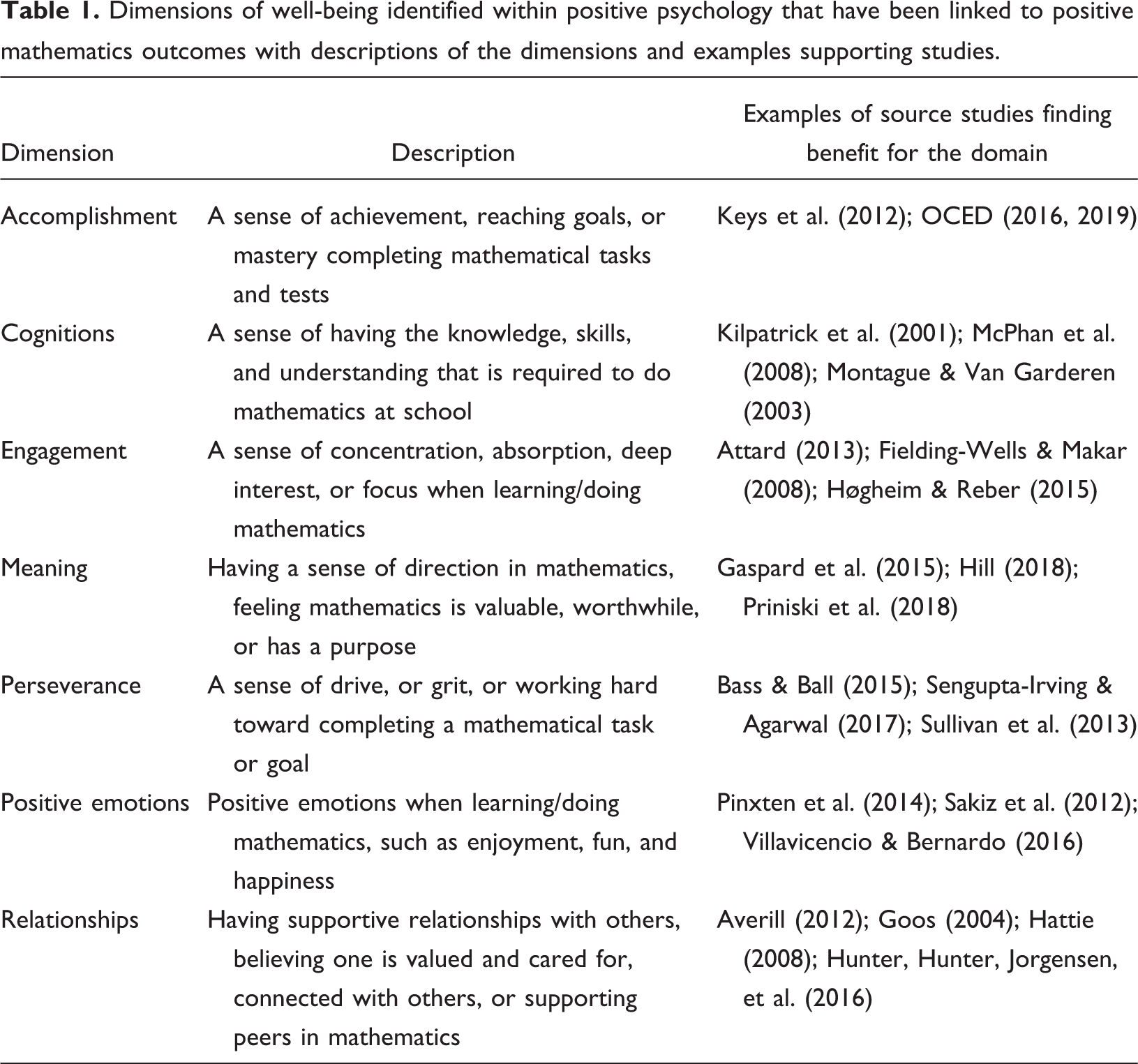
As mathematics often evokes greater negative reactions among students compared to other school subjects, understanding student well-being in mathematics education is particularly important if we wish to improve the way the subject is received and experienced by the students. As the dimensions summarized in Table 1 have been supported within the positive psychology literature and have been linked to positive mathematics outcomes, the current study uses these seven dimensions as a framework for understanding student conceptions of well-being. In addition, we consider intersections between these well-being dimensions and student values related to mathematics education.
Values and valuing in mathematics education
There is a long-standing recognition that values are central to school education (Clement, 2010; Halstead, 1996). However, research on values within the context of teaching and learning mathematics is nascent. The conceptualization of values is complex and contested and often depends on the theoretical perspective or the discipline. For instance, Rokeach (1973) defined values as enduring beliefs that a specific mode of conduct or end state is personally or socially preferable. Clarkson and colleagues (2000) proposed that values are “beliefs in action” (p. 191). DeBellis and Goldin (2006) asserted that values are “personal truths” (p. 135) that motivate our short-term priorities and long-term decisions. Halsted and Taylor (2000) defined values as any centralized conviction, ideal, principal, or standard that an individual has judged to be of importance or worth in their lives. Despite these different definitions, there is a general consensus across multiple disciplines that values represent sociocultural norms and standards that people within a culture embody, enabling individuals to decide what is bad or good, illegitimate or justified, and worth avoiding or doing (Schwartz et al., 2001).
Specifically within mathematics education, the conceptualization of values has recently evolved. Early writings considered values in mathematics to be an affective quality, where affect was defined as an overlapping system of beliefs, attitudes and emotions, and values (Bishop, 1996; McLeod, 1989; Zan et al., 2006). But conceptions of affect are inconsistent. For instance, affect in science education focuses on interest, motivation, attitudes, beliefs, and self-efficacy—not values (Alsop & Watts, 2003). In the psychological sciences, affect generally represents the outward expression of feelings and emotions, while beliefs and attitudes are considered to be more cognitive rather than affective elements (Lewis et al., 2010).
More recently, values in mathematics education have been classified as a motivational construct (Hannula, 2012; Wigfield & Eccles, 2000). For instance, expectancy value theory (EVT) postulates that motivation for any behavior is governed by two processes: an individual’s expectations of success and the extent to which the individual values the task (Wigfield & Eccles, 2000). According to EVT, students are more motivated to pursue a mathematical task when they expect to do well and are also more likely to value the mathematical activity in hand.
Other conceptualizations view values in mathematics as conative in nature—an intentional, goal orientated, or striving component of motivation (Emmons, 1986); that is, a willingness or desire to maintain persistent effort to achieve maximal performance of an activity (DeBellis & Goldin, 2006). Considering the many issues with student disengagement and poor persistence in mathematics education (e.g., Attard, 2013; Sullivan et al., 2013), we suggest that conation is especially important, and draw on this perspective in this article. From this perspective, values provide students “with the ability to focus and to maintain persistent effort” (Seah, 2019, p. 103). Further, following from Seah (2019), we define valuing in mathematics education as an embracing of any convictions which are of importance and worth. Values provide the individual with the will and reason to maintain their course of action, despite challenges that might occur.
Values and valuing in mathematics education can be further categorized into three broad subtypes: general education values (moral and ethical values linked with the objectives of education; e.g., valuing honesty), mathematical values (values associated with mathematics as a discipline; e.g., valuing the mystery of mathematics), and mathematics education values (values associated with teaching and learning mathematics; e.g., valuing peer collaboration [Bishop, 1996]). Studies with students worldwide suggest that mathematics educational values are the most salient and frequently cited of the three value subtypes and have the greatest impact on students’ feeling toward and experiences in mathematics education (Seah, 2018).
Values vary substantially by country and cultural characteristics. For example, a study of Swedish students suggested that accomplishment and cognitive factors (e.g., knowing the timetables and mathematical understanding) and teacher support were most important (Andersson et al., 2019; Österling et al., 2015), whereas German and Turkish students valued mathematical accomplishment (e.g., test preparation/performance), meaningful learning (e.g., real-world applications, future career, and applicability), engaging mathematics lessons (e.g., puzzles/games), and mathematical understanding and skills (Dede, 2019). In Ghana, students reported valuing accomplishment (e.g., mastery, achievement, and accuracy), meaning (e.g., relevance), mathematical cognitions (e.g., mathematical strategies and fluency), and technology (e.g., calculators). Chinese students consistently espoused accomplishment (e.g., achievement, smartness, and memory), perseverance (e.g., effort and practice), and teacher-directed (e.g., teacher explanations, strictness, and teacher-led board work) values (Law et al., 2011; Lim, 2015; Zhang, 2019). New Zealand Māori and Pāsifika (people originating from the Pacific Islands) mathematics students valued family, having a respectful teacher, peer relationships, and collaborative mathematics pedagogy, highlighting the overlap between these students’ cultural and mathematics educational values (Anthony, 2013; Hill, 2018; Hill et al., 2019; Sharma et al., 2011). In Australia, students valued a fun and relaxing environment, positive relationships with peers and teachers, a sense of accomplishment, relevance and meaning, and engagement (Seah & Peng, 2012).
Students’ values in mathematics education have been linked to a range of positive outcomes, such as positive emotions and attitudes toward mathematics, mathematical engagement, positive classroom relationships, feeling respected, academic achievement, and perceptions of meaningful mathematics learning (Averill, 2012; Guo et al., 2015; Kalogeropoulos & Bishop, 2019). For example, Kalogeropoulos and Bishop (2019) found that students’ mathematical engagement was enhanced when teachers aligned classroom pedagogical values with the values of their students. Hill (2018) found that students’ mathematics educational values predicted their interest in particular learning activities, such as preferring group work when students valued peer support and collaboration. New Zealand Māori and Pāsifika students felt more respected, had more positive relationships with the teacher, and perceived mathematics to have greater purpose and meaning for everyday life when teachers acknowledge students’ cultural values during mathematics lessons (Hunter, Hunter, Bills, et al., 2016).
Studies clearly indicate the benefits of students’ values in mathematics education and their emotions toward and functioning in mathematics education, suggesting a potential link between mathematics values and indicators of student well-being. However, intersections between students’ values and their well-being in mathematics education remain unclear.
Linking values and student well-being
While some well-being scholars ignore the values underlying well-being, values are inherent to conceptions of well-being (Alexandrova, 2017; Kern et al., 2019). Eudaimonic perspectives of well-being directly purport that optimal human functioning occurs when individuals live in accordance with their daimon, or “true self” (Aristotle, 1985). To Aristotle, well-being—or human flourishing—could be conceptualized in terms of “pursuit of virtue, excellence and the best within us” (Huta & Waterman, 2014, p. 1426)—that is enacting on or pursuing our moral values and inner virtues. Maslow (1964) and Rogers (1961) proposed that happiness and well-being are, in part, achieved through the “self-actualization” of one’s innermost values. Well-being is not just being pleased with one’s life, but living aligned with one’s values and what one desires in life (Haybron, 2008).
Some studies have directly linked values and well-being (e.g., Diener et al., 2003; Park & Peterson, 2008; Veage et al., 2014; Williams et al., 2015). Several counselling and organizational psychological studies indicate value congruencies are associated with less psychological burnout and greater subjective or psychological well-being (Jehn et al., 1997; Veage et al., 2014). Acceptance and commitment therapy, a form of cognitive behavioral therapy, is based on the presumption that successful enactment of one’s values in daily life leads to improved well-being (Williams et al., 2015).
A handful of studies have investigated relationships between values and well-being specifically within education (Park & Peterson, 2008; Toner et al., 2012; Williams et al., 2015). Williams and colleagues (2015) found that strong student value congruencies predicted greater student subjective well-being across the secondary school to university transition. The values in action scale suggest that well-being arises from identifying and using one’s virtues, actioned through 24 character strengths (Park & Peterson, 2008). Toner and her colleagues (2012) found that hope, caution, zest, and leadership predicted secondary students’ measures of subjective well-being (happiness and life satisfaction). In another student cohort, the values hope, zest, and leadership were related to lower rates of depression and anxiety (Park & Peterson, 2008). Two studies reported higher student subjective well-being and self-esteem when students’ personal values aligned with the values of their peers (Benish-Weisman et al., 2019; Sortheix & Lonnqvist, 2015).
The current study
As mathematics often evokes greater negative reactions among students compared to other school subjects, understanding student well-being in mathematics education is particularly important if we wish to improve the way the subject is received and experienced by students. Further, despite the links that have been identified between overall values and well-being, studies have not considered how values and well-being might relate within specific subjects.
The current study will explore qualitative responses on a relatively unexplored topic, using the results to inform a subsequent quantitative phase of the research. To provide a framework for exploring student responses, we use the seven well-being dimensions described in Table 1 as a framework for exploring and making sense of student responses, considering the extent to which student well-being conceptions and values reflect and align to these seven dimensions. We specifically examine: To what extent do students’ conceptions of well-being align with seven theoretical well-being dimensions that have previously been linked to positive mathematics outcomes? Do additional themes emerge that point to strategies for supporting student well-being? How do students’ conceptions of MWB relate to what they value in mathematics learning?
Method
Participants
Participants comprised 119 students (64 females and 55 males) from eight classes of Grade 8 mathematics students from an independent (private) secondary school located in a large regional city (estimated population of 101,000) outside of Melbourne, Australia. Students were all between 13 years and 14 years old. Most (92%) were self-identified as Australian, with other ethnicities including British (3%), Chinese (3%), Indian (1%), Middle Eastern (1%), and Indigenous Australian (1%).
Procedure
Student responses were collected via an anonymous online survey platform (Qualtrics), using either the students’ personal computers or tablet devices. The survey included three open-ended questions, which we focus on here: What makes you feel really good or function well in your maths class? What is the one thing that is most important for you when you are learning maths? What are the next two most important things for you when you are learning maths? The first question intended to probe student’s conceptions of well-being in mathematics education and the factors which enable a sense of well-being in mathematics, whereas the second and third questions intended to explore the values students espoused as most important when learning or doing mathematics.
Data analyses
The qualitative data were imported into NVivo (version 11) software for analysis. A combined deductive/inductive thematic analysis approach was used, which aimed to first identify the extent to which responses aligned with the seven well-being dimensions described in Table 1, along with other themes that might emerge (Braun & Clarke, 2006). The thematic analysis approach has been used across disciplines (Maguire & Delahunt, 2017), making it flexible for studies like the current one that crosses multiple disciplines (in this case, philosophy, psychology, mathematics, and education).
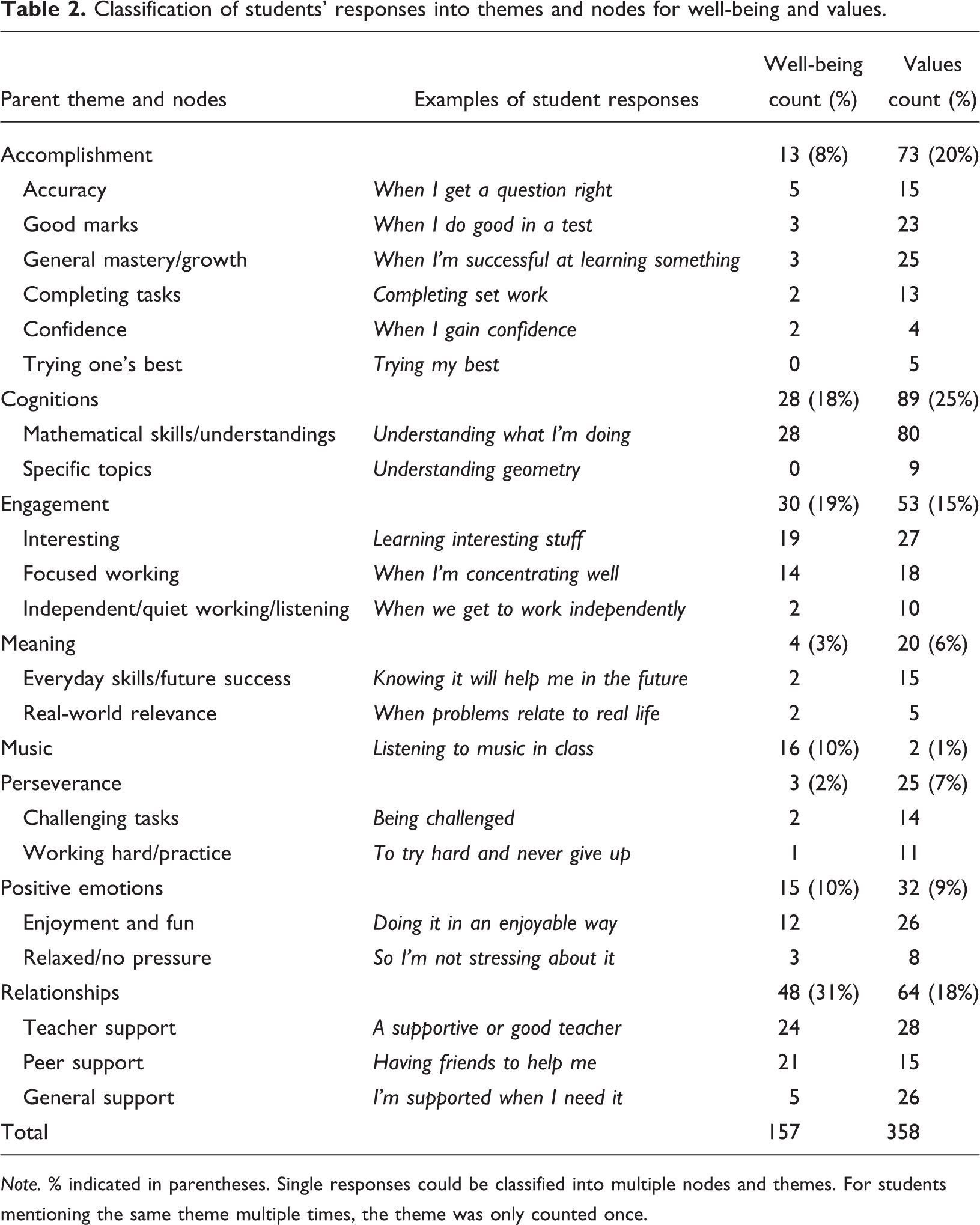
The procedure for data analysis was adapted from Braun and Clarke’s (2006) six-phase framework, beginning with responses to the first survey question to capture student conceptions of mathematics well-being, and then repeating the process with the second two survey questions to capture student values related to mathematics education. First, to become familiar with the data and to generate early impressions based on our preexisting MWB framework, the first author read through all student responses. Second, initial nodes (or themes) were generated inductively from the responses, not included in our seven dimensions. For example, “having friends in my class to support me” was coded as peer support. Because the students often discussed several factors that were important for their well-being, or learning of mathematics, responses could be coded according to two or more nodes. For example, “When I am successful at learning something and I can use it in a real-life situation” was coded as both general mastery/growth and everyday skills. Third, nodes were grouped into common themes based on our seven dimensions. For instance, the nodes peer support and teacher support were categorized into the theme relationships, and the nodes accuracy and good grades were categorized into the theme accomplishment. Only a small proportion of outlier responses (i.e., less than 1/152 responses for the well-being question, and 7/360 responses for the two values questions) could not be coded into nodes due to ambiguous or nonsense responses. Fourth, while the majority of nodes were readily categorized into themes, the categorization of three nodes (confidence, absence of pressure, and listening) was not immediately apparent. These nodes were discussed between the first and second authors, resulting in the final categorization (see Table 2). As students often mentioned multiple themes, the response for each student could be categorized into multiple nodes and themes (for students mentioning the same theme multiple times, the theme was only counted once).
Classification of students’ responses into themes and nodes for well-being and values.
Note. % indicated in parentheses. Single responses could be classified into multiple nodes and themes. For students mentioning the same theme multiple times, the theme was only counted once.
The same process as described above was repeated with the two values questions to identify value-related themes, examining the extent to which the themes aligned with the seven dimensions described in Table 1. We examined the frequency that the parts of the framework occur across the sample as a whole and examined specific examples in which well-being and values were more and less aligned. Finally, to answer Research question 3 we explored the relationship between well-being and values. For each student, responses were coded as 1 if the theme was mentioned for well-being and/or values, or as 0 if the theme was not mentioned. We calculated χ2, which tests whether there is a relationship between mentioning each theme for well-being and values. We also report ϕ as a measure of the size of the effect.
Results
As summarized in Table 2, student responses aligned with the seven well-being dimensions. In both cases, an additional “music” theme was identified. Here, we first describe the themes that arose within each question, providing indicative quotes from student responses, and then consider congruence between well-being conceptualizations and values.
Student conceptions of MWB
The first qualitative question aimed to explore student conceptions of MWB and to explore strategies that might arise from these conceptions to support well-being. Responses generally could be classified according to the proposed seven well-being dimensions, with relationships most commonly mentioned, appearing in nearly 1/3 of responses. In addition, music was identified as an additional theme, mentioned in 10% of responses. Here, we describe these dimensions in greater detail, ordered based on the frequency in which the theme was mentioned.
Relationships
The largest proportion of students associated positive classroom relationships with their MWB. Within the relationship theme, the most common node was peer support, which included references to particular supportive friends, having respectful peer relationships, or working collaboratively and sharing mathematical ideas and strategies within a peer group. For instance, one student noted benefiting from “Having friends to help me when I don’t understand.” Another student pointed to the benefits of talking through the maths problems with peers, noting that “This helps me to gain knowledge from their ways of answering things, and also helping them to gain new ideas from me.”
Twenty-one responses referenced teachers, ranging from having a “good” or supportive teacher to a teacher who understood the learner and provided explanations when mathematical understanding was lacking. For example, one student noted the benefit of having “a teacher who understands you when you are having trouble and tried to help you.” Students also pointed to the benefit of a respectful classroom environment, noting for instance “being appreciated in my class” and “a class that is nonjudgmental.”
Engagement
Engagement was the second most frequently identified theme. Over half of the nodes in this category referenced focused work, being absorbed, or having a lack of distractions. For instance, one student noted “being absorbed into my work without distractions. It helps if all the explaining is at the start so I can focus on working without stopping.” Another student benefited from “concentrating well in class and not getting distracted by others.” Seven students also indicated that their peers were often distracting, and so they desired quiet or independent working. For instance, “I am sitting next to someone who I can work with but not be distracting to me.”
Fourteen students referred to the importance of having an interesting or engaging mathematics learning environment. Five of these students provided specific examples of activities that facilitated a fun classroom, such as hands-on activities, learning alternative mathematical solutions, real-world problems, or having a variety of mathematical questions and problems, and point to the importance of autonomy. For instance, one student noted, “Real world problems and problem solving. I like having a choice over my learning and getting to learn something that interests me.”
Cognitive factors
Cognitive factors featured in 18% of the total themes referenced. Almost all of these students regarded mathematics understanding and clarity as crucial for their MWB, for instance, one student noted benefit when he “understands fully the topic and knows how to do it correctly.” Students further pointed to mathematical understanding facilitating positive emotions and minimizing negative emotions toward the subject, noting “I really like to understand what I am learning so that I will be more happy” and “I feel really good when I can understand what I am doing, however if I do not understand what I am doing I get frustrated and don’t enjoy it as much.”
Music
Student responses identified music as an additional theme, with 10% of the themes referencing the importance of listening to music while doing mathematics, noting for instance “when we get to listen to music when doing maths.” Thirteen students provided no reasons for this, but three students did, noting that music brought them enjoyment (“My music and having something to listen to in class so that I enjoy it more”) or helped the student to remain focused (“Listening to music helps me to concentrate”). Music may be used as a tool to promote well-being in other dimensions (e.g., positive emotions and engagement). However, because a majority (n = 13/16) of students mentioning music provided no additional reasoning why music was a factor of their well-being, it is unclear the role that music plays for each of them.
Positive emotions
Positive emotions were referenced in 10% of responses. Positive emotions included a fun or enjoyable classroom environment, feeling good or happy, and also the absence of pressure and stress to get the answers correct. For instance, one student noted, “It is good when maths is fun and enjoyable.” Another student pointed to positive emotions taking away some of the pressure, “When making mistakes is ok and there is not pressure.”
Accomplishment
A sense of accomplishment was referenced in 8% of the total themes. Accomplishment included achieving good grades or improving marks, mathematical accuracy, or successfully completing their work, for instance noting “Doing well and answering a question right” and “I feel really good when I finish a maths test.” For two students, accomplishment with mathematics also included a sense of confidence as a result of their success in learning the subject, noting for instance, “When I feel really confident in something I have learnt.”
Meaning
A few students (3%) referenced the importance of meaningful or purposeful mathematics, such as real-world problems, or developing mathematics skills which would help them in the future. For instance, one student noted, “Knowing that these skills will help me later in life.” Another student pointed to doing work that matters, “When we get to work with things that matter. I also like having a choice over my learning and getting to learn what means something to me and what interests me.”
Perseverance
Perseverance appeared in 2% of the total themes. For these students, perseverance with mathematics included references to working hard or being challenged, for example, noting “I feel really good when I work hard” and “Being challenged, I may not get it in the first try and have to be taught how to do it.”
Student values
Two of the qualitative questions focused on students’ values related to mathematics education. As summarized in Table 2, responses could be coded into the same eight themes, though with differing frequencies. The largest percentage of responses reflected cognitive aspects (25%), followed by accomplishment (20%).
For the cognitions theme, majority of nodes referenced mathematical understandings and/or skills, with one student noting “That I understand the work that I’m doing.” Nine students referenced specific mathematical topics such as “understanding geometry” or “positive and negative numbers.” For the accomplishment theme, students valued general mastery and success (“To enhance my learning in the greatest way possible”) and obtaining good grades (“That I get good marks”). Students also noted the importance of mathematical accuracy (“Getting it right”), completing tasks (“Completing all the work that I am set”), trying one’s best (“Trying my best in everything”), and confidence (“Feeling confident”).
Relationships and engagement were the next two most frequently cited themes. Having teacher support or support in general were the most frequent nodes for this category, for example, two students noted “A good teacher who will help and support you” or simply “For someone to help me when I’m struggling.” A smaller proportion referenced peer support, for example, one student noted, “I am not only learning from my teacher but learning from my classmates.” For the engagement theme, interesting mathematics was cited most frequently, with one student noting “Interesting content,” and similar to the well-being question, several students provided specific examples of interesting pedagogies such as variety, new topics, or an engaging teacher and/or materials. Other nodes for engagement included focused working, for example, “That I’m focused” or working in silence/working independently/listening (“Everyone being quiet” or “Listening”).
The value of positive emotions, perseverance, and music was also noted by students. For positive emotions, majority of nodes referenced a fun and enjoyable classroom; for instance, two students noted, “Having fun while doing it” or “Enjoying maths a little.” Several students referenced feeling relaxed or the absence of pressure (“Not having pressure to do well”). For the perseverance theme nodes included challenging or hard work, two students noted “Being challenged” and “Practicing the work.” For the meaning theme, majority of students valued helpful or useful mathematics, for instance, one student noted, “Knowing it will help me in the future.” Lastly, two students noted that “Music” was important and provided no additional reasoning.
Comparing conceptions of MWB and values
Finally, we considered how students’ conceptions of well-being aligned with valuing these areas. As indicated in Table 2, the same eight themes appeared in both sets of questions. However, as evident in Table 2 and as illustrated in Figure 1, the frequency that each theme occurred differed. For example, positive relationships were mentioned most frequently by students discussing their MWB, while relationships were the fourth most common category in students’ value responses. Music was the fourth most common theme appearing in students’ conceptions of MWB, yet music appeared in only 1% of the overall mathematical value references.
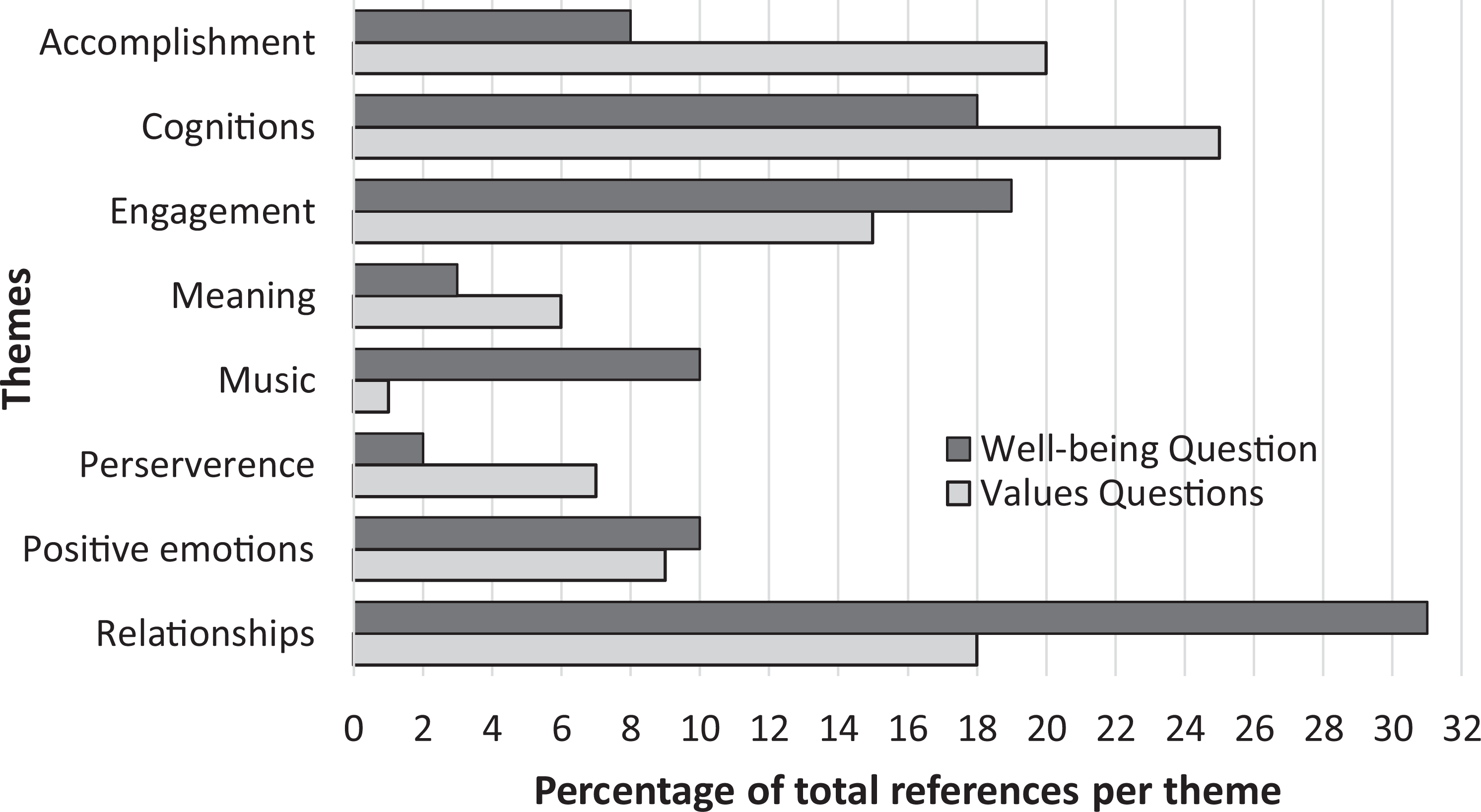
Comparing the difference in the proportion the eight themes were referenced by students across the mathematical well-being question and the mathematics values questions.
Directly comparing how often students mentioned a theme for both well-being and values, 72% of students had one or more themes that occurred across both constructs. Co-mentions occurred most frequently for cognitions (30% of students), followed by relationships (27%), engagement (27%), accomplishment (13%), positive emotions (8%), perseverance (4%), meaning (4%), and music (2%).
To directly test whether there was a relationship between mentioning a theme for well-being and mentioning a theme for values, we computed a χ2 test. Table 3 reports the frequency that each theme was mentioned for well-being and values, for well-being only, and for values only (indicating whether or not the theme was mentioned by a student, ignoring multiple mentions), along with the χ2, the related p value (indicating whether or not there may be a significant association between mentioning the theme for both well-being and values), and ϕ (which provides an indication of the size of the effect). As indicated in Table 3, there were statistically significant associations between identifying each theme for both well-being and values for all themes except relationships.
Testing associations between well-being and values.
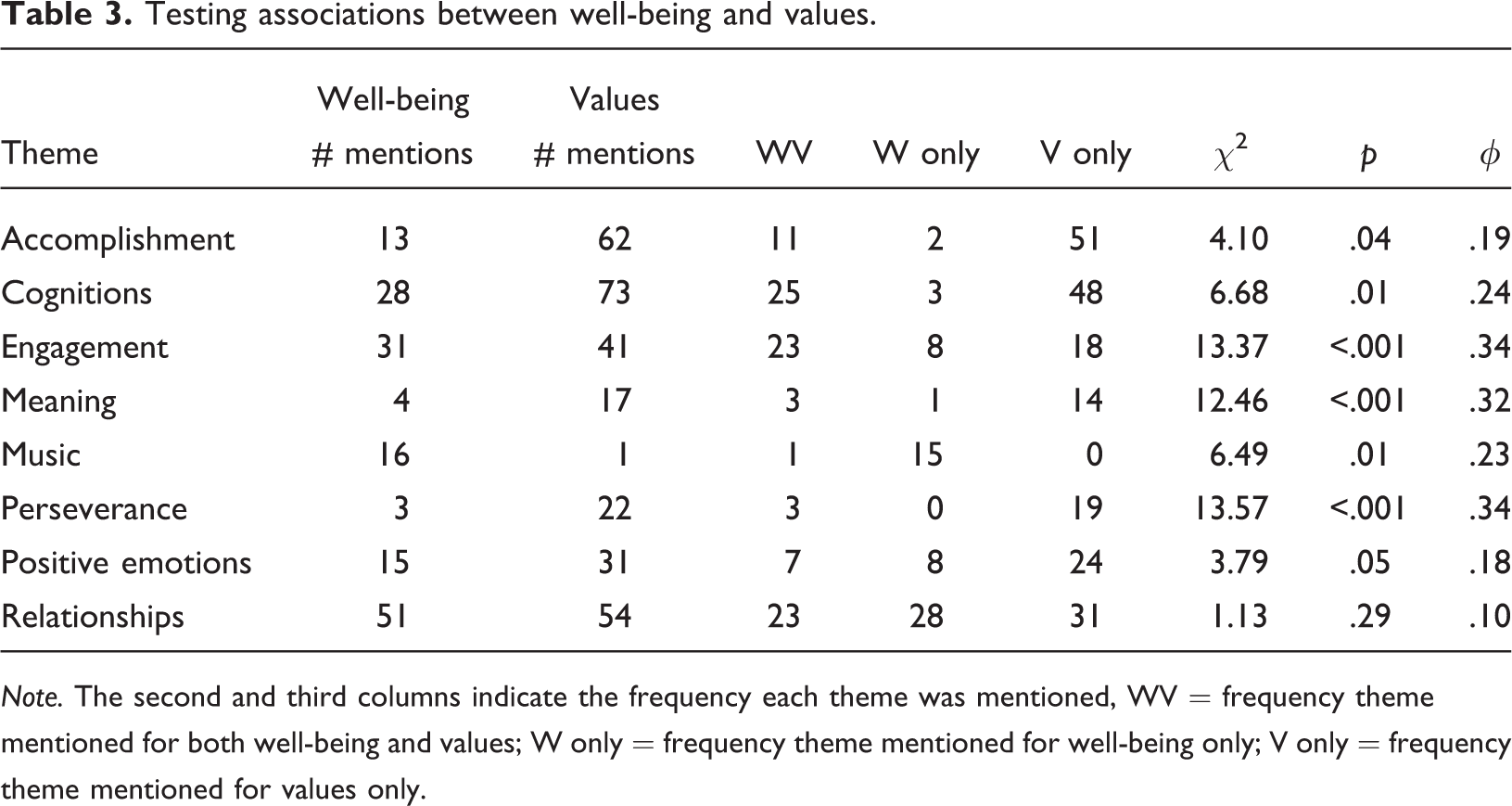
Note. The second and third columns indicate the frequency each theme was mentioned, WV = frequency theme mentioned for both well-being and values; W only = frequency theme mentioned for well-being only; V only = frequency theme mentioned for values only.
Discussion
Despite a growing focus in schools in Australia and globally on student well-being, existing models and frameworks primarily focus on general well-being, rather than considering how well-being might depend upon the context of different subjects and the values that students have for those classes. Bringing together work within mathematical education focused on well-being and theories and models developed within positive psychology, the current study examined the extent to which students’ conceptions of MWB could be classified across seven well-being dimensions that have been previously been linked to positive student mathematical outcomes, identified additional aspects that may support well-being, and considered congruences between well-being conceptualizations and values. Our results pointed to three findings: (1) student responses aligned to the seven well-being dimensions, pointing to a potential updated model of mathematics well-being that could be useful in studies and practice in the future; (2) music is a relevant contributor to MWB for some students; and (3) there is alignment between conceptualizations of well-being and values.
Conceptions of and strategies for cultivating MWB
Our first question examined the extent to which students perceived that the proposed seven dimensions contributed to their well-being, specifically within the context of mathematics education. Responses reflected all seven dimensions. Positive relationships were the most frequently cited theme, with over a third of students pointing to the importance of having supportive and understanding classroom relationships. The current findings align with earlier studies, which find that students mostly reference positive relationships when conceptualizing their well-being and indicators of life success (The Children’s Society, 2015; Trask-Kerr et al., 2019).
Notably, almost an equal proportion of students referenced peer versus teacher relationships. In many countries, mathematics classroom is teacher-led, with pedagogies that are dominated by the textbook and often with limited opportunities for peer collaboration (Geist, 2010; Hunter, Hunter, Jogensen, et al., 2016; Seah et al., 2016). The impact of positive and supportive social relationships on well-being is well recognized (e.g., Allen & Kern, 2017; Noble & McGrath, 2008; Seligman, 2011). For mathematics education, supportive teachers are associated with improved student mathematical achievement (OECD, 2016); positive emotions, academic enjoyment, and effort in mathematics (Sakiz et al., 2012); and mathematical engagement (Attard, 2013). Peer collaboration in mathematics, though less researched, is also highly beneficial on various student mathematics learning outcomes (Hunter, Hunter, Jogensen, et al., 2016), especially for students from minority cultures (Averill, 2012; Hill et al., 2019). Supportive friendships are especially important for adolescents (Allen & Kern, 2017; Kern et al., 2015; The Children’s Society, 2015; Van Ryzin et al., 2009). The influence of positive classroom relationships on student MWB suggests greater attention to the social aspects of mathematics learning is required.
Mathematical engagement was the second most common theme identified in students’ responses. The past decade has brought interest globally on student engagement, with a particular focus and concern on the negative impacts of disengagement on student academic performance (e.g., McPhan et al., 2008). Several students hinted at factors that might assist them to engage with mathematics, such as specific pedagogical strategies or a quiet learning environment. Students also pointed to disengaging factors, including distracting peers and repetitive pedagogy. For many students, mathematics is seen as a boring subject, devoid of fun and engaging pedagogies and often (particularly in secondary school) dominated by repetitive worksheets and use of the textbook (Attard, 2013; Grootenboer & Marshman, 2015). Students across several countries and ethnicities consistently purport that fun and engaging pedagogies are very important for their mathematics learning and engagement with the subject (Hill, 2018; Seah & Peng, 2012; Zhang, 2019).
About one fifth of students pointed toward cognitive components as important for their MWB. Mathematics is considered by many students to be a cognitively challenging and difficult subject, and learning mathematics often comes at a personal price in terms of the time and effort required to grasp mathematical knowledge and skills (McPhan et al., 2008). Mathematics is often taught in a progressive yet linear fashion where previous knowledge is often applied to the learning of future or more advanced mathematical topics. In this sense, mathematical understanding is often defined as “connected knowing” (Mousley, 2004, p. 377). The progressive nature of learning mathematics can contribute to fears or anxieties about being left behind in a fast paced mathematics curriculum (Geist, 2010). Thus, a desire to keep at pace with their mathematics curriculum may have contributed to the current student cohort associating their mathematical cognitions with their well-being.
Some students pointed to the value of positive emotions and/or accomplishment as key contributors to their well-being. Students noted for instance how working with friends promoted positive feelings, whereas pressure of making no mistake promoted negative emotions. The impacts of mathematics anxiety on student learning outcomes have been well-documented (e.g., Dowker et al., 2016; Geist, 2010). In contrast, studies find associations between positive emotions and greater student confidence, effort, achievement, self-regulation, and self-efficacy in mathematics (Pinxten et al., 2014; Villavicencio & Bernardo, 2016). Notably, while subjective accomplishment can contribute to a sense of mastery and boost confidence and self-esteem (Norish, 2015), objective achievement does not necessarily result in positive feelings. Some recent studies suggest that strategies that develop student well-being can also contribute to good academic outcomes (Waters et al., 2019; White & Kern, 2018), but additional studies are required considering how subjective and objective indicators of accomplishment contribute to and intersect with other well-being dimensions.
Pointing to strategies that might help support well-being, some students reported that music was an important contributor to their MWB. Music is one of the most favored leisure activities among adolescents (Papinczak et al., 2015). Numerous studies find that listening to or playing music can reduce depressive symptoms and improve overall well-being (Chirico et al., 2015; Croom, 2015; Schäfer et al., 2014). Listening to music promotes perseverance, engagement, and grit (Csikszentmihalyi, 1996) and is often used to improve performance by athletes, patient perseverance during injury rehabilitation (Ticker, 2017), and even academic motivation and concentration among students (Papinczak et al., 2015). Future studies might examine the role that music plays in contributing to or hindering student well-being.
Linking well-being and values
A core aim of the study was to explore the links between students’ conceptions of what contributes to their MWB and the value that each of those contributors provides. Overall, we found considerable similarity in how students responded to the well-being and values questions (see Tables 2 and 3). The same eight themes appeared across both constructs with statistically significant associations for each theme except relationships. Many students mentioned the same themes when discussing their MWB compared with what they valued as important for learning mathematics. These findings point to a similarity between the factors that contribute to MWB and what students value in the mathematics classroom. Various philosophers and academics have argued that values and well-being are inextricably linked, suggesting that one cannot explore or interpret well-being without considering the underlying values of the individual or context (e.g., Alexandrova, 2017; Aristotle, 1985; Rogers, 1961). The pattern of results supports the notion that well-being is value-based.
However, the prevalence of the themes appearing across each construct differed. For example, relationships appeared more frequently in the well-being question, while the accomplishment dimension was much more common in students’ value responses. It is likely that differences in the wording of well-being survey questions allowed certain aspects to be more apparent or salient. For instance, the well-being question may have probed deeper and more holistic considerations of the student’s mathematics learning beyond the typical cognitive factors, whereas the values survey questions may have focused attention specifically on the act of doing mathematics, resulting in responses centered on cognition and accomplishment variables. Alternatively, the phrase “most important” used in the values questions may have prompted students to reflect on achievement and cognition values—often highly valued by schools and educational systems—rather than considering more personal and subtle values such as peer support.
Still, the prevalence of each dimension is not necessarily indicative of the importance of that dimension. As students freely responded to questions, noting a particular domain indicates that it was not only important to the student, but also central to their attention at the time. To determine the value of each well-being dimension, students might rate the degree of importance of each dimension using a Likert-style scale. Notably, the updated MWB model provides a framework for further considering intersections between well-being and values within mathematical education.
Implications and limitations
The study provides an updated framework to explore student well-being in mathematics education and provides initial support that the framework aligns with students’ perceptions. Our framework offers a useful starting point to explore the factors that might promote student MWB. As many students perceive mathematics to be a challenging and disengaging subject (Attard, 2013; Grootenboer & Marshman, 2015), and current strategies to improve the way the subject is taught to and received by students do not appear to be working as well as they intend, a focus on the promotion of student MWB may provide an avenue to reverse some of these negative trends. Our results also highlight the similarities between students’ values and their well-being in mathematics education and may provide an avenue to promote student well-being, for example, by aligning teacher or mathematics pedagogical values to students’ values (value congruency), or by developing specific values among students associated with MWB.
We specifically examined well-being within mathematics education. A similar approach could be used to explore student well-being in other academic disciplines. Understanding student well-being across individual subject disciplines might provide insights into specific school experiences that have the greatest positive and negative impacts on well-being. Directly comparing student well-being across different subjects may also have implications for teaching integrated subjects that cross multiple discipline areas.
Given that the large majority of student participants are self-identified as Australian, we cannot determine how students from different ethnic groups responded when describing their MWB or values. Different ethnic groups often espouse different cultural values (e.g., collectivist vs. individualist values), which likely impact upon students’ valuing in the mathematics classroom (Hill, 2018) and students’ conceptions of well-being (Diener et al., 2003). For instance, Asian students often value achievement and effort in mathematics more than Australian students (Cao & Bishop, 2001), while New Zealand Māori and Pāsifika students value familial and collaborative values in mathematics more than European and Asian students (Hill et al., 2019). Based on the differences in cultural values, we conjecture that indicators of MWB would also differ by student ethnicity. The current study might be replicated among a more diverse sample to determine cultural similarities or differences in student MWB and values.
The current sample size was relatively small, ethnically homogenous, and focused on one regional Victorian school. Prior research shows that students from different cultures often espouse different values and likely hold different conceptions of well-being (Diener et al., 2003). The study drew on qualitative responses, which does not fully represent the extent to which themes may be prevalent when directly asked. The study primarily was deductive in nature, identifying the extent to which responses aligned to seven theoretically defined well-being dimensions, along with inductively considering additional themes. Still, the theoretical framework or the background and perceptions of the authors could bias how different responses were classified. Future studies might develop and test a mathematics well-being model that brings together theory and research in mathematics education and positive psychology.
Conclusion
The widespread negative reactions experienced by students in mathematics education are well publicized, pointing to a poor sense of well-being in many mathematics classrooms (e.g., Attard, 2013; Dowker et al., 2016). Well-being is context-specific; thus, student well-being should be explored in individual subjects. Well-being is also values dependent, and the factors students value as important when learning mathematics are the same factors that promote MWB. This article examined student well-being conceptions across seven dimensions, identified strategies for promoting well-being, and considered congruence between students’ well-being and their values, resulting in an updated eight-dimensional MWB framework. Findings point to the importance of both teachers and peers, the potential benefit of music, engaging activities, fun, and motivational aspects, pointing to target areas to improve students’ experiences in mathematics. Providing a balance to the considerable research and media attention in mathematics education focused on the negative aspects, the “gaps,” and what is going wrong in the subject, our study offers a glimpse of the aspects of students’ mathematical learning that are working well or enable students to “feel good and function well.”
Footnotes
Author’s note
Written consent was obtained by all 119 students, their parents, teachers, and schools prior to the students participating in the study.
Contributorship
Julia Hill was responsible for the conceptual design of the paper, all the data collection and writing of the paper. Margaret Kern contributed by providing the bulk of the revisions to the paper and assisted with statistical data analysis. Wee Tiong Seah and Jan van Driel, PhD supervisors of Julia Hill, provided additional revisions and insights.
Declaration of conflicting interests
The author(s) declared no potential conflicts of interest with respect to the research, authorship, and/or publication of this article.
Funding
The author(s) received no financial support for the research, authorship, and/or publication of this article.