




Abstract
Purpose
This study investigates middle school students’ learning experiences through digital storytelling, applying a multimodal analytical framework to uncover patterns in digital stories. This study explores how participants engage in pedagogical activities, reflect on their learning experiences, and articulate their voices through digital stories.
Design/Approach/Methods
Employing qualitative case study methods, we purposefully selected three 12-year-old female students at an urban school in the northern US. Analyses of digital stories and other data sources (interviews, classroom observations, and reflective journals) show that the students were engaged in both teaching and reflection.
Findings
The findings describe (1) participants and their learning experiences, (2) students’ representational and interpersonal constructs as used in their digital stories, and (3) their participation as teachers as well as learners.
Originality/Value
Our multimodal analytical framework illuminates how students express themselves through digital stories. Our discussion focuses on students’ learning, their identity development, the effectiveness of the analytical framework, and pedagogical implications.
Owing to COVID-19, most teaching in schools shifted to remote formats (UNESCO, 2020). The wide and increasing use of technology in all spheres of our lives continues to change students’ learning and pathways toward academic and professional success. While in the past, students worked on developing literacy as key to their academic progress, students today also need to be digitally literate and use technology effectively to access information, read, write, communicate, collaborate, and share their work with others online (Hobbs, 2017). One promising way to create and share digital content (Jones, 2017) is digital storytelling.
Digital storytelling emerged in the 1990s, when it was introduced by the Center for Digital Storytelling (renamed the StoryCenter in 2015) in Berkeley, California (StoryCenter, n.d.). This innovation emphasizes storytelling by using technology, combining multiple modalities, and using various tools. Digital stories are 2–5-min narratives created with the use of visuals (e.g., photos, images, animation, and text; Kim, Coenraad, et al., 2021), and audio (e.g., narrative voice-over and music; Park, 2019). Digital storytelling has been used for various purposes and by diverse groups such as refugees and immigrants (Lenette & Boddy, 2013) and people with disabilities and mental health issues (LaMarre & Rice, 2016). It has also been popular in education (Wu & Chen, 2020). There are some studies on using digital stories for learning; however, there are relatively few on digital storytelling by middle school students. To our knowledge, no studies have investigated the use of digital storytelling by middle school students as a medium for reflection on their own teaching experiences when they instruct younger children and document their work.
We investigated middle school students’ use of digital storytelling as part of their own teaching experience. To do so, we modified a framework we developed for the analysis of multimodal digital stories (Kim & Li, 2020). Our modified framework enabled us to understand students’ experiences in a comprehensive manner. The study will be a guide for educators who use digital storytelling to facilitate students’ learning and serve as a foundation for further research on complex multimodal technologies in education.
Theoretical framework
In this study, we draw on the ecological perspective articulated by van Lier (2004), which is rooted in sociocultural theory (Lantolf, 2000). From this perspective, learners are active participants in environments rich in various meanings, processes, and opportunities for learning. According to van Lier, students perceive these affordances, interpret them, and act accordingly. In this cyclical process, learners’ actions create new affordances that engage students in further participation. The ecological perspective understands identity as “both a project and a projection of the self,” which includes elements from without and within and is situated in the social context (van Lier, 2004, p. 125). The ecological perspective allows us to investigate middle school students’ experiences with digital storytelling in a holistic way, as a situated action in context.
Our multimodal analytical framework is rooted in Michael Halliday's (2014) work on functional grammar, Unsworth's (2001) analysis of multimodal texts and the relations between images and language, and insights from Serafini (2015). The framework analyzes texts, audio, and visuals in terms of four basic functions: representational, relational, configurational, and sociocultural (Kim & Jia, 2020). The representational construct describes participants, objects, and events. The interpersonal construct reflects or creates relationships among all agents, including authors and viewers of digital stories. The compositional construct shows how meanings are arranged among text, visuals, and audio in digital stories. Finally, the sociocultural construct presupposes the background of characters and storytellers as situated in the social context. A detailed description of this comprehensive analytical approach to digital stories is provided in Kim and Li (2020) and Kim, Long et al. (2021). The multimodal analytical framework we developed enables us to systematically explore various aspects of digital stories such as narration, audio, video, and music.
Literature review
Digital storytelling in education
The original purpose of digital storytelling was to create and share powerful personal stories using digital media to connect with others and make the world a better place (Lambert, 2009; StoryCenter, n.d.). Digital stories have been used for research, therapy, education, and movement building (de Jager et al., 2017; Rieger et al., 2018). Many researchers have used digital stories to work with marginalized groups (e.g., refugees, homeless, and mental health patients), because it allowed these participants to represent their preferred identities and resolve conflicts. Many studies found that digital stories can empower their creators and their communities, often ushering changes in social justice and inclusion (Greene et al., 2018; Rice et al., 2015).
As an educational tool, digital storytelling provides students opportunities to explore their artistic talents and articulate their stories, simultaneously developing media literacies, learning how to use a library, doing research, developing communication and organizational skills, constructing a narrative, collaborating, and peer reviewing others’ stories (Robin, 2016). For decades, educators have used digital stories to facilitate the learning of various subjects. According to Wu and Chen (2020), most studies on educational digital storytelling have shown how digital stories in the classroom can help students learn subject matter, understand it better by creating a digital story, and situate it in their existing knowledge. Other purposes of digital storytelling in education include helping students develop their agency, autonomy, and capacity for critique to engage them in reflective and dialogical practices and explore their identities. Interestingly, digital storytelling has been implemented at all educational levels (Wu & Chen, 2020).
In higher education, digital storytelling has helped students develop research skills and digital literacies (Grant & Bolin, 2016; Oskoz & Elola, 2016); improve their conceptual understanding (Brace et al., 2015) and narrative writing (Balaman, 2018; Kim & Lee, 2018); develop their English, critical thinking, and problem-solving skills (Thang & Mahmud, 2017). It has also helped students to better understand, re-conceptualize, and critique theories (Coventry, 2008); collaborate and co-construct meaning (Rambe & Mlambo, 2014); and improve their motivation, autonomy, communication, and social skills (Lin et al., 2013; Ribeiro, 2016). Students have also increased their self-awareness (Kortegast & Davis, 2017) and improved their knowledge of other social groups such as indigenous people (Castleden et al., 2013; Grant & Bolin, 2016; Ribeiro, 2016). Pre-service teachers have benefited from digital storytelling by improving their understanding of content and pedagogical competencies (e.g., Istenic Starčič et al., 2016), and reflective practices including reflection on racial justice (Matias & Grosland, 2016). Digital storytelling has also facilitated students’ self-exploration and identity development through reflection on their backgrounds (Jones & Leverenz, 2017; LaFrance & Blizzard, 2013).
Digital storytelling in K-12 educational settings
As in higher education, digital storytelling has been popular and effective in K-12 contexts, even in elementary grades. Research on digital storytelling with younger learners shows that it can help struggling fifth-grade readers with comprehension strategies and skills, facilitate their writing, and increase their engagement (Shelby-Caffey et al., 2014). It also has a positive effect on sixth-grade language learners’ digital literacies, creativity, language performance, motivation, and elaboration (Hwang et al., 2016; Liu, Tai, et al., 2018; Papadopoulou & Vlachos, 2014). Liu et al.'s (2016) study of third-grade language learners describes participants’ experiences through the process of digital storytelling. The learners went from being curious about the task to disengagement due to difficulties completing the first story, to having a sense of achievement when publishing a story for the first time, to feeling bored when working on a second story, and to feeling reengaged when watching their peers’ stories and improving their own. These third-grade language learners also significantly improved their vocabulary in English and oral reading scores (Liu et al., 2016), as well as their written organization and development of ideas, sentence fluency, word choice, and use of genre conventions (Yamaç & Ulusoy, 2016). Elementary school students’ collaboration in digital stories led to more opportunities for interaction, more positive emotional experiences, autonomy, and engagement compared to individual story creation (Liu, Huang, et al., 2018; Niemi et al., 2018).
Research on digital storytelling among middle school students is relatively scarce. Prior studies found positive effects of digital stories on students’ learning of programming concepts, development of self-efficacy, and participation (Durak, 2018). In one study on co-creativity, learners demonstrated engagement and control when writing their digital stories and experienced enjoyment in the digital story production stage (Schmoelz, 2018). In Ellison's (2017) study, a 13-year-old African American student excelled in problem-solving and critical thinking; developed his creativity; and reflected on his racial identity, digital choices, and agency when working on a digital story. Digital storytelling also increased the awareness of privacy concerns, effective online communication, and interaction of a group that worked on digital stories more than that of one that collaborated online but did not work on digital stories (Nam, 2017).
Most studies on digital storytelling conducted in a high school context focused on language learners. These studies show that digital stories help students improve their second language (L2) literacy and understanding of course content, increase student motivation, and have a positive effect on critical thinking (Rahimi & Yadollahi, 2017; Yang & Wu, 2012). For example, digital storytelling helped one adolescent English learner become aware of his resilience and helped him express difficult experiences of immigration to Canada (Johnson & Kendrick, 2017). Most English as a foreign language learners enjoy creating digital stories and developing their writing in L2 (Damavandi et al., 2018). Studies also reported the positive influence of digital storytelling on achievement in physics (Kotluk & Kocakaya, 2017), the development of transliteracy, ability to engage in literacy practices across various platforms and contexts (Thomas et al., 2007), computer skills, student engagement, sense of accomplishment, and pride (Sukovic, 2014). Some students experience challenges due to technical issues, anxiety, organization and time management, and a lack of confidence (Sukovic, 2014). Finally, Öztürk and Tunç (2017) confirmed the positive effect of digital storytelling on high school students’ communication and teamwork.
Analysis of digital stories in educational settings
When used for research purposes, digital storytelling often allows deeper insight into the matter under investigation than interviewing, because it increases participants’ engagement, commitment, and rapport (de Jager et al., 2017). Many qualitative studies on digital storytelling have used inductive constant comparative and content analysis methods to analyze digital stories. While we acknowledge the contribution of these studies, the field needs a comprehensive analytical framework that would enable researchers to systematically analyze multimodal elements in context (Kim & Li, 2020).
Prior studies on multimodal products focus on analyzing the relations between images and language in the text (e.g., Daly & Unsworth, 2011; Hiippala, 2015; O'Halloran, 2008). Álvarez (2016) introduced a framework for multimodal text analysis that teachers can use in the classroom. We have also modified a multimodal analytical framework that we developed to analyze complex multimodal products such as digital stories (Kim & Li, 2020; Kim, Long, et al., 2021). In this study, we use this modified framework to analyze middle school students engaging in teaching younger students.
Research questions
To understand middle school students’ experiences with digital stories and the structure of the digital stories they produced, we pose the following research questions:
What were the learning experiences of three middle school students during the capstone teaching project? How can the multimodal analytical framework be used to reveal patterns in the digital stories of three middle school students in a capstone teaching project?
Methodology
This was a qualitative multiple case study (Yin, 1994, 2017). We adopted a multiple case study design because our participants were bound by context and time (Creswell, 2012). The qualitative approach allowed us to explore middle school students’ experiences holistically and analyze their digital stories in an in-depth manner using a modified analytical framework (Kim & Li, 2020; Kim, Long, et al., 2021). Prior to the start of the research, this study was approved by the BC IRB (#17.243.01). All signed consent forms (students, teachers, and parents) were collected. All consent procedures for recruiting and explaining the study followed the BC IRB guidelines. All consent forms included information on the purpose of the study, notification that participation is voluntary and that participants have the right to withdraw at any time, and guaranteed confidentiality.
Sites and participants
We conducted this study at an urban school in northeastern US. This was a private Catholic school for students from Pre-K to eighth grade, which had many ESL and socioeconomically disadvantaged students. To recruit participants, we adopted a purposive sampling procedure (Merriam, 2009) and selected them based on the following criteria. Participants had to (a) be sixth and seventh graders enrolled in the capstone program, (b) participate in the capstone project on Teaching with Virtual Reality (VR), (c) complete the project over a period of three weeks, and (d) be willing to participate in the study. The selected participants were all females; however, this was not a criterion for selection. We applied the selection criteria, and it turned out this way. All students in the class either joined the capstone project on Teaching with a VR headset or completed another task. This VR device enabled participants to view VR images or videos. Three of ten students in the project group met all our criteria. The focal participants were Callie, Gabrielle, and Fiona (pseudonyms), 12-year-old female sixth-grade students.
Callie was from an Irish immigrant family. She was an introvert and a hard-working student. For the capstone project, Callie collaborated with Gabrielle, and they taught fifth-grade students about the aurora borealis. She chose this topic because she initially learned about it in science class and wanted to deepen her knowledge about it. In her digital story, Callie reflected on how she had overcome her shyness and how digital storytelling enabled her to speak with more confidence.
Gabrielle was from a Brazilian immigrant family and grew up fluent in Portuguese and English. Unlike Callie, Gabrielle was an extrovert. She enjoyed being around her peers. Gabrielle worked hard to complete her schoolwork including the capstone project. She selected the aurora borealis for her group teaching because she believed that the elementary school students would find it interesting.
Fiona was an exceptional student, who always tried to go beyond expectations in her schoolwork. She completed the capstone project alone, and her motivation and active engagement while teaching a third-grade class was remarkable. Fiona selected stars as her topic, because she did not know much about it.
Procedures and tasks
The capstone project was divided into two phases. In Phase 1, a teacher introduced students to the procedures and requirements for the project. She taught them how to plan a lesson and develop materials to teach elementary school students using a VR tool. The teacher also offered instructional and technological support to students so that they could plan their own lessons. Students chose their teaching topics and subsequently taught the lessons to elementary school students. The students were encouraged to write a daily journal about facts and experiences. To guide their writing, the teacher provided prompts to students such as “I wonder …,” “I was challenged by …,” “I need to …,” and “I hope … .”
In Phase 2, the students each developed a digital story using WeVideo, a web-based video creation and editing software. In their stories, they described and reflected on their experiences of teaching elementary school students. They used photos and videos taken throughout the project or created their own images. They also used diverse multimedia resources found on the Internet. The teacher provided six questions to the students to enhance their reflection procedures, including on their strengths and weaknesses, connection to other subjects, and experiences teaching elementary school students. At the end of the capstone project, the students shared their digital stories with their peers.
Data collection
Data were collected via (a) semi-structured interviews, (b) classroom observations, (c) digital stories, and (d) reflective journals. We conducted either one or two 30–45-min semi-structured interviews with each participant in Phase 2. In the interviews, one member of the research team asked the participants questions about their experiences of teaching elementary school students and developing digital stories. In addition, one research team member observed participants’ performance and collaboration every day throughout the three-week project. She took field notes during these observations. We also collected the participants’ individual digital stories and their reflective journals. The interviews and digital stories were transcribed for further analysis.
Data analysis
We adopted a constant comparative method to analyze data from multiple sources (semi-structured interviews, classroom observations, digital stories, and reflective journals) and to identify meaningful and consistent themes (Glaser & Strauss, 1967). We analyzed the data inductively (Lincoln & Guba, 1985). For the data analysis, we adopted procedures modified from Miles et al. (2014). These procedures included (a) reviewing the first set of data and developing initial codes, (b) deciding the criteria for the codes, (c) coding all the data, (d) revising the codes, (e) developing categories and sub-categories based on thematic patterns, (f) revising categories and sub-categories, (g) repeating steps (c)–(f), (h) renaming or relocating the categories and sub-categories, and (i) conducting within- and cross-subject analyses of the categories.
Through these procedures, we identified two salient categories that characterized learning experiences and four salient categories that characterized digital stories based on the multimodal analytical framework. The categories for experiences were: “learning through teaching” and “learning through reflection.” The categories for the digital story analyses were “representational construct,” “interpersonal construct,” “compositional construct,” and “sociocultural construct.” We adopted and modified a multimodal digital story analytical framework (Kim & Jia, 2020; Kim, Long, et al., 2021 that was developed to analyze these digital stories).
We applied our analytical framework to participants’ digital stories, attending to various semiotic signs (visual, audio, text, and narration) in each digital story. Four constructs anchored the analysis of each digital story (see Table 1). Each construct contained guiding questions and multimodal elements. First, we transcribed each digital story, noting the salient moments. This yielded a timeline of the story and 8–12 slides capturing salient moments. Second, we examined representational elements in each digital story (i.e., people, objects, places). Third, we examined interpersonal elements in each digital story, such as relationships between the viewer and what is viewed and relationships between participants in the story and the author. Fourth, we described the structure and tensions in the story. Finally, we investigated the relationship between the author and context in the composition of the story.
Multimodal analytical framework.
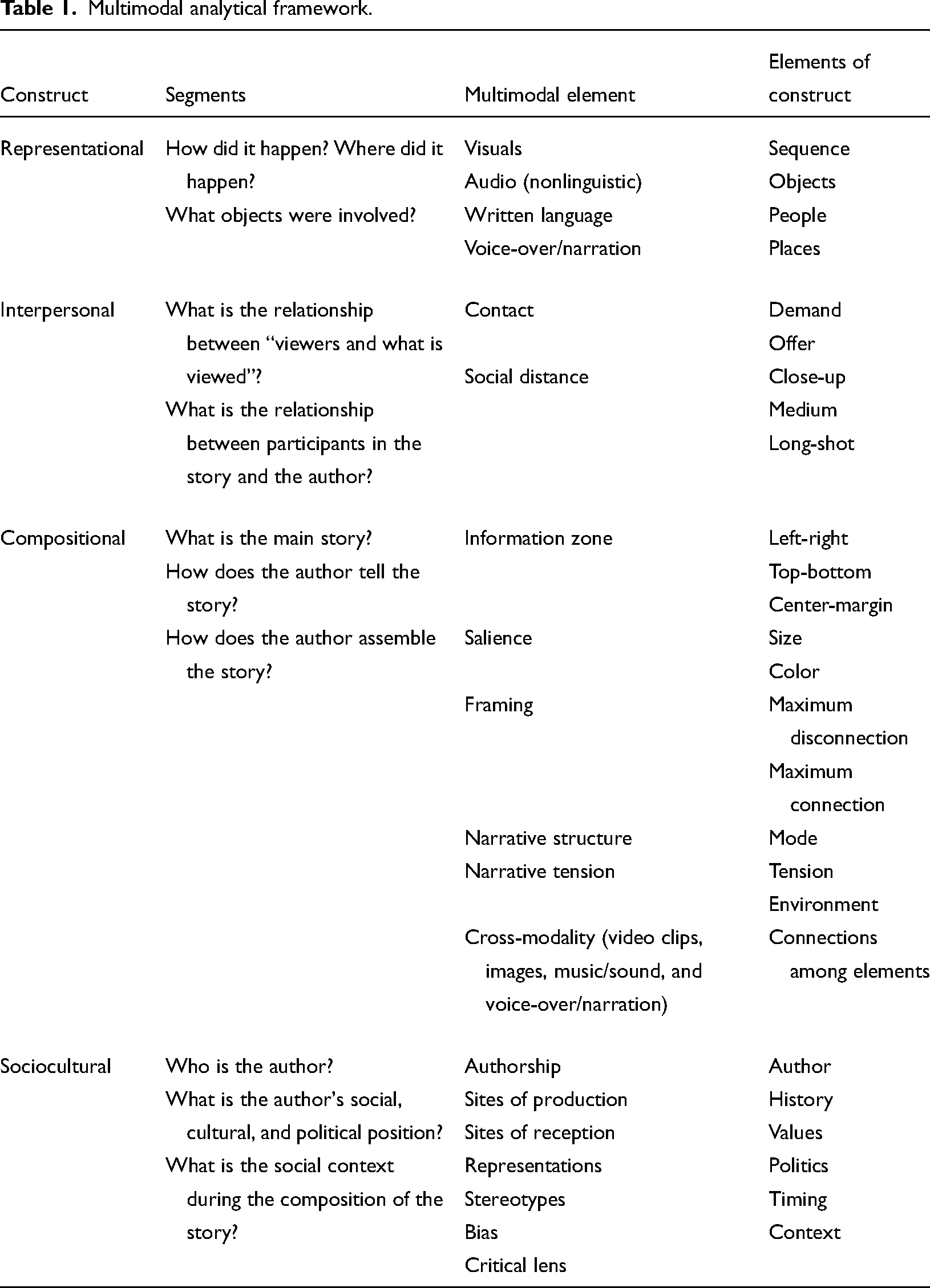
To enhance the trustworthiness and transferability of our analysis, we triangulated our data to identify consistent patterns and describe the study in detail so that readers are able to appropriately transfer our findings to their contexts (Lincoln & Guba, 1985). We utilized multiple data sources—interviews, observations, digital stories, and reflective journals—and analyzed them. We compared our findings with previous research (Creswell, 2007; Merriam, 1998) and conducted member checks with the participants to confirm that our interpretations of the key points were accurate.
Findings
We first described the three focal students and their experiences in the capstone teaching project. Second, we continued with the in-depth analysis of their digital stories using our analytical framework.
Participants’ learning experiences
The participants had impactful learning experiences during their teaching and reflections. Their learning through teaching was mostly associated with their experiences in Phase 1. In this phase, the participants were responsible for planning the lesson, preparing instructional materials and activities, presenting their topics for 15 min to the elementary school students, and assessing young learners’ performances. While planning the lesson, the participants considered diverse instructional issues such as what to teach, how to teach, what roles they should play, and how to assess student learning. Gabrielle, for example, said: I need to figure out how I’m going to teach the kids so that they can participate and find it interesting. So, Callie and I chose the aurora borealis. We were gathering information about auroras and informational videos that we could use to help the kids learn it in a better way so that they could be interested in it. We were reading more about auroras and how they occurred. (Gabrielle's digital story)
In her digital story voice-over narration, Gabrielle describes how she and Callie improved their content knowledge of the chosen topic while preparing for teaching.
The excerpt from Gabrielle's story exemplifies participants’ focus on developing or adopting interesting materials to enhance their students’ engagement and make their teaching successful. All participants searched for multimodal resources on the Internet. Fiona said that she felt successful when she figured out how to sequence activities in her lesson, shortened the video, and found a kid-friendly and informative video. The participants also believed that using the appropriate technology would facilitate their teaching and elementary school students’ learning. Regarding technology, Callie said that “the virtual reality was very helpful because it kept the students really engaged by showing them pictures that look like the students are seeing auroras from their point of view.” Thus, the participants improved their content knowledge on the chosen topics; learned how to use technology to edit videos, prepare their teaching, and complete all parts of their capstone projects; and explored various teaching processes such as lesson preparation, ways to engage students, and assessment.
Participants’ reflective learning was also noteworthy. In their digital stories, Callie, Gabrielle, and Fiona reflected on their own experiences and growth. They described their successes and challenges, and explained how they had overcome obstacles. Furthermore, they clarified their multiple positions and responsibilities as students and teachers. For example, Callie reflected on the challenges she faced as a student when preparing to teach on auroras and her concerns about her lack of experience in teaching. She looked for and appreciated others’ support during that stage of her project. However, when sharing her experiences as a teacher, she was concerned about her students’ learning and paid attention to her teaching strategies. Through such reflection, the participants described how their roles—as a student and teacher—were important to their learning and growth.
Analysis of digital storytelling
To answer the second research question, we adopted our multimodal analytical framework for digital stories (Kim & Jia, 2020; Kim, Long, et al., 2021). In this section, we describe our findings based on the four components of the framework: representational, interpersonal, compositional, and sociocultural constructs. For each component, we analyze the digital stories by explaining participants’ choice of multimodal elements and interpreting their meaning.
Representational construct
In this section, we focused on how Callie, Gabrielle, and Fiona represented participants, objects, and events through visuals, audio, and written and oral language in their digital stories. All three participants’ digital stories featured them as sixth-grade students preparing to teach a lesson to elementary school students in the same private Catholic school, with respect to teaching (presenting to younger students and assessing their knowledge) using VR sets, and their reflections on those experiences. While the participants’ digital stories shared these commonalities, they differed in how Callie, Gabrielle, and Fiona used multimodal elements to tell their stories and represent the agents, context, and events (Figure 1).
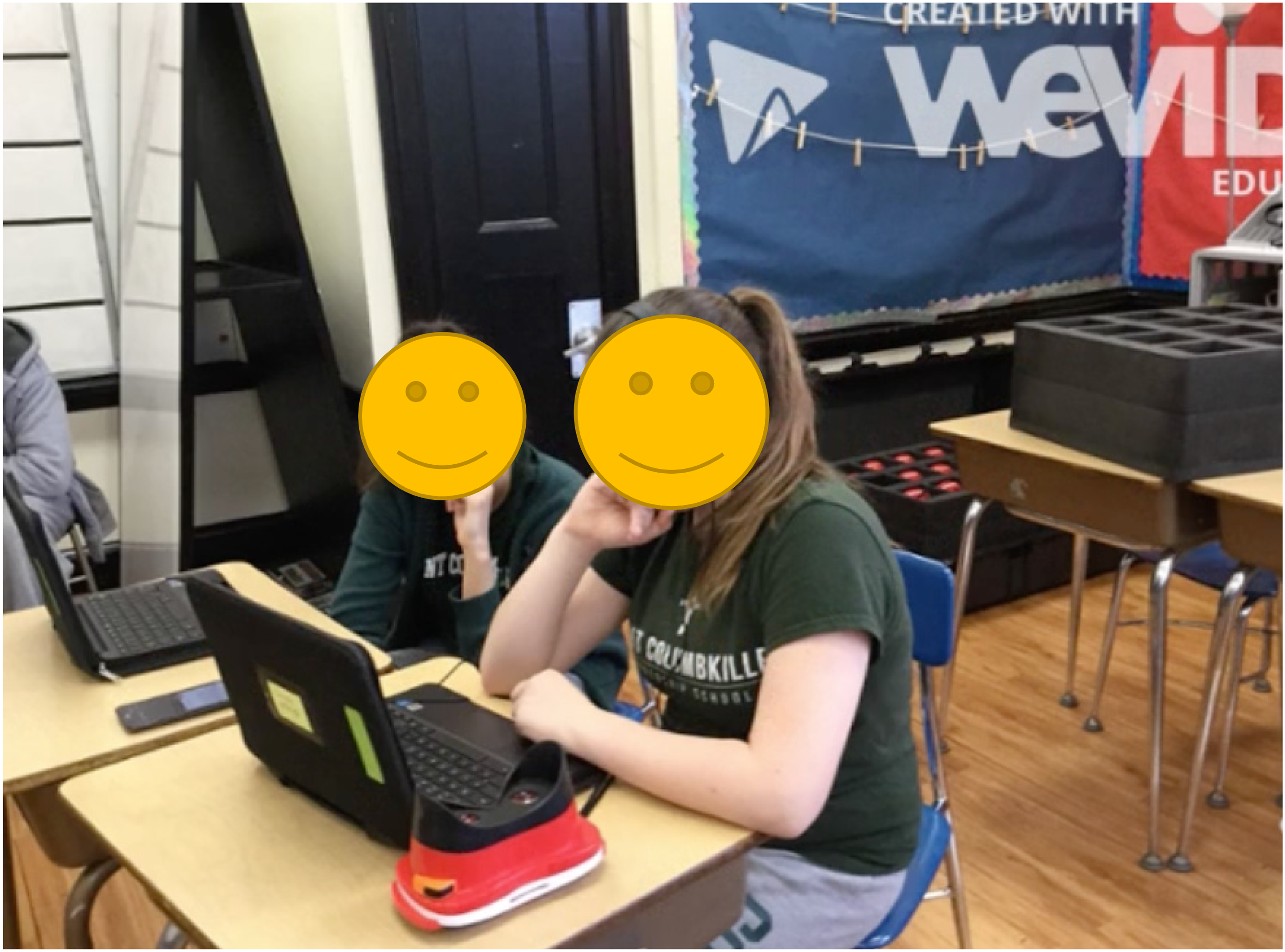
A screenshot of Callie's digital story—Callie as an author.
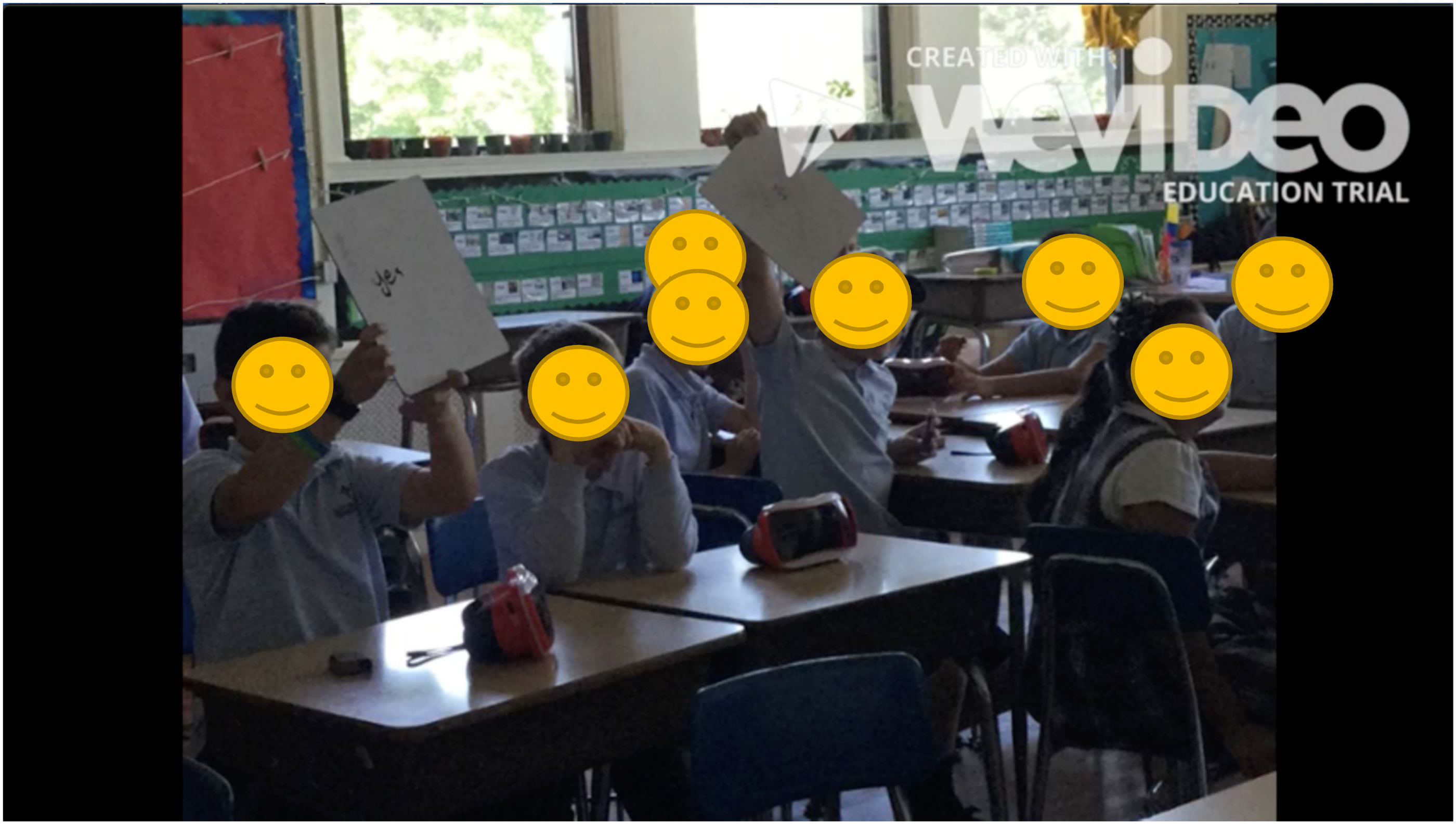
A screenshot of Gabrielle's digital story—Elementary students’ participation in a game about auroras.
She concluded her story with two technical images: an online photo (downloaded from the Internet) and a photo with a thank you note.
In terms of audio, Callie told the story slowly and softly and adjusted the volume at different points in the video. She effectively selected music to convey the structure and mood of her story and to enhance the meaning of her messages. She used five different soundtracks from the WeVideo library and changed the music depending on the subtopics in her story. For example, when beginning her story, Callie included music entitled “Inspiration,” which was uplifting and cheerful. When telling a story about young students’ VR experiences and learning, she played “Upbeat Summer,” which was fast, joyful, uplifting, and intensive. This evoked the young learners’ excitement during their learning process.
The visuals provided contextual information and evidence of Gabrielle's reflection on the teaching experience.
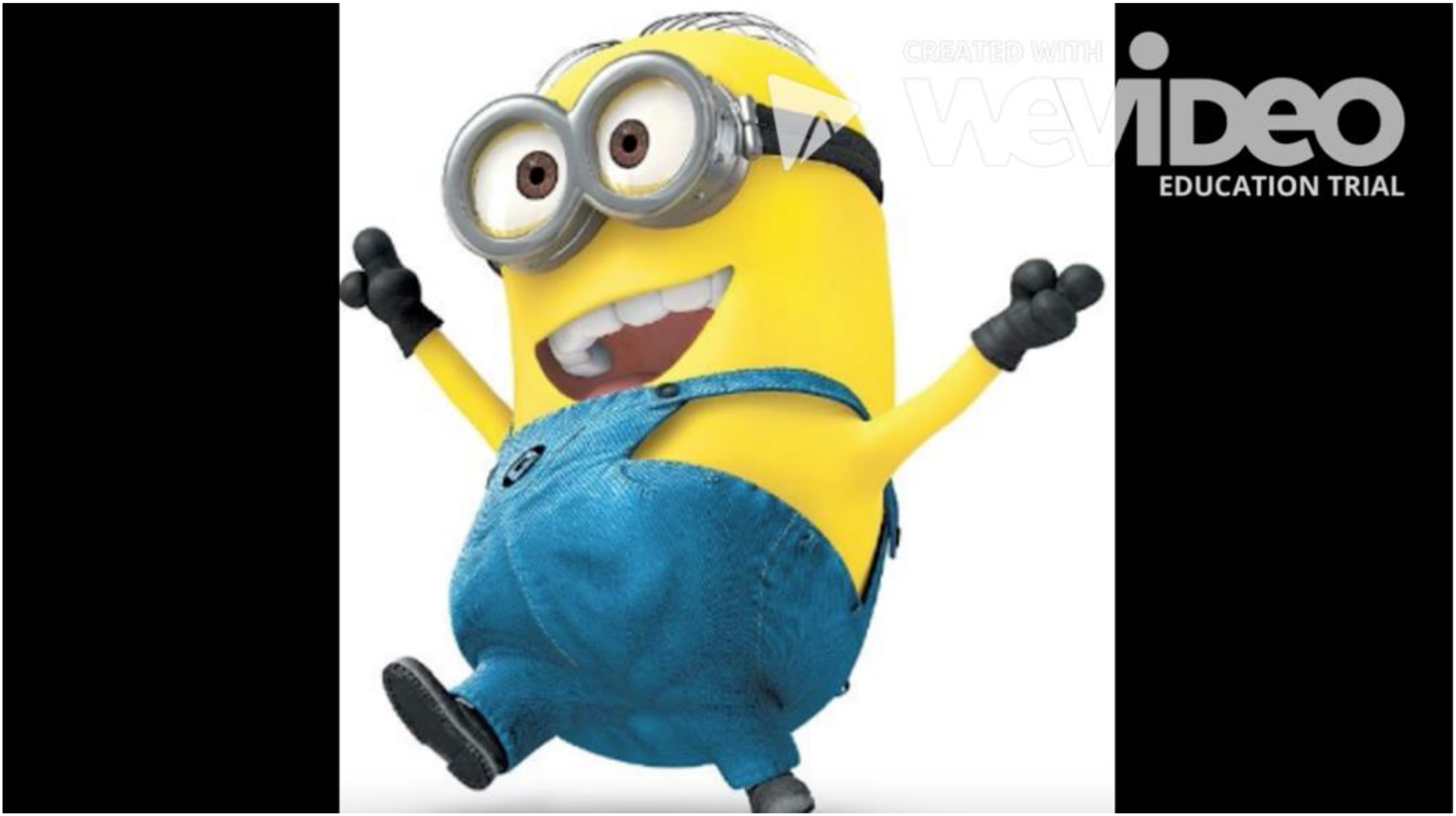
A screenshot of Fiona's digital story—Her use of clip art images to convey feelings.
Fiona used clip art to show a range of emotions: from feeling anxious to content to happy. She also used many images downloaded from the Internet, including a photo of bored students to show her fear of failing to engage the young learners. She also used slides with dates to divide the story chronologically and give the audience a sense of time and the development of events. Fiona was the only student who created a diagram with a timeline of how long a lesson was expected to be (about 20 min) and how long her lesson was (30 min).
Overall, our three participants reflected on and expressed their learning and teaching experiences in their digital stories using visuals, audio, and written and oral language. All of them effectively used everyday images to represent themselves as learners when preparing their lessons and working in their middle school classroom. They also represented themselves as teachers and their elementary students as learners. The music effectively set the tone and enhanced the mood of the voice-over narration. The participants used music and written language to structure their stories and describe key events.
Interpersonal construct
Interpersonally, the participants “verbally and visually represent the nature of relationships among speakers and listeners, writers and readers, and viewers and the viewed, plus the relationship among participants in the digital story” through diverse elements such as social contact and social distance (Kim & Jia, 2020, p. 6). We analyzed the images in terms of the direction of agents’ gaze and the social contact accomplished (Unsworth, 2001). If participants looked directly at other agents in the environment, it was defined as a demand (Kress & van Leeuwen, 2006). “The offer” by Kress and van Leeuwen (2006) explains how participants’ gaze in images sometimes does not look at the viewer directly, describing “the represented participants to the viewer as items of information, objects of contemplation, impersonally, as though they were specimens in a display case” (p. 119). Based on Unsworth (2001), social distance was operationalized by coding (a) close-up images (only the face and shoulders of a person visible), (b) close images (a person is visible from the waist up), and (c) long shots (whole body images). In this section, we focused on the two major relationships participants evoked in their digital stories, namely with the viewers of their stories and with the elementary school students.
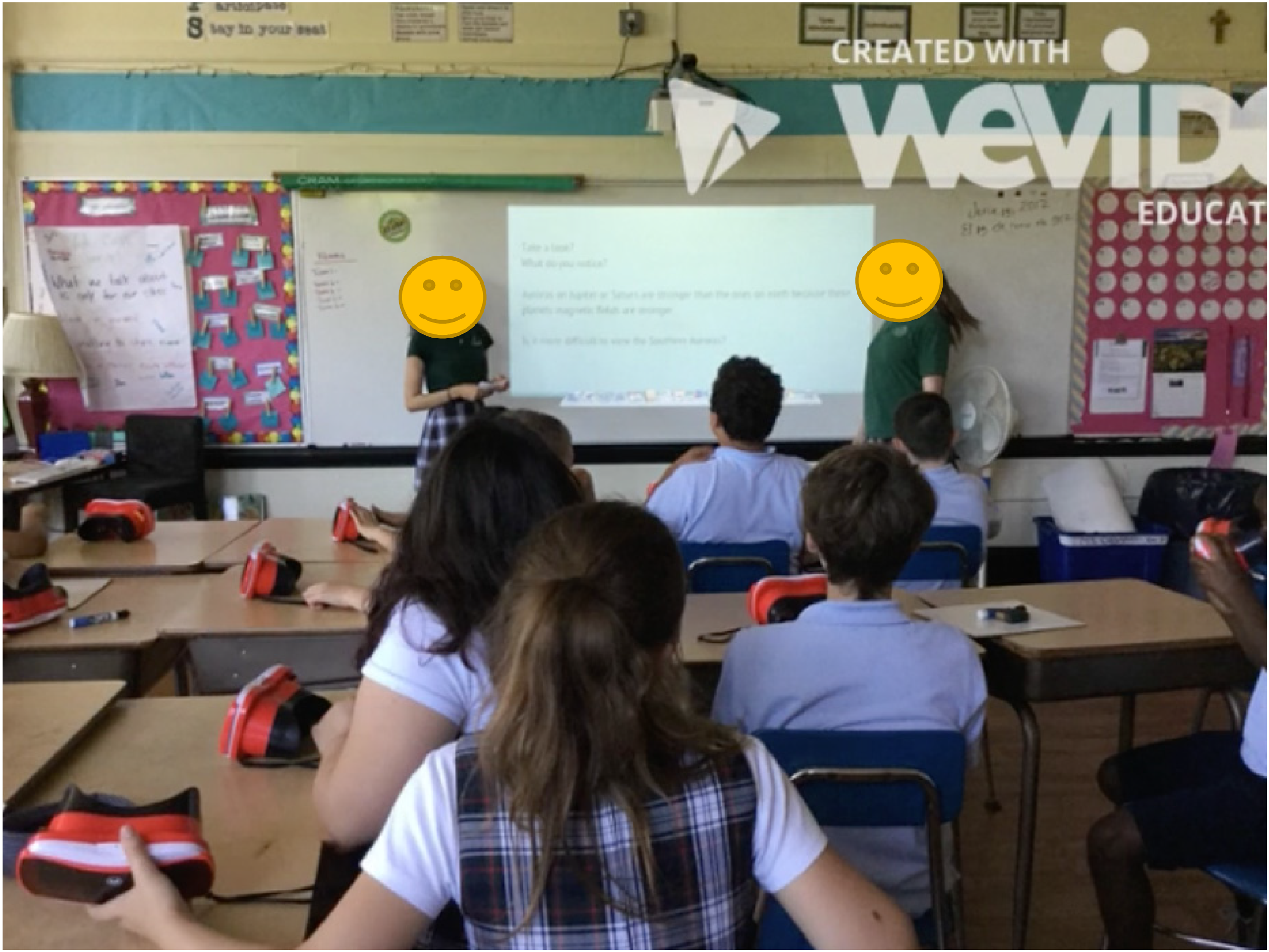
A screenshot of Callie's digital story—An observer's view.
As observers, the audience was still invited into the participants’ inner thoughts, reflections, and emotions. For example, Fiona's skillful use of emoticons, cartoons, and clip art images allowed the audience to understand the participants’ feelings.
The social distance between the audience as observers and the participants was also reduced through participants’ use of written language. For example, Callie's slides with reflective questions invited viewers to think about particular topics with her. Gabrielle's slides, which included “my greatest challenge,” “when I was successful,” and similar text, gave viewers deeper insights into her identity and established a connection with the audience. Overall, the audience felt invited to learn about students’ experiences and reflections on their projects, while the camera angles and written language reduced the social distance between the participants and audience.
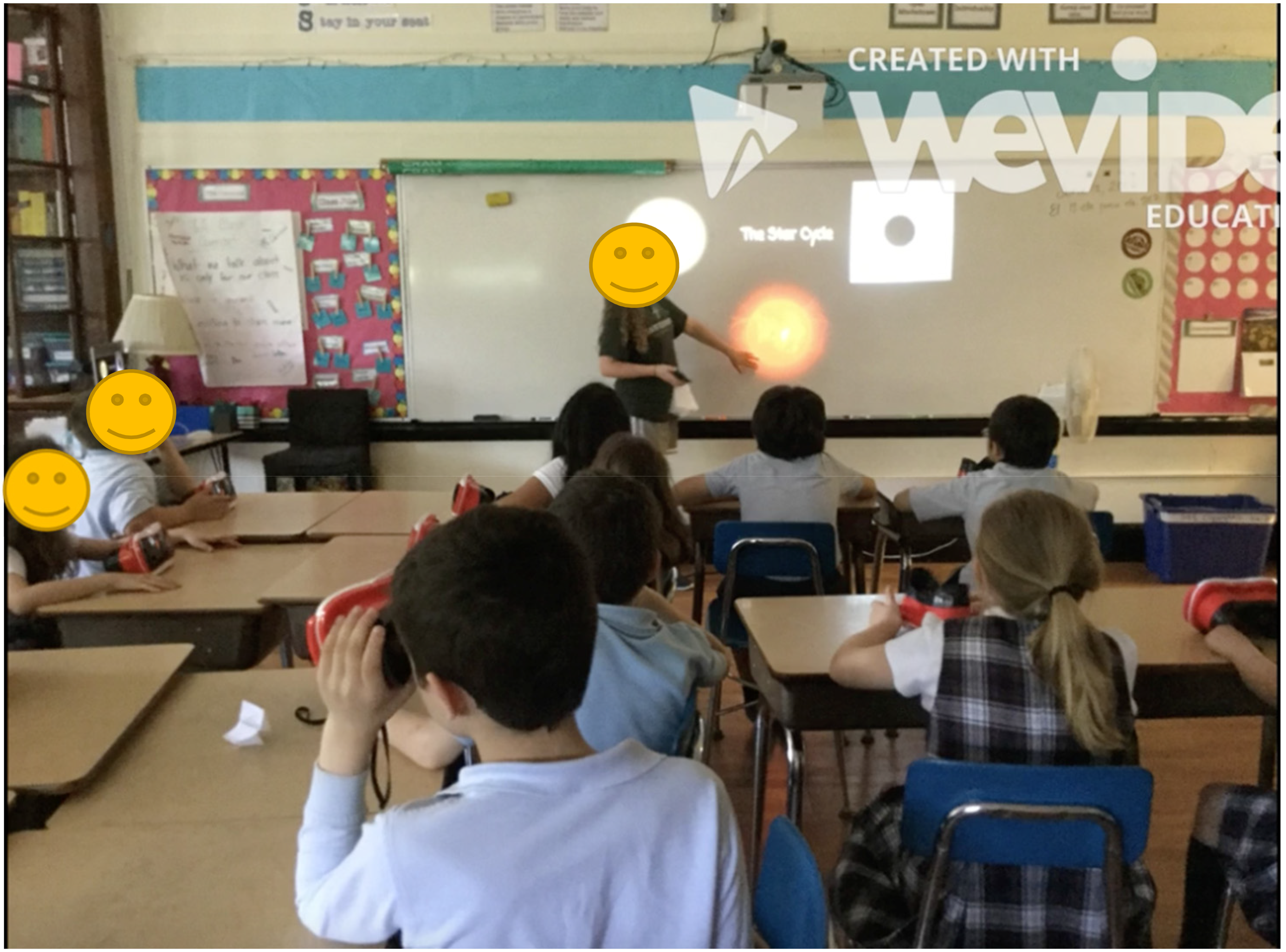
A screenshot of Fiona's digital story—An observer's view.
As Fiona said in her digital story, “I’ve presented to the third grade, and it went great. The kids were fascinated, and they all were having a lot of fun. The kids loved it, and on the trivia game, they answered the things they learned on the VR faster than the ones on the video.” Thus, the images and participants’ voice-over narration of the story show how they develop identities as teachers and their close contact with the elementary school learners.
Overall, the images, with their diverse camera angles, contributed to our understanding of interpersonal relationships and the participants’ roles in their digital stories. For example, Figure 1 showed a high angle shot in which a camera is pointed down on Callie and Gabrielle from above their eye level. This emphasized their learner identities, because they sat at their desks and were in the process of preparing their lessons. A low or eye-level shot as in Figures 4 and 5 indicate participants’ teacher roles. When the photo shifted to Callie and Gabrielle as teachers in front of the classroom teaching young learners, they gained more power as authority figures. The young students’ eyes were all on them in Figure 4. In Figure 5, Fiona's students followed her instructions and stayed on task exploring stars. In this way, the camera angles reveal something about the relationships in terms of social contact and distance as well as power and identity.
Compositional construct
For the compositional construct, we focused on “the distribution of the information among elements of the text and images” (Kim & Jia, 2020, p. 6). As described above, our three participants utilized various multimodal elements to represent their experiences and establish relationships. Callie, Gabrielle, and Fiona provided most of the information through their images, voice-over narrations, and written texts. Gabrielle's digital story, for example, was noteworthy for the use of diverse information zones and integration of multi- or cross-modality. She effectively utilized diverse zones: left–right (examples here), top–bottom (examples here), and center–margin (examples here). In each type of information zone, she meaningfully arranged important or supplementary information at a particular location that contributed to the meaning it conveyed. In addition, the video clip in Callie's digital story panned from left to right, showing the whole fifth-grade class using VR technology on the left and then moving to the right with Callie and Gabrielle teaching in front of the classroom. This video clip showed the important information—the initial reactions of the fifth graders to the VR in real time—while sharing the supplemental information of the two participants’ teaching. She used the center–margin with an image highlighting the collaboration of Callie and Gabrielle at the center, rather than other items such as empty desks and black margins. The analysis of our participants’ use of information zones helped us understand how the middle school learners’ digital stories conveyed their messages.
For example, Callie used written language to provide contextual information and organize her story. In the title slide, she listed the topic and her name, instead of verbally introducing herself and the topic. Callie displayed a sentence, “This next thing you’ll see …,” for 6 s, instead of including a voice-over, explaining that the video was about the fifth-graders’ initial reaction to VR. She did not narrate the questions in the second part of her story either. In this way, she gave enough time for the audience to read the questions, facilitated their engagement in her story, and highlighted her voice in the answers.
For audio, Gabrielle used voice-over narration to draw the audience into her thinking and decision-making processes. Her voice was emotive and soft, and set to music. Like Callie, she chose to use a video to mark the structure of the story. She used two soundtracks from the WeVideo library and separated the introduction slide from the rest of the story. Gabrielle also used written language to represent topics or issues and to enhance the organization of the digital story. For example, she used animated texts to show the questions she was focusing on, such as “My greatest challenge,” “Our strengths,” “Our weakness,” “How the students were engaged in their learning,” and so on. Gabrielle also wrote “Thank you” at the end of her story. In this way, she clarified what she was focusing on at that moment so that the audience could pay attention to the main message.
Like Gabrielle, Fiona used only two soundtracks in her digital story, but the change in soundtracks signified a transition to the ending segment of the story with its concluding slides and information about her as the author of the story, together with “thank you” images. The soundtrack also changed at this point from pulsating and motivating to relaxing and soft, perhaps to reflect the author's new attitude, which is shifting from engaged to more relaxed. When speaking, she emphasized words and conveyed her emotions through intonation. However, Fiona's use of written language in her digital story was ineffective. She chose to write reflection questions in the lower left corner on top of the images, illustrating her work on the project, but the questions showed on the screen simultaneously with her voice-over narration of the answers, which could have been confusing for the audience.
Along with images, the voice-over narrations, and written texts conveyed substantial amounts of information in all three digital stories. For example, Fiona effectively integrated these three multimodal elements and utilized multi- or cross-modality in a balanced manner. Since Fiona told her story in chronological order, what she did for the capstone project guided her story. She elaborated on the images and texts and explained what each meant. When expressing her concerns about a long presentation, Fiona shared an emoticon and a graphic organizer to explain her game plan. She enhanced her storytelling and the audience's comprehension of the story. Overall, the participants effectively used multimodal elements in their digital stories. Their integration of these multimodal texts depended on students’ preferences, knowledge, and skills regarding the multi- or cross-modality.
Sociocultural construct
The sociocultural dimension of digital stories represents “cultures, ethnicities, and personal backgrounds through multimodal artifacts and the sociocultural contexts that influence the author's views” (Kim & Jia, 2020, p. 6). This involves storytellers’ contextual, historical, and political positions as well as their values. In this study, the participants identified their positions as active learners, caring teachers, and reflective storytellers.
In their digital stories, all three participants positioned themselves as active learners who work hard to overcome challenges and strive for the best results in teaching others. The students shared how they considered, planned, and prepared for their lessons, and faced uncertainties and struggles. Their challenges were mainly rooted in their lack of knowledge regarding designing and teaching lessons. For example, Fiona stated, “I got really worried that my lesson would be too confusing for elementary students. What if I got a first-grade class to teach? How would I explain to them what hydrogen and helium is?” The participants did not simply worry about their lack of knowledge and experience in teaching, they also actively raised diverse issues, asked questions about procedures, and sought help from their teacher. After teaching, the students felt relieved because they successfully completed the task. They shared their experiences in their digital stories with a sense of pride and achievement conveyed by the tone of their narrations.
Furthermore, the participants positioned themselves as caring teachers. All three participants engaged the elementary school students and were excited about their positive responses, attention, and active participation during their lessons. According to Gabrielle, I needed to figure out how I’m going to teach the kids so that they can participate and find it interesting. So, Callie and I chose the aurora borealis. We were gathering information about auroras and informational videos that we could use to help the kids learn it in a better way and that they could be interested in it. (Gabrielle's digital story)
As a teacher, Gabrielle emphasized students’ engagement and made the content and activities fun. When teaching, Callie succeeded in presenting her knowledge about the content. She managed the class through clear instructions and effective communication, and worked well with elementary school students with diverse cultural and linguistic backgrounds.
Finally, the participants’ digital stories showed them as successful reflective storytellers. They described and reflected on their experiences and feelings in all stages of their work on the project. For example, in her story Callie shared, My greatest strength in carrying out a group project is that Gabrielle and I worked well together. My weakness was being with Gabrielle, because we were both nervous about presenting, so we had some disagreements about who would say and do what. (Callie's digital story)
Reflecting on her experiences through the digital story gave Callie a better understanding of her performance in all stages of the project and served as a foundation for her thoughts about future educational and career choices. In the interviews, Callie discussed how her experiences in this project would help her with high school projects and that she would consider teaching as a potential career. Thus, our analysis of participants’ digital stories in terms of the sociocultural construct enhanced our understanding of their roles and identities at various stages of their work during the capstone project.
Discussion and implications
While prior research focused on students’ learning through digital storytelling (e.g., Durak, 2018; Hwang et al., 2016; Liu, Tai, et al., 2018), our study contributes by showing middle school students’ learning through teaching. By participating in the capstone teaching project, Callie, Gabrielle, and Fiona improved their content knowledge on the selected topics, learned how to use technology to create digital stories, and embarked on their first teaching journey. They engaged in planning and preparing a lesson, considered ways to teach elementary school students effectively, presented new information, assessed their learners’ knowledge, and reflected on their performance through their digital stories. At each stage, they had to be responsible and professional. Figure 1, for example, shows Callie and Gabrielle's collaborative planning and preparation, which helped them overcome their lack of teaching experience and conduct a successful lesson. Figures 4 and 5 show the participants as teachers and illustrate their growth as learners, as well as the development of their multiple identities while participating in the capstone project.
Identity development and shift in digital stories
As described in prior studies on adult learners (Jones & Leverenz, 2017; LaFrance & Blizzard, 2013), digital storytelling facilitated our participants’ reflection and the development of their identities. The findings of our study go beyond those of prior research by showing how middle school students inhabited multiple identities when working on their capstone projects. Callie, Gabrielle, and Fiona effectively showed their identity development (from an active learner to a caring teacher and to a reflective storyteller) through their digital stories.
When the participants prepared for their teaching, they were learners, improving their knowledge and getting feedback from the teacher. In their digital stories, we observed a dramatic shift in their thoughts and actions when they adopted the role of a teacher. This new-to-them identity brought a new set of responsibilities and concerns. The middle school students carefully chose the materials for their lessons, planned their presentations and assessments, and cared about the engagement of their learners. In the role of a teacher, the middle school students felt less concerned about their lack of knowledge or experience. They were knowledgeable individuals in the classroom, and they made decisions and managed the class by communicating with diverse young learners. The process of identity development was dynamic, with students’ identities changing depending on their role. In the digital stories, which provided a platform for them to tell their stories based on reflection, they viewed their roles through the lenses of learner and teacher.
Effectiveness of the framework
Digital storytelling is a reflective platform and an attractive format in an era when people tell their stories through multimodal texts. As the middle school students showed, learners nowadays can easily adapt to new learning environments and adopt innovative means to deliver their messages. Our findings show how middle school students can use digital storytelling to reflect on their experiences, which might help them retain what they learn. Adopting the framework to understand what the storytellers say and why and how they tell their story is as important as developing meaningful and interesting stories. It also allows us to see the unique ways authors assemble semiotic resources to communicate their intended meaning.
Our multimodal analytical framework provides useful categories to analyze multimodal elements in middle school students’ digital stories in a comprehensive and strategic way. Existing analytic frameworks mostly use content analysis of images and text, but this is inadequate in examining the digital storytellers’ agency, identity, and social context, as well as participants’ social, cultural, and political positioning during the composition of the story (Daly & Unsworth, 2011; Hiippala, 2015). These aspects are critical for understanding digital stories, because storytellers’ sociocultural perspectives and contexts influence what stories they tell and how they do it. Our framework provided deeper insight into the middle school students’ dynamic identities, representing their roles, responsibilities, feelings, and performances.
Using the framework as a guideline or rubric for students’ learning
This study shows how the multimodal analytical framework is helpful in uncovering how middle school students articulate themselves through digital stories. This framework can also serve as a rubric when teachers use digital storytelling as an educational task. Teachers could introduce the questions from Table 1 to their students and explain what elements they need to consider when developing digital stories. The questions are not exclusive; therefore, teachers could develop different types of questions based on their instructional purposes and needs. With these guidelines, the student storytellers can purposefully use texts, multimodal resources, and strategies to tell their stories more effectively.
Conclusion
The COVID-19 pandemic has forced us to incorporate various technological tools into education. Digital storytelling is one such powerful tool. While digital storytelling has been widely used for different purposes and in various fields including education, research on digital stories has lacked an analytic framework that enables analyzing digital stories as complex multimodal products. Our study contributes to prior research by illustrating the benefits of our multimodal analytical framework in analyzing middle school students’ digital stories. Our findings display middle school students’ learning-through-teaching and reflective learning experiences. Using our framework to analyze the digital stories, we discussed how these students developed and shifted their identities while performing diverse roles during the capstone project.
Our findings, discussion, and implications can inform educators who plan on using digital storytelling in their teaching and help them prepare, scaffold, and assess their students’ work with digital stories. Our study can also support further research on digital stories and other complex multimodal projects. We suggest the following possible directions for future studies: (a) exploration of middle school students’ learning through digital storytelling with a focus on their collaboration, (b) analysis of elementary students’ development of identities through digital stories using the multimodal analytical framework, and (c) examination of teachers’ strategies for and perceptions of utilizing the framework when teaching particular disciplines.
Footnotes
Contributorship
Deoksoon Kim was responsible for designing the study and the bulk of the paper, including data analysis, data collection, findings, and implications, as well as finalizing the study and submitting it. Ho-Ryong Park worked on the initial abstract, part of the literature review, and findings section. Oksana Vorobel worked on the introduction, part of the literature review, and discussion section. All the authors participated in the iterative revisions of the study.
Declaration of conflicting interests
The authors declared no potential conflicts of interest with respect to the research, authorship, and/or publication of this article.
Ethical statement
This study was approved by the BC IRB (#17.243.01). All signed consent forms (students, teachers, and parents) were collected. All consent procedures for recruiting and explaining the study followed the BC IRB guidelines. All consent forms included information on the purpose of the study, notification that participation is voluntary and that participants have the right to withdraw at any time, and guaranteed confidentiality.
Funding
The authors received no financial support for the research, authorship, and/or publication of this article.