




Abstract
Purpose
This paper reports the evaluation of an ongoing intervention, the GROW Programme, aimed at meeting the needs of 15–18-year-old pupils who were unable to attend school in England for periods during 2020–2021. The aim of the paper is to theorize the underlying basis of practice in such a lockdown context to inform future responses.
Design/Approach/Methods
Thematic analysis of a mixed-method evaluation, using surveys and interviews of teachers and mentors, and pupil focus groups, of the remote mentoring of pupils and their learning during lockdown, is further analyzed by means of Bernstein's knowledge codes and concept of open schools, to identify the form of knowledge inherent in online mentoring.
Findings
The analysis offers a framework for open schooling valuable to schools in uncertain times and identifies the shift to metacognition and self-regulated learning as holding particular benefits for learning under disruption.
Originality/Value
The paper takes a novel view of the disruption brought about by the partial closure of schools and offers a methodology for evaluating its effects by means of a unique intervention. It makes visible the characteristics and the potential benefits of alternative approaches in order that schools can make informed choices.
Keywords
Introduction
The partial closure of schools in England owing to the COVID-19 pandemic (CV19) on March 20, 2020, save for on-site education for vulnerable children and children of critical workers, has impacted all areas of society, including education. This paper reports the evaluation (cf. Pountney et al., 2021) of an instrumental case study (Stake, 1995, 2006) of an ongoing intervention for 15–18-year-old pupils who were unable to attend school for periods during the 14 months up to June 2021. This intervention was devised by schools and a team at a university in South Yorkshire, England, including the author, and comprises the GROW Programme (https://blogs.shu.ac.uk/grow) of focused, online mentoring for pupils by recent graduates, either at home or on return to school. The paper is in three parts. Part 1 sets out the context for the program within the ongoing CV19, the responses to the lockdown of schools, and the problems that arose from the effects of missed schooling. Part 2 describes the design of the intervention and its aims and the evaluation of its efficacy. In Part 3, there is a discussion of how interruptions to education, such as the current pandemic, can be characterized and theorized. In the final section, the conclusions from these insights are drawn together and discussed.
Part 1: The context and research design
In this first part of the paper, I examine the contextual factors concomitant with the interruption to schooling experienced globally in 2020, with specific reference to the conditions that arose in schools in one region of England. The pressure to respond to the effects of CV19, perceived or real, stems from the shock experienced globally in 2020 resulting from the closure or partial closure of workplaces, the limitations to travel and leisure activity, and the fatalities affecting many families. There is a growing consensus, therefore, that such disruption could hardly fail to affect the academic progress expected of schooling. Many advocates of educational equity fear for students who have lost touch with learning and, it is imagined, have fallen behind. With “lockdown” named the 2020 word of the year by Collins Dictionary, defined as “the imposition of stringent restrictions on travel, social interaction, and access to public spaces,” it has, along with “social distancing” and “self-isolate,” shaped the language and thinking of young people. Furthermore, terms such as “learning loss,” “closing the gap,” and “catch up” have dominated discussions of the effects of school closures, with some commentators seeing it as a natural disaster akin to Hurricane Katrina (Harmey & Moss, 2020), characterized by disruption to daily life, increased likelihood of illness, economic stress, and a need for a period of recovery. Others question this panic over the interruption of the “normal order,” arguing that it is an opportunity to raise the visibility of, and attention to, inequity (Biesta, 2020) and an opportunity to re-evaluate schooling. An underlying question raised by this paper is whether CV19 is a crisis of provision or a crisis of the purpose of education.
The growing literature on the effects of disruption of CV19 include learning loss (CREO, 2020; EEF, 2020), with specific effects on reading fluency (Domingue et al., 2021), and language acquisition (Kogan & Lavertu, 2021), especially for children from disadvantaged backgrounds. Large-scale examinations of the effects of CV19 reveal the extent and nature of the “forgetting/regression” kind of learning loss (i.e., what was learned earlier but has now been lost). This is seen as especially impactful on primary children's abilities in language, holding serious consequences for further learning. For older pupils, the educational Key Stages 4 and 5 (in the UK system) are crucial stages for students’ learning because they are transition points between, respectively, secondary and post-16 education, and between post-16 and higher education. Both stages involve examinations that are high-stakes, being important for future study and employment, with resultant levels of anxiety and stress (Prabu, 2015) even under normal circumstances. Here, contact with the school, regular lessons, and a routine of study are key in offsetting negative thinking and to reassure the student (ibid., p. 68). The end of Key Stage 4 is also a landmark in the school life of any student, a time after a decade of full-time schooling and coinciding with adolescent physical and mental changes when crucial decisions are made about the future (Malhotra, 2015). Consequently, given the demonstrable link among school engagement, behavior, and academic success, Public Health England (PHE, 2015) promotes a whole-school approach to support children's well-being (Brooks, 2014). Furthermore, the effects of disruption caused by the pandemic can be seen as traumatic in children's lives, requiring trauma-informed approaches (Thomas et al., 2019) that provide children with the opportunity to reflect on experiences and have their responses heard and validated in order to re-engage and learn.
The effects of lockdown on schools
The disruption to schools in England took the form of two lockdowns, resulting in partial closures of schools, with 47% of children attending in the first lockdown (March 2020), compared to the second (January 2021), where only 8% of secondary age children attended school (Montacute & Cullinane, 2021). However, the reduction in pupils’ education during April 2020 varied according to socioeconomic circumstances, where nearly three quarters (74%) of private school pupils benefited from full school days—nearly twice the proportion of state school pupils (38%) (Major et al., 2020). A quarter of all pupils had no schooling or tutoring during the first lockdown, equating to around 2.5 million children across the UK. On average, pupils received 42% of normal schooling during the first lockdown and 85% of normal schooling in September/October 2020. However, a study conducted by the National Foundation for Educational Research with a sample of almost 3,000 school leaders and teachers in approximately 2,200 primary and secondary schools across England revealed that in most schools, teachers reported less than 70% coverage of the curriculum by July 2020. As a result, students are estimated to be 3 months behind on average in their learning. Moreover, the study suggests that boys are further behind in the curriculum than girls and that the learning gap for disadvantaged students had widened by at least 46% (Sharp et al., 2020). Naturally, perhaps, this has resulted in a high level of anxiety among both pupils and parents about the loss of time in school (Harmey & Moss, 2020). For teachers, the accusation that schools were closed during lockdown became the focus of much heated discussion in social media and a sense of grievance as to the misrepresentation of their efforts to keep schools open.
While the legal requirement to provide remote education was not introduced in England until the second lockdown, schools’ capacity to respond to and manage remote education vastly improved in 2020, and by the second lockdown, schools were better prepared (Bond, 2020). However, parents’ perceptions of their children's readiness to learn at home revealed a mixed response. Parents cited problems with a focus on the study (40%), lack of contact with classmates (38%), lack of motivation to engage (36%), and lack of contact with teachers (35%) (Ofsted, 2021). The main issues facing school leaders in opening schools to whole year groups concerned the practicalities of staffing and teaching (Sharp et al., 2020), including feeling unprepared to resume a range of activities, and the likelihood of those children most in need of school as being more likely to miss out.
The phased return from June 1, 2020, included priority for year-10 and -12 pupils preparing for important examinations in the following year, offering reduced timetables and some face-to-face contact and support to supplement pupils’ remote education. These responses involve the need to make students’ experience of home learning more equal and entail offering extra resources (Andrew et al., 2020). However, while the provision of extra resources, including additional support, has been identified, limited access to IT and space at home to study are recognized as significant challenges for pupils’ learning (Lucas et al., 2020). Here again, socioeconomic inequalities are seen to have an amplifying and intensifying effect.
The GROW Programme, described below, is an example of a rapid, self-funded, mainly free-to-schools response delivered in June 2020, within 10 weeks of the first lockdown. In contrast, the UK government's response to the restrictions on schooling came later in October 2020, setting up the £350 million flagship National Tutoring Programme (NTP): “… to support children left behind academically by disruption of the coronavirus pandemic.” NTP offers schools access to tutors for disadvantaged pupils and pays 75% of the cost. The second pillar, costing £650 million, was awarded for academic mentors, provided by funded “tuition partners,” selected according to their ability to deliver high-quality, curriculum-relevant tutoring, through online and face-to-face models in small-group tuition. The emphasis in the NTP approach is on academic subject tutoring, aimed at raising achievement and learning in specific curriculum subjects. The public body that scrutinizes government spending, the National Audit Office (NAO, 2021), reported in March 2021 that the program was not reaching the most disadvantaged children, that fewer than half of the pupils who have started to receive tuition so far are from low-income families, and that 600 disadvantaged schools requesting a mentor had not received one.
Questions have also been raised about the focus of NTP on, predominantly, subject tutoring and on mentoring in groups, contrary to the evidence that one-to-one tuition (as used in GROW) is more effective, as recognized by the government-funded Education Endowment Foundation's (EEF) own evaluation toolkit. A one-on-one approach delivers approximately five additional months’ progress on average, with effects on pupils from disadvantaged backgrounds tending to be particularly positive (EEF, 2018). EEF also notes that where mentors are not trained teachers, the use of a structured program (similar to the one provided by GROW for the graduate mentors) is advisable. However, it should be noted that the EEF distinguishes between tuition for learners “who are falling behind their peers with important skills or concepts” and mentoring, which focuses “on building confidence, or developing resilience and character, rather than directly or only focusing on teaching or tutoring specific academic skills” (p. 2). This distinction is not shared by the GROW Programme, which sees mentoring as the hybridization of these two approaches, as discussed below.
The growing narrative of “loss” caused by CV19 is supported by those who argue for the connection between a student's mindset and academic success and for interventions that address this (Yeager et al., 2019). These interventions are social-psychological in nature and aim at improving academic success by changing how adolescents think or feel about themselves and their schoolwork, and thereby encourage students to take advantage of learning opportunities provided by the school. While confidence in approaches to “learning mindsets” has been eroded by criticism of a growth mindset generally, calling into question how it is interpreted in classrooms (Wolcott et al., 2020), a related approach that has been shown to have an impact is metacognition and self-regulated learning (Muijs & Bokhove, 2020; Pelikan et al., 2021). Defined simply as developing pupils’ ability to monitor, direct, and review their learning by teaching them to set goals and evaluate their own learning, metacognition and self-regulation (MSR) is rated by the EEF Teaching Toolkit as “high impact,” with pupils making on average 7 months of additional progress on attainment for very low cost (Quigley et al., 2018).
In a review of the international literature on the effectiveness of MSR, Perry et al. (2019) suggest that having metacognitive knowledge coupled with the ability to use metacognitive skills is a very effective way of predicting successful learning and that metacognition is central to improving learning outcomes across age ranges and across school subjects. However, the authors point to provisos for these findings, including that MSR should be embedded across the curriculum and take account of subject distinctiveness, with the purpose of learning clearly explained to pupils, and that learning should be extended over a period of time (ibid., p. 490). The link between the effectiveness of MSR for particular groups of children is also unclear. While it is widely accepted that socioeconomic status (SES) is a major influence on a child's academic performance and that “home environment” and “parental involvement” have significant effect sizes (Hattie, 2016), few studies have explicitly focused on the effect of metacognitive skills on children from low-SES groups. However, one aspect that has a highly significant (0.76) effect size is the motivational aspects of metacognition. The literature suggests a symbiotic and reciprocal relationship between metacognition and motivation (Karaali, 2015), in which each can intensify and promote the other, and that there is a strong link between pupils’ abilities to overcome challenges and their well-being (Waaler et al., 2013). While caution is needed in claiming any causal link among metacognitive instruction, (changes in) metacognitive knowledge and skills, and learning outcomes (Muijs & Bokhove, 2020), it is perhaps a guiding principle to consider when designing an intervention.
Those pupils from “disadvantaged backgrounds” are less likely to have the support of positive role models and so lack confidence about their future (Marshall, 2019). This can be alleviated by the use of alumni and student ambassador initiatives (Sanders et al., 2018) including higher education outreach, such as the GROW Programme, highlighting how informal interactions allow students to develop shared “learner identities” with student ambassadors, and in so doing help them understand the reality of a university education and how they themselves could belong in this setting (Gartland, 2015). The role of mentors in addressing learners’ confidence and motivation are covered in the literature, including how motivation is adaptive of past and present experiences, and that “success matters.” This includes supporting students to feel successful and in control, with the result that they tend to have a more positive relationship with the material they are working on (Karaali, 2015, p. 442).
Part 2: Designing an intervention to address the effects of Cv19
In this second part of the paper, I identify the factors that led to the GROW Programme and discuss the design principles that shaped its development. The research questions addressed by this paper are as follows:
How do mentors, school staff, and pupils perceive the effects of the mentoring program on pupils’ re-engagement with learning following lockdown? How effective is the design of the program in helping pupils to develop metacognitive and self-regulative strategies? How can the mentoring model be theorized as an intervention to address disruption to schooling?
By definition, perhaps, the closure of schools for any period of time is an interruption of the status quo, and any curriculum devised to treat this disruption can be termed “activist” in the sense of taking action to address social change in emergency contexts (Gorlewski & Nuñez, 2020). While caution is needed in seeing virtue in change for its own sake, the assumption that the existing provision is adequate cannot be taken as given. The notion of an intervention arises here, based on a systems approach (Argyris, 2006), defined as decision-making on how to intervene effectively in a situation to achieve desired outcomes. One concern in any response to a novel situation, for which previous solutions were either unavailable or inappropriate, is the degree of openness of the system. Here, strategies for adaptation are “less on building defensive forts and more on reaching out, learning and becoming competent in controlling the external and internal environment so that its objectives are achieved and its members to continue to learn” (Argyris, 2006, p. 169). A further element is the speed of response needed and the lag between action and evaluative review (see Part 3 for a discussion of this element).
The GROW Programme began in May 2020 as a collaboration between Sheffield Hallam University and schools in the four regions of South Yorkshire (Sheffield, Barnsley, Doncaster, and Rotherham) during the first (partial) lockdown of schools. It emerged from discussions between the university and the Northern Powerhouse Partnership (https://northernpowerhouse.gov.uk/about/), part of the UK-government-funded strategy to develop the regional economy. This led to consultation with local schools and the development of a curriculum for recovery and a program for training mentors, both led by the author. It created a three-way relationship between recent Class 2020 graduates from Sheffield Hallam University, regional schools, and 15–18-year-old pupils. The mutual benefits included employment for recent graduates unable to find work during the pandemic, support for schools having to engage pupils who were mostly learning from home, and catch-up in learning for pupils at a key stage of their education.
The case for an intervention is partly based on demographic and geographic reasons. The urban areas of South Yorkshire are in the top 10% of the most deprived areas in England, according to the indices indicating multiple deprivations in terms of income, health, and education (McLennan et al., 2019), with multigenerational family unemployment and achievement at all levels of education below the national average. The decision to provide mentoring online was dictated by circumstances, namely that schools were partially closed in March 2020, and that any solution would be online and one-to-one. While many of the design decisions were pragmatic, they reflect those made globally during the pandemic. Bond (2020), in a systematic review of the schools and emergency remote education in 70 countries during CV19, highlights the need for collaborative technologies that promote engagement and the need for activities that promote interaction to decrease feelings of isolation and to maintain open communication with schools. The platform chosen was Bramble (https://about.bramble.io/), a system designed for one-to-one tutoring with features that include real-time collaboration on the screen and the use of microphone and video for the participants to interact. Another benefit of using Bramble was the need for sessions to be recorded for safeguarding reasons and for this recording to be available for review by teachers.
Developing a curriculum for recovery
The program involved the appointment of recently qualified graduates (average age 23 years) from a range of disciplines for paid work as mentors, and their subsequent training and preparation for mentoring in the form of a 1-week (25-h) online course. This required them to complete a training log of their critical reflections on the key topics of their learning: safeguarding, trauma-informed approaches, mentoring strategy and theory, and MSR. This course constituted a set of specialist knowledges and skills for the purpose of mentoring (Pountney, 2019). Regional schools opted into the program and put forward names of students who were willing to be mentored for a 6-week period of two 1-hour online sessions per week. The curriculum for these 12 sessions was prescribed in a 100-page handbook developed by the university team that set out the mentoring activities and 10 workbooks (WBs), with guidance and direction on use and setting out the protocols for the interaction. The map of the curriculum is shown in Figure 1. This shows the WBs and the key stages of the mentoring activity centered around the achievement of five digital badges (DBs).
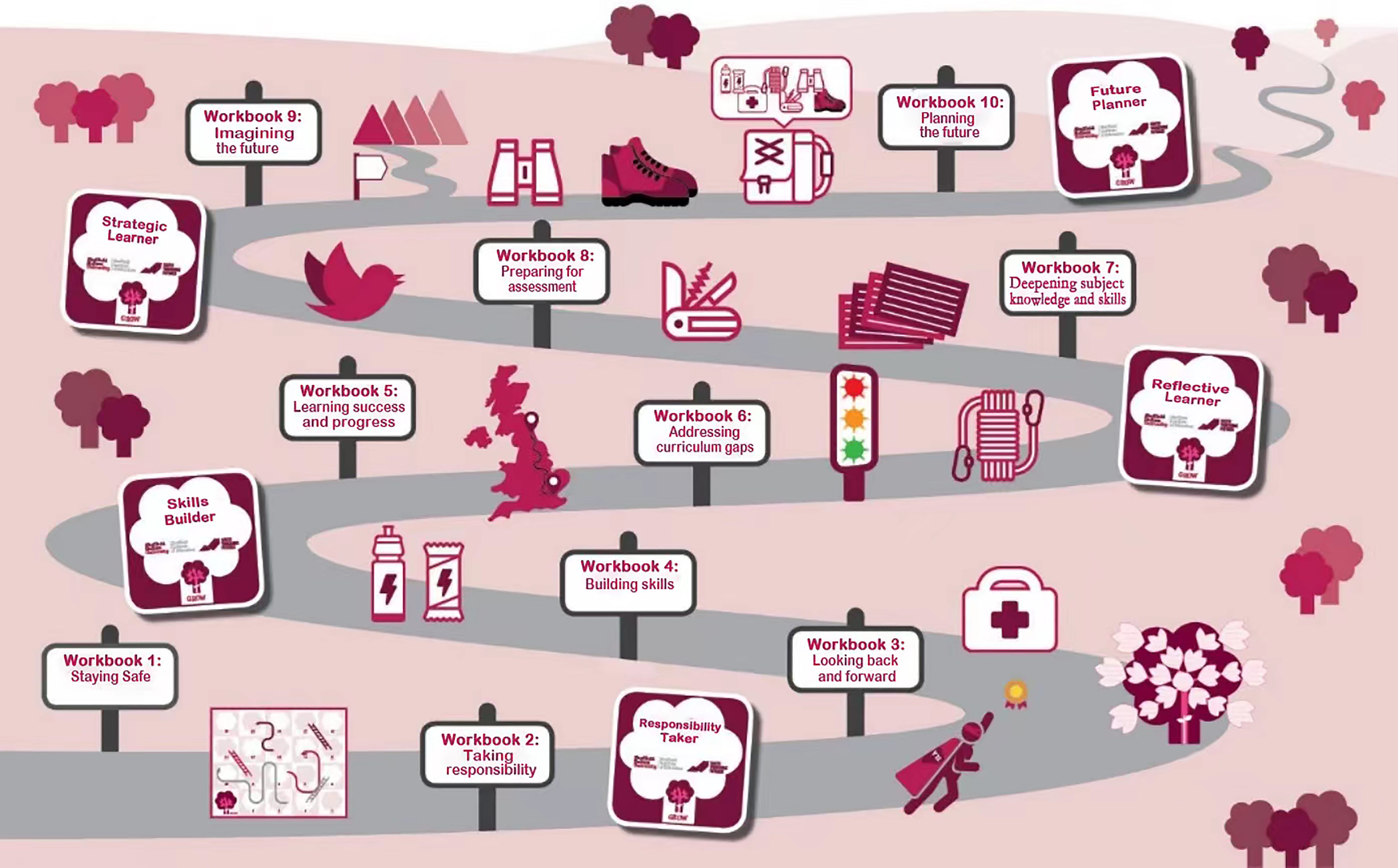
Curriculum map of the GROW Programme.
Broadly based on the GROW model (Whitmore, 2002), the program addressed the immediate/short-term needs of pupils dealing with being out of school or preparing to return, and aided them in recovering positive habits of work and learning, including the routine of learning (Schleicher, 2020). Midterm needs such as the next stages of future study and careers were devised as extension activities to be used appropriately by the mentor as required. Importantly, the curriculum is trauma-informed (Thomas et al., 2019), recognizing that trauma can vary in its extremities and is unique to the individual, but can have a profound effect on a young person's self-esteem, sense of worth, and their capacity to learn. Key ideas informing the design of the intervention include explicitly teaching pupils metacognitive strategies, including how to plan, monitor, and evaluate their learning, and setting an appropriate level of challenge to develop pupils’ self-regulation and metacognition (Quigley et al., 2018). Promoting and developing metacognitive talk in the learning activity helps pupils to organize and effectively manage their learning independently, and to model thinking by focusing on the thought processes behind decisions they make, as well as teaching the strategy itself (Sperling et al., 2004). This approach can be synthesized as the cycle Activate; Practice; Reflect; and Review (see Table 1, e.g., for how this is realized in the GROW curriculum). Here, GROW takes account of the interrelationship between metacognition and motivation as cyclical (Karaali, 2015). Therefore, the three key phases of the program—Foundations, Curriculum Learning, and Planning the Future—are aligned with success in attaining goals (10 WBs, 5 DBs, and a certificate of completion) in which motivation is addressed across all activities.
Principles of metacognition and their realization in GROW.
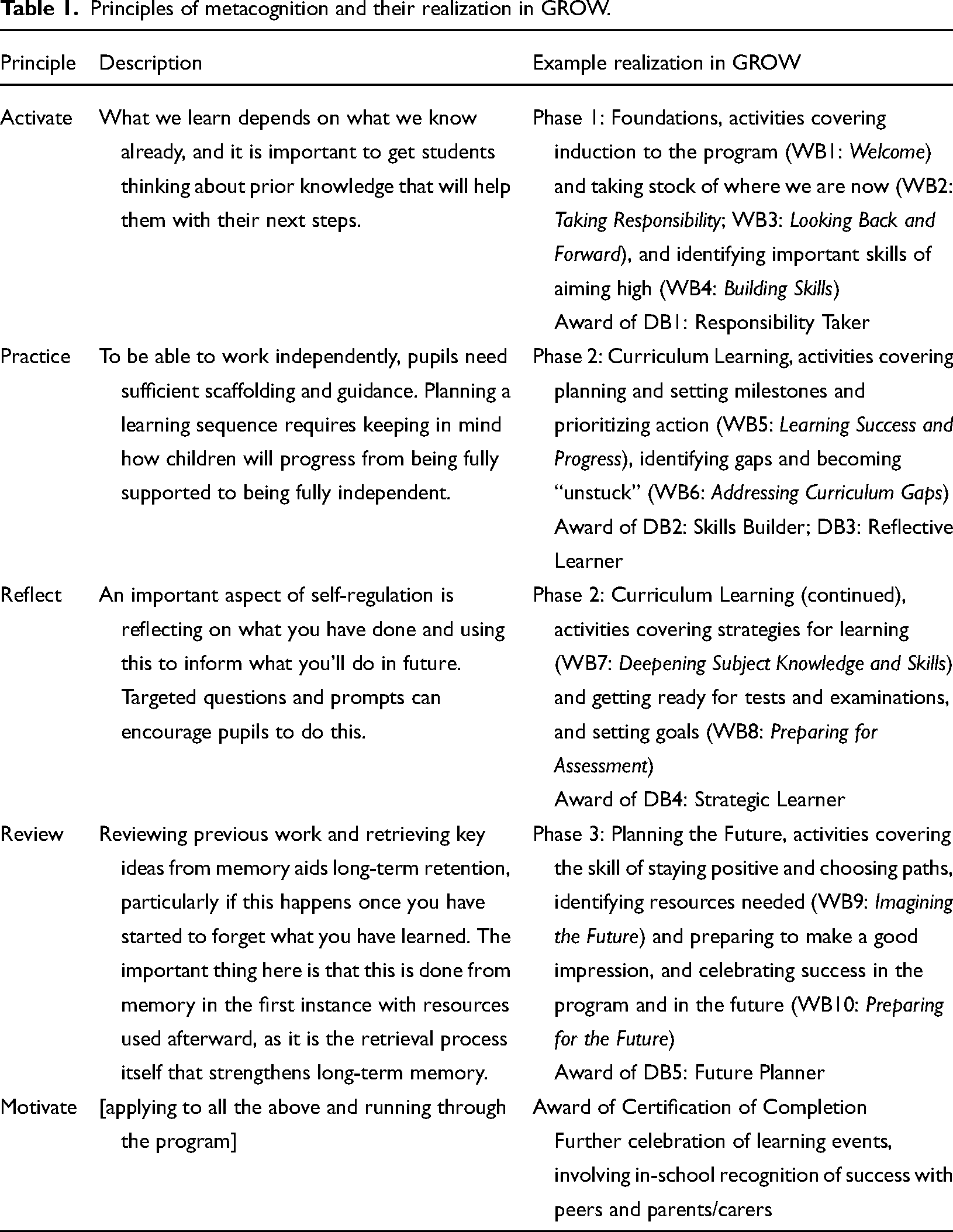
While the GROW Programme is not explicitly subject-focused, it does address what might be broadly termed “curriculum learning.” With subject knowledge in mind, the phases Foundations and Planning the Future wrap around six sessions that cover metacognitive aspects of subject learning. Here, the pupil can raise specific subject problems with the mentor (such as difficulty with mathematics), and the mentor can then work through activities with the pupil that are designed to unpack and develop new strategies for tackling difficulties.
However, it is acknowledged that there is an important link between MSR and specialist subject knowledge in that subject knowledge itself is the basis of abstract thought, encapsulated in the term “powerful knowledge” (Young & Muller, 2013). The epistemic structure of knowledge, elaborated in conceptual systems of meaning of the discipline/subject itself, it is argued, is the source of learning coherence and depth (McPhail & Rata, 2015; Rata, 2021). The approach taken in the GROW Programme is that metacognitive development can assist with the consolidation of learning through being able to justify and explain learning choices and decisions (Hattie & Donoghue, 2016). This paper does not argue that MSR alone can bring about deep learning, but that it can develop the potential for it, especially in the context of disruption to schooling, and can show how a school subject is constituted.
Each of the 12 mentoring sessions lasts 1 h and takes place online in Bramble at a time agreed with the school. Table 2 shows the number of schools, mentors, and pupils involved, as well as the main location (home/school) in each of the five cohorts that have taken it to date (note that cohort 5 is ongoing at the time of publication). Cohorts 3, 4, and 5 are for one specific borough, Barnsley, and the program has delivered mentoring to 21% of all the year-11 pupils and 28% of the year-13 pupils. To date, over 700 pupils from 31 schools have received a total of over 5,000 h of online mentoring by 70 graduate mentors.
GROW Programme cohorts (indicative).
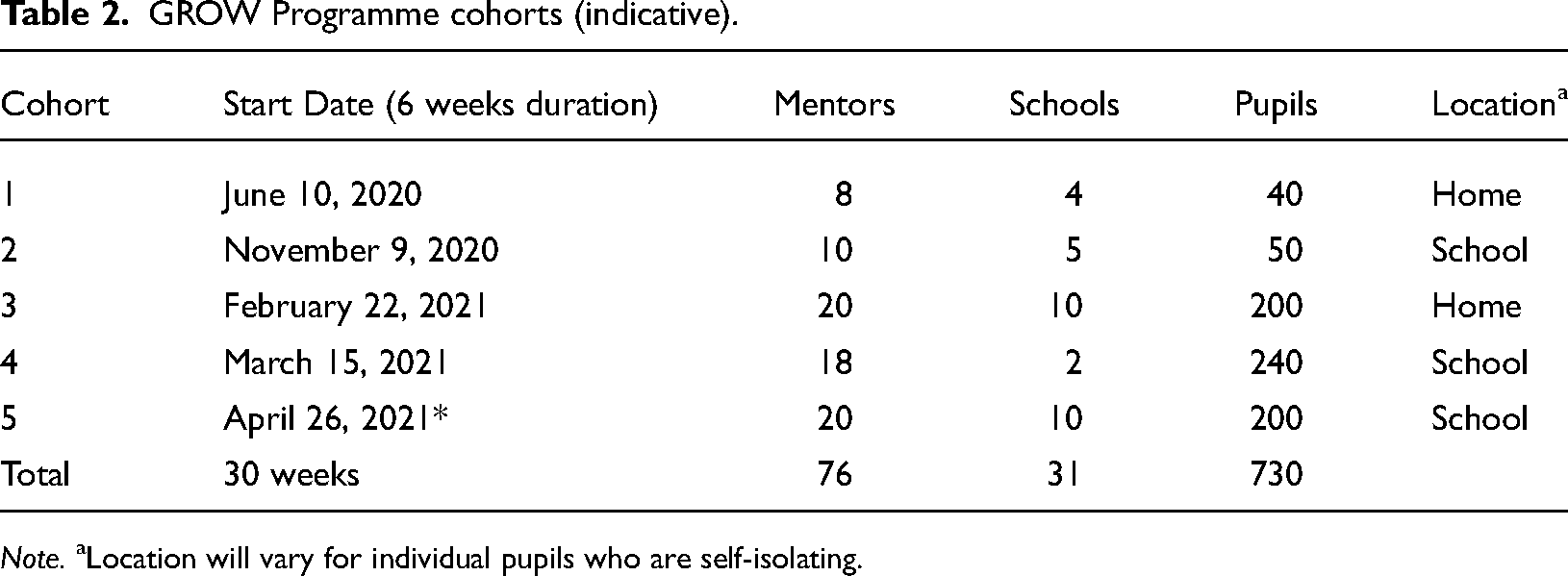
Note. aLocation will vary for individual pupils who are self-isolating.
Evaluation methodology
A qualitative approach to mixed methods (Hesse-Biber, 2010) was applied to enhance the understanding of the research problem and research findings. This involved analysis of training and mentoring logs, pupil WBs, and surveys, interviews, and focus groups carried out as part of data collection in June and July 2021. Table 3 shows the data collection methods and events used and the number of respondents who took part, with their permission subject to standard ethical approval procedures. Two surveys were developed for graduate mentors and school key contacts (a teacher nominated by each school to be the main contact with the mentor). For the mentors, data were gathered on their mentoring experiences. The school staff was asked questions about pupil engagement, program completion rates, and perceptions of the program.
Evaluation data set.
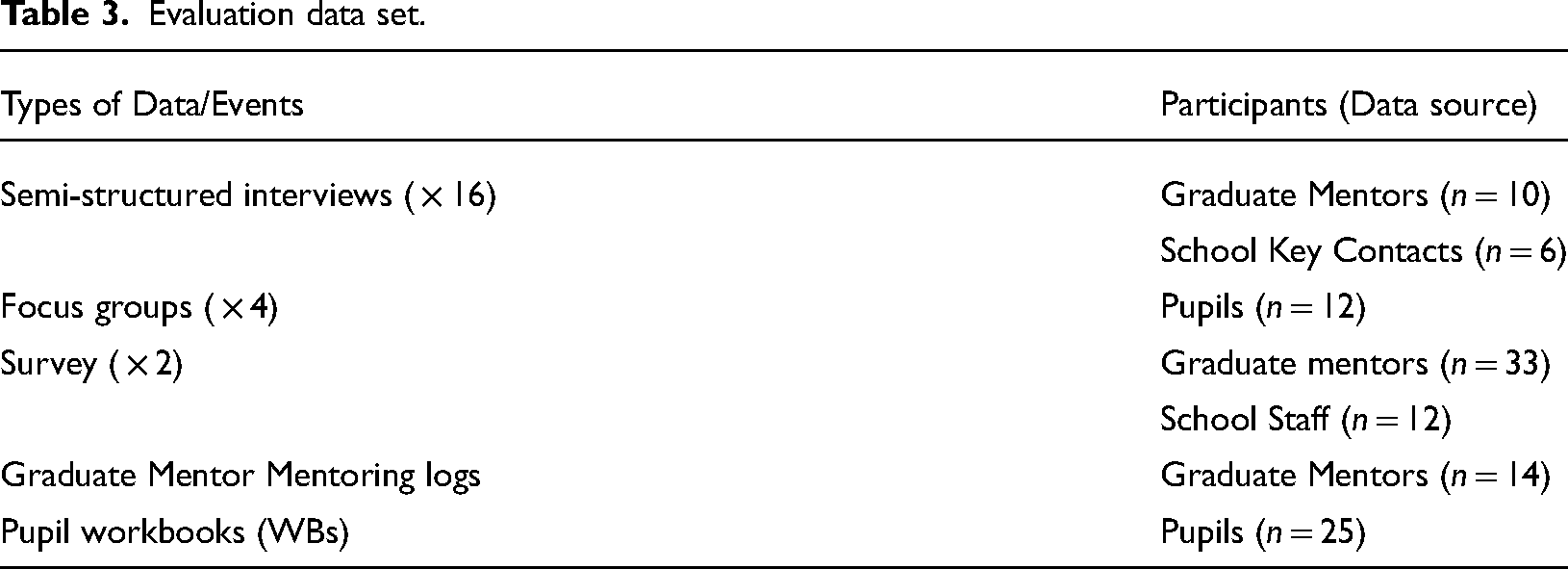
The survey results then informed the development of semi-structured interview schedules for both mentors and school staff. In the interview, mentors were asked about the development of professional skills in mentoring and the effects of mentoring on the pupils, while school key contacts were asked how pupils perceived and reported their experiences and effects of the mentoring. Four focus groups were held with pupils who had received mentoring, in which they were asked to talk about their experiences and what they felt were the benefits. All interviews and focus groups, with permission, were recorded and transcribed for thematic analysis.
The effects of the mentoring program on pupils’ re-engagement with learning
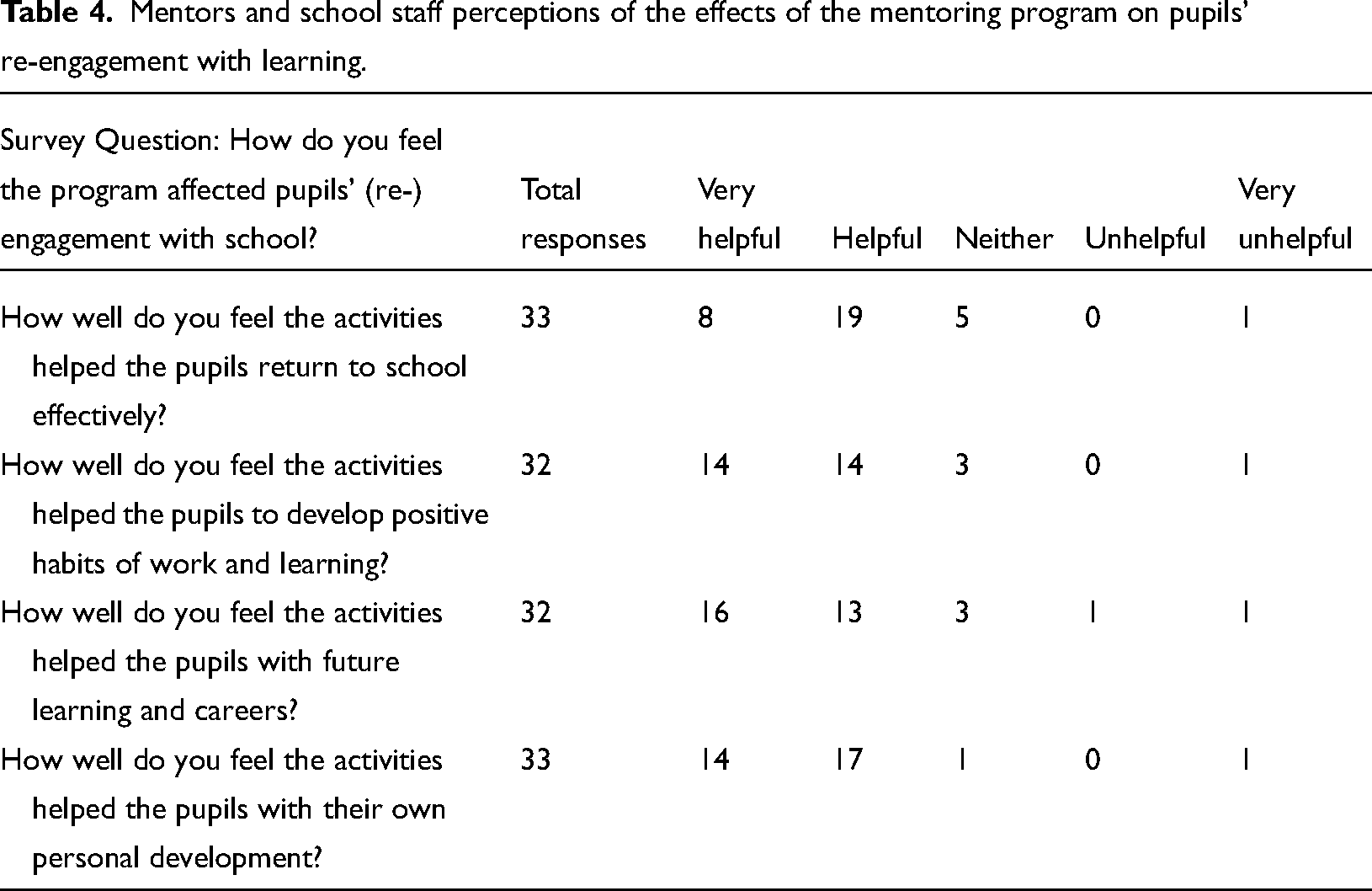
The perceptions of graduate mentors and school staff as to the effects of the program on pupils’ re-engagement with learning were examined in the survey (Table 4). In terms of helping the pupils to re-engage with school following disruption, 81.8% felt this was helpful or very helpful. The activities and materials were seen to contribute to helping pupils develop positive habits of work and learning (87.6%) and to help them with their future learning and career (90.6%). This perception was even higher (93.9%) for the effectiveness of the mentoring activities in helping pupils with their own personal development.
Mentors and school staff perceptions of the effects of the mentoring program on pupils’ re-engagement with learning.
There was some indication of deep effects on pupils’ communication skills: By the end of the program the majority of the answers to things were full sentences and her tone was changing depending on the answer she was giving. (Graduate Mentor)
This was noticed by the school staff: Building their confidence is a big thing that changed their behavior as such in lessons and things like that … she's talking more in lessons. (School Key Contact)
A couple of the boys especially were saying that they were quite demotivated … whereas now they think they’ve got more choices. (School Key Contact)
For some pupils, this had a profound effect, as noted by the schools' key contacts: … in terms of motivation and confidence and future planning … they’re re-engaged in their learning and have refocused …. the mentoring has helped remind them of that because they may have lost their way a little bit. (School Key Contact)
The pupils also mentioned this in the focus groups: So, I think [the mentor] really helped me in that aspect to be more confident in the classroom and be a bit more organized. (Pupil, age 15)
[if] it weren't for [mentor], I wouldn't be sure that I want to go to university right now without him telling me what it would be like … and answering a lot of the questions that I had that nobody else could really answer. (Pupil, age 18)
As well as the effects on pupils’ awareness and confidence in their future, there were indications that the program had an effect on behavior. One school key contact observed: I think the boys, because we had two female mentors especially, they developed a maturity where they can have a good meaningful conversation about life and the future. (School Key Contact)
One effect was on self-regulation and attitudes to school, as noted by the teachers: [Parents] are saying the students are different at home, their behaviors have improved at home as well as in school. It's been a real positive all round. (School Key Contact)
His behavior was so poor previously …, his whole attitude had changed, his parents have noticed a change in him, he felt positive coming into school and being in school and he just feels now that he's more able than what he initially thought. (School Key Contact)
There were also strong indicators of the development of pupils’ metacognitive strategies, including the metacognitive voice, as reported by school key contacts: Some of the set one, set two girls have managed to think slightly more outside the box than they had previously, and I think they needed that. (School Key Contact)
Thinking about responsibility, organizational skills, they are the fundamental building blocks and even the students who think they’ve got it, actually there are probably strategies that they’ve covered in GROW that they haven't come across before. (School Key Contact)
This was echoed by pupils, talking about the mentoring activities: So, there was a traffic light activity and you had to put your subject and your weaknesses for each one into it and I found that really helpful because I’m not always good at pointing out my weaker points in a subject, but then when I thought into it more, it did help. (Pupil)
When we did the revision timetable, we filtered it in so it was exam technique and active recall. So, we were getting a bit of everything in, rather than just recalling things that wouldn't actually help in exam circumstances. (Pupil)
I can remember one that I enjoyed where it was predicting your own grades or something like that. You’re looking at your own progression and how you think you’ve progressed. (Pupil)
Pupils and mentors spoke of a relationship that was different to that between pupils and teachers: I didn't need to explain everything all over again and I felt like I had someone who could empathize with me. So, she was trying to say, ‘It's okay. It will get better.’ (Pupil)
I think just having that person to talk to. You don't get the teacher to talk to as often. (Pupil)
The importance of building a relationship was recognized by mentors, which was helped, they said, by being closer in age to the pupils. Mentors described pupils as feeling like “… fish out of water …” because of the lockdown. One mentor observed: “I think some of my students log onto my sessions just to have someone listen to them and to be honest with them and then they go to lessons or look at what they will do after this year, which they may not have done otherwise.” Typical of teachers’ feedback to the GROW team was one comment: “it empowers our learners to think for themselves.” At team meetings, mentors and teachers talked about the effect of the sessions on the pupils’ ability to express their hopes over the 12 sessions, and observable improvement in engagement, as a “curriculum of hope.”
Part 3: Theorizing interventions that address interruptions to schooling
In this part of the paper, I consider how the GROW intervention is characterized, drawing on the case study above as instrumental (Stake, 1995, 2006) in order to provide insight in order to make valid inferences to inform future practice (Mills et al., 2009). Intervention theory makes the case that, overall, interventions should generate a situation in which actors believe that they are working against internal rather than external influences on decisions (Argyris, 2006). The question of when or not to intervene arises, therefore, and in the context of GROW, this can be considered a moral or social justice issue.
Effects on pupils and schooling
GROW can be characterized as a positive education program in that it maps to many of the principles of the Positive Youth Development (PYD) perspective, including the fostering of self-determination, self-efficacy, and belief in the future (Lerner et al., 2005). The GROW curriculum acknowledges the disruption of CV19 to pupils’ lives as an adverse childhood experience. Mentors are trained in safeguarding and trauma-informed approaches (Thomas et al., 2019) and are asked to log and report critical incidents that occur during mentoring sessions. Given the purpose of the program to build academic engagement and positive attitudes and strategies for learning, further evaluation might examine the ability of individuals to overcome setbacks that have the potential to limit motivation and performance. Relevant measures, which broadly guided the development of the curriculum at the outset, include academic buoyancy (AB) and academic resilience (AR) (Martin & Marsh, 2009). AB applies to most individuals in an academic setting, whereas AR applies to individuals who may experience acute adversity. Poor AB is related to low-level negative outcomes such as achievement anxiety, isolated poor grades, temporary lapses in engagement and motivation, and minor negative interactions with teachers; poor AR is predictive of high-level negative outcomes such as disengagement from school, chronic underachievement, sustained disaffection and truancy, and opposition to teachers (Martin, 2013). While avoiding the pitfalls of cause and effect, a measure of resilience/buoyancy and of engagement/disaffection can constitute a broad measure of impact.
The importance of school as a context for learning also arose in the case study, where disruption included the transfer back and forth between school and home as the site of learning. School as de facto site for learning has established, over time, the actors, practices, and protocols that create a framework for education (Maton, 2014, p. 135). Surrounding this is the system of meanings that constitute the purpose of schooling, which becomes destabilized and called into question when the connections are weakened or broken or become adrift of their moorings. Taking a systems approach to intervention discussed above in part 2, Argyris (2006) refers to these clashes and mismatches of views on causes of problems and effective change as “discrepant worlds,” and of the beneficiary of the intervention, ultimately the pupil, as being “marginalized,” in the sense of being in two overlapping but different orientations. A surface reading of marginality, of the pupils being on site in face-to-face lessons and being at home and taking part in remote lessons (cf. Bond, 2020), can be identified here as an effect on schooling because it has a collective impact on what schooling means.
Theorizing the open school
To explain the underlying basis of changes in an educational practice, such as those in the GROW intervention, Bernstein theorized educational (knowledge) practices as the knowledge codes, classification, and framing (Bernstein, 1977), in which classification refers to the relative strength of boundaries, between, say, subjects in the curriculum, and framing refers to the relative strength of how a practice is controlled, as in, say, whether pedagogy is didactic or student led. Applying these concepts to the GROW Programme as a recontextualization of standard and “normal” schooling, we can see in Figure 2 that lockdown and homeschooling have a weaker classification because subjects are not taught in discrete lessons by specialist subject teachers. However, the prescription of the GROW curriculum, as set out in the handbook and guidance to mentors (see Part 2), means that there is a relatively strong framing in that sessions are mentor- rather than student-led. This knowledge coding places the GROW Programme in the bottom-right quadrant of the topology. This analysis offers the means to develop an internal language of description (Bernstein, 2000; Pountney & McPhail, 2017) for GROW via the classification and framing of the metacognitive knowledge that is outlined above in Part 1 and exemplified in Part 2. Hence, it is a more concrete means of making visible the generative principles of how knowledge is selected, assembled, and sequenced into a curriculum (Bernstein, 1977). Accessible now are the coding of learning practices under lockdown and the return to school as a code shift in the strengths of framing and classification (shown by the arrow), and, importantly, one can theorize the disruption caused by the shift back and forth between home and school, the site of learning, as leading to a code clash that further disrupts schooling for the pupils. Hence, disruption can be theorized as a loss in meaning, rather than purely in learning.
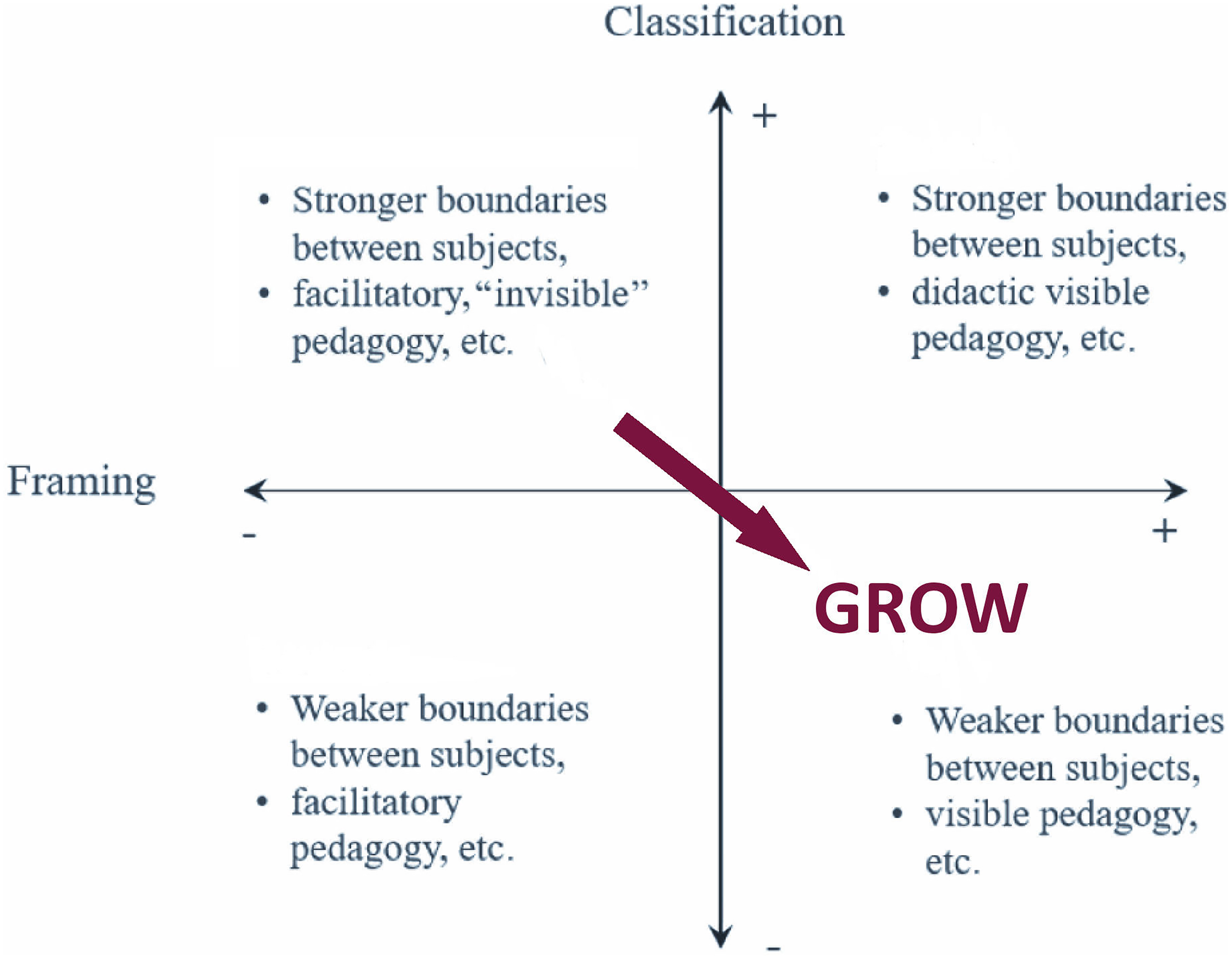
The classification and framing of learning and the code shift during lockdown.
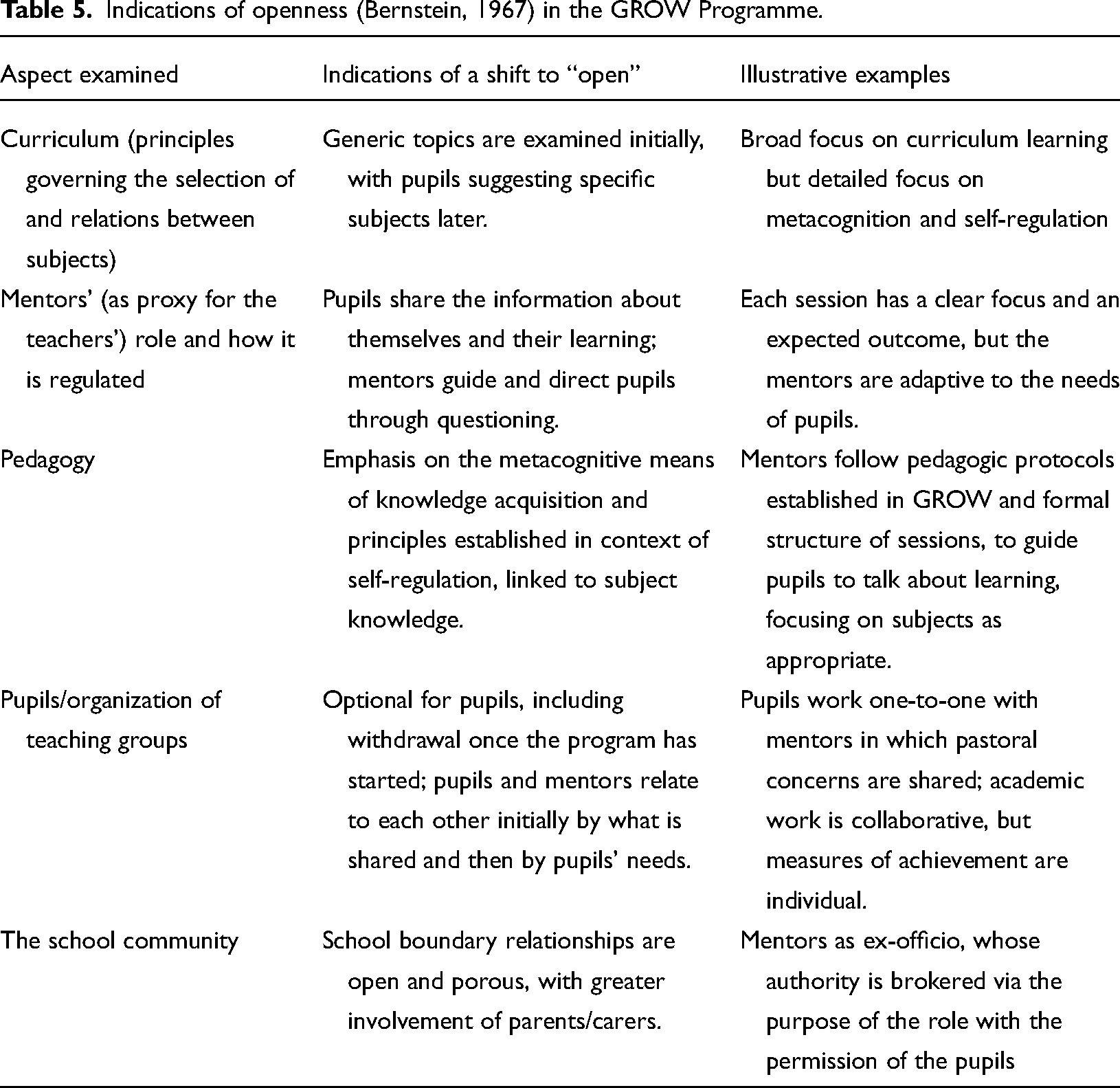
The two states, or systems, in-schooling and out-schooling, can now be considered to differ in the degree of openness, drawing on a further concept from the work of Basil Bernstein: the idea of “open schools.” Bernstein (1967) argued that in shifting from closed to open, the boundary between the school and its community is differentiated—formerly sealed off and self-enclosed, the school becomes physically open in form, with porous boundaries between the home, the school, and external experts (in the case of GROW, the mentors). Together, the concepts of open schools and classification and framing provide the means to examine the organizing principles of practice operating in the GROW Programme as a series of shifts from relatively closed to open and back again over time. Here, the social conditions for a change in the social order of schooling are a change in emphasis in some of the main features of the school— “… the forms of social control, the division of labour among the staff, the curriculum (especially how subjects are viewed), the pedagogy and how teaching groups are organised” (Pountney & McPhail, 2019, p. 483). Thus, the shift to lockdown and remote learning, albeit out of necessity and aided by a school–university partnership, can be characterized as “becoming more open,” as illustrated in Table 5.
Indications of openness (Bernstein, 1967) in the GROW Programme.
Theorizing the shift toward SMR arising from disruption
Taking account of MSR, as indicated in the evaluation, we can see GROW as an attempt to repair the disruption to schooling brought about by CV19, making visible the tensions in how pupils encounter schooling. While Argyris (2006) reminds us not to see a dilemma as a virtue, there is leverage for the efficacy of the GROW Programme intervention as local and homegrown, and as the only one available in May 2020. Furthermore, the attention to metacognitive knowledge and skills was made necessary by the circumstances. However, subject knowledge itself remains important, and one must be mindful that metacognition is always “of something” and that subject content is vital for cognitive development as the “raw material” for the development of conceptual understanding (McPhail, 2020). In this respect, the relationship between MSR and subject knowledge and content is the means of developing deep(er) learning. Students who can not only generalize but also apply and justify their application of the concept to an unfamiliar object demonstrate intelligent knowing-how—a higher, metacognitive level of understanding. For example, mentors who follow the pedagogical protocols established in GROW can guide pupils to knowledge acquisition via the principles established in the context of self-regulation (Perry et al., 2019), including motivation (Karaali, 2015). However, the relationship between MSR and specialist subject knowledge remains to be explored in any future evaluation.
This part of the paper has considered how analysis of the underlying basis of the case arises from the evaluation of the GROW Programme. The GROW case study, therefore, is instrumental in providing insights into other educational interventions by directing the researcher's lens toward the meanings that pervade educational encounters such as tutoring and mentoring. This offers a methodological approach to examining the value of intervention and the values and meanings associated with it.
Conclusion
This paper has considered the effects of CV19 on the education of young people and examined one case study intervention as instrumental in throwing light on how this can be theorized and understood (Stake, 1995, 2006). These insights can inform schools in their response to the effects of restrictions to schooling. The terms catch up and learning loss, it is argued, are incomplete, if not reductive, and suggestive of a deficit model. The description of pupils as “fish out of water” during lockdown and their struggles to “swim upstream” to return to a place where they can thrive has been shown to be an oversimplification. Furthermore, examination of the partial closing of schools via knowledge code theory (Bernstein, 1977, 2000) suggests that lockdown can be seen as a form of opening-up. This analysis suggests that the boundaries of the school have become pervious, in that they have admitted third parties (i.e., external mentors), and permeable, in that they have become unlocked to the (further) absorption of novel ideas and methods (i.e., remote learning and metacognitive approaches).
The evaluation of the first phase of the GROW model (Pountney et al., 2021) finds that the program has efficacy in uncovering (in addition to recovering) pupils’ resilience in adverse conditions. Mentoring strategies that address pupils’ MSR are seen as offering effective ways of (re-)establishing and strengthening a connection to learning and to the school context. There is a strong indication that a hybrid of mentoring (of pupils’ MSR) and tutoring (of curriculum subject knowledge) can bring a learning dividend. Alignment here is with a need for a “healing of sorts” that is linked to emotional growth, not academic achievement per se: “… where the whole point of education is to bring something into the student's ‘field’ of perception, which can be visual, auditory, sensory, and perhaps may even include the touching of the student's soul” (Biesta, 2020, p. 2).
A holistic approach to education, one that addresses students’ learning, social, and emotional needs, has always been crucial. This is especially so in times of crisis. Relational dimensions of responses to disruption have become heightened in the last 18 months, with social networks and relationships as key for psychosocial well-being. Social cohesion, defined as the willingness of members of a society to cooperate with each other in order to survive and prosper, then becomes vital to a wide variety of social outcomes such as health and economic prosperity (Fonseca et al., 2019). Viewing CV19 as a provocation to disruption and subsequent innovation may appear opportunistic, but it reflects the consensus that the world has technology that can resist and combat the effects of the pandemic, including the potential success of vaccines. The emphasis here is on hope, on resilient systems (OECD, 2020), and on maintaining the momentum of collective emergency action for a curriculum that can recover the purpose of learning and of schooling itself.
Footnotes
Acknowledgments
The author would like to thank Graham McPhail, Robbie Campbell, Weipeng Yang, and Diane Swift for comments on drafts of this paper.
Declaration of conflicting interests
The author declared no potential conflicts of interest with respect to the research, authorship, and/or publication of this article.
Ethical statement
This research was carried out in full compliance with the ethical guidelines approved by the University Research Ethics Committee, Sheffield Hallam University, in accordance with commonly agreed standards of good practice such as are laid down in the Declaration of Helsinki and the Economic and Social Research Council (ESRC) Research Ethics Framework.
Funding
The author received no financial support for the research, authorship, and/or publication of this article.
