




Abstract
Purpose
This scoping review examined the literature on student well-being in two high-performing education systems, Finland and Hong Kong SAR.
Design/Approach/Methods
Seventeen articles published between 2004 and 2024 were identified and analyzed to map research trends and explore potential similarities and differences in student well-being outcomes.
Findings
The review revealed that studies employed diverse methodologies and measures of well-being, making direct comparisons challenging. Preliminary findings suggest that students in both Finland and Hong Kong SAR report experiences of stress, anxiety, and depression. Trends over time and contributing factors varied across studies.
Originality/Value
This review highlights the need for future research employing standardized measures and methodologies to facilitate more robust comparisons of student well-being between these two distinct educational contexts. It also underscores the importance of considering sociocontextual factors when evaluating student well-being in international contexts.
Introduction
Academic performance is increasingly scrutinized alongside student well-being, a vital indicator of educational success (Owan et al., 2023). Understanding the relationship between these dimensions—stress, anxiety, and depression—provides insight into effective educational practices. However, comparative research analyzing this interplay across high-performing education systems is sparse. This scoping review addresses this gap by examining student well-being in Finland and Hong Kong SAR. Despite both jurisdictions holding strong positions in international assessments like the Programme for International Student Assessment (PISA), their educational philosophies diverge substantially: Finland prioritizes a student-centered, equity-focused approach with reduced academic pressure, while Hong Kong SAR adheres to a high-stakes, exam-driven model fostering intense competition.
The complexity of student well-being encompasses multiple dimensions—physical, emotional, social, and cognitive. While a thorough exploration of each facet is beyond the scope of this review, the studies examined reveal diverse methodologies for measuring well-being. For instance, physical well-being is often assessed through self-reported health status or physiological markers, while emotional well-being utilizes standardized scales like the Beck Depression Inventory. Social well-being typically involves assessing support networks, and cognitive well-being is measured through life satisfaction and happiness indices. This review will map the breadth of current research on these interconnected dimensions, recognizing the inherent challenges and variability in the operationalization of well-being, to identify critical themes and trends within the literature.
This review seeks to (a) delineate the similarities and differences in well-being outcomes across these two systems and (b) assess how their contrasting educational frameworks influence the relationship between academic performance and student well-being. By synthesizing the existing literature, this study aims to illuminate underexplored dimensions of student well-being, advance policy and practice recommendations, and promote a holistic understanding of educational effectiveness beyond mere performance metrics.
Student well-being in Finland and Hong Kong SAR: An underexplored comparison
Well-being is a multidimensional construct that encompasses various aspects of an individual's life, including physical, emotional, social, and cognitive dimensions, and reflects a state of comfort, health, or happiness influenced by both individual factors and broader societal conditions (Sarriera & Bedin, 2017). Key components of well-being include overall life satisfaction, emotional states (both positive and negative affect), social relationships, and relevant physical health concerns. The complexities of well-being are evident in the various frameworks and models developed to assess it, emphasizing its subjective and context-dependent nature. For the purposes of this scoping review, we will utilize a comprehensive definition of student well-being that encompasses psychological, intellectual, emotional, physical, social, and spiritual wellness (Adams et al., 2000). Within this framework, we will primarily focus on hedonic indicators of subjective well-being, such as the presence of positive affect, absence of negative affect, and life satisfaction, as these are consistently linked to improved academic performance and engagement (Sun & Shek, 2014). While eudaimonic indicators offer valuable insights into physical health and development, they often present challenges in measurement, particularly across diverse age groups within the student population. By concentrating on hedonic aspects, we seek to provide clearer insights and practical recommendations for interventions aimed at enhancing student well-being, ensuring a more manageable and coherent analysis.
Research has documented the well-being of students in both Finland and Hong Kong SAR extensively; however, much of this work tends to treat each context independently. In Finland, Salmela-Aro (2017) reported a troubling increase in school burnout among high school students, particularly among females, while Vepsäläinen et al. (2020) examined the link between dietary habits and hair cortisol concentrations in preschoolers, suggesting an association between stress and unhealthy diets, albeit without establishing causation.
Conversely, in Hong Kong SAR, Shek et al. (2017) conducted a 4-year longitudinal study at The Chinese University of Hong Kong, focusing on life satisfaction, positive youth development, and university engagement. Their findings indicated stable life satisfaction levels throughout students’ undergraduate careers, with positive youth development exhibiting a U-shaped trajectory. Chan et al. (2023) further explored the relationship between sleep and academic performance among primary and secondary students, reporting that insufficient sleep correlated with lower academic performance, supported by Hamilton et al. (2007), who found that adequate sleep is linked to reduced symptoms of depression and anxiety. Additionally, De Azevedo Barros et al. (2019) highlighted that poor sleep quality correlates with increased health issues and life dissatisfaction.
These studies illustrate that well-being can be assessed through various methodologies and across multiple dimensions, including rates of depression, self-reported well-being, physical health conditions, sleep patterns, stress levels, life satisfaction, and happiness indices. Nevertheless, despite the valuable insights gained from individual studies, there is a notable lack of direct comparative research examining student well-being in Hong Kong SAR and Finland. Much of the existing literature aggregates data from these regions with samples from others. For instance, Marquez and Long (2021) analyzed adolescents’ subjective well-being and life satisfaction across 46 nations, revealing that Finnish adolescents reported higher life satisfaction compared to their counterparts in Hong Kong SAR from 2015 to 2018, with a declining trend for both groups, particularly among girls.
However, Marquez and Long's study has notable limitations, including a narrow time frame (2015–2018), a specific focus on a single age group (primarily 15-year-olds), and reliance on survey data linked to the PISA exam, representing a singular data source. Addressing these gaps, this comparative scoping review will expand the existing research landscape by including a broader range of age groups, extending the timeframe, and employing multiple assessment methods. This comprehensive approach aims to enrich our understanding of student well-being in both Hong Kong SAR and Finland, providing critical insights into how the differing educational systems may influence this vital aspect of student life.
The education systems of Hong Kong SAR and Finland: Contrasts and commonalities
It is important to clarify that Hong Kong SAR is a Special Administrative Region of the People's Republic of China governed under the “One Country, Two Systems” policy. This framework, established in the 1980s, allows Hong Kong SAR to retain its unique legal and economic systems while being part of the People's Republic of China. Consequently, this scoping review focuses on comparing the education systems of these two regions (Hong Kong SAR and Finland) rather than the two countries (The People's Republic of China and Finland). The educational systems in Hong Kong SAR and Finland illustrate stark contrasts in their structure and philosophy, shaped by their distinct cultural and societal values. In Hong Kong SAR, the New Academic Structure (NAS), implemented in September 2009, mandates 12 years of formal education, comprising 6 years of primary education, 3 years of junior secondary education, and 3 years of senior secondary education. Students culminate their academic journey with the Hong Kong Diploma of Secondary Education (HKDSE) Examination, which is critical for access to post-secondary education. While kindergartens and childcare centers exist for children aged three to six, attendance remains non-compulsory, thereby allowing flexibility in early educational experiences.
In contrast, Finland's education system adheres to the International Standard Classification of Education (ISCED) framework, encompassing eight stages that begin with early childhood education and care for children aged 0–6. This is followed by primary and lower secondary education for students aged 7–16, and subsequently, upper secondary education, typically attended by those aged 16–19. The higher education phase, categorized as stages 6–8, usually commences around the age of 22. Recent reports indicate that Hong Kong SAR has approximately 650,000 students enrolled in primary and secondary education (Education Bureau of Hong Kong SAR, 2024), whereas Finland's student population is around 550,000 (Clausnitzer, 2024), reflecting differing educational philosophies between the two regions.
Despite these structural differences, both education systems share underlying objectives, yet they manifest distinct educational philosophies. Finland's commitment to free education from pre-primary through higher education, along with complimentary school meals and learning materials, emphasizes inclusivity and equity. This holistic framework aims to provide individualized support, enabling all students to reach their full potential while minimizing disparities in educational quality across regions. Similarly, the Hong Kong SAR government promotes free primary and secondary education through public schools, aspiring to develop diverse abilities and maximize student potential, mirroring its values of equity.
Beyond the classroom, the educational environments exhibit notable divergences, particularly concerning “shadow education” or private tutoring practices. Though originating in Asia, its prevalence is markedly different between the two regions. In Hong Kong SAR, shadow education gained popularity in the 1980s, coinciding with a flourishing economy and parents’ willingness to invest heavily in their children's education (Eng, 2019). A survey conducted in 2011/2012 revealed that over half of secondary students received private tutoring, and this figure surpassed 70% among final-year students, with tutoring perceived as essential for academic success and high-stakes entrance examinations (Yung, 2019). This reliance on private tutoring has generated substantial stress for students and families, raising equity concerns given the financial burdens it imposes (Bray, 2013).
Conversely, while shadow education has gained modest traction in Finland, it remains less prevalent and less integrated into the educational culture (Christensen & Zhang, 2021). Finnish students typically dedicate fewer hours to schoolwork, averaging around 36 hr per week compared to nearly 50 hr for their peers from Hong Kong SAR (OECD, 2016). The Finnish education system prioritizes trust, equality, and inclusion over test scores and competitive rankings, fostering equal educational opportunities for all.
Ultimately, although both education systems aim to foster student well-being and academic achievement, their approaches diverge significantly. Finland emphasizes a holistic, student-centered philosophy that prioritizes individual needs, promotes mental health, emotional resilience, and balanced lifestyles within a supportive environment. In contrast, Hong Kong SAR's system is marked by intense competitive pressure and a heavy reliance on supplemental education, leading to elevated stress and anxiety levels among students striving for excellence. This emphasis on standardized testing often eclipses the importance of social skills and creativity, which are essential for overall well-being.
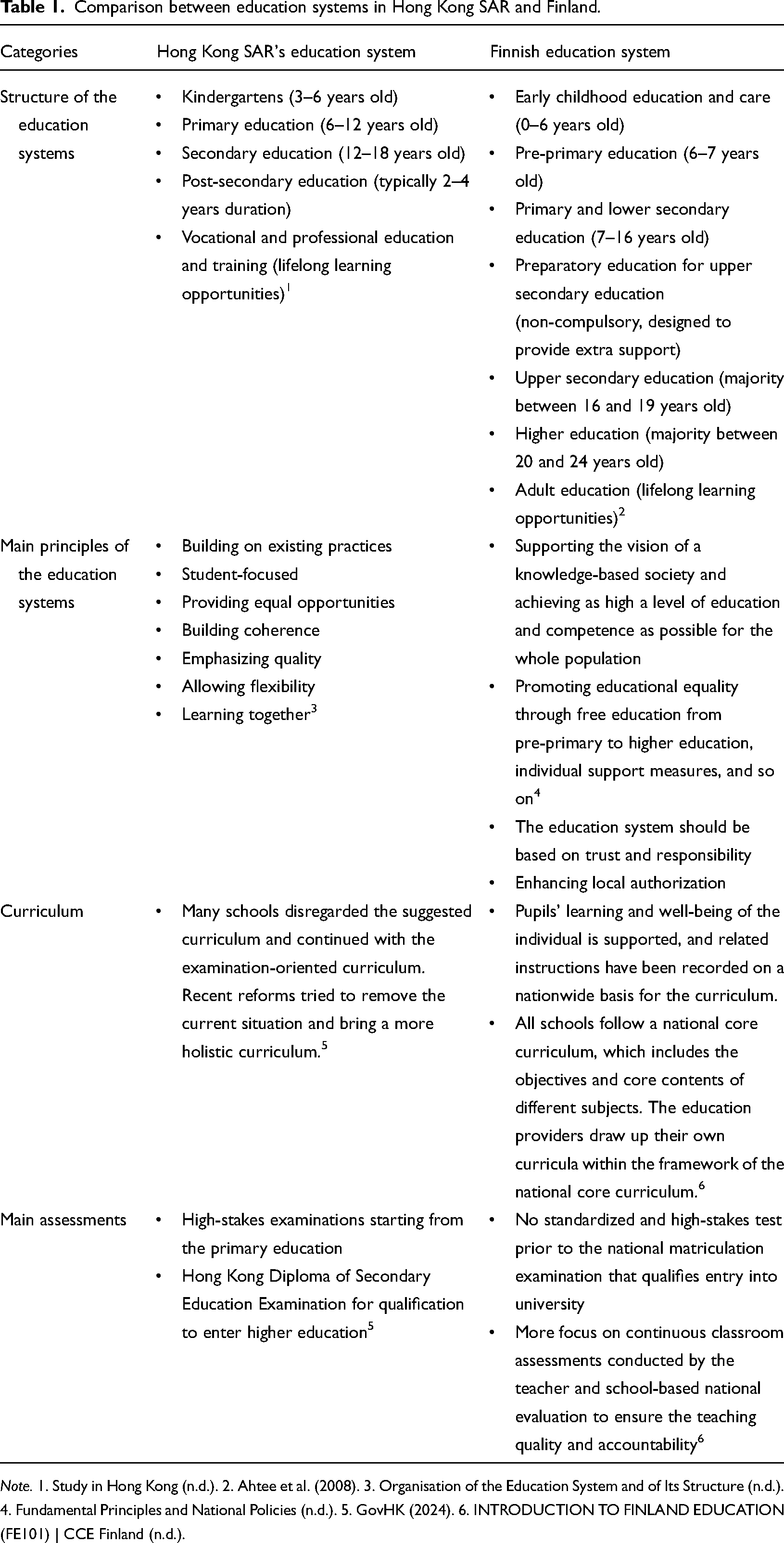
Moreover, disparities in resources and opportunities for students from varying socio-economic backgrounds exacerbate concerns regarding educational equity, as disadvantaged students may struggle to access adequate support, intensifying feelings of inadequacy and impacting mental health. Thus, while both systems aspire to achieve student well-being and academic success, Finland's inclusive approach fosters a nurturing environment, whereas Hong Kong SAR's competitive model may compromise student health and equity. This contrast highlights the critical interplay between educational practices and student well-being, underscoring the need for holistic educational reforms that prioritize both academic achievement and the overall health of students. More details regarding the comparisons between the two education systems can be found in Table 1.
Comparison between education systems in Hong Kong SAR and Finland.
Note. 1. Study in Hong Kong (n.d.). 2. Ahtee et al. (2008). 3. Organisation of the Education System and of Its Structure (n.d.). 4. Fundamental Principles and National Policies (n.d.). 5. GovHK (2024). 6. INTRODUCTION TO FINLAND EDUCATION (FE101) | CCE Finland (n.d.).
Hong Kong and Finland: Two high performers in the PISA exam
The Programme for International Student Assessment (PISA) constitutes a crucial benchmark for evaluating academic performance on a global scale. Launched by the Organisation for Economic Co-operation and Development (OECD) in 2000, PISA is designed to assess the knowledge and skills of 15-year-old students across various countries/regions. Participating students, randomly selected, undergo evaluations every 3 years in mathematics, reading, and science. Both Finland and Hong Kong SAR have consistently distinguished themselves as high performers, ranking within the top 20 of approximately 80 participating countries/regions in each assessment cycle. Up until the 2009 assessment, Finland generally outperformed Hong Kong SAR in both average scores and rankings; however, a notable shift occurred in the 2012 evaluation, with Hong Kong SAR surpassing Finland in overall performance.
The educational philosophies underlying the systems in Hong Kong SAR and Finland are markedly distinct, shaped by their respective sociocultural contexts. Hong Kong SAR operates within a highly competitive education framework that emphasizes academic excellence, characterized by a rigorous curriculum and high-stakes assessments (Ho, 2006). This competitive environment has significantly resulted in approximately 90% of students advancing to high school, reflecting a societal imperative for academic achievement. In stark contrast, Finland is celebrated for its student-centered model, wherein equity, well-being, and minimal reliance on standardized testing prevail, fostering a more holistic educational experience (Mandavkar, 2024). Finnish students benefit from smaller class sizes and a relaxed learning atmosphere, with nearly all completing comprehensive basic education (ages 7–16) that emphasizes long-term personal development rather than merely academic indicators.
PISA not only serves as a reporting tool for educational scores but also provides critical insights into the effectiveness and outcomes of educational systems across various jurisdictions. By utilizing trend analysis and comparative assessments, educators and policymakers can identify key factors that influence student achievement, enabling the development of targeted strategies for educational enhancement. This review will present a detailed examination of the PISA performance of Finland and Hong Kong SAR, aiming to deepen our understanding of the relationship between educational systems and student well-being. This exploration will pave the way for crafting more effective strategies that support holistic educational success in both contexts. Accordingly, this scoping review will address the following research questions:
How have the general well-being levels of students in Finland and Hong Kong SAR compared since 2000, and what trends have emerged over time? What sociocontextual factors influence the similarities and differences in well-being levels between students in Finland and Hong Kong SAR, and how have these factors evolved over time?
Research methods
In this study, we aimed to review the current literature related to the well-being level of young people in Finland and Hong Kong SAR (aged 6–18 years). A scoping review is useful for exploring the current well-being level, potential influencing factors, and the potential relationship between the PISA performance and the well-being level. In this scoping review, we followed the guidelines of the PRISMA extension for scoping reviews (PRISMA-ScR) statement (Tricco et al., 2018).
Identifying relevant studies with PRISMA
An extensive search of electronic resources is done within these databases: Scopus, Google Scholar, ProQuest, EBSCOhost, and Science Direct. The following search term was used in combination: (“happiness” OR “stress” OR “cortisol” OR “mental health” OR “emotional well-being” OR “psychological well-being” OR “life satisfaction”) AND (“young child*” OR “early childhood” OR “high school*” OR “adolescent*” OR “teenage*” OR “student*” OR “pupil*” OR “schoolchild*”) AND (“Finland” OR “Finnish”). The last term was switched to “Hong Kong SAR” accordingly when identifying studies related to the well-being of students in Hong Kong SAR. To match the period of the PISA exam as well as the increasing focus on student well-being globally around that time, with the availability of relevant research from both regions, the time frame of the selected articles is from 2000 to 2024.
Inclusion and exclusion criteria
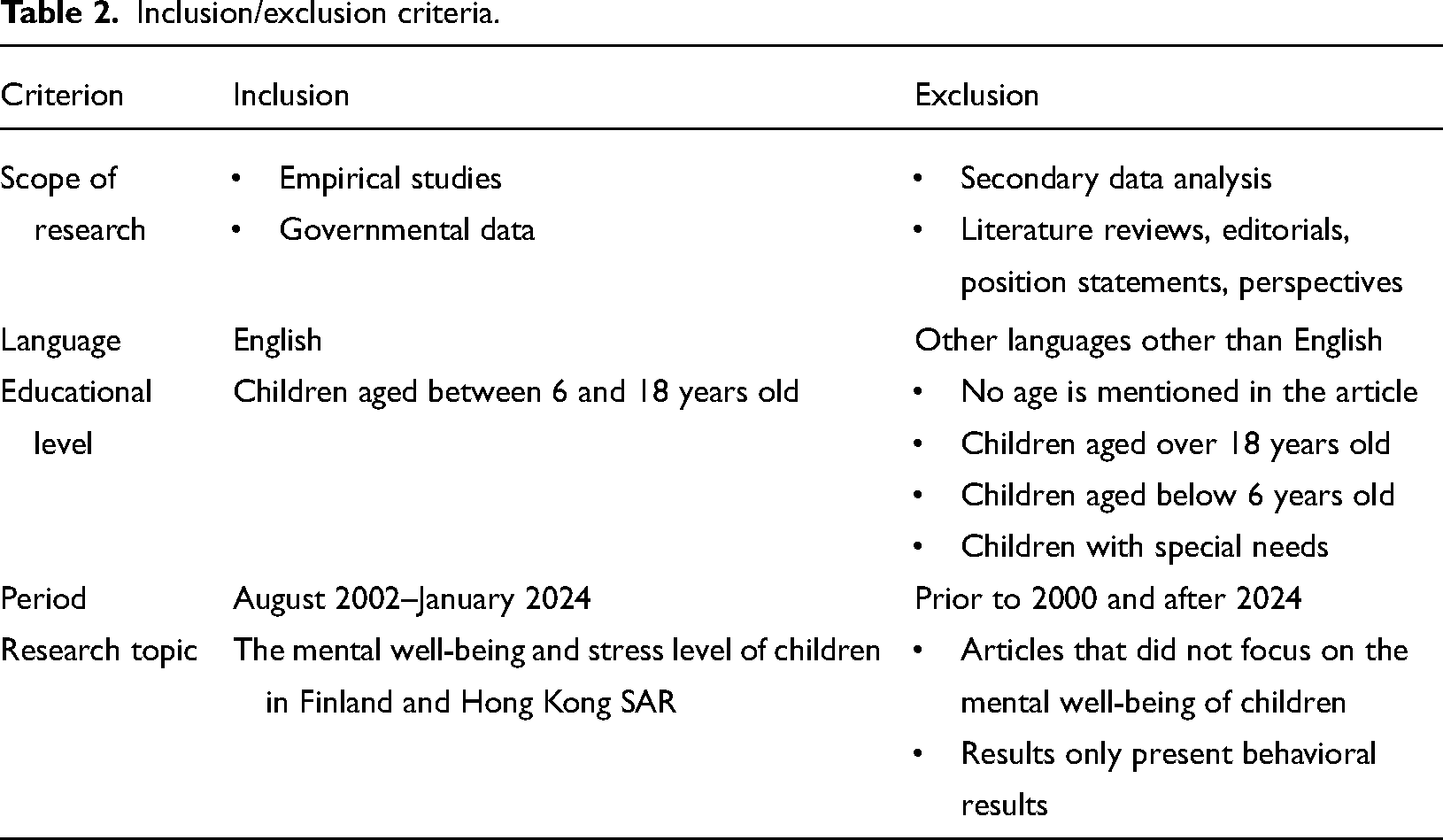
For this review, the following inclusion criteria have been established and shown in Table 2 as well. First, the articles had to be related to the general well-being, which has been defined in the current research session, or influencing factors regarding the students residing in Hong Kong SAR or Finland. Second, the articles had to be full-text and written in English. Third, the articles focused on the age range of 6–18 years old. Meanwhile, articles were removed based on the following exclusion criteria: (a) those focusing on other geographic population instead of Hong Kong SAR or Finland, (b) studies that discussed other stakeholders such as caregivers, teachers, parents, or policymakers, (c) studies that focused on participants with special needs, (d) literature reviews that cover articles outside the specified time and geographic requirements, and (e) articles that only mentioned the physical well-being of participants.
Inclusion/exclusion criteria.
Selecting studies
As shown in Figure 1, 895 articles were found from ProQuest, 205 from Google Scholar, 775 from Scopus, 200 from Science Direct, and 543 from EBSCOhost. Articles were removed from the search list for following reasons: (a) duplicated articles (n = 490), (b) participants not within the age range of 6–18 years old (n = 346), (c) studies involving children with special needs (n = 251), (d) articles discussing other stakeholders instead of children (n = 197), (e) data not originating from Finland or Hong Kong SAR (n = 237), (f) papers not related to the general well-being, stress-level, happiness, risk factors, or other related topics (n = 1,049), and (g) articles are other literature reviews without direct data (n = 33). Fifteen articles that discussed the well-being status of young people in Finland and Hong Kong SAR have been included, and two more articles were added to the list by checking the references of the included articles.
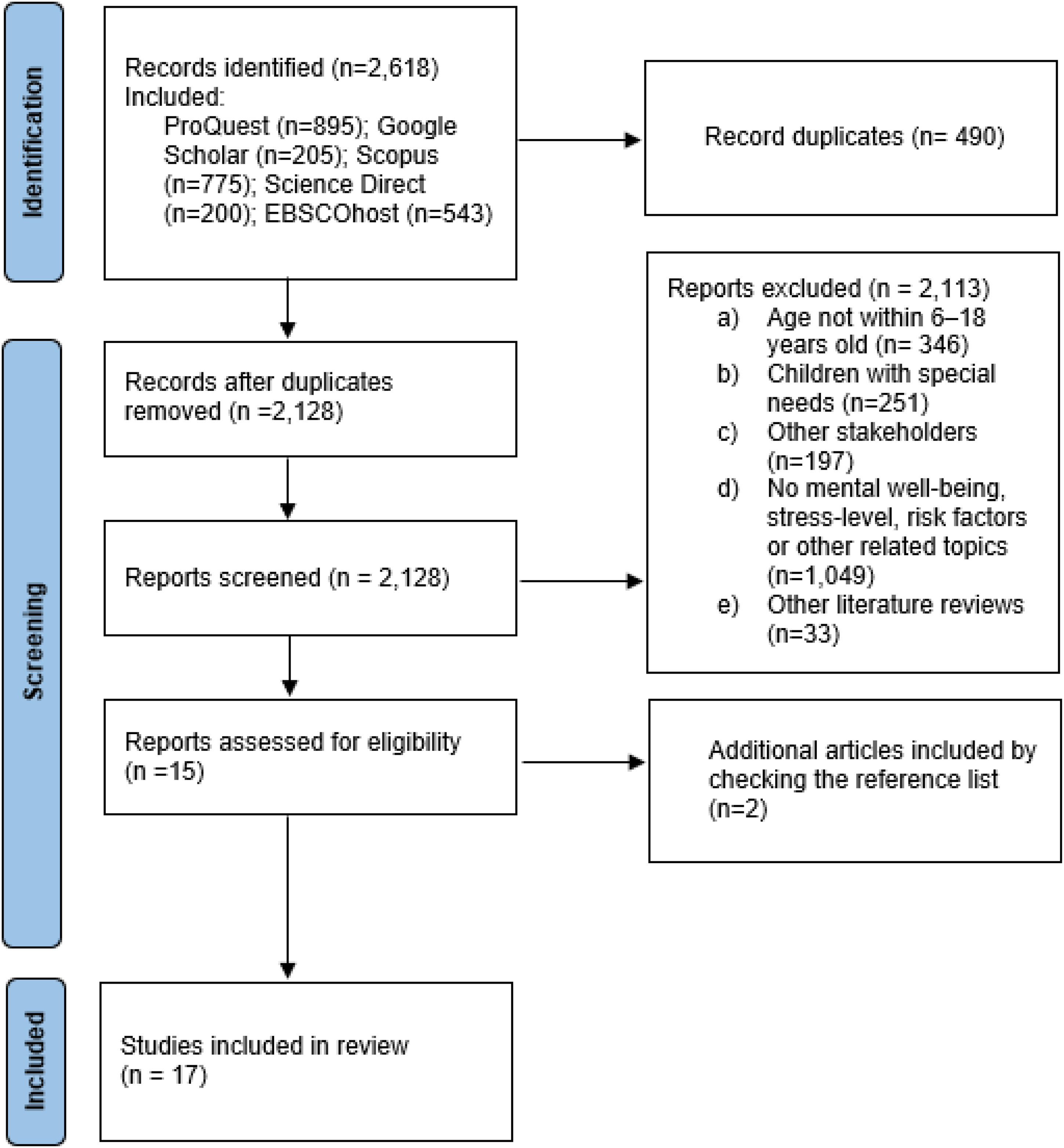
Flowchart of the literature selection process.
Analysis
The basic information of the selected articles was coded and placed into two all-inclusive tables: Appendix 1 included the demographic information of the 17 resources with sample size, the age group, and percentage of male, and race; Appendix 2 summarized the technological information of the studies and included collection method of data, assessments used in the studies, the main data results, and limitation.
Since the review will be focusing on comparing the mental well-being level of students in Hong Kong SAR and Finland, we decided to code the resources based on the different categories of mental well-being, which is named as self-reported data on well-being. After reading all the resources, we listed the data related to mental well-being collected in the study and subdivided the theme into the following categories: symptoms of depression, self-rated health status, life satisfaction, stress level, and happiness level. While “depression” is a significant indicator of well-being, it was not initially included as a primary keyword due to its inclusion within the broader concepts of “mental health” and “emotional well-being.” This initial strategy aimed to capture a wider range of related constructs.
Results
Student well-being is a critical area of research, serving as a key indicator for evaluating educational systems. This scoping review identified 17 articles on the subject, with 8 articles focusing specifically on Finland and 8 on Hong Kong SAR. Additionally, one article examined multiple countries/regions across Europe and Asia, including both Finland and Hong Kong SAR. Further information on study characteristics, such as age ranges of the participants and research methodologies employed, is summarized in Appendix 1 and Appendix 2.
Well-being is a multifaceted concept that encompasses various dimensions. Among the 17 articles analyzed, the primary categories from which data were derived include symptoms of depression, self-rated health status, life satisfaction, stress levels, and happiness indices. Some articles addressed multiple categories, while others focused on a singular measurement. The distribution of articles related to each category, along with their geographic contexts, is illustrated in Figure 2. The following sections present detailed findings for each category.
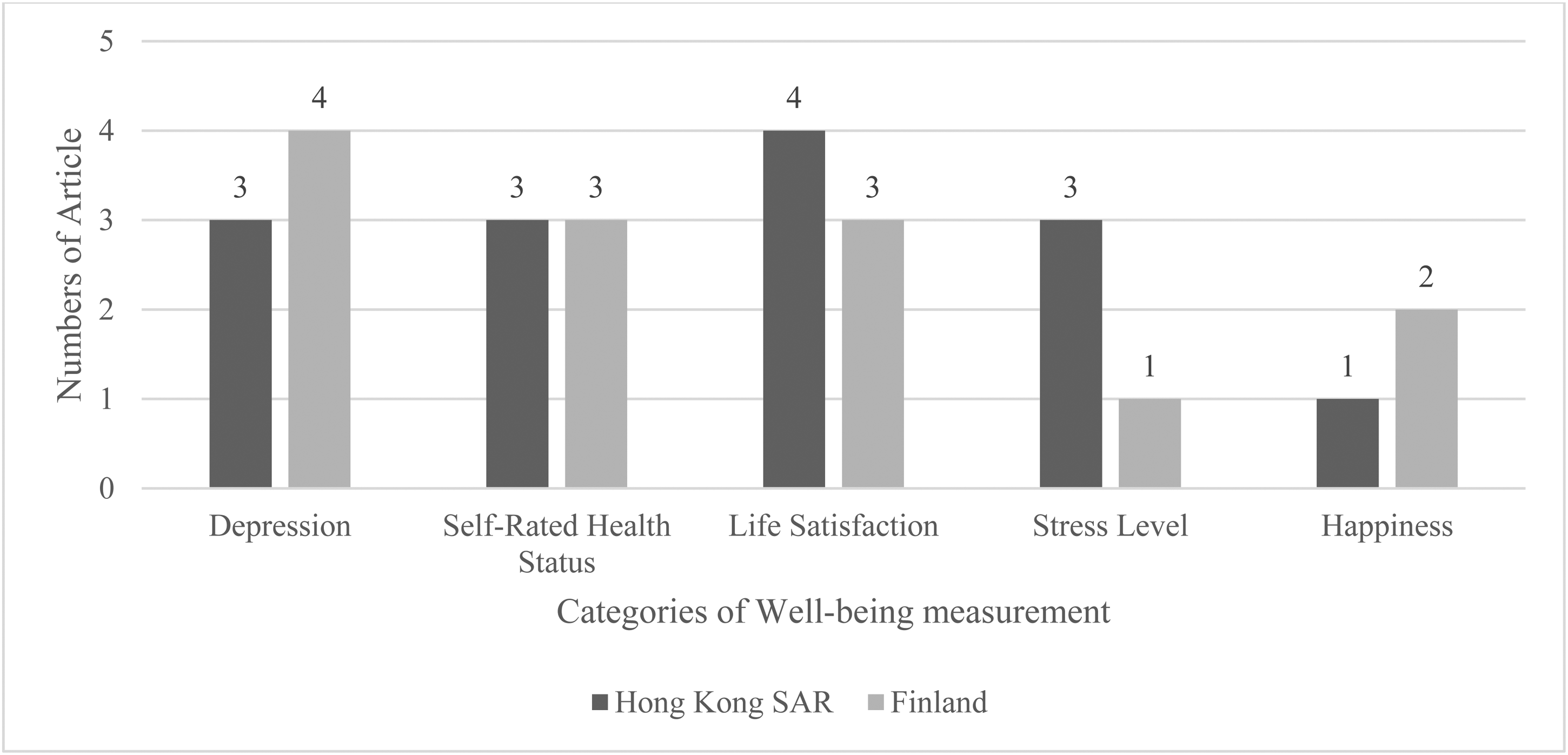
Well-being comparison in different categories.
Depression
Out of the seven articles that assessed symptoms of depression, three focused on the population in Hong Kong SAR, and four concentrated on the population in Finland. The instruments employed for data collection included the Beck Depression Inventory (both Finnish and Chinese modified versions), the Asian Adolescent Depression Scale, and self-administered surveys. Ellonen et al. (2008), Fröjd et al. (2008), and Knaappila et al. (2021) utilized the Finnish version of the Beck Depression Inventory, revealing the following results: Data collected from 2002 to 2003 indicated that 22% of adolescents aged 14–16 exhibited some symptoms of depression. Among this group, 10% suffered from mild depression, 9% from moderate depression, and 3% from severe depression. Gender differences were also noted, with girls experiencing higher rates of depression compared to boys (14% vs. 7% for mild depression, 12% vs. 5% for moderate depression, and 4% vs. 2% for severe depression) (Ellonen et al., 2008). Fröjd et al. (2008) reported that, in 2000, 18.4% of girls aged 13–17 suffered from depression, with 13% exhibiting moderate symptoms and 5% severe symptoms. Among boys, 11.1% had depression, with 8% classified as moderate and 3% as severe. In contrast, Knaappila et al. (2021) compared depression rates among 15-year-olds in Finland from 2002–2003 to 2018–2019, finding an increase from 11.4% to 23.9% for girls and from 5% to 8% for boys over the past decades.
The data pertaining to depression in Hong Kong SAR is more varied. Ng and Hurry (2011) employed the Chinese Beck Depression Inventory for participants aged 14–20. On a scale of 1–15 (with 15 indicating the highest level of depression), boys had a mean score of 10.59, while girls had a mean of 13.04. In Huang et al. (2024), which utilized a self-administered survey assessing prolonged feelings of despair, 29.5% of secondary school students exhibited symptoms of depression, with 26.7% among males and 33.3% among females. Stankov (2013) utilized the Asian Adolescent Depression Scale, providing comparative data for both Hong Kong SAR and Finland. This study employed a 20-item scale rated on a 5-point Likert scale. Although specific numbers were not provided in the report, visual data indicated that Hong Kong scored between 0.25 and 0.5, while Finland scored between −0.25 and −0.5.
Self-rated health status
Six articles included measures of self-rated health status, encompassing both physical health status and mental wellness indicators, such as stress levels. Various instruments were employed for data collection; for instance, Katja et al. (2002) utilized the Berne Questionnaire of Subjective Well-Being with Finnish participants aged 12–17 in 2000, finding that 13.7% of respondents reported chronic health issues, yet 89% perceived their health status as good or very good. In Knaappila et al. (2021), the rate of poor subjective health among 15-year-old Finns from 2002–2003 to 2018–2019 showed an increase, rising from 18.4% to 27.8% among girls and from 14.5% to 17.0% among boys.
Kwan (2009) assessed subjective well-being in Hong Kong adolescents aged 12–19, using the Health-Related Quality of Life Scale and discovered that 40% of participants rated their health as poor or fair. Furthermore, 80% reported feeling unwell at least one day per month, while 73% reported mental health challenges. Chu (2018) provided data from the Education Bureau of Hong Kong SAR, revealing that the average sleep duration for primary school students (grades 4–6) was 8.7 hr, below the recommended 9–12 hr, while secondary school students (grades 1–3) averaged 7.3 hr, below the suggested 8–10 hr. Huang et al. (2024) reported that secondary school students had a mean sleep duration of 6.98 hr, with 49.1% of participants reporting good sleep quality and 40% reporting poor sleep quality.
Life satisfaction
Seven articles measured the life satisfaction of participants. In Finland, key instruments included the Cantril Ladder and self-administered surveys. Helakorpi and Kivimäki (2022) analyzed data from the School Health Promotion Study, finding that life satisfaction among Finnish children in grades 8–9 decreased from 84% to 81% for boys and from 67% to 57% for girls between 2019 and 2021. Due et al. (2019) presented a combined life satisfaction rate: In 2002, 40.7% of participants reported high life satisfaction (scores of 9 or 10 on a 10-point scale), with rates declining over subsequent years (40.4% in 2006, 37.0% in 2010, and 34.9% in 2014).
In Hong Kong SAR, various studies utilized different instruments to assess life satisfaction. Kwan (2009) employed the Brief Multidimensional Students’ Life Satisfaction Scale, revealing that 13% of participants reported dissatisfaction with family life and 10%–11% reported overall discontent. Shek and Liu (2014) and Shek and Li (2015) employed the Satisfaction With Life Scale, identifying a decreasing trend in life satisfaction scores from 3.96 to 3.77 across three waves of data collection. Zhu and Shek (2021) found similar declining trends in this three-wave study. Stankov (2013) also presented the mean life satisfaction scores for both Hong Kong SAR and Finland. According to the data, Hong Kong SAR scored below −0.5—the lowest among the 10 countries studied—while Finland scored between −0.25 and 0.
Happiness Index
Happiness, another key category for well-being measurement, was assessed in several articles. Uusitalo-Malmivaara (2012) collected data on the Subjective Happiness Scale and the School Children Happiness Inventory for Finnish children aged 12 in 2009. Participants scored between 2 and 7 on a 7-point scale, leading to the conclusion that overall happiness levels were low; 1.2% reported overall unhappiness. In a follow-up study by Uusitalo-Malmivaara (2014) involving participants aged 14–16, 10.9% reported overall unhappiness, and approximately 3.8% indicated unhappiness in a school context. Compared to a prior measurement of subjective happiness from the same population 3 years earlier, 31.9% of girls and 55.4% of boys maintained the same happiness levels, while 31.3% of girls and 19.1% of boys reported a decline, and 36.8% of girls and 25.5% of boys reported an increase.
In Hong Kong SAR, Chu (2018) cited a study from Lingnan University that assessed the Happiness Index among children in 2015. The subjective happiness of students aged 8–18 was measured on a scale from 0 (least happy) to 10 (most happy), revealing a mean score of 6.91 in 2012, which declined to 6.49 in 2015. This downward trend in happiness was particularly pronounced among children aged 8–9, whose mean score fell from 7.94 to 6.86, reflecting a 14% decrease (Lingnan University, 2016).
Discussion
This scoping review sought to compare the well-being levels of students in Hong Kong SAR and Finland, addressing two primary research questions. This section will address the two questions with the review results: (a) How have the overall well-being levels of students in Finland and Hong Kong SAR compared, and what trends have appeared over the years? (b) What sociocultural factors contribute to the similarities and differences in well-being between students in Finland and Hong Kong SAR, and how have these factors changed over time?
Student well-being in Hong Kong SAR and Finland: Similarities and differences
In examining the PISA scores presented in Figure 3, a clear trend emerges: Since 2012, students in Hong Kong SAR have outperformed their Finnish counterparts, with score differences approaching 70 points in the years of 2012 and 2022. While the reasons behind Finland's decline in performance are beyond the scope of this review, they warrant further investigation in future studies.
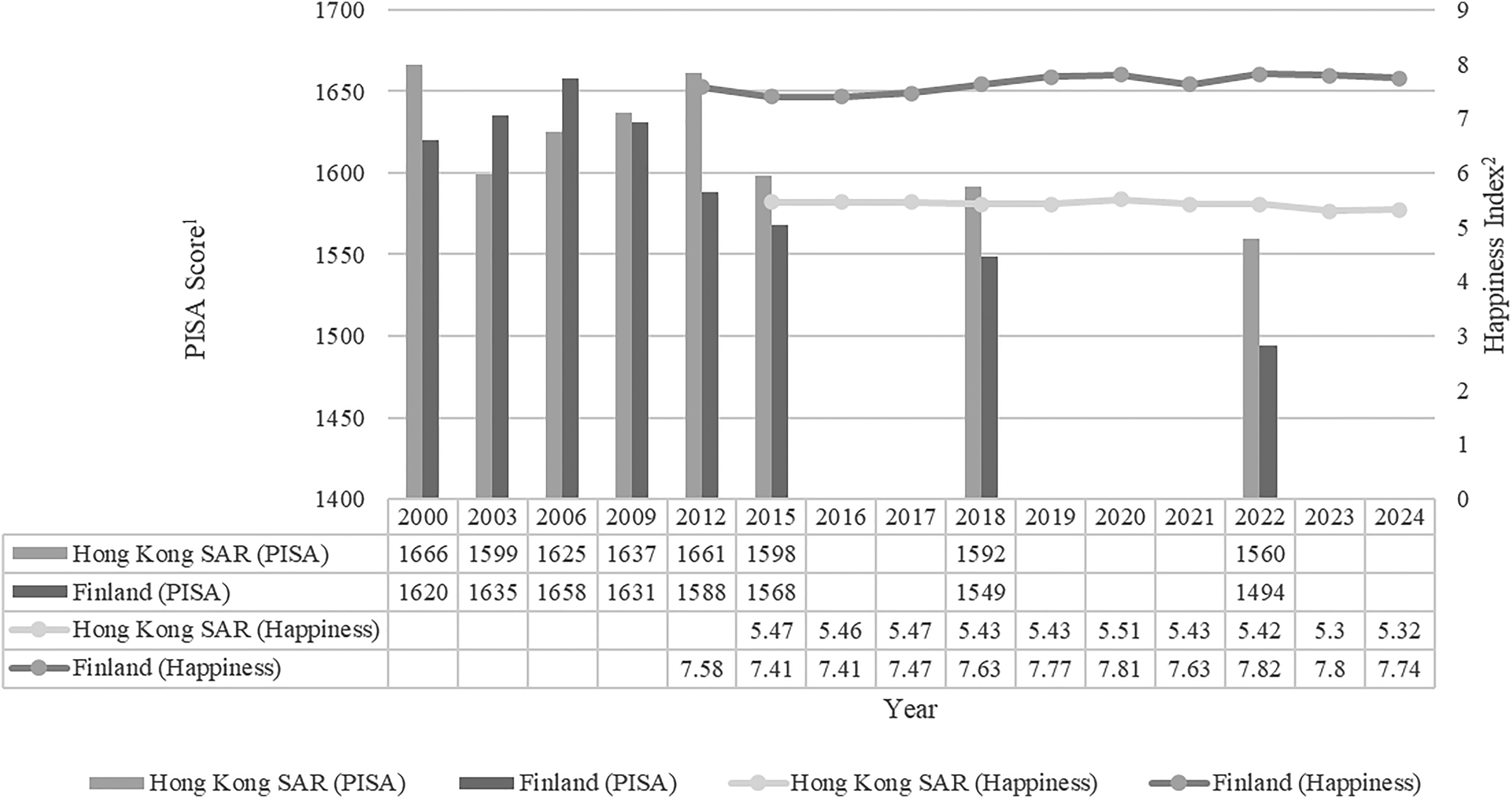
Happiness Index and PISA score comparison between Finland and Hong Kong SAR.
The linear graph representing the Happiness Index from the World Happiness Report provides additional context for understanding student well-being in both regions. Finland consistently scores higher than Hong Kong SAR by at least 1–2 points on the Cantril ladder, an evaluative tool measuring life satisfaction levels. It is important to note that this happiness data encompasses diverse age groups and is not limited to the student population, but it serves as a valuable indicator of the general happiness levels in both regions.
Stankov (2013) offers a rare direct comparison of well-being data for teenagers from both regions, revealing that 15-year-old students in Hong Kong SAR experience higher rates of depression and lower life satisfaction compared to their Finnish peers. Despite varying measurement tools and demographic characteristics across the included studies, a common thread emerges: Both regions have seen decreases in happiness and life satisfaction over the past decades. Potential explanations for these declines include increased academic workloads and the pressures of adolescent development, which prompt ongoing self-reflection and questioning of life circumstances (Shek & Li, 2015).
Factors related to well-being levels in Hong Kong SAR and Finland
Both students in Finland and Hong Kong SAR cited schoolwork as a significant factor influencing their well-being. Research by Fröjd et al. (2008) found a positive association between heavy homework loads and Finnish students’ self-reported depression. Similarly, Cho and Chan (2020) reported that overwhelming homework and an overemphasis on grades led to negative emotional outcomes for students in Hong Kong SAR. Uusitalo-Malmivaara (2012) corroborated this by identifying academic success as a top contributor to happiness among students, regardless of age.
The research also presented differing views on the role of social relationships in student well-being. Ellonen et al. (2008) found no significant impact of school-level social support on adolescent depression among Finnish students aged 14–16. Conversely, Uusitalo-Malmivaara (2012) emphasized safe social relations as integral to children's happiness, a sentiment echoed by Cho and Chan (2020), who noted that while friendships provided solace, they were often compromised by peer competition.
The results of this scoping review offer critical insights into the trends in well-being and stress levels among young students in Hong Kong SAR and Finland. A noteworthy observation arises from the documentary “Understanding the Eastern and Western Classroom” (NowTV, 2017), which addressed key educational differences: Finland emphasizes flexibility and learning beyond the classroom, promoting exploration and creativity, while Hong Kong SAR's education system prioritizes results and high-stakes testing, compelling students to engage in extensive study both in and out of school. This high-pressure environment is detrimental to student well-being, often diminishing interest in learning, as the focus shifts to achieving high scores.
In light of these educational disparities, we conclude that students in Hong Kong SAR frequently report higher levels of depression, stress, and low life satisfaction due to the exam-oriented educational structure. Meanwhile, while Finnish students also exhibit symptoms of depression and stress, their overall life satisfaction and well-being remain comparatively high.
Conclusions and limitations
This scoping review has provided valuable insights into the well-being levels of students in Hong Kong SAR and Finland, highlighting notable similarities and differences shaped by their respective educational systems and sociocontextual factors. Our analysis of 17 articles revealed that while both regions have experienced declines in happiness and life satisfaction over recent decades, the underlying factors and specific manifestations of these declines differ significantly. Students in Hong Kong, operating within a high-stakes, exam-oriented environment, face substantial pressures that correlate with higher rates of depression and lower life satisfaction. In contrast, Finnish students, despite facing their own challenges, generally report better overall well-being and life satisfaction. Factors such as academic workload and social relationships emerged as critical influences on student well-being in both regions, although perceptions of social support and its effectiveness varied. The findings emphasize the need for educators and policymakers to reconsider the educational frameworks and cultural expectations that contribute to student stress and mental health, particularly in Hong Kong SAR, where the pressures of academic achievement can overshadow the importance of holistic well-being.
The limitations of this study are multifaceted and include several key factors. First, the heterogeneity of measurement tools utilized across the included articles hampers direct comparisons and the aggregation of findings concerning student well-being in Hong Kong SAR and Finland. Additionally, a significant reliance on qualitative data collection methods may introduce biases such as self-reporting errors and social desirability bias, thereby potentially compromising the validity of the results. Furthermore, the studies examined may lack sample diversity, failing to adequately represent the varied experiences of students across distinct age groups, socioeconomic backgrounds, and sociocontextual factors within each district. The review's narrow focus on specific dimensions of well-being, such as depression and life satisfaction, may also overlook other critical factors that influence student mental health and educational experiences. What's more, the predominance of cross-sectional data limits the ability to draw conclusions regarding long-term trends and changes in student well-being over time. Lastly, we excluded multilingual articles in this review, primarily due to the resource limitations and difficulty in ensuring accurate translation and interpretation of findings. This decision was made to maintain the integrity and consistency of the data analyzed. This limitation may also lead to a biased representation of the existing literature, as key studies in other languages might not be considered. Collectively, these limitations underscore the necessity for future research to standardize assessment methodologies and enhance the understanding of student well-being across different educational environments.
Directions for future research
Future research should prioritize the standardization of measurement tools for assessing student well-being, as this will enable researchers to make direct comparisons between studies conducted in different educational contexts. By developing universally accepted metrics and methodologies, researchers can ensure that data collected in diverse settings—such as varying cultural, socioeconomic, and educational environments—are comparable. This standardization will not only enhance the reliability of findings but also facilitate the aggregation of results across studies, allowing for more robust conclusions about student well-being. Furthermore, a consistent approach to measurement can help identify best practices and effective interventions that can be adapted to different contexts, ultimately contributing to a deeper understanding of the factors influencing student mental health and educational outcomes.
Implications of this study
The implications of this study are significant, suggesting that prioritizing student well-being is essential for fostering not only mental health but also sustained academic success. The findings indicate that the pursuit of high academic performance does not have to come at the expense of students’ happiness and life satisfaction. This insight holds particular relevance for educational stakeholders in Hong Kong SAR, where high-stakes testing and rigorous academic demands often place considerable stress on students.
Firstly, the government should consider implementing policies that promote a more balanced educational framework, one that values not only academic achievement but also the holistic well-being of students. This might involve revising curriculum standards to integrate social-emotional learning and well-being initiatives that encourage students to build resilience, develop coping strategies, and engage in self-reflection.
Secondly, schools play a critical role in shaping the educational experience. Educators should adapt teaching practices to foster an environment where academic rigor is balanced with opportunities for creative expression, physical activity, and social engagement. By emphasizing the importance of leisure and extracurricular activities, schools can help students develop a well-rounded skill set that contributes to both their emotional and intellectual growth. Moreover, teachers should be trained to recognize signs of stress and burnout among students, enabling early intervention and the provision of appropriate support. Professional development programs focusing on mental health awareness and stress management strategies can empower educators to create more compassionate and understanding classroom environments.
Thirdly, parents also have a crucial role to play in this balance. They can encourage a culture of well-being at home by promoting healthy habits, such as regular physical activity, adequate sleep, and family time, which contribute positively to students’ overall mental health. Parents should be mindful of the pressures they place on their children and foster open communication about academic expectations and emotional challenges.
Finally, as the study reveals a global trend of declining happiness and life satisfaction among young people, it is essential for Hong Kong SAR to adopt a proactive approach. Collaborative efforts among government, educational institutions, and families can work together to combat these negative trends. Initiatives could include community programs that support mental health awareness, workshops on stress management, and campaigns that celebrate well-being alongside academic achievements.
Supplemental Material
sj-docx-1-roe-10.1177_20965311251365258 - Supplemental material for Mapping the Literature on Student Well-Being: A Comparative Scoping Review of Finland and Hong Kong SAR
Supplemental material, sj-docx-1-roe-10.1177_20965311251365258 for Mapping the Literature on Student Well-Being: A Comparative Scoping Review of Finland and Hong Kong SAR by Xiya Feng (冯熙雅), John Chi-Kin Lee (李子建), Kuen-Fung Sin (冼权锋), Yuzhuo Cai (蔡玉琢), Mari Saha, Xinyun Hu (胡馨允), Hui Li (李辉) in ECNU Review of Education
Footnotes
Authors’ note
All authors are members of The Global Research Institute for Finnish Education (GRIFE) at The Education University of Hong Kong (EdUHK).
Contributorship
Hui Li conceived the presented research topic. Xiya Feng wrote the manuscript with the support and consultation from John Chi-Kin Lee, Kuen-Fung Sin, Yuzhuo Cai, Mari Saha, Xinyun Hu, and Hui Li.
Declaration of conflicting interests
The authors declared no potential conflicts of interest with respect to the research, authorship, and/or publication of this article.
Funding
The authors received no financial support for the research, authorship, and/or publication of this article.
Supplemental material
Supplemental material for this article is available online.

References
Supplementary Material
Please find the following supplemental material available below.
For Open Access articles published under a Creative Commons License, all supplemental material carries the same license as the article it is associated with.
For non-Open Access articles published, all supplemental material carries a non-exclusive license, and permission requests for re-use of supplemental material or any part of supplemental material shall be sent directly to the copyright owner as specified in the copyright notice associated with the article.
