




Abstract
Purpose
This study examines the mechanism underlying the effect of parenting sense of competence (PSOC) on the emotional and behavioral adjustment of children with special education needs (SEN).
Design/Approach/Methods
Convenience sampling method was used and 299 parents of children with SEN were surveyed using questionnaires. Amos 24.0 was used to perform the chain mediation analyses.
Findings
The results showed that PSOC was positively associated with emotional and behavioral adjustment of children with SEN; parenting satisfaction negatively predicted the total difficulty of children with SEN and parenting efficacy positively affected prosocial behavior. Mediation analysis indicated that PSOC (parenting satisfaction and parenting efficacy) influenced prosocial behavior of children with SEN through parental involvement and the chain mediation effect of parenting stress and parental involvement.
Originality/Value
This study reveals the different pathways that parenting satisfaction and parenting efficacy—the core dimensions of PSOC—affect the emotional and behavioral adjustment of children with SEN during the transition from kindergarten to primary school.
Keywords
Introduction
The transition from kindergarten to primary school is a crucial milestone for children, as they have access to a new learning and social environment (Hong et al., 2022). While the transition to primary school may be smooth for most children, the changes during the transition pose a significant challenge for children with special education needs (SEN), including increased academic and social skill expectations, reduced time spent with their parents and caregivers, and more demanding classroom routines. Due to maladjustment to the new school environment, numerous children with SEN exhibit maladaptive behavior and emotional dysfunction, making the transition to primary school challenging (Chen et al., 2020). Existing studies have found that children with SEN are more vulnerable to emotional and behavioral problems, such as temper tantrums, anxiety, crying, weariness of learning, and self-injurious behaviors in the transition stage, which affect their academic performance, social relationship with peers, and attendance in primary schools as compared with typically developing children (Fleury et al., 2015; Han & Yan, 2022; Nuske et al., 2019).
Therefore, understanding early predictors of emotional and behavioral adjustment in children with SEN is of additional importance, especially given the superimposed risks of poor outcomes faced by children with SEN. Studies have found that children's skill development, such as emotional control and adaptive behavior, is heavily contingent on their family during early childhood stage (Anthony et al., 2005; Xu & Su, 2022). Therefore, it is necessary to examine the factors affecting the emotional and behavioral adjustment of children with SEN from the perspective of parenting. According to the ecological and dynamic model of transition and family system theory (Bowen, 1976; Rimm-Kaufman & Pianta, 2000), parenting psychology and parenting behavior shapes the internal working pattern of children when adapting to the new environments, which to a large extent determines children's emotional and behavioral performance during the transition to primary school. Belsky's (1984) model of the parenting process also proposed that parental characteristics (i.e., parenting sense of competence [PSOC]) interact with parenting stress and eventually influence child development (i.e., emotional and behavioral) through parenting behavior (i.e., parental involvement). In line with this perspective, this study examines the effect of PSOC on the emotional and behavioral adjustment of children with SEN and explores the role of parenting stress and parental involvement in this process. This has rarely been examined in previous studies.
PSOC and emotional and behavioral adjustment of children with SEN
PSOC refers to a parent's perceived ability to handle the challenges associated with parenting, which reflects their self-efficacy in parenting (Coleman & Karraker, 1998). The concept of parenting competence is significant in the context of families with children with SEN (May et al., 2017). According to Johnston and Mash (1989), PSOC can be measured operationally in terms of parenting satisfaction and parenting efficacy. Of these two dimensions, parenting satisfaction is defined as a parent's feelings of pleasure and fulfillment in relation to the parenting role (Salonen et al., 2011), while parenting efficacy refers to a parent's perception of their competence and confidence in dealing with challenges associated with parenting. Thus, the concept of PSOC comprehensively reflects parents’ perception of their parenting skills, problem-solving ability, and capability in the parenting role (Johnston & Mash, 1989).
With increased research on this topic, PSOC has been found to be one of the main factors affecting the emotional and behavioral adjustment of children with SEN (May et al., 2017; Norona & Baker, 2017). There are mixed results on the relationship between PSOC and children's emotional and behavioral adjustment. Several studies have found that parents with a high level of perceived self-efficacy tend to adopt a positive parenting style when interacting with children—such as empathy, attention, encouragement, listening, and directly teaching interpersonal communication strategies and skills—which helps improve the children's emotional and behavioral adjustment (Purssell & While, 2013). Studies have found that low PSOC is associated with negative outcomes of children's development, such as high frequency of antisocial and disruptive behaviors, poor emotional regulation, peer rejection, lower adaptation to the classroom, and poor cognitive skills (Junttila & Vauras, 2014; Schulz et al., 2019). However, other studies have found inconsistent results. For example, Han et al. (2016) reported in a cross-sectional study of adolescents with epilepsy that a higher level of parental confidence in parenting led to a higher level of internalizing behavior problems in the adolescents with epilepsy. Zhang et al. (2017) found that parenting satisfaction was negatively correlated with the emotional and behavioral problems and prosocial behavior in children, while parenting efficacy was only associated with their prosocial behavior. Many Chinese parents of children with SEN feel a low level of PSOC due to lack of support, which may aggravate the emotional regulation and socialization of children with SEN in a transition stage (Hou et al., 2022). Given the complex relationship between PSOC and children's emotional and behavioral adjustment, we believe that research needs to extend beyond the controversy about the typical direct effects and further examine the pathways underlying the relationship between them among children with SEN during the transition from kindergarten to primary school.
The potential mediation of parenting stress and parental involvement on emotional and behavioral adjustment in children with SEN
Parenting stress refers to a range of negative psychological status experienced by parents, such as anxiety, depression, and self-blame, caused by dysfunctional parent‒child interactions and behavioral problems in children (Deater-Deckard, 1998). Studies have shown that parents of children with SEN report higher parenting stress than parents of typically developing children (Barroso et al., 2018). During the transition from kindergarten to primary school, parents experience stress about improving their children's school readiness, concern for school rejection and bullying, and internal psychological conflicts over the best choice of education placement for their children with SEN, along with the regular stress of meeting the demands of child-rearing (Hou et al., 2022; Nuske et al., 2019). Deater-Deckard (2004) regarded parenting stress as a particularly powerful factor causing variation in parenting behavior and children's outcomes across different families. In recent decades, the relationship between parenting stress and the emotional and behavioral adjustment of children has attracted considerable attention from researchers, and several studies have suggested that the higher the level of self-reported parenting stress, the greater the children's behavior problems including both internalizing and externalizing behaviors (Zhang et al., 2022). For example, Rodriguez et al. (2019) proposed a parent-driven effect on the emotional and behavioral adjustment of children with SEN, in which parenting stress could aggravate children's emotional and behavioral problems. Therefore, parenting stress is an important predictor of emotional and behavioral adjustment in children with SEN.
According to the emotion regulation theory of Activating events, Belief, and Consequence (ABC), parents’ perception of their parenting ability can predict parenting stress to a large extent. Several studies of children with developmental disabilities have shown a negative correlation between a mother's PSOC and parenting stress (Batool & Khurshid, 2015; Geikina & Martinsone, 2015), indicating that when mothers view their parenting abilities more positively, they experience lower parenting stress. This relationship is stronger for parenting satisfaction, a factor of PSOC (Hassall et al., 2005). Given the complex relationship between PSOC and emotional and behavioral adjustment in SEN children, it is possible that parenting stress plays a mediating role in the relationship between PSOC and emotional and behavioral adjustment in children with SEN.
In addition to the internal psychological factors of parenting, parenting behavior, such as parental involvement, is also a key factor affecting the emotional and behavioral adjustment of children (Cheng et al., 2016; Sook & Lim, 2019). According to problem-behavior theory, positive parenting style serves as an important antecedent variable that reduces children's and adolescents’ problematic behaviors (Jessor, 1987). Parental involvement refers to parenting behaviors adopted by parents in the family, school, and community to promote children's learning and development. Social support theory (Cohen & Wills, 1985) states that parental involvement is an essential social resource that helps children cope with different challenges in their learning and development stage, which strongly determines their outcomes. Particularly for children with SEN, parental involvement in the transition to primary school not only strengthens their school readiness, adaptive ability, and academic achievement, but also effectively alleviates the emotional and behavioral problems of these children (Dockett, 2007). Puccioni et al. (2020) found that the higher the level of parental involvement in transition practices, the less the emotional and behavioral problems of the children. For children with SEN, studies have also shown that high levels of parental involvement can promote emotional and behavioral adjustment in preschool children with SEN (Ros & Graziano, 2019).
Meanwhile, according to the model of the parenting process (Belsky, 1984), the psychological function of parents is believed to be a direct factor affecting their parenting activities, among which PSOC may affect parental involvement (Jones & Prinz, 2005). Parents with high parenting efficacy are more likely to participate in their children's early education, which positively predicts the school adaptation of children with SEN (Starr et al., 2016). Previous studies have also shown that PSOC can affect children's emotional and behavioral adjustment through the mediating effect of parental involvement (Li et al., 2021; Sook & Lim, 2019). It can thus be inferred that parents with higher levels of PSOC are more likely to be involved in education aimed at improving their children's emotional and behavioral adjustment. Therefore, this study hypothesized that parental involvement played a mediating role in the relationship between PSOC and emotional and behavioral adjustment in children with SEN during the transition from kindergarten to primary school.
Serial mediation roles of parenting stress and parental involvement
According to the spillover hypothesis theory, certain emotions of family members in the family system can be transferred from one situation to another, beyond their expected effects and influence range (Kouros et al., 2014). When parents experience high parenting stress, such negative emotion has a spillover effect on their parenting practices and thus affects their response to children's emotions and behaviors (Nelson et al., 2009). Several studies have shown that parents with high parenting stress suffer from long-term negative feelings such as anxiety, depression, and physical discomfort, which leads to dysfunctional parenting, as well as irreversible negative impacts on parental involvement (Hastings, 2003; Yan & Hou, 2022). In Hoover-Dempsey et al.'s (2005) process model of parental involvement, high parenting stress was seen as an influential psychological factor which reduced the motivation, frequency, duration, and quality of parental involvement in their children's education. Moreover, studies for typically developing children have found that parenting stress hinders parental involvement, which in turn leads to more behavioral problems in children (Choi & Becher, 2019). Therefore, it is possible that parenting stress and parental involvement sequentially mediate the effect of PSOC on emotional and behavioral adjustment in children with SEN during the transitional stage to primary school.
The present study
This study examines the effect of PSOC on the emotional and behavioral adjustment of children with SEN, and the role of parenting stress and parental involvement in mediating this effect. This effect represents the combined effect of parenting psychology and parenting behavior on the development outcomes of children with SEN during the transition to primary school. This study not only helps to clarify the relationship between PSOC and the emotional and behavioral adjustment of children with SEN in the transitional phase (of moving to primary school) and its influencing mechanisms, but also provides theoretical support for subsequent interventions and improvements in the emotional and behavioral adjustment of children with SEN. The proposed research hypotheses are as follows:
Method
Participants
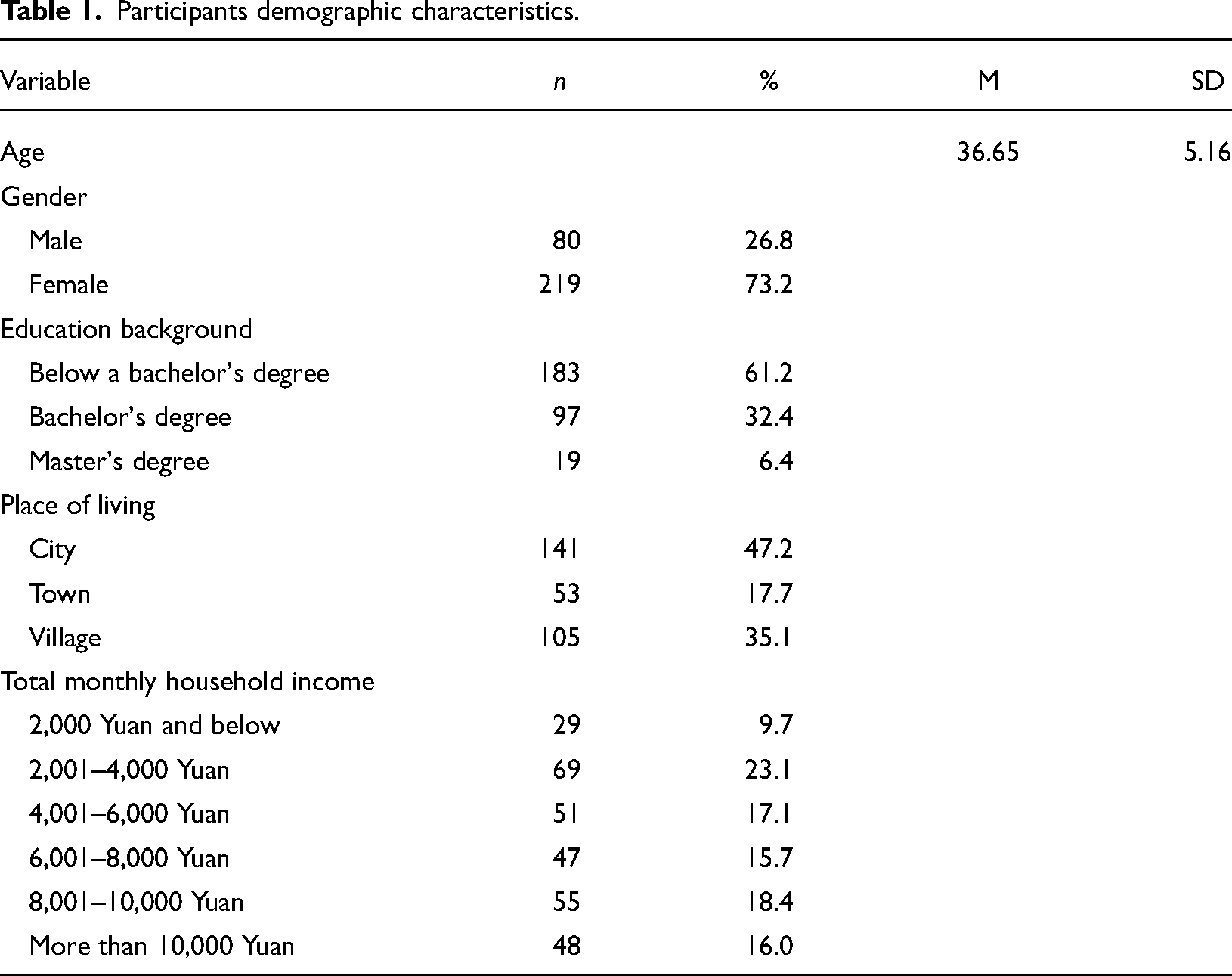
The study's participants included 316 recruited parents of children with SEN. After excluding 17 questionnaires because of incomplete data, the final analysis included 299 valid questionnaires. Among them, 219 were mothers and 80 were fathers, with an average age of 36.77 years (SD = 4.39). The average age of children with SEN was 7.14 years (SD = 0.87) and most children were boys (86.93%). The demographics of participants are presented in Table 1.
Participants demographic characteristics.
Procedure
After obtaining approval from the Ethics Committee of the university of the first author, the convenience sampling method was used to select parents of children with SEN from Beijing, Guangzhou, Chongqing, Zhengzhou, Lanzhou, and Wuhan. We set the inclusion criteria as the following: (a) parents served as the primary caregivers for their children in the family; (b) parents must have a child with a statement of SEN assessed by a certified clinician; the term “SEN” refers to a wide range of conditions that involve significant impairments in the domains of physical, cognitive, social, and adaptive behavior development; and (c) their children were in the stage of transition from kindergarten to primary school, namely, children with SEN were preparing for or had just entered primary school. 316 eligible parents who expressed a strong interest in participating in the research project signed up for this study. We distributed questionnaires and informed consent forms to the parents of children with SEN, with assurance that the data collected would be anonymous and confidential and that they were free to withdraw from the study at any time with no consequences. Finally, 299 valid questionnaires were collected for further analysis.
Measures
Strengths and Difficulties Questionnaire (SDQ)
The emotional and behavioral adjustment of children with SEN during the transition from kindergarten to primary school was measured by the Strengths and Difficulties Questionnaire (SDQ) developed by Goodman (2001). The 25-item SDQ included five dimensions: emotional symptoms, conduct problems, hyperactivity/inattention, peer relationship problems, and prosocial behavior. The emotional and behavioral problems in children with SEN were measured by the first four dimensions, which represented their difficult behaviors. Prosocial behavior was assessed by the fifth dimension, representing children's strength. Parents completed the SDQ using a 3-point Likert-type scale (0 = not true, 1 = somewhat true, and 2 = certainly true). In the current study, Cronbach's alpha was 0.82 and 0.84 for the strengths subscale and difficulties subscale, respectively.
PSOC scale
The PSOC scale revised by Peng et al. (2012) from Gibaud-Wallston and Wandersman was used to measure the PSOC of parents of children with SEN. The PSOC was a 12-item instrument consisting of two subscales: parenting satisfaction and parenting efficacy. Each item was rated on a 4-point Likert scale ranging from 1 (strongly disagree) to 4 (strongly agree). High scores indicated high levels of parenting satisfaction and efficacy. Evidence has indicated that the Chinese version of PSOC scale has excellent internal consistency (Zhang et al., 2017). In the study, Cronbach's alpha coefficients of parenting satisfaction and efficacy subscales were 0.86 and 0.88, respectively.
Parental Stress Scale
The 14-item Parental Stress Scale (PSS) developed by Berry and Jones (1995) was used in this study to measure parenting stress for parents of children with SEN. Parents rated their levels of agreement with each statement on a 5-point Likert-type scale, with responses ranging from 1 (completely disagree) to 5 (completely agree). A high score on the questionnaire indicated that parents of children with SEN have high levels of parenting stress. In this study, the internal consistency coefficient of the PSS was 0.91, indicating good internal consistency.
Questionnaire of Parental Involvement in Transition from Kindergarten to Primary School
The questionnaire of Parental Involvement in Transition from Kindergarten to Primary School (PITKPS) developed by Hou (2021) was used to measure parental involvement. The 37-item PITKPS covered six dimensions: cognitive guidance, skill guidance and emotional support, community activities, school choice decision, communication and consultation, and self-learning and reflection. With self-report, parents rated each item on a 5-point scale ranging from 1 (inconsistent strongly) to 5 (consistent strongly). Higher PITKPS scores indicated greater degrees of parental involvement. The reported Cronbach's alpha value was 0.92 in this study.
Data analysis
SPSS 24.0 and Amos 24.0 were used to perform all analyses in this study. First, the descriptive statistics such as mean and standard deviation were computed to present the characteristics of the key variables. Second, Pearson's bivariate correlation coefficient was calculated to examine the associations among PSOC, parenting stress, parental involvement, and emotional and behavioral adjustment in children with SEN.
A structural equation modeling (SEM) was performed to test the chain mediation model in Amos 24.0 based on Maximum Likelihood Estimates, where PSOC was used as an independent indicator, parenting stress and parental involvement as mediators, and emotional and behavioral adjustment as dependent indicators. Multiple fit indices were used to test the appropriate fit of the hypothetical models, including Chi-square degree ratio (χ2/df) in range of 1–3, the root-mean-square error of approximation (RMSEA) less than 0.05, and both goodness-of-fit index (GFI) and comparative fit index (CFI) greater than 0.90, indicating the model was a good fit. Moreover, the Bootstrapping method was utilized to test the significance of the regression coefficient. The 95% confidence interval (CI) for the indirect effect was a bias-corrected estimate based on 5,000 bootstrapping resamples. The 95% CI did not include zero, indicating that the chain-mediating effect was significant.
Results
Common method bias test
To deal with the common method bias caused by self-reported data, we used the principal component analysis without rotation (Harman's single-factor test) to test the common method variance (Podsakoff et al., 2003). The results yielded 22 factors with an eigenvalue higher than 1.0, and the first factor in the unrotated condition accounted for 26.18% of the total variance. This indicated that there was no significant common method bias in this study.
Descriptive statistics and correlation analysis
First, with correlation analyses, the results in Table 2 showed a significant negative correlation between parenting satisfaction and total difficulty in children with SEN (r = −0.41, p < 0.01) and a significant positive correlation between parenting efficacy and prosocial behavior in children with SEN (r = 0.38, p < 0.01). Parenting stress was positively associated with the total difficulty in children with SEN but negatively associated with prosocial behavior in children with SEN (r = 0.31, p < 0.01; r = −0.19, p < 0.01). In addition, a significant positive correlation was found between parental involvement and prosocial behavior in children with SEN (r = 0.42, p < 0.01).
Pearson correlations and descriptive statistics (n = 299).
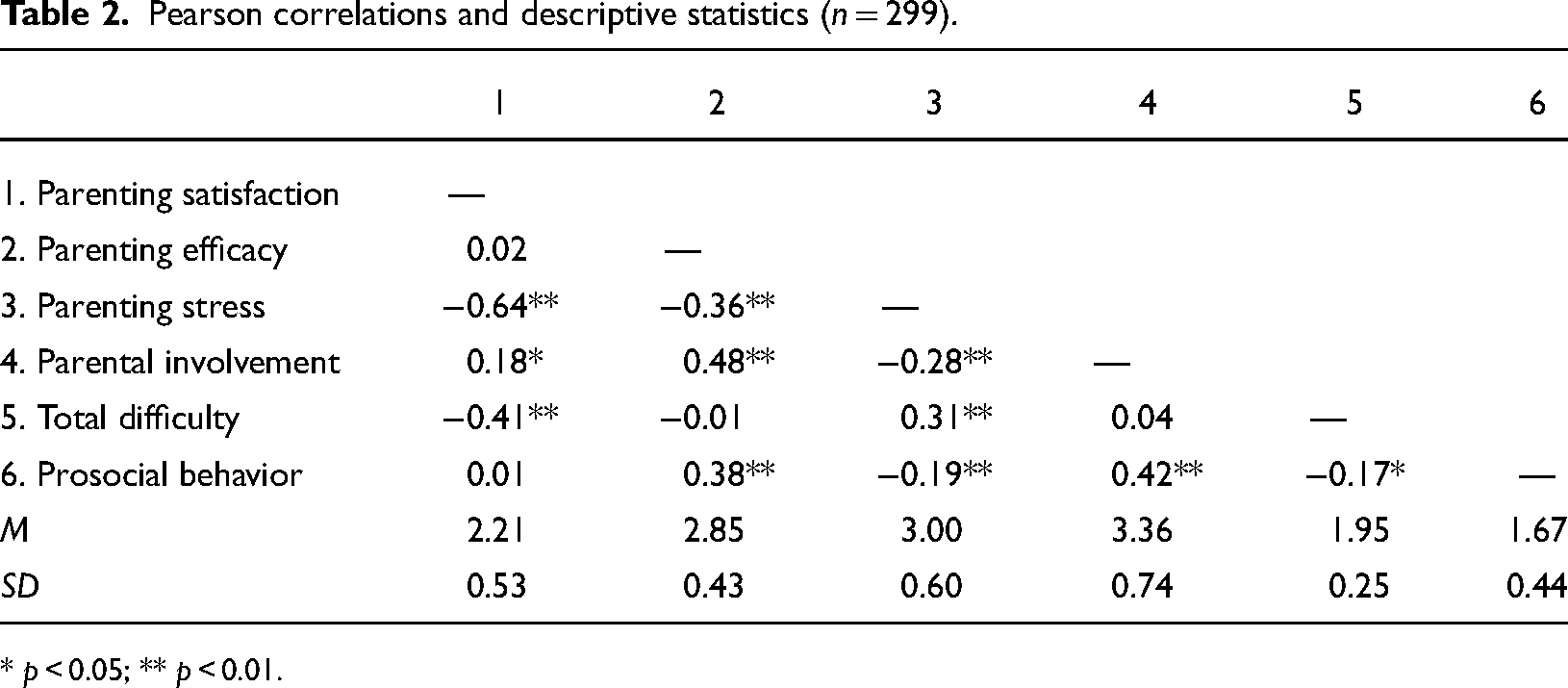
* p < 0.05; ** p < 0.01.
Chain mediation analysis
Based on our hypotheses and the results of the correlation analysis, SEM was used to test the chain mediation effect of parenting stress and parental involvement between PSOC and emotional and behavioral adjustment. The results of the SEM for the chain mediation model showed a higher fitting degree (χ2/df = 2.35, IFI = 0.92, GFI = 0.92, TLI = 0.94, RMSEA = 0.05), implying the model was well supported. As shown in Figure 1, parenting satisfaction was negatively associated with total difficulty (β = −0.40, p < 0.01), while parenting efficacy positively predicted prosocial behavior (β = 0.21, p < 0.01) in children with SEN, supporting Hypothesis 1. Of note, the path coefficients from parenting stress to both prosocial behavior (β = 0.05, p > 0.05) and total difficulties (β = 0.14, p > 0.05) were not significant, disproving Hypothesis 2. Interestingly, the path coefficients from parental involvement to prosocial behavior were significant (β = 0.37, p < 0.01) but to total difficulties was not significant (β = 0.02, p > 0.05), which partially supports Hypothesis 3. Furthermore, the result showed that parenting stress negatively predicted parental involvement (β = −0.38, p > 0.01), indicating a multiple indirect relationship of parenting stress and parental involvement between parenting sense of efficacy (including parenting satisfaction and parenting efficacy) and prosocial behavior.
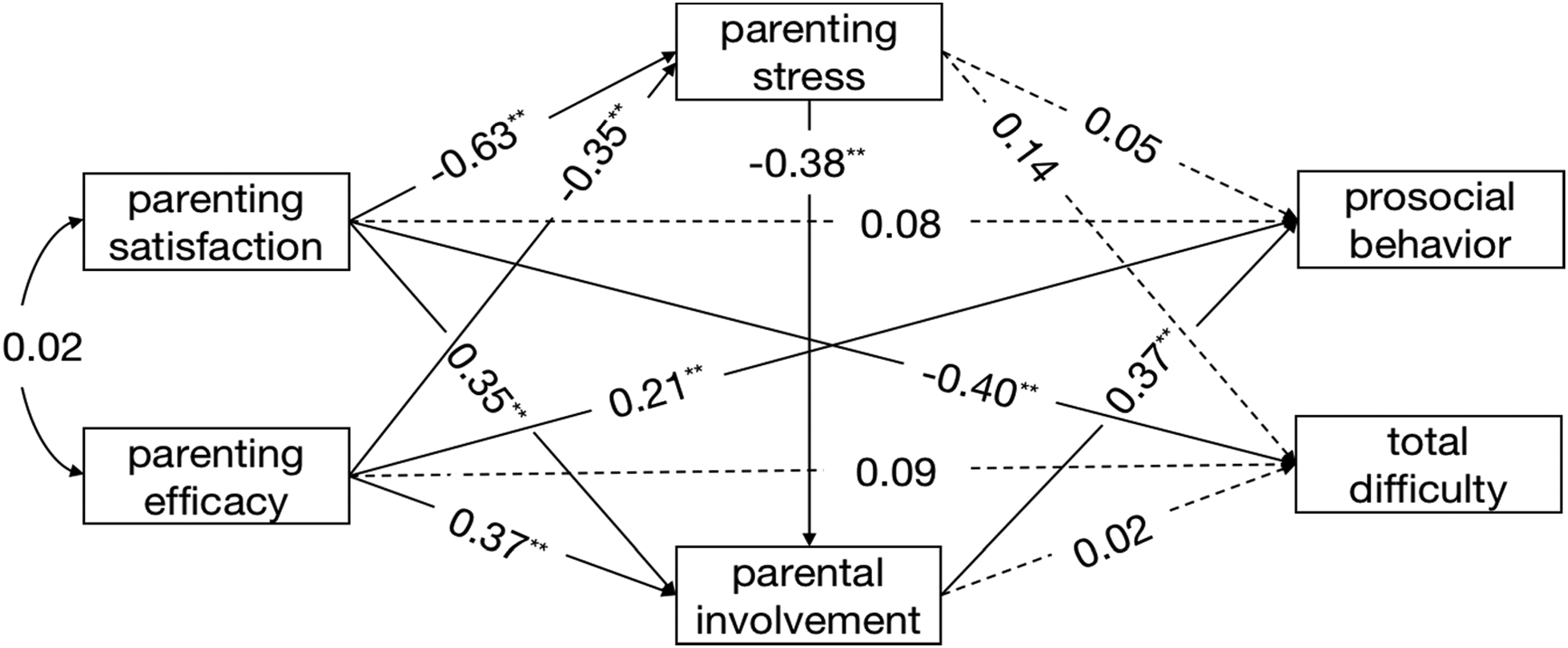
Standardized path coefficients of the chain mediation model from PSOC to emotional and behavioral adjustment in children with SEN.
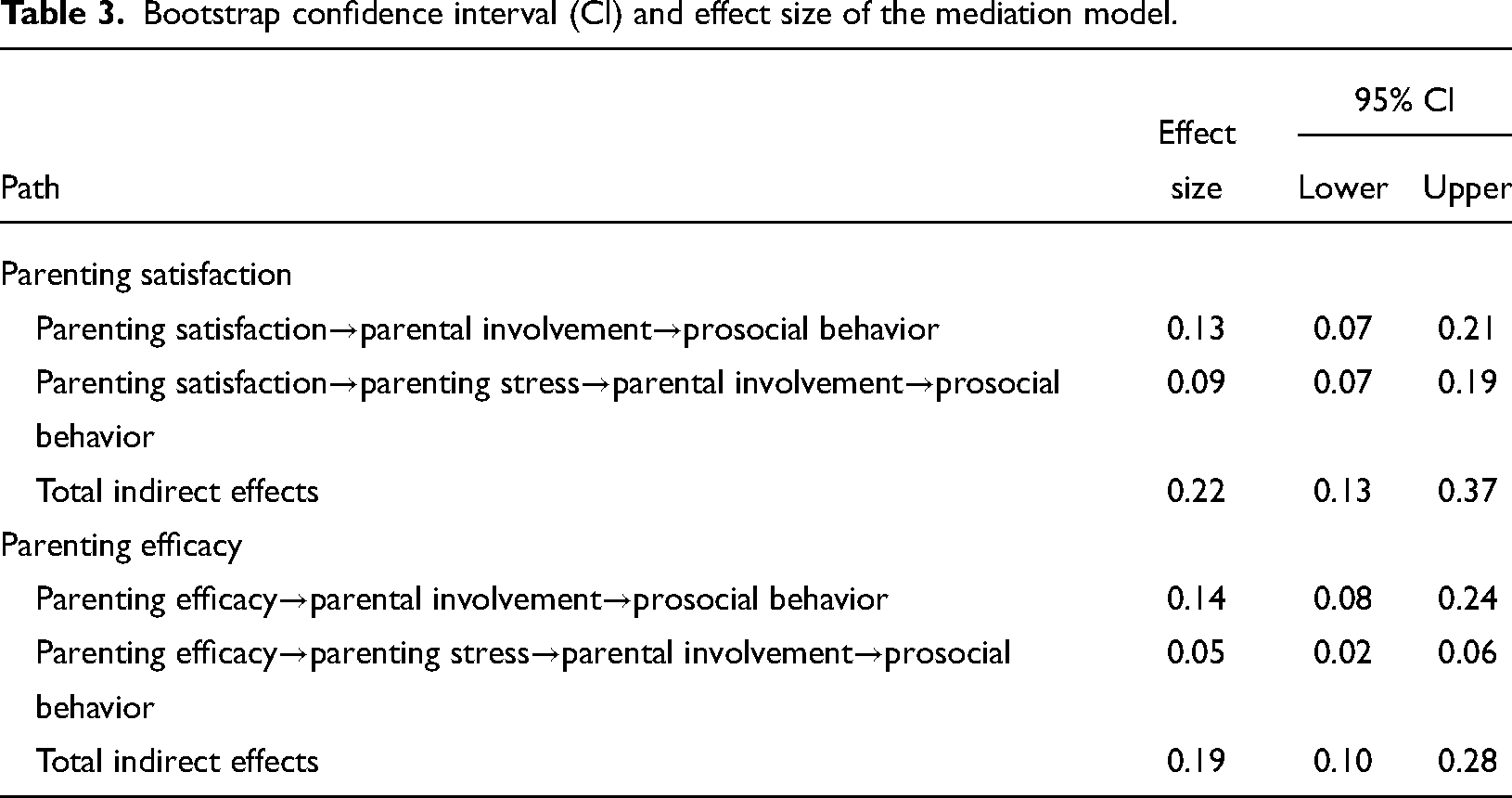
Furthermore, we used the Monte Carlo Bootstrapping procedure with 5,000 replications to test the mediating effects of parenting stress and parental involvement. If the 95% CI of indirect effects does not include 0, the mediating effect is significant. Table 3 displays the indirect effects and their related 95% CIs. The indirect effects of both parenting satisfaction and parenting efficacy on prosocial behavior through parental involvement were significant (indirect effect = 0.13, 95% CI = [0.07, 0.21]; indirect effect = 0.14, 95% CI = [0.08, 0.24]). Moreover, the chain-mediated effect of parenting stress and parental involvement between the two dimensions of PSOC, parenting satisfaction, and parenting efficacy, and prosocial behavior were significant (indirect effect = 0.09, 95% CI = [0.07 0.19]; indirect effect = 0.05, 95% CI = [0.02 0.06]). Thus, Hypotheses 3 and 4 were partially supported.
Bootstrap confidence interval (CI) and effect size of the mediation model.
Discussion
Family plays a critical role in supporting a child's transition to school and in predicting a child's future school performance. This study examined the mechanisms by which parenting competence affects the emotional and behavioral adjustment of children with SEN during the transition from kindergarten to primary school, which is one of the most critical periods of childhood. This study makes a prominent contribution by revealing that parenting satisfaction and parenting efficacy, the core dimensions of PSOC, affect emotional and behavioral adjustment in children with SEN along different pathways.
This study found that two components of PSOC affected emotional and behavioral adjustment of children with SEN by operating in different ways: Parenting satisfaction negatively predicted total difficulty, while parenting efficacy was positively linked with the prosocial behaviors of children with SEN. These findings echo the controversy over the contribution of parental beliefs about their competence in parenting to children's emotional and behavioral performance (Heerman et al., 2017; Strauss et al., 2022). The positive correlation between parenting efficacy and prosocial behavior suggests that children with SEN demonstrated more positive behaviors such as helping others, sharing, cooperation, and comfort if parents had a stronger belief in their own ability to handle parenting-related issues during this transition to primary school. This finding was consistent with other research that indicated that parents with strong parenting efficacy are more likely to teach and strengthen children's prosocial behavior (Zhang et al., 2017). The negative relationship between parenting satisfaction and total difficulties of children with SEN has also been supported by previous studies reporting that parents with greater parenting satisfaction tend to perceive their children as having fewer problem behaviors than parents with lower satisfaction (Johnston & Mash, 1989; Liu, 2022). Parents with higher satisfaction tend to have more proactive, problem-focused coping techniques in parent–child interactions, which help parents manage their children's behavior difficulties more effectively (Dukmak, 2009; Lovell & Wetherell, 2015). The changes that occurred in this transition to primary school increase children's anxiety and unease, so it is necessary to reduce emotional and behavioral problems through improving parental satisfaction.
Our results suggest that parental involvement completely mediated the relationship between parenting satisfaction and prosocial behavior in children with SEN at this transitional stage of moving into primary school and partially mediated the relationship between parenting efficacy and prosocial behavior. These findings are coherent with the parenting process model (Belsky, 1984), which proposes that the psychological characteristics of parents influence parenting practice and then determine children's development. According to the self-efficacy theory (Bandura, 1977), parents with a high sense of parenting competence are more likely to be willing to take action to overcome difficulties related to school readiness and school choice during the transition from kindergarten to primary school, thus becoming more actively involved in the education of their children with SEN. When participating in this transition, parents help children adapt to the new learning environment and offer protection for the development of prosocial behaviors in children. Highly involved parents are capable to meet children's intimacy needs, improving their closeness and sense of security, especially for children with SEN who are in a new environment during this transitional phase, which ultimately improves the development of their prosocial behavior.
This study showed that parenting stress and parental involvement played a chain intermediary role in the relationship between PSOC and prosocial behavior, which indicates that the mediating effect of parenting stress and parental involvement is well established. According to social cognitive theory (Bandura, 1989), PSOC may constitute a belief that influences parents’ cognitive and psychological experience of their parenting ability. Higher PSOC can improve the positive cognition of parents of children with SEN and reduce their parenting stress (Batool & Khurshid, 2015; Zhu et al., 2020). The results were in line with the spillover hypothesis of family systems theory (Kouros et al., 2014). According to the spillover hypothesis theory, the parenting stress caused by improving children's school readiness and school adjustment is transferred to parental participation actions and weakens the effect of positive parenting behavior on children's development during the transition from kindergarten to primary school (Hou et al., 2022). Hence, the boosting effect of parental involvement as a positive parenting on the psychological adjustment of children depends strongly on the reduction of parenting stress. Several studies have found that lower parenting stress may encourage parents of children with SEN to be more actively involved in parent–child activities and home–school collaboration. Empirical studies also showed that reducing the parenting stress of parents of children with SEN could improve the level of parental involvement (Schiltz et al., 2018) and further improve children's prosocial behavior (Tolan et al., 2002). Thus, parenting stress and parental involvement sequentially bridge the association between PSOC and prosocial behavior in children with SEN.
Conclusion
With the perspective of family ecology, this study focused on the psychological and behavioral characteristics of parents in promoting the smooth transition from kindergarten to primary school for their children with SEN. In conclusion, although prior studies have recognized the importance of PSOC on emotional and behavioral adjustment in children (McRae et al., 2018), our findings extend this area of research to the sample of parents of children with SEN. Furthermore, the current study provided evidence that parenting stress and parental involvement played a chain mediation between PSOC and emotional and behavioral adjustment among children with SEN. More importantly, we also revealed that parenting stress and parental involvement operated in different ways in this process. These findings enrich our understanding of the mechanisms by which PSOC affects emotional and behavioral adjustment in children with SEN, suggesting the importance of parental psychological resources and the benefits of positive parenting behaviors in children's adjustment to new formal education during the transition from kindergarten to primary school.
Limitations
The findings of the study must be considered in the context of some limitations. First, the results of this cross-sectional study do not indicate any causal effects. Future longitudinal studies should be conducted to explore the dynamic relationship between PSOC on emotional and behavioral adjustment in children with SEN. Second, this study did not examine the potential differences in maternal and paternal parenting psychology and parenting behavior during the transition from kindergarten to primary school. Future studies should include a more gender-balanced sample to investigate whether the mechanism of PSOC on emotional and behavioral adjustment in children with SEN during this transition differs for fathers and mothers. Finally, the emotional and behavioral performance of children with SEN in the transition stage was influenced by multiple factors, including the children themselves, teachers, and peers. In this study, we only focused on parental factors. Further studies are needed to examine the influencing factors of emotional and behavioral adjustment of children with SEN from teachers, peers, and the children themselves.
Footnotes
Contributorship
Tingrui Yan was responsible for the research design, data collection, and discussion. Yujia Hou was responsible for the data analysis and research findings. Both contributed to the revision of this manuscript.
Declaration of conflicting interests
The authors declared no potential conflicts of interest with respect to the research, authorship, and/or publication of this article.
Ethical statement
All procedures performed in this study that involved human participants were in accordance with the ethical standards of East China Normal University. Informed consent was obtained from all participants included in the study.
Funding
The authors disclosed receipt of the following financial support for the research, authorship, and/or publication of this article: This work was supported by the National Office for Philosophy and Social Sciences [CHA 210263].
