




Abstract
Purpose:
Private supplementary tutoring has been increasingly used by parents as part of wider strategies to assist their children’s education careers in China. With a theoretical lens of parentocracy, this article aimed to investigate the influential parental factors underlying the demand for private tutoring, focusing on parents’ socioeconomic resources and attitudes toward education.
Design/Approach/Methods:
This article drew upon data from the 2014 iteration of the China Family Panel Studies. Structural equation modeling (SEM) analysis was employed to explore the influences of parental factors.
Findings:
The SEM analysis confirmed that parental income, education, and aspirations on children’s education had both direct and indirect positive effects through the mediating factor of role construction on demand for tutoring. A multiple-group analysis was further conducted, and the difference in the patterns for urban and rural parents was explored. Parental occupation had no impact on demand for tutoring for rural parents but had both direct and indirect effects for urban parents. Both direct and indirect effects of household income on demand for tutoring were greater for urban parents than for rural parents.
Originality/Value:
This article examined the direct and indirect influences of parental factors on demand for private tutoring and explored the differences in patterns for urban and rural parents in a quantitative way. Findings have implications for education inequality.
Introduction
Like other parts of East Asia, private supplementary tutoring has greatly expanded and intensified in recent years in China (e.g., Chu, 2009; Huang & Wei, 2018; Lei, 2005; Xue & Fang, 2018). According to the data from China Household Finance Survey in 2017, the market volume of the tutoring industry had been over 0.49 trillion CNY, and 48% of primary and secondary students received private tutoring in both academic and nonacademic subjects (Huang & Wei, 2018, p. 101).
Private tutoring in academic subjects is widely sought for remediation and/or for enrichment. Tutoring in nonacademic subjects such as piano, calligraphy, and chess is also demanded, especially in urban areas. Many parents invest in nonacademic tutoring to achieve broad goals such as developing children’s interest, cultivating their creativity, and promoting rounded development (Li, 2009; Liu & Bray, 2018; Yi, 2013; Zhou, 2010). Some parents have been encouraged by the potential long-term benefits in high-stakes examinations, such as obtaining extra points (Li, 2009). Although the Ministry of Education canceled most of awarding bonuses in 2014 (Ministry of Education of the People’s Republic of China, 2014), students with outstanding performance in certain subjects still enjoy benefits at transition points. Since there is no unified entrance examination for the primary–lower secondary transition, and some key lower secondary schools are allowed to recruit a few students with special talents (techangsheng) in specific arts, sports, or science and technology, tutoring in these subjects is highly demanded to support this transition (Liu, 2017).
Private tutoring is seen to be used by more and more Chinese parents as part of wider strategies to support their children’s education careers (Li, 2009; Li, 2018; Zhou, 2010). The education that children receive is increasingly contingent on the resources and wishes of parents, as the discourse of parentocracy has observed (e.g., Blackmore & Hutchison, 2010; Brown, 1990; DeWiele & Edgerton, 2016; van Zanten & Darchy-Koechlin, 2005).
Usually parents are motivated by inner attitudes or beliefs to seek private tutoring for their children, which calls for mobilization of economic, cultural, and social resources. Therefore, demand for private tutoring will be affected by parents’ socioeconomic resources and their attitudes toward education, among which parental role construction about children’s education is crucial. Parental role construction may be partly contingent on their socioeconomic resources and other attitudes (e.g., Kohn & Schooler, 1983) and may affect their decisions regarding investment in children’s education including private tutoring. That is to say, parental socioeconomic resources and their attitudes may affect the demand for private tutoring both respectively and jointly. No existing literature has investigated the possible joint influence through a mediating factor in a quantitative way.
The present study drew upon a nationwide representative survey data from the 2014 iteration of the China Family Panel Studies (CFPS) to investigate the influential parental factors of demand for private tutoring with a theoretical lens of parentocracy. Focusing on parental socioeconomic resources and attitude factors, structural equation modeling (SEM) analysis was employed to explore their respective and joint influences.
Literature review and theoretical lens
Private tutoring has become a global phenomenon alongside formal education (e.g., Aurini, Davies, & Dierkes, 2013; Mori & Baker, 2010; Park, Buchmann, Choi, & Merry, 2016). Its expansion has drawn attention from many scholars interested in the underlying forces. Factors of society, education system, school, parents, and students have been discussed in existing literature, which represents a set of nested and interconnected structures that all could potentially influence the demand for private tutoring (Jokić, 2013). For primary and lower secondary students, parents are the major, if not the sole, decision makers in terms of seeking private tutoring (Bray, 2011; Jokić, 2013; Ravi & Suresh, 2011). Therefore, parental factors may have important influences on demand for tutoring and call for deep investigation.
In different societies, parents made use of private tutoring strategically to support their young children’s educational development (e.g., Davies, 2004; Liu & Bray, 2018; Park, 2012; Zhang & Bray, 2017). Underlying this phenomenon are parents’ wishes to help children gain competitive advantage, which has been discussed in the literature on parentocray.
The term “parentocracy” was coined by Brown (1990) to denote the rising influence of parents on educational selection in the United Kingdom. Similar trends were also noted in many other societies such as Australia (Blackmore & Hutchison, 2010), Canada (DeWiele & Edgerton, 2016), and France (van Zanten & Darchy-Koechlin, 2005). The more intense competition in modern society aggravated parental anxieties, especially among the middle- and upper-class parents, in boosting their children’s chances of success (Cooper, 2014; Park et al., 2016). Parents who “can afford to buy a competitive advantage for their children are increasingly likely to do so…under the rhetorical slogans of ‘parental choice’, ‘standards of excellence’ and ‘economic freedom’” (Brown, 1990, p. 78). With the expansion of private tutoring, many parents have realized that they can no longer count on school alone and have tried to utilize the diversifying choices in tutoring market (Park, 2012; Tan, 2017; Zhang & Bray, 2017).
Several studies have discussed parents’ demand for private tutoring under the ideology of parentocracy (e.g., Davies, 2004; DeWiele & Edgerton, 2016; Tan, 2017). DeWiele and Edgerton (2016) described an interventionist parenting style in Canada with “structured, progressive skill-enhancing educational and extra-curricular (value-added) experiences” (p. 193) and viewed private tutoring as a more affordable choice for middle-class parents to take more control over their children’s education (p. 195). Tan (2017) investigated how parents in Singapore made use of private tutoring to practice their proactive interventionist parenting. Davies (2004) understood the demand for private tutoring as “part of a wider strategy in which parents place a great premium on education, value a cognitively stimulating environment for their children, and closely monitor their children’s activities” (pp. 238–239). The present study draws on the ideology of parentocracy as a theoretical lens to understand Chinese parents’ demand for private tutoring.
As Brown (1990) indicated, under the parentocracy, “[a] child’s education is increasingly dependent upon the wealth and wishes of parents” (p. 66). Obviously, the capacities to exert roles on children’s education varied among parents, depending on their economic, social, and cultural resources (cf. DeWiele & Edgerton, 2016; Lareau, 2003; Weininger & Lareau, 2003). Meanwhile, whether to practice the parentocratic logic or not relies on parents’ attitudes. Regarding private tutoring, whether to seek or not and how much to demand also depends on parents’ socioeconomic resources and attitudes.
Among factors of socioeconomic resources, income, education, and occupation are the ones mostly discussed. Many researchers have explored how household income would impact the demand for tutoring and have consistently found a positive influence. Prosperous families with more resources can afford greater amounts of tutoring than can poor families (e.g., Bray, Zhan, Lykins, Wang, & Kwo, 2014; Byun, 2014; Ho & Kwong, 2008; Kim & Lee, 2010; Liao & Huang, 2018).
Parental educational achievement, an indicator of cultural resource, has been widely discussed in literature on the demand for private tutoring. Some studies have examined both parents’ education and have found positive influences on demand for tutoring (e.g., Kim & Lee, 2010; Zhang, 2013). Caution is needed because father’s and mother’s education may be highly correlated, and incorporating both into regression may make the results biased. Some researchers have only examined mother’s education and have found positive impact on the demand for tutoring since they thought it was mother who involved more in children’s education (Chen, Su, Pang, & Chen, 2012; Leung, 2006). Other researchers have just discussed father’s education, holding the idea that father have mainly dominated the investment for children’s education, and have found positive influence (e.g., Shen, 2008; Tang, 2009).
Parental occupation has been less discussed in literature on determinants of demand for private tutoring. It is partly because of the difficulty in collecting this information. Most studies on private tutoring have obtained quantitative data from student questionnaire surveys conducted in classroom settings (e.g., Bray et al., 2014; Zhang, 2013), through which it is difficult to get data on parental occupation because students, especially primary students, might not know this information exactly. Another challenge for analyzing occupation lies in the fact that the categorical variable of occupation has huge numbers of possible values. For example, Kim and Lee (2010) used a dummy variable indicating whether father had a professional job or not and found no significant influence on the expenditure on tutoring (p. 279). Zhu (2012) categorized parental occupations into eight groups based on the Chinese Standard Classification of Occupations (CSCO) and found no significant correlation with the demand for private tutoring (p. 35). Readers should be cautious about the findings of these studies because the classification of parental occupation was too broad. It will be helpful to incorporate a scale data on occupational status into analysis.
Parents are usually inspired by their attitudes to seek private tutoring, among which expectations on children’s education was an important one. Parents with higher expectations would be more likely to purchase private tutoring to help their children (e.g., Chu, 2009; Zhang, 2013).
Parental role construction indicating their beliefs about responsibilities regarding children’s education (Hoover-Dempsey & Sandler, 1995, 1997, 2005; Walker, Wilkins, Dallaire, Sandler, & Hoover-Dempsey, 2005) may also be relevant to the demand for private tutoring. Seeking private tutoring was considered by some parents as one way to exercise their roles to assist children’s education (Davies, 2004; Kazimzade & Jokić, 2013). Parents who perceived more responsibilities in promoting children’s education might demand more tutoring (e.g., Li, 2009; Liu, 2017; Zhou, 2010).
It has been proved that people’s socioeconomic resources may influence their attitudes (e.g., Noble, McCandliss, & Farah, 2007), including attitudes toward children’s education. For example, as noted by Kohn and Schooler (1983), parents’ occupation influenced their beliefs about what they should do to support children’s education. Therefore, it is possible that attitude factor(s) may mediate the effect of parental resources on demand for tutoring. But how parental resources and their attitude factors jointly contribute to the demand for private tutoring is far from clear and calls for more empirical research.
Method
Research questions
The present study focused on the demand for private tutoring for students at primary and lower secondary levels in China, addressing fee-paying tutoring in both academic and nonacademic subjects. Based on the existing literature, it investigated how parental socioeconomic resources and parental attitudes toward children’s education affected demand for private tutoring respectively and jointly.
China has much urban–rural difference in economic and social development. Official statistics showed the per capita disposable income of urban households was 36,396 CNY in 2017, nearly thrice that of rural households (13,432 CNY; China National Bureau of Statistics, 2018, p. 308). It is evident that urban parents generally have more economic resources than their rural counterparts. According to the national population census in 2010, urban people were more educated than rural people (China Population Census Office & China National Bureau of Statistics, 2012, pp. 213, 227). Thus, urban parents generally have higher education levels than rural counterparts. In terms of occupation, the urban–rural gap has also been noted in previous studies (e.g., Li, 2007; Li & Wang, 2014). Besides, studies have found that urban–rural difference also lay in parents’ expectations about children’s education (e.g., Hao, Hu, & Lo, 2014; Yu, 2018) and their perceptions about what they should do to support (e.g., Liu, 2017; Yu, 2018). Therefore, this study had a specific interest in urban–rural difference and compared the patterns of relationship among parental factors and demand for tutoring for urban and rural parents. Here the urban–rural division was based on the hukou (household registration) status.
The article addresses two specific questions: What kinds of parental factors influence the demand for private tutoring? What are the differences in the patterns of relationships among parental factors and demand for tutoring for urban and rural parents?
Data
Data for present study were derived from the CFPS data set. The CFPS, funded by the Chinese central government, aimed to provide the most comprehensive and highest quality survey data on social development in contemporary China. It is a nationally representative, annual longitudinal survey of communities, families, and individuals (Xie, 2016).
Because of great regional differences across the country, the CFPS survey adopted the three-stage probability proportional to size sampling with implicit stratification. It targeted 19,986 households from 640 communities in 25 provinces/municipalities/autonomous regions as shown in Table 1 (Xie, 2012, p. 16). The sampling strategy ensured that the CFPS sample represented 95% of the total population (Xie, 2012, p. 14).
Three stages of CFPS sampling.a
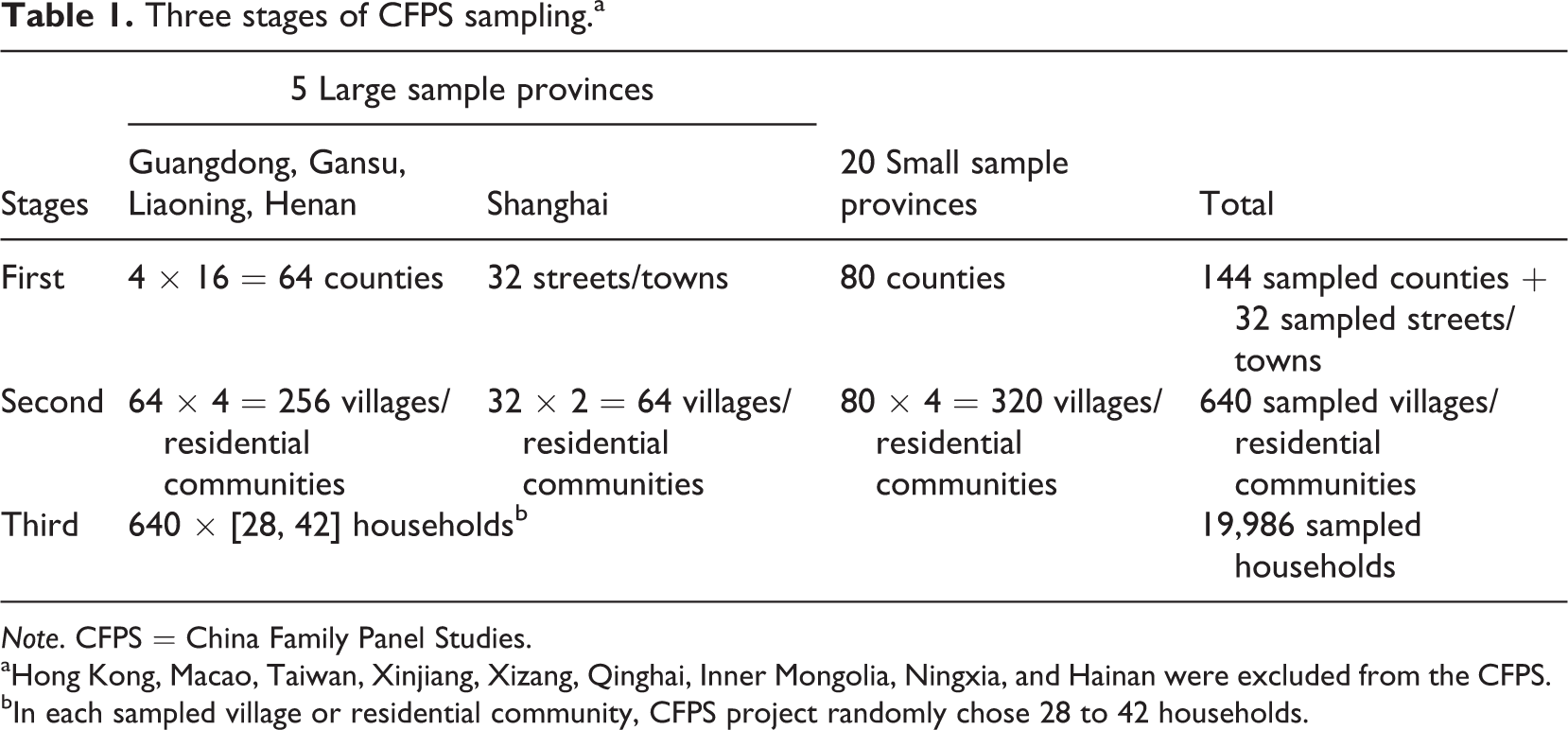
Note. CFPS = China Family Panel Studies.
aHong Kong, Macao, Taiwan, Xinjiang, Xizang, Qinghai, Inner Mongolia, Ningxia, and Hainan were excluded from the CFPS.
bIn each sampled village or residential community, CFPS project randomly chose 28 to 42 households.
The baseline survey was launched in 2010, which obtained data from 33,600 adults and 8,990 children below the age of 16 in 14,798 households from 635 communities in 25 provinces. As a longitudinal survey, CFPS tracked the participants in baseline survey and conducted four rounds of follow-up surveys in 2012, 2014, 2016, and 2018. The present study draws on data from the second follow-up survey in 2014, which covered 37,114 adults and 8,594 children in 13,946 households from 622 communities (Dai, 2016).
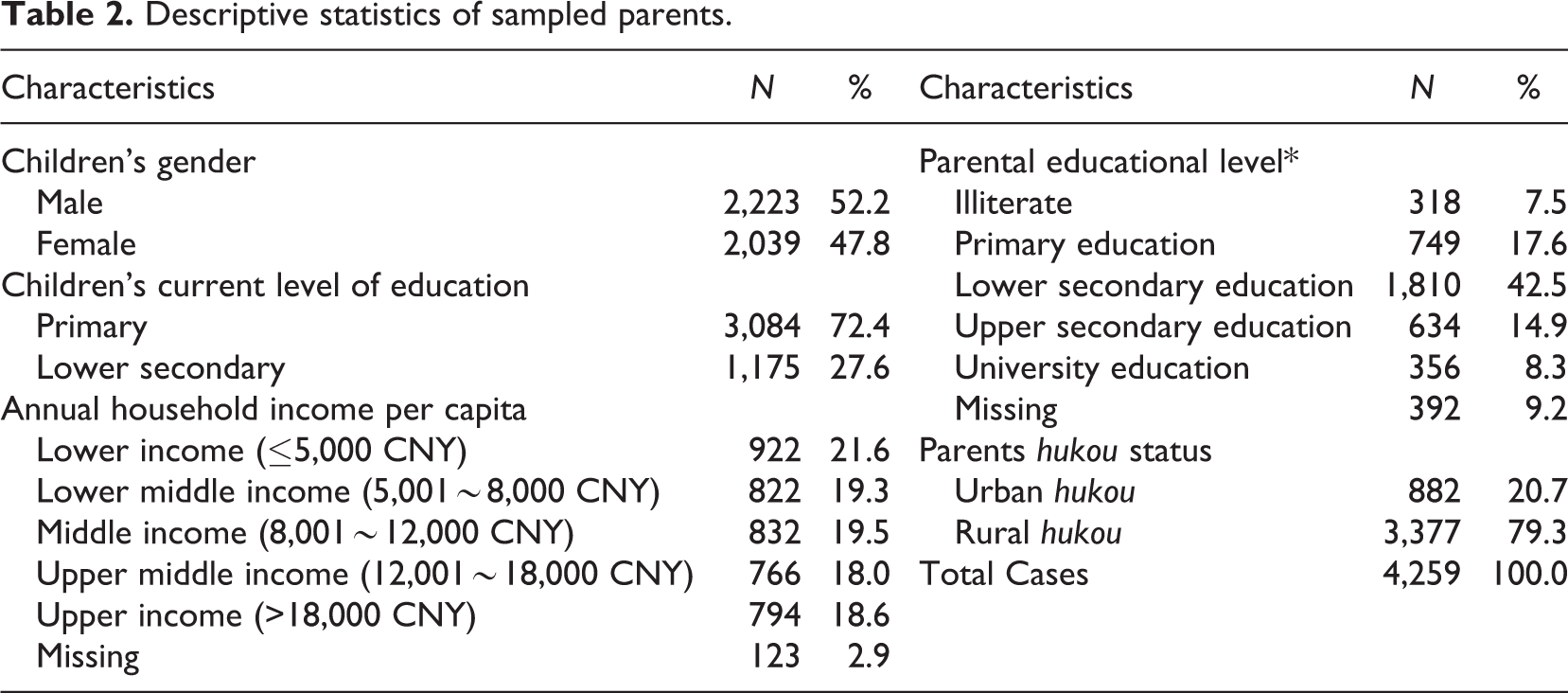
According to the CFPS project design, for households of children under age 16, interviewers collected data with questionnaires in which one part was answered by the parent mainly taking care of the child and the other part was answered by the child if aged between 10 and 15. To fit the research focus, the present study extracted a sample of 4,259 parents from the data set of CFPS 2014, whose children studied in primary and lower secondary education, as shown in Table 2.
Descriptive statistics of sampled parents.
Hypotheses and model
The present study aimed to explore how parental socioeconomic resources and attitudes influenced the demand for private tutoring. Since factors of parental resources, that is, education, occupation, and household income are correlated, and parental resources may impact their attitudes, SEM analysis was adopted to explore the direct and possibly indirect influences. SEM is a statistical method taking a confirmatory (i.e., hypothesis testing) approach to the analysis of a structural theory bearing on some phenomenon (Byrne, 2010, p. 3). To explore the possible differences between the groups (i.e., urban and rural parents), a multiple-group analysis was employed.
In the light of the previous literature, the present study postulated three hypotheses as follows:
In other words, the present study hypothesized that parental resources and educational expectation would have both direct impacts on the demand for private tutoring and indirect impacts through the mediating factor of parental role construction. Based on these hypotheses, an a priori model as depicted in Figure 1 was constructed. The SEM analysis was conducted with the software AMOS (version 24.0) using maximum likelihood estimation. The variables in the model are as follows.
Tutoring was the dependent variable, which measured whether parents demanded private tutoring (academic tutoring or nonacademic tutoring or both) for this child during the previous 1 year or not. It was a dichotomous variable: no = 0, yes = 1.
Education was a continuous variable measuring the years of education of father or mother who had the higher level of education.
Occupation was a continuous variable measuring the occupational prestige status of father or mother whose occupation was more prestigious. The CFPS survey collected the information of parental occupations according to the CSCO and transformed them into the code in the third version of International Standard Classification of Occupations (ISCO-88) and then gave them prestige scores according to the Standard International Occupational Prestige Scale (SIOPS; Huang & Xie, 2012). SIOPS, proposed by Treiman (1977), was the average of national prestige scores, appropriately rescaled to a common metric. This scale has been commonly used in international research (e.g., Bornschier, 1986; Krymkowski, 1988) and also has been applied at the national level (e.g., Ganzeboom & Treiman, 1996, 2003). Empirical studies have confirmed that occupational prestige in China is highly consistent with the SIOPS (e.g., Li, 2005; Lin & Xie, 1988; She & Chen, 1995; Xu, 2000).
Income was a continuous variable measuring the natural log of annual household income per capita.
Expectation indicated parental expectation on children’s education achievement in future. It is measured by the years usually required to achieve each level in the Chinese education system: not necessary to be educated = 0, primary education = 6, lower secondary education = 9, upper secondary education = 12, 3-year college education = 15, bachelor’s degree = 16, master’s degree = 19, and doctor’s degree = 22.
Role construction was a latent variable measuring parental beliefs about what they should do to support children’s education. It has six observed variables designed in a 5-point Likert-type format: strongly disagree = 1, disagree = 2, neutral = 3, agree = 4, strongly agree = 5. Parents were asked about their attitudes toward the following six questions regarding their children’s education:
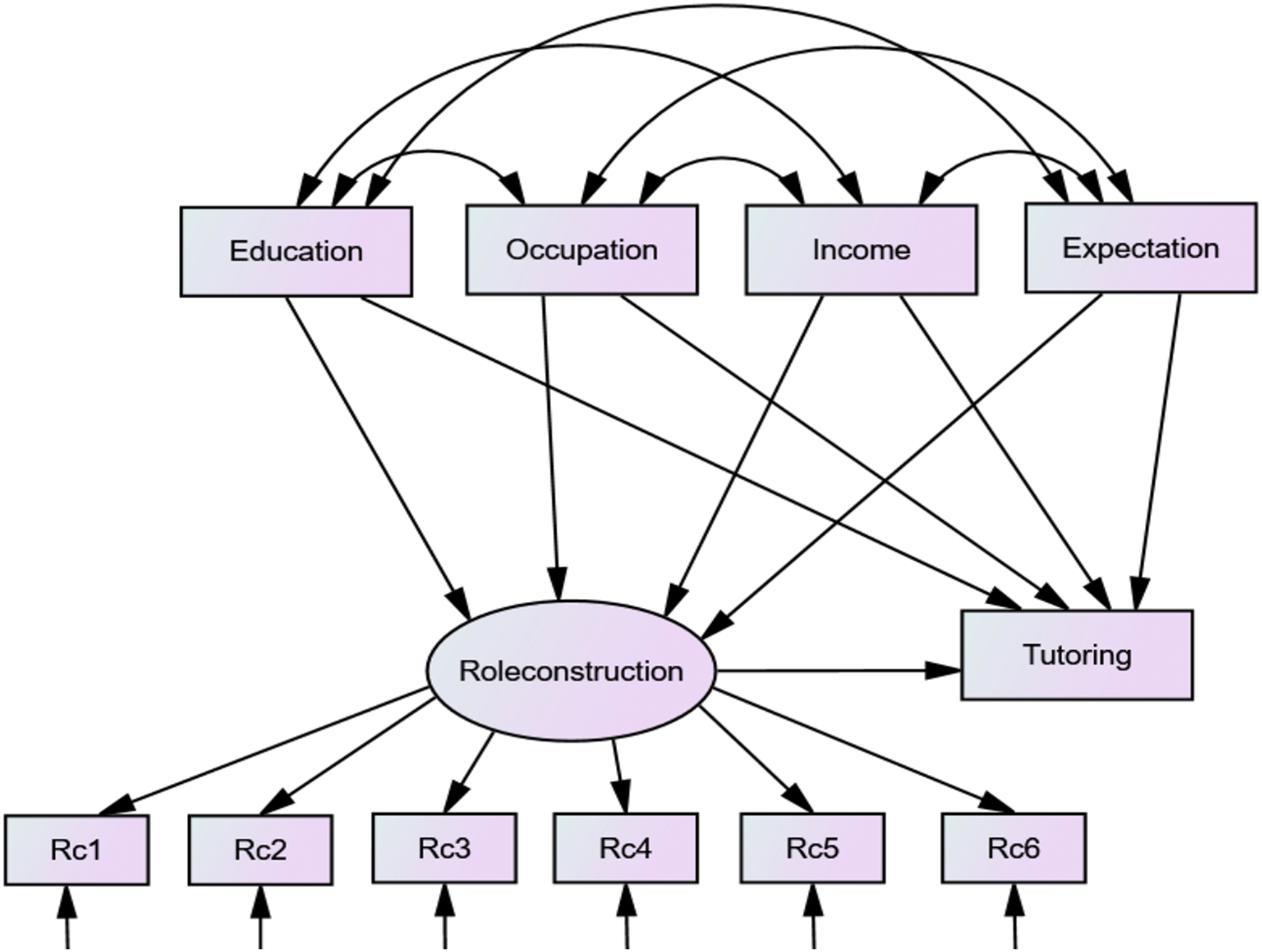
A priori model of relationships among parental factors and demand for private tutoring.
Findings and data analysis
Nationally, the 2014 CFPS iteration indicated that 29.8% primary and lower secondary students had received private tutoring in the previous year. The demand for private tutoring varied across parental factors, as shown in Figure 2. Parents with higher education demanded more private tutoring for their children, and a positive correlation between household income and demand for tutoring is evident in Figure 2. Parents with higher expectations about their children’s educational achievement were more likely to seek private tutoring. Urban parents had much higher probabilities of seeking private tutoring than their counterparts with rural hukou. The following section employs SEMs to analyze the relationships between parental factors and the demand for private tutoring.
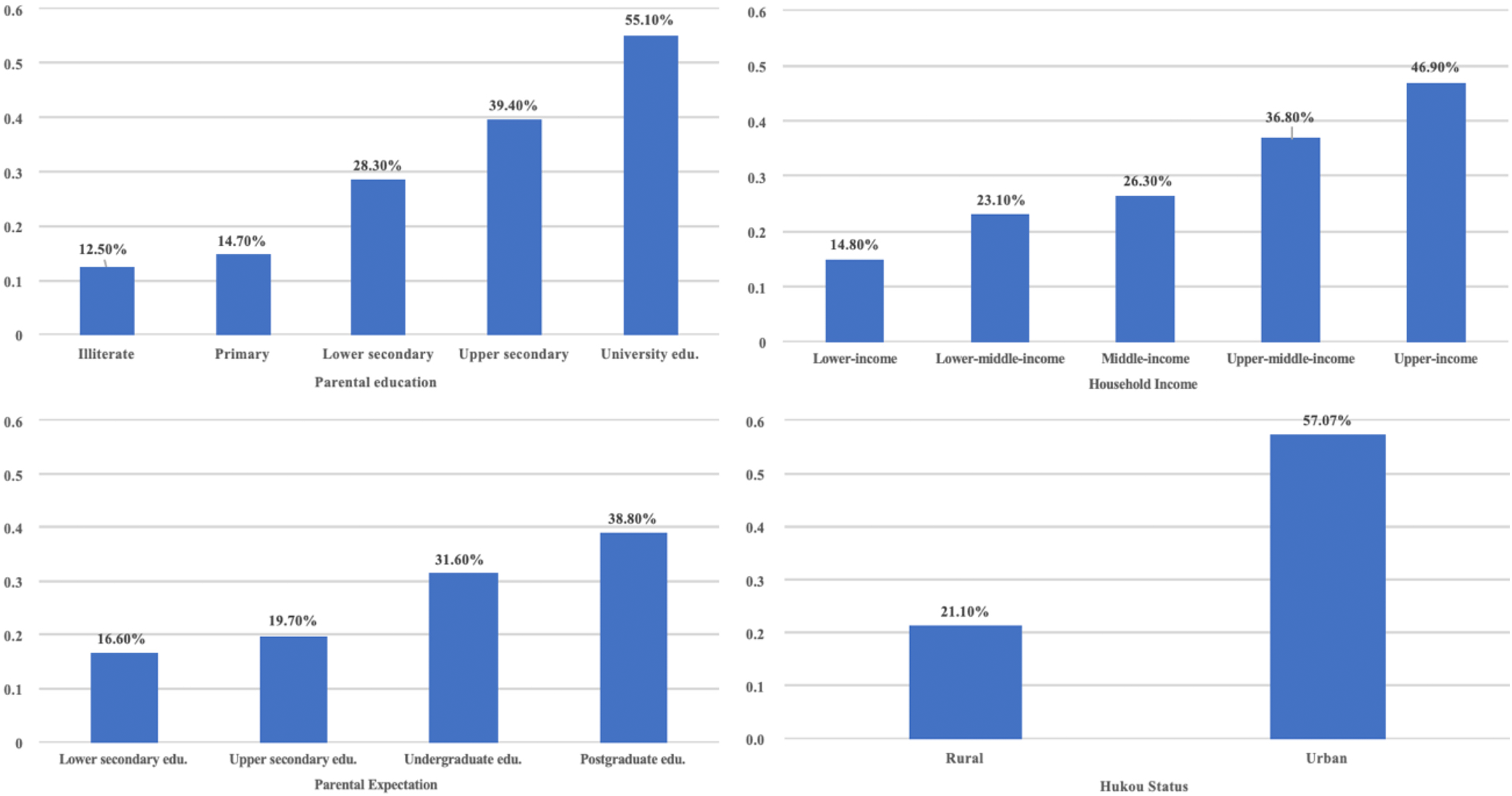
Demand for private tutoring among groups of parents.
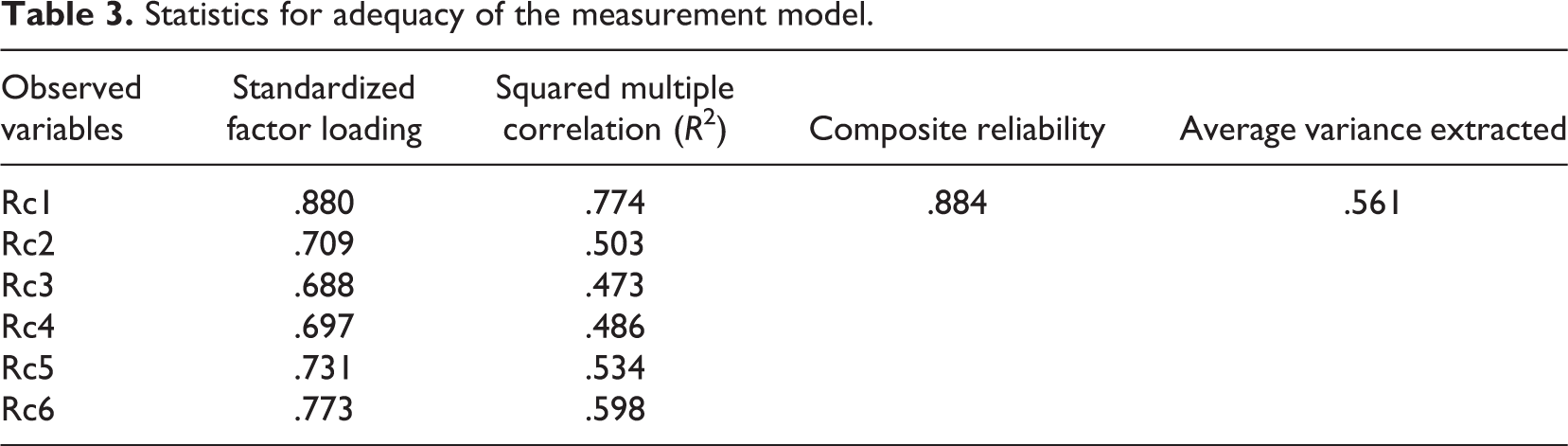
Before studying the parameter estimates in the SEM model, it is necessary to examine the adequacy of the measurement model. The standardized factor loadings as shown in Table 3 indicate the extent to which the observed variables are linked to the latent factor. All the six observed measures’ factor loadings were in the range between .50 and .95 (Wu, 2000, p. 224), showing that they were closely related to the latent variable “Role construction.” The squared multiple correlation (R 2) indicates the extent to which each observed variable can be explained by the latent factor. Except two that were slightly below .50, all other four variables’ R 2 were in the range (above .50; Wu, 2000, p. 225). The composite reliability value for the latent variable and the average variance extracted value were also in the range, which indicated that the latent factor of “Role construction” had good construct reliability (Wu, 2000, p. 227). Therefore, the measurement model could be considered adequate and valid for estimating the value of the latent factor “Role construction.”
Statistics for adequacy of the measurement model.
The goodness of fit examines whether a hypothesized model fits the data. The χ2 is “the Likelihood Ratio Test statistic that has been the traditional measure used to test the closeness of fit between the unrestricted sample covariance matrix and the restricted covariance matrix” (Byrne, 1998, p. 109). However, with large sample size as in present study, the χ2 test statistic is prone to model rejection in virtually any formal test of significance (Byrne, 1998; Marsh & Yeung, 1996). Other indices in Figures 3 and 4 were more appropriate to test the goodness of fit in the present study. The values of root mean square error of approximation (.036 and .029) were less than .05, indicating good fit (Byrne, 2010, p. 80). The values for normed fit index (.924 and .911), the comparative fit index (.928 and .920), the relative fit index (.913 and .912), and the incremental index of fit (.975 and .970) were all above .90, consistently indicating good fit (Byrne, 2010, pp. 77–78). Overall, the hypothesized model in this study fitted the data well. It could be used to test the hypotheses about the relationship between parental factors and the demand for private tutoring.
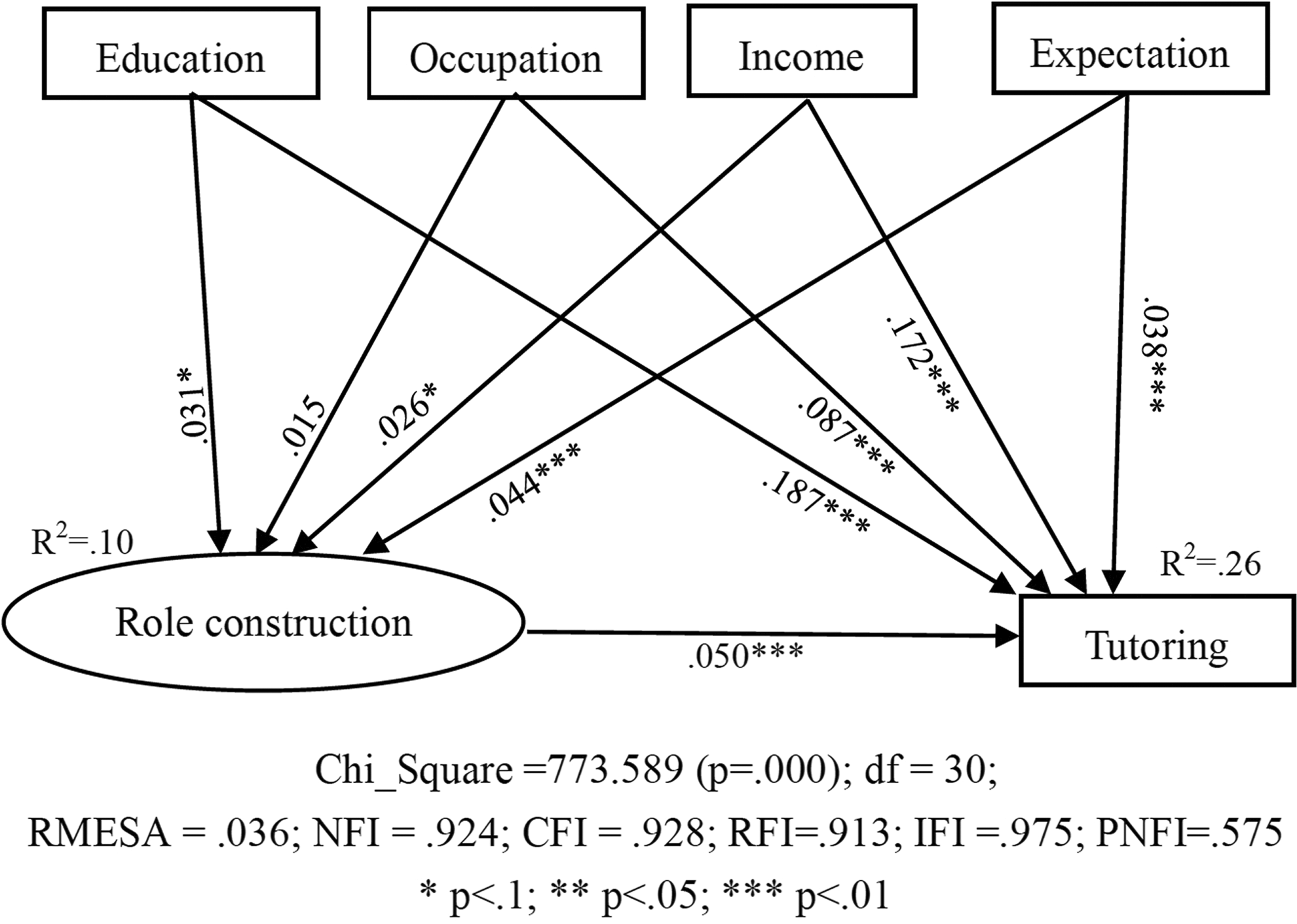
Standardized path coefficients among parental factors and demand for private tutoring.
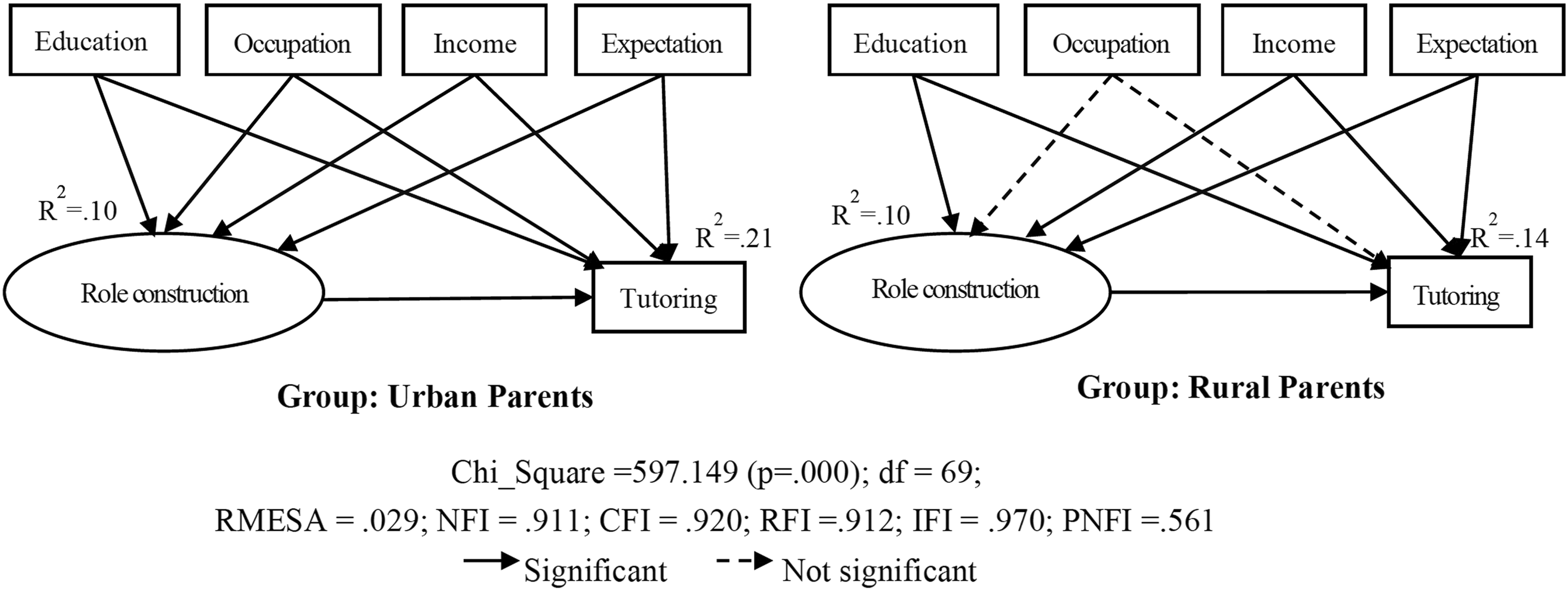
Causal paths among parental factors and demand for private tutoring for urban and rural parents.
Findings for the entire sample
From the estimates shown in Figure 3, the aforementioned first hypothesis was confirmed, which posited the significantly positive influence of parental resources and their expectation on the demands for private tutoring. In detail, consistent with findings in other societies (e.g., Bray et al., 2014; Kenayathulla, 2013; Kim & Lee, 2010), Chinese parents with more education had the higher probabilities of seeking private tutoring for their children. As indicated by Psacharopoulos and Patrinos (2004), parents who were better educated usually benefited more from education and would understand and value more the economic and social benefits of education (cf. de Castro & de Guzman, 2010). Therefore, they would be more likely to invest in children’s education, including purchasing private tutoring.
Household income was confirmed to positively influence parents’ demand for private tutoring, as had been noted in many studies (e.g., Byun, 2014; Chen & Bao, 2015; Kim & Lee, 2010; Xue & Fang, 2018). As a kind of fee-paying educational service, demand for tutoring was constrained by the household economic resources. Poor parents would have difficulties in affording private tutoring.
Previous literature has seldom examined the influence of parental occupation on demand for private tutoring. The present study incorporated the parental occupational status into structural model, and its positive influence on the demand for tutoring was confirmed. As Marshall (1920) pointed out, “the professional classes especially, while generally eager to save some capital for their children, are even more alert for opportunities of investing it in them” (p. 562). As a kind of educational investment, private tutoring would be more demanded by parents in more prestigious occupations.
The positive impact of parental expectation on children’s education level to be achieved in future was also confirmed. The higher aspirations motivated parents to invest more in children’s learning, among which private tutoring was a popular choice.
The second hypothesis positing the positive influence of parental resources and expectation on their role construction was partly confirmed. Parental education and income were confirmed to positively affect their role construction. Well-educated parents perceived stronger responsibilities to support their children’s education than poorly educated ones, as had been discussed by Kohl, Lengua, and McMahon (2000). Parents with more financial resources not only were able to purchase extra educational service to support children’s learning but also perceived more responsibilities to do so. The positive influence of parental expectation was also confirmed. The higher expectations that parents held for children’s education career, the more responsibilities they perceived to support. This was consistent with findings in previous studies (e.g., Holloway, Yamamoto, Suzuki, & Mindnich, 2008; Murphey, 1992). However, the positive impact of parental occupation on their beliefs about what they should do to assist children’s education was not supported by the SEM model for the entire sample.
The third hypothesis was confirmed by the model. Parents of active role construction regarding children’s education were more likely to seek private tutoring. Besides socioeconomic resources, parents’ beliefs about their responsibilities also affected their choices regarding private tutoring.
In addition, the confirmed positive influence of parental role construction made the indirect effects of parental factors on the demand for tutoring possible. In detail, parental education, income, and expectation were confirmed to have not only direct positive effects on their demand for tutoring but also indirect positive effects through the mediating variable “Role construction.” This finding could help to further understand the group variations in demand for tutoring. Well-educated parents had active role construction regarding their children’s education and it would encourage them to support, including by using private tutoring. The higher demand for private tutoring among rich parents also came from their stronger responsibilities of helping children succeed in education. Besides its direct effect, higher expectations intensified the responsibilities perceived by parents and then stimulated more demand for private tutoring.
Comparison between urban and rural parents
As shown in Figure 2, demand for private tutoring was much higher among urban parents than rural ones (57.07% vs. 21.10%). The present study went a step further to explore whether the patterns of relationship among parental factors and demand for tutoring were different for urban and rural parents. Multiple-group analysis was conducted, and Figure 4 presents the causal paths among variables for the two groups of parents.
For urban parents, both the direct and the indirect (through the mediating variable of parental role construction) positive effects of parental resources and expectations on demand for private tutoring were confirmed. Different from the model results for entire sample, urban parents’ occupation status was confirmed to positively influence their role construction and thus had indirect effect on demand for private tutoring in addition to direct effect. Urban parents worked in occupations of divergent prestige, which would influence their ideas about childrearing, as Kohn and Schooler (1983) observed. Parents of professional and prestigious occupations were often preoccupied with the sense of achievement from their work, which called for knowledge and skills. They tended to think highly of children’s education, viewing it as the major way for developing talents and skills of value later in life (Lareau, 2002, p. 771). Therefore, they would perceive strong role construction to support children’s educational development, in both academic and nonacademic ways (Li, 2017, p. 14). Parents of less prestigious occupations, usually laborious and of low income, might hold apathetic or passive attitudes toward the future. They might also lack enthusiasm for their children’s education, especially when children were not high performing and not perceive strong responsibilities to support (Zhao & Li, 2012; Zhou, 2011).
For rural parents, the direct and indirect positive effects of parental education, income, and expectation were also confirmed. Different from the patterns of urban parents, the occupational status of rural parents had neither direct nor indirect effects on demand for private tutoring. According to national population census in 2010, 74.8% of adults in rural areas concentrated in agricultural occupations (China Population Census Office & China National Bureau of Statistics, 2012), which have lower prestige scores (Li, 2005). Their occupations led to no significant difference in their role construction and choices regarding private tutoring. Another reason might relate to the issue of rural–urban migration. The official statistics indicted that there were 6.97 million rural “left-behind” children in 2010, who lived in rural areas mostly with their grandparents after their parents had migrated to work in urban areas (Cai, 2018). For these parents, their major task was to earn money to support the family, and they helped less with their children’s education no matter what their occupations were.
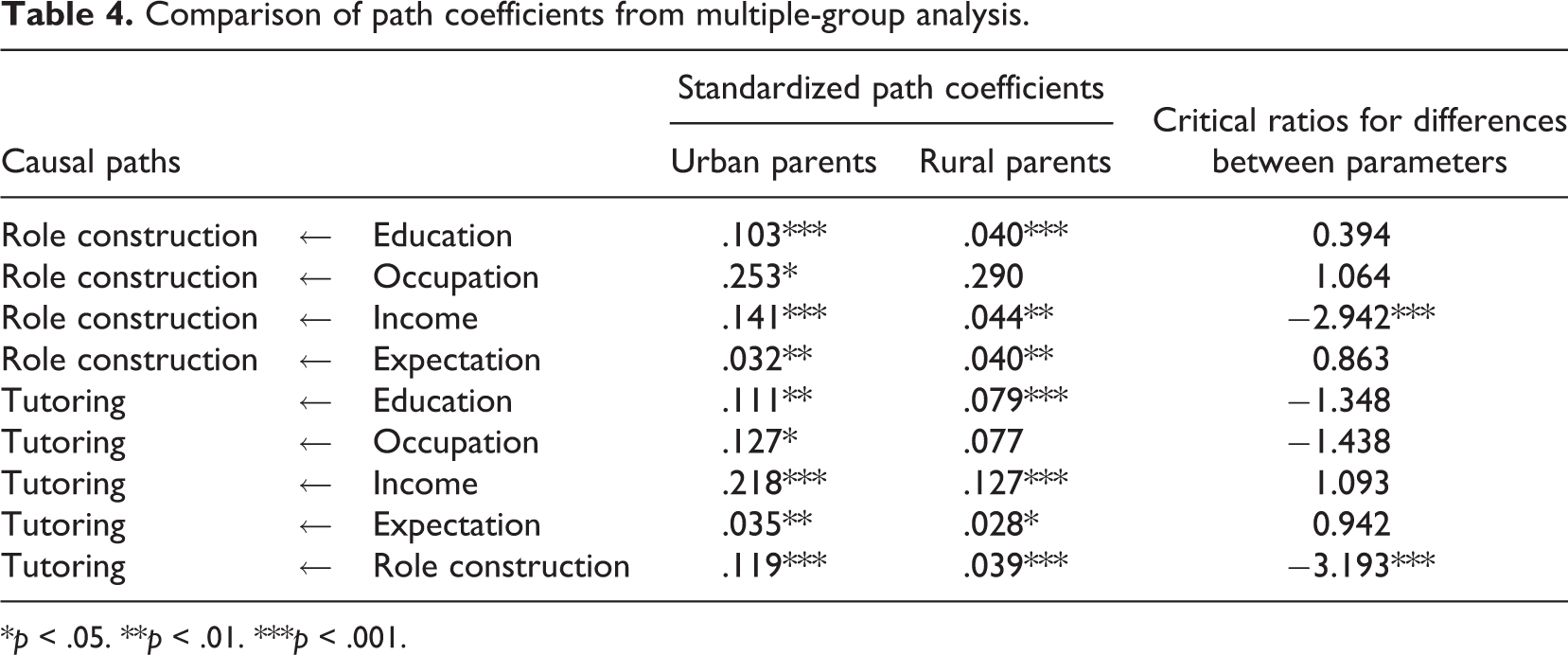
Multiple-group analysis results also provided comparisons of path coefficients between the two groups of parents. Table 4 reports the standardized path coefficients and the critical ratios for difference between parameters, a statistic testing whether two parameters were equal in the population (Arbuckle, 2012, p. 113). The critical ratios for differences in the coefficients of paths from the variable “Income” to “Role construction” and from the variable “Role construction” to “Tutoring” were significant.
Comparison of path coefficients from multiple-group analysis.
*p < .05. **p < .01. ***p < .001.
The positive impact of household income on parental role construction was significantly bigger for urban parents (.141) than for rural parents (.044). Rise in household income would significantly strengthen parents’ perception about their responsibilities in children’s education for both urban and rural parents, but the improvement was greater for urban parents. Similarly, for both rural and urban parents, stronger role construction would lead to more demand for private tutoring, but the raise in demand was more for urban parents. That is to say, household income exerted a more evident influence on parental role construction and the demand for tutoring for urban parents than for rural ones.
Conclusions
Based on nationwide representative data from the 2014 iteration of CFPS, the present study confirmed that parental socioeconomic resources and attitudes toward children’s education would positively affect the demand for private tutoring both respectively and jointly. Household income, parental education, and their aspirations on children’s education had both direct and indirect positive effects through the mediating factor of role construction on demand for tutoring.
The multiple-group analysis explored the difference in the impacts of parental factors on demand for tutoring for urban and rural parents. First, parental occupation had different influence: It had no impact on demand for tutoring for rural parents, while it had both direct and indirect effects for urban parents. Second, both direct and indirect effects of household income on demand for tutoring were greater for urban parents than for rural parents. This finding has implications for education inequality. As aforementioned, a big gap exists in the household income of urban and rural families. Therefore, urban parents are more likely to seek private tutoring. This pattern gives urban students more advantages in educational support over rural students. Within groups, the difference in opportunities for taking private tutoring derived from income disparities is larger among urban students than among rural students.
The role construction was confirmed to be a key factor with mediating effect, which would amplify the impacts of parental socioeconomic resources and expectation on the demand for tutoring. This finding could help to further understand the urban–rural difference in demand for tutoring. Urban parents are widely seen to hold strong role construction in supporting children’s education strategically, including using private tutoring, while many rural parents take sending children to formal schools as the only responsibility they have to undertake (e.g., Li, 2018; Yu, 2018). With the great expansion of higher education in China, the devaluation of diplomas forced many urban families intensify their educational investments, as observed in many other countries (e.g., Bourdieu, 2005; Collins, 1979). However, rural parents increasingly viewed education as useless as the unemployment and underemployment among university graduates rose in recent years (e.g., She, 2015). This viewpoint weakened their role construction, which made their children more disadvantaged in education and future life chances.
In recent years, parents who activate their resources to promote children’s education through private tutoring are increasing in China (e.g., Chen, 2009; Li, 2018; Xue & Fang, 2018). Resonating with the discussion about parentocracy, the present study confirmed that parents’ socioeconomic resources and wishes played an important role on children’s education, among which private tutoring had become a standard component, especially for children at primary and secondary levels (Zhang & Bray, 2016). As has been noticed in other societies, the tendency of parentocracy benefited only children from families of better socioeconomic status and, therefore, maintained or increased education inequality (Ball, 1993; Brown, 1990; Conway, 1997; DeWiele & Edgerton, 2016). With the expansion of private tutoring, the educational inequalities engendered by parentocracy would be further exemplified (Tan, 2017).
The present study investigated the influences of parental factors on demand for private tutoring and explored the differences in patterns for urban and rural parents in a quantitative way. Full understanding of these themes needs further studies, especially through qualitative research.
Footnotes
Declaration of conflicting interests
The author(s) declared no potential conflicts of interest with respect to the research, authorship, and/or publication of this article.
Funding
The author(s) received no financial support for the research, authorship, and/or publication of this article.