




Abstract
Traditional forms of knowledge production can serve to reproduce the power imbalances present within the social contexts that research and knowledge production occur. With the interests of the discipline of criminology so closely entwined with the criminal justice system, it is no surprise that crime, punishment, rehabilitation and desistance have not been adequately examined from a gendered perspective. This article examines a participatory action research process conducted with criminalised women subject to community punishment and probation supervision in the North West of England. By examining the feminist methodology within which this research is framed, discussions about meaningful collaboration offer insights into the potential for creativity in research to become transformative. Using a range of creative qualitative research methods, specifically map making, photovoice and creative writing, this research attempts to understand the experience of criminalised women. Charting the way in which this research prioritises the collaboration of criminalised women at all stages of the research process, this article proposes that ‘meaningful’ participation is about more than process management. It is only by moving beyond typologies of participation, towards an understanding of how participation in the created research space responds to the groups wider oppression, in this case by overcoming trauma or demonstrating reform, that collaboration with holders of lived experience can uncover subjugated knowledge and facilitate transformative action.
Introduction
The experiences of criminalised women subject to punishment in the community is an area of study that has become somewhat overlooked within mainstream criminology, often due to the continued focus on men as the dominant group occupying the criminal justice system (Daly and Maher, 1998; Heidensohn, 1985, 2012; Smart, 1977). Where there has been investigation in to the experiences of women subject to punishment, the focus has tended to remain on women who reside in prison (see Baldry, 2010; Bosworth, 1999; Coll et al., 1998; Fine et al., 2003; HM Inspectorate of Prisons, 1997; Kassebaum, 2017). Therefore, women who are subject to community punishment can find themselves marginalised within a patriarchal society, the criminal justice system and within the discipline tasked with understanding crime and its control.
Feminist methodologies and co-production of research present an opportunity to flatten power hierarchies often felt within traditional research, by offering the potential to re-situate those residing in the margins, bringing them into the centre of knowledge produced about (by) them, primarily because feminist research is concerned with ‘providing a philosophical grounding for deciding what kinds of knowledge are possible and how we can ensure that they are both adequate and legitimate’ (Maynard, 1994: 10).
The decision to employ participatory action research (PAR) within a feminist methodological framework in this research was an attempt to harness a feminist philosophical grounding while utilising the practical direction that a PAR cycle offers. To provide a space for some of the most marginal voices in society to not only be heard, but also for ‘time out’ to allow for critical reflection that is essential in the process of negotiating punishment without further criminalisation.
The objective of this study was to focus on the lives of criminalised women and understand the lived experiences both during and after community punishment. Through a research methodology that combined feminist principles and PAR, creative methods were used which produced powerful visual narratives. These images and the surrounding discussions demonstrate that surviving community punishment by resisting further criminalisation relied upon women overcoming personal trauma while presenting a convincing commitment to hegemonic femininity.
This article examines this co-produced example of feminist research completed with criminalised women subject to punishment within the community. Through this examination, there will be a critical evaluation of the feminist methodological framework combined with PAR as used in this study to consider if it fulfilled its promise of ‘meaningful’ participation and how this was achieved, if at all. I will then consider the potential for co-produced spaces of research, particularly when employing creative and visual methods, to provide time for reflection and space for healing from trauma while also offering ways to build symbolic capital that aids in the safe navigation of community punishment.
Feminism and PAR
Feminist research, particularly within criminology where feminism is very much still a marginal perspective, offers a distinctive approach to research that is multi-dimensional, including the identification of substantive concerns which go on to decide the focus of research and the questions asked; the approach towards what feminist research is examining, ‘which is premised on certain broad epistemological and philosophical positions that set limits on the type and range of research methods and techniques it adopt’ (Glucksmann, 1994: 149); and an honest political commitment that seeks an active relationship between feminist research and politics. Therefore, the knowledge produced by feminist research must contribute to pushing back the intersectional relations of power, inequality and oppression felt by those who are the focus of the research (Glucksmann, 1994). Feminist research is produced for the purpose of action against power. In the case of this critical feminist criminological research, that means action against the power of the criminal justice system and the interlinked structures and institutions that intersect to further surveil, control and oppress criminalised women.
While certain disciplines have grown under these conditions, within criminology the relationship between research and political action has been down played and problematised; with arguments of ‘empowerment’ overshadowing the need and call for transformation (Daly and Maher, 1998). However, despite such criticisms of the loss of feminist research transformative power, there are contemporary academics who are active campaigners and work with feminist grass-roots organisations such as SistersUncut on their Reclaim Holloway Campaign (SistersUncut, 2017). Feminist criminologists such as Smart (1977) spent years campaigning for the closure of Holloway Women’s Prison. While this has now happened, SistersUncut use a variety of feminist interventions, protests and activism to call for the land upon which the ex-prison site rests to be reclaimed by the community, for affordable housing for local women and their families, and community-enriching facilities (SistersUncut, 2017).
Feminist epistemology is a theory of knowledge that rejects androcentric knowledges, feminist methodology is the theory and analysis of how research should proceed and feminist methods are the techniques used to gather evidence (Naples and Gurr, 2014). The connections between epistemology, methodology and methods are an important aspect of what makes research feminist (Harding, 1987). There is no one feminist approach, but rather a feminist style that is epistemologically driven. Action researchers have often shown to be more preoccupied with processes of co-production than the philosophical origins of action research and how these intersect with feminism, with Patricia Maguire (2006) recognising the lack of acknowledgement of how feminist work has influenced action research across various disciplines. Morwenna Griffiths (1999) highlights that while power in research is acknowledged by action researchers, it often excludes feminist perspectives: There are quite instrumental versions which focus on technical improvement with very little reflection drawn from outside sources . . . And there are versions calling themselves critical which somehow often manage to look carefully at power without noticing the feminist perspective on power. (Griffiths, 1999 cited in Maguire, 2006: p 60).
Maguire (2006) reminds us that feminist-informed action research ‘theorises gender for women and men, girls and boys whilst also pushing us’ to examine our own gendered and multiple identities and how this may influence the action research we participate in or facilitate (p. 67).
As a feminist criminologist, with a shared biography of criminalisation with the women in this study, feminist methodological perspectives and PAR seemed to be an intuitive approach for this particular research precisely for the reasons Maguire (2006) and others highlight. This was because the practical application of co-production PAR in combination with feminist principles meant that I could (a) practise a broad and deep critique of traditional approaches to objectivity, (b) offer intense scrutiny of epistemological privilege in the production of knowledge and (c) demonstrate increased attention to standpoint and positionality (Naples and Gurr, 2014) while also promoting social justice through personal and collective action.
I felt that I needed to interrogate my own subjectivity/objectivity in the study of lives so similar in biography to the life that I have lived. I first saw PAR as a way of offering higher levels of objectivity, by foregrounding the lives and experiences of the women who took part while reducing the presence of my own biography. However, as the research developed through reading and practice through the application of feminist perspectives, I understood the relationship between elite interests and positivist notions of neutrality and perceived objectivity and the importance of interrogating objectivity, questioning epistemic authority and privilege and reflection of my own standpoint.
Harding (1995) asserts the need for the development of ‘strong objectivity’, neither classical objectivity nor relativity, but an acknowledgement of The politics of knowledge production, and claims that greater attention to the social locations of knowledge producers and social contexts of knowledge production will contribute to a more transparent and thus potentially ethical result. (Naples and Gurr, 2014: 19)
Paying attention to the social locations of knowledge producers can produce ‘strong objectivity’. However, it is through not only paying attention to the social contexts within which knowledge is produced but by actively seeking knowledges that have been subjugated that research can produce action for social change. Identifying subjugated knowledges requires a thorough examination of epistemic authority and privilege.
A question of authority and privilege
Underpinning ‘objective’ knowledge produced from the perspective of subordinated groups are concepts of epistemic authority and epistemic privilege. Epistemic knowledge and epistemic privilege are linked but must not be confused as the same thing. Epistemic authority is a question of ‘whose knowledge is recognised and validated and whose is silenced’ (Naples and Gurr, 2014: 21). Janak (1997) asserts, Epistemic authority is conferred . . . as a result of other peoples’ judgement of our sincerity, reliability, trustworthiness, and ‘objectivity’; . . . certain people are [understood to be] in a better position to ‘see’ the world than other people. (Janak, 1997: 133 in Naples and Gurr, 2014: 21)
This concludes that a privileged position within social contexts adds a certain form of objectivity, and a level of authority to claims of knowledge (Naples and Gurr, 2014). Epistemic privilege refers to those that have and use (or are used by others who have) the opportunity to be referred to as authorities in a particular area of knowledge (Naples and Gurr, 2014): Epistemic privilege can be provided, enforced, occluded, or restricted in a myriad of shifting social contexts, including race, class, gender, and sexuality; cognitive and physical ability; citizenship; communities of knowledge production and sharing, such as university departments and activist organisations; and so on. (p. 21)
Certain types of knowledge, such as the way in which the western world prioritises the written word, and certain types of knowledge producers, such as European researchers, leads to a replication of colonising ideologies that ignore indigenous cultures, tradition and/or experiences that have been communicated through oral or visual means (Naples and Gurr, 2014; Smith, 2012). Epistemic authority and epistemic privilege perform in a symbiotic relationship to conceal rather than discover; ‘the politics of knowledge production serve the politics of imperialism’ (Naples and Gurr, 2014: 22).
In the case of criminalised women, while there are studies conducted with formally incarcerated women (see Fine et al., 2003; Fine and Torre, 2006; Fitzgibbon and Healy, 2017; Parsons and Warner-Robbins, 2002), these narratives remain at the margins of the discipline of criminology and in the production of policy (Harding, 2018). The types of knowledge generally privileged in criminal justice are the quantifiable ‘facts’ about criminalised individuals rather than the subjective experience of criminalisation; such as age, conviction type or status as an addict, mother or victim/survivor of domestic violence. With privileged knowledge, producers usually consisting of middle-class researchers without experience of criminalisation, sometimes working for the state, who often consult perceived ‘experts’ in the criminal justice system such as probation officers rather criminalised women themselves. The politics of knowledge production within criminology often reinforces and reproduces the power of the criminal justice system.
Including participants in the process of research, not just as passive vessels of knowledge, is political. Therefore, combining PAR with feminist research practices is certainly not value free, but is attached to certain social values that situate the researcher as an activist/researcher. Positioning research as a feminist, participatory and co-creative process disrupts and destabilises ‘the characterization of traditional knowledge-production and social science research as objective, apolitical, and democratic’ (Brydon-Miller et al., 2003; Houh and Kalsem, 2015: 263). The key to understanding how feminist co-production in research can challenge traditional forms of knowledge production remains in the researcher’s standpoint and positionality.
Standpoint and positionality
Feminist standpoint theorists assert that knowledge from a woman’s perspective is a truer form of knowledge, as androcentric knowledge has misrepresented the female experience, rejecting male ‘objectivity’ as a basis for female epistemology (Letherby, 2002). As Letherby (2002) highlights, supporters of feminist standpoint view ‘the production of knowledge is a political act in that the researchers’ own personhood is always part of the research’ (p. 45). Yet there are problems with replacing male supremacy with female supremacy, flattening experience to binary positions (Letherby, 2002). It is only through recognising the power hierarchies that intersect multiple oppressions that reflecting upon the researcher’s standpoint and positionality can be useful in collaborative research. It is precisely because of the issues of power and the contradictions of women’s lives (including my own) that a collaborative research strategy was formulated. It is these complexities that I reflect upon here.
The participants of this study are women with histories that include offending and community punishment and/or supervision. This is an aspect of our biographies that I (the researcher) share with the participants in this study. My biography shapes my experiences and focuses my priorities and analysis. Therefore, it is useful to consider Anderson’s (2006) five key principles of analytic auto-ethnography as I situate myself as a researcher/participant within this research, and my own experiences become an analytical tool.
(1) I am ‘complete member researcher’, for the women in this study do not only share the label of offender/ex-offender, but we have also experienced the same category of punishment and types of interventions. (2) Within this research I perform a continued ‘analytical reflexivity’; as I draw upon my own experiences to better understand the experience of the women in the study, I also reflect upon my own ongoing experience of life after punishment. (3) There is a visibility of myself, as a researcher and co-producer of research, within the text. (4) However, this is alongside and often secondary to the women who were co-producers of this research. (5) Above all, this form of analysis will contribute to an ‘analytical agenda’, where my emotions, biography and the emotions and experiences of the women in this study are considered together to contribute to understandings of the criminalisation of women (Anderson, 2006).
My position within this research, as a White female researcher that holds similar history of offending, punishment and low-socioeconomic status cannot be ignored and must be understood in order to offer ‘strong objectivity’ (Harding, 1998). However, while I share the same biography as the co-collaborators in this study, who are also all White, female, of low-socioeconomic status, and have history of offending and experiencing punishment, it is important to reflect upon the critical distance that I enjoy, both as having experienced punishment 10 years ago and the level of social mobility I have experienced through education and employment. Since punishment I have gone through both the further and higher education system, and I am now completing this study from the privileged position of working within academia. While our origins may highlight many similarities, the life I have experienced after punishment will mean my perspective will inevitably be different from theirs. However, sharing similar key characteristics and biographical origins meant that I was granted access to detailed insights that came from an assumed shared understanding of how the experience of punishment, poverty and marginalisation feels (see Harding, 2018, for further discussion).
Recognising the similarities and differences in our positions within society, and how our biography intersects is important for researcher reflexivity and to bring a different form of objectivity and validity to the research (Letherby, 2002). While this research recognises and makes use of our shared lived experiences when appropriate, the primary function of the research is to elevate the voices and experiences of the participants as co-collaborators. However, despite conscious efforts to situate the participants at the centre of the research, including data collection, analysis, I am aware that as the primary researcher, and as other feminist researchers similar acknowledge in their own work (Letherby, 2002), my voice will be the loudest: People theorize their own experience . . . and so researchers of the social are faced with an already ‘first order’ theorized material social reality. (Stanley, 1991: 208)
The experiences conveyed by the participants of this study are interpreted by each other, by the researcher and then again by the audience. The writings of the researcher remain an essential mediary between the interpretation of the participant and that of the audience. Presenting our work as academics ‘involves categorization and analysis and we reach conclusions based on our interpretation of the data and the academic and political theories and understandings that we have access to’ (Letherby, 2002: 4). The difference in feminist research is that ‘strong objectivity’ is built upon acknowledging understandings of the political, social and historical contexts of all knowledge (Longino, 1993).
Understanding how the philosophical and political outlook of feminist research, and the process driven nature of PAR can come together to produce action is essential in understanding the role of meaningful participation in collaborative research, particularly when creative methods are used to provoke transformation. By reflecting upon the details of the study that examines the experiences of criminalised women, this article will now consider how the research design strives for transformative action through meaningful participation and collaboration.
The study
This research attempts to understand the experiences of women subject to community punishment. As such, a qualitative methodology was selected as it is designed to ‘describe and understand, rather than to predict and control’ (Macdonald, 2012: 34). The stigmatised and oppressed nature of criminalised women as the participant group deemed that it was critical that this research prioritises their voices as representatives of those under criminal justice intervention. Without this aim, there is a danger the research would, to an extent, serve to reinforce power dynamic between those in power (law makers, criminal justice workers, and researchers) and those who are subject to it (the participants of this study). In addition, as discussed above, I was painfully aware that my closeness to the focus of the research. Therefore, a research design was implemented that questions ‘the nature of knowledge and the extent to which knowledge can represent the interests of the powerful and serve to reinforce their positions in society’ (Baum et al., 2006: 854). The research, conceived within a critical feminist framework, uses the principles of PAR and arts-based research practices.
PAR
PAR holds at its heart the principle of full participation of the effected group or community within research, with the aim of education and promoting social change (Pettinger et al., 2018). PAR is a form of methodology that actively attempts to change ‘the system’, rather than passively observing the way in which it operates. Key to understanding what needs to be changed is understanding the way in which social systems influence and impact individuals lived experiences, rather than making assumptions about the changes that need to be made from a position of academic or practitioner authority. PAR offers the opportunity for bottom-up change by situating research participants as experts in their own lives, inviting them to become ‘collaborators in defining questions, selecting methods, analysing data and disseminating findings, with the goal of pursuing social justice and change directly’ (Pain, 2009: 512).
In order to fulfil the promise of PAR as a more democratic form of knowledge production, DeLyser (2014) identifies four main principles. First, PAR seeks to bring community engagement and action to academic work. Second, it has a liberatory agenda which seeks to empower by reversing exclusionary or discriminatory practices; this is key when researching groups that have been ‘othered’ and are actively stigmatised in society, such as women with convictions. Third, participatory researchers commit to collaborative practices that ‘give voice to research participants, validating and even prioritizing their knowledge’ (DeLyser, 2014: 93), often above the perceived ‘expert’ knowledge of academics. And finally, participatory researchers require innovative models of research assessment because fundamentally within PAR, participation is research (DeLyser, 2014).
Participatory researchers consider that it is no longer enough to simply theoretically ‘look to the bottom’, by examining the lives or concerns of the most marginalised and unheard in society, but we must treat those ‘at the bottom’ ‘as equal research partners who are presumptively best situated to identify, analyse, and solve problems that directly affect them’ (Houh and Kalsem, 2015: 263). By committing to the PAR research process, researchers are committing to the repositioning of the epistemology of particular groups in society: When notions of right and wrong, justice and injustice, are examined not from an abstract position but from the position of groups who have suffered through history, moral relativism recedes and identifiable normative priorities emerge. (Matsuda, 1987: 325)
By positioning the participants of research as collaborators, the power dynamic attached to the traditional researcher–participant dichotomy is shattered ‘putting the voices and concerns of community stakeholders and research partners at the center of the work itself’ (Houh and Kalsem, 2015: 263).
Research design
Over the course of a year, I worked with two groups of criminalised women in the North West of England. During the first 6 months, I worked with peer mentors who had all experienced punishment in the community, but most had already finished their period of probation supervision. Months 7–12 were located within the women’s centre where the group of women was currently undergoing community punishment and probation supervision. These women had all been sentenced to this punishment within the last 12 weeks, with some receiving their sentence as little as 3 weeks before the research began. Using PAR meant that at every stage of the research there were criminalised women involved in the research process, including design, data collection, analysis and dissemination.
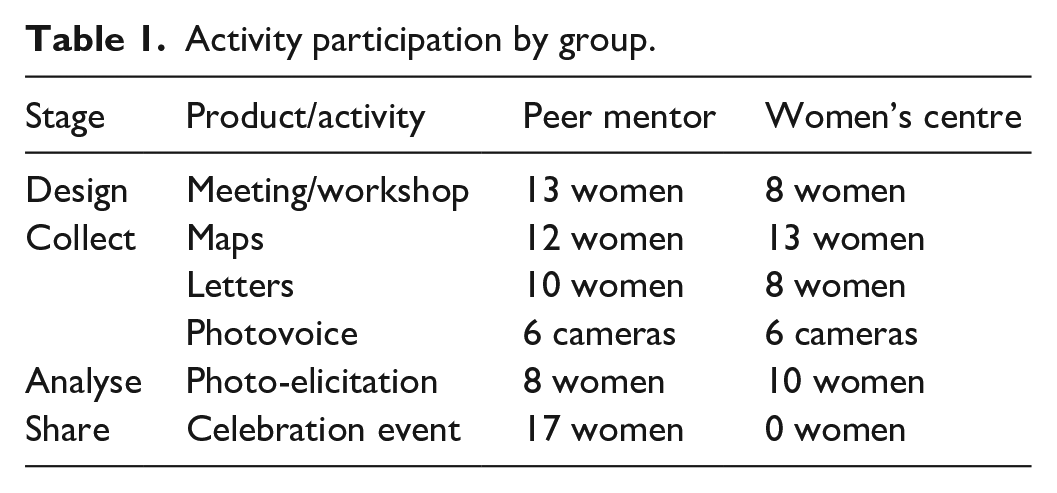
Thirty-two women took part, with four of the women considered criminal justice practitioners. However, only two of the practitioners did not have experience of criminalisation, both initially involved due to their role as gatekeepers to the research site. Upon the request of the women as part of the PAR decision-making process, one of the criminal justice practitioners without lived experience (Nat) took part in the creative data production, but not in the analysis. This led to the production of 25 narrative maps, 18 letters titled ‘Dear future me . . .’, and 220 photographs (see Table 1 for a summary of who produced each data item and Table 2 for detailed descriptions of the method and the activity related to it). These data were then used to perform six separate thematic analysis sessions where group photo elicitation was then audio recorded in most cases. After the initial 6-month period, the peer mentor group organised a celebration event which allowed them to disseminate early findings of their data collection and analysis to key stakeholders in community punishments in the local area. It was through this event that access was then granted to the women’s centre.
Activity participation by group.
Methods and activity descriptions.
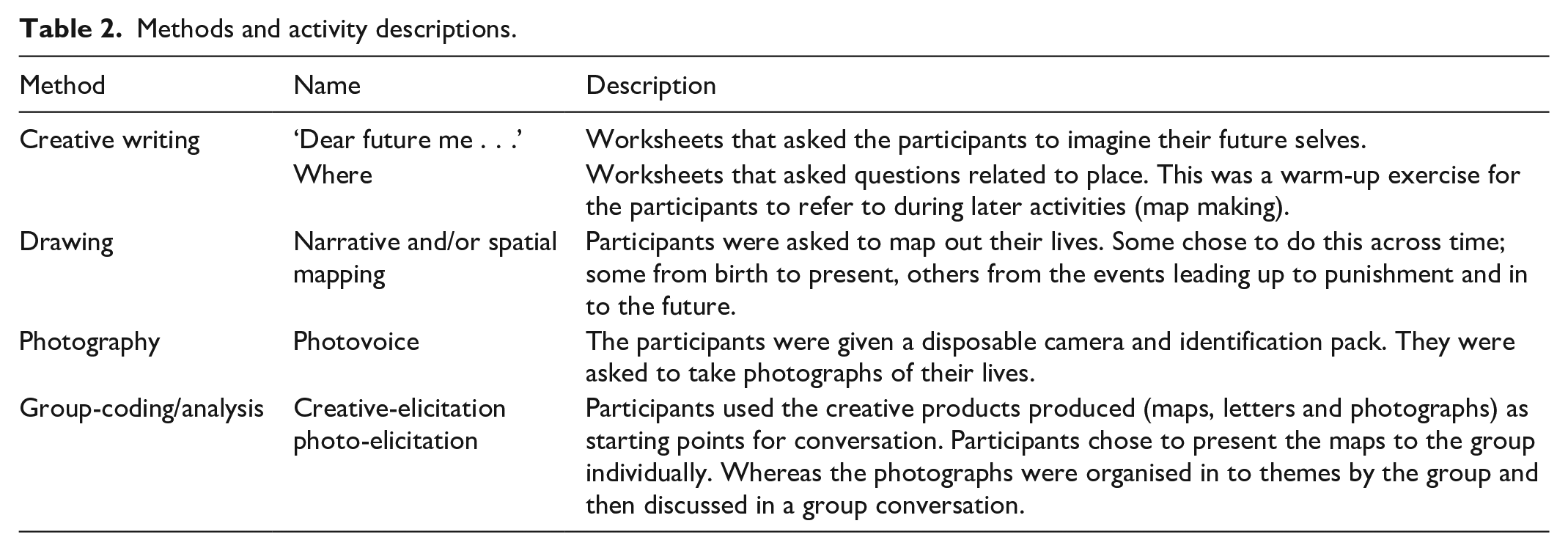
Figure 1 demonstrates a PAR ‘spiral’. The PAR process begins with observing and ends with sharing the results, each stage involving the participant population. It should be noted that while the spiral aids in the understanding of how the ideology of co-production links with the activities contained within PAR, it is simply a way of visualising how action research is ‘different from traditional empirical-analytic and interpretative research in both its dynamism and its continuity with an emergent practice’ (McTaggart, 1991: 315).
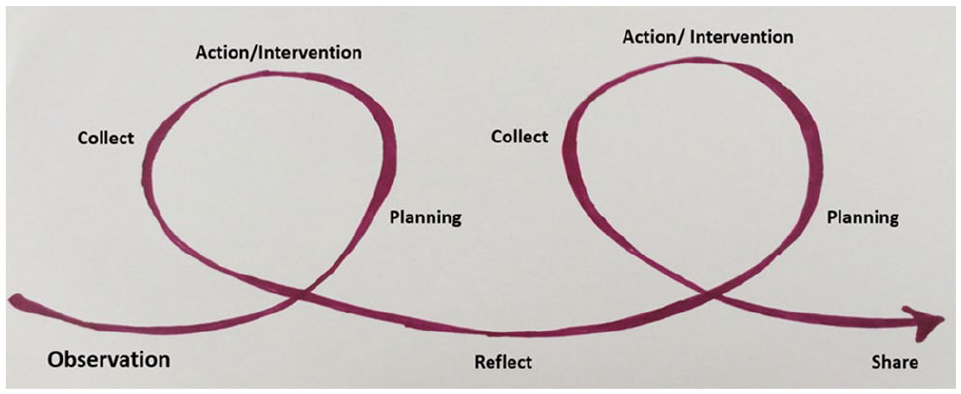
Participatory action research (PAR) spiral.
Observation
This is the initial stage of research planning, recognising that a community may benefit from the PAR process. This originated from my own experiences as a criminalised woman and the time spent volunteering as a peer mentor in the criminal justice system with other criminalised women. More formally, the identification of the research need was made by completing a literature review; finding a shortfall of academic enquiry, previous research and reviewing policy documentation; and identifying recent changes in policy, namely, Transforming Rehabilitation (Ministry of Justice, 2013), the report that led to the part-privatisation of the Probation Service and facilitated the delivery of community punishment at the women’s centre, that has direct consequences for the lives of the participant population.
Planning
The planning stage identifies the needs of the participant population, considering their abilities and interests. This was facilitated initially by early planning sessions with the first participant group (peer mentors). With my assistance, this group identified the types of action that they would enjoy, can complete (regardless of able-bodied status, or levels of literacy) and could produce action. The group embraced creative methods of data collection, including map making, creative writing and photography (see Table 2). The planning stage is repeated at each round of PAR to enable adjustments to be made to meet the needs of the current group and respond to issues or outcomes arising from the previous cycle of PAR. Therefore, while the initial group chose the methods used, each cycle was given the option to introduce other methods or ignore methods that had been previously used. However, only one small group chose not to write letters, with all other groups choosing to repeat the initial method selection.
Action/intervention
The overall action creates a space for data collection, analysis and reflection to occur. The action or intervention consisted of meeting together at one of the gateway organisations for a half-day session. This interrupted the normal day-to-day activities and made a space for critical reflection, discussion and commitment to the PAR process by both participant and researcher. The creative methods used in this time offered different mediums – visual, written, oral – for understanding the lives of criminalised women, as such the data produced a cohesive experiences from different viewpoints. It was the interaction between and with these data products that produced action in the form of bearing witness to each other’s trauma and demonstrating desistance. The action is therefore the time and space within which the research occurs yet is not limited to the collection or analysis of data, but the discussions and observations and critical self and group reflection that occurs within this time.
Collect
The collection stage is the point in the PAR that produces researchable data and promotes intense self-reflection. This is the point where differing qualitative research methods may be used to elicit understanding and knowledge production while facilitating the self-reflection required to promote growth and change. Here, creative methods were used in the form of map making and worksheets (see Table 1). The women involved were also given disposable cameras to take away from the session. After a period of 2 weeks, the women returned the cameras for developing and the photographs that followed became part of the data. Further data were recorded in the form of audio files that were recorded during group and individual analysis as part of a photo elicitation exercise.
Reflect
This is an initial stage of data analysis, with the group coming together to examine the product of the collection phase, such as photographs, identifying key themes within the research or highlighting further actions required to complete the research aims. Within this study the collect stage is the point in which participants present their findings to each other and the researcher, in later stages formally coding the data and performing photo elicitation.
Share
The final act within the PAR process is the dissemination of research. This needs to include the participants and can be done by co-producing research materials, such as posters, infographics and reports (for the gateway organisation or to submit to decision makers). Suitable dissemination can include the participants by holding an event or co-writing abstracts and presentations, as well as editing written work. The main dissemination event within this research was self-organised by the peer mentors. They held a celebration event and invited key stakeholders in local criminal justices, as well as family and friends. Here, they showed some of the images they had taken, alongside carefully selected quotes curated by the women themselves. A similar event was envisioned for the women’s centre group. However, with more time and resources needed to organise this, coupled with the short periods of community punishment and multiple constraints such as parenting, work, caring responsibilities and responsibilities to their own health and well-being (such as attending therapy or drug rehabilitation treatment), many of the women involved in the second group could not commit further. As a researcher, I have remained in contact where possible and hope to find other ways of disseminating with this group, but not in a way that is detrimental to the lives of the women subject to community punishment.
This section has demonstrated how, in line with the core principles of PAR, criminalised women participated at each stage of the research process. However, not every woman participated in every stage. Table 1 demonstrates that participation in all activities was not linear, with some women opting to take part in some activities and not others. The reasons for non-participation in specific activities were both practical (childcare, illness, court dates) and emotional (unable to face it that day). In order to respond to such constraints positively, consent was embedded within the cyclical process with women encouraged to choose when and when not to participate based on their own constraints. The ability to opt-in and opt-out, for different reasons at different times, makes this research appear ‘messy’. It is in the messiness of this participatory research that the notion of participation as ‘meaningful’ became a key consideration. When we consider the philosophical and political aims of feminist research, and the additional aims of PAR as education and emancipation, the question remains: ‘Can inclusion or collaboration in the process of research in itself produce action that means participation has been “meaningful” to the participants as individuals and as a marginalised group?’ The answer to this lies in a thorough interrogation of the synergy between participation and action.
Meaningful participation through co-production
Participation has become somewhat of a buzz-word in social research in recent years. Criminology as a discipline appears to be experiencing a participatory turn, which can most obviously be seen within newly formed links between criminal justice agencies and the academy; often through ‘knowledge transfer partnerships’ (KTP). Action research itself has often been written as a form of practitioner research, rather than a methodology an academic may employ to conduct research. This reflects hierarchies of knowledge held within the academy and the perceived nature of practice as inherently transformative.
The danger of participation as a buzz word or disciplinary ‘fad’ is that when academics and practitioners frame their work as participatory, assumptions are made about the representativeness and the transformative possibilities of research. Fundamentally, if the research itself should produce positive and transformative action, when it does not (due to issues of tokenism or non-participation), ultimately this is perceived as problems with the participant group, rather than the assumptions made about participatory research that has not sought participation in meaningful ways.
To understand what participation means, Arnstein (1969) proposed a ladder of participation (see Figure 2). This ladder identifies engagement with the project from the perspective of those taking part. A truly participatory project achieves citizen power, shown at the top of the ladder. Arnstein (1969) identifies consultation, informing and placation as merely tokenistic gestures of participation, and at the bottom, non-participation includes therapy and manipulation. Arnstein (1969) viewed the efforts of development companies that claim participation as tokenism, rather than true citizen power.
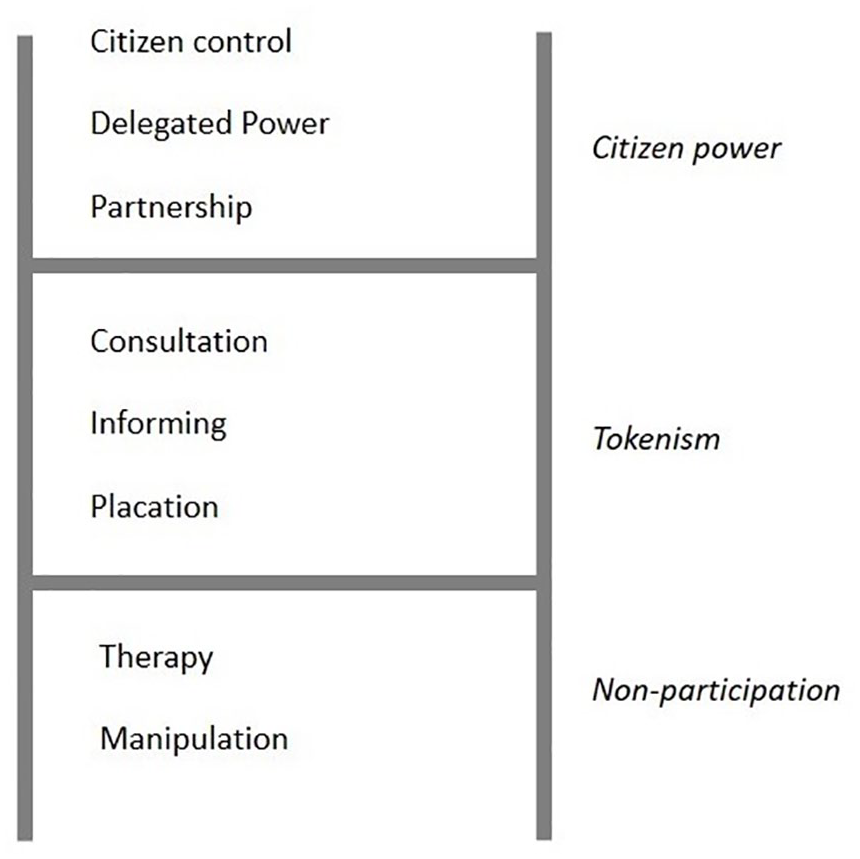
Arnstein’s (1969) ladder of participation.
Andrea Cornwall (2008) highlights how consultation has become widely used globally as a way of adding legitimacy to decisions that have already been made ‘providing a thin veneer of participation to lend the process moral authority’ (p. 270). Her critique could easily be aimed at some forms of social research, which attach the terms ‘participatory’ or ‘co-produced’ to methods that situate participants as vessels of knowledge rather than co-producers or directors of research; participation is more than participants taking part in data collection. Pretty (1995) offers a typology of participation that is perhaps more in line with participatory approaches (Table 3).
Typology of participation adapted from Pretty (1995) cited in Cornwall (2008) highlighted to demonstrate the aims of participation in this research.
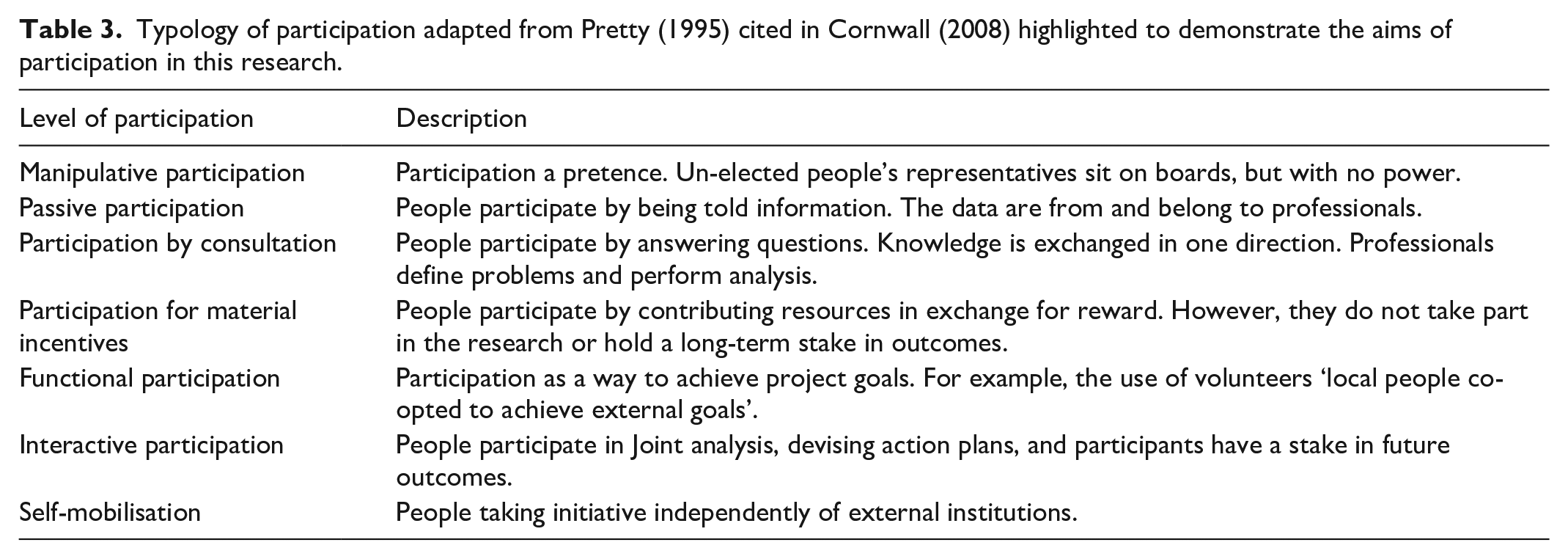
Within PAR, the level of participation that is aimed for is interactive participation. This is reflective of the aims to include members of the participant group at all stages of the research: People participate in joint analysis, development of action plans, and formation or strengthening of local institutions. Participation is seen as a right, not just as a means to achieve project goals. The process involves interdisciplinary methodologies that seek multiple perspectives and make use of systematic and structured learning processes. As groups take control over local decisions and determine how resources are used, so they have a stake in how structures or practices. (Cornwall, 2008: 271)
Within this research, great efforts were made for the level of participation to be as transformative as possible. However, the constraints of the participant group, including their positions in society, responsibilities within their everyday lives, such as motherhood, and the way in which these intersect with the added dimension of punishment, meant that where aspects of the research fell short of transformative participation, representative participation and citizen power was achieved.
While the PAR process offers a simple framework within which participation can be examined, understood and critiqued, the emphasis for ‘meaningful’ participation remains upon the actions and participation of the women in each stage. The burden of participation remains with the community or group who are the focus of the research which, in the case of marginalised populations in particular, can be too great a burden for the emotional and physical resources available to them.
Rachel did not complete a letter to her future self, she decided to place her head on the desk and not participate in that particular method due to her frame of mind that day. However, she did not withdraw from the research and went on to complete a map and take photographs. Abbey did not return her camera, she said she tried to take photographs but had a busy week with her children and forgot to take the camera. Sarah was late to the analysis session because she had to go to a job centre appointment. These examples illustrate the constraints on women’s lives that dictate personal engagement and participation (see Table 1). However, inconsistent participation did not indicate how ‘meaningful’ they considered their individual participation to be. For Sarah, the research highlighted the abusive nature of her current relationship and she comments ‘I need to leave him don’t I?’. For Sarah, her participation in this research was extremely meaningful.
Citizen power, interactive participation and self-mobilisation are the ideal ways to engage participants in PAR as a process. However, ‘meaningful’ participation should also be examined as engagement in the philosophical aspects of feminist PAR, not simply attendance in a set of processes. By bringing together feminist research practices and community-based PAR, a combined epistemological and methodological focus can be applied that prioritises more ‘meaningful’ participation. Hill et al. (2000) identify seven features of this combined approach: Integrating a contextualised understanding; Paying attention to issues of diversity; Speaking from the standpoint of oppressed groups; Adopting a collaborative approach; Utilising multilevel, multimethod approaches; Adopting reflexive practises; and Taking an activist orientation and using knowledge for social change. (p. 760)
When these principles are applied, a research space is created that can facilitate ‘meaningful’ participation that extends beyond process and in to action. Within this research, the participation that was also action could be observed through the process of ‘bearing witness’ and ‘demonstrating reform’.
Bearing witness and demonstrating reform
Meaningful participation in feminist PAR extends beyond participation in the process, in that participation becomes action in itself for the marginalised participant group. For the criminalised women in this study, negotiating the criminal justice system without re-criminalisation and further punishment relies upon them accruing the social capital needed to exit the field of punishment. This is achieved through the demonstration of characteristics of reform while also overcoming the barrier of trauma endured by both the criminalisation process and often prior traumatic events. However, in the course of everyday life subject to community punishment, most women are not afforded ‘free time’ to reflect, discuss and be heard in the way that recovery from trauma demands, nor do the structures of community punishment and probation supervision permit them to adequately demonstrate aspects of their lives that subsequently become assessed by criminal justice practitioners. The co-produced space created by this feminist PAR demonstrated the potential for remedying this by promoting ‘meaningful participation’ as action in the form of ‘bearing witness’ and ‘demonstrating reform’.
Bearing witness
‘Bearing witness’ is critical to the process of recovery from trauma. Victims of trauma need to be given opportunities to have their testimony witnessed, in order for the victim to ‘reconnect’ with, ‘reconstruct’ the traumatic experience (Herman, 1992; Perlesz, 1999), ‘repossess’ the painful experience of separation and loss (Laub, 1992) and ‘reinterpret’ the experience (Perlesz, 1999; White, 1995). In short, bearing witness offers space for the victim to reclaim power from the abuser, overcoming the trauma of the abusive experience.
In order to do this, and to fully ‘bear witness’ to the trauma experienced by criminalised women, the bystander must view the criminalised women as a victim (Herman, 1992) of criminalisation. There must be solidarity with them as victims, which ‘involves an understanding of the fundamental injustice of the traumatic experience and the need for a resolution that restores that sense of justice’ (Herman, 1992: 135). Yet bearing witness involves more than simply viewing those presenting with trauma narratives as a victim; however, it is an essential, non-negotiable, starting point. It is only then that characteristics of trauma can be fully observed, understood and managed: Working through, or remastering traumatic memory (in the case of human-inflicted trauma) involves a shift from being the object or medium of someone else’s (the perpetrator’s) speech (or other expressive behaviour) to being the subject of one’s own. (Brison, 1999: 39)
The process of ‘bearing witness’ to trauma facilitates this shift from the women in this study being subject to the power of the perpetrator of trauma, in this case the criminal justice system, to constructing their own narratives that recognise and retell their stories of criminalisation as victims. This ‘transforms traumatic memory in to a coherent narrative that can be integrated in to the survivors sense of self and view of the world’ (Brison, 1999: 40).
Some scholars and probation practitioners (Anderson, 2016; Cluley and Marston, 2018; McNeill et al., 2017) place the probation worker as therapeutic bystander who has the ability to ‘bear witness’ to the traumatic events that preceded punishment. However, this can neglect the trauma created during the criminalisation process and the probation workers sustained role in the individual’s oppression via criminalisation. By suggesting practitioners can ‘bear witness’ the practitioners are becoming re-situated as therapists, rather than agents of punishment and social control: Therapy requires a collaborative working relationship in which both partners act on the basis of their implicit confidence in the value of persuasion rather than coercion, ideas rather than force, mutuality rather than authoritarian control. (Herman, 1992: 136)
Criminal justice workers are agents of the criminal justice system, an institution of authoritarian power. In the case of gendered punishment, the criminal justice workers are also often women’s centre workers. The twofold nature of this role means that practitioners work to dual and contradictory aims of ‘empowerment’, whereby a therapeutic relationship may be developed, and ‘punish’, a relationship contrary to the aims of therapeutic intervention.
Within this study, Nat, the community service practitioner took part in some of the PAR sessions. Here, she drew a map which she described as showing her journey and was symbolic of the two paths you can choose to take in life. She asserted that she chose a path that led to her crime-free life, but as she comes from the same origins as many of the criminalised women she could have chosen another path that led her to the same criminalisation (Figure 3).
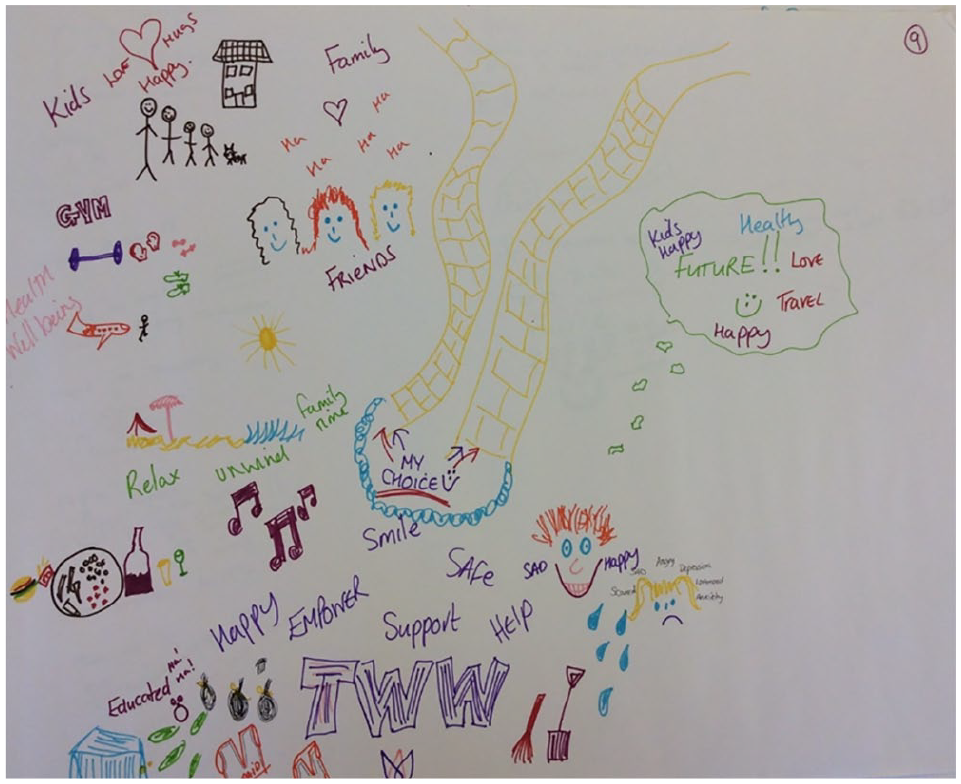
Nat, Criminal Justice Practitioner. Narrative map.
This map stresses the importance of choice, flattening the distinct and layered oppressions and social inequality experienced by criminalised women. In her map and the discussions around it, Nat fails to acknowledge the role of victimisation and trauma in the criminalisation of women, perhaps this is because this is a key area where her biography is different to that of the criminalised women as she does not disclose experience of direct victimisation or trauma in her map or the discussions around it. The emphasis on choice was something that Nat repeated during conversations in which the women discuss their criminalisation as something that happened to them. She repeats the phrase ‘that was your choice though’ throughout the women’s description of their life events. Nat recognises her position in the group as someone who has not held the same experiences as the women, and as such this will lead to different opinions that may potentially either influence the other women’s behaviour and opinions or cause conflict within the group. She is careful to remind herself of this and acts upon it in various ways, asking the women at the start of each session whether they want her to ‘hang around’ (stay involved in the research) or whether she can ‘pop off to get some jobs done’. In these moments, Nat is recognising and relinquishing her power to the group, making it easy for the group to request that she stay or agree to her leaving. Subsequently, the women opted to exclude her, with her consent, from photo-elicitation and analysis. Within the stages of the research, she did take part in, Nat’s opinions meant that she could not situate the women as victims of criminalisation, nor accept that the process of criminalisation itself produced trauma. Therefore, she could not offer herself as a therapeutic bystander to participate in the process of bearing witness. If Nat had remained present throughout all of the stages of research, it is unlikely that due to her dominant perspective and the power this held, that the research space could have facilitated interactions that could be considered as bearing witness.
However, when each of the women in the group shared the common experience of community punishment, the group of women listened to each other’s narratives and validate them with phrases such as ‘I understand, that shouldn’t have happened to you’. They validated their own experiences and the experiences of others. Here, the women self-organised, they asked questions of each other and respected the space as a place of confidentiality but also one where they were not judged by each other. It was in these moments that the women bore witness to each other.
In narrating their stories to a non-judgemental audience who did not question, but validated, their status of victims of trauma-inducing events, the women in this study also spent the time in reflection, even when they did not participate in the sharing of experiences. Pauses in time, including what may be considered non-participation, offered space for reflection – ‘a process essential for the development of one’s professional self as well as for growth more generally’ (Davies, 2003: 141).
Davies (2003) highlights that opportunities to pause and reflect within the daily lives of women are often scarce due to the routines filled with responsibility for others that populate the time and space within which women exist. Women’s ‘free time’ is often communal time that others often lay claim to, such as maternal commitments. For criminalised women, any chance of ‘free time’ is filled with rehabilitative or punitive activities. Therefore, particularly for the women in this study, this co-produced space disrupted the regular routines of responsibility and permitted time and space to reflect upon themselves, in relation to the broader contexts of their lives and of each other’s.
The creation of a co-produced space for criminalised women offered time and space to bear witness to each other’s trauma narratives while also offering time for reflection that would have otherwise been filled by her responsibility to others, whether that be through caring responsibilities or to fulfil the demands of punishment. This is crucial for the management of trauma, and in order for her to demonstrate reform characteristics that will aid in the safe transition through punishment without experiencing further criminalisation.
Demonstrating reform
The process of criminalisation has both physical, through the surveillance or confinement of punishment, and psychological implications, manifesting as trauma. Upon sentencing from the court, the (re)criminalised individual becomes the focus of supervision by formal agents of social control from various institutions within the criminal justice system. The aim of this supervision, whether to punish, deter or rehabilitate, is up for debate. However, under current models of probation practice, supervision is predominantly utilised to assess and reduce the risk of re-offending (McNeill, 2006).
In order to accomplish this task, prison officers, probation staff and deliverers of community service observe, interview and collect information about the women’s life, development, thought processes and motivations. While this initially appears to be a one-sided collection of knowledge about the criminalised woman, she is not passive in this process. She is also observing and collecting knowledge which will help her negotiate punishment. It is during this exchange, while engaging with the criminal justice services that form the penal field, the women develop and mobilise specific strategies that aim to lessen the power felt through being considered high risk of reoffending.
Put simply, through the process of punishment, the criminalised woman is made aware that not only is she being observed, and her risk assessed, but that certain characteristics of her everyday life are deemed problematic and as such must be minimised, and other characteristics demonstrate reform of her character and must be emphasised. For women, characteristics of reform centre around her (re)commitment to the norms of hegemonic middle-class femininity. This can be viewed most explicitly in demonstrations of motherhood (Figure 4).

Sarah, Peer Mentor. Walking son to school.
The contexts of punishment and supervision within which the women in this study were observed did not offer any opportunity to demonstrate mothering; specifically, children were not allowed in to the women’s centre and there was no childcare available. Ordinarily, the act of mothering would be in conflict with the process of negotiating punishment, with women relying upon (ex)partners or extended family to care for children while they attend the women’s centre for punishment or probation appointments. The inability to secure alternative childcare could result in missed community punishment hours or probation supervision appointments, increasing the perceived risk of the woman and increasing the surveillance placed upon her daily life.
Through the co-produced space of this research and when given the opportunity to demonstrate the wider context of their everyday lives, all the women in this study decided to demonstrate mothering or the ability or desire to mother. Sarah, a peer mentor, showed her perspective as she walked her son to school. Rachel, who did not have any children, included her nephew in her narrative map (see Figure 5). When prompted by Nat the criminal justice practitioner, she then added ‘Trying to turn life around – trying for a baby’ to the end of her map.
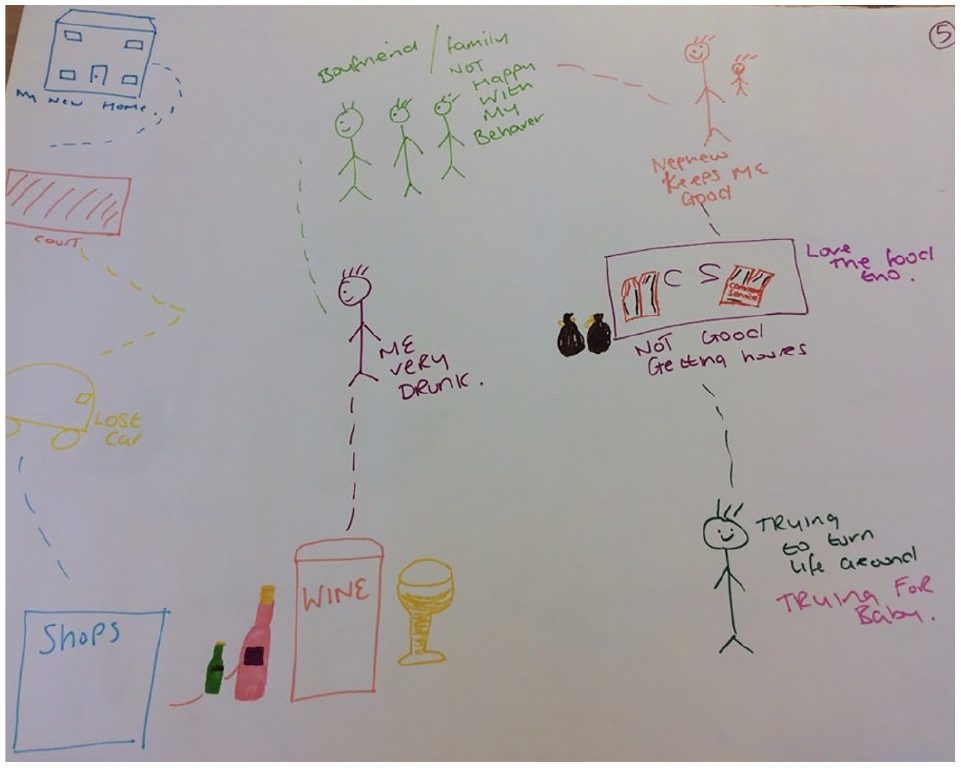
Rachel, subject to community punishment. Narrative Map.
These demonstrations of mothering or the desire to mother offer an opportunity for the criminal justice practitioner to observe the criminalised woman’s renewed commitment to aspirational forms of womanhood. Sarah gladly demonstrated her role as a mother who is committed to her child’s health, well-being and education by showing her walking her child to school.
The practitioner is continually making judgements and risk calculations about each of the women’s risk of re-offending, which in turn will either increase or decrease the amount of supervision or scrutiny each woman will receive depending upon their behaviour and attitude. By demonstrating her mothering, Sarah is building symbolic ‘reform’ capital as a ‘good mother’ that will lower her risk and lessen the grip of surveillance slightly. Rachel is showing that she understands that showing she wants to be a mum may loosen the grip of surveillance, yet her behaviour and the demonstration of the wider context of her life also shown on her map betray her demonstration of approved forms of motherhood.
Similar to research by Brady and Brown (2013), this research sought ‘to create a space where . . . women could offer an alternative narrative to the overwhelmingly dominant negative discourse’ (p. 100). The co-creation of space for research can offer a space for criminalised women to use to ease the burden of traumatic events or demonstrate ‘reformed’ identities. However, while this action through participation can begin to push back upon the very specific oppressions felt by criminalised women, it in itself cannot promise liberatory returns. As such it would be disingenuous to claim that this research has challenged existing social arrangements, rather it has facilitated a space for such social arrangements to be laid them bare to the scrutiny of those who experience them through the multiple oppressions they produce. By observing and acting upon the potential for improved emancipatory practices, collaborations in research can begin to fulfil the promise of action. However, it is only through recognition and legitimation of the knowledge in this research produced by those who have the power to challenge structures of inequality, injustice and oppression that collaborations in research will produce long-lasting meaningful change: It is only by foregrounding the experiences of those failed by institutions and responding to the tensions that are presented when individuals speak truth to power (Scraton, 2007) that strategies for change and action can be secured. (Clarke and Chadwick, 2017)
Conclusion
Feminist criminology, often in collaboration with critical criminologists, is at the front lines in pushing back against androcentric knowledges that reinforce hierarchies of knowledge and power within this criminal justice system. Feminist criminologists such as Carole Smart (1977), Pat Carlen (1989) and Emily Luise Hart (2017; Hart and Schlembach, 2015) have been instrumental in pushing back against the prison regime in the interests of female prisoners and the prison population more generally, often using this as a way to question the knowledge that criminology holds and promotes about some of the most marginal in society. This research has sought to expand upon this legacy.
Focusing upon women punished in the community is a deliberate attempt to extend the abolition argument beyond the prison gate while also introducing new forms of more democratic knowledge production in the form of collaborative methods, to a discipline that is torn between honouring critical philosophical debates about punishment, crime and its control, and serving to replicate the power hierarchies found within the criminal justice system.
The decision to re-situate PAR within a feminist methodology allowed for a roadmap, in the form of the PAR spiral, to guide participation in research while staying true to feminist principles and politics. It is through the examination of this research that questions about what types of participation are desirable or can produce meaningful action arise. Comparing the research process to the typologies of participation provided by Pretty (1995) and Arnstein (1969) showed that prioritising participation through a PAR cycle could ensure citizen power, interactive participation and lead to self-mobilisation. However, the emphasis on participation in process did not necessarily offer ‘meaningful’ participation for the participant individual or group.
There is no doubt that PAR and creative methods challenges existing power roles, often flattening the power hierarchies entrenched in criminal justice, but in doing so PAR does not necessarily challenge gendered stereotypes or social arrangements. Rather it lays them bear to scrutiny and reflection by those that experience them.
Some of the most meaningful moments in the research relied upon collaboration between the participants themselves, with the research space offering time for reflection and healing through the criminalised women bearing witness to each other’s trauma, experienced both prior to and during processes of criminalisation. Carefully considered collaboration with criminal justice practitioners was also key in using the research space to build symbolic ‘reform’ capital, achieved through the demonstration of gendered characteristics of reform, which are inextricably linked to notions of hegemonic femininity, such as prioritising motherhood.
This research shows that focusing upon participation in the research process is only the first step in creating the ideal conditions for collaborative action. While feminist and action researchers should structure collaborative research process around ideal typologies of participation, whether that participation is meaningful should not rest at the participant groups ability or desire to participate. Rather, meaningful participation should be considered by how the research space created is used in collaboration with others from the participant group and invited others.
Collaborative research with marginalised groups holds promise for more democratic forms of knowledge production when performed within feminist principles and PAR processes. However, it is only when we move beyond typologies of participation, towards an understanding how participation in the created research space responds to the groups wider oppression, such as overcoming trauma or demonstrating reform, that we can consider the potential for ‘meaningful’ participation to promote emancipatory action.
Footnotes
Declaration of conflicting interests
The author(s) declared no potential conflicts of interest with respect to the research, authorship and/or publication of this article.
Funding
The author(s) disclosed receipt of the following financial support for the research, authorship, and/or publication of this article: This research was funded by a full PhD studentship from the Sociology Department at Manchester Metropolitan University (2015–2018).
