




Abstract
Children with disabilities often experience exclusion within their communities, and this exclusion can extend into research processes. The United Nations Convention on the Rights of the Child, however, emphasizes that children of all abilities need to be involved as decision makers in matters affecting them. This article provides an in-depth description of the process of a participatory action research project carried out with children with disabilities from a rural village in India. It argues for the utility of participatory filmmaking as a research methodology that supports inclusion of children with disabilities as co-researchers in research and action processes. The different phases of the research project, namely the preparatory, participatory research, and the action phase, are made transparent along with the details of activities carried out within each phase. The technical and pragmatic challenges faced within this participatory filmmaking process are pointed out, and strategies used to negotiate challenges and adapt this methodology to fit context-specific needs are shared. This account of the complex, yet flexible and adaptable, participatory filmmaking process is presented as means to support critical and informed uptakes of participatory filmmaking for inclusive research practices with children with disabilities.
Keywords
Introduction
Globally, children with disabilities are at risk for experiencing exclusion within their communities (United Nations Children’s Fund (UNICEF), 2013). This exclusion is often reproduced within research (Jones, 2007), which may be linked to assumptions of incapability (Wickenden and Kembhavi-Tam, 2014). Researchers may wrestle with scepticism related to children’s capacities (Lundy, 2007), issues of power, and the many unknowns regarding how to include children with disabilities within research, which is further superimposed by fears related to the efforts and resources needed to collaborate with them (Wickenden and Kembhavi-Tam, 2014). In turn, children with disabilities have been traditionally positioned as passive research subjects rather than as active collaborators (Gray and Winter, 2011).
However, consistent with Article 12 of the United Nations (1989) Convention on the Rights of the Child which emphasizes the need for children of all abilities to be involved in decision-making related to matters affecting them, there is a growing interest in inclusive research practices that include children with disabilities in sharing perspectives and advancing solutions on issues concerning them (Gray and Winter, 2011; Wickenden and Kembhavi-Tam, 2014). In addition, the ‘nothing about us without us’ movement by the international disability community also explicitly makes a call for people with disabilities, including children, to be given spaces in society as equal citizens with decision-making power (UN Chronicle, 2004). From a critical paradigmatic perspective (Ponterotto, 2005), involving children with disabilities as co-researchers within research processes can enable creation of alternative stories that challenge the status quo characterized as ‘a world filled with (mis)representations of disability’ (Rice et al., 2015: 516). Lundy (2007) has proposed four components to better support the involvement of children of all abilities in decision-making processes affecting their lives: providing a space for children to express their views, a facilitation of their voices, an audience to listen to their perspectives and an influence to mobilize action based on their views.
Participatory methodologies are one approach to research that can provide a space for children to be co-researchers through disrupting power differentials between adult researchers and children, positioning childrens’ perspectives as central to guiding research processes (Watson and Fox, 2018). However, involving children, with and without disabilities, as co-researchers requires adapting research methods to expand the understanding of voice beyond verbal or written communication (Alderson, 2008). Visual research methodologies have been acknowledged as one way of creating alternative spaces for communication and collaboration (Patton et al., 2011), and are positioned to support inclusive research practices with children (Wickenden and Kembhavi-Tam, 2014) and mobilize transformative research agendas (Ritterbusch, 2016). Consequently, there has been an increase in the uptake of photo elicitation and photovoice in research with children with disabilities (Ha and Whittaker, 2016; Nguyen et al., 2015; Phelan and Kinsella, 2014; Wickenden and Kembhavi-Tam, 2014); however, with a few exceptions (Shamji, 2007), little research has been conducted on utilizing participatory video or filmmaking (Benjamin-Thomas et al., 2019).
In this article, we share the participatory filmmaking process of creating the short film. 1 This short film was created within a participatory action research (PAR) project with children with disabilities from a rural village in Southern India utilizing participatory filmmaking. Specifically, we aim to present a transparent account of the different phases of this project and the activities carried out within each phase, pointing to ways this process was modified in relation to contextual features and challenges. Through our description of this process, this work provides a response to the identified need for examples that explicate how researchers have attempted to include children with disabilities as collaborators because often their ‘involvement is poorly defined, and methods inadequately reported’ (Bailey et al., 2015: 506). The transparency of this complex yet flexible process can support other researchers when they are thinking about ‘how’ participatory research can be carried out with children with disabilities.
We first contextualize this project by briefly describing participatory filmmaking as a research methodology with particular utility within inclusive research practices with children with disabilities. Subsequently, the first author’s reflexive positioning within this research and the research context is explicated. We then present details of the different phases, and activities carried out within each phase of this participatory filmmaking process. We also share key contextual challenges faced during this process and adaptations made to address these challenges. We conclude by discussing the responsibilities researchers need to embrace when utilizing participatory filmmaking for inclusive research practices.
Contextualizing the project
Methodology
Participatory video or filmmaking is a collaborative process where community members use cameras to document, explore and critically engage with social issues through creating a film that reveals hidden social relations, communicates information and stimulates collective action (Gubrium and Harper, 2013; Mitchell et al., 2012). Consistent with critically informed participatory methodologies, participatory filmmaking is recognized as a research methodology and a tool for community development (High et al., 2012; Mitchell et al., 2012). As a research methodology, its theoretical underpinnings include Freire’s work in critical pedagogy (Schenscul and Dalglish, 2015; Waite and Conn, 2012) and feminist theories (Waite and Conn, 2012), both focused on creating spaces for marginalized groups to voice concerns through dialogue and shared reflection as a means to mobilize change. This is based on the assumption that ‘when the most marginalized themselves are engaged in identifying the issues that affect them and the possible solutions for addressing them, the interventions are more likely to work’ (Moletsane et al., 2009: 329). In addition to contributing to social transformation, personal transformation can also be enabled through the reconstruction of personal experiences (Moletsane et al., 2009) and the gaining of technical skills.
Broadly, the steps within a participatory filmmaking process encompass collaborative brainstorming of ideas, getting to know the camera, storyboarding, working with the camera, shooting, viewing videos after the shoot and post-production follow up (Mitchell, 2011). There are, however, different approaches to participatory filmmaking, which can vary in terms of the types of films created (e.g. documentary, fictional), methods used for making films and types of editing approach (e.g. no editing-required, with editing, or a live first take) (Gubrium and Harper, 2013; Mitchell, 2011). As such, there is no one way of carrying out this methodology as the process needs to be adapted to the cultural context, the participants and the community context.
Although participatory filmmaking has not widely been used with children with disabilities (Benjamin-Thomas et al., 2019), it is proposed that this methodology can open spaces for understanding socio-political contexts shaping issues concerning children with disabilities and their communities from their often-neglected point of view. In fact, ‘art can sometimes be used to trouble the embedded and taken-for-granted relations of disability. Drawing on the arts can force us to relate radically to disability in ways not easily available to us in our everyday lives’ (Ignagni and Church, 2008: 631). Although participatory filmmaking can promote inclusive research practices and stimulate social transformation, this methodology in and of itself ‘holds no guarantee of truth or liberation. It never completely exposes the invisibility, the darkness or the unknown’ (Tilleczek and Loebach, 2015: 356). Thus, in carrying out such projects, there is a need for ongoing modification to ensure key underlying principles are attended to in contextually relevant ways and that efforts extend to mobilizing action.
Researcher positioning
Researcher reflexivity, involving engagement in explicit self-awareness of one’s thoughts, roles, feelings, actions and positionality (Finlay, 2002), is central to quality within critically informed research (Whittemore et al., 2001). The process of inward reflexivity, and reflexivity addressing situatedness of self and project in context, facilitates exploration of how a researcher’s personal experiences and values, shaped by dominant socio-political and cultural forces, have an influence on his or her research interests and research processes (Berger, 2015). This process of ongoing reflexivity, which ideally starts from project inception (Finlay, 2002), supports researchers in questioning dominant ideologies, as well as in enacting change (Phelan, 2011). To better contextualize this project, the first author shares reflexive notes regarding her positioning, making transparent the intentions for doing this work and the rationale for using this methodology within this PAR project: I write from the position of being a woman of South Indian origin, but currently located within a North American institution pursuing my PhD education. This project was carried out as a part of my PhD thesis work within the field of occupational science. This work came out of my dual interests of working as an occupational therapist with children with disabilities and advocating for their rights and inclusion, and my interest in using creative and innovative methods and methodologies for mobilizing transformative research agendas. I have always believed that visuals can be powerfully used for amplifying voices seldom heard in media, which are important voices for challenging the status quo and stimulating change. Situating my experiences in film making, I want to clarify that I am not a professional filmmaker and neither have I had any formal training in film making. However, with that being said, I have experiences in creating short films for personal as well as some professional work, and I would call myself a self-taught film editor. These novice film making skills coupled with my interests in filmmaking and photography helped propel this participatory filmmaking project. Additionally, I want to make transparent my relationship with the local institution through which this project was carried out. I did my undergraduate education within this institution in India and was familiar with the villages it serves. Moreover, I am fluent in speaking Tamil, the language spoken within these communities, as it is my mother tongue and I grew up speaking Tamil with my family. Language fluency played a central role in building relationships, and in turn, collaboration. However, in spite of me speaking the same language and being from the same ethnic group, I was still constantly navigating my varied positions as both an insider and outsider (Merriam et al., 2001) as I come from a very different background having grown up in a metropolitan Indian city, holding different educational and life experiences. Based on my experiences as a pediatric occupational therapist, I believe that children with disabilities are positioned as social actors who should be provided with a space for their perspectives to be heard and acted on. Participatory filmmaking is a tool that I perceive can be used to guide inclusive research practices, as it works towards breaking down power differentials and creating a space for alternative means of communication. Moreover, films are powerful visuals that can be used to mobilize social change.
Research context
This project was carried out through a community health department of a Medical College and Hospital in India. Since the 1960s, this department has encompassed a network of healthcare professionals who provide health, development and training services in a geographical area encompassing approximately 85 villages (Muliyil et al., 2018). This PAR project was carried out in one village within this geographic area, which encompasses a population, according to the 2011 census, of just under 5000 people (Indian Village Directory, 2019).
Overview of the participatory filmmaking process: creating [Oorai Kaatha Pasanga]
This PAR project involved six male children (aged 10–17 years), who were identified by healthcare practitioners or their community members as having disabilities (visual impairment, speech and hearing impairment, intellectual disability, or no formal diagnosis), as co-researchers. Although the project recruitment was open to males and females, it is not known why only males were identified for this project within this community. The objectives of this project were to (a) explore firsthand perspectives from children with disabilities about if and how they participated in occupations (i.e. the everyday activities within the context of their daily lives), (b) support them in identifying barriers and supports related to occupational participation, (c) support them in envisioning what change they needed and wanted related to everyday occupation, (d) work with them and key community stakeholders towards addressing identified barriers and mobilizing community change.
Overall, children with disabilities collaborated with the first and third authors (facilitator and co-facilitator of study process) in selecting the methodology of participatory filmmaking, identifying and prioritizing issues they were concerned about within their communities, creating narratives about the identified issues, capturing relevant video clips and co-editing the short film with the first author. This film shared firsthand perspectives addressing issues in the childrens’ community including (a) teasing, bullying and marginalization of children with disabilities within schools and the larger community, (b) garbage accumulation, (c) substance abuse by adults and youth and (d) deforestation.
This PAR project was broadly divided into three phases, and the details for each phase are described below (see Image 1). The first author travelled to India for the preparatory phase and remained in the context for 8 months until completion of the participatory research phase and the initiation of the action phase. This research project obtained ethical approval from the relevant university and medical facility ethics boards in Canada and India.
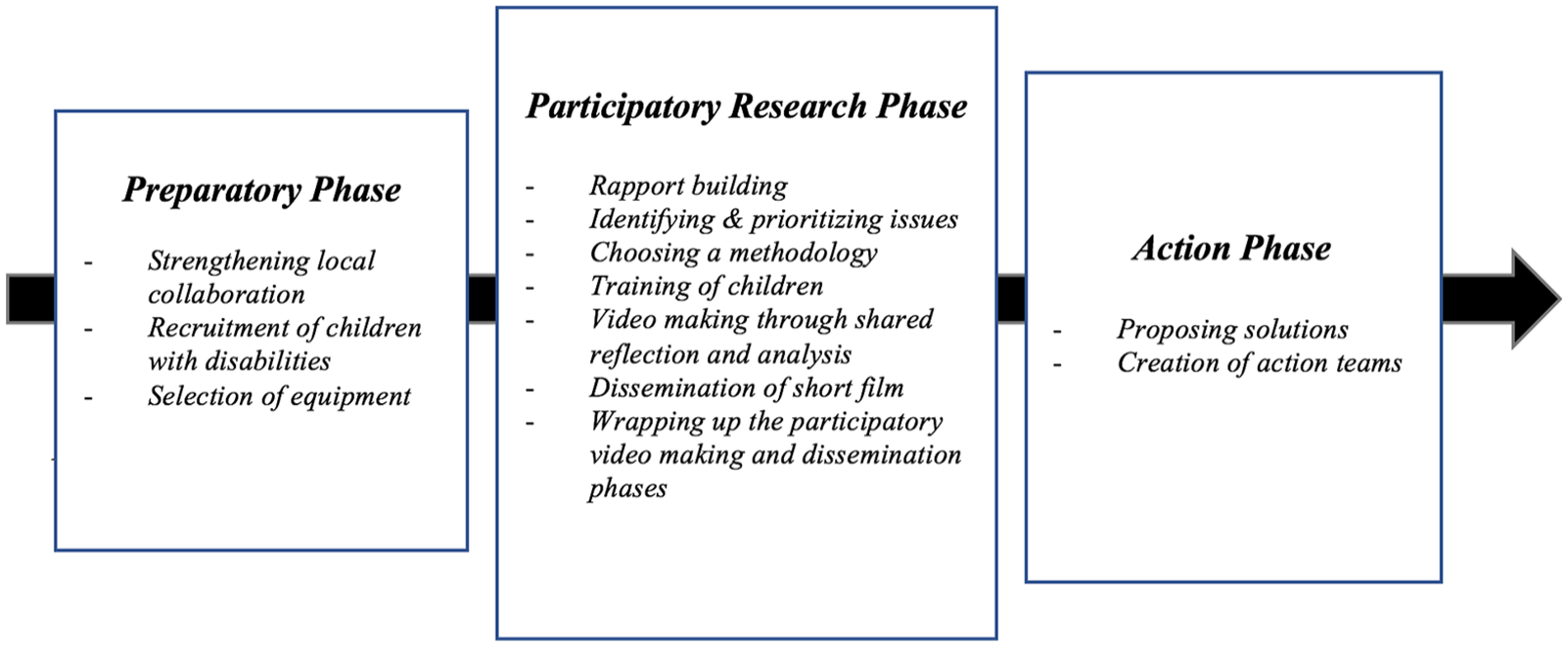
Phases of this participatory action research project.
Preparatory phase
Strengthening local collaboration
Although the primary or first author had established connection with the local collaborators (i.e. one physician and two occupational therapists from the collaborating institution in India) virtually, the project was officially initiated after she travelled to India. She had regular in-person meetings with local collaborators to discuss the broad project objectives, and the values and central tenets of equitable collaboration and social transformation this PAR sought to embrace (Benjamin-Thomas et al., 2018). The first author worked with them in collaboratively finalizing team member’s roles. In addition, the first author reached out to potential volunteers with skills in photography and filmmaking to explore their interest in providing training to the children.
Recruitment of children with disabilities
When ethical approval for this project was obtained from required institutions, the first author visited four villages with a local occupational therapist, who identified these villages based on his knowledge about village demographics and the potential to host this project. We sought to identify a group of children from the same community to work together on this collaborative project. Through this process, one village, which had six to nine children with disabilities, was collaboratively identified.
Recruitment efforts within the identified village, using culturally and linguistically relevant posters and recruitment meetings, were mobilized with the help of a community health aide, who was a member of that village that worked for the local collaborating institution. The community health aide visited the houses of children with disabilities who fit the inclusion criteria and handed out posters about this project along with the letter of information, and the parents and children were invited for a recruitment meeting. After a 2-week period, the recruitment meeting was conducted within their village with parent(s) of eight children, and six children were present. During this meeting, the first author presented the details of this project, went through the letter of information, and addressed questions parents or children had about this project. Parent(s) of six children were interested and provided written consent for their child’s involvement. The parent(s) of the other two children had expressed needing more time and were asked to connect with the local health aide if they were interested at a later point. This meeting was followed up with a subsequent session with just the children to share information about this project and to obtain their assent for involvement.
Selection of equipment
The selection of equipment for the video making processes was based on the resources available for this project. The first author along with a professional photographer (third author) engaged in numerous discussions about the different kinds of cameras that might be needed, especially since the videos were going to be captured in ways that were unidentifiable. Digital single lens reflex (DSLR) cameras were discussed as tools that could aid in creating de-identified videos as they provide a depth of field and enable blurring of backgrounds easily. However, they were expensive and not easily accessible within the scope of this project, as cameras for this project were borrowed from friends and family by the first author. After consulting with a videographer, we decided to use point and shoot digital cameras. Six cameras were gathered for use within this project, and one of the six cameras was a mirrorless camera which can be considered as a bridge camera between a DSLR and a point and shoot. In addition, we had one gorilla tripod as well as the first author’s laptop, a MacBook Pro, to use for film editing.
Participatory research phase
Rapport building
As Alderson (2008) states, ‘a striking aspect of children’s research is the combining of work and play’ (p. 284), and ‘fun’ was a key component to support children’s role as collaborators within this research project. Thus, the initial phase focused on building rapport and trust with the children through fun activities and games, including hide and seek in the paddy fields or the temple area, a game of cricket using sticks as the wicket stumps, follow the leader game with Tamil kuthu (translated as upbeat) songs, and others. To better promote the full involvement of children with disabilities, we adapted the games to make them more inclusive by methods such as using visual cues in addition to auditory information to facilitate participation of a child who had a hearing impairment and experienced difficulty with verbal communication. We also adapted games to sensitize our group of children about the needs of their peers within the group. For example, colourful headphones were used, and white noise was played in the background, and each child had a chance to wear the headphones and simultaneously listen to what the other children were trying to communicate. This game helped children understand the experience of their friend and group member who had a speech and hearing impairment. Incorporating ‘fun’ into this process played a central role in not only building trust and rapport but also in facilitating learning.
Identifying and prioritizing issues
In addition, group meetings provided children with information about the project (i.e. its focus on issues related to occupation) and its proposed methodologies (i.e. participatory filmmaking or digital storytelling), which was done through the use of age and culturally appropriate activities. For instance, relevant illustrations on ‘occupations’ (i.e. the everyday activities that we need and want to do) within this cultural context were drawn specifically for this project and were printed as stickers. Children sorted these stickers based on whether they liked doing these occupations or not (see Image 2), which initiated discussions about the concept of ‘occupations’. As a next step, we used Post-it stickers to help children jot down the different occupation-based issues they wanted addressed through this project, and consequently used a tree diagram to help prioritize these issues, with the issue of highest priority placed on top (see Image 3). After a few meetings, children collaboratively established the themes of focus for this project by choosing topics of concern at the individual and community level (i.e. teasing, bullying, and marginalization of children with disabilities, garbage disposal, substance abuse by adults and children, deforestation).
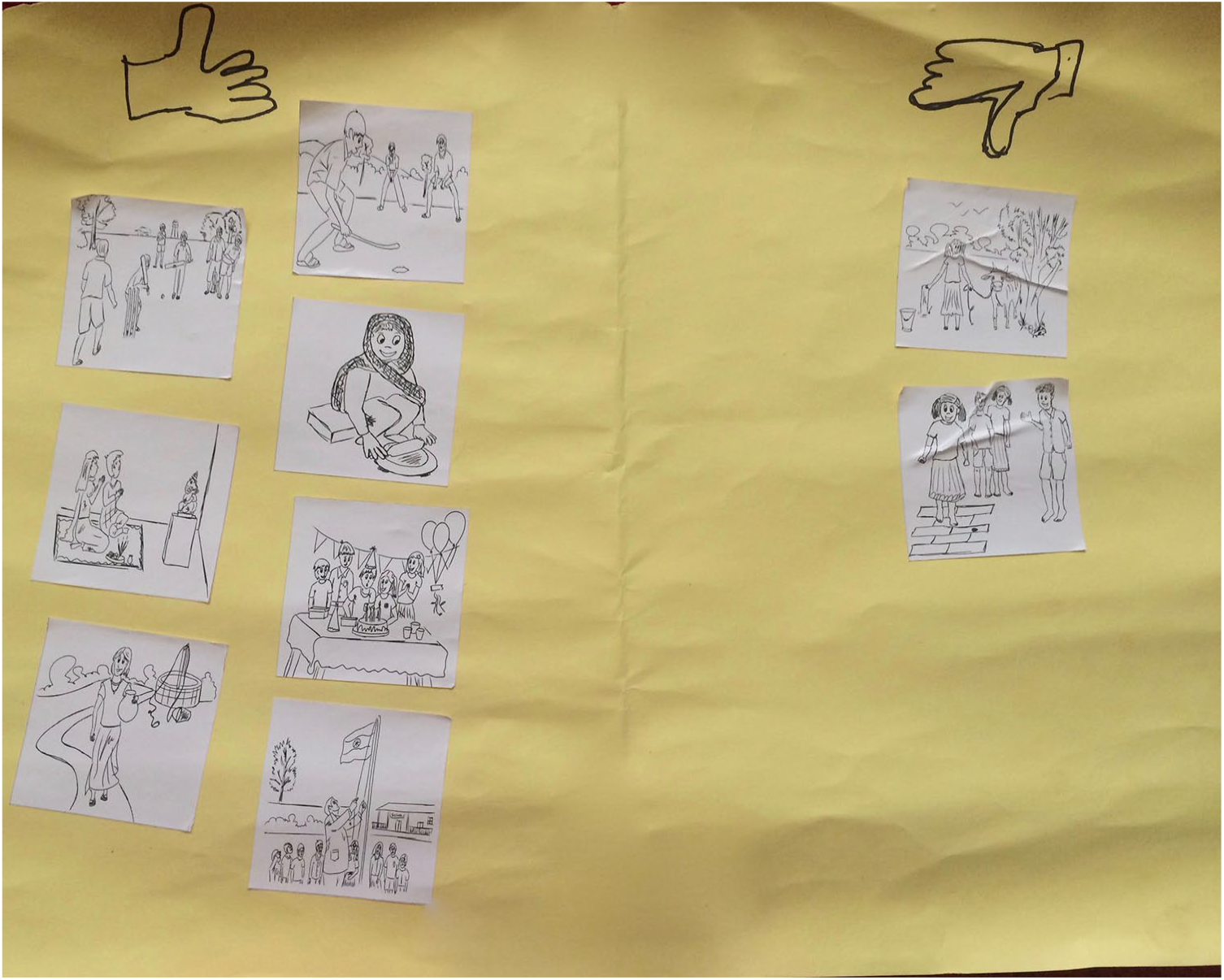
Sorting culturally relevant visuals about occupations.
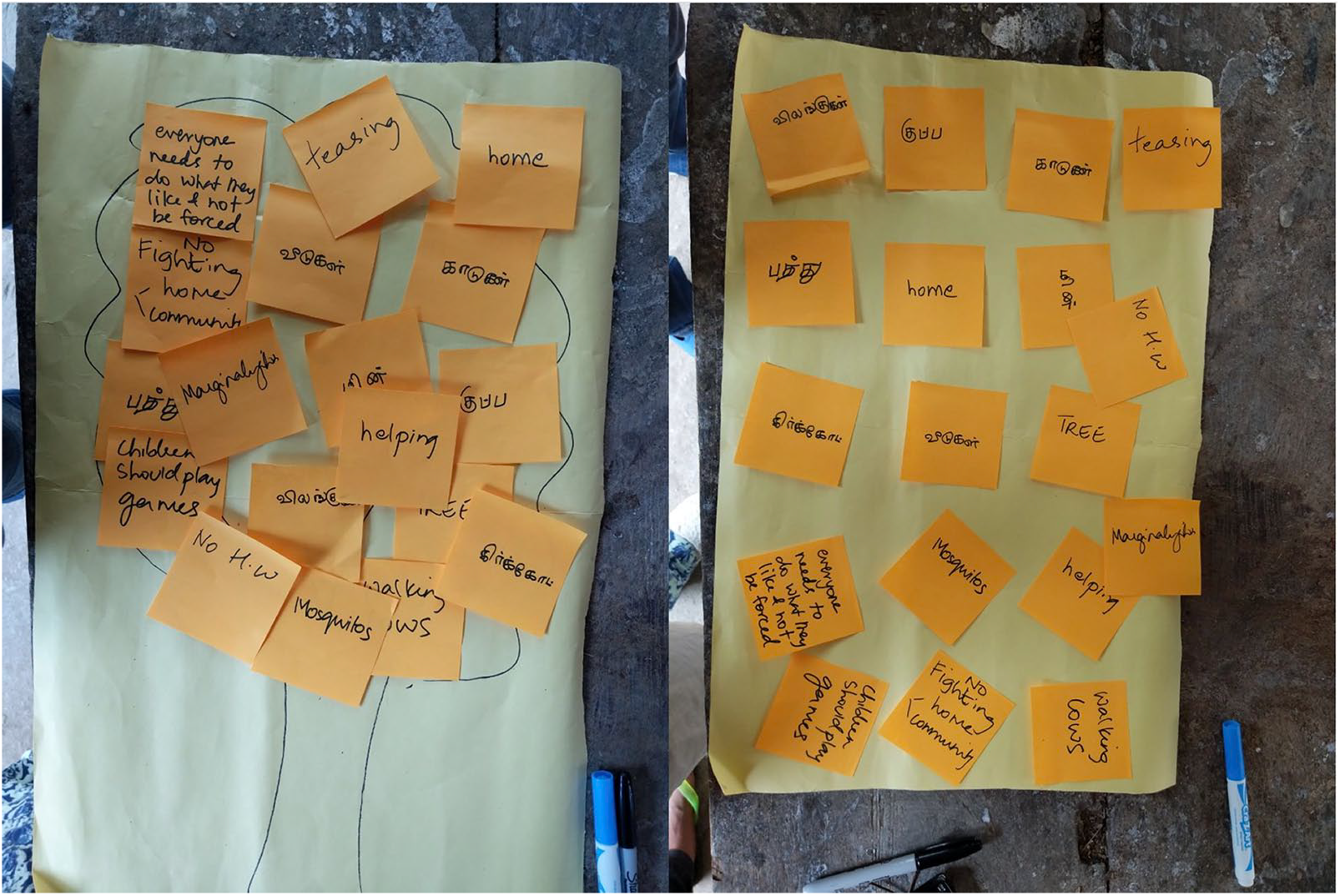
Using post-its for identifying and prioritizing issues.
Choosing a methodology
When issues were being explored, children were provided two methodology options, specifically, the use of either digital storytelling (a process that involves creating short 2–3-minute multimedia fragments with images, videos, texts, music and a narrated voice to covey personal or community experiences: Gubrium, 2009) or participatory filmmaking (a collaborative process of engaging in social issues through creating a shared film: Gubrium and Harper, 2013). We differentiated these methodologies based on whether children wanted to create individual video narratives (i.e. digital storytelling) or a group video (i.e. participatory filmmaking). Participatory filmmaking was the choice made unanimously by the children as all of them preferred to work on a shared group project.
Training of children
A genuine barrier to children’s participation in research is not their lack of competency, but a lack of research skills that can be attained through training (Kellett, 2011). Within this process, children with disabilities were provided initial training on camera use and visual research ethics. Training on camera use encompassed how to hold a camera, turn it on, focus the image, use the rule of thirds, learn manual functioning details, record video clips, pan videos, and use of efficient lighting. For most children, this was their first time using a camera, but they were very quick at learning basic camera skills. The local professional photographer involved in this project, initially as a volunteer but later as a co-investigator, helped with this training process as well as in co-facilitating some meetings with the first author. Information on visual research ethics, that encompassed the importance of consent, confidentiality, and identification within visuals, was also discussed with the children.
Based in the recognition that ‘research can be a powerful tool for social change and for maintaining the status quo’ (Potts and Brown, 2015: 19), a key ethical decision made by the first author, in collaboration with committee members, in the proposal stage was that all videos created would be unidentifiable. For example, photos and videos of objects would be used to represent issues and people in different ways, and any faces of people would be de-identified through use of blurring. Disability within the Indian context has been linked to negative stereotypes, including, being considered ‘evil’, ‘of lower status’, or seen as a retribution for past and present sins (Anees, 2014), which shape and contribute to situations of marginalization (Wolbring and Ghai, 2015), and the researchers sought to avoid further marginalization through the course of this project. Although there was the potential to blur out identifying visuals after filming, the first author wanted to support the children to use their creativity to capture visuals in an unidentifiable manner so the final film would be aesthetically pleasing. Given this, training encompassed key elements of how to capture video footage without having identifiable information and children were given the space to creatively do so. The training process was ongoing based on what children needed help with during specific parts of the video making process.
Video making through shared reflection and analysis
Following completion of initial training, children with disabilities met regularly as a group to discuss and engage in shared reflections surrounding the issues they had identified. During this period, children used cameras as tools to visualize their thoughts related to the identified issues. Overall, this process involved cycles of discussions, capturing of video footage based on discussions, followed by viewing footage and further engaging in deeper shared reflections (see Table 1 for an overview of meetings and activities). This cyclic process of information gathering and shared reflections acted as a means for collaborative dialogic analysis, where shared dialogue among the group was used as means to explicate further understandings on issues identified and potential solutions. Specifically, this dialogic process of analysis addressed the ‘primary text’, which included the media produced by participants (Gubrium and Harper, 2013), and was carried out with the children using the SHOWeD approach to analysis, which encompassed questions like, what do you see here? What is really happening here? How does this relate to our lives? Why does this problem, concern or strength exist? What can we do about it? (Wang et al., 2000).
Overview of meetings and activities.
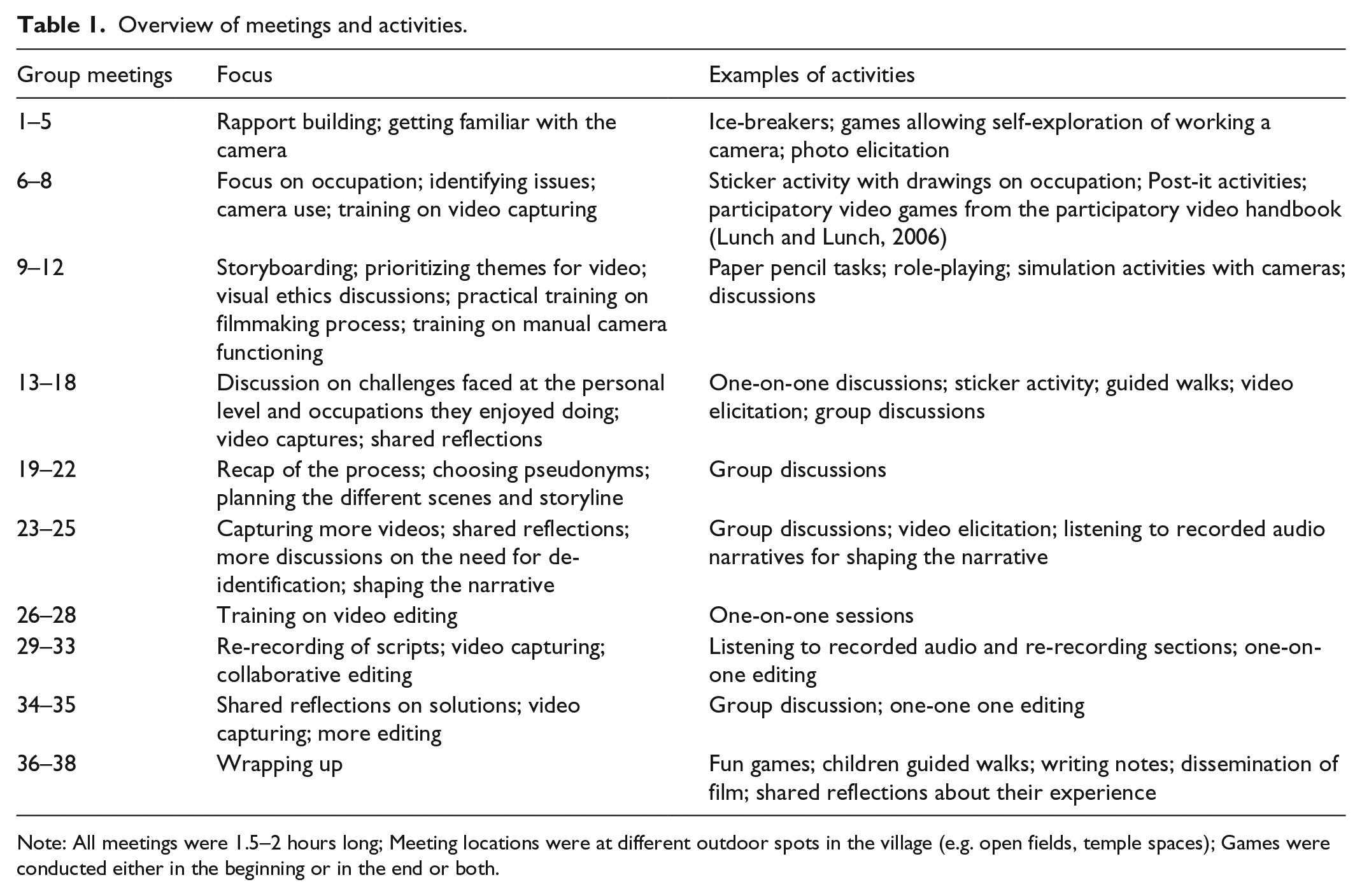
Note: All meetings were 1.5–2 hours long; Meeting locations were at different outdoor spots in the village (e.g. open fields, temple spaces); Games were conducted either in the beginning or in the end or both.
Overall multiple methods were incorporated to facilitate discussions and shared reflections among this group. Many of these methods were chosen by children. For instance, guided walks to specific spots within their village were common as they wanted to capture videos related to their issues of concern and engage in deeper discussions and reflections based on what they saw in the physical environment. Role-playing was another method that children used when they were engaged in learning the filmmaking process. They chose topics, decided on their roles (e.g. actors, producer and videographer) and enacted different scenes about their topics (e.g. issues of teasing and bullying of children with disabilities). These role-playing sessions helped them further engage with the issues of concern and share some of their personal experiences with the group while also engaging in the process of filmmaking. Some methods were also initiated by facilitators. For instance, drawings on paper were used by the facilitators so children could visually represent the different scenes that they wanted to capture within their film. Photo and video elicitation were also used during the training period so children learned how to choose a topic, capture related visuals within their communities, and then circle back as a larger group for discussions. Finally, one-on-one discussions, in places chosen by the children, were used to enable children to share personal experiences when it was hard for them to do so in a larger group, especially during the initial days of the participatory filmmaking process. All these methods combined together helped to facilitate shared reflections.
All discussions were audio recorded and sections from these discussions were used to create the narratives for the final video. Children often chose not to re-record what they had previously said within the discussions and worked with the first author to split the audio clips from their recordings and create their audio narratives. The first author listened to all meeting recordings multiple times and developed an overall story line from the children’s narratives, in a manner that had no repetition of information, which created a platform for the editing process. During editing, the children had the opportunity to further refine their storyline, and information was removed, added or moved around based on their preferences. In addition, the first author had regular phone conversations with local film makers to support her learning about the filmmaking process, which she incorporated within this project.
All children were trained by the first author in the process of putting together different media to create a film (i.e. videos, voice overs and music), that is, skills related to video editing using the iMovie software (version 10.1.6. Apple Inc. 2001–2017), which is a basic and user-friendly film editing software. Each of them had the opportunity to individually first create a short 1-minute video as a practice video with the clips they had captured. The first author worked with each child individually, for about 2 hours, showing them how to use a laptop, how to open the different folders on the computer and then how to use iMovie for the editing process. When working on iMovie, children made decisions with regard to what videos they wanted to use, background music, as well as filters for visuals. Overall, the children found the concept of filmmaking and editing very interesting as well as relatively easy on the iMovie software.
Later, these skills were utilized when making the final video. Based on their level of interest, children were involved in editing different pieces of the final video, such as, trimming audio, dragging relevant video clips and trimming them, and editing colours. During the process of creating the video, there were also many discussions and reflections surrounding the dissemination process.
Dissemination of the short film
Once the short film was created, relevant stakeholders were identified by the children along with the first author to assist with dissemination. The dissemination strategies were developed considering both the principle of reciprocity, that is, circling and reporting back to the community who had been involved within this filmmaking process (Smith, 2012), and the goal of enhancing awareness of the childrens’ experiences and identified areas for action among diverse stakeholders. The dissemination process was started by sharing the video with staff and students from the local collaborating institution. The staff members watching the video included doctors, nurses, social workers, occupational therapists, other healthcare professionals and occupational therapy students. In addition, the video was shown to parents and other family members from the community that the children invited. Children were present at both these meetings and answered questions that audience members had about the video.
In addition, the video was shared with local village leaders to sensitize them about the issues that the children had identified. To lessen the chance of retribution, children were not present for that dissemination meeting. This decision was made by the first author along with the social workers from the institution who were leading this meeting with the village leaders. There were five other disseminations by the first author within different departments and student bodies in the local institution to support identification of people interested in being a part of the action phase of this project. The children were not present for these disseminations as they were carried out during regular school hours. The children, however, decided that they wanted their video to be shared on social media to sensitize people from outside their community, and people within the community through indirect dissemination, to the issues that they had spoken about, and their parents supported this decision. Therefore, this video has also been disseminated online. As Mitchell et al. (2017) remind us ‘failure (on the part of researchers) to come up with a way for photos or other visual images and productions to reach appropriate audiences is part of that silencing’ (p. 8), which this process sought to challenge. Overall, various means for dissemination of the video were utilized and these dissemination processes acted as a starting point for mobilizing the action phase.
Wrapping up the participatory video making and dissemination phases
This PAR project was established on the ethic of reciprocity (Maiter et al., 2008), where relationships based on trust formed the foundation for this work. In turn, it was important for the facilitators to have the time to wrap up the project and say goodbye to the children and their families, especially since the first author was travelling back to Canada to finish her PhD education. The dissemination process initiated the farewell process, but there were also additional days where the children requested the first author to meet them in the village, play games and spend time chatting with them as a way of ending this process. The last few sessions worked as a reminder that this phase of the project was coming to an end. Specific activities were carried to facilitate the exiting process, such as, writing notes to one another, playing games for the last time that children enjoyed doing as a group and visiting spots that were special for the children within their village.
Action phase
Proposing solutions
Children also proposed relevant solutions (see Image 4), which ranged from creating programmes for specific issues (e.g. tree planting programme addressing deforestation), disseminating their short film on social media to sensitize people within and outside their community, collaborating with people in power within the village and the government, and creating other means of dissemination (e.g. books, posters, etc.).
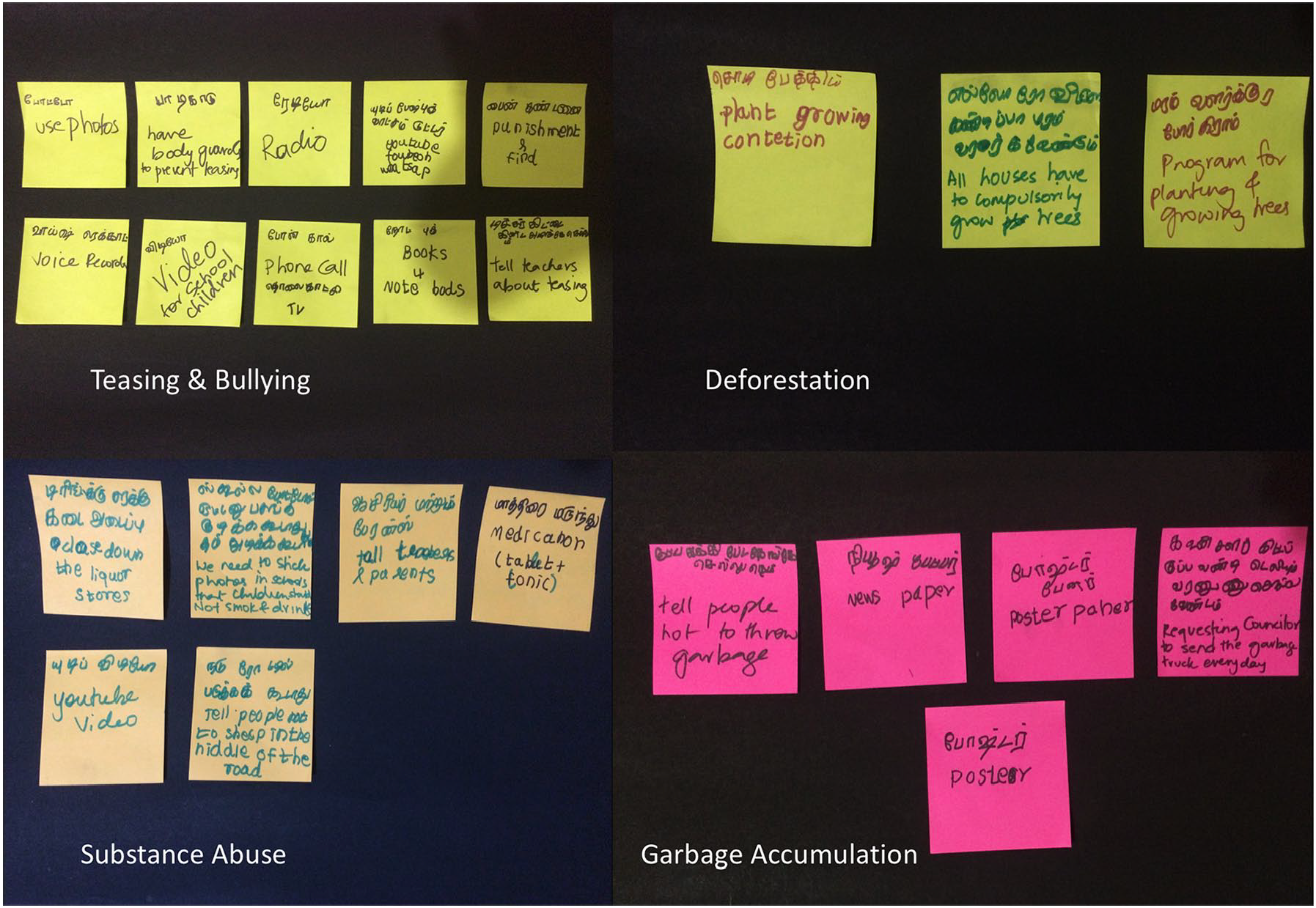
Proposed actions by children.
Creation of action teams
The action phase was initiated during dissemination when local community stakeholders, on watching the film, had expressed interests in being involved in the action phase. This action phase is an ongoing, continuous phase that includes collaborations with community stakeholders (e.g. village leaders, social workers in the institution, and community organizations, etc.) who have the capacity to mobilize action addressing the issues brought forth by the children. Once the video was disseminated among different groups within and outside of the institution, action teams were created encompassing individuals interested in working on each of the issues brought forward by the children, and action plans are presently being mobilized in different areas (e.g. the social workers have included issues of teasing and bullying within their school health education programmes, the institution is working with the local health leaders on cleaning up specific areas within the village as well as in negotiating initiatives on tree planting along with a local forestry organization).
Negotiating contextual features and challenges within this participatory filmmaking process
In this section, we share some technical and pragmatic challenges faced within this filmmaking process, as well as how we attempted to negotiate these challenges to align with participatory and inclusive principles guiding the project. Certainly, challenges to research processes are contextually shaped and will vary in how they play out within each project, but these insights can support a critical, informed uptake of this methodology for participatory and inclusive research practices.
Technical elements of participatory filmmaking
Challenges were associated with the technical aspects for filmmaking. For instance, we dealt with limitations regarding type of equipment available for the filmmaking process, and questions regarding whether the methods commonly used within filmmaking processes were relevant within this context (e.g. storyboarding). There were tensions as well, when trying to navigate the balance between focusing on the quality of the final product and the filmmaking process.
Technological equipment
As noted previously, a few point and shoot digital cameras were borrowed from friends and family to use within this project. Most of these cameras had to be returned to their owners once the project was over. In turn, children had access to cameras only during group time, which minimized the time each child spent with the equipment. This could have potentially been a barrier in furthering their camera related skill development. In addition to limited access to cameras, the children had access to only one computer, which was the first author’s laptop. All editing needed to happen on this one computer.
This was the first time most of the children were using a laptop or even a computer. Therefore, we built in individual time for each child to learn how to use the laptop as well as to receive training on the video editing process. Although all children were involved within the editing process, there was a limit to what could be done within 1–2-hour block a day, so each child did approximately 5–10 minutes of editing each day and handed over the different editing tasks to the first author. For children to contribute more within the editing process, they needed better access to a computer; however, that was not possible within the scope of this project. The first author met the entire group for about 1.5–2 hours in the evening, and by the time she got each one to individually work on the editing tasks in the one available laptop, only a few seconds/minutes of the movie got edited per day. Moreover, children also got tired using the computer and concentrating for that long, as it was not an activity they were used to doing. Overall, this meant that being flexible regarding the timeline and number of meetings was essential to enable ongoing participation of the children.
In addition, all instructions within the laptop were in English, which was not the first language for the children. To address this contextual challenge, the first author gave instructions using letters as the children were familiar with reading letters of the English language. For instance, if they had to open the folder called ‘pictures’ on the desktop, she would say open the folder starting with a ‘p’, but over time with practice they became familiar with process and knew the different icons or folders. At the same time, it is acknowledged that having a lack of funds to give each child personal access to a device for editing was a challenge that could have impacted the sense of children’s ownership within this process.
Creating voice overs and editing
Within this cultural context, it is not common for children to share their feelings and emotions in public. However, after building rapport and creating a safe space for children to speak about issues they wanted changed, they shared their perspectives within group meetings, which were audio recorded. These audio recordings then created the narrative for their film, and the children were not as comfortable with re-recording the script of their narratives as they would have to re-engage with what they had said before about their struggles and challenges, which was emotionally taxing. Some of them did try re-recording bits and pieces of their narratives, but overall, they requested that the first author use recordings of what they had said previously in the group meetings as a narrative for their film.
Once the voice overs were split, they were used within the process of creating the video. This process was again uncomfortable as they had to listen to themselves and their emotional experiences of exclusion and marginalization over and over again while choosing relevant visuals and editing the video. This processing and re-processing of information during the editing was uncomfortable for the children, and some of them on certain days had requested the first author, ‘why don’t you just do it?’ Moreover, the first author also shares in her journal, ‘I was not comfortable with them being uncomfortable. In turn, I had to take over many aspects of the editing process’. Indeed, Sudbury (2016) reminds us that it is in the edit where the filmmaker can exert a great measure of control. It is here where the narrative is created and it is the means by which filmmakers begin to supervise and direct their viewers’ experiences of reading and creating meaning from their films. (p. 225)
With this in mind, there was a tension that the first author constantly faced, and she worked with the children as much as they could and wanted to within the editing process, but she also wanted to create that space where they could say no if they did not like the process or felt it to be too taxing on them.
Process versus product
Another tension faced by facilitators was related to navigating whether the created film had to be of professional quality versus valuing the process and accepting a non-professional output. The co-facilitator was a professional photographer who considered a good final output as essential, which the first author acknowledged. As such, representations of children through the film’s output, and feedback from the community, could have an impact on the children who created it. However, there were points where the facilitators had differences in what they were expecting as outcomes for this project.
The professional photographer, the third author, posed an important question related to expectations of this project: have you ever thought of it from this perspective, that you are trying to teach them . . . an art that people take years of experience to master . . . you try to bring in the same art, and teach it to kids in like one or two months and expect them to make a movie out of it, would you find that target to be a little hard to achieve?
The first author, however, sought to clarify that the focus needed to be on the process to support children in sharing perspectives on matters concerning them. Acknowledging these different points of view on the aspects of the filmmaking process, the first and third authors engaged in regular dialogue and discussions after meetings (i.e. about what went well, what did not, and what were some challenges faced, and how could they make things better the next session, etc.). These shared reflections on the process played a central role in helping them understand where each of them was coming from as well as in negotiating those differences, utilizing strengths, and working together towards a common goal, which acknowledged the means being as important as the end (Gubrium et al., 2015).
Storyboarding
The storyboarding activity, a process of planning the film’s story on paper (Lunch and Lunch, 2006) was challenging to execute within this context. When we introduced this activity, children were caught up in using the stationary that was given to them and attempting to make perfect drawings. Children had also started drawing things that they liked and colouring it, versus drawing or writing what they wanted to capture on their cameras. However, many children refused or found it hard to do tasks in a notebook and asked the facilitator to do it on their behalf with verbal instructions from them. This reluctance could be related to the links between this activity and their school related tasks, which seemed to have an emotional burden attached to it. It potentially links to their experiences of school exclusion as well as judgement by teachers, in turn, expecting their work on paper to be critiqued by the facilitators.
In trying to navigate this challenge, the facilitators did not use storyboarding again and minimally used notebooks within the process to guide the creation of the narrative, but rather used group discussions and shared reflections as a basis for the film’s narrative. Most decisions for specific footage to be captured were discussed and planned verbally followed by walking through the villages to spots where children wanted to capture their videos. Therefore, the filmmaking process did not progress in a linear fashion of a story leading to filming and then editing, but rather there were circles of discussions, filming, and more discussions from watching video captures, then more filming, editing, and then circling back to more filming and so on. It was a complex, flexible and open-ended process as the facilitators had to work with existing needs and interests of the children within the filmmaking process. Thus, the storyboarding activity was replaced by an oral approach to story development commonly used among collectives facing barriers related to literacies (Hill, 2010).
Barriers to collaborative analysis
Participatory digital and visual research aims to incorporate research participants in data analysis (Gubrium and Harper, 2013). Within this project, children were involved within the first round of dialogic analysis where topics were revisited by the facilitators to allow the group to engage in deeper discussion and shared reflections of issues, which then informed the narrative of the film created. Furthermore, this process of collaborative dialogic analysis also encompassed discussions that supported in-depth analysis of information from visuals. However, a second round of theoretical analysis, a central component of a PhD project, was carried out by the first author after she had left the field with no means of working with the children in this process. This theoretical analysis requires additional training for children as well as time, which is especially restricted in projects, such as this, carried out within the scope of thesis work.
Pragmatic challenges
Everyday challenges faced in the field, such as uncomfortable weather conditions and a lack of human resources, also influenced and shaped this participatory filmmaking process.
Uncomfortable weather conditions
This project was carried out during the peak summer months in one of the hottest places in the state. Although we had access to two rooms within the village for meetings, there was no fan within those rooms, and the children preferred meeting outdoors. The weather impacted the energy available and mood for both the children and the facilitators. This was especially problematic as our initial meeting times, during children’s summer vacation, was in the day time and sometimes the meetings took place until noon, which was the hottest time of the day. In turn, on some days, going out in the sun for a guided walk was not possible and children had to capture videos within the areas surrounding the meeting spots even if that was not their preference. Overall, the children always chose meeting spots that had shade and were relatively cooler when compared to the indoor locations, which made the meetings work well.
Furthermore, as the project progressed and the meetings transitioned into evening meetings once schools reopened, we entered into the monsoon season. There were days when the facilitators could not go regularly to the village due to heavy evening rains as the mode of transportation for facilitators was a two-wheeler motor bike or scooter. These abrupt changes in schedules affected agendas for the day as well as created irregularity in meetings with the children which acted as a barrier for making progress with the film.
Human resources in the field
This project was carried out as a part of the first author’s PhD work and raised questions about how collaboration can play out in the context of a dissertation, particularly in a context in which faculty and students are embedded in traditional hierarchical power relations. From the first author’s perspective, these power relations led to uncertainties regarding how much involvement was considered acceptable within the scope of a thesis project and posed a barrier in creating a shared sense of ownership that is key to strengthening sustainability of project related participatory goals and transformative agendas.
In addition, there were a few challenges in terms of how professionals, the local co-investigators, were positioned within that community. The local co-investigators were healthcare professionals from the institution serving this community, and when one of them visited the village with the first author to help co-facilitate the first meeting, the children implicitly felt like they needed to be quiet and respectful around the healthcare professional. Within this context, power differentials between adults and children are inherent, and children are taught at a young age about what actions are considered respectful and disrespectful. For instance, children questioning or challenging an adults’ point of view, or sitting when the adult is standing, are considered disrespectful.
To support the sharing and negotiation of power within this process, what seemed to work within this context and this project was to intentionally involve a co-facilitator, that is, the professional photographer, who was younger in age, and who was willing and able to sit down with the children on the ground and play games alongside them, which many adults or professionals within this context may not be able to or consider appropriate to do. Moreover, having a co-facilitator who the children were comfortable working with and looked up to as an older brother rather than a teacher was important. The facilitators knew that power was shared when children addressed them as ‘akka’ and ‘anna’ meaning older sister and older brother rather than calling them their teacher, sir, or miss or ma’am.
Discussion
It is proposed, based on experiences and the outcomes from this project, that participatory filmmaking can be one approach to facilitate involvement of children with disabilities as active agents in research initiatives that guide community development. However, it is important to acknowledge that the process is not linear or replicable, but rather, one that embodies layers of complexities that need to be negotiated differently within different projects.
Although the feasibility and the need for flexibility in response to context and challenges of this process have been emphasized in this article, a key question that this section seeks to discuss is what might be some key factors to consider that would support the utilization of participatory filmmaking within inclusive research practices?
A key element that facilitated better involvement of children with disabilities as collaborators was the use of fun activities that not only engaged the children within this process but also worked towards building reciprocity and trust among the group and challenging dominant power differentials between adults and children. Reciprocity is defined as ‘a technique for building relationship and avoiding exploitation of research participants’ (Mockler, 2011: 164). Importantly, through reciprocity and authenticity ‘individuals and communities can become empowered to understand, produce knowledge and bring about active positive change in their own lives’ (Bridges and McGee, 2011: 213). Through culturally relevant fun activities and games within the scope of this project, relationships among the group were established, which supported children in sharing their firsthand perspectives and being better connected with each other and in turn the process.
Participatory filmmaking, like other participatory methodologies, seeks to move away from objectivist or positivist forms of research that separate the researcher from the researched, acknowledging the centrality of the relationships between the researcher and community members (Parry et al., 2013). This methodology is not just a technique but embraces relationality, where all methods used need to be rooted on the foundation of trust, respect and genuineness (Kral, 2014). Within this participatory filmmaking project, in addition to building relationships with the children through fun activities, the facilitators actively worked to establish community relationships by meeting with parents of children with disabilities prior and after every group meeting to make sure parental requests related to meeting logistics were respected and addressed on a day-to-day basis. An ethic of reciprocity (Maiter et al., 2008) is especially important when working with collectives who have historically experienced unethical research relationships. If researchers carry out research processes in an objective manner, it can stand the chance for re-enacting historical oppression and unethical research practices (Potts and Brown, 2015). For instance, within this participatory filmmaking project, if the facilitators had not established a relationship with the children, the representation of children within the film or its consequences might not have mattered to them as much, which could have further perpetuated issues of marginalization that this project sough to address. Building relationships are essential and they require time, flexibility, trust, respect and a keen interest in the work being done.
Moreover, although participatory filmmaking can create a platform for silenced voices to be heard and opens up possibilities for better social analysis of issues, it holds no guarantee for liberation (Tilleczek and Loebach, 2015). Within this project, children with disabilities identified issues that mattered to them as well as proposed numerous solutions, but it still requires a commitment from researchers and community stakeholders to actually mobilize the transformative agendas. It is indeed crucial for scholars who embark on this journey to embrace a moral responsibility to support or guide the enactment of action plans highlighted within the scope of their project. With the creation and dissemination of the film comes a new responsibility that mandates ‘more’, so the social transformation hoped for can actually be obtained. Moving into and engaging in this action phase will continue to require ongoing flexibility in the process, particularly as the principal investigator is no longer situated in the study context. However, she continues partnership through virtual meetings with the stakeholders in the local collaborating institution for supporting the enactment of action plans.
Conclusion
In making transparent the methods used, challenges faced, adaptations and strategies within this participatory filmmaking process with children with disabilities, we do not intend that there is one correct way of approaching this methodology, but rather, our aim was to highlight that there are ways forward for utilizing this methodology for inclusive research practices. Children of all abilities need a space for their voices to be amplified, which participatory filmmaking has the potential to create. By utilizing this methodology, the heterogenous nature of disability-related lived experiences can be shared and used as a means to guide social transformation.
Footnotes
Acknowledgements
The authors would like to thank the staff from the department of community health, Christian Medical College, Vellore, through whom this research project was carried out. A special thanks to Preetam Koilpillai and Vinay Vidyasagar for sharing their thoughts and providing tips on filmmaking to the first author during the course of this project. We also thank David Thomas for creating culturally relevant visual illustrations, which were used as tools to facilitate discussions among child co-researchers.
Declaration of conflicting interests
The author(s) declared no potential conflicts of interest with respect to the research, authorship, and/or publication of this article.
Funding
The author(s) disclosed receipt of the following financial support for the research, authorship, and/or publication of this article: This project was partially supported by funds from the Christian Medical College Fluid Research Grant. The primary author is a recipient of the Ontario Trillium doctoral scholarship.
