




Abstract
There is an urgent need to ‘get creative’ with the way we tackle social and nutritional inequalities. The Food as a Lifestyle Motivator (FLM) project has explored the use of creative participatory approaches to engage ‘harder to reach’ communities in dialogues to improve their well-being and life skills. Preliminary findings have confirmed that food can be a powerful catalyst for social inclusion with the potential to empower ‘marginalised’ individuals. Part of this exploratory study has involved two participatory food events (November 2015 and November 2016) run in a local day centre for drug and alcohol rehabilitation. The aim of these events was to bring together key stakeholders (from the service user and provider communities) to exchange food-based knowledge, using collaborative and co-creative participatory approaches. Following ethical clearance, a range of data were collected at the events to assess their ‘social impact’. These consisted of (1) audio interviews (service providers and users), (2) oral surveys (service users and key workers) and (3) observations of social cooking and eating engagement, and creative visual arts (photography, collage, food games and quizzes). In this article, we detail how the range of creative approaches used has successfully engaged individuals (average attendance: n = 80, service users: n = 32) to participate in these food-themed events. We reflect on the overarching themes from data capture of the social and therapeutic aspects of food (activities). We also reflect on the collation (and curation) of findings, systematically critiquing the approaches used, including consideration of ethics, and drivers for engagement. Finally, we consider how the utility of such creative approaches can optimise public engagement activities, not only to enhance research impact but also to inform collaborative developments with and between service users, service providers and other stakeholders, with the potential to lead to transformative food-related changes.
Introduction
Food is an identifier and maker of class, culture and civilisation (Coveney, 2014: 2). Food choices in humans involve highly complex processes, and their many determinants have been well documented over the years. Indeed, everyday foodways are so powerful they can maintain and reinforce social divisions (Parsons, 2015). Food research sets out to consider the interactions between the many diverse contexts of food, including historical, cultural, economic and political. Food’s place is firmly at the intersection of health, sociocultural, environmental and ethical issues (Food Ethics Council (FEC), 2010). With hunger and food poverty becoming national priorities, given recent evidence that 8.4 million UK individuals are ‘too poor to eat’ (Taylor and Loopstra, 2016), there is an urgent need to ‘get creative’ with the way we tackle social and nutritional inequalities.
The Food as a Lifestyle Motivator (FLM) project, on which we report here, aimed to explore the use of participatory methods to engage and explore food experiences and behaviours in a ‘harder to reach’ sample (homeless individuals residing in a residential homeless centre). The primary objective was to engage individuals with participatory and creative qualitative approaches, so that a dialogue could be started that paved the way towards solutions for improved well-being (see Pettinger et al., 2017, 2018). Subsequent complementary objectives have included using participatory food events combined with arts-based creative approaches to engage a wider range of ‘harder to reach’ individuals and communities (from several ‘complex needs’ settings, including drugs/alcohol rehabilitation, homeless centres and mental health services) to explore, discover and debate some of the many topical issues around food and how this relates to well-being and wider social sustainability discourse. Here, we focus specifically on the data collected from participants during these participatory food events. We reflect on the collation (and curation) of findings, systematically critiquing the approaches used, including ethics of participation/engagement. Finally, we consider how the utility of such creative approaches can optimise public engagement activities, not only to enhance research impact but also to inform collaborative developments with and between service users, service providers and other stakeholders, all of which can lead to maximised engagement/empowerment and support transformative food-related changes.
The food experiences of ‘marginalised’ communities
The many challenges associated with ‘social exclusion’ or ‘marginalisation’ are irrefutable, not least in terms of vulnerability, mental health issues, drug/alcohol abuse, and chronic and acute health, all of which impact life expectancy. These challenges are also known to lead to disempowerment, low motivation, reduced opportunity and lack of personal support strategies and networks (Norman and Pauly, 2013; Radley et al., 2005; see also Pettinger et al., 2017). Finding ways to tackle these issues is particularly difficult with people who are withdrawn and alienated from society. But the food experiences of harder-to-reach adults vary widely with individual circumstance (Burnett et al., 2016). Recent debates involving food and poverty have revolved around the rise of charitable food provision and management of food experiences under austerity (Dowler and Lambie-Mumford, 2015). Yet the ‘poor’ can and do have similar aspirations to much of the rest of society (Dowler, 1997), and we know that food holds strong meaning and can reveal highly individualised perspectives in those who are doing the best they can in the face of multiple deprivations (Parsons and Pettinger, 2017). Research is needed, therefore, that not only taps into the sensitivities and complexities surrounding poverty and hunger but also engages more effectively with those ‘experts by experience’ (McLaughlin, 2009; Thomas-Hughes, 2018), so that they are able to play a meaningful part in the solutions needed to tackle it.
Creative participatory approaches with food
Community participation is believed to hold a number of benefits, including the incorporation of local knowledge in planning, generation of greater support for and sustainability of local actions and consistency with democratic values (Pelletier et al., 2003). Community engagement interventions have been shown to improve health behaviours and self-efficacy (O’Mara Eves et al., 2015), and co-production in itself can, if carried out comprehensively, radically redistribute power within the research process (Thomas-Hughes, 2018), although achieving this is far from inevitable (as we have experienced during our exploratory work). Participation in food projects in particular can build trust and self-esteem and can improve food skills (Pettinger and Whitelaw, 2012; Pettinger et al., 2017). The inherently social activity of engagement with food combines positive health outcomes with other cultural activities, such as the arts (Stuckey and Nobel, 2010). Creative expression has the potential to engage individuals in personal-level and community-level change through reflection, empowerment and connectedness (Gray et al., 2010). This suggests that novel methods (with food) can be seen as ‘co-creative’ in empowering people to re-connect with their food which might have the potential to lead to transformative food discourses. Such suggestions form important building blocks of cohesion and social capital within communities (social sustainability) and are therefore worthy of investigation.
Participatory research methods are geared towards planning and conducting the research process with those people whose life-world and meaningful actions are under study (Bergold and Thomas, 2012). Participatory action research (PAR) is defined as a ‘systematic inquiry, with the participation of those affected by the problem, for the purposes of education and action or affecting social change’ (Green et al., 1995: 2, cited in Minkler, 2010: S81). PAR is a well-documented strategy to improve the situations of vulnerable people (Crane and O-Regan, 2010), therefore was the main methodological focus of the FLM project (see more in Pettinger et al., 2018). By emphasising social action, individual justice and active participation, it is possible with PAR to ‘give voice’ to participants, allowing them some control over their involvement within the research process (Helfrich and Fogg, 2007). Despite being resource intensive, such an approach facilitates engagement, as well as challenging the well-recognised researcher/respondent balance of power (Thomas-Hughes, 2018; Letherby, 2009). Cornwall and Jewkes (1995) argue that what distinguishes participatory research from conventional research is not methods or theory, per se, but concerns over the ‘location of power in the research process’. Creative participatory methods in food research, can, therefore, provide a set of tools, which can reveal, and give voice to, perspectives on food issues which remain otherwise absent from research and policy debates (Pettinger et al., 2017).
The emergence of such alternative approaches can engage communities more effectively in research processes, cultivate narratives of hope and get people more involved in decision-making (Thomas-Hughes, 2018). Although research involving ‘marginalised’ groups has highlighted such engagement benefits including reduced isolation, enhanced self-esteem and communication skills, there is a paucity of research focusing on participatory food activities specifically and their social impact. This article serves to bridge this gap, by providing critical insights into the role of participatory food events to offer (public) engagement opportunities with marginalised communities and associated stakeholders.
Introducing the participatory food events
Two participatory food events 1 were run, on separate occasions, in a local day centre for drugs and alcohol rehabilitation (Centre A). The aim of the events was to bring together key stakeholders (service user clients and providers) to exchange food-based knowledge, using collaborative and co-creative participatory approaches (Table 1). Following ethical clearance, a range of data were collected from participants at each event to assess the events’ ‘social impacts’. These consisted of (1) audio interviews (AI) with service providers and users, (2) oral surveys (OS) with service users and key workers, and (3) observations (O) of activities – social cooking, eating and creative visual arts (photography, collage, food games and quizzes). Data were collected by several co-researchers, who were part of the FLM research team. All questions asked were standardised and formed part of FLM project objectives. We acknowledge that the questions asked, by their very nature, perhaps make a presumption to enhance well-being, which may influence results. Each event’s activities were also documented using images taken by our community participatory photography partners (Fotonow CIC).
The nature and engagement of the participatory food events in Centre A.
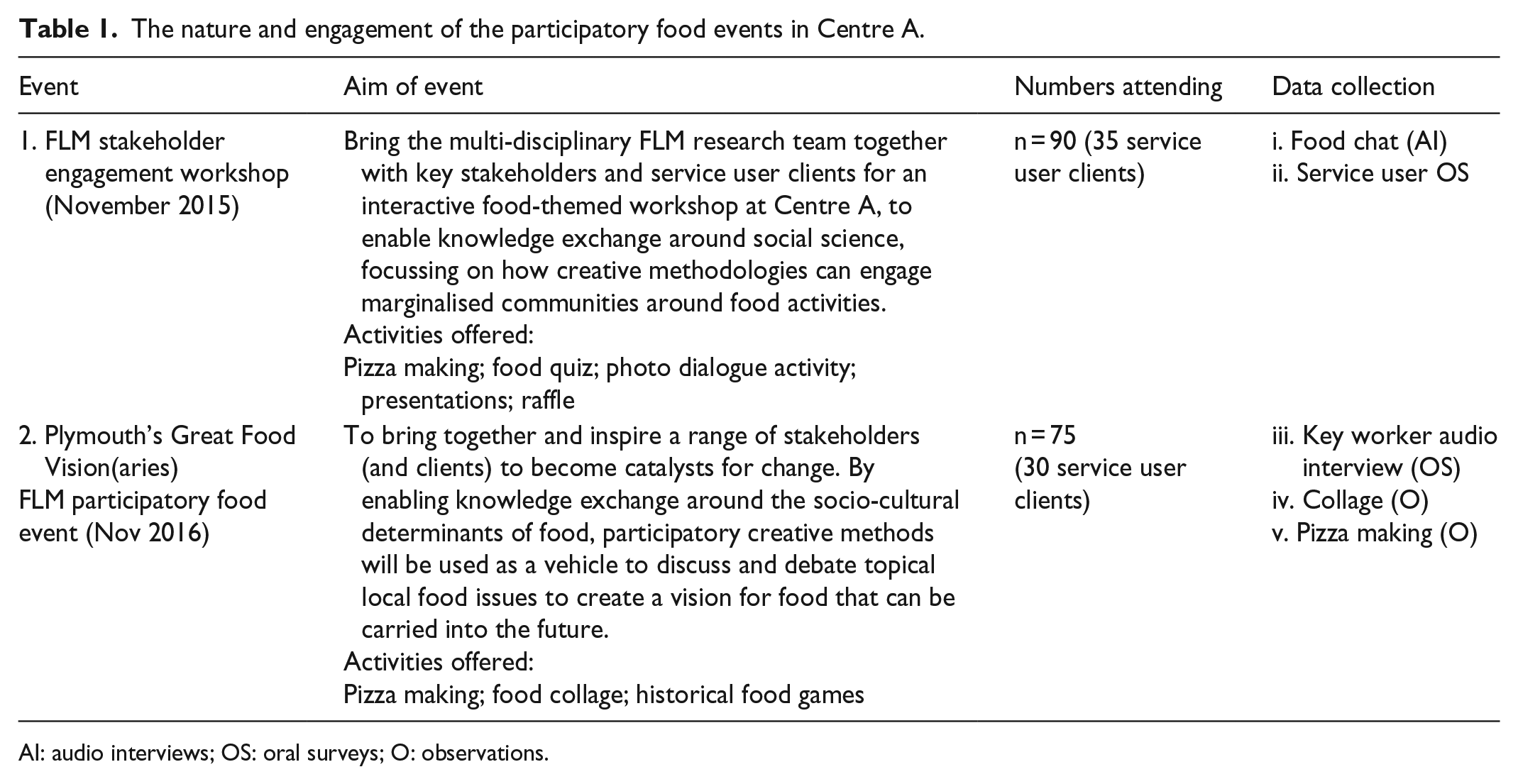
AI: audio interviews; OS: oral surveys; O: observations.
At each event, a series of food-related activities took place (Table 1), co-researchers and volunteers assisted with purposive sampling (Namageyo-Funa et al., 2014), asking participants to consent to take part in data collection activities. For each aspect, it was intended to sample as many individuals as possible – service providers, key workers and users – from total numbers attending event(s). Informed consent was secured at each point in this process and incentives were provided (in the form of a prize draw) to support engagement in these research aspects. A reflexive approach was adopted (Denscombe, 2010), which permitted ongoing thematic analyses to be iteratively carried out alongside the main FLM project data analyses. Detail for each data collection aspect follows with procedures briefly outlined.
Ethical approval was granted by the University of Plymouth Faculty of Health and Human Sciences Research Ethics Committee (refs 15/16-475 and 16/17-653). Ethical considerations included consent for audio interviews, oral surveys and observations (photography by Fotonow CIC).
Audio interviews (AI) – service providers and clients
A small private ‘food chat’ room (Images 1 and 2) was set up, and one co-researcher used a digital audio recorder to record responses to the following open-ended question: ‘How do you think food and food activities/events can enhance wellbeing of hard to reach individuals?’. Service providers were purposively sampled on the day to participate, written consent was obtained, audio recordings were transcribed post event and themes/quotes extracted. n = 19 interviews were carried out.
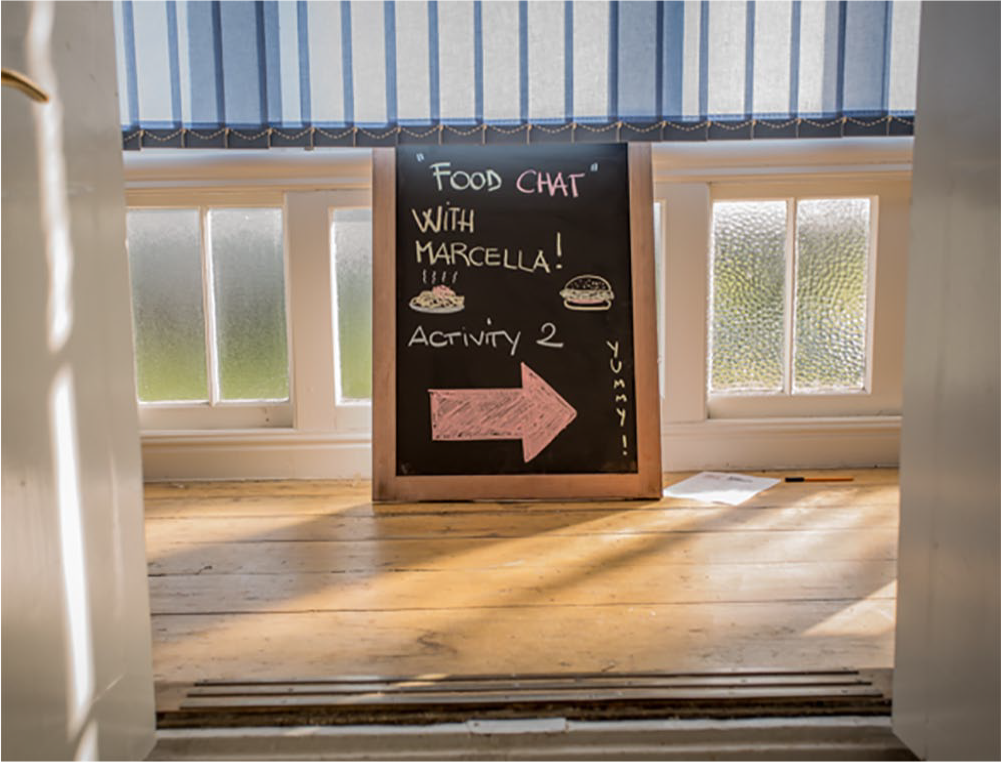
‘Food Chat with Marcella 1’.
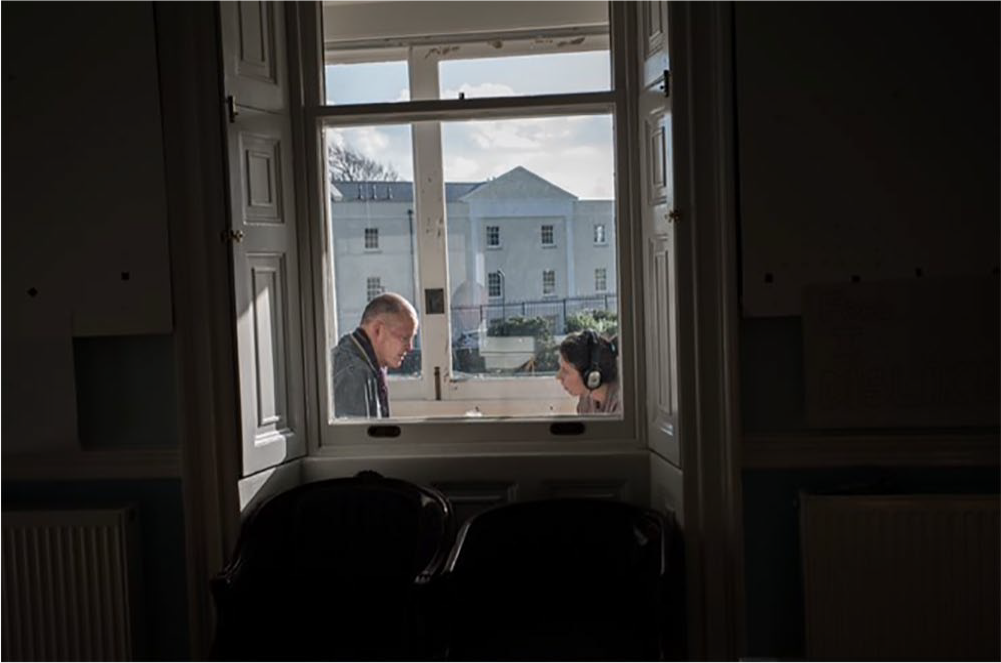
‘Food Chat with Marcella 2’.
The profile of the service provider sample included youth worker(s), local council policy officer, public health consultants, counsellor, chief executive of charity, local food network partner; health improvement worker, family justice project lead, weight management dietitian; and homeless hostel manager.
2. Oral survey (OS) – service users and key workers
Convenience samples of n = 8 service users, and n = 3 key workers, were secured, and following verbal and signed consent, audio surveys were carried out by one of the co-researchers in a private room asking, among others, the following question: In what ways do you think food and food activities can play a role in your [service user clients] lives (as a ‘motivator’)? Responses were audio-recorded and transcribed verbatim, and themes/quotes extracted.
3. Observations (O) – social cooking, eating and creative visual arts activities
From the food activities carried out at the event (Table 1), details were observed and recorded by the co-researchers. Photos were taken to document activities and illustrate engagement, and written feedback was collected (as part of event evaluation).
Data and discussion
This article focuses on data collected from participants during two FLM participatory food events. From the success of these events, we support the position of other researchers who argue that participatory approaches can be a useful way to engage ‘harder to reach’ individuals. Our events were well attended, and participation from service users was particularly good (Table 1); engagement was positive, both with creative food activities and willingness to participate in research aspects (data collection). Key findings are presently discussed, by systematically critiquing some of the approaches used. We initially highlight the important potential that creative ways with food have that can engage people, whether in relation to food’s powerful social context or its therapeutic properties. We then reflect on the challenges of data collation and curation. The ethics of participation and drivers for engagement are also briefly covered. Finally, we consider how the utility of such creative approaches can optimise public engagement activities, not only to enhance research impact but also to inform collaborative developments with and between service user clients and providers.
Food as a conversation starter – social connections
… it [food] has the potential, if managed well, to be a great leveller and open up conversations …. (AI.15: food network partner)
Sociability was a key theme drawn out from our findings, one that has been long researched as an important aspect of foodways. Eating is undoubtedly one of the most fundamental, socialised, imaginative and collectively invested biological functions (Masson et al., 2018). Our eating behaviours are strongly influenced by social context (Higgs and Thomas, 2016). Social isolation is often a key factor for individuals who are ‘marginalised’, confirmed by this service user participant quote: I found it [food activities] opened up communication with other people. Stops you isolating – everybody needs to eat. It is the one thing we all have in common. (OS.8)
And this fact is likely to perpetuate if mainstream attitudes remain stigmatising and discriminatory (Stuber et al., 2008). The food environment can, however, be a critical social place, that in the right context, can offer companionship and, if cooking skills are involved, occupation (Pettinger et al., 2017) and care of self and others (Parsons, 2017). Indeed, ‘unhealthy’ social eating environments, such as institutions, including for example homeless shelters, are often seen as highly limiting and can enforce regulation (Goffman, 1963), thus accentuating ‘occupational deprivation’ (Whiteford, 2000) both of which can lead to resistance. Unhealthy social eating environments have even been considered risk factors for poor health outcomes, such as obesity (Motteli et al., 2016). Creating more positive social eating (and cooking) experiences, such as those captured in the FLM project, are highly meaningful as can result in the development of important friendships (Boyer et al., 2016), pro-social identities (Parsons, 2017) and enhanced social connections (Pettinger and Whitelaw, 2012).
One of the youth workers who was interviewed expanded, I think it [food] is a good conversation starter … there is that whole communication behind it, as you are doing it, and building that relationship … they can end up talking about things totally unrelated because you have built up that trust with them. (AI.1: youth worker)
This echoes the importance of building trusted relationships between client and provider where tensions often exist. Such relationships are known to exert power (see Pettinger et al., 2017) and often resultant resistance (Foucault, 1990). McLaughlin (2009) offered interesting critique around relationships between those who assess and commission services and recipients of those services. But such critique only serves to perpetuate beliefs, stereotypes and stigmas associated with marginalised communities, which supports early research traditions around stigma and prejudice by Goffman (1963) and Allport (1958).
Given the emphasis on ‘participatory’ for this FLM work, relationships that include the wider populace are also important, so that attitudes can become less stigmatising towards marginalised communities (Stuber et al., 2008). Power is at the heart of participatory approaches, and we believe our food events align with an ideologicial vision of a future which better addresses the ‘unjust and non-sensical hierarchies that exist, for example between formally trained researchers and grassroots based researchers who draw expertise from experience’ (People’s knowledge, 2016: 2). Our findings suggest that food has the potential, to be a catalyst to create important collaborations: the fact it [food] is a great leveller … people who do not ordinarily spend time talking have done this … people eating and enjoying eating …. (AI.13: chief executive of charity)
Furthermore, despite all relationships being fluid, our findings also illustrate that food can support various other relationships, for example, between family members: I do a lot of cooking with my daughter … cooking buns and cakes and stuff. Do a lot of bonding. So that’s a good motivator. (OS.6)
As well as facilitating social inclusion for those who live alone: We all eat usually round the same table so straight away we got that ‘family feeling’ of eating with other people. (OS.4)
This supports the importance of social eating (Boyer et al., 2016) and social inclusion (Cobiago et al., 2012). Food was also seen as an important tool offering socio-educational potential: They [food events] are a great way of getting people’s attention, ‘cause everyone likes food, everybody needs to eat … so it grasps people, whenever we put food events on, lots of people gravitate towards them, and if we can use them [food activities] educationally … and use them as a hook to bring people into engage them in other forms of education, then that is fantastic. (AI.12: homeless hostel manager)
Sharing cooking and food skills development (Images 3 and 4) can offer educational and life-skill opportunities that can offset some of the damaging consequences of social exclusion (Pettinger et al., 2017). The emphasis on ‘social wellbeing’ is particularly pertinent when exploring the benefits of everyday cooking for marginalised groups (Parsons, 2017), as it demonstrates care of self, others and investment in the future, thus developing human, social and cultural capital. Furthermore, engagement in food activities as occupation is a potent source of meaning in our lives (Whiteford, 2000), which has an effect on subjective well-being (Thomas et al., 2011). Our participants engaged positively in food activities (pizza making), which might lead to them acquiring new food skills and confidence (although this was not measured), which has potential to promote future employability and independence (Chard et al., 2009). Furthermore, food’s social aspect leads to co-production of capability, which is an important part of participatory research philosophies (Thomas-Hughes, 2018) as it drives shared learning and even generativity (passing on new skills): Gets people talking … I find they get chatting … you know you pair people up then you often find someone who is more capable than another and they help each other …. (AI.6: health improvement worker)
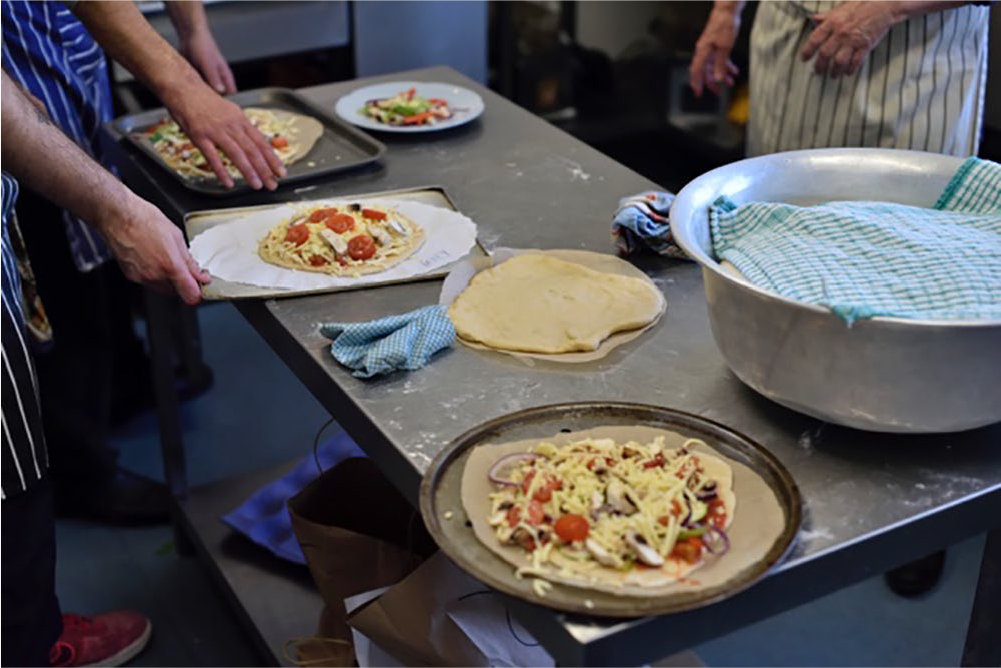
Social cooking (pizza making).
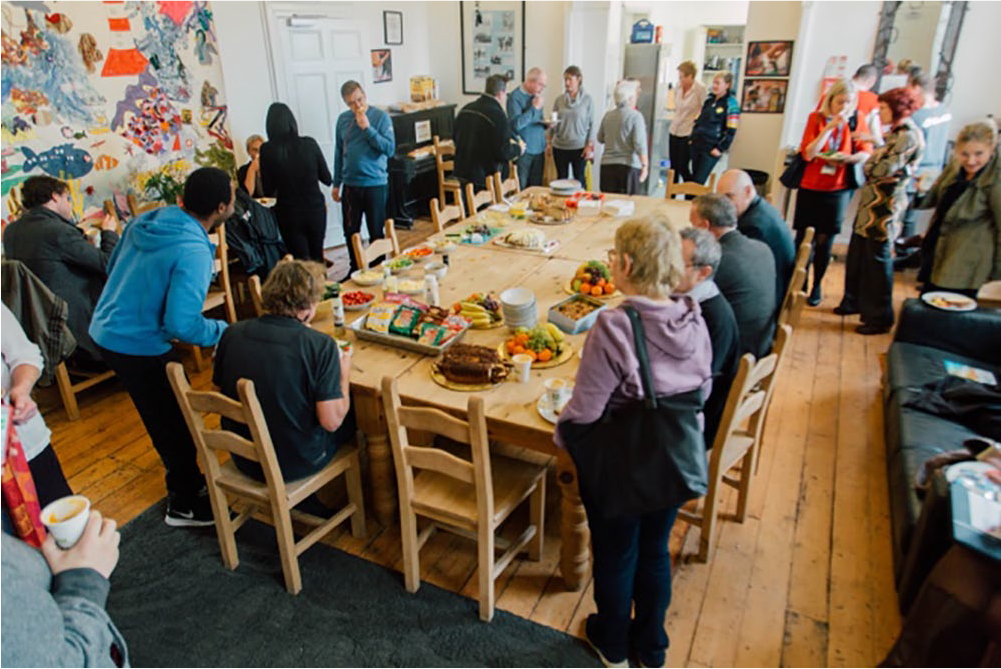
Eating together.
So, there is clearly a social connection thing happening, one which needs to be further investigated in a community-centric forum. This should fully consider the concept of capability as well as tools to improve social inclusion, so as to be respectful of individuals’ expectations, choices and needs (Cobiago et al., 2012). Only then can we work towards better appreciation and understanding of the transformative nature of food in its social context, whereby, Food is a glue to let that [connection] happen … to have discussion and to build some of those bridges …. (AI.14: public health consultant 2)
Food as therapeutic work
Food activities were also seen to be ‘therapeutic’ in a number of ways: Food is a very non-threatening way of helping people, kind of, socialise, become social, reduce isolation, make contact, situate themselves – give to others, receive from others, erm, so I think that is very profound … food is a helpful way of … ‘doing one thing whilst actually doing another’ … so you can actually introduce the therapeutic work very lightly … so people think they are cooking but actually they are also learning, reflecting, growing … and you are doing therapeutic work with them as well. (AI.8: public health consultant 1)
This highly relevant finding warrants further exploration, not least because it lends some insight into the potential for food (and nutrition) activities to be integrated within more holistic and person-centred treatment and management options for marginalised communities, who are often defined by their stereotyped social status (Radley et al., 2005) and stigmatised by mental health issues (Choudhry et al., 2016). Food (activities) have already been critiqued as providing meaningful occupation and crucial life skills. But food’s therapeutic properties go beyond the social, echoing Hippocrates’ famous quote ‘Let food be thy medicine and medicine be thy food’, whereby the preventive role of food, nutrition and diet is emphasised to optimise health and well-being: Eating better food can help their [marginalised groups] overall wellbeing, both mental and physical … but also people on a recovery journey from, say with substance misuse, homelessness, whatever … working together in a kitchen, learning how to cook together … it is a therapeutic exercise … (AI.10: family justice project lead)
Yet poor nutrition and dysfunctional eating patterns are commonplace in marginalised communities particularly those who are addicted to substances (see Neale et al., 2012). There is a known relationship between substance misuse and poor nutrition (Grotzkyj-Giorgi, 2009), and this can also exacerbate symptoms of depression and mental illness (Sathyanarayana Rao et al., 2008). Our service user participants seem to acknowledge this in the context of eating well: Eating healthily is one of the main factors in maintaining a healthy brain and healthy body and being happier in general. If you’re not doing that stuff your life is chaotic. (OS.2)
This reference to ‘chaotic lives’ is poignant and commonplace in marginalised communities, particularly those individuals who are addicted to substances, but food is acknowledged as playing an important role: when you come out of addiction you haven’t got a clue …. When I have my bad days, I get stressed out and stress makes me not eat and sometimes I start falling because I haven’t eaten for quite a while. When I start eating again and building that [myself] up I notice the change in me. My appetite increases and the more energy I’ve got. Very important in recovery to eat well. (OS.1)
This quote confirms that food (and nutrition) should play a more prominent role in recovery, supported by Jeynes and Gibson (2017) in their review which clearly highlights the importance of nutrition interventions to support recovery, but laments a distinct lack of coherent research on this topic. Our observational FLM findings suggest that engagement in food activities can be ‘therapeutic’ both socially (see Pettinger et al., 2017) and, if developed further, physically, thus offering opportunities for future research into improved nutritional well-being: It is really interesting to see if you bring in new foods, new experiences and giving people new opportunities to do that … they [clients] can get really excited and enthusiastic …. (AI.11: dietitian)
In an era where people ‘feel more comfortable with drugs than food … and where the philosophy of Hippocrates has been largely neglected’ (Smith, 2004), there is surely an urgent need to explore the rudimentary role of food (and subsequently nutrition) to improve the lives of those on the fringes of society: Everyone has to eat, erm, it is an activity that they have to do, so to be able to engage them in sourcing, growing, cooking their own food is really … it is really therapeutic … engages them in a here and now activity …. (AI.7: counsellor)
This mention of ‘here and now’ amplifies the need for food/nutrition educators to join with individuals right where they are, and work with them side by side. Satter (2007) has applied Maslow’s hierarchy of needs to food management, offering insight into how this can be translated into practice for more socially inclusive food activities to become the norm when it comes to commissioning ‘complex needs’ services (see Pettinger et al., 2017: 9). This fits with participatory co-production philosophies (Thomas-Hughes, 2018) and supports what Hilary Cottam (2018) emphasises as new ways of working that start in a different place: The question is not how can we fix these [broken welfare] services, but rather as I stand beside you, how can I support you to create change. The search is for root causes: what is causing this problem and how can we address the underlying issue? And the emphasis is not on managing need but on creating capability: on addressing both the internal feelings and the external structural realities that hold us back … at the heart of this new way of working is human connection. (p. 15)
Food with its highly social connecting properties is a powerful way into such new, relational and transformative ways of working.
Creation, collation and curation of findings
Our iterative and reflexive approach (Denscombe, 2010) to data collection and collation aligns with constructivist grounded theory perspectives (Charmaz, 2006). This epistemology permits consideration of the subjective inter-relationship between researcher and participant (Mills et al., 2006) and aims to be faithful to participants’ accounts, thus strengthening design aspects. With such ‘disparate’ findings, however, it was challenging to collate them systematically. Our attempt to be reflexive and standardise relevant questioning where possible goes some way to mitigate flaws. Creatively mixing methods, as Mason (2006) suggests, can encourage thinking ‘outside the box’ generating new ways of interrogating and understanding the social. This also applied to analyses, which are not something that only happens once all the data have been collected but are an ongoing part of the fieldwork process. We have already described that no study can be completely inductive as researchers begin the research with their own political and theoretical assumptions (see Pettinger et al., 2018). Given that more creative approaches have been evidenced as necessary to tackle some of the social issues we have touched on, we are confident that our design approach has adequately addressed some of the challenges.
Creative and visual methods are most often used when there is an assumption that participants will find it difficult to express themselves verbally (Bagnoli, 2009), such as our ‘marginalised’ FLM participating service users. The use of such methods can generally facilitate investigating layers of experience that cannot easily be put into words (Gauntlett, 2007). Observation has long played a central role for researchers from all disciplines, and they have converted those visual perceptions. This is particularly poignant when we consider the use of ‘food collages’ (Images 5 and 6) in our participatory food events, which stood out as consolidating other social aspects: I think if you are doing anything together – whether it’s cooking or making a collage – that is lovely! Doing things together, you can talk about relationships, starting, failing … all those sort of things, we often miss as a community. Get together and be yourselves, not just the name on your name badge you’ve got on, you are you! (OI.5)
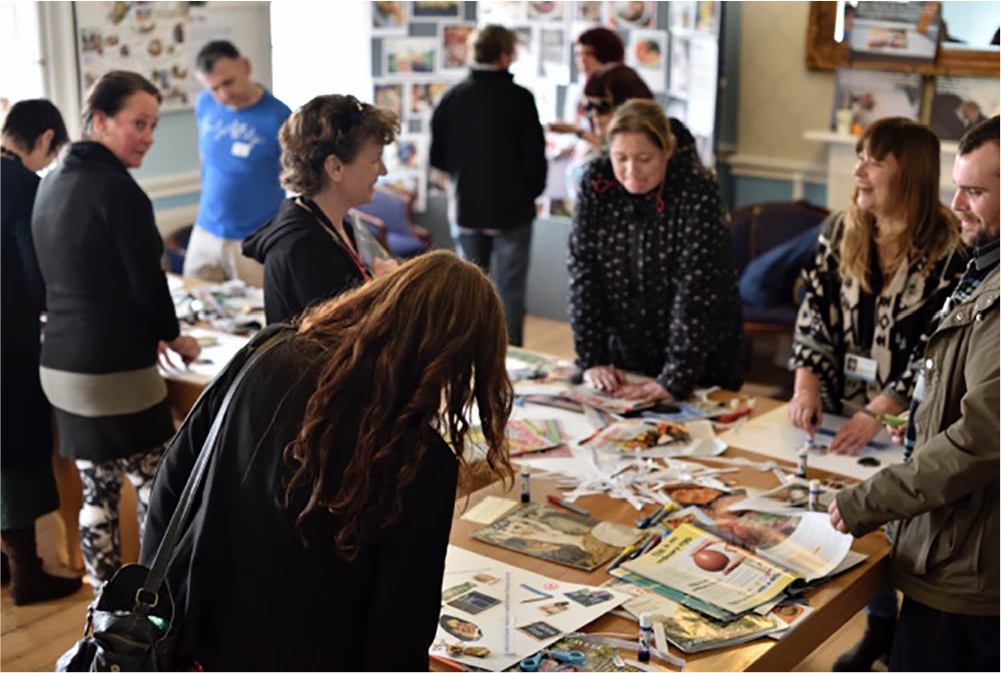
Creative collage space.
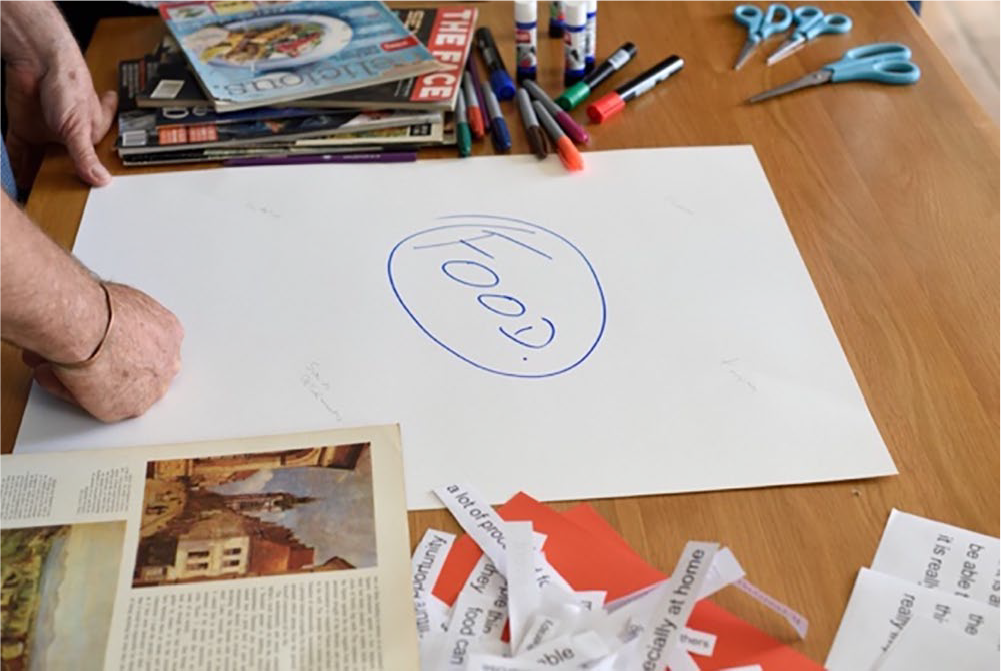
Foodthemed collage making.
Collage (or visual mind mapping) is an important arts-based method for engagement and empowerment (Wheeler, 2018; Flint et al., 2017). It utilises sought images and objects to foster a process of de-construction in the tearing, cutting and gluing of images and objects. The juxtaposition created when images are brought into relation with each other generates what Boden (2010) refers to as a ‘combinational form of creativity’. In our case, ‘food’ was provided as the central theme for our participant’s collage making. Thereafter, different meanings associated with the images, when put side by side, offered the emergence of new narrative constructions and powerful food/well-being dialogues. The act of ‘doing’ in the finding and selection of images, followed by tearing, cutting and gluing (the decision making for which is reminiscent of relational and concept mapping techniques (see Butler-Kisber and Poldma, 2010)) has arguably developed in our participants a sense of appropriation and ownership that can be experienced by them as empowering, a sense not of being a passive recipient but of being agentic in relation to one’s identity and culture. This echoes our participatory and co-productive philosophies and consolidates previous discussions about capability and social inclusion. Furthermore, Wheeler (2018) confirms that collage and mapping as an approach can
provide community members with a space (free from externally determined and rationalised top-down agendas) in which to examine, define and make legitimate their experiences and how this can be thought of as an educational and community knowledge-building practice with important implications.
This supports our use of creative activities as inherent parts of events to bring people together and engage individuals in social well-being dialogues. Our participatory food events provided a combination of arts-based practices and participatory methods which, according to Wheeler (2018), involves the movement between ‘action’ (gathering of information relevant to the topic) and ‘research’ (the reflection upon it), or as Boden (2004) would describe as the ‘movement between unconscious primary and conscious secondary processes’.
But, more importantly, this also suggests such creative spaces should be fundamental to any successful community development food project work. It could be argued that, to date, much food research has failed to meaningfully engage with ‘harder to reach’ groups, both during the research process itself and in raising awareness and achieving changes, whether at an individual or ecological level (in the food system), which the research evidence indicates needs to happen. We believe the creative food activities during our participatory food events provided an important space for our participants to generate meaningful narratives. These narratives form the basis of future research that taps into their potential to be transformative, whereby food (activities) then become a powerful catalyst to re-connect people culturally and socially. These creative methods, therefore, present an important academic contribution to methodological landscapes, as well as offering, more broadly, a way of understanding our food culture and social world.
The ethics of ‘participation’
Behaving and reflecting on ethics within research go beyond merely gaining ethical approval and securing informed consent. It is usually difficult, however, to assess whether consent is ‘really’ informed (see Pettinger et al., 2018). McLaughlin’s (2009) critique describes how the term ‘service user’ for example has more recently been replaced by the term ‘expert by experience’, which better describes the complexities involved, as it suggests a relationship of equals (thus more akin to participatory approaches?). Participatory methodologies are considered as being more reflexive, iterative and flexible, in contrast with the more rigid linear designs of conventional sciences (Cornwall and Jewkes, 1995), the system for which is described as ‘immoral’ and ‘tainted’ (Wakeford, 2016). Community participatory research is seen to be more ‘ethically aware’ because it takes greater account of participants’ rights and responsibilities (Centre for Social Justice and Community Action (CSJCA), 2011). Trust, transparency and accountability (Jamshidi et al., 2014) are deemed key ethical aspects, as well as equity and inclusion (and research design rigour). But instead of redressing ethical concerns around research, participatory (and engagement) activities have also been shown to actually introduce new ethical and social challenges (Reynolds and Sariola, 2018; Salway et al., 2015) which need to be overcome.
Nonetheless, a recent scoping review by Wilson et al. (2018) confirms that
if community based participatory research is going to continue being used as an ethical approach to research for social justice and health equity, it is important we continue to engage in dialogue about both its benefits and challenges and end its history of being misunderstood within an ill-suited biomedical model of research ethics review.
This is supported by a participant’s feedback comment from one of our participatory food events: We should have more events like this for healthcare professionals to get them out of their medical bubble! (O.7; feedback comment)
The diverse challenges of healthy eating in ‘harder-to-reach’ communities necessitate more creative and tailored strategies (Burnett et al., 2016). Despite being linked to many health concerns, food can also be used as a powerful ‘lifestyle motivator’ (Pettinger et al., 2017) and has the potential to act as a catalyst to connect people socially and culturally, creating a virtuous cycle, whereby food promotes engagement and engagement promotes interest in well-being and self-care. This reminds us of the need to identify and build on the strengths of individuals and communities, helping them to recognise how social contexts and relationships can affect their behaviour (NICE, 2014). There is a strong emergent case that participatory, empowerment approaches to health and well-being show great potential (Wood et al., 2016). There is great scope, therefore, for future research to consider extending ethical considerations and participation to fit with Cottam’s (2018) suggestion of enabling the remaking of relationships and emphasising human connection as part of transformative agendas. This would serve to enhance community resilience, social capital and social sustainability.
Despite some of the ethical issues highlighted, what is more important is how best to use findings in ways that can unite and strengthen the community (Minkler et al., 2002). Our participatory food events have engaged participants through the formation of informal community partnerships, some of which, as far as we know, have endured. Such collaborations and partnerships are crucial for building community capacity and also strengthening research (and public engagement) outputs (Bonevski et al., 2014; Duncan and Manners, 2016).
Opportunities for public engagement
Here, we would like to reflect on the challenges involved in achieving truly participatory approaches where public engagement activities are concerned. PAR principles are extremely difficult to achieve (see Pettinger et al., 2018 for an account of this). There were clear suggestions from our findings, however, that the nature by which people came together [using food] was highly meaningful, building collaborations, strengthening relationships and fostering social capital: I think if you can involve those people who are making decisions with those people affected by decisions in the same places then I think you are half-way there … that cross pollination occurs … its great. (AI.5: council policy officer)
An environment where academics, policy makers/service providers and laypersons/service users interact can be challenging, not least because of the location of power in such situations. Community spaces are known to be increasingly structured in response to externally determined top-down agendas (Wheeler, 2018), the antithesis of what our participatory approaches (and underpinning public engagement philosophies) are trying to achieve. Yet the expectation that community engaged collaborations will occur as part of public engagement activities is a relatively new emerging requirement in academia.
Watermeyer (2015) provides a deep critique of the transformation of universities from ‘ivory towers’ to ‘public institutions’ through their investment and ever increasing emphasis on the need for academics to engage in public engagement activities as part of their research impact developments. Indeed, Bond and Patterson (2005) argue academics should be not only in but also of their communities, that is, the research community should be more intimately and proximally associated [or entwined] with ‘the public’. Yet the commitment to fulfilling this societal role is perhaps motivated by a moral insistence that doing so is intrinsically a ‘good and virtuous thing’, promoting social justice and civic change (Ostrander, 2004), in part, a pay back on the public’s investment in universities.
There is increasing pressure, for health researchers to engage in participatory methods due to the explicit requirement by funding bodies for public and patient involvement (PPI; Cook, 2012). This, however, requires engagement by diverse health service users to avoid findings being un-representative and inequitable (Bonevski et al., 2014), thus a challenge to get right. Mayall et al. (1999) note research involves three intersecting interests: those of researchers, of research respondents and of those individuals, groups and institutions with the power to influence research priorities through funding, policy making and other processes. They add that researchers have a moral obligation to take into account the impact of their work on others. Watermeyer’s (2015) critique rather cynically reports that this now seemingly mandatory feature of the academic contract is causing widespread individual and systemic ambivalence and resistance. But our findings challenge this – we do not see public engagement in such a negative light, as its principles have naturally fallen into place as an inherent part of our creative FLM research outputs. The National Coordinating Centre for Public Engagement (NCCPE, 2016) describes public engagement as ‘the myriad ways in which the activity and benefits of higher education and research can be shared with the public. Engagement is by definition a two-way process, involving interaction and listening, with the goal of generating mutual benefit’.
This quote exemplifies our participatory food events as interaction, listening and mutual benefit were inherent aspects. Our findings illuminate ‘social impact’ and public engagement at their best, offering insights into how using food as a ‘centrepiece’ embedded within creative participatory approaches can offer new ways of engaging the public in important two-way dialogues that can potentially pave the way towards solutions for improved (nutritional) well-being. The NCCPE (2016) go on to suggest that key aspects of successful public engagement include
Informing: Inspiring, informing and educating the public, and making science and research more accessible.
Consulting: Actively listening to the public’s views, concerns and insights.
Collaborating: Working in partnership with the public to solve problems together, drawing on each other’s expertise.
Our food events have touched on all three of these aspects, but to varying degrees.
First (informing), our participants (service providers, users and other stakeholders) have been educated about food’s beneficial properties. This information was shared in an informal manner, providing an element of knowledge exchange about food by engaging participants in educational food activities during which they shared their food stories: The best aspect was seeing everyone talking/working together regardless of background. (O.9; feedback comment)
Through a combination of presentations (which can be deemed as a ‘one-way’ process) and creative interactive food activities (more of a ‘two-way’ process), we have been able to translate complex (social) science into simple take home messages, thus making our research more accessible. Participatory research methods are geared towards planning and conducting the research process with those people whose life-world and meaningful actions are under study. PAR recognises that we are all able to utilise a range of methodologies to investigate, analyse, reflect on and come to terms with new knowledge (People’s Knowledge, 2016: 2). Consequently, this means that the aim of the inquiry and the research questions develop out of the convergence of two perspectives – that of science and of practice (Bergold and Thomas, 2012). On reflection, the NCCPE’s suggestion of ‘informing’ seems to contradict the participatory approaches we are trying to implement. Future research, therefore, needs to achieve a more comprehensive ‘two-way knowledge exchange’, one that considers how best to optimise the appraisal (and systematic measurement?) of these aspects. This should include appraisal of whether participants simultaneously shared knowledge and, in doing so, educated others (generativity), as well as learning new things themselves.
Second, we ‘consulted’ with our participants, a crucial element of PAR approaches. Through our interactive food activities, and research processes, our participants were given the opportunity to share their narratives, the data for which were captured and analysed. Understanding the diversity of socially excluded individuals and listening to their voices is crucial to engagement and enhancing community cohesion and the building of social capital (Pettinger et al., 2017). But we set the agenda for these discussions, we set the research question, and this could be criticised for not providing adequate opportunity for our participants to fully explore and voice their own concerns. On reflection, and considering the guiding principles of PAR, whereby research participation needs to include reference to the participants as well as the researcher’s agenda, we should have involved our participants more inclusively in this process. Doing research inclusively requires people from the non-dominant groups in society being put at the centre of the research process (Nind, 2014). Yet as we have already considered, there are inevitable power dynamics at work/play with any social interaction, not least within a research encounter (Liamputtong, 2007; Letherby, 2003).
Our findings support that engagement was good, and it could be said that we actively listened to the public’s views and insights by ‘giving them a seat at the table’. But we acknowledge some imbalances in participation – even though our service user attendance was good at events, engaging them in actual data capture was more challenging, illustrated by fewer service user quotes available in our data and discussion. This limitation is common when using PAR approaches with ‘harder to reach’ groups, whereby achieving true democratic and equitable success is rare because it is acknowledged as being more complex, costly and time-consuming (Bonevski et al., 2014). So, this aspect needs further consideration, on how to optimise the (two-way) consultation process with ‘experts by experience’ at the same time as achieving more effectively PARs guiding principles.
Finally, it is questionable as to whether we fully achieved the ‘collaboration’ aspect. We certainly worked in partnership with our ‘public’, so collaboration was, in part, achieved, but taking this to the next level (i.e. drawing on each other’s expertise and actual problem solving) requires further in depth research using methods that investigate more systematically how to utilise PAR approaches more specifically to appraise ‘co-production’ as a vehicle to inform the creation of more transformational (food-related) changes and solutions.
Collaboration of any kind helps give a voice to individuals with different experiences and demonstrates the influences that shape individual life choices and lifecourses … although working together takes effort and compromise at times the rewards it brings are obvious: personally, politically and theoretically (Cotterill et al., 2007). Yet the idea of collaboration is far from simple (Katz and Martin, 1997), and it can take many forms. Research collaborations are reasonably well established as enhancing productivity and impact for academics because generally they include a suitable interdisciplinary skills-mix, to tackle the complexities of research design, methodology and delivery. Successful research collaborations require trust, transparency and some sort of clear formal (and informal) agreement on goals (Delgadillo, 2016), as well as social and management team work skills.
It is agreed that all sectors (government, business and civil society) have responsibilities to address food justice issues (FEC, 2010: 17–18). Collaborations, therefore, that include individuals outside of more formal institutional structures are important, yet even more challenging, because there is a requirement to work with a clear identifiable purpose across a broad diversity of organisational structures and cultures (Pettinger and Whitelaw, 2012). The Food Research Collaboration (FRC, 2019) is a UK-based exemplar that brings together cross-sector academics and civil society organisations to produce, share and use evidence based knowledge to achieve integrated and inclusive food policy in the United Kingdom. Part of their current work is ‘Food Voice’, a blog that provides a space where people can share their insights on key food issues. Parsons (2018) is leading similar work, the ‘Photographic Electronic Narrative (PeN)’ as a way of sharing the narratives of men coming out of prison. Creating such meaningful spaces, which are effectively free from rationalisation (Wheeler, 2018), are important for their ability to engage group and community gathering and the co-construction of alternative ‘sense making’ narratives. This can consolidate and strengthen collaborations between researchers and the researched, which goes some way to address the inherent power dynamics in such partnerships. Similarly, forging such spaces can permit the presentation of participatory research designs that suit a discursive approach and that allow the quality and impact of such research to be recognised (Cook, 2012).
Limitations
We have been reflexive in our approach and transparent in our systematic acknowledgement of the inherent limitations of this work, in terms of design and methodology. Although our study samples were small, and purposively drawn (therefore prone to sampling bias) and the questions asked were perhaps leading, the narrative strength provided by participants (services providers and users) during our food events was rich, thus providing powerful quotes to support our critical reflection. By their very nature, however, our participatory food events were perhaps not in the most robust format for systematic data capture, which led to difficulties in data collation. However, in this article, we have reflected on these challenges, offering critique around data collation and curation, both in terms of ethics and engagement. Despite the obvious limitations of this work, with some further emphasis on standardising question frameworks (including the possible use of a more robust ‘strengths-based’ approach), and creating more systematic ways of appraising ‘co-production’ as an integrated aspect of PAR approaches, we believe this work offers important insights for other researchers to consider the utility of creative participatory approaches (such as these food events) to optimise engagement of ‘harder to reach’ individuals in research activities and improve opportunities for public engagement.
Concluding thoughts
Our participatory food events have successfully engaged individuals in important well-being dialogues, about food’s social and therapeutic properties. Through this process, we illustrate the potential that such food events have to effectively harness energy, vision and skills development, thus leading to enhanced capability, which in turn can build social and cultural capacity with local marginalised communities. These events have facilitated important ‘bottom-up’ narratives, creating a safe space for the expression of real community voices. Such empowerment approaches are emergent but currently promoted by public health and well-being partners as they create solution-focussed discussions and action in an era where public sector funding cuts are dominating. This offers more progressive solutions as it fosters a co-productive philosophy, seeing people as assets and tackling issue of power and transparency.
Observationally, this research experience has highlighted for us the importance of reflection and critique on the use of participatory creative approaches, particularly on issues of power and involvement across participant relationships within research, so that co-production can be optimised. We have interrogated the processes, practicalities and ethical realities of working in a participatory style using creative methods. We have highlighted that future research needs to further explore this safe space (using participatory food events and other approaches) and fully consider the concept of capability as well as tools to improve social inclusion, so as to be respectful of individuals’ expectations, choices and needs. We also need to investigate how best to optimise the appraisal of effective (two-way) consultations with ‘experts by experience’. We acknowledge that this requires further in depth research using methods that investigate more systematically how to utilise PAR approaches to appraise ‘co-production’ as a vehicle to inform the creation of more transformational changes and solutions. The integrated approach we are evolving with FLM promotes community engagement and social sustainability. We have shown that the utility of creative approaches can optimise public engagement activities, not only to enhance research impact but also to inform collaborative developments with and between service users, service providers and other stakeholders. This can lead to enhanced physical and mental health and well-being, strengthening social assets and alleviating pressure on wider public services.
Footnotes
Acknowledgements
The project was funded via an internal University of Plymouth ESRC-funded Festival of Social Science event award (2015 and 2016). We are grateful to the various stakeholders who gave their time to be involved in our participatory food events, and of course to Centre A for hosting our events.
Declaration of conflicting interests
The author(s) declared no potential conflicts of interest with respect to the research, authorship, and/or publication of this article.
Funding
The author(s) received no financial support for the research, authorship, and/or publication of this article.
