




Abstract
In this article, we report on our experience of working on an exploratory project where the primary objective was to involve homeless service users with food-based participatory qualitative approaches. The project FLM aimed to explore food experiences and behaviours in a sample of users of homelessness services in a south west UK coastal city, in order to create solutions to improve their wellbeing. A mixture of qualitative methods was used, including observations, photo-elicitation and focus group discussions. We aimed to be participatory and ‘creative’ in our approach and in our analysis. Here, we focus on detailing and critiquing our approach to the collection and analysis of data.
Keywords
Introduction
The ‘Food as a Lifestyle Motivator’ (FLM) project, on which we report here, aimed to explore the use of participatory methods to engage and explore food experiences and behaviours in a sample of homeless males in a south west UK coastal city. The primary objective of our exploratory study was to engage homeless individuals residing in a homeless centre, with participatory and creative qualitative approaches so that a dialogue could be started that paves the way towards solutions for improved wellbeing. The project has demonstrated that food, as well as being central to many health concerns, may also be a powerful ‘lifestyle motivator’ (i.e. potential a way to motivate towards enhanced lifestyle behaviours) for those on the edges of society (see Lambert and Wiebel, 1990). During the study, powerful visual and narrative food themed data were generated that provided a ‘voice’ for homeless individuals, challenging traditional research paradigms and identifying innovative approaches for engaging and empowering community groups that are traditionally ‘harder-to-reach’ (see Pettinger et al., 2017).
Data collection consisted of observations (photographs) being recorded of food-related activities in the homeless centre, followed by a sample of service users participating in photo elicitation approaches, using focus group discussions to capture their narratives. Following a thematic analysis, we utilised the ‘Voice Centred Relational Method’ (VCRM) (Mauthner and Doucet, 1998) in an attempt to give further authenticity to the voices of participants. Thus, we generated a set of ‘I-Poems’ drawing on statements incorporating ‘I/we/you’ statements made by respondents during the focus group discussions in response to the images they had created. (Survey data were also collected from key staff in the homeless centre, but this is not the focus of this article).
Here, we focus specifically on the data collected from and with service users and critically reflect on their participation, as well as our planning, data collection and analysis experience. Our discussion is supplemented with some of the photographs taken by the research participants.
Methods for engagement: approach and representation/participation
Introducing the study
Qualitative methods focus on the ‘experiential’ in the belief that the best way to find out about people is to let them ‘speak for themselves’ (Stanley and Wise, 1993). The use of qualitative research is also seen by some as a way of giving respondents more control over the research process. Qualitative researchers then are concerned to generate data grounded in the experience–the stories–of respondents and their auto/biographical others: Story telling has engaged researcher attention as a method of accessing the personal world of illness … For the purpose of our inquiries, verbal accounts are more than vehicles for collecting personal information; they are the very processes of identity construction. (Koch and Krakik, 2001: 34)
We were concerned to employ participatory methods to engage service user respondents, not least in an attempt to challenge the researcher/respondent balance of power (Koch et al., 1999, Letherby, 2009). Participatory action research (PAR) is defined as a ‘systematic inquiry, with the participation of those affected by the problem, for the purposes of education and action or affecting social change’ (Green et al., 1995: 2, cited in Minkler, 2010: S81). The four guiding principles of PAR are as follows:
Democratic, enabling participation of all people;
Equitable, acknowledging people’s equality of worth;
Liberating, providing freedom from oppressive, debilitating conditions;
Life enhancing, enabling the expression of people’s full human potential (Stringer, 1996; see also Minkler and Wallestein, 2003 and Minkler, 2010).
As the research progressed, clear limitations emerged around the precise nature of ‘participation’ as part of this desired PAR approach. Later in this article, we reflect on how much of these guiding principles we were able to achieve.
Participatory photographic methods for engaging critical reflection around the lived experience of marginalised groups have been used previously with some degree of success (Catalani and Minkler, 2010), yet the research concerned with food-related behaviours seems under-represented. For example, the pure ‘Photo-Voice’ method has been used to explore food acquisition in older rural Canadian adults (Niell et al., 2011) and with ‘at-risk’ youth undertaking a cooking skills course in Canada (Clarke-Thomas and Irwin, 2013). The more generalised ‘Photo Elicitation’ method was used to explore single Mexican mothers’ food choices and effects on their children over the life-course (Johnson et al., 2011). Given our knowledge that engagement approaches with homeless communities are lacking (Olivet et al., 2010), such methods showed potential for our use, as they offer a democratic approach that can be beneficial in supporting participant involvement in the research process.
The many challenges associated with homelessness are irrefutable, not least in terms of vulnerability, mental health issues, drug/alcohol abuse, chronic/acute health which impact life expectancy and can lead to disempowerment, low motivation, reduced opportunity, and lack of personal support strategies and networks (Norman and Pauly, 2013; Radley et al., 2005 see also Pettinger et al., 2017). Thus, a qualitative auto/biographical approach harnessing PAR was deemed appropriate: … autobiographical narratives have been taken as a way to create selves for those – to whom selfhood has often been denied … By calling attention to the social structures that require stories, the concept of autobiographical occasions also calls attention to the interests of those other than the autobiographer herself (sic) in the ways that stories of the self are told. (Zussman, 2000: 6)
A self-conscious auto/biographical approach ‘also acknowledges the social location of the writer(s) thus making clear the author’s role in constructing rather than discovering the story/the knowledge’ (Letherby, 2000: 90). Auto/biographical studies–either focusing on one, several or many lives – highlight the need to liberate the individual from individualism and to demonstrate how individuals are social selves – which is important because a focus on the individual can contribute to the understanding of the general (Mills, 1959; Letherby, 2000).
Ethical approval was granted by two separate ethics committees (a) Plymouth University Faculty of Health and Human Sciences Research Ethics Committee (ref 13/14-262) and (b) The Territorial Health, Ethics Advisory Committee, recruitment began.
The study aimed to recruit 10 male homeless service users, residing in a community homeless centre that already had a relationship with the University and was already involved in structured food and cooking activities. The centre accommodates 60 men and 10 women in single rooms plus an emergency dormitory space. Meals are provided, but some residents opt for a bed and breakfast arrangement. The age range is 18–65 years; the majority are 35–45 years, most are local white British, but otherwise from diverse social backgrounds. Residents are normally unemployed and in receipt of welfare benefits. With an allocated support worker, they develop a personalised support plan, which might include accessing health services, involvements with the criminal justice system or counselling. Training and recreational opportunities include English and Maths classes, cooking and craft activities, and sports.
Introducing service user participants
Convenience sampling was initially used, accessing service users via gatekeepers (support workers) (Namageyo-Funa et al., 2014). This method was deemed appropriate in a previous similar study (Radley et al., 2005). Purposive sampling was then used to select participants who were able to engage with the study (see inclusion/exclusion criteria below). At the time of the study, the centre was male only, since then a small number of females has been admitted. We acknowledge the limitations of excluding women and younger people from the study (see Pettinger et al., 2017 for discussion on limitations of selected sample). We also realise that recruiting more severely complex cases would provide more representative and meaningful data for the diversity of this community (Bonevski et al., 2014). However, for the purpose of this study, a participant group of 10 men was deemed to be consistent with the manageability of data analysis (Hewitt-Taylor, 2001). In total, 12 service users were recruited initially, 9 opted to be involved in photo elicitation and 6 of these participants returned their camera having taken photographs of food and food-related activities.
Inclusion criteria
Men over 18 years of age already engaged in food activities in the homeless centre;
Sufficient English to communicate verbally;
Ability to use disposable camera/mobile phone.
Exclusion criteria
Those demonstrating signs of being ‘heavily under the influence’ or ‘visibly unable to communicate’; 1
Those who pose a risk to themselves or others through manifestations of mental health problems or the influence of non-prescriptions drugs and/or alcohol. 2
One member of the research team – the person primarily functioning as the ‘gatekeeper’ to access the participants (LW) – was also responsible for creating anonymised ‘biographical pen portraits’, agreed with each of the participants. This assisted our auto/biographical participatory focus. The pen portraits are useful as an introduction to each respondent and also aided further data analysis. These individuals were residents in the centre at the time of data collection. For the purposes of this article, we draw on these to briefly introduce each participant:
Table 1 details the involvement of each service user participant.
Service user participants and their involvement in photo elicitation.
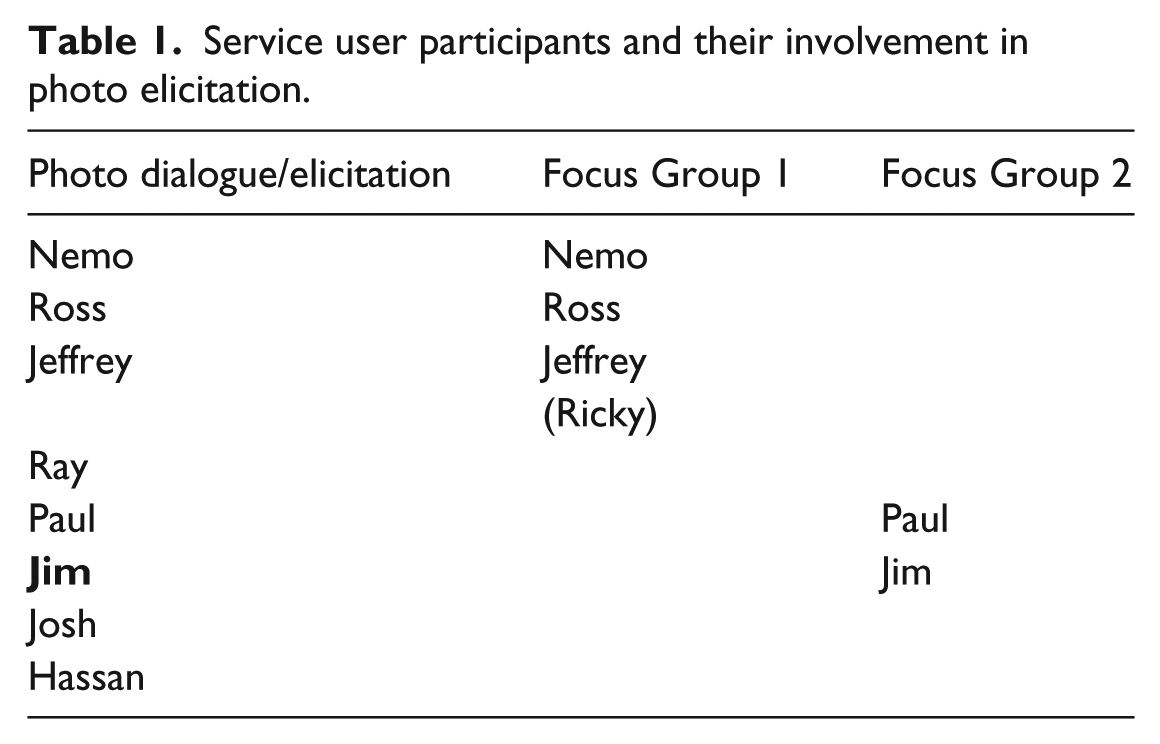
Photo dialogue and photo elicitation
‘Photo-Elicitation’, involves inserting photography and photographs into a research process in order to maximise the possibilities for empirical and ethnographic enquiry. Participatory visual methods specifically are considered to be ‘modes of inquiry that can engage participants and communities, eliciting evidence about their own health and well-being’ (Mitchell and Sommer, 2016: 521). Harper (2002) maintains that the use of images can ‘evoke deeper elements of consciousness than do words’. Despite being under-represented in food-related studies, this approach has been used with multifarious marginalised groups, from single mothers and youth to its wide-ranging use in more general health-related studies such as the experience of homeless women’s health issues (Bukowski and Buetow, 2011). Wang et al. (2000) promotes its use for personal and community action, allowing participants to generate their own images which provide insight into ‘street level’ experience for policy makers. The act of taking the photograph in itself may provide further motivation to engage with research. The photograph can be a neutral third party (Schulze, 2007) and particularly useful when discussing issues with ‘vulnerable’ people and/or those traditionally considered to be ‘hard-to-reach’ (Liamputtong, 2007). Our study used this approach with food as the main focus, which can be deemed as relatively novel.
Prior to photo elicitation data collection, a ‘photo-dialogue exercise’ was undertaken by six members of the multi-disciplinary research team before its use with participants at the centre. This valuable ‘team building’ exercise proved very insightful as to the processual considerations of what was being asked of our participants and aided the dynamics of working together and collaborating during this pilot phase and beyond. In line with PAR philosophy, our initial engagement with participants, by way of introduction to the project, entailed a general discussion generated from a similar ‘photo-dialogue’ exercise. Images of various food types were placed in front of the group, and each person was asked to choose two images – one representing food they ‘liked’ or had positive connotations of, and one that they ‘disliked’. Discussions around memories and experiences were then shared and recorded for later transcription. At this stage, a research information sheet was made available to potential participants. Those who agreed to participate were asked to sign consent forms.
Participants were then issued with a disposable camera and given brief instructions on how to use it. They were then asked to take photos of their food activities over a 10-day period. This time span was chosen to incorporate several food events that were planned with centre involvement. There was minimal instruction given as to composition or aesthetic considerations of taking photos, as it was deemed appropriate to allow for authentic portrayal of their relationship to food and food activities. The critique by Catalani and Minkler (2010) comments on the range of ‘lead-in times’ prior to the photo project, from photography lessons to no artistic intervention and everything in between. From lengthy team discussions, it was agreed that enhancing authenticity and reducing intervention was an important consideration, due to photo-elicitation using the images to prompt text-based data for analysis. The intention was to retain the ability for photographs to elicit dialogic engagement and opportunities for expression around food in keeping with the dominant ethos of ‘beyond text’ methodologies. In the philosophy of the FLM aims, it was necessary to give participants a ‘voice’ – the opportunity for a sense of agency and empowerment as well as a novel way of relating to food.
Focus group discussions
Two focus groups were then planned, with the intention of participants talking about their developed photographs in relation to their food relationships and behaviours. In practice, although group times were advertised and with initial interest shown to attend these focus groups, only a small number of participants actually presented themselves at each event (Table 1). Hence, the format became more akin to ‘small group interviews’, but with the same remit. This is commonly seen in research with harder-to-reach transient populations, where methodological issues have been noted (Hickney and Downey, 2003) with flexibility and innovation recommended to mitigate these challenges. Questions were loosely framed around the experience of taking the photographs as well as general discussions associated with the images. Considering the project had elected to utilise photo-elicitation as its operational approach to uncover food experiences of service users, it seemed salient to allow the method to present opportunities for them to respond according to their own constellations of memories, associations and feelings, rather than impose a more static questioning regime (see Pettinger et al., 2017). Both groups lasted an hour, and were attended by n = 3, then n = 2 participants respectively (Table 1). They were led by GD’A and observed by CP (also present was gatekeeper LW), thus ratio of ‘researched’ to ‘researcher’ was low, which might have inhibited participants and influenced their responses.
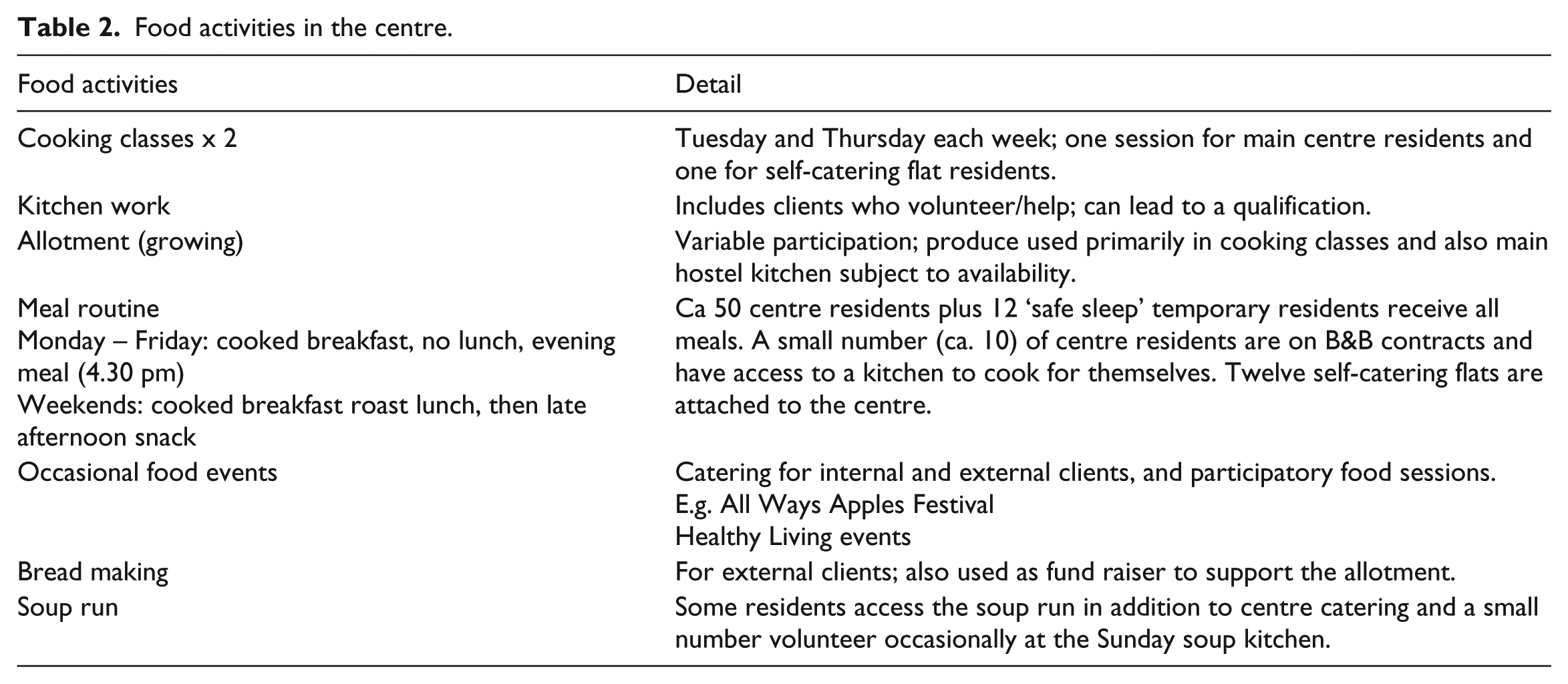
Food activities taking place in the centre were observed and documented during the 10-day period. This included photographic records being taken of key food-related events, outlined in Table 2. Cooking classes and bread making formed an important part of planned activities in the centre (Image 1).
Food activities in the centre.
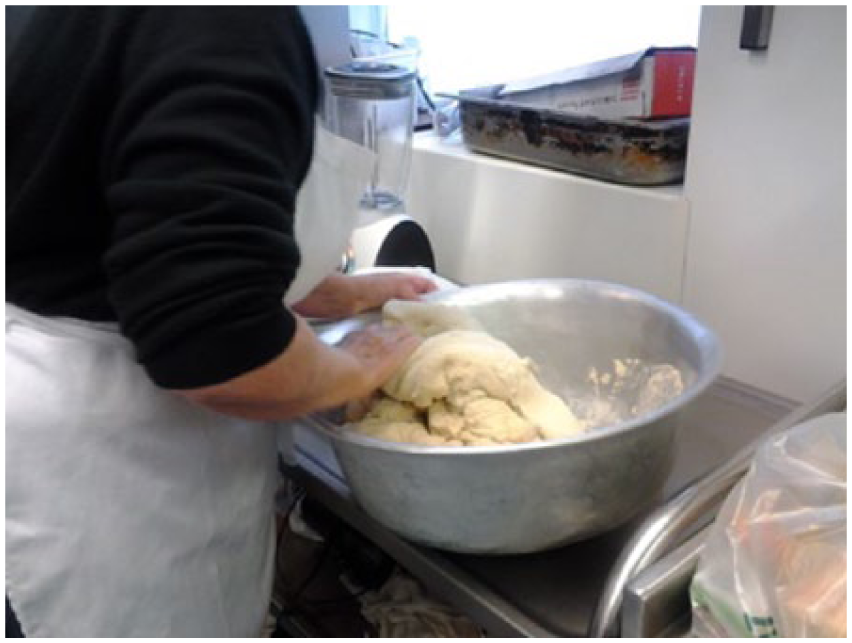
Making bread.
Observation of food activities in the centre
The allotment was created by the service users themselves (Image 2), with produce intended to be used in cooking activities. Observations revealed variable participation by service users for the allotment.
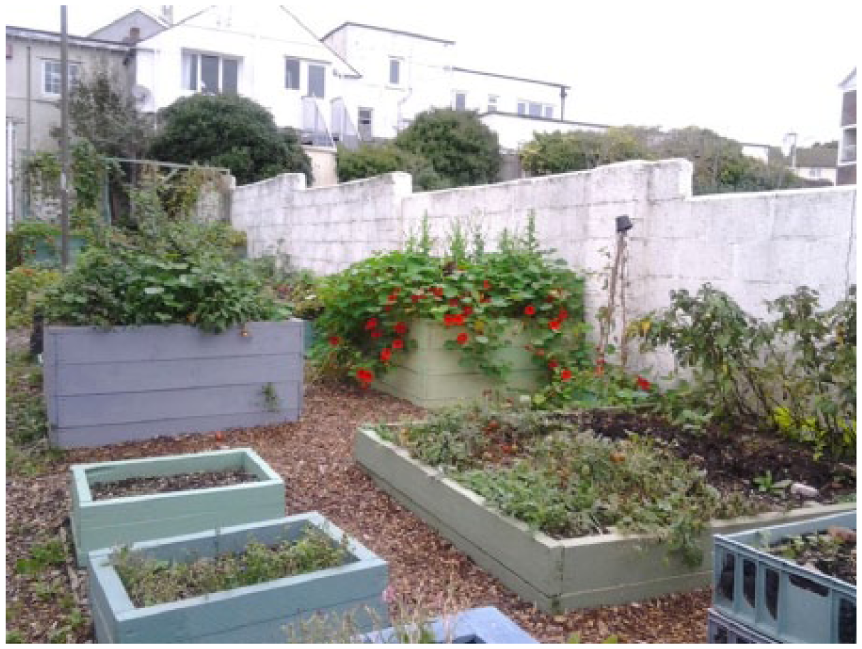
The allotment.
Analysis
Analysis is not something that only happens once all of the data are collected but is an ongoing part of the fieldwork process. In addition, no study can be completely inductive as researchers begin the research with their own political and theoretical assumptions. With this in mind, it is important to remember that all research accounts are partial and constructed by the researcher(s). This is not to say that research reports are merely constructions, but they are influenced by the ideological position of the researcher(s) and their social and material location (Stanley and Wise, 1990). Thus, the personhood of the researcher is relevant to theoretical analysis just as it is to research design and fieldwork: Researchers are themselves people, with their own ‘responses, values, beliefs, and prejudices’ (Morley, 1997: 139) and research involves selection, explanation, interpretation and judgment. Thus, it is important that the ‘person’ is made explicitly and the processes involved in research procedures are clearly outlined in order to uncover the differences that we as researchers make (Jones, 1997). (Letherby, 2002: 55).
A deliberate mix of epistemological methodological approaches was used to analyse transcripts to identify important themes. Consequently, ongoing ‘constant comparison’ could be conducted in a systematic way (Hancock et al., 2009). This allowed categories and themes to be developed and interpreted and aimed to be as faithful as possible to the participants’ accounts. This rounded approach provided optimised opportunity to derive meaning from a range of multi-disciplinary stances. It also permitted the research topic to be considered from complimentary and contrasting angles, all filtered through the broader lens of thematic analysis. In essence, the multi-disciplinary nature of our research team suited the adoption of thematic analysis as it has the advantage of being independent of theory and can be applied across a range of epistemological approaches. This method recognises that themes do not simply emerge from the data, as though they are latently waiting to be explored. Researchers using thematic analysis do not naively ‘give voice’ to participants; they are actively engaged in editing and selecting data to frame those voices (e.g. Braun and Clarke, 2006 ; Stanley and Wise, 1993).
Five major themes emerged during analysis (Table 3):
Detail of major themes that emerged during analysis.
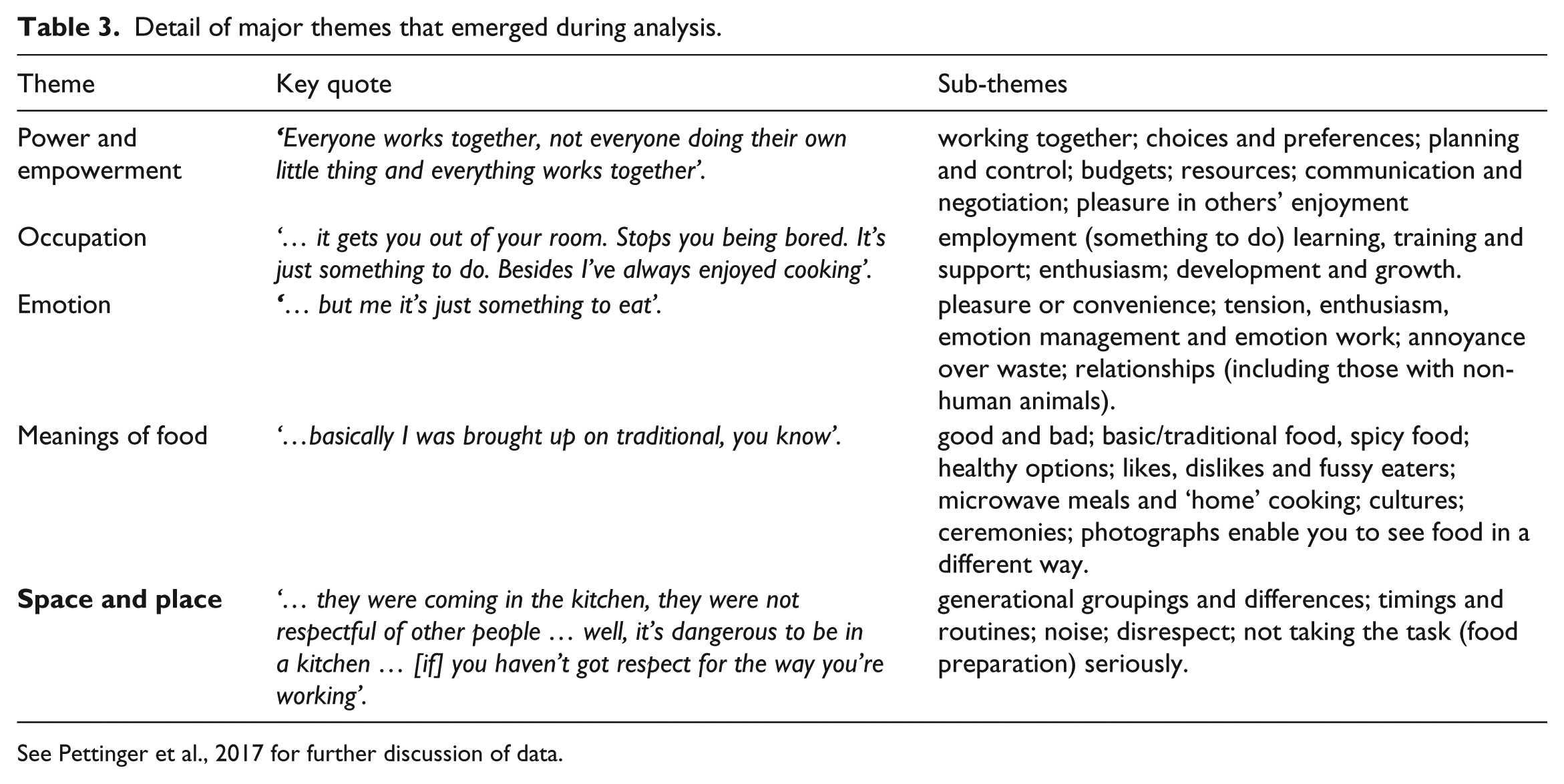
See Pettinger et al., 2017 for further discussion of data.
I – P (power and empowerment), O (occupation), E (emotion), M (meanings of food), and S (space and place).
The ‘Voice Centred Relational Method’ (VCRM, Mauthner and Doucet, 1998) was adopted to give further authenticity to the voices of service user participants. This is an approach that acknowledges that selves are interrelated through a web of psychological and social complexity. This analytical approach became a primary means to give authenticity to the voices of respondents (and researchers) in this project. From focus group discussions, we generated a set of ‘I-Poems’ drawing on statements incorporating ‘I/we/you’ made by service uses in response to their image-making during the course of the discussions (see Parsons and Pettinger, 2017 and Parsons 2017 for more here).
Jeffrey’s I-Poem relates to all the key themes: Can we? I can’t stand chillies Can’t think of much I dislike That’s the way I look at it When I was living away We used to keep You could grow everything Everything you ate was fresh You know where it is What you can do We cook up a big meal I was doing some I said to the owner I said You’ve got to be joking I said to him how Can you call that free range? I prefer the real ones I got used to it I was working in Ireland You can get Liffy water I don’t know I mean a pint of Guinness We had someone You just leave them
Whereas Jim’s and Josh’s focus specifically on ‘meanings of food’:
I love homemade soup I looked forward to it I can’t really I’m assuming I don’t like very spicy food I never have done I’ve always I mean I will eat a curry I don’t like it very spicy I don’t like it I like my basic food We would look forward to it We used to love and enjoy that
I have the eggs I dint like I can’t I was sick I don’t like I just don’t like I like the eggs
Discussion
From our fieldwork experiences, we support others who argue that participatory approaches can be a useful way to engage ‘harder-to-reach’ individuals (in this case those residing in a homeless centre), although limitations are an inherent part of such approaches. Despite our best intentions, it is debatable whether we were able to achieve the full extent of PAR’s guiding principles. Our reflections on all of this follow.
Beginnings
Behaving and reflecting on ethics within research go beyond the gaining of ethical approval. A key concern of ethics committees is that of informed consent, that is, that respondents are consenting to involvement in research from a position of full understanding. Yet, it is usually difficult to assess whether consent is ‘really’ informed. Research involving gatekeepers may discourage participants who worry that these others may then have access to what they have divulged through the course of the research. Arguably this is particularly relevant when researching people who are receiving support, care or treatment as they may worry that what they say will influence future support/care/treatment which may, in turn and when relevant affect their treatment and their care from these individuals (Afshar, 1994; Cannon, 1989). This is relevant here as participants may have been deterred from involvement and/or reticent in some ways not least because the recruitment gatekeeper was also part of the research team. The presence of an anchor member of staff was on balance deemed successful as discussion with those service user participants that stayed involved with the project spoke of their trust in her. However, we cannot know if it deterred others.
To date, a considerable amount of attention has been given by researchers to the importance of respecting and protecting those who participate in research. Researchers are increasingly concerned to shift the balance of power within research in favour of the researched (e.g. Koch et al., 1999; O’Neill, 2008; Stringer, 1996). Others insist on methods also meeting participatory and emancipatory criteria so that involvement in research is beneficial in its own right (e.g. Homfray, 2008). Indeed, this was our aim. However, … whilst acknowledging the political aspects of the research process within which power, emotion, involvement, detachment are all implicit it is important not to define the research process itself as political activity … The political motivations of both researchers and the researched should be subject to critical scrutiny, not least in terms of the imagined or potential connection between respondents and researchers. (Letherby, 2009)
This was demonstrated to us not only by the close relationship between some of the research team and service user participants (as noted above).
Doing
The issues of power and emotion are inevitably linked within research (Cornwall and Jewkes, 1995; Ramsay, 1996; Young and Lee, 1996). Cornwall and Jewkes (1995) argue that what distinguishes participatory research from conventional research is not methods or theory, per se, but concerns over the ‘location of power in the research process’. Emotion is integral to methodological processes not least because emotion is part of everyone’s life and emotional expression within the research process is often data in itself (e.g. Hochschild 1983; Gray, 2008; Lee-Treweek and Lingokle, 2000; Young and Lee, 1996). Building on the work of (Hochschild, 1983) ‘emotion work’ has been defined as both the regulation and managing of others’ feelings and the work individuals do on their own emotions in order to conform to dominant expectations in a given situation. Thus, emotion work is work on and for others and on and for oneself (Duncombe and Marsden, 1998; Frith and Kitzinger, 1998). Given that emotion work is gendered (e.g. Hochschild, 1983; Frith and Kitzinger, 1998), it is interesting to note that our participants were all men, and the members of the research team involved directly with the participants were all women. This did not, however, seem to influence recruitment, data collection or focus group discussions, but may have played a role (in a similar way to the presence of the anchor member/gatekeeper in the focus group itself), an all-female research team might have deterred some recruits and/or open discussion. But we have no way of knowing this for sure.
Clearly, displays of emotion can be difficult and even dangerous for both researchers and the researched. For example, researchers have written of how visible displays of sorrow, joy and anger within fieldwork can cause distress for all involved. While the need of the researcher to sometimes hide their emotions, not least in response to sexist, racist and other prejudicial comments and behaviour has also been acknowledged (e.g. Sampson et al., 2008; Young and Lee, 1996).
The centre environment presented the research team with the challenge of ‘emotional management’ (Hochschild 1983). Certain participants, for example Nemo, displayed marked mental health related characteristics. Similarly, Ricky was present in focus group 1 but was unable to communicate, due to being ‘under the influence’ which made his presence somewhat unsettling for the researchers. This reinforces that researchers are responsible for fully understanding the needs of the researched in this case ‘marginalised’ individuals with complex needs. Researching the ‘vulnerable’ is duly considered by Liamputtong (2007) yet this terminology may not be fitting as possibly ignores the considerable resilience in the face of hardship displayed by those who find themselves in challenging circumstances (Parsons and Pettinger, 2017). Most of our research team, with backgrounds in health and social sciences, had strong insight into the values of compassion and empathy, yet in team meetings, it became evident some felt additional training might have been useful. As noted above, some researchers argue that research can (even should) be beneficial in its own right (Homfray, 2008) and yet although research may be beneficial, therapeutic even, it is not, nor should be confused with counselling (Cotterill and Letherby, 1994). Reflecting on our occasional ‘discomfort’ in the field, we think it likely that this resulted from a mixture of feelings, including wanting (as people rather than ‘just’ researchers) to do more than was possible in our research remit; humility when we acknowledged that our participants might not necessarily want anything else from us; and, we accept given social expectations of appropriate ‘presentations of self’ (Goffman, 1956) some embarrassment.
There was also a sense at times that our service user participants were slightly apologetic about their efforts taking their photos, in that they were trying to please and nervous about ‘doing it wrong’. In addition, for some participants at least, both the motivation for engagement in food preparation and participation in the project is the lack of other opportunities, commonly referred to as ‘occupational deprivation’, (see Whiteford, 2000), yet our observations illustrated participation in most food activities were inconsistent at best (see Table 2). With reference to engagement in food preparation, this exchange in Focus Group 2 is relevant:
You know, it gets you out of your room. Stops you being bored. It’s just something to do. Besides I’ve always enjoyed cooking … Well, since I were younger. Always enjoyed it.
You say it gives you something to do, I mean there aren’t many options around her are there?
No, not round here there isn’t other than people they just don’t want to do anything. I mean there isn’t enough places in the kitchen to occupy too many people unless they start rotating it but I don’t think that would work.
What would you be doing otherwise?
Well….bored to tears basically. Well the job situation is, well, everyone knows it’s not very good at my age. I’m sixty next year. Even though I’ve got over 40 years’ experience of being a plumber, it’s difficult to get back into that. I’ve looked at other work and I couldn’t work in an office. That would really do my head in.
And in answer to questions about research participation and specifically the use of photography:
It was disappointing, a bad memory when I’ve put it onto two different cameras and picking up the wrong one but it was, I don’t know, it was not being able to travel to move round. I’m used to, when I used to do photography as my hobby I could go anywhere and take photographs but this was sort of limited. And then I did some of the kitchen here and I wanted to see other kitchens. Those were the limitations. I could have gone further and taken more interesting photos. It was just the idea of, trying to portray the history of your meal from start to finish, you know from the wild animal to the dish at the end. That was the picture that I wanted to portray.
Alright. Yeah. Something to do! No. It were alright. I enjoyed it.
In addition, it is important to remember that research relationships are fluid. Thus, despite assumptions that the balance of power is always in favour of the researcher(s), the reality is often more complicated. So, it may be inaccurate, even patronising to assume that research participants are always vulnerable and/or need to be empowered by the research process (Letherby 2003). Thus, reflection on the meaning of research participation needs to include reference to the participants’ as well as the researchers’ agenda. Involvement may be partial and full cooperation is not universal (Davis et al., 2000; Images 3 and 4).
I should have took more pictures … I got silly pictures of things like crisps and that … I should have took a bit more care of the pictures. It isn’t really telling a story … I dunno why I took a picture of Haribo [laughs] …
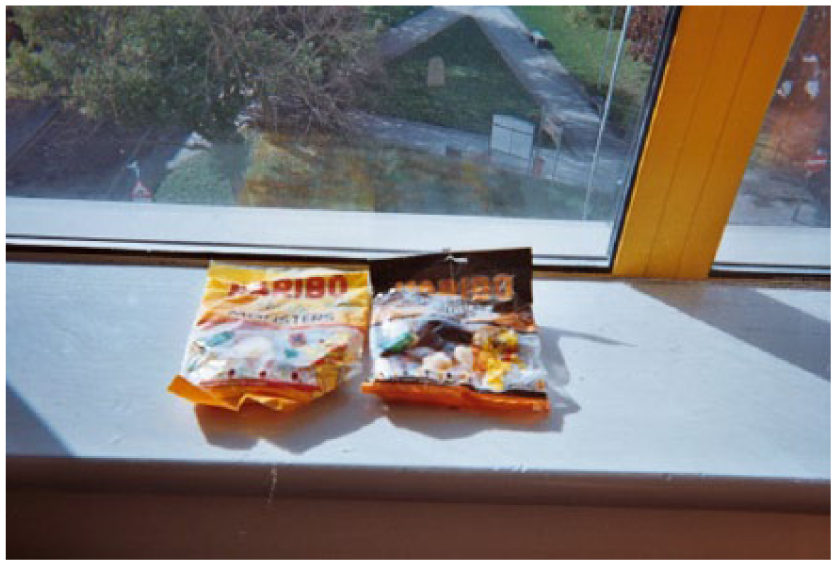
‘Haribo’.
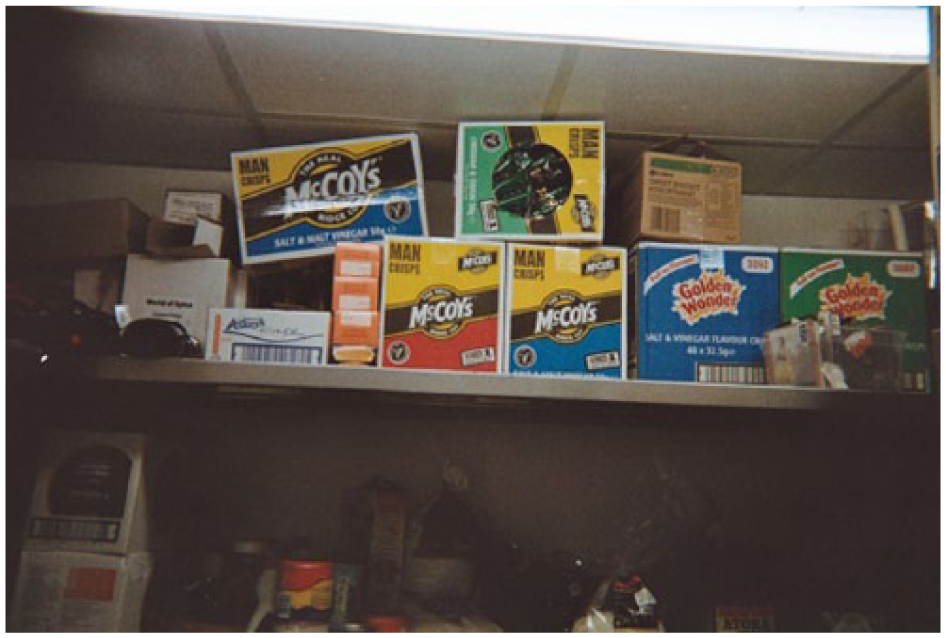
‘crisps [and that]’.
And yet, despite shifting power relationships, even resistance, during data collection it is almost always the researchers with whom the balance of power resides during analysis and data presentation (e.g. Stacey, 1991, Letherby, 2003). Indeed, while a ‘significant advantage of participant-led visual data production is the limits it places on the intrusive presence of the researcher’ (Mannay 2013:136), there are inevitable power dynamics at work/play within any social interaction, not least within a research encounter (Letherby, 2003, Liamputtong, 2007). With this in mind we accept that ‘elements of inequality, exploitation, and even betrayal are endemic to [research]’ (Stacey, 1991: 144).
Our regular group meetings meant that we had time to discuss our individuals and shared fieldwork (and other) concerns. It is accepted that research group meetings synergize project progress and professional development (Delamont and Atkinson, 2001). Attending meetings can be a challenge, however, for academics who already have multiple commitments. If managed well, research meetings can provide a valuable infrastructure that supports professional development, scholarship and productivity (Vincent, 2009), both individually and on a group level. Regular critiquing of one’s own work by the group can develop and evolve ideas. Group members can glean diverse perspectives on their work especially if members of another profession participate. In addition, such meetings provide a space for researchers to support each other emotionally which is invaluable even if emotional well-being of researchers is often given less attention that other ethical issues (e.g. Lee-Treweek and Linkogle, 2000).
Analysing and representing
Reflecting on the analysis, there is a need to consider both involvement and representation. Some researchers have argued that in order to avoid, or at least minimise, the exploitative aspects of research, researchers should think carefully about attempting to represent ‘others’: people that are not like them. Oliver (1997), writing about non-disabled people researching people with disabilities (but the point is generalizable), suggests that some research by non-disabled people violates the experience of disabled people and is irrelevant to their needs. However, there are problems here, not least because academia is not representative of all groups which could mean that the experience of some groups remains. Speaking only for ourselves could also lead to much more research on already privileged groups and implies that those who come from unrepresented and/or minority groups have a ‘duty’ to represent ‘others’ like them (Wilkinson and Kitzinger, 1996; Letherby, 2003).
The use of social science knowledge for both understanding and transforming social policies and political systems has come to be assumed as demonstrated in the current emphasis of evidence-based practice (David, 2002; Solesbury, 2001). Yet, knowledge gained from health (services) research is also used to inform the development of social policy. This, however, requires engagement by diverse health service users to avoid findings being un-representative and inequitable (Bonevski et al., 2014) thus a challenge to get right. Mayall et al. (1999) note research involves three intersecting interests: those of researchers, of research respondents and of those individuals, groups and institutions with the power to influence research priorities through funding, policy making and other processes. They add that researchers have a moral obligation to take into account the impact of their work on others.
Reflexivity – both descriptive (the description of one’s reflection) and analytical (involving comparison and evaluation) – are essential parts of the research process. Furthermore, both researchers and respondents engage in it. But, it is essential to acknowledge that as researchers we are in a privileged position, not only in terms of access to multiple accounts, but also in terms of discipline training which enables us to engage in ‘second order theorising’ or what Giddens (1984) has called the ‘double hermeneutic’. This involves ‘interpretation’, not just ‘description’ of respondents’ as well as the researchers’ analytical processes (Letherby, 2009).
Reflecting
Although our approach to data collection adhered in part to the concepts of PAR, analysis, largely due to time constraints, was undertaken by the research team. We acknowledge the limitations here. The creation of ‘pen portraits’ was true to the PAR philosophy, as these were discussed and agreed with participants themselves. Yet, we could have more fully consolidated our PAR approach, by continuing our engagement with participants following the photo elicitation process, and including their support workers in this. Doing research inclusively requires people from the non-dominant groups in society being put at the centre of the research process (Nind, 2014) and yet as we have already considered, the significance of power and emotion require continuous attention throughout the research process and the production of the research product: PAR recognizes that we are all able to utilize a range of methodologies to investigate, analyse, reflect on, and come to terms with new knowledge. Furthermore these processes of inquiry have the potential to help us overcome the forces that oppress us use. (People’s Knowledge, 2016: 2)
Participatory methodologies are considered as being more reflexive, iterative and flexible, in contrast with the more rigid linear designs of conventional sciences (Cornwall and Jewkes, 1995). Better understanding of homeless individuals is known to lead to development of broader public policy responses (Booth, 2006) making their voices essential in this dialogue. We did successfully engage a (small) group of homeless service users, by considering ethical and design aspects carefully, who (enthusiastically) participated in the photo elicitation approach. This can be argued to address (in part) the first two of the four PAR guiding principles (democratic, enabling participation of all people, equitable and acknowledging people’s equality of worth). More work is needed, however, to address the remaining of the guiding principles:
Liberating, providing freedom from oppressive and debilitating conditions;
Life enhancing, enabling the expression of people’s full human potential (Stringer, 1996; see also Minkler and Wallestein, 2003 and Minkler, 2010).
The FLM project is ongoing, and we will endeavour to address some of these aspects in its future elements. To progress this project, we have already involved further diverse ‘multiple and complex needs’ service users and providers in participatory approaches, including ‘Appreciative Inquiry’ interviews (informed by Bellinger and Elliott, 2011), which have successfully engaged participants through the formation of informal community-research partnerships, which are deemed to strengthen research outputs (Bonevski et al., 2014). We will endeavour to include participants more consistently throughout the research process, including analyses, fully acknowledging appropriate ethical considerations. Finally, we also intend to use some of the photographs taken during this project to run an exhibition for public engagement purposes. We would like, with their agreement, to engage with participants themselves as curators of such an exhibition, which would potentially meet the final of the four guiding principles of PAR.
A final reflection is on the strengths (and challenges) of the multidisciplinary research team, which can highlight differences of approach and opinion and as such necessitates further emotion work which, as with all such activity, can be hard. This hard work is of benefit not least because: Collaboration of any kind helps give a voice to individuals with different experiences and demonstrates the influences that shape individual life choices and lifecourses … although working together takes effort and compromise at times the rewards it brings are obvious: personally, politically and theoretically. (Cotterill et al., 2007: 196)
Very little has been written specifically on the training and development needs for multi-disciplinary research teams in the health and social sciences. In healthcare specifically, it is well known that (multi-disciplinary) team work is essential and that ‘collective input always benefits outcome’, but getting a balance is key to success (Fletcher, 2008). Similarly, evidence can mainly derive from biomedical models, which focus predominantly on ‘positivist’ science. This can, consequently, exclude or de-value other forms of knowledge generation (Duchscher, 1999), those personal narratives and lived experiences, both of which are inherent elements in participatory approaches. Taking time out as a team with a skilled facilitator can be very beneficial for team dynamics.
Concluding thoughts
Overall, we believe that our use of participatory creative methods of engagement, within the FLM project has, to some extent, successfully extended the remit of food-related photographic methodologies, providing reflective qualities of engagement through narratives (and their associated images). Yet, there is still more that we could have done. This research experience has highlighted for us the importance of reflection on issues of power, emotion and involvement across participant relationships within research. We acknowledge the limitations in the ‘beyond text’, participatory based method not least when working with transient and vulnerable populations (Hickney and Downey, 2003). Although our study group was small, the narrative strength provided by the participants’ voices, supported by the images they created, was rich. In addition, our multi-disciplinary approach prompted a multi-disciplinary analysis (see Pettinger et al., 2017). We recommend that future research could explore aspects of PAR with more depth, with increased numbers of participants and a wider range/diversity of ‘marginalized’ communities. Similarly, future work might focus more deeply on interrogating of the processes, practicalities and ethical realities of working in a participatory style using creative methods. With reference to substantive concerns further work could also include investigations of impact of participatory food events to enhance public engagement and community wellbeing. With hunger a topic of national debate, there is an urgent need to consider how to engage better with socially excluded individuals and communities. More progressive solutions are now being sought, that foster ‘co-productive’ philosophies (Slay and Robinson, 2011), seeing people as assets and tackling issues of power and transparency. Creative approaches, such as those critiqued here, offer great potential to engage under-researched groups, and as such should be endorsed and utilised in a range of settings.
Footnotes
Declaration of conflicting interests
The author(s) declared no potential conflicts of interest with respect to the research, authorship, and/or publication of this article.
Funding
The author(s) disclosed receipt of the following financial support for the research, authorship, and/or publication of this article: The project was funded by an Institute for Sustainability Solutions Research (ISSR), Plymouth University small collaborative award in May 2014 and British Academy/Leverhulme small grant (2015–2017). We are grateful to the homeless centre and all those who gave their time to be involved in the project.