



Abstract
There has been increasing use of comic-based approaches within qualitative research as part of an increase in creative and visual methods more generally within social science research. However, whilst increasingly prevalent in dissemination, their use within data collection is less common. This paper examines the dual use of a comic-based approach embedded within a study that explored widening participation in higher education. Initially developed for the triangulation of emergent research findings with a wider group of participants, a comic panel was developed to be used as a focus of discussions within a workshop with 11 practitioners. This was then further developed for wider dissemination and to create a space for dialogue and to engage wider publics with the study’s recommendations. Both uses are critically examined, highlighting the affordances of comic-based approaches such as their capacity for supporting dissemination to a wider audience by distilling the findings and presenting them in an engaging way. Furthermore, it argues that the form can allow for creating points of ambiguity that create spaces for the audience to challenge and question taken for granted assumptions on a topic. The paper also sets out possible challenges such the need for specialist skills, the potential for oversimplification and misrepresentation of complex issues. This paper argues that with careful planning, comic-based approaches can add significant value and increase engagement with research. Finally, it offers suggestions for how this approach could be developed by future researchers.
Introduction
Comic-based approaches within research dissemination have been gaining increasing prominence but their use within data collection is more limited. This paper explores the specific use of a comic-based approach within a research study exploring the gaps between policy and practice in higher education. The adoption of a comic was developed as a result of existing engagement with visual methods within a doctoral research project (Rainford, 2019, 2020) yet is in many ways distinct from these methods. Consequently, this paper offers a reflection upon the affordances and limitations of the use of a comic-based approach. This approach was adopted in order to engage practitioners with data collection before later being expanded to engage different groups with the findings and recommendations of the research. Whilst the use of comic-based methods is increasing in social research, this dual use is novel and as such may offer a unique perspective on embedding comics more fully within the research process as opposed to developing them purely as a mode of presenting findings from existing research.
This approach sits within a wider field of visual studies which encapsulates a wide range of approaches (Ball and Gilligan, 2010). Whilst Ball and Gilligan (2010) have agreed for visual studies often occupying a separate space, increasingly, visual methods are being incorporated within research studies and being combined with traditional qualitative approaches such as interviews and focus groups (e.g. Pettinger et al., 2018). One of the more recognisable methods that might resonate with readers of this piece are photo-elicitation methods. Photo-elicitiation is recognised as being valuable for engaging participants and encouraging reflection on issues beyond what can be achieved using in traditional interview techniques (Fearon, 2019). The use of photo elicitation, can also sharpen the focus of a participants memory (Fearon, 2019). However, in the context of this study, the visual element was needed to create a space for reflection on how the findings of this study resonated with participants wider experiences.
Therefore, the use of the comic-based approach was intended to create a third object prompt (Dumangane, 2020) to focus discussions upon. These third objects can provide participants with some critical distance on key issues and as Harper (2012) argues in relation to photos, can provide something that both the researcher and participant are trying to make sense of. However, unlike photo-elicitation methods which often attempt to place the focus upon reflections of specific individual experiences through either researcher provided or participant generated imagery, the use of a comic-based method can offer an increased critical distance for discussion of particular issues. This paper’s exploration of how researchers can draw upon some of the qualities of the comic form to engage their participants offers a distinct contribution to the literature. Through doing so, this paper also highlights a number of key affordances and barriers which will enable researchers to reflect upon how these methods might be adapted and adopted to greater effect in future studies.
The growth of comic-based approaches
Comics as an artform have a long history (Kuttner et al., 2021; Meskin, 2007). Whilst the definition of a comic has been heavily critiqued and contested (Meskin, 2007), it is accepted that usually this medium has a reliance on the interplay between images and text with a greater reliance on images to convey a message. One often cited definition of comics is set out by McCloud (1993: 9) who states:
‘comics are juxtaposed pictorial and other images in a deliberate sequence, intended to convey information and/or produce an aesthetic response in the viewer’
However, when the form has been used in other areas such as social research, and as in this study, some of these elements can be less prominent or even absent. Therefore the use of ‘comic-based approach’ recognises that their use in research does not always conform to traditional conceptions of the comic form. For example, within the comic-based approach reflected upon in this paper (Figures 2–4) there is heavier reliance on text than might be expected and in places the removal of the images is unlikely to impact the content, thus their interplay is not central to the artefact itself. Therefore, whilst aesthetically it shares many similarities with a comic, to define it as such would be disingenuous.
Within the literature, the most widely reported use of comic-based methods is as a form of dissemination to engage specific groups, or publics with research. The wider affordances of comic-based approaches has been the focus of recent research (Kuttner et al., 2021). In addition, Stephens Griffin (2019) highlights the increasing prevalence of comics in academia, including Sousanis (2015) thesis presented as a graphic novel and Field’s (2016) statistical textbook that also draws on the graphic novel form. Furthermore, comic-based approaches have often been used in health sciences to engage patients with complex issues due to both their accessibility (Williams and Sarson, 2018) and their ability to encapsulate humour within them (Kennedy et al., 2014). This long form use of comics which benefits from their complexity is in contrast to the use of comics to increase accessibility of text, such as their increased use of within a medical context (Green and Myers, 2010).
Within British social science, the use of comics has been one part of an increasing focus on creative methods (Kara, 2015; Mannay, 2016). This broad adoption of comic-based approaches has also extended to their use in training scholars on research methods. Some recent examples of this include Edwards et al. (2019) comic exploring indigenous and non-indigenous research partnerships and Conversations with a purpose that Helen Kara developed with artist Sophie Jackson to explain qualitative interviews (Kara and Jackson, 2018). In their reflections on the use of comic-based approaches both Barnes (NCRM, 2019) and Kara (Kara and Brooks, 2020) argue that the medium was chosen due to its ability to stimulate thought. Furthermore, comic-based approaches are increasingly being used as a mode of presentation for journal articles such as the recent collaboration between Mutard et al. (2021). This ability for the visual to allow complex ideas to be captured within images is central to the affordances a comic-based approaches. Harking back to the cliché that an image is worth a thousand words.
Whilst there has been an increasing use of comic-based methods for dissemination in the wider social sciences, within education research the use of comics has more often been focussed on literacy studies as opposed to creating comics within the research (e.g. Bitz and Emejulu, 2016). Researchers such as Bartlett (2013) have highlighted the potential that comic-based approaches have to engage research participants due to their playful nature yet despite this argument their use has been more limited in the data collection phase of research. The use of comic-based approaches in data collection is exemplified in three studies in particular. Galman (2009) used a comic-based approach to explore pre-service identities with teacher trainees. She worked with participants to draw comics with her and used those visual outputs as a point of analysis. Likewise, McNicol (2019) worked with nine women over a 6 month period to create graphic novels of their lives. In contrast to these approaches which involved participant creation as a form of data collection, Tsao and Yu (2016) used animated comics with medical students to explore how they might support the development of empathy.
Despite an increased number of studies using comics in data collection, the use of comic-based approaches as tools of dissemination is more common (Kuttner et al., 2021). This does not mean that participants have been excluded from their design (e.g. Lawrence et al., 2017) but that the focus has been on the comic as an output. The only closely aligned example of comic-based methods to my project identified was Darnhofer (2018) development of comic style illustrated posters discussing preliminary analysis of research findings with farmers in Austria. Some parallels may also be drawn with Stephens Griffin (2019) work which used comics as a way of participants telling their narratives within a mixed methods approach, inspiring his creation of a visual autoethnographic comic.
There are also a number of recent uses of comics within dissemination of educational research which merit further examination. In Vigurs et al. (2016) study, a comic was used was to present narratives of student debt based on interview transcripts and Lawrence et al. (2017) study used a comic to visualise the narratives of early career teachers. These two projects adopted differing approaches. Vigurs et al. commissioned students to create the comic whereas Lawrence et al.’s lead researcher drew theirs. However, collaboration between artists and researchers is often central to the development of comic-based approaches. This was evident in Darnhofer (2018) use of comic style posters to triangulate his research with farmers in Austria. Within his paper he argues that using professional graphic artists is advisable given the challenges of visualising research. Similarly, this mirrors another study that adopted a comic-based approach, The weight of expectation (Williams and Sarson, 2018). This project took an academic research project on health and obesity and attempted to make complex ideas on stigma accessible to a wider audience through collaboration with a professional illustrator. However, working with artists within social science research can take many forms. As Springs and Baruch (2021) argue, there is value in embedding artists within research teams to ensure a shared meaning is developed as to the project. Therefore, the relationship between the artist and the researcher can be important where they are not already part of the research team and can impact upon how reflective of the research the artwork is likely to be.
Situating comic-based methods within the wider study
The research study upon which this paper focuses explored the gaps between policy and practice in relation to pre-entry widening participation work within higher education (Rainford, 2019). Widening participation, also known as access to higher education work is concerned with supporting groups of learners traditionally under-represented in higher education to improve their rates of participation. These practitioners are usually non-academic staff whose job is to work with individuals and groups of learners. They primarily provide information, advice, guidance and support in navigating the transition into higher education. This work is often heavily focussed on delivery of practical activities and many staff working in this area report a lack of time to engage with policy and research reports. As this was a doctoral research project conducted by someone who was working as a widening participation practitioner at the start of the study, it was important to ensure that the research could have meaningful impact upon the sector and engage a wide range of practitioners with its findings.
The study itself involved documentary analysis of institutional policy documents called access agreements followed by sixteen semi-structured interviews with practitioners. The limited sample size for the in-depth interviews necessitated wider triangulation of the findings to explore their resonance. This triangulation was conducted with a group of 11 practitioners during a workshop session at a practitioner conference in Summer 2018. To enable this and related to the interview data which identified that practitioners often have limited engagement with research and policy, the findings needed to be presented in a format practitioners could engage with.
Creative methods had already played a key role in the interviews used in this study (Rainford, 2020). These methods seemed to spark interest with the project for many participants that continued long past the interview encounter. Specifically, the element that created the most positive engagement from both participants and those hearing about the research was the use of LEGO figures to explore understandings of careers and aspirations (Figure 1). During the interviews, each participant was presented with a LEGO ladder and 10 figures each representing different jobs or professions. They were then asked to rank these on the ladder. This task was designed to allow discussion around how the participants made value judgements of different jobs and facilitate discussions on the topic of aspirations. This task prompted ongoing discussions with participants at conferences describing how they had used similar tasks in their professional contexts. This positive association between the research and its methods, alongside the aesthetic appeal of LEGO led me to consider how this could be harnessed to facilitate engagement with the findings.
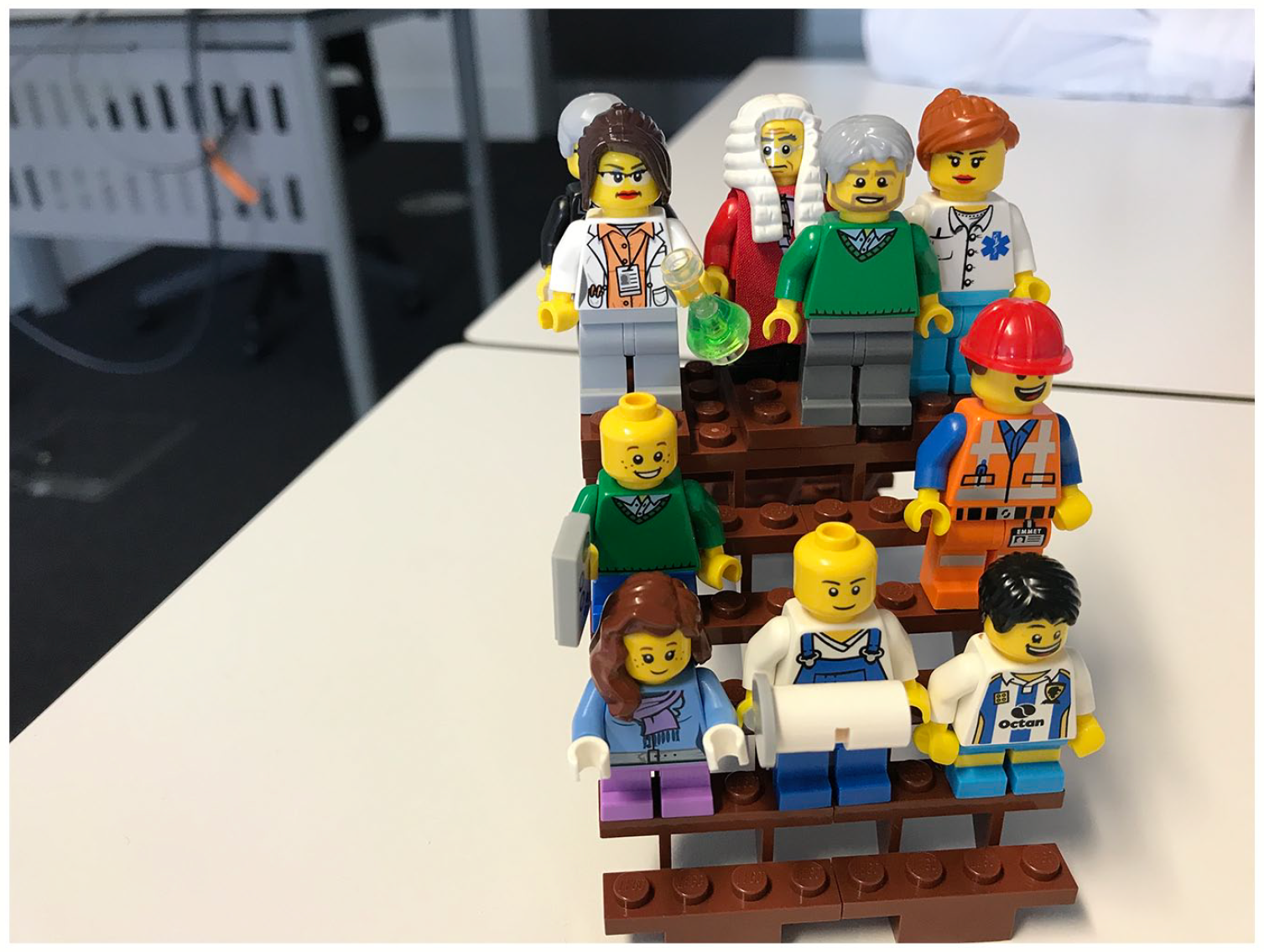
LEGO in data collection.
The use comic-based approaches in other projects such as Vigurs et al. (2016) had indicated that this form can engage practitioners working within the widening participation space in research. Unlike Vigurs et al. project this project had no budget for collaboration with an artist. In spite of this, the value of the LEGO and my own skills in photography led me to adopt a photography-based DIY approach. However, I do not claim to be a comic artist and my ability to fully embrace the form was somewhat restricted. Whilst I adopted stylistic elements and a condensed textual usage, my engagement with some of the more technical aspects such as the integration of image and text to create narrative was more limited. I refer intentionally to a comic-based approach throughout as whilst it shares many similarities with a comic there is a lack of true integration between imagery and text. In essence, the adoption of the comic-based approach here was more as a proof of concept; to try and find a way to improve engagement with the project itself to spark discussion and debate in a way a traditional report may not be able to.
Using comic-based approaches to engage and explore key issues
This study focussed on the use of the comic to engage individuals with key themes in order to elicit their views on them as a form of triangulation. Whilst conducting the interviews with practitioners, their reflections had highlighted a recurring theme of limitations on time and space to engage with research. This meant that there was an ethical duty to ensure that the findings for the study were presented in a way practitioners would be more likely to be able to engage with in the triangulation phase of the research. Vigurs et al. (2016) achieved this with their use of a research-informed comic to present narratives around student debt. The positive reception of their project within the wider academic and professional practice communities led me to consider how my own findings could be adapted to this form. However, the primary concern for my study was not conveying narratives but encapsulating high level findings in a format that would prompt discussion. The merits of this form to condense material into an engaging format that did not take long to read was therefore of interest. Lawrence et al. (2017) refer to the importance of the ‘liminal spaces between author and other, writer and reader’ (p. 11). For my own project, it was creating these liminal spaces to enable the viewer to situate themselves in relation to the emerging findings that I aimed to capitalise upon. Thus, the aim was to create provocations to interact with that Kara and Brooks (2020) have also argued for being a key benefit of comic-based approaches. For some groups engaging with the comics, the findings may be obvious, for others, they may feel unsettling. What I aimed to do was to catalyse discussions surrounding these. The use of the comic-based approach was therefore a pragmatic choice to enable the findings to be easily digestible and create a way to enable individuals to engage with them that facilitated reflection by the viewer based on their own experiences.
Developing the approach
There were a number of qualities of the comic-based approach that lent themselves to the project; their ability to capture complexity in an accessible format and to stimulate thought on a topic. This meant that a key consideration was ensuring sufficient detail about the project was distilled into a two-page spread. This two-page format was felt to be appropriate for a time poor audience who had already highlighted these constraints in relation to engaging with research and policy. The initial page was intended to outline the details of the project, its scope and the participants, an overview of the sampling and methods. Page two was intended to present a summary of the high-level findings in order to provide a springboard for further discussion.
There were a number of trade-offs to be made here. Whilst incorporating visual and textual elements can make presentation in this form seem more accessible, this is contingent on several factors. Firstly, that the reader understands how to read a comic. Here, the study’s comic-based form relied less on integrating visual and textual elements in the way traditional comics might. This removed some of that challenge but in doing so also limited the complexity it could encapsulate. Secondly, that the accessibility of the comic form is not a given. It is reliant on the artist and writer of the comic to condense and convey the key issues effectively. As my own skills were limited and the participants were unlikely to be very familiar with the form, there was a balance to be found in how to present the required information but not to limit how easily the participants could engage with it.
One of the strengths of this project was the engagement with the Lego in the interviews. Capitalising on this was therefore one way to both maintain a continuity between the phases. Photo-based comics are both a recognised form (e.g. Fong, 2012) and also played to my own creative strengths with a background in photography. The ComicLife application also facilitated creation of the layouts for the comic. The layout was primarily informed by the structure of the methodology chapter and the high-level analytical themes from of the authors doctoral thesis (Rainford, 2019). These formed the basis of a story board that was further developed by hand before translating it into ComicLife. This process involved mapping key headings from the main text of the thesis, creating sentence-based summaries and then reducing these to key points whilst still retaining sufficient detail. This process was iterative and involved feedback from a practitioner familiar with the project. Finally, the photographs were staged and used to illustrate the text that had been written. This draft comic was further piloted with practitioners and some of the text refined based on their feedback.
Within the interview phase of the study, the sample size was limited to sixteen practitioners in seven universities. As the study aimed to explore the wider resonance of these findings, the intention was that the initial findings would benefit from the perspective of a wider range of voices from across the sector to enable useful recommendations to be formulated. One of the recurring themes from the interviews was the desire of practitioners to engage with research. A desire that sits in tension with their time to engage with research. Distilling the high-level findings into a short comic-based format was a way to potentially widen the impact of the findings on policy and practice and democratising the study’s findings was also a key ethical concern and moral duty and was something the use of a comic-based approach supported. This two-page spread (Figure 2) was initially created for presentation and discussion with a group of widening participation practitioners at the National Education Opportunities Network (NEON) Summer Symposium in 2018, intended as a form of triangulation of the emergent findings. This annual symposium brings together widening participation practitioners from a broader range of institutions than were covered in the initial sample. The discussion involved eleven practitioners from a broad range of institutions. As such they brought different experiences and perspectives, offering valuable feedback on the resonance of the findings. Whilst this feedback was primarily focussed on the substantive content as opposed to the comic-based approach, several delegates commented on the value of the format used. There was no formal record of this response so subsequently, individuals who have participated in the engagement workshops have been asked for feedback which as informed the data within this paper.
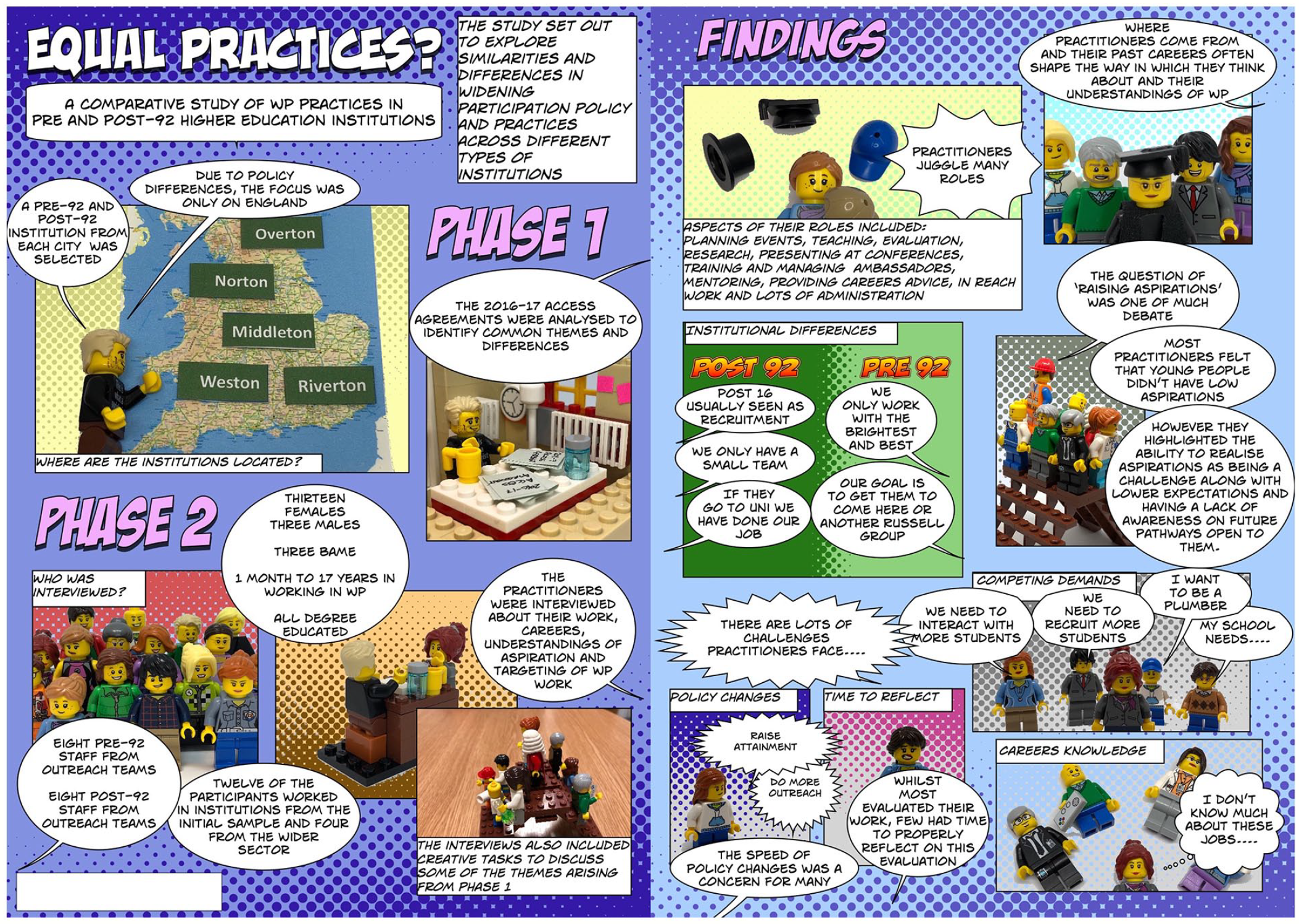
Initial comic.
The form was also was extended into a way to convey the recommendations from the study (Figure 3). This single page summary of recommendations was also able to be distributed as an image on social media, allowing for rapid and wide dissemination of these key messages. This would never have been possible with the thesis itself as it is unlikely that policymakers would engage with this long form output even though it is open access. However, the extent to which this recommendations page is part of a comic-based approach could be contested. Whilst it maintained a continuity of design and was presented on the same sheet, its content was primarily text. There is no multimodality here. In an ideal world, each of these recommendations could have been developed effectively into a full panel which drew on the wider multimodal benefits of the comic form yet this would have required external expertise. Despite this limitation, the first two panels acted as a conduit to the more detailed recommendations page and thus taking this approach felt like an appropriate compromise to ensure the detail of the recommendations made it to the target audiences.
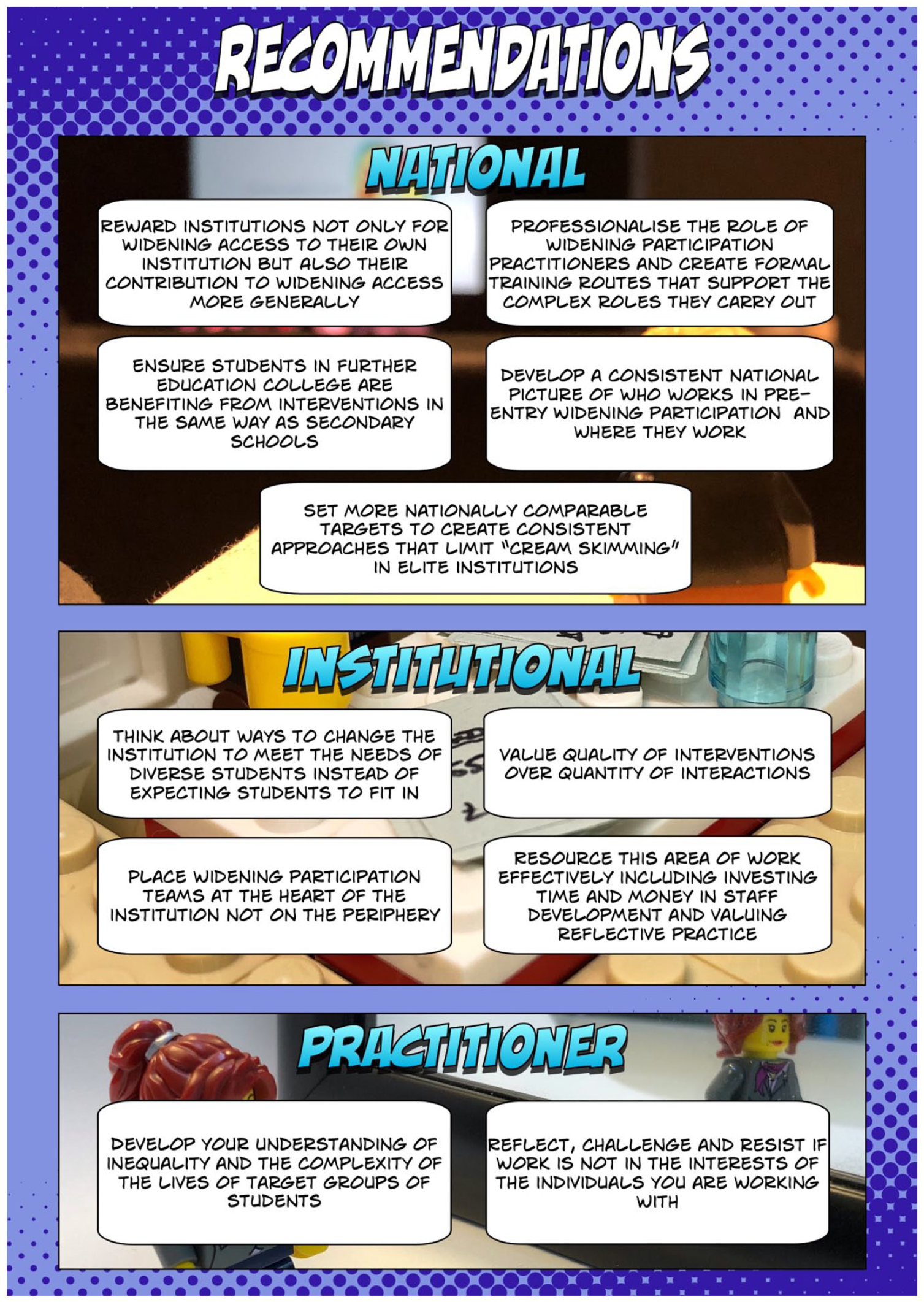
Recommendations page.
Whilst the recommendations needed to be clear, the value of the comic-based method to stimulate and provoke thought on complex issues was a key benefit that I felt could be harnessed during the dissemination process. Many of the findings and recommendations for change require individuals working throughout higher education to reflect on them in order for them to be implemented them or to inform their practices. Therefore, the dissemination process for the overall study was as much about getting the audiences to be aware of the findings as it was to consider how these issues might impact their own practices. I became increasingly mindful of how comics could create engagement, something Kuttner et al. (2021) argue for in their discussion of how comic-based research might evolve. To attempt to move beyond the comic form as purely a researcher-driven form of dissemination, this also led to the comic being developed to include an interactive element (Figure 4).
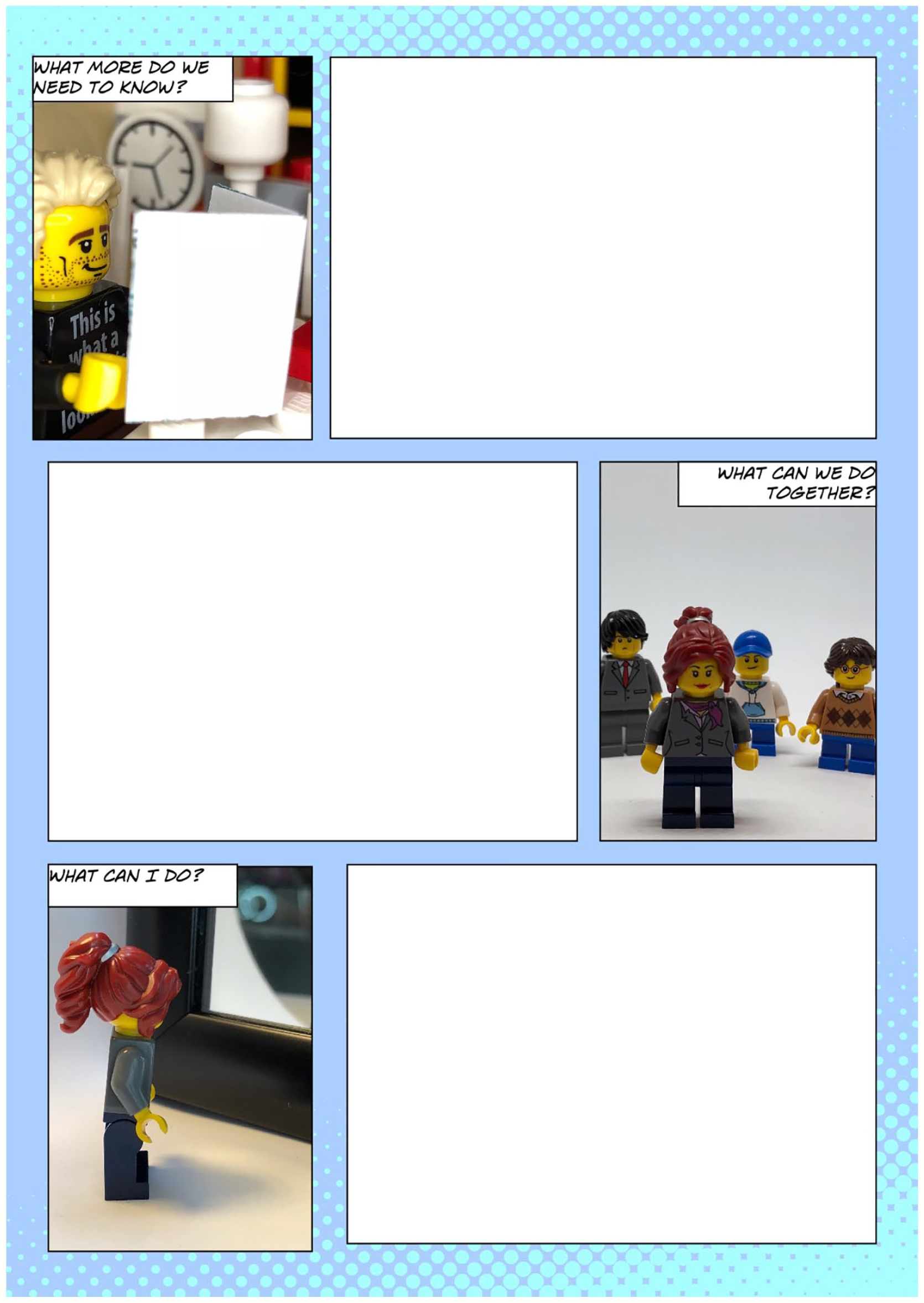
Interactive element of comic.
Having used drawing within the data collection phase unsuccessfully (Rainford, 2020), I felt trying to encourage interaction through drawing in the manner Galman (2009) had was unlikely to be successful. Instead, three framing questions were selected with the intention of asking participants to write their ideas on the page. The first question involved engaging with the research itself and its limitations. The second being what collectively might be done to address the issues and the final aspect what individuals might do. Thus, providing a tool for reflection, something highlighted by practitioners as desirable but constrained by time and space. These were not designed to be shared back with the researcher but as a way to prompt and structure group discussion within dissemination workshops. This was used at two education research conferences in 2019 with academics and practitioners also working in access to higher education. It could be questioned how far this moves the project further from a comic in the traditional sense. However, facilitating engagement meant making a pragmatic choice. The creative confidence (Kelley and Kelley, 2012) of a group where you have no rapport with is often a very high barrier to overcome as I have reflected on elsewhere (Rainford, 2020).
The affordances of the comic-based approach
The use of comics within this project both capitalised on the interest the LEGO had already begun to create with the study and addressed the challenge of engaging time-poor practitioners with key findings. The feedback from the participants the comic was specifically designed for was positive. One practitioner attending a dissemination event stated it was: ‘very relatable and informative whilst being easy to follow’. The resultant discussions at these events also resulted in valuable debates about how these issues could be addressed in practice unlike those resulting from a more traditional report or presentation. This was something also commented on by attendees and there was a real ‘buzz’ to the session. The comic also created tangential benefits of wider engagement with the research. As another individual at the same session highlighted:
This presentation as a comic combined visuals and short text to provide both a clear introduction to the topic, project, and the findings, bringing it ‘to life’ – to convey the same set of messages in normal prose would have taken far more words and been less arresting
These positive reactions in the email exchanges following the other project dissemination sessions were representative of the other oral feedback received during the initial triangulation session.
The ability for ambiguity to create interest
Whilst the reductive nature of comic-based approaches and the ambiguity that reliance on images can create is often framed as a limitation of the medium, this was actually a valuable benefit for this study. This can be seen to be reductive if compared to more traditional text-based outputs as it reduces the level of detail and places more onus on the viewers interpretation of the text. In contrast, to this, imagery can encapsulate large amounts of information but is often viewed more subjectively by the viewer. This subjective reading due to the inherent ambiguity of limited text catalysed conversations around key issues within the triangulation session that was conducted. For example, the phrase ‘I don’t know much about these jobs’ led to a whole discussion about what jobs widening participation practitioners need to know about. This was then valuable data to support the analysis for the study. Furthermore, the inability to fully formulate arguments within the medium catalysed discussions surrounding how the sector could address some of these issues. Within a more extensive report, these are likely to be things which were already proposed from the researcher’s perspective. This value that ambiguity added echoes Barnes argument about comics being useful to stimulate thought (NCRM, 2019). Furthermore, ambiguity enabled participants to engage with the findings presented as opposed to taking them at face value. This is an important affordance as with any critical social research, often there are as many questions raised by the findings as there are concrete answers produced. Facilitating the engagement of key audiences with findings should be an aim of any research output and yet is one that is often less successfully realised and is something ambiguity of comic-based approaches supports. Arguably, using the full benefits of the form with a professional artist may extend this even further by removing the reliance on text, especially thinking about the way recommendations were presented.
The role in engaging wider audiences
Whilst a comic-based approach was adopted specifically for the triangulation session with 11 practitioners, it organically gained traction beyond it. In many ways this also enabled for wider triangulation of the issues than initially intended. During the session, a number of the delegates tweeted images of the comic and took copies back to their colleagues. What was therefore intended as a visual aid for a discussion transitioned into becoming an output in and of itself. It was shared widely on social media in addition to a print copy being hosted online. Furthermore, it was also distributed to a number of policy makers and advisors in the sector whose feedback that its clear, concise form was useful for them to engage with. The affordances of this format were therefore offered something a than more traditional report or textual summary. This value should not be understated as putting relevant research on their radar of policymakers is key to it having impact upon the sector. A participant attending a dissemination workshop stated:
I mentioned [it] to quite a few people working in WP because it was different and also easy to share with them, as opposed to most workshops where it might be waiting months for a paper or to get a copy of the slides.
The evolution of the comic into a tool for wider engagement led to the consideration of how this could be harnessed further in extending the reach and impact of the study’s recommendations. Therefore, I felt there was value in continuing to develop the comic as a way to engage with a wider audience. In developing the comic to incorporate the recommendations (Figure 3), further reflection was needed upon the reductive nature of the comic. In stimulating engagement with findings, debate and questioning is valuable. In contrast, when trying to convey recommendations these need to be clear and direct. My professional experience of university and national sector-level committees also suggested that distilling key messages was the most likely way of creating impact. Therefore, this third page of the comic maintained the visual identity of the previous two but presented the key recommendations in a directive language and separated distinctly for different audiences offering specific, tangible actions. These statements also mirrored the structure of the relevant chapter in my thesis where more detail could be found by interested parties. The ability to adapt the comic format whilst retaining simplicity, accessibility and an aesthetic identity that created coherence with the initial two pages was therefore a key affordance. However, the extent to which this still is part of a comic-based approach might be questioned and in more fully resourced project, tasking an artist with turning each recommendation into a detailed panel would allow for further exploration of the affordances of the medium.
The barriers to comic-based approaches realising their value
The use of a comic-based approach in this context enabled engagement with various audiences that would not have been possible when relying on more traditional forms of dissemination such as reports and the thesis itself. This ability to engage can come at a cost. There are several potential challenges of using comic-based methods so considering these critically within the study is important. When comic-based approaches are used without careful consideration, these barriers have the potential to negatively impact upon engagement with research.
Not serious scholarship?
One of the most obvious limitations is the challenge of audiences seeing comics as ‘not a ‘serious’ scholarship’ (Kuttner et al., 2021: 14). This was a key concern in this project but, did not manifest itself within the study. During the research process, and subsequent presentation of the findings, very little has been said about the seriousness of the approach. If anything, it has opened up conversations with participants and delegates at both academic and professional conferences who might fell less comfortable with engaging with research findings, enabling the discussion of conflicting views on them. As one attendee from the dissemination events stated:
It is also a rare example of a piece of research dissemination that you could leave on a coffee table, or take into a classroom, and could be quickly picked up and engaged with by a wide range of people.
One reason for this lack of negative perception could be the deliberate choice not to use humour within the comic. The use of humour whilst often seen as valuable in their use in medical research (Green and Myers, 2010) is also something that can increase the perception of the research being trivialised (Darnhofer, 2018). Furthermore, despite the perceived positive reception this does not mean it has been viewed positively by all those engaging with the research. Public and private perceptions may of course differ. This is important to acknowledge as the reliance on a non-traditional form of output has the potential to cause audiences of the research to view it as less serious, or less rigorous research. This is an acute consideration, especially in the space of policymaking where the reliance on a comic-based approach as central to an impact strategy means that this may be the first, and in some cases only representation of the research they engage with. If it lands poorly, this risk the research being dismissed or marginalised thus reducing the impact this type of output aims to extend.
Capturing complexity
A more pressing limitation and one that was grappled with extensively was how to condense complex nuanced findings into the format. The possibility for this to be overly reductive and to erase complexity from the issues was a key concern. However, unlike photographs or pure textual formats, the juxtaposed text and image within a comic- based approach can provide a space to generate that complexity through the ‘restorying’ of the data (Weaver-Hightower, 2017). Their ‘inherently ambiguous’ (Darnhofer, 2018: 3) nature being a way to encapsulate complex issues into single images and allowing them to facilitate condensation of large texts into single spread of images. However, many audiences such as the higher education policy community may only engage with the research through the comic output and therefore over simplified findings may be prone to misinterpretation. Whilst this is a danger in any condensed form of presentation such as executive summaries, posters or oral presentations, the increased interest in the comic as an approach meant it may have reached people who may not engage with the scholarly outputs the comic is informed by. There is clearly therefore a fine balance between providing sufficient information and condensing this into an easily digestible form. Within this study, therefore, the recommendations page adopted a slightly modified format despite maintaining a congruent aesthetic identity. Unlike the other pages, it focussed on presenting the recommendations as full sentences to reduce this risk of misinterpretation and to make the point more clearly. I would argue therefore that the level of reductivity applied to texts used within this format may need careful consideration and different elements may need to be treated in different ways to ensure the use of a comic-based approach is appropriate for the audience to maximise impact of its content.
A picture paints a thousand words
The balance of the written and visual is central to many of the other critiques of this comic format. One of the qualities of a comic is its reliance on the visual and ability to make key points concisely in an easily digestible format. This means a heavy reliance on visual elements to encapsulate some of the detail that would normally be part of an extended text. Inevitably then this leave gaps and spaces for interpretation for the viewer. This can both act as a limitation and add value. For example, within the use of comics for teaching, Kara and Brooks (2020) have argued for the importance of leaving space for the reader to form their own impressions within their comic and the value of ambiguity for prompting discussion. As I have highlighted in this paper, the value of this to prompt discussion with practitioners drove in part the choice to utilise the comic format. However, this does not mean that it does not also need further critical consideration. This interpretive space can allow for the comic to stimulate thought in a way which may not be possible in a purely textual output and yet it creates an additional layer of consideration for the author. To mitigate this, early involvement of practitioners to offer critical feedback during the comics development was important and without this it is likely that the final comic would not have been as impactful. This does not mean that the potential for misinterpretation has been eliminated and the challenge of a reliance on the visual is always the meanings viewers can ascribe to the images that were not intended by the author.
Being visually representative
In research that involves people, representation matters. Who is pictured and in what way should be a key concern in the process of developing a comic-based approach. In the context of this comic, the issues of representation struggled within data collection endure (Rainford, 2020). The choice to use LEGO and the companies argument that yellow is a neutral skin colour potentially erases other identities from seeing themselves represented in the output (Cook, 2017; Johnson, 2014). These concerns are not limited to LEGO however and would apply to illustrations or photographic representations used within the comic format. They also extend beyond ethnicity into a whole range of characteristics. Within this study, the comic did not present narratives. However, for researchers using comic-based approaches to represent narratives of particular participants, the ethical representation of those participants themselves needs to be considered. This also needs to account for the potential for visual representations to reduce anonymity.
All of these issues require the ethical skills of trained researchers. They also require artists who can work within these parameters to ensure adequate realisation. My position as a trained graphic designer and photographer enabled me to use my own skills to develop the comic. However, this is unlikely to be possible for many researchers. Therefore, collaborative approaches are likely to be needed. In most cases, this is going to require dialogue between the artist and research team and sufficient budgets to support this. Ensuring all involved in the development of comic-based approaches understand these issues of representation and their role in the ethics of research is vital. Issues of (mis)representation can cause the viewer to engage or disengage from findings. Likewise, the use of terminology and language needs to be appropriate for the audience in question. This may mean creating multiple outputs for different audiences and the comic-based approach may need to work in tandem with more traditional outputs.
Disseminating or engaging?
Developing the comic from a passive form of dissemination into an interactive medium (Figure 4) attempted to harness the playful nature of comics and the capacity for that to engage individuals (Bartlett, 2013). Within the standalone comic it is unclear how successful this was and raises the question of whether the interactive elements were necessary as part of the comic if they only really added value in facilitated sessions. The ambiguity created through condensed text and images may have been sufficient. However, it is possible that these open questions enabled readers to reflect on the issues raised in the comic. The value of interactivity in comic-based approaches could therefore be worth further exploration by other researchers. That said, if these questions do not provoke reflection by readers that space may be better devoted to including more content from the study within the comic.
It is also worth reflecting on the fact that this comic was very much researcher generated. Whilst the themes and the issues were participant generated, the framing and presentation was not. Some critical feedback was used to develop the comic and enabled some areas to be set out more clearly. I argue that working more collaboratively with participants to design and develop the comic-based output could have been useful. Doing so would have potentially made it more impactful for the target audience. This is therefore a worthy consideration for future researchers adopting a similar approach. Engagement is also impacted by the aesthetic and as highlighted already, collaboration involving those skilled in effective visual communication is vital to realising this.
Conclusions
This paper has demonstrated that comic-based approaches have benefits both during data collection and in dissemination. This is supported by the growing body of literature arguing for the value of comic-based approaches in a number of fields. As Stephens Griffin (2019) argues, comics present a unique way for challenging readers and sharing knowledge and as Lawrence et al. (2017) have also argued they allow a way of generating conversation. This research project echoes those findings with the medium providing enthusiastic engagement with the findings and interest in the project that organically grew out of the mode of their presentation. Whilst visual methods are becoming increasingly well documented in the methodological literature, the use of comic-based approaches within data collection has been less documented. This paper has reflected upon their use, highlighting the value comic-based approaches can have to engage individuals with complex issues in a way text or visual elements alone might not. This also builds upon the methodological value of using the visual in the form of a third object for a point of shared attention between participants in making sense of issues presented to them (Dumangane, 2020; Harper, 2012).
There are a number of potential limitations to the use of comic-based approaches namely the perception of the comic format, limitations of what can be condensed into their limited length and the potential impact this has on oversimplification of complex issues. This is especially important in terms of issues such as representation and when distilling complex issues into a form that may be subject to misinterpretation by the reader. It is therefore important to consider these before adopting the comic-based approaches uncritically. Whilst reductivism is something that should be considered, in the case of this project it was that reductivism which catalysed deeper conversations about issues highlighted within the research. I therefore argue that researchers need to think beyond comic-based approaches purely as a mode of research dissemination and move towards ways in which they can act as a site of active engagement.
Within this project, the use of elements of a comic-based approach have acted as support for their value in engaging practitioners and policymakers with research. However, the extent to which this project fully embraced all the affordances of comic-based approaches is more limited. Whilst comic-based approaches potentially make complex issues accessible, challenging the reader to think differently, skill is needed to create an effective comic. This includes the distillation of ideas into text for the format and the production of imagery. Furthermore, the fact that this was a comic-based approach also highlights that there are future possibilities to explore how more traditional elements of the comic form such as greater use of sequential narrative and images could be further explored. Within this study, the extent to which this could be realised was limited by skill and budgets. Due to their specialised nature, where these skills are not already within a research team, close collaboration with artists may be required and would be recommended. As highlighted by Springs and Baruch (2021), embedding artists within the research itself should be an aspiration and thus simply focussing on employing an artist to transform research findings into a visual output is unlikely to realise the true value of comic-based approaches. Yet this may not always be practical in terms of costs and finding artists that are equally engaged within research. However, ensuring artists understand the research and develop a sense of shared meaning is likely to be crucial in order to ensure that the approach is reflective of the study itself.
Furthermore, this researcher-artist partnership should also be combined where possible with audience collaboration to ensure presentation and language is accessible and appealing. Whilst this paper has demonstrated the value of comic-based approaches within a qualitative study, this use of the visual to engage publics with research findings potentially offers even greater value to those working in quantitative fields. This is especially true when trying to engage non-academic audiences such as policymakers. There is therefore a strong argument for all researchers, regardless of methodological approach to collaborate with colleagues where more creative methods of dissemination and engagement in research might be used in combination with more traditional scholarly outputs to enhance the impact of and engagement with key issues in their research.
Footnotes
Declaration of conflicting interests
The author declared no potential conflicts of interest with respect to the research, authorship, and/or publication of this article.
Funding
The author received no financial support for the research, authorship, and/or publication of this article.
