



Abstract
Background
Music has been used in interventions designed for people with Parkinson's (PwP) either to engage mechanisms involved in phenomena such as sensorimotor synchronization or as an integral part of the activity (e.g., dance). However, little research has been conducted concerning what music PwP use in everyday life and how and why this might differ based on situation/context.
Methods
We used an online survey to investigate what music PwP listen to, for which perceived reasons, and in which situations. In addition to demographic and Parkinson's-specific questions, we included standardized measures of quality of life, music and dance sophistication and bespoke items to explore music use.
Results
The sample (N = 217, age range 20–88 years, Mean = 65.2, SD = 8.45) included 109 females (50%); 64% of participants reported a mild impact of Parkinson's on Activities of Daily Living. The top three uses of music were Aesthetic Appreciation (98%), Relaxation (92%), and Motivation (90%). The least popular category was using music for walking (36%). The duration of attentive listening was significantly higher for those who reported using music for managing their feelings than those who did not (p < .01). Better quality of life was associated with higher participatory dance experience (p < .001).
Conclusion
PwP listen to a wide range of music genres, most notably for enjoyment but also as a personalized “charge” and “re-charge” resource. Understanding the everyday use of music among PwP might facilitate the development of playlists and interventions to improve daily life for PwP.
Keywords
Introduction
Parkinson's1 is a neurodegenerative condition that affects people in different ways but can be characterized by motor difficulties (e.g., tremor, poor gait) and non-motor symptoms, such as apathy, anxiety, depression, and sleep disorders (Obeso et al., 2017). Medication does not adequately ameliorate all symptoms, so adjunct therapies are required to improve quality of life for people with Parkinson's (PwP; Fox et al., 2018).
In Parkinson's, the deterioration of the dopaminergic neurons in the basal ganglia has been linked to difficulties in both the perception and production of timed motor abilities (Grahn & Brett, 2009). However, the perceptual link between music and movement has been shown to involve multiple pathways, leading to the suggestion that music can facilitate the activation of compensatory mechanisms in the brain for PwP, providing a temporal scaffolding that enables entrained motor action (Bella et al., 2017; Grahn & Watson, 2013; Rodger & Craig, 2016). The rhythmic affordances provided by music can be used to guide the timing of movement as can be observed in the sensorimotor synchronization of, for example, dancing (Nombela et al., 2013; Shanahan et al., 2017).
Music has been used in interventions designed for PwP either specifically to recruit mechanisms such as auditory-motor cueing (e.g., rhythmic auditory stimulation—see Thaut et al., 2015) or as an integral part of the activity (e.g., active music making Pacchetti et al., 2000; Raglio, 2015 and/or dancing, Hasan et al., 2022). Although research has been conducted evaluating naturalistic auditory cueing (Young et al., 2016), aside from studying specific factors such as beat perception ability (Leow et al., 2014; Ready et al., 2019), tempo and movement type (Rose et al., 2019), and beat clarity (Keller & Rieger, 2009; Stupacher et al., 2016), little research has been conducted concerning what type of music might be of greatest utility for PwP, and in which circumstances. What music do PwP actually listen to, under which conditions, and why?
In their comprehensive review on the psychological functions of music, Schäfer and colleagues (2013) suggested there are at least 129 non-redundant functions of music, taking into account various approaches including evolutionary, experimental aesthetics, and the uses and gratifications model of psychology. These can be distilled into three dimensions of music use: to regulate arousal and mood, to achieve self-awareness, and as an expression of social relatedness. In his review of the role of music in everyday life, Rentfrow (2012) suggests that, as people spend approximately 15% of their time listening to music, attempting to understand the reasons why can be considered a worthwhile endeavor in terms of psychological research. Rentfrow (2012) suggests two frameworks for investigating the use of music. The first is the media effects model, which assumes that there is a direct link between media consumed and the way people think, feel, and behave. A commonly cited example IS the use of French or German music to influence sales of French and German wine in a supermarket—with only 2% of patrons mentioning music as a reason for their choice (North et al., 1999). The second model is based on a more active choice and/or avoidance of choosing certain media to fulfil basic needs. This “uses and gratifications” model is essentially an individual differences approach that seeks to identify reasons why people listen to music and assumes people have an awareness of the reasons for their choices. This is the approach we will take for this study.
Studies show music listening primarily occurs because it is an enjoyable thing to do, over and above most other activities (Laukka, 2007; Lonsdale & North, 2011; North et al., 2004). The top two functions for music listening from the North, Hargreaves, and Hargreaves’ (2004) survey were “I enjoyed it” (56.4%) and “It helped pass the time” (40.6%). The passive nature of the 'passing time' function led to the authors suggestion that music can be used as “sonic wallpaper” (p. 72) by some people in some circumstances. Many studies have found music is used for mood management both positively (e.g., to feel happy), and negatively (e.g., for emotional catharsis in older people, see e.g., Chin & Rickard, 2014; Lee et al., 2010). This type of functionality seems to have been a major motivation for music listening during the recent COVID-19 pandemic lock-down (e.g., Carlson et al., 2021; Fink et al., 2021), but it can also be seen in studies of music use in young people with depression (Saarikallio & Baltazar, 2018).
Two pieces of research in particular have investigated the everyday use of music in older adults. Laukka (2007) conducted a cross-sectional study focused on the use of music in relation to psychological wellbeing specifically in older adults (N = 500, 65–75-year-olds). His findings showed that music listening was a common pastime, but music was often chosen for reasons related to having a sense of identity, belonging, and agency: factors that appeared to support psychological wellbeing. Lonsdale and North (2011) conducted a set of four studies on why people listen to music based on a uses and gratifications model. Studies 1–3 focused on university students, but Study 4 explored whether people of different ages might listen to music for different reasons. In Study 1, participants (N = 300 undergraduates) were presented with 30 items to rate regarding their reasons for listening to music, none of which mentioned movement specifically. Statistical analysis of the 30 a priori items suggested six factors: negative mood management, personal identity, surveillance, positive mood management, interpersonal relationships, and diversion. In the third study reported by Lonsdale and North (2011), 189 psychology graduates were asked to simply write down why they listened to music. Findings based on thematic analysis produced some differences from the first study; in this instance, the seven themes were labelled as mood management, background noise, musical participation, reflection on the past, enjoyable experience, socialization, and distraction. In the fourth and final study comparing different age groups (N = 700), broadly based on Erikson's 1980 eight stages of lifespan development, significant differences were found between ages in terms of personal identity (16–18 year olds were more likely to use music to define and express their identity than over-30s), mood management (older adults were less reliant on music for this reason), and reminiscence (19–24-year-olds cited this reason more than older adults, especially over-50s). However, no differences between age groups were found for using music as a distraction and for managing levels of arousal. Studies of music listening among young people suggest music can also be used to explore and develop an individual and/or group identity and to support a sense of agency during times of transition. Saarikallio et al. (2020) showed adolescents using music as a distraction or diversion (to reduce boredom, take the mind off other things, as with Lonsdale & North, 2011), to improve concentration (i.e., stop focus from drifting when studying, see also Behne, 1997), to reflect on the past (reminiscence also occurs in young people, Jakubowski et al., 2020; Jakubowski & Ghosh, 2021), and to support social activities (e.g., create an atmosphere, attract others, see e.g., DeNora, 2000; Greasley & Lamont, 2011; Papinczak et al., 2015).
From a different perspective, studies in sports science suggest the use of music is often associated with motivation and endurance, promoting more positive affect and valence, and in turn enhancing physical performance (i.e., ergogenic effect), reducing perceived exertion, and improving physiological efficiency (Terry et al., 2020). Some researchers have discussed the use of music in everyday life as a potential health resource (Batt-Rawden et al., 2005; DeNora, 2007). This idea is based on a salutogenic approach that focuses on health and wellness rather than disease. Rather than considering music as a stimulus per se, music listening is seen as an empowering force in people's lives, albeit within similar themes of identity exploration, mood regulation, and social behavior stimulation.
In line with a salutogenic approach, the present study forms part of a long-term project working with PwP to investigate how to optimize the use of music to positively impact quality of life. Rather than using a specific framework as a starting point, we worked closely with PwP, taking a patient and public involvement (PPI) approach to develop our music research agenda. Consultation with PwP is central to the PPI in research process (Sacristán et al., 2016). Such participatory models of medicine are illustrated by a “nothing about me without me” phrase, advocate shared decision making, and demonstrate a fundamental shift in attitudes, empowering patients as co-investigators rather than participants (Hewlett et al., 2006). Rather than researchers projecting a “prescriptive” use of music onto PwP, it is important to explore ways in which PwP currently use music, to enable effective guidelines for self-management of music use. It is also important to include the diverse voices of the people who will participate in interventions, for whom engagement and motivation to continue will matter most (O’Deane et al., 2014; Schipper et al., 2014).
The research process began with interactive workshops that included 12 PwP and 12 scientists from different fields, to develop initial themes about music use in Parkinson's for further consideration (Rose et al., 2022). As a brief overview, the PwP (who were members of an advisory board, some of whom took part in a dance for Parkinson's program) were paired with researchers from different disciplines (music, dance, sport psychology, and neuroscience) to discuss how they used music, for example for motivation and/or relaxation. The workshop was a PPI interactive discussion forum, rather than a formal research process. This allowed for the sharing of anecdotes such as having “personal anthems” to “get oneself going” and/or using music to “have a good cry” and “let the sadness out.” Seven themes were derived from the workshops: aesthetics (enjoyment of music and singing along), cognition (focus and memory), emotional release (sadness, anger, and grief), psychological (mood management through music choice), motivation (energizing), movement (walking, exercising, dancing), and relaxation (distraction, calming, peacefulness). Such observations suggested the need for further exploration of the use of music in relation to mood and movement management by PwP in everyday life.
This initial consultation process provided a roadmap for practitioners and researchers (Karageorghis et al., 2020) and a mandate to begin a broad evaluation of how PwP use music. Importantly, we needed to test the initial findings from the workshop to see which themes, if any, were generalizable across a larger sample of PwP. Put simply, we wanted to investigate whether (and if so, how) PwP were using music in their everyday lives to help them feel better or to do things more easily. We also wanted to understand more about general levels of engagement with music and dance (including levels of training and the urge to dance, for example) as our PPI work included PwP who were perhaps more highly invested in music and movement activities due to their experiences with the Dance for Parkinson's group and voluntary participation in the advisory group. To help us understand more in a larger Parkinson's sample, we included standardized measures of Parkinson's symptom severity related to activities of daily living and quality of life to understand whether engagement with music and dance had an impact on quality of life for PwP. In sum, here we report some of the results from an online survey conducted in 2021 exploring how PwP use music in everyday life, with a focus on self-management of motor actions and affective states. In this paper we focus on two concepts in particular: mood in terms of the effect that music can potentially have on affective states linked to dopaminergic systems, and movement in terms of the potential effects that music can have on the motivation to move and keep moving, as well as the organizational properties of music that may guide motor actions relating to entrainment and sensorimotor synchronization.
Aims and Hypotheses
Our first research question asked what types of music people with Parkinson's choose to listen to, in what way, and why? We also wanted to know whether the use of music predicted quality of life for PwP. We expected that the genre of music that participants listen to would be varied, and PwP would report using music to facilitate movement and regulate mood.
Our second research question asked whether characteristics of music listening among PwP would vary according to disease duration and severity of motor symptoms, and whether this would be affected by musical or dance sophistication, including prior training. We also speculated that greater frequency and numbers of uses of music would be associated with a better quality of life.
Specifically, we predicted that:
PwP with greater musical training and/or higher dance sophistication would report increased use of music to support their movement. PwP with higher overall musical sophistication would report increased attentive listening to music and use of music to manage movement and mood. Greater musical engagement and participatory dance experience would be associated with better quality of life.
Materials and Methods
This was a cross-sectional mixed methods study that ran from February until the end of June 2021. The study and planned analyses were pre-registered on the Open Science Framework in June 2021.
Participants and Recruitment
Our inclusion criteria allowed for the participation of people over 18 years of age who had been diagnosed with Parkinson's by a medical professional and were fluent English speakers, to give informed consent. We worked with Parkinson's UK and our own research networks (via email and Twitter advertisements) to recruit participants.
All participants were asked to read the participant information sheet before deciding whether they wanted to continue with the survey. They were then asked to confirm that they were over 18 years of age and had been diagnosed with Parkinson's disease by a medical professional (i.e., neurologist), that they understood their participation was voluntary and they could withdraw at any time, that they were consenting to the use of their anonymized data, and that no conclusions could be drawn about them personally nor would they be named or identified in reports.
Survey Description
Data were collected via an online survey hosted on Qualtrics (see Supplementary Materials for a copy of the survey). All items were set up so that answering was voluntary (i.e., Qualtrics was not set to “forced answer”). General participation was anonymized (i.e., Qualtrics was set up not to track IP addresses), but people could provide their contact details for several reasons:
For us to contact them to help to improve accessibility. Our pre-testing had shown that the survey could take 45–90 min and that this could be tiring. Working with our Parkinson's advisors, we offered telephone or video participation to reduce participant burden and to provide avenues of connection during a period of COVID-19 pandemic isolation. To let us know if they wanted to be informed about the results and/or if they would be interested in attending an online or in person concert, Playlist for Parkinson's LIVE!, to disseminate the findings. To let us know if they would be happy to be contacted to take part in further research on this topic.
In terms of general demographics, data collection included Gender (female/male/other/prefer not to say), Age (years), Level of education (none/O-level, CSE, GCSE, Apprenticeship/A-level or equivalent/university degree or other professional qualification/post graduate degree), Occupational status (working part time (paid)/working fulltime (paid), retired/stopped working because of Parkinson's/other (open text box)), Nationality (open text box), and Ethnicity (at the request of Parkinson's UK and in line with guidelines from Phinney & Ong, 2007).
Parkinson's-specific data was also collected to enable sample characterization and analyses. These items included confirmation that diagnosis of Parkinson's disease was made by a medical professional (such as a neurologist), information related to medication regimens (type and dosage to ascertain levodopa daily equivalent dosage), time since diagnosis (duration), and diagnoses of other physical and psychological health conditions (i.e., co-morbidity).
Additionally, standardized self-report questionnaires were used to collect data related to the impact of Parkinson's on the participants. The English language version of the Parkinson's Activities of Daily Living Scale (PADLS) evaluates the impact of Parkinson's on activities of daily living using five descriptive statements (levels 1–5, 5 being the highest level of impact) from which one is chosen (Hobson et al., 2001). The PADLS has been shown to have good internal reliability, with Cronbach's alpha statistics of > .9 (Alves et al., 2021). As a self-report measure of quality of life, we used the Parkinson's Disease Questionnaire on Quality of Life (PDQ-8) which consists of eight items scored 0–4. This provides a global score whereby a higher score indicates poorer quality of life (Jenkinson et al., 1997). The English language version of the PDQ-8 has been shown to have good internal reliability, with Cronbach's alpha statistics of > .8, and to be highly correlated with the parent measure, the PDQ-39 (Jenkinson & Fitzpatrick, 2007).
We asked participants about their musical genre preferences and ways of listening (attention and technology), and then about their uses of music. The “uses of music” categories were based on previous research (see Section 2.1 and Rose et al., 2022). Some categories contained sub-categories (see Figure 1), which were offered if a participant selected any frequency other than Never. All subcategories also offered “other” (not shown in Figure 1), and open text boxes were provided so that participants could explain more about that use of music. For all categories, we asked participants to tell us about any specific songs or musical genres they listened to and what about that was useful.
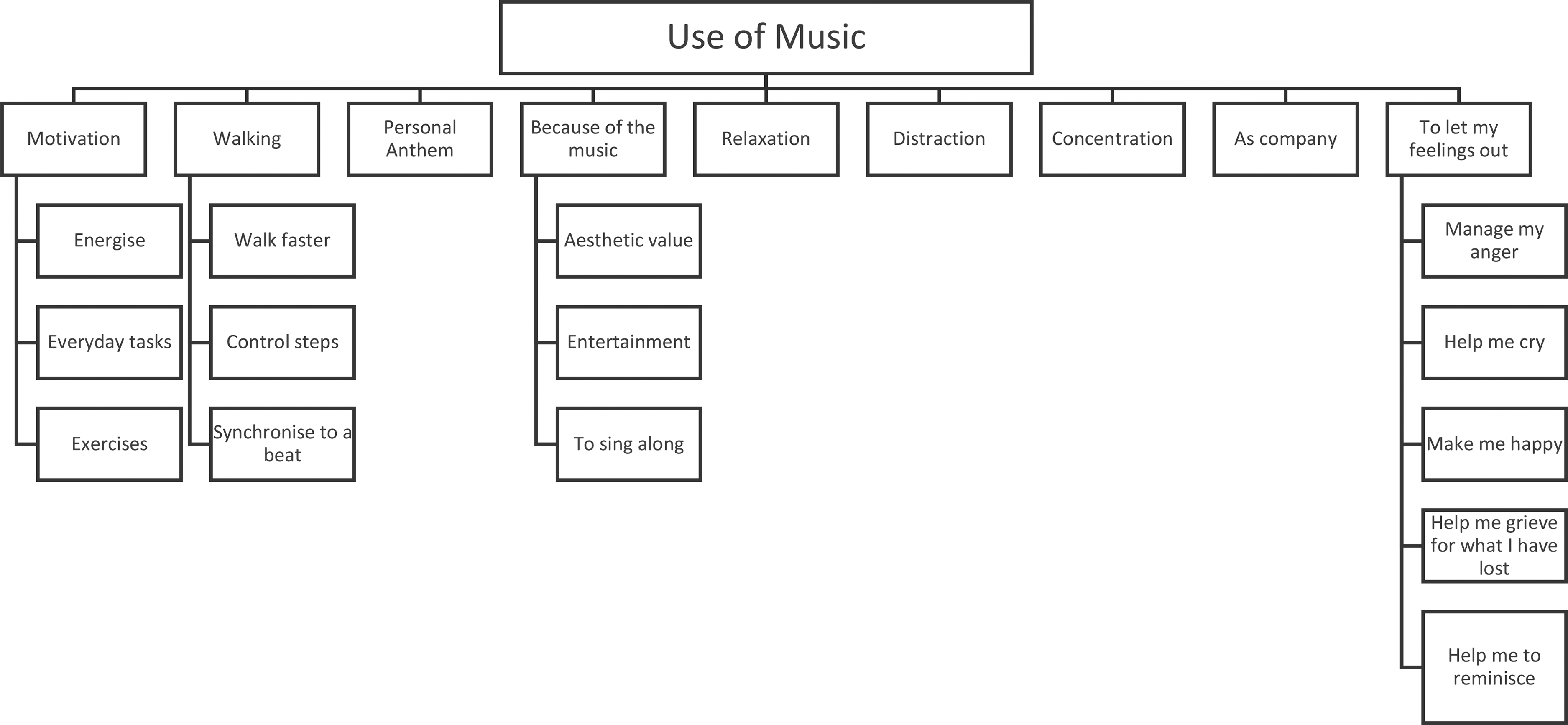
Use of music among Parkinson's categories and sub-categories.
To provide some baseline data about music and dance sophistication and to explore how self-reported abilities in music and dance might be related to quality of life in Parkinson's, we also included the Gold-Music Sophistication Index (Gold-MSI; Müllensiefen et al., 2014). The Gold-MSI includes one general and five subscales: Active Engagement, Emotional Engagement, Perceptual Abilities, Singing Abilities, Musical Training. The general score and subscales have good internal reliability (all Cronbach statistics > .8), and normative data are available as the measure has been tested on over 147,000 participants (Müllensiefen et al., 2014).
We also included the participatory dance experience section of the Goldsmiths Dance Sophistication Index (Gold-DSI, Rose et al., 2020). The includes one general and four subscales: Body Awareness, Social Dancing, Urge to Dance, and Dance Training. The internal reliability of the general score and subscales for the Gold-DSI is good, with all Cronbach subjects > .8 (Rose et al., 2020).
Statistical Analysis
Data analysis was conducted in R (R Core Team, 2021). To constrain the exploration of relationships between different factors, we pre-registered our hypotheses and planned analyses. This information and the raw data and analysis scripts are available on the Open Science Framework (https://osf.io/usgmp/?view_only=056fe188f4d0460ab874a1211044d0f3). Please not, the present study corresponds to research questions 1 and 2. However, we also report some additional relevant analyses that were subsequently identified as important to addressing our research questions (indicated below).
Deviations from Planned Analyses
The measures PDQ-8, and Gold-MSI item “time spent attentively listening” were not normally distributed; therefore, non-parametric alternative methods were used for these measures (Mann Whitney U, Spearman's Rho). We had planned to use frequency of different types of use of music as a continuous variable, and this was instead collapsed into “yes” versus “no” prior to any statistical analysis. Therefore, instead of using regression analyses, we compared participants who never used music in a particular way to participants who selected any higher level of frequency.
Results
General Demographics
We recruited a total of 316 participants (i.e., started the survey). Of these, 269 consented to participate (i.e., read the participation information sheet linked to the survey and clicked on “agree” to take part). We then excluded participants who did not begin the questions about musical genre (the first set of questions relating to music) since they only provided demographic or symptom-related data, leaving 218 participants. We also included two attention check questions. One participant got both attention check questions wrong and appeared not to have fully engaged with the questions, so they were removed from the subsequent analysis. We retained the data provided by one other participant who got the second attention check question wrong, since their answers were otherwise sensible. Fourteen other participants did not reach the second attention check question, but their data was retained. We therefore report demographic data from the remaining 217 participants below. Participants were omitted from subsequent analyses when they did not complete the relevant measure(s), and we did not impute missing data. A total of 146 participants completed the whole survey, though not every item was answered.
Of these, n = 120 asked us to inform them about the results, n = 109 said they would be interested in attending an online or in person concert (Playlist for Parkinson's LIVE!) to disseminate the findings, and n = 167 said they would be happy to be contacted to take part in further research on this topic.
A total of 12 PwP conducted the survey online with the researchers whereby the researchers asked the survey questions and inputted the answers (i.e., interview style).
Participant age ranged from 20–88 years, with a mean (SD) age of 65.2 (8.45). There was a good gender balance, with 109 females and 108 males. The majority of participants described their ethnicity as Caucasian (208), with some representation of other ethnicities: LatinX/Hispanic (1), Middle Eastern (1), South Asian (1) and Other (6). Regarding nationality, the majority of participants reported being British (190), Irish (5), or American (12), in addition to Canadian (1), German (2), Italian (1), Lebanese (1), Mexican (1), Portuguese (1), Swiss (1), and 2 unspecified.
Regarding educational level, 7 reported no qualifications, 33 O-level or equivalent, 29 A-level or equivalent, 105 had a university degree or other professional qualification, and 43 had a postgraduate degree.
The majority of participants were retired (130) or had stopped working because of Parkinson's (38), while 15 worked full time and 25 worked part-time. Seventeen responded “other,” and their responses were re-classified into the pre-specified categories where possible, and from the remainder, four were currently not working (e.g., they had been made redundant), one was working in a voluntary capacity, three were working but it was unclear whether full or part time, and one was unknown.
Parkinson's-Specific Demographics
The time in years since diagnosis ranged from 0 to 26 years, Mean = 6.13, SD = 4.76.
For impact of Parkinson's on Activities of Daily Living, 35 reported none, 138 reported mild, 33 moderate, 10 high, and 1 extreme (Supplementary Figure S1). This indicated that the majority of the participants were in the mild-to-moderate range.
The PDQ-8 total score ranged from 0–91, Mean = 23.6, SD = 17.7 (higher score indicates worse QoL; maximum score 100).
Music and Movement Descriptives
Ways of Listening
Only 1% (n = 2) of PwP reported not listening to music, while 15% (n = 33) listened to music mainly in the background, 15% (n = 33) mainly listened attentively, and 69% (n = 149) reported a mixture of listening attentively and in the background.
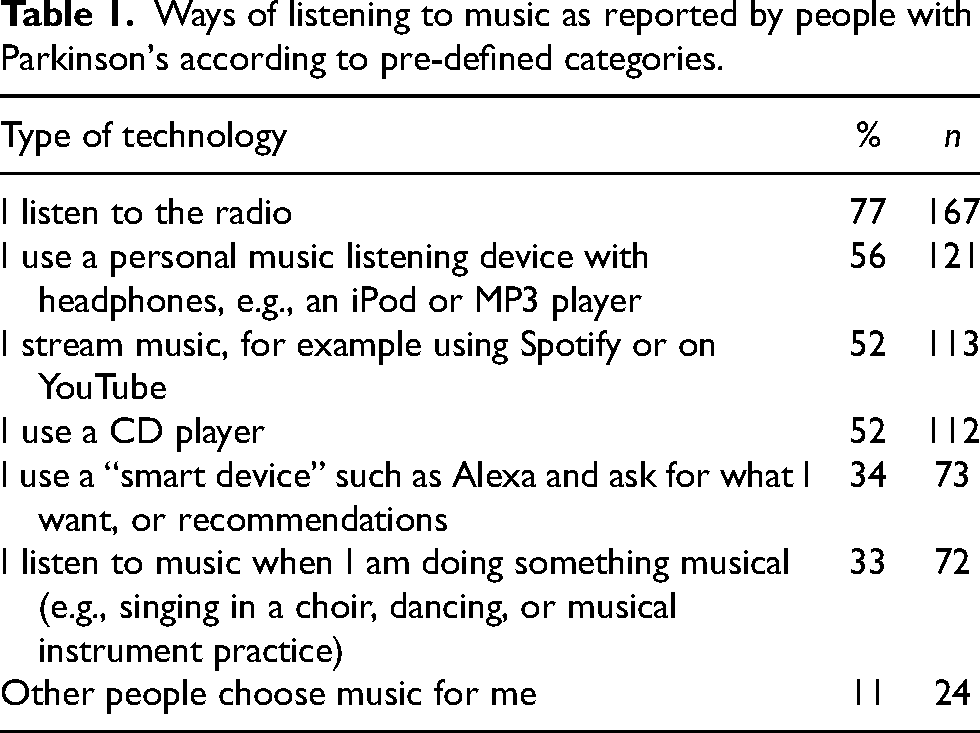
PwP reported listening to music using a range of technologies and in different scenarios (Table 1 and Supplementary Figure S2), with a mean (SD) of 3.4 (1.57) contexts in total, ranging from 0 to 7 (i.e., people chose between 0 and 7 modes of listening). For those who ticked and described “other” (n = 62), their qualitative responses were examined and where possible added to one of the pre-existing categories, with four additional possibilities mentioned: listening to vinyl (9), cassette tapes (1), live music (4), and a personal listening device without headphones (1). Other more general comments were added to the relevant qualitative analysis.
Ways of listening to music as reported by people with Parkinson's according to pre-defined categories.
Enjoyment of Different Musical
As expected, PwP enjoyed a variety of music genres; the majority rated classical (74%), rock (65%), and pop (59%) most enjoyable (rated 4 or 5; Figure 2). On the other hand, while the liking was more variable, at least some participants rated each of the remaining genres as enjoyable; folk (45%), jazz (40%), and electronic dance music (22%).

Frequency plot showing number of people giving each enjoyment rating (5 = I enjoy this type of music very much; 1 = I don’t like this genre at all) for the different genres of music.
When enjoyment of genres was considered separately for those with high (above median) and low (below median) scores for the General measure on the Gold-MSI, there was still a spread across genres, with a slight reduction in those in the high group giving the strongest rating to pop music and the opposite pattern for classical music (Figure 3).

Frequency plot showing number of people giving each enjoyment rating (5 = I enjoy this type of music very much; 1 = I don’t like this genre at all) for the different genres of music according to level of musical sophistication. The top panel shows those participants scoring high (above the median) on the general Gold-MSI and the bottom panel shows those scoring low (below the median).
“Other” genres listed that were not one of the original options include (in order of frequency, with each having more than one response): country and western, reggae, rap and hip hop, world and traditional, blues, indie, musicals, music for brass, choral, music for exercise, soul, easy listening, metal, and funk. Some “other” responses listed could be considered subsets of other genres, including pop music from other decades (motown, disco) and opera. Most participants who entered text responses as “other” genres also gave ratings on the scale provided (1–5) regarding their preference for these “other” genres; however, not all provided their rating for these.
Reasons for Using Music
As expected, PwP reported that they use music for various reasons. Figure 4 shows a simplified frequency scale adjusted to present “Never” versus “At all” (“Sometimes” on the charts). Figure 5 shows the frequency of these predefined subthemes and also includes a representation of an “other” open text box.

Depiction of participants’ use of music according to pre-classified themes.

Number of participants reporting using music under each subtheme.
The associated percentage for participants who stated that they used music by theme are as follows: using music for the music (aesthetic appreciation/entertainment) 98%, using music for relaxation 92%, using music for motivation 90%, using music for company 74%, using music to feel 67%, using music for distraction 53%, using music as a personal anthem 45%, using music for concentration 42%, and using music for walking 36%.
As can be seen in Figure 5, starting in the top left panel “Feelings”, participants associated their use of music with “letting their feelings out,” or more specifically (in frequency order) with making them feel happy, helping them to remember or reminisce, helping them to cry when they needed to, helping them to grieve for what they have lost, helping to manage their anger, and “other.” The 13 “other” responses had themes of relieving frustration and stress, and energizing people, for example “Also when you’ve had a stressful time, instead of just screaming in anger you can sing and it gets that frustration and feeling of helplessness away. Because it's so deep, it gets hold of you and you can let it all out—like in Le [sic] Miserable[s]—it's stirring.”
In Figure 5, the top right panel presents the frequency of reported use of listening to music because of the music itself. The most common reason was for the aesthetic value/beauty of the sounds and voices, followed by listening to music as entertainment and to sing along with, and “other.” Sixty-two “other” responses were provided, and themes arising in these included dancing, playing/performing music, emotion/mood and memory; for example “Flute music to encourage my own playing.”
In Figure 5, the bottom left panel shows the frequency of reasons related to using music for motivation. The most common reasons were to energize and exercise, to help with chores, and “other.” The 90 “other” responses included themes of relaxing, driving, and sleeping; for example “It [music] helps me go into sleep mode.”
The bottom right panel (Figure 5) shows the answers provided in relation to those who used music for walking (36% of participants). The most common reason reported was that music helps to synchronize steps, or movements to the beat, followed by “music helps control my steps” music “helps me walk faster” and “other.” Three participants ticked “other” for music used for walking, but none provided additional information in the “other” text box.
A total of 114 participants reported that they did not have a personal anthem, 29 were unsure, and 68 reported having a song that is a personal anthem. Themes relating to why these songs served as personal anthems for participants included the following: the lyrics, the beat of the music, memory and nostalgia, positivity and being uplifted, and fighting the battle against Parkinson's. For example, one participant wrote “Strumbellas group have a song ‘war.’ I find that the lyrics sum up the constant battle with this condition,” and another wrote “Mr Blue Sky by ELO. The lyrics are important to me with an uplifting message and also there are special memories attached to this song from my days of teaching and also my family associate this song with me.”
Musical and Dance Sophistication
Table 2 and Figure 6 depict the scores of PwP on the self-report Gold-MSI General measure and subscales. Normative scores are available for these measures (based on N = 147,633), and we report how many of the participants in this study scored above/below the mean +/–2 SD in Table 2 to illustrate how many were outside of the typical population norms. We found that no participants scored above the mean + 2 SD for any scale, but only a small number of participants scored below –2 SD. Exploratory correlations were also carried out between age and each sub-scale. The only significant relationship was a negative correlation between emotional engagement and age (rs(143) = -0.228, p = .006).
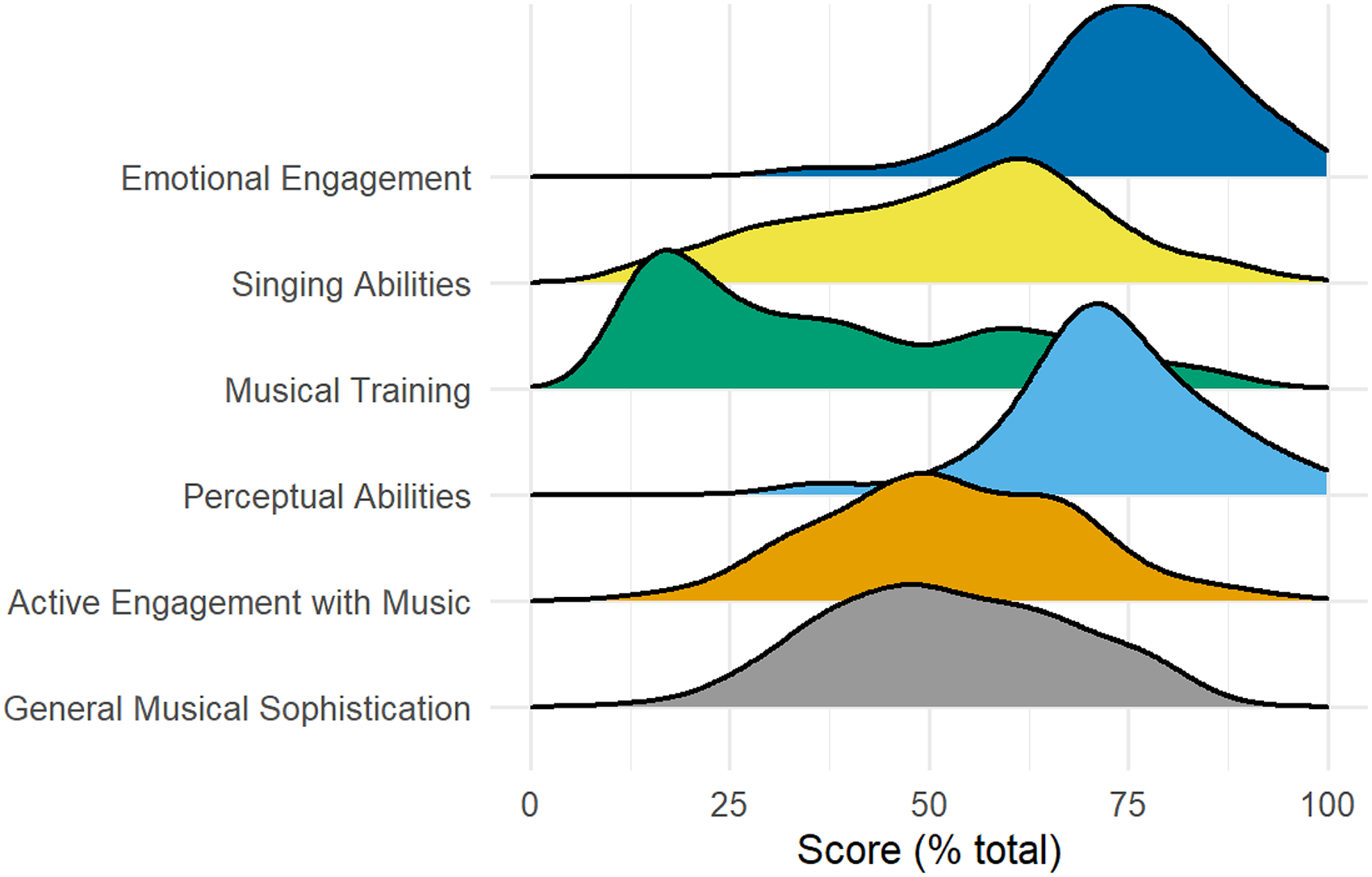
Ridge plot showing the density of participants for each percentage of the score for the Goldsmiths Musical Sophistication Index overall and subscale scores.
Sample and normative scores and comparison on Gold-MSI.

Table 3 and Figure 7 depict the mean scores of PwP on the self-report Gold-DSI General measure and subscales.

Ridge plot showing the density of participants for each percentage of the score for the Goldsmiths Dance Sophistication Index overall and subscale scores.
People with Parkinson's scores on the Goldsmiths Dance Sophistication Index.

Correlations revealed no relationship between quality of life (PDQ-8) and musical engagement (rs(141) = −.00656, p = .938; Figure 8). However, there was a significant negative correlation between PDQ-8 and dance sophistication (rs(143) = −.299, p < .001), indicating that better quality of life was associated with higher dance sophistication. A separate correlation showed no significant relationship between years since diagnosis and dance sophistication (rs(142) = .0582, p = .489).
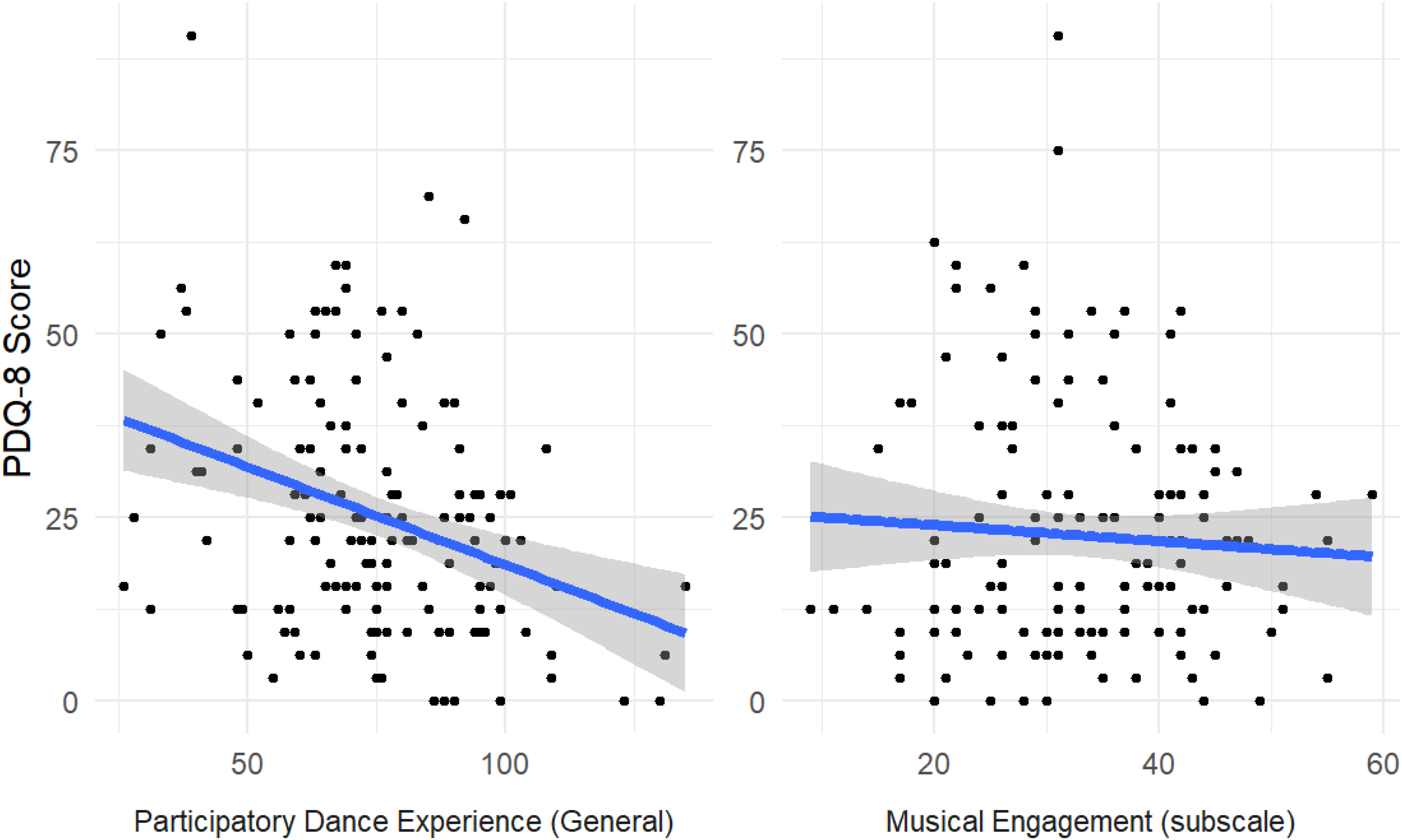
The relationship between quality of life (PDQ-8 score) and participatory dance experience (general) and the musical engagement subscale of the Gold-MSI. The significant negative correlation in the left-hand panel shows that higher quality of life (lower PDQ-8 score) is associated with greater dance sophistication.
Relationships Between Uses of Music, Quality of Life, and Music and Dance Sophistication
There was no significant difference between musical training for those who reported using music for walking (Mdn = 17) versus those who did not (Mdn = 16; W = 4001.5, p = .442). Moreover, participatory dance experience (General) did not differ significantly between those who used music for walking (Mean = 77.38) and those who did not (Mean = 74.75; t(143) = −0.736, p = .463).
We found that number of uses of music (excluding anthems) did not show a significant relationship with musical training (rs(141) = .156, p = .063) or participatory dance experience (General) (rs(108) = −.005, p = .957; Figure 9). There was a significant association between quality of life and number of uses of music (rs(148) = .234, p < .004), with worse quality of life being associated with a greater number of uses. However, there was no significant relationship between duration of Parkinson's and number of uses of music (rs(147) = .044, p = .592).

Relationships between the number of uses of music reported and musical training, dance sophistication, quality of life (PDQ-8 score), and years since diagnosis. There is a significant positive correlation with quality of life showing an association between higher scores (lower quality of life) and higher numbers of uses of music.
Relationships Between Attentive Listening, use of Music, and Musical Sophistication
Figure 10 shows the relationship between our general question about how PwP listen to music and the Gold-MSI single item “time spent listening attentively listening to music” (per day, see Figure 10). Those that reported mostly listening to music attentively or had a mixture of background and attentive listening tended to report greater time spent listening to music.
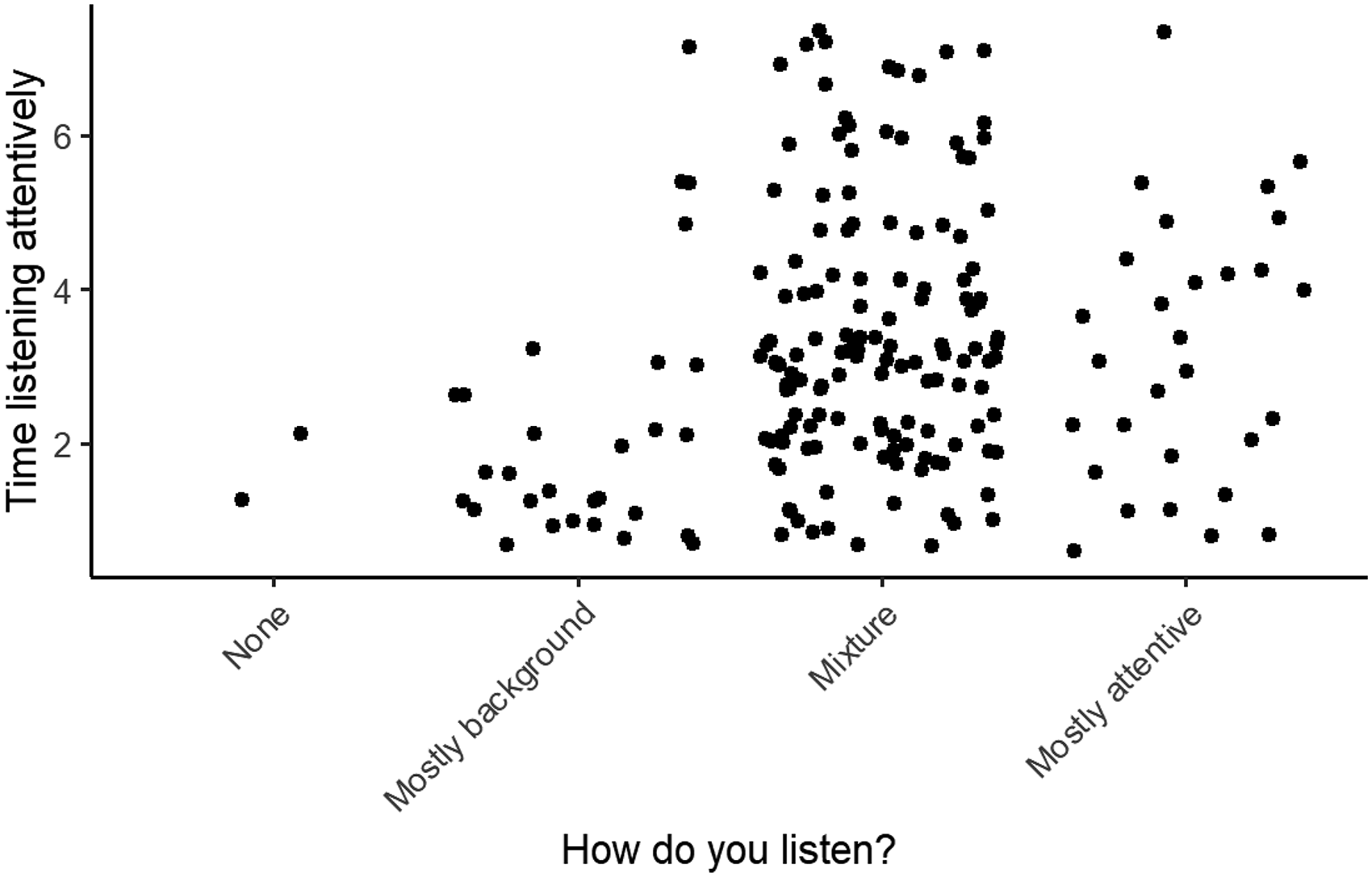
The relationship between how people with Parkinson's report listening to music and the time spent listening attentively per day (0–7 scale, 1 = 0–15 min, 2 = 15–30 min, 3 = 30–60 min, 4 = 60–90 min, 5 = 2 h, 6 = 2–3 h, 7 = 4 or more hours; time specific item from Gold-MSI).
Figure 11 depicts the single item “time spent attentively listening to music” from the Gold-MSI active engagement subscale. As shown in Figure 12, we found a significant positive correlation between this item and the global score for General Musical Sophistication (rs(141) = .348, p < .001).

How long people with Parkinson's (N = 200) report listening to music in minutes per day (time specific item from Gold-MSI).

Relationship between time spent attentively listening to music and musical sophistication. There is a significant positive correlation.
As a subsequent exploratory analysis, we found the duration of attentive listening was significantly higher (W = 1683.5, p = .006) for those who reported using music for managing their feelings (mean (SD) = 3.46 (1.73)) than those who did not (mean = 2.69 (1.59)). Attentive listening was significantly higher (W = 3512.5, p = .016) for those who reported using music for walking (mean (SD) = 3.64 (1.90)) compared to those who did not (mean (SD) = 2.93 (1.57)).
Discussion
Our first research question asked what types of music PwP choose to listen to, how, and why. While the results undoubtedly reflect a sample of musically interested PwP, they also showed that PwP listen to a wide range of music (in terms of genre) and that PwP appear to listen to music for the same main reason as reported in other studies of everyday music use—primarily because people value music for the music itself—whether that is aesthetic appreciation or for entertainment purposes (e.g., Lonsdale & North, 2011; North et al., 2004). Such hedonic consumption is in line with other surveys investigating the use of music in everyday life in older adults such as Laukka (2007), whose participants (aged 65–75 years) reported that their top three reasons for music listening were: because it is beautiful, it gives pleasure, and it is entertaining. In North et al. (2004), whose participants were mostly younger adults (mean age = 26 years), the most common functions of self-selected music listening were “simple enjoyment” and because “it helps pass the time.” In our study, PwP chose the wording “because of the music” more than any of the other proposed functions of music listening (98%). Within this category, they rated “for the aesthetic value/beauty of the sounds and voices” most highly, followed by “for the entertainment value,” and third “because I like to sing (or hum) along.”
Participants in our study (20–88 years) indicated enjoying a wide range of musical genres from country to classical, musicals to metal, and religious to rap music. Where participants did list an “other” genre, they mostly rated this as “4” or “5,” suggesting this category was used to list music that they preferred (rather than that which they did not like). The majority of participants reported listening to music between 30 and 90 min per day, with only 1% reporting they did not listen to music at all (this is in line with Laukka's 2007 study). This suggests that our survey sample does not necessarily differ from other surveys on everyday uses of music in terms of a recruitment bias; people who are musically engaged are more attracted to participate in such research.
It is important to recognize that PwP listen to music in similar ways to people who do not have a diagnosis of Parkinson's because the pathology of Parkinson's is centered around the lack of dopamine-producing cells in the basal ganglia area of the brain. Dopamine is a neurotransmitter associated with reward-based behaviors (Costello et al., 2022). Although studies have shown that PwP tend to perform poorly in self-regulated timing studies (e.g., Jones & Jahanshahi, 2014; O’Boyle et al., 1996), the lack of dopamine in PwP and the effects of this and/or dopaminergic medication does not necessarily impair beat finding in music (Cameron et al., 2016) or their ability to synchronize whole body movements to music (Rose et al., 2019). Similarly, we found only a small number of participants scored below –2 SD for the Gold-MSI measure of musical sophistication. This has important implications in terms of understanding how rehabilitation strategies using music have proved to be successful in relation to improving movement and mood management for PwP, and also to help our understanding of the musical and neural mechanisms involved in order to optimize music use (Schaefer, 2014; Schaefer et al., 2014; Stupacher et al., 2022).
The second most chosen category in terms of reasons for engaging with music in our study was relaxation (92%). Using music for relaxation is an important and as yet under-researched aspect of Parkinson's care. These findings provide a mandate for further research in this area, in particular in relation to sleep and managing anxiety. Lack of sleep is a common symptom of Parkinson's, sometimes caused by restless leg syndrome, anxiety, or simply dysregulated sleep cycles. Do PwP use non-beat-based music to help them sleep, or music with a lilting meter, and is this instrumental or does it have gentle softly sung lyrics? We posit that, because PwP have much more to overcome than most people to do things many people would consider easy, they (i.e., those PwP who enjoy music) are using music as a personalized “charge” and “re-charge” anxiolytic resource.
This speculation is not without basis as the third most popular reason for using music was for motivation (90%). The motivation category arose in the original workshops (Rose et al., 2022) because PwP said they use music to help them “do things,” from “getting out of bed in the morning” or “getting ready to go out” to exercising and “to make doing the chores more fun.” This kind of active purposing is more akin to how athletes use music to prepare themselves for performance (Laukka & Quick, 2013) and to reduce levels of perceived exertion (i.e., ergogenic effect), though athletes also use music to make them feel happy and to relax (Terry & Karageorghis, 2006). In Laukka's (2007) study of older adults, “to stir up energy” was ranked fifth. Motivation per se was not a topic in North, Hargreaves and Hargreaves’ study of young people, but arousal (Factor 6, see note 2) was a part of the findings in Lonsdale and North's study comparing age groups. They found that people over 30 years were significantly less likely to use music for arousal than under-30s. However, as apathy (usually defined as lack of interest, initiative, or flattened affect, Sockeel et al., 2006) is highly prevalent in Parkinson's, and has been operationalized as a “loss of motivation and reduction of goal-directed behavior” (Stankevich et al., 2018, p. 1080), the link between motivational aspects of music and overcoming apathy may be a critical factor in understanding music as a conative tool. Based on qualitative data collected as part of this study, the use of music for concentration (42%) seems linked to motivation as PwP reported listening to music to complete mundane tasks, for example “When I’m working in my workshop […] it really drives me.” Although music for “concentration” was the second least common use of music in our study (42%), this is in line with North et al. (2004) where the function “it helped me concentrate/to think” was only chosen 17% of the time, and also with Laukka (2007), where the item “to help me concentrate” was ranked low (22/28 functions). Nevertheless, in view of an important study showing that dual task processing is challenging for PwP (Brown et al., 2009), further exploration should be carried out concerning the context of when and why music helps PwP to concentrate and/or is distracting, so as to provide suitable therapeutic guidance for individuals. Future studies could consider including measures of apathy, anhedonia, and/or avolition to better understand the relationship between Parkinson's, dopamine, and apathetic states in the context of musical engagement.
Music for company was chosen as a use of music by 74% of participants in the present study, which was conducted during the COVID-19 pandemic. Although we didn’t specifically ask whether the use of music had changed due to these circumstances, this was a time when many people turned to music to feel less alone, and for some people music provided a social surrogate for friendship, and a feeling of being kept company (e.g., Cabedo-Mas et al., 2021; Ferreri et al., 2021; Groarke et al., 2022). However, studies have yet to examine specific contexts and reasons for background music use. Such research may be especially important for groups of people who felt vulnerable and isolated as a result of the pandemic. (Schaefer et al., 2020; Soilemezi et al., 2022; Subramanian et al., 2020).
Regarding feelings (67% use reported), some researchers (Saarikallio & Erkkilä, 2007; Saarikallio et al., 2013; Van Goethem & Slodoba, 2011) have argued that music could be thought of more as a toolbox (rather than a single strategy) to help regulate and/or realize different emotions, and to modify a person's range of affective states from “venting” (releasing negative affect) to enabling contemplation, and/or to offer distraction from unwanted moods or ruminations. In the current study, “to feel happy” and “to reminisce” were the top two subcategories of feelings, followed by crying, grieving for what they had lost, and using music to manage anger. In Laukka's study of older adults, using music to induce emotions was ranked 6th of 28 possible reasons for listening, and evoking memories was ranked 10th. Lonsdale and North (2011) found that older people were increasingly less likely to use music to regulate their emotions (in a positive or negative way). They stated “Older participants were perhaps more adept at managing their moods, and as a result were less reliant on music for that reason” (p.127). Here we found that the duration of attentive listening was significantly higher among those who did use music for emotional regulation than those who did not, and we found a statistically significant negative correlation between the Gold-MSI subscale of emotion and age, but not for disease duration, suggesting that PwP become less emotionally engaged with music as they age but that this is not necessarily associated with the disease.
Although half of the participants (53%) reported using music as a distraction, it is unclear whether participants’ responses to this use of music was meant within a passive context (such as background music might provide), or whether this was more active, whereby PwP chose to listen to music to divert their focus away from negative thoughts. As these types of use have been associated with adolescent use of music (Saarikallio et al., 2020), more fine-grained investigation is needed to understand this aspect of music use in PwP.
One further finding from this study that highlights the importance of individual preference in music research is the notion of songs acting as personal anthems (46%). While this may also be an effect of the a priori categories chosen for the survey (the categories were based on what PwP reported during the workshops; Rose et al., 2022) it is noticeable that this function appears in two other studies. In Laukka's 2007 study of older people, he noted that music use was associated with identity, belonging, and agency. In Lonsdale and North's fourth study, they found that 16–18-year-olds were more likely to use music to define their identity than participants over 30 years of age. Together, these findings suggest that the way some PwP are using music may be to support themselves through a transitionary period. For example, those PwP who said they did have a personal theme tune seemed to use it as a strategy to deal with the impact of diagnosis on their lives (e.g., I Will Survive by Gloria Gaynor). To the best of our knowledge, this is the first study to report the use of music to potentially empower PwP through their diagnosis, to reaffirm their identity, or to help redefine themselves as they adjust to a new life. Further research is needed to understand uses of music during transitional life experiences, such as being diagnosed with Parkinson's, and how this relates to a person's sense of identity (Lerio, 2017; Sheldrake et al., 2022).
Finally, the least common use of music among our respondents was for walking. This is perhaps the most important contribution of this study to existing knowledge because there is a large body of research demonstrating an immediate positive effect of music on motor control (see e.g., Bernatzky et al., 2004; Braun Janzen et al., 2022), gait in particular (de Bruin et al., 2010; de Dreu et al., 2012; McIntosh et al., 1997; Pereira et al., 2019; Thaut et al., 2019) and consequently, quality of life (Machado Sotomayor et al., 2021; Zhou et al., 2021). Our findings suggest that, despite existing research on music potentially being useful for walking in PwP, this is not currently a common usage amongst this population.
Within our sample, of those who did report using music to help with walking (36%), most stated that music helped them to synchronize their steps to the beat, followed by music helps “control my steps,” or that music “helps me walk faster.” Counter to our hypotheses, greater music training (Gold-MSI subscale) and higher participatory dance experience (General Gold-DSI) were not associated with the use of music to support movement. Thus, previous training and experience are not prerequisites for PwP to benefit from using music to support movement, either in clinical or home-based settings (Lee & Ko, 2023).
However, attentive listening was significantly higher for those who reported using music for walking than those who did not. While this partially supports our first hypothesis, further research is necessary to understand the barriers and enablers in relation to using music for walking in everyday life for PwP. At present, the reasons for the gap between research findings related to techniques such as Rhythmic Auditory Stimulation (RAS) and its under-use in practical application are not yet fully understood. This finding is a first indication that the individual’s relationship with music is a key, but not the only factor involved in whether or not a PwP will use music when walking. This also suggests the need for wide-scale dissemination of ways of using music, as it indicates that knowledge about, for example, RAS therapy is not reaching the people who could most benefit.
The low number of participants using music for walking, however, is in line with Tosserams and colleagues’ recent groundbreaking study (2022) investigating the cortical correlates of gait compensation strategies in Parkinson's. Aside from their striking findings that one in five PwP had no knowledge of compensation strategies for gait in general, of seven potential categories, external cueing was the least used category, whereas internalized cueing was the most commonly used strategy. The ability of PwP to use musical and motor imagery to self-remedy gait problems is becoming a key topic in neuro-rehabilitation in Parkinson's (Bek et al., 2021a, 2021b; Cuomo et al., 2022; Harrison et al., 2019; Harrison et al., 2020; Rose et al., 2019; Schaefer, 2014).
Regarding our second research question and hypotheses, we found no relationship between quality of life and musical engagement: our sample were mostly within 2 SD from the normative scores for the Gold-MSI, indicating that participants were within the normative range of the general population. The singing abilities subscale had the most participants who self-reported below normative scores. This suggests either that these PwP may benefit from taking part in specialist activities such as Parkinson's choirs or that multi-modal approaches to rehabilitation (including music-listening, music-making, and dancing), may be more enjoyable for them if they are conscious of their singing ability. Certainly, as PwP perceived their emotional engagement and perceptive abilities as high (according to the Gold-MSI subscales), this provides further support for developing multi-modal interventions.
With regard to the Gold-DSI (Rose et al., 2021), while comparison with other populations is not possible as normative scores are not yet available for this measure, the low level of dance training and high level of urge to dance similarly provide impetus for more music and movement interventions, especially as there was a negative correlation between the PDQ-8 and dance sophistication, indicating that better quality of life was associated with higher participatory dance experience. There was an even spread of the DSI subtheme social dancing, which suggests dancing may be associated with having a better quality of life, but we did not ask whether participants were attending dance classes per se. A separate correlation showed no significant relationship between years since diagnosis and dance sophistication, suggesting that the relationship between quality of life and dance sophistication was not driven by those with shorter disease duration having higher dance sophistication. We also found that music listening was not related to disease duration and that there were no differences in musical training or participatory dance experience for those who reported using music for walking. While these findings do not dispel ideas that you have to be musical to use auditory cues, they do provide some indication that, as a general rule, musical training and participatory dance experience are unlikely to be limiting factors for using musical cueing strategies, especially as participatory dance necessarily employs some motoric control. These findings have important implications for the use of music and dance in interventions as prior knowledge may not be necessary to benefit.
We did find a significant association between quality of life and number of uses of music though, with worse quality of life being associated with a greater number of uses. However, there was no significant relationship between duration of Parkinson's and number of uses of music. Our prediction was made on the basis that using music would support better quality of life; however, given that this is a cross-sectional study, we suggest that the finding reflects PwP with worse quality of life using a greater range of musical strategies to help them. One study that investigated personality in relation to music use suggested that neuroticism (emotional stability) was associated with more intense and frequent use of music to manage mood (von Georgi & Polat, 2013). Although we did not measure personality here, we suggest that the use of music to manage moods in Parkinson's may be a healthy adaptive strategy, as higher neuroticism has been associated with lower quality of life in Parkinson's (Dubayova et al., 2009). These results indicate that music may play an even more integral role in the lives of those PwP with lower quality of life, and thus underlines the urgency of greater knowledge of how music may be used in therapies and rehabilitation initiatives, especially when considering the breadth of uses reported herein. In terms of therapeutic application, it is important therefore to take care not to “prescribe” particular songs or pieces of music and to emphasize the importance of individual preferences and find music that is meaningful in the moment for the individuals being treated.
Our study is not without its shortcomings, most notably the lack of comparative data. However, as there are a number of papers already that use general population and comparable samples, we felt that our focus on how PwP use music would provide valuable new information to the research field in itself. We also acknowledge there may be a bias in our sample as it is likely that people with Parkinson's who are interested in music responded (indeed only 1% of respondents said they don’t listen to music). However, this could in fact be an advantage as one of our aims was to explore the potential for music use in Parkinson's care, and music is more likely to be used by those who like music. Also, those who did respond were not highly trained in either music or dance according to the MSI and DSI indices. This means that our self-selected sample may well reflect those for whom this research is most relevant.
We also wanted to capture the types of technology PwP were using. In this study, although most participants reported listening to music via the radio (72%), half (52%) said they played CDs. PwP also reported that they streamed their music (52%), and slightly more used a personal listening device (56%, mostly their phone) or used smart technology (34%) such as Amazon Alexa. Such as range of listening technologies could be expected as other studies show that PwP engage with interventions that are delivered online and that these can be effective and are highly valued (Bek et al., 2021a, 2021b, 2022; Morris et al., 2021). Nevertheless, future studies should specifically evaluate how technology relates to musical engagement as has been conducted in other fields (e.g., Creech, 2019; MacRitchie et al., 2022). Additionally, further research is needed to understand more about the relationship PwP have with music, not only prior to and following diagnosis, but also as the symptoms of Parkinson's worsen over time. Such studies should also include items related to potential barriers and/or enablers of music use (e.g., voice-controlled technology in comparison to pressing buttons) as well as whether the amount of musical engagement changes, and if so, why?
The high number of unfinished surveys suggests that the survey was over-long and demanded too much of many participants. Nevertheless, more than half of the participants stated they would be interested in taking part in our future research, so it is reassuring that the topic is of interest to PwP. Furthermore, those who did take up our invitation to conduct the survey via video or audio call seemed to enjoy the experience, especially as many people reported feeling very isolated despite the loosening of COVID-19 restrictions. We also underestimated the impact of COVID-19 in terms of biasing the items included, or not-included (for example, we did not include the option of listening to live music in the ways of listening categories). Despite pre-testing the survey, comments from respondents suggested that some of the wording was difficult to follow and that there was too much repetition of similar questions. We will take these points into consideration for future surveys in line with our PPI approach to research. There was also an issue with skip logic, meaning that some answers to the Gold-DSI were incomplete at the beginning of the survey. Where possible we contacted respondents and asked them to answer the missing items. Finally, there is lack of diversity within our sample (e.g., 68% of respondents reported having university degrees), and we acknowledge that this may have affected our results.
Conclusion
This is the first study to capture the everyday use of music among PwP. A wide range of musical genres, ways of engaging with music, and reasons for listening were reported. The top three reasons were a) for aesthetic pleasure/enjoyment, b) for relaxation, and c) for motivation.
However, the least reported reason for music use was for walking. Bearing in mind the large corpus of Parkinson's research on music and gait, further research on how best to apply such findings, alongside better dissemination strategies, is needed to reduce the gap between research and application for this particular use of music.
Supplemental Material
sj-docx-1-mns-10.1177_20592043231197792 - Supplemental material for Music Moves Me in More Ways Than One: An Online Survey Investigating the Everyday Use of Music among People with Parkinson's
Supplemental material, sj-docx-1-mns-10.1177_20592043231197792 for Music Moves Me in More Ways Than One: An Online Survey Investigating the Everyday Use of Music among People with Parkinson's by Dawn C. Rose, Ellen Poliakoff, William R. Young and Michelle Phillips in Music & Science
Supplemental Material
sj-pdf-2-mns-10.1177_20592043231197792 - Supplemental material for Music Moves Me in More Ways Than One: An Online Survey Investigating the Everyday Use of Music among People with Parkinson's
Supplemental material, sj-pdf-2-mns-10.1177_20592043231197792 for Music Moves Me in More Ways Than One: An Online Survey Investigating the Everyday Use of Music among People with Parkinson's by Dawn C. Rose, Ellen Poliakoff, William R. Young and Michelle Phillips in Music & Science
Footnotes
Acknowledgements
We value to input of Abigail Davies and Susanna Ward for this study, and thank Parkinson's UK for their help with recruitment, and of course the wonderful people with Parkinson's who helped us devise the study and those who participated.
Thanks also to Leo Willis, Constance Willis, and Eve Edmonds for assistance with data collection, cleaning, and coding.
Author Notes
Two poster presentations of preliminary results from this study were presented by the authors of this paper at the International Conference for Music Perception and Cognition (ICMPC) in July 2021:
A survey investigating the use of music, musical and motor imagery, for mood and movement management among people with Parkinson's.
Uses of music by people with Parkinson's when completing everyday tasks.
The findings reported in this paper were also presented as a poster entitled 'The use of music in every day life among people with Parkinson's: A mixed methods study' at the 6th World Parkinson's Congress in July 2023.
Action Editor
Jörg Fachner, Anglia Ruskin University, Cambridge Institute for Music Therapy Research.
Peer Review
One anonymous reviewer, Stefan Mainka, Kliniken Beelitz GmbH, Neurologische Fachkrankenhaus Für Bewegungsstörungen / Parkinson.
Author Contributions
All authors made a substantial contribution to the concept, design, acquisition, analysis, or interpretation of data, and drafted, revised, and approved the article.
Declaration of Conflicting Interests
The authors declared no potential conflicts of interest with respect to the research, authorship, and/or publication of this article.
Ethical Approval
Ethical approval for the study was granted by HSLU Ethics Committee (Protocol EK-HSLU 010 M 20), Lucerne University of Applied Sciences and Arts, Switzerland in accordance with the Geneva Convention of Human Rights.
Funding
The authors disclosed receipt of the following financial support for the research, authorship, and/or publication of this article: This work was supported by the Schweizerischer Nationalfonds zur Förderung der Wissenschaftlichen Forschung, (grant number 10001C_204290/1).

Supplemental Material
Supplemental material for this article is available online.
Notes
References
Supplementary Material
Please find the following supplemental material available below.
For Open Access articles published under a Creative Commons License, all supplemental material carries the same license as the article it is associated with.
For non-Open Access articles published, all supplemental material carries a non-exclusive license, and permission requests for re-use of supplemental material or any part of supplemental material shall be sent directly to the copyright owner as specified in the copyright notice associated with the article.
