



Abstract
Music criticism has a long tradition as a leading agent in the classical music discourse. However, some people question its function in the contemporary music market. We explored the topicality of classical music critique by asking: Who reads professional reviews today? And what do readers expect from review? Through an online survey (English/German), we profiled the listening habits of classical music listeners (N = 1200) and their engagement with professional reviews. Our participants were more actively engaged with music, but contrary to the ‘highbrow’ stereotype, not more highly musically trained than the general population. They consumed music and opinion sources in a variety of ways. Approximately two-thirds (n = 741) of the participants had recently engaged with professional reviews, which were perceived as the most useful form of opinion, followed by short written commentaries and, lastly, ratings. A multiple logistic regression model suggested that the typical consumer of professional music critique was older with higher levels of musical engagement and education, had a higher inclination to purchase music and lower usage of streaming services, and had a preference for detailed reviews from traditional sources (e.g. newspapers). According to review readers, reviews should cover a variety of topics and offer evaluations underpinned with reasons. Reviewers should be constructive, open-minded, respectful, and well informed; their professional background was less relevant. Professional reviews should not necessarily provide a recommendation on what to buy, but rather guide listeners’ musical appreciation and understanding. Professional criticism still has an audience, although more so among older, musically educated listeners. Critics need to explore various channels in order to connect to a new generation of classical music listeners.
Introduction
This paper focuses on one common form of professional response to music, namely critical reviews of classical music recordings. It investigates the topical relevance of this form of appraisal by questioning who reads professional classical music reviews today, and what are readers’ expectations on the nature and content of music critique?
In the classical music world, music criticism has a rich tradition as a leading agent in the discourse and evolution of the musical genre (Holtfreter, 2013; Karnes, 2008). From the 18th century onwards, critics have discussed compositions, stylistic tendencies and general aspects of the musical life, shaping canons and influencing music production and reception (Baldassarre, 2009; Hamer, 2019). Professional music criticism in the form of reviews of live and/or recorded performances established itself as a legitimate practice in published media during the first half of the 20th century (Monelle, 2002). Over the years, institutions such as the British magazine Gramophone have contributed a continuous stream of critical input, offering professional guidance on purchasing and listening (Pollard, 1998), thereby influencing the development of a canon repertoire (Alessandri et al., 2014). Studies in the popular culture industries have suggested that critical reviews both mirrored and influenced the production and legitimisation of cultural products during the last century (Baumann, 2001; Lopes, 2002; Regev, 1994).
However, although the practice of professional criticism has been described as institutionalised, in part due to this long-standing tradition (Hentschel, 2012; Karnes, 2008; Schick, 1996), commentators have recently questioned its function and relevance in the contemporary music market. In Europe and the USA, classical music producers and critics have voiced their concerns about a crisis of relevance, suggesting that the role of professional critic is ‘dying-off’ (Brennan, 2006; Robertson, 2019; Ross, 2017). Some have suggested that while print media devote less and less space to professional arts coverage, non-professional blogs and message boards are luring the audience away from professional criticism (Kaiser, 2011). Similar struggles have been reported in relation to arts journalism, and studies have emphasised the need for a re-profiling of journalism practice in the arts in order to take account of the wider market for opinion sources that may influence the consumer (Agarwal & Barthel, 2015; Deuze, 2005).
Against this background, in 2016 we interviewed 14 professional classical music critics in UK, Germany and Switzerland and asked them about their role in the contemporary music market (Alessandri et al., manuscript in preparation). The critics self-identified as important mediators between artists, producers and consumers. They emphasised the relevance of their traditional roles as specialist authority on taste, teacher and guide for the music audience. They discussed their professional standards and writing techniques, as well as the challenges of maintaining objectivity and resisting commercial pressures. However, in line with the trend in arts journalism, the music critics also expressed concerns about the future of their profession, questioning the relevance and topicality of professional review in the new so-called ‘democratised’ communication and consumption market. Some critics talked of ‘decline’ in their industry, whilst others saw an opportunity for growth in new digital media, and the potential for the role of professional critique to ‘metamorphose’ into a new practice. However, all the critics questioned the nature of their target audience as well as the role that criticism plays: in the age of iTunes and Spotify, of Google, blogs and chatrooms, they asked ‘who is still reading professional critique?’ and ‘what do readers expect from reviews?’
The relevance of these questions can be viewed in light of the literature on music consumption and information retrieval in the rapidly changing digital media age. A large corpus of research in the past decade has highlighted how listening behaviours are influenced by personal background, such as age, gender and education (Favaro & Frateschi, 2007; Leguina et al., 2017; Lepa & Hoklas, 2015), genre preferences (Nowak, 2014), and use of technology (Lepa & Hoklas, 2015). Specifically, digital technologies have changed the way we purchase, consume and listen to music. The quantity and diversity of available music as well as the channels for influencing musical taste have multiplied (Datta et al., 2017). Artists have direct digital access to their audiences, and free platforms are available for peer-opinion sharing, giving users the means and the confidence to make decisions regarding whether to, and how to, further explore (Carboni, 2012). These new communication and consumption modes have shaped listeners’ habits and even redefined moral standards, a fact exemplified in the complex nature of contemporary piracy behaviours (Sinclair & Green, 2016). Digital sources also allow for the mobile access to music (Du Gay et al., 2013; Hesmondhalgh & Meier, 2018; Katz, 2010), facilitating its inclusion as a background auditory environment during everyday life activities (Bull, 2013; Hagen, 2016; Prior, 2014). At the same time, the dematerialisation and omnipresence of recorded music can lead to a dehumanisation of the artistic product, with listeners experiencing a loss of authenticity alongside disconnection to the artist (Hesmondhalgh & Meier, 2018; Magaudda, 2011). These effects are further accentuated by the displacement of product ownership that is at least partly induced by streaming platforms (Arditi, 2018). Paradoxically, the ease of access to digital music consumption has been linked to an increasing interest in the acquisition of collectables and artefacts (Bartmanski & Woodward, 2015), and in the conscious accumulation of knowledge regarding both the music itself and the artists (Crossley & Bottero, 2015).
Overall, it is clear that digital technologies have transformed the way we select, conceptualise and experience music. This, together with the new channels to acquire information and share knowledge, is forcing music criticism to reinvent itself and to find a new identity (Siapera, 2015). The critics’ traditional role as mediators between the artists, the music industry and the audience (Debenedetti, 2006) may at first seem at odds in the new digitalised market. However, as the critics in our interviews suggested, it is conceivable that this very same market democratisation could drive a renewed interest in a deeper form of product engagement, thus drawing listeners to seek ‘an expert’s view’.
Within this shifting context of music consumption and dynamic opinion sharing, the music critics we interviewed questioned the relevance of their work and the nature of their target readership. Music reviews are published regularly in newspapers and specialised magazines, on paper and in digital formats; however, to our knowledge, no study has examined the extent to which classical listeners engage with this critical output. The professional critics themselves voiced this concrete concern by asking who, anybody at all, is reading their reviews today, and what are readers’ expectations for music criticism? In order to directly address these questions, we turned to the potential consumers, the classical music listeners themselves, and asked them about their listening habits and use of opinion sources. Through a large-scale online survey we aimed to answer the following questions: (a) who, among today’s classical music audience, engages with professional critique, and (b) to what extent does professional music criticism match readers’ expectations on the content, nature, and role of music review?
Method
We ran an online survey in the English and German languages during 2017 to 2018, recruiting from the general population of classical music listeners via radio, specialist and social media channels. Within the survey, we operationalised the study aims into the following steps and relevant questions:
First, we analysed the data provided by our full sample and asked: 1. What characterises our sample of the classical music audience? 2. How does this audience access classical music? Which media/platforms are used? How often do the users of these media/platforms pay to access music? 3. How do they inform themselves about classical music? Which opinion sources are consulted and perceived as influential? How are different forms of opinion evaluated? How many people within the sample have referred to (read or listened) at least one professional music review in the past six months?
Second, we profiled the listeners within the sample, who reported engaging with professional music critique. 4. What characterises classical music listeners who also engage with music critique?
Finally, building on the findings of our previous interview study with critics, we analysed review readers’ expectations on the content and purpose of music critique. 5. What critique content is important for the readers of classical music reviews? What topics should be covered in reviews? Which evaluative and rhetorical devices should be used in review? 6. What qualities and qualifications should a critic possess? 7. What is the purpose of professional music review?
The choice of an online survey for the data collection was based on the following reasoning: The aim of the study was to capture common tendencies on engagement with critique within the general classical music audience. An online survey allowed us to reach a wider and potentially more heterogeneous sample. An online survey necessarily leads to an intrinsic bias within the sample towards people who have access to internet and possess enough skills to complete a survey online. Although this bias should be accounted for in the interpretation of results, this rationale matches the contextualisation of the research question, which builds on the hypothesis that new digital media influence the role and topicality of music critique.
Survey Development
The survey was developed using Qualtrics, an online platform suitable for the collection of large-scale survey data (www.qualtrics.com). The survey was initially piloted amongst the authors’ personal networks of classical musicians/classical music lovers (N = 5) to gain detailed feedback on basic comprehension, usability and selection of response items. These data were not included in the final sample; rather responses were used to revise the survey, which was then piloted online until we reached an N = 100 threshold. At this point, the survey was taken offline to allow a data quality check. No substantial revisions were found to be necessary, therefore these data were included in the final sample and the survey was launched.
Participants were provided with information on the aim and scope of the study, data management and participation conditions, and volunteered their informed consent. The survey was ethically approved by the authors’ university ethical review board.
An initial screening question checked that participants had listened to recorded classical music at least once per week in the past six months. Following the research questions above, the survey was then structured in three parts, covering (a) demographics, (b) music consumption habits including engagement with opinion sources [2, 3, 4], and (c) expectations for music critique [4, 5, 6].
Demographics (gender; age; nationality; level of education and musical experience). These questions were taken from the Goldsmith Musical Sophistication Index (GoldMSI; Müllensiefen et al., 2014). The GoldMSI is a standardised scale used to assess musical sophistication in the general population. Validated on a large sample (N = 147,636), the GoldMSI offers information on a person’s musical background and behaviours on a practical, emotional, and experiential level. It has been translated into German and validated with a German sample (N = 641; Schaal et al., 2014). The relevant sections included in the survey were the sub-scales ‘Demographics’, ‘Training’, and ‘Active Engagement’, as well as the General factor (for the reliability of the GoldMSI scales, see Müllensiefen et al., 2014 and Schaal et al., 2014).
Music consumption habits were divided into listening habits (use and preference for listening media and platforms, purchasing habits) and use of opinion sources (sources of information used to make a decision on listening or purchasing; source credibility). One final question asked participants if they had read or listened to a professional music critique during the six months prior to taking the survey.
Expectations for music critique (topics to be covered; evaluative and rhetorical devices; critic’s personal qualities and qualifications; purpose of professional review). These questions were derived from the findings of our previous interview study with professional music critics. The four questions reflect the four theme families that emerged from the qualitative analysis of the interview transcripts, namely topics, writing tools, principles and roles (Alessandri et al., manuscript in preparation). The items within the single questions reflect sub-themes of those families, that is, aspects of critique that were described as important by critics.
Recruitment
To obtain a representative sample of classical music listeners, English- and German-speaking participants were recruited via strategic networks. Recruitment channels were chosen so as to (potentially) reach a broad selection of participants who meet the inclusion criteria for the purpose of the study; namely, people who regularly listen to classical music. We provided the survey in two languages so as to increase accessibility; the languages were selected based on the authors’ native languages. The research was not designed to compare the linguistic groups or investigate cross-cultural effects.
In the UK, recruitment support was offered by BBC Radio 3. Radio 3 is a British radio station whose content is focused on classical music and opera, although jazz and world music also feature. Radio 3 encouraged the participation of its listeners via a live interview with one of the authors on the programme Music Matters. The research was also promoted through Radio 3’s website and social media network. In addition to the BBC recruitment drive, participation was encouraged through university media and participant recruitment channels, personal contacts, social media accounts and educational blogs. To further populate and incentivise promotion, the survey featured a prize draw of five Amazon vouchers of 50 Euro, and three of 25 Euro (or the closest fully upward rounded denomination in the chosen Amazon currency). Listeners were encouraged to forward the survey to their own personal contacts within classical music practice-based communities (such as artists, orchestras, choirs, and smaller ensembles). Finally, the survey was promoted via Qualtrics ‘Purchase Respondents’ professional service, which distributed the questionnaire to a population of UK- and Germany-based survey takers.
Data Preparation and Analysis
Descriptive and inferential statistics were used to outline the demographics, consumption habits, and expectations on critique of our sample. Pairwise comparisons with significance tests were conducted on selected questions to allow inferences of the results to the population. Following this analysis, we applied logistic regression to examine the extent to which the 59 demographic and consumption habit variables predicted classical music listeners’ engagement with professional music critique. Participants’ engagement was measured as a binary (yes/no) response to the final question of ‘music consumption habits’ section of the survey: ‘Have you read or listened to at least one music review of a classical music recording provided by a professional critic in the past six months?’
In a first step, 59 variables that described participants’ listening behaviour, engagement in opinion sources, music sophistication, and demographic characteristics were used to predict whether respondents had engaged with music critique in the past six months. In a second step, a comprehensive logistic regression model was created using combinations of the variables that individually had a significant effect on participants’ engagement with critique. The aim was to identify those predictors that significantly improve model fit in the context of (and in concurrence with) other predictors. The overall significance level was set to α = 0.01. In order to protect against familywise type I errors, the significance level was adjusted using Šidák correction (Huberty & Morris, 1989; Šidák, 1967). All statistical analyses were carried out using R (version 3.3.1); logistic regression models were fitted using the glm function from the stats package (version 3.6.3).
Results
The results are presented in the order of the survey questions. In the first section, we outline the demographics (including musical expertise), listening habits, and use of opinion sources by the surveyed sample of classical music listeners (N = 1200). In the second section, we detail the outcome of the logistic regression analysis, which explored the ways in which all these factors influence whether or not an individual is likely to engage with professional music critique. Finally, in the third section, we focus on the portion of the sample who reported engaging with professional critique at least once in the past 6 months. For this portion of the sample (n = 741), we report results on review readers’ expectations on the content and style of reviews, critics’ profile, and purpose of professional criticism. In Figures 1 to 3 and 5 to 8, the figure captions show the actual question the participants were asked. For Figure 4, the questions are embedded in the text.
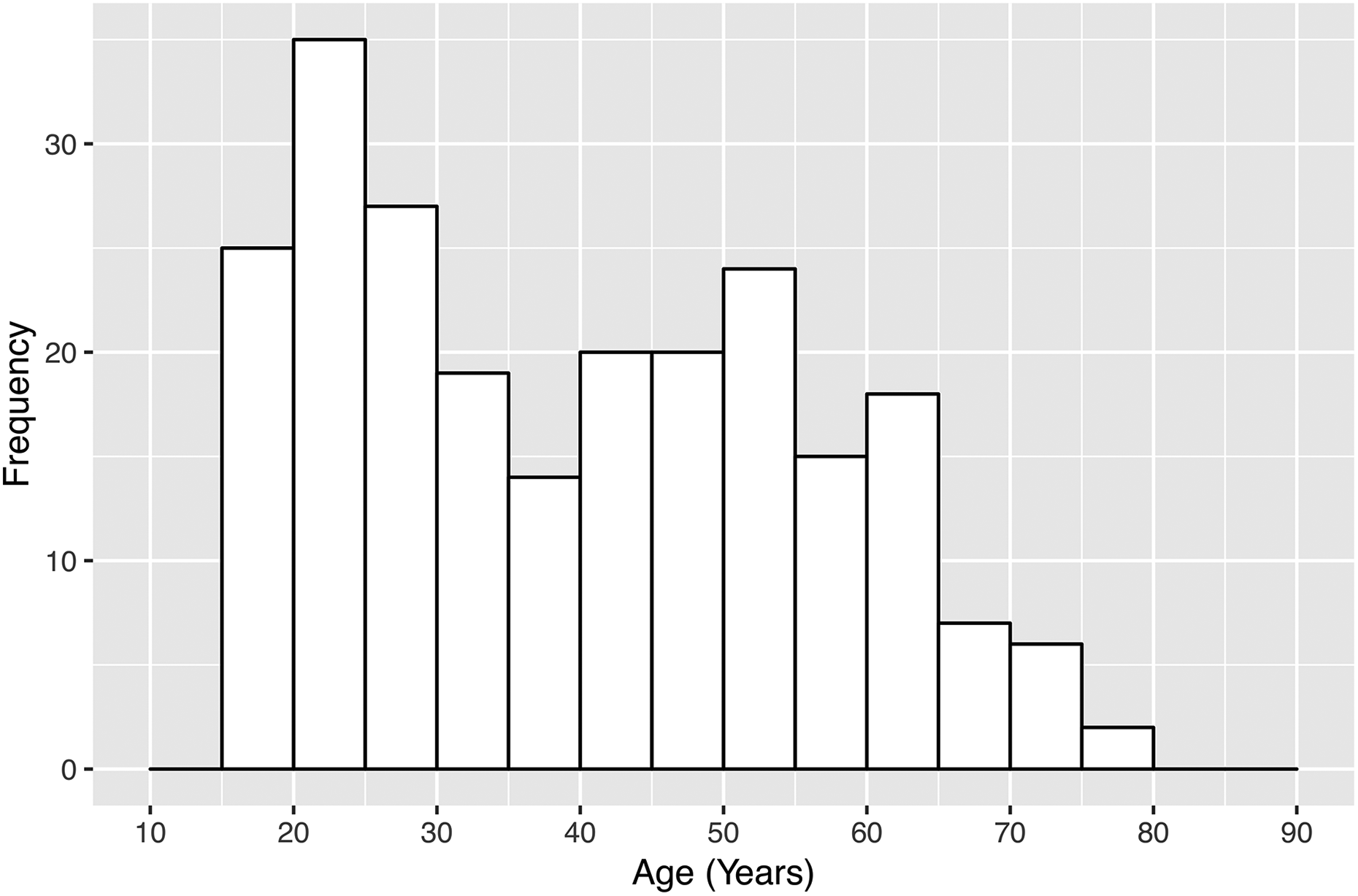
Distribution of age across participants (median = 47 years, IQR = 32 years).

Frequency of use of different (pre-defined) music listening platforms/media during the past six months. The x-axis reports the number of participants. The y-axis lists the pre-defined platforms/media. Percentages within the bars indicate the proportion of participants who reported using a given platform/medium never, rarely/occasionally, or frequently/very frequently.

Percentages of participants, who reported to never, very rarely to occasionally, or frequently to always pay to listen to music by platform/medium. The x-axis reports the number of participants. The y-axis lists the different platforms/media. Percentages within the bars indicate the relative frequency of payment, among the participants who reported using a given platform/medium.

Engagement with and likelihood of influence of different written and spoken opinion sources (how likely would the source influence listeners’ decision). The x-axis reports the number of participants. The y-axis lists the different pre-defined opinion sources. Percentages within the bars indicate the relative frequency of likelihood of influence among participants who reported using a given opinion source.

Perceived importance of different topics to be covered in review. The x-axis reports the number of participants. The y-axis lists the different pre-defined aspects of a music recording, as they were described by professional critics (Alessandri et al., manuscript in preparation). Brackets on the right side show Tukey HSD test results. They indicate whether selected mean ratings were significantly different (*) or not (ns).

Perceived importance of different writing elements to be used in review. The x-axis reports the number of participants. The y-axis lists the different pre-defined aspects of a music recording, as they were described by professional critics (Alessandri et al., manuscript in preparation). Brackets on the right side show Tukey HSD test results. They indicate whether selected mean ratings were significantly different (*) or not (ns).
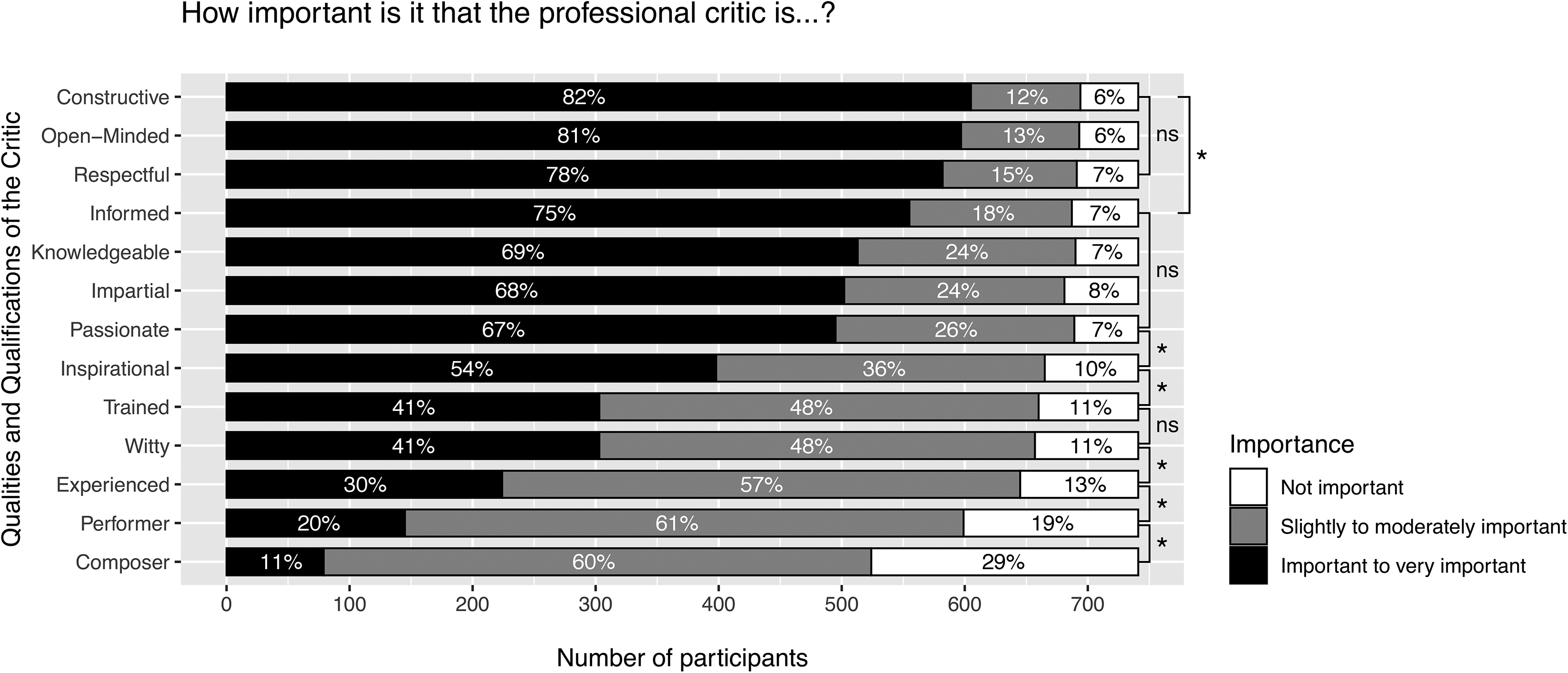
Perceived importance of different qualities and qualifications a critic possess. The x-axis reports the number of participants. The y-axis lists the different pre-defined critic qualities, as they were described by professional critics (Alessandri et al., manuscript in preparation). Brackets on the right side show Tukey HSD test results. They indicate whether selected mean ratings were significantly different (*) or not (ns).

Ranking of different purposes review should serve. The x-axis reports the number of participants. The y-axis lists the different pre-defined music critique purposes, as they were described by professional critics (Alessandri et al., manuscript in preparation). Brackets on the right side show Tukey HSD test results. They indicate whether selected mean ratings were significantly different (*) or not (ns).
The Classical Music Audience Demographics
A total of 2096 people took part in the survey. Responses were removed from further analyses on the basis of the following exclusion criteria (a) non-completion of the survey (634 removed), (b) attention filters such as questions that required participants to explicitly state their interest in classical music (112 removed), and (c) straight lining (selection of responses in recognisable patterns that indicate automatic system responses or ‘bots’; 150 removed). This process resulted in a total of usable responses; 779 completed the English version of the survey, 421 the German version. Answers to the survey came from 62 countries with 89% of participants based in Europe, 4% in North America, 3% in Asia, 2% in South America, 1% in Australia, 1% in Africa. The three countries most strongly represented in the survey were the UK (47%), Germany (21%), and Switzerland (12%).
All 1200 people in our survey self-reported that they listened to classical music regularly, defined as at least one listening episode per week in the past six months. The median age of respondents was 47 years (range 17–85). The distribution of age showed two minor peaks for the ages between 20–25 and 50–55 years (Figure 1).
From the total sample of classical musical listeners, 637 identified as male, 552 as female and eight chose not to indicate gender. At the time of the survey, 35% of participants had completed postgraduate level education (n = 413); 35% had completed undergraduate level education (n = 424). Finally, 29% of participants had completed first/second school qualification or vocational courses (n = 351).
Overall, musical training in our sample did not significantly differ from the norms provided by the GoldMSI (
GoldMSI scale values for the study sample (N = 1200 classical music listeners) shown against the averages found in the general population, as referenced by the GoldMSI dataset (Müllensiefen et al., 2014).
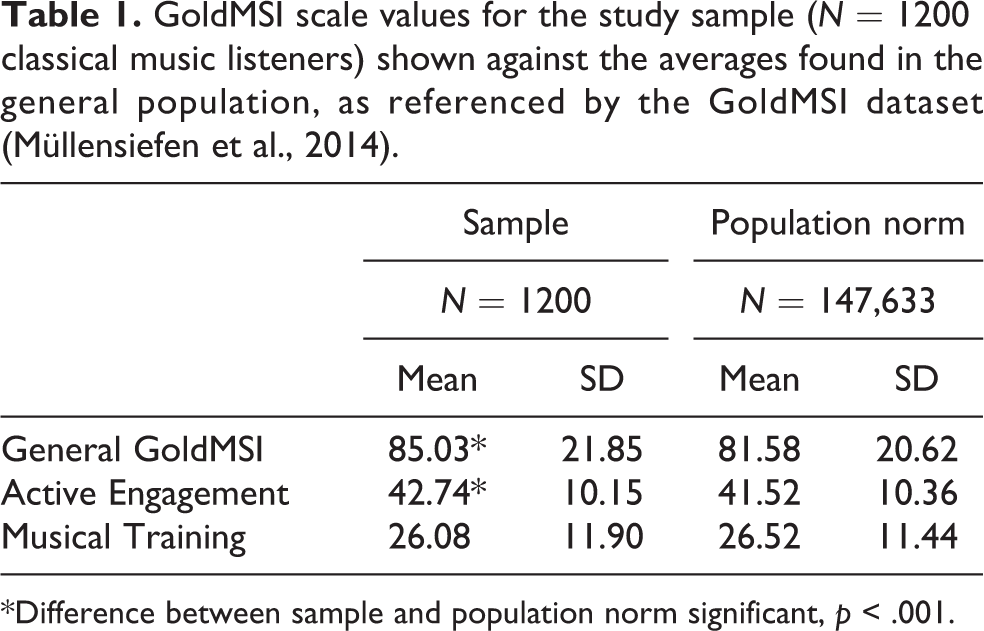
*Difference between sample and population norm significant, p < .001.
Listening Habits
We provided the participants with a list of music listening options and asked how often they had used them to listen to classical music during the past six months (Likert-type scale: 0 = never; 5 = very frequently) (Figure 2).
Over half of participants reported using ‘digital audio files (e.g., wav mp3, mp3, mp4)’ (56%), YouTube (56%) and CD (54%) frequently or very frequently. Spotify (28%) ranked fourth, followed by iTunes (22%). DVD had a relatively low percentage of frequent or very frequent users (13%), but the highest percentage of listeners who used this platform very rarely to occasionally (55%). Some 237 participants made use of the ‘other’ option to add further platforms and media: 83 (7%) participants reported listening to radio; 32 (3%) to Sound Cloud; 19 (2%) to Quobus; 17 (1%) to Naxos. Less than one percent of participants reported listening to music through various other platforms such as Deezer, Idagio or Tidal. Overall participants reported using, on average, six to seven different platforms/media at least very rarely in the past six months; only 1% (n = 12) listened to music through one medium alone (eight of which reported listening to music solely on CD, four participants reported using either YouTube or digital files only). The large majority (88.5%, n = 1,062) used four or more different platforms/media.
Participants then selected from a list of reasons why they liked a given listening platform/medium, reporting on all that applied to them. Table 2 shows the percentage of listeners’ selecting each reason for any given option. Across all platforms and media, the reasons most often adduced were usability (‘it is easy to use’), music selection (‘the music selection is good’), and familiarity (‘it is familiar’). For single platforms and media, other reasons emerged as relevant: collectability (‘it is part of my collection/playlist’) was an important motivator behind the use of CDs, vinyl, iTunes, DVDs, cassette tapes, and normal and HQ digital audio files (the latter described as ‘High Quality digital file e.g. studio master, lossless audio codec’). Sound quality (‘the sound quality is good’) was rated as the most important reason to choose CDs and HQ digital files, and as an important factor for choosing vinyl and DVD. Rituality (‘I enjoy the ritual’) was the second most important reason for using vinyl. Economic considerations (‘It is good value/free’) were given as the most important reason for choosing YouTube, and also a relevant reason for digital files and Spotify.
Percentage of listeners’ choice of reasons for using each platform and medium from a pre-defined list of potential reasons. The n for percentages represents the number of participants who reported using the medium/platform at least very rarely in the past six months. For each platform/medium, the three most often chosen reasons are highlighted in bold.

n = number of participants who reported to have used the platform/medium at least very rarely in the past six month
* = Rhapsody
Finally, we asked participants, for each of the platforms and media they used, how often they paid to purchase music. Figure 3 shows the percentages of participants, who used a given platform/medium, and reported never paying to listen to music (white), paying very rarely to occasionally (grey) or paying frequently to always (black).
Across all platforms and media, just under half of participants (45%) reported they never paid to listen to music (mean value of the white portion of the bars in Figure 3). The platform with the highest proportion of users who never paid was YouTube (76%). In comparison, the platforms and media for which the largest amount of users reported paying on a regular basis (frequently to always) were Spotify and CD (38% each), followed by iTunes and Amazon (28% each).
Opinion Sources
Next, we explored participants’ engagement with opinion sources in relation to classical music. First, we asked participants to choose which sources they had listened to or read in the past six months from a list of 17 pre-selected options. 1
Across the sample, the most commonly used opinion sources were radio and word-of-mouth, with about two-thirds (66% and 58% respectively) of participants reporting having engaged with them in the past six months. Other commonly used opinion sources were streaming services (like comments on YouTube) and social media (43% and 36% respectively). About a third of participants reported having read opinion in newspapers (32%) and/or specialist music magazines (30%) in the past six months.
We then asked participants to imagine themselves in a decision-making situation; how likely was it that opinions in certain sources would influence whether they listened to or bought a recording of classical music (1 = very unlikely; 5 = very likely). 2 The relative percentages in Figure 4 show that music specialist magazines, word-of-mouth, and radio were rated by our sample as the most influential information sources when deciding to purchase a recording or not, with over 80% of readers/listeners stating that these would likely or very likely influence their decision.
In order to understand how useful these opinion sources were to the participants, we had classified a priori the information entailed in these sources into four forms of opinion: (a) extensive/detailed written or spoken review, (b) short written or spoken commentary, (c) cumulative rating (e.g. number of likes, stars or number of ratings averaged across several people) and (d) single person rating (e.g. number, stars). Our next question asked how useful were these forms of opinion (1 = not useful at all; 5 = very useful) when deciding whether or not to listen to or buy a recording of classical music.
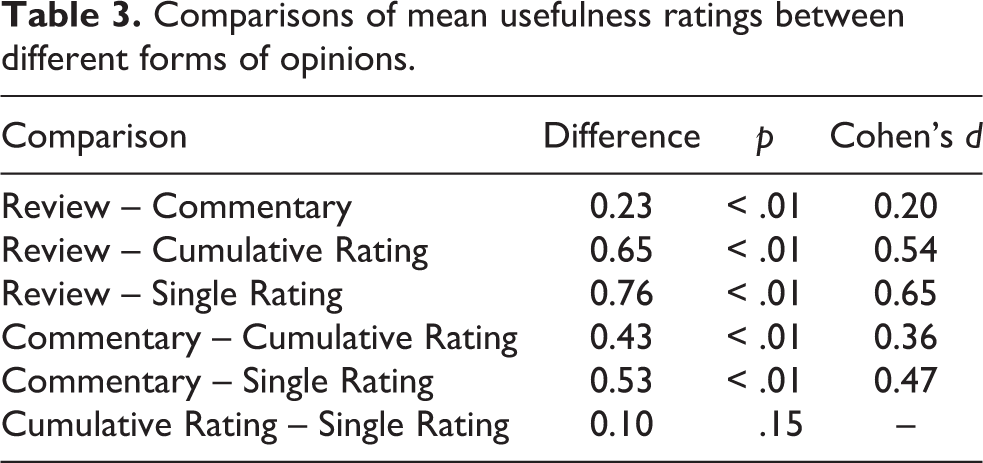
The mean usefulness ratings of the four forms showed significant differences (F(3,4644) = 107.6, p < 0.001): extensive, detailed reviews were rated as the most useful form of opinion (Mean 3.50, SD = 1.20), followed by short written or spoken commentary (Mean 3.27, SD = 1.12), cumulative ratings (Mean 2.85, SD = 1.22), and single person ratings (Mean 2.74, SD = 1.15). Pairwise comparisons (Tukey HSD) between the four forms of opinion showed significant differences in the perceived usefulness for five out of six pairs (Table 3), suggesting that listeners differentiated between usefulness of reviews vs commentaries, and of commentaries vs ratings (either cumulative or individual).
Comparisons of mean usefulness ratings between different forms of opinions.
At the end of this section of the survey, participants were asked if they had read or listened to at least one review of classical music recording provided by a professional critic in the past six months (yes/no). About two-thirds of participants (62%, n = 741) responded ‘yes’ to this question. This was taken as the response variable for the logistic regression analysis described in the following stage of the Results section.
Predictors for Engagement with Critique
We ran logistic regression analyses to identify which factors among demographics, listening habits, and opinion source variables (59 predictors in total) were significant predictors for participants’ engagement with critique. The question confirming whether or not participants had read or listened to professional reviews of classical music recording (yes/no variable) was used as response variable (henceforth Review Consumption).
The predictors were measured at an ordinal level (using Likert scales) and encoded numerically (using integers 1 to 5). The overall significance level was set to
Significant effects on review consumption, ordered by effect size (

Notes. n: number of valid observations; estimate: linear regression coefficient; df: degrees of freedom; explained deviance: deviance explained by the predictor variable (follows
Many of the predictors used in the 29 models of Table 4 were correlated with each other, suggesting that the models share some of the explained deviance. Through stepwise regression with bi-directional elimination (using the Akaike Information Criterion, Aho et al., 2014), an overall best fitting model was extracted. The stepwise regression procedure terminated normally after 13 steps. The significance probability was reduced accordingly to
The final model comprised seven predictor variables that each had a significant main effect on Review Consumption: GoldMSI Active Engagement, Level of Education, Use of Newspaper as Opinion Source, Age, Perceived Usefulness of Extended Reviews and Frequency of Payment for CD were all positively associated with Review Consumption (see Table 5). Use of streaming as opinion source was the only predictor that was negatively associated with Review Consumption. Correlations between the seven predictors were small to moderate (see Table 6).
Comprehensive multiple logistic regression model predicting review consumption from seven variables.

Notes. Estimate: linear regression coefficient; SE: standard error of the estimate; z: z-statistic (Wald approximation); p: p-value;
Correlations between the predictor variables of the comprehensive model presented in Table 5.

Notes. Significance levels: * p < .05; ** p <.01; *** p <.001.
Table 5 shows effect sizes for the predictors in the final model. Effect sizes are corrected for confounding: predictors are only assigned the deviance they explain when they enter the model as the last variable, that is, the deviance that has not already been explained by any of the other predictors (this is analogous to calculating type II sum-of-squares in the analysis of variance, Shaw & Mitchell-Olds, 1993).
The variable GoldMSI Active Engagement was by far the strongest predictor (
Expectations of Music Critique
Out of the 1200 music listeners who took part to the study, 741 affirmed that they had read or listened to a professional review of classical music recording in the past six months. These participants have been profiled through logistic regression modelling, as reported above. In the last part of the survey, this sub-set of participants were asked to answer four final questions concerning what they believe makes for a good review and a good reviewer.
The response items for these final questions were extracted from the findings of our interview study of professional critics (Alessandri et al., manuscript in preparation, see also the Method section). All items reflected what music critics told us were important aspects of a good review and being a good reviewer. In all questions, a five-point scale was used (1 = not important at all; 5 = very important) and participants had the option to add ‘other’ aspects to the selected items.
In the first question, we asked participants how important it is for a good review to cover selected aspects of a classical music recording. These reflected the aspects critics described as important to discuss in review. There were significant differences between the mean importance ratings of the pre-selected aspects (F(9,7030) = 259.1, p < 0.001). As illustrated in Figure 5, all aspects were rated as being at least moderately important by listeners. The ‘sound quality of the recording’, ‘composer’, ‘composition/programme of works’ performed, as well as the ‘description of the performance (i.e. what the musicians did)’ and ‘evaluation of the performance (i.e. what the musician has achieved)’ were rated by over 70% of participants as important to very important topics to cover in a good review. These were followed by information on the ‘musician (e.g. career record, general skills)’ and the ‘instrument’ used. The ‘price’ of the recording, its ‘package (e.g. sleeve notes, cover art design)’ and ‘production process’ were rated as the least important topics in review.
Participants used the ‘other’ category to provide comments on the single categories, for instance pointing out that, within the production process, information should be given about the recording being a live or studio performance. In addition, 12 participants (1.6%) mentioned the importance of the ‘historical context’ of the recording, six (<1%) wanted to be provided with information about the label as well as ‘availability on different streaming platforms’, and two participants said that the ‘originality’ of the recording should be addressed.
In the second question, we asked how important it is for a good review to possess certain evaluative and rhetorical devices (Figure 6). Here again, the devices were derived from music critics’ descriptions of their most relevant writing techniques/tools. The mean importance ratings differed across the nine writing techniques (F(8,6309) = 120.6, p < 0.001). The most important element of a review, as rated by our sub-sample of listeners, was to offer ‘clear reasons and justifications to support the evaluation’. This was rated as important or very important by 77% of participants. Clear reasoning was followed by the ‘use of comparison between recordings’ (61%), ‘a clear and engaging narrative structure’ (59%), the ‘explicit mentioning of the critic’s own emotional reaction to the music’ (52%) and the ‘use of comments on where the recording sits in the wider music market (context)’ (44%). Participants rated the presence of ‘a clear positive/negative recommendation’, the use of ‘illustrative language like metaphors and similes’ as well as ‘technical language such as musical terms and jargon’, and ‘the offer of a quantified evaluation (e.g., number of stars)’ as being the least important elements in a good review. No additional items were proposed by participants under the ‘other’ category, besides two mentions (<1%) for ‘being objective’ and one mention each for ‘elegant language’ and ‘revealing attitude’.
In the third question, we asked about the importance of selected personal qualities and professional qualifications of a music critic (Figure 7). These pre-selected qualities and qualifications also stemmed from our interviews with the critics. In interview, critics described these as the principles or code of conduct guiding their work (Alessandri et al., manuscript in preparation). The mean importance ratings of these qualities varied significantly (F(12,9113) = 314.4, p < 0.001). According to participants in our sub-sample, being ‘constructive in his/her judgement’, ‘open-minded’ and ‘respectful towards the artist’ are the most important qualities a critic should possess; over 77% of participants rated these qualities as important or very important. Further qualities and qualifications were rated as fairly important: ‘to be well informed about the current music market’, ‘to have an extensive knowledge of past recordings’, to be ‘impartial’ and ‘passionate’. Between 67% and 75% of participants rated these qualities as important or very important. Qualifications linked to the professional background of the critic, on the other hand, were ranked lower in the importance scale: ‘to possess training in journalism/professional writing’, ‘to have 10 or more years of experience as a music critic’, ‘to be an active performer’ or ‘an active composer’ were perceived as the least important qualifications/qualities of a critic, among the pre-selected ones.
Among the ‘other’ answers, seven participants (1%) wrote that a good critic should neither be ‘arrogant’ nor ‘patronising’; five (<1%) considered the possession of a music or musicology degree an important feature; two participants each asked for ‘objectivity’ and ‘honesty’. One mention each was given to the following qualities: ‘to have an own opinion’, ‘to be conversant with other arts’, ‘to spend time with musicians’, ‘to have good hearing’, ‘to have journalistic talent’ and ‘to have published scholarly books on music’.
Finally, in the fourth question we asked participants about the purpose of critical review (Figure 8). Participants were asked to rank eight possible purposes, which were also derived from critics’ interviews, according to what they believed was the relative priority of the different functions. The importance ratings of the pre-selected purpose ratings differed significantly (F(7,5608) = 248.1, p < 0.001). According to our participant sample, the main purposes of music criticism today are ‘to provide an informed verdict on quality and value’, ‘to provide listeners with guidance on purchasing and listening’, and ‘to help consumers understand and appreciate the music recording’. These three purposes were each rated as important or very important by at least 78% of participants. ‘To offer an engaging and pleasurable piece of writing’ and ‘to act as a communication channel between the music industry and the consumer’ were ranked next, with less than two-thirds of participants rating them as important or very important purposes. The least important purposes were rated as ‘to offer musicians feedback on their performance’, ‘to support the progress of an artist career’ and ‘to legitimise the recording and the publishing industry’. In addition, four participants (<1%) stated that the purpose of critique was ‘the promotion and leadership of the musical discourse’, including ‘filtering out incorrect information and low-quality products’; three participants wrote that critique should ‘suggest new, unfamiliar music’; and finally, two participants suggested that the purpose of music review is ‘to spread the love for music’.
Discussion
The aim of this study was to understand who, among classical music listeners, is engaging with professional music critique, and what these readers expect from reviews. In order to do this, we first analysed a sample of classical music listeners and characterised the ways in which they listen to music and the type of information sources they engage with. We then profiled those classical music listeners who also engage with professional reviews. Finally, building on the findings of our previous interview study with critics, we analysed review readers’ expectations on the content and purpose of music critique. Music critics’ views on the content, nature and role of critique – as they emerged from the previous work – were used as a basis for the questions and response items in the present survey, thus allowing for a comparison between what critics said they do and what consumers expect from them.
The Classical Music Listeners
To address questions relating to engagement with classical music critique, we first needed to characterise today’s classical music audience. Traditionally, studies on performing arts audiences depicted classical music as a ‘highbrow’ genre (Bourdieu, 1984; Shrum, 1991), with classical music listeners stereotyped as middle-aged individuals with higher levels of education and socio-economic status (Abbé-Decarroux & Grin, 1992; Baumol & Bowen, 1966; Seaman, 2006; Throsby & Whiters, 1979). However, following Peterson and Simkus’ (1992) challenge to Bourdieu’s distinction, studies from the mid-1990s onwards provided evidence against the dichotomy of ‘high-’ and ‘lowbrow’ music, suggesting music consumption was evolving, leading a younger generation of listeners towards the appreciation of the classical genre (Favaro & Frateschi, 2007; Fisher & Preece, 2003; Peterson & Kern, 1996). In partial support of these findings, the sample recruited for this study included a wide age range (17–85 years) with a prevalence of listeners aged under 25 and above 50. Participants showed a higher level of musical engagement than the general population, though interestingly, not a higher level of musical training. This pattern resonates with findings by Abbé-Decarroux and Grin (1992), Van Eijck (2001), and also Favaro and Frateschi (2007), who found active participation in music-related activities – but not having attended a music school – to be a predictor for classical music listening. Our sample was balanced between men and women, thus not supporting previous evidence of gender-genre correlations in form of a prevalence of women in the classical music audience (Favaro & Frateschi, 2007; Gray, 2003). However, in line with previous results (Fisher & Preece, 2003; Prieto-Rodríguez & Fernández-Blanco, 2000; Van Eijck, 2001), a large proportion of listeners had degrees, and having a higher level of education was positively correlated with more active musical engagement.
Listeners’ high musical engagement was reflected in the diversity of listening media and opinion sources that they used: a mixture of traditional and new media, with compact discs (CD) being as popular as YouTube or digital audio files. This variety of media supports the findings of Lepa and Hoklas (2015), who used a telephone survey to investigate the use of musical listening formats in the general population in Germany. However, in their sample they found new media such as streaming platforms (YouTube, Spotify) to be much less popular than traditional formats (e.g. CDs). In our study, new and traditional listening media emerged as equally relevant listening formats for the classical audience. This difference may be a reflection of the digital bias intrinsic in our data collection (i.e. online, rather than telephone survey) and/or of the recruitment criteria (i.e. purposive sampling among classical music listeners vs random household sampling within general population).
Similarly, the present study did not allow for a distinction between ‘already owned’ and ‘newly purchased’ CDs, a point which should be considered for future studies further exploring the nature of material ownerships (Owsinski, 2018). Nevertheless, the high proportion of listeners who stated that they never, or almost never, paid for music could suggest that CD (as well as vinyl) usage may be due more to existing collections than to active purchasing behaviour. Even if this were the case, CD popularity together with the fact that half of participants reported using vinyl (even if rarely) suggest that materiality still plays a role for many classical music listeners. In support of this, rituality and collectability were selected as relevant reasons behind the choice of traditional media such as CD, vinyl, cassette, and DVD. This finding is in line with Bijsterveld and Van Dijck’s (2009) assertion of technological nostalgia and auditory materiality, that is, a desire to re-live memories through music technologies, while enjoying familiar rituals. The data also reflected a broadening of the term ‘music collection’ as this construct now embraces platforms and media such as digital files and iTunes. Hence, it is important to question the concept of materiality itself, highlighting the complexity and heterogeneity of current modes of consumption.
Parallel to a wide use of listening media, our sample of participants reported engaging with a variety of opinion sources. Together with radio, word-of-mouth was a major source of information for listeners, in line with findings from studies on general music information gathering habits (Laplante & Downie, 2006; Lee & Downie, 2004). Alongside the more traditional sources such as radio, word-of-mouth or newspapers, listeners reported relying upon commentaries and ratings found on streaming services and social media to guide their listening decisions. This extends findings from previous studies highlighting the importance of internet technologies for music information retrieval among students and general population (Cunningham et al., 2007; Lee & Waterman, 2012; Matson & Shelley, 2013). The variety of consumption modes in our sample suggests that today’s classical music listeners – although not necessarily musically trained – are actively engaged in learning about and exploring music through a range of peer and expert opinion sources. Taken together, these findings characterise our sample of classical music listeners as a heterogeneous rather than ‘highbrow’ population, who utilise a multitude of technologies and information sources to nurture their interest in music.
Music Critics’ Audience
The central aim of this study was to address the topicality of professional music criticism by profiling contemporary music critics’ target audiences. Therefore, having described our sample of classical music listeners, we explored who, within this sample, engages with music criticism. In contrast to the commentaries voiced in the music business regarding the demise of the role of the music critic (Ross, 2017), we found music review to be a highly respected and coveted critical output. Almost two-thirds of listeners reported having recently engaged with critique, and extensive review (the paramount output of professional critics’ writing) was rated the most useful form of opinion about classical music. Moreover, specialist music magazines – although used by less than a third of listeners – were championed as having the highest likelihood of influence, with the largest portion of readers reporting that this medium would influence their listening decision.
Whilst it is clear that there is an avid audience for music critique today, our findings also suggest that this readership comes closer to a ‘highbrow’ stereotype than the general population of classical listeners. According to our seven factor model of engagement with music critique, participants who consumed professional reviews were highly actively engaged with music – which means that they are strongly motivated to invest time, energy, and money in music-related activities (according to the variables GoldMSI Active Engagement; Frequency of Payment for CD). They also had a higher Level of Education and were older (Age) than the other participants. They tended to form their opinion based on reviews (Extensive Review) that they read in traditional media such as Newspapers. The GoldMSI factor ‘Active Engagement’ was by far the strongest predictor of the model, supporting the idea that engaging with music critique is first and foremost an expression of a strong interest in music.
This split between the profile of stereotypical classical music listeners who engage with professional music critique, and a wider audience of heterogeneous and omnivorous listeners, resonates with the comments of the professional classical music critics who inspired this study. Although the genre of classical music has opened up, our data suggest that music critique struggles to reach a broader public. As this study was conducted online, this disconnect could be linked to the technologies used to access music and information about music. The use of commentaries from streaming services such as YouTube or Spotify was the second strongest predictor in our model, and the only one negatively related to critique consumption. Streaming services have rapidly evolved in the past few years (Friedlander, 2016). Although this does not necessarily concur with the purchase of traditional formats such as CDs (Nguyen et al., 2014), it has led to an increase in the quantity and diversity of music consumption (Datta et al., 2017). Furthermore streaming services have changed the way listeners make their decisions (Carboni, 2012), shifting the music selection process from an active search for alternative opinion forms to the passive reliance on music platforms algorithms. Taken alongside the results of the regression analysis, these findings suggest that professional critics might be missing an opportunity to engage with a younger generation of classical listeners, who rely more on digital media (such as streaming platforms) to make their listening decisions. As such, it might be up to the critics to make the first move, to access new channels in order to connect to this share of listeners.
Consumers’ Expectations for Music Critique
The final section of the survey explored the features that make for a good review and the competences that mark a good reviewer, in the opinion of listeners who currently engage with music critique. This extends our previous research in which professional music critics were interviewed about what they write, how they write it and the principles they follow, including their personal qualities and professional qualifications, and the purpose of their writing (Alessandri et al., manuscript in preparation). In asking consumers about the relative importance of critics’ selected topics and ideas, we explored the extent to which the critics’ responses match the readers’ expectations. This is the first study, to the best of our knowledge, that has approached such a synthesis of perspectives within current music critical practice.
Review content
Review readers rated all content topics proposed by critics as moderately to very important. In particular, the ‘sound quality of the recording’ was ranked at the top of the importance scale. This is in line with findings from content analysis of published reviews (Alessandri, 2014), as well as the music critics’ reports (Alessandri et al., manuscript in preparation). In the age of such dynamic digital progress, sound quality remains a core topic for recorded music review, and not only in relation to historical instruments, live performances, or special production techniques. In critique, discussion of the recording sound intertwines with the evaluation of the performance, the instrument used, and the recording process, moving between ‘naturalness’ and ‘beauty’ or – using Patmore and Clarke’s (2007, p. 1) words – between ‘capturing performance’ and ‘creating virtual worlds’. The data at hand do not offer information on how ‘sound quality’ was understood by listeners, but suggest that this aspect of the recording is of great importance for consumers. This could be seen as an invitation for critics to reflect upon the possible meaning of sound quality in the age of digital files and how this could be integrated in the critical debate.
On the other hand, aspects of the recording linked to the record product as a consumable (price, package, production) were rated as the least important subjects for review. This resonates with the low self-reported frequency of payment for music and the high frequency of digital media use. Together these findings reflect the shift in the construct of music product from haptic commodity with a defined product ownership to digital, free-access goods (Arditi, 2018; Hesmondhalgh & Meier, 2018).
Evaluative and Rhetorical Devices
Clear and sound reasoning emerged as the most important evaluative device required from reviews. This matches the critics’ perspective in the previous study, where they discussed reasoning as the ‘essence’ of their practice. In the words of one critic ‘You argue. You reason, exemplify, and justify. This is critique’ (Alessandri et al., manuscript in preparation). Comparisons between recordings were ranked as the second most important evaluative device, again in line with previous research on published review content (Alessandri et al., 2014). By contrast, review readers assigned the lowest importance to quantified evaluation, such as the use of stars and/or number ratings. Similarly, a clear positive or negative recommendation on what to buy was only rated in the lowest half of the ranking. These results present review readers as classical music listeners who seek a deeper engagement with the music, for whom the number of stars or a thumbs up/down type rating holds relatively little value against a detailed description and reasoned evaluation of a wide range of performance aspects.
Role of Critique
Review readers’ call for a complex form of dialogue and discourse is reflected in the ratings assigned to both critics’ qualities and review purposes. Review readers ranked professional qualifications, such as experience as musician or training as a journalist at the bottom of their relevance scale. Personal and moral attitudes such as constructiveness, open-mindedness, and respect were valued far more; followed by knowledge of their subject. The traditional role of the reviewer as guidance for consumers on what to buy or listen to (Pollard, 1998) still has relevance for this audience, but this was accompanied by readers’ interest in well-informed verdicts, and the expectation that a critic educates and promotes understanding in the readership. The lower ratings given to purposes such as promoting artists and legitimising the record industry likely reflects the nature of the sample – that is, music listeners, as opposed to professional musicians and music producers, for whom these functions would be more directly relevant. They could, however, also suggest that, in the new digitalised and democratised market (Siapera, 2015), critics’ role as mediators between industry, producers, and consumers (Debenedetti, 2006) is weakening. Taken together, these results echo Cone’s (1981) theoretical dichotomy between the ‘reviewer’, whose aim is that of guiding the reader’s choice, and the ‘critic’, whose aim is to broaden and deepen the reader’s appreciation of music. However, the results from our sample suggest this is a false dichotomy, as today’s audience requires a ‘reviewer-critic’ who is an informed and knowledgeable conversation partner, able to guide listening (more than buying decisions), to set standards, and to offer fresh perspectives on both established and new music.
Limitations
To the best of our knowledge, this is the first study to collect such a large body of data on music critique consumption as part of an international online survey. Since the focus of this study was the influence of digital media on music review consumption, an online survey was chosen as the most fitting recruitment strategy to reach a varied and targeted audience. We acknowledge that in so doing we have not reached that portion of today’s classical music listeners who mostly, or exclusively, rely on non-digital media and hence, future studies have an opportunity to replicate and extend our findings by varying recruitment channels and sampling strategies.
The aim of the study was not to consider cross-cultural differences; however, we acknowledge that music critique has specific traditions in different countries (Baldassarre, 2009; Ballester & Gan Quesada, 2018; García-Villaraco, 2017). Therefore, future studies could compare and contrast engagement with music critique in different cultural contexts to determine the extent to which our conclusions may be generalised. Although the data presented here provides insight into which opinion sources are used, and whether or not they would influence a consumption decision, it would be interesting to systematically test what impact different opinions have on consumers. Preparations for this experimental study are underway.
Conclusion
This study characterises a sample of today’s classical music listeners’ (N = 1200) and explores their engagement with professional music critique. Participants reported consuming music in a variety of ways and using a range of opinion sources. Within this population, professional music review was still popular, however, more so among older, musically educated listeners than among younger streaming service users. A regression model with seven predictors suggested that participants who spent a lot of time, energy, and money actively engaging with music, who were highly educated, older, formed their opinion based on reviews that they read in newspapers, and more frequently pay for CDs were likely to have read a professional review in the past six months prior to participating in the survey. By contrast, participants who relied on opinions provided by streaming services such as YouTube or Spotify were less likely to have read professional review in the past six months. Classical music listeners who had recently engaged with critique appreciated critics who are constructive, open-minded, respectful, and well informed; the critics’ professional background was less important. Reviews should cover a variety of topics, but most of all, they should offer evaluations underpinned with reasons, in which recordings are compared and discussed in a nuanced, clear, and passionate way.
In the interviews we ran in 2016 (Alessandri et al., manuscript in preparation), critics not only expressed concerns for the future of their profession, but also suggested several possible avenues for the evolution of critical practice. The present findings concur with their conclusions. The majority of participants in our survey still consumed and valued professional reviews. However, professional music critique might be at a turning point, needing to develop new communication channels as well as to redefine or broaden its role and function to adapt to the new democratised and digitalised market (Siapera, 2015). Listeners who already value professional review as an opinion source, view critique as important guidance to musical appreciation through knowledge-based, well reasoned, and sound judgements. These listeners made up about two-thirds of our sample, suggesting that critique still has an important role in the classical music market. However, professional music critics need to follow their instincts and explore new forms of publication in order to connect to an increasingly heterogeneous generation of classical music listeners.
Footnotes
Acknowledgements
We wish to thank everyone who gave their time to take part in this study. We also wish to acknowledge the contribution of BBC Radio 3 in helping us to recruit participants.
Author Contributions
EA, VJW, AB and KS contributed to the design of the study and data collection. VJW was responsible for the ethical approval. OS, EA and KS analysed the data. EA, DR and OS wrote the manuscript. All authors reviewed and edited the manuscript and approved the final version.
Declaration of conflicting interests
The author(s) declared no potential conflicts of interest with respect to the research, authorship, and/or publication of this article.
Funding
The author(s) disclosed receipt of the following financial support for the research, authorship, and/or publication of this article: This study was supported by the Swiss National Science Foundation (grant number 100016M_162819).

Action Editor
Frank Hentschel, Musikwissenschaftliches Institut, Universität zu Köln.
Peer Reviews
Steffen Lepa, Fachgebiet Audiokommunikation, Technischen Universität Berlin.
One anonymous reviewer.