




Abstract
Social media posts play a key role in understanding how the concept of “the people,” which is a critical concept for populist politicians, is constructed and presented. This study examines how the two leading candidates, as right and left populist figures in Türkiye’s 2023 general elections, portrayed “the people” in their Instagram posts. The Instagram posts of two leaders were coded according to the categories of gender, headscarf, class, and age, and the representations of the people in these posts were analyzed using visual content analysis method. As a result, it was revealed Erdoğan, as a right-wing populist, included more headscarved women in his posts, Kılıçdaroğlu, as a left-wing populist, preferred more heterogeneous visuals in images in terms of gender, and that young individuals were more intensely preferred in the images shared by Kılıçdaroğlu in terms of the category of age.
Keywords
Introduction
Social media usage rate is increasing because it enables politicians to establish a direct relationship with their voters and to reach a wider range of voters. Social media applications and platforms have a special importance for populist politicians. It is predominantly preferred by populist politicians, thanks to its features such as real-time interactions, the ability to serve the desired title and image in the desired way, and the opportunity to avoid compelling questions raised by journalists (Ernst et al., 2019).
Twitter (Zúñiga et al., 2020) and Facebook (Ernst et al., 2017), which are widely used social media applications in the context of political communication and populism, have been discussed in a broad perspective in different studies. The characterization of the people by populist politicians has been analyzed through written texts (Hawkins et al., 2019). On the other hand, visual analyses focusing on Instagram also exist but these studies have focused on the use of Instagram by populist leaders, just like other studies focusing on written communication on social media platforms. The number of studies focusing on how the people is portrayed with a populist point of view in Instagram shares seems to be relatively few. Moffitt’s (2024) work, which focuses on how the people is visually reflected in social media posts, constitutes an example of studies carried out with this perspective. In this study, the images shared by Recep Tayyip Erdoğan and Kemal Kılıçdaroğlu on their personal Instagram accounts during the propaganda process of the 2023 Turkish presidential and general elections are analyzed in terms of populism and politics. How the two leaders in question reflected the people in the light of headscarf, class, gender, and age categories in the context of right and left populism will be examined by visual content analysis method.
Main features of populism
Populism, in general, is widely accepted as a “thin-centered” ideology. Its ability to articulate into any given ideology plays a crucial role in this view. According to the concept of “thin-centered” ideology, which was first expressed by Mudde (2004, p. 543), populism is based on an understanding that foresees the division of society into two homogeneous groups as pure-blood people and corrupt elites. In this context, from the perspective of populism, politics is the reflection of the will of the people. The division of society into two groups, as the pure-blooded people and the corrupt elites, is also based on the “us” and “them” distinction, in which “them” is thought to be representing the “enemy.”
Taking over from the work of Robert Barr (2009), Levitsky and Loxton (2013, p. 110) define three features of populism. From their perspective, populists first develop an anti-status quo rhetoric to secure popular support and position themselves against all elites. Second, populists are political outsiders emerging from outside the national political party system. Third and finally, populists form personal bonds with society by bypassing intermediary institutions such as political parties. In this context, it is possible to state that the basis of populism is strictly bound to the “people.” The main characteristics of this understanding, which is strictly based on the people, can be summarized as people-centrism, elite opposition, and national voluntarism (Mudde & Kaltwasser, 2017).
On the other hand, populism is also conceived as a political strategy in which more performance-based strategies are predominantly used to consolidate the masses, and in which identities are emphasized and therefore signs are used (Weyland, 2001). Bringing signs into the forefront as visual components of meaning renders features such as body language, hair style, tone of voice, chosen words, and clothes more visible on the bases of “us” and “them” (Moffitt, 2016). Accordingly, the physical features and the symbols used by the leader enable populism to turn into a performance in the political arena and a performative strategy is implemented through this performance (Salojarvi, 2019).
Political communication, which is based on the discourse used by all kinds of politicians (van Dijk, 1997), is basically based on persuasion. The use of visuals in politics is also considered within the scope of political communication. In this context, the visual adventure of humanity, which began with cave paintings in prehistoric times (Veneti et al., 2019), continues with more widespread use with the development of technology. The trend of using of visuals in media such as murals, newspapers, and brochures in the pre-television period gained momentum in the post-television period and continued in parallel with the development of technology.
Politicians do not remain ignorant toward these trends and developments and seek ways to benefit from them. The use of visual symbols in political communication and the construction of images by political actors have a long history (Schill, 2012). It is possible to find the importance of the use of visuals in populist politics in Minogue’s (1969, p. 197) assessment that understanding the populist movement is discovering the emotions that move people. In this respect, visuals are both tools used for persuasion in terms of populism, and at the same time important stimuli used to activate emotions.
In addition, populist discourse benefits from social-cultural and economical conditions as it “has greatest purchase as an active political force in moments of crisis, when popular sovereignty, and national identity itself, are open to new interpretations” (Lowndes, 2005, p. 146). Especially in situations of economic, political, and social crises, populist leaders formulate their arguments through highly emotional rhetoric.
With the internet and social media becoming one of the important parts of daily life, politicians have started to use these channels and applications with the intention of spreading their political communication strategies. Thus, internet-based websites and social media applications have been ideal tools for politicians to communicate directly with voters (Stier et al., 2018). According to the latest data, approximately 5.45 billion people have access to television by 2023 (Statista, 2023a), approximately 5.16 billion people have internet access, and 4.76 billion people have social media accounts (Statista, 2023b) as of 2023. Platforms that make it possible to meet with such large communities increase the importance of both the use of visuals and social media tools for politicians.
The framework of populism, which is based on the distinction between the people and the elite, is drawn by three different approaches. Accordingly, as suggested by Mudde (2017), populism is an ideology. Another approach considers populism as an election-focused and election-limited strategy (Weyland, 2017). In the last approach, populism is evaluated within the scope of discourse, performance, and political communication. The discursive-performative aspect of populism (Ostiguy, 2017), which is discussed from a socio-cultural perspective and emphasized by the last approach, is one of the main bases on which this study is formulated.
The approach, in which populism is understood from a socio-cultural perspective, grasps populism as a two-way phenomenon. Accordingly, there is a political leader on one side and the masses supporting this leader on the other, and this relationship is based on socio-culture and political-culture (Ostiguy, 2017, p. 74). Populism is a form of relationship and is based on the principle of reciprocity due to the nature of the relationship. The principle of reciprocity naturally includes bidirectionality. When considered within the scope of the principle of reciprocity, populism is divided into two as right and left ideologies in the eyes of leaders and voters. Although European-based debates are mostly based on the damage that populism has done to democracy, discussions from North and especially South American-based studies suggest that populism supports democracy, equalizes the society by eliminating the us and them distinction, and therefore is an integrative approach (Ostiguy, 2017, p. 75).
So, how do leaders who see themselves as representatives of the people against the elites and who are defined as populists define the people in question in the images they share on social media? This study will be based on this question. Because in the populist approach, the people are presented as the real owners of the power and to this extent, they are positioned as the object of various performative efforts (Arditi, 2007). The people is both the main audience of populists and the object that populists bring to existence through their performances (Moffitt, 2016, pp. 43–44).
Discursive-performative approach, which is one of the main approaches to populism, considers not only the classical component of populism solely reflected in discourses but also the visuals as a type of discourse. Therefore, in addition to the construction of messages about the people through visuals, data on how the people is represented through visuals become important (Ostiguy & Moffitt, 2021). Studies on populism in general are based on discourse and texts in particular. However, the discursive-performative approach pays attention to a wide range of images and emphasizes the methodological approach to tools such as Instagram photos, which are important components in terms of ideological and discursive aspects of social media (Ostiguy, 2017).
In a study conducted by Szebeni and Salojärvi (2022), the images shared by Hungarian Prime Minister Viktor Orban on his Instagram account were examined within the framework of populism. In the study examining Donald Trump’s 2016 presidential election campaign, Trump’s efforts to manifest himself as a “man of the people” in his Instagram posts were revealed within the scope of right-wing populism (Dobkiewicz, 2019). In another study, how Brazilian President Bolsonaro presented himself with a right-populist perspective on his Instagram account was investigated (Mendonça & Caetano, 2021). Another study focused on how the leaders of eight countries led by right-wing populists in Europe represent themselves on Instagram (Bast, 2021).
In this study, unlike the aforementioned studies, the perspective presented by Moffitt (2024) is adopted. Most of the studies on populism are based on how populist leaders reflect themselves. Moreover, populist leaders are viewed from a single ideological perspective, as either right- or left-wing populists. However, we focus on how populist leaders define and reflect “the people.” In other words, this study tries to explore how “the people” are pictured by populist leaders’ Instagram posts instead of focusing on how they represent themselves. This fundamental difference represents an important emphasis that highlights the unique contribution of the study. We aim to analyze right and left populist leaders’ posts in a comparative way, similar to the discussion conducted by Moffitt (2024). While doing this, rather than analyzing examples in a narrow scope, a comprehensive data set is studied. In the study, as an example from Türkiye, the Instagram posts of two of the strongest candidates for the 14 May 2023 presidential elections during the election propaganda period, namely CHP candidate Kemal Kılıçdaroğlu as the representative of left-wing populism and AK Party candidate and current president Recep Tayyip Erdoğan representing right-wing populism, were analyzed. The main reason for the selection of these two candidates is that the parties they represent have historically been the representatives of the center–periphery division, which has been evident since the last period of the Ottoman Empire, as emphasized in the literature discussion section of the study. Therefore, first of all, the basic foundations of right- and left-wing populism in Türkiye and the historical origins of the separation of elites and people will be discussed.
Populist traces in political communication in Türkiye
Identifying the origin of social ruptures, which is one of the main references of populist leaders, is of great importance in determining the source of the issue. In this context, from the perspective of Türkiye, it would be appropriate to benefit from the analysis of the center and periphery relations, which was formulated by Shils (1975) and adapted to Türkiye by Şerif Mardin (1973). The distinction between “people” and “elites” (Laclau, 2005), which forms the basis of populism, lies in the distinction and political struggle between the center, that is, the elite, and the environment, that is, the people, in Mardin’s (1973) explanations for Turkish political scene. The origin of efforts toward modernization in Türkiye goes back to the last periods of the Ottoman Empire. Significant modernization efforts that started with the Tanzimat Edict in 1839 also brought about the socio-cultural division of society into two categories, which are rulers (center/elite) and extremely heterogeneous ruled (periphery/people), respectively. In the light of this division, it is possible to state that the difference in the values of the Palace and the people became more visible (Mardin, 1973).
The modernization efforts rooted in the Ottoman Empire era continued with the establishment of the Turkish Republic. Although Türkiye changed the form of government to a system which is based on modern principles, the understanding of government continued in a similar way to the administrative legacy of Ottoman Empire state. In this context, since 1923, the founding center consisted of a semi-autonomous bureaucracy in alliance with major state institutions, especially the judiciary and military bureaucracy. In addition, economic enterprises, intellectual community and academicians, which were dependent on the power of the center, were also an important parts of this power in rule. In the Republic of Türkiye, on the other hand, the founding elites described the state as “the property of a consistent nationalist, centralist, secular elite community who thought themselves as main power that represent and protect the state” (Kalaycıoğlu, 1994, p. 403). On the other hand, the people consisted of a mixture of traditionalist, ethnic, religious, and regional groups (Aytaç & Elçi, 2018). Following this perspective, the center adopted top-down modernization and Westernization policies, which alienated the conservative masses from the center, thanks to its control over state institutions during its establishment years (Ahmad, 1993; Karpat, 2017). A reflection of the aforementioned alienation, in other words, the center–periphery division, manifested itself in the positions of the voters between the right–left ideological dimensions. While those with centrist values, especially in terms of secularism, define themselves on the left, religious devotion, which is a central feature of the periphery/masses, is strongly associated with the political position on the right (Çarkoğlu, 2012; Heper, 1977, 2018). In the light of these considerations, it is possible to state that the center/elites in Türkiye are represented by the Republican People’s Party (CHP) as the founding party of the Republic. Right-wing political parties, on the other hand, have been asserting themselves as the representators of the “people” historically. Differences in the two ideological lines’ perspectives on religion have deepened this distinction between the elite and the people. The ban on the use of headscarves in public institutions, which was an important problem encountered especially by university students after the 1970s, had occupied the public agenda as an important practice that crystallizes the breaking points between the attitudes and perceptions of these two ideological traditions on the basis of religion. The fact that this ban was lifted under Erdoğan’s leadership can be interpreted as a political indicator of the close bond that right-wing parties have established with the religious values of the majority of the people.
Despite the indications that right-wing and left-wing ideologies differ from each other as elites and people on the basis of many religious, cultural, and economic indicators, some populist efforts to strengthen CHP’s bond with the “people” which is the focus of right-wing parties, are also noteworthy. The first of this efforts is the policies of Ecevit, the leader of the CHP in the 1970s, that brought to the fore the values that were important to the masses, such as rural development and national feelings. As a continuation of this effort, Ecevit founded DSP, which was another left-wing party with a populist tendency against the elitist attitude of CHP (Erdoğan, 1998; Taşkın, 2022) and won the 1999 elections receiving 22.18% of total votes. The second effort is the pre-election campaign, which was carried out personally by Kılıçdaroğlu to reunite the CHP with the masses, especially from religious and ethnic backgrounds. This pre-election campaign was an effort to refocus the party on the values of the periphery instead of the center and to “close the gap between the party and the people” (Çopuroğlu, 2023, p. 134). The momentum where this effort can be seen most clearly is the “helalleşme” (Turkish word for asking for one’s blessing) process, which was announced to the public with a manifesto by party leader Kılıçdaroğlu during the 2023 general elections propaganda period. According to the “Religious Ritual of Forgiveness in Islam,” everyone is advised to perform the ritual of “helalleşme” (asking for one’s blessing) with the ones whom they might have offended in the past before he or she dies. It is believed that if someone is offended to a person for some reason, God does not interfere with it. Therefore, the offender primarily has to ask for the forgiveness of the person that he offended, rather than demanding forgiveness from God (Erdem Mete, 2015, p. 44). Asking for blessing is an important cultural custom in Turkish–Islamic traditions.
In the short videos he published before the election, Kılıçdaroğlu made statements about important topics that caused ruptures in society (headscarf, denominational-ethnic distinctions, etc.) and promised to respect the expectations of the masses related to these social breaking points if he becomes the new president after the election. This process took an important place in the party’s election propaganda process as a populist discourse aimed at the breaking points that historically triggered the separation between the CHP and the people.
On the other hand, the AK Party, led by Recep Tayyip Erdogan, is the main representative of right-wing populism. Erdogan also expressed his understanding of politics in his speech, in which he also commented on the closure case demanded for his party before the 2002 elections, after which he and his party came to power. The following expressions he used in this speech and his assessment of “Enough! The decision belongs to the nation” can be seen as a summary that marks the AK Party’s opposition to the CHP’s elitist attitude.
My story is no longer a personal story. From now on, this is the story of the nation. Can the people be stopped? Now, 3th of November is even more important. Either the nation will win and come to the power. Or, the reign of an oppressive and imposing minority group that looks down on the nation and is foreign to Anatolia will continue to rule. The decision-making authority belongs to the nation and “Enough! The decision belongs to the nation!” (Erdoğan, 2002)
This speech can be interpreted as a signal that Erdogan will identify himself with the will of the nation and position himself as the sole representative of the national will in the upcoming elections (Çarkoğlu et al., 2022). This identification was reflected in the elections and Erdoğan served as prime minister from 2002 until 2017, winning all general elections. After the 2017 referendum, he continued his rule with the Presidential Government System and was elected by the people as a party-member president. The fact that he has been in power for 21 years continuously is largely due to the fact that he identified himself with the periphery in the center/periphery opposition, which stands at the heart of Turkish politics, and populist policies.
Hypotheses
The hypotheses of the study were determined by considering the historical, cultural, and sociological features of Turkish political life. In this context, in Türkiye, as stated before, one of the main struggles that shaped the political discourses of several political parties and discourse of their leaders is the political agenda that manifests itself in the form of secular administrative understanding versus the values of the people on the basis of the center–periphery opposition. Within this framework, the freedom of wearing headscarf, which has occupied Turkish politics for many years and is one of the factors that underlie Erdogan’s long-lasting power, is also an important example of the center–periphery opposition. The ban on the use of headscarves in public spaces, government offices, and universities and the practice of fighting against this ban represent an important debate that shapes the discourses of right-wing political parties in Turkish political history. The fight of Milli Selamet Partisi (National Salvation Party) (MSP), which highlights Islamist views, against this ban has become a fundamental political argument. It continued to be a very central problem for and election promise of Erdoğan, who inherited MSP’s political legacy. The fact that this ban was lifted during the Erdoğan government was frequently emphasized in the political scene as a populist discourse that the AK Party brought to the fore throughout its political life. The lifting of this ban enabled the formation of a long-lasting bond between Erdoğan and the segments of society that oppose the headscarf ban, which in turn is widely used as one of the main topics of populist discourse of Erdoğan and AK Party. Therefore, deriving from Moffitt’s (2024) evaluation that religious symbols and clothes can be a tool for populist politicians in countries like Türkiye, the first hypothesis of the study was determined as As a right-wing populist strategy, Erdogan’s Instagram posts include more headscarf-wearing women (hypothesis 1).
Regarding the concept of “class,” it is stated that while the working class, peasants, and low-income classes are expected to be supporters of left populism, right-wing populist parties have also been supported by the said classes since the 1990s and therefore have a rising trend (Oesch, 2008). As Bornschier and Kriesi (2012) point out, a bond can be detected between the working class and the populist discourses of right-wing political parties, which manifests itself on different levels such as working conditions, wages, and being left out of modernization processes in economic and cultural contexts. In addition, the fact that left-wing parties include policies outside of class-oriented perspectives in their agendas and highlight universal values with the new left understanding also seems to have damaged the support of the left among the working class. In the light of this perspective, it seems important to evaluate how parties belonging to right and left ideologies portray the people based on class. Topics such as nationalism, immigration, working conditions, employment, and job security can become the main topics of the common populist discourses of right- and left-wing political parties. Mondon and Winter (2020) draw attention to the populist construction of the ties between class and white identity in their article where they examine the populist racialization of the working class as “white,” “left behind,” and “representatives of people or demos.” This emphasis points to a repositioning of the populist right-wing discourse centered on nationalism and even ethnic belonging in the working class. Therefore, in the pre-election periods, when the populist discourse clearly manifests itself, the class definitions of right and left populist leaders, their descriptions of class belonging, and more specifically, what kind of social segment they understand with the concept of “class” constitute one of the main hypotheses of this study, as a category worth examining. As a result, although right-wing parties include promises and discourses with class emphasis in the construction of populist discourse, it is possible to argue that left-wing parties have historically had the potential to carry out more intense election propaganda regarding class belonging and the development of class-oriented social policies. Within the scope of class, it is expected that Kılıçdaroğlu, as a left populist, will share more about the working class, the peasantry and the sub-classes with lower incomes (hypothesis 2).
When we evaluate it in terms of gender, it is obvious that right-wing populism has a more masculine structure. In this context, it is possible to state that patriarchal relations, traditional patriarchal family structures, and family values are at the forefront (Abi-Hassan, 2017). In addition, hetero-sexuality is also at the forefront of right-wing populism (Löffler et al., 2020). Studies on left populism and gender are relatively limited, focusing solely on feminist approaches. The review of the studies focusing on gender shows that gender equality cannot be achieved socially and patriarchal thinking is dominant. On the other hand, gender equality is an issue included within left populism as a category and title of populist discourse (Kantola & Lombardo, 2019). Based on these assumptions focused on gender, populism and politics, representations of people of right-wing populism are also expected to be more masculine than left-wing populism (hypothesis 3).
When studies on age are examined, it is possible to state that the literature on the relationship between populism and age, and especially comparative studies of right and left populism from the perspective of age, are limited. However, there are evaluations about the political preferences of the Z generation. In the light of these evaluations, it is possible to state that left populist movements attract more attention by the Z generation (Aslanidis, 2016). Considering the voter age groups in Türkiye, the 2023 general elections have a unique place. The number of voters born after 2000 who were to vote in this general elections was approximately 6 million. On the other hand, the rate of voters between the ages of 18–44 years who would vote in the same elections was 54.90% of the total voters (YSK (Supreme Election Council), 2023, p. 8). This situation reveals that more than half of the voters who would vote in the 2023 general elections consisted of individuals born after 1980, including generations Y and Z. When evaluated in the light of these statistics, it can be argued that young generations constitute a very important demographic group for political parties (Hafızoğlu, 2021, p. 147). Based on these data on the relationship between age, politics, and populism, and taking into account that the promises and discourses of political parties and leaders toward the young population will have an important place, the third hypothesis was determined as the visual representation of young people is more dominant in left-wing populism than in right-wing populism (hypothesis 4).
Data and method
While analyzing the data of the study, the images that do not represent or reflect the society, such as the images of the leader alone, the images with his family or colleagues, other politicians, and international representatives, were not taken into consideration. When evaluated from this aspect, the number of images of the presidential candidate of the People’s Alliance, Recep Tayyip Erdoğan in the official propaganda process decreased from 253 total images to 158–175 related images, while the number of images of the presidential candidate of the Nation Alliance, Kemal Kılıçdaroğlu, decreased from 464 total images to 285–348 related images. Table 1 provides detailed information on the numbers of images for each of the candidates.
Total numbers of related images in each category.

While coding the data, the code system developed by Moffitt (2024) was used, but since the way the society is reflected by the populists was taken into account in Türkiye, race was excluded, and the use of headscarf and class were added as additional representational categories. The codebook can be seen in the supplementary information file. In this context, four categories were determined as gender, headscarf use, class representation, and age.
Gender. In this category, our aim is to determine how the people is represented in terms of gender in the perspectives of right and left populists. While trying to distinguish representations of “people” on the basis of gender, we chose our codes as “Majority Masculine Appearance,” “Majority Feminine Appearance,” “Balance of Genders,” and “Not Discernable or Unsure.”
Scarf. In this category, our aim is to discuss how CHP and Kılıçdaroğlu, who are considered to be the historical representatives of the bans on the use of headscarves in public, which is one of the cornerstones of the distinction between the elite and the people in Türkiye, reflect the women wearing headscarves in their posts. We also reviewed how this historical understanding as the “defenders of the headscarf ban” is ignored in terms of populist policies. In addition, we also examined how Erdogan, who stood against headscarf bans in public service and introduced the freedom to wear headscarves, reflected women wearing headscarves in his posts. Accordingly, we coded the data for this category as “Majority with Headscarf,” “Majority without Headscarf,” “Balance of Using Scarf and Non-Scarf,” and “Not Discernable or Unsure.”
Class. In this category, our aim is to determine how the people are represented within the scope of class distinction, which is one of the distinctions that form the basis of right and left populism in Türkiye. The reason why we included the class distinction is to determine whether there is a sign reflected in the shared images that the CHP, which has been the representative of the elite since its foundation, intends to be the representative of the people under Kılıçdaroğlu’s leadership and tends toward policies that include the whole society. On the other hand, similarly, the AK Party and Erdogan see themselves as the representatives of the nation (people) since the beginning of their political lives. Accordingly, we created our codes for the category of class as “majority proletariat,” “majority non-proletariat,” “balance,” and “not discernable or unsure.” In this regard, images that are associated with the proletariat and that symbolically refer to the working class, such as hard hats, working clothes, and factory working environments, are classified within the framework of relevant categories. Here, we tried to determine whether Erdoğan, as a right-wing populist, and Kılıçdaroğlu, as a left-wing populist, made a class distinction or emphasis in the representation of the people.
Age. In this category, we focused on how populists represent the people on the basis of age. In this category, we created our codes as “majority young people,” “majority mature adult,” “majority senior adult,” “balance of ages,” and “not discernable or unsure.” In this context, we benefited from visual clues such as hair color, height, dress, and wrinkles of the skin in the appearance of the people.
In order to increase the reliability, 150 codings were made for each category by two researchers and the Krippendorff alpha (α) value, which shows the reliability between the coders, was calculated. In the literature, it has been stated that multiple coding of a slice of 10% to 25% of the data set is an appropriate calculation in terms of reliability (O’Connor & Joffe, 2020, p. 5).
Accordingly, α = 0.81 for the “class” category, α = 0.77 for the “headscarf” category, α = 0.88 for the “gender” category, and α = 0.90 for the “age” category alpha values were reached. An alpha value equal to “1” means excellent reliability, while an alpha value above 0.80 is considered high reliability (O’Connor & Joffe, 2020). High reliability was found in three categories, and the alpha value was 0.77 for the headscarf category. Possible reason for this is there is no strict definition of scarf that can be understood in a same way by every single person. In most Muslim countries, there are several types of scarf ties. In some cultures, for instance, in Türkiye, while some women may use it as a loose cover so that some parts of their hair is visible, some individuals may prefer a different cover to completely cover their hair. This situation makes it difficult to describe the individuals in some images as “headscarved” or “without headscarf.”
Since both parties started their official propaganda process on different dates, within the scope of this study, the images shared by the parties between the official propaganda start and end dates were taken into account. Since all images were obtained from official Instagram accounts of the leaders of political parties (Recep Tayyip Erdoğan: https://www.instagram.com/rterdogan/, Kemal Kılıçdaro-ğlu: https://www.instagram.com/kilicdaroglu/), all posts were open to public and there were no issues related to copyrights. Also an ethical report or permission was not required because all images were shared by the accounts of politicians openly to public and without any license of usage.
Result and analysis
Considering the use of headscarf, which is one of the hypotheses of the study (H1), it was determined that H1 was confirmed. Figure 1 shows the total and related image counts for both leaders. Accordingly, it is seen that the number of images in Erdogan’s posts, in which women wearing headscarves are concentrated (43, 22.15%), is significantly higher than that of women who do not wear headscarves (19, 12.03%). Figure 2 is a clear example of this. On the other hand, in Kılıçdaroğlu’s posts on Instagram, it is noteworthy that the rate of images in which women with headscarves are in the majority (43, 15.09%) are less than those in which women who do not wear headscarves (134, 47.02%). Although Kılıçdaroğlu tried to develop a discourse toward headscarved women, which aimed to close the gap between headscarf-wearing women and his party before the election through the “helalleşme” process, it is possible to argue that this discourse was not reflected in the propaganda period based on the proportions of the images shared. In Kılıçdaroğlu’s Instagram posts, women without headscarves are more prominent. In addition, in Kılıçdaroğlu’s posts, women wearing headscarves and women who do not wear headscarves are more balanced (22, 7.72%) than that of Erdoğan’s posts (8, 5.06%). In the shares of both leaders, the rate of indiscernable images (Kılıçdaroğlu: 86, 30.18%, Erdoğan: 96, 60.76%) is higher than the rates of other images due to the crowd at the rallies, so the images that cannot be discerned in terms of headscarf constitute the majority. With the legacy he inherited from right-wing populism, Erdoğan not only gives more space to headscarved female figures in his Instagram posts, but also the images in which headscarved women are directly at the center of the frame in close dialogue (Visual 1) draw attention.
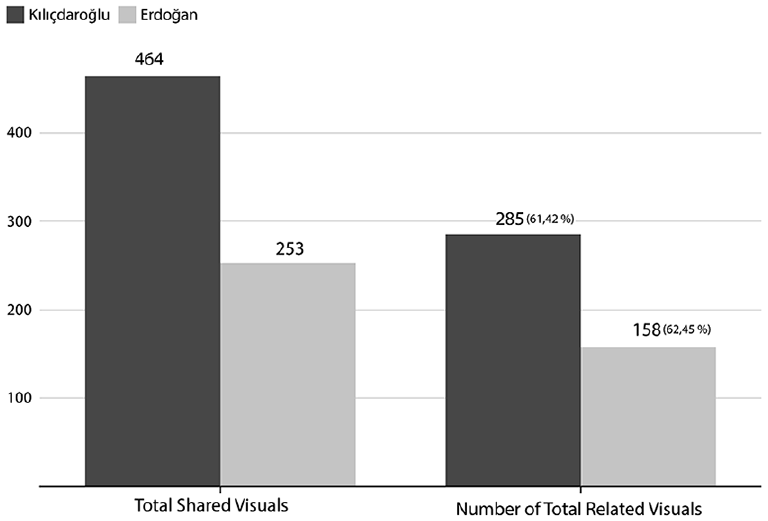
Total number and rate of shared and related images for category: scarf.
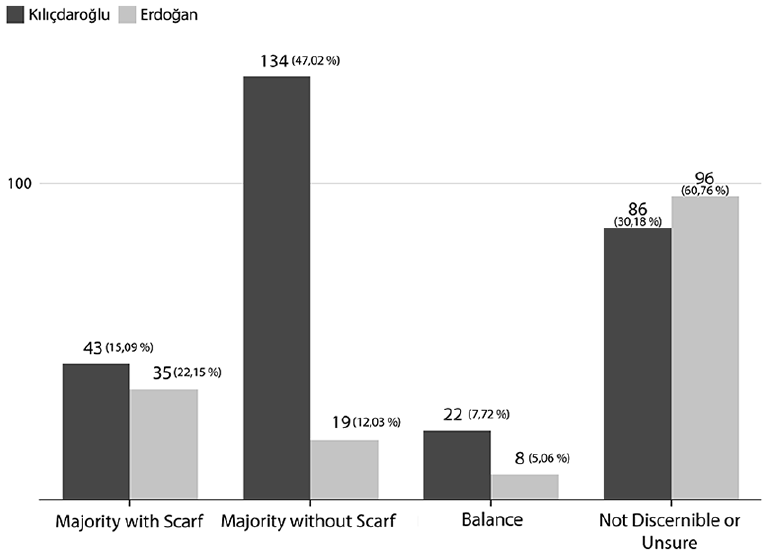
The coded distribution of the related images for category: scarf.
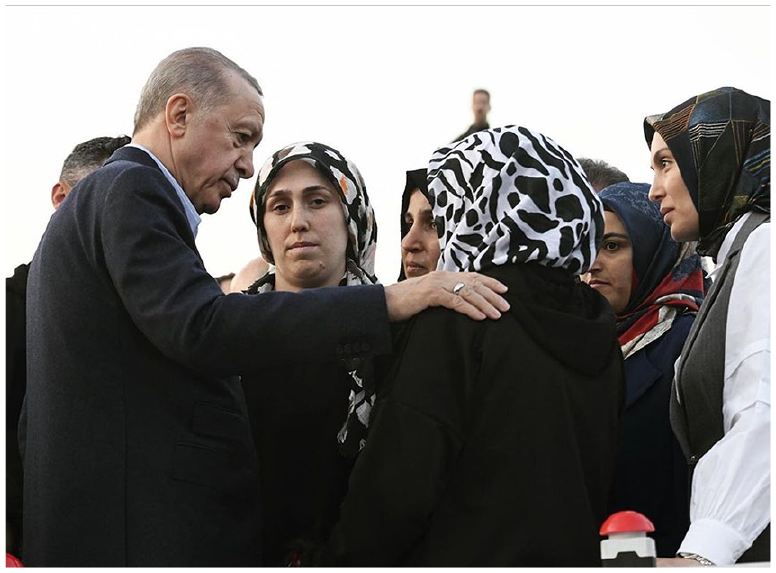
Dialogue between Erdoğan and women wearing headscarf.
On the other hand, while collecting the data of the study, a striking historical break was detected in Kılıçdaroğlu’s posts. As stated in the literature part of the study, Kılıçdaroğlu built his election campaign on “Helalleşme.” This process, in which he addressed large segments of society with videos, can also be considered as a reaction against the elitist attitude of his party before him and an effort to reunite his party with large masses on the basis of religious and ethnic issues. However, from 31 March 2023, when the propaganda process started, to 9 May 2023, there are no images of women wearing headscarves in Kılıçdaroğlu’s posts. In contrast, there has been a break after 9th of May, and in the shared images, headscarved women are either in the focus or constitute the majority. It is also possible to evaluate this process as a campaign strategy. It is also possible to trace a similar breaking point in the campaign process of the CHP, which redefined its political position by abandoning being the representative of the elite, and moving toward a structure that tries to contain different social groups and evolving toward populist strategies. The image in Visual 2, in which headscarved and non-headscarved women appear together in the foreground, can be interpreted as an indicator of this situation.
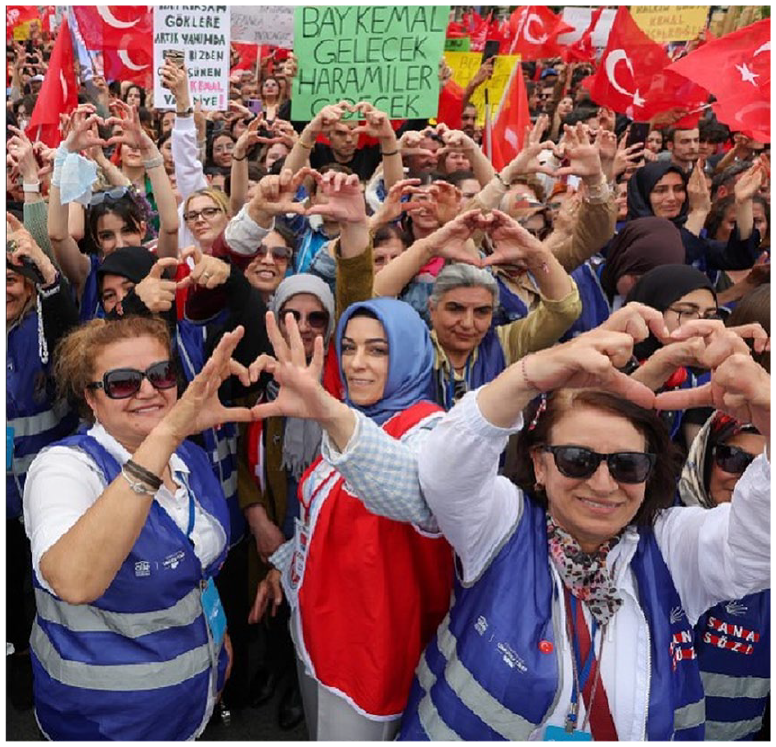
Kılıçdaroğlu’s Instagram post with women wearing headscarf.
When evaluated within the scope of class distinction, which constitutes the second hypothesis of the study, no meaningful data confirming the hypothesis could be reached. When reviewed in this context, according to H2, Kılıçdaroğlu shared more about the working class than Erdoğan, but the percentages in question do not contain any meaningful results (Kılıçdaroğlu: 13, 4.38%, Erdoğan: 6, 3.51%). Therefore, it is possible to state that the sensitivity of left populism toward the working class does not make sense for Kılıçdaroğlu in terms of Instagram posts. In the light of the said evaluation, it can also be argued that the CHP and Kılıçdaroğlu maintain their position as the party of the elite in terms of reflecting “people” in their posts on Instagram. On the other hand, the fact that “majority non-proletariat” and “balance” values are 0% in both Kılıçdaroğlu’s and Erdoğan’s posts and that the “not discernable” value is clearly dominant shows that the class emphasis is neglected by both leaders. In addition, both leaders shared images of the working class on May 1, Labor Day as can be seen in Visuals 3, 4 and 5. Therefore, it is possible to state that the class distinction was made only on a day when a special importance was given to the working class universally. Figures 3 and 4 exemplify this.
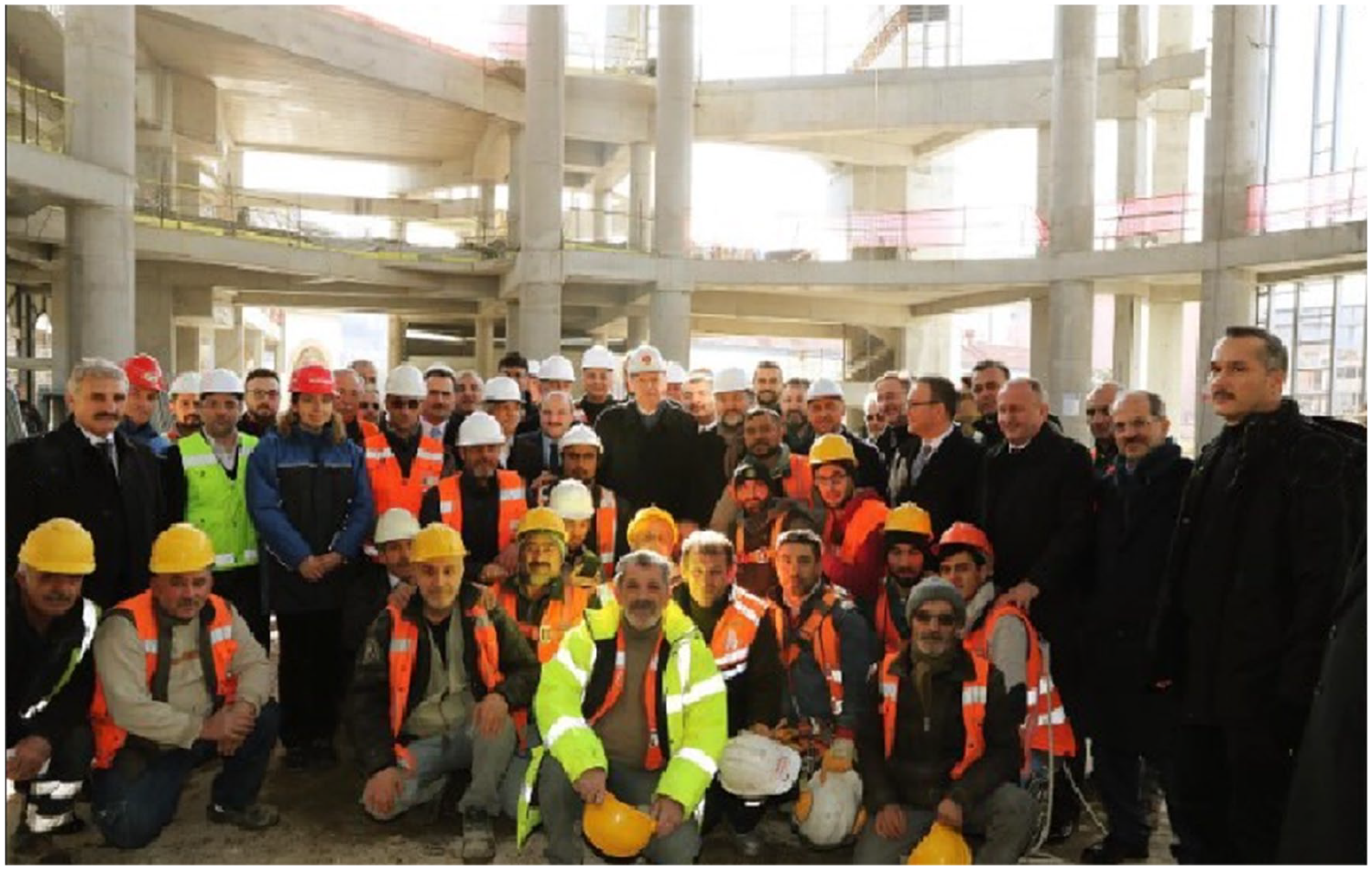
Erdogan’s Instagram post with people representing the working class.
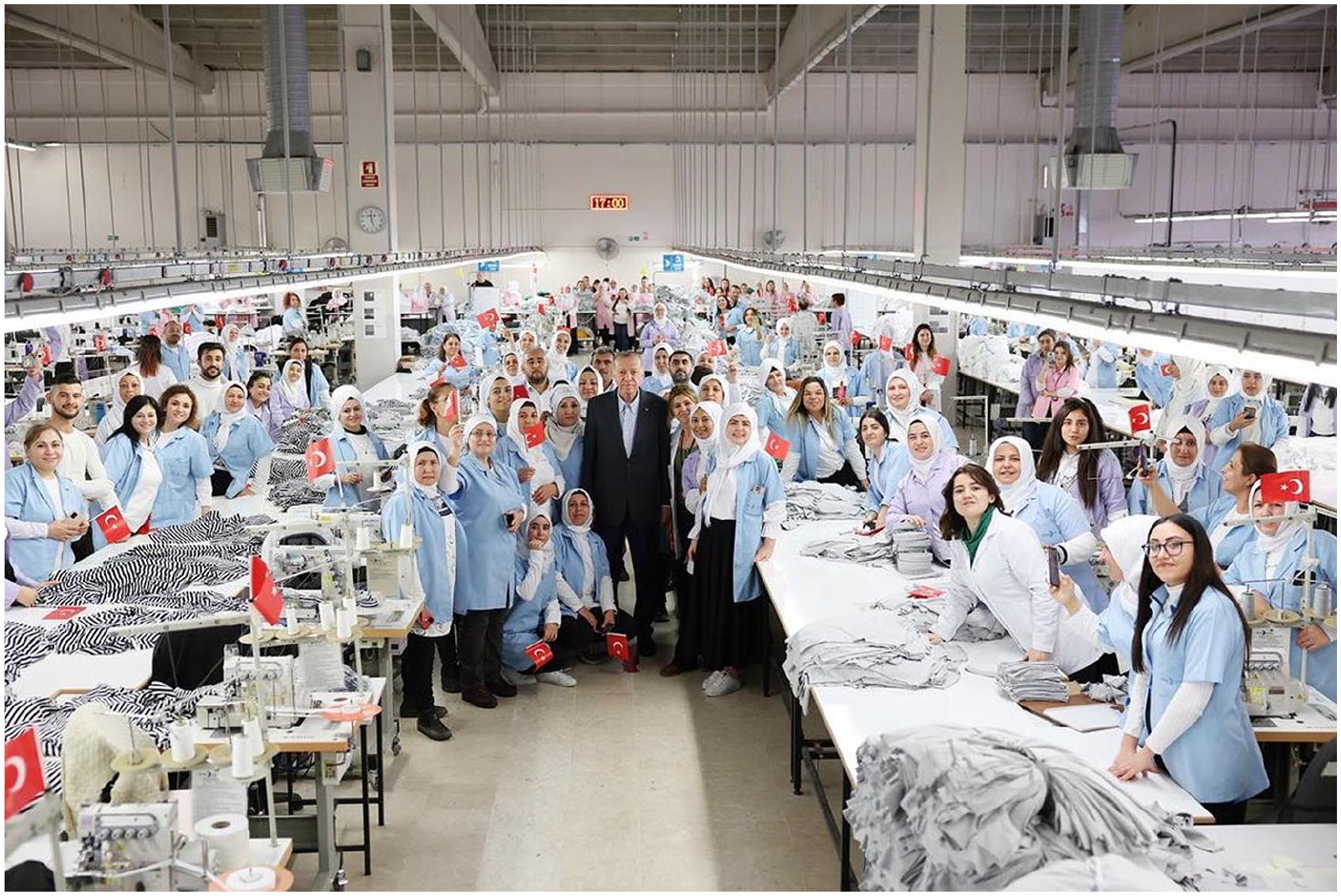
Erdogan’s Instagram post with people representing the working class.
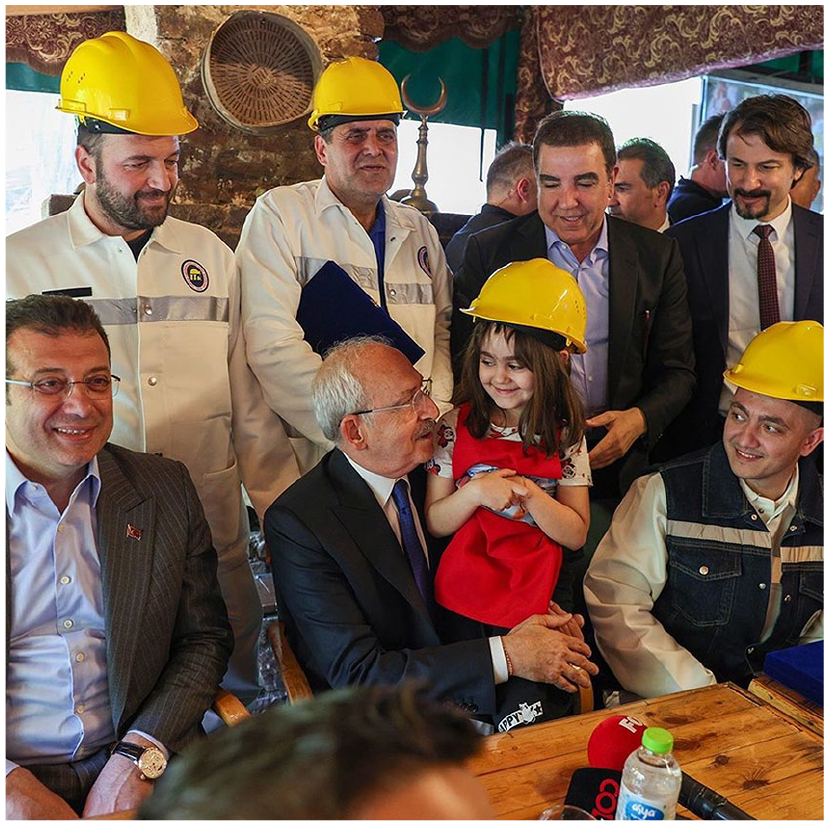
Kılıçdaroğlu’s Instagram post with people representing the working class.
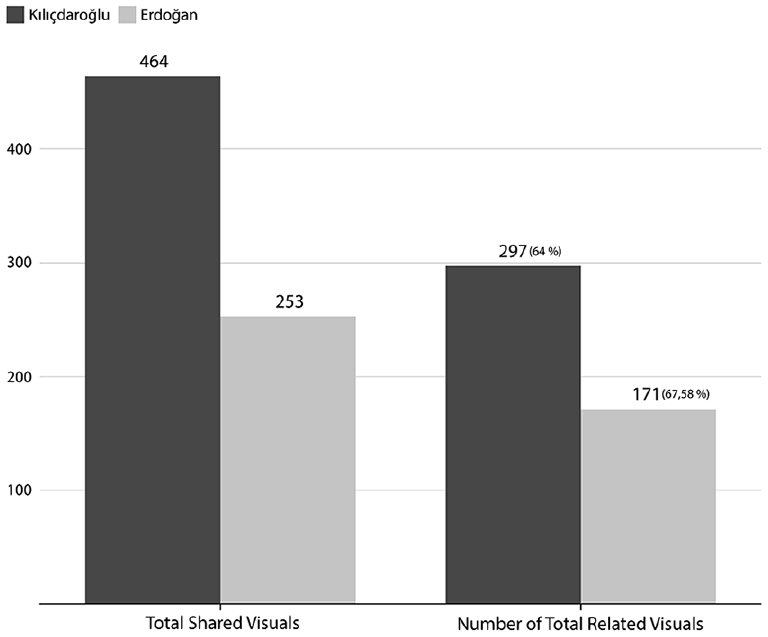
Total number and distribution of shared and related images for category: class.
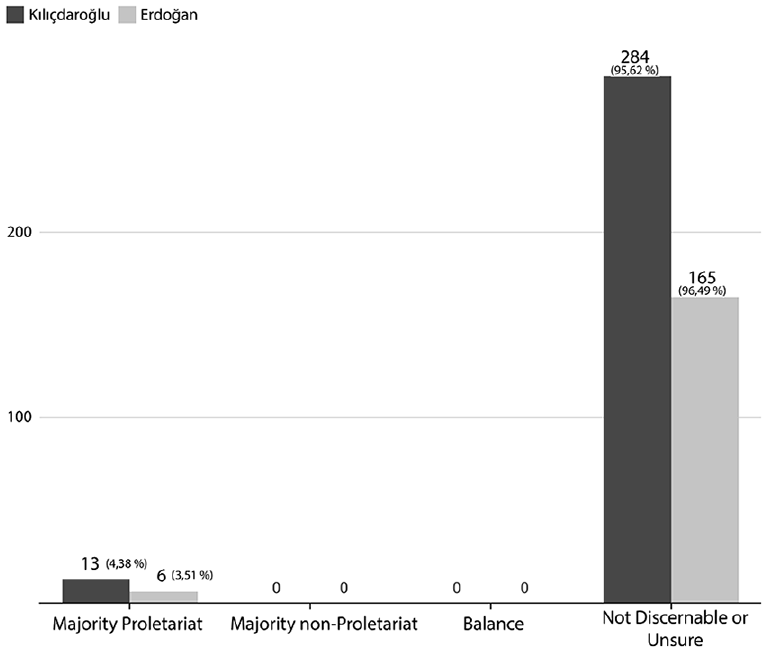
The coded distribution of the related images for category: class.
When gender representations are considered in terms of right and left populism, it is seen that H3 is confirmed. Figure 5 shows the numbers of total and related images. When the images of Kılıçdaroğlu, who is the representative of left populism, are examined, masculine shares make up (53, 15.63%) of the total shares, while feminine posts are clearly more than masculine posts (121, 35.69%). Figure 6 summarizes this situation. In Erdoğan’s posts, although feminine posts (17, 10.12%) are relatively higher than masculine posts (11, 6.55%), they are still far behind Kılıçdaroğlu in terms of number of posts. In addition, indiscernable shares (134) constitute 79.76% of Erdoğan’s total shares, while the same rate is only 39.23% for Kılıçdaroğlu. In light of the gender debates in the relevant literature focusing on the comparison of gender representations of left and right populism, the data seem consistent with studies arguing that left populism attaches more importance to gender equality than right populism (Kantola & Lombardo, 2019; Mudde & Kaltwasser, 2015). As can be seen in Visual 6, in Kılıçdaroğlu’s posts in this category, female figures are featured prominently and clearly in the photographic frame and are the focus of symbolic expression. Erdoğan, on the other hand, places photos of crowds that cannot be fully distinguished on the basis of gender, instead of placing any gender clearly at the center of the symbolic expression, as in Visual 7.
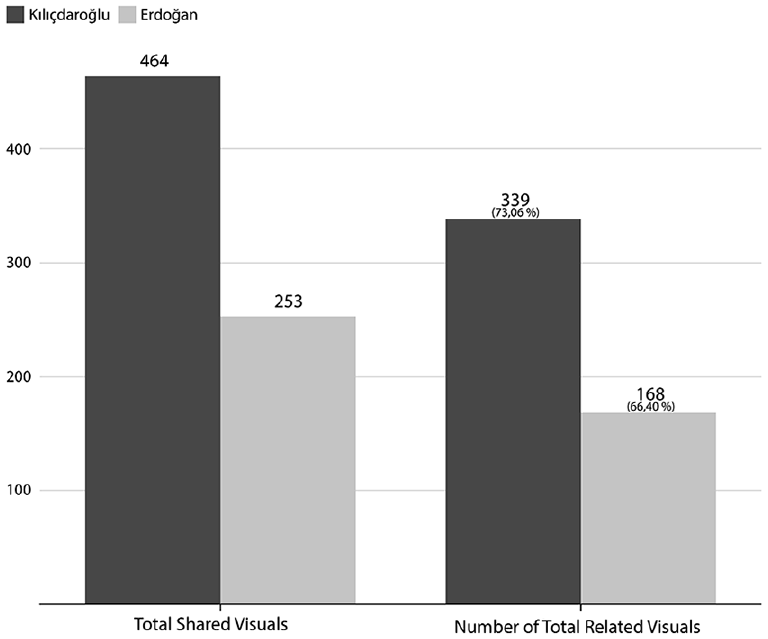
Total number and distribution of shared and related images for category: gender.
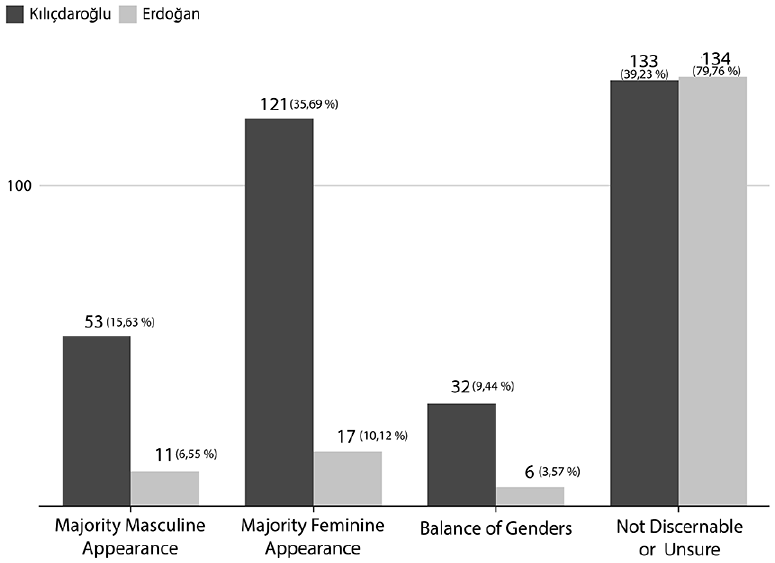
The coded distribution of the related images for category: gender.
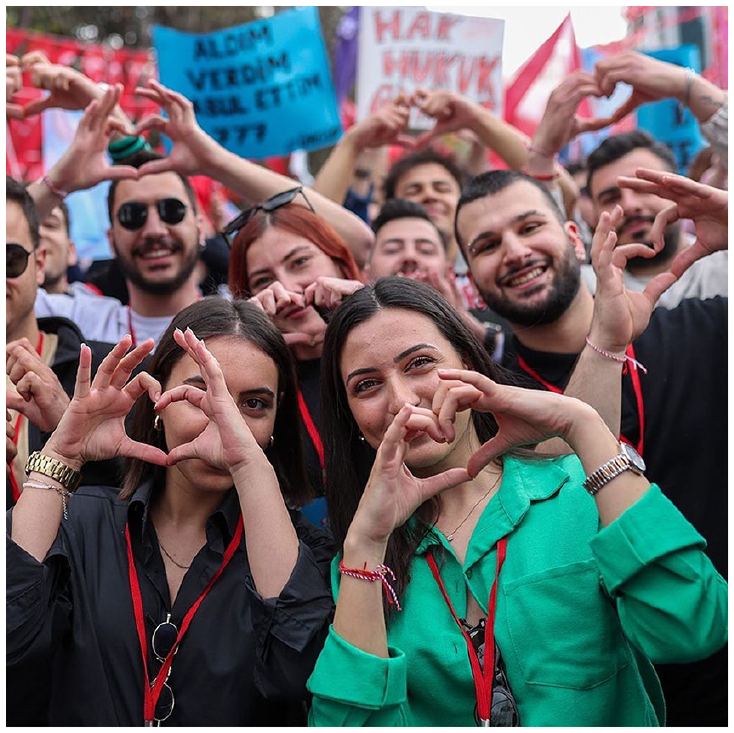
The visual coded in the gender category shared by Kılıçdaroğlu’s Instagram account.
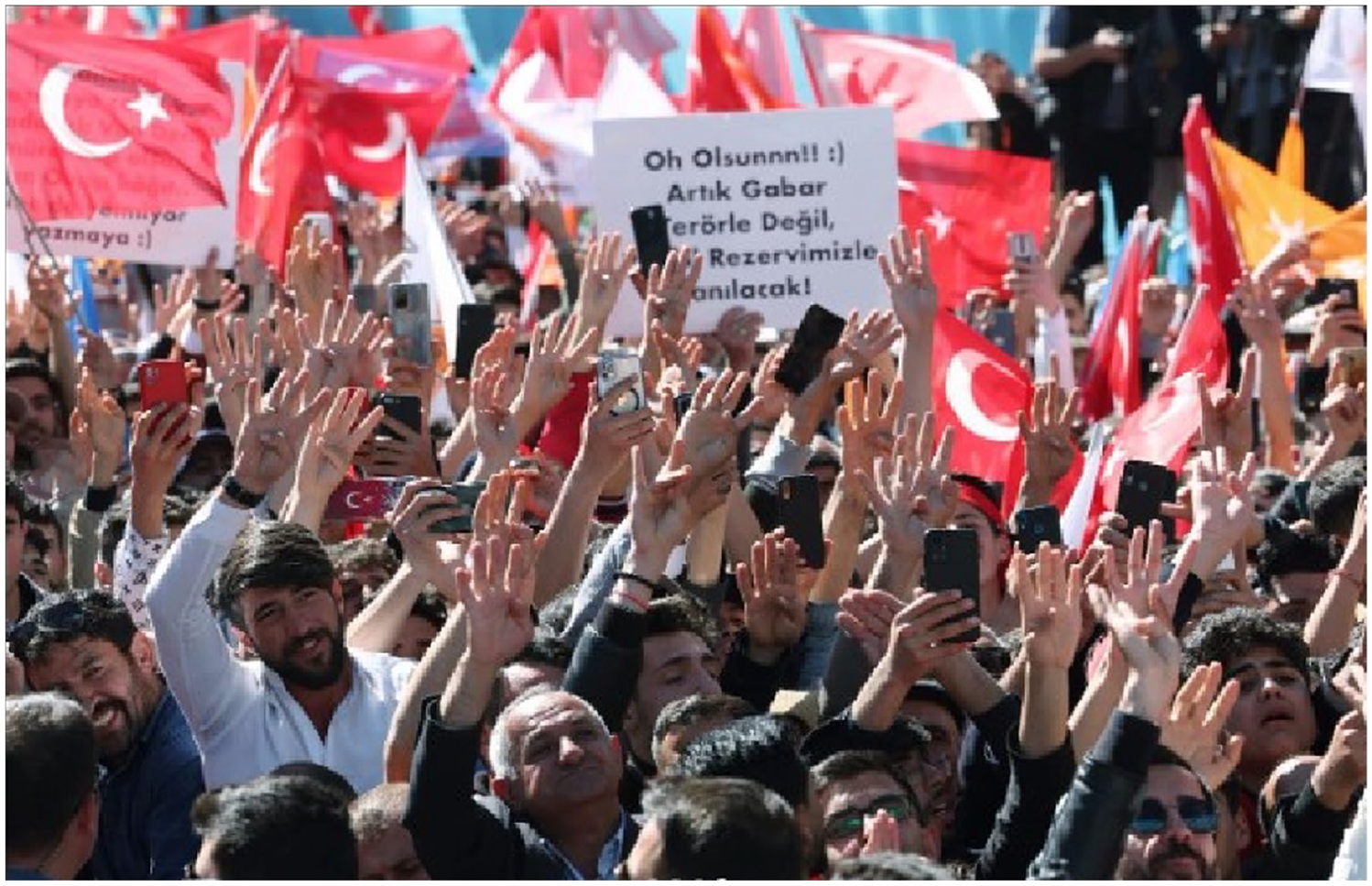
Visual containing the representation of the people in terms of gender shared by Erdogan’s Instagram account.
When evaluated within the scope of age, it is seen that H4 is confirmed. In this context, according to Figures 7 and 8, the majority of Kılıçdaroğlu’s images are composed of young people (95) with 27.30%. On the other hand, in Erdogan’s images, young people (9) do not constitute the majority with 5, 29%. “Majority mature adult” (45, 12.93%) and “majority senior adult” (41, 11.78%) are relatively close to each other in Kılıçdaroğlu’s images, while “balance of ages” constitutes the third majority with 16.67%. On the other hand, in Erdoğan’s images, “majority mature adult” (24) constitutes the second majority with 14.12%, followed by “majority senior adult” (4, 2.35%) and “balance of ages” (1, 0.59%). Although our hypotheses predicted that left-wing populism would give more space to young people, while it is more possible to make this analysis in the images shared by Kılıçdaroğlu, it does not seem possible to classify the images shared by Erdoğan in the light of the “age” category. The main reason for this is that the number of images shared by Erdoğan that can be clearly distinguished in terms of age is quite low. The majority of Erdoğan’s posts (132, 77.65%) consist of images that cannot be clearly classified in light of age category. This situation appears to be consistent with Erdogan’s tendency to present the masses as homogeneous crowds, just like in the gender category. Therefore, it is possible to state that Kılıçdaroğlu gives more space to young people in his posts that contain representations of the people.
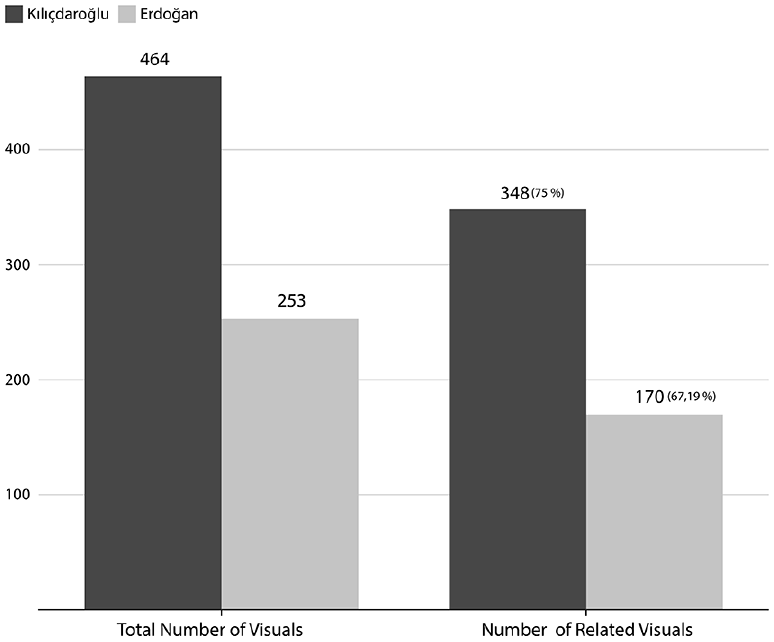
Total number and distribution of shared and related images for category: age.
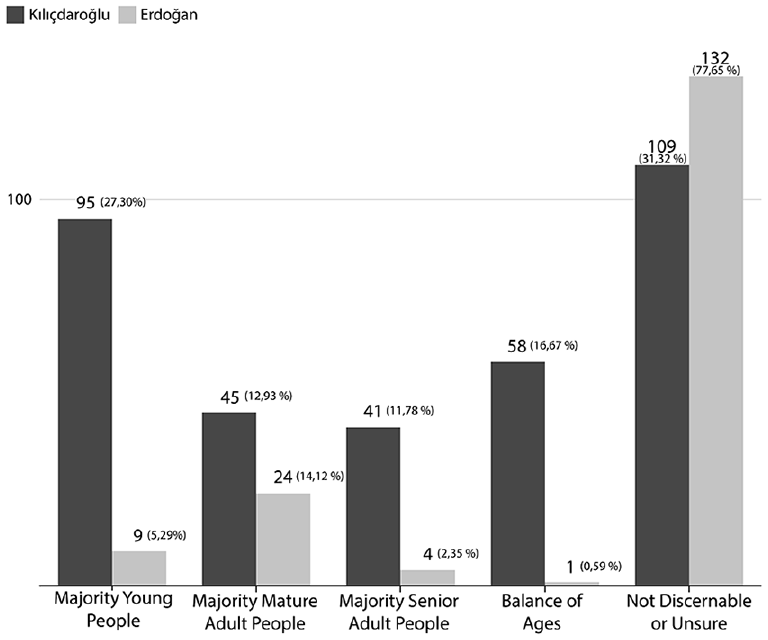
The coded distribution of the related images for category: age.
An important point that is not included in the hypotheses of the study but attracts attention is the data coded as “not discernable or unsure” in Erdogan’s posts. In this context, it has been seen that the vast majority of the images shared by Erdoğan consists of pictures of crowded masses and therefore it is not possible to evaluate these images in the light of relevant categories. Therefore, it is possible to state that the images shared by Kılıçdaroğlu are rather in a micro scale in terms of photography, which portrays “the people” in a more distinguishable way. However, in most of Erdogan’s posts, as in Visual 8, it is noteworthy that the people is generally pictured as a huge “crowd.” Regarding this emphasis, which is reflected in the images, it is possible to state that extremely large crowds are positioned as means of Erdogan’s show of power.
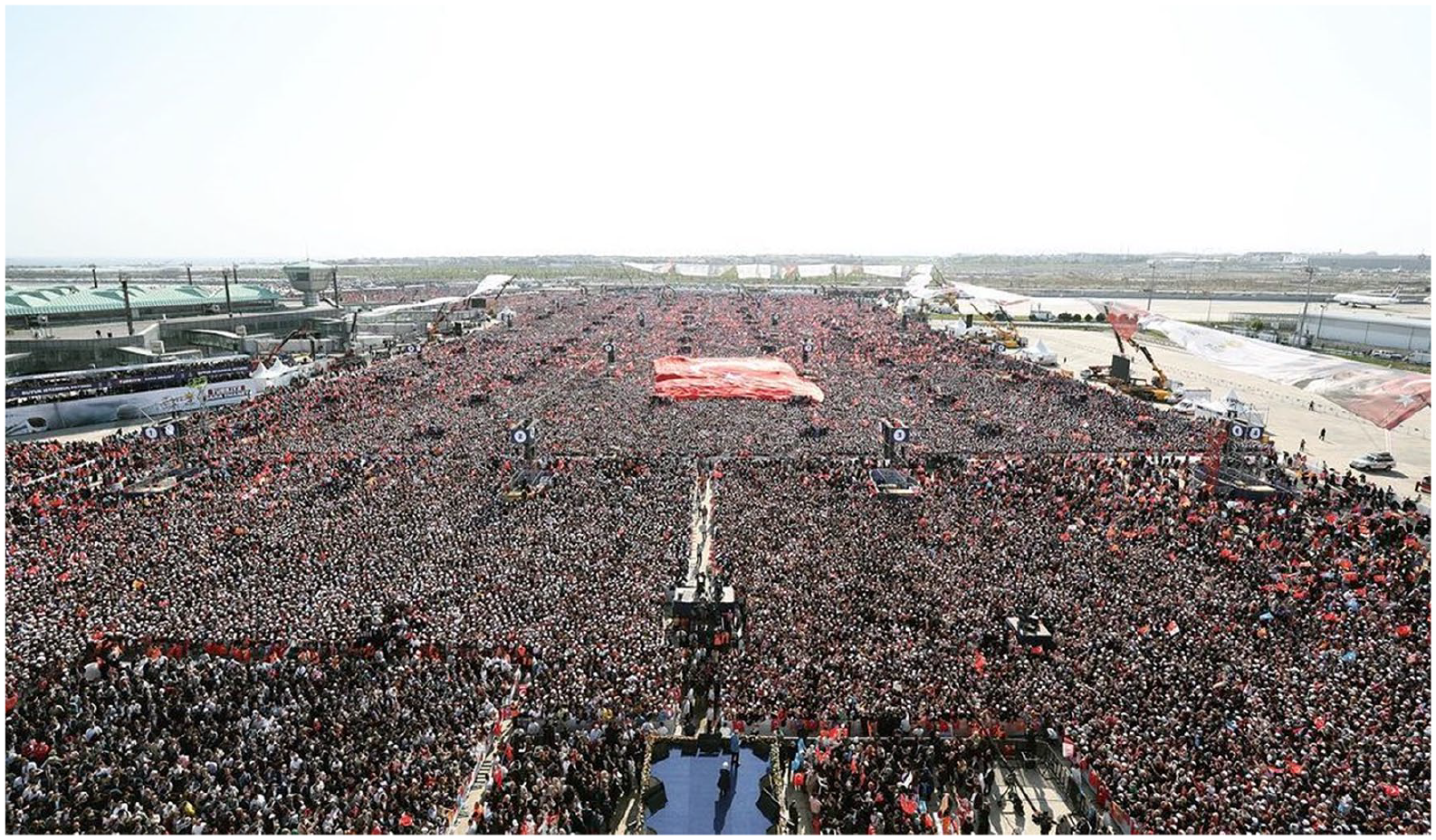
Image of crowded rally shared from Erdogan’s Instagram account.
Conclusion
In the study, which investigates how populist politicians reflect the people in their social media posts, the Instagram posts of Erdoğan as a right-wing populist and Kılıçdaroğlu as a left-wing populist in the 2023 presidential and general elections official propaganda process were examined by visual content analysis method. For populist politicians, “the people” is perceived as a consumable object and plays an important role in exerting their policies through social media. For this reason, populist politicians give special importance to communication, especially visual communication, as visuals enable them to convey various meanings in a stronger way. Therefore, examining the relationship between populist political discourses and visual elements by focusing on how leaders portray the public, rather than focusing on leaders, is a central motivation for and a unique aspect of this study.
When we compare Erdoğan as a right-wing populist and Kılıçdaroğlu as a left-wing populist within the scope of representations of people in Instagram posts, interesting data have been obtained. According to this, in Erdoğan’s posts, who has been in power for 23 years, there is a considerable amount of data that cannot be discerned or determined certainly for almost every category. The main reason for this is that Erdogan mostly shares rallies and images of crowds in his posts instead of posts that focuses to the people in close-up. This strategy leads to the conclusion that Erdogan sees the people as large masses. Kılıçdaroğlu, on the other hand, tends to share images that picture people in detail, unlike Erdoğan. He tries to give an image that appeals to the whole of society and covers everyone, and emphasizes this with close marking shots.
When studies on populism are examined in terms of inclusiveness and exclusion, it is seen that right-wing populism has a more limited definition of people, whereas left-wing populism covers groups with different social status (Mudde & Kaltwasser, 2013). Similarly, Müller (2016) states that populist politicians reflect the homogeneous people they speak for. In this context, Kılıçdaroğlu’s visual posts more dominantly reflect left-wing populism and groups with different demographic structures, socially different communities. On the other hand, Erdoğan emphasizes a more homogeneous structure compared to Kılıçdaroğlu. It is possible to argue that Erdogan’s posts are compatible with Müller’s (2016) evaluations.
On the other hand, an important finding that surprises us is the emphasis on class. Accordingly, we expected the left populist leaders and parties were thought to emphasize class more, while the right populists were thought to make this emphasis in a more limited degree. In contrast, both Kılıçdaroğlu’s and Erdoğan’s sharings of the working class, peasantry, or socio-economically lower classes were limited. Although Kılıçdaroğlu has eight more posts that represent the people in terms of class, this does not constitute a significant percentage among his total shares. Therefore, we can argue that left populism and right populism are equated in terms of class representation in propaganda period of 2023 general elections.
Finally, it is noteworthy that Kılıçdaroğlu gives place to images with women wearing headscarves more than expected. As noted in literature discussion part of the study, CHP has been identified as the representative of the center/elites and perceived as the main advocate of strict social regulations such as the headscarf ban in public service. However, in Kılıçdaroğlu’s lead, it has transformed its discursive strategy towards headscarf and started to see wearing headscarf as a constitutional right. The headscarf, which is one of the important indicators that divides the society in Turkey on the basis of belief and religious values, has also played an important role in the integration of the society into different political traditions on the center–periphery axis. The headscarf, which is one of the main topics of a political discourse, has emerged as an important propaganda discourse for both leaders in the 2023 general elections. While Erdoğan included a significant number of headscarved women figures in the photographs he shared on his Instagram account, Kılıçdaroğlu made an important initiative to consolidate the masses who were sensitive about the headscarf issue during the pre-election campaign process by significantly transforming his party’s policy and his own discourse, which had been anti-headscarf in the past. Although in different contexts, these two examples constitute one of the important findings of this study as a populist re-interpretation of a religion-related issue such as the headscarf. As a result of the analyses made within the scope of the study, it was seen that Kılıçdaroğlu accelerated this strategic transformation and exhibited an understanding that encompasses the whole segments of the society and preferred embracing differences rather than suggesting a homogeneous social setting based on coercions and bans.
In this study, which focuses on the Instagram posts of two candidates from different populist wings in the case of 2023 Turkish general elections, it has been seen once again that the concept of “the people” has a critical importance for the leaders of the political parties in the election race. Both candidates’ intensive shares including photos where the people is represented from different perspectives can be interpreted as an indication of this. It is understood that the two candidates, who owe their political origins to different ideological traditions, maintain their traditional ties in their social media posts and communication strategies. However, Kılıçdaroğlu’s initiative on the headscarf constitutes an exception to the tendency to maintain these traditional ties. It can be argued that this reflects an important instrumental perspective within the scope of a populist election strategy. One of the important results of this study is that cultural, historical, and political perspectives, which lead to deep fractures in society in different cultures, can reveal important clues in the context of populist strategies. With studies focusing on similar perspectives, different unique views of how populist leaders portray the “people” can be revealed. Thus, it may be possible to conduct a more in-depth analysis of how populist leaders make “the people” the object of an instrumental election discourse by utilizing social values specific to different cultures.
Supplemental Material
sj-docx-1-ctp-10.1177_20570473241277296 – Supplemental material for Populist politicians’ representations of the people: A comparative visual content analysis of candidates’ Instagram posts in 2023 Turkish general elections
Supplemental material, sj-docx-1-ctp-10.1177_20570473241277296 for Populist politicians’ representations of the people: A comparative visual content analysis of candidates’ Instagram posts in 2023 Turkish general elections by Ömer Faruk Zararsiz and Emrah Ayaşlioğlu in Communication and the Public
Footnotes

Supplemental material
Supplemental material for this article is available online.
Author biographies
References
Supplementary Material
Please find the following supplemental material available below.
For Open Access articles published under a Creative Commons License, all supplemental material carries the same license as the article it is associated with.
For non-Open Access articles published, all supplemental material carries a non-exclusive license, and permission requests for re-use of supplemental material or any part of supplemental material shall be sent directly to the copyright owner as specified in the copyright notice associated with the article.
