




Abstract
Traditional crisis management approaches have often overlooked the role of community and nonprofit organizations. In this study, we investigated how nonprofits and communities contributed to problem-solving during crises through self-organization on social media. We applied social network analysis to 17,732 interactions using #TwitterFoodBank, a self-organized network emerged during the early stage of COVID-19 to address food insecurity. Our results highlighted the significant role of nonprofits in coordinating the community’s self-organized network. However, they also revealed a lack of coordination among these organizations in maintaining a viable network. These findings have valuable implications for nonprofits seeking to leverage the potential of online self-organized communities in crisis management.
Keywords
Nonprofit organizations have proven to be indispensable actors in crisis management, effectively responding to various emergencies and disasters (Demiroz & Hu, 2014; Flatt & Stys, 2013; Kapucu et al., 2011). During unprecedented times, many organizations act as “first responders” and “shock absorbers” (Eastman, 2020). Recent studies in crisis management challenge the traditional top-down, centralized decision-making approach (Alexander, 2014; Crowe, 2011; Luna & Pennock, 2018). Instead, these studies highlight the critical role of both nonprofit organizations and local communities in coping with disasters. For example, several studies have recognized self-organized efforts by local citizens and nonprofits that emerge during or after crises to remediate aftermaths (Albris, 2018; Simsa et al., 2019; Wukich & Steinberg, 2013; Zhao & Wu, 2020). These self-organized, grassroots-based efforts present a viable crisis management approach that deserves more exploration. In addition, the rise of social media platforms such as Facebook and Twitter provides a broader avenue for nonprofits and communities to self-organize and actively engage in all phases of crisis management (Hiltz et al., 2011).
As food and food security are fundamental aspects of every human society, the disruption of the normal food landscape closely relates to crises and disasters (MacNabb & Fletcher, 2019; Mebrate et al., 2021). The importance of food security has been brought to the forefront during COVID-19 and prompted every actor in society, including government agencies, nonprofits, private organizations, and communities, to collaborate in addressing its challenges. Nonetheless, the interdisciplinary aspect of food insecurity, disaster, and online civic engagement remains underdeveloped (MacNabb & Fletcher, 2019). There is much to learn about how nonprofits and communities participate in self-organization processes, how these efforts emerge and evolve on virtual platforms, and how they complement formal crisis management systems.
Driven by the recognition of this knowledge gap, our study aims to investigate the self-organized network that emerged during the initial phase of the COVID-19 pandemic, focusing on the #TwitterFoodBank case study. Given the lack of research on this topic (Candel, 2014; MacNabb & Fletcher, 2019), a descriptive and exploratory case study research can offer insights into the participation and contributions of communities and nonprofits in crisis management. The study focuses on addressing three research questions:
Who are the participants in the online #TwitterFoodBank conversation?
How do actors connect with each other through the use of #TwitterFoodBank?
Specifically, what role do nonprofits play in self-organization?
Our study begins by drawing from existing literature on public crisis management and self-organization theory. We then introduce the case study #TwitterFoodBank and emphasize its significance for our investigation. Subsequently, we employ social network analysis to gain insights into important actors, network structure, and the role of nonprofits within this network. Based on our findings, we discuss theoretical and practical implications for nonprofits, and explore how they can harness the power of online platforms and self-organized networks for crisis management.
Social media, nonprofits, and community in times of crisis
Social media has become an integral part of daily life, permeating various aspects of society. According to the Pew Research Center (2021), 72% of the U.S. population has at least one social media profile, indicating that 7 out of 10 Americans use these platforms to communicate, share information, or find entertainment. Social media encompasses a wide range of internet-based platforms and services operating under Web 2.0 (Houston et al., 2015). Fraustino et al. (2012) further categorized social media into groups based on their functions, including micro-blogs (Twitter, Tumblr), discussion forums (Reddit), blogs (WordPress), photo/podcasting (YouTube, Instagram), social rating reviews (Tripadvisor, Yelp, Rotten Tomato), or Wikis (Wikipedia).
Recent studies have acknoledged the piviotal role of social media in crisis management (Shemberger, 2017). In crises, citizens increasingly rely on these platforms for communication. For example, 76% of surveyed respondents reported that they would use social media to contact friends and ensure their safety, while 25% would download an emergency application to access additional information (San et al., 2013). Hurricane Sandy in 2012 demonstrated the significant impact of social media during disasters, with Twitter registering 1.1 million tweets related to the event within 21 hours. Sandy became the second most discussed topic of the year on Facebook, underlining the significant role of these platforms in disseminating information and fostering communication during critical events (Fraustino et al., 2012).
Given the popularity of social media in the public sphere, researchers have devoted more attention to its application in crises. The use of social media in emergencies has been documented in many events such as Hurricane Katrina (Shklovski et al., 2010), the Haiti earthquake (Smith, 2010), and recently the COVID-19 pandemic (Li et al., 2020; Yu et al., 2021; Zhou et al., 2021). Luna and Pennock (2018) conducted a systematic review of social media applications in crisis management and pointed out four capacities offered by social media. These include increasing situational awareness, faster information diffusion, monitoring activities, and network coordination. Social media helps to enhance the situational awareness of the public when crises or disasters occur. For example, Facebook’s “safety check” feature allows people to know where a crisis happens and enables users to mark themselves as “safe” in an emergency. In addition, social media allows public agencies and concerned institutes to reach out to a broader range of audiences, especially young audiences who are active and frequent users of these platforms (Perrin, 2015). Information can spread out almost instantly on social media platforms, compared with other traditional communication platforms. Social media proves to be a dependable communication channel in crisis, because traditional platforms are inhibited by four factors: rapidly developing scenarios, increased number of involved participants, adoption of new technology, and big data need to be collected and analyzed (Luna & Pennock, 2018).
More importantly, the emergence of social media has transformed crisis management approaches, fostering the participation of multiple actors in all phases of the process (Hiltz et al., 2011). Luna and Pennock (2018) asserted that shifting from the traditional to a more professional approach is imperative in crisis management. The traditional approach to crisis management centers on public agencies and a hierarchical, centrally controlled system (Nan & Lu, 2014). Decision-making and communication are centralized and one-way, often lacking the flexibility required for responding to unforeseen challenges. In this traditional model, public agencies and institutions are deemed as the primary actors and first responders, while the public is often portrayed as panicked and with little to no active role in crisis management. On the contrary, the professional approach to crisis management, emphasizes flexibility and decentralization. This approach recognizes the participation of multiple partners, including citizens and nonprofit organizations. Moreover, it acknowledges the resourcefulness and the potential of the community to act as first or second responders during a crisis. With social media coming into play, all actors can participate and influence the outcome of crisis management. Social media’s versatile and decentralized nature allow for engagement in all phases of crisis management, from mitigation, preparedness, and response to recovery (Hiltz et al., 2011). It also enables a more inclusive and collaborative approach, leveraging the collective strengths of various partners in crisis management.
Recently, there is a growing body of research has focused on exploring the roles of communities and nonprofit organizations in crisis management (Demiroz & Hu, 2014; Flatt & Stys, 2013; Kapucu et al., 2011; Sledge & Thomas, 2019), with recent emphasis on community self-organizing phenomenon on social media. Albris (2018) conducted a study on the 2013 floods in Dresden, Germany, revealing that social media channels like Facebook allowed the community to self-organize and perform tasks traditionally handled by official agencies. Facebook groups emerged during the crisis as the primary platform for citizens to share information and for flood victims to connect to those offering assistance. Similarly, Simsa et al. (2019) noticed the spontaneous self-organized volunteer network emerged during the 2015 European refugee crisis, which partly substituted or complemented the official crisis response systems. This network demonstrated the power of local and grassroots efforts in responding to complex and large-scale crises. More recently, Zhao and Wu (2020) examined the collaboration channels emerged during COVID-19 and documented the existence of self-organized networks between nonprofits and communities as informal channels to alleviate the pandemic consequences. Similarly, other studies found that citizens can use social media to organize themselves quickly, share relevant information, communicate, and help others (Majchrzak & More, 2011; Palen et al., 2009; Qu et al., 2009). These studies collectively underscore the need to investigate the utilization of social media and the roles of community and nonprofit in crisis management. To contribute to this growing literature, our study aims to analyze the case study of #TwitterFoodBank by employing a self-organization and social network analysis approach.
Theoretical framework: community and self-organization
In times of crisis, actors must develop multiple strategies to adapt and survive. Besides formal processes and strategy, self-organization is an unplanned, spontaneous type of effort that often arises during or after a crisis. This type of response emerges from local interactions to deal with sudden changes or collapse of the status quo (Simsa et al., 2019). Faced with urgent needs brought about by natural disasters, epidemics, or economic downturns, social actors organize among themselves and form novel systems or structures to adapt to the new environment rather than solely relying on external interventions. The resulting organizations or networks are typically decentralized and distributed among multiple interacting elements. Self-organization finds its roots in evolution and complexity theories (Anzola et al., 2017; Goodwin, 2001). Although the self-organization theory has been widely applied in physics, biology, and cognitive fields, it has been recently used to examine social animals and human society. During the COVID-19 outbreak, numerous examples of self-organization emerged to help those in need, particularly when government aids were out of touch, and people were separated by social distancing protocols. These efforts ranged from simple acts, such as neighboring groups pooling resources to feed the hungry, to more complicated networks, such as local churches and food pantries collaborating to create new food delivery models. Individuals willingly offered their time, skills, knowledge, and financial support money to restore order and provide assistance during the crisis.
Self-organization arises naturally as part of the evolutionary process and survival needs (Comfort, 1994; Zohar & Borkman, 1997). Moreover, it can be prompted by kindness, cultural values, and a desire to help those facing difficulties. Self-organization theorists argue that communities possess the ability to adapt and transform radically in response to changing circumstances. In addition, local communities can tap into their inner capacities to build supportive networks with shared goals rather than relying on external authorities and central control (Zohar & Borkman, 1997). Communication and multi-actor interactions are essential elements of the self-organized process. According to Luhmann (2008), self-organization is a continuous process that occurs through “communicative acts” among actors within or between systems. Comfort (1994) identified five essential conditions of self-organization, including the presence of structure to hold and exchange information, sufficient flexibility to adapt behavior to dynamic changes, a shared goal among participants, recurring opportunities for interaction, and the capacity to integrate information in a dynamically evolving knowledge base.
All these conditions underscore the pivotal role of information technology, Web 2.0 infrastructure, and social media in facilitating bilateral and multilateral communication. Social media allows information to flow continuously among actors and enables the exchange of information, ideas, and resources. Unlike traditional communication platforms, social media offers a greater possibility to hold, restore, and exchange information, making it indispensable in crisis scenarios. It significantly enhances the capacity of individuals, communities, and organizations to make informed and timely decisions and take appropriate actions in response to unfolding events. Social media thus becomes an enabler of self-organization within its platform.
Community self-organization is difficult to anticipate and, therefore, often “slipped” from the attention of public and nonprofit literature (Edelenbos et al., 2018). As the nonprofit sector relies on voluntary and not-for-profit values, the ability to harness the potential of self-organized networks can offer opportunities to create more impactful social changes. Public citizens can be considered as co-creators of new public services, and bring about significant social changes (Bekkers et al., 2014).
Moreover, the concept of “guided self-organization” taking place around the 2000s challenges the notion that this process is entirely spontaneous and unorganized (Helbing, 2014; Prokopenko, 2009, 2013; Smirnov & Shilov, 2015). This perspective suggests that nonprofit organizations, as critical and influential actors helping communities during crises, can leverage the power of self-organization and play a coordinating role in steering the outcomes. In addition, nonprofit organizations cannot stand alone in crisis response. Helping communities requires communication and collaboration among multiple actors across sectors and jurisdictions. Nonprofits holding more resources and networks with multiple partners can operate and serve the community better in turbulent and ambiguous environments (Wukich & Steinberg, 2013).
From the previous literature review, we assert that self-organization can provide an insightful lens to examine the #TwitterFoodBank case study. The choice of Twitter as the platform for this case study is meaningful, considering the growing dependency of communities on social media during crises media (Hiltz et al., 2011; San et al., 2013). Twitter has been ranked the second most popular social media platform in the United States (Odabaş, 2022). Its distinctive features, such as short messages, hashtags, and retweet functionality, enable information to spread rapidly across diverse groups in a short period. Our study aims to explore the role that nonprofits play in self-organized networks and how they can effectively leverage the power of self-organization within the virtual arena.
Case description: food insecurity and #TwitterFoodBank
COVID-19 jeopardized the community’s normal functions and exacerbated food insecurity. Nearly 15% of U.S. households and 18% of families with children experienced food insecurity, compared with 10.9% of adults and 14.6% of children before the pandemic (Feeding America, 2021). While necessary for community protection, social distancing policies posed considerable challenges for numerous individuals and families in their quest to access food. Factors such as fear of a virus outbreak, panic buying, and stockpiling of essential groceries resulted in severe food shortages in the initial stage of COVID-19. This situation was particularly pronounced in densely populated areas (Wang & Na, 2020). Simultaneoulsy, the closure of numerous businesses, reduction of work hours for millions, along with widespread job lossess contributed to financial constraints that impededed people’s ability to purchase food. In addition, disruptions in the food supply chain, including transportation and processing, further exacerbated the already complex scenario (Mead et al., 2020). Governmental interventions, such as stimulus checks, unemployment supports, and food assistance programs, were still insufficient or unavailable at this early phase.
In an endeavor to alleviate the food crisis, local responses from nonprofits and communities were crucial (MacNabb & Fletcher, 2021). COVID-19 was a battleground for many nonprofit organizations, especially those working at the forefront and supporting the most vulnerable populations (Shi et al., 2020). This daunting task also requires organizations to collaborate, increase communication and information exchange to identify available sources of help.
Bill Pulte (2020), the founder of Twitter Philanthropy, stated that when face-to-face communication breaks down, “technology can feed people in minutes,” and “we can do it quicker and faster on Twitter”. On 18 April 2020, the hashtag #TwitterFoodBank was first introduced and quickly became a top trend (Dylan, 2020). This hashtag aims to assist individuals and families in need to feed themselves during the COVID-19 pandemic. Those in need can share tweets using the hashtag #TwitterFoodBank, explaining their situation, providing their account name and cash app, allowing strangers who read the tweet to donate money (Dylan, 2020). Through this shared hashtag, individuals, public, and nonprofit organizations can identify those requiring help and support each one another in various ways, such as donating money and sending groceries.
#TwitterFoodBank was initiated by Bill Pulte, a Michigan-based philanthropist and the founder of a nonprofit named Team Giving. Team Giving is a 501(c)(3) nonprofit and receives seed funding from Bill Pulte and Twitter Philanthropy. This nonprofit draws its inspiration from Pulte’s philosophy, which believes in the generosity of Americans and the power of social media to cultivate philanthropic spirit. During the COVID-19 outbreak, Team Giving took an active role in coordinating discussions around the #TwitterFoodBank and sought donations through its cash app account to support families and individuals in need.
#TwitterFoodBank presents a captivating case study wherein communities, nonprofits, and individuals quickly self-organized to exchange information, offer help, and seek help. Insights gained from this case study will enable researchers to understand how nonprofit recipients and vulnerable communities affected by crisis harness the power of social media to secure support for themselves and their communities; how public and nonprofits can respond to food insecurity. Despite its significance, this particular topic remains relatively underexplored within the nonprofit and public management literature (Mebrate et al., 2021).
Research method
Research design
This study used social network analysis to explore community self-organized network around #TwitterFoodBank. Social network analysis is a methodological approach used for investigating and visualizing social structures. It allows researchers to examine relationship patterns among actors within a network. Social network analysis can be used to visualize social media dynamics, advocacy coalitions, knowledge networks, social mobility, and corporate influence (Scott, 1988). Furthermore, social network analysis is a potent tool for handling large datasets.
Research within the nonprofit sector remains constrained by the challenge of gathering big data and extensive network data (Schuster et al., 2019). However, with the availability of accessible data mining tools on social media platforms like Twitter, researchers today have opportunities to address this challenge and shed light on previously unanswered questions. To understand the evolving interaction between nonprofits and the community, it is important that researchers shift their focus from individual nonprofits to examining the overall network structure (Schuster et al., 2019). This perspective underscores the relevance of employing social network analysis as a valuable approach in this study.
In social network analysis, a network comprises of actors or vertices (nodes) and ties (edges). Actors can be individuals, groups, organizations, or countries participating in the network. Ties represent relationships among actors and can be categorized as either directed (one actor initiates a connection to another) or undirected (where a connection exists without a specific direction) (Borgatti & Halgin, 2011). The strength of these relationships can be quantified using centrality measures. This methodology enables the examination of relationships at multiple levels, including individual, relational level, and the overall network; see Figure 1 (Schuster et al., 2019).
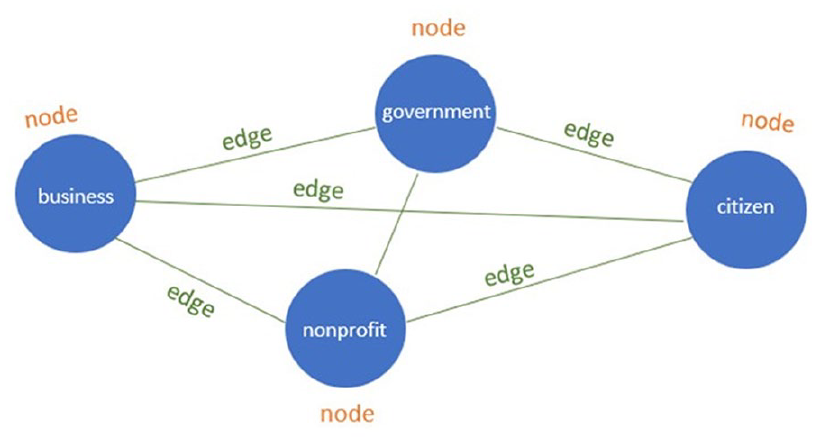
Network representation.
Sample construction
For sample construction, we used R (version R-4.2.2) and the academictwitteR package to collect online interactions associated with the hashtag #TwitterFoodBank on Twitter over a span of 7 months, from 12 March to 30 September 2020. AcademictwitteR is a relatively new R package that allows researchers to access, collect, and analyze large data using the Twitter Application Programming Interface (API).
In total, we collected 223,461 interactions using #TwitterFoodBank. To construct a representative sample, we examined the first 2 weeks (18 April—2 May 2020), coinciding with the time when the hashtag gained prominence as one of Twitter’s most popular trending topics. The day 18 April marked the inception of the #TwitterFoodBank hashtag. After these 2 weeks, the overall count of interactions using the #TwittherFoodBank hashtag declined, a pattern that aligns with the principles of the Technology Adoption Cycle (Bagozzi et al., 1992). Following a thorough data cleansing process, the dataset was refined to include 43,943 interactions. To further refine the sample, we conducted a random sampling process, selecting 50% of the dataset, which amounted to 21,927 interactions.
From this sample, we constructed two separate files for nodes and edges. In total, our dataset consisted of 17,743 nodes and 27,258 edges. We further categorized network actors into five groups: (1) individuals, (2) nonprofit organizations, (3) government organizations, (4) business organizations, and (5) news and media (Houston et al., 2015). All network actors, regardless of their group affiliation, were considered as equal nodes within the network. Furthermore, we eliminated nodes that could potentially introduce noise to the network, such as fake accounts and loops. This meticulous process culminated in a final dataset comprising 17,743 nodes and 27,580 edges.
Data analysis
Social network analysis was performed in R, with the Igraph package employed to compute network statistics and construct network visualization. Igraph is a powerful and widely used R package for social network analysis. This package provides tools for crafting and assessing various graphs and networks. The igraph package also has functions to calculate diverse graph metrics, such as degree centrality, betweenness, closeness, and eigenvector centrality. Moreover, this package can detect communities or clusters within graphs, identify important nodes or edges, and visualize graphs using a variety of layouts and styles.
Results
In this study, we explored a self-organized community that emerged in response to the food insecurity crisis during the early stages of the COVID-19 pandemic. We analyzed the actors involved in the #TwitterFoodBank Network and examined the role of nonprofit organizations. Table 1 offers an overview of the networks’ nodes and edges. The majority of participants in the #TwitterFoodBank network were individuals (N = 17,693), whereas nonprofits, government agencies, businesses, and media constituted smaller proportions. Actors primarily established connections with one another through retweets (N = 6345) and replies (N = 20,896), accounting for 23.3% and 76.6%, respectively.
Descriptive information of #TwitterFoodBank network.
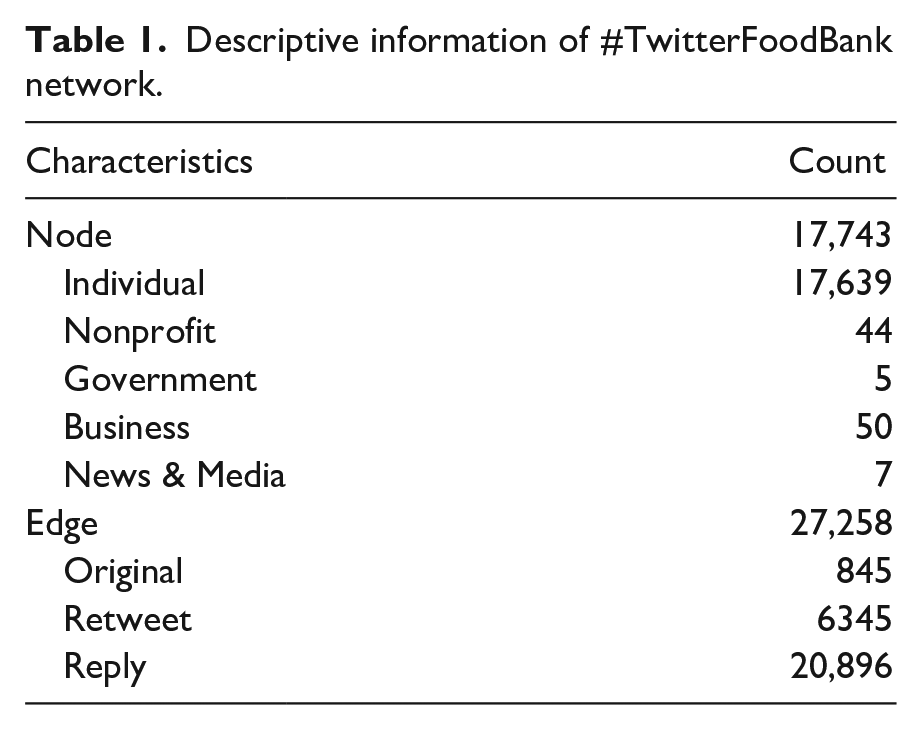
Figure 2 displays the total number of interactions using the #TwitterFoodBank hashtag by date over the course of the 2 selected weeks, from 18 April to 2 May 2020. This hashtag garnered significant interactions during the initial 3 days but gradually decreased in the following days with a long tail distribution (Max = 32,895, Min = 35).
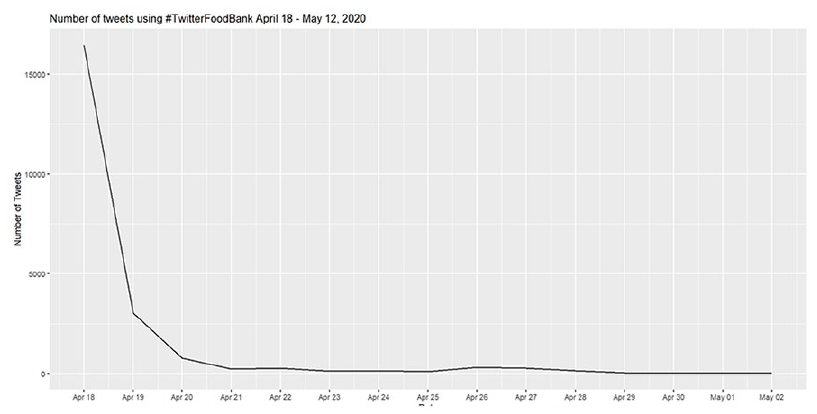
Number of interactions using #TwitterFoodBank from 18 April to 2 May.
In social network analysis, degree centrality serves as a fundamental metric to evaluate the significance of each node within a network. Degree centrality measures a node’s importance by considering the number of connections it has with other nodes, making it an important indicator of a node’s centrality in the network. Table 2 presents the list of the top 20 nodes with the highest degree centrality in the #TwitterFoodBank network. Nodes with high degree centrality are actors holding significant influence in the network. These nodes can be individuals or groups possessing essential community resources or play pivotal roles in disseminating important information. Moreover, these actors can maintain robust connections with other nodes in the network, as evident from the number of connections.
Top 20 users with highest degree centrality.
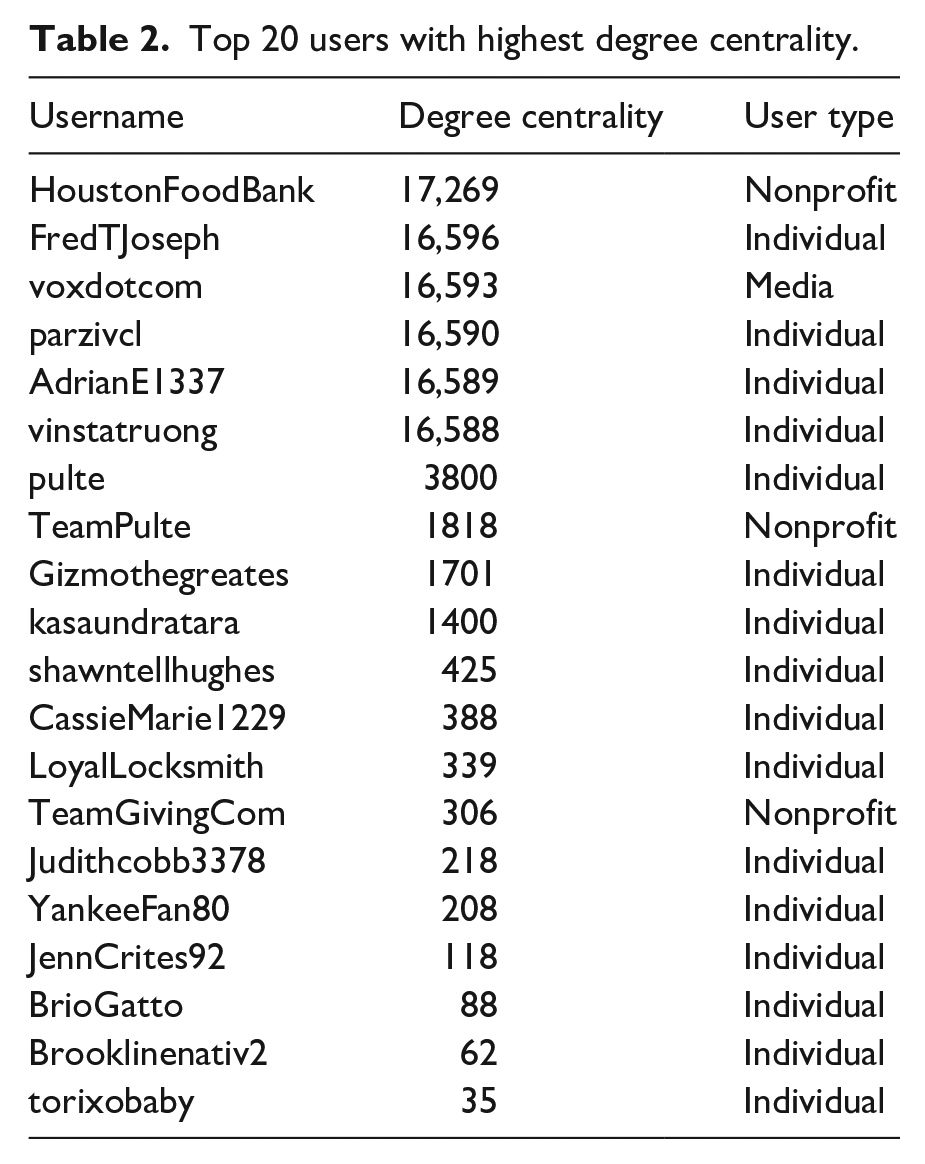
Nonprofits, such as TeamGivingCom (Twitter username of Team Giving), TeamPulte (Twitter username of a supporting group for Bill Pulte), and HoustonFoodBank (Twitter username of Houston Food Bank) were included in the list of top 20 users with the highest Degree Centrality, highlighting their significant role within the #TwitterFoodBank network. TeamGivingCom, for example, shared on their timeline: “We’ve paid 200 Families $100 so far! If you need assistance with food, please comment below, and a team member may reach out! #TwitterFoodBank” to engage the online audience to contribute and support families in need. This nonprofit also provided frequent updates throughout the 2-week period. On 18 April 2020, they posted: “$13,600 was raised last night thanks to you and @Pulte tweets. We are giving $100 cash to 136 families to feed themselves! We will post photos of the recipient Families! #TwitterFoodBank.” This original tweet garnered 895 likes, 148 retweets, and 20 quotes. Pulte, the initiator of the #TwitterFoodBank trend, also played a significant role. Pulte’s tweet read: “Share your CashApp tag using #TwitterFoodBank.” This tweet gained substantial attention with 2323 likes, 2897 retweets, and 1385 quotes.
We also noted the involvement from a media agency called voxdotcom (Twitter username of Vox). The organization quickly embraced the #TwitterFoodBank hashtag and shared the relevant information on their timeline on 18 April 2020: “Americans are using the #TwitterFoodBank hashtag to help each other buy groceries amid the recession https://t.co/UzZ16Cb4E0.” This tweet amassed 2746 likes, 363 retweets, and 29 quotes.
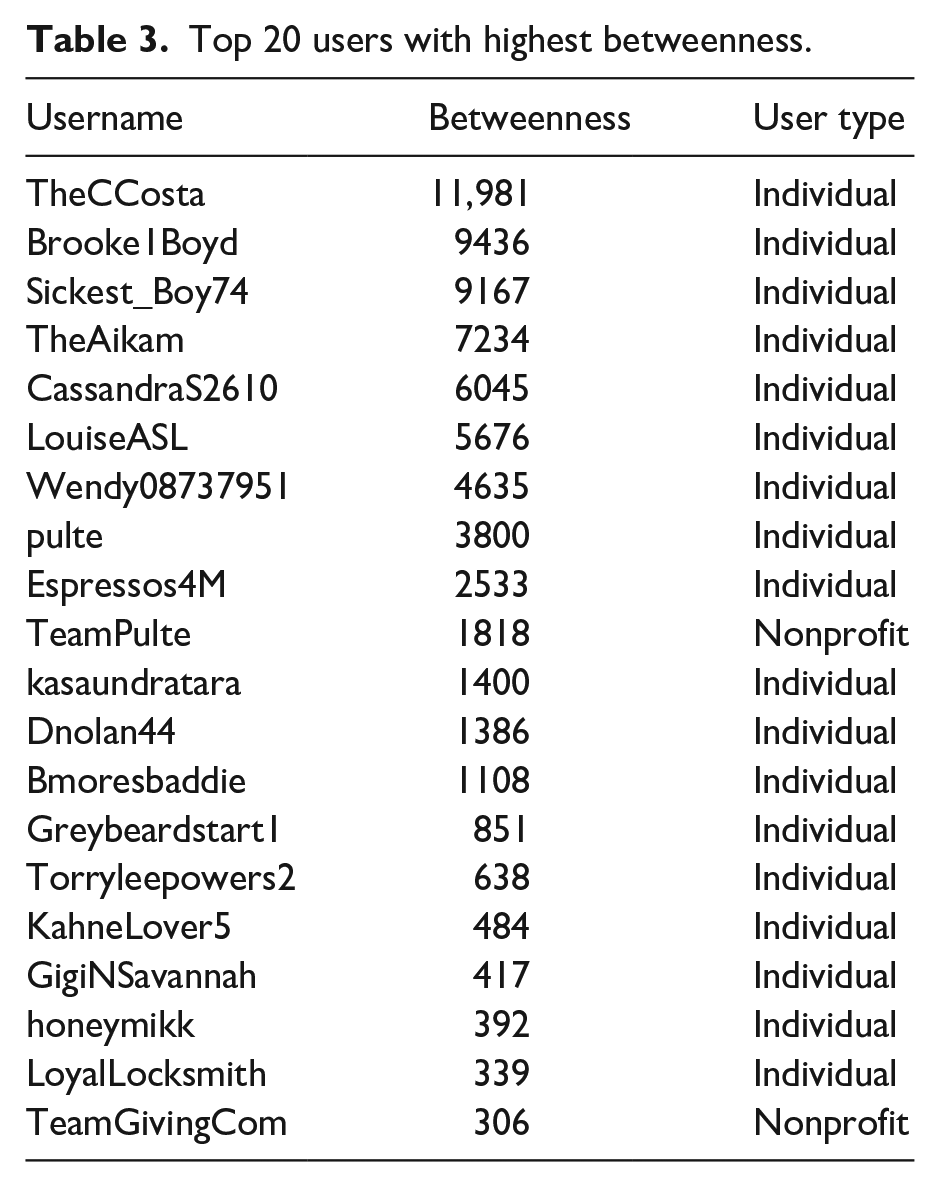
Besides degree centrality, betweenness centrality is another important metric to assess nodes’ significance in a network. Betweenness is calculated based on the number of shortest paths that pass through a node, making it valuable in identifying nodes that function as “brokers” or “gatekeepers” between different parts of the network. The results presented in Table 3 show that TeamPulte, Pulte (Twitter username of Bill Pulte), and TeamGivingCom once again appeared in the list of the top 20 users with the highest betweenness degree. These actors played a vital role in passing along important information or resources across different communities within the broader network. In addition, they facilitated connections between communities or groups that might not be directly linked to one another.
Top 20 users with highest betweenness.
Closeness centrality measures how close a node is to all other nodes within a network (Table 4).In particular, this metric is defined as the inverse of the sum of the shortest path distances from a node to all other nodes in the network. Nodes with high closeness centrality are those that can reach all other nodes in the network quickly and easily (Borgatti et al., 2022).
Top 20 users with highest closeness centrality.
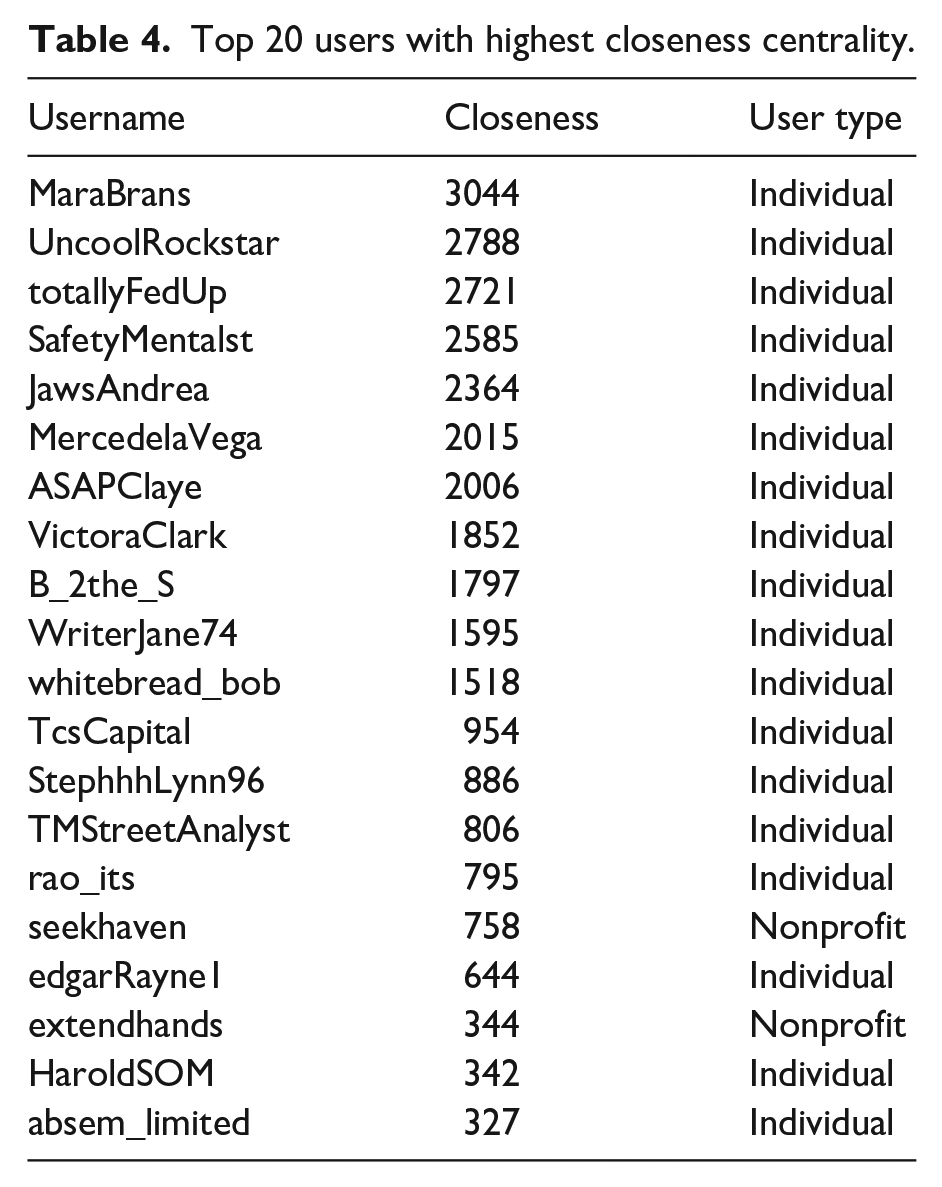
Table 5 displays the top 20 nodes with the highest eigenvector degree. As Pulte, TeamGivingCom, and TeamPulte are the initiators of the #TwitterFoodBank hashtag, their dominance in the top positions is unsurprising. These nodes are likely to play a critical role in shaping the outcomes of the #TwitterFoodBank network by leveraging their influential positions to mobilize resources and disseminate essential information.
Top 20 users with highest eigenvector degree.
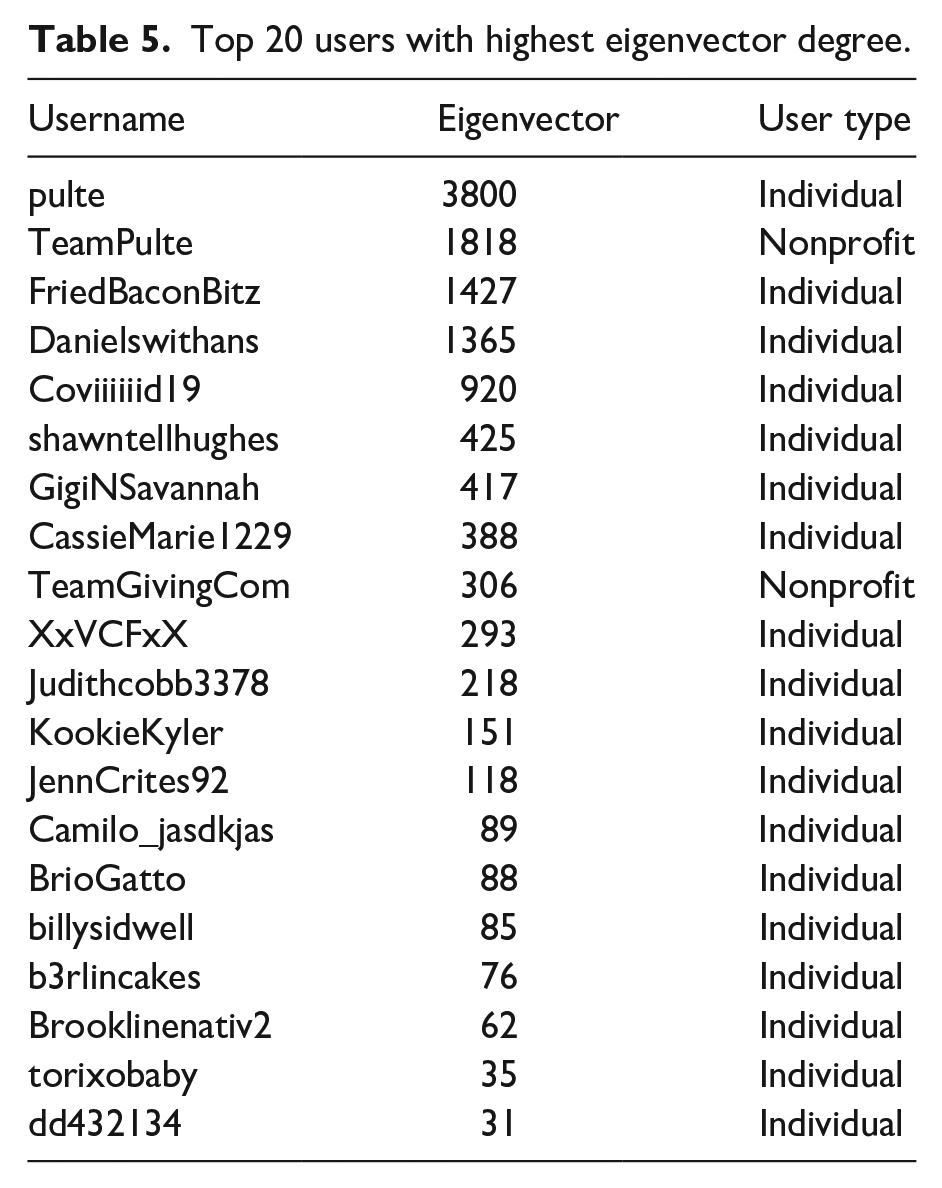
On the contrary, actors such as HoustonFoodBank and Voxdotcom, while showing the highest centrality degree, did not exhibit correspondingly high eigenvector degrees. This indicates that they may not necessarily possess strong connections with other influential nodes in the network, and there could potentially be a lack of coordination among these organizations. HoustonFoodBank, for example, was frequently mentioned in tweets using the #TwitterFoodBank hashtag, but did not respond or actively participate in the conversation.
In this study, we also considered network density. In social network analysis, network density can vary from 0 to 1, where 0 indicates a completely disconnected graph, and 1 indicates a fully connected graph. Network #TwitterFoodBank has a density of 8.761221e-05, meaning the network is sparse. Low network density can suggest a limited interconnectedness among nodes in the network.
In addition, we calculated modularity, a measure of the degree to which a node within a community network can be grouped into sets of nodes that are more tightly interconnected than nodes in other modules. The modularity value can range from −1 to 1. A modularity value of 0 indicates that the network partition is no better than a random partition, while a value of 1 indicates a perfect partition where all nodes belong to a single community. #TwitterFoodBank network has a modularity value 0.325, indicating a generally good network structure.
Social network analysis can provide a visual presentation of interactions among all nodes in the network. Figure 3 presents a network diagram of all actors and their interactions in the #TwitterFoodBank network. The network exhibits high density around nodes with high degree centrality, such as TeamGivingCom, Pulte, TeamPulte, and HoustonFoodBank. Connections disperse as we move away from these focal nodes. These actors hold relatively central positions in the visual map, indicating their significance in the #TwitterFoodBank network. While the network recorded the presence of many nonprofits, businesses, and media agencies, these organizations have limited connections with important actors like TeamGiving, Pulte, or HoustonFoodBank. This observation implies an absence of coordination among these agencies during the food crisis, which potentially hinders effective information dissemination and optimal resource utilization.
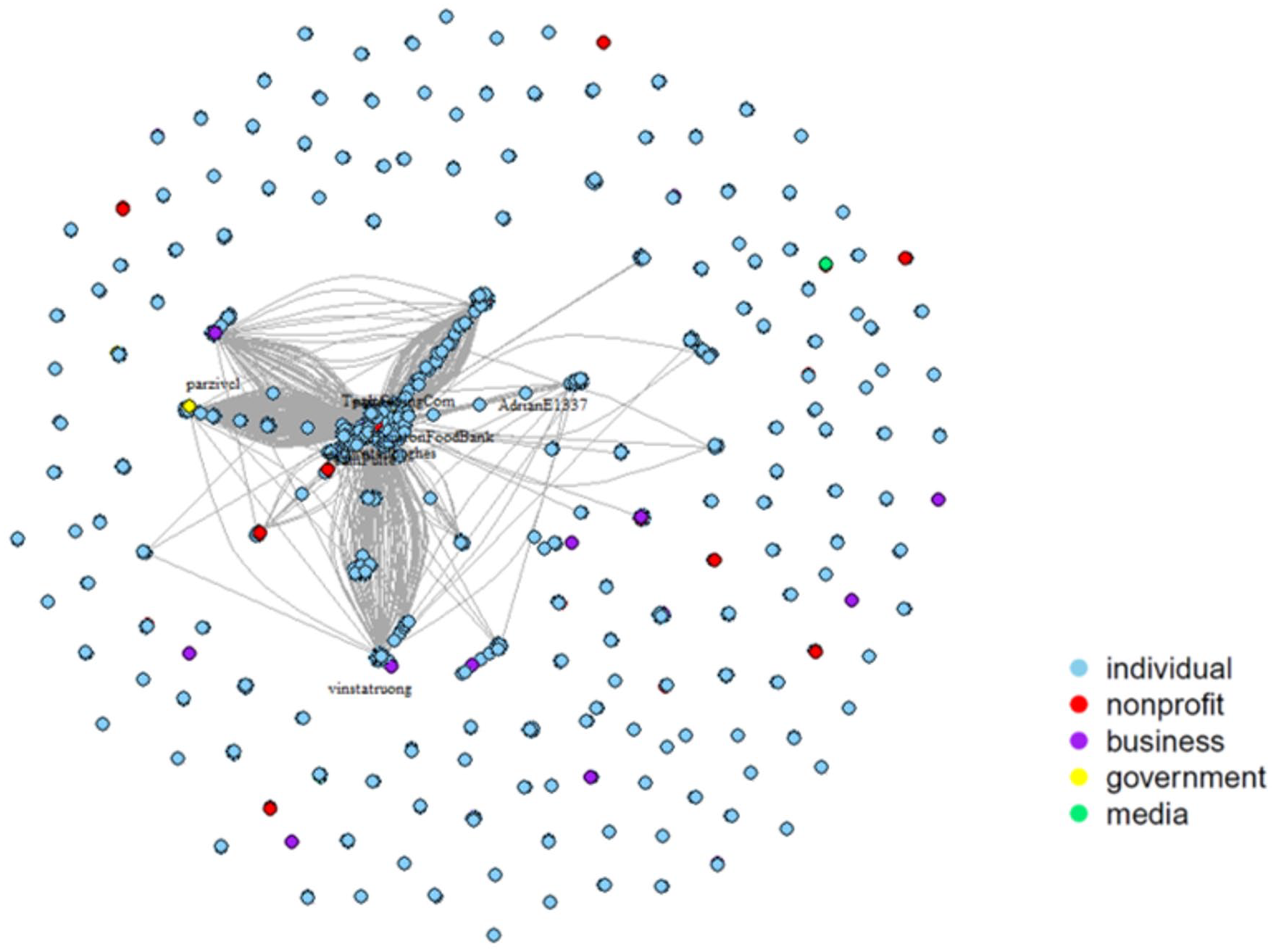
Visualization of network #TwitterFoodBank.
Finally, we applied the Walktrap algorithm to detect communities in networks, wherein nodes closely positioned in the network exhibit stronger connections to each other than they are to nodes farther away. The results show that the overall #TwitterFoodBank can be divided into 542 groups, with the largest community comprising 13,991 nodes. Figure 4 demonstrates the network structure of the largest community. While the largest community has a higher density (0.0001782623) than the overall network, it retains a dispersed nature. Key actors, such as Pulte, TeamGivingCom, and Houston Food Bank, once again hold a high degree of centrality and play significant roles within the largest community. However, the Houston Food Bank did not position itself close to the network center.
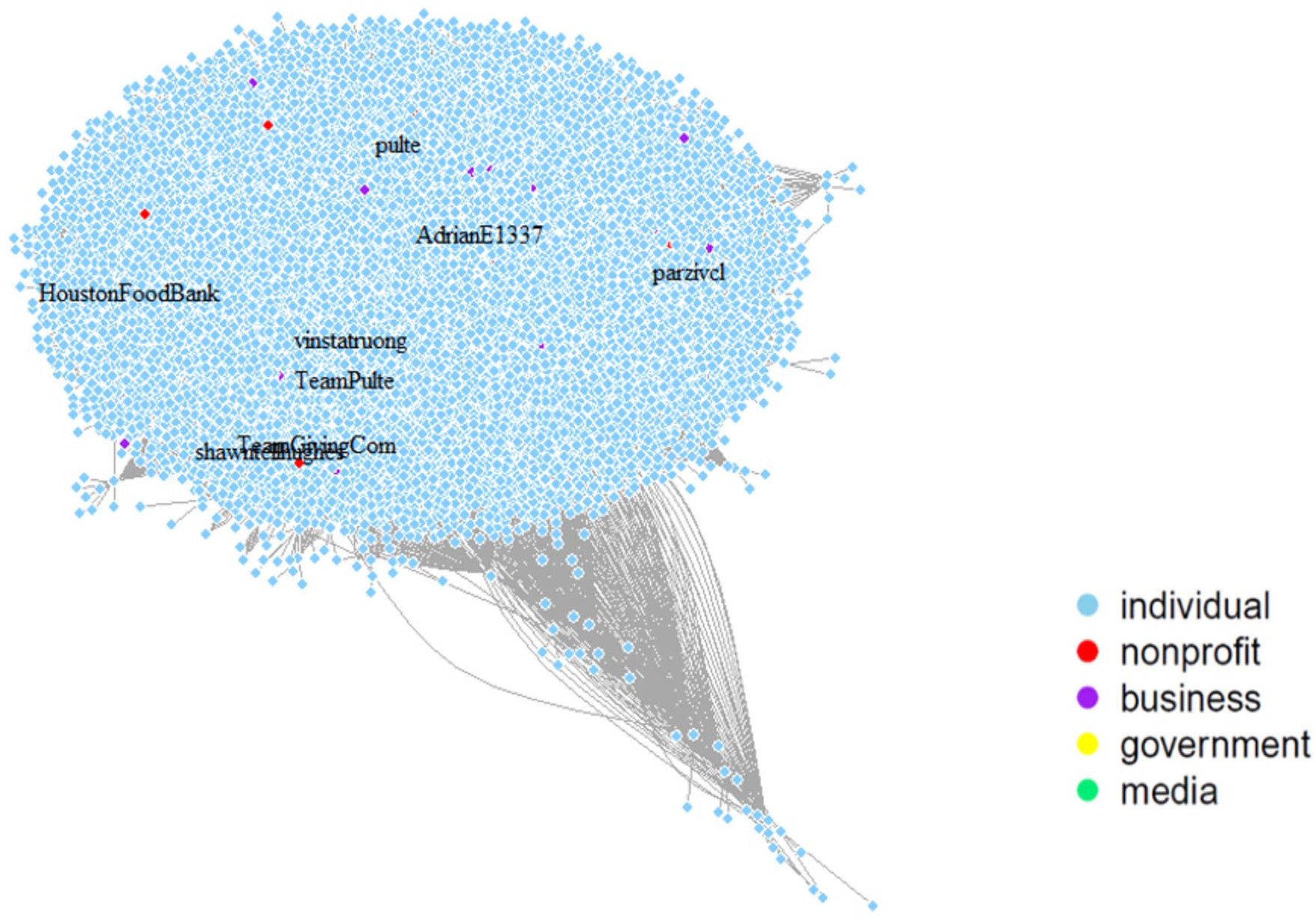
Visualization of the largest community.
Discussion
This research provides insight into the community self-organization during crises by examining the #TwitterFoodBank case study, a grassroots initiative emerged during the early COVID-19 to address food insecurity. Drawing from the self-organization theory and employing a social network analysis approach, we developed a visualization of the self-organized network and identified (1) participating actors, (2) their connections, and (3) the role of nonprofits. We paid particular attention to the role of nonprofit organizations in this online network, emphasizing their potential to leverage the power of self-organization in crisis management.
To start with, our study recognized a self-organized network that emerged on the online platform during the crisis and shed light on its structural aspects. As outlined by Comfort (1994), a self-organized network emerges and thrives under fundamental conditions, including (1) structure, (2) flexibility, (3) shared goal, (4) interaction, and (5) evolution. The #TwitterFoodBanks network exhibited these attributes to a certain extent. For instance, the adoption of the shared hashtag # on social media established a structure for various actors to engage in extensive “communicative act” during the 2-week period (Luhmann, 2008), counteracting information asymmetry caused by the COVID-19 situation. Actors engaging with the #TwitterFoodBank also shared common goals: to help and seek help. This goal united communities, nonprofits, and other actors, enabling swift communication regardless of geographical boundaries. Engaging in “communicative acts” also enabled both nonprofits and communities to participate in the essential “sensemaking” process, which allowed individuals and communities to interpret their surroundings and make informed decisions regarding their safety in times of uncertainty, ambiguity, and turbulence (Stieglitz et al., 2017). Network density results and visualization indicated that the #TwitterFoodBank network was decentralized and distributed among multiple interconnected components.
Moreover, our study identified potential factors that are possibly either foster or hinder the success of the online self-organized network. First, we acknowledged the pivotal role of nonprofits and communities in the self-organized network and crisis management. Our case study observed that several nonprofits with high centralities played critical roles in coordinating the #TwitterFoodBank network. Although the network did not have many nonprofits, these organizations often appeared in the top 20 users with the highest centrality, betweenness, and eigenvector. This discovery underscores their significant contribution in connecting online communities in crises. Team Giving’s initiation of the #TwitterFoodBank hashtag created opportunities for communities to take action, to help, and seek help. Their proactive involvement within the online network enabled information flows within the broader community, bridging the gap between resource availability and those in need. For instance, according to Team Giving’s update on 19 April, the organization was able to raise US$13,600 overnight to support families in need: “$13,600 was raised last night thanks to you and @Pulte tweets. We are giving $100 cash to 136 families to feed themselves! We will post photos of the recipient Families! #TwitterFoodBank.”
This finding is congruent with previous studies positing that a self-organized network can complement or partially replace formal crisis management networks (Albris, 2018; Majchrzak & More, 2011; Simsa et al., 2019). Our findings also challenge assumptions upheld by the traditional crisis management approach, which often overlooks the role and contribution of nonprofits and communities in crisis management. We advocate that nonprofits and public organizations recognize the presence of self-organized networks, engage in these networks, and identify influential actors within them to foster more efficient crisis response.
Second, the findings revealed a lack of coordination among key actors within the online self-organized network, which could potentially explain why it had a short lifespan. Despite sharing a common cause and holding high degree centrality, the nonprofits in the #TwitterFoodBank network did not coordinate or collaborate to sustain the network. For instance, HoustonFoodBank and Voxdotcom displayed low eigenvector degrees, indicating that they may not necessarily have strong connections with other influential nodes in the network. Consequently, the resulting self-organized network had low density and was short-lived. Furthermore, nodes that could potentially serve as “amplifiers,” such as media agencies and local nonprofits, remained relatively inactive in their participation in the network. While the #TwitterFoodBank self-organized network was able to initially create a structure to hold and exchange information, as outlined by Comfort (1994), the network did not sustain itself due to a weak structure, a lack of emphasis on shared goals, and inadequate opportunities for deeper online interactions.
According to Edelenbos et al. (2018), a self-organized network is more likely to succeed if it represents the interest of a large community. Despite its bottom-up approach, the participation of public and nonprofit organizations is important for maintaining the network’s vitality. To improve network density, it may be necessary to encourage collaborations and facilitate information sharing of various actors in the network.
Practical and theoretical contribution
Leveraging social media and harnessing the power of self-organized community on virtual platforms can unlock new opportunities for effective crisis management. In this research article, we examined the case study #TwitterFoodBank to illuminate an important topic that deserves more attention.
First, our findings add nuances to the public crisis management literature by recognizing a self-organized force arising from a crisis context. We encourage scholars to pay closer attention to this phenomenon. The study highlights that nonprofits can play an essential role in initiating meaningful online self-organization during a crisis. These networks can be beneficial to communities in need when government interventions are insufficient or unavailable. Since self-organization often occurs during and after crisis events, social media could serve as a bridge connecting citizens, public, and nonprofit agencies (Albris, 2018), as demonstrated in the #TwitterFoodBank case study. Taking a broader perspective, acknowledging these self-organized networks on social media can assist nonprofits and public agencies in identifying and connecting with influential partners, sharing resources, and responding to crises more effectively. Moreover, the insights into factors that either enable or impede the success of online self-organization can provide implications for nonprofits seeking enhanced engagement and coordination in “guided” self-organized networks (Helbing, 2014; Prokopenko, 2009, 2013; Smirnov & Shilov, 2015). Future studies should emphasize the role of social media in crisis management and explore how self-organized groups are coordinated and sustained in the virtual environment.
Second, our study enriches the self-organization theory by offering empirical evidence within the nonprofit sector, an area that has yet to receive considerable attention (Edelenbos et al., 2018). In addition, we provide insights into the emergence and evolution of self-organized networks on social media. Given that existing studies on self-organization typically focus on face-to-face interactions, our study broadens the scope of self-organization theory by examining how self-organization can occur in a different context. Moreover, the study extends the theoretical understanding of the factors that enable and hinder the success of self-organized networks. The comprehensive record and explanation of the #TwitterFoodBank case study can be helpful for future studies seeking to build upon our research and further investigate this topic.
Third, we encourage nonprofit practitioners and leaders to incorporate big data and social network analysis approaches into their crisis management strategies. The ability to visualize extensive network structures makes social network analysis highly applicable to nonprofit works in many ways. For example, network visualization can assist nonprofits and communities in identifying actors who possess crucial community resources or wield influence within the information-sharing network, thereby aiding in navigating uncertainty during a crisis.
Limitations
The study has several limitations regarding validity and reliability that should be acknowledged. First, sample bias is possible since we focused on examining a specific case study. #TwitterFoodBank represents one example of many other self-organized networks that emerged during the early COVID-19 pandemic. Each self-organization network online has unique dynamics and appeals to distinct groups of attendees, making it challenging to generalize the findings of this case study to other contexts or populations. Besides, #TwitterFoodBank may not offer a comprehensive representation of all social media users, potentially attracting specific groups of active, tech-savvy actors with particular interests on social media platforms. Moreover, data collected from Twitter may not be entirely comprehensive. Instances of users deleting tweets, presence of fake accounts and noise can contribute to incomplete or skewed data. More in-depth, longitudinal, qualitative, and comparative case studies in the future could provide valuable insights into underlying dynamics and relationship changes within self-organized networks.
While social network analysis is a rigorous approach to visualizing extensive network structures and social relationships, it often faces criticism for its inability to establish causality. In our case study, we encounter limitations in measuring the outcomes of the #TwitterFoodBank network as donation activities occurred on other platforms, such as cash apps. Efforts to support individuals and families in need might have taken place offline and were not reflected on Twitter. However, this issue can be addressed if nonprofits consider integrating their communication and fundraising platforms. The ability to visualize network structure and measure outcomes of self-organized networks holds significant potential for nonprofits aiming to enhance their communication strategies and overall performance. Despite the mentioned limitations, our findings provide valuable insights into the role of nonprofit organizations and communities in self-organized networks during crises. These insights can inform and improve crisis management practices in the public and nonprofit sectors.
Conclusion
In conclusion, our research article emphasizes the potential of social media and community self-organized networks in crisis management. By acknowledging the implications of self-organization networks, public and nonprofit agencies can tap into the potential of these communities to respond to the crisis more effectively. Our study underscores the capability of nonprofits and the community to contribute practical solutions, emphasizing the importance of their participation in crisis management. Self-organized networks can achieve greater success if they are undertaken with more strategic planning and collaboration. Going forward, we encourage nonprofit researchers and practitioners to further explore this topic and expand our understanding of the benefits of self-organization in nonprofit management.
Footnotes
Acknowledgements
The author would like to thank Dr. Elizabeth Searing, Associate Professor of Nonprofit Management at the University of Texas at Dallas, for her guidance and advice throughout the development of this paper.
