



Abstract
As exemplified by the COVID-19 pandemic, the design and implementation of data-driven health surveillance, like digital contact tracing (DCT) apps, carry significant implications for society. However, its rushed development calls for careful consideration from all involved stakeholders to achieve a shared understanding and engage in joint-sensemaking in order to implement DCT collaboratively and effectively utilize it in the fight against the pandemic. Yet, the empirical ground truth and theoretical mechanism of joint-sensemaking are both unclear. Drawing on this gap, this article applies a multistep approach, including sentiment analysis, topic analysis coupled with regression and unique network analysis, to thoroughly explore, examine, and explain the dynamic process of joint-sensemaking in the context of a public crisis. Based on evidence from 113,264 Weibo posts, we illustrate two joint-sensemaking pathways and three key interventions using the case of China's Health Code in the context of the DCT. We reveal that the effectiveness of different interventions and contributions made by stakeholders vary significantly between different joint-sensemaking pathways. Specifically, we find that official media and opinion leaders act as crucial mediators in bridging intervention conductors and the public. However, their influence presents heterogeneity toward different network modularity, thus leading to distinct patterns. Additionally, inconsistent with previous literature, we find that within the context of the China Health Code, official media has a greater impact on opinion leaders in engaging the public.
Introduction
Digital contact tracing (DCT) has emerged as a prominent big data-driven technology that has been widely adopted worldwide in response to the COVID-19 pandemic (Gasser et al., 2020). For instance, China's DCT app, known as Health Code, has been used by more than 900 million users over 300 cities (Liang, 2020). As one of the core technology strategies in China's anti-pandemic approach, DCT played a vital role in helping the country maintain its low infection rate to this day, despite having the largest population in the world. Health Code operates by generating a QR code with different colors, indicating an individual's health status. Green signifies being healthy and allows unrestricted movement, yellow indicates the need for observation and self-isolation, while red signifies danger and mandates isolation. The color is determined based on an individual's geolocation data, obtained from their phones’ GPS and network carrier information, to assess whether they have visited high-risk areas or come into contact with potential carriers of the virus.
In contrast to conventional innovation diffusion patterns, DCT is mandated as a technical requirement in many countries. Individuals must download DCT to gain access to public facilities like malls, transportation, schools, and offices. The diffusion of DCT is predominantly driven by the effectiveness of governance and government initiatives to promote its adoption. However, it presents notable challenges (Rogers, 1962). Firstly, as a technology developed under time constraints, its application landscape is characterized by ambiguity, uncertainty, and equivocality due to the dynamic nature of the COVID-19 epidemic, leading to disruptions and disorder. Secondly, the urgent need for immediate deployment leaves limited room for pilot studies or comprehensive risk assessments prior to wide-scale implementation. Additionally, as a “social technology,” DCT involves multiple stakeholders, including citizens, government entities, technology suppliers, and the media. Hence, it becomes imperative to adopt an effective approach in order to facilitate agile participation, comprehend its trajectory of rapid diffusion, and carry out effective interventions (Hu et al., 2022).
To achieve this goal, it is particularly important and challenging to establish an effective involvement of all stakeholders, enabling them to make sense of large volumes of information over extended periods of time while continually updating their understanding of the evolving situation (Weick, 1995; Christianson and Barton, 2021; Li, 2021). To address these challenges, a concept called “joint-sensemaking” becomes crucial. Joint-sensemaking is a socially constructed process, wherein individuals interact with their environment and each other to create meaning and facilitate action, has been frequently discussed as essential in dealing with unexpected events, particularly crises (Weick, 1995; Christianson and Barton, 2021). In the context of the COVID-19 pandemic, sensemaking has increasingly shifted to online platforms, such as social media, which have become crucial channels for communication and interaction among diverse social groups (Gruzd and Mai, 2020; Schweinberger et al., 2021; Sukhwal and Kankanhalli, 2022). Previous research on social media and crisis communication suggests that during times of crisis, the public tends to attribute more credibility to information shared on social media compared to traditional news media (Jin, Liu and Austin, 2014). However, this dynamic is further complicated by the evolving social landscape, as communication has transitioned from one-way dissemination to multi-directional dialogue involving various stakeholders (Chewning, 2015).
The process of joint-sensemaking in crisis situations involves noticing, meaning-making, and action (Maitlis and Christianson, 2014). Interaction plays a central role in this process (Christianson and Barton, 2021). It helps in understanding how information is disseminated, interpreted, and shared during the pandemic, allowing for insights into the dynamics and influence of stakeholders. This includes their perception of the crisis, their information-seeking and forwarding behaviors (Kim and Grunig, 2011), and their shared experiences (Aldoory et al., 2010). Such understanding enables organizations to anticipate stakeholders’ communication behaviors, as their information-seeking and forwarding behaviors may vary. Effective interactions for sensemaking require deliberate and skillful craftsmanship in transferring information to enable dialogic communication and achieve desirable outcomes, such as enhancing technology acceptance (Valentini, Romenti and Kruckeberg, 2018). While existing research has made progress in understanding the “what's going on” aspect during crises using extensive datasets, there is a need to further explore the “why things happen” and determine how to craft effective interventions, such as crisis communication strategies (Valentini, Romenti and Kruckeberg, 2018), that lead to desired outcomes.
During the COVID-19 pandemic, the environment has become dynamic and uncertain, leading to disruptions in normal interactions. This unique context highlights the criticality of sensemaking while also making it a challenging task to accomplish and also offers an opportunity to bring assumptions and questions about sensemaking theory to the forefront, which have remained unexamined. This article aims to address these gaps by conducting a comprehensive study on the Health Code, i.e., the Chinese DCT app, to shed light on the patterns and mechanisms of joint-sensemaking during innovation diffusion in crisis time. The study follows a three-step approach to achieve its objectives. (1) By building upon the structured Notice-Interpret-Action framework, we aim to conduct an in-depth ground truth exploration to portray the sensemaking trajectories within the accelerated diffusion of DCT innovation. Thus, it will enhance our understanding of how sensemaking processes evolve and adapt in the context of compressed timelines. (2) For a better understanding of the strategies for managing and leveraging joint-sensemaking during crises, this study examines the impact of key government interventions on facilitating or hindering the joint-sensemaking process, and its impact on fostering DCT acceptance. (3) The study deviates from previous literature by employing network analysis and the structure hole theory. This analytical approach allows for examination of the roles of different stakeholders and its mechanism, including opinion leaders and official media in joint-sensemaking patterns.
We leveraged data from Sina Weibo, the one of the largest social media platforms in China, to examine joint-sensemaking during the diffusion of technological innovation. Our analysis of 113,264 Weibo posts revealed two distinct paths of joint-sensemaking: the Patching path and the Add-in path, and three pivotal governmental interventions: Responding, Fixing, and Pre-launch Promotion. These interventions play a heterogenous role in shaping the joint-sensemaking paths during times of upheaval. In addition, drawing upon the structural hole theory (Lin et al., 2022), we found that official media entities act as structural hole spanners, establishing connections not only with numerous “opinion leaders” but also engaging more directly with the general public. These findings deviate from the traditional two-step information flow theory (Katz, 1957), which posits that the public primarily receives information and influence from the media indirectly through the personal influence of opinion leaders. Our research suggests the dominance of a one-step information flow, wherein the public gravitates toward more authoritative and direct sources of information, thereby diminishing the mediating role of opinion leaders, particularly within the context of a crisis. However, it is crucial to acknowledge that the public's trust in the government can vary across different socio-economic contexts, which may influence the veracity of these findings.
In response to the growing demand for advancements in quantitative sensemaking (Cristofaro, 2022; Turner et al., 2023), our study adopts a mixed-method approach that incorporates sentiment analysis, topic analysis, regression analysis, and innovative network analysis. This comprehensive methodology allows us to conduct a systematic and in-depth analysis, uncover patterns, and establish mechanisms. In addition, this article also aims to provide some empirical insights for policymakers and public health authorities to develop evidence-based strategies to effectively communicate, engage, and navigate the complexities of crisis situations. By recognizing the distinct paths of joint-sensemaking and the role of different stakeholders, policymakers can tailor their strategies to leverage the influence of official media outlets and opinion leaders, who act as intermediaries in disseminating accurate information and shaping public opinion, and consequently, it is able to foster acceptance of innovative technologies and ensure effective crisis management. Furthermore, our research highlights the importance of ongoing assessment of sensemaking trajectories and the efficacy of policy interventions. Policymakers can use this knowledge to adapt their strategies and interventions in real time, ensuring that they remain effective in addressing the evolving needs and concerns of the public.
Sensemaking process and DCT innovation diffusion in the crisis time
Sensemaking theory, introduced by Karl E. Weick in the 1970s and further developed over the years, has made significant contributions to understanding how individuals and organizations make sense of complex and ambiguous situations, particularly during times of crisis (Weick, 1995; Maitlis and Sonenshein, 2010). Central to this theory is the concept of joint-sensemaking, which emphasizes the collective nature of sensemaking, where individuals engage in interactions and share their interpretations to develop a shared understanding of the situation.
In the context of the COVID-19 pandemic, numerous studies have highlighted the importance of social interactions and public engagement in fostering collective intelligence for the successful diffusion of Digital Contact Tracing (DCT) innovations. For example, Li (2021) examined the “LeaveHomeSafe” app in Hong Kong, illustrating the significance of considering the social aspect when using personal data to reconfigure pandemic control strategies. Similarly, Tan and Lim (2022) analyzed the TraceTogether app and physical token in Singapore, underscoring the need for trustworthy communicative interventions to enhance public engagement. Despite these valuable insights, the dynamic process, key factors, and mechanisms underlying collective sensemaking during crises remain somewhat unclear and require further investigation.
The pandemic has caused a shift in social interactions from physical to online platforms, such as social media and chat apps, which have become the primary channels for mutual understanding and sensemaking. Several studies have demonstrated the value of social media platforms in fostering mutual understanding, public trust, and proximity through ongoing productive conversations and visible feedback loops (Camilleri, 2021; Schweinberger et al., 2021; Pascual-Ferrá et al., 2021; Sukhwal and Kankanhalli, 2022). In China, for example, discussions surrounding the Health Code policy have been intense online, with the public actively voicing their opinions on its implementation and evolution. Additionally, both central and local governments, as well as official media, have utilized platforms like Weibo as effective tools for public communication during the crisis, actively participating in discussions and responding to feedback (Yang et al., 2020). However, the vast amount of diverse, incomplete, fragmented, or contradictory information available on these platforms poses significant challenges in framing, interpreting, and achieving joint-sensemaking. Therefore, further exploration is necessary for understanding the underlying patterns and mechanisms and make the sensemaking process more logical and effective when leveraging social media for joint-sensemaking during crises.
There are three primary concerns that warrant attention in this context. Firstly, it is essential to comprehend the dynamic process of joint-sensemaking during the application of Digital Contact Tracing (DCT) innovations. The sensemaking process typically encompasses three stages: Notice, Meaning making, and Action (Christianson and Barton, 2021). Notice involves individuals identifying puzzling or troubling elements that disrupt their ongoing interactions, thereby transforming the situation into a problematic one. With the introduction of DCT innovations, governments must ensure that the public is well-informed about the functionalities and benefits of these technologies for pandemic control and public health. Additionally, timely awareness and response to unforeseen events arising from the public's use of DCT are crucial. Interpretation, the second stage, involves understanding and deriving meaning based on available interpretative channels, which then serves as a foundation for subsequent actions. Finally, action refers to how individuals decide to interact or respond based on their interpretation, driven by their desired purpose. Different individuals may interpret DCT diffusion differently and have distinct expectations for its future development, which motivates them to engage in online discussions, post comments, and offer advice on policy implementation and system improvement. Therefore, understanding the dynamic process of what catches their attention, how they interpret information, and what motivates their actions is of particular importance.
The second concern pertains to the government's role in intervening and influencing joint-sensemaking during the diffusion of DCT innovations. The overarching principle of sensemaking suggests that individuals “act their way into knowing” (Christianson and Barton, 2021; Weick, 1995). Through various engagements and interactions with their environment, individuals gain diverse experiences and generate different insights. During a crisis, government interventions, such as providing accurate information, implementing effective policies, and appropriately allocating resources, significantly influence how people perceive and respond to the situation. In the case of DCT, the government's response plays a particularly significant role in shaping the sensemaking process and facilitating the diffusion of these innovations. The government's approach can range from supportive actions that emphasize the benefits of DCT and address concerns to opposing actions that foster skepticism or distrust. By studying the dynamics between sensemaking, government actions, and the diffusion of DCT innovations, we can better manage the process of innovation diffusion during a crisis.
The third concern involves the role of key stakeholders in the joint-sensemaking process. Effective communication among different stakeholders is crucial during joint-sensemaking. This communication entails timely and constructive sharing and synthesis of information from various actors to facilitate cognitive alignment and operationalize interaction for joint-sensemaking. As individuals engage and interact with their environment, they gain diverse experiences and generate different insights, contributing to the collective sensemaking process (Christianson and Barton, 2021; Weick, 1995). Therefore, the involvement and collaboration of key stakeholders, such as government agencies, public health organizations, technology developers, and the general public, are essential for effective joint-sensemaking during crises.
In response to these concerns, this article aims to explore the dynamic process, key factors, and mechanisms underlying joint-sensemaking during crises, specifically in the context of DCT adoption. Understanding the role of social media platforms, the government's interventions, and the involvement of key stakeholders can contribute to a more logical and effective sensemaking process. This knowledge can help inform strategies for managing and leveraging joint-sensemaking during crises, ultimately leading to better decision-making and innovation diffusion in times of crisis.
Data acquisition
Our data was collected through crawling from Sina Weibo (https://weibo.com/), the largest microblogging platform in China, often referred to as the Chinese counterpart of Twitter. Weibo serves as a popular platform for users to share information, engage in discussions, and express their opinions. Researchers and practitioners have widely used Weibo data for social media analysis, including studies on happiness expression (Zheng et al., 2019), information spread (Hu et al., 2022), and sentiment in China (Wang et al., 2022). Weibo data has also been applied in various epidemic research studies in China (Xu et al., 2020; Zhao et al., 2020; Liu et al., 2021).
To gather the data, we employed a crawler to obtain information from Weibo. Following established research practices, we adopted a hashtag-based sampling strategy (Cinelli et al., 2020) to identify relevant content. Initially, we generated a comprehensive list of hashtags associated with the keyword “Health Code” (“健康码”) and keywords related to health code variations in different provinces (e.g. “随申码” of Shanghai, “赣通码” for Jiangxi, details provided in Supplementary Table 15), for each specific time period. Subsequently, we utilized the web scraping process to collect all Weibo posts featuring these hashtags. In addition to the posts, we also collected the profiles of the users who published the tweets, allowing us to differentiate between various entities involved in the discussions.
To maintain the integrity and validity of our data, we implemented rigorous measures to ensure its freshness and relevance. We conducted monthly searches for Weibo posts related to the Health Code, thereby avoiding the inclusion of duplicate headlines. Our web scraping efforts spanned a period of 19 months, starting from 11 February 2020, and concluding on 31 August 2021. In total, our dataset consists of 102.4 thousand Weibo posts, encompassing contributions from 71,228 unique users.
Methods
Our methodology comprises 3 steps, which are structured in Figure 1.

Research methodology and research path.
Step 1: portraying joint-sensemaking pathways
We first conduct an exploration analysis to understanding the ground truth of online interactions toward the case of the Health Code. To achieve this, we employ Latent Dirichlet Allocation (LDA), an unsupervised learning algorithm widely used for automatically identifying significant topics and discovering the underlying topic structure within a text corpus, like news and data (Box-Steffensmeier and Moses, 2021; Eichstaedt et al., 2018; Stier et al., 2021). Following the classic approach in previous literature, we combine the posts under each Weibo hashtag into a single text entry after data cleaning and preprocessing, and then feed the corpus into the bag-of-words model as input for the LDA topic model. After examination of the classification results by using indicators including perplexity, coherence, residual, and held-out likelihood (see Supplementary Figure 8), we select 20 as the default number of topics (which also achieves a relevant higher coherence score). Examining the topic distribution of documents, we find that the median probability of the top-1 topic classification for the top 100 hashtags is 0.829, showing that the assignment of most hashtags is unambiguous since each document has a dominant topic classification. Thus, we choose the topic with the highest probability as the topic classification and manually adjust minor errors. Later, through our examination and summary of the keywords within the topics, we find that the obtained topics include “Health Code release,” “Health Code unification,” “Health Code single standard,” “Health Code bringing inconvenience for the elderly,” “Health Code integrating Vaccine Passports,” and “New Interface for Health Code,” etc. These topics address specific aspects of various issues, such as bug reports, responses, and actions related to problems faced by the elderly. Thus, to further organize these topics, we merged them into main issues based on the similarity of top keywords and inter-topic distance. This process was conducted using the Python pyLDAvis library (Chen and Wang, 2019) for visualization and counting. Supplementary Tables 2 and 3 provide a mapping of key topics to associated words found in the posts. After Principal Component Analysis (PCA) combined with examination of key topics words in each topic, we cluster these topics into main social issues together with qualitative interpretation and summarization.
Then, based on the notice–interpretation–action framework, we take an in-depth review of the whole event evolvement and timeline of the main issues and conceptualize different joint-sensemaking pathways for joint-sensemaking.
Step 2: examining key interventions
In this step, we assess the effectiveness of interventions in the dynamic process of joint-sensemaking. We adopt the sentiment score measuring public attitude, ranging from 0 to 1, as the performance outcome of interventions (Bilro et al., 2022; Domalewska, 2021). A higher sentiment score indicates a more positive and integrated attitude among multiple actors, implying a higher likelihood of reaching consensus among stakeholders. We perform sentiment analysis on every tweet in our dataset based on a pre-trained NLP model–Sentiment Knowledge Enhanced Pre-training (SKEP), which achieves the state-of-the-art performance on several sentiment classification tasks (Dai et al., 2021; Qiu et al., 2022; Zhu et al., 2021) (especially on corpus in Chinese). We then average the sentiment score over the posts under each hashtag. To avoid skewing toward the users who post the most and have extreme attitudes, we aggregate the sentiment score to the individual-date level before averaging the sentiment under the same hashtag, following the practice in previous research (Wang et al., 2022). Locally weighted scatterplot smoothing (LOWESS) is then leveraged to describe the overall sentiment trend under each of the 4 main issues respectively.
After conducting the sentiment analysis, MLR is applied to estimate how the effect of various interventions on daily public sentiment changes within different joint-sensemaking paths.
By referring to previous research (Sukhwal and Kankanhalli, 2022), our model is given below:

Step 3: stakeholders role investigation
We adopt social network analysis, which is commonly used to identify modularity and clusters (Felt, 2016), to investigate the mechanism of joint-sensemaking. By employing this approach, we are able to map out the dynamic connections among different communities’ clusters in visuality, identify the roles and contributions of key stakeholders in the interaction patterns toward joint-sensemaking (Felt, 2016), thus to have a further understanding on the mechanism of joint-sensemaking.
We employ the EasyGraph library (Gao et al., 2023) to construct the interaction networks. Users in the dataset are treated as nodes, and we extract the directed interactive relationship as edges, including forwarding, mentioning, and replying to actions contained in the content of posts. We also obtained the profiles of the users to group them into 3 different types, and classify user interactions (i.e. the edges) into three groups according to the expressed sentiment. We define positive interaction (sentiment score ∈ (0.6,1]), neutral interaction (sentiment score ∈ [0.4,0.6]), and negative interaction (sentiment score ∈ [0,0.4)). We make these distinctions so that we can more clearly and hierarchically present the interactive network characteristics.
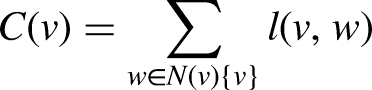
We further calculated network attributes and node centrality measures of all the graphs. The network measures include density, clustering coefficient, as well as the diameter and average path length of the largest connected component (LCC). We also calculate centrality measures including degree, PageRank, betweenness centrality, closeness centrality, and eigenvector centrality for all the nodes, and compare the values among different types of users to study their different interaction patterns. Additionally, constraint as a widely-used structural hole metric is used in our further analysis (Burt, 2004). The constraint value on node v is defined as

Results
Portraying joint-sensemaking pathways
Building on the results of LDA topic analysis, we have identified four salient issues that have been extensively discussed: Issue a. Difficulties of the elderly's access to Health Code; Issue b. Health Code functional crashes; Issue c. national unification of Health Code; Issue d. Health Code integration of Polymerase Chain Reaction (PCR) test and vaccine proof into Health Code (see Figure 2).2

Principal components analysis of LDA topics. (a) Topics clusters in four quadrants. (b) Top 5 most relevant terms in each of the four issues. Y-axis represents the most relevant terms for each of the four issues, and X-axis represents the estimated term frequency in the corresponding issues. (c) Trend of each of the four issues (curves are smoothed).
Furthermore, we conducted a detailed review of the entire event line and timeline for these four issues and conceptualized the joint-sensemaking pathways. Based on the NOTICE-INTERPRETION-ACTION framework, we identified two joint-sensemaking paths and named them using terminologies commonly used in the software industry (Meyer, 2014).
The first path, known as the “Patching Path” (seen in Figure 3) emerges from the issues identified as Issue a and Issue b. Following the initial release of Health Code apps, the public begins to take notice of this technological innovation, engaging in observation and interpretation. However, as with any emerging innovation, various problems arise and are reported by Weibo users, garnering widespread attention and influencing their interpretation and judgment of the Digital Contact Tracing (DCT) system. Motivated by varying purposes, different users may respond and act accordingly. Some may criticize and express doubts about the value of such an innovation, while others may provide empirical suggestions for improvement. In response to these unexpected problems, which can be likened to “bugs” in software innovation, appropriate interventions are necessary to shape the interpretation process. Without such interventions, users may increasingly act negatively, potentially leading to social issues. For example, in Issue a, the difficulties faced by the elderly in accessing the Health Code were initially reported through discursive posts. Instances of elderly individuals being denied access to public transportation, such as the Metro or Bus, gained attention and escalated into a fiercely debated social problem across the country.

The route of Patching Path.
To address these issues, the government needs to implement “patching” interventions. Through an in-depth analysis of Weibo posts from government sources and official media (Tong, 2022), two main types of interventions were identified. The first type is “Responding,” which involves expressing substantial concern from the government and outlining future plans to address the identified issues. These responding interventions aim to pacify the public as quickly as possible. For instance, on 24 August 2020, China Central Television (CCTV) called for easier Health Code verification methods for elderly citizens, and on 26 November 2020, the National Health Commission required alternative methods for Health Code verification. The second type of intervention is “Fixing” the identified problems. For example, on 10 October 2020, the Railway Station in Wuxi City introduced a special needs pass for passengers who were unable to provide their Health Codes. Sometimes, multiple iterations of these actions may be required before the problem is fully resolved. Similar paths and interventions have also been observed in Issue b, with more details provided in Supplementary Table 14. The implementation of these patching interventions is crucial to address the bugs and ensure the smooth functioning and acceptance of the DCT system.
The second joint-sensemaking path, known as the “Add-in Path” (seen in Figure 4) is identified via Issue c and Issue d. Similar to software development, this pathway is named after the concept of an “add-in,” which refers to a software component that provides additional functionality to an existing computer program. In the context of the Digital Contact Tracing (DCT) application, governments, acting as innovation managers, must continuously detect and fulfill new demands from the public, who are the “customers” in this context. Continuous engagement is a key to achieving a high level of public acceptance for the new functions of the DCT system. One commonly adopted add-in intervention is Pre-launch Promotion, which acts as a warm-up to inform and explain upcoming functions to the public. This approach aims to attract attention, generate “Notice,” and guide the public toward positive interpretation and action. For example, in Issue d, various local governments in different provinces successively issued announcements about launching a new version of the Health Code, which would display proof of vaccination from May to July. Subsequently, suggestions and feedback were raised by Weibo users. At this stage, the authorities can further evaluate the necessity and feasibility of the new function and proceed with the development of the apps. For instance, on 23 March 2020, the National Health Commission of China issued a Function Notice regarding the integration of nucleic acid tests and vaccine proof into the Health Code. On 2 April 2020, a user suggested upgrading the Health Code to a gold color after vaccination. This suggestion was well-received by the public, as reported by Fan (2021), and was subsequently adopted by many provinces in May and June of the same year. The Add-in Path is essential for addressing emerging demands, integrating new functionalities, and ensuring public engagement through pre-launch promotions, leading to improved effectiveness and acceptance of the DCT system.

The route of Add-in Path.
The heterogeneity effect of three interventions in different joint-sensemaking paths
Next, we explore the effectiveness of the interventions (seen in Figure 5). The overall average sentiment score of the Patching Path is 0.388, whereas that of the Add-in Path is 0.616. In the Patching Path, the trend starts with a low sentiment score and increases at the time of interventions. For example, in Issue a in July 2020, when the hashtag “an old man cannot show his Health Code without a smartphone” emerged on Weibo, the sentiment score started at a low point (Average Sentiment Score = 0.161). Along with a series of responses and action interventions (e.g. hashtags like “CCTV focus on problems of the elderly using Health Code” and “Wuxi Railway Station establishes a special need pass for individuals who cannot access the Health Code”), the sentiment score constantly lift and reach a peak in October 2020 as actions are being taken by various parties.
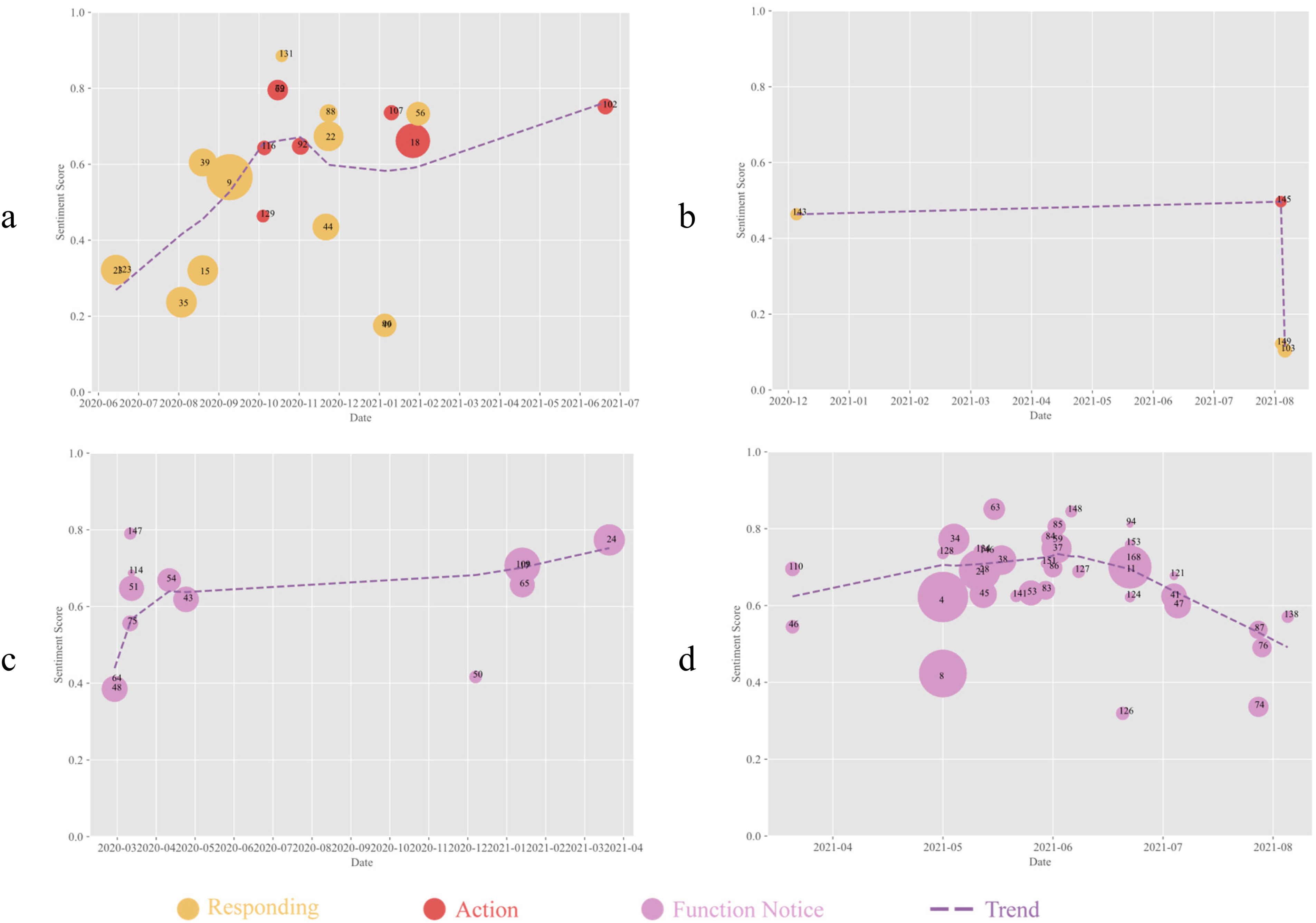
Sentiment trend of two example cases and intervention result of the two joint-sensemaking pathways. In the trend plot, each scatter point represents a hashtag, the size of which represents the intensity of the discussion. (a) The sentiment trend of the Issue difficulties of the elderly's access to Health Code, an example of the Patching Path. The orange ones represent Responses, and the red ones represent Actions in joint-sensemaking pathways (as does subplot b). (b) The sentiment trend of the issue Health Code functional crashes. (c) The sentiment trend of the issue Health Code unification nationally. The light purple ones represent Advance Notices in joint-sensemaking pathways (as does subplot d). (d) The sentiment trend of the topic Health Code integrating the PCR test and vaccine proof.
In the Add-in Path, the overall public sentimental trend is smoothly uplifting over time. For example, in the Issue c, “Universal Health Code Recognition” started from 0.332 when the demand is reported and reached over 0.5 after the recognition standards were launched and actions were taken, in contrast to a predominate change seen in the Patching Path.
To re-verify these results, we further employ multiple linear regression (MLR) to investigate the relationship between interventions and public sentiment. For a better way to identify the effects caused by interventions conducted at that time, we control the average public's sentiment in the previous period (see Table 1). Model 1 examines the effect of Responding and Action interventions in the Patching Path. Results indicate that both response (coefficient = 0.076, 95% CI: 0.033–0.118, p < 0.001) and action (coefficient = 0.104, 95% CI: 0.060–0.147, p < 0.001) can effectively restore the public's sentiment. Model 2 examines the effectiveness of function notice in the Add-in pathway. Results show that there is no significant difference in sentiment change pre- and post-conduct of the intervention (coefficient = −0.019, 95% CI: −0.082 to 0.044, p > 0.1), which implies that the effect of the function notice intervention in improving the public's sentiment in the Add-in Paths is limited.
The differences in public sentiment changes under different joint-sensemaking pathways.

Period of social event occurring is coded as 0 and used as a reference group.
Period of New Need Scenced is coded as 0 and used as a reference group.
In the Pathing Path, we define a period with Social Event, Responding, and Fixing relative to Health Code at the same time as Mix, and define a period without any Social Event, Responding, and Action as Normal.
In the Add-in path, we define a period with New Need and Pre-Launch Promotion relative to Health Code at the same time as Mix, and define a period without any New Need and Function Notice as Normal.
***p < 0.001, **p < 0.01, *p < 0.05.
Mediating role of key stakeholders
To further reveal why the effectiveness of interactive interventions is different between paths, we conduct the social network analysis to understand the roles of key stakeholders in determining the effectiveness of interventions according to public sentiment (seen in Figure 6).

Interaction graphs of the four issues. The colors of nodes represent the role types of nodes. “Unknown” nodes are Weibo users that have been deactivated. (a) Issue of difficulties of the elderly access to Health Code. (b) Issue of Health Code functional crashes. (c) Issue of Health Code unification nationally. (d) Issue of Health Code integrating the PCR test and vaccine proof. Additionally, the colors of edges represent the sentiment of interaction within nodes. Orange is defined as negative (sentiment score <0.4), Green is defined as neutral (sentiment score =0.4–0.6), and Purple is defined as positive (sentiment score >0.6).
We identify three groups according to stakeholders’ states: 1) Intervention conductors (IC), including authorities at both national and regional levels. 2) Public and ordinary users as Intervention Receiver (IR). 3) Mediators (ME), who play an essential mediating role in passing and explaining the information of interventions to the public. Previous literature has illustrated that most people accept the news directly from a few influential actors, which created large central aggregates (Wang et al., 2019). Here, we identify these influential actors as ME, who play an essential mediating role in connecting the IC and IR. Specifically, we distinguish two types of mediators: official mediators (ME-OFs), which include media outlets under financial and/or editorial control of the state or government, such as People's Daily and Xinhua News, and opinion leaders (ME-OLs), who are influential individual users or independent media in the online community (see in Table 2).
Three groups in the online interactive structure.

Influence of ME in the two pathways.
A stronger tie between Intervention conductors and the public is observed in the Patching Path. We first present a basic description of the four issues in terms of their forwarding range and distributions. These are measured by indicators such as diffusion diameter, average path length (AvP) of the LCCs, and sentiment score of edges in the network structures. The forwarding range of the four issues is as follows: Issue a (N = 15,465), Issue b (N = 5032), Issue c (N = 19,781), and Issue d (N = 8591). On average, the issues in the Add-in Path have a larger forwarding range compared to the Patching Path. The forwarding distances of the four issues in both pathways follow a Gaussian distribution (with R2 >= 0.9999). The diffusion diameters and AvP of the LCCs are as follows: Issue a (diameter = 15, AvP = 5.219), Issue b (diameter = 14, AvP = 5.871), Issue c (diameter = 13, AvP = 5.157), and Issue d (diameter = 9, AvP = 3.910).
Regarding the engagement among participants, the results imply that within the Patching Path, there is a higher possibility for IC nodes to directly and indirectly link with the IR (N = 742, 58.9%). Additionally, it is noticeable that 61.3% of indirect links between IC and IR are mediated by the media and other MEs. Moreover, the LCCs of the Add-in Path have low clustering coefficients (avg = 0.005) in the pathway, suggesting a flat and balanced interaction distribution among stakeholders and forming a stronger tie in the Patching Path.
Weaker ties between the intervention conductors and the public are observed in the Add-in Path. In contrast to the Patching Path, there is a lower possibility for IC nodes to directly link with the public in the Add-in Path (N = 684, 43.3%, 15.6% lower than the Patching Path). ME accounts comprise 43.6% of IR in the Add-in Path. Additionally, the LCCs of the Add-in Path have higher clustering coefficients (avg = 0.013) compared to those of the Patching Path (avg = 0.005). For example, in the case of Issue d, a higher clustering coefficient (0.017) has been observed, indicating that nodes tend to cluster together in the largest component primarily composed of IC and ME, while IR has been observed at the margin of the network in the Add-in Path. This suggests a weaker tie among IC, IR, and the public in the Add-in Path.
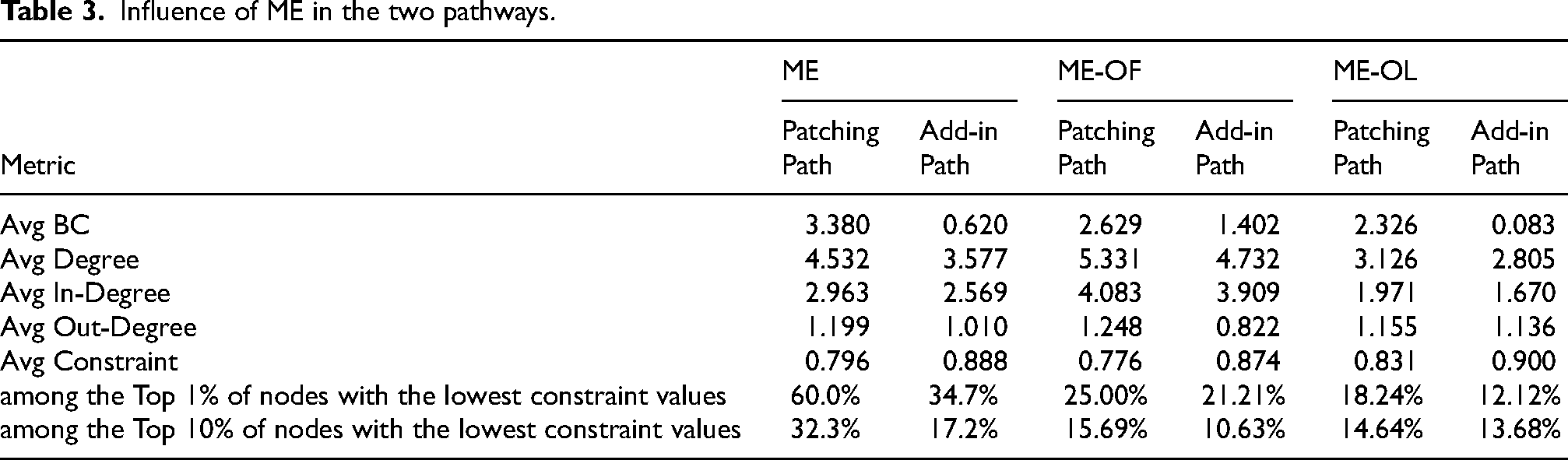
Influence of Different Mediators presents heterogeneity in 2 pathways. To further explore heterogeneous influence strength of different mediators (MEs), we use the constraint metric as the measurement. Applying constraint metric can be able to measure the impact of neighboring nodes, path information between nodes, and the positional information of nodes within the network. Such measurement has been widely applied in the existing literature (Burt, 2004; Zaheer and Soda, 2009). The results show that, on average, ME makes greater contribution to linking the public and intervention conductors within the Patching Path (Avg Constraint = 0.796, Avg BC = 3.380, Avg Degree = 4.532) than Add-in Path (Avg Constraint = 0.888,Avg BC = 0.620, Avg Degree = 3.577). In the Patching Path, IR-forwarding posts from ME are 3.88 times of which from IC, much higher than that in the Add-in Path. Furthermore, we find that among the top 1% nodes with the lowest constraint value, 60.0% have been dominated by the ME in the Patching Path, compared to 34.7% in the Add-in Path. Among the top 10% nodes, 32.3% are ME in the Patching Path, whereas only 17.2% are in the Add-in Path. More specifically, when investigate influence of different ME, we find consistent results showing both ME-OF and ME-OL have more influential mediating strength in the Patching Path (refer to Table 4). These results illustrate that ME have a significantly higher possibility of dominating the “structure holes” with less constraint thus can link the intervention conductors to the public in the Patching Path. The influence of MEs exhibits heterogeneity in different Add-in pathway, leading to distinct spreading patterns and ultimately altering the effectiveness of policy interventions (see Figure 7).

Network structure and structural hole. (a) The network structure of Difficulties of the elderly access to Health Code. (b) The network structure of Health Code unification nationally. (c) The network structure of Health Code functional crashes. (d) The network structure of Health Code integrating the PCR test and vaccine proof. In these network structures, the color of each node represents its node type, while the size of each node represents the size of the constraint value. Specifically, smaller constraint values are represented by larger nodes.
However, we find that ME-OF plays a more significant role than ME-OL. In terms of average betweenness centrality (BC) values, ME-OF has a higher value compared to ME-OL (Patching Path: Avg BC for ME-OF = 2.629, Avg BC for ME-OL: 2.326; Add-in Path: Avg BC for ME-OF: 1.402, Avg BC for ME-OL: 0.083), as well as in average degree value (Patching Path: Avg BC for ME-OF = 5.331, Avg BC for ME-OL: 3.126; Add-in Path: Avg BC for ME-OF: 4.732, Avg BC for ME-OL: 2.805). Moreover, ME-OF has a lower average constraint value than ME-OL in both the Patching Path and Add-in Path (Patching Path: ME-OF = 0.776; ME-OL = 0.831; Add-in Path: ME-OF = 0.874; ME-OL = 0.900). When considering the constraint value, we observe that ME-OF occupies a greater proportion among the top 1% nodes with the lowest constraint value (Patching Path: ME-OF = 25.00%; ME-OL = 18.24%; Add-in Path: ME-OF = 21.21%; ME-OL = 12.12%), indicating that ME-OF has a higher possibility of occupying important structural hole locations and taking the leadership in information flow to the target audiences. Additionally, compared to ME-OL, ME-OF has a larger number of “in-degree” connections and some “out-degree” connections, resulting in numerous posts being reposted by users (Patching Path: Avg In-Degree for ME-OF = 4.083; Avg In-Degree for ME-OL = 1.971; Add-in Path: Avg In-Degree for ME-OF = 3.909; Avg In-Degree for ME-OL = 1.670). This indicates that ME-OFs perform as prominent influencers in the network. Such findings are inconsistent with previous literature (Peters, 2006), which stated that opinion leaders play vital roles in bridging mass media connections with the public, suggesting that opinion leaders have a greater impact on the public than mass media.
Robustness check
Establishing the Weibo posts sample based on hashtags may cause self-selection bias (Geddes, 1990; Tufekci, 2014; Seely-Gant and Frehill, 2015). To address these limitations, we create a testing dataset by applying different collecting strategies. We first download the randomized posts within the same period, then we filtered the posts by keywords relevant to Health Code. In the testing dataset, 78,382 Weibo posts issued by 69,852 users in total are included, while testing dataset shares 5.03% of Weibo posts in common with the collected-by-hashtags dataset.
We take the same methods as we did in our main study, which includes three steps. We first conduct topic analysis via LDA with perplexity, log-likelihood, coherence, and average residual as the key indicators. When the number of topics is 20, the perplexity of the model result is relatively low, while the log-likelihood and coherence are relatively high, and the average residual is also in a rapid decline stage (see Supplementary Figure 18). Furthermore, with the inter-topic distance and top keywords in every topic, it is found that the 20 topics can be organized (see Supplementary Table 11–12) and four issues on the same topic are identified (Difficulties of the elderly access to Health Code, national Health Code unification, unexpected functional crash of Health Code, and Health Code integrating the PCR test and vaccine proof). By tracing the event line and timeline of the issues, two joint-sensemaking pathways and three interventions are also verified in testing data.
Further, heterogeneous influence of interventions between the Patching Path and the Add-in Path is consistently observed by MLR model. Fixing significantly improves public emotion in the Patching Path (coefficient = 0.073, 95% CI: 0.032–0.113, p < 0.001), while Pre-launch Promotion is insignificant in the Add-in Path (coefficient = 0.008, 95% CI: −0.043 to 0.058, p > 0.05) (see Supplementary Table 13).
Lastly, in the third step, the mediating role of ME is found to be more effective in the Patching Path, which is consistent with the previous analysis (refer to Supplementary Figure 19). As the SNA result show, in the add-in path, information published by mainstream state or local media, including People's Daily Online and Top News Express, did not form a wide range of public communication, nor form a long enough communication chain. By contrast, in patching path, mainstream media such as China News, CCTV News, People's Daily and China Civilization Online are the core nodes in the communication chain, and the information they publish attracts a large number of netizens to discuss and further spread.
Conclusion and discussion
This article explores two joint-sensemaking paths in the context of DCT application in China: The Patching Path and the Add-in Path. Both pathways follow the general process of Notice-Interpret-Act, but they have distinct motivations and objectives. The Patching Path is motivated by the need to address and resolve issues for the refinement and enhancement of the DCT system. The notice process is often triggered by negative events or news, prompting governments to demonstrate their commitment to continuous improvement and responsiveness to user feedback. By following the Patching Path, positive interpretations and actions are fostered among the public, ensuring the effectiveness, credibility, and acceptance of the DCT system in addressing public health challenges. On the other hand, the Add-in Path plays a crucial role in responding to emerging demands and incorporating new functionalities into the DCT system. Through the implementation of pre-launch promotions, governments ensure that the new functions are well-noticed. This pathway facilitates a positive interpretation of the DCT system and encourages the public to take appropriate actions. By continuously improving and adapting to evolving needs, the Add-in Path enhances the effectiveness and acceptance of the DCT system.
After conducting ground truth exploration, we have identified three key interventions, namely “responding,” “fixing,” and “pre-launch promotion,” which play distinct roles in shaping the joint-sensemaking pathways. We have also tested the effectiveness of these interventions and found heterogeneity in their effects across the different joint-sensemaking pathways. Our regression models have supported this conclusion, as we observed the significant impact of interventions in the Patching Path, while their effects were trivial in the Add-in Path. Furthermore, we have conducted an in-depth analysis using social network analysis, which has revealed the crucial mediating role of official media and opinion leaders in shaping the diffusion network structure between the innovation communication (IC) and the public. However, we have found that their mediating effect was only evident in the Patching Path, while ineffective mediation was observed in the Add-in Path, leading to varying effectiveness of the interventions. We have also highlighted the crucial mediation role of official media and opinion leaders in shaping the diffusion network structure, particularly in the Patching Path. The challenges associated with interventions in the Add-in Path underscore the need for more tailored strategies and stronger engagement with the public.
This article makes several substantial contributions. Firstly, it addresses the gap in empirical evidence regarding the mechanism of joint-sensemaking in the context of innovation and crisis communication management during crisis situations. Through a comprehensive exploration of Health Code applications in China, we identify two specific paths and three interventions within the Notice-Interpret-Action process, bridging theoretical knowledge of joint-sensemaking, social media, and crisis communication. Moreover, our study extends existing literature by considering actors’ networks and their contributions to understanding the mechanism of joint-sensemaking during crises. Sedereviciute and Valentini (2011) developed a crisis communication model that identified four typologies of online stakeholders. Among them, concerned influencers, with their high centrality and strong interest, play a crucial role during critical situations. Surprisingly, our findings reveal that official media has a more influential role in engaging with the public compared to opinion leaders. This suggests that the public has a heightened need for authoritative and reliable sources of information, reducing the mediating role of opinion leaders, especially in crisis contexts. This finding contrasts with previous research, which emphasized the mediating role of opinion leaders in information flow (Katz et al., 2017). Our findings highlight the importance of engaging with official media as concerned influencers through various types of collaboration and direct communication. This can be achieved by developing crisis content that can be shared or by promoting a network coproduction model of word of mouth (Kozinets, de Valck, Wojnicki and Wilner, 2010).
Secondly, this article adopts a multi-step approach that combines various novel methods, allowing us to comprehensively explore and explain the dynamics of joint-sensemaking in the context of public crisis. This research design not only facilitates the analysis for governments harness the benefits and opportunities offered by social media and big data to cater to diverse situations and heterogeneous needs, but also provides a framework for governments to identify key patterns, test effective interventions, and identify the crucial roles of stakeholders. When introducing new functions or public services, the public sector should recognize the mediating role of official media and opinion leaders in engaging the masses. Consequently, this approach helps shape and foster active engagement with the public, improve accessibility, and ensure the effectiveness and acceptance of new technologies during crisis times.
This article has several limitations that should be considered. Firstly, while social media platforms offer numerous possibilities for enhancing emergency warnings, crisis response actions, and information dissemination, they also have their downsides. The personalization of information, the facilitation of convergence behavior, and the potential for anti-social behavior are some of the adverse impacts associated with social media communication. Additionally, relying on social media data from Sina Weibo to investigate public concerns might introduce biases, as it excludes individuals without Internet access and might be influenced by self-selection bias among those who are not interested in the topic of the study. Multiple media and multiple voices perspective and audience-oriented approaches could be taken into consideration in future (Chewning, 2015; Fraustino and Liu 2018). In addition, future research should consider incorporating advanced methods and procedures, like crowdsourcing validation (Ying et al., 2022) and machine learning classifier (Verma et al., 2019) to improve the research. Secondly, due to the complexity of the topic, it is challenging to account for all relevant factors. Further empirical and theoretical research is needed to gain a more comprehensive understanding of joint-sensemaking, including exploring novel approaches and their impacts, as well as identifying the preconditions for fostering agile efforts. This includes examining the balance between centralized and decentralized approaches, the role of public-private partnerships, and the design of technology-human interactions, among other factors. Thirdly, while sensemaking primarily focuses on cognitive complexity, it often overlooks the influence of social, political, and historical contexts. For example, in the targeted research period, the sentiment trend remained consistently high, and public trust in the Chinese government and media ranked first according to the Edelman Trust Barometer 1 . Understanding the role of public trust in facilitating effective joint-sensemaking in technology management would be valuable for future research. Moreover, exploring how various contextual factors affect joint-sensemaking during crises and in the ongoing global digital innovation diffusion post-epidemic would provide valuable insights.
Supplemental Material
sj-docx-1-bds-10.1177_20539517241270714 - Supplemental material for Joint-sensemaking, innovation, and communication management during crisis: Evidence from the DCT applications in China
Supplemental material, sj-docx-1-bds-10.1177_20539517241270714 for Joint-sensemaking, innovation, and communication management during crisis: Evidence from the DCT applications in China by Jingjing Qu, Liwei Chen, Hui Zou, Hui Hui, Wen Zheng, Jar-Der Luo, Qingyuan Gong, Yuwei Zhang, Tianyu Wen and Yang Chen in Big Data & Society
Footnotes
Acknowledgments
Many heartfelt thanks for the invaluable support provided by Professor Qian Shi, Professor Feng Xu, and Professor Lan Xue throughout the course of this research.
Declaration of conflicting interests
The authors declared no potential conflicts of interest with respect to the research, authorship, and/or publication of this article.
Funding
The authors disclosed receipt of the following financial support for the research, authorship, and/or publication of this article: This work was supported by the National Natural Science Foundation of China (No. 62072115, No. 62102094), Shanghai Science and Technology Innovation Action Plan Project (No. 22510713600).

Supplemental material
Supplemental material for this article is available online.
Notes
References
Supplementary Material
Please find the following supplemental material available below.
For Open Access articles published under a Creative Commons License, all supplemental material carries the same license as the article it is associated with.
For non-Open Access articles published, all supplemental material carries a non-exclusive license, and permission requests for re-use of supplemental material or any part of supplemental material shall be sent directly to the copyright owner as specified in the copyright notice associated with the article.
