



Abstract
Disinformation research is increasingly concerned with the hierarchies and conditions that enable the strategic production of false and misleading content online. During the COVID-19 pandemic, it was revealed that 12 influencers were responsible for a significant volume of antivaccine disinformation. This article examines how influencers use antivaccination memes for commercial and political gain. Drawing on a 12-month digital ethnography of three disinformation producers on Instagram and Telegram, we conceptualize their strategy of meme warfare in terms of the logics of spoiled identity, demonstrating how stigma is used to galvanize and recast the antivaccination movement around themes of persecution and moral superiority. Dispensing with the idea that content moderation has forced disinformation “underground,” we find that disinformation producers configure memes to adapt to specific platforms by directing mainstream audiences to less regulated platforms, personal newsletters, and sites. By examining the tactics and techniques disinformation producers use to spread antivaccination messaging online, we question the effectiveness of content moderation policies as a solution to regulate influencers whose visibility and status strategically straddle multiple sites in the broader information ecosystem.
Introduction
On March 21, 2021, the Center for Countering Digital Hate (CCDH, 2021) published a report claiming that 12 individuals, referred to as the “Disinformation Dozen,” produced up to 65% of the shares of antivaccine misinformation on social media. One of the insights of this report was that a small network of disinformation producers distributes their content across vast social networks. Much of this disinformation is communicated in visual form, with influencers profiting from sharing antivaccination memes online. This article draws on a 12-month digital ethnography of three influential disinformation producers on Instagram and Telegram during the pandemic to trace how they use antivaccination memes as part of their branding and networking strategies. We explore the ways in which these influencers use antivaccination memes for commercial and political gain. Drawing on Goffman’s (1963) theory of “stigma” and Arendt’s notion of “dehumanization,” we consider how meme producers construct messages that correspond with logics of spoiled identity to recast their own stigmatized social position and in the process defile vaccinated groups. In addition to allowing for plausible deniability, we examine how these memetic modes of engagement operate as acts of political resistance by reconfiguring public health issues in terms of group identity. Rather than an isolated choice, these memetic communities frame the decision not to be vaccinated as a social identity. Beyond using humor to appeal to individual users, we find that memes play a crucial political and ideological role in group coordination by encoding collective identities and mobilizing like-minded groups as political movements driven toward a common cause.
Engaging with the special issue theme of disinformation-for-hire, this article contributes original ethnographic research on the production of antivaccination memes during the COVID-19 pandemic. Resonating with articles exploring the political economy of disinformation, our research illuminates the role of a core network of influencers, who profit from the production and dissemination of antivaccine propaganda. Drawing on research on meme production (Abidin, 2020; Lee & Hoh, 2021), we explore the diverse rhetorical strategies of memes, as well as the various commercial and political incentives motivating the influencers involved in this global industry from promoting antigovernment sentiment to alternative treatments for the virus. By revealing the hierarchies and organization of the various actors involved in antivaccination meme production, our work seeks to provide a deeper understanding of the strategic coordination of antivaccine disinformation.
Beyond the focus on individual influencers on discrete platforms, our research builds on previous work on networked disinformation (Ong & Cabañes, 2019), demonstrating how disinformation is networked among producers across platforms. From a methodological standpoint, our research highlights the need for a cross-platform approach to study disinformation. Our findings also interrogate the current regulatory approach to misinformation online, which prioritizes the removal of content or users promoting “imminent physical harm” (Baker et al., 2020), with antivaccination memes, particularly effective at evading content moderation online. By revealing how disinformation flows across platforms and flourishes in unregulated spaces online, this article questions the efficacy of using platform-specific policies to effectively regulate networked disinformation online, pointing to the need for a broader ecosystem approach to the study of disinformation (Phillips & Milner, 2021).
The Antivaccination Movement and the Management of Spoiled Identity
The Antivaccination Movement
Opposition to vaccines has occurred since Edward Jenner developed the smallpox vaccination in 1796. When widespread smallpox vaccination began in the early 1800s, these technologies were objected to on scientific, political, and religious grounds as illustrated by a series of political cartoons published in print media (The College of Physicians of Philadelphia, 2018). Several years after Jenner vaccinated his first patient, a London newspaper published a comic entitled, “The Vaccination Monster” (Figure 1), condemning the new medical technology. The image depicted horned medical professionals (provaccinationists) feeding babies to the monster to ease its insatiable appetite for young children. It was used by antivaccinators to cast doubts about the safety of vaccines and those who administer them. Fear was a common tactic used to spread antivaccine messaging with child mortality and adverse reactions to vaccines familiar tropes used to dissuade people from being vaccinated (Figures 2 and 3). Images of this kind were distributed to encourage support for the antivaccination movement. In this regard, political cartoons can be considered a precursor to antivaccine internet memes. As Chen (2018) notes, “The internet meme is not even a displacement of the political cartoon but merely a shift in the protocol by which they are produced and consumed” (p. 221). These cartoons are functionally different from internet memes. They were produced by a limited group of artists and satirists and published by the top-down media industry without the capacity to be repurposed and shared at scale by the public (Chen, 2018, pp. 205–208). Nevertheless, they illustrate how as powerfully visual symbolic artifacts, political cartoons can bind and reinforce collective identities around antivaccination sentiments.
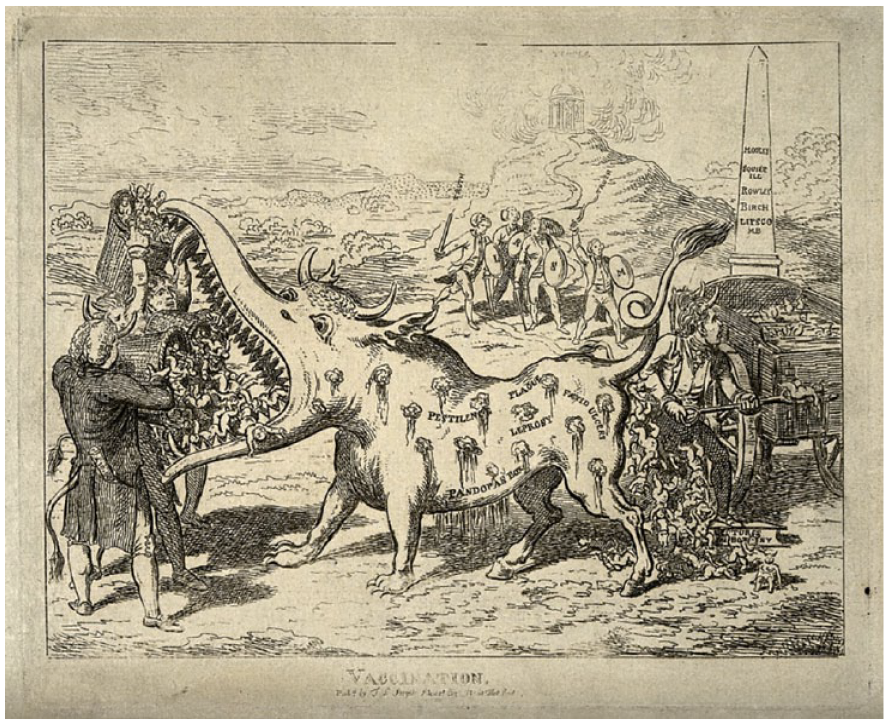
“The Vaccination Monster” by Charles Williams (circa 1802-7).
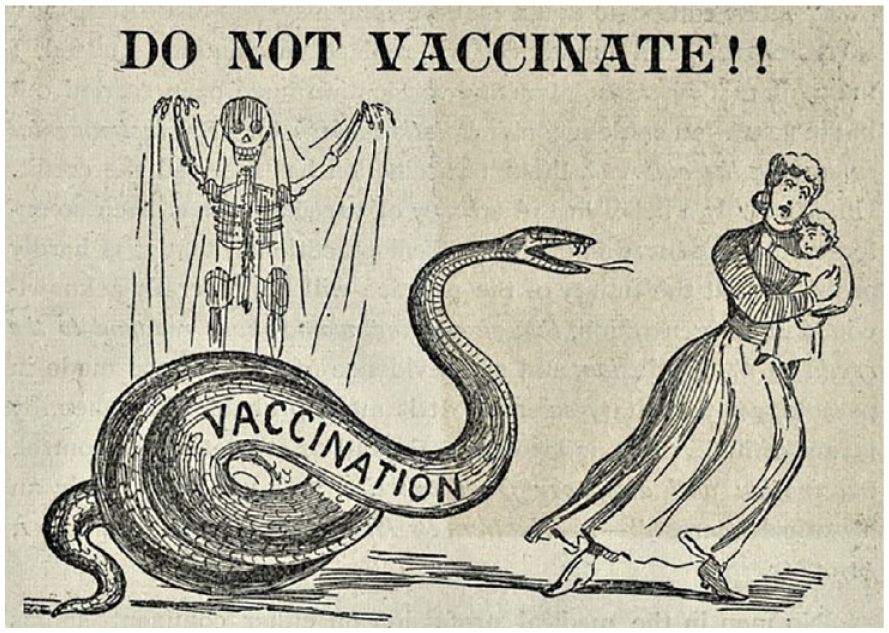
A cartoon from (December 1894).

A scene from the Smallpox and Inoculation Hospital at St. Pancras, London, by cartoon satirist, James Gillray (June 1802).
Stigma as Spoiled Identity
Historically, the term stigma has been used, “to refer to bodily signs designed to expose something unusual and bad about the moral status of the signifier” (Goffman, 1963, p. 1). Those stigmatized are visually identified as bad, dangerous, or weak, and consequently, “reduced in our minds from a whole and usual person to a tainted, discounted one” (Goffman, 1963, p. 3). While stigma is typically viewed as a discrediting attribute, Erving Goffman (1963, p. 3) conceived of stigma as, “a language of relationships, not attributes.” Goffman identified three types of stigma: 1) “abominations of the body,” involving physical blemishes and imperfections; 2) “blemishes of individual character,” including those perceived to be weak-willed, domineering or holding suspect beliefs (historically, this category included homosexuals and the mentally ill); and 3) tribal stigma—inclusive of race, nationality, and religion—transmitted through lineage, thereby, tainting those associated with the stigmatized (Goffman, 1963, p. 4). Stigma is consequently relational. It is only when compared in relation to so-called normals—those who do not depart negatively from social expectations (Goffman, 1963, p. 5)—that stigma is socially realized. 1
Stigma is a precursor to dehumanization. Published in 1963, the same year as Stigma, Hannah Arendt’s book Eichmann in Jerusalem: A Report on the Banality of Evil purported that dehumanization is not the result of “demonic” or “monstrous” motives, rather dehumanization emerges from banal interactions with bureaucratic entities where the conditions that enable plurality to flourish—spontaneity and individuality—are diminished. In the Origins of Totalitarianism (1951/1973), Arendt examined how anti-Semitism became a movement at the end of the twentieth century, demonstrating how dehumanization was used to justify the exclusion and extermination of those perceived to be “no longer human” for the “safety” and “good of society.” Whereas Arendt identifies fear as the initial phase of dehumanization (i.e., fear for one’s life and society in general), for Goffman the dehumanizing process results from the vantage of the normals. As Goffman (1963, p. 5) explains, “we believe the person with a stigma is not quite human” and as a result discriminate against them in ways that reduce their life chances. By adopting stigma terms (e.g., cripple, bastard, moron) in discourse and “as a source of metaphor and imagery, typically without giving thought to the original meaning” (Goffman, 1963, p. 5), we assume the perspective of the normals and render those subject to stigma dehumanized.
One consequence of this process of dehumanization is that the stigmatized can adopt elements of their perceived moral failing in an effort to reach some sort of acceptance (Goffman, 1963, p. 8). However, as we show in this article, other strategies are also available to the stigmatized. Rather than merely accepting the spoiled identity projected onto them, a recasting remains possible where individuals can resist their stigmatization, especially online given the low barriers to expression and engagement. Goffman’s analysis took place prior to the internet. Nonetheless, his concept is relevant to digital spaces where contexts collapse and varied social situations coalesce (Loh and Walsh, 2021), given that tensions can arise for stigmatized individuals necessitating boundary work and the management of spoiled identity online (Yeshua-Katz & Ylva Hård af Segerstad, 2020). The stigmatized must manage potentially discrediting information through “information control” by partitioning the world into forbidden, civil, and back places (Goffman, 1963, p. 82). The stigmatized, therefore, represents a precarious self that is subject to viewpoints that discredit it, but because this perspective forms its basis from the vantage of the normal it is never completely indivisible. As Goffman (1963) argues, “the stigmatized and the normal are part of each other” (p. 135). Or, to put this another way, stigma does not neatly result in the production of two concrete groups—the stigmatized and the normal—but a two-role process in which individuals will participate in both roles at different moments throughout their life (Goffman, 1963, p. 138). It is these ritualized performances of identity construction, and the management of spoiled identity, which remain underexplored in digital spaces and which we examine online in relation to the antivaccination movement.
The Tactics Used to Spread Antivaccine Messaging Online
Antivaccine Influencers
The internet has fundamentally altered how the antivaccination movement is organized. The ubiquity of smartphones and social media in the twenty-first century has connected people across vast geographical and temporal spheres, giving rise to “networked publics” (boyd, 2010). Networked technologies restructure networked publics in a variety of ways. Beyond providing an “imagined collective” and a collective space for users to interact (boyd, 2010), digital technologies enable users to form part of a coordinated social network. In the context of the antivaccination movement, these social networks are composed of a diverse range of actors: domestic actors with similar grievances, foreign actors involved in influence operations, and opportunistic actors who use the movement to achieve fame and commercial success (Baker & Walsh, 2023). Power is exercised unevenly in these networks with influential internet users referred to as “influencers” cultivating loyal followings online, which they use for social, financial, and political gain (Baker, 2022).
During the pandemic, a series of antivaccine influencers have exploited public grievances about government measures to control the virus by spreading disinformation online (Baker & Walsh, 2023). Antivaccine disinformation is highly organized with prominent influencers producing a significant volume of antivaccine misinformation on social media (CCDH, 2021). In contrast to the original antivaccinationists, these influencers are not operating as “lone wolves” attempting to mobilize a collective. Instead, they form an industry of networked users who profit from deliberately disseminating false and misleading advice. The networked disinformation spread by these influence networks is evident in their cross-promotion of each other’s affiliate marketing schemes, their aggressive marketing tactics, and targeted influence operations. These antivaccine influencers are key players, who wield significant influence in the antivaccine movement. Much of their antivaccine messaging is communicated in visual form, with internet memes a primary mode of communication.
Meme Warfare
The term “meme” was originally coined by the biologist Richard Dawkins (1976) to describe “units of culture” that spread among people. Dawkins proposed that analogous to genes, memes are designed to replicate while simultaneously undergoing variation, competition, selection, and retention (Shifman, 2019, p. 45). Internet memes can take several forms: memetic phrases, memetic videos, memetic performances, and memetic images (Milner, 2018). Although not all memes are humorous (Dynel & Poppi, 2023), scholarship on internet memes largely focuses on humorous images and captions. While memes often appear mundane or trivial, researchers have demonstrated that memes can have profound social and political significance operating as collective symbols of group identity and political resistance that can both empower marginalized groups (Dynel & Poppi, 2023; Mina, 2019) and advance anti-Semitic, racist and misogynist agendas (Marwick & Lewis, 2017; Trillò & Shifman, 2021). Our research contributes to this literature by exploring how memes are strategically deployed to advance antivaccine disinformation.
Memes feature prominently in antivaccine messaging. The most famous antivaccination meme emerged from a 1998 academic study that falsely claimed a connection between the measles, mumps, and rubella (MMR) vaccine and autism. The meme—vaccines cause autism—was broadcast in the media and appeared on billboards, provoking questions and doubts about the safety of the MMR vaccine. The study was published the same year that the search engine Google was created, helping “vaccines cause autism” to become a popular global meme and enabling one of the authors of the study, Andrew Wakefield, to assume a degree of fame and notoriety as a figurehead of the antivaccination movement. Memes were central to the antivaccination movement prior to the advent of social media. What is different about the antivaccination memes circulating online today are the ways they are appropriated by internet users to remain relevant and resonate with the current social, economic, and political climate. The information ecosystem in which memes circulate has also changed as a result of user-generated content and social media. The participatory affordances of these technologies enable memes to be weaponized and used collectively as part of strategic disinformation campaigns in what is commonly described as meme warfare. The term “meme war” refers to:
The intentional propagation of political memes on social media for the purpose of political persuasion or community building, or to strategically spread narratives and other messaging crucial to a media manipulation campaign (The Media Manipulation Casebook, 2022).
Memes play an integral role in disinformation campaigns by facilitating fear, uncertainty, and doubt. In addition to using memes to promote vaccine hesitancy, humor is another tactic used by antivaccinationists to strengthen their cause.
In the context of the antivaccination movement, humor plays several important functions. Humor is a common tactic used to make content sharable, and algorithmically successful in gaining visibility and attention online. Trolls and far-right groups use memes as a form of “attention hacking” to increase the visibility of their ideas (Marwick & Lewis, 2017). Journalists, politicians, and influencers are strategically targeted by these groups to shape media agendas and public discourse, thereby, inadvertently helping to spread racist, misogynist and hateful content online (Phillips, 2018). Internet subcultures, therefore, take advantage of the current media ecosystem to manipulate news frames, set agendas, and propagate ideas through algorithmic reinforcement (Phillips & Milner, 2021). Humor also contributes to making memes what Joan Donovan (2019) refers to as “sticky” by rendering them memorable and shareable. A meme’s stickiness is contingent on its capacity to invoke in-group dynamics. The most memorable memes tend to both reflect and reinforce group norms (Shifman, 2019). They often require a degree of inside knowledge to understand them, using recognizable symbols, slogans, jokes, and turns of phrase comprehensible to those “in the know” to signify communal belonging (Milner, 2018) with those failing to adhere to meme conventions marked as outsiders (Nissenbaum & Shifman, 2017). Meme literacy—correctly interpreting the cultural conventions and codes underpinning memetic culture–subsequently functions both as a form of gatekeeping and cultural capital by signifying group affiliation (Milner, 2018) and enhancing members’ status within the community (Nissenbaum & Shifman, 2017, p. 486). However, memes do not merely function as cultural capital through shared literacy, but memes are what Nissenbaum and Shifman (2017) term, “contested cultural capital.” It is precisely due to their unstable cultural form, negotiating the contradictory demands of convention and innovation, that memes play a key role in reformulating community ties by keeping a community’s shared culture alive.
While memes generating antagonistic humor are used to identify as part of an in-group by stigmatizing outsiders, memetic antagonism—the use of memes as vehicles for antagonistically articulating an out-group–can galvanize online strangers through floating signifiers that allow formats for nebulous othering (Tuters & Hagen, 2020, p. 2233). Humor and irony play a particularly important role in this regard. “Humorous” trolling, which is generally directed at those perceived to be external to the group (Coleman, 2012), reveals to outsiders that they are not welcome (Nissenbaum & Shifman, 2017), while irony can normalize discrimination against marginalized groups under the guise of “having fun” (Phillips & Milner, 2021); or “doing it for the lulz” (Milner, 2013; Phillips, 2015). Humor also enables users to obtain multiple meanings from a single post. The same post can occupy an emotional range from an obvious joke to an overt attack depending on who is viewing the post and what memetic frames are at play in their interpretation (Phillips & Milner, 2021, p. 186). The use of humor as a tactic to encourage the online participation of memes is not unique to the antivaccination movement; however, irony and satire played an important communicative role during the current infodemic. In the context of COVID-19, when social media platforms enforced stricter misinformation policies (especially medical misinformation believed to pose the risk of “imminent physical harm”), memes presented under the guise of irony, satire, or parody enable content creators to evade content moderators and fact-checkers via claims of plausible deniability (Baker et al., 2020). In this regard, humor is not a mere by-product of memes, it is integral to the communicative potential of memes to express ideas that would otherwise be forbidden in certain contexts.
Meme Factories
In the context of disinformation campaigns, meme production can be a highly coordinated enterprise. Meme factories are coordinated networks of meme creators or accounts who produce and host memes that are strategically proliferated into new contexts (Abidin, 2020). Meme factories activate a “call to arms” or seek to obtain virality for economic or political gain (Abidin, 2020). The term “factories” is important as it indicates the organized production process that helps to consolidate the discursive power of memes into the hands of organizers (Lee & Hoh, 2021, p. 2). Meme factories produce and propagate content including images, videos, and texts with the aim of this content being circulated, replicated, or transformed by internet users online (Lee & Hoh, 2021, p. 2). Once memes are produced and tested in a meme factory, they are strategically planted online with the target audience instructed on how to disseminate them (in our research, we found that memes are mostly disseminated via influencers’ personal newsletters). Abidin’s (2021) concept of “sentiment seeding” is suggestive here of the ways in which meme factories seek to strategically produce memes to influence public emotion: “insidiously warming up and softening public reception to specific ideas to shape and guide their slow, subtle, but stealthy acceptance to them” (p. 7). In this regard, meme factories can be considered “sentiment shapers” insofar as they function via the vernacular of visual internet culture (Abidin, 2020, p. 3). Influencers are particularly successful at seeding narratives because although they might have a relatively small audience they appear trustworthy and relatable to their followers and can effectively target niche audiences.
During the pandemic, meme factories pivoted in response to public health measures regarding COVID-19. While some factories turned memes into public service announcements to educate viewers on practical tips to cope with self-isolation measures and to avoid spreading the virus (e.g., handwashing) (Abidin, 2020), other factories strategically produced memes to spread antivaccine messaging. In both contexts, memes are powerful modes of public communication and persuasion, strategically organized and coordinated to reach a target audience. Our article seeks to understand how these modes of memetic engagement are used by antivaccine influencers as acts of medical disinformation, political resistance, and group identity in the context of COVID-19.
Methods
This article draws on a 12-month digital ethnography involving three influencers associated with the “Disinformation Dozen” (CCDH, 2021). Our digital ethnography initially consisted of close analysis of each of the 12 members’ main social media profiles—Facebook, Instagram, Twitter—as well as other influential antivaccine influencers they linked to, before limiting our analysis to those influencers who frequently used memes to spread antivaccination content. COVID-19 misinformation policies introduced during the pandemic to combat misinformation about the virus encouraged disinformation producers to migrate to less regulated platforms, such as Telegram. Telegram was the most popular platform used to disseminate antivaccination memes with less controversial memes posted on Instagram given that both sites privilege visual communication and networking compared with other social media platforms, such as Twitter. Three of the influencers we examined frequently used these platforms to disseminate antivaccine content. Despite having larger followings on Instagram (ranging between 176 and 800,000 followers), their most harmful content was shared on Telegram where their channels had between 57 and 112,000 subscribers. On the surface, these influencers had relatively different brands: one self-branded as a wellness influencer selling “superfoods,” supplements and courses marketed as alternative health solutions to medical interventions (e.g., using memes promoting the antimalarial drug, ivermectin, in their newsletter to direct subscribers to a personal e-commerce store to purchase ivermectin intended for animal use—see Figures 4 and 5, see also Baker & Maddox, 2022); another profited mostly from books and products targeted at improving women’s health, while another monetized their accounts from soliciting subscriptions and donations rather than selling health products and services. What bound these influencers was the way they used antivaccine content for commercial and political gain to build and sustain a loyal online following. As we will show, despite their specific entrepreneurial skills, there were similarities in the ways they memetically invoked stigma as a communicative strategy to profit from the antivaccine movement.

A meme depicting the U.S. House of Representatives, which refers to elected officials as “parasites,” and links to an e-commerce store to purchase the antiparasitic drug, Ivermectin, which was promoted by some antivaccine influencers as an alternative treatment for COVID-19.

The Ivermectin pills sold by the influencer for $90 USD were intended “for animal use only.”
Data were collected on Telegram and Instagram from December 2020, when vaccine programs were implemented in many parts of the world, to January 2022 to trace the self-presentation and networking strategies these disinformation producers used to promote the antivaccination movement. Data were collected manually on these sites with the exception of two influencers who provided their followers with “meme drops” (bundles of memes, including instructions on how to disseminate them) in their monthly email newsletters, which we subscribed to and downloaded as zip files. These newsletters were frequently advertised on their social media profiles and aimed to establish direct communication with followers (further evading content moderation). To access the meme drops, subscribers had to click on a long-form newsletter buried within the influencer’s initial newsletter, representing an important part of the disinformation structures that work to “insidiously warm up and soften public reception to specific ideas” (Abidin, 2021, p. 7). Next, we analyzed the ways in which these influencers used antivaccination memes during the pandemic for social, economic, and political gain. Rather than focus on individual users, we approach disinformation as what Ong and Cabañes (2019) call “a culture of production,” examining how meme warfare forms part of a collective strategy of the antivaccination movement to profit from spreading fear and uncertainty about the safety and efficacy of vaccines.
Ethnographic research about disinformation raises important questions about how to responsibly represent perpetrators and intervene to combat harmful content (Ong, 2020). One of the primary ethical considerations when writing this article was how to manage anonymity and informed consent. While some of the antivaccine influencers examined in this study gained notoriety when the CCDH (2021) reported on them, we chose not to disclose the names of the specific influencers examined in this study for several reasons. First, we did not want to further amplify their visibility in the public domain by providing new insights about the strategies of the specific actors involved. As Whitney Phillips (2018) explains in her report on The Oxygen of Amplification: Better Practices for Reporting on Extremists, Antagonists, and Manipulators Online, media coverage can increase the influence and visibility of “bad actors,” inspiring “copycats” to emulate their tactics. Although we provide contextual information about these influencers, our standpoint is overtly critical given that we seek to scrutinize the industries that enable the strategic production of disinformation. Second, giving too much voice to antivaccinationists—focusing on their origin and conversion stories as antivaccinationists—perpetuates false equivalence between the treatment of the unvaccinated and groups genuinely persecuted as exemplified by the antivaccination movement’s recurring reference to their victimization as analogous to the persecution of the Jews during the Holocaust. As a result, we practice what Joan Donovan and danah boyd (2021) term “strategic silence”—the use of editorial discretion for the public good—to avoid amplifying false and misleading information about vaccines, which remain a vital public health intervention. Strategic silence is also a form of self-protection given that antivaccinationists commonly engage in networked harassment to silence their critics (one influencer featured in this study doxxed and Yelp-bombed his critics on Telegram for supporting vaccine mandates). In electing to omit the identities of the influencers examined, we nonetheless aim to explore the reach and motivations driving this media manipulation.
Meme Drops and Meme Dealers
One of the biggest challenges when studying disinformation is gaining access to data locked in online platforms (DiResta & Wardle, 2020). When studying the tactics used by influencers to spread antivaccine disinformation across a variety of platforms, we found that several influencers provided their followers with meme drops. As part of our digital ethnography, we subscribed to their newsletters, gaining access to these meme drops and insight into the strategic dissemination of these memes, which we would not have been privy to had we limited our analysis to observing their social media profiles. Meme drops provide relevant content that can be weaponized for political gain. One of the influencers we analyzed explicitly referred to memes as part of their “war on vaccines.” As Abidin (2021, p. 9) notes, meme factories use strategic calculation to obtain virality in a call to arms; monthly newsletters are important structures that assist to achieve this end. Despite their harmful effects, these communicative techniques are not novel. For example, Ong and Cabañes’ (2019, p. 5784) fieldwork in the Philippines highlights that many techniques used to promote disinformation are borrowed from conventional marketing with some political disinformation projects undertaken by firms as lucrative side gigs to corporate marketing. The use of newsletters by disinformation producers exemplifies the repurposing of conventional marketing practices for nefarious gain. The monthly newsletters we examined used terms such as “Meme Counter Offensive,” “Massive Meme Onslaught” and “Mega Meme Menagerie” to describe the meme war they and their followers are engaged in. While one influencer dropped memes when their documentary was released to encourage their followers to promote the film, another influencer provided subscribers with monthly, and occasionally bi-monthly, meme drops in their newsletters with instructions on how to effectively disseminate them online. For example, the meme drop shared in January 2022, included the following instructions:
We’ve been gaining momentum as of late. People are starting to wake up from a long slumber of television indoctrination, food poisoning, chronic health troubles and absurd belief systems. Now is the Best Time Ever for a Meme Counter-Offensive. Pour it on this week. Take these memes and run with them!! Post everywhere. Every moment you can. Send to friends and family. Go totally Berserk. Please Enjoy our New Meme Format!! We are looking to get these to be Easier to Share—and I feel we are there! Click the Link, download them ALL and SHARE Everywhere!!! Click that Send Button!! Memes are Made to be Shared!! Use them in personal messages, in social media and have them ready to share with friends during social gatherings. Take these Memes and print them and post around town. This is our Time. Let’s take action and make a difference! We’ve got a world to save. Give it your All. Become a Meme Berserker!! Memes Save Lives!! What the communists and technocrats call “misinformation” is precisely the information people require to Save their own Lives and the Lives of others.
Each meme drop contained between 36 and 133 memes, which could be downloaded in a zip file and disseminated accordingly. While the memes were repurposed to resonate with current affairs (e.g., claiming “I stand with Djokovic” when the Serbian tennis player was banned from playing in the Australian Open in January 2022 for being unvaccinated, and aligning with the Canadian “Freedom Convoy” during the protests in Canada in early 2022), the memes shared by the influencers we studied fell broadly into several categories: 1) memes critiquing the government and social institutions, 2) memes questioning the severity of the virus (including COVID denial), and 3) memes questioning the safety and efficacy of vaccines. It was the latter, which formed the basis of our study. In what follows, we provide a sample of memes posted by the influencers examined to demonstrate how memes are used to question the safety and efficacy of vaccines by invoking notions of stigma. Beyond simply making memes memorable and shareable, we contend that humor is used to connect audiences to the antivaccination movement.
One of the methodological insights from our study is the importance of a cross-platform approach to studying disinformation. Newsletters and Telegram were the primary sites of antivaccine meme dissemination given that these platforms are not subject to the same degree of content moderation as mainstream platforms. Disinformation producers also disseminate antivaccine content on more mainstream platforms, using humor and irony to evade fact checkers. For example, in May 2021, one of the influencers we examined shared a post on Instagram featuring a woman meditating surrounded by the phrase, “Memes Save Lives” (Figure 6). In the caption accompanying the post, the influencer outlined the meme playbook that formed their “Gorilla Meme Rawfare” strategy. The influencer explained the value of memes as follows: “the subtleties of memes are entirely missed by artificial intelligence algorithm machine filters and those who think like machines” and that “memes are becoming an increasingly important part of communication.” The influencer then proceeded to provide a list of hashtags to “key meme dealers,” which they proclaimed “have become an increasingly more important part of your life throughout 2020 and 2021.” In subsequent posts, the influencer directed their followers to their Telegram channel and invited them to subscribe to their newsletter; both relatively unregulated spaces where they are less subject to content moderation (Urman & Katz, 2022). By exploring the broader ecosystem in which antivaccine disinformation is produced and disseminated, our methodological approach resonates with the analytical focus of this special issue on disinformation-for-hire, which de-emphasizes the role of discrete platforms with a focus instead on producers’ intentions of information flows across platforms.
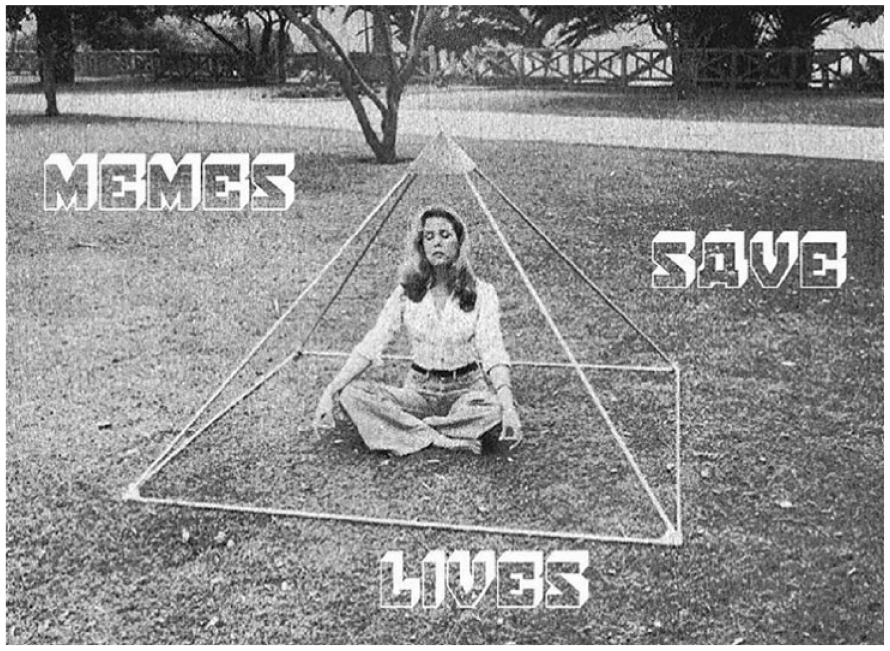
A meme featuring a woman meditating accompanied by the caption, “Memes Save Lives” (May 2021).
Meme Warfare and Stigma Reimagined
Antigovernment Sentiments: Social Institutions as Corrupt, Economically and Politically Compromised
The majority of memes shared by antivaccine influencers are critical of government responses to COVID-19. Antigovernment sentiments are memetically expressed in several recurring themes. First, the government is corrupt and tyrannical using vaccines as a form of State surveillance and control. Memes express these claims by implying that COVID-19 is a hoax and that vaccines contain microchips, playing on public concerns about political corruption and the government infringing on people’s individual rights and civil liberties, thereby, building on the antivaccination movement’s long concern with self-determination and body sovereignty. Second, vaccines are unsafe. Memes suggesting that COVID-19 vaccines cause sterilization fuel rumors that vaccines cause infertility and are part of a de-population exercise. Memes depicting disfigured bodies, and even death, as a consequence of being vaccinated can be highly effective disinformation strategies. Despite their hyperbolic imagery, like the antivaccine cartoons and illustrations created in the 1800s, these memes play on existing fears about the safety of novel coronavirus vaccines and the political interests of those who administer them. As part of this messaging, some memes imply that vaccine manufacturers and government agencies are not required to be vaccinated due to the safety risks of the coronavirus vaccines. Third, vaccines are ineffective. Memes use humor to highlight that government measures to contain the virus are constantly changing. As part of this theme, memes imply that there will be an ongoing supply of boosters created in response to new variants (e.g., the “Timbuctoo variant”), which profit pharmaceutical corporations. Memes of this kind reveal a deep distrust of the economic incentives of vaccine production. They also invoke concerns that vaccine programs are government-driven initiatives embedded in political processes. Part of the reason these memes are so effective in shaping public sentiments is that they feed on people’s distrust of public institutions and grievances regarding the way the pandemic has been managed.
The Application of Spoiled Identity: The “Unvaccinated” as Stigmatized
The disinformation producers we observed in this study depicted those electing to eschew vaccination as stigmatized by the broader community insofar as they are perceived to be dangerous and consequently avoided, especially in public spaces, thus reflecting the conditions described in Arendt (1951/1973) and Goffman’s (1963) work on dehumanization. This framing is reinforced by vaccine mandates, which place limits on the liberties and services available to unvaccinated individuals. Such ascription of stigma toward the unvaccinated is evidenced when reviewing antivaccine influencers’ attempts to portray false equivalence between those who remain unvaccinated by choice and the involuntarily persecuted of Jews during the Holocaust. Here, antivaccine memes explicitly portray those wishing to remain unvaccinated as persecuted victims subject to Nazi-like sanctions and social exclusion (Figures 7–9). In this regard, while not invoking a stigmatic of the body, such memes allude to the unvaccinated as a social group assigned with what Goffman (1963) described as the “tribal” stigma of race, nation, and religion (p. 4). Similar to the persecution of the Jews by the Nazis, the unvaccinated are presented as a stigmatized group that suffer at the hands of the State as a result of their refusal to be vaccinated. Evocative allusions to stigma as a source of dehumanization were evident in memes ranging from “Unvaccinated Lives Matter” and “The Medical Apartheid” to visual memes depicting an “unvaccinated badge” (Figure 7) directly alluding to the yellow Jewish badges used as a symbol of social exclusion by the Nazis, and earlier deployed by Christian authorities to distinguish Jews in medieval Europe (Jablon, 2015). These signifiers are coupled with references to the Holocaust and comparisons of government authorities and Big Tech, who moderate their posts, to Nazis and fascists.
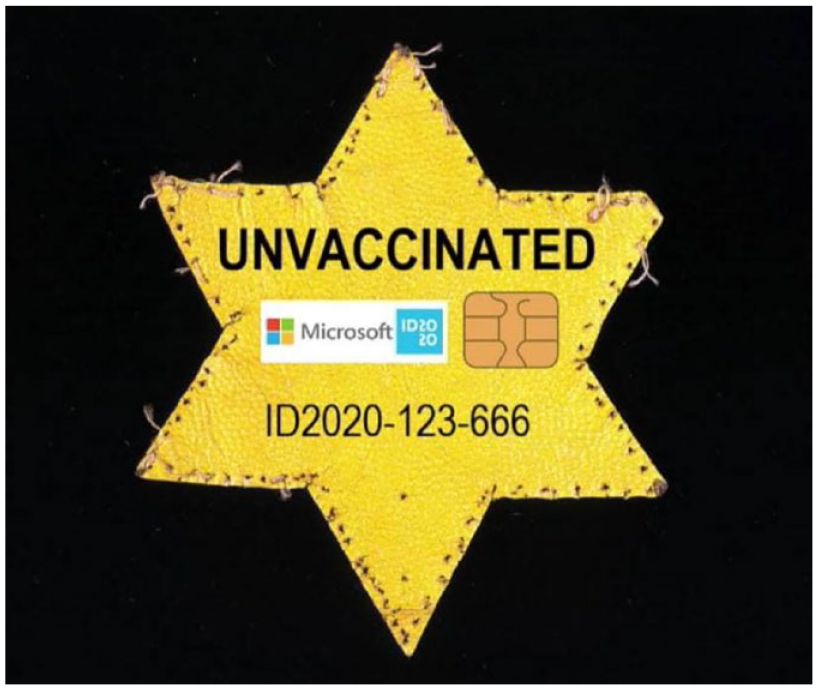
A meme representing the Jewish Star to draw parallels between the victimization of the Jews during the Holocaust and the unvaccinated during the COVID-19 pandemic (August 2021).

A meme drawing an analogy between the Nazis and the technocratic experts and elites managing government responses to the pandemic (August 2021).

A meme drawing an analogy between the persecution of the Jews during the Holocaust and the persecution of the unvaccinated during the pandemic (July 2021).
The COVID-19 pandemic is not the first time that vaccination has been framed as medical tyranny. In reaction to vaccine mandates introduced in the nineteenth century, the English social reformer, William Tebb, compared mandatory vaccination laws to the Fugitive Slave Act in the United States, a series of acts that permitted the capture and return of runaway enslaved people in the United States. By comparing the “medical tyranny” of vaccines to the oppression engendered by slavery, Tebb’s comparison both exaggerated the negative consequences of vaccination and diminished the suffering caused to African Americans by enslavement (Rossi, 2015). The difference with contemporary antivaccination memes circulating online, which use Holocaust analogies to invoke themes of persecution, is that this strategy seeks to use a recent event vivid in the popular imagination to unify the broad range of beliefs and emotions driving vaccine hesitancy and refusal under a common identity: the stigmatized other.
Stigma Reversed: The (Un)Vaccinated Reimagined
In addition to using memes to highlight their stigmatization, disinformation producers resisted public health messaging by recasting “the vaccinated” as stigmatized. As part of this reversal, influencers used meme warfare to reflexively engender group membership—referring to antivaccinationists as their “soul family”—and recast the group in a positive light by presenting the unvaccinated as a team united in their superior status to their denigrated counterparts (Figure 10). This motif was visually and textually communicated in a variety of ways. First, claims that the unvaccinated possess superior mental and emotional capacities (i.e., bravery, intelligence, and insight) to the masses, who are pejoratively referred to as “sheep” and “normies.” In this manifestation of Goffman’s terminology, it is “normies” who are subject to stigma rather than stigma emerging from the vantage of the “normals,” as is the case in Goffman’s typology. Second, claims that the unvaccinated—or “unjected,” as one influencer refers to them—are more virile, fertile and sexually attractive than the vaccinated (Figures 11 and 13). These claims are visually expressed through memes conveying vaccination as the cause of infertility and deformity, as well as memes featuring attractive images of those presumed to be unvaccinated. These memes play on Orientalist myths and Romantic sensibilities, aligning vaccine refusal with Nature and indigenous ways of being in opposition to vaccines, which are perceived to be “unnatural” medical technologies (Figures 12 and 13). As part of this symbolic repositioning, the unvaccinated are depicted as a superior class, only attracted to their group. Through this evocative portrayal, disinformation producers cut through the noise of a saturated internet space and amplify their messages to their target audiences (Abidin, 2021).

A meme referring to the meme war antivaccinationists are involved in as a collective pursuit (September 2021).

A meme depicting the unvaccinated as sexually attractive (August 2021).

A meme repurposing a famous photograph of a woman at a horse festival in Tibet, taken by the photographer Steve McCurry, accompanied by the caption “Anti-Vaxxer.” The meme draws on Orientalist tropes to depict indigenous cultures as the original antivaxxers (July and November 2021).

A meme associating the “natural immunity” of the unvaccinated with virility and sexual activity (April 2021).

A meme depicting a lack of sex drive as a consequence of vaccination (July 2021).

A meme associating infertility with COVID-19 vaccinations (March 2021).
While the application of stigma for those who remain unvaccinated is one strategy of obtaining visibility through hyperbolic historical analogies, stigma is also deployed by antivaccine influencers in ways that position the vaccinated population as the defiled, polluted group. Here, the vaccinated are presented as diminished, tainted and “not quite human” (Goffman, 1963), dehumanized for the “good of society” (Arendt, 1951/1973). These memes depict images of distorted and disfigured humans accompanied by textual references linking these adverse reactions to booster vaccinations under the assumption that “everything is just fine.” The distorted visual of the human form directly invokes Goffman’s formulation of stigma; in this case, the vaccinated population is portrayed as possessing “abominations of the body.” Stigma of the vaccinated was also identified in memes that portray the vaccinated as animals—visual illustrations of the vaccinated as sheep or cattle playing on conceptions of uncritical masses and “herd immunity.”
These depictions contrast dramatically with memes that recast the unvaccinated as virile, fertile, and sexually desirable (Figures 11 and 13). Eschewing the association of stigma with unvaccinated groups, those who remain unvaccinated are presented as seductive and possessing an ability to sexually reproduce with ease, whereas those who are vaccinated are portrayed as infertile and sexually impotent (Figures 14 and 15). Vaccine rumors that associate vaccination with infertility have circulated prior to the internet, 2 especially in regions formerly subject to colonial rule. What makes internet memes so effective in perpetuating these rumors are the ways the meme—vaccines cause infertility—is appropriated to relate to the current coronavirus vaccine and expressed in visual form.
The adaption of stigma in this flexible manner is an effective strategy influencers use to present the unvaccinated as unjustly vilified (our first finding), invoking feelings of persecution to mobilize diverse unvaccinated individuals into a common group identity, while reframing the vaccinated as targets of stigma and by extension recasting the unvaccinated as physically and mentally superior. Here, the role of stigma in meme warfare is flexibly applied. This is suggestive of the way that rather than fixed or indelibly ascribed as an attribute of an individual or collective, stigma—and the dehumanizing process it produces—is best viewed as a perspective that is interactionally realized in relation to others (Goffman, 1963), lending itself to memetic modes of communication that seek to energize and reformulate collective identity.
Conclusion
This article explores how influencers use antivaccination memes as a mode of networked disinformation in ways that correspond to the logics of spoiled identity. Drawing on Goffman’s (1963) theory of “stigma,” wherein the stigmatized and the normal are interdependent and mutually constituted, we demonstrate how memes are used to evoke feelings of persecution from the unvaccinated and to recast those who refuse vaccination as mentally and physically superior. Here we suggest that meme producers strategically draw on different logics of stigma to produce and perpetuate antivaccine disinformation. In the first case, memes represent those who refuse vaccination as an unjustly stigmatized group, depicting stigmatization as a precursor to dehumanization (Arendt, 1951/1973)—and those who stigmatize them as an existential threat—through misplaced analogies between their persecution for choosing to remain unvaccinated and the involuntary persecution of the Jews during the Holocaust. In the second case, memes are used to reframe the stigmatized social position of the unvaccinated in a positive light by projecting shame and humiliation onto vaccinated, compliant groups, who are pejoratively depicted as “sheep” and “normies,” and thus cast as intellectually and morally inferior. Stigma is crucial to this type of collective reimagining, conceived here through meme dissemination as a dynamic relationship or perspective, rather than a set of concrete attributes. As such, Goffman and Arendt’s work on stigma and dehumanization provide a useful theoretical lens to understand the dynamics of meme warfare as it pertains to the antivaccination movement in these online spaces.
In the current media ecology, internet memes both reflect and reconfigure the identity of the antivaccination movement. To some extent, political cartoons similarly achieved this by illustrating antivaccination sentiments in visual form and publicizing these to a mass audience. However, these texts were fundamentally different to internet memes in that they were produced by a single creator through a one-way—and often top-down—print broadcast system. The technological affordances of the internet render internet memes distinct in that they can be shared and repurposed by amateurs at scale. As such, memes increasingly play an integral part in disinformation campaigns. While most memes are anonymous and shared by ordinary individuals, antivaccination memes are also highly organized and coordinated by a small network of disinformation producers, who produce memes as a type of networked activism for social, political, and financial gain (e.g., memes promoting the antimalarial drug, ivermectin, which directed subscribers to an e-commerce store to purchase the product; memes displaying far-right sentiments and characterizing Democrats and liberals as Technocrats, Socialists, Communists, and Nazis). While there are significant differences in how these influencers self-brand and monetize their audiences, they share similarities in how they profit from producing antivaccination memes. One of the benefits of approaching disinformation as a culture of production is that it exposes the organized hierarchies, practices, and processes involved in networked disinformation (see Ong & Cabañes, 2019). Our study has shown that a small number of influencers are able to distribute antivaccine memes online as an effective strategy to extend their audience reach by encouraging their followers to further propagate their messages to new audiences, many of whom they will profit from politically and financially.
These findings raise important questions for content moderation. To combat the spread of misinformation during the pandemic, technology companies have introduced a series of harm policies, which have been relatively effective in reducing medical misinformation promoting fraudulent products and services (Baker et al., 2020). Memes, however, are particularly adept at evading content moderation as they allow for plausible deniability and as a result can be weaponized while enabling users to express ideas that would otherwise be forbidden under the guise of humor and irony. How content moderation practices can be transposed to the political realm is particularly unclear, especially when content is not overtly hateful or illegal. A further complication is that in light of stricter COVID-19 policies many disinformation producers have migrated to less regulated spaces, such as Telegram, and share their most hateful and harmful content in these spaces together with their personal sites and newsletters. The fact that some of these influencers are using their personal newsletters to commercially profit from dubious—and potentially harmful—COVID-19 treatments raises serious questions about the current regulatory framework governing privately owned sites and platforms. In light of these observations, our research highlights the need for a broader ecosystem approach to studying disinformation. Disinformation is both a product and a process (Ong & Cabañes, 2019). Given the hierarchies of networked disinformation, and influencers’ capacity to target certain audiences and amplify harmful content online, disinformation producers should be subject to cross-platform monitoring and friction to limit virality. In the context of meme warfare, it is not an even battlefield.
Footnotes
Declaration of Conflicting Interests
The author(s) declared no potential conflicts of interest with respect to the research, authorship, and/or publication of this article.
Funding
The author(s) received no financial support for the research, authorship, and/or publication of this article.
